Friday, July 03, 2026


Mexico and Canada look for new solutions as US officials decline USMCA renewal

Mexico and Canada look for new solutions as US officials decline USMCA renewal
President Donald Trump championed the USMCA during his first term, but has now thrown the accord into question citing trade imbalances between the US and its North American neighbours.
By Julian DeLucia July 3, 2026

As trade officials from the United States declined to renew the United States-Mexico-Canada Agreement (USMCA), officials from Canada and Mexico are poised to react as the deal, worth nearly $2 trillion a year, sees an uncertain future, El Financiero reported. 

The two US neighbours have previously signalled they want the agreement largely preserved, but President Donald Trump, who championed the accord during his first term, appears ready to use the review as leverage. 

"There is only a small chance" Trump will actually invoke the exit clause, given the toll it would take on US trade and investment, particularly in Midwestern swing states, Oxford Economics said in a report published on June 30. The firm added it no longer anticipates a broad rollback of tariffs, forecasting instead possible "limited agreements to reduce sectoral tariffs". Mexico "appears to be the most exposed country, but its exports have held up", the report said, while Canada is attempting to diversify its export markets, a process that will take time.

Roughly 80% of Mexican exports go to the US, and Mexico City has said its priority is securing preferential tariff treatment relative to other trading partners, or avoiding tariffs entirely. Two rounds of bilateral talks between Mexico and the US have already taken place, with a third round set for late July.

About 70% of Canadian goods exports, including millions of barrels of oil daily, are shipped to the US. Talks between Ottawa and Washington over tariff relief advanced substantially last October before Trump broke them off after Ontario ran a US television advertisement featuring former President Ronald Reagan criticising tariffs.

Some Canadian provincial liquor boards barred sales of American alcohol last year in response to Trump's tariffs, restrictions Washington wants lifted.

The White House has also raised concerns over the Mexican government's favouritism towards state oil company Petróleos Mexicanos (Pemex), curbs on private-sector participation in the energy industry, and the enforcement of labour laws in Mexico.

In the automotive sector, the US is pushing to tighten rules of origin to block the indirect use of manufacturing components sourced from outside North America, particularly China, seeking to raise the required share of US-made content in vehicles.

While the USMCA allows most food products to move duty-free, dairy remains an exception between the US and Canada. Ottawa caps the volume of American milk, eggs and poultry that can enter duty-free, while Washington maintains its own protections against Canadian dairy imports. The Canadian system has long drawn complaints from US farmers and lawmakers, and criticism from Trump, though it remains shielded by the political weight of Quebec's dairy sector.

Former Canadian and Mexican diplomats voiced cautious optimism that a new agreement would eventually emerge, according to comments made during a discussion with David Westin on Bloomberg's Wall Street Week programme.

Instead of renewing the deal on July 1, the Trump administration announced it will begin a decade of negotiations on amendments to it.

For now, the USMCA continues to shield most Mexican and Canadian goods from the broad import tariffs Trump has imposed on nearly all other US trading partners.


Peru reasserts control over China's flagship South American port

Peru reasserts control over China's flagship South American port
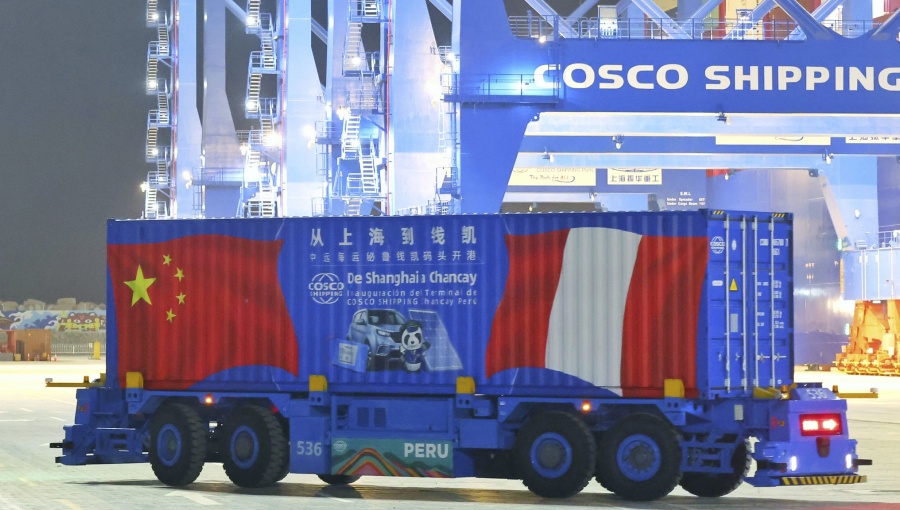
Chancay was built to be Beijing's flagship gateway into South America. A Lima court ruling has just put it back under Peruvian state oversight, reopening the fault line between Washington and China over who controls Latin America's ports. / Presidencia PerúFacebook
By Alek Buttermann July 2, 2026

A Lima court has just done what Washington has spent months demanding: it put China's flagship South American port back under state oversight. On July 1, the Second Constitutional Chamber of the Superior Court of Lima overturned a January ruling that had stripped Ositrán, Peru's transport infrastructure regulator, of its power to inspect and sanction the $1.3bn Megaport of Chancay. For a facility built to be China's main gateway into South America, this is a serious reversal.

The ruling landed days after a separate court blocked a parallel attempt by the port's operator, Chinese state-controlled Cosco Shipping, to halt an antitrust probe by Indecopi, Peru's competition authority. Together, the two rulings end Cosco's brief run of regulatory immunity. The court's reasoning was blunt: Chancay is a public-use facility, regardless of the private ownership structure behind it.

The regulators are back

Cosco has lost its shield. For months, the terminal sat in a regulatory grey zone after the January ruling ordered Ositrán to stay away, effectively creating a private enclave on the Pacific coast. Cosco argued that a fully privately financed port, built without a state concession contract, fell outside standard public oversight law. It wanted routine disputes handled through commercial channels, not state mandates.

The appellate judges rejected that argument outright. Routine information requests and baseline administrative checks, they found, do not amount to an "imminent threat" to a private company's constitutional rights. That closes a loophole Cosco had used to play one regulator off against another. Now it faces both Ositrán and Indecopi at once, with no immunity from either.

Cosco is not done, though. Its lawyer, Ramiro Portocarrero, has confirmed the company will escalate the matter to Peru's Constitutional Tribunal through a Constitutional Grievance Recourse, arguing the state promised legal stability for a $1.3bn investment and then changed the rules mid-operation.

Peru follows Panama's script

Washington has run this play before, just five months earlier and one country north. In late January and February, the Trump administration pushed Panama's Supreme Court to nullify long-standing concessions at the ports of Balboa and Cristóbal, sitting at the Pacific and Atlantic mouths of the Panama Canal. A subsidiary of the Hong Kong-based conglomerate CK Hutchison had held those terminals for decades.

Secretary of State Marco Rubio led the public pressure, arguing Chinese port control was unacceptable on strategic grounds. The dispute peaked on February 23, when Panama's government seized the terminals by executive decree and handed interim control to Western-allied shipping lines, prompting a multi-billion-dollar arbitration claim from Beijing.

Chancay is the sequel. Washington treats Chinese control of Latin American port infrastructure as a systemic risk to Western supply chains. The method is identical to the one used in Panama: lean on domestic courts to enforce local law, reassert host-country sovereignty, and strip the legal protections shielding Chinese state-linked capital.

Washington times its message to the ballot box

The US State Department set the tone early. Its Bureau of Western Hemisphere Affairs warned publicly that "cheap Chinese money costs sovereignty". US Ambassador Bernie Navarro reinforced the point in person, delivering US-donated cargo scanners directly to Chancay's customs checkpoint, establishing a physical, symbolic American presence inside China's main South American gateway.

The timing of the ruling is political as much as it is judicial. Following Peru's June 7 elections, Navarro and Rubio moved quickly to congratulate conservative candidate Keiko Fujimori on her presidential win. They framed US engagement as a defence of transparent institutions against Chinese state firms dodging local rules. Beijing pushed back hard, with foreign ministry spokesperson Lin Jian dismissing the American statements as defamation.

None of this is coincidental. It traces a direct line back to Washington's national security establishment. Fujimori's campaign advisor in the run-up to the vote was Carlos Díaz-Rosillo, who during the first Trump administration served as White House director of policy and interagency coordination and later as the Pentagon's acting principal deputy assistant secretary of defense for international security affairs, a brief that explicitly covered defence policy for the Western Hemisphere. His move from drafting Washington's regional security doctrine to endorsing Fujimori across major Peruvian media outlets shows how tightly US security interests and Peruvian electoral politics have become intertwined. Navarro mirrored that posture on the ground: his highly visible role during the election cycle drew local criticism for pushing the boundaries of diplomatic neutrality.

Pulling Peru back from Beijing

Since Trump assumed office, Washington's focus on Peru has intensified dramatically, driven by alarm over how deeply intertwined Lima has become with Beijing. China is Peru's uncontested top trading partner, absorbing nearly 30% of Peruvian exports worth over $22bn a year, the vast majority of it copper and other minerals. Chancay was supposed to be the crown jewel cementing that architecture.

To break the alignment, the White House has deployed an aggressive, multi-layered counter-offensive. In January 2026, the Trump administration designated Peru a "Major Non-Nato Ally" (MNNA), a rare status that unlocks privileged access to US military hardware, joint defence research, and security programmes.

Washington backed that diplomatic upgrade with hard cash. The US State Department pushed through an estimated $3.42bn deal to sell F-16 fighter jets to the Peruvian Air Force, a sum roughly equivalent to Peru's entire annual defence budget, to anchor Lima's long-term military reliance on the West. The deal triggered fierce local political gridlock and internal ministerial clashes over funding timelines in April, but Peru ultimately secured its first payments to keep the purchase alive.

Simultaneously, to neutralise China's commercial maritime leverage at Chancay, Washington has shifted focus just north to Callao. The US has cleared equipment packages to modernise the naval base there and is pushing a deal for the US Army Corps of Engineers to build a brand-new main naval headquarters at Callao. Elite military access, fighter jets, and naval infrastructure: Washington is building a military firewall where it lost the economic argument.

A domestic corruption trail

While the geopolitics dominate the headlines, Peru's own state auditor has uncovered something arguably more damaging at home. An audit by the Comptroller General (Contraloría) found that officials at the National Port Authority and the Ministry of Transport and Communications possessed blueprints as early as 2021 showing the port's access tunnel was being built along an unapproved route, yet sat on that information for years while construction continued. The Contraloría has since referred several officials for criminal prosecution.

The bigger blow is a civil liability claim tied to ProInversión, the state investment agency. Auditors found officials fast-tracked a general sales tax (IGV) early-recovery scheme worth PEN527.8mn to Cosco representatives who allegedly lacked the legal authority to sign the contract. That sum, roughly $154mn, is more than a tenth of the port's entire $1.3bn construction cost.

The Contraloría has recommended the case go to Peru's Public Prosecutor's Office for Corruption Offences, naming Cosco itself as civilly responsible. Combined with a prior environmental fine and a failed beach-erosion system, the pattern points to a state regulatory system that repeatedly looked away.

The sovereignty play nobody quite believes

Peru's Constitutional Tribunal will have the final word, and Chancay's regulatory status stays provisional until it rules. Officially, this is a story about sovereignty restored: a turbulent Andean state standing up to a Chinese state giant, backed by a superpower patron cheering from the sidelines.

Read the fine print and the story gets murkier. The same officials now empowered to police Cosco are drawn from the same ministries that sat on tunnel blueprints for years and fast-tracked a $154mn tax break to representatives who, on paper, had no authority to ask for it. Sovereignty, in this telling, was for sale well before Washington decided it needed defending.

Cosco knows the routine. It has watched CK Hutchison run the same play in Panama: fight in the courts, absorb the political theatre, wait for the news cycle to move on. An appeal to the Constitutional Tribunal buys time, and time is the one resource a $1.3bn sunk investment can still spend freely.

What is being restored at Chancay is not so much sovereignty as leverage, and it now sits with whichever government official Cosco, Ositrán or Washington decides to call next. Peru did not choose sides in the US-China contest so much as it discovered, again, that its ports are worth more as chips than as ports.

China’s Global Strategy: Using Port Infrastructure As A Tool Of Power – Analysis


July 3, 2026 
Diálogo Américas
By Julieta Pelcastre


Key Takeaways

Strategic Global Expansion — China has invested ~$24 billion (2000–2025) in 168 ports across nearly 90 countries, creating a network that links trade routes, mining operations, and logistics hubs. In Latin America, ports like Chancay (Peru) are strategically placed near Chinese-backed mining projects, enhancing supply chain control.

Dual-Use Concerns — Beyond commerce, 31% of Chinese-funded ports saw naval activity, rising to 41% at operator-owned facilities. Examples like Nicaragua’s Corinto port (financed then visited by Chinese naval hospital ship) raise questions about intelligence, crisis leverage, and military access.

Sovereignty & Dependence Risks — Heavy reliance on Chinese financing/operation risks ceding control over critical infrastructure. Analysts warn of long-term constraints on national decision-making and recommend diversification, stronger oversight, and regional cooperation to protect sovereignty.


Analysis


China’s global expansion of port infrastructure is widely regarded as part of a broader strategy to expand geopolitical influence, secure access to strategic supply chains, and strengthen its long-term positioning. According to the report, Anchoring Global Ambitions, published by AidData in partnership with the Center for Strategic and International Studies (CSIS), Beijing has spent the last two decades building an extensive network of ports and logistics corridors that increasingly intersect with strategic resources, critical maritime routes, and key infrastructure hubs around the world. Within this network, Latin America is becoming an increasingly important node.

Beyond facilitating trade, these investments may also provide China with greater access to strategic logistics data, increased influence over maritime chokepoints, and expanded operational leverage during periods of crisis or geopolitical tension. Analysts warn that the integration of Chinese companies into the operation, financing, and modernization of critical port infrastructure could increase regional dependence on external actors for the management of key supply chains and trade corridors.


Between 2000 and 2025, China invested some $24 billion in the development and modernization of port infrastructure across 168 ports in nearly 90 countries, according to the AidData report published in March 2026. The initiative includes not only the construction and expansion of terminals, but also more than 360 related projects involving logistics systems, cranes, scanners, and other port technologies supplied by Chinese companies, deepening Beijing’s role in the operation of strategic maritime infrastructure.

Juan Belikow, a political scientist and specialist in security and organized crime at the University of Buenos Aires, Argentina, told Diálogothat China’s port expansion reflects a long-term strategy aimed at establishing interconnected global logistics hubs.

“They are setting up a series of nodes around the world through which international trade will have to pas
s,” Belikow said, highlighting the concentration of trade flows in these corridors.


Latin America: A strategic hub in China’s logistics network

Latin America has become an area of growing strategic importance with China’s port expansion strategy. According to data from AidData’s CPORTS 2.0 and CFTM 2.0, at least seven ports in the region are located within 500 kilometers of Chinese-financed mining operations. These include ports in Chancay, Peru; Guayaquil, Posorja, and Bolívar in Ecuador; Buenaventura in Colombia; and a port in Guyana.


The proximity between these Chinese-backed ports and extractive projects highlight the growing integration between logistics infrastructure and natural resource supply chains. In Peru, for example, the port of Chancay is located near major mining operations such as Toromocho and Raura, strengthening China’s access to strategic minerals and export corridors critical to global supply chains.

Brazil has also emerged as an important hub within this network. Between 2009 and 2023, the country received some $505 million in Chinese investment related to port infrastructure projects. Analysts warn that this growing footprint has implications that extend beyond commerce, particularly regarding strategic logistic access, supply chain influence, and long-term dependence on infrastructure operated or financed by Chinese entities.

Naval activity and dual-use concerns

Concerns surrounding China’s global port investments are not limited to commercial activity. According to the AidData report, 31.2 percent of Chinese funded port projects worldwide recorded some form of Chinese naval activity between 2000 and 2025, including military ship visits, exercises, and official engagements. The percentage rises to 41.5 percent at port facilities where Chinese operators hold direct ownership stakes, reinforcing concerns among analysts about the dual-use nature of these projects.

One recent example is the Port of Corinto in Nicaragua. In July 2025, Nicaragua approved some $128 million in Chinese financing to modernize the port. Four months later, the Chinese naval hospital Silk Road Ark docked at Corinto, marking the first known visit by a Chinese military vessel to the country.


For analysts, cases like Corinto illustrates how commercial infrastructure projects may also support broader strategic objectives by expanding China’s access, presence, and influence in critical maritime regions.

CSIS warned in its report No Safe Harbor that China’s growing involvement in strategic ports could provide Beijing with access to sensitive logistics information and increase its ability to influence operations at key maritime hubs, particularly during crisis scenarios. The report also notes that Chinese companies operating ports abroad may create opportunities for intelligence collection, logistical support, and expanded strategic access.
Sovereignty and challenges for the region

China’s growing presence in strategic infrastructure is also raising concerns about sovereignty and operational dependence throughout Latin America and the Caribbean.

Investigative outlet Expediente Público warned that increasing reliance on Chinese-operated or Chinese-financed infrastructure could gradually limit countries’ ability to independently manage strategic logistics systems and supply chains. Analysts note that as Chinese companies become more deeply integrated into port operations, governments may face increasing difficulty maintaining full control over critical maritime infrastructure.

Belikow emphasized that ports are not merely commercial facilities, but strategic nodes capable of shaping trade flows and influencing national decision-making. “Ports are bottlenecks of international trade, allowing China not only to expand its presence but also to observe the behavior of other actors at these key points,” Belikow said.

According to Belikow, China’s financing model also reflects a long-term strategic approach that differs significantly from the shorter political and economic cycles often seen in the region. “Our leaders think from now until the next election,” he said. “China does not.”


A strategic response

As China expands its global infrastructure footprint, analysts argue that countries in Latin America will increasingly need to evaluate the long-term strategic implications associated with foreign control or influence over critical logistics infrastructure.

The report Anchoring Global Ambitions recommends that governments strengthen long-term infrastructure planning, diversify financing options through partnerships with trusted allies, and improve coordination mechanism for evaluating strategic investments.

The report also highlights the importance of strengthening regional cooperation to ensure greater oversight and resilience across critical logistics networks.

“Managing these hubs not only allows for influencing trade but also for anticipating trends and guiding decisions,” concluded Belikow, warning that, although these investments may seem attractive in the short term, “they are ceding control.” This process, according to the expert, “becomes entrenched over time and constrains states’ ability to ensure their sovereignty over key infrastructure.”

This article was published by Diálogo Américas

About Diálogo Américas
Diálogo Américas is a professional magazine published by U.S. Southern Command as an international forum for security issues in Latin America.
View all posts by Diálogo Américas →


India's rice surplus to fuel record exports amid global supply worries

India's rice surplus to fuel record exports amid global supply worries
/ Sandy Ravaloniaina - UnsplashFacebook
By IntelliNews July 3, 2026

Although many rice-consuming nations will face tight supplies in the coming months due to the El Niño effect, India's rice market is likely to be well supplied. The outlook is supported by robust procurement under the government's minimum support price (MSP) programme, record domestic grain availability and comfortable stock levels, according to a recent report by market intelligence firm BigMint.

The country’s exports, too, are likely to hit a record, which is expected to bring some relief to global markets. The United States Department of Agriculture (USDA) is of the view that India will achieve its highest-ever exports of 25mn tonnes this year. India’s year-end closing stocks are also expected to be high.

The rice procurement by government agencies under the MSP programme during marketing year (MY) 2025-26 (through June 4, 2026) is estimated at 54.15mn tonnes, compared with 51.16mn tonnes during the same period last year, according to BigMint. In India, the rice marketing year begins in October and ends in September.

With higher rabi/summer rice output expected in MY 2025-26, procurement by government agencies is likely to run through till September 2026. As a result, total rice procurement in MY 2025-26 is projected to reach 58mn tonnes, up from 55.5mn tonnes in the previous year and substantially above the government's yearly rice requirement of 40-42mn tonnes. The Indian government uses this stock for public distribution and food security schemes.

As per provisional trade statistics, India has already shipped out about 13.4mn tonnes of rice in MY 2025-26 till April 2026 as against 14.5mn tonnes during the same period of the previous MY. According to the USDA report, India’s monthly rice exports began the marketing year on a slow note but have picked up since February this year.

Trade sources told BigMint that Indian rice remains competitively priced when compared with rice from other countries due to relatively soft local prices and the weakening of the Indian rupee against the US dollar in the recent past. Monthly rice export numbers are likely to hit 2mn tonnes during the rest of the marketing year if Indian rice continues to be attractively priced. This run rate should take MY 2025-26 exports to a record 23mn tonnes.

When it comes to the MY 2026-27, the USDA has pencilled in rice exports at a fresh record of 25mn tonnes driven by surplus domestic supplies and continued competitive pricing of Indian rice relative to other countries. The Indian government, unlike in recent years, is not expected to impose any new restrictions on rice movements as it believes domestic stocks are more than enough to undertake market intervention measures if required in the future to control domestic prices.

India’s rice consumption figures have been revised higher by the USDA to 125mn tonnes for MY 2025-26. This estimate has been revised higher, taking into account comfortable domestic supplies and bigger offloading by the government agencies in the local market and to ethanol manufacturers at subsidised prices.

When it comes to ending stocks, the USDA has raised MY 2025-26 figures to 54mn tonnes, supported by larger output and robust procurement by government agencies. The MY 2026-27 is also likely to end with stocks of 51mn tonnes. At the current speed of offtake through food security schemes, sales in open market sales and to ethanol manufacturers, government stocks at the end of the current marketing year and start of new marketing year on October 1, 2026 are projected at 50mn tonnes, up from 44.9mn tonnes in the previous year. Rice stocks with private entities, mostly held by exporters, are projected at 4mn tonnes compared with 3.1mn tonnes last year. As a result, MY 2025-26 ending stocks are projected at a record 54mn tonnes.

Records stocks due to bumper output 

According to a separate report published by Reuters, India's rice stocks in government warehouses rose 15% year-on-year to a record high for the start ​of June.

Record inventories of rice will help India, which is the world's biggest exporter, ramp up shipments despite concerns over rainfall due to an El Nino weather ​pattern. State reserves of rice, including unmilled paddy, totalled a ​record 68.43mn tonnes as of June 1, much higher than the government's ​target of 13.5mn tonnes for July 1.

In the global rice export market, India holds a significant 40% share. In 2023, New Delhi clamped down on exports, impacting a large number of countries. The export curbs were lifted last year in March.

In recent ​years, India has ​held rice ⁠inventories while facing tighter wheat supplies, but this year the country has abundant inventories of both grains.


Physicists and Claude “collaborate” to prove a ten year old jamming conjecture


Nobel laureate Giorgio Parisi and physicist Francesco Zamponi, with the help of artificial intelligence, solve a mathematical problem that had remained open for more than a decade and document the entire process


Sissa Medialab


A mathematical problem that had remained unsolved for more than ten years in the physics of complex systems has finally been resolved through an unusual collaboration: one involving two theoretical physicists and an artificial intelligence system. In a study published in the Journal of Statistical Mechanics: Theory and Experiment (JSTAT), Giorgio Parisi, Nobel Prize winner in Physics, and Francesco Zamponi, physicist at LaSapienza University of Rome, show how the AI model Claude contributed to finding the proof of a mathematical relation that had resisted researchers’ efforts for years. 

Beyond its scientific significance, the result offers a concrete glimpse into how artificial intelligence is transforming the work of researchers.

In physics, jamming describes the formation of a kind of “traffic jam” of particles: a system that is initially fluid suddenly becomes rigid while remaining disordered. Originally introduced to describe materials such as foams and granular matter, the concept has proved surprisingly general and is now also used in fields such as neuroscience and artificial intelligence.
In 2014, Giorgio Parisi, Emeritus Professor at LaSapienza University of Rome and recipient of the 2021 Nobel Prize in Physics, Francesco Zamponi, Professor of Physics at LaSapienza University of Rome, and collaborators developed a theoretical description of jamming and noticed a surprising relationship: two mathematical parameters of the model, denoted by a and b, always added up to one, as numerical calculations showed with extraordinary accuracy.

A surprising relationship

This relationship, explains Zamponi, co-author of the new study together with Parisi, yields the same physical laws obtained through a different theoretical approach to jamming developed almost simultaneously by French physicist Matthieu Wyart (EPFL, Lausanne). In other words, it suggests that two very different ways of describing the phenomenon actually lead to the same conclusions.

The result emerged clearly from numerical calculations from the very beginning, but no one could explain why it was true. For years, researchers searched for a mathematical proof of the relation, convinced that some deeper structure of the theory lay behind its apparent simplicity.

A persistent obsession

After several unsuccessful years, the problem gradually faded into the background. Not for Giorgio Parisi, however. “It really bothered him that we had never managed to prove it,” Zamponi recalls.

When the first generative AI models began to appear, Parisi identified this old problem as an ideal test case. Claude was chosen because it “seemed to have somewhat more advanced mathematical reasoning abilities,” says Zamponi.

The problem, after all, was well defined: a clear conjecture, relatively simple mathematics, and an answer that was known numerically but had never been formally proven.
The prompt given initially was not to find the proof. Parisi asked the model to reproduce the numerical calculations developed by the group more than a decade earlier, in order to understand how far it could go in tackling a real mathematical problem.

Once Claude was able to reproduce the result, the researchers’ next question came almost naturally: if a+b equals one, can you also prove why?

“Quite quickly, Claude came up with an initial idea that was essentially correct,” says Zamponi.

The proof still contained errors and required several rounds of verification and revision by the authors, but the underlying intuition turned out to be the right one.
Yet the surprise was not only the AI’s result. For years, the researchers had been searching for a deep explanation of the relation, imagining that it concealed a new mathematical structure or an unknown symmetry. “We were hoping this would reveal some new understanding of the equations,” Zamponi explains.

Instead, the solution turned out to be much simpler: “The answer was right there, and we simply hadn’t seen it.”

The proof therefore confirms that two very different theoretical approaches to jamming, developed independently by Parisi and collaborators on the one hand and Wyart and collaborators on the other, do in fact lead to the same physical laws.


Insect-borne diseases in the Amazon linked to land use and rural economies, study finds


Diseases spread by insects in the Brazilian Amazon are not randomly distributed but form distinct regional patterns linked to land use, rural economies and environmental change, according to new research led by the Environmental Change Institute (ECI)


University of Oxford


Insect-borne diseases in the Amazon linked to land use and rural economies, study finds

Diseases spread by insects in the Brazilian Amazon are not randomly distributed but form distinct regional patterns linked to land use, rural economies and environmental change, according to new research led by the Environmental Change Institute (ECI), at the University of Oxford.

The study, published in Communications Earth & Environment, analysed more than 1.28 million reported cases of malaria, dengue, Chagas disease and leishmaniasis between 2015 and 2019.

The findings show that these diseases cluster in different combinations depending on how land is used — from forest-based livelihoods to intensive agriculture and urban expansion.

In forested and remote rural areas, where communities often depend on small-scale farming and extractivism (the harvesting of natural resources such as forest products), malaria and Chagas disease were more likely to occur together. These areas are also often affected by poverty and limited healthcare access.

In contrast, regions dominated by agriculture, pasture expansion, roads and urban growth showed different patterns, with dengue and cutaneous leishmaniasis (a disease that causes long-lasting skin sores) more likely to overlap.

Visceral leishmaniasis followed a separate pattern. This more severe form of leishmaniasis, which affects internal organs and can be fatal if untreated, was more closely associated with urban poverty, environmental disruption such as fires, climate extremes and cattle-linked economies.

The researchers also found that disease patterns reflect broader social and environmental conditions, rather than being driven only by the insects that transmit them.

Lead author Dr Milton Barbosa, Marie Curie Research Fellow at the ECI and Assistant Professor, Federal University of Minas Gerais (UFMG), Brazil, said the findings show that health risks in the Amazon are closely linked to land use and development.

“Different forms of land use and economic activity create different disease patterns across the Amazon. Diseases are shaped not only by insect vectors, but by how people live and how landscapes change over time.”

Co-author Professor Claudia Codeço said the Amazon should be seen as a mosaic of different socio-environmental systems.

“There is not one Amazon, but many. Each has different patterns of land use and environmental change, which influence disease risk.”

The authors say the findings could help improve disease surveillance by identifying areas where multiple diseases share the same underlying drivers, supporting more integrated public health responses.

They also suggest that policies aimed at reducing deforestation, improving living conditions and managing land use could have important public health benefits alongside environmental gains.

The study, “Vector-borne disease co-occurrence is shaped by agrarian economy and socioenvironmental contexts in the Brazilian Amazon,” is published in Communications Earth & Environment.


Key facts

  • Study period: 2015–2019
  • Geographic scope: Brazilian Amazon municipalities
  • Dataset: more than 1.28 million reported cases (malaria, dengue, Chagas disease and leishmaniasis)
  • Approach: ecosyndemic analysis (examining multiple diseases together and their shared drivers)
  • Study design: Ecological spatial analysis of disease co-occurrence patterns across the Brazilian Amazon