Tuesday, July 21, 2026

ANTI LGBTQ+ LAW


Alberta government gives public libraries Jan. 1 deadline to comply with new restrictions

Story by CBC/Radio-Canada


The Alberta government has given libraries around the province until the start of next year to introduce new policies restricting access to materials with sexually explicit images.

The province updated its Libraries Act earlier this month to set a Jan. 1 deadline for libraries to comply and ensure they're not allowing anyone 15 years old or younger to use or borrow materials containing a visual depiction of a sexual act, without a parent or guardian's authorization.


The new restriction applies to books, periodicals, comics and graphic novels, films, TV programs and video games.

Library boards also have until Jan. 1 to determine which materials should be restricted, how to regulate access to them, and where to store them separately from other resources.

Boards must also meet the same deadline to establish how to determine a person's age, and whether a parent or guardian has authorized their access to restricted materials.

The province is calling on boards to introduce policies about issuing library cards to people 15 years old or younger, and on allowing people in that age group to use library computers to access the internet or play video games.


(Zazak Bouarab/Radio-Canada)

Boards are also required to consider how the same age restrictions can be applied to digital resources like e-books.

The restrictions are a result of Bill 28, which was passed in May.

The Coalition of Alberta Public Libraries said this week it's still reviewing the new restrictions.

The Calgary and Edmonton public libraries said they are still reviewing the impact of the new restrictions, too.

Earlier this month, the Canadian Federation of Library Associations said it's working with colleagues across the country to address concerns other provincial governments could introduce similar restrictions.
Rules could put more stress on small libraries

Jack Alarie, press secretary for the Ministry of Municipal Affairs, said no content will be removed from libraries due to the new restrictions. Instead, he said the province wants to ensure libraries continue to be family-friendly, without affecting adults' access to them.

Bill 28 gives inspectors, appointed by the Municipal Affairs minister, the ability to look at any matter related to a library's management, administration or operation. Alarie said this is an expanded scope for inspectors, after they were previously limited to board records.


“It is reasonable that there be accountability for public institutions that are governed by provincial statute and funded by tax dollars,” said Alarie.

Rob Miyashiro, the Alberta NDP's shadow minister for municipal affairs, said the new rules are likely to cost more money for libraries and put extra stress on their staff. He highlighted that it will be especially difficult for small libraries with only a couple of employees.

“It’s something that wasn’t necessary, and the libraries were never asking for this. In fact, the vast majority of public libraries in Alberta already had policies and practices that did what this government wants as an outcome,” said Miyashiro.

"Local decision-making is going to be minimized in favour of a centralized approach by this government."

The province is also requiring library boards that operate a location inside a school to set up a process for the public to ask the board to review whether restrictions are needed on specific materials in these libraries.


Reviews can be asked for by students, parents or guardians, staff and school council members, other members of the public with a connection to the school, and library card holders.

Boards have until Jan. 1 to establish these processes, and must regularly review their resources to ensure they comply with the Libraries Act, and provide reports, on request, to the minister.




Trump signs order imposing new 50% tariffs on certain Canadian goods


US President Donald Trump signed orders on Monday imposing new 50% tariffs on some Canadian goods, citing what the White House called Canada's "discriminatory treatment" of US alcohol, automobiles and dairy products. The tariffs take effect in 30 days, with energy, potash and sector-specific imports exempted, the White House said.

Issued on 21/07/2026 
By: FRANCE 24

Global Container Terminals' Deltaport facility in Delta, British Columbia, Canada, July 16, 2026 © Darryl Dyck, The Canadian Press via AP

US President Donald Trump signed orders Monday to impose new 50-percent tariffs on many Canadian goods, claiming "discriminatory treatment" by Ottawa against American alcohol, automobile and dairy products.

The tariffs take effect in 30 days and cover a wide range of goods including wine, hockey sticks and cement, said the White House in a fact sheet.

Trump tapped a little-known legal provision for the new duties – Section 338 of the Tariff Act of 1930 – which allows officials to take action against countries said to engage in discriminatory trade practices.
Cover image: © France 24
01:46


The latest duties will not apply to energy, potash and goods already impacted by sector-specific tariffs, the White House said.


Crucially, however, they will hit products covered under the US-Mexico-Canada free trade agreement (USMCA).

Canadian Prime Minister Mark Carney said in response that Ottawa stands ready to "intensify" talks with the United States, and has made proposals to resolve disputes and modernise the USMCA.

"This is the latest in a series of unilateral US trade actions that began with the US imposing a series of tariffs in direct violation of the Canada-United States-Mexico Agreement," he added.

"Canada, as is its right, has merely matched those measures," Carney said.

While Trump has slapped sweeping duties on US trading partners since returning to the presidency last year, these have generally come with broad exemptions for goods entering his country under the North American free trade pact.

His latest actions threaten to further strain ties between Washington and Ottawa, and come just days after he threatened Canada with increased tariffs over smoke from raging wildfires that drifted into the United States.

(FRANCE 24 with AFP)


O, Canada: We’re doing everything we can to put Trump back in his cage


REUTERS Umit Bektas
July 21, 2026

Trump on Monday signed orders to impose a 50 percent tariff on a wide range of Canadian imports.

The White House claims the tariffs are a “punishment” for Canadian discrimination against American cars, dairy, and alcohol.

But the tariffs will also punish us. Remember, tariffs are import taxes — paid for by you and me and everyone else in America. So, we’re about to pay more for everything we import from Canada — plywood, paper, furniture, hockey sticks, cement, et al. Canada is our second-largest trading partner, for chrissake.

Even if the Supreme Court finds that Trump lacks authority to invoke these tariffs and the government must refund American importers for the extra cost — as the high court did with his first round of tariffs — you and I won’t be reimbursed for the extra costs we’ve paid.

Corporations aren’t giving their customers any of the $80 billion in refunds they’ve received from the Treasury Department for the first round of tariffs, so don’t expect any reimbursement on this second round. Which means we’re doubly screwed.

Worse yet, the Treasury isn’t really bearing the cost of the $80 billion in refunds. The cost is being borne by you and me and all other American taxpayers, because our money funds the government. And as taxpayers we’ll also be paying for the second round of refunds, assuming the Supreme Court orders them. Which means we’re triply screwed.

Actually, we’re quadruply screwed because Trump is imposing the new tariffs under the Tariff Act of 1930 — the notorious Smoot-Hawley tariff that worsened the Great Depression by causing other countries to retaliate and impose tariffs on goods coming from the United States. It’s likely to have a similar effect in coming months.

If you hadn’t noticed, the American economy is already shaky. Prices are rising faster than wages, which means most of us are becoming poorer even before Trump’s next round of tariffs. His war in Iran is pushing up the price of gas and, indirectly, food.

The real reason for the new tariffs is that Trump is pissed off that Canada had the temerity (and the right) to retaliate against his first round of tariffs, and it has resisted Trump’s calls to be annexed as the 51st state.

Why would Canadians ever want to live in a nation that could elect Trump?

In any event, I believe I can speak for most Americans when I apologize to our Canadian friends. We’re sorry we elected him. He’s made our lives worse. He’s a continuing embarrassment to us. (Did you see him grandstand at the World Cup? We have to live with this crap every day.)

Believe me, we’re doing everything we can to put him back in his cage.

Robert Reich is a professor of public policy at Berkeley and former secretary of labor. His writings can be found at https://robertreich.substack.com/.


Trump ‘Raising Prices on Americans Again’ With 50% Tariff on Canadian Imports

“Americans have to pay high prices because Trump doesn’t understand how wind works,” quipped one critic.


US President Donald Trump and Canadian Prime Minister Mark Carney attend the North Atlantic Council meeting held as part of the 36th NATO Heads of State and Government Summit at the Presidential Complex in Ankara, Türkiye on July 8, 2026.
(Photo by Harun Ozalp/Anadolu via Getty Images)

Brett Wilkins
Jul 20, 2026
COMMON DREAMS

US President Donald Trump on Monday invoked an arcane legal provision to impose 50% tariffs on most imported goods from Canada, a move that critics said will hit US consumers already reeling from an unabated cost-of-living crisis and further strain relations with the nation’s second-largest trade partner.

Trump invoked Section 338 of the Tariff Act of 1930, an unprecedented move the White House said is aimed at “offsetting the burden and disadvantage on US commerce from Canada’s discriminatory treatment of US commerce” and “leveling the playing field for crucial American exports—cars, alcohol, and dairy.”

The new tariffs exempt energy products, potash, fish, and critical minerals.

“While the administration continues to secure fair and reciprocal trade deals with our trading partners, Canada, unlike other partners and allies, continues to retaliate against the United States for its efforts to rebalance trade and protect US industry in national security-sensitive sectors,” US Trade Representative Jamieson Greer said in a statement.

“Specifically, Canada has taken US alcohol products off Canadian shelves, given better market access to dairy products from the European Union, and has put a cap on US vehicle exports to Canada from companies reshoring to the United States,” Greer added. “Today, President Trump took decisive action to hold Canada accountable for its retaliation and discrimination, delivering on his promise to correct trade imbalances and ensure fairness for American workers, farmers, and businesses.”

While the administration’s official communications cite economic reasons for the new tariffs, Trump in recent days has repeatedly cited the Canadian wildfires as justification for the move.

“I told them. I mean, you got to stop these fires from coming in, and you know poisoning our air,” Trump said of Canada on Sunday evening. “Our air has been poisoned. Maybe they should pay us some damages or something, or we should do some tariffs.”

The president’s linkage of the wildfires and tariffs drew widespread ridicule, with Democratic New York Gov. Kathy Hochul posting on X, “Only Donald Trump could see wildfire smoke and decide the answer is more tariffs.”

Pod Save America co-host Dan Pfeiffer said on social media, “Americans have to pay high prices because Trump doesn’t understand how wind works.”

According to We Pay the Tariffs, a small business coalition, Trump’s capricious tariffs have cost American businesses and consumers upward of $317 billion since March 2025.

That month, Trump imposed 25% tariffs on many Canadian goods and 10% on Canadian energy products. The administration later modified or paused some of those tariffs.

Ottawa has criticized the tariffs and rejected the US justification that Canada is unfairly restricting American products.

“I’ll never stop fighting to protect Ontario,” Doug Ford, the province’s right-wing premier, said in response to Trump’s move. “If these tariffs proceed, Canada should respond tariff for tariff, dollar for dollar.”

Some Democratic US lawmakers blasted the new tariffs.

“Trump is raising prices on Americans, again, by jacking up tariffs by 50% on Canadian goods bought by Americans,” Rep. Ted Lieu (D-Calif.) said on social media. “Democrats will flip the House. And on day one of next term, Democrats will introduce legislation to repeal Trump’s disastrous tariffs. And we will pass it.”


Top Finance Committee Democrat Rips Trump’s New Canada Tariffs as ‘Yet Another Shakedown’

Nobel Prize-winning economist Paul Krugman described Trump’s latest tariffs as “unutterably idiotic.”


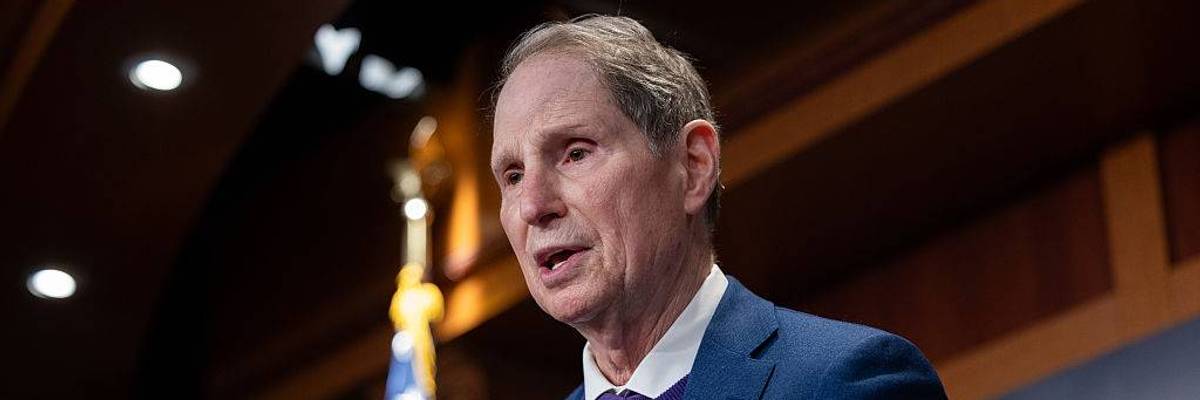
Sen. Ron Wyden (D-Ore.) speaks at a press conference on the upcoming deadline for the release of the Jeffrey Epstein files, in Washington, DC on December 16, 2025.
(Photo by Nathan Posner/Anadolu via Getty Images)

Brad Reed
Jul 21, 2026
COMMON DREAMS

Critics are piling on President Donald Trump for once again picking a fight with the United States’ top trading partner by moving to slap 50% tariffs on certain imported Canadian goods.

Sen. Ron Wyden (D-Ore.), ranking member of the Senate Finance Committee, said on Tuesday that Trump’s latest broadside against Canada was “yet another shakedown that will raise the cost of living for Americans, their families, and small businesses across the country.”

Wyden also said that Trump has “abused every trade authority at his disposal” and vowed to soon release a bill “to rein him in and put Congress back in the driver’s seat” in crafting US trade policy.

Wyden wasn’t the only Democrat to take a shot at Trump over his new economic attack on Canada.

Rep. Mike Levin (D-Calif.) called Trump’s new tariffs “really dumb” given that they violate a trade deal that Trump himself negotiated with Canada and Mexico during his first term.

“You cannot negotiate a trade agreement, sign it, celebrate it, then blow it up and expect anyone to trust the next deal,” said Levin. “And who actually pays? American importers and American families. Tariffs are a tax on us.”

Rep. Jared Huffman (D-Calif.) predicted that US consumers would once again pay the price for the president’s trade war.

“We’re the ones who will eat the cost,” wrote Huffman. “That’s what happened with Trump’s last tariff spree and it will happen again. Trump’s failed foreign and economic policies are making life worse for hardworking people.”

Nobel Prize-winning economist Paul Krugman on Tuesday published an analysis trying to make sense of the justifications for Trump’s latest trade war with Canada, but he came up mostly empty.

“The White House fact sheet claims that the new tariffs are a response to Canadian policies that discriminate against US products,” explained Krugman, “notably the moves by most Canadian provinces... to stop importation of US alcoholic beverages. But these policies were themselves a response to the tariffs on Canadian goods Trump had previously imposed.”

Krugman then noted that Trump shifted his justification for the tariffs, saying they were designed to punish Canada after smoke generated by wildfires in Ontario billowed into the US last week.

However, Krugman found this explanation even more absurd.

“Blaming Canada for not controlling fires that are, in reality, largely a consequence of global warming,” Krugman remarked, “is unutterably idiotic.”

Krugman concluded his analysis by arguing that “whatever the real motivation for these new tariffs, they are almost surely illegal,” noting that they run afoul of Trump’s own North American trade deal.

Trump on Tuesday indicated that the tariffs on Canada were not actually a response to the wildfires, though he said his administration was looking at separate measures to punish the Canadian government for purportedly doing a poor job of managing its forests.


Several studies have found that Trump’s tariffs, which he kicked off in April 2025, have cost US businesses and consumers hundreds of billions of dollars, as importers pass most of the increased costs imposed by the tariffs to consumers in the form of higher prices.


'Swinging recklessly': WSJ slams Trump's 'senseless' attack on Canada

Matthew Chapman
July 21, 2026 
RAW STORY


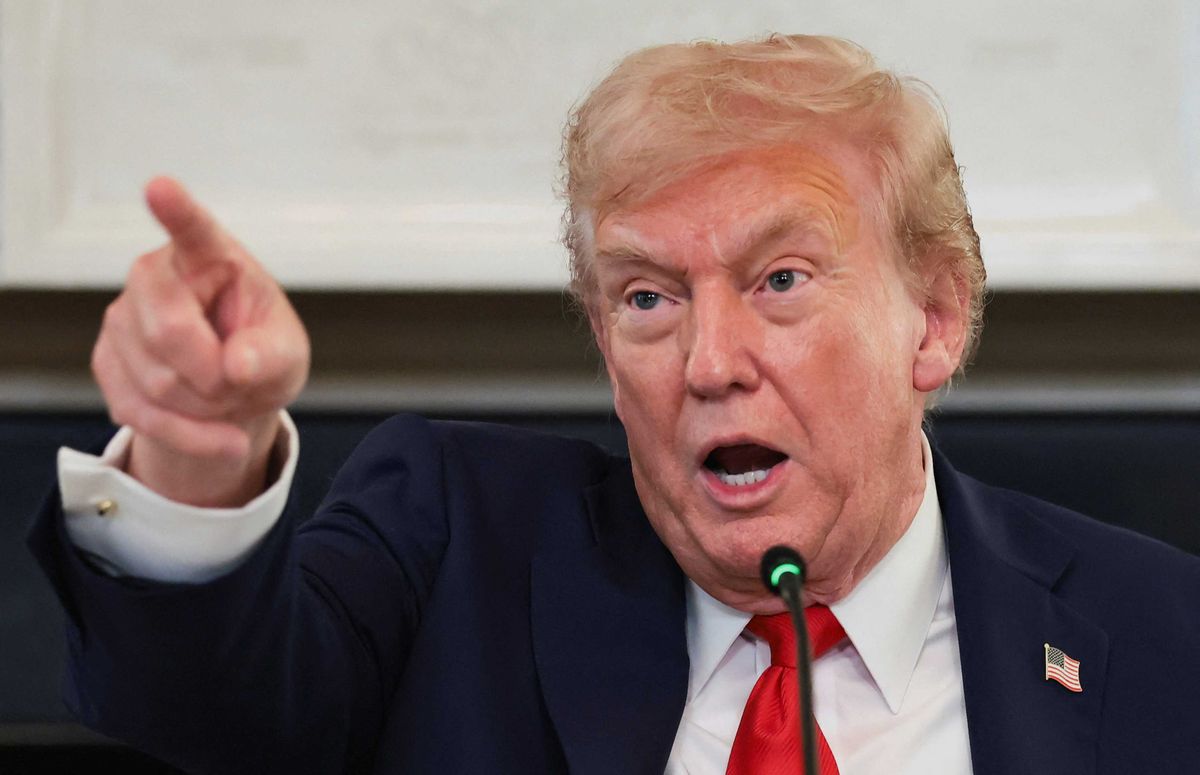
U.S. President Donald Trump points a finger as he speaks during a roundtable on antifa, an anti-fascist movement he designated a domestic "terrorist organization" via executive order on September 22, at the White House in Washington, D.C., U.S., October 8, 2025. REUTERS/Evelyn Hockstein

The conservative Wall Street Journal editorial board was none too happy about President Donald Trump's latest "senseless" tariff order — this time a 50 percent punitive attack on Canada for perceived unjust trade practices.

The president has tried multiple times to issue broad-based tariffs around the world, which federal courts have slapped down. This also comes as Trump caused international tension by delaying opening of a critical international bridge set to boost trade between the U.S. and Canada.

'The White House on Monday exhumed Section 338 of the 1930 Tariff Act to impose 50% tariffs on hundreds of Canadian goods, including hockey sticks, honey, beer, down feathers, fishing rods and golf clubs," wrote the board, noting that they don't take effect for another month — a clear indication Trump wants to use them as a bargaining chip.

This power, which comes from the so-called "Smoot-Hawley Tariff" often blamed for exacerbating the Great Depression, "was intended to let the President retaliate against countries that impose tariffs on the U.S. Mr. Trump is using the law to punish Canada for retaliating against his tariffs. His tariff order cites Canada’s 25% tariffs on U.S. cars that exceed certain quotas, which were a response to Mr. Trump’s 25% duties on motor vehicles and parts."

These moves are colossally counterproductive to the economy of both countries, the board lamented: For instance, "A study in March found that the tourist dropoff has cost between 14,000 and 42,000 jobs in the U.S. markets most exposed to Canadian tourism. Northern border areas have also suffered from a decline in cross-border trade."

The American people are already running out of patience, the board warned.

"The more Mr. Trump keeps swinging recklessly, the more Americans are likely to think there’s only madness in his tariff methods," the board wrote.

Susan Collins in full-on retreat as Trump's new attack on Canada threatens her state

Matthew Chapman
July 21, 2026 
RAW STORY


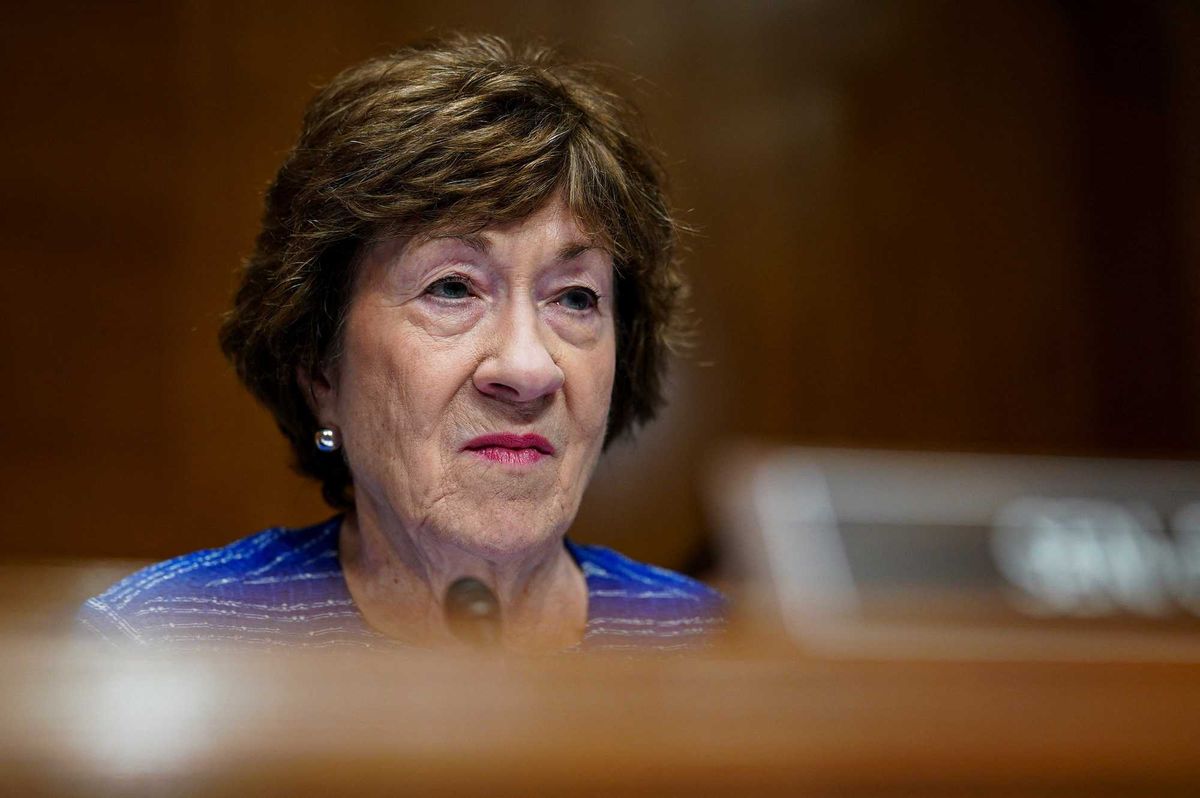
Sen. Susan Collins (R-ME) attends a Senate Health, Education, Labor, and Pensions Committee confirmation hearing for Acting U.S. Secretary of Labor Keith Sonderling to be U.S. Secretary of Labor, on Capitol Hill in Washington, D.C., on July 16, 2026. REUTERS/Al Drago

Sen. Susan Collins (R-ME) was flailing for as much distance as possible as President Donald Trump moves to impose draconian new tariffs on Canada, according to a Politico report on Tuesday.

Collins, a top target for Democrats in a battleground Senate race, represents a state that directly borders the Canadian Maritime provinces.

“I have voted repeatedly against the Canadian tariffs,” said Collins in a statement to Politico. “Maine and Canada’s economies are very intertwined. A lot of our blueberries, our potatoes, our lobster, our lumber are harvested in Maine, processed in Canada and then come back. I don’t want to see the tariffs on the books.”

Bobby Charles, the GOP's nominee for governor, concurred with Collins.

“As Governor, Bobby will always prioritize Maine, even if that means taking a position contrary to the national elites of his party,” Vincent Harris, a senior strategist for Charles, told Politico in a statement.

If elected, Charles said he will travel to Washington to argue against Trump's tariffs.

Trump's new scheme, enacted under a controversial and hardly-ever-used 1930 tariff law, would put 50 percent import taxes on a range of Canadian products.

All of this comes amid a massive shakeup of the Maine Senate race, with Democrats pressuring their nominee Graham Platner to withdraw over credible allegations of sexual assault, and coalescing instead around state lawmaker Troy Jackson.

Trump fires warning shot at Canada: 'They need us to survive'


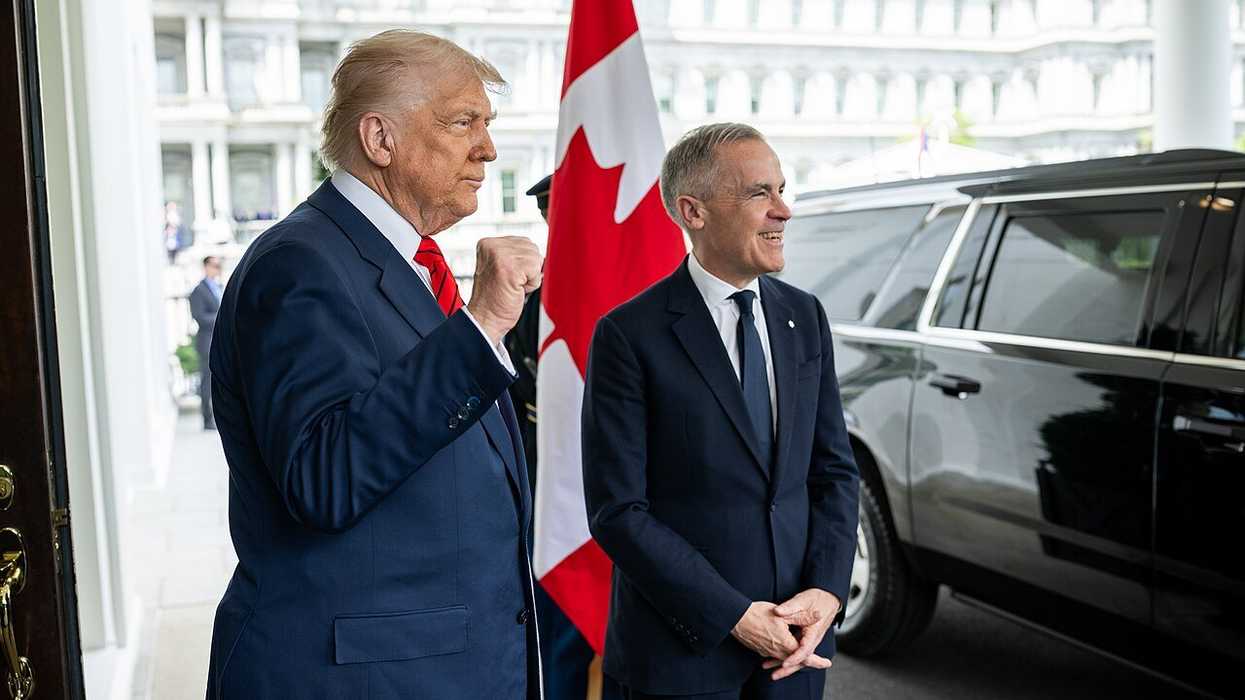
President Donald Trump with Canadian Prime Minister Mark Carney on May 6, 2025 (Official White House Photo by Daniel Torok/Flickr)

July 21, 2026
ALTERNET

President Donald Trump once again took aim at Canada after reigniting his feud with America's neighbor to the north, claiming "they need us to survive" during an Oval Office event on Wednesday.

Trump this week escalated his long-simmering feud with Canada after wildfires in the country blanketed much of the American Northeast and Midwest in dangerous levels of smoke, an occurrence becoming more common with the advance of climate change. Holding Canada responsible for the air quality threat, Trump threatened to impose new tariffs over the situation, and on Monday evening, announced that he would be setting a separate 50 percent tariff on certain Canadian goods in 30 days, claiming that this was in response to the country allegedly discriminating against U.S. exports.

Trump was pressed about the situation again during an Oval Office press conference, confirming that the newly-announced tariff is separate from the wildfire tariff, which he added that his administration is still looking at.

He also spoke further about his reasoning behind the new 50 percent tax, which Axios reported will impact things like "hockey sticks, wine and cement."

"It's a response to the way they've treated our farmers and our people," Trump said. "Canada has been very, very tough on us over the years, for many years, and no other president has done anything about it. I love Canada, I love the people of Canada, many friends that live in Canada. But their leadership from [former Prime Minister Justin] Trudeau to the current leadership, I mean, in all fairness to them, they need us to survive. Without us, there's no way they can survive. So... they've been very, very tough over a period of the last 50 years, actually."

“Over the past year, Canada has retained substantial retaliation against the United States as the U.S. imposes trade actions to reindustrialize, reshore, and support its manufacturing,” a senior Trump administration official told reporters during a call on Monday, according to The Hill. “Specifically, Canada has to be held accountable for this continued discrimination.”


White House advisers scramble to derail Trump's 'barrage' of new tariffs: report

Tom Boggioni
July 21, 2026 
RAW STORY


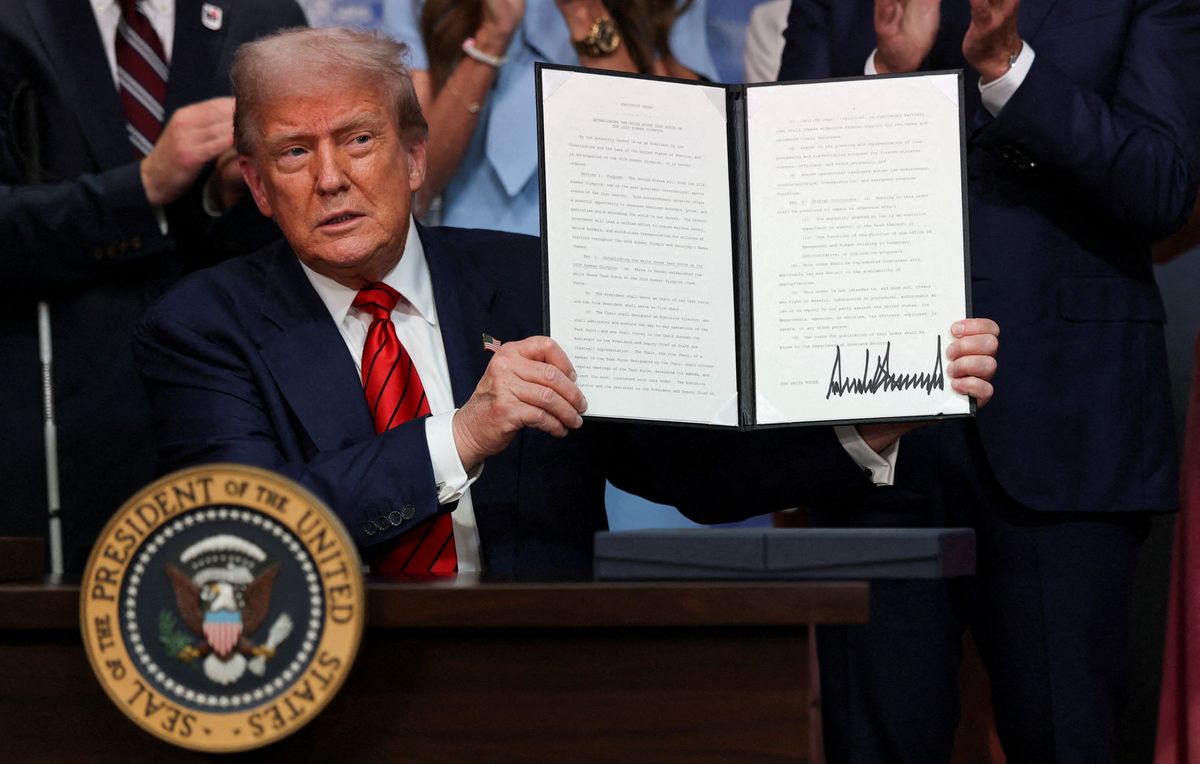
Donald Trump holds up an executive order. REUTERS/Jonathan Ernst

Faced with the possibility that the Republican Party is headed for a wipeout in the November midterms, White House insiders are attempting to head off a Friday announcement by President Donald Trump of new tariffs.

Trump is preparing to impose what the Financial Times is calling a "barrage" of fresh tariffs on dozens of countries this week, but his own advisers are urgently counseling him to step back from the brink, the outlet's report states. Senior officials worry that resurrecting his trade war—which delivered economic shocks and voter backlash in his first term—could prove "catastrophic" heading into elections Republicans are already struggling to win.

According to the report, "Behind the scenes, senior officials have been counseling the president to maintain stability with trading partners and honor the deals that Washington struck with them to reduce their tariffs in 2025, according to two people familiar with the matter.”

The timing is particularly fraught. Existing 10 percent tariffs adopted after a Supreme Court decision in February struck others down are set to expire Friday and some in the White House are engineering probes "of forced labor practices, allowing Trump to avoid using the emergency authorities knocked down by the Supreme Court."

The prospect of renewed tariffs collides with an already-deteriorating economic landscape. The escalating Iran conflict has roiled energy markets, pushing gas prices back above $4 per gallon. Voters are already furious about the cost of living and recent polling found two-thirds of Americans disapprove of how Trump is managing affordability.

Adding tariff hikes to soaring energy prices risks "inflaming voter frustration over the high cost of living," a sign that even Trump's own team recognizes the political danger, the report notes.

"This does not mean that tariff hikes are in the rear-view mirror," Wendy Cutler, a former U.S. trade official now at the Asia Society Policy Institute, told the Financial Times. "But it does suggest that a more cautious approach is now called for, par


Greeted with boos, Trump lingers on stage to lap up World Cup spotlight

US President Donald Trump brushed off FIFA president Gianni Infantino's efforts to gently guide him off stage after Spain beat Argentina in the World Cup final Sunday, lingering alongside the celebrating team and treating the players to his trademark "Trump dance".


Issued on: 20/07/2026 
By: FRANCE 24

Cover image: Spain's midfielder #16 Rodri receives the trophy from US President Donald Trump after winning the 2026 World Cup football tournament final match between Spain and Argentina at the New York/New Jersey Stadium in East Rutherford on July 19, 2026. © Franck Fife, AFP
00:30


US President Donald Trump grabbed a share of the spotlight at the World Cup final on Sunday, staying on stage with winners Spain as they lifted the trophy after beating Argentina.

Despite being met by resounding boos as he walked on to the pitch with FIFA president Gianni Infantino, Trump basked in the attention at the end of a tournament he has called "the most successful sporting event maybe in the history of the world".

Trump briefly lingered on stage as Infantino tried to lead him away while the Spanish team held the trophy aloft in celebration.

The 80-year-old US leader even did a quick version of his trademark "Trump dance" in front of the Spanish players.

Spain's midfielder #16 Rodri lifts the trophy with his teammates, flanked by US President Donald Trump (2R) and FIFA President Gianni Infantino (R), after winning the 2026 World Cup football tournament final match between Spain and Argentina at the New York/New Jersey Stadium in East Rutherford on July 19, 2026. © Odd Andersen, AFP

Trump had arrived on his Marine One helicopter at the New York-New Jersey stadium to watch Spain and Argentina battle it out for the trophy.

During the game, he sat next to Infantino and First Lady Melania Trump, and stood and saluted for the US national anthem.

Trump said before kick-off that he thought superstar Lionel Messi would give Argentina the edge and talked about his own close ties with Argentina's right-wing President Javier Milei.

But he told reporters afterward that he "wasn't sad" Argentina had lost.

"I would say Spain played better, really," Trump said.

The game also provided a chance for some diplomacy.


Trump said he had spoken to Canadian Prime Minister Mark Carney – whose country co-hosted the tournament with the United States and Mexico – about wildfires that have sent smoke over the US northeast.

The US leader said he had a "good relationship" with Carney "but maybe they should pay us some damages or something, or we should do some tariffs". The smoke had at one point threatened to disrupt the final.

During the final match, US President Donald Trump could be seen having brief exchanges with the leaders of the World Cup tournament's co-hosts, Mexico's President Claudia Sheinbaum and Canada's Prime Minister Mark Carney © Odd ANDERSEN / AFP

Trump said he also spoke to Spanish Prime Minister Pedro Sanchez, insisting there was "no tension" despite recently lashing out at Madrid for failing to help with the Iran war and falling short on NATO spending.

'It's been amazing'


Trump co-presented the trophy to Spain alongside Infantino.

The match is the first World Cup fixture that Trump has attended, in an unusual move for a leader who relishes public events.
Two US Marine Corps aircraft, with one of the helicopters believed to be carrying U.S. President Trump, fly above the stadium ahead of the 2026 World Cup football tournament final match between Spain and Argentina at the New York/New Jersey Stadium in East Rutherford on July 19, 2026. © Paul ELLIS / AFP

But it is far from his first intervention in the tournament.


Less than two weeks ago, Trump infamously phoned Infantino to ask FIFA to suspend a red card against USA striker Folarin Balogun so he could play in a last-16 match against Belgium.

Despite the ensuing controversy over fairness and influence, Trump has hailed the 2026 tournament as the best ever.

"This has been the most successful sporting event maybe in the history of the world. It's been amazing," Trump told a FIFA reception with Infantino at Trump Tower in New York on Friday.

Trump said the 104 games had also helped further popularise a sport in the United States.

"It turned out we were a soccer country, and I think it's going to remain," added Trump, who said his son Barron, 20, was a huge fan of the game.

Trump has hitched his political brand to the World Cup since returning in January 2025 to the Oval Office, where he has hosted Infantino on multiple occasions.

But the run-up to the tournament also hit hiccups from Trump's immigration policies, which saw some fans face visa issues.

At the FIFA Club World Cup championship at the same New Jersey stadium last year, winners Chelsea were left confused when Trump stayed on the podium while they danced after he handed them the trophy.

Trump later claimed he had been allowed to keep the trophy itself in the Oval Office – but FIFA said the version on display was actually a replica.

(FRANCE 24 with AFP)


Will football ever be the same? The legacy of a star-spangled World Cup
Argentina  Fans
 REUTERS - Sahiba Chawdhary

Issued on: 16/07/2026 - 
Play (43:31 min)From the show


After a stunning performance in Argentina’s come-from-behind win against England, 39-year-old Lionel Messi secured the defending World Cup champions their second final in a row – much to the delight of organizers. Taking note of Messi’s star power, the US bent the rules to include him on the Inter Miami side in the Club World Cup last year. In this edition we ask: what legacy will there be for the biggest World Cup ever, with its three countries, 64 teams and record-smashing ticket pricing?

What will the world remember from World Cup 2026? Will it be the on-field drama or the American-style packaging of the spectacle: commercial breaks disguised as water breaks, TV cutaways to celebrities during the action and red cards overturned to please the host country's leader? What will the final bring? Will US President Donald Trump be flanked by his Argentinian counterpart and far-right ally Javier Milei? Will they pose with Pedro Sanchez, the prime minister of a left-led Spain Trump has threatened to cut ties with?

Produced by François Picard, Rebecca Gnignati, Juliette Laffont, Ilayda Habip, Riham Mahir, Andrew Hilliar.


OUR GUESTS
Kethevane GORJESTANIFRANCE 24 International Affairs Editor; Former Washington correspondent

Ruben SLAGTERJournalist & Co-author, 'Football Investigation'

Ronan EVAINExecutive Director at Football Supporters Europe

David WEBBERSenior Lecturer in Sports Business and Politics, UCFB


Spain won the World Cup, but Donald Trump 'cast a shadow'
DW
July 20, 2026

Though Donald Trump mostly stayed clear of stadiums, the World Cup may influence the US midterm elections. DW looks at the political implications of "the most successful sporting event maybe in the history of the world."

Donald Trump was reluctant to leave the limelight at the World Cup final
Image: Andrew Harnik/Getty Images/AFP


Rodri, like anyone who has ever played football, had dreamed of this moment. The Spain captain held the World Cup in his hands, surrounded by jubilant teammates. But, before he could lift the trophy, he had to find a way to politely usher the world's most powerful man off the stage.

He didn't quite succeed. In the end, it required FIFA President Gianni Infantino to jog in front of the players to try and move Donald Trump on. Still the US president lingered next to Barcelona midfielder Pedri, bathing in the adulation he had been denied when walking on to boos with Infantino moments earlier. Trump had overstayed his welcome in similar fashion at the Club World Cup last year.

Though Sunday's final, in which Spain beat Argentina 1-0, was the first match of the tournament that Trump attended, he declared it "the most successful sporting event maybe in the history of the world" and was a constant presence even in his absence.


"Trump cast a shadow over the entire tournament, weaponizing it for domestic political purposes, regardless of whether he showed up at matches in person," Jules Boykoff, a professor in the Politics and Government Department at Pacific University in the US state of Oregon, told DW.

Trump's 'notorious' intervention

Trump administration policies denied entry to the United States for a Somali FIFA referee, forced Iran to train in Mexico and travel to games in Los Angeles and Seattle, and barred fans from around the world from attending matches. On top of all that, Boykoff said, Trump's knockout-stage phone call to FIFA "will most assuredly go down as one of the most notorious political interventions in World Cup history."

Though Trump' successfully lobbied to overturn the red card suspension of star striker Folarin Balogun, the strategy backfired on the field, with the US losing its last-16 match against a fired-up Belgium 4-1. "I knew it was going to cause a lot of controversy," Balogun said. "I could almost see within my teammates a bit of nerves because it was something that's so unique."

Boykoff said the sporting implications would not have been at the forefront of Trump's mind. "Intervening in the red card situation allowed him to deliver the message to his political base that he could get international bodies like FIFA to bend to his will," said Boykoff, who represented the US at the youth level as a player. "Most of Trump's actions during the World Cup should be read as efforts to influence a domestic political audience ahead of a key midterm election, not as an attempt to convince an international audience that he's some great guy."


Trump insisted that the tournament has boosted the US's international reputation. "All over the world, people have come and they love our country," he told reporters.


Was Balogun call a mistake for Trump?


The US midterm elections are set for November 3 and, with the war in Iran ongoing, Trump's approval rating is below 40%. Though a "shakedown" of a global organization such as FIFA may have an appeal with a base he's already won over, Karim Zidan told DW that the Balogun intervention was a political misstep for Trump.

"I think that, in boasting about this when the United States men's national team gave an opportunity for him to rally behind a team that seemed to be unifying Americans, he managed to find a way to taint it, and those who dislike him hated him just that little bit more," Zidan, an investigative journalist who has long covered Trump's use of sports in his politics, said.

Such unprecedented and direct political intervention in a footballing decision drew scorn and fury from most of the rest of the world — with politicians, football federations, fans and coaches all piling on to criticize. But that won't bother Trump, Boykoff said.

"Based on his actions, Trump does not appear to care much about what the rest of the world thinks of him. His anti-immigration policies stained the World Cup and undercut FIFA's slogan that 'Football Unites the World.' Trump used the tournament to further fracture the world while stoking his base's worst instincts ahead of the midterm elections," he said.

Sports-shaping as US strategy

The Balogun incident was Trump's first real foray into the tournament and came over three weeks after it had begun. Given how present he was in the buildup, that came as a surprise to some. But Zidan said the geopolitical situation had been keeping him busy, while the 250th US independence day also occupied Trump's time during the tournament.

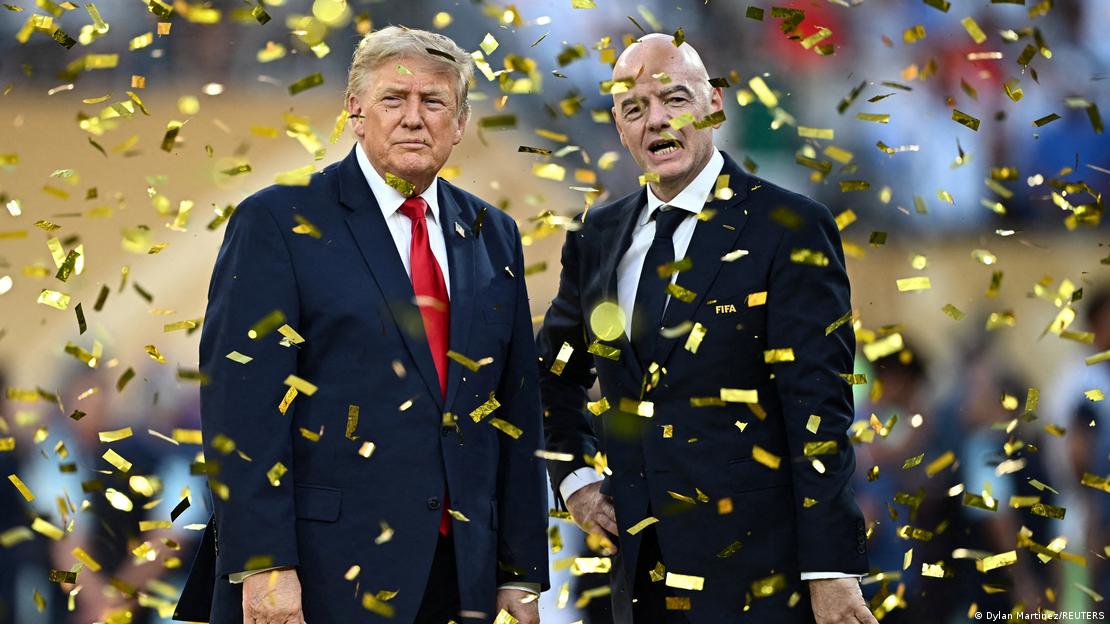
Trump and Gianni Infantino have become firm friends in recent years
Image: Dylan Martinez/REUTERS

"All he's really interested in is making this about himself or reaping any sort of personal prestige from an event," Zidan said. "So I'm not really surprised at all that he wasn't very present at standard World Cup games."

Despite his apparent lack of interest, Trump made a play for future World Cups immediately after the 2026 tournament ended. "I had a great idea for Gianni: You have to do two countries. Announce us again next time and then announce another country after that. It'll take out some of the anger and the shock," he told Fox Sports. "Based on the numbers, we will be requesting it again immediately."

The earliest the US could host the men's World Cup again is 2038, but Los Angeles will host the Summer Olympics in 2028, with Trump still in power ahead of the presidential election that November. The US is hosting the 2034 Winter Olympics in in Salt Lake City and is likely to win the Women's World Cup for 2031.
UFC a safe sporting haven for Trump

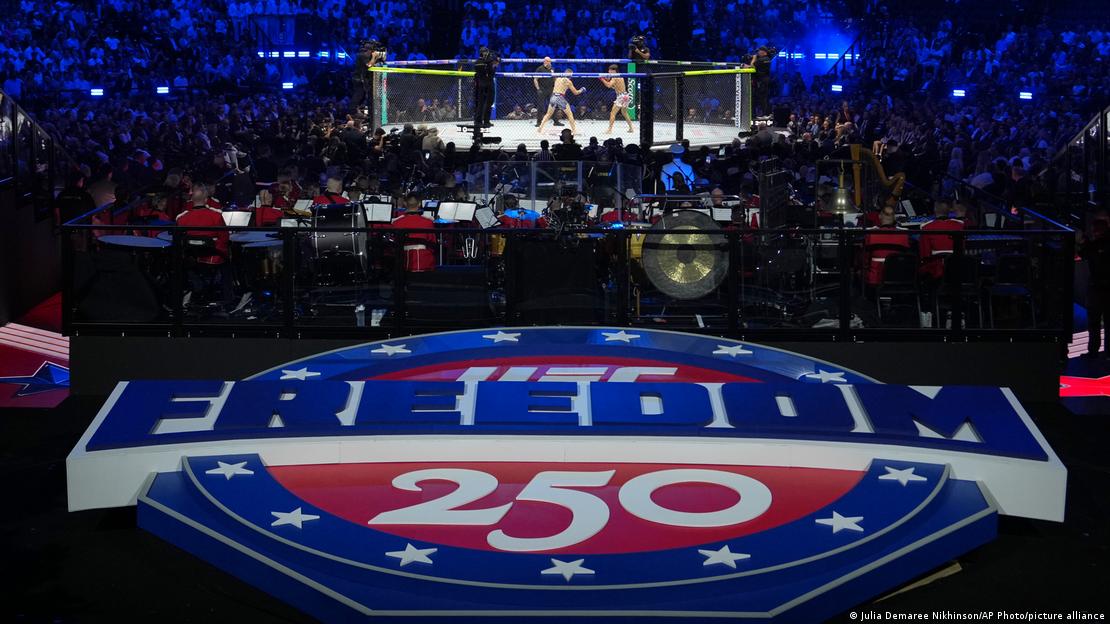
Zidan thinks that Trump will first retreat to the safety of the mixed-martial-arts Ultimate Fighting Championship (UFC), which he managed to include in the celebrations of the 250th anniversary of the United States.


Trump's relationship with UFC is a long and fruitful one
Image: Julia Demaree Nikhinson/AP Photo/picture alliance

"Whenever he has shown up at a sports event that is not a UFC event, he's received resounding boos. It's not the massive warm welcome he is used to receiving at the UFC," said Zidan, whose latest book, "The Ultimate Strongmen," focuses on Trump's relationship with the UFC.

"That's why he shows up so often there, why he's hosted a UFC event at the White House. He understands that is his perfect audience and his safe space, and, no matter how poorly he's performing and no matter what he's doing in the world, no matter if there's a war going on, he will be welcomed."

Though FIFA and its president rolled out the red carpet for Trump and the 2026 World Cup made more profit than any tournament before, it is the US voters, not the executive bodies of football organizations, whom Trump must impress now. Whichever way the midterms go, it's unlikely he'll be ushered off the political stage anytime soon.

Edited by: Milan Gagnon

Matt Pearson Reporter and editor@thisismpearson


Trump administration's border barrier project sparks environmental concerns in Texas national park

The Trump administration’s waiver of environmental laws to speed up border barrier construction in Texas’s Big Bend National Park has sparked an outcry from local residents and authorities.


Issued on: 17/07/2026 
By: The FRANCE 24 Observers/
Lise KIENNEMANN


Shown at left is the Rio Grande river as it flows through Big Bend National Park. At right, a protest against the construction of a border wall in the park on April 4, 2026.
 © Instagram / laiken.jordahl

With sheer cliffs towering hundreds of metres above the waters of the Rio Grande, vast desert landscapes, and rugged mountain ranges, Big Bend National Park in southern Texas is considered one of the most remote parks in the United States.

But this park on the Mexican border has also become a battleground, with strong public opposition to a border infrastructure construction project looming over the area for months, and the waiver of a series of laws to expedite its implementation.

The project is part of US President Donald Trump's massive "One Big Beautiful" tax-and-spending bill passed in May 2025, which allocated $46.5 billion to build a wall along the US-Mexico border. However, this border corridor spans several protected areas, including Big Bend Ranch State Park and Big Bend National Park.


A post from February 23, 2026, opposing the construction of a border wall in the Big Bend Sector. Source: Instagram / @tylerpriest


Shifting plans

Repeated changes regarding the specific types of infrastructure planned for the national park have, in particular, fuelled concern among the project's opponents.

A map published in February 2026 by the US Customs and Border Protection (CBP) appeared to show a steel bollard wall construction project along part of the river. The news sparked an outcry from local residents and officials. Opponents warned of the project's environmental and economic toll and pointed to low and declining crossing rates in the Big Bend area.

This video, posted on February 28, 2026, shows residents in Terlingua, near Big Bend National Park, protesting against the construction of a border wall. Source: Facebook/Basecamp Terlingua


The CBP discreetly updated the map in March to indicate it planned to deploy only “detection technologies” within the national park, without making any public announcement about the change.

Information currently available on the CBP website indicates plans to construct new “patrol roads” equipped with “technology” and “vehicle barrier systems” across four separate sections.
This is a screenshot of the CBP website as of July 16, 2026, showing the “smart wall” project within Big Bend National Park. © CBP

In early July, however, Bloomberg reported that a "30-foot (9-metre) border wall” was set to be built in part of the nearby Big Bend Ranch State Park.

When contacted by our team, CBP said it was “not planning to construct a 30-foot-high barrier” in Big Bend National Park or Big Bend Ranch State Park, but rather to deploy “cameras, sensors, roads, and limited low-profile post-on-rail barriers [...] to restrict unlawful vehicle access while utilising existing natural barriers”.

It also said it “conducts environmental and cultural reviews” prior to barrier construction activities, carried out “outreach in the Big Bend Sector”, and is seeking input for the vehicle barrier system project.

Opponents of the project, meanwhile, have been pointing to the CBP’s lack of transparency and the risk that its plans could change again.

“There's a different statement from CBP every day, it seems,” said Laiken Jordahl, a national public lands advocate with the Centre for Biological Diversity, a US non-profit conservation organisation.


This video shows a protest against the construction of border infrastructure, organised on April 4, 2026, in the Santa Elena Canyon, a popular site in Big Bend National Park. Source: Instagram / tylerpriest


‘They're free to inflict as much damage as they want’

These concerns were further amplified on June 9, when the Department of Homeland Security (DHS) waived 28 environmental and historical preservation laws “in order to ensure the expeditious construction of barriers and roads” in a zone that includes Big Bend National Park. Among the waived laws are the Endangered Species Act, the Clean Water Act and the Native American Graves Protection and Repatriation Act.

Jordahl argues that this waiver gives the CBP enormous leeway:


“Just by publishing this notice in the Federal Register, they have eviscerated decades of environmental protections. Environmental law would normally require the opportunity for public comment, input, transparency and require them to consult with experts, whether those are biologists or archaeologists. But empowered by this waiver, they're free to inflict as much damage as they want with no consequences. Nothing like this has ever occurred in a national park.

This waiver explicitly clears the way for the construction of 30-foot-high physical border walls. If they are not moving forward to build a wall, they have stripped the protections, issued the contracts and given themselves all the tools to be able to decide as soon as they get their machines on the ground that they do want to build a wall. And there's nothing that the public could do to stop them. Right now, we're basically relying on the goodwill of the agency. And CBP has never demonstrated any goodwill to the borderlands. It's a really scary time.”

The Centre for Biological Diversity updated an existing lawsuit in mid-June to challenge the DHS waiver, arguing it was unconstitutional.

In two separate letters addressed to the DHS Secretary, several former superintendents of Big Bend National Park and 18 Democratic members of Congress have also expressed their opposition to the waiver, which DHS had justified by declaring the zone a "high illegal entry area".

“There is no border security emergency here that warrants giving CBP unfettered authority to unnecessarily destroy some of the wildest parts of Big Bend or to disregard the overwhelmingly bipartisan will of the people, the actual data showing minimal numbers of border crossings inside the park,” the latter read.

Members of Congress also noted that “the rough terrain of Big Bend itself and Mexican lands to the south form a natural wall deterring illegal activity”.

According to data obtained by former Big Bend National Park superintendent Bob Krumenaker and published by Public Domain, CPB conducted between 100 and 125 arrests annually within the national park in 2023 and 2024.

Images posted on June 12, 2026, show the words “No wall” projected on the Mexican-US border in Big Bend National Park. This is a project by visual artist Joanie Lemercier. Source: Instagram/@joanielemercier

‘Almost nobody is crossing through the park’

Jordahl highlighted the impact a physical wall would have on local ecosystems, notably on bighorn sheep and black bear populations living in the park.

“Wildlife would be unable to access the Rio Grande, which is their main – and oftentimes only – source of drinking water. We've seen that it had devastating impacts elsewhere in Arizona and other places where border walls have gone up.”

However, he said that even the infrastructure currently slated for the national park would not be harmless. Current plans involve building “patrol roads” up to 7 metres wide and vehicle barriers featuring “steel posts supported by continuous steel rails”, with rail heights of 1.2 to 1.8 metres.

“The areas that they want to build these new roads and barriers are extremely rugged. I think the most damaging part of this project is just the amount of dynamite and blasting, bulldozing and scraping of mountain tops.

There is zero justification for any of this. Almost nobody is crossing through the park. And by building these new roads into the most remote stretch of the park, CBP is going to be opening up new smuggling routes.”

These images have been published by CBP. They show examples of a vehicle barrier in Arizona (left) and a patrol and maintenance road in New Mexico (right). © CBP

Congress members also argued in their letter that the “construction of new technology and roads will disrupt the flow of the Rio Grande River, increasing flash flood risk”.
‘In Big Bend, everybody is opposed to this project’

While Jordahl expressed concern about the project, he emphasised that it had generated opposition he “had never seen before”:

“There has been non-stop public outcry from local residents, local businesses, local law enforcement, and even the Republican sheriffs have gone on record opposing this project. In the past, border walls have been kind of a partisan issue: the left was opposed, and the right was in favour. But here in Big Bend, everybody is opposed to this project.”

An installation erected in Terlingua in February 2026 to oppose the construction of a wall in the Big Bend sector. “We support border security but not like this,” one of the signs read. © Facebook / Basecamp Terlingua