Tuesday, July 21, 2026

Who Speaks for Argentina? Football, Palestine, and the Politics of Representation

The Argentine national football team does not belong to Javier Milei. Nor does it belong to Benjamin Netanyahu. Argentina does not speak with one voice.
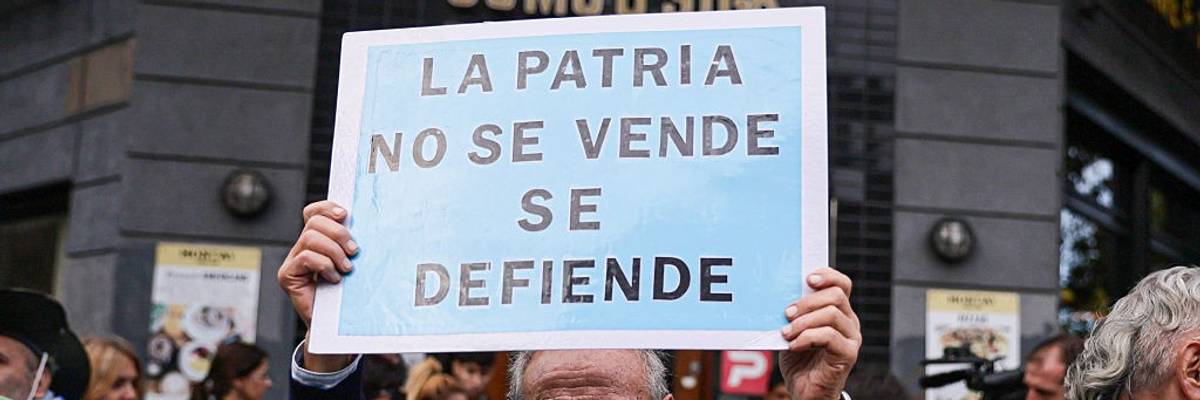

Retirees, labor unions, and social organizations march in front of the National Congress to demand improved pensions and living conditions in Buenos Aires, Argentina, on April 9, 2025 in protest of Javier Milei’s austerity policies.
(Photo by Luciano Gonzalez/Anadolu via Getty Images)

Common Dreams


One day before the FIFA Men’s World Cup final between Argentina and Spain, Israeli Prime Minister Benjamin Netanyahu expressed his support for Argentina. In a video released before the match, he said: “I don’t hide that I’m a fan of Argentina. I think most Israeli citizens do. That is because President Milei has revolutionized Israel’s relationship with Argentina, and we have no greater nor better friends. Which is why we support them.”

Both media outlets known for supporting Palestinian solidarity and media outlets affiliated with or supportive of the Israeli state immediately framed the World Cup final as a proxy for the relationship between Palestine and Israel. The final turned into a symbolic contest due to the official state policies of Argentina and Spain toward Palestine and Israel. Acts of individual actors, for example, Lionel Messi’s commercial connection with Israeli companies or his visit to Israel and the occupied West Bank as part of a 2013 “Peace Tour” organized by Barcelona or Lamin Yamal’s waving of a Palestinian flag after the La Liga championship, were turned into symbols of the collective stance of a nation and became reasons enough to support or oppose a specific team in the World Cup final.

As a Bangladeshi-American who grew up in Bangladesh—a country known for its passion for Latin American football powerhouses and its split loyalties between Argentina and Brazil—I have been a fan of the Argentine men’s football team since the age of 10. I have also been in solidarity with the Palestinian struggle for freedom since I was old enough to read newspapers. I found it appalling to see the head of a genocidal state publicly endorse my favorite men’s football team and to watch Palestinian solidarity become over simplistically reduced to supporting or opposing a football team. Can we end settler-colonial violence by winning a football match?

While people have argued that symbols matter, I would urge them to consider how such symbolism ignores two important points: First, it overlooks the problem of transforming one of the world’s most celebrated sporting spectacles into a stage upon which Benjamin Netanyahu’s ethnonationalist genocidal project can be publicly performed and normalized. Second, people are not their governments. Argentina’s self-proclaimed “most Zionist president in the world” Javier Milei’s unconditional alignment with Netanyahu’s government does not reflect the fact that Argentina is also the home to a substantial and increasingly visible Palestinian solidarity movement.

To reduce Argentina to its president is to reproduce a colonial logic that erases the vibrant historical and contemporary social movements, labor struggles, Indigenous resistance, feminist and queer organizing, anti-racist and anti-fascist activism, and transnational solidarity engagements that have long shaped political life in Argentina.

Using sports as a platform for promoting geopolitical interests is not new. Sports have always been entangled with powerful states and institutions. They were exported globally as tools of European colonial expansion, serving as instruments of the so-called civilizing mission, mechanisms of control, and tactics of assimilation between the 16th and the 20th centuries. Many colonized and indigenous communities have also turned sports into powerful symbols of defiance, through which they subverted the master’s tools, beat the colonizers at their own game, and transformed stadiums and playing fields into communal spaces for practicing decolonial solidarity and organizing resistance away from colonial surveillance and policing.

Football is no exception. The imperial and colonial legacy still shapes the way football—especially the FIFA Men’s World Cup—is organized, governed, and experienced today. Concerns have been raised about the displacement of the unhoused population by local governments in US host cities. Immigration and Customs Enforcement continued to arbitrarily and violently target, deport, and kill members of communities of color through paramilitary-style operations while World Cup matches were held across US cities. In Canadian and Mexican host cities, marginalized and minoritized communities expressed concerns about disruptions to water supplies, threats to land access, rising living costs, and disruptive infrastructural development.

Even though FIFA has chosen the official slogan “United as One” for the 2026 Men’s World Cup, a series of events has already demonstrated that the powerful and the powerless are not united and that the playing field is not level for everyone. US President Donald Trump has publicly intervened in FIFA’s disciplinary process, and FIFA President Gianni Infantino’s cozy relationship with Trump has raised serious concerns. Unusually strict travel restrictions disproportionately affected the Iranian team’s World Cup experience. The 2026 FIFA World Cup has repeatedly been used and abused to exert both hard and soft neoliberal, disciplinary, and diplomatic power.

By expressing support for the Argentine men’s football team, Netanyahu also utilized the World Cup to manufacture legitimacy for the Israeli settler-colonial apartheid state that has a long history of systematically evicting, segregating, displacing, and killing Indigenous Palestinians. He has appropriated this transnational sporting spectacle as an instrument for promoting and normalizing his settler-colonial mission.

What is at stake, however, extends beyond the universalization of a violent settler-colonial regime.

Drawing on Edward Said, I would argue that Netanyahu’s embrace of Argentina illustrates how the Israeli settler-colonial project is not just about colonizing Palestinian land and annihilating the Indigenous Palestinian population. The settler-colonial project involves careful production of knowledge through a politics of representation, turning representation into a technology of discursive and political rule. Through his symbolic embrace, Netanyahu deliberately erases complexities and contradictions, propagating an oversimplified and monolithic discourse about the state of Argentina and its communities. In his representation, Argentina is no longer a society of millions negotiating overlapping and competing political traditions; it becomes merely an extension of President Javier Milei’s geopolitical loyalties.

Yet Milei does not constitute Argentina.

To reduce Argentina to its president is to reproduce a colonial logic that erases the vibrant historical and contemporary social movements, labor struggles, Indigenous resistance, feminist and queer organizing, anti-racist and anti-fascist activism, and transnational solidarity engagements that have long shaped political life in Argentina. It renders invisible the thousands of Argentines who have mobilized in solidarity with Palestinians despite President Milei’s continuing unabashed support for Israel, including members of Argentine Jewish organizations critical of Israeli state-sponsored settler-colonial violence, as well as union organizers, students, artists, and social justice activists who refuse to equate support for Palestinian liberation with hostility toward Jewish lives and communities.

For example, the Comité Argentino de Solidaridad con el Pueblo Palestino (Argentine Solidarity Committee with the Palestinian People) organizes national demonstrations, educational events, BDS campaigns, and solidarity actions across Argentina. It ran a nationwide campaign under the slogan, “Argentina Rejects Genocide in Gaza” and mobilized a massive demonstration involving thousands of people in Buenos Aires in July 2025. A diverse collective of Argentine lawyers, doctors, educators, politicians, journalists, and activists participated in the Global Sumud Flotilla, which attempted to break the Israeli criminal blockade and carried humanitarian aid to Gaza. Judíos por Palestina (Jews for Palestine) operates in Argentina as part of the Global Jews for Palestine Network, which is known for its rejection of Zionism, Israeli apartheid, and genocidal state policies.

A 2026 Pew Research Center survey found that 55% of Argentines hold “very unfavorable” or “somewhat unfavorable” views of Israel. Only 21% view the country favorably. Argentina recognized Palestine as a “free and independent state” under former President Cristina Fernández de Kirchner back in 2010—more than 13 years before Spain formally recognized the state of Palestine. The Argentine football legend Diego Maradona, who famously said, “In my heart, I am Palestinian,” was known for his vocal critiques of the settler-colonial violence of the Israeli state.

The issue is not whether a political leader may cheer for Argentina. The issue is how the imperial and settler-colonial power repeatedly attempts to equate a diplomatic alliance between Milei and Netanyahu with the political imagination of the entire population of Argentina.

The Argentine national football team does not belong to Javier Milei. Nor does it belong to Benjamin Netanyahu. Argentina does not speak with one voice. The Argentine football team belongs to generations of communities that have transformed football into an archive of collective memory—of neighborhood life, working-class identity, migration, anti-authoritarian and democratic struggles, joy, grief, and resistance. To appropriate that symbolic inheritance for the purpose of normalizing settler-colonial violence is to strip football of its decolonial legacy. No geopolitical alliance—and no World Cup final—can or should erase that legacy.


Our work is licensed under Creative Commons (CC BY-NC-ND 3.0). Feel free to republish and share widely.


Nafisa Nipun Tanjeem
About Nafisa Nipun Tanjeem (she/her) is an educator, researcher, writer, and activist. Currently, she works as associate professor and chair of the Department of Interdisciplinary Studies at Worcester State University in Massachusetts, United States.
Full Bio >
Rights Group Demands US Investigation Into Reported Bombing of Ecuadorian Fishing Boat

“The families of the eight individuals whose whereabouts are unknown fear that this is a case of enforced disappearance at the hands of the United States,” said an advocate at Amnesty International.


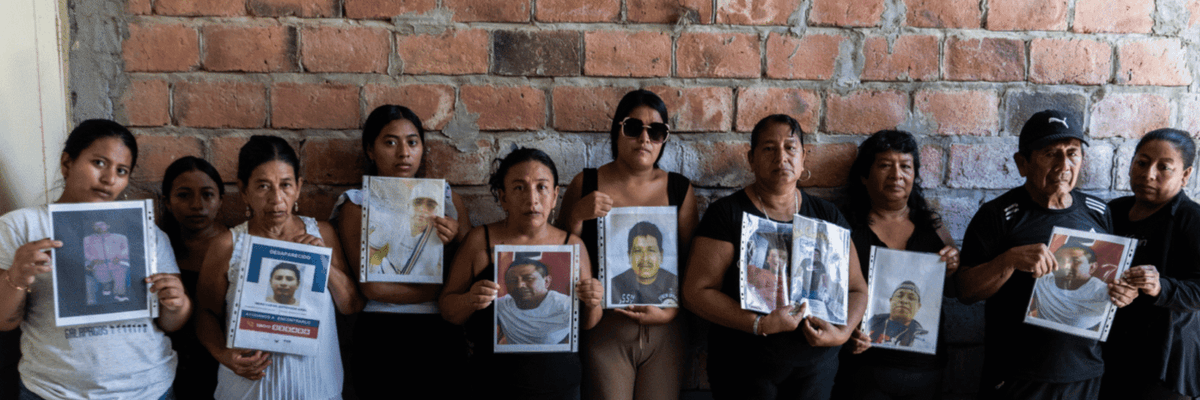
Family members hold photos of their loved ones, who have been missing at sea since January 20, 2026, when their fishing boat “went up in smoke” in international waters.
(Photo by Billy Navarrete/CDH Guayaquil)

Julia Conley
Jul 21, 2026
COMMON DREAMS

Amnesty International is calling for a full investigation by the US government into the alleged bombing of an Ecuadorian fishing boat, the Fiorella, last January, as the family members of eight disappeared fishermen have spent months demanding answers about what happened to their loved ones in the midst of the Trump administration’s boat bombing campaign in the Caribbean Sea and Pacific Ocean.

In “Operation Southern Spear,” which the Trump administration has said is aimed at stopping drug trafficking from Latin America and in which at least 221 people have been killed in more than 60 bombings, US Southern Command has frequently announced strikes in the region since they began in September.

In the case of the Fiorella, the US military did not issue an announcement of a bombing after the boat “went up in smoke” on January 20, after which eight fishermen who were on board went missing in the midst of Operation Southern Spear.

Amnesty noted on Monday that in the case of two other Ecuadorian fishing vessels, Negra Francisca Duarte II and Don Maca, which were reportedly struck by drones in March and whose surviving crew members said they were captured and tortured by US forces, US Southern Command also did not publicly acknowledge the strikes, “despite reports from survivors stating that both vessels were allegedly sunk by unmanned aerial vehicles bearing markings attributed to the United States.”

“If it were confirmed that the United States was responsible for the strike on the Fiorella, as well as for the strikes against the Negra Francisca Duarte II and the Don Maca, the total number of extrajudicial executions, enforced disappearances and other serious human rights violations associated with these operations could be much higher than previously estimated,” said Amnesty.


The group’s Evidence Lab used a vessel monitoring system to reconstruct the route covered by the Fiorella, finding the boat set sail from Jaramijó with 10 crew members on January 15.

The boat lost its internet connection shortly after setting out and went in and out of international waters, also sailing in the Galapagos Exclusive Economic Zone, between January 15-19.

“During the first days of the trip, no major incidents were reported,” said Amnesty. “However, from the fourth day onwards, the Fiorella was allegedly subjected to sustained monitoring by aircraft, patrol boats and drones bearing United States markings. Juan Carlos Valencia, the fishing boat’s captain, sent daily satellite messages to his family expressing his growing concern about the surveillance.”

On the morning of January 20, the boat sent two skiffs out with baited hooks, and at around 1:00 pm the two crew members on one of the boats saw “a large column of smoke in the distance in the direction of the Fiorella.” The two crew members on the skiff were rescued by another fishing boat two days later, but “nothing more has been heard of the Fiorella or the second skiff since,” said Amnesty.

Three months after the Fiorella disappeared following the apparent attack, the local organization Standing Committee for the Defense of Human Rights reported that the 36 crew members who had been aboard the Negra Francisca Duarte II and the Don Maca had been detained by US personnel after their boats were struck by drones, before being eventually returned to Ecuador.

Amnesty International, which met with the families of the disappeared crew members from the Fiorella, said the relatives suspect their loved ones may also have been captured and transferred to another country by the US.

“The families of the eight individuals whose whereabouts are unknown fear that this is a case of enforced disappearance at the hands of the United States,” said Ana Piquer, Americas director at Amnesty International. “The US and Ecuadorian authorities must confirm or deny whether state agents from either country were involved, take all necessary steps to ascertain the fate and whereabouts of the victims, and provide reliable evidence showing what happened to them.”

Family members reported that Ecuadorian officials have alluded to allegations that their loved ones were involved in drug trafficking and were therefore attacked by the US as part of Operation Southern Spear.

“The commander said to us: ‘You know what they went to do, so why are you looking for them?’” the daughter of one missing fisherman told Amnesty. “This made me really angry, and I said to him: ‘I’m here to look for my dad, all they did was go fishing. You should show some compassion and tell us the truth.’ The next day we went again [to the port authority] and they simply closed the door on us.”

The Ecuadorian Public Prosecutor’s office has not submitted a formal request to the US for information to complete an investigation into the Fiorella‘s disappearance, said Amnesty.

“It’s as if the ship simply vanished and no one cares how it happened or what became of the people on board. Perhaps it just flew away? More than six months on from the disappearance, the Ecuadorian authorities must provide a clear account of what actions they have taken to establish the facts, what they know, what they do not know, and how they intend to address the legitimate demands of the families of those disappeared. The criminal investigation into these events must continue until those potentially responsible are identified and brought to justice,” said Piquer.

She added that “the Department of Justice and the investigative authorities of the US armed forces must investigate and establish possible criminal responsibility not only in relation to the Fiorella, but also for all other strikes on vessels on the high seas.”

“Similarly, the US Congress must drive a parliamentary inquiry into this serious incident, with hearings and reports designed to establish the facts and determine the possible involvement of public agencies or private entities under its authority,” she said. “In addition, all states must suspend international cooperation on intelligence and military equipment that could be used in such illegal operations.”

US-Ecuador Military Partnership Brings Torture, Deadly Drone Strikes, and Disappearances

“US-Ecuador cooperation on security has been too opaque and too dangerous for Ecuadorians,” said a representative for Human Rights Watch.


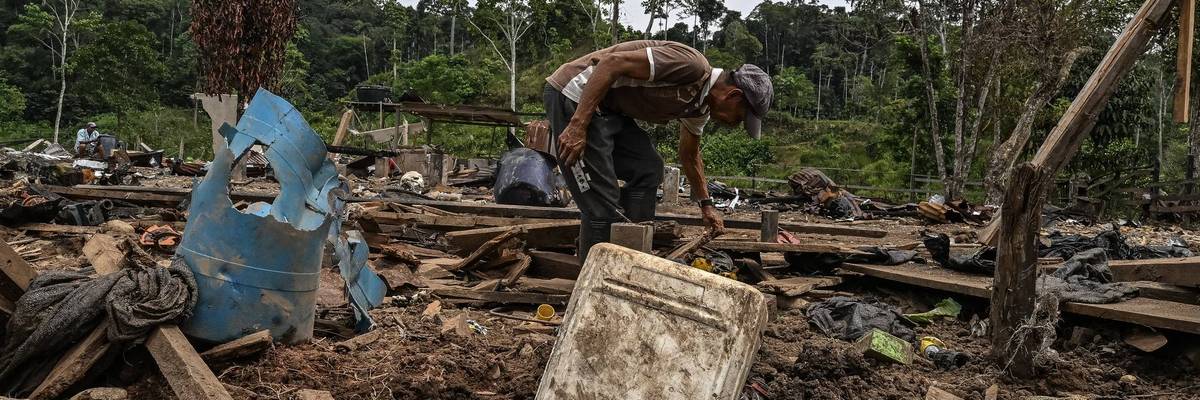
Farmer Jose Pena looks for belongings amid rubble after a bomb dropped by the Ecuadorian army in the Lago Agrio region, Sucumbios province, Ecuador, on the border with Colombia, on March 18, 2026.

(Photo by Luis Acosta/AFP via Getty Images)

Stephen Prager
Jul 21, 2026
COMMON DREAMS

Human rights advocates are urging Congress to investigate the deepening military relationship between the US and Ecuador, which they say has been marred by severe abuses against civilians, including torture, arbitrary detentions, unexplained drone strikes, and disappearances.

A report out Tuesday from Human Rights Watch documents how the Trump administration’s cooperation with the right-wing government of Ecuadorian President Daniel Noboa in response to organized crime in the country has been carried out under a veil of secrecy that has left few safeguards in place to protect human rights.

Dozens of victims, witnesses, lawyers, and others were interviewed for the report, which provides details about four incidents in which ordinary people were subject to abuse allegedly by Ecuadorian forces trained and armed by the United States as part of what the governments have called “Operation Total Extermination.”

In one case—which was reported on by Common Dreams after being documented by local outlets in early March—Ecuadorian soldiers partnered with the US and stormed into the rural town of San Martín along the Colombian border in search of facilities owned by an armed group known as the Border Commandos.

Soldiers detained four dairy farmers without evidence of a crime and interrogated them for hours while beating, kicking, and striking them with rifle butts. One of the men said he was taken to the main house on the farm and waterboarded. According to the men, the soldiers doused the house with gasoline and set the property on fire.

Soldiers fired their weapons at another group of villagers who’d come to ask about the workers, which caused them to flee.

The four men were later taken to an unidentified military facility, where they said they were doused with water and electrocuted. Two of the men said soldiers pointed guns at them and threatened to kill them and cut off their fingers unless they confessed where they were keeping drugs and arms.

The men were released hours later without charges, and prosecutors said the soldiers failed to provide sufficient evidence to charge them. Human Rights Watch found they had no criminal records.

Days later, the military returned and dropped munitions on the remnants of the burned property and two others that had been abandoned. Human Rights Watch did not find evidence that the destroyed properties had any connection to armed criminal groups.

In a hearing before the US Senate Armed Services Committee, Gen. Francis L. Donovan described the operation as a “success” and said Ecuadorian forces had acted “professionally.” The Trump administration has said US forces were “present” for the operation, but has not disclosed their role in the bombing of the houses or the torture of the farmworkers.


The Human Rights Watch report also details three attacks on fishing boats between January and March off the coast of the Galápagos Islands, which are possessed by Ecuador.

On January 20, the Fiorella disappeared along with eight crew members who remain missing more than six months later. Two surviving crew members, who’d left the main vessel to set fishing lines, said they suddenly lost contact with the ship while they were waiting to be picked up. As they searched for the vessel, they saw a “column of smoke” off in the distance, but no sign of the Fiorella.

They added that in the days before the ship went missing, they had seen what they thought were surveillance drones flying overhead as well as a gray patrol vessel flying an American flag nearby.

The families of the eight missing sailors have been demanding answers about their whereabouts for months with little response from the Ecuadorian government. The United Nations has issued urgent actions on behalf of the fishermen, calling on Ecuador to immediately search for them.

“The families of the eight individuals whose whereabouts are unknown fear that this is a case of enforced disappearance at the hands of the United States,” said Ana Piquer, Americas director at Amnesty International, on Monday. “The US and Ecuadorian authorities must confirm or deny whether state agents from either country were involved, take all necessary steps to ascertain the fate and whereabouts of the victims, and provide reliable evidence showing what happened to them.”

In March, two other boats—La Negra Francisca Duarte II and Don Maca—were hit with drones off the Galápagos. In both cases, the shipwrecked men were picked up by a blue and white ship by armed personnel wearing American military attire.

The fishermen were hooded, tied up, and in some cases beaten before being left on a hot metal deck for several hours without food, water, or adequate medical care.

Members of both crews said they saw the alleged US personnel destroy their fishing boats. They were then handed off to Salvadoran authorities and later sent back to Ecuador. Several of the men sustained serious injuries from the drone attacks, including severe burns, hearing loss, vision loss, broken and dislocated bones, and wounds from drone propellers.

Ecuadorian authorities have not confirmed that the attacks took place. According to the captain of La Negra Francisca Duarte II, and later an Ecuadorian port captain, Ecuadorian Coast Guard officers had boarded their ship for a routine inspection and found no evidence of illicit activity, just eight hours before the vessel was struck. No such inspections were reported aboard Don Maca.

The attacks closely resemble the ongoing campaign of extrajudicial boat bombings carried out by the United States, known as “Operation Southern Spear,” in which at least 221 people have been killed across more than 60 attacks.

Though 13 of the survivors said they were detained by what appeared to be US personnel, the Department of Defense and Coast Guard denied involvement in all three attacks off the Galápagos.

“US-Ecuador cooperation on security has been too opaque and too dangerous for Ecuadorians,” said Juanita Goebertus, Americas director at Human Rights Watch. “Before more harm is done, the US Congress should demand real answers and effective safeguards.”

“Joint security operations against organized crime,” Goebertus added, “should not become a cover for abuses.”


Report Exposes Decades of Climate Polluters Pushing the ‘Fraud of Clean Natural Gas’

“Big Oil and the gas industry knew decades ago that methane was a harmful climate pollutant, but they manufactured the myth of ‘clean’ natural gas in order to protect and expand their business.”


The Ruby Pipeline runs through the area where the Stratos Project, a proposed data center, will be built in Box Elder County on May 15, 2026 near Snowville, Utah.
(Photo by Natalie Behring/Getty Images)

Stephen Prager
Jul 21, 2026
COMMON DREAMS


Gas companies knew about the climate harms of natural gas much earlier than previously thought and downplayed them to the public, according to a new trove of documents unearthed by an environmental activist group on Monday.

A report released Monday by the Center for Climate Integrity (CCI) found that—much like Big Oil had deceived the public about the planet-heating impact of oil—gas companies that pushed their product as a “clean” alternative had downplayed natural gas’ production of methane, a greenhouse gas that is about 80 times more potent than carbon dioxide over the first 20 years.


The report, which was created through an examination of newly discovered documents and confidential reports, as well as expert interviews, determines that the industry was aware of these harms as far back as 1968, when a report commissioned by the American Petroleum Institute found that methane in the atmosphere was connected to “oil fields” and “[gas] distribution system leakage.”

“Big Oil and the gas industry knew decades ago that methane was a harmful climate pollutant, but they manufactured the myth of ‘clean’ natural gas in order to protect and expand their business, with no regard for public health or the climate impacts that they knew would result,” said Richard Wiles, president of CCI.

The report examines how the American Gas Association (AGA), an industry group representing many industry giants, hired top public relations firms to change the nation’s perceptions of gas as a dangerous pollutant.

Despite acknowledging behind the scenes that they lacked “clear, simple, substantiating facts” to vouch for its safety, industry ad campaigns sought to associate gas with nature, simplicity, and cleanliness. One campaign emphasized that it was “cleaner than coal” and created “virtually no emissions.”

The industry also created its own research institute to peddle studies to the public that disrupted a growing consensus around the dangers of methane by emphasizing the uncertainty of the findings and casting doubt on their connection to natural gas.

All the while, internal industry research was finding that methane was not only a major driver of the greenhouse effect, but was being released in far greater quantities than previously known, to the point where it was just as dirty, if not dirtier than coal.

Despite this, the industry helped to keep the “myth” of clean natural gas alive for decades. In the 1990s, the industry funded and provided much of the underlying data for an Environmental Protection Agency (EPA) study concluding that the amount of methane produced by natural gas was low enough that it could be considered a “bridge fuel” to reduce emissions.

Though later research would demonstrate that the study had vastly underestimated the amount of methane being emitted by gas producers, the damage had been done, and the number was cited by the industry for decades to promote its product as a green alternative.

According to a poll conducted by CCI with Data for Progress, 50% of likely voters still believe that natural gas is a form of “clean energy.”

“The fraud of clean natural gas has been essential to the industry’s success in the marketplace, and the idea that gas is climate-friendly has been at the heart of the rapid expansion of gas infrastructure over the last two decades,” the report says.

The Center for Climate Integrity has argued that fossil fuel companies should be required to compensate the public for decades of deception that has contributed to the climate crisis.

“Officials who continue to justify expanding natural gas reliance by still claiming it’s clean or safe for the climate are using the same script and manipulated science that gas executives and their PR teams concocted decades ago,” Wiles said. “It’s time that these profoundly dangerous lies are finally put to rest. By exposing the gas industry’s deception, we can get one step closer to accountability.”
True Universal Healthcare Means Medicare For All, Not a ‘Public Option’

As politicians debate “universal healthcare,” we need those two words to be much more than a campaign slogan or an empty promise. Healthcare must be a true human right, easily exercised by every single person in America.

     
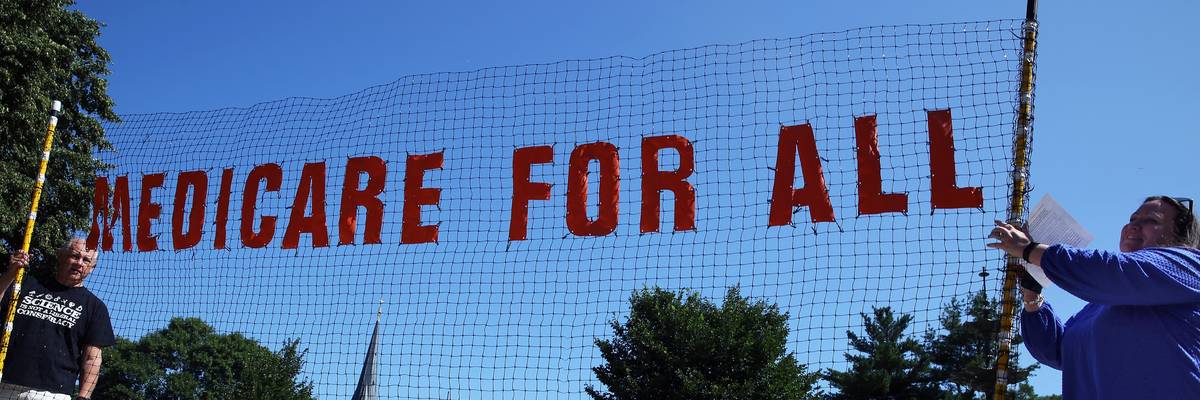
Bill Weber of Portland, Maine and Marie Follayttar of South Portland unfurl a see-through banner at the start of a rally at Lincoln Park in Portland on Saturday as part of a national effort to demand improved and expanded Medicare for everyone. Follayttar is the director of Mainers for Accountable Leadership.
(Staff photo by Ben McCanna/Portland Press Herald via Getty Images)

Common Dreams

As a Maryland pediatrician, I serve patients and communities who struggle at the broken edges of the American healthcare “system.” My patients are from families working three or four jobs with no benefits, just barely getting by. With more grace than I could ever summon, these families diligently follow the protocols to determine their children’s “eligibility” for healthcare. The American healthcare system scrutinizes a family’s pay stubs, bank statements, and employment status—a process called means testing—to determine if they are eligible for Medicaid or a pittance of help to purchase a private insurance plan. It is not enough to be a human being. Our healthcare system must determine where you are on the spectrum of worthy to unworthy before you can get any medical care.

My pediatric patients whose parents get health insurance through their employment are not doing much better. An inhaler that helps an asthmatic breathe easier is covered by the insurance corporation one year, but not the next. Similarly, a specialist who has masterfully managed a patient’s seizures for several years is suddenly “out of network.” Never mind that the patient’s parents are paying premiums from every single paycheck to that multibillion-dollar insurance corporation. Playing by the corporate greed machine’s rules does not protect patients from arbitrary decisions that are supposedly good for business.


Over the course of my 20 years working in healthcare, I have seen more and more patients with supposedly good insurance avoid necessary medical care because the out-of-pocket costs keep increasing. In the richest country in the world, families are stuck between the false choices of paying for rent, groceries, utilities, or healthcare. Choosing healthcare can cost anywhere from feeding your family to putting a roof over their head.

All of us are trapped in this infuriating maze of puzzles and peril. Looking at this cruel mess of a system, we have politicians saying a “public option” is enough to fix things. There are think tanks describing a system of “universal healthcare” where the expensive (and yet, worthless) plans from private insurance corporations, the 50 shades of Medicaid, and a public option somehow achieve a magical harmony. To make things even more complicated, it is unclear what exactly a public option could look like. It could mean patients have the option of buying into Medicare or Medicaid. Or it could mean a separate public insurance plan at the federal level, possibly available to everyone or possibly just the ones deemed needy enough.

Medicare For All is true universal healthcare, where patients and families have peace of mind whenever and wherever they need medical help.

We need to be clear about what “universal healthcare” ought to mean. Everybody getting expensive-but-worthless plans from insurance corporations is universal financial stress, not universal healthcare. Similarly, adding any kind of “public option” fragment to a ridiculously fragmented system is universal confusion, not universal healthcare.

Insurance corporations have a long track record of deploying lobbyists and misinformation to undermine provisions of the Affordable Care Act. It is foolish to think these greed machines will become good-faith partners in our healthcare, competing fair and square with any kind of public option. Corporate lobbyists will see to it that any public option uses complicated means testing to determine which members of the public are worthy or unworthy of the care. These corporations will also manipulate their own plans to shut out patients who need healthcare the most, leaving them to a public option struggling to pay doctors and hospitals. Insurance greed machines do not want competition, and will undermine a public option any way they can.

Rather than tinker with a corporate-driven healthcare system determined to put profits before patients, let’s build universal healthcare through Medicare For All. Because healthcare is a human right, Medicare For All guarantees every single person living in America is eligible. We can save billions of dollars when we stop scrutinizing who is worthy or unworthy. Medicare For All provides the kind of coverage that stays with people from cradle to grave. It is mobile coverage, staying with patients from state to state, or job to job. Hospitals and clinics will remain open and properly staffed because Medicare For All puts patients first, not profits. Because all 342 million of us are covered, Medicare For All will have powerful leverage to negotiate with Big Pharma about the cost of prescriptions. Medicare For All is true universal healthcare, where patients and families have peace of mind whenever and wherever they need medical help.

We have tolerated an intolerable healthcare system for far too long. In the coming years, as politicians debate “universal healthcare,” we need those two words to be much more than a campaign slogan or an empty promise. Healthcare must be a true human right, easily exercised by every single person in America. We can and we will make that right a reality with Medicare For All.
Consumer Groups Warn Trump Picks for Product Safety Agency Could Enable His Corruption

The president’s attempt to control the commission “is particularly troublesome” given the financial stakes that he, his family, and his supporters have in products the agency regulates, said dozens of groups.


As then-former President Donald Trump campaigned for a second term on June 9, 2024 in Las Vegas, Nevada, an attendee displayed a pair of gold sneakers he sold to supporters.

(Photo by Eric Thayer for The Washington Post via Getty Images)

Jessica Corbett
Jul 21, 2026
COMMON DREAMS

Nearly a month after the US Supreme Court overturned almost a century of precedent to give President Donald Trump king-like power to purge independent agencies, consumer groups on Tuesday sounded the alarm over his nominees to the Consumer Product Safety Commission.

Before the high court’s recent ruling, Trump last year fired the three Democratic commissioners appointed by his predecessor—hamstringing the CPSC, which needs at least three members to conduct official business, but currently only has acting Chair Peter Feldman.

Trump nominated Karen Sessions as a commissioner in February and Brien Lorenze, the agency’s executive director, in early June. Later last month, the GOP-controlled Senate began considering the nominees, but has not yet confirmed them.

In a Tuesday letter to Sens. Ted Cruz (R-Texas) and Maria Cantwell (D-Wash.)—respectively, the chair and ranking member of the Senate Committee on Commerce, Science, and Transportation—dozens of consumer groups detailed their concerns.

Led by the Consumer Federation of America and National Consumers League, the coalition urged the senators “to protect the independence and nonpartisanship” of “the nation’s chief household product safety regulator,” stressing that “hazards have no partisan leanings, and neither should the commission tasked with addressing them.”

The letter highlights that the agency, created by Congress over five decades ago, cannot have more than three commissioners affiliated with the same political party, and the law bars all of them “from owning stock or bonds of substantial value in a company that sells or manufactures consumer products, or from being in ‘any other manner pecuniarily interested in such a person.’”

“Historically, the agency’s independence has buffered the commissioners from political pressure from the White House and large donors. This has ensured that the agency has acted with transparency and a diversity of views, which has benefited the American people,” the groups wrote. “Further, the presence of minority commissioners provided a layer of oversight and accountability on CPSC actions.”

“With this independent and nonpartisan structure, the CPSC has had a lifesaving effect,” the coalition emphasized, pointing to drops in residential fires, child poisonings, bicycle and pool injuries, and deaths from cribs, garage door incidents, and refrigerator entrapments.

The organizations stressed their concern that Trump ousted “the three Democratic, Senate-confirmed CPSC commissioners” without cause, and then “nominated two individuals of his own political party, threatening to further undermine the independence and nonpartisanship of the CPSC.”

“Silencing the voices of subject matter experts with whom the president politically disagrees or who may not serve his financial interests can have a chilling effect on the CPSC’s functions,” they argued. “The president’s assertion of control over CPSC commissioners has eliminated the transparency provided by minority commissioners and the independence of those who remain.”

“This is particularly troublesome given the conflict of interest created by the president’s financial stake and those of his family and supporters in consumer products the CPSC is entrusted to regulate,” the groups noted.

Specifically, as the letter lays out:
President Trump financially benefits from the distribution of a vast array of consumer products, including Trump Watches, Trump Sneakers, and “45” Guitars. The president also has substantial financial interests in major manufacturers, retailers, and online marketplaces, including Whirlpool Corp., Newell Rubbermaid, Macy’s Retail Holdings, and Amazon.com Inc. The Trump Organization, helmed by Donald Trump Jr. and Eric Trump, sells a wide variety of consumer products, including toys and children’s products; apparel, footwear, and accessories; sporting goods; pet products; and household goods such as drinkware, kitchenware, linens, candles, and home décor. First Lady Melania Trump, through MelaniaTrump.com, is associated with the sales of jewelry and Christmas ornaments. Lara Trump and Kai Trump sell apparel through their respective online stores. Secretary of Education Linda McMahon maintains a significant financial stake in TKO Group Holdings, which has lucrative licensing deals for World Wrestling Entertainment toys, apparel, and accessories. Mike Lindell, a prominent supporter of the president, is the founder of MyPillow, which sells bedding and apparel. Former special government employee Elon Musk profits from sales of Tesla’s Powerwall systems and the Tesla Cyberquad for children. Political ally and Ultimate Fighting Championship (UFC) CEO Dana White profits from UFC’s sale of apparel, combat-sport equipment, and collectibles.

“These extensive financial and familial interests heighten concerns that the president could use his authority to influence CPSC enforcement decisions in ways that protect his and his associates’ interests, as the administration has done in matters before other federal agencies,” the letter warns, citing various actions involving the US Department of Justice and Securities and Exchange Commission.

In addition to those actions—from the attempt to create an “Anti-Weaponization Fund” to pay off Trump allies, to dropping investigations into his backers—the president has blatantly cashed in on his return to the White House, pocketing at least $2.2 billion, according to recently released annual financial disclosures.

“We are concerned that without balanced representation at the CPSC, this small agency with a big mission will be unable to independently carry out its congressionally mandated duties and provide the public with the transparency it deserves,” the coalition told Cruz and Cantwell. “The CPSC is no place for political favoritism. We therefore urge you to oppose reporting favorably the nominations of Brien Lorenze and Karen Sessions to serve as CPSC commissioners.”

Letting Fraudsters Run Wild, Trump Justice Department Abandons Corporate Crime Enforcement

“The Trump DOJ’s grotesque retreat from corporate crime enforcement leaves Americans increasingly vulnerable to tainted food, workplace exploitation, environmental destruction, widespread ripoffs, and all-around illegal corporate predation.”


Acting US Attorney General Todd Blanche attends an address to the nation by President Donald Trump on July 16, 2026.
(Photo by Saul Loeb/Pool/Getty Images)

Jake Johnson
Jul 20, 2026
COMMON DREAMS


US President Donald Trump’s Justice Department is systematically taking a softer approach to corporate crime, letting companies and executives that have admitted to wrongdoing off the hook with no charges.

The Wall Street Journal reported over the weekend that “so far this year, 12 companies have pleaded guilty to federal criminal charges. At least six companies have reached deferred prosecution agreements, including refiner Phillips 66 and medical-waste specialist Stericycle, acquired by Waste Management in 2024.” The Journal added that while Acting US Attorney General Todd Blanche and other officials have signaled that the Justice Department is “focusing on prosecuting employees rather than companies, it has also granted leniency or dropped charges against people it accused of wrongdoing.”

“The Trump DOJ’s grotesque retreat from corporate crime enforcement leaves Americans increasingly vulnerable to tainted food, workplace exploitation, environmental destruction, widespread ripoffs, and all-around illegal corporate predation,” said Rick Claypool, a researcher at the consumer advocacy group Public Citizen who has been tracking the fall of corporate enforcement during Trump’s second White House term—which has been rife with corruption and profiteering at the very top.

Claypool called the Trump Justice Department’s lenient approach to corporate criminals “an absolute outrage” and that the trend is “going from bad to worse.”

The Journal lays out several examples of the Justice Department abandoning enforcement efforts against prominent companies. “In matters involving Alibaba, EagleBank, and Abbott Laboratories, the department declined to charge companies even when prosecutors thought executives or managers were involved in the wrongdoing,” the newspaper reported. “In those cases, the department didn’t charge any individuals.”

“The Justice Department this year dropped its long-running prosecution of Turkish state-owned lender Halkbank for allegedly evading US sanctions on Iran,” the Journal added. “And last year, the Trump administration dropped charges against Boeing. The aerospace giant had been set to plead guilty to misleading air-safety regulators but instead paid a $243 million fine and received a nonprosecution agreement. That is the same form of leniency that prosecutors granted to Alibaba and EagleBank, which requires them to admit wrongdoing but spares them from being charged.”

Trump’s DOJ has also shown lenience toward corporate executives. “The department in January gave a deferred prosecution agreement to the chief executive of a technology contractor who had been charged with defrauding the Securities and Exchange Commission,” the Journal reported.

Bloomberg reported last week that the Justice Department plans to drop charges against “alleged mastermind of a cryptocurrency Ponzi scheme that prosecutors said defrauded investors of $722 million.”

According to Public Citizen’s tracker, the second Trump administration has canceled or frozen enforcement actions against more than 170 US corporations so far—including dozens of companies that donated to the president’s inaugural fund.

“The Trump administration is canceling accountability for corporate predators that cheat consumers, exploit workers, and illegally abuse their power at home and abroad,” Claypool said earlier this year. “The ‘law enforcement’ claims the White House uses as pretext for authoritarian anti-immigrant crackdowns, city occupations, and imperial resource seizures abroad lose all credibility when cast against the lawlessness Trump allows for the pursuit of corporate profits.”

‘Another Giveaway to Wall Street’: Advocates Sound Alarm on GOP Bank Deregulation Bill

The Republican legislative package “would leave the financial system dramatically weaker and make future bank failures and publicly financed bailouts more likely,” warned one advocacy group.


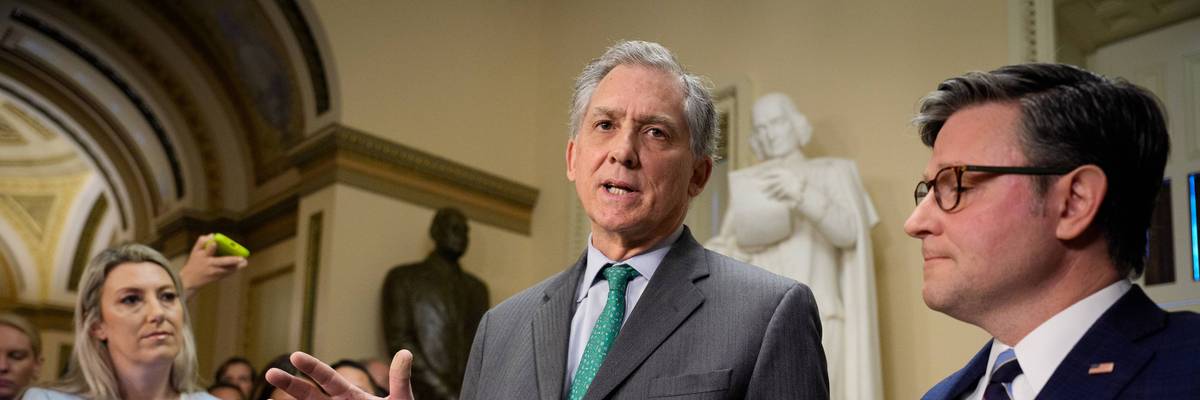
House Financial Services Committee Chair Rep. French Hill (R-Ark.), accompanied by House Speaker Mike Johnson (R-La.), speaks with members of the media on Capitol Hill on May 15, 2026.
(Photo by Andrew Harnik/Getty Images)

Jake Johnson
Jul 21, 2026
COMMON DREAMS

A broad coalition of advocacy organizations and labor unions warned Tuesday that Republican legislation currently moving through the US House of Representatives would deregulate Wall Street giants and increase the risk of another financial disaster under the guise of aiding community banks.

“This dangerous bank deregulation package would undermine core safeguards and supervision, push risk into the shadows, and make the next publicly financed bailout more likely,” an alliance of 28 advocacy groups wrote in a letter to members of Congress. “Further deregulation is especially alarming at a time when financial regulatory agencies are under political attack, pursuing industry-friendly agendas, and starved of resources, and when there is effectively no oversight of financial markets.”

Proponents of the GOP’s Main Street Capital Access Act (HR 6955), which is backed by major bank lobbying organizations and some Democratic lawmakers, characterize the bill as an effort to bolster small financial institutions by reducing their regulatory burdens. Oscar Valdés Viera, senior policy analyst for private equity and capital markets at Americans for Financial Reform, said that’s a ruse.

“Instead of providing meaningful relief from sky high credit card interest rates and late fees, this bill just lets big banks off the hook by weakening oversight, enacting carve-outs and exemptions from banking laws, and creating a pathway for banks to block commonsense regulatory safeguards that could reduce the likelihood and severity of financial crises,” said Valdés Viera. “HR 6955 would automatically raise major regulatory thresholds, weaken bank examiners tools, create new avenues to contest supervisory and enforcement decisions, reduce meaningful competition review for many bank mergers, and expand merchant banking arrangements that blur the line between banking and commerce.”

“The House majority is pushing a package of risky bank deregulation that is just another giveaway to Wall Street banks when the Congress should be laser focused on the affordability crisis,” Valdés Viera said.

The advocacy coalition’s letter urging lawmakers to block the legislative package—which could receive a vote in the House as early as Tuesday afternoon—points specifically to Sections 201-204 of the measure. The language in those sections, the coalition warned, “would raise statutory thresholds, extend ‘tailoring’ well beyond genuinely small and simple banks, and hard-wire automatic future threshold increases.”

“As a result, fewer institutions, activities, and risks would remain within baseline guardrails even as the financial system grows more complex and interconnected,” the coalition wrote. “The combined effect would be higher leverage and risk-taking, thinner cushions against losses, and weaker prudential standards. It would return the financial system to a pre-2008 pattern in which risk migrates out of view, problems build for years at midsize and large institutions, and the public is left holding the bag when those institutions fail.”

The Main Street Capital Access Act, sponsored by Rep. French Hill (R-Ark.)—a major beneficiary of finance industry campaign cash—cleared the House Rules Committee on Monday. Punchbowl reported that Rep. Bill Foster (D-Ill.), the ranking member of the House Financial Services Committee’s subcommittee on financial institutions, is urging his Democratic colleagues to support the legislation, despite opposition from the top Democrat on the committee, Rep. Maxine Waters (D-Calif.).

“HR 6955 is Wall Street deregulation hiding as a community bank bill,” Waters said in her testimony before the House Rules Committee on Monday. “This bill lets even more of these large banks escape critical safeguards risking more failures. In fact, the sponsors of this bill were so zealous to raise thresholds, they increased one threshold that will aid bad actors who commit fraud against a bank.”

“Instead of letting Wall Street put Americans and our economy at risk again,” said Waters, “we should be working together to address the affordability crisis caused by Trump’s failed economic policies and endless war with Iran.”
Ken Paxton runs away as reporters bombard him over scandals

Matthew Chapman
July 21, 2026
RAW STORY


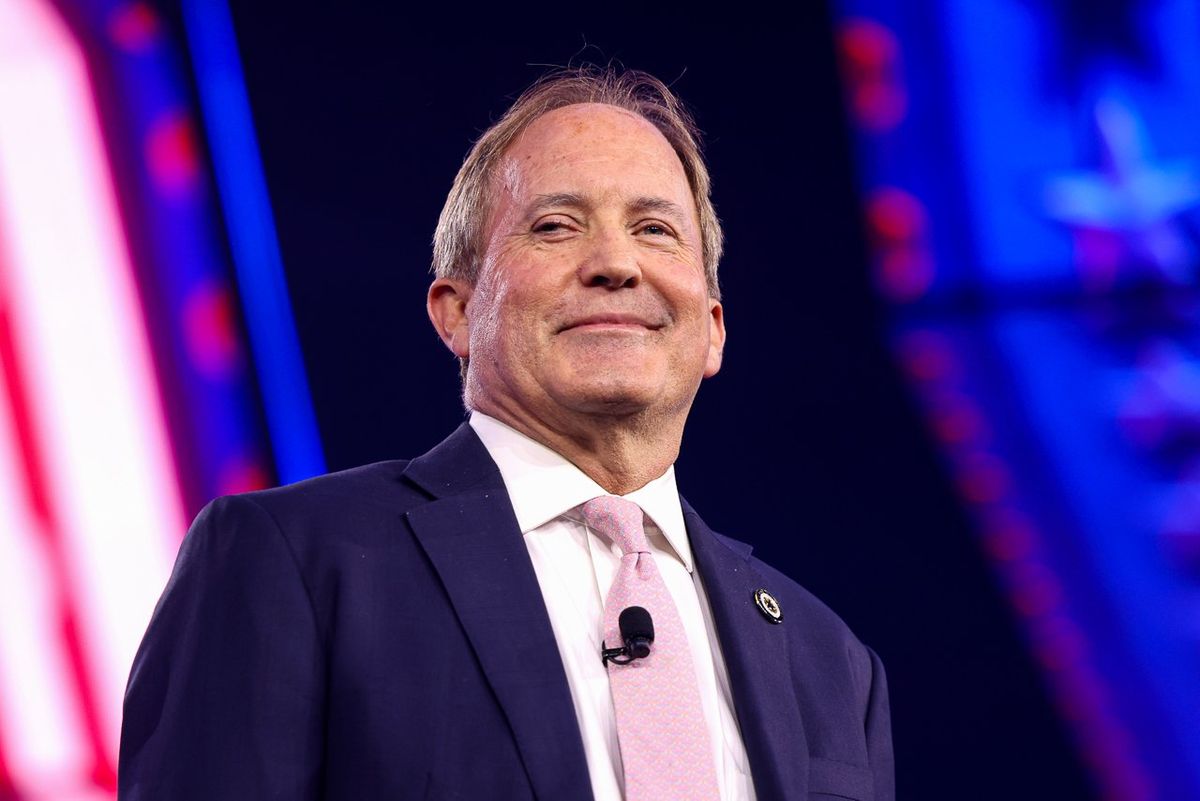
Gage Skidmore/Wikimedia Commons

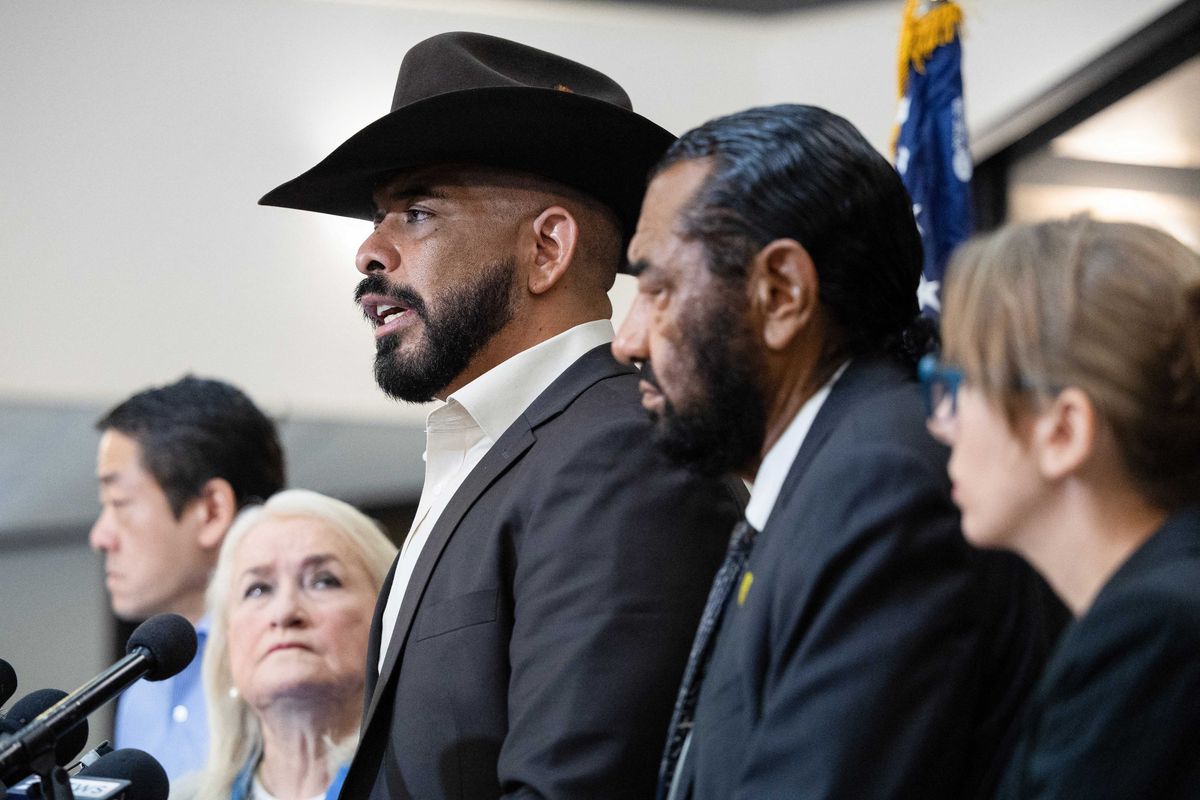
Texas Attorney General Ken Paxton's press conference to attack his Democratic rival, state Rep. James Talarico, went off the rails on Tuesday as reporters repeatedly asked him about his own political scandals — ultimately driving him to cut the event off early and run away.

The event was a gathering of Texas sheriffs, intended to focus on police issues and attack Talarico for supposedly wanting to defund law enforcement.

"General, I wanted to give you a chance to respond to State Representative Talarico and his campaign," said one reporter. "They've made a lot about the reports that have come out, one in the New York Times, about you acquiring properties worth—"

"Can we keep this to law enforcement?" Paxton said, cutting him off.

"I'm giving you the opportunity to answer—" the reporter said.

"I'd like to — because we're here with the sheriffs, I'd like to keep today to law enforcement," said Paxton. "So that's what I'm going to hand you. Questions about law enforcement."

Paxton's aide then called on another reporter.

"Will you answer a question about why you voted in Collin County?" asked the reporter. "Clear that up?"

Paxton shook his head with agitation, as his aide said, "So we're just going to do questions on law enforcement today, because we're joined with 22 amazing law enforcement officers."

Shortly after this, as another reporter tried to ask a question, the aide started waving her hand, saying, "We're going to get out of here. We're going to get out of here," as Paxton walked off the stage, leaving the sheriffs to stand around.


Trump's AZ endorsement on the line as McCain backs Dem over MAGA: 'Cindy's revenge'

Nicole Charky-Chami
July 21, 2026 
RAW STORY


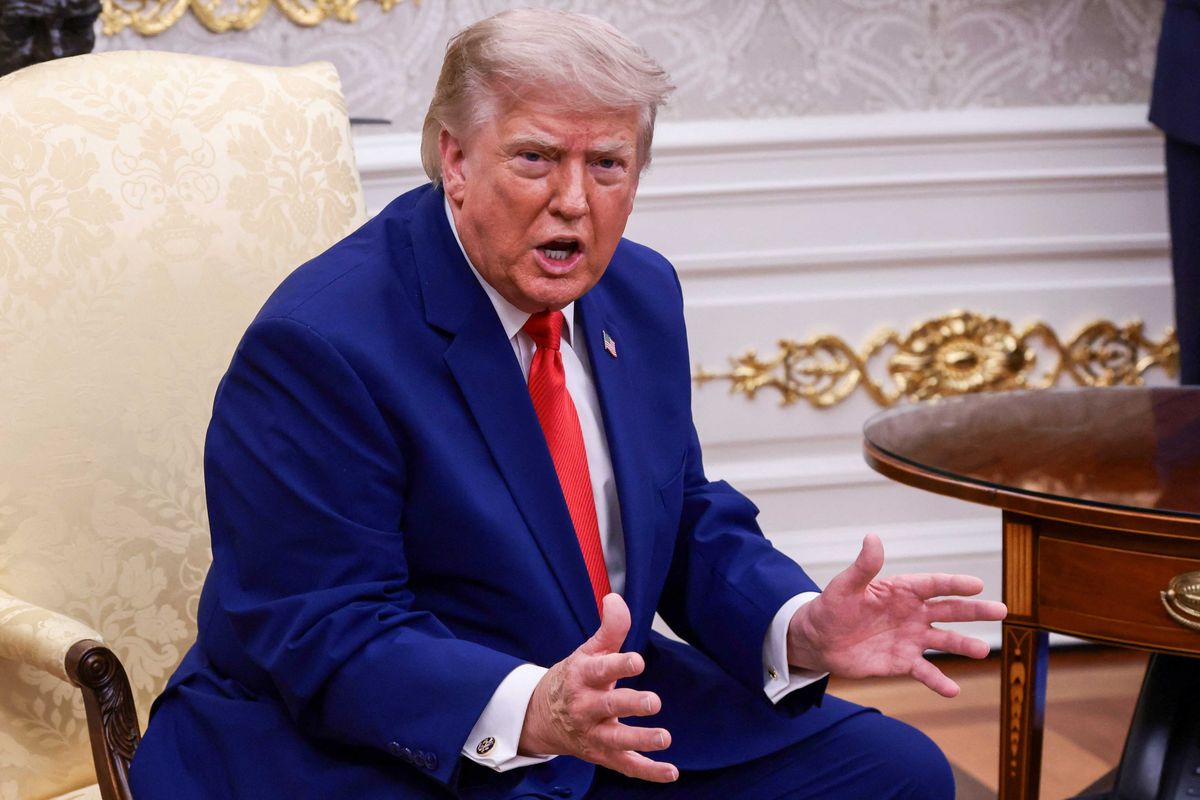
President Donald Trump meets with Lebanese President Joseph Aoun (not pictured) in the Oval Office at the White House in Washington, D.C., on July 21, 2026. REUTERS/Evelyn Hockstein

President Donald Trump's influence was expected to be tested on Tuesday night as Arizona voters will decide whether MAGA-backed candidate Rep. Andy Biggs (R-AZ) faces off in the Republican primary against Rep. David Schweikert (R-AZ) for governor — and an analyst revealed a stunning plot twist tied to late Sen. John McCain (R-AZ).

CNN anchor Erin Burnett talked to political commentator S. E. Cupp during a panel discussion about why this election primary was so significant.

"And there's a lot on the line for President Trump's endorsement tonight," Burnett said. "Because when it comes to governor's primaries, Trump has suffered two recent high profile losses. Those are in the primaries in Iowa and Georgia. Biggs' primary opponent is Republican Congressman David Schweikert, who has consistently won in one of Arizona's most competitive congressional districts. He argues that the party can't gamble with a MAGA taking on Democratic incumbent Gov. Katie Hobbs in the fall."

Biggs has tried to sell voters on his past working with McCain — yet voters might have a different view.

"But John McCain's wife, Cindy, is fundraising, and she's not fundraising for Schweikert," Burnett said. "She's fundraising for the Democratic Gov. Katie Hobbs."

Cindy McCain's move could have an impact on Arizona voters, in the state that has traditionally been Republican-led, Cupp explained.

"I don't think she would put it this way. And full disclosure, I'm friends with McCains, but this is sort of Cindy's revenge," Cupp said. "What MAGA tried to do to the McCains in Arizona — these really beloved public figures in the state was appalling. Not only did they try to tarnish his legacy, but they lied about the McCains. They said awful things about the McCains — Kari Lake in particular, just despicable. That turned off a lot of Arizona voters. I think MAGA really wanted to win without John McCain or move past John McCain because of Trump's sort of like hurt feelings with him."

It's likely voters will have something to say about it, Cupp added.

"But Arizona republicans are saying, 'No, if you want to win, you should act more like John McCain and sound more like John McCain. And so I think that's what Andy Biggs is trying to do. I'm not sure Arizona Republicans are going to buy that," Cupp said.


Arizona voters have had it with Trump election deniers' 'foolishness'


Kari Lake at the 2023 Conservative Political Action Conference (CPAC) in National Harbor, Maryland on March 3, 2023 (Consolidated News Photos/Shutterstock.com)
July 21, 2026  
ALTERNET


President Donald Trump continues falsely claiming that the 2020 election was stolen from him — and voters in a key swing state are fed up with it.

“It's bull,” an Arizona woman told MS NOW correspondent Jillian Frankel in an interview that aired on Tuesday. “I think, I mean, we can count the vote, and we should allow everybody to vote and make sure everything is counted, honestly. And I don't believe in rigged [elections], but there's always corruption, right? And that's gonna be high.”

An Arizona man told Frankel that Trump’s election denier rhetoric “plays negatively with me, because it's like, come on, that's foolishness. And no, that's just a waste of time, and I don't like that.”

Another Arizona man told Frankel that “I've heard that ever since the 2020 election, and it's bogus. And it's sad that someone who doesn't win just claims that it was all a sham. But if he would have won, would he have also claimed it was a sham? Probably not.”

MS NOW anchor Katy Tur cut away from the interviews to observe that “Donald Trump did try to claim the 2016 election was a sham until he started winning, and then he stopped. So there's evidence for that.” She then asked MS NOW political reporter Shawna Thomas for her views on the subject.

“I think it's actually, in some ways, telling, because the president spoke out about the elections and what happened in 2020 last week and gave that big speech,” Thomas opined, referring to Trump’s Thursday speech repeating his debunked claims about the 2020 election. “In some ways, that's part of why we are grouping these three candidates together, and we are talking about this and then putting that question to the voters. Jillian Frankel, our reporter who's out in Arizona, she talked to voters about many things. She asked that question, one, because we were curious what they would say in Arizona. But when she just asked them the open-ended sort of ‘why are you voting, what do you care about,’ they came back to the economy, policies, the things your guest in New York was talking about — gas prices. So I think in some ways he put another focus on election denialism that maybe voters wouldn't have even been thinking about as much, at least today, on Arizona primary day, if he hadn't done that.”

Trump’s obsession with the 2020 election speaks to what some experts believe is a deeper pathology in his overall outlook. Mother Jones' national voting rights correspondent Ari Berman spoke to Democracy Now’s Amy Goodman about that exact subject in an interview last week.

“The disturbing thing here is that Georgia is just a microcosm of what they’re planning to do to interfere in the midterms,” Berman told Goodman. “The raid on Fulton County, Georgia, the taking of 700 boxes of ballots, that is a preview of the type of suppression and intimidation the Trump administration wants to do everywhere in 2026. And we’re seeing this with the primetime address the president is planning to give.”


He added, “He’s going to lie and say there was rampant fraud and foreign interference in the 2020 election, so that he can then say we have to seize voting machines, we have to stop mail voting, we have to do all the things that he tried to do in 2020 but was unsuccessful.”

Berman concluded, “And the bottom line here is they keep lying about the 2020 election so that they can justify massive interference in the 2026 election. It really is that simple. You put all the different moves of the administration together, that is the underlying goal, to build a narrative that will justify some kind of unprecedented intervention in the midterms to challenge how people vote, how votes are counted and how elections are certified.”

Speaking with this journalist for Salon days before the 2020 election, Dr. Bandy X. Lee, a psychiatrist formerly from Yale University, predicted that the president’s displayed psychological tendencies would make it impossible for him to admit defeat.


“Just as one once settled for adulation in lieu of love, one may settle for fear when adulation no longer seems attainable,” Dr. Lee told this journalist at the time. “Rage attacks are common, for people are bound to fall short of expectation for such a needy personality—and eventually everyone falls into this category. But when there is an all-encompassing loss, such as the loss of an election, it can trigger a rampage of destruction and reign of terror in revenge against an entire nation that has failed him.”

She continued, “It is far easier for the pathological narcissist to consider destroying oneself and the world, especially its ‘laughing eyes,’ than to retreat into becoming a ‘loser’ and a ‘sucker’ — which to someone suffering from this condition will feel like psychic death.”

As conservative columnist George F. Will wrote for The Washington Post in February, Trump repeatedly failed to prove any fraud when given a chance to do so in court.

“Someone should read to him ‘Lost, Not Stolen,’ a 2022 report by eight conservatives (two former Republican senators, three former federal appellate judges, a former Republican solicitor general, and two Republican election law specialists),” Will wrote. “They examined all 187 counts in the 64 court challenges filed in multiple states by Trump and his supporters. Twenty cases were dismissed before hearings on their merits, 14 were voluntarily dismissed by Trump and his supporters before hearings. Of the 30 that reached hearings on the merits, Trump’s side prevailed in only one, Pennsylvania, involving far too few votes to change the state’s result.”


Will concluded, “Trump’s batting average? .016. In Arizona, the most exhaustively scrutinized state, a private firm selected by Trump’s advocates confirmed Trump’s loss, finding 99 additional Biden votes and 261 fewer Trump votes.”


Trump $10 billion BBC suit backfires as judge forces surrender of 'all' financial records

David Edwards
July 21, 2026 
RAW STORY


President Donald Trump attends an event to announce a deal with Eli Lilly and Novo Nordisk on to reduce the prices of GLP-1 weight‑loss drugs during an event in the Oval Office at the White House in Washington, D.C., on November 6, 2025. REUTERS/Jonathan Ernst

President Donald Trump's $10 billion BBC defamation suit backfired Tuesday when a federal judge used Trump's own damage claims to force the surrender of his financial records.

U.S. Magistrate Judge Enjoliqué Lett made the ruling in Miami federal court following a three-hour hearing.

Trump filed the suit in December 2025, accusing the BBC of deceptively editing his Jan. 6, 2021, speech to make it sound as though he called for violence, according to CNBC.

"All of President Trump's brand, properties and businesses are impugned or said to have been impugned. Reputational, economic damages, all of that is now at issue in this case," Lett said, ruling that Trump's own damage claims left her no choice.

The ruling opens Trump's finances across more than 400 companies to scrutiny by BBC attorneys, Politico reported.

Trump attorney Al Brito told Lett the case had "evolved," arguing Trump now sought only reputational damages, not economic ones.

Lett said she lacked the power to strip those claims from the complaint.

"He ran for president of the United States on a platform of the art of the deal," BBC attorney Chuck Tobin said. "You cannot separate the man and his reputation from his operation of his businesses."

The hearing also addressed how far the BBC can dig into Trump's conduct on Jan. 6 — the day a mob of his supporters stormed the U.S. Capitol — with Lett ruling the network could explore how people heard his words, but no further.

"All of the impressions that were received by President Trump's statements on Jan. 6 are at issue," Lett said. "The full relitigation of Jan. 6 is not at issue."

The BBC is also pressing Trump to answer questions under oath, Politico reported. Tobin said the president's team was "dragging their feet on giving me a date for the president's deposition."

The BBC has asked U.S. District Judge Roy Altman — a Trump appointee — to throw out the suit entirely, arguing the British broadcaster does not have enough of a presence in south Florida for the court to have authority over it, according to Politico. Altman has yet to rule.


'Dangerous for democracy': Kalshi throws fit over Wisconsin law limiting election gambling

Matthew Chapman
July 21, 2026
RAW STORY


'Rolling casino dice' (Shutterstock)

The online gambling platform Kalshi publicly condemned Wisconsin election officials for simply reminding voters that it is illegal under state law to wager on elections they are voting in.

In a statement, Meagan Wolfe of the Wisconsin Elections Commission issued a warning.

"We want voters to understand that they cannot legally make a bet on an election and cast a ballot in that same election," Wolfe said. "We are not able to police someone placing a bet on these platforms, but it's important for voters to understand the consequences if they bet on an election outcome."

Betting on elections in Wisconsin is not inherently illegal, but voting in the same election you have placed a bet on is.

In response, Kalshi's elections division head Benjamin Freeman lashed out at state officials on X.

"THIS IS INSANE," he wrote. "The Commission is implying they will literally disenfranchise voters who use Kalshi to trade elections. This is blatantly unconstitutional and illegal. This is also pretty scary because Kalshi has hundreds of thousands of users in Wisconsin alone... Not only is the Commission's statement illegal and dishonest, it's active voter suppression!"

"I hope the Commission understands their mistake and retracts their statement, because this is really dangerous for democracy," Freeman fumed. "It's dystopian frankly. I'm still having a hard time processing how insane and harmful this rhetoric is."

Kalshi, which is predominantly used for sports betting but also allows people to bet on elections and a variety of other world and day-to-day events, bills itself as a "prediction market" where bets made on the site are "futures" akin to commodities trades. The Trump administration endorses this position, classifying Kalshi and its competitors in a way that seeks to exempt it from state gambling laws.

These platforms are believed to be rife with insider trading; the White House has had to scramble to prevent aides from betting on inside information about administration policy, and even President Donald Trump's teleprompter operator allegedly tried to pocket $100,000 off illegal bets on words Trump would say during his speeches.


Judge blocks ICE's bid to quickly deport witnesses of fatal Houston shooting

Bennito L. Kelty
July 21, 2026 
RAW STORY


Hugo Balderas-Ibarra, an immigration attorney representing the three men who were passengers in the van driven by Salgado Araujo, speaks during a press conference regarding the fatal shooting of Mexican motorist Lorenzo Salgado Araujo by an ICE agent, in Houston, Texas, U.S., July 10, 2026. REUTERS/Antranik Tavitian

A federal judge blocked Immigration and Customs Enforcement's attempt to hastily deport witnesses of a fatal shooting in Houston, according to reports Tuesday.

U.S. District Judge Keith Ellison issued an order on Monday blocking the deportation of Jose Trinidad Rojas Pliego and ordered ICE agents to keep him in the Southern District of Texas, CBS News reported. Pliego was a witness in the fatal shooting of Lorenzo Salgado Araujo, a Mexican immigrant killed by ICE agents earlier this month.

Salgado Araujo was fatally shot after ICE agents rammed his van, according to witnesses. Agents didn't have body cameras on, and little video footage captured the events leading up to his death. However, Salgado Araujo was transporting three men in his van when he was killed, and their attorneys have denied ICE's account of events.

According to reporting by the Texas Tribune, two of the passengers in the van said that two unmarked vehicles struck them from behind and the side before they stopped.

"Out of nowhere, they suddenly cornered us, and we told Lorenzo to stop the van," Rojas Pliego wrote in his statement, per the Texas Tribune. "When Lorenzo stopped the van, the officer shot him anyway."

Rojas Pliego added that it was "impossible to say that they were going to get run over. That's a lie — no officer was behind nor in front — they were on the sides."

The incident also came the same week that ICE agents in Biddeford, Maine, killed a Colombian immigrant. In both cases, the Department of Homeland Security, the parent agency of ICE, claimed that agents were acting in self-defense.