
July 29, 2026
By Aritra Banerjee
‘Cognitive Warfare’ has become one of the most debated concepts in contemporary security discourse. As artificial intelligence (AI), synthetic media, algorithmic amplification, and increasingly sophisticated influence operations reshape the global information environment, militaries, governments, and policymakers across regions, particularly in strategically contested environments such as the Indo-Pacific, are grappling with a fundamental question: does cognitive warfare represent a distinct form of strategic competition, or a new conceptual framework for understanding longstanding efforts to influence perceptions, beliefs, narratives, and decision-making?
The debate has also raised difficult questions around measurement, causality, ethics, and operational control. While advances in AI may significantly expand the speed, scale, and personalization of influence activities, questions remain about whether adversaries can reliably manipulate cognition in predictable ways, or whether the concept risks overstating what can currently be achieved.
In this conversation with Eurasia Review, Dr. Jeremiah “Lumpy” Lumbaca delves deep into the evolving debate surrounding cognitive warfare, its relationship with established disciplines such as Psychological Operations (PSYOP), Military Information Support Operations (MISO), Information Operations (IO), Information Warfare (IW), and Strategic Communication (StratCom), and the challenges involved in translating theoretical concepts into practical capabilities.
Lumpy Lumbaca, PhD, is a retired United States Army Special Forces officer and currently serves as a civilian professor of irregular warfare, resistance, counterterrorism, and special operations with the U.S. Department of War. He is also a Non-Resident Fellow with the Irregular Warfare Initiative (IWI). The views expressed in this interview are his own and do not reflect the official policy or position of the U.S. Government or the Department of War.
Drawing from his extensive body of work on cognitive warfare, Dr Lumbaca argues that the central distinction lies not simply in changing what people think, but in attempting to influence how individuals and groups form beliefs, interpret information, and make decisions. However, he cautions against assuming that cognitive effects can be easily measured, deliberately engineered, or predictably controlled in complex operational environments.
The conversation explores the role of artificial intelligence as a force multiplier for influence operations; the opportunities and limitations of AI-enabled persuasion; the challenges of assessing cognitive effects; the risks associated with offensive cognitive warfare; and the growing importance of cognitive resilience in contested information environments.
Dr Lumbaca also discusses why the defensive dimensions of cognitive security may currently offer a more practical path forward, highlighting the importance of resilience-building, prebunking, critical thinking, institutional credibility, and trusted communication systems in helping organisations and societies navigate an increasingly complex information landscape.
Q. In your recent Small Wars Journal essay, you reject both of the easy positions on cognitive warfare: that it is simply a recycled label for old practices, and that it is a wholly new domain with unique laws of action. What analytic threshold would have to be met before you would say a problem is genuinely “cognitive warfare” rather than better described as IO, MISO, PSYOP, IW, subversion, or StratCom?
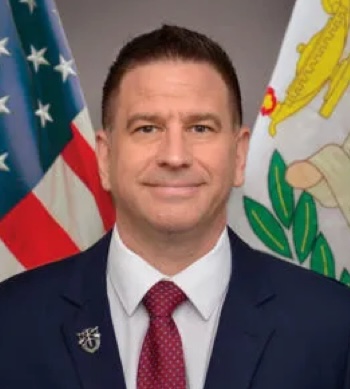
Dr. Jeremiah “Lumpy” Lumbaca
A: First, thank you for the chance to talk here. I must state explicitly up front that everything I’m sharing here today is in my personal capacity and does not reflect the official policy or position of the U.S. Government or the Department of War.
The threshold question is a definitional one. It hinges on the word “process.” Dr Frank Hoffman provided a definition of cognitive warfare that addresses this: the key is whether an operation targets how an adversary forms beliefs and makes decisions, rather than what they believe at any given moment. If you are pushing a narrative, correcting a false impression, or discrediting a source, that is PSYOP. The goal is a change in content. If the operation is designed to degrade the cognitive process itself, to erode the reliability of the mechanisms by which a person evaluates truth, to induce something like epistemic closure through sustained information overload or psychographically targeted curation, then you are now talking about cognitive warfare.
The secondary threshold is the scale and technical mechanism. Traditional influence operations are limited in their simultaneity. An AI system that generates thousands of individually tailored influence products targeting individual psychographic profiles, delivered simultaneously across a population (or at an individual), is doing something structurally different from what any PSYOP unit can currently replicate. The combination of that technical capacity and the process-level target is the key. The term ‘cognitive warfare’ should be reserved for operations that aim to restructure how an adversary thinks, rather than what they conclude.
Q. U.S. doctrine already defines IO as influencing or disrupting adversary decision-making and MISO as influencing foreign audiences’ emotions, motives, reasoning, and behavior. If those definitions are already broad, where exactly do you think ‘cognitive warfare’ adds explanatory or operational value: target, mechanism, time horizon, technical enablers, or organizational design?
A: All five, but the mechanism and the time horizon are the most important and the most underappreciated. The doctrinal definitions of IO and MISO describe goals: influence adversary decision-making, shape foreign audience emotions, without specifying the pathway. A PSYOP unit generating a commercial and an AI system running a sustained psychographic targeting campaign are both ‘influencing decision-making’ in the doctrinal sense, but the pathways are different. Cognitive warfare, in its most theoretical form, posits a specific neurological mechanism: repeated exposure to algorithmically curated content can produce structural changes in how the brain processes information. This is not done through persuasion but through neuroplasticity. This is a different claim about causation.
The time factor follows. You cannot induce neuroplastic change in an adversary theater commander’s cognitive processes during an operation cycle. The theory requires sustained, repeated exposure. That implies a peacetime and competition-phase activity with long lead times, which has major implications for authorities, campaign planning, and resourcing.
Q. It has been recently argued that cognitive warfare may be “dead on arrival” inside the U.S. military unless it confronts the same unresolved problems that weakened earlier information and influence efforts: measurement, norms, politics, and organizational structure. This sentiment is also echoed in numerous Global South military organisations as well. Do you agree with that diagnosis, and if so, which of those four problems is most likely to determine whether cognitive warfare survives as a serious military concept?
A: Cole Livieratos makes this argument in a recent publication with the IWI, and I think his diagnosis is largely correct. I engage it directly in one of my recent Small Wars Journal essays as well. As Cole pointed out, PSYOP and IO lost 74 percent of their budget between 2009 and 2015. Not because they failed, but because no one could prove they succeeded.
Of the four problems, measurement is the one that determines the fate of the others. The normative problem is real. It is manageable if you can demonstrate value. The political problem is a downstream function of measurement: without provable results, there is no constituency and the budget gets traded away. The organizational problem is real, but organizations can be built if leadership commits.
Measurement, however, is structurally resistant. The variables involved in attributing adversary decision outcomes to specific cognitive operations are, as Livieratos correctly notes, so numerous and so tangled that establishing causality is effectively impossible. You cannot separate psychological, organizational, and exogenous variables in a commander’s decision with the precision required by oversight bodies. The instinct to propose better metrics, decision latency, and decision error is right, but these improvements will not solve the fundamental attribution problem.
Q. Your Joint Special Operations University (JSOU) paper pushed strongly for cognitive warfare capability development in Special Operations Forces (SOF), while your newer essay appears more cautious about offensive claims, validation, and controllability. How has your own thinking evolved between those two pieces, and what prompted that evolution?
A: The honest answer is that I wrote the JSOU paper and then had to defend it in front of people who have been doing influence operations for 20 years. SOF operators, Combatant Command staff, and senior officials who had watched rebranding cycles before pushed back in ways I had to take seriously. When I presented the case for offensive cognitive warfare, psychographic profiling of adversary commanders, AI-generated narrative superposition, and synthetic media targeting, experienced professionals pointed out that they had been doing versions of this for decades without the AI. The targeting logic was the same: profile the target, exploit the profile, deliver through trusted channels. The AI adds scale and precision, but the logic was not new.
Two specific objections reshaped my thinking. The first was about controllability. A senior operator asked: even if you successfully overload an adversary commander’s cognitive processes and induce the epistemic failure the theory predicts, what do you actually get? A commander in cognitive overload might freeze, delegate to a subordinate with different vulnerabilities, or choose to escalate as his capacity to evaluate risk degrades. You can introduce chaos into cognition, but chaos is not a course of action. The causal chain from cognitive disruption to controlled behavioral change is unproven. It may be structurally uncontrollable.
The second objection was the evidentiary gap between the clinical research and the military application. The neuroplasticity claims in the JSOU paper draw from legitimate research: repeated stimulation of neural pathways does produce structural changes. Prolonged exposure to emotionally manipulative content does correlate with epistemic closure. But that research was not conducted in adversarial military contexts. Extrapolating from “social media use changes adolescent brain development” to “we can deliberately induce epistemic failure in a theater commander” requires assumptions that the evidence does not currently support. I still believe the mechanism is real, but the application is not yet operationally validated.
Q. You draw attention to the difference between changing what people think and changing how they think. In practical terms, how would you distinguish influence over attitudes from influence over belief formation, attention, interpretation, or decision style, and which of those do you consider realistically targetable in operational settings?
A: The distinction matters more in theory than most planners acknowledge. Attitude change, moving someone from opposing to supporting a policy position, for example, is what PSYOP has always done and what most influence operations are actually designed to produce. It is finite. It is reversible. It also does not require a structural change in how the mind processes information. Belief formation is a step deeper: it concerns the habits of evidence evaluation, source trust, and epistemic standards that determine which new information gets accepted and which gets rejected. Attention shaping is more tractable and closer to what algorithmic curation actually does, not telling you what to think but determining what you are exposed to long enough to form impressions. Interpretation and decision style are further out. They describe the heuristics and biases that shape how someone processes ambiguous information under pressure.
Of these, attention shaping is the most realistically targetable in operational settings, and AI has already changed it. If you can influence the information environment that shapes an adversary’s attention before a crisis, you can narrow the range of interpretations and options that feel salient when the crisis arrives. That is not a dramatic epistemic intervention, and it does not require neuroplasticity, but it is real, and it compounds over time. Attitude change remains the workhorse of most operational influence work. Belief formation and decision style are legitimate research targets for the medium term. Claiming operational control over them now is premature, in my opinion. That doesn’t mean we won’t get there, though.
Q. The literature now suggests that AI can generate persuasive content, adapt arguments in conversation, automate message variation, and support microtargeting at scale, but it also suggests that its real-world influence may be more incremental than revolutionary. Which specific operational tasks do you think AI has already changed in influence competition, and which claims about AI-enabled persuasion remain overstated?
A: The tasks AI has genuinely changed: content generation at scale, psychographic segmentation and message calibration, message variation and testing across large target populations, synthetic media production for deception and narrative support, and the detection of adversary influence operations through pattern analysis. These are not theoretical. Adversaries are doing them now.
What is likely overstated at this point is the claim that AI-generated persuasion can reliably and predictably change deeply held beliefs at scale in the short term. The research on AI persuasion shows incremental effects in controlled settings. Real-world information environments are noisier, more redundant, and more resistant to single-source influence than laboratory conditions imply. The idea that an AI-generated influence campaign can produce measurable and predictable changes in the decision-making of a hardened adversary commander within an operational timeframe remains difficult.
Q. Your work touches on neuroplasticity, neuroscience, and the possibility of deeper cognitive intervention, but the evidence base for battlefield-relevant neurocognitive control still looks thin. Where do you currently draw the line between near-term military relevance, medium-term monitoring concern, and speculative futurism?
A: Near-term military relevance covers what we already know affects cognitive performance under stress: sleep deprivation, information overload, decision fatigue, and the compounding effects of sustained psychological pressure. These are not new discoveries, but AI-enabled adversaries can now deliver information overload at a scale and pace that earlier influence operations could not sustain. Defending our own forces against these performance degraders is immediately actionable and does not require the neuroplasticity argument.
Medium-term monitoring concern, over the next five to ten years, covers the accumulating evidence on how algorithmically curated information environments affect belief formation and epistemic standards over time. The clinical literature is growing. Its translation into adversarial military applications is not yet operationally validated, but it is credible enough to watch closely and to invest in understanding. Neurostimulation technologies that affect attentional focus or decision speed, currently in clinical and sports performance contexts, also belong here.
Speculative futurism is everything that requires capabilities that do not currently exist: real-time neural monitoring of adversary decision-makers, deliberate and reversible induction of specific cognitive states in hostile commanders, and implantable or ambient neuromodulation of large populations. These may become relevant in decades.
Q. If cognitive warfare claims to affect adversary decision-making, what evidence would you actually accept as operationally meaningful? Are proposed measures such as decision latency, decision error, behavioral change, or trust degradation useful enough for planning, or are cognitive effects destined to remain partly unmeasurable in real conflict?
A: Cognitive effects will remain partly unmeasurable in real conflict, and the field would be better served by accepting that rather than searching for the metric that will finally satisfy those with oversight. Decision latency and decision error are real improvements over social media impressions as measures of effectiveness, but they do not solve the attribution problem. In a complex operational environment, separating the latency introduced by cognitive operations from that introduced by kinetic pressure, communications degradation, leadership friction, and the fog of war is not analytically tractable.
What I would accept as operationally meaningful: repeated, documented patterns of adversary decision failure in situations where the information environment had been deliberately shaped; behavioral changes in target populations that correlate across multiple independent operations; adversary countermeasures that suggest they perceive our cognitive operations as effective enough to warrant resource expenditure in response. None of these constitutes proof of causation. They indicate that the activity is creating friction.
Q. For SOF specifically, which mission areas do you now believe are most appropriate for cognitive warfare-related activity, and which should remain outside SOF lead responsibility because they demand interagency, civilian, educational, platform, or diplomatic ownership?
A: SOF are well-suited to cognitive resilience training embedded in partner capacity building: teaching partner forces to recognize influence operations, build critical-thinking habits into unit culture, and understand how adversaries exploit information environments in their specific regional contexts. Special operators living with, advising, and training partner forces for extended periods are positioned to deliver this in ways a visiting lecturer or a training package cannot. SOF is also appropriate for limited, targeted influence operations against specific adversary decision-makers in support of an approved campaign, where the target is specific, the legal authorities are in place, and the activity supports a defined operational objective.
Q. You appear more persuaded by the defensive case than the offensive one. If you had to design a realistic defensive cognitive security architecture for military organizations and democratic societies, what would its core components be: prebunking, trusted crisis communication, bias recognition, resilience training, platform cooperation, legal tools, or something else?
A: The core would start with prebunking and bias recognition training embedded at the unit level. The research on prebunking, inoculating against manipulation by exposing people to weakened forms of influence tactics before they encounter the real thing, is among the more actionable findings in the influence literature. It does not require proving neuroplasticity. It requires only building into unit culture the habit of identifying manipulation techniques before they hit.
Trusted crisis communication is the second pillar. Much of what adversaries exploit is not the disinformation they introduce, but information vacuums that institutions create through secrecy, inconsistency, or slow response. A system that communicates consistently, acknowledges uncertainty honestly, and does not wait for perfect information before speaking gives adversaries far less to work with.
Platform cooperation belongs here, but it is the most politically fraught component and should not be treated as a substitute for the others. Legal tools matter for the most egregious foreign influence operations, but move too slowly for operational timelines. The foundation that actually holds is built on people who know how they are being manipulated before the manipulation starts, which means training, honest communication, and institutions that have earned enough trust to be believed when they push back against adversary narratives.
Q. Many Western institutions remain organized around separate categories such as cyber, intelligence, PSYOP, IO, MISO, StratCom, public affairs, and diplomacy. If cognitive security is everyone’s responsibility, it may become no one’s responsibility; but if assigned to one office or command, it may become too narrow. What kind of institutional model would make sense?
A: The model I find most defensible is a federated one with a designated integrating function rather than a single owner. No single office should own cognitive security because the problem spans domains that require different authorities, different relationships with civilian institutions, and different timelines. The integrating function should be responsible for three things: common concepts so that the people in cyber, public affairs, intelligence, PSYOP, and diplomacy share a working model of the cognitive threat; shared indicators so that each function can recognize and report patterns that only become visible when you aggregate across domains; and doctrine that assigns clear accountability for specific activities rather than leaving everyone responsible for everything and therefore no one responsible for anything.
Q. What are the most important research questions that still need to be answered before cognitive warfare deserves more formal institutionalization, especially on mechanism, measurement, escalation, ethics, and civil-military governance?
A: On mechanism: what is the actual dose-response relationship between AI-curated information environments and changes in belief formation? The clinical literature on neuroplasticity is genuine, but the extrapolation to adversarial contexts involves assumptions that need field testing in conditions as close to operational as ethics and authorities permit. What exposure duration, intensity, and targeting precision are required to produce measurable process-level cognitive effects rather than attitude-level effects? This is not answerable from the current literature.
On measurement: is there a proxy indicator for cognitive effect that is observable from outside the adversary’s decision process, reliable enough to serve as a planning metric, and specific enough to support after-action analysis? The field needs sustained methodological investment here, with realistic expectations about what level of precision is actually achievable.
On escalation: how do adversaries interpret cognitive operations, and at what point does a sustained cognitive campaign cross thresholds that produce kinetic responses? This is under-researched compared to cyber escalation, and the dynamics are likely different because cognitive operations are harder to attribute and to demonstrate in ways that justify a proportionate response.
On ethics and civil-military governance: what oversight mechanisms can make offensive cognitive warfare programs legally sustainable and publicly defensible? What is the appropriate role of civilian review, legislative oversight, and judicial authorization for different categories of cognitive operation? These questions need substantive legal and ethical development, beyond policy memos.
Q. Some scholars argue that cognitive warfare should be understood less as a new operational domain and more as a cross-domain condition affecting cyber, information, intelligence, public affairs, strategic communication, and kinetic operations. Do you see cognitive warfare as a domain, a layer across domains, or a planning consideration?
A: I think a layer across domains is the most accurate description, though I would not treat it as a planning consideration in the sense of something that gets addressed in its own annex and then set aside. The human cognitive dimension is the base on which every other domain operates. Cyber operations produce effects that matter because human beings interpret and act on the disruption. Kinetic effects are significant partly because of what they communicate to adversaries and audiences, as much as because of what they destroy. Public affairs exists because of how military actions are perceived and narrated. Treating cognitive warfare as a separate domain with its own authorities, capabilities, and operational logic risks creating another institutional silo, a new row in the effects matrix that competes for resources without integrating with the others.
The more useful question is not “is cognitive warfare a domain?” but “how does attention to cognitive effects change how we plan, execute, and assess operations across all domains?” That question applies to the kinetic planner asking whether a strike will produce the narrative environment we want, to the cyber operator asking what the target’s human interpreter will do with a degraded system, and to the public affairs officer asking whether our communication creates cognitive space that adversaries can fill.
Q. In contested information environments, tactical actions can be rapidly reframed into strategic narratives by adversaries, media ecosystems, or platform dynamics. How should military organizations train personnel to anticipate the narrative consequences of their actions without making them overly risk-averse?
A: The goal is not risk-aversion but narrative awareness. A soldier who hesitates to act because every action might be reframed is operationally degraded. A soldier who understands how adversaries reframe actions, what visual and verbal framing they use, and what information voids invite hostile narratives is better equipped to act and communicate effectively.
Training should focus on specific adversary narrative patterns, not abstract media literacy. Operators working in a specific region should know, from their area study and their PSYOP colleagues, the three or four narrative lines their adversary deploys routinely: which claims about friendly intent, which images, which incidents get amplified, and how. That knowledge changes how they document, communicate, and report. It also changes how they train partner forces, who are often the primary targets of reframing.
Most tactical actions get reframed into strategic narratives because there is a delay, a vacuum, or an inconsistency in how the military speaks about what happened. Training personnel to act with narrative awareness matters less than training senior leaders to communicate quickly, honestly, and with institutional confidence.
Q. Much of the cognitive warfare debate focuses on adversarial influence, but friendly institutions can also undermine resilience through poor communication, secrecy, inconsistency, or loss of public trust. How important is institutional credibility as a defensive cognitive-security asset?
A: It is probably the most important single asset and the one most consistently underinvested. Adversary cognitive operations work best in environments of pre-existing distrust. When a population trusts its institutions, adversary disinformation faces a credibility threshold that is hard to overcome. When trust has eroded through real institutional failures, inconsistent communication, or secrecy that invites conspiracy, adversary narratives need not be convincing on their own merits.
Q. Epistemic closure, polarization, distrust, and conspiracy thinking are often discussed as societal vulnerabilities. From a military and national-security perspective, should these be treated as pre-existing social conditions that adversaries exploit, or as operational effects that adversaries can deliberately create?
A: Both. Pre-existing social conditions are what adversaries exploit. Distrust in institutions has domestic sources, real policy failures, real communication breakdowns, real scandals, that adversary campaigns do not create but do accelerate and amplify. Treating polarization and distrust purely as adversary-created operational effects is analytically convenient but wrong. Adversaries can deliberately deepen these conditions with persistent, targeted operations that would not produce the same effect in a high-trust environment.
Q. Looking ahead five to ten years, what development would most change your assessment of cognitive warfare: more capable AI agents, improved behavioral targeting, neurotechnology, immersive media, social platform fragmentation, authoritarian information control, or democratic institutional adaptation?
A: Democratic institutional adaptation, because it is the variable with the most pull. Every other item on that list describes either a threat trajectory or a technical capability. AI agents will become more capable. Behavioral targeting will improve. Neurotechnology will develop. These are not questions of whether but of pace. The question that will determine whether cognitive warfare produces fundamentally different strategic outcomes in the next decade is whether democratic institutions adapt their communication practices, their trust-building behaviors, their oversight mechanisms, and their doctrinal flexibility fast enough to operate in the environment those technologies create.
A: First, thank you for the chance to talk here. I must state explicitly up front that everything I’m sharing here today is in my personal capacity and does not reflect the official policy or position of the U.S. Government or the Department of War.
The threshold question is a definitional one. It hinges on the word “process.” Dr Frank Hoffman provided a definition of cognitive warfare that addresses this: the key is whether an operation targets how an adversary forms beliefs and makes decisions, rather than what they believe at any given moment. If you are pushing a narrative, correcting a false impression, or discrediting a source, that is PSYOP. The goal is a change in content. If the operation is designed to degrade the cognitive process itself, to erode the reliability of the mechanisms by which a person evaluates truth, to induce something like epistemic closure through sustained information overload or psychographically targeted curation, then you are now talking about cognitive warfare.
The secondary threshold is the scale and technical mechanism. Traditional influence operations are limited in their simultaneity. An AI system that generates thousands of individually tailored influence products targeting individual psychographic profiles, delivered simultaneously across a population (or at an individual), is doing something structurally different from what any PSYOP unit can currently replicate. The combination of that technical capacity and the process-level target is the key. The term ‘cognitive warfare’ should be reserved for operations that aim to restructure how an adversary thinks, rather than what they conclude.
Q. U.S. doctrine already defines IO as influencing or disrupting adversary decision-making and MISO as influencing foreign audiences’ emotions, motives, reasoning, and behavior. If those definitions are already broad, where exactly do you think ‘cognitive warfare’ adds explanatory or operational value: target, mechanism, time horizon, technical enablers, or organizational design?
A: All five, but the mechanism and the time horizon are the most important and the most underappreciated. The doctrinal definitions of IO and MISO describe goals: influence adversary decision-making, shape foreign audience emotions, without specifying the pathway. A PSYOP unit generating a commercial and an AI system running a sustained psychographic targeting campaign are both ‘influencing decision-making’ in the doctrinal sense, but the pathways are different. Cognitive warfare, in its most theoretical form, posits a specific neurological mechanism: repeated exposure to algorithmically curated content can produce structural changes in how the brain processes information. This is not done through persuasion but through neuroplasticity. This is a different claim about causation.
The time factor follows. You cannot induce neuroplastic change in an adversary theater commander’s cognitive processes during an operation cycle. The theory requires sustained, repeated exposure. That implies a peacetime and competition-phase activity with long lead times, which has major implications for authorities, campaign planning, and resourcing.
Q. It has been recently argued that cognitive warfare may be “dead on arrival” inside the U.S. military unless it confronts the same unresolved problems that weakened earlier information and influence efforts: measurement, norms, politics, and organizational structure. This sentiment is also echoed in numerous Global South military organisations as well. Do you agree with that diagnosis, and if so, which of those four problems is most likely to determine whether cognitive warfare survives as a serious military concept?
A: Cole Livieratos makes this argument in a recent publication with the IWI, and I think his diagnosis is largely correct. I engage it directly in one of my recent Small Wars Journal essays as well. As Cole pointed out, PSYOP and IO lost 74 percent of their budget between 2009 and 2015. Not because they failed, but because no one could prove they succeeded.
Of the four problems, measurement is the one that determines the fate of the others. The normative problem is real. It is manageable if you can demonstrate value. The political problem is a downstream function of measurement: without provable results, there is no constituency and the budget gets traded away. The organizational problem is real, but organizations can be built if leadership commits.
Measurement, however, is structurally resistant. The variables involved in attributing adversary decision outcomes to specific cognitive operations are, as Livieratos correctly notes, so numerous and so tangled that establishing causality is effectively impossible. You cannot separate psychological, organizational, and exogenous variables in a commander’s decision with the precision required by oversight bodies. The instinct to propose better metrics, decision latency, and decision error is right, but these improvements will not solve the fundamental attribution problem.
Q. Your Joint Special Operations University (JSOU) paper pushed strongly for cognitive warfare capability development in Special Operations Forces (SOF), while your newer essay appears more cautious about offensive claims, validation, and controllability. How has your own thinking evolved between those two pieces, and what prompted that evolution?
A: The honest answer is that I wrote the JSOU paper and then had to defend it in front of people who have been doing influence operations for 20 years. SOF operators, Combatant Command staff, and senior officials who had watched rebranding cycles before pushed back in ways I had to take seriously. When I presented the case for offensive cognitive warfare, psychographic profiling of adversary commanders, AI-generated narrative superposition, and synthetic media targeting, experienced professionals pointed out that they had been doing versions of this for decades without the AI. The targeting logic was the same: profile the target, exploit the profile, deliver through trusted channels. The AI adds scale and precision, but the logic was not new.
Two specific objections reshaped my thinking. The first was about controllability. A senior operator asked: even if you successfully overload an adversary commander’s cognitive processes and induce the epistemic failure the theory predicts, what do you actually get? A commander in cognitive overload might freeze, delegate to a subordinate with different vulnerabilities, or choose to escalate as his capacity to evaluate risk degrades. You can introduce chaos into cognition, but chaos is not a course of action. The causal chain from cognitive disruption to controlled behavioral change is unproven. It may be structurally uncontrollable.
The second objection was the evidentiary gap between the clinical research and the military application. The neuroplasticity claims in the JSOU paper draw from legitimate research: repeated stimulation of neural pathways does produce structural changes. Prolonged exposure to emotionally manipulative content does correlate with epistemic closure. But that research was not conducted in adversarial military contexts. Extrapolating from “social media use changes adolescent brain development” to “we can deliberately induce epistemic failure in a theater commander” requires assumptions that the evidence does not currently support. I still believe the mechanism is real, but the application is not yet operationally validated.
Q. You draw attention to the difference between changing what people think and changing how they think. In practical terms, how would you distinguish influence over attitudes from influence over belief formation, attention, interpretation, or decision style, and which of those do you consider realistically targetable in operational settings?
A: The distinction matters more in theory than most planners acknowledge. Attitude change, moving someone from opposing to supporting a policy position, for example, is what PSYOP has always done and what most influence operations are actually designed to produce. It is finite. It is reversible. It also does not require a structural change in how the mind processes information. Belief formation is a step deeper: it concerns the habits of evidence evaluation, source trust, and epistemic standards that determine which new information gets accepted and which gets rejected. Attention shaping is more tractable and closer to what algorithmic curation actually does, not telling you what to think but determining what you are exposed to long enough to form impressions. Interpretation and decision style are further out. They describe the heuristics and biases that shape how someone processes ambiguous information under pressure.
Of these, attention shaping is the most realistically targetable in operational settings, and AI has already changed it. If you can influence the information environment that shapes an adversary’s attention before a crisis, you can narrow the range of interpretations and options that feel salient when the crisis arrives. That is not a dramatic epistemic intervention, and it does not require neuroplasticity, but it is real, and it compounds over time. Attitude change remains the workhorse of most operational influence work. Belief formation and decision style are legitimate research targets for the medium term. Claiming operational control over them now is premature, in my opinion. That doesn’t mean we won’t get there, though.
Q. The literature now suggests that AI can generate persuasive content, adapt arguments in conversation, automate message variation, and support microtargeting at scale, but it also suggests that its real-world influence may be more incremental than revolutionary. Which specific operational tasks do you think AI has already changed in influence competition, and which claims about AI-enabled persuasion remain overstated?
A: The tasks AI has genuinely changed: content generation at scale, psychographic segmentation and message calibration, message variation and testing across large target populations, synthetic media production for deception and narrative support, and the detection of adversary influence operations through pattern analysis. These are not theoretical. Adversaries are doing them now.
What is likely overstated at this point is the claim that AI-generated persuasion can reliably and predictably change deeply held beliefs at scale in the short term. The research on AI persuasion shows incremental effects in controlled settings. Real-world information environments are noisier, more redundant, and more resistant to single-source influence than laboratory conditions imply. The idea that an AI-generated influence campaign can produce measurable and predictable changes in the decision-making of a hardened adversary commander within an operational timeframe remains difficult.
Q. Your work touches on neuroplasticity, neuroscience, and the possibility of deeper cognitive intervention, but the evidence base for battlefield-relevant neurocognitive control still looks thin. Where do you currently draw the line between near-term military relevance, medium-term monitoring concern, and speculative futurism?
A: Near-term military relevance covers what we already know affects cognitive performance under stress: sleep deprivation, information overload, decision fatigue, and the compounding effects of sustained psychological pressure. These are not new discoveries, but AI-enabled adversaries can now deliver information overload at a scale and pace that earlier influence operations could not sustain. Defending our own forces against these performance degraders is immediately actionable and does not require the neuroplasticity argument.
Medium-term monitoring concern, over the next five to ten years, covers the accumulating evidence on how algorithmically curated information environments affect belief formation and epistemic standards over time. The clinical literature is growing. Its translation into adversarial military applications is not yet operationally validated, but it is credible enough to watch closely and to invest in understanding. Neurostimulation technologies that affect attentional focus or decision speed, currently in clinical and sports performance contexts, also belong here.
Speculative futurism is everything that requires capabilities that do not currently exist: real-time neural monitoring of adversary decision-makers, deliberate and reversible induction of specific cognitive states in hostile commanders, and implantable or ambient neuromodulation of large populations. These may become relevant in decades.
Q. If cognitive warfare claims to affect adversary decision-making, what evidence would you actually accept as operationally meaningful? Are proposed measures such as decision latency, decision error, behavioral change, or trust degradation useful enough for planning, or are cognitive effects destined to remain partly unmeasurable in real conflict?
A: Cognitive effects will remain partly unmeasurable in real conflict, and the field would be better served by accepting that rather than searching for the metric that will finally satisfy those with oversight. Decision latency and decision error are real improvements over social media impressions as measures of effectiveness, but they do not solve the attribution problem. In a complex operational environment, separating the latency introduced by cognitive operations from that introduced by kinetic pressure, communications degradation, leadership friction, and the fog of war is not analytically tractable.
What I would accept as operationally meaningful: repeated, documented patterns of adversary decision failure in situations where the information environment had been deliberately shaped; behavioral changes in target populations that correlate across multiple independent operations; adversary countermeasures that suggest they perceive our cognitive operations as effective enough to warrant resource expenditure in response. None of these constitutes proof of causation. They indicate that the activity is creating friction.
Q. For SOF specifically, which mission areas do you now believe are most appropriate for cognitive warfare-related activity, and which should remain outside SOF lead responsibility because they demand interagency, civilian, educational, platform, or diplomatic ownership?
A: SOF are well-suited to cognitive resilience training embedded in partner capacity building: teaching partner forces to recognize influence operations, build critical-thinking habits into unit culture, and understand how adversaries exploit information environments in their specific regional contexts. Special operators living with, advising, and training partner forces for extended periods are positioned to deliver this in ways a visiting lecturer or a training package cannot. SOF is also appropriate for limited, targeted influence operations against specific adversary decision-makers in support of an approved campaign, where the target is specific, the legal authorities are in place, and the activity supports a defined operational objective.
Q. You appear more persuaded by the defensive case than the offensive one. If you had to design a realistic defensive cognitive security architecture for military organizations and democratic societies, what would its core components be: prebunking, trusted crisis communication, bias recognition, resilience training, platform cooperation, legal tools, or something else?
A: The core would start with prebunking and bias recognition training embedded at the unit level. The research on prebunking, inoculating against manipulation by exposing people to weakened forms of influence tactics before they encounter the real thing, is among the more actionable findings in the influence literature. It does not require proving neuroplasticity. It requires only building into unit culture the habit of identifying manipulation techniques before they hit.
Trusted crisis communication is the second pillar. Much of what adversaries exploit is not the disinformation they introduce, but information vacuums that institutions create through secrecy, inconsistency, or slow response. A system that communicates consistently, acknowledges uncertainty honestly, and does not wait for perfect information before speaking gives adversaries far less to work with.
Platform cooperation belongs here, but it is the most politically fraught component and should not be treated as a substitute for the others. Legal tools matter for the most egregious foreign influence operations, but move too slowly for operational timelines. The foundation that actually holds is built on people who know how they are being manipulated before the manipulation starts, which means training, honest communication, and institutions that have earned enough trust to be believed when they push back against adversary narratives.
Q. Many Western institutions remain organized around separate categories such as cyber, intelligence, PSYOP, IO, MISO, StratCom, public affairs, and diplomacy. If cognitive security is everyone’s responsibility, it may become no one’s responsibility; but if assigned to one office or command, it may become too narrow. What kind of institutional model would make sense?
A: The model I find most defensible is a federated one with a designated integrating function rather than a single owner. No single office should own cognitive security because the problem spans domains that require different authorities, different relationships with civilian institutions, and different timelines. The integrating function should be responsible for three things: common concepts so that the people in cyber, public affairs, intelligence, PSYOP, and diplomacy share a working model of the cognitive threat; shared indicators so that each function can recognize and report patterns that only become visible when you aggregate across domains; and doctrine that assigns clear accountability for specific activities rather than leaving everyone responsible for everything and therefore no one responsible for anything.
Q. What are the most important research questions that still need to be answered before cognitive warfare deserves more formal institutionalization, especially on mechanism, measurement, escalation, ethics, and civil-military governance?
A: On mechanism: what is the actual dose-response relationship between AI-curated information environments and changes in belief formation? The clinical literature on neuroplasticity is genuine, but the extrapolation to adversarial contexts involves assumptions that need field testing in conditions as close to operational as ethics and authorities permit. What exposure duration, intensity, and targeting precision are required to produce measurable process-level cognitive effects rather than attitude-level effects? This is not answerable from the current literature.
On measurement: is there a proxy indicator for cognitive effect that is observable from outside the adversary’s decision process, reliable enough to serve as a planning metric, and specific enough to support after-action analysis? The field needs sustained methodological investment here, with realistic expectations about what level of precision is actually achievable.
On escalation: how do adversaries interpret cognitive operations, and at what point does a sustained cognitive campaign cross thresholds that produce kinetic responses? This is under-researched compared to cyber escalation, and the dynamics are likely different because cognitive operations are harder to attribute and to demonstrate in ways that justify a proportionate response.
On ethics and civil-military governance: what oversight mechanisms can make offensive cognitive warfare programs legally sustainable and publicly defensible? What is the appropriate role of civilian review, legislative oversight, and judicial authorization for different categories of cognitive operation? These questions need substantive legal and ethical development, beyond policy memos.
Q. Some scholars argue that cognitive warfare should be understood less as a new operational domain and more as a cross-domain condition affecting cyber, information, intelligence, public affairs, strategic communication, and kinetic operations. Do you see cognitive warfare as a domain, a layer across domains, or a planning consideration?
A: I think a layer across domains is the most accurate description, though I would not treat it as a planning consideration in the sense of something that gets addressed in its own annex and then set aside. The human cognitive dimension is the base on which every other domain operates. Cyber operations produce effects that matter because human beings interpret and act on the disruption. Kinetic effects are significant partly because of what they communicate to adversaries and audiences, as much as because of what they destroy. Public affairs exists because of how military actions are perceived and narrated. Treating cognitive warfare as a separate domain with its own authorities, capabilities, and operational logic risks creating another institutional silo, a new row in the effects matrix that competes for resources without integrating with the others.
The more useful question is not “is cognitive warfare a domain?” but “how does attention to cognitive effects change how we plan, execute, and assess operations across all domains?” That question applies to the kinetic planner asking whether a strike will produce the narrative environment we want, to the cyber operator asking what the target’s human interpreter will do with a degraded system, and to the public affairs officer asking whether our communication creates cognitive space that adversaries can fill.
Q. In contested information environments, tactical actions can be rapidly reframed into strategic narratives by adversaries, media ecosystems, or platform dynamics. How should military organizations train personnel to anticipate the narrative consequences of their actions without making them overly risk-averse?
A: The goal is not risk-aversion but narrative awareness. A soldier who hesitates to act because every action might be reframed is operationally degraded. A soldier who understands how adversaries reframe actions, what visual and verbal framing they use, and what information voids invite hostile narratives is better equipped to act and communicate effectively.
Training should focus on specific adversary narrative patterns, not abstract media literacy. Operators working in a specific region should know, from their area study and their PSYOP colleagues, the three or four narrative lines their adversary deploys routinely: which claims about friendly intent, which images, which incidents get amplified, and how. That knowledge changes how they document, communicate, and report. It also changes how they train partner forces, who are often the primary targets of reframing.
Most tactical actions get reframed into strategic narratives because there is a delay, a vacuum, or an inconsistency in how the military speaks about what happened. Training personnel to act with narrative awareness matters less than training senior leaders to communicate quickly, honestly, and with institutional confidence.
Q. Much of the cognitive warfare debate focuses on adversarial influence, but friendly institutions can also undermine resilience through poor communication, secrecy, inconsistency, or loss of public trust. How important is institutional credibility as a defensive cognitive-security asset?
A: It is probably the most important single asset and the one most consistently underinvested. Adversary cognitive operations work best in environments of pre-existing distrust. When a population trusts its institutions, adversary disinformation faces a credibility threshold that is hard to overcome. When trust has eroded through real institutional failures, inconsistent communication, or secrecy that invites conspiracy, adversary narratives need not be convincing on their own merits.
Q. Epistemic closure, polarization, distrust, and conspiracy thinking are often discussed as societal vulnerabilities. From a military and national-security perspective, should these be treated as pre-existing social conditions that adversaries exploit, or as operational effects that adversaries can deliberately create?
A: Both. Pre-existing social conditions are what adversaries exploit. Distrust in institutions has domestic sources, real policy failures, real communication breakdowns, real scandals, that adversary campaigns do not create but do accelerate and amplify. Treating polarization and distrust purely as adversary-created operational effects is analytically convenient but wrong. Adversaries can deliberately deepen these conditions with persistent, targeted operations that would not produce the same effect in a high-trust environment.
Q. Looking ahead five to ten years, what development would most change your assessment of cognitive warfare: more capable AI agents, improved behavioral targeting, neurotechnology, immersive media, social platform fragmentation, authoritarian information control, or democratic institutional adaptation?
A: Democratic institutional adaptation, because it is the variable with the most pull. Every other item on that list describes either a threat trajectory or a technical capability. AI agents will become more capable. Behavioral targeting will improve. Neurotechnology will develop. These are not questions of whether but of pace. The question that will determine whether cognitive warfare produces fundamentally different strategic outcomes in the next decade is whether democratic institutions adapt their communication practices, their trust-building behaviors, their oversight mechanisms, and their doctrinal flexibility fast enough to operate in the environment those technologies create.

About Aritra Banerjee
Aritra Banerjee is a Consulting Editor, South Asia at Eurasia Review with a focus on Defence, Strategic Affairs, and Indo-Pacific geopolitics. He is also the co-author of The Indian Navy @75: Reminiscing the Voyage. Having spent his formative years in the United States before returning to India, he brings a global perspective combined with on-the-ground insight to his reporting. He holds a Master's in International Relations, Security & Strategy from O.P. Jindal Global University, a Bachelor's in Mass Media from the University of Mumbai, and Professional Education in Strategic Communications from King's College London (King's Institute for Applied Security Studies).
View all posts by Aritra Banerjee




 Source: Authors’ collation from


