Thursday, August 20, 2026

ISLAMIC BANKING

Bangladesh central bank approves conversion of NCC branches to shariah

Bangladesh central bank approves conversion of NCC branches to shariah
/ Pexels - SHAMIM HOSSAINFacebook
By IntelliNews - Chennai Bureau August 20, 2026

Bangladesh’s central bank granted formal approval for National Credit and Commerce Bank (NCC Bank) to convert 20 conventional branches into fully Shariah compliant outlets, as the country's Islamic banking sector continues expanding amid growing depositor demand for profit-and-loss sharing products, The Daily Star reported.

Total deposits within Bangladesh's Islamic banking sector reached BDT467bn ($3.84bn) in June 2026, up 3.31% y/y, while Islamic financial allocations climbed 7.37% y/y to BDT612bn over the same period, reflecting sustained momentum in the segment relative to conventional banking.

NCC Bank confirmed it would comply with all central bank guidelines governing the branch conversion process. The bank reported net profit of BDT1.16bn for the second quarter of 2026, up 5% y/y, attributing the gain to higher investment yields across its portfolio.

As of July 31, 2026, NCC Bank's ownership structure showed sponsors and directors holding 42.10% of total shares, institutional investors controlling 21.35%, with the remaining equity split between individual retail investors and foreign shareholders.

The branch conversion adds NCC Bank to a growing list of Bangladeshi lenders expanding their Islamic banking footprint, as the sector's faster growth relative to conventional deposits and lending suggests continued structural shift in depositor preferences.

With Bangladesh Bank's approval now secured, NCC Bank's transition is likely to strengthen its competitive positioning within the country's increasingly contested Islamic finance segment over the coming quarters.

OUTLAW PALM OIL 

'It is tough': Indonesia battles wildfires, bracing for worse to come


Jakarta (AFP) – Smog is choking parts of Indonesia's Borneo, home to pristine rainforest and vast plantations, but the worst is yet to come, officials and experts warned Thursday.


Issued on: 20/08/2026 - FRANCE24

Fires are burning across parts of Indonesia, including Borneo © REINA / AFP

Nearly 95,000 hectares of land across Indonesia burned in July alone, the government said this week, as dry conditions driven by a powerful El Nino weather pattern take hold.

The fires have created thick smog that is blanketing areas like Palangkaraya, capital of Indonesia's Central Kalimantan in Borneo.

"It is tough," said forestry ministry official Yudho Shekti Mustiko, adding that all 767 of his colleagues across Borneo were deployed dealing with fires.

"There are no officials on standby in the office," he told AFP

Fires have now burned through over 200,000 hectares since the start of the year, the government said this week -- an area around three times the size of the sprawling capital Jakarta.

But fire season has only just begun.

"We have to maintain our stamina, September, October will be very dry," said Yudho.

The area burned is already larger than during previous El Nino seasons in 2019 and 2023, but has not yet caught up to the country's devastating 2015 losses, during a particularly strong El Nino.

Those blazes burned through millions of hectares and created a regional haze crisis.

'Four decades of deforestation'

Indonesia lost some 200,000 hectares of land to wildfires in the first half of the year © REINA / AFP

This year's fires have already sent smoke into Malaysian Borneo, with six areas of Sarawak state recording "unhealthy" air and residents urged to avoid going out.

In Palangkaraya, the mayor advised people to wear masks and stay indoors. Motorists who ventured out battled through brown haze that reduced visibility.

Volunteer firefighters were deployed, in some cases physically beating down flames with branches, as they struggled to breathe.

"It was certainly difficult," said Deni, one volunteer, on Wednesday.

"My breathing, in particular, couldn't keep up. I usually had to take a five-minute break before going back down to continue extinguishing it."

Forestry Minister Raja Juli Antoni told reporters in Palangkaraya on Wednesday that experts were on standby for cloud seeding operations to quell fires and prevent future ones.

"Should there be even the slightest trace of a cloud suitable for seeding, and provided it is technically feasible to seed it, we will carry out a weather modification operation," he said.

Cloud seeding involves sprinkling silver iodide, salts or other particles into clouds to trigger precipitation, but it requires clouds to work.

El Nino is a naturally occurring climate phenomenon that brings worldwide changes in winds, air pressure and rainfall patterns -- typically experienced as drought in Indonesia.

Experts also point to human factors contributing to the Indonesian fires.

"The scale of the fires burning today is also the legacy of four decades of deforestation, which has turned vast landscapes into degraded tinderboxes," said David Gaveau, founder of deforestation monitoring site Nusantara Atlas.

"Only rain will stop the fires, but that is unlikely before November," he told AFP.

© 2026 AFP


Portugal enacts 'burqa law' banning face coverings in public space

Portugal joins a long list of countries around the world that have already banned face-covering veils in public spaces.
Copyright AP Photo

By Joana Mourão Carvalho & Greta Ruffino
Published on

In Portugal, violators face fines ranging from €150 to €3,000, with exemptions for health, professional, artistic or weather-related reasons, as well as in places of worship, diplomatic missions and on aircraft.

Portugal's President António Jose Seguro has enacted a law banning face coverings in public spaces, a measure widely seen as targeting Muslim women who wear full-face veils.

"The face must be considered a central element of human identity and communication," Seguro said in a statement late Tuesday.

The legislation, dubbed the "burqa law" by local media, was approved by parliament in July with the support of the governing right-wing coalition and far-right parties. Left-wing parties voted against it.

The law prohibits clothing designed to conceal the face or prevent identification in public spaces. It also bans forcing someone to cover their face for reasons related to gender, religion, age or origin.

Seguro acknowledged that the issue was one of "great social and cultural sensitivity".

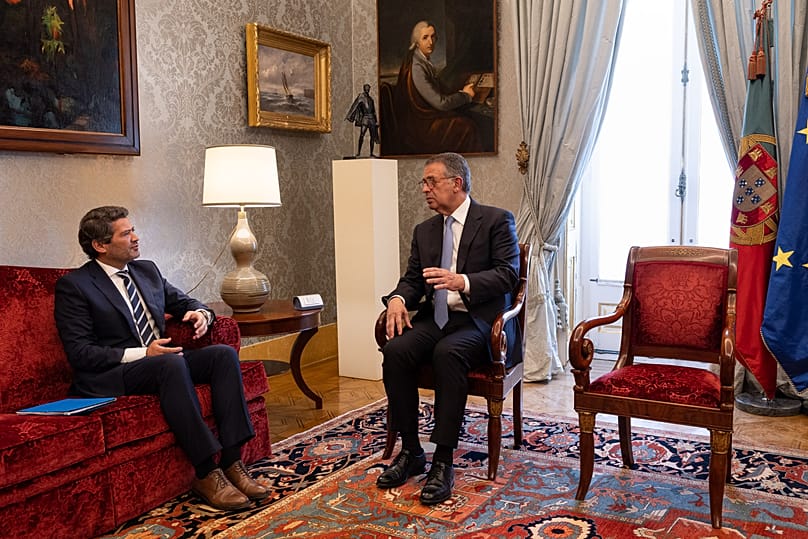
President of the Republic promulgated law after changes to Chega's proposal Miguel Figueiredo Lopes/Presidencia da Republica

Left-wing parties warn of Islamophobia risks and question security justification

The bill put forward by the far-right Chega party received negative opinions from the Portuguese Bar Association, the High Council of the Public Prosecutor's Office and the Portuguese Association of Women Lawyers, alongside concerns over its potential unconstitutionality.

The centre-left Socialist Party (PS), green-left Livre and the Portuguese Communist Party (PCP) opposed the proposal, warning it could fuel Islamophobia. It was backed by the centre-right Social Democratic Party (PSD).

The PS denounced "Islamophobic purpose that was evident in the explanatory memorandum [of the bill], the context of radicalism in which we live and the risks this creates for the communities directly targeted."

The PCP said the proposal had "nothing to do with women's rights, nor with security issues", but was "solely about fuelling hate speech and violence against those who are different, fuelling racist and xenophobic discourse."

Livre accused the right of "hypocrisy" and of conducting the debate in a "biased manner", in an attempt to create in Portugal "a moral panic over a supposed Islamic invasion that the far right so often talks about."


Full-face veil bans: How do rules compare across Europe?

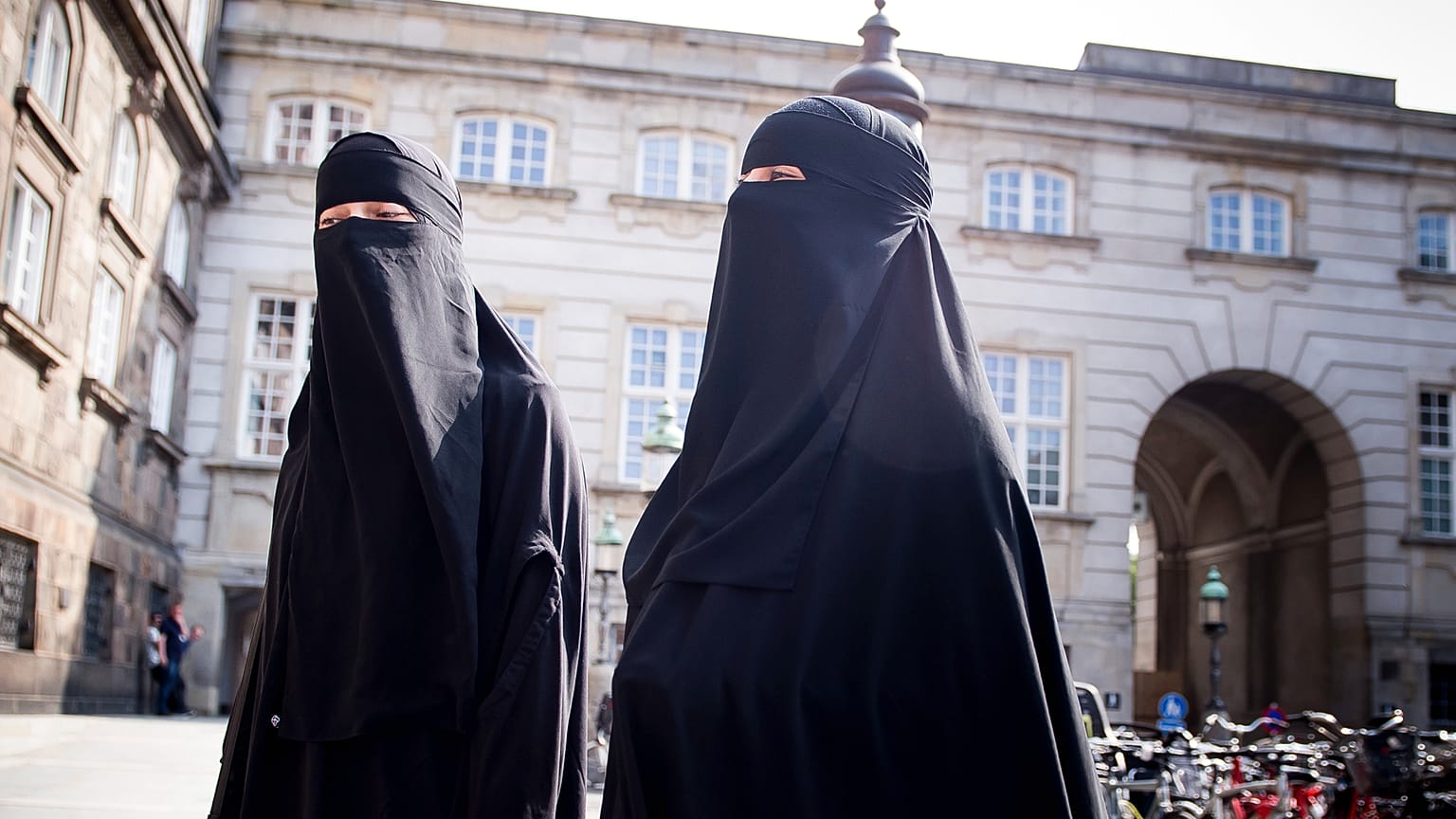
Women wearing niqabs stand outside the Danish Parliament in Copenhagen on 31 May 2018, as Denmark approved a ban on garments covering the face.
Copyright Ritzau Scanpix

By Greta Ruffino & Joana Mourão Carvalho
Published on

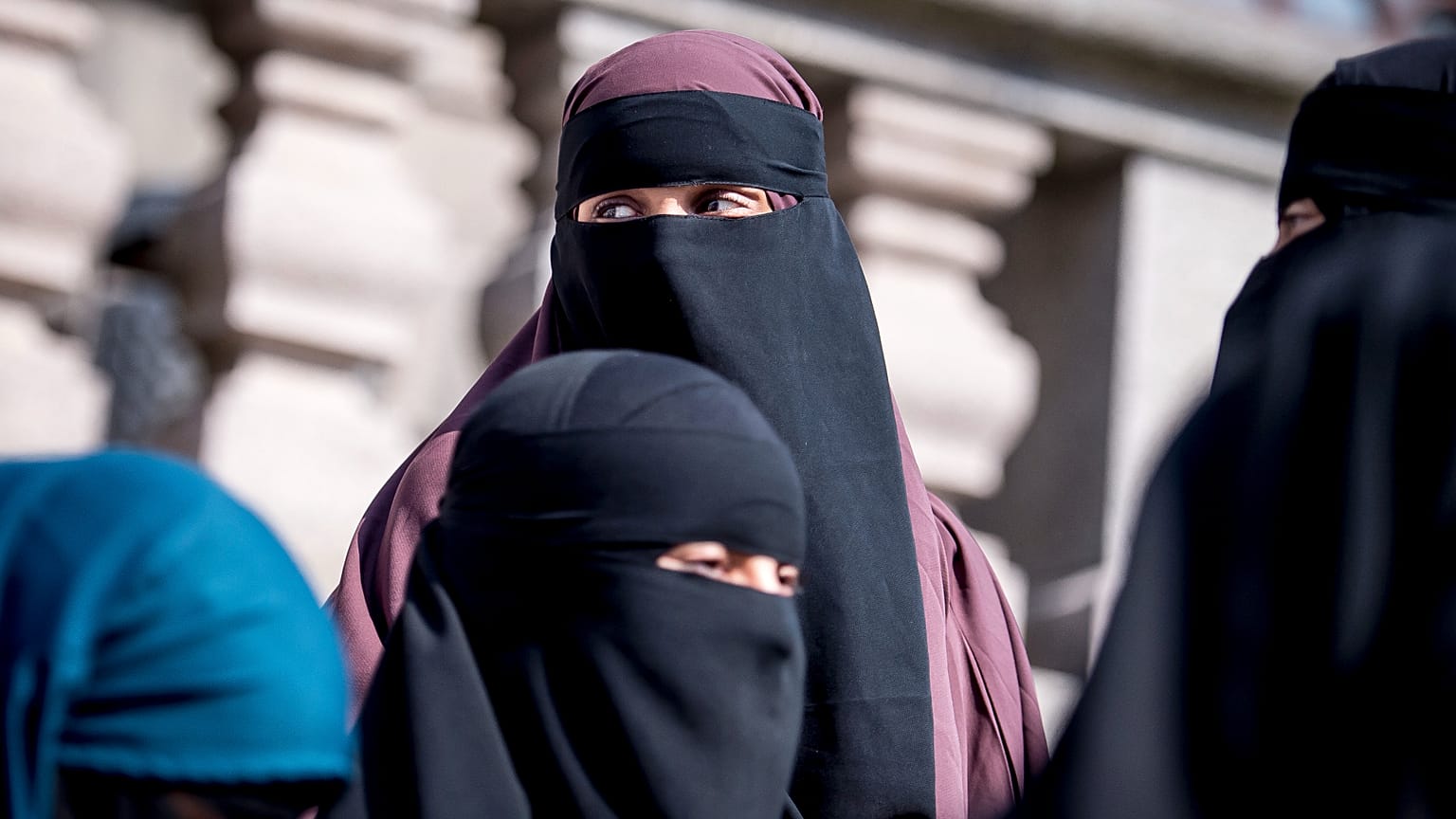
European countries take widely different approaches to full-face veils, from nationwide bans to restrictions in specific public spaces. Euronews looks at how the rules vary across the continent.

On Thursday, Portugal joined a growing list of European countries that have banned or restricted burqas and other full-face veils in public spaces.

But rules vary widely across the continent. Euronews breaks down how different European countries regulate face coverings.

France pioneered Europe’s face-covering ban

France became the first European country to ban full-face coverings in public spaces in 2011. Violations can result in a fine or mandatory civic education.

The French government argued that face coverings prevent people from being clearly identified, posing potential security risks and hindering social interaction in a society where facial recognition and expression play an important role in communication.

During the COVID-19 pandemic, questions were raised over whether protective face masks were compatible with the ban. Authorities later clarified that masks were permitted under existing health and safety exemptions.

Belgium: Fines and prison for violations

In Belgium, the ban dates back to 2011, with offenders facing fines or up to seven days in prison.

Alongside France, Belgium was one of the first European countries to introduce such restrictions, citing public security and social integration.

The law aims to facilitate communication and prevent people from concealing their identities in public spaces, measures Belgian authorities have defended as essential to ensuring the full participation of all citizens in society.

Bulgaria: Full-face veils restricted to private spaces

The wearing of burqas and other full-face veils has been banned in public spaces in Bulgaria since September 2016 and is restricted to private homes and places of worship. Muslims make up around 12% of Bulgaria's population.

Austria: Face-veil ban extended to schools

In Austria, a ban on full-face veils, including the burqa and niqab, came into force in 2017 under legislation known as the "Anti-Face-Veiling Act". The measure was introduced on security and integration grounds, with authorities arguing that face coverings hinder communication and social cohesion.

Additionally, in 2025, Austria's parliament approved a law banning Islamic headscarves for girls under the age of 14 in schools. The ban explicitly refers to "the headscarf that covers the head in accordance with Islamic tradition".

Denmark: A blanket ban on face coverings

Denmark enacted a full ban on face coverings in all public places in 2018. The law, which prohibits any clothing that conceals the face — including burqas and niqabs — has been justified primarily on grounds of public identification and societal transparency.
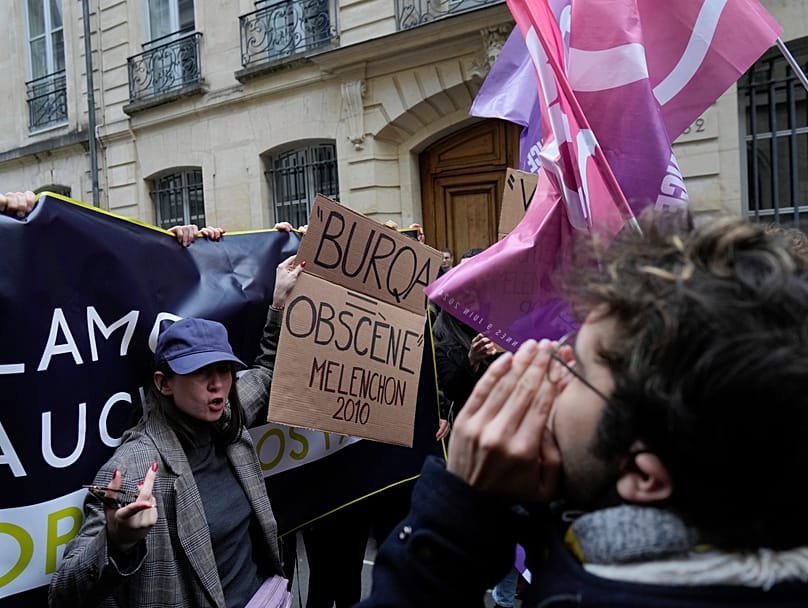
Nemesis founder Alice Cordier protests against a conference by Jean-Luc Mélenchon at Sciences Po in Paris on 22 April 2024, holding a sign reading "Burqa=obscene". (AP Photo/Thibault Camus)

Netherlands: Partial restrictions in key institutions

In the Netherlands, a 2019 law restricts face coverings in specific public settings — such as schools, hospitals, and public transport — where clear communication and identification are deemed essential.

While not a total ban, it reflects a growing inclination toward regulating religious expression in state spaces.

Germany: A fragmented approach to face-covering bans

Germany has taken a fragmented approach, with some states introducing partial bans in schools and public spaces on security and communication grounds. Specific restrictions also apply to certain professions and everyday situations.

While some regions consider such bans necessary to promote integration and social cohesion, others fear they could isolate certain communities and undermine social inclusion.

Luxembourg: Full-face veils restricted in public institutions

In Luxembourg, a law restricting the wearing of full-face veils came into force in spring 2018.

Face coverings are prohibited on public transport, in schools and on school grounds, in facilities for children under 16, hospitals, common areas of care homes for older people, including corridors and lifts, as well as in judicial buildings and public administration facilities open to the public.

Spain: Legal silence, local discretion

Spain lacks national legislation on the issue, leaving decisions to the discretion of schools and institutions.

In 2013, the Supreme Court backed a Madrid high school's decision to exclude a hijab-wearing student, setting a precedent but not a standard.

While Islamic groups have stressed that the Spanish Constitution and a 1992 cooperation agreement together protect the right to wear religious attire, the Ministry of Education has not prioritised national guidance, arguing that such cases are rare and manageable at the local level.

Portugal: Legal neutrality, selective application

Portugal doesn’t explicitly ban religious symbols but permits institutions — both public and private — to enforce neutral dress codes, as long as these are applied uniformly.

The aim is to protect employees from religious pressure while ensuring that workplaces remain ideologically neutral.

Italy: A law from another era

Italy does not have a specific ban on religious dress, but a 1975 anti-terrorism law prohibits face coverings in public.

Though originally unrelated to religious attire, this law has occasionally been invoked to restrict the niqab and burqa in certain public or security-sensitive environments.

Sweden: Freedom first, local pushback

Sweden has no national ban on religious attire, and the veil remains permitted across public life. The national approach favours individual rights, though some municipalities have attempted to impose school-specific restrictions, citing integration and gender equality. These moves have sparked debate but have not yet reshaped national policy

Greece: Legal protections with practical limits

Greek law offers robust anti-discrimination protections based on religion across employment and public services. Yet, practice has sometimes told a more complicated story. In one 2022 case, a hospital barred a nursing student from wearing a headscarf during her internship, citing uniform regulations.

The Greek Ombudsman ruled the policy did not violate anti-discrimination laws, framing it as a dress code issue, not a religious one.

Restrictions on face- or body-covering veils, varying in scope and extent, are also in place in countries across several continents, including China, Australia, Russia, Canada, Sri Lanka, Gabon, Chad, Senegal, the Republic of the Congo, Cameroon, Morocco, Algeria and others.


LA REVUE GAUCHE - Left Comment: Search results for BURQA


LA REVUE GAUCHE - Left Comment: Search results for HIJAB


LA REVUE GAUCHE - Left Comment: Search results for BABUSHKA


Palestinian-American citizen raises US flag over besieged West Bank home

A Palestinian-American has raised the US flag on his home besieged by Israeli settlers, as the United States renewed criticism of the siege that has generated condemnation around the world.


Issued on: 19/08/2026 
By: FRANCE 24
Video by: Emerald MAXWELL

US-Palestinian dual citizen Louai Abu Ridi flew back from his adopted home of Ohio after settlers refused to let in food or other supplies. © Ilia Yefimovich, AFP
01:54


A Palestinian American whose home in the occupied West Bank has been besieged for more than a week confronted Israeli settlers on his property Tuesday and demanded Israeli forces remove them from the area.

Louai Abu Ridi, who owns one of three houses in Qusra, near Nablus in the occupied West Bank, flew back from his adopted home of Ohio on Monday after settlers trapped residents inside and refused to let in food or other supplies for more than a week.

He was flying the Stars and Stripes outside his home on Tuesday and said he has asked the US embassy to keep raising his case.

US-Palestinian dual citizen Louai Abu Ridi (C), whose home in the occupied West Bank village of Qusra is besieged by Israeli settlers, shares an evening meal with family members at the home in Qusra. © Ilia Yefimovich, AFP

"It's my message to all Americans in the United States to see what's going on here in the West Bank, how the settlers put us under siege trying to take my own house in the West Bank," Abu Ridi told AFP reporters inside his home.

Under US pressure, the Israeli military said last week it had given orders to remove the settlers.

Troops took down their tent and detained one Israeli but settlers repeatedly came back by foot or in vehicles.
Israeli soldiers watch as US-Palestinian dual citizen Louai Abu Ridi, whose home in the Israeli-occupied West Bank village of Qusra is besieged by Israeli settlers, arrives by car to visit his mother at her home in the same village. © Jaafar Ashtiyeh, AFP

"The settlers come in freely into my house and they're not doing anything," he said of the soldiers.

"They even shake hands with the settlers. It's like they're friends."
Rare US criticism

Israeli settlers in the West Bank have been increasingly harassing and assaulting Palestinian residents in recent months, often with an aim to take their property.

Prime Minister Benjamin Netanyahu's right-wing government has pushed to support settlements backed by the Jewish right ahead of close-fought October 27 elections.

Qusai, the brother of US-Palestinian dual citizen Louai Abu Ridi, whose home in the occupied West Bank village of Qusra is besieged by Israeli settlers, walks on the roof of the home in Qusra. © Ilia Yefimovich, AFP

US Ambassador to Israel Mike Huckabee, an evangelical pastor who has long supported settlers, has offered rare criticism over the Qusra siege and said he had asked Israel to intervene.

In interviews aired late Tuesday on Israeli television, Huckabee said the United States was committed to defending its own citizens.

"We would like to see severe consequences for people who engage in – and I'll use the term – terrorist activity," Huckabee told Channel 13.

"It's not fair to the families who are Palestinian, who own their homes, who have a right to raise their families without fear," said Huckabee, who before becoming ambassador had rejected the term Palestinian.
US-Palestinian dual citizen Louai Abu Ridi, whose home in the occupied West Bank village of Qusra is besieged by Israeli settlers, checks his property fence in Qusra. © Ilia Yefimovich, AFP

Of the extremist settlers, Huckabee said, "If this little minority, if they think they're doing their cause a favour, they are making a horrific mistake."

Around 500,000 Israelis live in the West Bank on settlements considered illegal under international law, amid three million Palestinians. Israel has occupied the West Bank since the 1967 Six-Day War.

(FRANCE24 with AFP)
Israeli army launches criminal probe into killing of 5-year-old Hind Rajab in Gaza

The Israeli military will open internal criminal investigations into its troops' 2024 killing of 5-year-old Palestinian girl Hind Rajab alongside six of her relatives, as well as the killings of 15 medics and humanitarian workers in 2025, it announced Wednesday. Israeli rights groups have warned that such investigations rarely lead to convictions.

Issued on: 20/08/2026 
By: FRANCE 24
Video by: Emerald MAXWELL

Cover image: A person holds a photo of Hind Rajab, the 5-year-old Palestinian girl who was killed in January 2024, during a screening of "The Voice of Hind Rajab" on September 3, 2025. © Stefano Rellandini, AFP
02:13


Israel's military will open internal investigations over its troops' high-profile killings in Gaza ​of five-year-old Palestinian girl Hind Rajab in January 2024 and 15 emergency and aid workers in March 2025, it said on Wednesday, although rights groups said such probes rarely lead to convictions.

Hind's body was recovered from a car riddled with bullets in Gaza City days after she was last heard from in a desperate, hours-long phone call to the Palestinian Red Crescent on January 29, 2024.

"Following review of the findings and due to alleged failures in the coordination of the movement of the Palestine Red Crescent ambulance, it has been decided to initiate a criminal investigation of the incident by Military Police Criminal Investigation Division," the military said on Wednesday.

Israeli rights groups say that criminal misconduct investigations into Israeli troops over the killing of Palestinians rarely lead to convictions.

Dan Owen, a researcher in the Yesh Din rights organisation, said that over the last decade only a "tiny" proportion of investigations ‌had led to indictments while growing political pressure "further deters Israeli law-enforcement authorities from holding those responsible accountable, even when clear evidence does exist".

Alongside the Hind Rajab case, the military published reviews into four other high-profile incidents in Gaza, saying it was also launching a criminal probe into the 2025 killings of 15 Palestinians including medics and humanitarian personnel.
The voice of Hind Rajab

Hind Rajab had made the emergency call after her family's car came under fire during an attempt to flee Gaza City as Israeli troops advanced in the Palestinian territory's north.

Her body was eventually recovered along with those of six relatives and two Red Crescent rescue workers sent to find her.

Her death sparked international outrage and calls for an independent investigation, and the original audio recordings of her emergency call were incorporated into the Oscar-nominated feature film "The Voice of Hind Rajab".
Director Kaouther Ben Hania on five-year-old Hind Rajab's tragic cry for help from Gaza
Cover image: arts24 © FRANCE 24
12:14


The Israeli military said on Wednesday that its review into the incident indicated troops had "fired at a vehicle that was approaching them while travelling contrary to the advanced notice" that had been given to residents in the area.

"As a result of the fire, five of the vehicle's passengers were killed, and two survived: Hind Rajab and her cousin Layan Hamada," it said.

The military said that following Rajab and Hamada's phone call to rescue authorities, the movement of a Palestine Red Crescent ambulance had been coordinated in order to evacuate the casualties.

"However, according to the allegations raised, upon the ambulance's arrival at the scene of the incident, a shell was fired toward it, resulting in the deaths of the two paramedics travelling in it," it added.
2025 killing of medics

The military said criminal investigations would not be launched into the three other incidents it reviewed, involving the killing of employees from World Central Kitchen and Doctors Without Borders (MSF), both of which drew international scrutiny.

The military's criminal investigation into the death of the 15 Palestinians, including the medical personnel, after shots were fired at their ambulances in southern Gaza in March 2025, in another incident that drew international condemnation.

The UN Office for the Coordination of Humanitarian Affairs (OCHA) said at the time that a team of first responders was killed by Israeli forces on March 23, and that other emergency and aid teams were hit one after another over several hours while searching for their missing colleagues.

Those killed included eight Red Crescent staff, six members of the Gaza civil defence agency and one employee of the UN agency for Palestinian refugees.

The bodies were found buried near Gaza's southernmost city of Rafah in what OCHA described as a mass grave.

"On March 23, 2025, three shooting incidents occurred toward different rescue vehicles, including a fire truck, ambulances, and a UN vehicle, during an ambush carried out by IDF troops against operatives of the Hamas terrorist organisation" the military said.

It claimed that of the 15 killed, "six of those ... were identified as belonging to Hamas".

It said troops had then decided to "crush the vehicles and to cover the bodies with metal mesh".

"Following review of the findings, having found that the firing conducted during the incident raises a reasonable suspicion of criminal misconduct, it has been decided to initiate a criminal investigation of the incident," it said.

(FRANCE 24 with AFP and Reuters)

WTF

US officials coordinated deportation flights with Iran, emails reveal

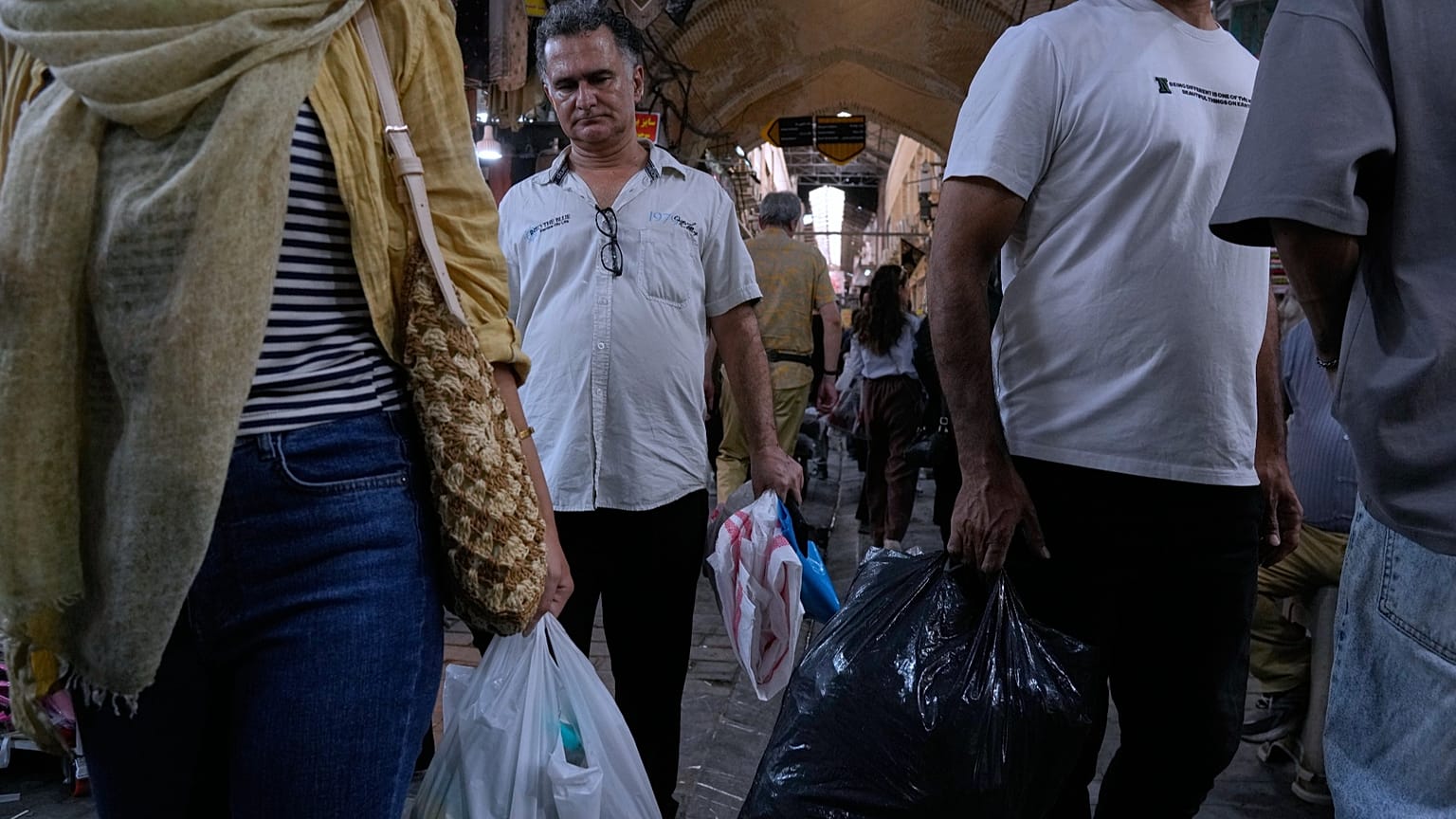
People shop at Tehran's traditional main bazaar, Iran, Saturday, 8 Aug, 2026. (AP Photo/Vahid Salemi)
Copyright AP Photo

By Greta Ruffino
Published on


The deportation of Iranians to a country whose government has a pattern of violent persecution against women, religious minorities and political dissidents has drawn significant criticism from human rights activists.

US immigration officials coordinated with Iranian authorities to deport Iranian nationals in 2025, newly released emails show, despite rising tensions between Washington and Tehran.

Hundreds of emails obtained by the National Iranian American Council and released on Tuesday detail how officials arranged three deportation flights that returned more than 100 Iranians to Iran between September 2025 and January 2026.

The emails suggest Iranian officials had some influence over which Iranian nationals were deported, with US Immigration and Customs Enforcement (ICE) officials appearing to accept some last-minute changes to deportation lists requested by Tehran.

“Per request from the Iran Embassy, I added a few cases," one unnamed ICE official wrote in late August, a month before the first deportation flight in September.

Just over a week later, someone with the same job title moved to make another, unspecified change to the deportation list after they said they met with the “Director at the Iranian Embassy.”

“Iran has requested that I amend the previous manifest and expedite the removal process,” the official wrote.

Iranian officials said in September 2025 that up to 400 Iranians could be returned under an agreement with the Trump administration. Most had entered the US illegally through Mexico, while others faced different immigration issues, according to Tehran.

The emails do not make clear how often US immigration officials were in direct contact with the Iranian government. Some communications were relayed through Qatari officials, who helped arrange deportation flights via Doha, while others referred to regular meetings with the “Iranian delegation,” the “Director at the Iranian Embassy”, and other unnamed Iranian officials.

It is not clear whether the people Iran put on the list had volunteered to be repatriated or if they were forced. Previous reporting from The New York Times revealed that asylum-seekers were among those deported to Iran, while others said they were deported against their will.

The emails suggest that the push to carry out the deportations came from senior levels of the Trump administration, even during the 12-day conflict involving the US, Israel and Iran in June 2025.

Lawsuit alleges ICE shared asylum information with Iran

The emails show that, on several occasions, ICE officials arranged meetings for unspecified reasons between Iranian officials and people detained in the US. The accounts echo testimony from Iranian asylum-seekers in an unrelated lawsuit filed in July by an unaffiliated Iranian interest group.

Eleven Iranians in immigration detention said they were forced to meet with Iranian government officials while in ICE custody. According to sworn declarations filed in a Washington DC court in July, the Iranian officials knew intimate details about their asylum claims.

The lawsuit alleges that US immigration agencies have been illegally sharing confidential information about Iranian asylum-seekers with the Iranian government.

The US Department of Homeland Security (DHS) strongly rejected the allegations in the lawsuit.

“These allegations that ICE shared asylum application records with the Iranian government are FALSE,” DHS said in a statement in July.

US authorities are allowed to work with foreign governments to coordinate deportations. However, federal regulations prohibit the disclosure of information that could reveal that a person facing deportation had applied for asylum.


Will Prime Minister Andy Burnham move the UK closer to Europe?

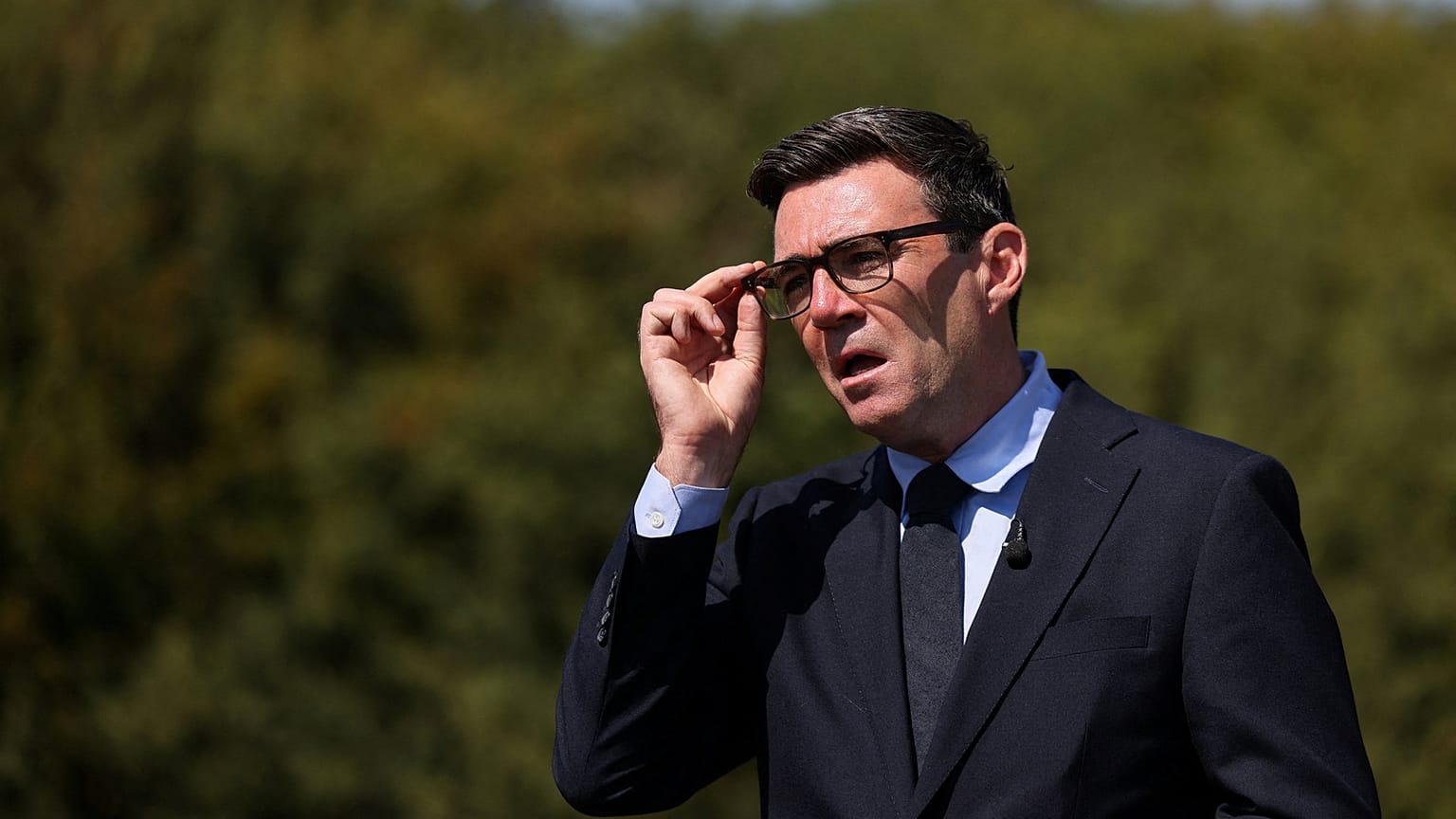
Britain's Prime Minister Andy Burnham, August 2. 2026
Copyright Jack Taylor/Jack Taylor

By Mared Gwyn Jones
Published on

From trade to defence to youth mobility, London and Brussels are seeking to build on the thaw in their post-Brexit relationship. But tough negotiations lie ahead as an autumn summit looms.

UK Prime Minister Andy Burnham has spent his first weeks in Downing Street firmly focused on home turf, unveiling distinctly domestic policies from eradicating rough sleeping to restricting vape and betting stores on England’s high streets.

He has said far less about his vision for the UK’s future relationship with the European Union – leaving officials in Brussels second-guessing his ambitions.

Burnham has previously spoken of leading a “proudly pro-European” government, and expressed hope that the UK would re-join the EU in his lifetime. But his path to power required winning a by-election in a fiercely pro-Brexit Manchester constituency, forcing him to temper his pro-EU rhetoric.

As Matthias Matthijs, a senior fellow at the Council on Foreign Relations, put it, “Burnham is personally the most pro-European prime minister since Blair but will likely talk about Europe less than (his predecessor) Keir Starmer did”.

But EU diplomats widely expect Burnham to continue with Starmer’s mission to put the UK back “at the heart of Europe” by mending the fraught trading, economic and political ties damaged by years of post-Brexit animosity.

Brussels and London were on the cusp of major agreements – including removing trading barriers on agri-food products and bringing the UK back into the EU’s internal electricity market – when Starmer abruptly announced his intention to resign in June, torpedoing plans to finalise those deals by a July summit, now rescheduled for later this year.

In Brussels, hopes are high that the new Burnham government will swiftly wrap up the deals and continue to deepen ties with Brussels and EU capitals.

One European diplomat said that it “makes sense” for Burnham to seek closer trade and economic cooperation “in today’s world”, and expressed hope that pragmatism would prevail. US President Donald Trump’s aggressive trade policy and an increasingly unstable transatlantic relationship have, for many, strengthened the case for closer EU-UK ties.

Minister Hamish Falconer, the man appointed by Burnham as lead EU negotiator, has set a positive tone by floating an even “deeper” and more ambitious relationship with Brussels than under Starmer.

Following a meeting on Monday between Falconer and Ireland’s EU Affairs Minister, Thomas Byrne, a UK official said both sides were determined to hold a summit before the end of the year in order to consolidate the deals and inject renewed pace into the reset.

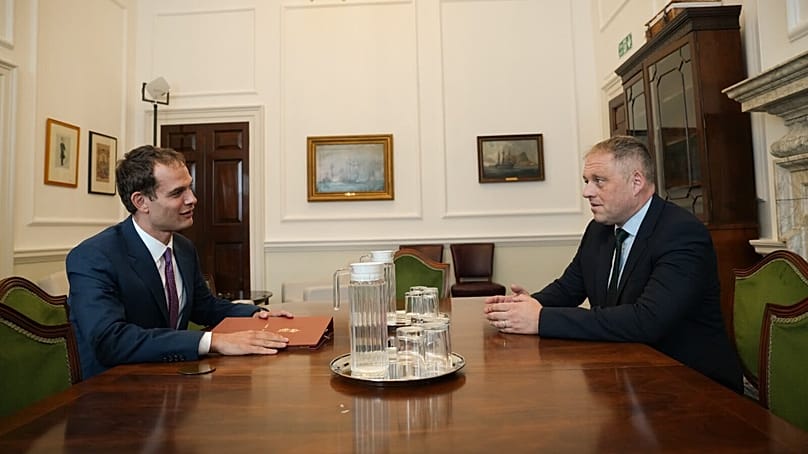
The UK's Minister for EU Relations, Hamish Falconer, meets his Irish counterpart Thomas Byrne in London, August 17, 2026 X

The Irish government holds the presidency of the EU Council for the rest of the year, and is expected to use its outsized influence over the legislative agenda in Brussels to make tangible progress on the UK reset before 2027.

But despite the optics, the negotiations ahead could still be fraught with difficulty.

Removing trade barriers

For London, removing barriers to trade and economic cooperation is key. Brexit is estimated to have slashed UK exports to the EU by 12% to 16%, dampening productivity and curbing job growth.

Some economic estimates put the cost of Brexit to the UK economy at around 4% to 6% of GDP, a figure often contested by proponents of the UK’s EU exit.

While Burnham has made economic recovery a key pillar of his premiership, his approach has focused more on domestic reform than the international agenda.

“While Starmer and his Chancellor Rachel Reeves saw Brexit as the single biggest barrier to growth that needed to be overcome, Burnham’s project for growth is based on devolution,” Joel Reland, analyst at think tank UK in a Changing Europe, told Euronews. “It’s more about restructuring power within the UK rather than building bridges beyond the UK.”

Despite his focus on internal reform, Burnham may find that some of the ideas driving his domestic agenda – including reviving the UK’s “sovereign capabilities” – are also gaining traction in European capitals, where economic sovereignty and greater national control are back in vogue.

The overlap in economic visions could help the UK secure inclusion in the "Made in Europe" industrial strategy, which aims to force companies to manufacture critical goods within the EU. France had been leading efforts to ensure UK manufacturers were given access to the Macron-championed plan.

“Burnham also seems more comfortable with the red lines in Labour’s 2024 manifesto: he’s not going to push to re-join the Single Market,” Reland also told Euronews, referring to Labour’s commitment not to take the UK back into the EU’s Single Market, Customs Union or free movement.

This could reassure officials in Brussels who want to avoid the UK cherry-picking benefits of privileged EU access without subscribing to all its rules. The Starmer government’s attempt to re-join the Single Market for goods only earlier this year was rebuffed quickly by Brussels.

Deadlock over youth mobility

The reset talks have also focused on a youth mobility deal that would allow young people to move across the Channel to work, live and study.

The UK previously pushed for a cap of under 50,000 on the number of visas to be granted to young Europeans, while Brussels has pushed for significantly more – up to 150,000.

There has also been disagreement over university tuition fees, with the EU pushing for EU students at UK universities to pay the same “home fees” as UK students.

But with UK universities facing serious financial pressure, Burnham’s government will have to navigate the talks carefully to avoid alienating Brussels while protecting its most prized educational institutions.

While Labour figures broadly agree that the youth mobility scheme would bring huge cultural and economic benefits, the prospect of easing visa rules in any way also carries huge political risk, as the British right frames it as a return to “uncontrolled” migration.

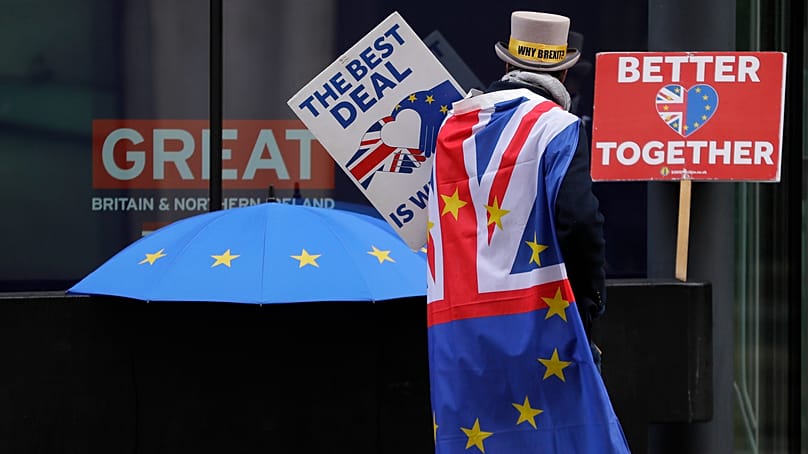
A pro-EU protester is seen in London Kirsty Wigglesworth/Copyright 2020 The AP. All rights reserved

After a honeymoon boost for Labour following Burnham’s appointment, the party is tied on top of the polls with Nigel Farage’s far-right Reform UK party, with immigration remaining one of the most politically sensitive issues facing the government.

Reland said Burnham is likely to apply the “Makerfield test” to his approach to the EU reset – ensuring that any new policy benefits people in places like Makerfield, which he believes have been marginalised by Westminster. But with Brussels seeing youth mobility as a key part of the bargain for greater access to its market, Burnham will have to carefully balance his interests. “If he wants a deal done, he has to compromise on youth mobility and think how to sell it,” Reland explained.

Deepening defence cooperation

Defence and security is also likely to shape Burnham’s efforts to reboot relations with Europe – he has spoken of strengthening the “European pillar” of NATO, reviving the E3 format which brings together the UK, France and Germany, as well as breaking down barriers to defence industrial cooperation with European partners.

As one of just two European nuclear powers, and with increasing calls for a protective nuclear umbrella that extends across the continent, the UK could use its military capabilities to gain greater leverage in negotiations with European partners.

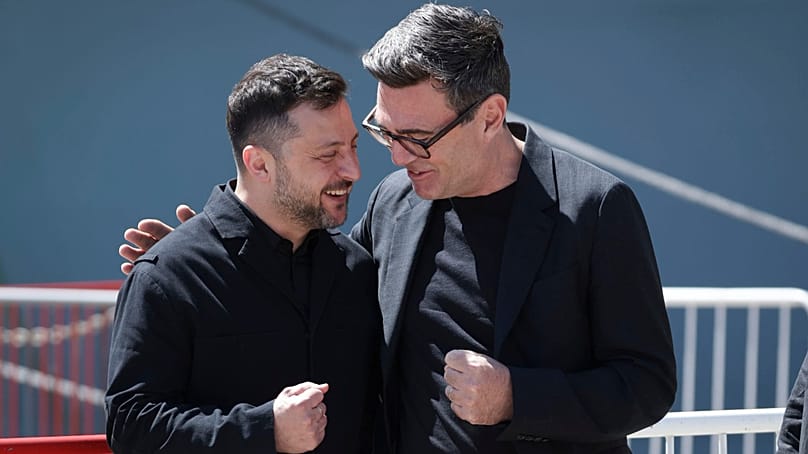
Britain's Prime Minister Andy Burnham with Ukraine's President Volodymyr Zelenskyy Simon Jones/Simon Jones-Commissioned by The Sun

Burnham has also linked security cooperation to industrial policy.

Talks on the UK joining the EU’s €150 billion SAFE instrument – which provides low-interest loans for joint military procurement – previously collapsed amid disagreement over the UK’s financial contribution to the scheme.

Reviving the negotiations could provide Burnham with a European focus to the EU reset that also complements his reindustrialisation agenda.

The messaging around European security and defending Ukraine has also remained unchanged, although Burnham is yet to display the leadership Starmer demonstrated alongside French President Emmanuel Macron on international efforts to mediate in major conflicts, from Ukraine to the Middle East.

And with Macron due to leave office in 2027 – and the far-right National Rally ahead in the polls — the future of the Franco-British-led Coalition of the Willing for Ukraine looks more uncertain than ever.