Tuesday, August 25, 2026

African nations ramp up their space programmes in a bid to reduce reliance on the West
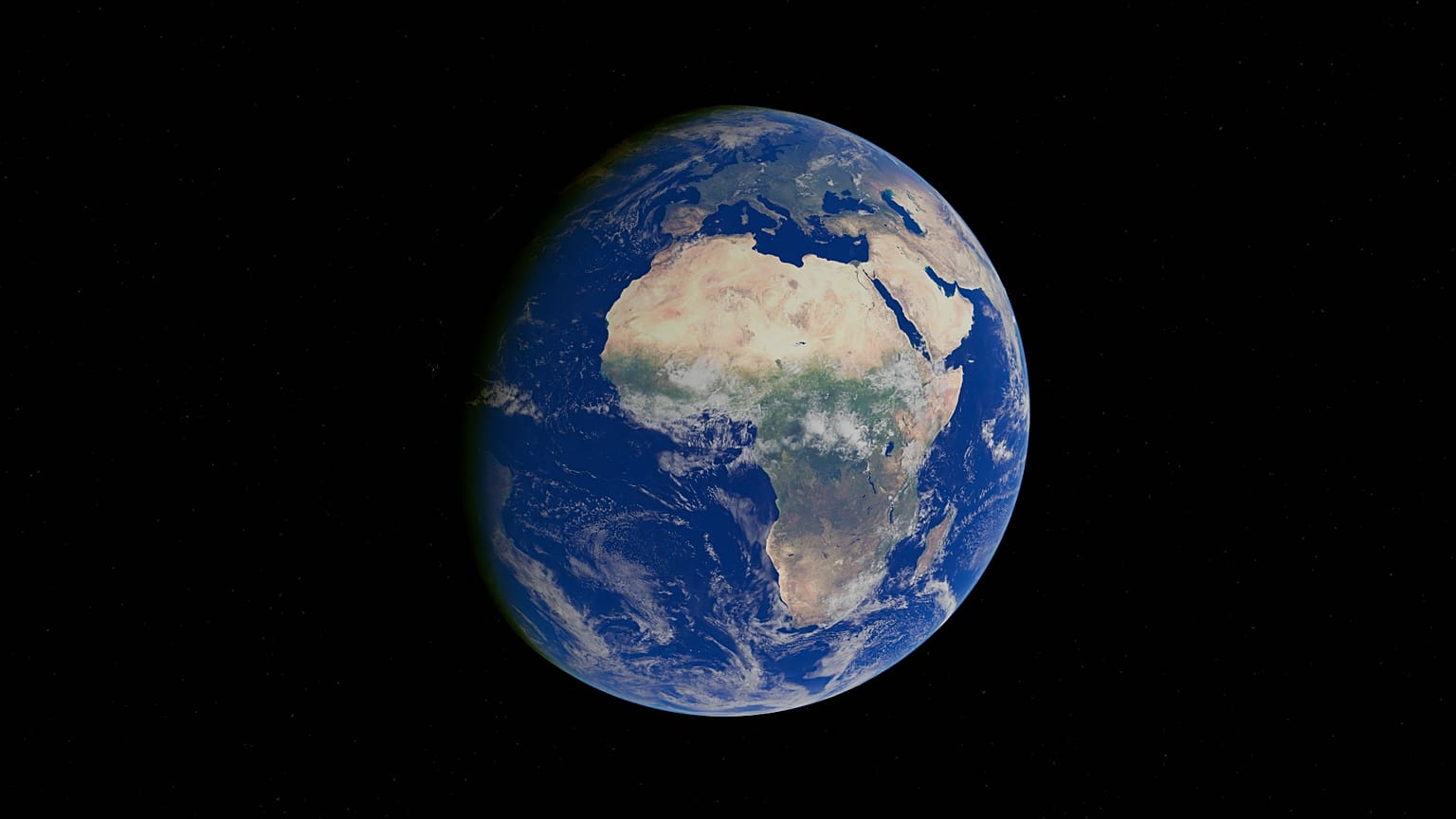
Stunning image of Earth showcasing Africa and Europe against the black void of space
Copyright Zelch Csaba/Pexels

By Indrabati Lahiri
Published on

Eighteen African countries have now launched satellites, as the continent builds its own space sector and looks to cut reliance on foreign, Western powers.

The global space race has intensified in recent years, driven by geopolitical rivalry between major powers like the US and China for commercial dominance and resource control.

The Moon's south pole, prized for its water ice deposits, is the current battleground, with several countries racing to build permanent lunar bases before the decade is out.

Cheaper, reusable rockets from private providers like SpaceX and Blue Origin have driven down the cost of reaching orbit, fuelling the race further.

Now African nations are entering the fray too, crowding an already competitive field and reshaping what global space ambition looks like.

Which African countries have entered the space race?

Eighteen African countries have already launched at least one satellite, up from just a handful a decade ago, with more than 21 now running dedicated space programmes, according to the Africa Center for Strategic Studies.

Egypt, South Africa, Algeria, Nigeria and Morocco lead the pack in satellite infrastructure and technology, with major domestic labs for assembling, integrating and testing satellites.

Egypt also hosts the headquarters of the newly launched African Space Agency.

Many of these countries are nurturing private tech firms and aerospace startups, building a research-driven ecosystem from the ground up.

In recent years, Senegal, Rwanda, Djibouti and Zimbabwe have also launched their first satellites.

Tracking resources and building domestic resilience

Sovereignty is the driving force. African nations want to cut their dependence on foreign and Western powers, particularly for geographical and environmental data.

Buying high-resolution satellite imagery and communication bandwidth from abroad is expensive, and requests can be delayed or denied outright. Senegal, Egypt and South Africa are especially keen to control their own data.

African satellites now track crop health, manage water resources and predict floods and droughts. They also monitor illegal fishing, border security, piracy, illegal mining and deforestation, and are increasingly vital for bridging rural telecommunications gaps that terrestrial infrastructure cannot reach.

The African Space Agency helps coordinate cross-border space policy and pool resources, while new aerospace engineering and data science programmes aim to keep young technical talent on the continent.

What does this mean for Europe?

Africa's space rise could push Europe to shed its role as paternalistic aid provider and become more of an equal partner.

That shift is already under way. The Africa-EU Space Partnership Programme, worth €100 million, shares infrastructure and data, with further tie-ups expected in climate monitoring and agriculture.

European firms could also gain a foothold in Africa's fast-growing commercial space economy, unlocking opportunities beyond saturated Western markets, while systems like Galileo and Copernicus could help tackle local African challenges.

But Africa's space ambitions also sharpen the need for Europe to deepen its diplomatic and geopolitical ties on the continent, as rivals China and Russia expand their own space partnerships there.

The challenges that remain

Despite the progress, obstacles persist. Public budgets for space development remain far lower than in the West, leaving many programmes reliant on external loans and donor-tied packages.

Weak local venture capital markets mean startups often struggle to raise funds while facing high operational costs, according to the International Bar Association.

Many rockets still launch from foreign soil due to a shortage of local spaceports, while limited ground stations restrict the download and processing of real-time satellite data.

And despite growing investment in local talent, skills gaps and brain drain remain stubborn problems that could take years to fix.

FASCIST FRIENDS OF A FEATHER

New Colombian president orders immigration raids, vowing deporations of migrants without legal status

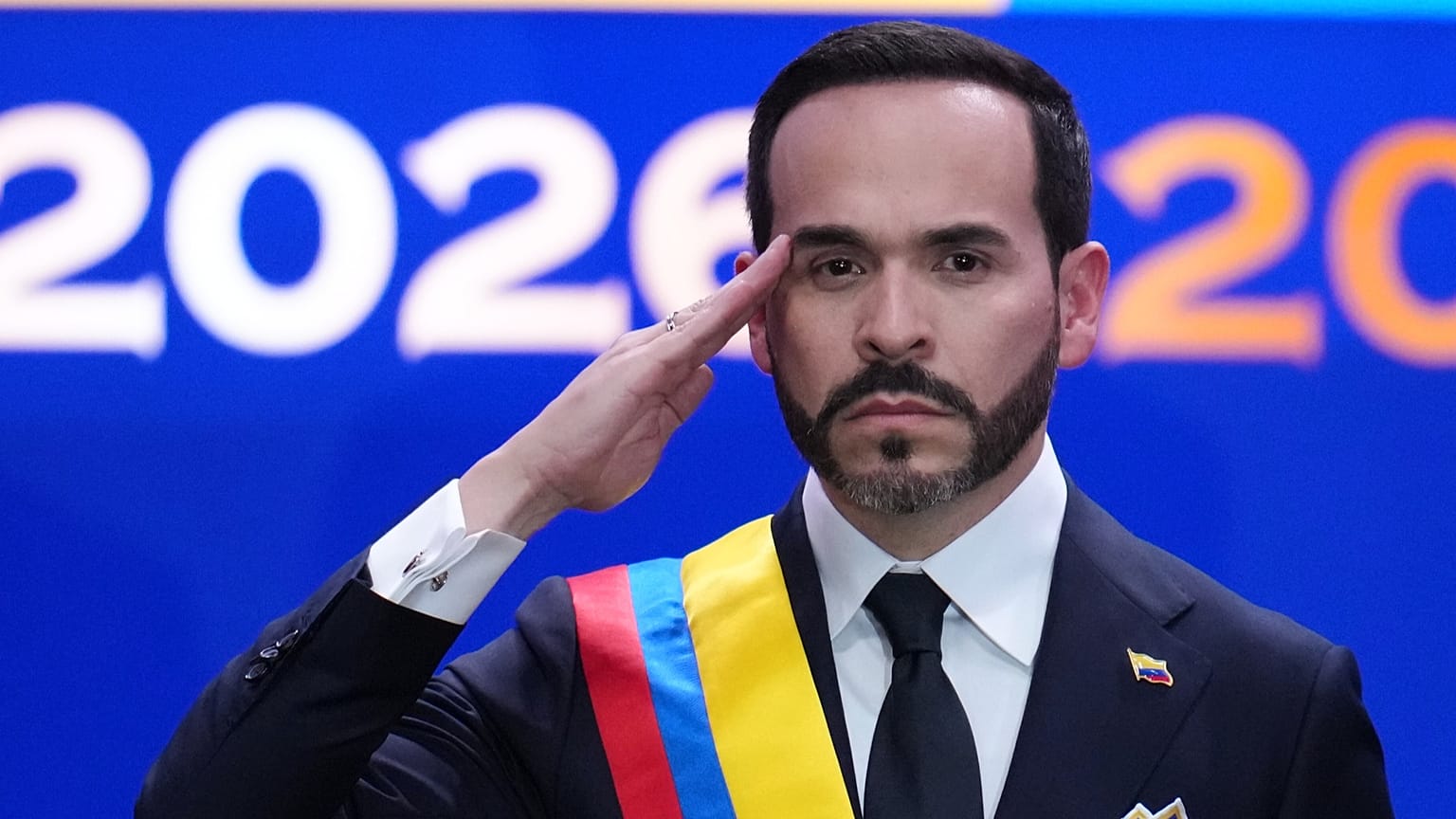
FILE - Colombia's President Abelardo de la Espriella salutes after taking the oath of office in Cali, Colombia, Aug. 7, 2026.
Copyright AP Photo/Matias Delacroix, File

By Evelyn Ann-Marie Dom
Published on

The far-right leader, a close ally of Donald Trump, seemed to echo the rhetoric of the Trump administration. 'Colombians first, Colombians second, Colombians third, may that be clear to everyone,' de la Espriella said.

Colombia's new president Abelardo de la Espriella announced a crackdown on thousands of migrants who are in the country without residence permits.

The far-right president said he would make significant changes to the country's immigration policy that he said would reduce crime and confront criminal groups.

“I will not accept any illegal immigrants, no matter where they come from,” de la Espriella said in a video released on X on Sunday night while chairing a security meeting in Barranquilla.

"The order to Immigration (authorities) is clear: first those who are committing crimes, second those who have not regularised their status and who will have to be deported in due course," he added.

During the meeting on Sunday, the new president seemed to echo the "America first" rhetoric of US President Donald Trump, which whom he is closely aligned.

"Colombians first, Colombians second, Colombians third, may that be clear to everyone," De la Espriella said.

The Colombian president said deportation procedures would start this week by presidential order.

The crackdown will largely affect Venezuelans who, over the past decade, have fled the country’s repressive regime and an economic crisis. Overall, roughly one-fifth of Venezuela’s population has left the country over this period.

Colombia is home to a major Venezuelan diaspora. According to the United Nations, around 2.8 million Venezuelans were living in Colombia as of August, of which over 527,000 are undocumented.

De La Espriella’s move represents a significant departure from Colombia’s previous approach to migration. The country had long sought to welcome and protect Venezuelan migrants, offering them a pathway to permanent residency.

As recently as July, Colombia’s national immigration service said it had granted temporary residence permits to roughly 2.3 million undocumented Venezuelans in the country.

The measure was intended to help migrants and refugees obtain legal status while facilitating access to health care and legal employment. It was part of a scheme introduced in 2021 by then-President Iván Duque at the peak of Venezuela's immigration crisis.

“We understand that the president wants to protect Colombians,” Ana Karina García, director of Juntos Se Puede, an organization that helps Venezuelan migrants in Colombia, said. “But there is no need to protect them from migrants. It has been proven that foreigners do not commit crimes at greater rates".

VIOLATION OF INTERNATIONAL LAW

Trump administration plans to revoke 200,000 visas of asylum seekers

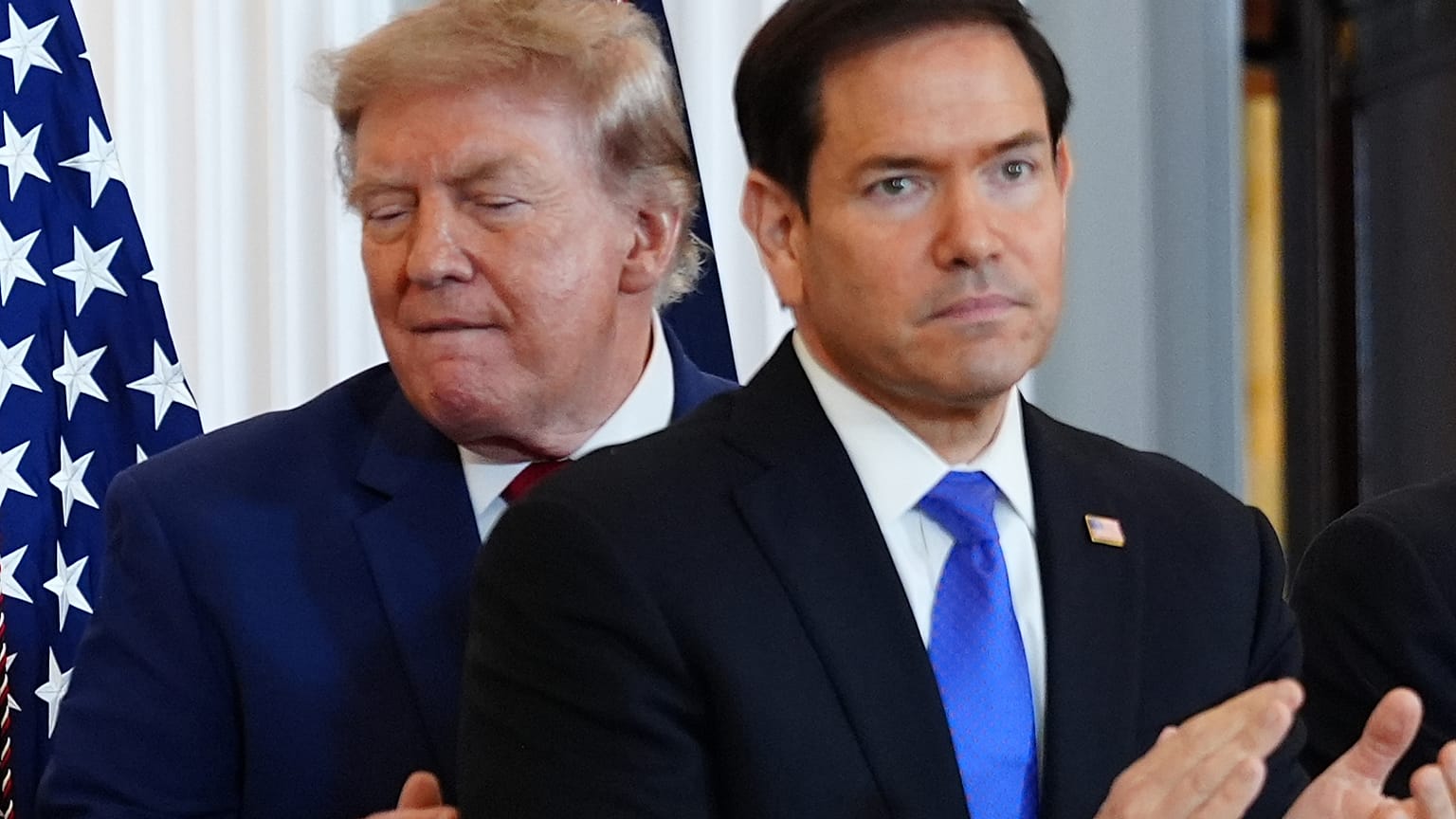
President Donald Trump walks past Secretary of State Marco Rubio as he arrives for a roundtable on the American mining industry, Washington, US. Friday, Aug. 7, 2026.
Copyright AP Photo/Julia Demaree Nikhinson

By Evelyn Ann-Marie Dom
Published on

The move is the latest in the Trump administration's crackdown on immigration. If it happens, the move would mark the largest single mass revocation of visas in US history.

The Trump administration said on Monday it is planning to revoke business and tourism visas of 200,000 foreigners who have applied for or are currently seeking asylum in the United States.

Unless challenges or revised, the move would mark the largest single mass revocation of visas in US history.

“We are coordinating with DHS to identify and revoke the nonimmigrant visas of foreigners who have come to the United States claiming to be short-term visitors, but then file for asylum to stay here permanently,” State Department spokesman Tommy Pigott said.

He did not comment on the exact number of visas that would be revoked, claiming that "the number of revocations remains dynamic and will be done on a rolling basis".

In the coming weeks, the State Department is expected to announce the revocation of B1 and B2 visas issued between 2016 and 2026 for those that have sought or are currently seeking asylum, according to documents obtained by press agency The Associated Press and two US officials that spoke on condition of anonymity.

B1 visas are typically issued for business trips and B2 visas for tourism, family visits and medical care. Current applicants for both categories are asked to confirm that they are not seeking asylum in the US and provide proof that they intend to return to their home countries.

The revocation of the visa would not immediately result in the deportation of the individual, the officials clarified, but those with pending asylum cases would lose their status as business or tourism travellers.

The move is the latest in the Trump administration’s broader immigration crackdown, which has intensified since President Donald Trump returned to office for his second term.

The administration has already tightened restrictions on visa applicants, including requiring applicants to provide their social media histories, imposing expensive bonds before visas can be processed, and complete visa bans on citizens of certain countries.

On Friday, a judge struck down a Trump administration policy implemented earlier this year that suspended the visa issuance of immigrant visas from 75 countries.

US District Judge Jeannette Vargas, who was appointed by former President Joe Biden, said the policy was "contrary to law and in excess of statutory authority," arguing that it undermines Congress's requirement that consular officers are at the forefront of making visa decisions.

TRUMP DEPORTS HAITIANS TO HELL
At least 40 killed as gangs attack displaced people near Haiti capital

At least 40 people have been killed, some execution-style, after gangs attacked displaced people sheltering in a church near Haiti's capital Port-au-Prince at the weekend, local authorities said.


Issued on: 25/08/2026 - RFI

People watch as the bodies of their relatives who were killed in a gang attack are carried away by morgue workers in the Kenscoff neighborhood of Port-au-Prince, Haiti, Monday, 24 August 2026. © AP Photo/Odelyn Joseph

Many others were injured and some remain missing after the attack, which comes as gangs control much of the capital.

In a statement following the attack, the office of Prime Minister Alix Didier Fils-Aime expressed "deep compassion" for the bereaved families and other victims. The government said reinforcements would be sent to restore security in the area.

The attack took place on Sunday night in Kenscoff, a mountainous town in the hills southeast of Port-au-Prince that has faced months of gang violence and incursions by armed groups seeking to expand their control.

Night of terror

The town endured "a night of terror," Mayor Massillon Jean said.

"We have counted around 40 bodies. Searches are continuing. Some people are still missing," Jean told French news agency AFP on Monday.

Among the places targeted was a site housing people who had already fled violence elsewhere.

"The bandits raided a displaced persons camp located in a church," Jean said. "They executed several people. There are fatalities and dozens of wounded. Some people were abducted by the criminals."

Residents were still in shock as they tried to grasp what had happened.

"I don't know how I managed to get away," a man in his sixties who escaped with his family told the press. "When I heard the gunfire, I thought it was the police, but it was the bandits. We climbed over a wall, then ran to hide under some sheets of corrugated iron. There were so many dead."

Residents gather next to the covered bodies of people killed during an overnight raid by an armed gang, on the outskirts of Port-au-Prince, in Kenscoff, Haiti, 24 August 2026. REUTERS - Patrice Noel


Families torn apart

Sitting with her five children around her and sobbing, Marlène, who lost both her husband and her brother in the attack, described how armed men took her husband away.

"They forced their way into the house, smashed down the door, and took my husband away," she said. "The bandits told him, 'Walk, or we’ll kill you!' But despite that, he fought back, and this morning, all I can do is look at his dead body. He has left me with five children, even though he was the one who provided for us."

Haiti's transitional council disbands with nothing to replace it

Haiti, the poorest country in the Americas, has for years suffered from chronic political instability, natural disasters, corruption and violence from powerful gangs responsible for widespread killings, rapes, looting and kidnappings. Gangs control much of Port-au-Prince.

Nearly 1.5 million Haitians are displaced in a country of about 11 million people, while more than five million face severe food insecurity, UN figures show.

The crisis worsened in early 2024, when gangs launched a wave of violence that forced the unelected prime minister to resign.

Haiti has not held an election since 2016. Its last president, Jovenel Moise, was assassinated in July 2021 and was not replaced.

A general election is scheduled for December 2026.

(with AFP)


Spain's Health ministry mobilises vaccines to Ceuta after tuberculosis and scabies cases detected

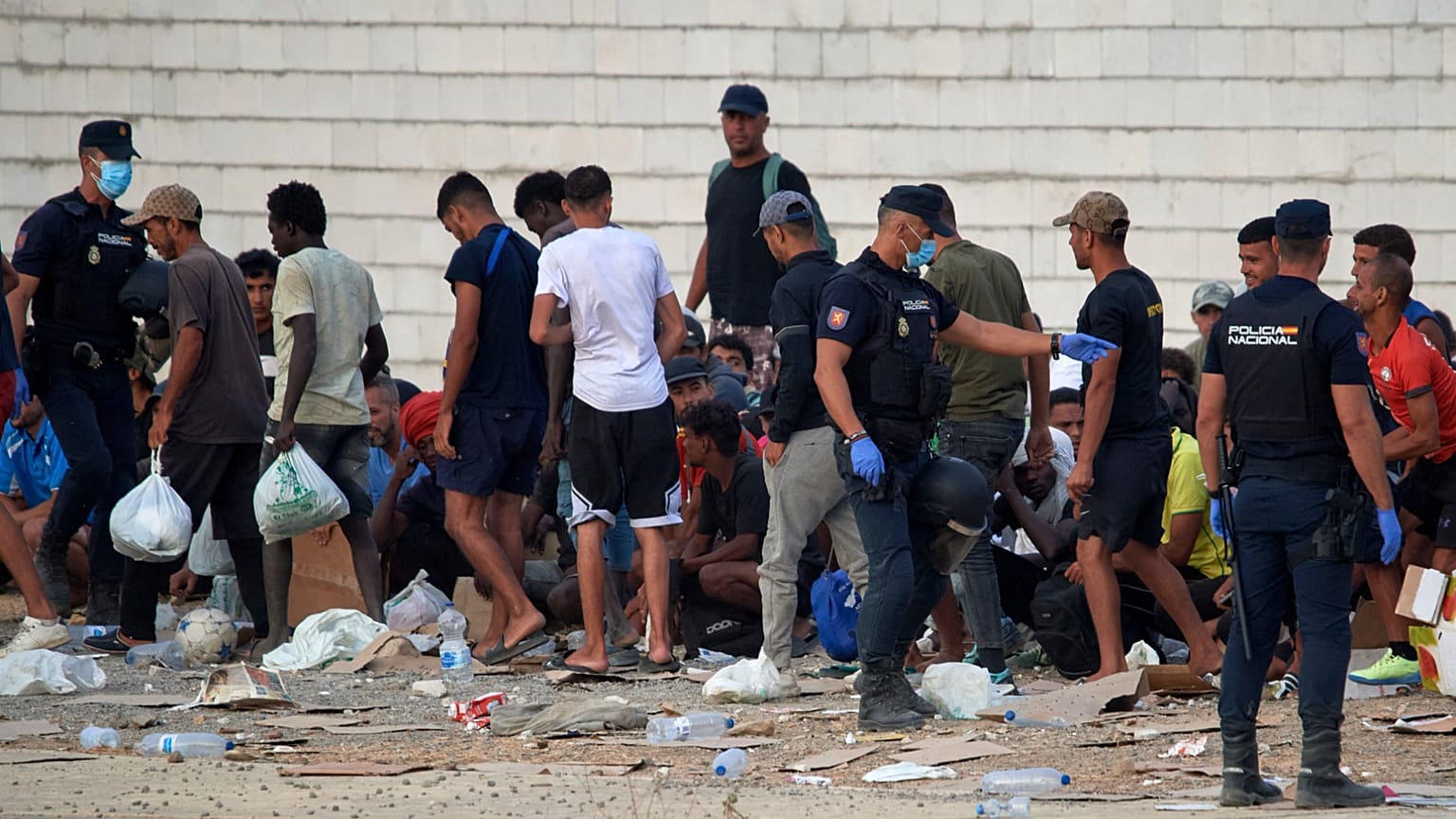
Migrants who crossed from Morocco into Spain queue for food on a beach in the Spanish enclave of Ceuta, Spain, on 19 August 2026.
Copyright Foto AP/Antonio Sempere

By Christina Thykjaer
Published on

Health authorities are seeking to ensure vaccine supplies in Ceuta after cases of tuberculosis, gastroenteritis, scabies and impetigo were detected.

The Ministry of Health has called an emergency meeting with Spain's autonomous communities to address the supply of vaccines for migrants who remain in Ceuta after the mass arrivals from Morocco recorded at the end of July.

The extraordinary meeting of the Public Health Commission will take place this Monday 24 August at 12:00 by videoconference, according to several Spanish media outlets, and will be attended by Public Health representatives from the autonomous communities and cities.

According to information first reported by 'El Mundo', the meeting will have a single item on the agenda: the launch of a "solidarity mechanism for vaccines in relation to the situation in Ceuta".

The aim of the meeting is to ensure that the autonomous city has the doses it needs to immunise the migrants who are still there and to strengthen protection against various infectious diseases.

Vaccines against polio, diphtheria and chickenpox

Among the vaccines the Health Ministry plans to administer is the measles, mumps and rubella (MMR) jab, which protects against measles, mumps and rubella. Immunisation is also being considered against diseases such as chickenpox, poliomyelitis, tetanus and diphtheria.

The migration crisis has also increased pressure on the city's health services. Between 31 July and 14 August, the National Institute of Health Management (Ingesa) recorded 5,801 medical attendances linked to the crisis, while the Red Cross operation set up on Trampolín beach provided more than 2,500 additional consultations. The peak came on 31 July, with 1,149 attendances in a single day.

The Health Ministry has also reported 18 minors with a positive Mantoux test and two confirmed cases of tuberculosis. Healthcare professionals have also reported consultations related to gastroenteritis, scabies and impetigo. The Spanish Army has logged at least 24 cases of scabies among its personnel at the General Command in Ceuta.

The Spanish Society of Epidemiology warns, however, that these diseases should not be directly linked to migrant status and stresses that the health problems are mainly related to the overcrowding, poor sanitary conditions and lack of resources in which some of these people are living.


Raised in the wild: Spain's famous 'wolf boy' dies

Marcos Rodríguez Pantoja
Copyright RTVE

By Nela Heidner
Updated

Marcos Rodríguez Pantoja, from Andalusia, died at 80 in Rante, a hamlet of San Cibrao das Viñas in Ourense, north-west Spain. He had lived there since 2001 and seemed to have finally found a home.

Marcos Rodríguez Pantoja, Spain's famous "wolf boy", has, as has now emerged, died on Saturday 15 August at the age of 80.

Born in 1946 in a country that was just recovering from a civil war and a world war, Rodríguez initially grew up in the Andalusian village of Añora.

Rodríguez's life was marked by poverty, hunger and mistreatment. His father could barely feed the family, while his stepmother treated him brutally. When he was six, his father sold him to a goatherd, who left him in a remote valley where he was to herd livestock together with an old shepherd. The herdsman taught him how to survive in the mountains and use the resources available.

He hid from people

When the shepherd died shortly afterwards, Marcos was left to fend for himself. Over time he turned the wilderness into his home and found a family in the animals that surrounded him.

For twelve years Rodríguez lived a life without any human contact and developed his own forms of communication. He mastered the calls of the animals – from birdsong to the cry of the deer – and was convinced he could communicate effortlessly with foxes, wolves and even snakes. Throughout all those years he chose to stay far from civilisation and would run away or hide whenever he heard human voices in the mountains.

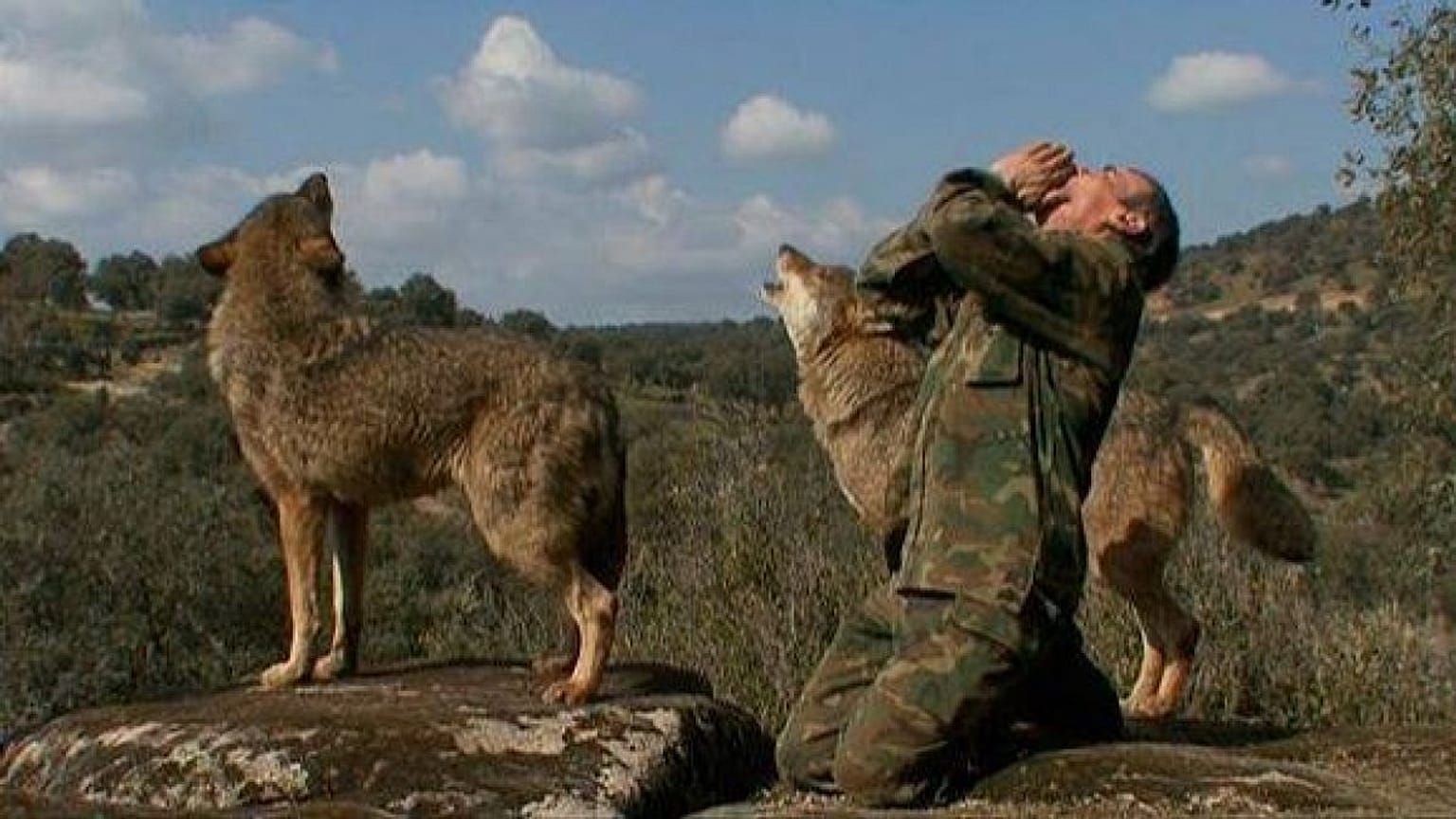
Rodríguez won the trust of a wolf pack when he fed its cubs and howled whenever he sensed danger.

The anthropologist Professor Gabriel Janer Manila carried out several months of interviews with Rodríguez as part of a social science study for the Faculty of Philosophy at the University of Palma de Mallorca. The interviews took place from November 1975 to April 1976.

Janer, the anthropologist, became a friend. In his view, Rodríguez was able to survive thanks to his intelligence and imagination. In his doctoral thesis Janer describes the different phases of Rodríguez's life: how he gradually became part of this community, how he learned its rules and the language of his surroundings, and how he treated the animals as equals.

"I cried and they jumped up onto me... then they showed me the way to their cave, the wolves' den," Rodríguez told Janer. He described how the wolf cubs played around him and leapt up at him as they greeted him.

Apparently, over time a kind of symbiosis emerged between him and the wolves.

"If I wanted fish, I went to the river and fished; if I wanted a rabbit, I caught one; if I wanted a deer, I called my parents, the wolves, let out a howl, hid in the river and the wolves drove the animals down to me," he said.

Janer later published his study in Spain as a book titled He jugado con lobos.

I was very well. I didn't know what money was, but I always had enough to eat.
 Marcos Rodríguez Pantoja 

In 2010 a team from the TVE programme Informe Semanal spoke to Rodríguez in his home town Añora. At that point he was visiting the town for the first time in 60 years. Looking back on his time in the mountains, he told the camera: "I was very well. I didn't know what money was, but I always had enough to eat."

When he was discovered by the Guardia Civil in 1965 at the age of 19, he had to get used once again to life in human society: a difficult and lengthy process of adaptation. Rodríguez later stressed repeatedly that he had been happy in the mountains. His real suffering, he said, only began when he was found and forced to integrate into society.

Childlike naivety preserved

According to people who knew him, he seemed childlike in some ways, was "naive" about society and did not speak completely fluent Spanish.

He lived in Jaén with a priest, later in Madrid with nuns, did military service and eventually ended up in Mallorca, where he worked in hotels and restaurants.

After everything he had experienced in his life, Rodríguez decided to pass on his story – with the aim of "protecting nature and promoting a better understanding of it, because we have become so distanced from it".

He particularly wanted to convey this message to children: "Show more affection to your pets, because devices only need to be plugged in, but pets need love."

His life story was also brought to the big screen: "Wolfsbrüder" (original title: Entrelobos, German title: Wolfsbrüder) was released in Spain on 26 November 2010, and two years later, on 7 June 2012, the feature film was released in Germany.

Since 2001 Rodríguez had found a home in the village of Rante in the province of Ourense. The municipality of San Cibrao das Viñas, to which Rante belongs, said goodbye to its long-standing resident in moving words. "Marcos came to Rante with a story the whole world knew. He leaves behind a story that has become ours too," the municipality wrote on social media.

Rodríguez died during the festival held in honour of the municipality's patron saint.


Iranian state TV broadcasts video targeting Barron Trump with $10m bounty

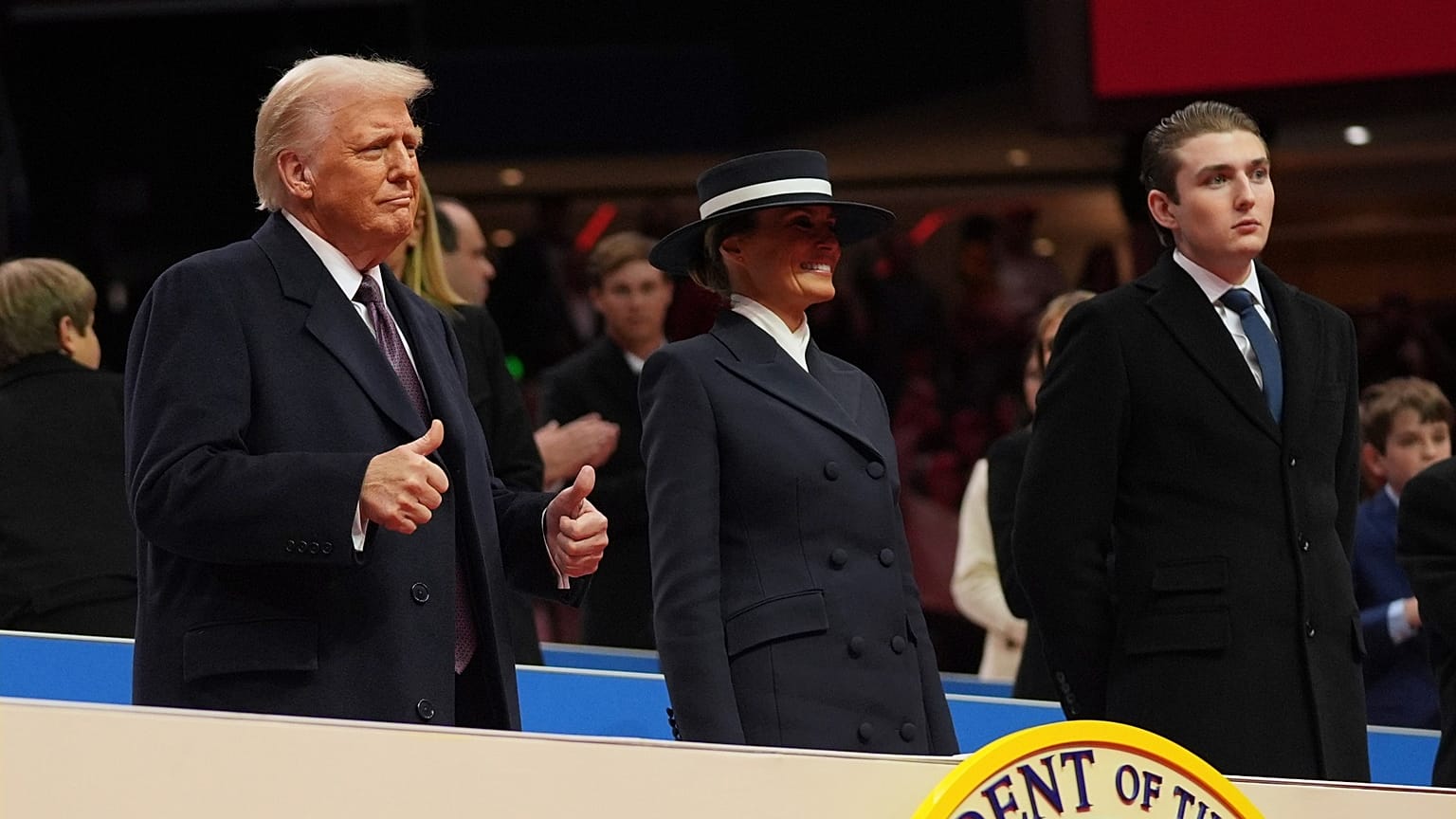
Barron Trump alongside Melania and Donald Trump
Copyright AP Photo

By Euronews Persian
Published on

Tehran state-run media has broadcast footage purportedly tracking US President Donald Trump's youngest son, showing the location of his university, escort vehicles and Secret Service posts, and alleging his movements were "fully monitored".

Iranian state television has broadcast a video purporting to track the movements of Barron Trump, Donald Trump's 20-year-old son, and claiming a $10 million (€8.5m) bounty has been placed on him.

The footage, released by IRGC-affiliated media and broadcast on Channel 3 of Iranian state television, is titled "Where and how should we kill Barron Trump?"

It claims to show the location of his university, his escort vehicles and the positioning of his Secret Service detail, alleging his movements have been "fully monitored". The claim about the bounty could not be independently verified at the time of publication.

The video further alleges that "a girl" had found a way past the Secret Service's protection, sat with Barron Trump in a private meeting and passed information to the programme's makers.

It claims Barron Trump communicates privately via voice and text on Xbox, away from his security detail. Euronews could not independently verify any of these claims.

The broadcast follows a similar video released by the IRGC-affiliated Tasnim news agency in July, titled "Where and how is Melania Trump accessible?", which detailed her movements in New York and alleged vulnerabilities in her security. In late May, the New York Post reported on an alleged plot targeting Ivanka Trump.

Trump in Tehran's crosshairs

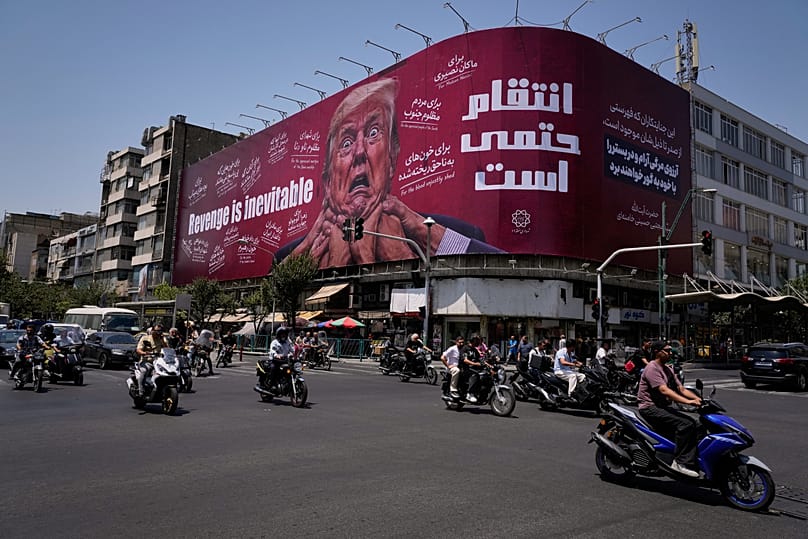
Iran's state media has also broadcast direct threats against the president himself. In July, a billboard in Tehran's Islamic Revolution Square showed Trump apparently dead in a coffin, with the words "We will kill Trump" written in English.

A separate video released earlier purported to map the route of Trump's motorcade between airports and his homes in Florida and New York. The US Secret Service confirmed it was reviewing the footage.

In January 2020, a US drone strike killed IRGC's Quds Force commander Qassem Soleimani at Baghdad International Airport — an operation Trump authorised during his first term.

Iranian officials vowed retaliation for Soleimani's killing at the time and have renewed those pledges repeatedly since.

The second and more recent trigger is the death of Ayatollah Ali Khamenei in the US-Israeli strikes of 28 February, the opening salvo of the ongoing war.

An example of billboards put up in Tehran
An example of billboards put up in Tehran آسوشیتدپرس

Some Iranian state-run media figures have framed personal threats against Trump explicitly through the Islamic legal concept of "qisas" or retributive justice, arguing that the killing of the Islamic Republic's leader creates an obligation to kill the person deemed responsible.

Mohammad-Javad Larijani, a commentator on Iranian state television, said qisas was the Islamic Republic's "inalienable right". Speaking of those responsible for Khamenei's death, he said, "We will do whatever is in our power, and there is no international legal barrier to stop us."

"If we do not carry out qisas on Trump, if we do not punish our leader's killer, the current leader and the leaders of the Islamic Republic will always have to live in hiding," Mohsen Ghanbarian, another regular on the state broadcaster, said.

Trump has warned that any attempt to kill him would trigger a severe US response. On 20 January, he said that in case of an attempt on his life, "the whole country of Iran will blow up," and that he had issued orders ensuring the US would "wipe the Islamic Republic off the face of the Earth" if the threats were carried out.


South Korea says US cancelled joint marine drills over force constraints from Iran war

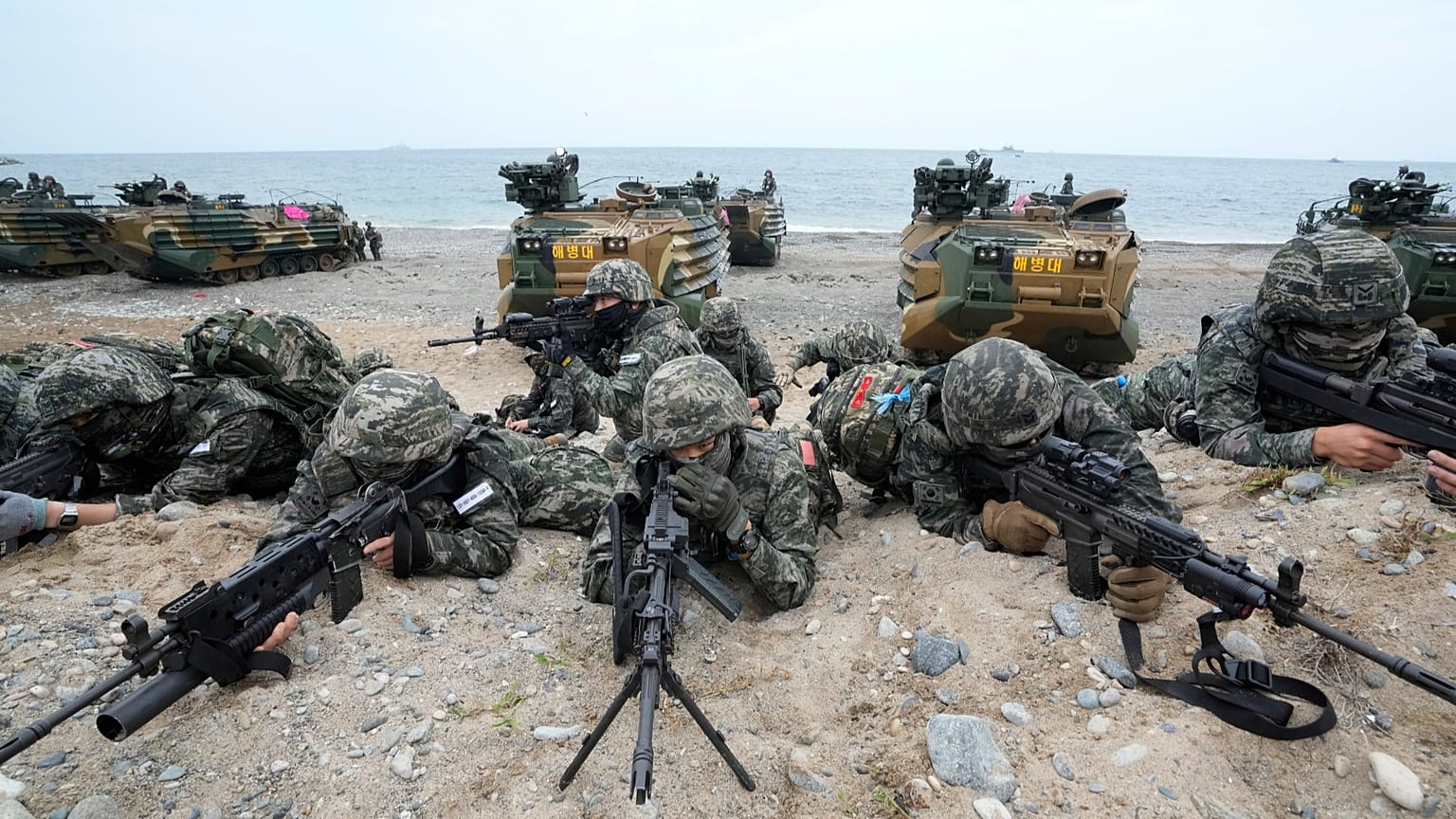
South Korean Marines take positions after landing on the beach during joint military amphibious drills with the US in Pohang, 2 September, 2024
Copyright AP Photo

By Gavin Blackburn
Published on

The cancellation follows US President Donald Trump's order last week to scale down the separate annual Ulchi Freedom Shield exercises, cutting the joint drills from 11 days to five.

South Korea said on Monday that the United States had cancelled a large joint amphibious landing exercise scheduled for next month due to constraints on force availability caused by the Iran war

The biennial Ssangyong drills involve marine forces from South Korea and the United States and are designed to strengthen combined operations, typically involving warships, aircraft and ground forces rehearsing amphibious landings.

The cancellation follows US President Donald Trump's order last week to scale down the separate annual Ulchi Freedom Shield exercises, cutting the joint drills from 11 days to five.

Trump at the time cited their high cost and said they sent an "inappropriate and hostile" signal to North Korea, while highlighting his relationship with its leader, Kim Jong-un.

"The US Marine Corps formally notified our forces in June that its ability to deploy forces during this year's Ssangyong exercise would be constrained due to the situation in the Middle East," Han Seung-jeon, a spokesperson for the South Korean Marine Corps, told reporters at a news briefing.

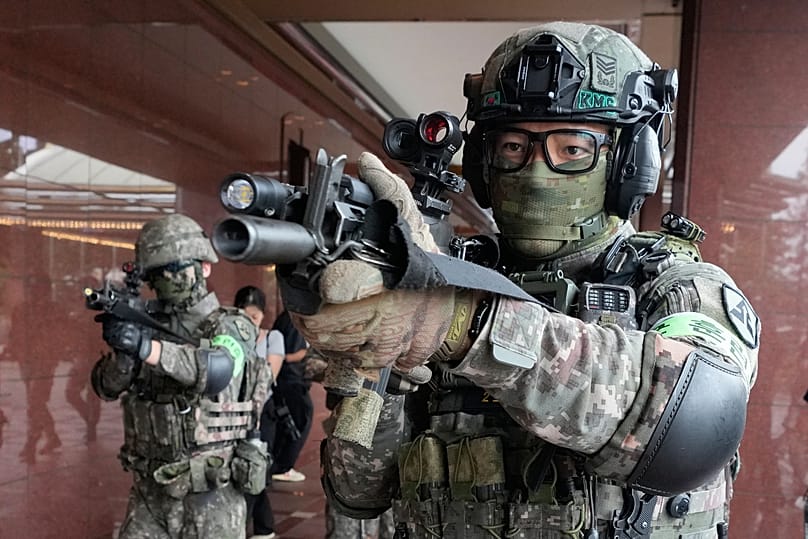
South Korean soldiers take part in an anti-terror drill as a part of the Ulchi Freedom Shield military exercise in Seoul, 19 August, 2026
South Korean soldiers take part in an anti-terror drill as a part of the Ulchi Freedom Shield military exercise in Seoul, 19 August, 2026 AP Photo

Seoul and Washington were continuing consultations on resuming the amphibious exercise, he said, without giving details.

The Pentagon did not immediately respond to a request for comment on Seoul's announcement.

Trump's order last week to scale back the Ulchi Freedom Shield exercise came as he seeks to revive the relationship he developed with Kim during his first term.

The US president said on Wednesday that it was important to "get along" with Kim, adding that Pyongyang now had 57 "very powerful" nuclear weapons.

Seoul estimates that North Korea has around 80 to 120 such weapons.

Trump and Kim met three times during Trump's first term, but Pyongyang accelerated its nuclear programmes after their second 2019 summit in Hanoi collapsed without an agreement on North Korea's denuclearisation.


Landslide at landfill in Guinea kills 30 people, government says


By Evelyn Ann-Marie Dom
Published on

Heavy train triggered the landslide at the waste mound. The government had issued eviction orders to local residents living near the landfill in the days leading up to the incident out of fear for a collapse.

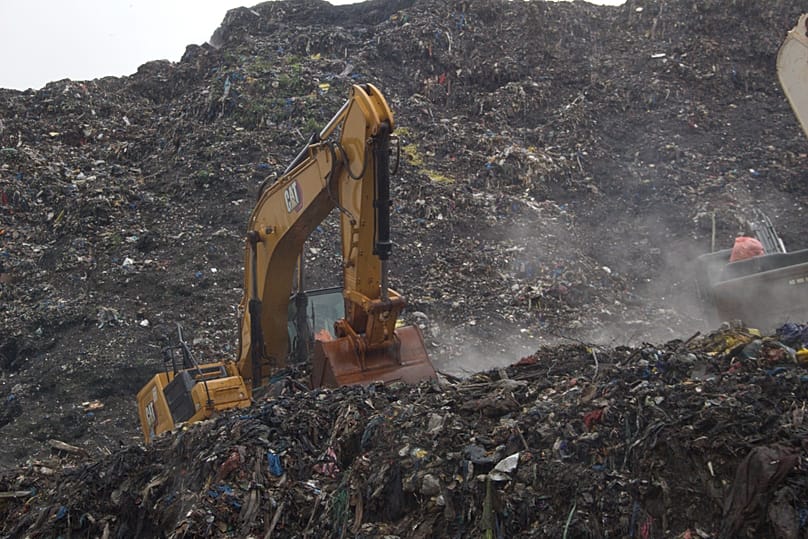
A landslide at a waste site in Guinea early on Sunday has killed 30 people and injured several others after heavy rain caused a mound of rubbish to collapse, government officials reported.

The landslide buried nearby tents and shacks and destroyed several homes. A search and rescue operation was launched to try to find survivors.

At least six other people were seriously injured.

"Significant material and human resources have been deployed to search for any people who may still be buried, to rescue the victims and to recover the bodies," a statement by the government said.

The necessary measures were taken to "ensure medical care for the wounded" and "assistance for those affected by the tragedy," the statement added.

The heavy rain started pouring down early on Sunday morning, washing over the refuse at Dar Es Salam—Conakry's largest open-air waste dump—on the outskirts of the capital.

"The first section gave way. People tried to come to the rescue, shouting, 'Is there anyone down there? Is there anyone down there?' They came running and climbed onto the refuse to see if anyone was there," a local resident explained.

"That was when the second section collapsed in three successive stages, cascading down. And that is what poured onto the people".

Rescue workers search through a heap of refuse after it collapsed at Conakry’s largest landfill, Guinea, Sunday, Aug. 23, 2026. AP Photo/Fodo Toure

The closure of the dump had recently been announced and was scheduled to take place on that same Sunday.

Days prior to the incident, residents living nearby the landfill were given eviction orders by the government, out of fear of a collapse. Many were forced to leave, but according to local authorities, many others were still around at the time of the disaster.

"We will ensure that the remaining families are relocated elsewhere,” minister of territorial administration and decentralisation, Dienabou Touré, said at the scene.

A resident of the Dar Es Salam neighbourhood explained to press agency AFP the efforts local residents went through to prevent a tragedy from unfolding.

"We organised sit-ins, we invited the officials from the relevant departments, but they didn’t take it seriously. So that’s why today, with this landslide, I blame the State, because it didn’t take the necessary measures to have the dump closed. And yet they had promised us that, it’s been a year now," activist Abou Hamza explained.

Guinea is mineral-rich and holds the world's largest deposits of bauxite, a rock that serves as a main source of aluminium. The country and also has iron ore, gold, diamonds and minerals.

However, 43.7% of the population lives below the national poverty line, according to the World Bank, with around 3.7 million out of 15.1 million people living on less than $4.20 USD (€3.60) a day.