Tuesday, August 25, 2026


Ukraine’s robot and drone parade offers a glimpse of the future of war

Column of Ukrainian unmanned ground vehicles on the Khreshchatyk in central Kyiv, August 24, 2026.
Copyright Ukrainian President’s Office

By Sasha Vakulina
Published on

Ukraine marked its 35th Independence Day with a military display unlike any it had staged before: robots on the streets of Kyiv, naval drones on the Dnipro river and UAVs in the skies above the capital, showcasing technologies that have transformed the battlefield since Russia’s full-scale invasion.

There were no marching soldiers, no tanks and no columns of heavy armour. In their place came robots designed to perform many of the same tasks.

Marking 35 years of independence, Ukraine staged a different kind of military parade on Monday, showcasing its defence technology and unmanned warfare capabilities.

The parade offered a glimpse of the future of warfare and how profoundly four and a half years of Russia’s full-scale invasion have transformed the Ukrainian military.

Dozens of multi-role unmanned ground vehicles moved along Khreshchatyk, Kyiv’s main street, including robotic systems designed for combat, reconnaissance, logistics and the evacuation of wounded soldiers from the battlefield.

On the Dnipro river, Ukraine displayed the naval drones that have helped it challenge Russia’s once-dominant Black Sea Fleet despite possessing no conventional fleet of comparable size.

They included variants of the Magura and Sea Baby families of unmanned vessels, which Ukraine has used to strike Russian warships, military infrastructure and other targets.

Ukrainian naval drones including the Magura and Sea Baby Ukrainian President’s Office

Above the capital flew another generation of machines that has become indispensable on Ukraine’s battlefields: reconnaissance and strike UAVs, alongside interceptor drones developed to shoot down Russian drones attacking Ukrainian cities ar

ound the clock.

 
Reconnaissance and strike UAVs in Kyiv Ukrainian President’s Office


The parade offered a snapshot of a military transformation that has taken place at extraordinary speed and scale since Russia launched its full-scale invasion in February 2022.

Four and a half years later unmanned systems have become central to operations across land, sea and air, performing tasks once entrusted overwhelmingly to soldiers, aircraft, ships and armoured vehicles.

In 2024, Ukrainian President Volodymyr Zelenskyy signed legislation creating the Unmanned Systems Forces — a separate branch of the military dedicated to drone warfare — making Ukraine the first country to establish an independent branch built around unmanned systems.

The innovation reflects both technological development and brutal necessity.

Ukraine is defending itself against a much larger country with greater reserves of soldiers and conventional weapons.

Unmanned systems have allowed Kyiv to strike Russian forces while reducing the exposure of its own troops, especially infantry, extend the reach of relatively inexpensive weapons, and compensate for shortages ranging from artillery ammunition to naval power.

Ukrainian drone interceptors Ukrainian President’s Office


Monday’s display brought those strands of the war together in the centre of Kyiv.

Ukraine has not held a conventional military parade since Russia launched its full-scale invasion in early 2022.

In previous years, Khreshchatyk became better known for a very different display of military hardware: burnt-down Russian tanks and armoured vehicles captured or destroyed on the battlefield.

What the renewed Black Sea blockade means for Ukraine’s farmers

EXPLAINER

As Ukraine and Russia hammer each other’s Black Sea ports, the amount of grain being shipped through the crucial waterway has slowed to a crawl. For Ukraine’s farmers, the Black Sea blockade could hardly have come at a worse time.


Issued on: 24/08/2026 - 
FRANCE24
By: Paul MILLAR

A farmer carries a part of a Russian FPV drone that he shot down with a rifle as he watches a field burn following an air attack in the Kharkiv region, Ukraine, Wednesday, August 5, 2026. © Andrii Marienko, AP

The fields are white for harvest, but the way through the Black Sea is shut.

Faced with a grinding Russian advance towards the last cities in the Donbas left under Kyiv’s control, Ukraine’s state security services in June launched what Ukrainian President Volodymyr Zelensky called a “40-day campaign” of mid-to-long-range drone strikes deep into Russian territory.

The aim of these strikes, he said, was to put pressure on Moscow by targeting infrastructure vital for the country’s economic life – first and foremost, the oil refineries needed to sustain Russia’s lucrative fossil fuel exports and keep Russian consumers able to fill up at the pump. Kyiv has also carried out deadly air strikes against online retailers’ warehouses that many Russian small businesses rely on to reach their customers.

Since July, Ukraine has also targeted Russian ships transporting grain through the Black Sea and hammered rail and port infrastructure around the neighbouring Sea of Azov. Earlier this month, grain terminals at the major port of Novorossiysk – where the remnants of Russia’s Black Sea fleet have taken shelter – came under heavy drone fire from Ukraine.

In response, Russia has stepped up its own strikes on Ukraine’s critical infrastructure, raining down drones and missiles on the grain silos and port facilities around the Black Sea city of Odesa and shelling any ship that tries to dock.

Smoke rises from a civilian vessel on fire near Odesa, Ukraine on July 28, 2026. 
© Nina Liashonok, Reuters

For weeks now, Kyiv and Moscow have both struck commercial container ships and grain export terminals in and around each other’s Black Sea ports, effectively cutting off both nations’ ability to ship grain – or anything else – through the crucial sea route.

In a state media interview published Saturday, Russian President Vladimir Putin accused Ukraine of having “opened … Pandora’s box” and pledged to pummel the embattled nation’s “most sensitive economic sectors”.

Agriculture certainly qualifies. Ukraine’s farmers are among the world’s leading producers of wheat, barley, sunflower seeds and corn, and 90 percent of those exports reach the world through the Black Sea. In peacetime, the country’s thriving agriculture sector made up a full fifth of Ukraine’s economy, and almost half of its exports.

So perhaps it’s no surprise that Zelensky on Sunday said that Russia had rejected Kyiv’s efforts, through third parties, to establish a Black Sea truce that would allow civilian vessels to move through the waters unmolested by either side.

Instead, he alleged, Moscow had insisted that any such deal would only be struck if Kyiv called off its campaign against Russian energy infrastructure, which has triggered worsening fuel shortages across the country. Russia, for its part, has devastated Ukraine’s energy infrastructure throughout the war, trying to starve the country of heat and light as each winter draws near.

A satellite image shows damaged grain infrastructure following a Ukrainian drone and missile attack in Novorossiysk, Krasnodar region, Russia, August 12, 2026. © Vantor via Reuters


Aysmmetric warfare

Oleh Nivievskyi, an associate professor at the Kyiv School of Economics, said that the consequences of the Black Sea blockade weighed far heavier on Ukraine than on Russia.

“For Russia, this is an asymmetric issue, because yes, they export a lot of grain, predominantly wheat,” he said. “But for the economic powerhouse, agriculture is not as important as the energy sector. So on paper it might look the same – Ukraine does not export, and Russia does not export – but it's really asymmetric, because for Ukraine, sea routes are more important economically in terms of the share of exports and in terms of the share of the overall economy.”

Between them, Russia and Ukraine account for more than a quarter of the world’s agricultural exports, most of which feeds people in North Africa and the Middle East. Despite this, Russia’s agricultural exports last year made up less than 10 percent of its total export revenues.

In some ways, we’ve been here before. Tens of millions of metric tonnes of grain remained grounded in Ukraine’s Black Sea ports in the first months of Russia’s February 2022 invasion as Russian ships blockaded the waterway.
Making a deal

As global food prices surged and analysts began to warn of the very real threat of famine in the countries relying upon Black Sea grain, Ukraine, Russia, Turkey and the UN signed the Black Sea Grain Initiative in July 2022 to carve out a safe passage for ships transporting food and fertiliser through to the Bosphorus Strait.


Russia-Ukraine war: Grain hub attacks raise fears over global food prices
Cover image: © France 24
01:51


Moscow pulled out of the deal almost a year to the day later, alleging that Western sanctions continued to interfere with Russia’s own food and fertiliser exports. Despite this, both countries have largely continued to move their agricultural exports through the Black Sea – until now.

Nivievskyi said that the renewed blockade could prove far harsher than that of 2022.

“If you look at this from all angles, the situation is much worse,” he said. “The timing now is to plant winter crops, and winter crops are very important for Ukraine – winter wheat makes up the majority of the wheat that Ukraine produces.”

August is the height of Ukraine’s wheat harvest, and farmers would normally begin harvesting the country’s corn crop next month. If farmers can’t sell this year’s harvests, Nivievskyi said, many will struggle to raise the money they need to plant next year’s crops.

“For this, farmers they would need the liquidity, the working capital, to buy the seeds – and it’s not available right now,” he said. “Usually, around 50 percent of the harvest that’s sold in Ukraine is to purchase the materials for the autumn planting season, and this is now difficult to get because the prices are much lower, and volume-wise we cannot really sell as much as last season. And that’s going to be difficult.”


A farmer piles wheat into a granary in Kharkiv region, Ukraine, Monday, August 3, 2026. © Andrii Marienko, AP


Storage pressures

With Ukraine’s grain exports down by some 75 percent year-on-year the first two weeks of August, the question of where exactly producers are going to store all the grain they can’t shift is becoming critical. Agriculture Minister Taras Vysotsky said the country’s grain storage shortfall could reach as much as 11 million metric tonnes.

All-Ukrainian Agrarian Council deputy chairman Denys Marchuk told DW last week that Ukrainian farmers have already harvested more than 28 million tonnes of grains and pulses – and the corn harvest, estimated at some 33 million metric tonnes, hasn’t even begun.

“The capacities to store the exportable surpluses that Ukraine cannot really export right now are also limited -- and the major harvest is still in the fields,” Nivievskyi said. “So that's also going to create additional pressure on Ukrainian farmers, because they have to store the stuff somewhere.”

As local grain piles up, he added, domestic prices have only fallen further.

“Domestic prices in Ukraine now are quite low compared to the world market prices, and compared to the production costs,” he said. “There are messages and interviews of farmers saying that domestic prices are not at the level of production costs. So they will have to decide whether it’s worthwhile to bring the harvest in – or to keep it in the field.”

And while Russia is trying to reroute its grain shipments through the Caspian and Baltic Seas, Ukraine may struggle to find its own alternatives. The Danube River that has long served as Ukraine’s other major grain route has fallen to historically low levels as droughts wrack Europe, and the ports along its banks come under regular attack from Russian drones and missiles.

Nor can the country’s railways pick up the slack. Ukrainian authorities in July said Russia had damaged more than 200 locomotives in 2026 alone as Moscow systematically targets the country’s rolling stock. According to the agriculture minister, river and rails between them can carry just a third of what used to flow through Ukraine’s Black Sea ports.

Logistics aside, the political landscape has also changed considerably since the opening months of the full-scale war. Where the European Union once liberalised agricultural trade with the beleaguered country, suspending all import duties and quotas to help farmers move their produce west, the resulting influx of Ukrainian wheat and falling prices sparked fierce farmers’ protests across eastern and central Europe. Poland, Slovakia and Hungary all maintain bans on specific Ukrainian agricultural goods in the name of safeguarding their own farmers’ livelihoods.

"The willingness of European partners to help Ukraine out is also not there as it was in 2022," Nivievskyi said.


Trump laments lack of US aluminum amid trade row with Canada

US President Donald Trump. Credit: The White House | Flickr

US President Donald Trump, who has argued that the US does not need Canada, lamented Monday that his northern neighbor did have something he wants: aluminum.

“This country desperately needs aluminum,” Trump said during a telephone rally for Mike Mazzei, a Republican candidate for governor in Oklahoma. “Selfishly, we need aluminum in this country. We don’t have it. We get it all from Canada for the most part, and we need it badly.”

In a social media post later Monday, Trump also pitched a “desperately needed” aluminum plant in Inola, Oklahoma while endorsing Mazzei. “You can’t get Aluminum in the United States, and this Plant will go elsewhere if it’s not approved,” he wrote on Truth Social.

Trump’s comments come in the middle of a frenzied trade fight between the US and Canada, in which the president’s 50% metals duties have loomed large.

More than half of the aluminum that Americans consume each year is produced in Canada, making the country essential for multiple products including automobiles and washing machines manufactured in Michigan — a key political battleground state.

The US and Canada were on the verge of a deal last week that would have halved the aluminum levy. But the Trump administration faced pushback from the US steel and aluminum sectors, which urged it to avoid ceding too much to the Canadian market.

Trump’s repeated criticisms, tariffs and musings about US statehood for Canada have angered Canadians and strengthened support for Prime Minister Mark Carney and his Liberal Party.

(By Jeff Mason and Josh Wingrove)


Ontario ready to cut off electricity, critical minerals to US amid trade war

Ontario Premier Doug Ford has threatened to cut off electricity and critical minerals to the United States in response to Trump’s threats to add new tariffs on Canadian autos and steel. 

Ford said he will begin cutting off electricity and critical minerals produced in Ontario if the trade war with the US continues to escalate, in an interview with the Associated Press.

Michigan receives about 6% of its electricity from Ontario. Four international transmission lines connect Michigan and Ontario, with a total transfer capacity of 2,000 megawatts.

If Trump continues trying to attack Canadian manufacturing, Ford said, “he better have a pack of batteries,” the Associated Press reported.

This is not the first time Ford has used critical minerals and energy as a threat in the trade war. In October 2025, he told the Financial Post that the Canadian constitution gives provinces jurisdiction over critical minerals. 

“We have the right to make sure that the people that buy our critical minerals are friends,” he said at the time.

The news comes after Prime Minister Mark Carney walked away from trade negotiations on Friday, and Trump imposed 50% tariffs on about $20 billion worth of Canadian goods including autos, auto parts and steel on Saturday, and Carney said Canada would retaliate dollar-for-dollar beginning Sept. 8. 

Critical Minerals

As the US aims to reduce their reliance on China for critical minerals, losing Canadian production of high-grade nickel and uranium could become a major problem for the country. 

Canada exported $28.8 billion worth of critical minerals to the United States in 2025, accounting for approximately 57% of Canada’s total critical minerals, according to Natural Resources Canada.

Ontario’s Sudbury Basin, home to Vale (NYSE: VALE) and Glencore (LSE: GLEN) operations, is one of the world’s largest nickel-producing regions. Nickel is used in stainless steel, electric-vehicle batteries and defence applications, including military aircraft and naval vessels. 

“What would they do without the high-grade nickel that we ship down to the U.S.?” Ford said to the Associated Press.

Cameco’s (TSX: CCO; NYSE: CCJ) Blind River refinery in northern Ontario is the world’s largest commercial uranium refining facility. The province’s Ring of Fire region contains chromite, cobalt, nickel, copper, titanium and platinum group elements.

Energy cut off

Ford also threatened again to cut off energy produced in Ontario that powers homes and business in the US, if Trump continues to intensify the trade war. 

He had already used energy as a threat, imposing a 25% surcharge on electricity exported to Michigan, Minnesota and New York in March of 2025. Trump then threatened to double tariffs on Canadian steel and aluminium, and both sides backed away.

“We power 1.5 million homes and businesses,” Ford told the Associated Press. “Everything’s on the table. I’ll do whatever it takes.”

Still, Ford said to the Associated Press that Canada shouldn’t stop negotiating, even if he is ready to retaliate when needed.

“I never believe in walking away from the table,” Ford said. “Continue negotiating and see where we go.” 


U.S. Refiners Face New Crude Squeeze as Canada Cuts Oil Sands Output

  • Canadian oil sands maintenance could cut crude production by 300,000 bpd in September, squeezing U.S. refiners already operating hard to offset disrupted global fuel supplies.

  • Replacement heavy crude is scarce, with Canadian inventories unusually low and Venezuela’s production recovery progressing too slowly to fully compensate.

  • The squeeze could push already-record refining margins even higher, particularly for diesel, adding further pressure to fuel prices, inflation and economic growth.

U.S. refineries have been running at full speed for months to make up for lost fuel supply from the Middle East. Fuel exports from the United States have been breaking records. This may be about to change, and not because of the war. It is oil sands maintenance season in Canada.

In September, Canadian crude oil production may drop by 300,000 barrels daily due to maintenance activities in the oil sands, Rystad Energy said this week, as quoted by Bloomberg. Usually, whenever such a seasonal disruption occurs, it gets offset with crude from storage. Unfortunately, crude in storage is also lower than usual—the lowest in 12 months, per the report.

Normally, Canadian oil producers send 4 million barrels daily of heavy crude to U.S. refiners. Next month, there will be less, which will be felt because demand for fuels remains strong despite some demand destruction by higher prices. According to the Bloomberg report, all major oil sands operators will be cutting production for maintenance, and pipeline operators have stopped rationing space on their pipes in evidence they expect lower demand in September.

The problem is there is no replacement for Canadian crude, even with oil shipments from Venezuela ramping up—because they are not ramping up fast enough. Venezuela exported 1.16 million barrels of crude oil daily last month, a slight decline from June’s 1.2 million barrels daily, because PDVSA withdrew less crude from storage, according to a Reuters report from earlier this month.

The fact that Venezuela is drawing on inventories to cover export demand suggests production has yet to pick up meaningfully. Indeed, July exports to Venezuela’s biggest oil destination, the United States, averaged 786,000 barrels daily, which was the highest since early 2019, and up from 284,000 barrels daily in January 2026, before the U.S. federal government sent forces to Caracas to remove President Nicolas Maduro and establish U.S. control over the South American country’s oil industry.

All in all, it appears the recovery in Venezuela’s oil production has been progressing more slowly than hoped, with all the supermajors that used to operate in the country wary and taking their time to make the decision whether to return. There have been some deals signed in recent months, with service providers and smaller American oil companies, which seem more willing to take the risks of operating in the country, which has yet to see a stable political and fiscal environment for large-scale operations.

Meanwhile, the situation in the Middle East is not improving, despite claims from Washington that tanker traffic has normalized, which tanker-tracking companies have not been able to verify, per a recent Wall Street Journal report. Ukrainian drone attacks on Russian refineries continue, squeezing gasoline and diesel production there as well. Global fuel supply remains constrained, especially in diesel, which caused refining margins to hit all-time highs earlier this month. The diesel crack spread hit $100 per barrel for the first time in history in mid-August.

Now, with 300,000 barrels daily of Canadian crude about to go offline in September, this record might yet get broken, just when demand for fuels picks up ahead of the heating season, when it hits a seasonal high. If the fuel supply balance remains compromised, there will be further demand destruction, starting from the most vulnerable markets and later spreading to the more resilient ones. This will in turn have implications for economic growth and inflation.

There can be little doubt that the Middle East war will drive higher inflation across the globe as it moves closer to its seventh month, with no resolution in sight and more escalation as the United States has just widened its sanctions against Iran.

By Irina Slav for Oilprice.com

TRUMPENOMICS

Copper price sets fresh record as US tariff threat wipes out global surplus


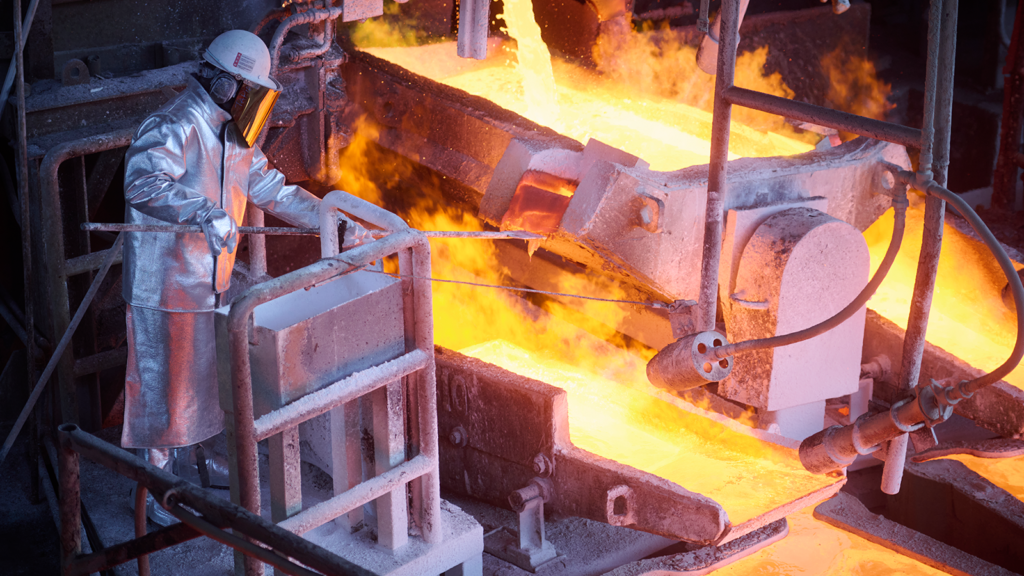
Copper market is on fire. Altonorte plant in Chile. Credit: Glencore

Copper hit a record in New York and closed in on all-time highs in London on Tuesday, as the threat of US import tariffs keeps pulling metal into American warehouses and turns what was supposed to be a comfortable global surplus into scarcity everywhere else.

Comex copper for September delivery rose as much as 1.8% to $6.7270 a pound (about $14,830 a tonne), topping the previous record of $6.7140 set on August 12. The contract was last up 1.6% at $6.7125, some $550 a tonne above the London price, a premium of close to 4%.

On the LME, the three-month contract added 0.4% to $14,251 a tonne after finishing Monday at $14,201, its highest ever close, and traded as high as $14,343 during the session, within 1.3% of January’s all-time peak of $14,527.50.

Click on chart for live prices.

Copper had touched $14,396 a tonne on August 17, its highest since late January, BMI noted on Friday, before a rush of returning metal knocked it back towards $14,000. Stocks on warrant in LME warehouses jumped 74.5% in a week, including the largest daily inflow since 2024, and the cash premium over three-month metal collapsed to $248 from the five-year high of $434 reached during this month’s squeeze.

The reprieve barely lasted a week. Orders to withdraw 51,400 tonnes hit the warehouse system on Monday, part of some 65,400 tonnes earmarked for departure in recent days, as metal resumed its march across the Atlantic to Comex, where inventories have risen for 46 straight days to a record 675,185 tonnes.

‘A deficit market in reality’

The US imported 885,000 tonnes of refined copper in the first half, up 3% from a year earlier and on pace to approach 2025’s record 1.64 million tonnes, as traders position for another round of tariff roulette: duties on refined copper of 15% from January 2027, stepping up to 30% from 2028, remain on the table in Washington.

CRU projected a 639,000-tonne global surplus for 2026 but now regards the market as at best balanced. “If imports keep coming in as they have been, then it’s going to look like a deficit market in reality,” principal copper analyst Robert Edwards told Reuters.

“Based on our numbers, you’re looking at years for that metal to get consumed,” Macquarie strategist Alice Fox said of the record Comex stockpile. Bank of China International’s Amelia Fu expects “new record highs in copper prices in coming weeks or months”, though Glencore chief executive Gary Nagle has argued a tariff announcement, whichever way it falls, would take the heat out of prices simply by ending the uncertainty.

Wall Street chases Southern Copper

Southern Copper has turned the squeeze into a scorching week. The Grupo Mexico unit, which is mapping a route to more than 1 million tonnes of annual output by 2029, has surged 15% over the past five sessions, touching a record $220.78 after a 6.3% jump on Friday.

Wall Street is struggling to keep up, with the consensus price target near $166, more than 20% below the market, and CICC, the Beijing-based state-backed investment bank, cutting the stock to market perform on valuation late last week even after record second-quarter sales of $4.3 billion and a dividend hike.

The rally has redrawn the top of the mining league table: at about $183 billion, Southern Copper is now worth more than Rio Tinto, at just under $180 billion, and trails only BHP’s $246 billion, despite Rio generating nearly four times the revenue and more than twice the profit over the past year. In MINING.COM’s TOP 50 ranking, where the stock stands in for parent Grupo Mexico, that would mark the copper producer’s first appearance at no. 2.

Freeport has fared even better over the week, adding almost 19% to trade within cents of its own all-time high, while First Quantum, Ivanhoe Mines and Teck Resources are all up about 11%.

Zijin Mining is the laggard, falling 2.5% in New York on Tuesday after the Chinese group warned that its 1.2 million tonne mined copper target is under pressure, with flooding at the Kamoa-Kakula mine in Congo expected to cut its attributable output by up to 57,000 tonnes this year.

Ivanhoe Electric added just 1% on Monday despite the US Export-Import Bank lifting its potential loan for the Santa Cruz copper project in Arizona by a third to $1.1 billion, and South32 gained little on a 61% boost to the reserve estimate at Sierra Gorda in Chile.


How the French language contributed to the US-Canada trade war

AFP
August 24, 2026
Quebec City is one of the oldest French settlements in North America, founded in 1608 by Samuel de Champlain. — Image by Wilfredor, CC BY-SA 4.0


The trade war between the United States and Canada has taken on the flavor of a culture war after the collapse of negotiations last week.

According to Canadian Prime Minister Mark Carney, the dispute with the nation’s largest trading partner was not just about tariff demands but what he called unacceptable “threats” to the French language and “Quebec culture.”

Those are not typical sticking points in trade negotiations, but emotive ones in Canada, particularly in the French-speaking eastern province of Quebec, which has long sought to preserve its distinct identity.

Carney said Canadian subsidies for Francophone culture, the role of Francophone online media and bilingual labeling of products sold in Canada were among the issues at stake.

He described these as “fundamental rights” and said there was “a huge gap between Canadian and American perspectives.”

The prime minister also contended that the US wanted to destroy Canada’s automotive, steel and aluminum industries, and restrict Canadian trade deals with other countries.

After the breakdown of talks, Canada now faces additional tariffs on some $20 billion worth of its US exports and double tariffs on Canadian vehicles, while Carney has vowed to match the US tariffs “dollar for dollar.”

In Quebec, Carney’s decision to break off negotiations was widely supported.

According to Canadian Prime Minister Mark Carney, the dispute with the nation’s largest trading partner was not just about tariff demands but what he called unacceptable ‘threats’ to the French language and ‘Quebec culture’ – Copyright AFP ANDREJ IVANOV

A poll published Sunday by the Angus Reid Institute found that 85 percent of Quebecers supported the move — the highest approval rate among the 10 Canadian provinces.

“Our identity is not negotiable,” Quebec Premier Christine Frechette wrote Sunday in a social media post.

She faces a reelection battle in October and is currently trailing in polls to the leader of a Quebec separatist party.

According to Canadian media, Frechette said Washington wanted concessions on Quebec’s rules for appliances and instruction manuals, as well as its law promoting French-language cultural content.

Recent legislation by Quebec allows it to regulate how much French-language content digital platforms offer and how prominently it appears, which can add to the cost of doing business for US companies, the Montreal Gazette reported.

In an interview on Monday, US Trade Representative Jamieson Greer played down the language issue in the trade talks as a “funny fake story.”

“What we don’t like is a situation where Canada, the federal government, forces American tech companies to take their earnings and give a percentage to their competitors in Canada,” Greer told CNBC.

“But I understand why the Quebecois want to have French language content and all of that. And we think that’s a really valuable thing.”


Canada to unveil response to Trump’s steep tariffs


AFP
August 25, 2026 

The latest tariffs impact about 5.5 percent of Canadian exports to the United States – Copyright AFP/File Cole BURSTON


Canada is due to announce its answer to US President Donald Trump’s latest wave of tariffs Tuesday, as a trade war intensifies between the historically close allies.

The new measures aim to support workers and businesses during “challenging times,” Canada’s government said late Monday, with officials to hold a press briefing to detail Ottawa’s response Tuesday morning.

Fresh 50-percent US tariffs took effect on a range of Canadian goods Saturday, after trade negotiations collapsed the prior day at the eleventh hour.

The duties impact some $20 billion in goods, or about 5.5 percent of Canadian exports to the United States, economists estimate.

Canadian Prime Minister Mark Carney said retaliatory tariffs would be effective September 8, as analysts warn of tit-for-tat escalation.

On Monday, Trump additionally pledged to double tariffs on Canadian autos starting next year, up to 50 percent from the current 25 percent for non-US content.

Ontario Premier Doug Ford criticized Trump’s tariff threat on autos, saying he could “kiss my ass” and threatening an electricity export surcharge.

In an earlier phase of the dispute, Ontario imposed a temporary 25-percent surcharge on electricity exports to three US states.

Trump has since lashed out at Ford online, warning of “far worse” consequences.

He also referred to the Canadian prime minister as a “governor,” re-upping his inflammatory push for Canada to become the 51st US state.

Highlighting the animosity, Trump on Tuesday said he was considering renaming Lake Ontario as “Lake America,” as he did last year with the Gulf of Mexico.

The latest tariffs Trump imposed will raise the US effective tariff rate on Canadian exports to 6.9 percent from 5.1 percent, Oxford Economics estimates.

Tariffs on plastics, electrical machinery, and wood and paper products contribute the most to the increase.

“Manufacturers in Quebec, New Brunswick, and Ontario will be affected the most,” Oxford Economics said.


– Threats to culture –


Over the weekend, Carney said US negotiators had sought restrictions on Canadian trade deals with other countries at the last minute.

US officials made unacceptable “threats” to the French language and “Quebec culture” too, he added, referring to eastern Canada’s French-speaking province.

But Trump pushed back early Tuesday, saying on his Truth Social platform that he would “never interfere with Canadians speaking French!”

“This lie was made up by a weak and ineffective Prime Minister in an attempt to gain political support,” Trump charged.

The United States is by far Canada’s biggest trading partner, with Canadian exports to its neighbor representing 70 percent of its overall total.

Canada is the United States’ second biggest trading partner in goods this year, behind Mexico, government data showed.

Polling released Sunday by the Angus Reid Institute showed Canadian broadly support Carney’s move to walk away from talks, but some have fear of economic repercussions.

The White House had alleged “discriminatory treatment” by Canada against US alcohol, automobile and dairy products in rolling out the 50-percent tariffs.

Trump had delayed their implementation, but both sides failed to reach an agreement after talks went down to the wire.

Besides the tariffs fight, Washington and Ottawa have to agree on revisions to the US-Mexico-Canada free trade agreement (USMCA) which Trump has declined to renew in its current form.

China–Canada Relations At A Strategic Crossroads: Xi Jinping’s Expected Visit, Alberta’s Referendum And Implications For The United States – Analysis


Canada's Prime Minister Mark Carney with China's President Xi Jinping. Photo Credit: @MarkJCarney, X

August 25, 2026

By Dr. Shehab Al-Makahleh


Key Takeaways:

Canada is pursuing a managed economic reset with China—marked by Carney’s January 2026 Beijing visit, restored agricultural market access, and a possible Xi visit in September—primarily to reduce its vulnerability to U.S. trade pressure rather than to realign geopolitically away from Washington.

The timing is unusually consequential: Xi’s potential September visit would occur weeks before Alberta’s October 19 referendum on greater provincial autonomy and roughly six weeks before the U.S. midterms, raising the risk that Canada’s China policy becomes entangled in both domestic federal-provincial tensions and American electoral politics.

The strategic challenge for Ottawa is diversification without dependency or confrontation: expand commercial ties with China while preserving national-security safeguards and the core security-economic partnership with the United States, recognizing that excessive American pressure could make Canadian diversification toward China more permanent.


Canada–China relations are entering a potentially transformative phase at precisely the moment when the North American political and economic order is under unusual pressure. Prime Minister Mark Carney’s January 2026 visit to Beijing initiated what Ottawa described as a new strategic partnership with China, while Beijing has restored important market access for Canadian agricultural exports and both governments have begun rebuilding economic and diplomatic channels that deteriorated sharply after 2018. On the other hand, Canada’s relationship with the United States has entered a period of significant trade friction, creating an incentive for Ottawa to diversify its economic relationships. Against this background, Chinese President Xi Jinping is paying a visit to Canada in September 2026, potentially linked to his expected trip to the United States. The possibility of such a visit is not yet equivalent to a formally confirmed state visit, but its potential timing is strategically important because it would occur only weeks before Alberta’s October 19th referendum and roughly six weeks before the November 3rd U.S. midterm elections.

The convergence of these events could produce an unusually consequential period for North American geopolitics. Xi’s possible September visit would test the limits of Canada’s economic and diplomatic reset with China; Alberta’s referendum could expose deeper tensions between Ottawa and the provinces over federalism, resources and national sovereignty; and the U.S. midterms could turn Canada’s China policy into an issue in American domestic politics. The result could be a three-sided strategic problem for Ottawa: how to deepen economic relations with China without provoking an unacceptable American response, how to maintain national unity while pursuing a more diversified foreign economic policy, and how to preserve the United States as Canada’s principal security and economic partner without allowing Canada to remain excessively dependent on a single market.

The emerging Canadian approach should therefore not be interpreted simply as a geopolitical shift from Washington toward Beijing. It is better understood as an attempt to create strategic room for manoeuvre. Canada is seeking alternatives because its overwhelming economic dependence on the United States has increasingly become a source of vulnerability. China, meanwhile, sees an opportunity to strengthen its position in a G7 country that has traditionally been closely aligned with Washington. For the United States, the central danger is not that Canada will suddenly become a Chinese ally. It is that continued American economic pressure could gradually make Canadian diversification toward China and other Asian markets politically and economically irreversible.

The Canada–China Reset


The foundations of the current reset were laid during Prime Minister Mark Carney’s January 2026 visit to China, the first visit by a Canadian prime minister since 2017. Carney met Xi Jinping and senior Chinese officials and announced a series of agreements designed to rebuild economic relations. The Canadian government characterized the outcome as a new strategic partnership and emphasized cooperation in trade, energy, agriculture, culture, tourism and other areas.

The economic component is particularly significant. Canada and China agreed to reduce several trade barriers, including measures affecting Canadian agricultural exports. Ottawa announced that China would reduce the combined tariff rate on Canadian canola seed from approximately 85 percent to about 15 percent and that Canadian canola meal, lobsters, crabs and peas would no longer face certain anti-discrimination tariffs beginning March 1, 2026. The Canadian government described China as a roughly C$4 billion market for Canadian canola seed, making the agreement particularly important for Western Canadian agriculture.

The significance of the reset goes beyond individual commodities. Canada is attempting to reduce its vulnerability to American trade policy by expanding alternative markets. The logic is straightforward: the more Canadian exporters can sell into China, Europe, India and other markets, the less exposed Canada becomes to unilateral changes in U.S. trade policy.

This is especially important given the deterioration in U.S.–Canada trade relations during 2026. Recent tariff disputes have demonstrated that even Canada’s closest economic relationship can become politically unstable. Chinese state-linked commentary has openly celebrated the dispute, portraying Canadian retaliation against Washington as evidence that American economic pressure is encouraging traditional U.S. allies to seek greater autonomy. China therefore has a strong strategic incentive to make its market more attractive to Canadian exporters at the precise moment when Ottawa is searching for alternatives.

Xi Jinping’s Possible September Visit

Reports that Xi Jinping may visit Canada during a September North American trip introduce another dimension to the relationship. Xi is considering adding Canada to a trip that would include the United States. If confirmed, it would represent the first visit by a Chinese head of state to Canada in approximately 16 years. The timing would be highly significant.

A Xi visit would give Beijing an opportunity to demonstrate that China is capable of maintaining productive relations with a major U.S. ally despite the broader strategic rivalry between Beijing and Washington. For Ottawa, it would provide an opportunity to demonstrate that Canadian foreign policy is becoming more diversified without formally abandoning the transatlantic and North American security architecture. The optics would therefore matter almost as much as the agreements.

Beijing would probably emphasize economic cooperation, agriculture, energy, clean technology, education, tourism and multilateralism. Ottawa would likely stress Canada’s independent foreign policy and the economic advantages of diversification. Neither side would have an interest in portraying the meeting as an anti-American alignment. Nevertheless, Washington would examine the visit closely.

If Xi were to arrive in Canada shortly before the U.S. midterm elections, American political actors could interpret the event through an electoral lens. Critics of the Canadian government could argue that Ottawa is exploiting tensions with Washington to move closer to Beijing. Conversely, Canadian officials could argue that the visit demonstrates precisely why Canada needs a diversified foreign policy: economic security requires more than dependence on a single partner. This could make the visit one of the most politically sensitive Canada–China diplomatic events in decades.

Why Washington Should Be Concerned

The United States has enormous structural advantages in its relationship with Canada. Geography, energy infrastructure, integrated manufacturing, defence cooperation and supply chains make a fundamental Canadian economic pivot away from the United States extremely difficult. Yet, those structural advantages do not guarantee political loyalty. On the other hand, Canada’s current diversification strategy is partly a response to the realization that economic interdependence can also create vulnerability. Carney’s January China visit highlighted the connection between Canada’s deteriorating relationship with Washington and Ottawa’s effort to rebuild economic ties with Beijing. This is conducive to an important strategic paradox. Washington may believe that economic pressure will force Canada to make concessions. Ottawa may instead conclude that American pressure makes diversification necessary. The difference between these two interpretations could shape North American politics for years.

The United States is also likely to pay particular attention to areas where Canadian and Chinese economic interests intersect with American national security. These include artificial intelligence, electric vehicles, batteries, telecommunications, data infrastructure, critical minerals, ports and advanced manufacturing. China’s role in global supply chains means that commercial agreements can have strategic implications even when they are not explicitly military. Canada’s challenge will be to distinguish legitimate commercial engagement from strategic dependency.

Ottawa itself recognizes this problem. Canadian government assessments continue to identify concerns involving Chinese economic coercion, cyber activity, foreign interference, intellectual-property issues and non-market practices. The reset with Beijing therefore does not mean that Canada has abandoned its security concerns. Instead, Ottawa appears to be pursuing what could be described as “managed engagement”: expand economic cooperation while maintaining national-security safeguards. As a result, this approach will be closely watched in Washington.


The Alberta Referendum: A Domestic Constraint on Canadian Foreign Policy

The Alberta referendum introduces an internal Canadian variable that could complicate Ottawa’s China strategy. Importantly, the referendum is scheduled for October 19, 2026, rather than November. Elections Alberta confirms the referendum process, while the Alberta government has published the questions and supporting information surrounding the vote. The referendum should not be understood simply as an immediate vote on independence. The separation question is structured around whether the Alberta government should begin the constitutional process required for a future referendum on separation. The October vote therefore does not itself make Alberta an independent country. Nevertheless, the political consequences could be substantial.

Alberta is central to Canada’s energy economy and has particularly strong economic ties with the United States. Its oil, gas, agriculture and petrochemical sectors depend heavily on North American markets. At the same time, Alberta has an increasingly strong political interest in expanding access to Asian markets and increasing the province’s control over economic decisions. This produces a potential contradiction.

Ottawa’s China strategy could create new markets for Alberta’s agricultural and resource sectors, but Alberta’s political leadership may resist federal control over the international economic policies affecting those industries. A stronger autonomy movement could therefore complicate Canada’s ability to formulate a unified China strategy.

The referendum’s broader questions also concern provincial powers and the relationship between Alberta and the federal government. Elections Alberta confirms that the referendum process involves questions relating to provincial–federal relations and constitutional issues. If the referendum produces a strong mandate for greater provincial autonomy, Ottawa could face greater pressure to negotiate with Alberta over energy infrastructure, immigration, taxation, natural resources and federal programs. This matters internationally because foreign economic policy increasingly intersects with provincial jurisdiction.

China does not need Alberta to become independent to benefit from stronger provincial autonomy. A Canada in which provinces exercise greater influence over resources and economic policy could potentially provide Beijing with multiple channels for commercial engagement. Washington would likely see the same development differently. For the United States, Alberta’s political autonomy could strengthen an energy-rich region that is deeply integrated with the American economy. But it could also complicate Canada’s ability to coordinate North American energy and trade policy.


The Critical Minerals and Energy Dimension

Critical minerals could eventually become the most sensitive area of Canada–China relations. Canada has significant mineral resources, while China possesses enormous processing and manufacturing capacity. The combination is economically attractive but strategically complicated. Canadian policymakers want foreign capital and industrial development, while Washington increasingly wants North American supply chains that reduce Chinese dependence. This creates a triangular competition.

Canada wants to become a critical-minerals and clean-energy power. China wants secure access to resources and new markets. The United States wants Canada to develop those resources primarily within trusted North American supply chains. The same tension applies to electric vehicles and batteries. Canada has already moved toward greater access for Chinese electric vehicles as part of the broader Canada–China economic reset. The January agreement included arrangements concerning Chinese EV imports into Canada, while Ottawa simultaneously seeks to develop its own clean-technology manufacturing base.

From Beijing’s perspective, the Canadian market represents an opportunity to expand commercial influence in North America. From Washington’s perspective, Chinese vehicles and components entering Canada could create concerns about supply chains, data, industrial competitiveness and the possibility of Chinese firms establishing a larger North American manufacturing footprint. Thus, the EV issue could become much more politically important than the size of the Canadian market alone would suggest.

The U.S. Midterm Elections and Canada

The November 3, 2026 U.S. midterm elections provide the final piece of the political calendar. All 435 voting seats in the House of Representatives and 35 Senate seats are scheduled to be contested. Canada is unlikely to be a central issue in the American elections, but Canada–China relations could become politically relevant through broader debates over China, tariffs, manufacturing, energy and trade. A Xi visit to Canada in September would occur less than two months before Election Day.

That timing would create opportunities for political messaging in the United States. Candidates could argue that Canada is moving closer to China at the same time that Washington is trying to protect American industries and supply chains. Canadian economic agreements with China could therefore be incorporated into a larger narrative about Chinese competition. The danger for Ottawa is that a policy designed primarily for Canadian economic diversification could become an American electoral issue.

The danger for Washington is the opposite: excessive pressure on Canada could accelerate exactly the diversification that American policymakers are trying to prevent. This is the central strategic paradox. If Washington makes Canadian access to the American market more uncertain, Canadian policymakers have greater incentives to seek Chinese, European, Indian and Asian alternatives. If Washington instead offers predictable access and deeper North American investment opportunities, Ottawa will have less reason to move aggressively toward Beijing. The American midterm elections could therefore influence not only U.S. domestic politics but also the future direction of Canada–China relations.


Three Possible Scenarios

The first scenario is a managed Canada–China rapprochement. Xi visits Canada in September, Ottawa and Beijing announce additional economic agreements, and the relationship develops primarily around agriculture, energy, tourism, education and trade. Canada maintains strict national-security screening while avoiding major Chinese involvement in strategically sensitive infrastructure. Washington expresses concern but ultimately accepts that Canada has legitimate diversification objectives.

The second scenario is strategic confrontation between Washington and Ottawa. Xi’s visit produces major agreements involving EVs, critical minerals or Chinese investment. American policymakers interpret these agreements as evidence that Canada is moving toward Beijing. The issue becomes politically salient during the U.S. midterm campaign, and Washington responds with additional trade or investment restrictions. Canada then accelerates its diversification strategy.


The third scenario is Canadian internal fragmentation. The Alberta referendum produces a strong mandate for greater provincial autonomy, while other provinces demand additional powers or challenge Ottawa’s approach to foreign investment and resources. Ottawa’s ability to implement a unified China policy becomes more difficult. China could benefit from new commercial opportunities, but Canadian political fragmentation would make major strategic initiatives harder to execute.

The most likely outcome is a combination of the first two scenarios: deeper economic relations between Canada and China accompanied by persistent and increasingly strategic American concern. Ottawa is unlikely to abandon its long-standing economic, defence and security relationship with Washington, but neither is it likely to reverse the diversification strategy that has emerged in response to growing uncertainty in U.S.–Canada trade relations. Canada will probably continue expanding access to Chinese markets for agricultural products, energy, critical minerals, clean technology and other exports while simultaneously maintaining national-security safeguards around Chinese investment in sensitive sectors.

This approach would allow Ottawa to argue that its engagement with Beijing is driven primarily by economic necessity and the pursuit of greater resilience rather than by a geopolitical decision to align with China. Nevertheless, Washington is likely to remain increasingly attentive to the scale and nature of Canadian–Chinese cooperation, particularly if Chinese companies gain a larger presence in electric vehicles, batteries, artificial intelligence, telecommunications, critical-mineral processing or strategic infrastructure. The issue could become especially sensitive if Xi Jinping’s expected September visit produces new investment or trade agreements immediately before the U.S. midterm elections, when China-related economic and national-security issues are likely to receive heightened political attention in Washington.

At the same time, the emerging relationship is unlikely to develop without limits. Canada has significant economic incentives to engage China, but Ottawa is also aware that excessive dependence on Beijing could simply replace one form of vulnerability with another. The Canadian government therefore has an interest in maintaining multiple economic options, including the United States, the European Union, India, Japan, South Korea and other Indo-Pacific markets. This would allow Canada to pursue what might be described as strategic diversification without strategic alignment. In this model, China becomes an important economic partner but not Canada’s principal security partner or political patron. Such a strategy would give Ottawa greater bargaining power with Washington while also providing Beijing with incentives to maintain constructive relations with Canada. The resulting equilibrium, however, would be inherently fragile. Any major Chinese investment in a strategically sensitive Canadian sector, any significant deterioration in U.S.–China relations, or any new dispute between Ottawa and Washington could rapidly transform economic cooperation into a national-security controversy.

The Alberta referendum could further complicate this trajectory. If the October 19 vote produces a strong mandate for greater provincial autonomy, the federal government could face additional pressure from Alberta over energy policy, natural resources, taxation, infrastructure and international economic relations. Alberta’s enormous energy and agricultural potential make it particularly relevant to Canada’s diversification strategy, but its economy is also deeply integrated with the United States.

A stronger Alberta autonomy movement could therefore create competing pressures: Ottawa may seek greater access to Asian and Chinese markets, while Alberta may simultaneously demand greater control over the resources that would make such diversification possible. China could see opportunities in this environment, particularly through energy, agriculture and critical-mineral cooperation, while Washington could seek to reinforce its economic relationship with Alberta and the broader Canadian energy sector. Consequently, the Canada–China relationship cannot be viewed solely through the lens of federal diplomacy. It is increasingly connected to Canada’s internal constitutional politics and the competing economic interests of Ottawa, Alberta and other provinces.

For Washington, the strategic challenge will be to determine whether Canadian diversification represents a manageable economic adjustment or the beginning of a broader geopolitical shift. The United States possesses enormous structural advantages in its relationship with Canada, including geographic proximity, integrated supply chains, defence cooperation, energy infrastructure and financial interdependence. These advantages make a wholesale Canadian pivot toward China extremely unlikely. However, Washington should not assume that these structural relationships automatically guarantee Canadian political alignment on every economic issue.

If American trade pressure becomes sufficiently unpredictable or punitive, Canadian policymakers may increasingly view diversification as a matter of national economic security rather than simply a commercial preference. In that circumstance, Chinese engagement could acquire a strategic dimension even if neither Ottawa nor Beijing initially intended it to do so. The paradox is that the more Washington attempts to prevent Canada from diversifying through economic pressure, the stronger the political argument inside Canada for diversification may become. The central question for the United States, therefore, will be whether it can preserve Canada’s deep integration with North America through incentives, investment and predictable economic relations rather than through pressure alone.

What Canada Should Avoid

Ottawa’s greatest strategic challenge will be avoiding the false choice between Washington and Beijing. Canada does not need to choose China over the United States. Nor can Canada realistically replace the United States as its principal economic and security partner. Instead, Ottawa should pursue a policy of strategic diversification without strategic alignment.

That means expanding Canadian exports to China while maintaining strict screening of Chinese investments in critical infrastructure and sensitive technologies. It means selling more agricultural products to China while preventing excessive dependence on Chinese markets. It means attracting investment from multiple countries rather than replacing American dependence with Chinese dependence. The objective should be resilience rather than realignment. This approach would also give Canada greater credibility in Washington. If Ottawa can demonstrate that its China policy is primarily about market diversification rather than geopolitical alignment, American concerns become easier to manage.


What Washington Should Do


The United States should recognize that Canada’s diversification strategy is partly a consequence of American policy. Washington retains extraordinary leverage because of geography and economic integration. But leverage is most effective when it is used to create incentives rather than resentment. The United States should therefore consider a more positive North American economic strategy based on predictable market access, joint critical-mineral development, coordinated energy infrastructure, advanced manufacturing and research partnerships. The strategic objective should be to make North American integration more attractive than Chinese alternatives. Washington should also avoid forcing Canada into an explicit choice between the United States and China. Such an approach could unintentionally strengthen the argument inside Canada that Ottawa requires greater strategic independence. China would welcome that outcome.


The coming months could mark a critical turning point in Canada’s relationship with both China and the United States. Xi Jinping’s possible September visit would symbolize the rehabilitation of Canada–China relations after years of diplomatic tension. Carney’s January visit to Beijing has already established the foundations of a new strategic partnership, including renewed agricultural market access and broader economic cooperation. The Alberta referendum on October 19 could then reveal how much domestic support exists for greater provincial autonomy and potentially complicate Ottawa’s ability to pursue a unified national economic strategy.

Finally, the U.S. midterm elections on November 3 will provide the political backdrop against which Washington evaluates Canada’s evolving relationship with Beijing. The significance of these events lies in their convergence. China sees an opportunity to deepen its economic presence in Canada. Canada sees an opportunity to reduce its vulnerability to U.S. trade pressure. Alberta is challenging aspects of the federal-provincial balance. Washington is approaching an election in which China, trade and economic security will remain politically important. The most consequential question is therefore not whether Canada will choose China over the United States. It is whether Canada can successfully diversify without creating a new strategic dependency.

For Beijing, the ideal outcome is a Canada that remains formally aligned with Washington but becomes increasingly economically independent of it. For Ottawa, the ideal outcome is a Canada capable of trading with China while maintaining its core security relationship with the United States. For Washington, the ideal outcome is a Canada that remains deeply integrated with North America without feeling compelled to seek alternatives. The coming months will determine which of these visions comes closest to reality. The strategic lesson is clear: Canada is not necessarily moving from Washington to Beijing; it is attempting to move from dependence toward diversification. The United States should recognize that distinction before economic pressure turns diversification into strategic realignment.

ReferencesAju Press. (2026, July 23). Xi Jinping may visit Canada during September trip to the U.S.https://www.ajupress.com/view/20260723104870677

Ballotpedia. (2026). United States Congress elections, 2026. https://ballotpedia.org/United_States_Congress_elections,_2026

Chatham House. (2026). U.S. midterm elections 2026: What happens next?https://www.chathamhouse.org/events/all/standard-event/us-midterm-elections-2026-what-happens-next

Elections Alberta. (2026). Referendum. https://www.elections.ab.ca/elections/referendum/

Prime Minister of Canada. (2026a, January 16). Prime Minister Carney forges new strategic partnership with the People’s Republic of China. Government of Canada.

Prime Minister of Canada. (2026b, January 16). Prime Minister Carney meets with President of the People’s Republic of China Xi Jinping. Government of Canada. https://www.pm.gc.ca/en/news/readouts/2026/01/16/prime-minister-carney-meets-president-peoples-republic-china-xi-jinping

The Guardian. (2026, January 12). Carney heads to Beijing as Trump’s America First agenda forces Canada into trade rethink. https://www.theguardian.com/world/2026/jan/12/carney-heads-to-beijing-as-trump-america-first-agenda-forces-canada-into-trade-rethink
The Straits Times. (2026). China media hails Canada’s “Chinese-style” tariff retaliation. https://www.straitstimes.com/asia/east-asia/china-media-hails-canadas-chinese-style-tariff-retaliation


About Dr. Shehab Al-Makahleh

Dr. Shehab Al-Makahleh is a senior political advisor for a number of countries and president of Canada-based Geostrategic Media Center and director of the Jordan-based Middle East Institute. Al-Makahleh is a non-resident fellow at a number of British, American and Middle Eastern think-tanks. He has contributed many policy papers and op-eds to many international think-tanks in different languages. He has been a keynote speaker at world political, security and military conferences. Al-Makahleh has published 10 books on political and economic developments and world leadership. He is the author of Into the Terrorist Mind and His Majesty King Abdullah II’s Trait: Teacher and Leader. He has published many policy papers in the US, Russia and the UK. He has published scores of articles, Op-Eds in American, Chinese, British, Russian, French, South Korean and Middle Eastern outlets. He has been lecturing at well-known universities in the Middle East and abroad. You may follow him [ @Geostrat_ME] and [@ShehabMakahleh].
View all posts by Dr. Shehab Al-Makahleh →