Saturday, September 05, 2026

KAIST tames a semiconductor greenhouse gas 6,000 times more potent than CO₂ with the ‘power of disorder’


KAIST and Samsung Electronics have developed a new, long-lasting catalyst based on ‘entropy stabilization,’ a principle in which mixing multiple metal atoms together actually stabilizes the catalyst’s structure


The Korea Advanced Institute of Science and Technology (KAIST)

KAIST Tames a Semiconductor Greenhouse Gas 6,000 Times More Potent Than CO₂ with the ‘Power of Disorder’ 

image: 

Figure 1. Design and CF4 removal performance of an aluminate catalyst incorporating multiple evenly mixed metals for treating the semiconductor process gas CF4.

view more 

Credit: KAIST


Among the gases used in semiconductor manufacturing, tetrafluoromethane (CF₄) is a greenhouse gas over 6,000 times more potent than carbon dioxide. A KAIST research team has developed a technology that removes this gas with high efficiency while extending the usable lifetime of the catalyst that helps break it down by harnessing the ‘power of disorder,’ in which mixing multiple metal atoms together actually stabilizes the catalyst’s structure.

KAIST (President Chung Sik Bae) announced on September 3 that a research team led by Professor Minkee Choi from the Department of Chemical and Biomolecular Engineering, working in collaboration with researchers from Samsung Electronics, has developed a new catalyst capable of removing CF₄, a greenhouse gas used in processes such as the fabrication of fine semiconductor circuits with high efficiency over long periods of use.

CF₄ is used in processes such as dry etching, in which unwanted portions of a semiconductor wafer are selectively removed to create fine circuit patterns. The problem lies in the CF₄ left over after use. Because its carbon and fluorine atoms are bound together extremely tightly, the gas does not easily decompose, and once released into the atmosphere, it can persist for roughly 50,000 years. Its impact on global warming is also more than 6,000 times greater than that of carbon dioxide.

To prevent CF₄ from being released as is, semiconductor manufacturing sites currently decompose it at high temperatures using steam and a catalyst. A catalyst speeds up chemical reactions, much like those used to reduce pollutants in car exhaust.

However, conventional catalysts have suffered from declining performance the longer they are used. This is because hydrogen fluoride (HF), generated as CF₄ decomposes, combines with moisture to create a highly corrosive environment, causing the catalyst’s fine particles to aggregate or its structure to change. When small catalyst particles clump together into larger masses, the surface area in contact with the CF₄ to be treated shrinks, and performance declines accordingly.

The research team solved this problem, paradoxically, by harnessing the ‘power of disorder.’

Mixing multiple atom types creates a complex, disordered structure that resists phase changes and remains stable.  This process is called entropy stabilization.  In simple terms, it is a principle in which evenly mixing multiple kinds of atoms makes it difficult for a catalyst to clump together or change into another structure.

Using this principle, the research team evenly incorporated multiple metals — aluminum (Al), zinc (Zn), gallium (Ga), nickel (Ni), and cobalt (Co) — into a single aluminate crystal structure. Aluminate is a material in which several metals are bonded around a basic framework of aluminum and oxygen. Through this approach, the team developed an ‘entropy-stabilized aluminate (ESA) catalyst’ that resists aggregation and structural deformation even under the harsh conditions of high temperature, moisture, and fluorine occurring together.

The performance gap was clear. The new catalyst’s intrinsic activity for decomposing CF₄ was approximately 2.3 times higher than that of a conventional alumina catalyst. Notably, in an accelerated test conducted at about 800°C for 150 hours, the CF₄ conversion of the conventional alumina catalyst dropped from 93% to 48%. The new catalyst, by contrast, maintained a high level, declining only from 98% to 92%. This demonstrated that the catalyst can remove CF₄ with high efficiency while sustaining its performance over extended periods.

The researchers also revealed the decomposition mechanism of CF₄.  To do this, they used oxygen isotopes, which allow the movement of oxygen atoms to be tracked. In simple terms, this involves attaching a ‘tag’ to oxygen atoms so that where the oxygen comes from and where it moves to during the reaction can be traced.

The results confirmed that the catalyst first uses the oxygen within its own structure to decompose CF₄, and that the reaction continues as surrounding steam replenishes the oxygen that has been depleted. In effect, the catalyst functions as a kind of ‘oxygen refill system,’ in which steam restores the oxygen the catalyst draws upon. Through this, the research team provided the world’s first experimental confirmation of a CF₄ decomposition process that had previously only been proposed in theory.

The significance of this research goes beyond developing a single catalyst that decomposes CF₄ effectively; it presents a new catalyst design strategy capable of achieving both high decomposition performance and a long service life at the same time. The approach is expected to be applicable to the future development of catalysts for treating a range of semiconductor process gases by varying the types and combinations of metals used.

Professor Choi said, “By applying the principle that disorder in nature can actually make a structure more stable to catalyst design, we achieved both high CF₄ decomposition performance and long-term stability at the same time.” He added, “This work is meaningful in that it presents a new materials design strategy that can be extended to catalysts for treating a range of semiconductor process gases by varying the types and combinations of metals used.”

The study was led by Dr. Seunghyuck Chi, a postdoctoral researcher in KAIST’s Department of Chemical and Biomolecular Engineering, who served as first author, with researchers from Samsung Electronics participating as co-authors. The findings were published in June in the international chemistry journal Angewandte Chemie International Edition.

Paper title: Entropy-Stabilized Aluminate Catalysts that Break the Activity–Stability Tradeoff in CF₄ Hydrolysis, DOI: 10.1002/anie.6752036

This research was supported by the National Research Foundation of Korea (RS‐2024‐00333937 and RS‐2024‐00405261).

Figure 2. Research image (AI-generated).

Credit

KAIST


Looking back to forecast the future of lobster


Bigelow Laboratory for Ocean Sciences
Lobster Traps 

image: 

Lobster traps on the shore of Addison, Maine. 

view more 

Credit: Bigelow Laboratory


For generations, the lobster fishery has been central to the cultural and economic identity of Maine and Atlantic Canada. Predicting what the future may hold for the species — and the people who depend on it — has long been a priority for scientists and resource managers.

Today, an abundance of data and increasingly sophisticated algorithms have led to a proliferation of forecasts predicting lobster abundance, landings, and habitat change. But these projections don’t exist in a vacuum: They are interpreted within different social contexts and can shape real-world management decisions. 

For example, Maine lobster fishers who lived through dire predictions of collapse in the 1970s and 80s are likely to be more skeptical of current forecasts depending on how the predictions are communicated. 

“People’s reactions to forecasts are just as interesting as the forecasts themselves,” said Nick Record, senior research scientist and director of the Tandy Center for Ocean Forecasting. “Forecasting the ocean isn’t just scientific — it’s social.” 

Record is the lead author on a new paper exploring the history of lobster outlooks to identify lessons for the future of ecological forecasting. 

The team examined how lobster forecasts have evolved and how they have been acted on using news archives, historical landing data, oceanographic data, and archival quotes capturing industry responses. Together, the data illuminate how to make forecasts most useful in an increasingly unpredictable environment.

Their analysis highlights the importance of considering historical and sociocultural contexts when communicating forecasts, particularly when those forecasts inform decisions about fishing efforts, boat investments, pricing, and other consequential aspects of the fishery. 

The Tandy Center for Ocean Forecasting recently took ownership of the National Ocean Economics Program (NOEP), which provides accessible economic and social data on the health and value of oceans and marine resources. This study offers one example of how these social data can be paired with scientific information to help the public understand changes in these ecosystems and how they will impact coastal communities. 

“If we want to understand the ocean's future, we have to understand its past, both in terms of the oceanographic and socioeconomic dynamics,” Record said. 

Read the full paper in the journal FACETS. The project also features Research Associate Johnathan Evanilla and Senior Research Scientist Maya Groner, as well as partners at University of Maine and University of Victoria.


Tell DHL to stop union-busting


Workers in the Philippines need our solidarity today.


After DHL workers organised a union, management announced it was closing the warehouse, claiming its supermarket-chain contract had not been renewed.

Workers saw this as union busting, especially since DHL had announced in December that it had secured a three-year contract.

With negotiations blocked and their jobs at risk, the workers went on strike on 17 August, demanding that DHL sign a collective bargaining agreement and guarantee their jobs if the warehouse reopens.

They've requested an international online campaign and we've created one.

Please click here to learn more and to send off your message of protest and solidarity.


Unions and the climate crisis


Sean Sweeney is the founder and coordinator of Trade Unions for Energy Democracy (TUED), a global network of trade unionists who are trying change the way we deal with the global climate crisis. Instead of failed neo-liberal solutions, TUED is pushing for 'public pathways' to confront the climate emergency.

Yesterday, I interviewed him for the LabourStart podcast. Listen to it here.

In November, Sean will be in Turkey for COP 31, the People's Climate Summit and TUED's own Inter-Regional Meeting. (In the interview, he explains that these terms mean, as many of you may not know about COP 31).

LabourStart will be there as well, proud to be part of TUED's great initiative.


Organising workers in Kenya - where paying bribes to the police is just part of the job

This week I also interviewed Joseph Ndiritu Karobia, General Secretary of the Public Transport Operators Union (PUTON) in Kenya.

Joe's union has managed to win a couple of legal battles ensuring that drivers working in Kenya's informal sector have rights. But employers are resisting and the struggle is not yet won. Joe tells us about some of the challenges that his members face including 16 hour work days -- and regular bribes to the police.

Listen to this fascinating interview here.


EU commissioner cancels Serbia visit over Mladic funeral controversy

EU commissioner cancels Serbia visit over Mladic funeral controversy
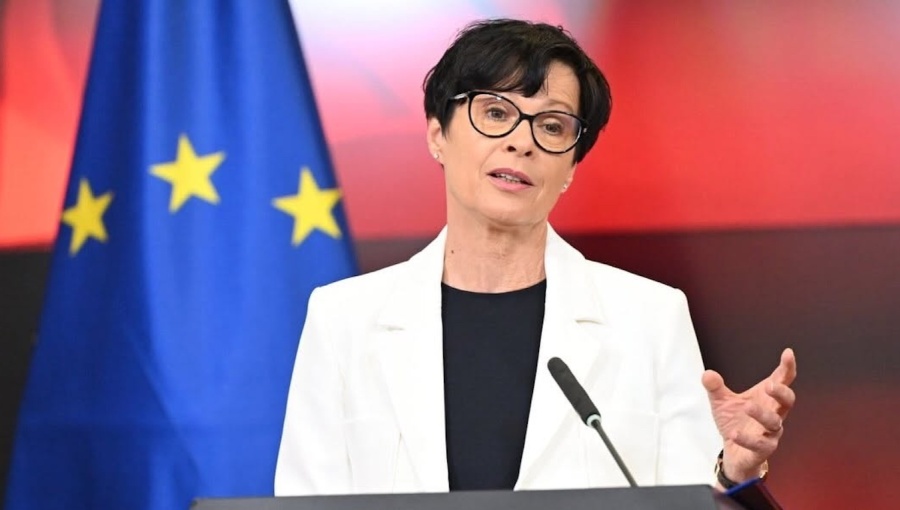
EU Enlargement Commissioner Marta Kos had been due to meet with officials in Belgrade on September 10. / Marta Kos via FacebookFacebook
By Tatyana Kekic in Belgrade September 5, 2026

EU Enlargement Commissioner Marta Kos cancelled a planned visit to Serbia on September 4, saying the public “glorification” of convicted Bosnian Serb war criminal Ratko Mladic was incompatible with the values underpinning the country's path towards European Union membership.

Kos had been due in Belgrade on September 10 for talks with government officials, opposition representatives and civil society groups. The EU delegation in Serbia notified participants that the visit had been postponed but initially gave no reason.

Kos later said she had decided not to make the trip because of the reaction to Mladic's death and burial, warning that the episode cast doubt on Serbia's commitment to European values.

"The glorification that follows his death is incompatible with the values on which the path to the EU is built," Kos said in a statement on September 4. "That path requires confronting the past, true reconciliation and respect for the victims of war crimes."

Mladic, who died last week aged 83 while serving a life sentence in The Hague, was convicted of genocide, crimes against humanity and war crimes for his role in the 1992-95 Bosnian war.

He was found responsible for the 1995 Srebrenica massacre, in which more than 8,000 Bosniak Muslim men and boys were killed, and for the 43-month siege of Sarajevo, in which about 10,000 people died.

His body was returned to Serbia on a state plane on September 3 and is due to be buried at Belgrade's Topcider cemetery on September 7. Serbian authorities have said tens of thousands of people could attend.

Serbian President Aleksandar Vucic said he would not attend the funeral because he would be hosting Uzbek President Shavkat Mirziyoyev, whose visit had been scheduled months ago.

Vucic rejected Kos's criticism, calling the explanation for cancelling her visit "extremely short, but stupid" and questioning who had glorified Mladic.

"I guess we should have banned people from showing up, we should have banned burials," Vucic told reporters.

Council of Europe Commissioner for Human Rights Michael O'Flaherty also condemned the alleged "glorification" of Mladic, calling it an insult to victims of the Bosnian war.

Belgian Foreign Minister Maxim Prévot described reports that Mladic would receive state and military honours as "shameful and insulting".

Meanwhile, Serbia's Minister for European Integration Nemanja Starovic said on September 4 that Belgrade remained firmly committed to EU membership and was ready to meet the bloc's accession criteria.

Serbia has been an EU candidate since 2012, but its accession process has made limited progress in recent years. The dispute over Mladic adds to tensions between Belgrade and Brussels over political values.

The episode also risks further straining relations with Serbia's neighbours, particularly Croatia and Bosnia & Herzegovina.

Croatian Prime Minister Andrej Plenkovic said this week that Serbia could not advance towards EU membership while its officials honoured a convicted war criminal. His comments drew ridicule in Belgrade, where Serbian commentators point to Plekovic’s double standards in dealing with their countries’ wartime past.

Croatia continues to commemorate Operation Storm, the 1995 offensive that ended its war of secession from Yugoslavia but drove hundreds of thousands of Croatian Serbs from their homes. Plenkovic has also defended nationalist singer Marko Perkovic Thompson despite his use of Ustasha symbols and slogans.

The dispute highlights the continuing political impact of the wars that accompanied the breakup of Yugoslavia more than three decades ago, and the difficulty Serbia faces in balancing its EU ambitions with nationalist sentiment at home.

Serbian NGOs raise concerns over construction on fire-damaged forest land

Serbian NGOs raise concerns over construction on fire-damaged forest land
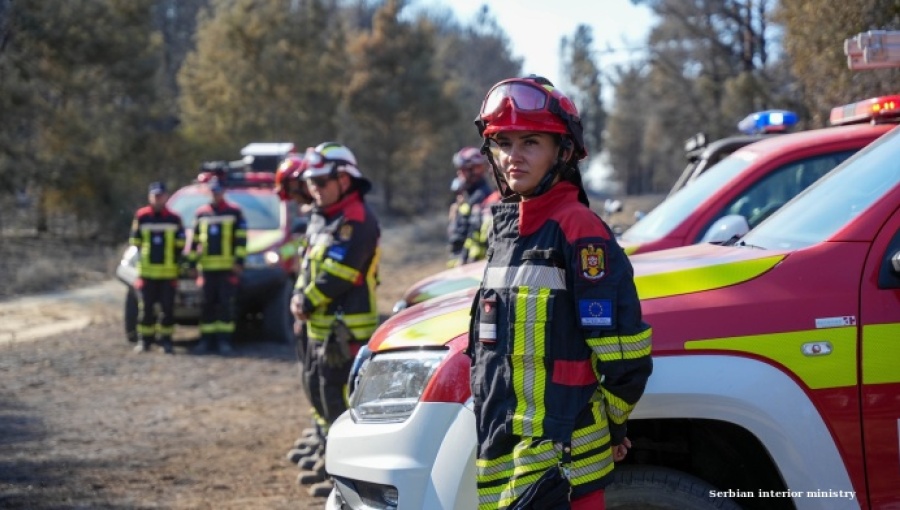
Members of Serbia's Emergency Situations Sector and international fire and rescue teams deployed in August through the European Union Civil Protection Mechanism to fight a major fire in Serbia's Deliblatska Pescara.
By Tatyana Kekic in Belgrade September 2, 2026

Two Serbian environmental and transparency groups warned on September 2 that amendments to the country's planning law could allow forest land damaged or destroyed by fire to be converted for construction, raising concerns over the fate of areas hit by this summer's wildfires.

Transparency Serbia and the Renewables and Environmental Regulatory Institute (RERI) said amendments adopted by parliament on August 31 allow forest land affected by fire to be repurposed for projects deemed to be in the public interest or for public infrastructure.

The groups said the provisions were not included in the government's original draft submitted to parliament on August 7 and were added through an amendment proposed by a parliamentary committee on August 26. They also criticised the absence of a public hearing.

Under the amended law, forest land where trees have been damaged or destroyed by fire retains the designation it had before the fire. However, an exception allows its use to be changed if required for a project for which a public interest has been established or for public infrastructure.

The organisations said the provision could facilitate the conversion of burned forest land into construction land and questioned why such changes were introduced during a period of severe wildfires.

The issue is sensitive after fires swept across Serbia in August, including more than 3,500 hectares of the Deliblato Sands Special Nature Reserve in northern Serbia. Copernicus data showed wildfires had affected about 13,920 hectares across Serbia by August 26.

The government's handling of the fires had already become a political issue. Opposition groups accused the authorities of responding too slowly and initially underestimating the scale of the fires. Some opposition figures also alleged during the fires that the government could seek to use burned land for construction, but provided no evidence for the claim.

The government rejected those allegations as unfounded. Environmental Protection Minister Sara Pavkov and Energy Minister Dubravka Đedović Handanović also denied claims that the fires could be used to meet the needs of potential investors.

Transparency Serbia and RERI said the latest amendments had increased rather than reduced concerns over the future of fire-damaged land.

They called on the construction ministry and lawmakers to explain why the provisions were introduced and to clarify the procedure that would apply if forest land were to be converted following a fire.


Hungary plans tougher environmental rules for EV battery makers

Hungary plans tougher environmental rules for EV battery makers
/ Facebook/Samsung SDIFacebook
By IntelliNews September 4, 2026

Hungary is establishing a powerful new environmental authority from January 1, 2027, tasked with tighter oversight of the country’s expanding electric vehicle (EV) battery industry, Prime Minister Péter Magyar said at a September 3 press briefing, state news agency MTI writes. 

The new authority will be set up in several stages, with the government planning to give it nationwide responsibility for environmental, nature, climate, water and animal protection, water management and forestry-related regulatory tasks.

The government would raise the maximum fine for the most serious environmental violations by large industrial companies to HUF5bn (€13.7mn) and introduce a "three strikes" system under which repeat offenders could face penalties equivalent to at least 0.5% of their annual net revenue.

The measures represent a significant tightening of environmental enforcement against battery manufacturers, a strategically important industry. The country has attracted billions of euros in investment from Asian battery makers, which expanded rapidly as the Orban government sought to position itself as one of Europe’s main EV production hubs. Hungary has become the world’s fourth-largest EV battery maker, and investments in the sector in recent years have created over 10,000 jobs.

Critics have raised concerns about the environmental impact of the plants, including water use, chemical pollution, waste management, and the ability of local authorities to effectively monitor large industrial facilities. The change of government, however, has marked a clear shift as companies faced growing scrutiny.

Magyar cited Samsung SDI’s battery plant in God, 20km north of Budapest, which was fined several times in 2022-23 for exceeding emissions limits. The South Korean company has previously said its Hungarian factory complies with environmental and safety regulations, after its environmental licence was temporarily suspended. Magyar said the plant’s annual revenue is above HUF1 trillion (€2.8bn), meaning that a 0.5% minimum penalty would amount to around HUF5bn.

In June, authorities suspended the production licence of Chinese battery-parts maker Semcorp after finding significant aluminium pollution in groundwater monitoring wells near its plant; the company said it was investigating.

CATL, which is building its largest manufacturing base outside of China, is investigating the source of increased nickel exposure detected in several of its employees during work inspections in July. The company promised to tighten safety rules. Last week, the Chinese manufacturer announced it had received a permit to operate its first cell manufacturing facility. The 350,000 sqm cell factory could reach an annual production capacity of 40 GWh.

"We will not compromise on the health and safety of the Hungarian people for the sake of any single investment or any single investor," Magyar said.

Magyar said the new regulator would be required to inspect industrial facilities with high environmental impacts on a strict professional basis and ensure that both Hungarian and EU environmental rules are respected.

Emphasis will be placed on environmental permitting and supervision of battery manufacturing, recycling, and decommissioning, Magyar said.

Under the proposed system, the size of a waste-related penalty will depend on factors such as the seriousness of the violation and the volume and hazardousness of the waste involved.

The review is also relevant to the battery industry because Hungary will likely need to develop larger, more sophisticated recycling and waste-treatment capacity as the first generation of locally produced EV batteries reaches the end of their useful lives, analysts said.

Magyar said electronic waste will also enter the system next year, although the necessary collection and recycling arrangements have not yet been fully established

In related news, Hungary’s chemical trade union, VDSZ, signed a coopéeration agreement with the Hungarian Battery Association on September 3, aimed at improving the sector's competitiveness and labour retention capacity.

Peter Kaderjak, managing director of the Hungarian Battery Association, said the objective was to ensure that battery production in Hungary operates sustainably, with higher added value, while remaining competitive and retaining the more than 10,000 jobs created. The industry’s public perception needs to improve, he said, arguing that the sector was currently "undervalued".

The tightening of regulations targeting the EV battery chain is part of a broader government review of Hungary’s environmental and waste-management system. At the press briefing, Magyar announced that the government had completed an initial review of MOHU, a subsidiary of oil and gas giant MOL, which operates a 35-year state waste-management concession since 2023. He claimed that the company "was not meeting its commitments or targets in the contract."

Hungary remains well behind other EU member states on waste recycling. Around 54% of waste is currently landfilled, 33% is recycled, and 12% is used for energy recovery, while the country is also missing EU-related targets. He said municipal waste processing had been targeted at 50% in 2025 but remained below 36%.

The government estimates that meeting its previously established waste-management targets could reduce public expenditure by as much as HUF90bn a year by 2027, partly by reducing the financial consequences of failing to meet EU requirements.

Magyar said the review of MOHU began after a "flood of complaints" by local municipalities over the quality of the survey.

Radical right-wing Our Homeland criticised MOHU in a statement for its plans to end cash payouts at the country’s deposit-return points. The REpont deposit-return scheme, under which consumers receive HUF50 (€0.14) for bottles and cans, was introduced in 2024. The parliamentary party argues that the move is an attack on the constitution, which guarantees the use of cash in Hungary.

The prime minister also unveiled a national tree-planting and afforestation programme running through 2030, with the government to provide tens of billions of forints in annual non-repayable funding from 2026. The scheme will support new forests and riverside planting, prioritising climate-resilient species and expanding tree cover in settlements while maintaining existing trees. 

Magyar also called for invasive species to be replaced, forests restructured and forest managers given greater professional support, to significantly increase forest cover and shade-providing trees by 2030.

Creotech signs €13.9mn ESA contract for Polish space weather satellite

Creotech signs €13.9mn ESA contract for Polish space weather satellite
SAWA will be the 13th HyperSat-based satellite launched into space. / CreotechFacebook
By bne IntelliNews September 3, 2026

Polish satellite maker Creotech Instruments has signed a €13.9mn contract with the European Space Agency (ESA) to deliver the SAWA space weather nanosatellite, the company said on September 2.

The contract covers the design, construction, integration and operation of the satellite, which will monitor the effects of solar activity on the upper atmosphere and space environment in low Earth orbit.

The mission will be the first in Poland to be delivered to ESA under a "mission-as-a-service" model, with Creotech acting as prime contractor and integrator. The satellite is scheduled for launch in early 2029 and will conduct observations for up to three years.

"For the first time in history, a Polish entity will be responsible for the end-to-end delivery of a satellite mission to the European Space Agency under the 'mission-as-a-service' model," Creotech CEO Grzegorz Brona said.

"This is a breakthrough both for Creotech Instruments and for the entire Polish space sector," he added.

The project follows a feasibility study completed in 2025 and covers phases B through E of the mission. The contract also includes an option to extend data transmission services for two years for an additional fee of about €1.9mn.

SAWA will provide data for monitoring and forecasting space weather, including geomagnetic storms and high-energy particle emissions that can disrupt satellites, navigation systems, power grids and communications.

SAWA will be the 13th HyperSat-based satellite launched into space. The satellite will use Creotech's proprietary HyperSat platform and become part of ESA's Distributed Space Weather Sensor System, developed under the agency's Space Safety Programme.

Project partners include the Space Research Centre of the Polish Academy of Sciences and Wroclaw University of Science and Technology, which will develop scientific instruments, and N7 Space, responsible for software.