Monday, September 14, 2026


Surging Social Program Costs Dampen UK's Hopes for a Stronger Royal Navy
Healey
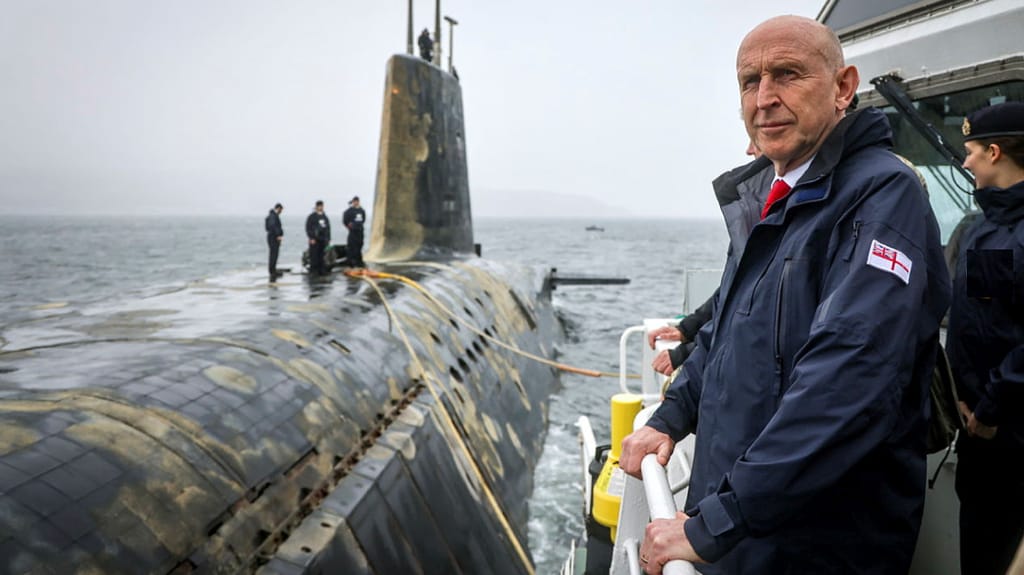
John Healey (at the time, the UK's Defence Minister) welcomes home a Vanguard ballistic missile submarine after a 203-day patrol (UK MoD). The UK has not yet programmed the AUKUS 12-boat submarine commitment.

Published Sep 13, 2026 5:13 PM by The Maritime Executive


In June, hopes rose that the resignation of Defense Minister John Healey over the lack of commitment to raise UK defense spending to 3% of GDP by 2030 would finally bring about a commitment from the UK’s Labour Government to achieve the target. Hopes rose further when Healey was subsequently put in charge of the nation’s finances after new Prime Minister Andy Burnham appointed Healey as Chancellor of the Exchequer.

If anything, the 3% of GDP target by 2030 now seems further away, as the Prime Minister told the UK Parliament last week that he will not cut the priority given to social-benefit spending in order to fund the defense budget. This pushes back any rise in defense spending from early to later years, given that the UK remains signed up for the NATO 3.5% target for defense spending by 2035. Spending on social benefits has risen sharply over the last two years, absorbing the increased tax revenues which might otherwise have gone to defense.

The Ministry of Defence is already struggling to fund its existing programs, leading to in-year cuts to training and ammunition expenditure. But there are also immediate impacts on equipment procurement, particularly for the Royal Navy.

The UK signed up under the trilateral AUKUS agreement to build 12 nuclear attack submarines, but has now further delayed funding decisions on the final numbers of nuclear attack submarines to be acquired. The delay places further pressure on the Royal Navy’s existing Astute-class submarines, which may have to have a service-life extension to accommodate the later arrival of the first AUKUS submarines. This is a high risk strategy, as the Astute-class submarines have proven to be unreliable. Of the seven boats in the Astute Class fleet, as of this week, two (HMS Agamemnon and HMS Achilles) are still with the shipyard, three are non-operational at the Faslane Naval Base (HMS Astute, HMS Ambush and HMS Artful), and the only two boats which possibly could be operational are HMS Audacious and HMS Anson docked in Devonport. The former is working up after maintenance and the latter is believed to be awaiting maintenance after its long-range cruise to Australia and duty in the Arabian Sea. A lack of available submarines is a particular problem in covering the Russian submarine threat in the Greenland-Iceland UK gap, although there are allies who can help cover what used to be a specialized and advanced capability provided by the Royal Navy.

Also likely to be extended in service because of delays in the arrival of successor ships are the Type 45 Daring-class air defense destroyers. Three of the class are in active service, with HMS Duncan (D37) last spotted in escorting Russians through the Channel, HMS Dragon (D35) deployed to the Eastern Mediterranean and Arabian Sea and probably to be rotated with HMS Dauntless (D33) in October. HMS Daring (D32), HMS Diamond (D34) and HMS Defender (D36) are in the upgrade program.

With Aster 30 Block 1 missiles and Sampson radars, these ships have a unique anti-ballistic missile capability, which is of particular importance given the growing threat from medium-range Iranian ballistic missiles such as the Qasem Basir and Kheibar Shekan, both of which have warheads which can maneuver in terminal flight phases. But these ships are also needed to protect aircraft carriers HMS Queen Elizabeth (R08) and HMS Prince of Wales (R09) when either deploys. Maintaining sufficient operational capability to fend off growing threats beyond an already over-ambitious 2038 end of service date will be fraught with difficulties.

There is also an increasing threat posed by Russian naval deployments, which for the first time now include a permanent piquet ship in the English Channel, a response to British interceptions of dark fleet tankers starting with the seizure of the Aframax tanker Smyrtos (IMO 9389100) on June 5. To credibly match the target, shadowing duties should be carried out by frigates. But the Type 23 fleet has collapsed down to five operational warships, with even this low number unlikely to be sustained as seaworthy before replacement Type 26 and 31 frigates eventually arrive. There is still doubt about how many of the Type 26 and 31 frigates originally intended are currently costed and accounted for in the current financial plan, with worries that some may be diverted to export customers. Increasingly, Russian warships transiting British territorial waters will be escorted by Royal Fleet Auxiliaries and unarmed patrol craft normally used for training university reserve officers.

The opinions expressed herein are the author's and not necessarily those of The Maritime Executive.

 

Nigeria’s Domestic Fleet Goals Progress With Dangote's Expansion Plans

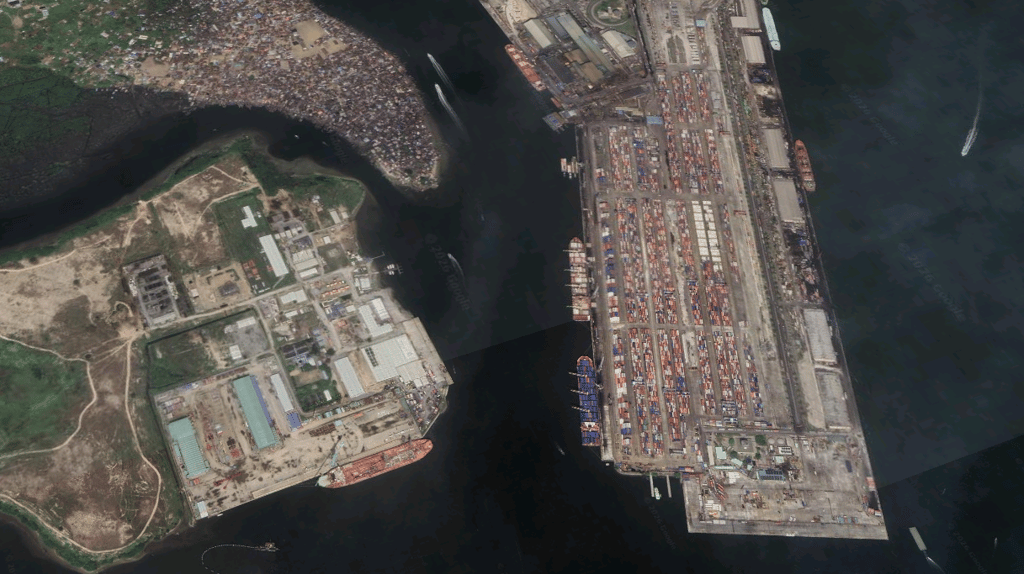
Port of Lagos, Nigeria (Google / Maxar / Airbus)

Published Sep 13, 2026 6:58 PM by The Maritime Executive


The interest for shipownership in Nigeria is soaring after the government unlocked the Cabotage Vessel Financing Fund (CVFF) early this year. In an update last week, Nigeria’s Minister of Marine and Blue Economy Adegboyega Oyetola said that the Nigerian Maritime Administration and Safety Agency (NIMASA) has so far received 92 applications for the ship subsidy. Of these, 20 have been forwarded to a list of approved lending institutions. Further, one application has been cleared to receive funding.

Oyetola added that to further speed up access, the government has expanded the number of approved banks from five to 12. “The disbursement of the CVFF could help create stronger indigenous fleet, which will in turn stimulate activity in shipyards, maritime logistics and other supporting industries,” said Oyetola.

The update on CVFF access happened at about the same time that the Nigerian billionaire Aliko Dangote announced his plans for ship acquisitions. Dangote, Africa’s richest person and the owner of refining and cement-making interests in Nigeria, is aiming to build a shipping fleet composed of tankers and dry bulk ships. To finance the vessel orders, Dangote has signaled interest in leveraging CVFF, according to Sada Ladan-Baki, the head of international trade export at Dangote Cement.

While Dangote Group has extensively expanded its industrial operations across the energy, cement and fertilizer sectors, logistics has remained a major pain point for the conglomerate. Some of the initial solutions for the Group include investing in a $100 million truck assembly plant in Ikeja, Lagos state. The plant, which opened in 2024, is a joint venture between Dangote Industries and Sinotruck China. It has capacity to assemble and produce 10,000 trucks annually.

But road transport has its downsides, especially for a company serving regional markets across West and Central Africa. “If we are going to export our cement from Nigeria to Ghana, we have to pay Value Added Tax of 18 percent in Benin. We pay in Togo. We pay another 18 percent if we are going to Ivory Coast. So by the time the trucks get to these places, the taxes these countries charge us have already made us dead on arrival,” said Ladan-Baki.

Again, with the planned expansion of the Dangote Refinery, there is a strong impetus for the group to invest in seaborne transport. Currently, the refinery has capacity to process seven hundred thousand barrels per day (bpd), and there are plans to double the output in the next five years to reach 1.4 million bpd. At such a scale, Edwin Devakumar, Dangote Group’s vice president for oil, gas and fertilizer, estimated that the refinery will require roughly 1,800 vessel calls annually to ship its products.

Devakumar added that the group has scheduled a visit to China to negotiate with shipbuilders for orders. “The first batch of orders could arrive as early as 2029,” added Devakumar in an address last week to members of the Nigerian Chamber of Shipping (NCS). The Dangote Group is yet to announce the number of vessels it wants to order.


Ukraine Wins "World's First" Unmanned-Vessel Naval Battle

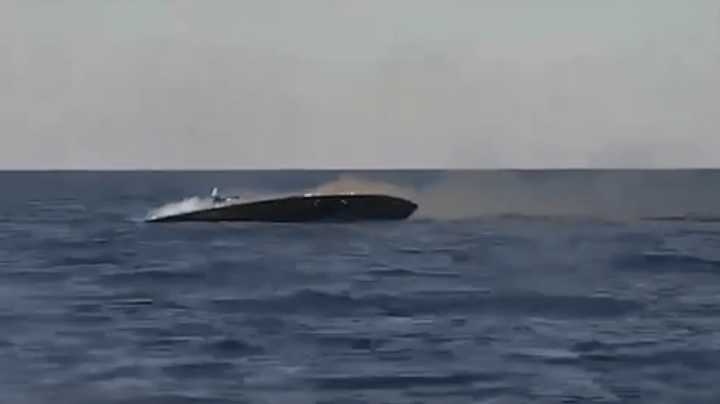
The damaged Russian drone boat lists to port and begins to sink by the stern (Ukrainian Navy)

Published Sep 13, 2026 11:22 PM by The Maritime Executive

Ukraine has won what it believes to be the first-ever "battle" between two drone boats at sea. 

In the brief engagement, a Ukrainian Sargan-3000 drone with a remotely-controlled 12.7mm machine gun disabled and then sank a Russian drone, which appeared to be lacking defensive armament.

The Russian unit was an "Orcan" one-way attack boat, according to open-source analyst H.I. Sutton. The Ukrainian drone boat appears to have been fitted with a Norwegian-made remote weapons mount, he reports

Video footage released by the Ukrainian Navy showed a short-range engagement in relatively calm surface conditions. The Sargan-3000 operator employed short bursts of fire to hit the Russian drone's hull, mast and antennas. After repeated hits, the target eventually sank stern-first. 

The engagement is perhaps a sign of things to come - a model-scale version of the gunboat battles of the 20th century, updated for real-world operational needs in the Black Sea environment. Both Russia and Ukraine use explosives-laden drone boats to attack each other's ports and ships; both have struggled to intercept the opponent's one-way USVs. Replicated at scale, a flotilla of miniature gun-equipped USVs could hunt and destroy inbound bomb USVs - along with other threats, like enemy helicopters. 


Oversized

Handling oversized, unwieldy cargo like huge gas generators or offshore wind blades is no small task.


(I'm still confused on what to put for alt text)
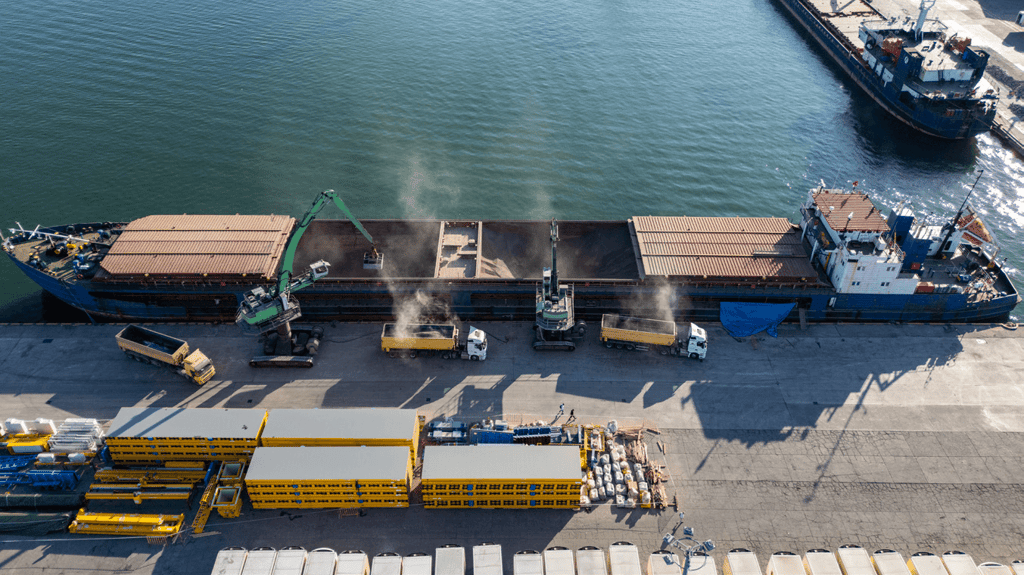
Bulk carrier cargo ship moored at harbor, being loaded with dry bulk material.

Published Sep 13, 2026 12:05 PM by Tom Peters

(Article originally published in July/Aug 2026 edition.)

The growing global demand for clean energy and more energy (think data centers) is driving the growth of heavy lift, special project and breakbulk cargoes through international seaports. Offshore wind projects require, among other components, huge blades and turbines that will eventually add clean power to major power grids in America and elsewhere.

While ports have announced increases in these cargoes, the infrastructure required to effectively handle these awkward pieces requires specialized equipment and knowledge.

For Carver Companies, with global headquarters in Albany, New York and main operations at the Port of Coeymans on the Hudson River just south of Albany, staying on top of what is needed to handle these cargoes is paramount.

"As infrastructure, energy and industrial projects continue to grow in size and complexity," says Carver's President of Sales & Business Development, Stephen Kelly, "demand for integrated heavy lift and project cargo solutions continues to increase."

The company has responded by investing in specialized equipment, waterfront infrastructure and marine logistics capabilities that help customers move oversized cargo more efficiently.

"Today's projects require much more than a crane and a dock," Kelly adds. "They require the right equipment, the right waterfront facilities and experienced people who know how to safely handle oversized cargo."

The company's integrated capabilities combine port operations, stevedoring, heavy lift, marine transportation, vessel repair and project staging under one organization.

And while long-term infrastructure investment continues to drive demand, global market conditions remain an important consideration.

"Fluctuations in ocean freight rates and international shipping costs can affect customers' decisions regarding the timing and volume of bulk cargo imports," says Kelly. "Maintaining flexible port operations and integrated logistics capabilities allows Carver to help customers adapt as market conditions evolve."

KEY COMMODITIES

At the Port of Baltimore, breakbulk and project cargoes continue to be key commodities, says Richard Scher, Director of Communications at the Maryland Port Administration.

"Our most recent volumes show we are up approximately 31 percent year-to-date from 2025," he states. "We handle a wide variety of breakbulk/project cargo such as power generation machinery like transformers and wind energy components, as well as subway cars and yachts. We continue to regularly handle heat recovery steam generator projects and are scheduled to do another one later this summer."

Baltimore also has direct-to-rail capabilities, allowing for seamless transfer from ship-to-train as well as two heavylift cranes capable of hoisting up to 200 tons each.

Another one of Baltimore's strategic advantages is its geographic location as the closest East Coast port to the Midwest with ideal connections to Interstate 95 and Interstate 70.

INFRASTRUCTURE INVESTMENT

The Port of Galveston has expanded its capabilities for roll-on/roll-off and other cargoes with the completion of a $106-million cargo infrastructure project including a new cargo berth and almost 30 more acres for cargo handling and laydown. A Wallenius Wilhelmsen roll-on/roll-off car carrier was the first ship to call at the 1,410-foot-long berth at Piers 39-40 on July 2.

"This is the first time in decades that the port has made a significant investment in its cargo business," notes Rodger Rees, Port Director & CEO. "Driven by cargo tenant demand, the expansion paves the way for major cargo growth and hundreds of new jobs, providing tremendous economic growth for the region. Additional land also allows us to consider other types of cargo not previously handled."

In addition to the new berth, work to repair and expand the cargo area also included enclosing two outdated slips, filling one slip to add six acres and demolishing a decommissioned grain elevator to add eight acres for cargo handling at Piers 30-32. A future phase will include filling the second slip to add another six acres.

Through June, roll-on/roll-off cargo was up 46 percent compared to last year. Almost 289,000 tons of heavy agriculture and construction equipment have moved across Galveston docks. BMW, Mini Cooper and Rolls-Royce new car imports were up 3.6 percent through June 2026. Wind turbine pieces were down by 66 percent in the first half of the year, but that cargo is expected to pick up in the second half of 2026.

SWEET TOUCH

The Port of San Diego is moving forward with two projects that will not only sweeten its bulk operations but improve the environment at the port and throughout surrounding communities.

With the approval of a lease agreement option and the authorization of a Coastal Development Permit (CDP), the port aims to bring a new bulk sugar facility to the Tenth Avenue Marine Terminal (TAMT).

California Sugar Equipment, a subsidiary of Mexican agro-industrial giant Zucarmex, plans to build a sugar-handling and storage facility that would allow up to 280,000 metric tons of raw sugar to be imported into San Diego each year. The proposed project supports both the port's economic development efforts and its clean-air goals.

It's also a first for the port.

"Zucarmex would be the first to use only electric trucks in its operations," notes Ann Moore, Chair of the port's Board of Commissioners, "making our terminal not only more efficient but also more modern and sustainable. It's exactly what we want from our maritime business partners."

Zucarmex has been importing raw sugar at TAMT since 2018 without any on-terminal equipment or storage. Currently, sugar is offloaded directly from vessels to trucks and transported to the company's existing Otay Mesa processing facilities. Discharging directly from ship to trucks requires many trucks to enable the ship to be unloaded and freed up as soon as possible.

With the proposed project, Zucarmex would be able to spread out its truck delivery schedule, needing fewer trucks, which would make the deployment of zero-emissions trucks economically feasible.

The project includes construction of an approximately 50,000-square-foot warehouse. Upon completion, Zucarmex would use a bulk discharge unloader and conveyor system to move raw, bulk sugar directly from the vessel to the warehouse. Electric trucks would transport the sugar to the Otay Mesa facility, thereby eliminating approximately 1,000 diesel truckloads per month.

A rooftop solar system on the warehouse would provide a renewable power source for onsite truck charging.

California Sugar Equipment has eighteen months to satisfy certain deliverables before a lease will be signed and construction started.

Another significant environmental event at the port occurred last October when Pasha Hawaii's MV Jean Anne (a U.S.-built, owned, flagged and crewed roll-on, roll-off vessel) connected to the first shore power system installed at the National City Marine Terminal (NCMT). It marked a first-of-its kind achievement in the U.S., according to the port, as well as the first-ever shore power connection for a domestic car/truck carrier.

"This milestone reflects Pasha's and the port's joint commitment to sustainability and partnership," said George Pasha, IV, President & CEO of the Pasha Group. Pasha also uses all-electric car haulers at NCMT, another first at any U.S. port, and runs the most advanced vehicle import/export facility on the West Coast, importing and processing approximately 400,000 vehicles annually from Europe, Asia and Mexico.

All four of the port's marine terminals now have shore power, allowing vessels to plug into the local electrical grid rather than relying on diesel power while at berth.

Tom Peters is the magazine's ports columnist.

The opinions expressed herein are the author's and not necessarily those of The Maritime Executive.
ECOCIDE

Monsoon Weather Abates, but the Caroline Bezengi is Still Leaking Crude

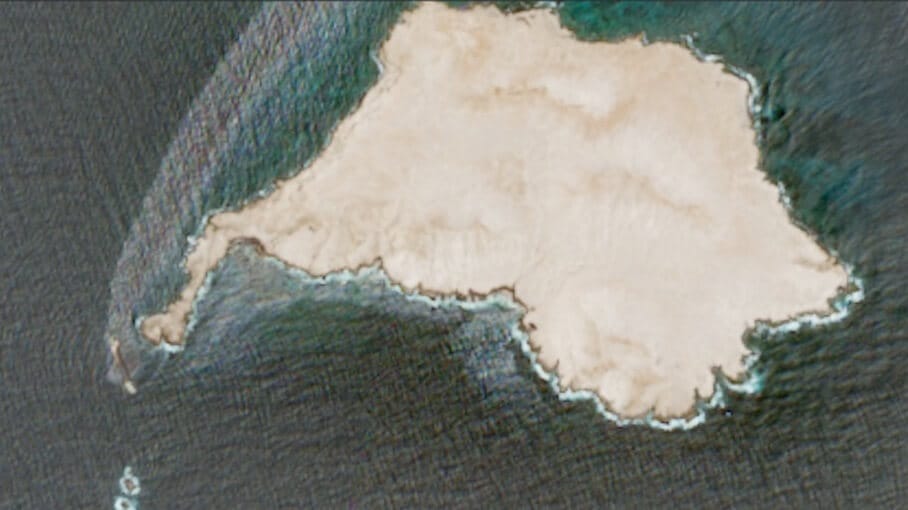
The Caroline Bezengi leaking off Jazirat Al Qibliyyah on September 11 but still intact (Copernicus/CJRC)
The Caroline Bezengi (lower left) leaking off Jazirat Al Qibliyyah on September 11 but still intact (Copernicus/CJRC)

Published Sep 13, 2026 6:16 PM by The Maritime Executive

Weather conditions in the sea area around the beached Aframax tanker Caroline Bezengi have eased in recent days. The vessel has been aground on the rocks off Jazirat Al Qibliyyah - one of the Hallaniyat Islands off southwest Oman - since June. Seasonal rough conditions, with wave heights up to 13 feet and southwesterly wind speeds of nearly 50 knots, have abated in recent days. But the improvement looks to be only temporary, with the weather forecast to revert to the stormy seasonal norms by the end of the week. Khareef conditions normally last until the end of September.

The Caroline Bezengi had taken on an oil cargo at Novorossiysk, Russia and was destined for Gujarat. The tanker had been sanctioned by the EU, UK and US (OFAC), and has a past association with Russian state shipowner Sovcomflot.

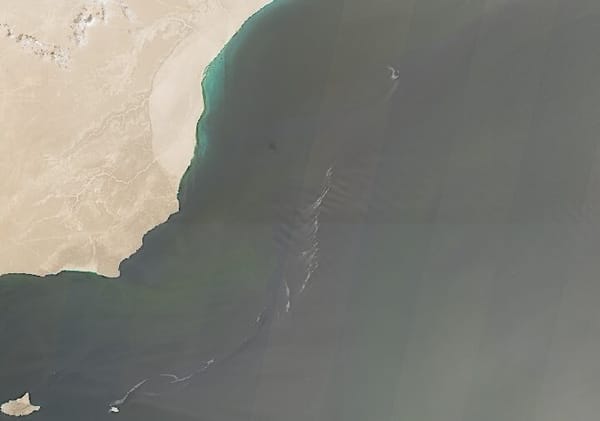
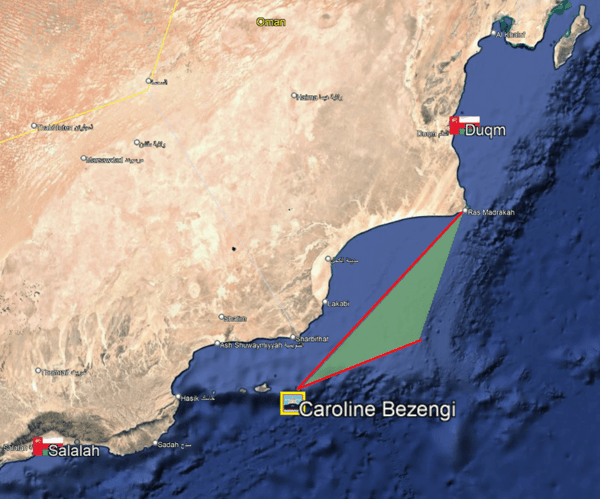
From imagery available on September 11, the tanker is still leaking oil at what appeared to be a heavier rate than seen previously. The oil plume is still flowing towards the north-east, parallel to the Omani coast. There will be some oil being washed ashore on the Omani mainland, but once past Ras Madrakah, the plume seems to heading in a more easterly direction into the Northern Arabian Sea, unfortunately threatening the Iranian and Pakistani coastlines. There is no evidence in imagery of any salvage action or oil clearance operations in the area of Jazirat Al Qibliyyah, which is not surprising given the prevailing Khareef conditions.

Drifting oil plume from the Caroline Bezengi (lower left)wends its way north off Khalif (Copernicus / Sentinel-2)

The oil plume from the Caroline Bezengi, September 11 (Copernicus / Google / CJRC)

Ambrey, the appointed salvor, has not issued any update since their original press release, and appears to be generally observing a non-disclosure contractual obligation. The Omani authorities have also been reticent to comment publicly.

Some background details about the shipwreck are now however emerging.The Caroline Bezengi was adrift for some time after suffering a blast on June 6 from limpet mines, presumably planted by a Ukrainian intelligence organization while the ship was in the Sokhna Anchorage after transiting the Suez Canal. She washed up on the rocks off Jazirat Al Qibliyyah some weeks after the blast, between June 23 and 30. While she was adrift, the Caroline Bezengi was shadowed by another sanctioned Russian dark fleet tanker, the Aruba-flagged Noble Walker (IMO 9292981), which rescued the crew.

During the intervening period according to Tradewinds, salvors apparently made offers to secure the ship, which would have enabled a relatively easy recovery of the 800,000 barrels of Russian oil on board. Why the Caroline Bezengi was not taken under tow at this time remains a mystery, but probably relates to her sanctioned status and fear of legal challenges over the ownership of the cargo.

It has also now emerged that notwithstanding what appeared to be fraudulent insurance paperwork, the cargo was in fact insured by AlfaStrakhovanie, a sanctioned, Russian state-linked insurer operating outside the mainstream P&I pool – providing further evidence of how the Russian dark fleet operates. According to Insurance Business, AlfaStrakhovanie has stepped forward to pay for the cost of the Ambrey salvage operation, relieving the Omani state from the burden of doing so in the absence of a response from Cameroon, the flag state. A sanctions exemption from the UK Treasury would be required if Ambrey was to receive payment, and of some significance, Ukraine gave notice within the IMO that it would not object.

If paying for the operation, AlfaStrakhovanie as the insurer would be entitled to any proceeds from the sale of recovered oil pumped off the tanker, offsetting the cost of the salvage and cleanup.


Death Toll in Philippine Ferry Fire Soars From Five People to 76

13 people remain missing and search efforts continue

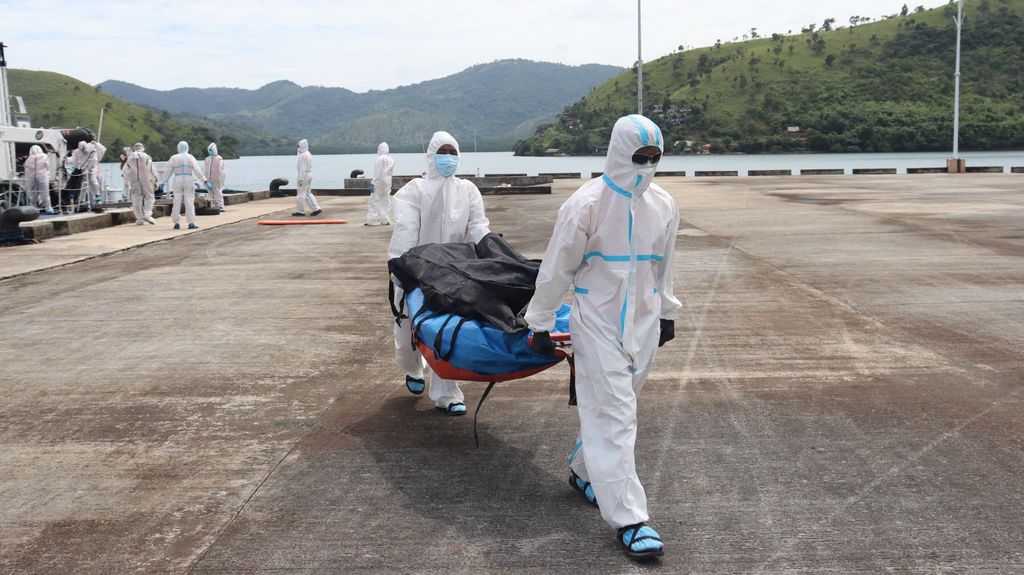
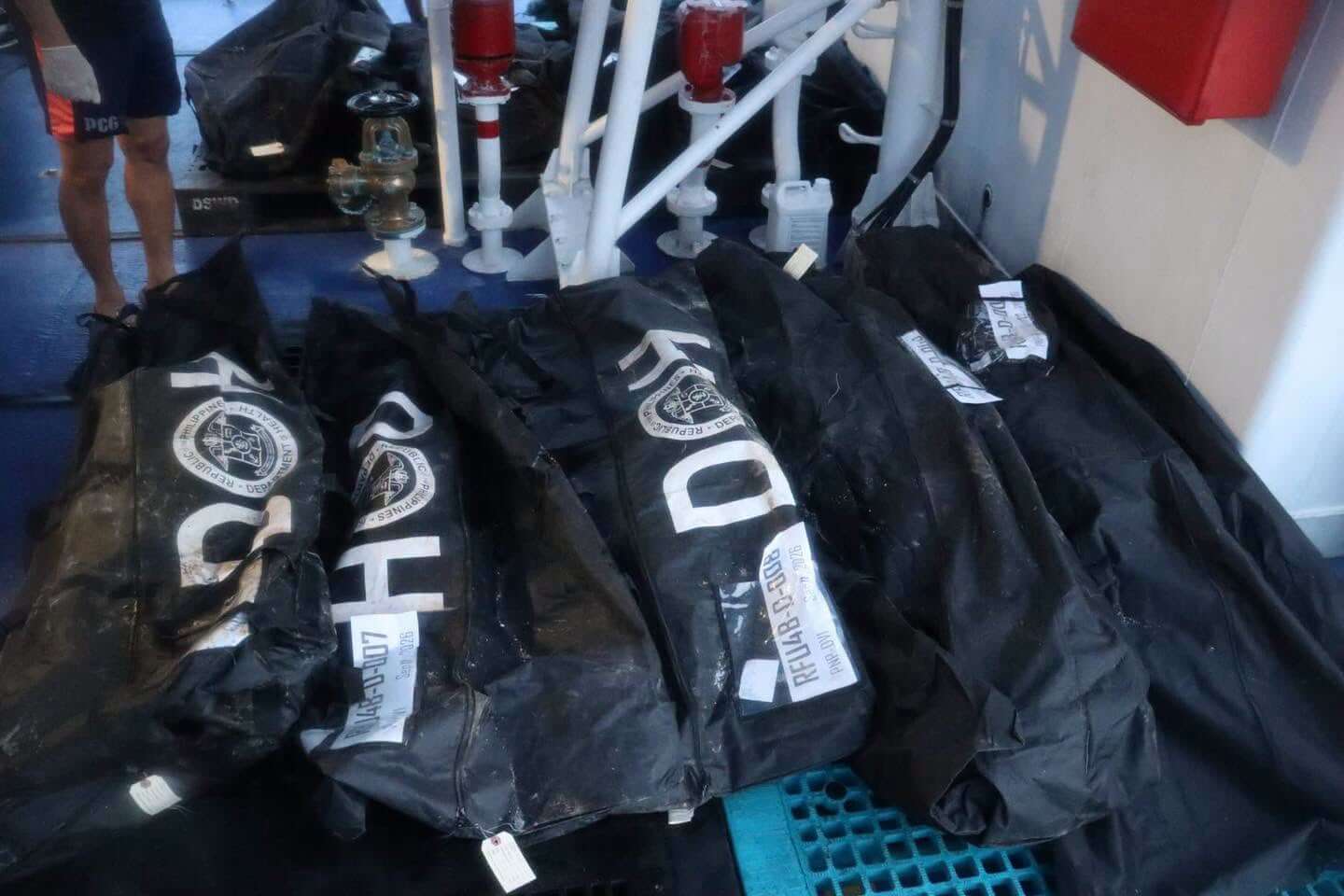
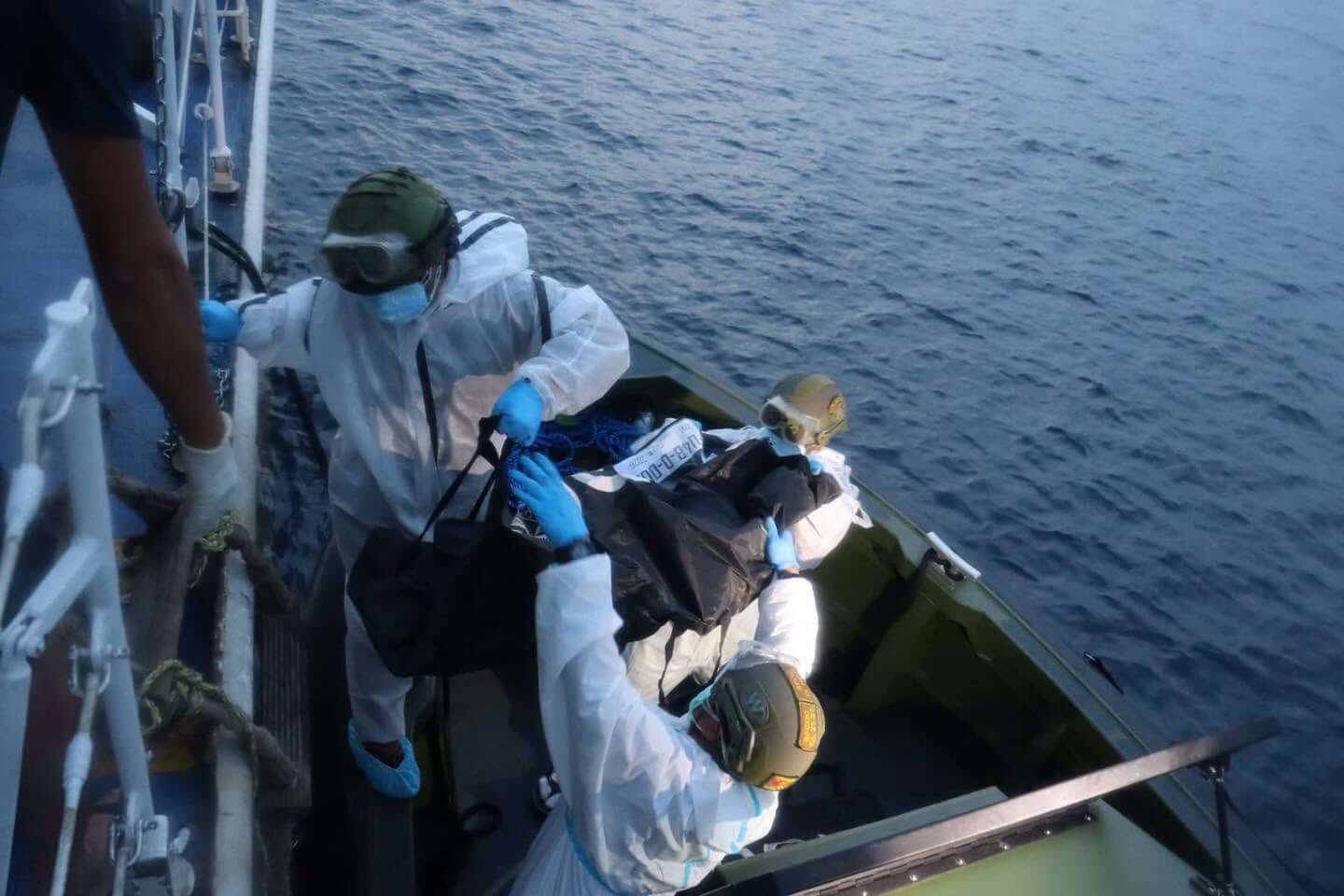
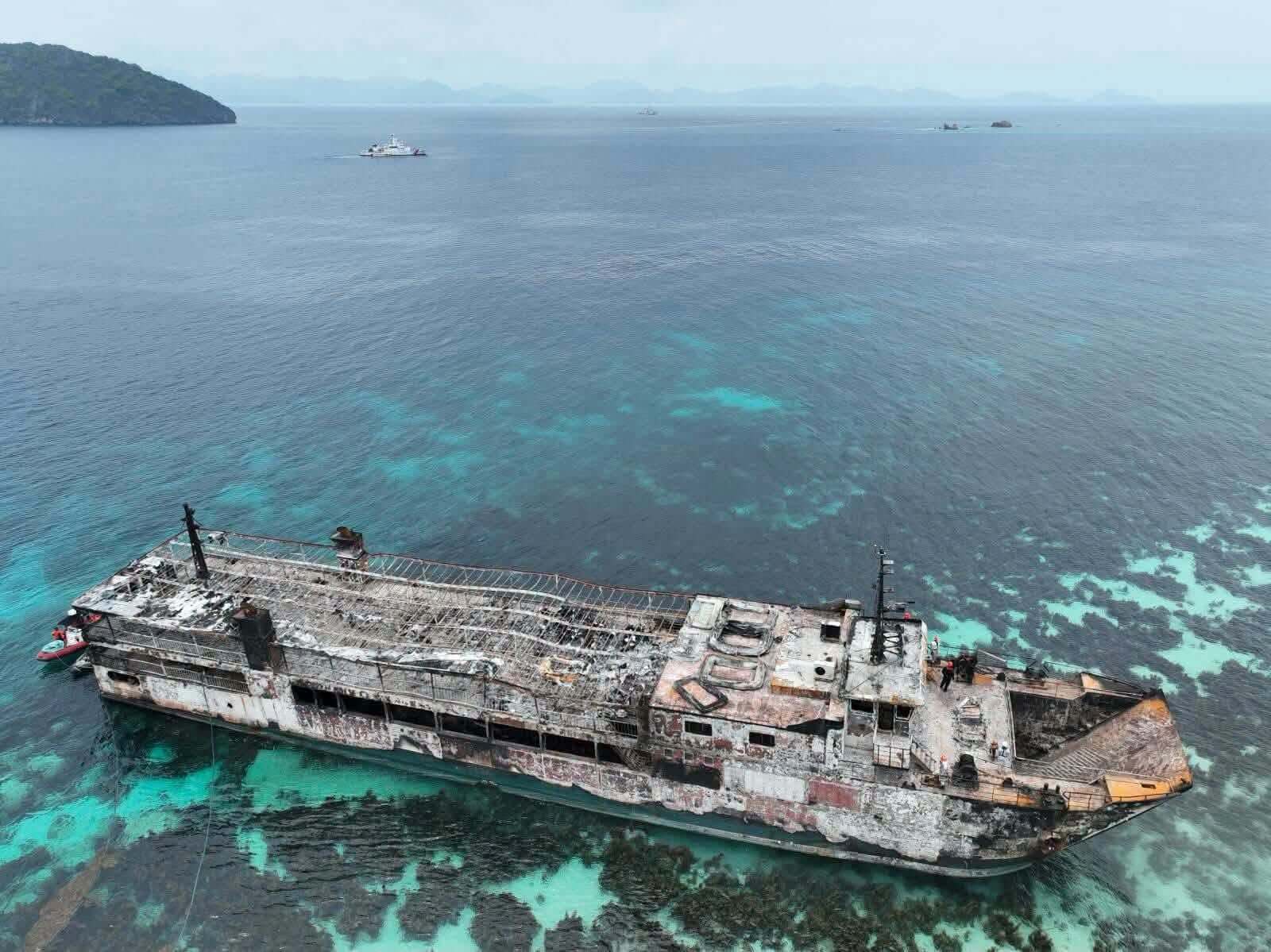
Servicemembers offload burned remains recovered from the June Aster (PCG)

Published Sep 13, 2026 8:32 PM by The Maritime Executive


As the Philippine Coast Guard searches the wreckage of the burned-out ferry June Aster, the death toll from the disaster has soared from five people to 76, with 13 still missing. Out of 132 people on board at departure, only 43 survived. 

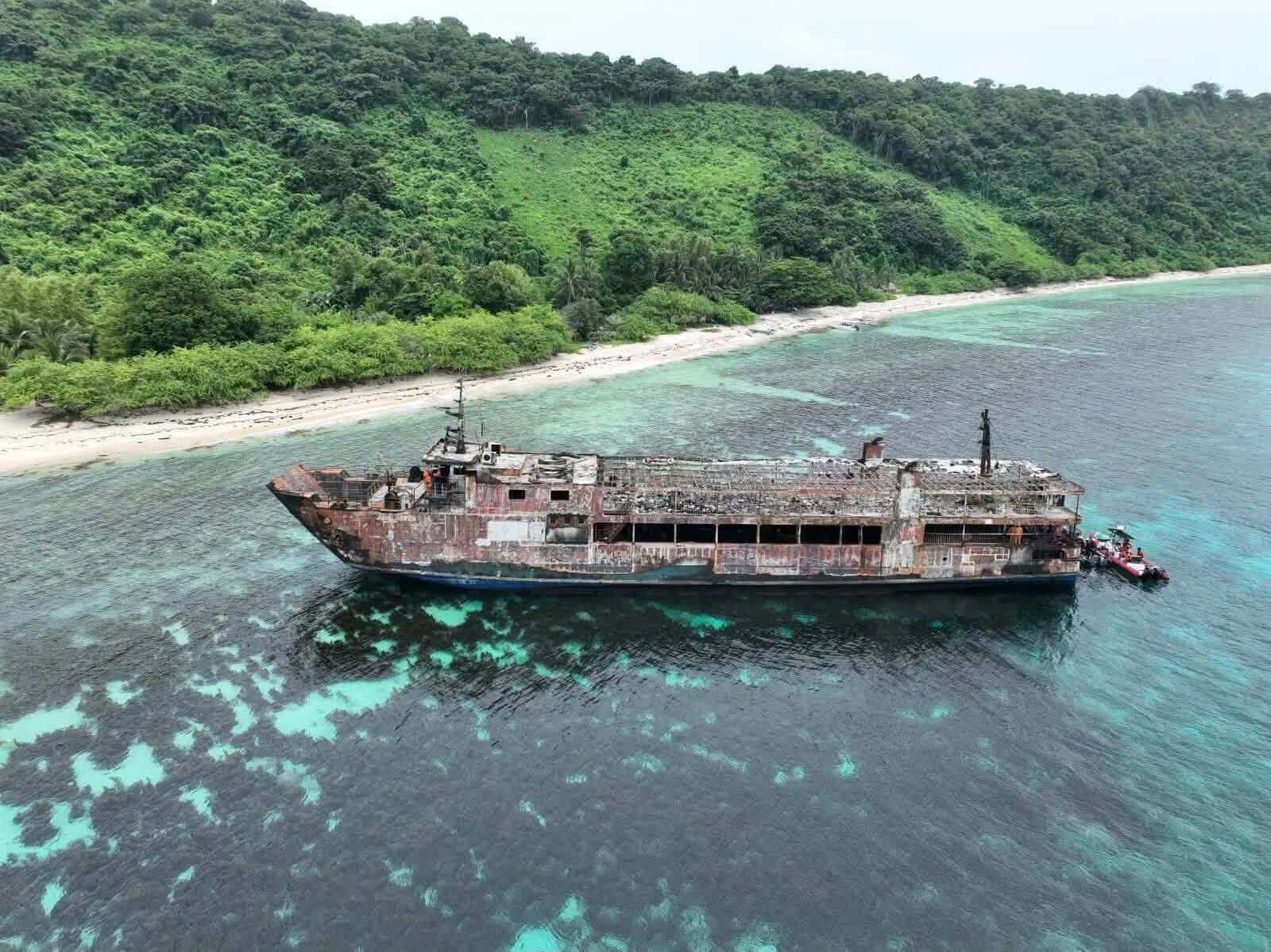
Last Wednesday, the ferry June Aster left Manila and got under way for the port of Coron, Busuanga Island. At about 1845 hours that night, the Aster caught fire at a position about one nautical mile off the town of Marcilla, on the east side of Busuanga. Survivors reported a blast followed by an intense fire; first responders arrived to find the vessel burning fiercely.  

The wreck is hard aground off the coast of Busuanga Island, just south of Mindoro, making boarding and search comparatively safe for first responders. The effort to scour the wreck for remains is still under way. The main challenge now turns from search and recovery to the longer-term problem of identification of remains: the fire burned hot enough and long enough that DNA testing will be needed to figure out the victims' identities. 

All images courtesy PCG

In a Sunday briefing attended by the Philippine Inquirer, representatives from the Philippine National Police (PNP) crime lab said that 71 of the bodies are "totally charred." The unit is resorting to extreme techniques, pulling molars from the bodies in hopes of extracting preserved DNA from well-protected dental tissues. Volunteer dentists are assisting the effort, the Inquirer said. The effort could take months. 

Cabinet Secretary Benhur Abalos told the Inquirer that the Marcos administration would make every effort and assign additional resources in order to bring closure to the victims' families. 


Indonesian Ferry Capsizes South of Borneo, Leaving Up to 140 Missing

Basarnas
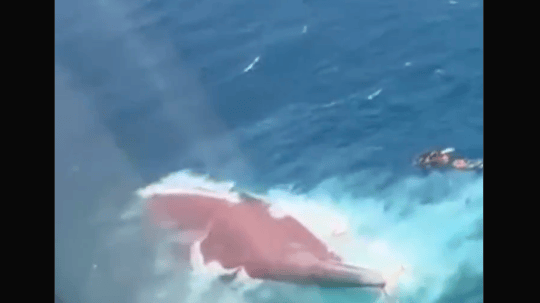
The upturned hull of the capsized ferry, Sept. 13 (Basarnas)

Published Sep 13, 2026 3:43 PM by The Maritime Executive

Authorities in Indonesia are searching for an estimated 130 people after a ferry capsized in the Java Sea. 

At about 0200 on Sunday morning, the ferry Virgo Transport8 was under way from Surabaya to Banjarmasin, South Kalimantan, and was about 80 nautical miles south of its destination. Passengers described rough surface conditions during the transit. At about 0400 hours, Indonesian SAR agencies received a distress alert about the vessel's situation. First responders on scene found that it had capsized. 

The majority of the 108 survivors were rescued by a Good Samaritan merchant vessel, the MV Haida. The ship arrived in Banjarmasin on Sunday evening to disembark 69 rescuees for medical evaluation. The tanker Mauhau IX and fishing vessel Cahaya Bahari also contributed. 

The head of Indonesian coast guard agency Basarnas, Rear Marshal Mohammad Syafii, told media on Sunday that it is believed (from the master's account) that the vessel was hit by a large wave on the starboard side, resulting in rapid capsizing. 

A total of 108 people have been rescued, six have been confirmed dead, and an additional 129 to 140 people are still missing (local media accounts differ). 

The estimate for the number of missing people in a Southeast Asian ferry incident will often fluctuate throughout the search, as informal, unregistered passengers are common and the total number of people on board at time of departure may not be known with accuracy. 

The vessel's upturned hull remained afloat as of Sunday, raising hopes that some people may have survived in air pockets inside. Search operations continue on scene. 

Large-scale ferry casualties are not uncommon in Southeast Asia's archipelagic nations, where geography favors water transport, economics favor older or lightly-maintained tonnage, and safety regulations are less rigorously enforced. This past week, the Philippine government responded to an accident of comparable scale involving a sudden and powerful fire on a ferry off Palawan. 


Bulker Suffers Serious Damage in Collision in Gulf of Kutch

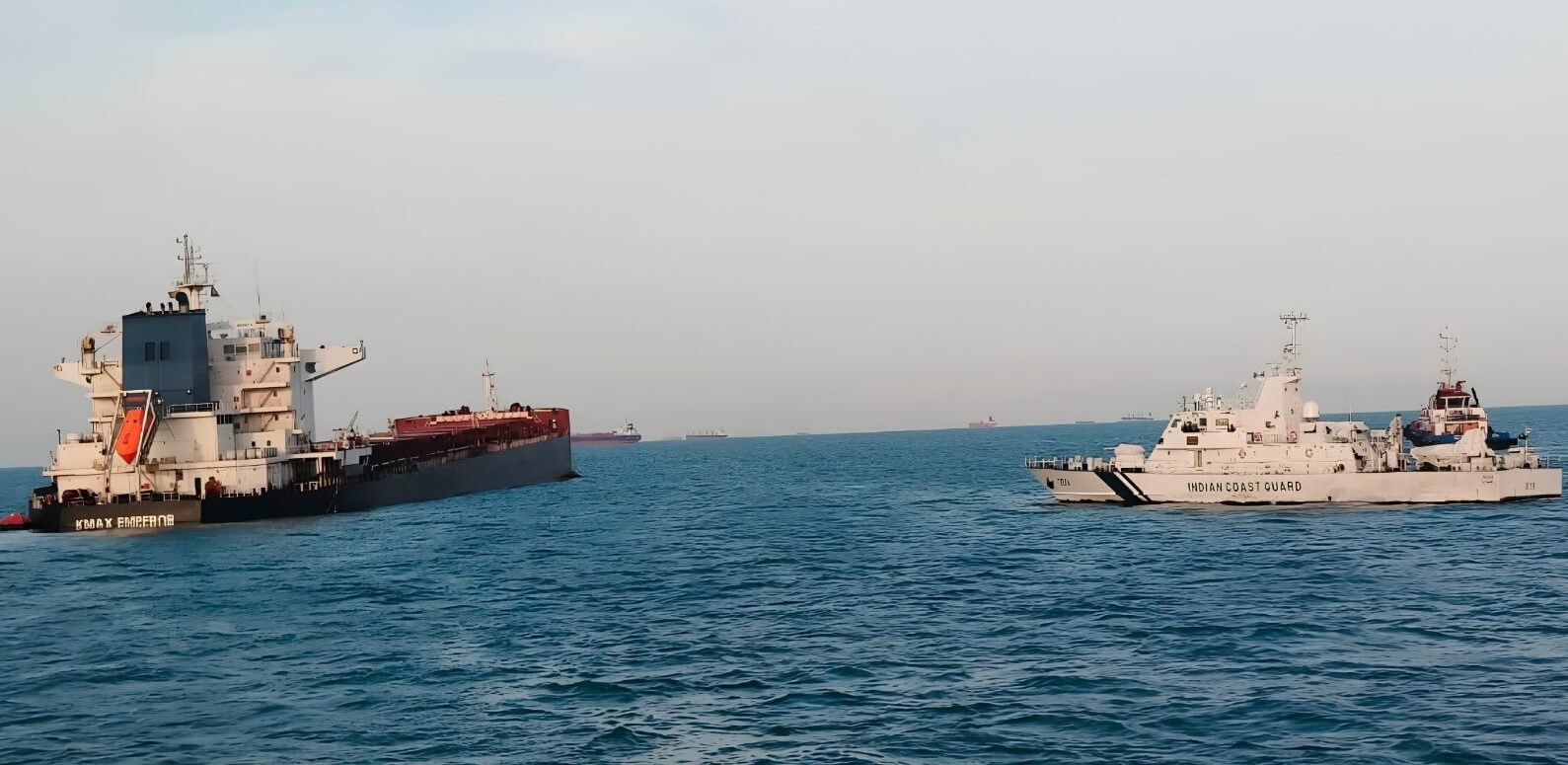
KMAX Emperor riding low in the water after the collision (Indian Coast Guard)

Published Sep 13, 2026 8:43 PM by The Maritime Executive


After a serious collision between two bulkers in the Gulf of Kutch, the Indian Coast Guard has launched a major rescue and pollution-response operation to minimize the potential impact of the casualty. 

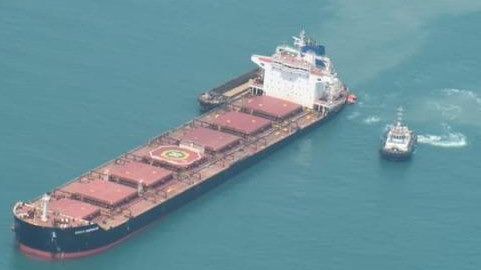
On September 11, the bulker KMax Emperor (IMO 9477426) and the True Mariner (IMO 9599822) collided at a crowded anchorage off Mundra Port. AIS data from Pole Star Global shows that the two vessels were anchored next to each other for several days prior to the casualty. 

The data suggests that at about 0530 hours UTC on September 11, KMax Emperor departed from her anchor circle and moved towards True Mariner, located approximately one kilometer to the northeast. KMax Emperor was making up to four knots prior to making contact, the AIS data shows. 

After the collision, True Mariner appeared to drift to the west, then went to anchor again a short distance from her initial position. KMax Emperor also anchored again nearby. 

Courtesy Indian Coast Guard

In a brief statement, the Indian Coast Guard said that it had launched a rescue operation shortly after the collision. KMax Emperor sustained significant damage on the port quarter, and was trimmed by the stern and listing slightly to port. 21 members of her crew were safely evacuated, and three remained aboard to oversee response operations. 

The Indian Coast Guard also mobilized pollution control resources, working with other agencies to coordinate the response. 

Bystander video circulating on social media showed two of the KMax Emperor's life rafts deployed at the stern and a large hole in the hull on the port quarter. The vessel was riding low in the water. 


World's Largest Electric Vessel is Set to Begin Service on Rio de la Plata

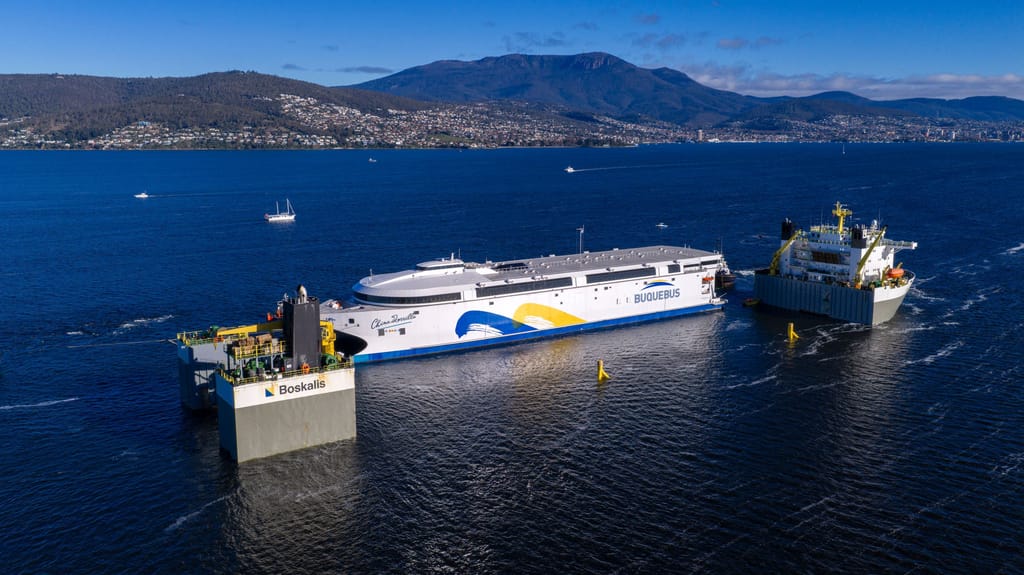
The China Zorrilla loaded aboard Black Marlin off Tasmania, July 2026 (Incat press handout image)

Published Sep 13, 2026 9:48 PM by The Maritime Executive


The heavy-lift ship Black Marlin has successfully delivered the world's largest electric ferry, the China Zorrilla. The Australian-made vessel is the world's largest electric vehicle of any kind, and it will operate on a 30-nautical-mile run across the Rio de la Plata between Colonia del Sacramento, Uruguay and Buenos Aires, Argentina.

China Zorrilla is an aluminum fast-ferry design constructed at the Incat yard in Tasmania. Capable of carrying up to 225 vehicles and 2,100 passengers, it is physically larger and has a larger battery bank than any other battery-electric vessel. It was loaded out on Boskalis' Black Marlin in July for the 40-day eastbound journey to the Rio de la Plata. The ship and its ship-cargo then transited the Pacific and the Strait of Magellan to reach the Atlantic. On arrival at Nueva Palmira, Uruguay, Black Marlin waited for favorable weather, then ballasted down far enough to float the ferry off its deck, reversing the procedure used in Tasmania for loading. 

"Hull 096 [China Zorrilla] has been the biggest and most ambitious project in our company’s history," said Incat Chairman Robert Clifford in a statement. "Thousands of people have played a part in bringing this remarkable vessel to life, and they should all be incredibly proud of what has been accomplished."

Incat is now engaged in building a series of three 129-meter electric ferries for Denmark's Molslinjen - the largest ferry electrification program (across multiple vessels) in the world. The new vessels will operate in the Kattegat, a high-profile assignment. 

"China" Zorrilla (originally Concepción Matilde Zorrilla) was a locally-famous actress who made her name in the Uruguayan and Argentinian theater scenes, appearing in countless plays, movies and television shows from the 1950s up through at least 2007. She passed away in 2014.