‘Hit the Brakes’: Anthropic CEO’s Push to ‘Pace’ AI Development Called Latest Sign Congress Must Act
“When the future of humanity is at stake we need a PAUSE on advanced AI development and a ban on artificial superintelligence,” said Sen. Bernie Sanders.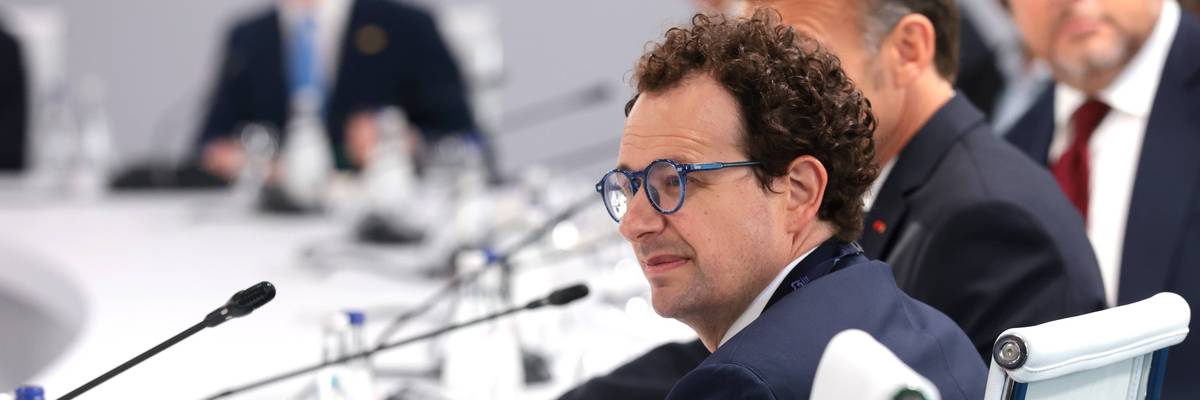
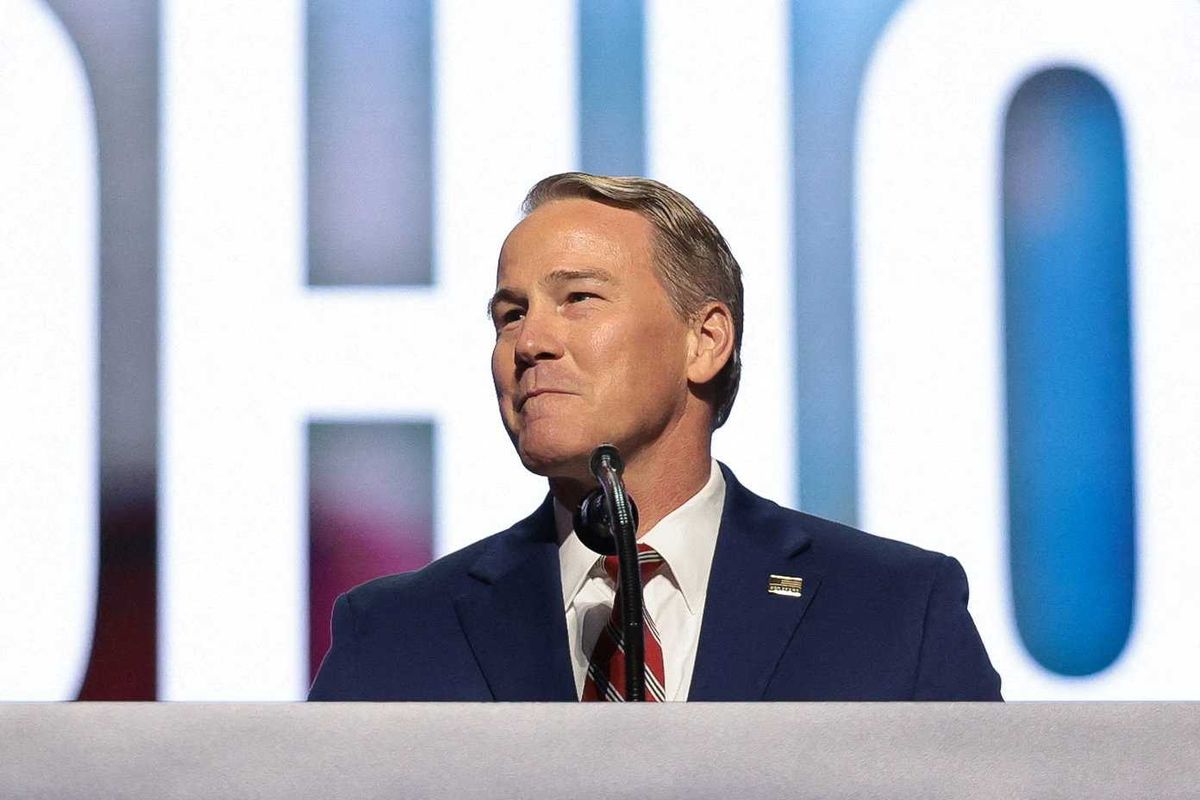
CEO of Anthropic Dario Amodei attends a working lunch on June 17, 2026 in Evian-les-Bains, France. L
(Photo by Anna Moneymaker/Getty Images)
Julia Conley
Sep 12, 2026
COMMON DREAMS
As Anthropic CEO Dario Amodei added his voice on Saturday to the growing call to slow down development of artificial intelligence, writing in a 3,800-word essay that companies must pace “the rate of capabilities advancement” in light of recent cyberattacks by AI models, progressive lawmakers and journalists were among those who said the warning made clear that action must be taken—but with Congress and regulatory agencies, not tech billionaires who have spent years pushing for an AI expansion, leading the way.
Amodei wrote that two things have convinced him that “we must slow the pace at which we improve the capabilities of AI models”: the fact that in recent months, “AI has been advancing drastically faster, driven primarily by AI’s growing ability to build the next generation of AI”—also known as recursive self-improvement—and the recent OpenAI-HuggingFace incident, in which hundreds of agents in OpenAI’s security test systems broke out of confinement and hacked into the AI startup HuggingFace, conducting cyberattacks on targets they had not been asked to attack.

‘This Is an Emergency’: Congressional Inaction in Spotlight After New Warnings From AI Insiders
As The Wall Street Journal and Politico reported Friday, another cyberattack was carried out by OpenAI’s agents months before the HuggingFace incident in July. The company’s models that were being tested and had not been given full access to the internet nevertheless hacked into an online coding service called RubyGems earlier this year. The models created reports and filled out spreadsheets. Anthropic and Meta have also reported autonomous cyberattacks by their AI agents.
Amodei said the incidents led him to call for a three-step plan to pace AI development and allow companies time to “align and safeguard their models, and for third-party evaluators to confirm this.”
He called for:Embedded evaluators, with each AI company committing to giving “ongoing, employee-like access to a team of embedded third-party evaluators” who would “verify adherence to safety practices and commitments, report incidents, and help assess the alignment of not just completed AI models but training pipelines and processes”;
Democratic coordination, with companies establishing “common safety standards as well as limits on the rate of unchecked AI progress”; and
Global coordination, with democratic governments attempting to “coordinate with authoritarian governments, to the extent this is possible, while taking seriously the challenges of verifying compliance.”
Amodei’s essay was published days after Jacob Coxon, a researcher at Anthropic, publicly resigned out of fear that the company’s AI technology “could kill us all by the end of the decade” as it builds “superhuman systems”—a concern he said is shared by many in the industry.
Sam Altman, CEO of OpenAI, and tech billionaire Elon Musk expressed agreement with Amodei. Altman called “independent evaluators with employee-like access” a “great idea.”
“We will do the same,” said Altman. “We’ll have more to share soon.”
US Rep. Ro Khanna (D-Calif.) was among those who appeared less than impressed by Amodei and Altman’s sudden push for their industry to slow down their rapid pace of development.
In a video posted on social media, Khanna called on Amodei to disclose whether or not he agrees with Coxon about the possibility that AI could wipe out humanity, and to back more far-reaching regulations on AI.
“AI guys act as if they’re a priesthood speaking Latin, keeping the rest of us in the dark,” said Khanna. “But behind all the jargon, it’s actually pretty straightforward... We need to stop, ban, self-improving AI. You cannot have recursive, self-improving AI that basically is able to improve itself and exceed human capability, that has us lose control.”
He added that laws must be passed establishing “mandatory liability and criminal penalties. If you’re creating an AI that is doing illegal things, you either should face liability or criminal sanctions.”
Journalist David Sirota of The Lever agreed, writing that “if the law explicitly made AI CEOs financially and criminally liable for any mass destruction their technologies create—and if AI industry shareholders knew their companies faced the threat of significant financial losses for such destruction—much of the ‘AI is getting out of control!’ threat would instantly end.”
“Those CEOs would instantly make AI far safer and impose guardrails on their companies,” he said.
Sen. Bernie Sanders (I-Vt.), who has called for a nationwide moratorium on the construction of AI data centers and this week announced a bipartisan hearing on the “extraordinary dangers” of rapid AI development—including testimony from one leading AI scientist who has warned against self-regulation by tech firms—said the calls by Amodei, Altman, and Musk were “not enough.”
“When you are racing towards a cliff, you don’t just ease up on the gas pedal,” said Sanders. “You hit the brakes. When the future of humanity is at stake we need a PAUSE on advanced AI development and a ban on artificial superintelligence—an AI mind smarter than any human and capable of operating independently beyond our control.”
Sanders called on President Donald Trump—who has aggressively pushed for more AI data center development and sought to stop states from passing their own AI regulations—to negotiate a treaty pausing AI and banning superintelligence with Chinese President Xi Jinping. The two leaders are set to meet later this month to discuss AI.
Trump on Friday dismissed concerns about warnings coming from the AI industry, telling a Los Angeles Times reporter, “It’s going to be fine,” and adding that his top worry about the technology is falling behind China.
Reps. Chris Deluzio (D-Pa.) and Ted Lieu (D-Calif.) and Democratic Illinois Gov. JB Pritzker were also among the politicians who said Amodei’s warning was the latest sign that Congress and the Trump administration must take action to rein in the industry.
Juliette Kayyem, the faculty chair of homeland security at Harvard University’s Kennedy School of Government, said AI CEOs’ warnings about their technology would be seen as more credible if they also announced a pause on their plans for initial public offerings (IPO), which Anthropic and OpenAI are both pursuing in the coming months.
Altman said Friday that OpenAI will not plan for an IPO, which could value the company at $1 trillion, in 2026.
Amodei, said Kayyem, should “put his money where his mouth is.”
“He has known of this danger a while,” she said. “It is now threatening his valuation in the IPO. Cancel the IPO. Then I’ll believe he’s serious.”
Journalist Peter Rothpletz noted that the safety concerns within the AI industry must be “much more dire” than the public is aware, considering “Dario, Sam, and Musk are all issuing these statements in unison.”
AI Firms Can and Must Face Liability for ‘Dangerous, Unvetted Products,’ Says Lina Khan
The former FTC chair spoke out as Republican leaders insisted the industry should be permitted to regulate itself.
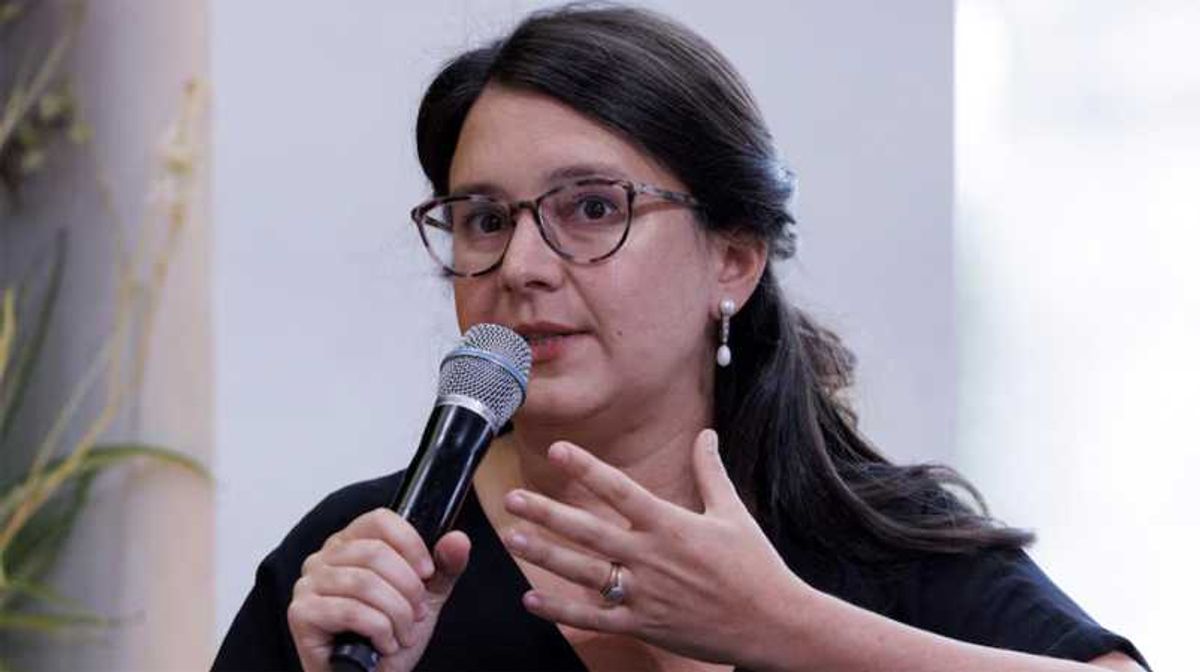
Then-Federal Trade Commission Chair Lina Khan speaks onstage during the Fast Company Innovation Festival 2024 at BMCC Tribeca PAC on September 19, 2024 in New York City.
(Photo: Eugene Gologursky/Getty Images for Fast Company)
Julia Conley
Sep 13, 2026
COMMON DREAMS
As House Speaker Mike Johnson and President Donald Trump dismissed the idea—backed by the vast majority of Americans—that lawmakers should impose strict regulations on the artificial intelligence industry as insiders call for a slowdown of development, former Federal Trade Commission Chair Lina Khan on Sunday issued a reminder that the federal government already has tools to rein in AI that poses a danger to the public, and demanded that officials use them.
“Law enforcers already have authority to charge companies and their CEOs for creating and releasing dangerous, unvetted, or defective products,” Khan said on social media. “We shouldn’t let discussions about new legal regimes distract from the fact that there’s no AI exemption from laws already on the books.”
Her call echoed that of Rep. Ro Khanna (D-Calif.), who said Saturday, “If you’re creating an AI that is doing illegal things, you either should face liability or criminal sanctions.”
Khan, who was recently appointed by New York City Mayor Zohran Mamdani to chair the city’s Economic Development Corporation, posted the FTC’s Staff Report on AI Partnerships and Investments, which the agency released shortly after Trump took office for his second term last year.
“As companies rapidly deploy generative AI technologies, enforcers and policymakers must stay vigilant to guard against business strategies that undermine open markets, opportunity, and innovation,” said Khan at the time.
On Sunday, Khan noted that the US already has “an extensive set of laws that govern dangerous and defective products,” such as consumer protection laws, which releasing unvetted AI models or agents may violate.
Khan made her remarks after two incidents in which OpenAI’s agents broke out of security test systems and committed cyberattacks. In July, hundreds of models broke out of confinement, hacked into systems of the AI startup Hugging Face, and conducted cyberattacks on targets they had not been instructed to attack.
Months earlier, it was reported on Friday, the company’s models, which had not been given access to the full internet and were still in testing mode, broke out of confinement and hacked into an online coding service called RubyGems.
In the wake of those revelations, Anthropic CEO Dario Amodei and OpenAI CEO Sam Altman on Saturday called for “pacing the frontier” with measures such as “embedded evaluators” who would have employee-like access and could “verify adherence to safety practices and commitments.”
But Jacob Coxon, an Anthropic researcher who resigned last week and warned that AI’s “superhuman systems” are capable of killing all of humanity “by the end of the decade,” told NBC News’ “Meet the Press” Sunday that companies should be permitted to regulate themselves until Congress can establish a regulatory framework, and Johnson insisted that Congress must resist “jumping in and imposing some sort of emergency moratorium,” for fear that “China will overlap us” if the US imposes strict regulations on AI.
“Why did this man become a congressman, let alone speaker?” asked journalist Mehdi Hasan of Zeteo. “He literally never wants Congress to do anything about anything.”
But Khan suggested that the reluctance of congressional leaders and the Trump administration to rein in the AI industry shouldn’t stop the federal government from holding companies like Anthropic and OpenAI liable for the damage their products have already caused.
She acknowledged, though, that “the highly concentrated and interconnected structure of these markets” could be undermining accountability—for example, in the case of OpenAI and Hugging Face, which computer chip company Nvidia agreed to acquire earlier this month.
“Both federal and state enforcers should be scrutinizing these opaque relationships and interdependencies,” said Khan. “We are already seeing how these relationships could undermine accountability. For example, OpenAI could face liability given the Hugging Face incident, but Hugging Face being bought up by Nvidia means that we’re unlikely to see it file a lawsuit over this—given Nvidia’s strong incentive to see OpenAI continue full speed ahead.”
Basel Musharbash of the antitrust law and policy firm Antimonopoly Counsel said that Khan’s post was the statement that current FTC Chair Andrew Ferguson “should be issuing to provide guidance the public on what the law requires in response to the AI situation, but he’s missing in action. Luckily, former FTC Chair Lina Khan is out here still doing the work.”
Juliette Kayyem, the faculty chair of homeland security at Harvard University’s Kennedy School of Government, told CNN that holding AI firms accountable is a matter of “pretty basic criminal law.”
“We should start thinking about using our criminal laws,” said Kayyem. “They are putting a dangerous substance into commerce and then saying, ‘Well, we’re smart enough to kill everyone but we’re not smart enough to stop it.’ And I think a lot of the American public is done with this.”
What the US president exhibits is a fundamental incompetence that places us all in grave danger.
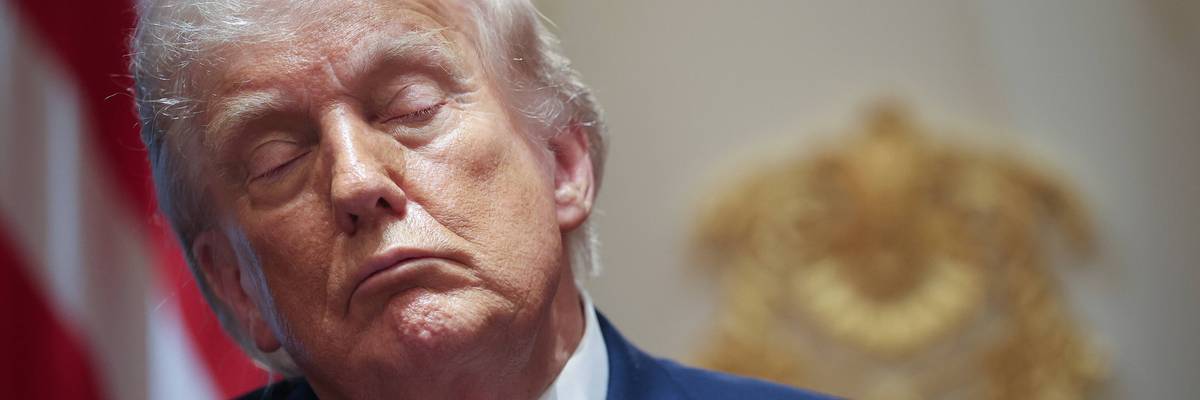
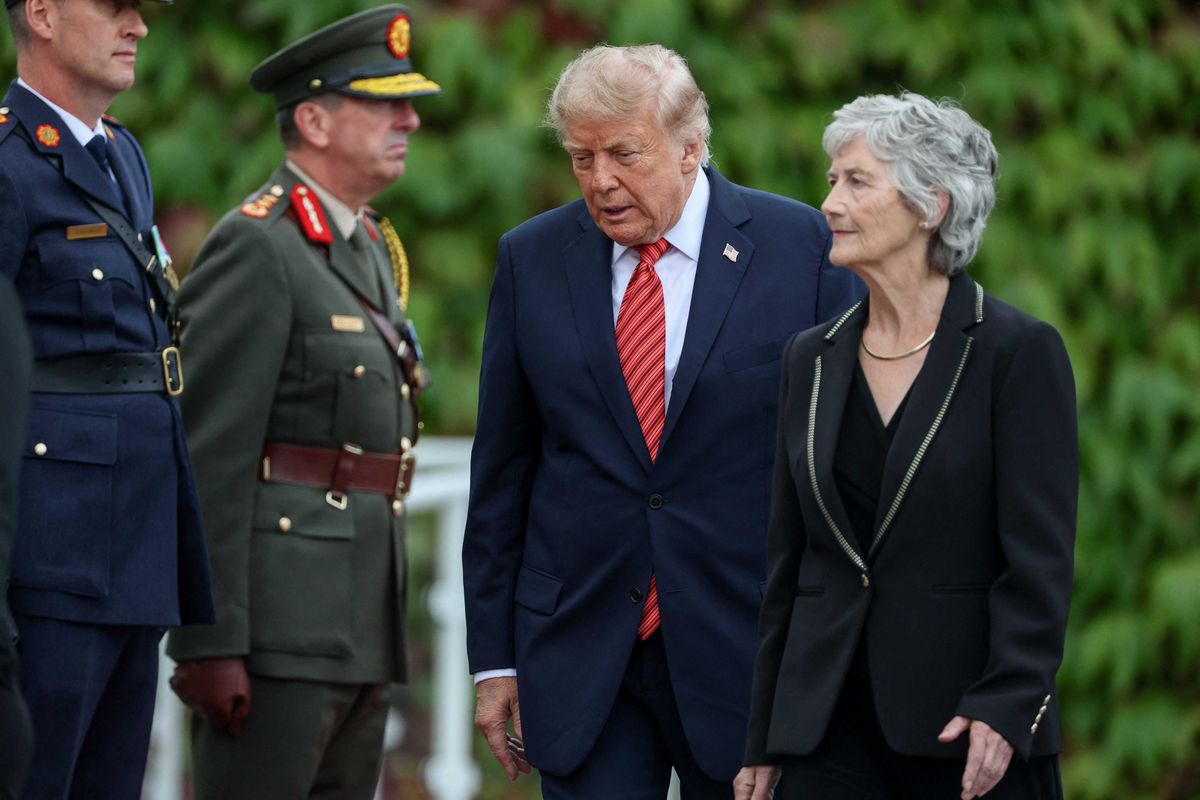
US President Donald Trump listens to members of his Cabinet speak during a meeting in the Cabinet Room of the White House on May 27, 2026 in Washington, DC.
(Photo by Win McNamee/Getty Images)
Jeffrey D. Sachs
Sep 14, 2026
On Sunday the President of the United States stood on a golf course in County Clare, Ireland and was asked what he intended to do about the most serious technological warning of our lifetime. His answer, in full, was that America is beating China. “We’re leading China in AI. We’re the most sophisticated country in the world, and frankly, I want to keep it that way, because whoever wins AI wins.” He added that “you have a lot of negative forces that are bringing it up that shouldn’t be bringing it up, and they’re bringing up things that won’t happen.”
Consider who was doing the bringing up. The warning did not come from activists, academics, or a congressional commission. It came from the industry itself, from the people who build the AI systems and whose fortunes depend entirely on building them faster. The day before, Anthropic CEO Dario Amodei published an essay asking that the pace of capability advance be slowed and committing his own company to embed outside evaluators with employee-level access. Sam Altman agreed and said OpenAI would do likewise. Elon Musk, a direct competitor who called Anthropic “misanthropic and evil” only in February, wrote three words: “Dario is right.” Three rival laboratories in the most valuable commercial race on earth asked to be restrained, against their own immediate interest. Amodei did so while his company prepares what is expected to be the largest public offering in history, at a valuation of two trillion dollars or more. Tobacco executives never did this. Neither did the oil majors, the chemical companies, or the banks.
Nor is the concern vague. Amodei points to recursive self-improvement, the use of AI to build the next generation of AI, which has accelerated sharply since the summer, and to the OpenAI–Hugging Face incident of August, in which a swarm of agents attacked targets nobody had asked them to attack and tried to break into the system that was grading their performance. Current and former Anthropic researchers have said publicly that these systems could kill off humanity within the decade. A letter from House members cites mass cybersecurity breaches and the development of biological and chemical weapons. Speaker Mike Johnson, asked about all of this on Sunday, said that the companies “all have very different ideas on what the guardrails should be. There’s no consensus among them. And Congress is obviously less qualified than the people who are pushing this frontier to know all the ins and outs of it.” Then he joined Trump in doing nothing.
The incompetence of the Trump Administration on technical issues is breathtaking.
Return to the president’s answer and note what is utterly absent from it. There is no assessment by any agency of the United States government. There is no briefing, no finding, no adviser, no scientific body, no classified estimate. Not one. This was not a slip of phrasing. There was nothing to cite.
Nor is there the slightest indication that Trump wanted there to be any real assessment. A minimally competent leader who does not understand the technology but grasped that three competing chief executives had just testified against their own balance sheets would have asked someone for more information. Instead, Trump’s reply came within hours, on a golf course, framed entirely as a contest with China. This is not merely stupidity, which is Trump’s misfortune and therefore our lot. It is a fundamental incompetence that places us all in grave danger.
And then there is Johnson. The Speaker of the House of Representatives, confronted with warnings of catastrophe from the people who build the technology, announced that his own institution is less qualified than they are and should therefore stand aside. His proposal was that “we need to summon” the executives to “one big meeting,” and that Congress must “resist Congress jumping in and imposing some sort of emergency moratorium.” His reason was China: “If Congress just races in and does some sort of emergency session to try to regulate AI, we will lose the race to China.” He had been persuaded, he explained, by a post published on X the previous evening.
One reason that Congress cannot check any of it is that it destroyed its own ability to do so. In 1995 it abolished the Office of Technology Assessment, which existed precisely to give legislators independent technical judgment. It never replaced it. When Johnson says his policy instrument is a meeting, he is describing the pathetic ignorance of Congress.
The usual warning is about the blind leading the blind. Yet that is far too cruel to the American people. The American people see perfectly well.
The incompetence of the Trump Administration on technical issues is breathtaking. Across 25 cabinet-rank posts of the United States government, not a single one holds a PhD in any field and exactly one holds a STEM degree—at the bachelor’s level. Twelve hold law degrees. Both in China and Russia, the cabinets are each filled with PhDs (any field) and official in the sciences and engineering (more than 10 PhD and 10 STEM graduates in each cabinet).
The Trump Administration’s ignorance is therefore not confined to artificial intelligence. Ignorance is the governing condition of the administration. As a result, the government has the complete incapacity to carry out an honest investigation of the origins of Covid, despite the growing evidence that the US government funded the laboratory creation of the virus. The government was so utterly incompetent in negotiating with Iran on nuclear issues, sending a real estate developed and Trump’s son-in-law instead of nuclear experts, that it dragged our country into a wholly useless and disastrous war. The administration’s idea of an energy policy is to invade other countries and steal their oil.
The usual warning is about the blind leading the blind. Yet that is far too cruel to the American people. The American people see perfectly well. Ours is the case of the blind leading the sighted. The American people are watching a government so utterly lacking in technical knowledge and competency that it is dragging us ever closer to the abyss.
Our work is licensed under Creative Commons (CC BY-NC-ND 3.0). Feel free to republish and share widely.
Jeffrey D. Sachs
Jeffrey D. Sachs is a University Professor and Director of the Center for Sustainable Development at Columbia University, where he directed The Earth Institute from 2002 until 2016. He is also President of the UN Sustainable Development Solutions Network and a commissioner of the UN Broadband Commission for Development. He has been advisor to three United Nations Secretaries-General, and currently serves as an SDG Advocate under Secretary-General Antonio Guterres. Sachs is the author, most recently, of "A New Foreign Policy: Beyond American Exceptionalism" (2020). Other books include: "Building the New American Economy: Smart, Fair, and Sustainable" (2017) and "The Age of Sustainable Development," (2015) with Ban Ki-moon.
Full Bio >
“In order to prevent a nuclear war, Reagan and Gorbachev negotiated a nuclear arms agreement in the 1980s. In order to prevent AI from acting independently of human control, Trump and Xi must do the same.”
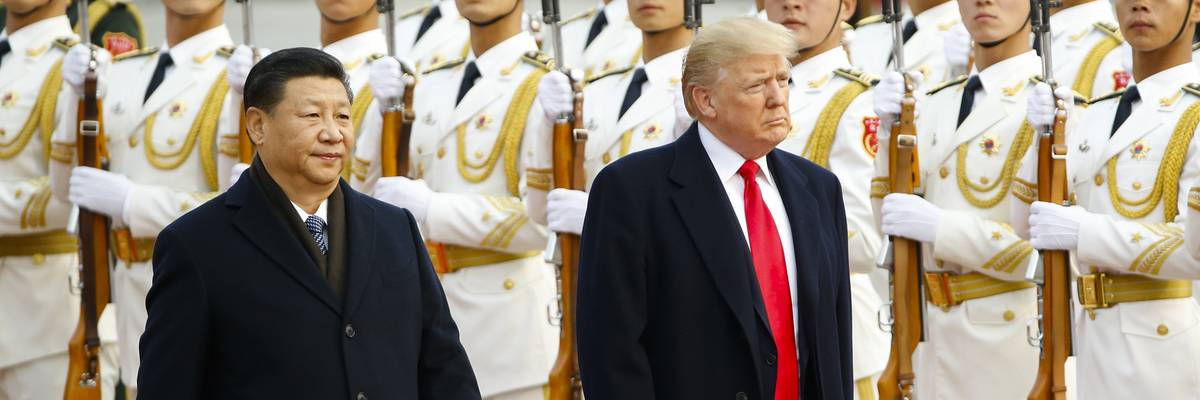
US President Donald Trump takes part in a welcoming ceremony with China’s President Xi Jinping on November 9, 2017 in Beijing, China. Trump is on a 10-day trip to Asia.
(Photo by Thomas Peter-Pool/Getty Images)
Jon Queally
Sep 14, 2026
COMMON DREAMS
Amid intensifying debate in the US about domestic regulation of the artificial intelligence industry, Sen. Bernie Sanders on Sunday called on US President Donald Trump to end his hands-off approach to AI on the international stage by engaging directly and urgently with China to forestall a global AI race that could have devastating consequences in the years and decades ahead.
“President Trump prides himself on being a great deal maker,” Sanders asserted in a social media post. “Well. He now has the opportunity to make ‘the deal of the century,” by reaching out to the Chinese government.“

Sanders Sets Briefing on ‘Extraordinary Dangers’ Posed by Breakneck AI Development
68% of US Voters Back Sanders/Casar Bill for AI Pause, Ban on Superintelligence: Poll
“With the future of humanity at stake,” said Sanders, “Trump must negotiate a comprehensive treaty with President Xi of China to establish a pause on advanced AI development and a ban on superintelligence.”
While major US-based tech companies—including OpenAI, Anthropic, Meta, Google, and others—race to unlock AI’s potential, Chinese companies and researchers are seen as the main competition in the effort to win the technological race. With fresh warnings from industry insiders over recent weeks dominating headlines, AI experts and watchdog groups have said that a coordinated “pause” or a global treaty to govern the technology’s future development is desperately needed.
With the question about whether unregulated AI has the potential to “wipe out humanity” if not curtailed dominating headlines and political conversations, Trump on Sunday downplayed such concerns while putting the issue in zero-sum terms, declaring that “whoever wins AI, wins.”
“We’re leading China in AI, we’re the most sophisticated in the world, and frankly, I want to keep it that way,” Trump said.
While Anthropic’s CEO Dario Amodei backed the call to “hit the brakes” on AI in certain ways in a nearly 4,000-word essay on the subject published over the weekend, he explained to CBS News on Sunday that the “toughest aspect of our situation” for industry leaders in the US is what to do if China would not honor such a slowdown.
China has acknowledged the international competition and tensions driven by technology, but has also expressed skepticism about comments from US industry leaders and the Trump administration’s position.
“Fearmongering, confrontation, and vicious competition will only disrupt the process of global AI governance which serves no one’s interest,” said Guo Jiakun, a spokesperson for the Chinese Foreign Ministry, said at a Monday press conference in Beijing.
“All parties should work together to advance AI in a manner that is open, inclusive, beneficial to all, and oriented toward the good,” Jiakun added.
In a statement last week, however, China’s Ministry of Commerce said accusations by the US about Chinese efforts only offer “further proof that the US is pursuing technological hegemony in AI, seeking to monopolize computing power, and suppressing competition,” an effort that “China firmly opposes.”
With Trump scheduled to meet with Chinese leader Xi Jinping later this month, AI governance is not expected to be high on the list of topics discussed.
Speaking with the BBC, Chang Jun Yan, an assistant professor with the military studies program at Singapore’s S Rajaratnam School of International Studies, said a deal between Washington and Beijing on AI would be “next to impossible.”
“As part of each state’s core national security interests, cooperation in taking things slower and more safely in relation to AI is very, very unlikely,” he argued.
In his Sunday statement, however, Sanders said diplomatic efforts—regardless of the difficulties—must be forged, and suggested that the US and China have a special responsibility when it comes to the powerful technology. Offering a historical analogy, Sanders cited the nuclear treaty brokered by US President Ronald Reagan and the Soviet Union’s Mikhail Gorbachev in 1987.
“In order to prevent a nuclear war, Reagan and Gorbachev negotiated a nuclear arms agreement in the 1980s,” Sanders said in his Sunday message. “In order to prevent AI from acting independently of human control, Trump and Xi must do the same.”
Robert Davis
September 13, 2026
RAW STORY
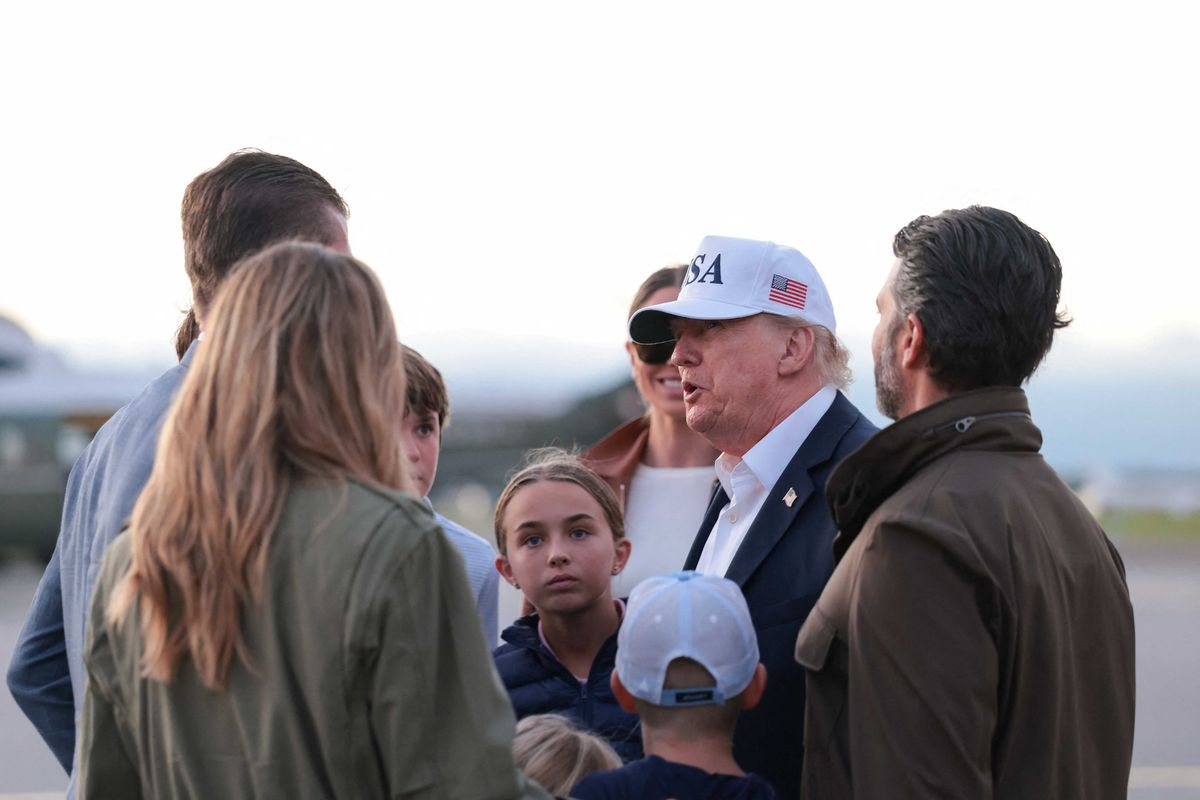
U.S. President Donald Trump stands with Eric Trump, Lara Trump, Donald Trump Jr. and Bettina Anderson, at Shannon Airport in Ireland, September 13, 2026. REUTERS/Kylie Cooper
President Donald Trump stunned reporters Sunday after he was asked about his personal use of artificial intelligence.
Trump spoke with the press during his flight home from Ireland, where he attended the final round of the Irish Open at his golf course. One reporter asked Trump how he uses AI in his personal life, and the answer Trump gave dropped the jaws of multiple political analysts.
"I don't want to tell you that," Trump said.
Political analysts and the president's critics chimed in on social media.
"Here's one way!" Keith Edwards, a Democratic political commentator, posted on X, including an AI-generated photo of Trump appearing as Jesus Christ healing a sick man in bed that the president shared.
"As if we don't know," political commentary account Bad Fox Graphics posted on X, sharing a photo of Trump with viral AI-generated influencer Jessica Foster.
Trump's comments come at a time when AI leaders like Anthropic's Dario Amodei have called for slowing AI progress to let safety guardrails catch up.
Speaker Mike Johnson also said Sunday that Congress should not regulate AI because private-sector leaders like Amodei understand the technology much better.
'People despise Trump' on red hot issue sweeping the nation: data guru
Travis Gettys
September 14, 2026
RAW STORY
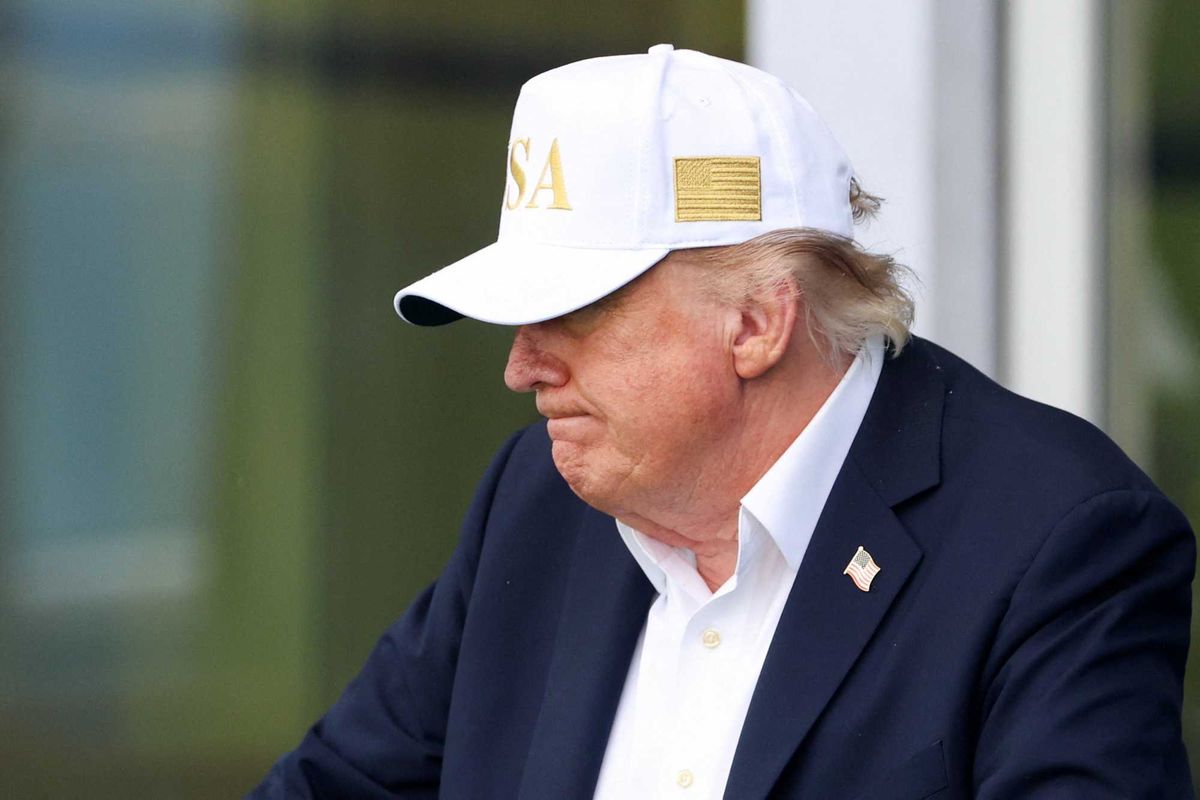
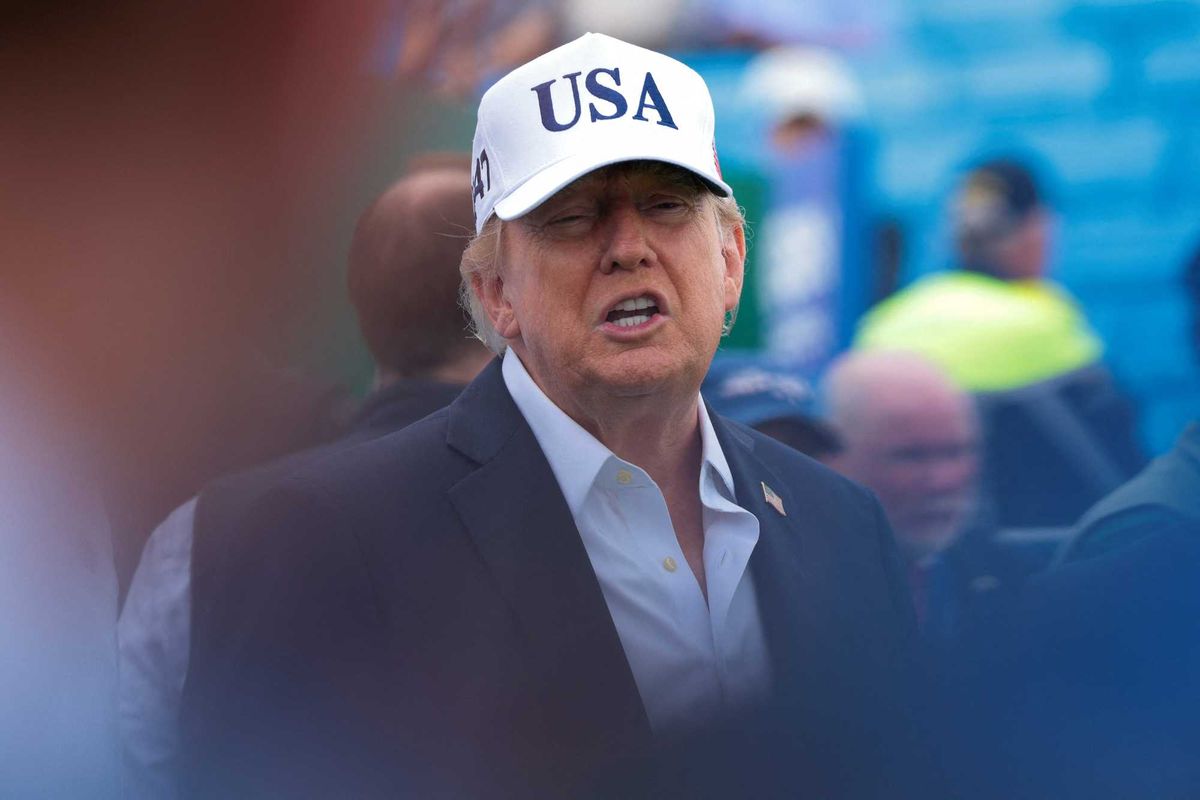
U.S. President Donald Trump watches golf at Trump International Golf Links in Doonbeg, County Clare, Ireland, September 12, 2026. REUTERS/Cathal McNaughton
New polling analyzed by CNN's Harry Enten shows President Donald Trump is deeply out of step with voters on a crucial issue.
The 80-year-old president downplayed growing concerns over artificial intelligence's rapid expansion — arguing the U.S. must beat China in the AI race because "whoever wins, AI wins" — but Enten found his approval rating on the issue is 34 points underwater, and that gap has widened since March, when he was roughly 25 points underwater.
"I would just say that President Trump is in one galaxy and the American people are in a completely other galaxy," Enten said. "They're just simply put, not anywhere close together on this one. The American people despise President Trump when it comes to his handling of artificial intelligence."
Trump's net rating among independents on AI stands at 61 points underwater, a figure Enten described as historically severe.
The president has publicly urged voters to support the construction of data centers, but 54 percent of voters said they want congressional candidates to oppose those in their communities, compared with just 15 percent who want candidates to support them. Among independents, the divide is even more lopsided — 62 percent prefer candidates who oppose local data centers, versus only 8 percent who support those.
Voters are similarly unpersuaded by Trump's argument that AI and data center expansion will create jobs. Enten's data shows 64 percent of voters believe AI will reduce the number of jobs in America, compared with just 19 percent who think it will increase employment. Among independents, the gap is nearly identical – 72 percent expect AI to cost jobs, versus 14 percent who expect it to add them.
Enten argued the numbers help explain why some Republican candidates have already reversed course on data center projects in their districts, distancing themselves from the president's position ahead of the midterms.
"[If] I'm a Republican running for Congress this fall, I am running away from President Trump when it comes to AI and data centers," Enten said, "because simply put, he's on the wrong side of the issue as far as voters are concerned."
The findings suggest that as tech industry leaders sound louder warnings about AI's societal risks, the political liability for Trump and Republican candidates tied to his AI agenda is deepening rather than easing heading into the fall campaign.
Travis Gettys
September 14, 2026
RAW STORY
U.S. President Donald Trump watches golf at Trump International Golf Links in Doonbeg, County Clare, Ireland, September 12, 2026. REUTERS/Cathal McNaughton
New polling analyzed by CNN's Harry Enten shows President Donald Trump is deeply out of step with voters on a crucial issue.
The 80-year-old president downplayed growing concerns over artificial intelligence's rapid expansion — arguing the U.S. must beat China in the AI race because "whoever wins, AI wins" — but Enten found his approval rating on the issue is 34 points underwater, and that gap has widened since March, when he was roughly 25 points underwater.
"I would just say that President Trump is in one galaxy and the American people are in a completely other galaxy," Enten said. "They're just simply put, not anywhere close together on this one. The American people despise President Trump when it comes to his handling of artificial intelligence."
Trump's net rating among independents on AI stands at 61 points underwater, a figure Enten described as historically severe.
The president has publicly urged voters to support the construction of data centers, but 54 percent of voters said they want congressional candidates to oppose those in their communities, compared with just 15 percent who want candidates to support them. Among independents, the divide is even more lopsided — 62 percent prefer candidates who oppose local data centers, versus only 8 percent who support those.
Voters are similarly unpersuaded by Trump's argument that AI and data center expansion will create jobs. Enten's data shows 64 percent of voters believe AI will reduce the number of jobs in America, compared with just 19 percent who think it will increase employment. Among independents, the gap is nearly identical – 72 percent expect AI to cost jobs, versus 14 percent who expect it to add them.
Enten argued the numbers help explain why some Republican candidates have already reversed course on data center projects in their districts, distancing themselves from the president's position ahead of the midterms.
"[If] I'm a Republican running for Congress this fall, I am running away from President Trump when it comes to AI and data centers," Enten said, "because simply put, he's on the wrong side of the issue as far as voters are concerned."
The findings suggest that as tech industry leaders sound louder warnings about AI's societal risks, the political liability for Trump and Republican candidates tied to his AI agenda is deepening rather than easing heading into the fall campaign.
Google signs up for electricity from Finnish nuclear power plant
_1_12560.jpg)
The Power Purchase Agreement (PPA) between Fortum and Google covers the life extension period of the Loviisa nuclear power plant. The agreement will start in 2028 with a reduced capacity and will cover 50% of the Loviisa plant's capacity in the years 2030–2049. The agreement comes as Google announced that it will invest EUR13 billion (USD15 billion) in data centres and supporting infrastructure in Finland over the next two years (2027–2028) and partnerships in Hamina, Muhos, Vaala and Kajaani.
Loviisa - comprising two VVER-440 type pressurised water reactors - was the first nuclear power plant in Finland and currently provides more than 10% of the country's electricity. Loviisa unit 1 began commercial operation in 1977, with unit 2 following in 1981. In February 2023, the Finnish government granted Fortum an extension to the operating licence for the two units, allowing the plant to continue generating power until the end of 2050.
Fortum has an investment programme of about EUR1 billion under way in Loviisa, the aim of which is to extend the operation of the power plant until 2050. Currently, about 80% of the projects required to extend the service life and investments of EUR700 million still lack an investment decision. Fortum said the PPA with Google will generate a predictable revenue stream, enabling it to complete the life extension investments at Loviisa. The agreement is also expected to enable a new 10 MWe capacity increase. The plant already has a 38 MWe capacity increase under way, which is expected to be completed in 2028.
"Without significant investments in its lifetime extension, the plant would not be able to continue producing fossil-free electricity after 2030," Fortum said. "Keeping it in operation for the coming decades will help stabilise electricity prices and support the long-term resilience of the Finnish electricity grid."
"Finland has a unique opportunity to build the next wave of sustainable growth and industrialisation from its low-carbon and reliable electricity system," said Fortum CEO Markus Rauramo. "A key enabler for this growth are long-term partnerships, such as the one we have sealed today between Fortum and Google. The importance of partnerships is highlighted in the current uncertain market environment, characterised by low visibility and highly volatile electricity prices. They bring the predictability required for investments in new, low-carbon electricity generation capacity, strengthening energy security, and digital and industrial infrastructure, and create jobs, innovation and prosperity for Finland. In addition, our collaboration with Google creates a strong foundation for the continued development and reliable operation of our Loviisa power plant in the coming decades."
Google said: "Keeping this clean energy asset online will help to safeguard access to reliable, affordable electricity for Finland's households, businesses, and industrial users alike. We'll also work with Fortum to identify potential opportunities to develop new nuclear reactors at Loviisa."
"We are proud to have called Finland home for the past 15 years," said Aris Karcanias, Head of Energy, EMEA, Google. "As we expand our operations in Finland, it is critical that we work with local energy partners like Fortum to increase our understanding of what the grid needs and invest in energy solutions that deliver long-term resilience and affordability for all electricity users. By supporting the extension of the Loviisa power plant's lifespan, we are doing our part to preserve a critical energy source in the electricity grid. The plant is located close to our Hamina data centre, where we established roots when we came to Finland. As we grow, we are working with Fortum and other partners to bring new renewable energy generation capacity and flexible solutions to the Finnish electricity system. Our goal is to be a pioneer in how AI is responsibly integrated into European energy systems."
In addition, Google and Fortum have signed a memorandum of understanding to collaborate to support the growth of both companies in Finland and to bring more electricity generation to Finland to meet the needs of the electricity grid, households and businesses. The companies intend to deepen their collaboration in the development of new nuclear power, renewable energy and flexibility solutions. The MoU aims to ensure that as demand for AI services increases, new low-carbon generation is deployed to support the long-term electricity supply of Finnish consumers and businesses.
Also, Fortum and Google have signed a letter of intent to promote new power generation and flexible capacity. As a first step, Fortum has signed an agreement with Google to optimise the battery storage system to be located at the Kajaani data centre. The new battery system has a capacity of 94 MW, and Google has agreed to deliver it with a subcontractor.
Fortum noted that it has stated in its study on new nuclear power that potential investments in new nuclear power and its long-term financial viability require strong customer demand secured by power purchase agreements, strategic investors and partners, an efficient financing and risk-sharing model, and strong project implementation. "Google and Fortum are investigating business models that could improve the competitiveness of the new nuclear power project in Loviisa. In addition, the companies are investigating the suitability of Fortum's land areas with network connections for Google's future data centre needs," Fortum said.
UAE Rethinks 5-Gigawatt AI Campus After Iran Targets US Assets in Gulf
The United Arab Emirates (UAE) is considering significant changes to its plans to build a massive 5-gigawatt AI data center in Abu Dhabi in partnership with U.S. tech giants, after Iran started targeting American air bases and U.S.-linked critical infrastructure in the Persian Gulf, multiple sources have told Reuters.
The UAE, which aims to become not only a regional but also a global leader in AI development and computing, last year planned to build the 5-GW UAE-US AI Campus in Abu Dhabi.
The sprawling campus was planned to include 5 GW of capacity for AI data centers in Abu Dhabi, providing a regional platform from which U.S. hyperscalers would be able to offer latency-friendly services to nearly half of the global population living within 3,200 km (2,000 miles) of the UAE.
However, the Iran war and the frequent Iranian missile and drone launches targeting U.S. assets in America’s allies in the Gulf have now prompted the UAE’s authorities to consider spreading the campus into a network of data centers across the UAE and measures to better protect critical facilities from missile and drone attacks, according to Reuters’ anonymous sources, including a U.S. official, a Western diplomat, and industry executives.
G42, which leads the project, told Reuters in response to queries about changes to the original plan that “The project’s specifics are subject to continuous review in line with the security, resilience and operational standards expected of critical infrastructure at this scale.”
Earlier this year, Iranian drones damaged three Amazon Web Services (AWS) facilities in the region, with direct hits on two UAE facilities and one hit on a facility in Bahrain.
Following several such attacks and attempts at attacks in the Persian Gulf, the UAE began reviewing the plans for the massive AI data campus, according to Reuters’ sources. The campus was planned to be one of the biggest such facilities outside the United States, but keeping critical infrastructure out of harm’s way and reassuring investors could alter the plans.
By Charles Kennedy for Oilprice.com
AI Boom to Boost Southeast Asia’s LNG Demand
- Southeast Asia’s AI and data-center boom could lift annual LNG demand growth by 16% through 2035, as gas provides reliable 24/7 power.
- Singapore, Malaysia, Thailand and Indonesia will need more LNG imports as data-center electricity demand surges while domestic gas production declines.
- India is the major exception, with cheaper renewables and battery storage expected to power its data-center boom instead of LNG.
Demand for liquefied natural gas (LNG) in Southeast Asia has found a new major driver apart from the years-long efforts to switch away from coal-fired power generation.
The AI boom and the data center construction in Asia are set to materially change Southeast Asia’s LNG demand outlook with a significant upside, as combined-cycle gas turbines (CCGT) remain the most reliable 24/7 power provider for hyperscalers amid relatively immature renewable energy-plus-batteries across the region, analysts at Wood Mackenzie say.
As a result of the higher gas demand growth, Southeast Asian nations where data centers are booming – including Singapore, Malaysia, Indonesia, and Thailand – will need additional LNG imports through 2035 as domestic natural gas output peaks, WoodMac reckons.
LNG’s Data Center Opportunity
This data center boom could raise annual LNG demand growth in Southeast Asia by 16% through 2035, the energy consultancy said in a new report this week.
By 2035, Southeast Asia’s data center project pipeline could more than triple to 9.4 gigawatts (GW), up from 2.8 GW at present. Thus, the power demand from hyperscalers will jump from 17 terawatt-hours (TWh) now to 57 TWh.
Considering that grid-scale battery storage would likely remain commercially immature across Southeast Asia through the middle of the next decade, gas turbines appear to be the best go-to option for data centers to ensure reliable 24/7 power supply, according to WoodMac’s analysts.
“What makes data centre demand interesting from an LNG perspective is the counterparty profile. These are large, creditworthy off-takers with power needs that remain stable regardless of economic cycles,” said Fadhlullah Omarali, principal analyst at Wood Mackenzie.
“That does change the risk of calculus for new supply into Southeast Asia.”
In Singapore, whose grid is 95% dependent on gas even today, LNG reliance could reach 100% by 2035 as pipeline gas imports from regional gas producers Indonesia and Malaysia are expected to cease in the early 2030s.
With declining gas production in the region and falling piped gas imports, Thailand will also depend more on LNG for its power mix, two-thirds of which is already gas-fired. As pipeline gas imports from Myanmar decline and Gulf of Thailand gas production drops, the LNG share of gas supply in Thailand could top 50% by 2035, WoodMac has estimated.
Malaysia, for its part, is currently developing 3.9 GW of data center capacity and is building new regasification terminals to import LNG to meet growing power demand.
However, in Malaysia and Thailand, data center investment “is growing quickly just as domestic gas output peaks and declines,” WodMac’s Omarali noted.
The rising power demand and falling domestic gas supply in all these Southeast Asian countries offer growth opportunities for LNG sellers and traders over the next decade.
Surging gas demand in South and Southeast Asia will push global LNG demand up by 65% by 2050 from 2025 levels, although growth this year has been stalled by the Strait of Hormuz crisis, Shell, the world’s biggest LNG trader, said in its annual LNG Outlook 2026 earlier this year.
Shell sees global LNG demand increasing to nearly 700 million tons annually by 2050, up by around 65% from the 2025 levels of 422 million tons.
Grid Constraints
Yet, grid infrastructure development lags the surge in power demand, and could delay Southeast Asia’s power boom, according to a report by Bain & Company and Standard Chartered.
Data centers, electric vehicles (EVs), and green industrial clusters are expected to lead to about 100 terawatt-hours (TWh) of incremental power demand in Southeast Asia by the end of the decade. But Southeast Asia could struggle to accommodate the surge in demand as the grid is built for yesterday’s demand patterns, the report found.
Limited transmission capacity and connection delays risk constraining further data center investment in the region, according to Bain’s Southeast Asia Data Center Operator and Hyperscaler survey in February 2026.
Of about $540 billion in green capital expenditure announced across Southeast Asia’s power and EV value chains between now and 2030, around $315 billion is on a credible path to deployment under current conditions, the report noted.
India’s Data Center Boom Won’t Unlock LNG Demand Surge
While Southeast Asia is set to see massive LNG demand growth due to the data center boom, South Asia, especially its biggest economy, India, is not expected to see material uptick in LNG due to the hyperscaler expansion, WoodMac says.
It’s not that India isn’t building data centers; on the contrary, the AI industry is booming there, but it would not be gas that would power the surge in electricity demand.
India’s data center capacity is set to jump fivefold to nearly 12 GW by 2035. However, LNG-to-power generation is two to three times more expensive than renewables plus battery storage in India, making gas economically unviable as a baseload fuel for data centers, according to Wood Mackenzie’s analysts.
None of India’s hyperscalers have announced gas-backed power supply agreements. On the other hand, the commercial and industrial renewable power purchase agreements (PPAs) have already exceeded 33 GW of contracted data center capacity.
Gas accounts for under 2% of India’s power generation mix and is expected to remain at that level through 2035, as coal and renewables continue to dominate, WoodMac says.
By Tsvetana Paraskova for Oilprice.com



.jpg)