Wednesday, September 16, 2026

WAIT, WHAT?!

Japan’s Top LNG Buyer to Sell Excess Gas in Global Markets

The biggest Japanese LNG importer and largest power producer, JERA, plans to sell liquefied natural gas in the long term as part of a strategy to tap global LNG markets and sell any excess gas supply if domestic demand is low, a senior executive has said.

JERA wants to “identify additional markets where we can sell,” Irtiza Sayyed, chief executive officer of the newly-created JERA Global Energy Solutions, told Bloomberg in an interview published on Wednesday.

Earlier this summer, JERA said it is creating a wholly-owned subsidiary to develop and manage its LNG, upstream, low-carbon fuels, and shipping businesses.

The new company, JERA Global Energy Solutions (JERA GES), will be the Japanese utility giant’s response to increasingly volatile and complex energy markets. JERA GES will be a vertically integrated LNG company which can quickly respond to the market needs while maintaining security of supply for Japan as its highest priority.

JERA GES, which will be headquartered in Singapore, will focus on “developing a stable and diversified long-term LNG portfolio that balances supply sources with market opportunities, while advancing lower-carbon fuels such as ammonia and hydrogen,” the company said in July.

Amid the current volatility and disarray in global LNG markets, JERA earlier this year signed a contract for the supply of liquefied natural gas with Malaysia’s state major Petronas for a period of 20 years, starting in 2028.

Japan is one of the most energy import-dependent countries in the world, with a lot of its oil and gas previously coming from the Middle East. The war-related disruption in export flows has prompted Japan to rush to secure alternative supplies.

JERA GES will look to seize market opportunities in LNG sales as many other importers are looking to diversify their gas supply following the Middle East crisis and the lack of regular LNG supply from Qatar and the United Arab Emirates (UAE) for months.

By Tsvetana Paraskova for Oilprice.com

Japan’s Oil Import Bill Soars 59% as Trade Deficit Deepens


Japan’s oil import bill surged by 58.7% on the year last month, with volumes rising by a much more modest 3.6%. This pushed the country’s total import bill 28% higher and extended its trade deficit for the fourth month in a row.

“Oil import costs could increase further from September onward, leading to a further deterioration in Japan's terms of trade, given the roughly two-month lag before higher crude prices are reflected in imports arriving at Japanese ports,” Daiwa Institute of Research analyst Koki Akimoto said, as quoted by Reuters.

Oil import costs for Japan will inevitably increase further this month as oil prices climb on the latest escalation in the Persian Gulf and the extension of the fighting to the Red Sea, with Yemen’s Houthis stepping up their attacks against Saudi energy infrastructure.

For August, Japan booked a trade deficit of $7.12 billion. This was slightly higher than what analysts had predicted and the highest on record. With regard to the country’s total import bill for August, forecasters had seen it rising 26.3% in August from a year earlier.

Total imports for August broke the previous record set in July, when the country’s oil import bill jumped by as much as 87.8%, breaking the previous month’s record. Japan is heavily dependent on energy imports, with as much as 90% of its crude oil coming from the Middle East before the U.S.-Israel war with Iran began at the end of February.

Since then, Japan has moved to diversify urgently, buying crude from Nigeria, Angola, South Sudan, Azerbaijan, the United States, and Canada. The country has also made a series of releases from oil inventories to ensure adequate supply. The diversification, along with the rising war premium on oil prices, has caused the swelling in its energy import bill, with little chance of relief on the horizon.

By Irina Slav for Oilprice.com


Japanese Refiners Rush for Oman Crude After Saudi Pipeline Shutdown

Some refiners in Japan this week rushed to buy Oman’s crude for earlier loadings after Saudi Arabia shut down its key pipeline bypassing the Strait of Hormuz, traders with knowledge of the purchases told Bloomberg on Wednesday.

Late last week, Saudi Arabia was forced to temporarily shut down the East-West oil pipeline following drone attacks launched from the territory of Iraq close to the Iranian border on Thursday. The shutdown of the pipeline is a precautionary measure, after the attacks resulted in a number of injuries, the world’s top crude oil exporter said.

The 750-mile-long East-West pipeline became Saudi Arabia’s vital oil route to bypass the Strait of Hormuz after the Middle East conflict started and Hormuz was closed to shipping traffic. Thanks to the East-West pipeline, the Kingdom has managed to re-route most of its crude loadings from the western ports in the Persian Gulf to the Red Sea port of Yanbu.  

Apart from announcing the shutdown of the pipeline and condemning the attacks, Saudi Arabia has not officially updated the market either on the extent of the damage or the timelines for repairs.

The repairs could take three to five weeks, two regional officials briefed on the matter told The Associated Press.

U.S. Energy Secretary Chris Wright insisted on Tuesday that the pipeline could be back into service within days.

Asian refiners are not sure yet how the shutdown of the pipeline would affect oil loadings at the port of Yanbu.

At least four Asian refiners haven’t received any clarification from Saudi Arabia yet, traders involved in the communication told Bloomberg on Monday. Two of these refiners expect to pick up their cargoes at Yanbu as scheduled if there is no communication about delays in the coming hours and days, according to Bloomberg’s trade sources, who wished to remain anonymous.

By Tsvetana Paraskova for Oilprice.com

New MIT Process Could Solve Hydrogen's Biggest Supply Chain Problem


  • MIT scientists built an electrochemical process that pulls high-purity hydrogen from ammonia at a fraction of the energy cost of traditional “cracking,” which needs temperatures above 500 degrees Celsius.

  • The breakthrough, published this week in Nature, targets the storage and distribution costs that have kept green hydrogen from competing with fossil fuels even as production costs fall.

  • The discovery lands amid a global hydrogen resurgence, with China naming it a “strategic lever” in its 15th five-year plan, EU ministers pushing to loosen production rules, and the Trump administration preserving $5 billion in hydrogen hub funding.

Scientists at MIT have discovered a new way to extract high-purity hydrogen from ammonia while using a lot less energy than previous technologies. The breakthrough could provide a critical inroad toward reducing the energy and ecological footprint of the hydrogen sector, which powers a wide range of industrial processes and technologies from fuel cells to computer chip manufacturing.  

Green hydrogen has often been touted as a silver-bullet solution for decarbonizing hard-to-abate sectors like the shipping industry and steelmaking, as the gas can be combusted at high heat like thermal coal, heavy fuel oil, or natural gas but leaves behind nothing but water vapor when burned. The problem is that most hydrogen is not green, it’s made using fossil fuels, negating its utility as a clean energy alternative. Plus, green hydrogen is often a costly and inefficient use of renewable energy resources that could be more appropriately used in other more direct applications. 

This is why the MIT breakthrough is, in fact, a breakthrough – rather than reducing hydrogen’s greenhouse gas footprint by consuming more renewable energy, it is simply reducing the amount of energy needed in the hydrogen gas lifecycle. Storing liquefied hydrogen in ammonia for transportation purposes is not novel. But until now that process, too, has had such significant inefficiencies that its relative merits were a subject of major debate in the scientific community. 

Moreover, it marks critical progress toward solving a major issue in the hydrogen supply chain that has prevented green hydrogen from becoming commercially viable. “Even if production costs decrease in line with predictions, storage and distribution costs will prevent hydrogen from being cost-competitive in many sectors,” Roxana Shafiee, a postdoctoral fellow at the Harvard University Center for the Environment, told The Harvard Gazette back in 2024. 

“Cracking,” the traditional means of extracting hydrogen from ammonia, “requires huge amounts of energy to temperatures higher than 500 degrees Celsius to achieve high reaction rates and conversion,” according to a recent report from MIT News. But the new process suggested by MIT researchers uses new chemical processes to change that calculus.

“We wanted to ask whether we could use electrical inputs to drive what would otherwise be an unfavorable dehydrogenation reaction, and simultaneously do it in a way that would separate the hydrogen from the hydrogen carrier, so that it would be very pure and could be used directly in a fuel cell or other application that requires a high purity hydrogen stream,” says Yogesh Surendranath, corresponding author for the study reporting these findings. The paper was published just this week in the prestigious scientific journal Nature. 

This breakthrough is occurring against the backdrop of a recent resurgence in attention and investing toward low-emissions hydrogen. Changing geopolitics, skyrocketing energy demand projections driven by the artificial intelligence boom, and a high degree of energy market volatility stemming from the concurrent wars in Ukraine and Iran have pushed countries around the world to reevaluate their energy security strategies. The solution that many of these countries are arriving at is an all-of-the-above approach to a diversified and therefore more resilient energy mix.                                         

China, the world’s largest hydrogen producer, introduced a goal to ramp up production of hydrogen, and especially green hydrogen, more quickly than previously planned in its 15th five-year plan. China’s National Energy Administration (NEA) recently named hydrogen as a “strategic lever” for national energy autonomy and resilience, and has therefore pledged to fast-track domestic development. 

Leaders in Europe are likewise newly bullish on the development of the previously flagging industry. In April, ministers from Austria, Germany, the Netherlands, Poland, and Spain petitioned the European Union to loosen production regulations to encourage investment into the sector. Even the Trump administration has indicated renewed interest in hydrogen  – earlier this year, Trump’s office instructed the Department of Energy to save $5 billion worth of Biden-era hydrogen hubs that were slated for closure. 

By Haley Zaremba for Oilprice.com


UK financial regulator seeks views on tokenising gold


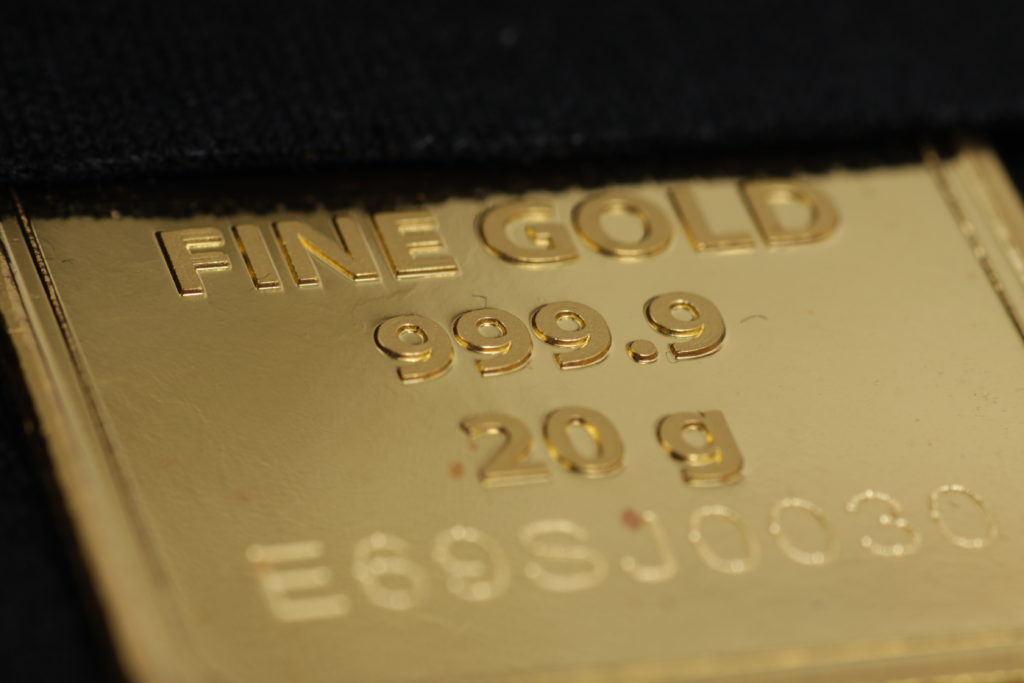
Stock image.

Britain’s financial regulator on Monday said it was seeking views on whether tokenising gold could improve how it is traded, transferred, pledged and held in the UK markets.

The Financial Conduct Authority said it will seek views on whether tokenising gold could boost efficiency and competitiveness, while maintaining market integrity and protecting consumers until its October 23 deadline.

The FCA said it was exploring gold tokenisation in line with its wider work on the future of tokenisation in UK wholesale financial markets and was looking at the potential for distributed ledger technology (DLT) to support new growth opportunities.

In May 2026, the FCA published a joint call for input with the Bank of England on the future of tokenisation in UK wholesale markets. Respondents raised gold specifically, reflecting London’s position as the world’s largest centre for spot gold trading. The FCA said this feedback prompted it to explore tokenised gold in greater detail.

Gold tokenisation could make gold easier to transfer and use across digital markets, particularly as wholesale collateral, the FCA said, adding that it could also support new forms of retail investment and product innovation.

London is home to the world’s largest over-the-counter gold trading hub, where participants trade directly with one another rather than via an exchange.

“We want to understand whether tokenisation could strengthen the efficiency and competitiveness of UK wholesale markets while preserving the strengths of London’s existing gold-market infrastructure,” the FCA added.

(Reporting by Prerna Bedi in Bengaluru and Polina Devitt in London;Editing by Nivedita Bhattacharjee amd Toby Chopra)


Congo copper exports hit record levels as sales to US and Europe double


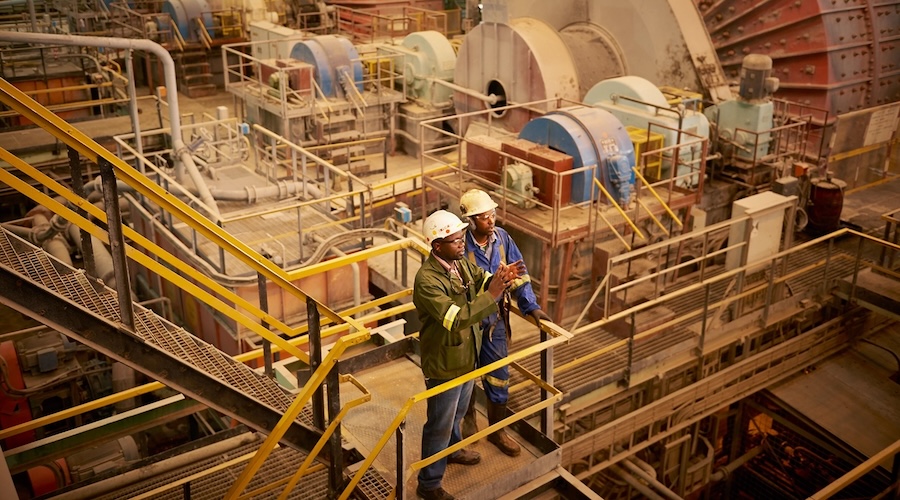
Copper-cobalt mine in DRC. (Image courtesy of Kamoto Copper Company.)

Democratic Republic of Congo’s copper exports hit a record 1.72 million metric tons in the first half of 2026, while the share shipped to the United States and Europe doubled from 2025 levels as Kinshasa pushed to diversify critical mineral exports away from China, an official report seen by Reuters showed.

Congo, the world’s largest cobalt producer and second-largest copper producer, is at the centre of a global race for critical minerals. Chinese companies including CMOC (SHA: 603993), Huayou Cobalt (SHA: 603799) and Zijin (SHA: 601899) dominate much of the sector, while the United States and European Union have stepped up efforts to secure alternative supply chains.

Copper exports rose to 1,724,217 tons in January to June from 1,650,189 tons a year earlier, according to the mines ministry’s first-half mining statistics report. Cobalt exports fell 6.4% to 41,140 tons from 43,930 tons, reflecting export quotas imposed by Kinshasa.

Congo’s ‘diversification offensive’

Since signing a strategic minerals partnership with Washington in December 2025, state miner Gecamines has used offtake arrangements with traders Mercuria and Glencore (LON: GLEN) to market its share of copper from major mines, including Chinese-linked operations, to alternative markets.

“The first half of 2026 was marked by the implementation of the export diversification offensive,” the report said.

The share of copper sales destined for the United States and Europe doubled from 2025 levels as Congo sought to reduce its dependence on Chinese trade channels and monetise stakes in Tenke Fungurume Mining, Kamoto Copper Company and other ventures, the report said. It did not provide sales volumes.

Congo’s mines ministry did not immediately respond to requests for comment.

Congo also banned exports of copper and cobalt concentrates in June, although first-half exports of copper concentrate still totalled 151,202 tons, containing 50,629 tons of copper.

Eurasian Resources Group’s Frontier Mining, Chinese-owned Kinsenda Copper Company, Everbright Mining and Sabwe Mining were the largest exporters of copper concentrates.

CMOC’s Kisanfu mine was the largest exporter of cobalt hydroxide, shipping 24,825 tons, ahead of Glencore’s KCC and ERG’s Metalkol, the report showed.

(Reporting by Fiston Mahamba and Maxwell Akalaare Adombila. Editing by Mark Potter)

Chinese Solar Panels Drop to 12 Cents a Watt, Rooftop Installs Surge Worldwide

  • Chinese solar panels have fallen to just $0.12 per watt, fueling a global boom in cheap distributed solar for homes, businesses and factories.

  • Emerging markets are leading the surge, with India adding record capacity, Philippine rooftop solar nearly doubling and Africa heading for a record 17 GW of installations in 2026.

  • Rooftop solar is booming in developed markets too, with panels on more than 4.3 million Australian properties and plug-and-play systems gaining traction across Europe.

Chinese-made photovoltaic panels cost 12 cents a watt in 2026, down from $5-$6 at the turn of the millennium, and that price collapse is now powering rooftop solar installations from Pakistani cement plants to Philippine homes and Australian suburbs, according to the Financial Times. A Pakistani cement giant has cut its power costs by up to 40% with solar at its production sites, and rooftop solar capacity in the Philippines has nearly doubled in a year. At the same time, Africa is on pace to install record gigawatts, and Australia has installed panels on more than 4 million homes. Previously, we reported that India is on track to become the first country ever to industrialize using solar energy instead of fossil fuels such as coal and oil, thanks to rapidly falling solar costs, generous government subsidies and favorable geographic factors. Last year, India added a record-breaking 44 GW of solar power, taking its installed solar capacity to 154 gigawatts with projections that solar will meet half of the country’s electricity demand growth through 2030. However, India is hardly the only country that’s betting big on solar. The wide availability of cheap Chinese photovoltaic panels is fueling the rapid rise of small-scale, individual power generation for homes, businesses and factories across the globe, in both developed and emerging economies.

Pakistan's Bestway Cement Limited, one of the country's largest cement manufacturers, is deploying ground-mounted solar farms across five production units to cut its reliance on Pakistan's unstable power grid. At its Chakwal plant, 26 MW of installed photovoltaic capacity already generates over a quarter of the electricity powering the facility.

“It’s the only way we can compete,” says Abdul Waheed, GM at the Chakwal plant, according to the Financial Times. “Our rivals have already gone in this direction.” The Chakwal facility produces over 3 million tonnes of cement per year.

Distributed solar is seeing major growth in regions where power is scarce, unreliable or expensive. Ember estimates that rooftop solar capacity in the Philippines almost doubled over the 12 months to April, with residential solar panels now able to pay for themselves in just over three years. Meralco, the country’s electricity distributor, estimates that rooftop solar in the Philippines generated 372 gigawatt hours in the first half of 2026 alone.

Likewise, Ember projects that Africa is on track to install a record 17 gigawatts (GW) of solar capacity in 2026, good for a robust 45% Y/Y increase, with about three-quarters of this growth driven by distributed, small-scale systems on commercial and industrial rooftops.

Decentralized solar is proving to be a major hit in India, too. Launched in February 2024, India's government-sponsored rooftop solar program has put panels on more than 5.5 million homes and is adding roughly 500,000 more each month. With an initial budget of roughly $9 billion, the scheme transfers Central Financial Assistance (CFA) directly into the homeowner's bank account within 30 to 45 days of inspection, based on installed capacity, and the government has partnered with banks to offer collateral-free, low-interest loans covering part of the installation cost for lower-income families. The program also uses net metering, letting homes sell excess solar power back to the grid.

But developed countries are also benefiting, as we’ve seen with Australia, which currently leads the world in rooftop solar adoption, thanks to an overabundance of sunshine, high electricity costs and strong government incentives. Over 4.3 million homes and small businesses in the country (~43% of total) have solar panels, making it the highest per-capita adoption rate worldwide and double the runner-up and nearly 10 times the global average. Australia’s total rooftop solar capacity recently reached 28.3 GW, outstripping the country's coal-powered generation, which stands at roughly 22.5 GW. However, such a high level of solar adoption can also lead to major grid instabilities, as Australia is now finding out.

Meanwhile, plug-and-play solar (aka balcony solar or plug-in solar), has become a big thing in Europe. These panels allow users to generate electricity by mounting a small panel and plugging a microinverter directly into a standard household wall socket. Great Britain officially legalized plug-in solar systems in August this year, permitting a maximum AC output of 800W connecting directly to standard wall sockets.

By Alex Kimani for Oilprice.com


China aluminium output hits record high in August with capacity cap in sight


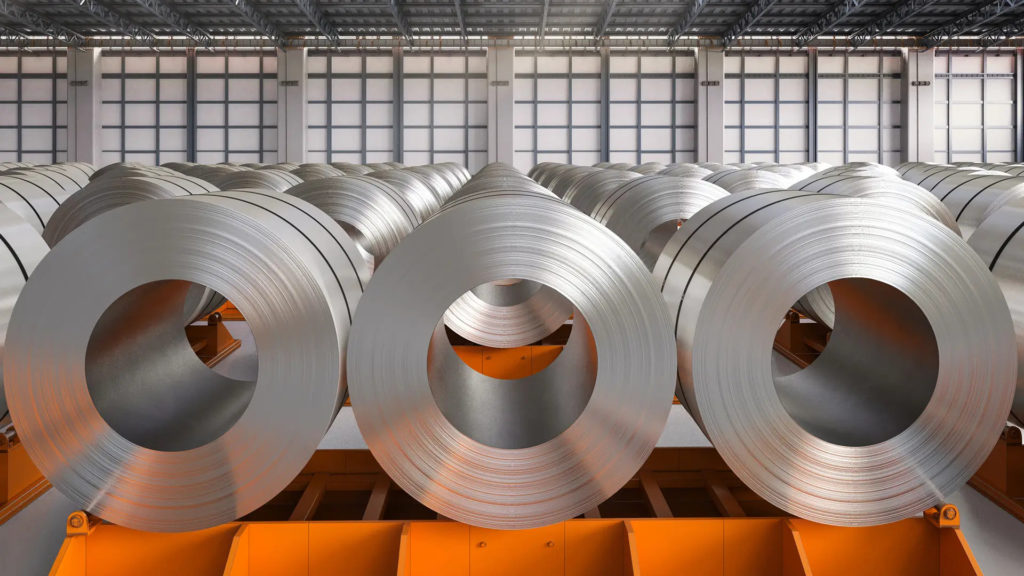
Aluminum ingots. Stock image.

China’s aluminium production hit a record high in August, data showed on Tuesday, as strong margins encouraged smelters to maximise output despite a longstanding national capacity cap.

Production rose 4.7% from a year earlier to 3.98 million metric tons, data from the National Bureau of Statistics showed.

Output in the world’s top aluminium producer increased from just below 3.9 million tons in July and was close to the previous monthly high of 3.979 million tons recorded in June.

In the first eight months of the year, China produced 31.12 million tons, up 3.9% from the same period last year.

At that pace, output would annualise at about 46.7 million tons, well above the country’s 45-million-ton capacity ceiling. China has maintained tight controls on aluminium smelting capacity since 2017.

China produced 45.02 million tons of primary aluminium in 2025, up 2.4% from a year earlier.

Higher output has been supported by strong margins amid higher prices following supply disruptions in the Middle East by the war.

Benchmark three-month aluminium CMAL3 gained nearly 8% so far this year, and was up 1.82% in August.

Production of 10 nonferrous metals, including copper, aluminium, lead, zinc and nickel, rose 1.6% from a year earlier to 7.1 million tons in August. Output of the 10 metals in January-August increased 2.9% to 55.58 million tons.

(Reporting by Dylan Duan and Lewis Jackson, Editing by Louise Heavens)


Metalshub, Hindalco launch digital bidding process for spot alumina sales

Digital platform Metalshub said on Tuesday it has partnered with Hindalco Industries (NSE: HINDALCO) to launch a digital tendering process for spot alumina sales, with the first tender expected between October and December 2026.

Hindalco partnered with Germany-based Metalshub to use structured, competitive digital bidding for metallurgical-grade alumina spot sales.

Alumina, the main raw material used to make aluminium, is mostly sold through long-term contracts rather than on the spot market. Spot assessments are often based on surveys, not confirmed transactions, Metalshub said.

The companies said the process would allow a wider pool of qualified buyers to submit confidential bids through competitive request-for-bid events.

The platform generates transaction data from competitive bidding, the release said, adding that digitalisation has increased liquidity and improved commercial outcomes in markets including lithium and industrial minerals.

Metalshub is also working with the London Metal Exchange and Commodity Pricing and Analysis Ltd (CPAL) on transaction-based price discovery for critical raw materials, including alumina, it said.

(Reporting by Vedika Thorat in Bengaluru; editing by David Gaffen)


Guinea discussing alumina, energy investments with Glencore after bauxite deal, minister says


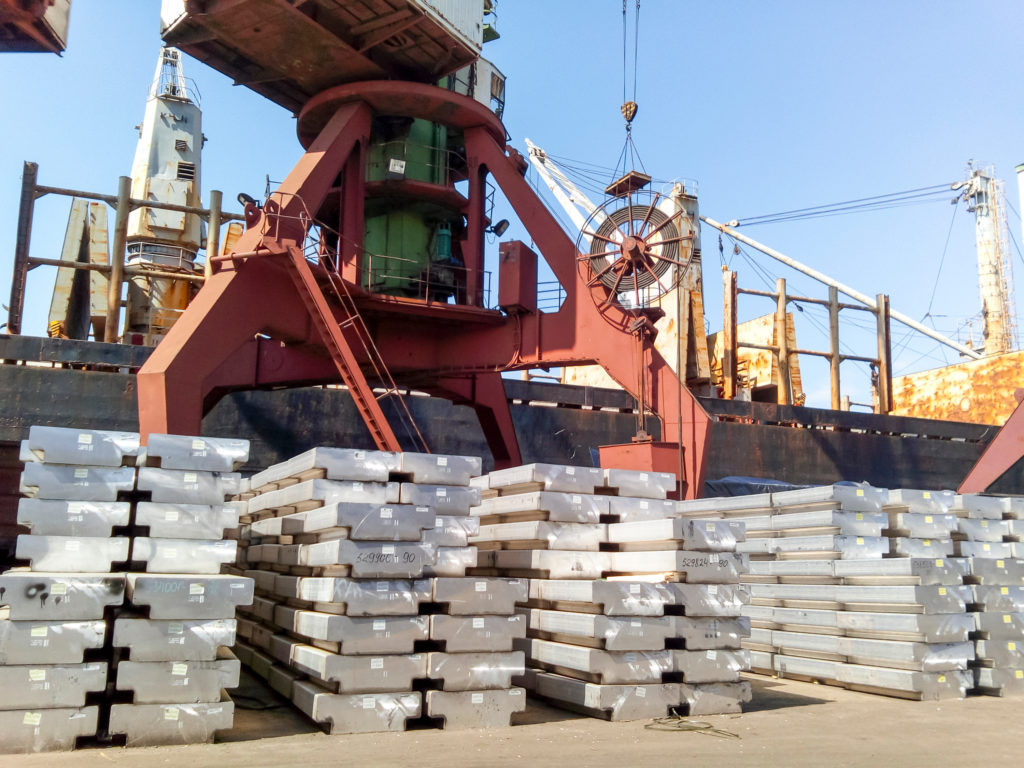
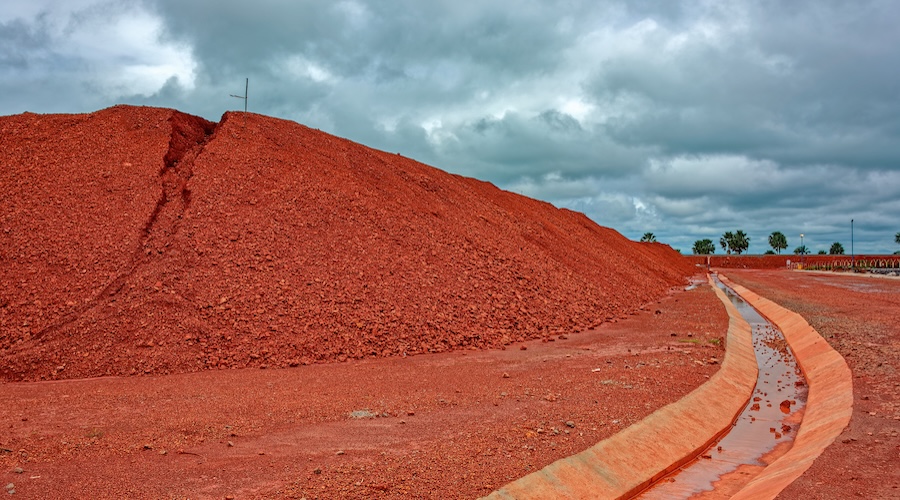
Large piles of bauxite ore sit at a treatment area storage in Guinea. (Stock image by Igor Groshev.)

Guinea is discussing investment opportunities with Glencore (LON: GLEN) in alumina refining and energy projects beyond last week’s bauxite marketing deal, its mines minister said, as it seeks to diversify its funding sources and export markets beyond China.

Guinea’s state-owned Nimba Mining and diversified miner and trader Glencore last week signed a more than $300 million bauxite pre-financing and offtake agreement, giving Glencore a significant foothold in Guinea, home to some of the world’s largest bauxite reserves.

Under the terms of the deal, the Swiss commodities giant will market 10-12 million metric tons of the aluminium feedstock annually over the next five years, the companies said.

Guinea’s Mines Minister Bouna Sylla said the agreement could be a springboard for Glencore to invest more broadly across the country’s aluminium sector as Conakry pushes to develop domestic processing capacity.

“Glencore has indicated strong interest in growing its business in Guinea, and we are equally interested in expanding the partnership,” Sylla told Reuters over the weekend.

“Based on this agreement, we will develop the partnership with Glencore beyond bauxite, including alumina refining, energy and other strategic investments.”

Glencore declined to comment further.

More than 70% of Guinea’s bauxite exports go to China

Guinea overtook Australia as the world’s largest bauxite producer in 2023 and began iron ore exports from the giant Simandou project in 2025.

More than 70% of its bauxite exports go to China, while Chinese-linked firms hold a controlling interest in Simandou. The project’s other owner is Rio Tinto (LON, ASX: RIO), with which Glencore held merger talks earlier this year.

Sylla said the Glencore agreement and the recent settlement of a long-running dispute with Middle East aluminium and alumina producer Emirates Global Aluminium fit into a broader strategy to diversify partnerships while maintaining strong ties with China.

“China remains an important partner, but Guinea also wants stronger links with the Middle East and other regions,” he said.

(Reporting by Maxwell Akalaare Adombila; Editing by Clara Denina and Jan Harvey)


Dangote Prices Africa's Biggest IPO at $47 Billion


Aliko Dangote launched Africa's largest share sale on Monday, offering 4.1 billion shares of his Nigerian oil refinery at 525 naira each. The offer runs through Oct. 13 and would raise $1.6 billion if fully subscribed, or as much as $2.1 billion if the company exercises its greenshoe option. The sale values the refinery, which processes 700,000 barrels of crude a day, at roughly $47 billion.

The refinery has benefited financially from supply disruptions linked to the Iran war, which increased demand for its jet fuel across Africa and Europe. It reported an after-tax profit of $1.82 billion for the first half of 2026, compared with a $476 million loss for all of 2025.

Dangote will use the proceeds toward a $14.3-billion expansion that would double the refinery's capacity to 1.4 million barrels a day by 2029. The ~$20-billion plant outside of Lagos has supplied most of Nigeria's domestic gasoline since starting operations in 2024.

Dangote has marketed the offer to ordinary Nigerians, who can buy as few as 10 shares through fintech platforms. Lagos business owner Chris Chijioke told Reuters he would buy 2,000 shares but called the offer "overvalued," citing the risk that the expansion could be delayed. Journalist Ibrahim Abubakar said he would take about 2,850 shares because he considers the refinery "too big to fail."

UAE state oil company ADNOC has expressed interest in investing in the refinery, though terms haven't been disclosed. Dangote is separately in talks to build a $17 billion refinery on Kenya's Lamu Island, offering equity stakes to Kenya and other East African governments; Kenya's 10 percent share alone would be worth $500 million.

Dangote has said he expects demand for the IPO to mirror a July private placement that was 3.7 times oversubscribed.

By Charles Kennedy for Oilprice.com

 U.S. Oil Inventories Jump as Cushing Stocks Keep Falling

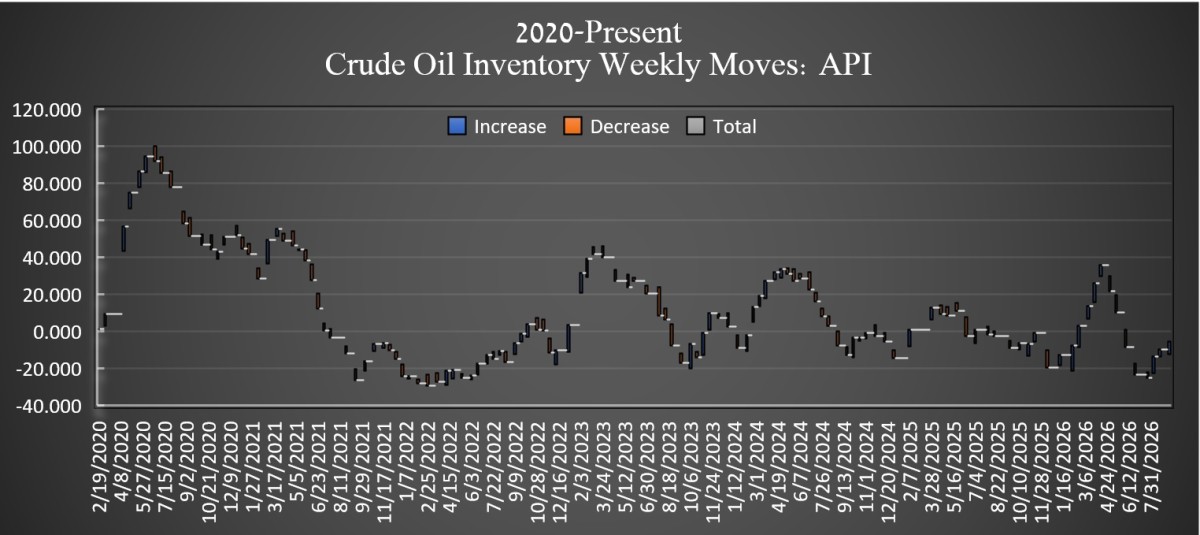
The American Petroleum Institute (API) estimated that crude oil inventories in the United States rose by a very large 7.14 million barrels in the week ending September 11. In the week prior, US crude oil inventories fell by 300,000 barrels.

Commercial crude oil inventories excluding the SPR have lost just over 41 million barrels over the last 22 weeks, with US crude inventories up nearly 10 million for the year, according to API data, kept in check by draws from the SPR.

For the week ending September 11, another 400,000 barrels left the SPR to aid commercial inventories, bringing the new total inventory held in the SPR to 285 million barrels—a level that is 446 million barrels shy of maximum capacity.

The generally accepted operational minimum for oil in the SPR is between 250-300 million barrels, below which the reserve may find it difficult to pump and process oil efficiently.

US production for the week ending Sept 4 rose to 13.947 million bpd, up from 13.862 in the week prior, and up 452,000 bpd from a year earlier.

At 4:13 pm ET on Wednesday, Brent crude was trading up on the day at $108.68 (+2.84%), a more than $7 per barrel gain week over week.

WTI was also trading up on the day, by $3.83 per barrel (+3.70%) at $107.38, up roughly $11 per barrel from this time last week.

Gasoline inventories rose 1.46 million barrels in the week ending September 11. In the week prior, gasoline inventories fell by 1.9 million barrels. In the week prior, gasoline inventories were 5% below the five-year average for this time of year, according to the latest EIA data.

Distillate inventories gained 1.61 million barrels, on top of the 2-million-barrel gain in the week prior. Distillate inventories were 13% below the five-year average heading into this reporting period, the latest EIA data shows.

Cushing inventory—the inventory kept at the delivery hub for the WTI Crude futures contract—fell by 246,000 barrels over the reporting period after falling by 300,000 barrels in the week prior.

By Julianne Geiger for Oilprice.com