Wednesday, July 29, 2026

Kyrgyzstan hit by highest number of mudslides in decades amid glacier melt

Kyrgyzstan hit by highest number of mudslides in decades amid glacier melt
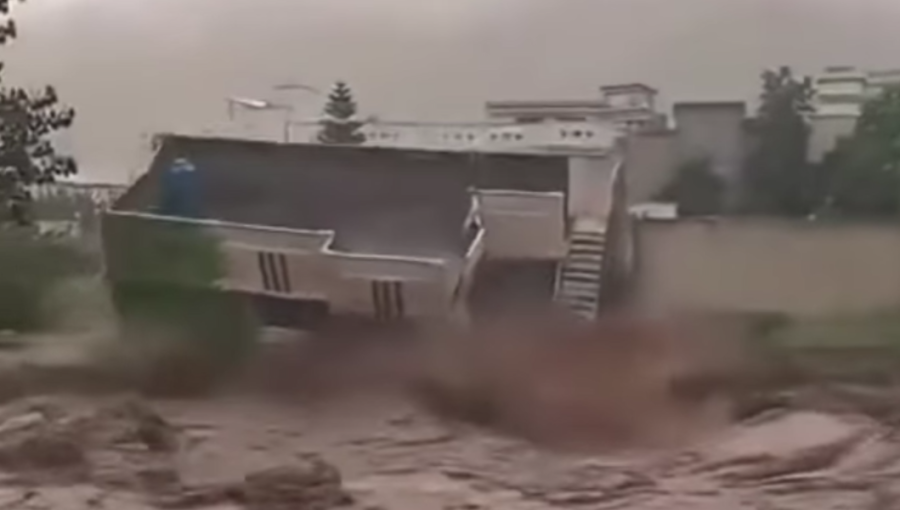
A building in Batken Region topples in a disaster brought about by mudslides and flash floods caused by torrential rains in mid-June. / topclimate2024, social mediaFacebook
By bne IntelliNews July 29, 2026

Amid the climate crisis and glacier melt, mountainous Kyrgyzstan recorded 348 mudflows in the first half of 2026, the highest total in 30-40 years. Eight people lost their lives in the local disasters.

The number of mudslides is also nearly five times the roughly 70 recorded in the same period of 2025, according to the Ministry of Emergency Situations and state hydrometeorological service Kyrgyzhydromet. As well as the fatalities, three people were recorded as injured and damage amounting to an estimated Kyrgyzstani som (KGS) 399mn ($4.56mn) was caused

The mudflows damaged 668 hectares of farmland and prompted the evacuation of 236 people from hazardous areas. The deadliest single incident struck the Osh-Alay highway, where a mudflow swept a vehicle from the road killing six.

Batken, Jalal-Abad, Osh and Talas regions have proved the most vulnerable to mudflows, with many roads, bridges and residential buildings destroyed.

Officials linked the surge to several overlapping factors, according to The Times of Central Asia’s report on the mudflow mayhem. Those factors were outlined as intense localised downpours, earlier snow and glacier melt, settlement expansions into hazardous mountain valleys, inadequate protective infrastructure, pasture degradation and forest loss. Kyrgyzhydromet estimates the glacial area in the country has declined by around 16% in recent decades, with retreating glaciers forming new high-altitude lakes that become increasingly vulnerable to incidences of burst banks, causing floods during intense rainfall or rapid melt events.

Despite the record mudflow count, the death toll was significantly lower compared to the 25 fatalities caused by mudslides last year. The ministry attributed the fewer deaths to the provision of earlier warnings, more effective evacuations and expanded preventive measures.

Kyrgyzstan is developing AI-based forecasting tools for glacial lake-burst floods in the Tian Shan mountains with KG Labs and international partners. The ministry already operates a separate AI system monitoring high-altitude lakes.

The high-risk season for mudslides typically extends into autumn, meaning mountain communities and transport corridors will be exposed for several more months.


Record low water levels halt Danube shipping

Record low water levels halt Danube shipping
/ IntelliNewsFacebook
By IntelliNews July 29, 2026

The Danube's water level in Budapest fell to 26cm on July 28, breaking the previous record low of 33cm set in 2018 and the river’s flow rate is round 60% below its average level.

The drought affecting the broader region has brought water freight transport to a halt on much of the Danube, which is also negatively impacting tourism, business online VG.hu writes. The crisis is exposing Hungary's long-standing vulnerability to climate-driven water shortages

Authorities said the prolonged heatwave affecting both the Alps and the Carpathian Basin, combined with the lack of meaningful rainfall across the Danube and Tisza catchments, means water levels are expected to decline in the coming days. Forecasts suggest little immediate relief, as another heatwave develops over the region, with temperatures expected to reach 40 degrees in the coming days.

The Danube, one of Central Europe's most important inland transport corridors, linking Germany and Austria with the Black Sea, serves as a vital export route for Hungary's agricultural sector. Much of the country's wheat, maize and oilseed harvest is transported by barge to Romania's Port of Constanța before being shipped to global markets.

With river depths in several sections falling below navigable levels, barges carrying grain are operating with 20-40% less cargo than normal, while some vessels have been forced to reduce loads to just 10-20% of capacity. The lower utilisation has sharply increased transport costs as more voyages are required to move the same volume of goods.

Although exporters can switch to rail or road transport, these alternatives are significantly more expensive and could erode the competitiveness of Hungarian grain on international markets, Botond Szalma, chairman and CEO of logistics company Plimsoll Ltd, which specialises in international freight transport, told VG.

The situation is being compounded by broader regional pressures. Ukraine has increasingly relied on Danube shipping routes after Russia's attacks on Black Sea port infrastructure reduced the country's maritime export capacity. Restrictions at Russia's Black Sea port of Novorossiysk and ongoing security risks in the region have redirected additional freight to the Danube, further straining an already-constrained transport corridor.

Fuel logistics have also been affected. Barges carrying petroleum products from Austrian, Slovak, and downstream Danube refineries have reportedly been delayed, raising concerns that smaller fuel distributors in Hungary could face supply disruptions if low water levels persist.

Industry representatives argue the crisis highlights a structural weakness unique to Hungary. Unlike much of the upper Danube, where a network of dams and navigation locks regulates river levels, Hungary's section of the river remains undammed following the abandonment of the Bos-Nagymaros hydroelectric project after the fall of communism.

Logistics experts say this leaves the country particularly exposed during prolonged droughts, with ports becoming inaccessible and freight operations grinding to a halt whenever river levels fall sharply.

In several stretches of the river, vessels can no longer navigate safely, forcing operators to leave ships waiting for higher water levels.

Around Budapest, sightseeing boats and hydrofoil services have been running reduced schedules, while several international cruise operators have cancelled or shortened itineraries, transferring passengers by bus instead.

The worsening drought has also intensified concerns about Hungary's broader water management strategy. Opposition politicians and agricultural organisations argue that the country is no longer facing occasional droughts but a structural water crisis driven by climate change, pointing to years of below-average rainfall and declining groundwater levels across the Great Plain.

The government has acknowledged the growing challenge, establishing a National Water Coordination Centre earlier this year to coordinate drought mitigation efforts and expanding programmes aimed at retaining water in wetlands, canals and floodplains rather than allowing it to drain out of the country.

Critics argue these measures remain largely reactive and fall short of the large-scale infrastructure investments needed to adapt Hungary to increasingly frequent periods of extreme heat and prolonged water scarcity.


Taliban's homegrown drone programme outpaces Pakistan's defences

Taliban's homegrown drone programme outpaces Pakistan's defences
Afghanistan's rulers are building an air force from black-market parts, and the fallout is spreading to militant groups and Central Asia's borders alike. / bne IntelliNewsFacebook
By Ben Aris in Berlin July 28, 2026

The Afghan Taliban's growing investment in drone technology is a direct response to their lack of a conventional air force, and Pakistan's defence establishment — built around fighter jets, tanks and artillery — is struggling to keep pace, Umair Jamal of the Diplomat Risk Intelligence consultancy argued in a Central Asia-Caucasus Institute analysis published on July 28.

The build-out matters beyond Afghanistan's borders because cheap, dual-use drone technology is proving almost impossible to contain once it spreads: it is already showing up in the hands of the Pakistani Taliban (TTP), and Russia's own push to build a formal partnership with Kabul gives it a stake in the fallout. Pakistan's conventional defences are struggling to respond, fuelling a wider proliferation risk for the region, including Central Asia.

From propaganda tool to weapon

Since returning to power in August 2021, the Taliban have faced a lack of a functional air force and heavy international sanctions, turning to drones as a cost-effective substitute for surveillance in the new asymmetrical wars. According to ACLED data, the Taliban first used drones militarily in February this year, with at least 12 recorded cross-border strikes into Pakistan, some reaching deep into Pakistani territory — platforms that Jamal says began as propaganda tools before evolving into weapons.

The Taliban are also building domestic production capacity, with front companies such as Dinit Technology reportedly offering contracts to engineers and robotics experts, and recruitment drives targeting university drone projects. The Daily Mail has reported the group is using a former UK Special Air Service base in Logar province as its main test site, sourcing GPS modules, motors, flight-control systems and sensors from black markets and smuggling networks in the absence of any formal state supplier relationship. The low tech and back engineered approach to building drones has already been pioneered by Iran after the US imposed sanctions on the country several decade ago.

Facing similar isolation, Iranian engineers turned Western sanctions into an innovation engine, reverse-engineering commercial parts into the cheap, mass-producible Shahed-136 — a process IntelliNews dubbed the "bazarification of war", where cost-effective, workshop-built drones now outcompete billion-dollar conventional systems. The Taliban's black-market parts sourcing and university recruitment drives suggest the same playbook — cheap mass production defeating sophistication — is now spreading to a second sanctioned, isolated actor.

The TTP has already taken the same path

The Pakistani Taliban (TTP) formally announced its own dedicated "Air Force" unit in December 2025, reflecting an operational reality already under way: Pakistan's Inter-Services Public Relations data recorded more than 400 quadcopter and drone-related militant incidents in late 2025 alone. Commercial, suicide and quadcopter drones costing as little as $200-$1,000 per unit let the TTP run saturation attacks that overwhelm Pakistan's conventional electronic jamming and physical defences, which were built to intercept far more expensive, higher-value threats.

In Khyber Pakhtunkhwa province, police say commercial drones are now routinely used to surveil security convoys and guide suicide attacks, forcing a shift toward dedicated counter-drone units, a new drone-training school in Nowshera, and delivery of 76 AI-powered surveillance drones. Provincial police say they foiled 341 TTP drone attacks in the six months to July using this modernised approach.

Pakistan's defence doctrine and procurement have historically prioritised fighter jets, tanks and artillery, leaving a structural gap against low-cost, asymmetric drone threats. That lag has left Islamabad reliant on ad hoc measures and international partnerships for electronic warfare, radar and drone-jamming capability tailored to the current threat — a mismatch that mirrors, on a smaller scale, the drone-versus-air-defence dynamic already reshaping Russia's war in Ukraine, where cheap drones have repeatedly proved effective against better-resourced conventional forces.

A regional proliferation risk, including for Central Asia

The core difficulty, Jamal argues, is that cheap, dual-use drone technology is far easier to acquire and modify than advanced weapons systems, and international export-control regimes have limited ability to stop components moving through commercial black-market channels. If the Taliban's programme keeps advancing, expertise and parts could spread further to militant factions operating from Afghan soil, complicating counter-terrorism efforts well beyond the Pakistan border.

That risk lands directly on Russia's own regional interests: Moscow signed a military-technical cooperation agreement with the Taliban government in May, explicitly citing concern over Afghanistan's porous borders with Tajikistan, Uzbekistan and Turkmenistan and the risk of groups such as Islamic State Khorasan Province (ISKP) exploiting them. A more heavily armed, drone-capable Taliban cuts both ways for Moscow's calculus: a useful partner against ISKP, but also a less predictable neighbour to Central Asian states Russia considers its own strategic backyard.

UAE-Supplied Drones Still Target Civilians in Sudan Despite EU Condemnation

“It’s really the bare minimum to call out the actors involved … the EU should be doing a lot more,” said an expert.

By Mat Nashed
July 28, 2026


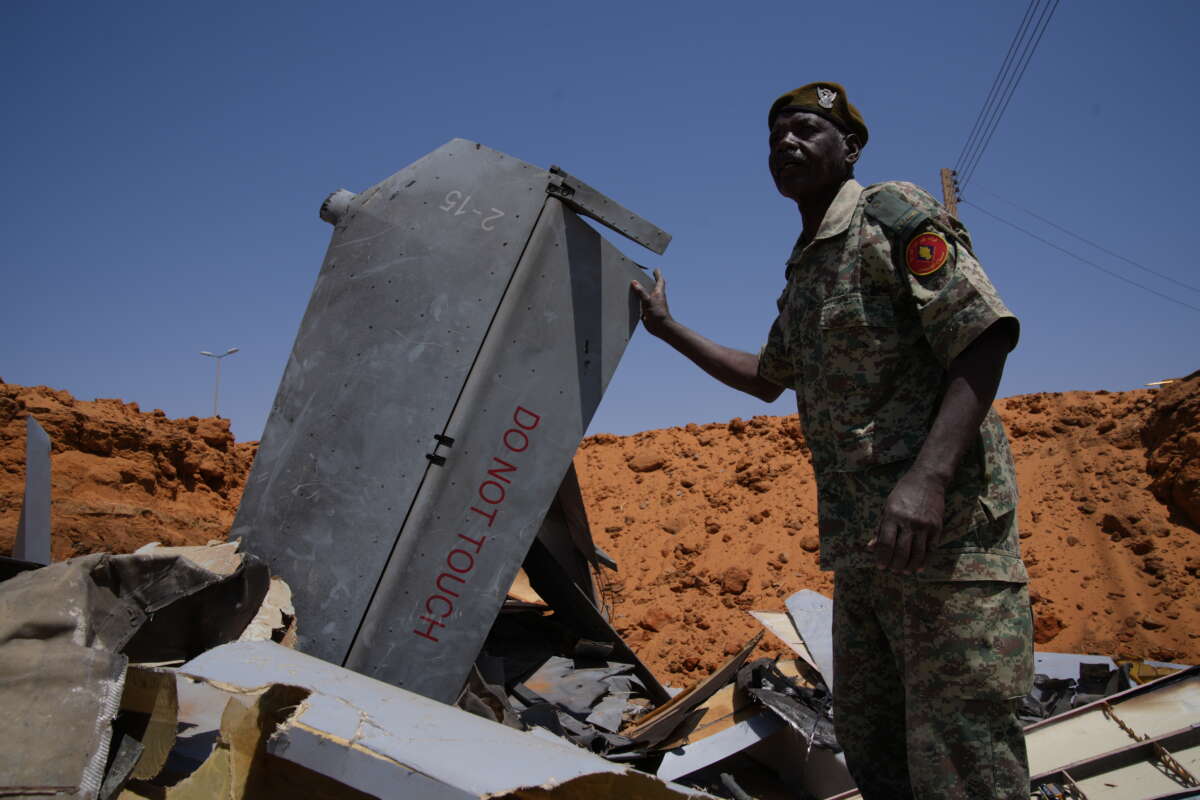
A man stands in a crater filled with drone components on March 29, 2026, in el-Obeid, Sudan.Faiz Abubakr / Los Angeles Times via Getty Images

On July 9, the European Parliament passed a resolution that condemned the United Arab Emirates (UAE) for supporting a violent Sudanese paramilitary responsible for war crimes and other atrocities.

The resolution demanded urgent action to stop the Rapid Support Forces (RSF) from invading el-Obeid, a strategic city in central Sudan at risk of mass atrocities. It called for an end to all “external interference” — singling out the UAE — including the “financing, arms supply or other support” to the RSF.

“Of course, the UAE will be annoyed,” said one European diplomat, who was not authorized to comment on the record, to Truthout. “But they are accustomed to dealing with PR issues. Over the last three years, they have been dealing with a lot of PR issues [regarding their role] in Sudan.”

Since Sudan’s civil war erupted in April 2023, the UAE has provided diplomatic and military support to the RSF, which is at war with the Sudanese Armed Forces (SAF), the national army.

Both the RSF and SAF have committed harrowing abuses such as summary executions and torture. The RSF has also subjected women and girls to systemic sexual violence and perpetrated crimes that “constitute distinct markers of genocide,” according to a recent United Nations probe.


In Sudan, Perpetrators of War Crimes Are Rewarded While Civilians Languish
War criminals, tyrants, and their enablers have rarely faced consequences, helping maintain a cycle of abuses. By Mat Nashed , Truthout June 3, 2026


Due to the RSF’s brutal violence, the UAE denies backing the group, seeking to portray itself as a regional trailblazer for progress and development. However, UN experts, human rights groups, and media outlets have documented its extensive support for the RSF, including the shipment of cheap Chinese-made drones and Chinese artillery. The UAE also uses shell companies to hire Colombian mercenaries to fight alongside the RSF.

While the EU resolution serves as another blow to the UAE’s reputation, it won’t stop the wealthy Gulf nation from supporting the RSF, say analysts and human rights advocates.

“Whenever the UAE gets called out, then they tend to double down,” said Kholood Khair, an analyst on Sudan and the founder of the Confluence Advisory think tank.
Symbolic Victory?

The resolution hasn’t changed the situation on the ground for civilians. In el-Obeid, some 500,000 civilians are living under a partial RSF siege, surrounded from the south and west.

SAF recently captured villages around el-Obeid and reopened a second vital supply line to the city.

As of now, civilians can only leave the city from the east and north, but the roads are dangerous. RSF drones threaten to hit any convoy that it believes carries material support for SAF.

The RSF launched at least 15 drones that killed 45 people over a span of three weeks in June, according to the UN Human Rights Office. The attacks have continued throughout July, hitting fuel tankers, water infrastructure, and electricity grids, and causing acute shortages of food and drinking water and widespread blackouts.

“Drones are still targeting civilians all over Sudan … what’s needed is [global] pressure to halt UAE supply lines to the RSF,” said Yahiya, a local relief worker in el-Obeid who requested a pseudonym due to the hostile security situation.

According to human rights groups and media reports, the UAE uses its financial leverage over regional partners — Chad, Libya, South Sudan, and Ethiopia — to funnel weapons and fighters to the RSF.

The EU’s latest sanctions banned all conflict gold smuggled out of Sudan. Both the RSF and the SAF financed their war efforts by selling billions of dollars’ worth of gold to the UAE, making the Emirates a key hub in Sudan’s war economy.

The UAE provides additional logistical, diplomatic, and financial support to the RSF.

Echoing Yahiya’s call, a recent report by Human Rights Watch urges the EU to take concrete steps against the UAE. Its recommendations include imposing targeted sanctions against UAE-linked companies that hire Colombian mercenaries, who are first covertly trained in the UAE and then deployed to Sudan.

Human Rights Watch also called on EU states to suspend all defense and military cooperation with the Emirates.

Yet Jonas Horner, an expert on Sudan with the European Council on Foreign Relations, said that EU members are unlikely to agree on punitive measures because some states fear jeopardizing their extensive economic ties with the UAE.

The two sides have roughly $328 billion in mutual investments. What’s more, EU foreign policy decisions require a consensus among all 27 EU member states. This makes it nearly impossible to pass punitive measures against a lucrative and strategic partner like the UAE.

“[The EU resolution] is as much a statement of the limitations of European diplomatic heft in the Gulf as it is a statement of Emirati confidence,” Horner told Truthout.
How Will the UAE React?

No evidence indicates the UAE has dialed back support to the RSF since the resolution was passed.

On July 22, local media reported that an attack believed to be carried out by the RSF killed 22 people in the town of Rahad, near el-Obeid. The group has also reportedly sent reinforcements toward the south of el-Obeid, fueling fears that it is preparing a major ground offensive that could lead to mass atrocities.

On the diplomatic level, Khair said that the Emirates may play up Iran’s relationship with SAF to win support from western capitals.

Tehran historically has links with members of Sudan’s Islamic Movement, some of whom hold powerful positions within SAF. During Sudan’s latest war, Iran restored diplomatic ties with SAF before sending weapon shipments of Mohajer-6 combat drones.

Given the U.S.-Israeli war on Iran, the Emirates could frame RSF as thwarting Iran’s regional influence. That would bestow the RSF with even more impunity to carry out atrocities.

“The regional conditions are perfect for the UAE to say that, ‘you know, what’s happening in Sudan may be bad, but it would be worse [for the West],’” Khair told Truthout.

Another possibility could see the UAE step up its lobbying efforts across European capitals. The last time the UAE went on a lobbying blitz was ahead of a European Parliament session on Sudan in November 2025.

The UAE reportedly insisted that it was playing a positive role in Sudan by claiming that it was working within established international frameworks to help mediate a ceasefire. It also claimed that its main priority was trying to help alleviate the humanitarian crisis by contributing some $784 million to the UN mission in Sudan.

The blitz worked, prompting EU ministers to omit its name from the ensuing resolution. Khair says that some ministers may have since grown fed up with Emirati officials lying in public — and private — about the UAE’s backing for the RSF.

Still, she stresses that the resolution should not be viewed as a major milestone.

“It’s really the bare minimum to call out the actors involved,” she said. “Really, the EU should be doing a lot more.”


This article is licensed under Creative Commons (CC BY-NC-ND 4.0), and you are free to share and republish under the terms of the license.


Mat Nashed

Mat Nashed is an award-nominated journalist who has covered the MENA region since the Arab Spring. He was previously the feature’s print correspondent for Al Jazeera English and has written and reported for various other platforms, including Newlines Magazine, TIME, The New Humanitarian, the Committee to Protect Journalists, the Carnegie Endowment, and many others. He has extensively covered politics and conflict in the Nile Basin and the Levant.
Ukraine Hits At Iran: In The Caspian Sea, Things Get Even Messier – Analysis


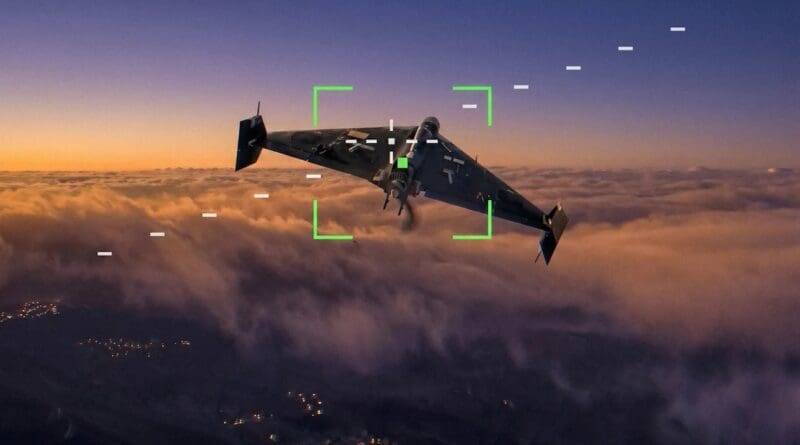
Next-generation autonomous interceptors have successfully passed combat testing in the Kharkiv region. Credit: mod.gov.ua

July 29, 2026
 RFE RL
By Mike Eckel


Key Takeaways:

Ukrainian forces struck Russian and Iranian-linked cargo ships in the Caspian Sea that were allegedly transporting military cargo, marking a significant expansion of Kyiv’s long-range operations against the Iran-Russia military supply chain.

Iran reacted angrily, summoning Ukraine’s diplomat and vowing retaliation, but experts assess Tehran has limited ability to strike Ukraine directly and is more likely to respond indirectly or symbolically while prioritizing its own conflict with the US and Israel.

The attacks further intertwine the Ukraine and Iran wars, complicating efforts by the US to keep the two conflicts separate, while potentially increasing pressure on Iran-Russia logistics and aligning with broader Western interests in disrupting that partnership.


Iranian-designed drones have wreaked havoc for Ukrainian forces battling Russian troops as Moscow took Tehran’s technology and ran with it, supercharging production and deploying drones in devastating droves in its all-out war against Kyiv.

As far as Ukraine is concerned, that makes Iran an indirect combatant. And that means Iranian cargo ships heading to Russia are fair game as far as military targets go.


That’s what happened this weekend in the Caspian Sea, and Tehran is not happy.
Moscow’s 53-month-old invasion has scrambled politics for Europe. The US-Israeli war with Iran has scrambled politics for the Middle East.

So what do Ukrainian strikes on Iranian cargo — or Russian ships — in the Caspian mean for the two wars?

“If the Ukrainians continue doing this, it’s going to obviously make it more difficult for both Iran and Russia,” said Nicole Grajewski, an Russia-Iran expert with Sciences Po, the famed French university. But, she added, “I don’t see this as being a fundamental game changer in the war.”

“The Ukrainian strike against an Iranian ship represents a significant shift in tactics and sends a clear message that Ukraine will not tolerate aggression, regardless of where it originates,” said Luke Coffey, a Russia expert at the Hudson Institute, a Washington think tank.

“I suspect these types of operations will make shipping between Russia and Iran across the Caspian increasingly difficult,” he said.
Tehran ‘Leaves No Action Unanswered’

The circumstances of the July 25 incident are murky.

Ukraine’s main domestic intelligence agency, the SBU, said drones hit a Russian missile boat called the Molnyia, along with two cargo ships it said “were under international sanctions and were used to transport military cargo between Iran and Russia.”

Ukraine had “achieved very strong results with long range strikes in the Caspian Sea, including vessels used in military cargo shipments involving Iran,” Ukraine’s president, Volodymyr Zelenskyy, said in a post to Telegram.

That description points to two Russian-flagged cargo ships called the Port Olya 2 and the Begey, both of which are under international sanctions stemming from the Ukraine war.

It’s unknown exactly what the ships were transporting.

After receiving thousands of Iranian-built kamikaze drones in the initial months after the February 2022, Russia has set up its own assembly plants and added new enhancements to the original Iranian designs.

Iranian authorities reacted angrily to the ship attack, saying one sailor was killed and vowing retaliation. Ukraine’s top diplomat in Tehran was summoned to the Foreign Ministry in protest.

“Zelenskyy has attacked an Iranian commercial vessel, killing a sailor,” Iranian Foreign Minister Abbas Araqchi said in a post on X, calling it “a blatant United Nations Charter violation done at Israel’s behest to drag Europe into its war.”


Kyiv will soon learn that Tehran “leaves no action unanswered,” Ebrahim Azizi, who heads the national security committee in Iran’s parliament, said in another post.

The Kremlin also weighed in, with spokesman Dmitry Peskov telling reporters that the Ukrainian attack should be seen as an attack on Iran itself.

Angry rhetoric aside, it’s unclear to what extent Iran would be able to retaliate.

“Tehran is clearly angry, but it has very limited ability to project military power against Ukraine,” said Saeid Golkar, an expert on Iran’s military who is a professor at the University of Tennessee at Chattanooga.

“If it decides to respond, I’d expect something indirect such as cyber operations, intelligence activity, support for Russian operations, or possibly targeting Ukrainian interests abroad rather than a conventional military strike.”

“It’s not necessarily in Iran’s best interest to bring Ukraine into this conflict, and I don’t think it’s in Russia’s either,” Grajewski said. “The Russians may be putting pressure on Iran to kind of restrain themselves.”

Nate Swanson, who served as Iran director at the White House National Security Council under President Joe Biden, also doubted Iran’s ability to respond in a serious way.

“Iran’s bark is bigger than its bite when it comes to Ukraine,” said Swanson, now a researcher at the Atlantic Council, a Washington think tank.

“While it is possible that Iran undertakes some sort of symbolic response toward Ukraine, I doubt either Ukraine or Iran are looking to open more fronts in their respective wars.”

“Iran’s threats look more like signaling to Russia,” said Mikhail Troiskiy, who heads the Russia and Eurasia Program at the Fletcher School at Tufts University. “Tehran needs expanded support from Moscow, which likely isn’t granting all Iran’s requests for intelligence and equipment.”
It Cuts Both Ways’

The weekend’s attacks were not the first time Ukraine has hit targets in the Caspian.

Russia’s 28-ship Caspian Sea flotilla, which is based near Makhachkala, about 1,300 kilometers from territory still under Ukrainian control, has fired missiles at targets inside Ukraine in the past.

At least 12 Russian warships have previously been struck over the course of the Russian invasion, according to Coffey, though the extent of the damage in many cases was unclear.

Israel — which has conducted its own attacks on Iran in conjunction with US forces — has also hit Iranian targets on the Caspian.


On March 18, about three weeks after the start of the US-Israeli campaign, Israeli jets hit the port of Bandar Anzali, sinking an unknown number of naval ships.

Experts said it was possible Ukrainian forces acted this weekend with the help of Israeli intelligence.

“Strategically, it would make sense,” Golkar said. “Israel has excellent intelligence coverage on Iran, while Ukraine has a strong interest in disrupting Iran-Russia military cooperation.”

Zelenskyy, who was scheduled to meet President Donald Trump at the White House on July 28, was expected to try and portray the Ukrainian strikes as an important addition to the US campaign against Iran.

Zelenskyy was also expected to raise earlier Ukrainian claims that Russia has been supplying Iran with satellite images and other intelligence, helping Iran target US facilities in the Gulf region, including CIA stations.

The timing of the attacks was also likely intentional, Coffey said: to get the attention of the Trump administration.

“I don’t think it complicates matters for the Trump administration. If anything, additional pressure on Iran is likely to be viewed positively,” he said. “I also doubt it’s a coincidence that these strikes against Iranian shipping occurred just days before” Zelenskyy’s White House meetings.

But Kyiv’s efforts to intertwine the two wars may make things more difficult for Washington, Grajewski said.

The Americans “really don’t, for some reason, want to show that the Russians are involved in the [Iran] war,” she said. “So in that sense, yeah, it complicates things because the Ukrainians are coming out and saying that there’s direct Russian involvement.”


The Trump administration “wants to compartmentalize the two wars,” she said. “The more intertwined these two wars become, I think it’s going to be difficult to justify some of the policies coming toward Ukraine and connected to Iran.”

“This cuts both ways,” Golkar said.

“On one hand, disrupting Iran-Russia military cooperation aligns with broader US strategic interests without requiring direct American involvement. On the other hand, it adds another layer of complexity. Washington now has to manage relations with Ukraine, Israel, Gulf partners, and Iran while trying to prevent a wider regional escalation.”


Mike Eckel is a senior international correspondent reporting on political and economic developments in Russia, Ukraine, and around the former Soviet Union, as well as news involving cybercrime and espionage. He’s reported on the ground on Russia’s invasion of Ukraine, the wars in Chechnya and Georgia, and the 2004 Beslan hostage crisis, as well as the annexation of Crimea in 2014.


About RFE RL

RFE/RL journalists report the news in 21 countries where a free press is banned by the government or not fully established.

 dirigibles airships drones grok

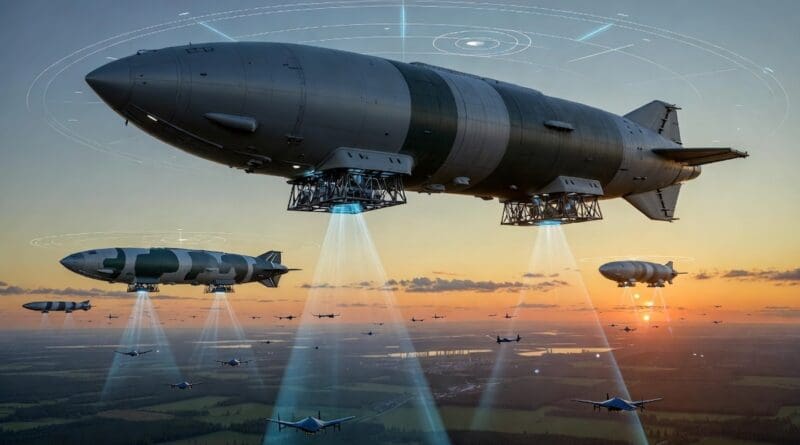
Moscow To Deploy Dirigibles To Better Defend Russia Against Ukrainian Drones – OpEd


One of the reasons drones are so effective is that they fly so low that until they are very close to their targets, they are protected against detection by the curvature of the earth. Ever more countries, the US, Israel and China, have developed dirigibles to raise the  height of radar detectors and allow for the earlier detection of drones and their destruction.

In the face of Ukrainian drone attacks ever deeper into the Russian Federation, Moscow has decided to join them and has now announced the development of airships with a carrying capacity of 30 to 50 tons, allowing them to serve in a military capacity against drones (versia.ru/rossiya-sozdayot-pvo-na-osnove-dirizhablej).

How soon Russia will be able to produce such platforms in large numbers has not been announced and is not yet clear; but developments in this area could be a game changer that would blunt the current advantages those using drones to attack currently enjoy.

Of course, Russian experts concede that dirigibles are not a complete solution. Slow moving, they are easy targets; of limited carrying capacity, they cannot lift large radar arrays and other equipment; and of light weight, they can be thrown off course or even destroyed by high winds.

According to the Versiya news portal, all this means is that dirigibles will fill an important niche but only a niche: “AWACS will retain the role of mobile command posts and  satellites will continue to provide  widespread surveillance” while dirigibles “will serve as inexpensive extended duty platforms.”

In other defense news, the Russian defense ministry has announced that it is postponing even the discussion about the construction of new aircraft carriers until the 2040s, thus pushing back an earlier deadline of 203 for the delivery of such ships (agents.media/rossiya-peredumala-stroit-avianostsy-do-2040-h-godov/).


Senate passes Graham's “hellish sanctions” package during Zelenskiy's trip to Washington in coup for Bankova

Senate passes Graham's “hellish sanctions” package during Zelenskiy's trip to Washington in coup for Bankova
Zelenskiy was in Washington to attend the funeral of the late Senator Graham, as the Senate signed off on his "hellish sanctions" bill in a diplomatic coup for Bankova. / White HouseFacebookTwitter

By Ben Aris in Berlin July 29, 2026

The US Senate passed the “sanctions from hell” package advanced by the late Senator Lindsey Graham on July 29 with an overwhelming majority of 86 to 12 in favour, with Ukrainian President Volodymyr Zelenskiy in attendance.

Zelenskiy was in Washington to visit US President Donald Trump to consolidate on rapidly improving relations between the US and Ukraine after the low water mark of their “you’ve got no cards” clash with Trump in the Oval office in February. Reportedly, Trump has been impressed by Ukraine’s progress on the battlefield this year, and prowess with drone war tactics and technology, after being humbled by the same weapons in his own war in Iran.

The Ukrainian president was in the capital along with Israeli Prime Minister Benjamin Netanyahu for the occasion of Graham’s funeral, who died unexpectedly last week. Graham was one of Ukraine’s biggest advocates in the US government and proposed crushing sanctions that would have imposed 500% tariffs on any country that trades with Russia – especially the sanctions are designed to punish China and India in particular which remain big buyers of Russian oil.

The final package was watered down, reducing the tariff rate to 100% and giving Trump unprecedented powers to impose and remove the tariff regime.

Trump said he would support the bill, but asked that sanctions on Iran be added, as the Iran war enters its sixth month with little progress made.

Zelenskiy said the new ​sanctions legislation would hit Russia's ability to ⁠finance the war and send a “powerful signal” about renewed US support for the Ukrainian people.

"It's also a big signal to Europe, big signal to Ukraine, big support of our people, so I'm very thankful," Zelenskiy told reporters before heading into the Senate chamber before the vote ​on what has been renamed the "Lindsey O. Graham Sanctioning Russia and Iran Act of 2026."

“Today in Washington, we had a major meeting with representatives of both parties in the Senate – more than 60 senators were present. Thank you for this support and for your high assessment of the results of our warriors on the front lines and Ukraine’s ability to respond justly to Russia for its strikes against our people,” Zelenskiy said in a post on social media. “We discussed many issues, first and foremost, anti-ballistic defence. Thank you for your readiness to help.”

After the vote a bipartisan statement said the passage of the bill would stop foreign ⁠purchases of Russian oil and gas revenue from fuelling Russian President Vladimir Putin's "war machine" as well as restrict "the Iranian regime’s ability to support terrorism and build its nuclear program," Reuters reports.

What’s in the bill

The increase in tariffs, which have been transformed into a political weapon by the Trump administration, has concerned economists as they push up inflation at home, say Democratic lawmakers, who are also unhappy about the expanded powers the bill hands the president.

“Congress must stop outsourcing responsibility for ‌trade and ⁠tariffs to a runaway executive who is more interested in consolidating his own power than in the welfare of the American people,” Democrats said in a statement, cited by Reuters.

There is no mechanism for congressional ​disapproval of any tariffs, and the ​authority for the president never ⁠expires, according to Democrats, who pointed out that the bill gives Trump complete authority to use the bill as a weapon to threaten allies like Europe and Japan as well, beyond the control or oversight of Congress.

The bill also in effect makes it possible to sanction any ship, company or insurer assisting Russian oil exports, without the need for separate legislation or evaluation process, with no right of appeal. That would allow the US to seize ships under the authority of the new bill without warning of an official announcement of being added to the Specially Designated Nationals and Blocked Persons (SDN) Lists.

While the bill doesn’t name any countries, the top five buyers of Russian crude are China, India, Slovakia, Hungary and Azerbaijan, and the top importers of Russian natural gas are China, ​France, Japan, Hungary and Belgium. Another point of contention is in theory the US would have to impose 100% tariffs on Europe which remains addicted to Russian gas imports as it races to refill its underground storage tanks ahead of the heating season or face a new gas crisis.

However, a calve out has been built into the bill for US allies, with exceptions for countries that import less than 15% of Russia's natural gas and take “significant steps” to reduce those imports. Aides said that would provide an exemption for Japan, France, Hungary and Belgium, Reuters reports. The EU is planning to ban imports of Russian gas completely by January 1, although analysts question the feasibility of the plan due to the end of Persian LNG exports due to the war in the Gulf.

As IntelliNews has reported, the sanctions regime on Russia has largely failed to produce its desired result: bring Russia’s economy to its knees and force Putin to cut a deal. The boomerang effect means that they have inflicted more pain on Europe than on Russia which is now rapidly deindustrialising and the effort has been undermined by lobbying by EU member states to protect their own commercial interests. A Greek veto forced the European Commission (EC) to water down the latest 21st sanctions package to exclude Greek tankers from the restrictions, which make up a fifth of Russia’s shadow fleet. Other EU lobbies also blocked the inclusion of fish, sable pelts and a full ban on the imports of aluminium and diamonds.

The sanctions have hurt the US economy less as it has little trade with Russia but it is still totally dependent on Russian highly enriched uranium as fuel for its nuclear power stations and has also introduced a calve out that runs until 2028. The new Graman bill is designed to close loopholes that have meant until now oil sanctions have been largely ineffective; Russia earned $160bn from oil exports last year – enough to almost cover its entire military spending bill in that year.

Despite the misgivings with the bill, Democrats largely joined the vote to approve the bill in an unusual bipartisan decision. About half a dozen fence-sitters were persuaded to vote “Yea” after meeting personally with Zelenskiy in the Capitol before the vote.


 The 12 senators who voted against advancing the bill were: Rand Paul: Bernie Sanders: Elizabeth Warren: Lisa Blunt Rochester: Maggie Hassan: Mazie Hirono: Andy Kim: Ed Markey: Jon Ossoff: Alex Padilla: Peter Welch: and Ron Wyden​​​​​​​​​​​​​​​​​​​​​​​​​​​​​​​​​​​​​​​​​​​​​​​​​​.

“All of these Senators should be shamed. Why would they want Russia to get off easy when Russia is assisting Iran with killing US soldiers and they are slaughtering innocent civilians with ballistic missiles in Ukraine?” Laura Looner, a Trump advisor, said in a post on social media, who has just returned from a high profile trip to Kyiv.

Relations in flux

Netanyahu was also in town to try and persuade that the Iran nuclear threat remains real.

According to aides he declined to meet Zelenskiy during the Washington visit, Haaretz sources say. Israeli support for Ukraine in its fight against Russia has been lukewarm, as Tel Aviv maintains cordial relations with the Kremlin, partly thanks to its large Russian minority, and has sat on the fence during most of the last four and half years.

A Ukrainian source said Netanyahu's office initially proposed the meeting but later said the prime minister's schedule was too tight; Trump supporters fear Israel and Ukraine are exacerbating the US role in global conflicts against Iran and Russia, Haaretz reports.

The Washington trip was a diplomatic coup for Bankova, Ukraine’s presidential administration, undoing much of the damage done at the start of this year. Trump has been brought round by Ukraine’s “turning point” progress narrative on the battlefield that was relentlessly pushed by Bankova and the mainstream media ahead of the Ankara Nato summit on July 8.

"Now, the initiative is not in the hands of Putin," Zelensky said in an interview with Fox News following his White House meeting on July 28.

However, as IntelliNews reported, the situation on in Donbas is going less well as the Armed Forces of Russia (AFR) have nearly recaptured the key Donbas “fortress city” of Kostiantynivka and are now advancing on the other two cities of Kramatorsk and Sloviansk.

The White House has now effectively withdrawn from the efforts to broker a ceasefire deal and has signed up to Bankova and Brussel’s strategy of “increasing the pressure” and forcing Russian President Vladimir Putin to the negotiating table after much progress was made last year culminating in the Moscow meeting on December 3 with Putin where the framework of a 27-point peace plan (27PPP) was agreed.

“The whole program here is to bring Putin to the negotiating table,” Senator Mike Rounds said following a meeting with the Ukrainian president as cited by Politico. “Zelenskiy believed that Putin would think a little bit more about trying to negotiate a settlement if the sanctions were in place and actually creating more irritation and, as he put it, I believe, ‘anger’ with the war with the Russian people.”

Putin warned his generals on July 28 to prepare for a three-year war and Zelenskiy has also been preparing for at least two more years of war after securing a €90bn EU loan to pay for it. During the Nato summit, Zelenskiy said the war has “gone into the air” as a brutal tit-for-tat missile war is rapidly escalating that is targeting civilian assets such as supermarkets, petrol stations and port infrastructure. Ukraine has largely destroyed the Wildberries’ warehouses through which just under 9% of Russia’s entire retail sales pass, while Russia has stepped up its bombing of the Odesa port which handles 90% of Ukraine’s seaborne exports in just the last week.

Still, the Trump administration support for Ukraine remains largely symbolic. While the new Graham sanctions will cause Russia more headaches, it will continue to sell its oil and China at least will do its best to ignore them on principle. However, down to the dregs of interceptor missiles, Ukraine’s skies are increasingly open to Russia’s large stockpile of ballistic missiles that can only be brought down by US PAC-3 interceptor missiles and there was no word from Trump that he would make more air defence ammo available to Ukraine. During the Nato summit Trump surprised by granting Ukraine a license to make Patriot missiles, but those factors won’t come online for at least a year – if then.

Zelenskiy said that he had a “good talk” with Trump on the topic of Patriot missiles, but as anticipated, nothing concrete was announced, other than to “intensify the negotiation process at all levels,” according to a Zelenskiy aide, cited by Politico.

“Of course, I shared what we need, our needs. I shared it with the president today. I was thankful to him for this meeting, and now I shared with senators,” Zelenskiy told reporters. “So, we will try to manage it. It’s a big, big challenge.”

Zelenskiy also reportedly met with representatives from Lockheed Martin Corp., which produces missiles for the Patriot defences, adding in a post on social media that his team was, “already working on specific solutions to move to co-production as quickly as possible.” Last week, Zelenskiy also met with a team from Raytheon, which is a contractor for the overall Patriot system.

In the meantime, Bankova is anticipating a repeat of Putin’s attempt to freeze Ukraine into submission by bombing what remains of Ukraine’s power generation capacity. Prewar Ukraine had just under 60GW of generating capacity; now it has 14GW left, according to IntelliNews calculations.