Showing posts sorted by date for query ICC. Sort by relevance Show all posts

Friday, September 11, 2026

ICC WARRANT OUTSTANDING
Putin in India for BRICS summit overshadowed by war

New Delhi (AFP) – Russian President Vladimir Putin was in India on Friday for talks ahead of an 11-member BRICS summit dominated by conflict and economic challenges, with the leaders of China and Iran set to attend.


Issued on: 11/09/2026 - RFI

Wars in the Middle East and Ukraine, as well as global trade turbulance and oil are expected to be discussed at the summit © Vladimir SMIRNOV / POOL/AFP

Wars in the Middle East and Ukraine, as well as global trade turbulence and oil are expected on the agenda at the two-day annual summit that opens on Saturday, when Chinese President Xi Jinping is set to arrive.

It will be Xi's first visit to India since 2019, and marks the biggest step yet in a cautious thaw between the rival neighbours, six years after a deadly military clash along their disputed Himalayan border.

Ties between the nuclear-armed Asian giants have been warming again recently, with flights, visas and high-level contacts gradually being restored.

However, deep mistrust remains, with their contested frontier, a widening trade deficit and strategic rivalry still complicating ties.

"One should engage in debate and friendship only with the virtuous, and nothing whatsoever with the unvirtuous," Indian Prime Minister Narendra Modi wrote Friday, in a message in Sanskrit to welcome arriving leaders on social media.

Modi is due to hold talks later on Friday with Putin, who last visited India in December 2025. Moscow is one of New Delhi's most important strategic partners.

India has navigated the energy crisis sparked by the Iran war in part by turning to Russia, its most controversial fuel supplier in recent years.

Iranian President Masoud Pezeshkian is also expected on Friday, and is due to hold talks with Modi.


'Fault line'

Posters of a beaming Modi line streets across New Delhi to welcome the leaders, with heavy deployments of security forces across the capital and widespread traffic restrictions.

BRICS was created in 2009 as a forum for major emerging economies seeking greater influence in institutions dominated by Western powers.


Posters of Indian Prime Minister Narendra Modi line streets across New Delhi to welcome the BRICS leaders © Sajjad HUSSAIN / AFP

It has since expanded and now includes Iran, Saudi Arabia and the United Arab Emirates -- three countries with sharply differing positions on the war launched by the United States and Israel in February.

"The Gulf conflict is going to be the central fault line this time during the BRICS summit," said Harsh V. Pant of India's Observer Research Foundation.

"What was seen until last year as an achievement -- the expansion of BRICS -- today looks like a big constraint on BRICS," Pant said.

It will be Pezeshkian's first visit to India as Iranian president, and will put the Middle East conflict firmly on the agenda.

"The war in Iran will provide a stern test of the (expanded) group's cohesion," said Shilan Shah of Capital Economics, noting the failure of the BRICS foreign ministers to agree on a joint statement when they met in New Delhi in May.

United Arab Emirates President Mohamed bin Zayed Al Nahyan is also expected, as is Saudi Foreign Minister Prince Faisal bin Farhan, and Egyptian President Abdel Fattah El-Sisi.

India maintains cordial relations with Iran and Israel, but is also careful to strike a delicate balance in its ties with Washington.

New Delhi has navigated the energy crisis caused by the Iran war in part by turning to Russia, one of its most important strategic partners and its most controversial fuel supplier in recent years as the war against Ukraine drags on.

Indian Foreign Minister Subrahmanyam Jaishankar visited Kyiv this month, when Ukrainian President Volodymyr Zelensky said he was "grateful to India for its commitment to ending this unjust war".

burs-pjm/cms

© 2026 AFP

Wednesday, September 09, 2026

Diplomatic row escalates as UK, France and Canada move to sanction Israeli settlements

Issued on: 09/09/2026 - FRANCE24

Britain, France and Canada said Tuesday they will ban imports from Israeli settlements in the occupied West Bank, with a UK minister accusing Israel of turning a blind eye to the "ethnic cleansing" of Palestinians there. The moves prompted a furious Israel to unveil immediate counter-measures targeting Britain, as Jerusalem-based journalist Jordana Miller reports.


‘Must Be Just the Beginning’: UK, France, Canada Move to Ban Imports From Israeli Settlements

“Today, we refuse to be bystanders to further suffering and to the destruction of the two-state solution,” said UK Foreign Secretary Ed Miliband.


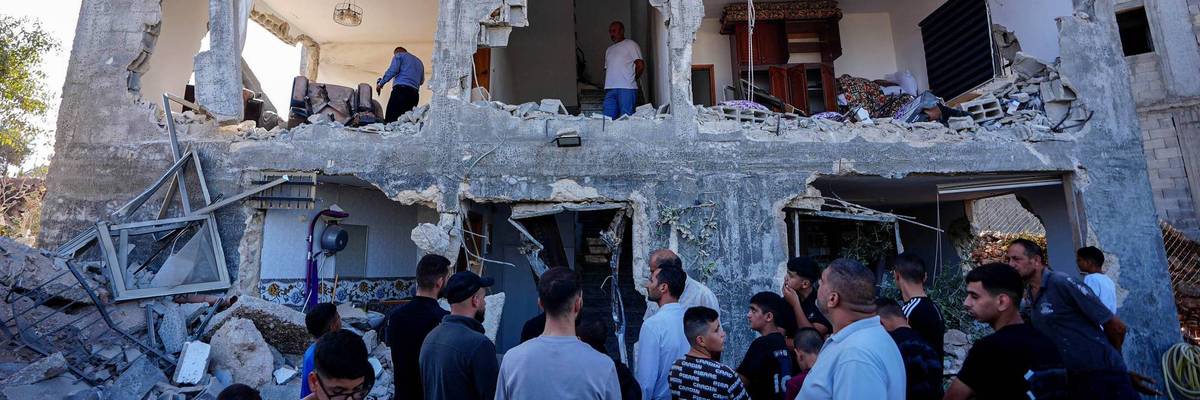
Palestinians inspect severe damage inside a family home following an Israeli military raid and siege in the West Bank on September 8, 2026.
(Photo by Issam Rimawi/Anadolu via Getty Images)

Jake Johnson
Sep 08, 2026
COMMON DREAMS


The United Kingdom, France, and Canada joined forces on Tuesday to ban imports of goods and some services from illegal Israeli settlements in the occupied West Bank, where settlers and soldiers are assailing, displacing, and killing Palestinians at an unprecedented rate with the backing of Prime Minister Benjamin Netanyahu’s government.

“Today, we refuse to be bystanders to further suffering and to the destruction of the two-state solution,” Ed Miliband, the UK’s foreign secretary, said in a speech to the House of Commons. Miliband pointed to the Israeli government’s recent approval of construction projects that would evict Palestinian communities and “place settlements directly between East Jerusalem and the West Bank, cutting through the heart of Palestine.”

“Let’s be clear what this means: the creation of a set of facts on the ground to make the two-state solution unviable,” said Miliband, in what was described as the UK government’s most forceful condemnation of Israeli conduct in the West Bank to date. “The British government agrees that there is ethnic cleansing of Palestinians in areas of the West Bank—perpetrated by settler terrorists. And all too often the Israeli government has turned a blind eye to this and worse, members of it have made statements and taken actions to support the forced displacement of Palestinians.”

Miliband said the UK government would “take action against specific companies and individuals who provide services such as construction, infrastructure, financing, or real estate for settlement expansion” and penalize “those who finance or facilitate illegal settlements.” He said the sanctions would be in place within six to nine months.


Miliband emphasized that in banning imports from Israel’s West Bank settlements, the UK was not acting alone. The British foreign secretary noted that France and Canada will also “ban the import of goods from illegal settlements,” joining “the Netherlands, Ireland, Belgium, Spain and Norway—which have either banned goods or are in the process of doing so.”

Jean-Noël Barrot, France’s foreign affairs minister, wrote on social media that France is cutting off imports from illegal Israeli settlements “because the West Bank is on the brink of explosion: unchecked expansion of colonization in violation of international law, surge in violence perpetrated by extremist settlers against Palestinians, acts of terror denounced by the Israeli authorities themselves.”

“France cannot, through its trade, support a situation that threatens the security of Israelis and Palestinians alike, as well as peace and stability in the region,” Barrot wrote. “Europe must uphold the same imperative.”

In a joint statement on Tuesday, the foreign ministers of 12 nations—the UK, France, Canada, Denmark, Finland, Iceland, Ireland, Norway, Poland, Portugal, Spain, and Sweden—said that the situation in the West Bank is “rapidly deteriorating amid unprecedented levels of settler violence and settlement expansion, including the unacceptable decision to publish tenders for the E1 settlement project.”

The foreign ministers confirmed their “intention to introduce national and/or support European restrictions on trade in goods with settlements which are illegal under international law, or that they are actively considering these and other measures, in accordance with their national procedures.”

“In this regard, the UK, France, and Canada welcome the important action already taken by Ireland, Spain, the Netherlands, Norway, and Belgium, and will bring forward national measures to ban trade in settlement goods,” the statement continued. “The government of Israel must immediately halt the expansion of settlements and civilian administrative powers, ensure accountability for settler violence, and investigate allegations against Israeli forces.”

Advocates largely welcomed the governments’ announcements while stressing that they should be the starting point for more sweeping action to confront the Israeli government’s illegal annexation efforts in the West Bank and crimes against humanity across the Palestinian territories, including the decimated Gaza Strip.

“Today’s announcement is the result of many years of work by campaigners and Palestinians themselves fighting to end severe injustice,” said Nick Dearden, director of the UK-based advocacy group Global Justice Now. “We know this move will be very popular in Britain. But it must be just the beginning. How can we cooperate with a military guilty of the most serious abuses of international law? How can we trade with a country that stands accused of genocide at the world’s highest court?”

Omar Barghouti, co-founder of the Boycott, Divestment, Sanctions (BDS) movement, dismissed the UK government’s sanctions announcement as “largely performative,” but said they also “reflect the impact of relentless public pressure on the current government.”

“The UK is legally obliged to take serious measures to end its complicity with the State of Israel, not merely with the settlements, per the [International Court of Justice],” said Barghouti. “While Miliband says, ‘We will not acquiesce in the destruction of the two-state solution,’ he has not said how the UK will stop its active contribution to the Israeli-US led destruction of the international legal system and the drive towards a might-makes-right order.”

US and Israeli officials responded furiously to the UK’s sanctions announcement. Itamar Ben-Gvir, Israel’s extremist national security minister, called for the closure of the British consulate in East Jerusalem, while Israel’s finance minister demanded the expulsion of the British ambassador.

Mike Huckabee, the US ambassador to Israel, characterized the UK’s trade ban as “discrimination against the Jewish people” and suggested that individual American states such as Florida could retaliate against the British government.

US Rep. Randy Fine (R-Fla.), a rabidly pro-Israel lawmaker and anti-Muslim bigot, wrote on social media that “Florida is one of Britain’s largest trading partners” and signaled that the state could move to boycott UK goods.

Far-Right Israeli Finance Minister Demands Expulsion of UK Ambassador Over Settlement Trade Ban

The United Kingdom’s Labour government is set to announce a ban on trade with illegal Israeli settlements in the West Bank.


Israeli Finance Minister Bezalel Smotrich takes part in the Jerusalem Day parade at the Damascus Gate in the old city of Jerusalem on May 14, 2026.
(Photo by Erik Marmor/Getty Images)

Jake Johnson
Sep 08, 2026
COMMON DREAMS

The United Kingdom on Tuesday is expected to announce a ban on trade with illegal Israeli settlements in the West Bank, a plan that prompted a furious response from far-right Israeli and American officials even as British diplomats privately acknowledged that the new sanctions package would be mostly symbolic.

“Expel the British ambassador tonight!” Israeli Finance Minister Bezalel Smotrich wrote in a social media post ahead of the official announcement. “We will not be a doormat trampled by an antisemitic government, in a country conquered by radical Islam, trying to save itself from economic and social decline by attacking Jews and the State of Israel.”

UK Foreign Secretary Ed Miliband, who is Jewish, is set to unveil the trade ban as the Israeli government aggressively accelerates its unlawful land grabs and expulsion of Palestinians in the West Bank, where violent rampages by Israeli settlers have reached unprecedented levels. The trade ban was developed after the Israeli government advanced a plan to build more than 1,200 new settlement homes in the West Bank.

The Guardian reported Monday that “in his statement to MPs, Miliband is expected to use firmer language than his recent predecessors in calling out the humanitarian injustices suffered by Palestinians in Gaza.”

“The steps he lays out are likely to fall short of the full set of demands made by Palestinian advocacy groups,” the outlet added, “but they will still be seen as a sign that the UK is moving beyond traditional rhetorical support for a two-state solution towards active steps to forestall the expansion of illegal settlements in the West Bank—widely seen as intended to destroy the prospect of a Palestinian state.”

New UK Prime Minister Andy Burnham reportedly spoke with US President Donald Trump on Monday about the impending trade ban, which drew condemnation from the US ambassador to Israel, Mike Huckabee.

Behind the scenes, according to Bloomberg, UK diplomats “privately told the US that the sanctions are largely symbolic and will have no material impact on the UK’s wider relationship with Israel on trade or security, in a bid to soothe the Trump administration’s response.”

Francesca Albanese, the United Nations special rapporteur on the occupied Palestinian territories, told The Guardian that a ban on trade with Israeli settlements would be an “absolutely important” change in UK government policy.

Nick Dearden, director of the UK-based advocacy group Global Justice Now, wrote on social media that “a settlement ban is welcome but we must go further.”

“Hope the government will include services and will announce new bans of weapons sales and military coordination tomorrow,” Dearden added. “The comms is an improvement but we need action.”

Reuters reported that the impact of the policy move on bilateral trade with Israel is “likely to be ⁠minimal, with details unclear of how the UK will differentiate between goods originating in West Bank settlements [and] products made in Israel.”

‘I’ll Wear It as a Badge of Honor,’ Says MP Sultana After Israel Bars Entry to 11 UK Lawmakers

“I will not be intimidated into silence,” said MP Zarah Sultana. “If anything, this ban only strengthens my resolve to keep speaking out.”


Your Party MP Zarah Sultana speaks during a national march for Palestine on January 31, 2026, in London, England. Pro-Palestinian demonstrators marched through central London to protest Israel’s military actions in Gaza and to call on the UK government to end its political and military support for Israel.
(Photo by Alishia Abodunde/Getty Images)


Stephen Prager
Sep 08, 2026
COMMON DREAMS

Zarah Sultana, a member of the UK Parliament, said she won’t stop speaking about the rights of Palestinians after Israel banned her from entering the country on Tuesday.

“Given that this is a fascist government presiding over genocide, apartheid and an illegal occupation, I’ll wear it as a badge of honor,” she said in a post to X. “I will not be intimidated into silence. I will continue to speak out against Israel’s genocide and against the UK’s complicity. If anything, this ban only strengthens my resolve to keep speaking out.”

Sultana, who represents Coventry South and is a co-founder of the left-wing Your Party, was one of 11 members of Parliament whom Israel announced it was blocking from entry in retaliation after the UK joined Canada, France, and other nations to announce an import ban on goods from Israeli settlements in the West Bank, which are considered illegal under international law.


Following a year of record violence against Palestinians in the territory, UK Foreign Secretary Ed Miliband said the import ban was in response to the “ethnic cleansing of Palestinians in areas of the West Bank—perpetrated by settler terrorists.”

Israel has reacted with fury at the move, closing the British consulate in East Jerusalem, which handles relations with Palestinians in East Jerusalem, the West Bank, and Gaza.

Also banned from the country are UK Labour MPs Diane Abbott, Richard Burgon, John McDonnell, and Naz Shah; Green MPs Siân Berry, Ellie Chowns, Carla Denyer, Adrian Ramsay, and Hannah Spencer; as well as Jeremy Corbyn, who led the Labour Party from 2015-20 before co-founding Your Party with Sultana in 2025.

Remarking on his and his colleagues’ ban from the country, Corbyn said Israel’s treatment of Palestinians was “the real scandal.”


“I have visited all parts of Palestine on several occasions, where I have witnessed the horrors of occupation, as well as the resilience and humanity of the Palestinian people,” Corbyn wrote on X. “They are the ones who suffer from Israel’s apartheid. It is their freedom which is egregiously curtailed, alongside thousands of Palestinian refugees who are denied the right of return.”

He added: “As the world wakes up to the genocide in Gaza, it is shocking that Israel continues to deny entry to UN investigators and international journalists. Israel doesn’t want the world to see what it is doing—but we can never give up in our attempts to expose the truth.”

Israel also banned Fahad Ansari, a lawyer who has represented Hamas’ political wing in court in the UK and—like Sultana—said on X, “I am neither British nor an MP but do take this as a badge of honor (although pretty sure I’m already a persona non grata in the apartheid state).”


Corbyn Urges UK Government to Condemn Gaza Genocide After Israeli Settlement Trade Ban

“This is not merely a matter of semantics. This is a matter of international law.”


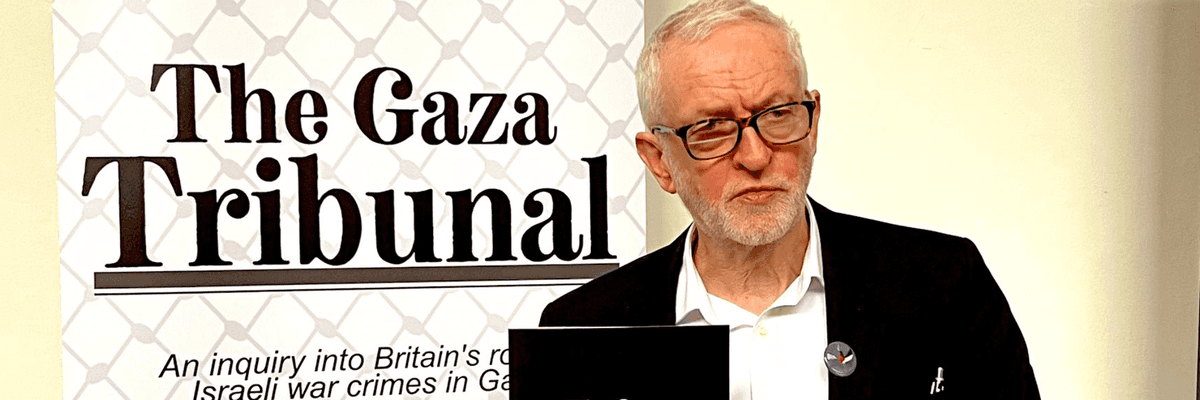
UK Member of Parliament Jeremy Corbyn holds a copy of the Gaza Tribunal Report at Conway Hall in London on March 16, 2026.
(Photo by Jeremy Corbyn/X)

Jessica Corbett
Sep 08, 2026
CONMMON DREAMS


Amid Israeli settlers and soldiers’ unprecedented violence against Palestinians in the occupied West Bank, Member of Parliament Jeremy Corbyn was among those arguing on Tuesday that the United Kingdom’s new “sanctions on illegal settlements are welcome, but not enough,” and calling on Prime Minister Andy Burnham to condemn Israel’s war on the Gaza Strip as genocide.

On behalf of the UK’s ruling Labour Party, Foreign Secretary Ed Miliband announced a ban on trade with illegal Israeli settlements in the West Bank. He was joined by leaders from Canada, Denmark, Finland, France, Iceland, Ireland, Norway, Poland, Portugal, Spain, and Sweden, who confirmed “their intention to introduce national and/or support European restrictions” on trading with Israeli West Bank settlements.

Corbyn, a former Labour leader from Islington North who has since co-founded Your Party, declared that “Britain must end all arms sales, all military cooperation, and all forms of support that sustain Israel’s system of apartheid, occupation, and genocide.”


In addition to speaking in Parliament on Tuesday, Corbyn wrote to Burnham that “for three years, we have witnessed the abominable destruction of human life in Gaza,” where “Israel has killed at least 73,000 people, excluding an untold number of people lost under the rubble.”

While welcoming Burnham’s recent admission that Labour “got it wrong” and its “initial response to the treatment of Gaza caused huge hurt,” Corbyn said that “it is extremely disappointing that these words have not translated into meaningful action.”

“It has not gone unnoticed that, 50 days into your premiership, you have declined to call ‘the treatment of Gaza’ what it really is: a genocide,” the MP stressed, noting that the term has long been used by scholars and human rights advocates globally. “This is not merely a matter of semantics. This is a matter of international law.”

“Far from preventing genocide, the British government has facilitated genocide through ongoing military, economic, and political cooperation,” Corbyn charged, pointing to his call for an independent public inquiry into the UK’s complicity. “The question is not whether Labour got it wrong. The question is what your government will do now.”

Corbyn asked Burnham to confirm if he will establish an inquiry, end all military cooperation with Israel, impose widespread sanctions, overturn the ban on the advocacy group Palestine Action, and support the work of the International Criminal Court and the International Court of Justice—the ICC issued arrest warrants for Israeli Prime Minister Benjamin Netanyahu and his former defense minister, and the ICJ has taken up South Africa’s genocide case on the Israel Defense Forces’ (IDF) conduct in Gaza.


As Corbyn pushed UK leaders to go further than the new trade ban—which is largely symbolic—the Israeli government responded to the sanctions by taking aim at a dozen people, including Corbyn and his Your Party co-founder, MP Zarah Sultana, barring them from entering Israel.

Israel also banned four Labour MPs—Diane Abbot, Richard Burgon, John McDonnell, and Naz Shah, as well as five members of the Green Party: Siân Berry, Ellie Chowns, Carla Denyer, Adrian Ramsay, and Hannah Spencer. The final person barred from Israel is Fahad Ansari, a lawyer who has represented Hamas’ political wing in court in the UK, according to The Times of Israel.

Ansari replied on social media Tuesday that “I am neither British nor an MP but do take this as a badge of honor (although pretty sure I’m already a persona non grata in the apartheid state).”

Meanwhile, others in the United Kingdom and around the world joined Corbyn in framing the Labour government’s sanctions as progress, while also emphasizing that, as the Corbyn-founded Peace & Justice Project put it, “they should only mark the start of the process in bringing about real peace and social justice for the Palestinian people, who have been subjected to decades of unimaginable subjugation, ethnic cleansing, and genocide.”

“The UK government must commit to a full arms embargo on Israel, ending all forms of military cooperation with the IDF, and supporting the ICC arrest warrants against Benjamin Netanyahu and members of his Cabinet,” the project declared, calling for the full implementation of recommendations from the Gaza Tribunal report from last year.


Describing the UK’s “concrete action” and recognition of “Israel’s unlawful occupation and ethnic cleansing” as “hugely welcome,” Kerry Moscogiuri, Amnesty International UK’s chief executive, noted that Miliband “promised a ‘comprehensive reset’ and today could be the sea change that is needed.”

“Amid ethnic cleansing, genocide, and apartheid against Palestinians, today’s measures are a genuine step towards accountability for Israel’s repeated and flagrant violations of international law,” she said. “The commitment to ban trade in settlement goods and some services, prohibit financing of settlements, refuse arms that contribute to the occupation, and support the genocide case before the International Court of Justice represents a significant change of course.”

“For years, Amnesty has worked with members, partners and parliamentarians from across the political spectrum to press for meaningful change, and today shows that campaigning for human rights works,” she added. “But today is not the end of the road. The test now is whether these commitments are properly implemented and enforced, and followed by the wider action needed to hold Israel accountable for its crimes and meet the UK’s obligations under international law.”

MAGA lawmaker's threat to punish Britain could wipe out 70,000 jobs in his own state

Alexander Willis
September 8, 2026 
RAW STORY


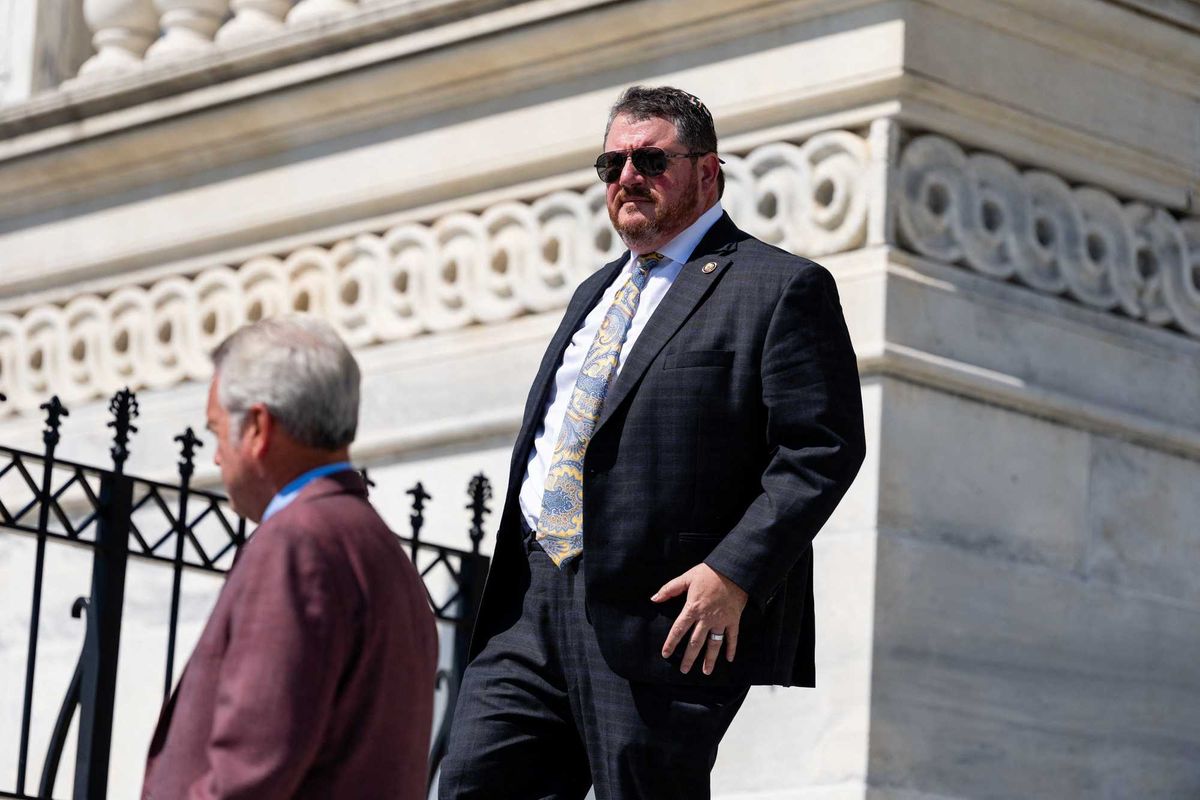
U.S. Representative Randy Fine (R-FL) leaves after the House of Representatives passed a war powers resolution on the ongoing conflict with Iran on Capitol Hill in Washington, D.C., U.S., July 23, 2026. REUTERS/Eric Lee

Rep. Randy Fine (R-FL) issued a fierce threat to the British government as it considered imposing boycotts on goods from illegal Israeli settlements, a threat that could end up wiping out around 70,000 American jobs.

On Monday, reports revealed that the United Kingdom was preparing to impose new restrictions on goods produced in Israeli settlements. There are more than 700,000 Israeli settlers illegally living in the West Bank, with instances of Israeli settler violence rising in recent months. Also on Monday, Fine issued the United Kingdom a warning.

“As the British government considers forcing British companies to boycott portions of Israel, it should be aware that a Florida law that I passed as a member of the Legislature would ban any British company forced to comply from doing business with any state or local government in Florida,” Fine wrote in a statement published on social media.

“It would also end any British business participating in that boycott from doing any business in Florida if it needed any official interaction with state or local government to operate (permits, tax collection). Florida is one of Britain’s largest trading partners. They should understand that their vanity project in support of Muslim terror could cost them billions of dollars.”

The United Kingdom is a top investor in Florida, and British companies account for around 70,000 jobs in the Sunshine State. In a follow-up post, Fine asked X's chatbot Grok to explain how Florida's anti-boycott law might affect British companies — and critics said its response backfired on him spectacularly.

“LOL. You are going to wreck your own state,” wrote Leilani Dowding, a British model and reality television personality, in a social media post on X Tuesday.

“Haha, you asked Grok, and it told you how much your plan would f--- over Florida, not the UK,” wrote Jack Duncan, a British LGBTQ+ rights activist, in a social media post on X Tuesday.

About a dozen” American citizens have died from incidents involving Israeli settlers or soldiers, including the death of American activist Rachel Corrie, who was crushed to death by an IDF bulldozer in Gaza in 2003. An American was killed by Israeli settlers as recently as July of last year: 20-year-old Sayfollah Musallet, who was “beaten to death” by settlers while on his family’s farm near Ramallah in the West Bank.


Wednesday, September 02, 2026

Who Has The Right To Tell Our Story: The Fight Over Cultural Heritage In The United States – OpEd


Key Takeaways:

  • The author says an Aug. 27, 2026 letter from 600+ groups opposes a rewrite of National Historic Preservation Act Section 106 that would let federal projects sidestep public comment and put historic sites in the wrecking ball’s path—developers call the old rule slow and costly; he says it is not a jobs killer and loss is permanent.

  • Heritage fights are framed as global and existential for Indigenous, local, and diasporic communities (a Mongolian herder: comforts without ceasing to be Mongolian); officials treat culture as “soft” next to extraction.

  • The rewrite is cast as narrative control, not streamlining—likened to erasing a people (ICC Timbuktu case)—and he urges taking the past back from federal whim so places can still tell who lived there.

Cultural heritage is under attack in the United States. The National Historic Preservation Act’s Section 106 regulation, which balances economic development and historic preservation, has been rewritten to leave historic places in the path of the wrecking ball at the federal government’s whim. Developers contend that a new regulation is required because the Section 106 process is too slow, too unpredictable, and too costly. They argue that locking up lands from oil and gas extraction, timber interests, and mining costs jobs and denies the country needed resources. But they’re wrong. Section 106 does not cost jobs, money, or time. Allowing the public to comment on what happens on public land is not to be deplored but celebrated. Most importantly, once destroyed, cultural and historic sites are irretrievably lost, and all of us diminished.

While currently playing out in the United States, fights about heritage are not unique to America. Battles between development and preservation play out across the globe—in countries rich and poor, autocratic and democratic, and new and old. Some of these struggles escalate into loud, contentious, take-no-prisoners pitched battles.

Economic development is often a Faustian bargain for local and affected communities. The lure of a better life must be weighed against unknowable and incalculable costs to one’s way of life. Most communities embrace the jobs, improvements, and well-being that ensue from development. What they fear is severing ties to land and places—some known and others yet to be discovered—that hold meaning and values essential for their community to persist. For local, Indigenous, and diasporic communities, severing these ties is yet another cut added to the thousands of previous cuts that continues to transform their culture in ways they do not like and that they cannot control

Many developers and government officials mistake cultural heritage as a “soft” or secondary concern for communities. They base their arguments for development on economic and material concerns, convinced that these are paramount in the minds of community members. For some, these arguments resonate. But for most, economic and infrastructure improvements are only beneficial if they do not transform society into something foreign and unrecognizable. As one Mongolian camel herder explained to me, “We would like the comforts promised by the mining companies but not at the expense of being Mongolian. We’ve been poor for a thousand years; being poor is not that big a deal. Not being nomads or having nomads in the country would be the end of our way of life and the end of Mongolia.”

On August 27, 2026, more than 600 organizations sent an open letter to Congress outlining their opposition to the proposed changes to Section 106. Why the outrage? It’s simple. Though couched as common sense reform to enable economic development, the rewrite of the Section 106 regulation is nothing less than the federal government’s attempt to usurp control over whose history counts and whose can be disregarded. If the proposed regulation is simply about the timeliness and cost of development projects, then it would not have elicited so much opposition. Many in the preservation community offered to engage in regulatory reform. But the authors of the proposed change are not interested in reform. Their objective is to control the country’s historical narrative—whose story gets told and whose story is forgotten.

History is replete with attempts to legitimize the present by destroying vestiges of the past. Ofttimes these attempts are resisted, sometimes violently. In these clashes, groups are oppressed and their material culture destroyed. Rarely are such attempts forgotten or forgiven. Remarking on the guilty verdict in the case of Ahmad Al Faqi Al Mahdi for destruction of ancient texts in Timbuktu, Mark Ellis of the International Bar Association, stated in 2016: “Politically, there will be those who will question why Bensouda [then-International Criminal Court Prosecutor Fatou Bensouda] is focusing on ancient sites rather than going after rape, torture and murder convictions, but destruction of cultural heritage is not a second-rate crime. It’s part of an atrocity to erase a people.”

We need to wrest control of the past from the federal government and give it back to the people of this country. This is not a fight we sought. But it is the fight we must win. All of us need to spread a message about why Section 106 matters and why we will not let the government destroy it. Simply put, we will not give up the right to tell who we were and what we did through the places we lived, as we want it to be known free from government censure or control.


About Jeffrey H. Altschul

Jeffrey H. Altschul is the co-president of the Coalition for Archaeological Synthesis.

View all posts by Jeffrey H. Altschul →

America Praised The ICC Until It Came For An Ally – OpEd


Key Takeaways:

  • Amman commentator Osama Al-Sharif argues that after years of Global South complaints about a hollow UNSC, Washington has since the Gaza war turned on the ICC—sanctions on judges and the court’s president—after 2024 warrants for Netanyahu and Gallant, having praised the 2023 Putin warrant.
  • He quotes the late Sen. Lindsey Graham’s reported line that the court is for “Africa and thugs like Putin,” not “democracies like Israel and the United States,” and lines up Ukraine territorial acquisition, 2025 Iran strikes, and a January seizure of Venezuela’s president as the same exceptionalism.
  • His warning: if the Rome Statute court (120+ parties; the U.S. signed but voted against the final statute) is dismantled, illegal wars become the rule; protecting a flawed ICC is treated as a test of whether law still binds the strong.

For years, countries in the Global South have accused the West of hypocritical behavior: applying international law selectively and openly breaking it to serve their narrow interests. In their view, the UN Security Council lost its credibility long ago, with the Palestinian issue being a case in point — decades of Israeli occupation, dozens of unenforced resolutions and a council dominated by greater powers.

The track record of the UNSC speaks volumes about blatant double standards, while the term “rule of law” has become hollow boilerplate.

But something has changed in the last three years. It is no longer just the UNSC that is being hollowed out. Since Israel launched its war on Gaza — now approaching its third anniversary with no end in sight — the US has turned its attention to undermining another pillar of international justice: the International Criminal Court in The Hague.

That institution is now in the White House’s crosshairs and, ironically, the assault on it exposes the antithetical rhetoric of key US officials and lawmakers when it comes to observing international law and respecting its sanctity.

The Nuremberg trials, held in the wake of the Second World War, established a radical idea: that even the most powerful leaders could be held personally responsible for atrocities, not just the states they represented. That idea sat mostly dormant for decades. Genocides in Rwanda and the former Yugoslavia in the 1990s revived the idea and launched a rare drive to make war criminals accountable under international laws and conventions.

In 1998, more than 120 countries signed the Rome Statute, creating a permanent court to fulfill that goal. The ICC’s mission was simple and, at the time, widely supported by Western democracies, but not by the US, which, interestingly, signed the founding treaty but voted against the final Rome Statute over concerns about American military protection. The ICC’s message was clear: No one should be able to commit genocide, war crimes or crimes against humanity and walk away untouched simply because they hold power.

For years, the ICC mostly prosecuted African warlords and rebel commanders, which drew fair criticism about geographic imbalance. But it was always designed to apply to everyone, anywhere.

Since the ICC issued arrest warrants against Benjamin Netanyahu and then-Israeli Defense Minister Yoav Gallant in 2024 for potential war crimes and crimes against humanity in Gaza, the reaction from Washington has not been to challenge or question the evidence, as it has done with South Africa’s genocide file against Israel at the International Court of Justice. Instead, it has chosen to attack the court and its prosecutor. It has declared that it is seeking to dismantle the court, calling it an illegitimate organization that threatens American sovereignty.

The Trump administration and members of Congress have sanctioned ICC judges and prosecutors, frozen their assets and threatened them with travel bans and legal action. The most recent target was the president of the court herself, sanctioned directly by the State Department.

One of the US objections to the ICC is the assertion that the court acts illegitimately by claiming jurisdiction over nonmember states that have not signed the Rome Statute.

Compare that to how Washington reacted when the same court, applying the same law, issued an arrest warrant against Russian President Vladimir Putin in 2023 for the allegation that Russia had unlawfully deported Ukrainian children. Back then, American officials praised the warrant as a legitimate act of accountability. Nothing about the court’s mandate has changed between 2023 and today. What has changed is that the court has targeted Israel’s conduct in Gaza.

Late Sen. Lindsey Graham put the double standard into words more bluntly than most officials dared. He reportedly told the ICC’s prosecutor that the court was, in his words, for “Africa and thugs like Putin” — not for “democracies like Israel and the United States.” Graham, who did not mince his words, captured the underlying logic driving the US campaign against the ICC: international law is treated as a tool to use against rivals, not a universal standard to be held to. American exceptionalism also meant that the application of international law was selective.

The US and Israel are, in effect, waging a campaign to destroy an institution that was built specifically so that absolute power alone could never be a shield against justice. But this is not happening in isolation. The sense of exceptionalism fits a pattern stretching across nearly every major conflict of the last four years.

Russia’s full-scale invasion of Ukraine in 2022 broke one of the most basic rules of the international order: that no country should acquire the territory of another by force. The world rightly condemned it. But that condemnation, especially by Western powers, now looks less like adherence to a universal principle and the preservation of the law and more like the fulfillment of a political objective. In 2025, Israel and the US struck Iranian nuclear facilities without any authorization from the UNSC, relying on the same argument as Moscow: preemptive self-defense — an argument that Western governments ironically refused to accept in the Russian case.

The International Court of Justice in 2024 found it plausible that Palestinians in Gaza had a right to be protected from genocide as it heard South Africa’s case against Israel. Then, in January, American forces crossed another line, breaching another international law: they seized Venezuela’s sitting president from his own capital and flew him to New York to face charges many legal experts consider weak — with no UNSC resolution and no self-defense justification to back it up.

It would be easy to look at all of this and conclude that international law is abstract at best — that in a world that has seen illegal wars and invasions waged under false pretexts by superpowers, courts and treaties are decorative at best and that only the weak are bound by them. That conclusion is dangerous and describes a bleak, fraught future.

The entire point of the ICC was to bypass the political will of any government, including the most powerful ones. A court that holds accountable only weak states, rebellious leaders and countries unfriendly to the big powers is not really a court of international law.

The world order is shifting quickly and some would say it is teetering, as once-strong democracies shift toward authoritarianism. A multipolar world is emerging, alliances are being tested and states are watching closely to see whether the rules of the postwar era will hold. If the ICC survives the US-Israeli assault, it will send a message that accountability is still possible, however imperfect and slow.

In reality, the onslaught is not only against the ICC but against the 120 countries that signed its statute. If the court collapses, the message is far more dangerous: that the invasion of Ukraine, the war in Gaza, the annexation of Palestinian and Arab lands, and the kidnapping of a foreign head of state are no longer aberrations.

Protecting the ICC, flaws and all, is no longer a matter of legal technicality. It is one of the last real tests of whether the rule of law survives this decade.

  • Osama Al-Sharif is a journalist and a political commentator based in Amman. X: @plato010