Wednesday, July 29, 2026

Analysis-Trump's diversity crackdown reverberates through US boardrooms


Tue, July 28, 2026 
By Ross Kerber, Bianca Flowers and Simon Jessop

July 28 (Reuters) - As U.S. President Donald Trump intensifies his campaign against diversity programs, appointments of women and racial minorities to S&P 500 boards have dropped to their lowest level in more than a decade, threatening to unwind years of gains in corporate boardroom diversity.

The shift is evident in new research by recruiting firms that study leadership diversity and Reuters interviews with more than a dozen boardroom recruiters, investors and human resource analysts.

It follows a series of Trump administration ‌actions targeting diversity, equity and inclusion initiatives known as DEI. Across corporate America, major investors who once pressed companies to diversify their boards have retreated, while legal challenges have upended DEI policies in recent years.

RECORD DIVERSITY MASKS SHIFT IN NEW APPOINTMENTS

New data released on Tuesday by ‌global executive search firm Spencer Stuart shows diversity in board appointments has steadily declined since peaking at 72% in 2021 and 2022. Of the 364 new independent directors named to S&P 500 boards during the year ended April 30, 40% were women or racial minorities, the lowest level since 2014, when 39% of incoming directors were diverse, according to the leadership advisory firm.

On S&P 500 ​boards today, diverse directors hold 49.3% of the seats, slightly down from a record of 49.6% in 2024 and 2025, according to Spencer Stuart.

Recruiters and analysts interviewed by Reuters say those recent highs reflect years of appointments following the #MeToo and Black Lives Matter movements. But while board diversity remains near a historic high, the lineup of new directors is becoming markedly less diverse, suggesting those gains may prove difficult to sustain if current hiring patterns persist and a larger share of new board seats goes to white men, the recruiters and industry analysts say.

George Anderson, co-leader of Spencer Stuart's North American Board Advisory Practice, said boards are responding to changing legal, regulatory and political pressures. He said one driver of the decline in diverse appointments is a shift toward recruiting current and former CEOs, who accounted for 37% of new directors this year, the highest level in 15 years. Companies see those executives as well suited to navigate complexity, but the CEO talent pool is less diverse, ‌he said.

The shift in boardroom appointments coincides with a sharp decline in the number of companies publicly citing ⁠diversity as a factor in board recruitment. Some 12% of S&P 500 companies now disclose using some form of diversity criteria in board decisions, down from 23% in 2025, when President Donald Trump began his second term, and 48% in 2024 under President Joe Biden, according to data for this year provided to Reuters by PeopleReturn, a human resources analytics firm. PeopleReturn shows board diversity peaked at nearly 50% this year.

Supporters say the initiatives help expand opportunities for historically disadvantaged groups ⁠and improve governance and decision-making, while Trump and other critics say they discriminate against white people and men and undermine merit-based advancement.

Kristin Hull, chief investment officer of Nia Impact Capital, which often lobbies tech companies on social issues, says the decline in appointments reflects a return to male-dominated corporate leadership.

"We were making such progress," she said. "Now the bro culture is alive and well."

However, conservative activist Robby Starbuck, who has pushed companies, including Tractor Supply and John Deere, to roll back DEI in several high-profile social media campaigns, has welcomed the change.

"They were focused on all the wrong things, and it shows in their earnings," he said. Neither company returned requests for comment.

Asked about the rollback of corporate diversity ​programs, ​White House spokeswoman Allison Schuster said Trump "was resoundingly elected with a mandate to end divisive, racist policies and restore merit and efficiency."

'OUR COUNTRY WILL BE WOKE NO LONGER'

Under Trump, ​the Equal Employment Opportunity Commission, created under the Civil Rights Act of 1964, has been tasked with rooting out what ‌the administration calls illegal DEI practices that it says gave preferential treatment to women and racial minorities in hiring and promotions.

Many companies scrapped or reassessed their diversity initiatives before Trump's second term after the Supreme Court ruled in 2023 that it was illegal to consider race in college admissions. Though the decision didn't cover corporate practices, it set off a cascade of legal threats against companies over a range of diversity initiatives.

Trump last year issued executive orders restricting certain DEI programs among federal contractors and within the federal government, then declared "our country will be woke no longer."

The Trump administration is threatening hefty fines for companies that do not comply.

IBM in April agreed to pay $17 million to resolve allegations it discriminated against some employees and failed to comply with Trump's orders calling DEI initiatives illegal for federal contractors.

The U.S. Justice Department alleged IBM prioritized diverse candidates in hiring, tying bonuses to hitting certain demographic targets in employment decisions. IBM, which was the first U.S. company to face action under Trump's anti-DEI directive over its employment practices, did not return requests for comment.

It denied any wrongdoing in the settlement agreement.

Shareholders, however, have shown little appetite for proposals seeking to weaken DEI. Three shareholder proposals put forward by conservatives targeting corporate DEI efforts won just ‌1.5% support on average at annual meetings in recent months, a typical rate.

BOARD RECRUITMENT SHIFTS AWAY FROM DIVERSITY

Even as overall board diversity remains near record levels, Reuters interviews with ​more than a dozen recruiters, investors and employees signaled companies are placing less emphasis on diversity in board recruitment.

That shift is evident at many companies that championed diversity initiatives after the #MeToo ​movement and the 2020 protests over the police killing of George Floyd, including Johnson & Johnson, Goldman Sachs and American Express.

Goldman early last year dropped ​its requirement that companies it took public have at least two diverse board members, citing "legal developments" weeks after Trump signed his first executive order targeting diversity initiatives. A Goldman spokesperson said the firm still believes diversity enhances its performance and is critical ‌to its financial success. J&J and Amex didn't return requests for comment.


INVESTOR RETREAT EASES PRESSURE FOR BOARD DIVERSITY

PeopleReturn ​CEO Josh Ramer said a retreat from DEI by top asset managers such as ​BlackRock, Vanguard and State Street eased pressure on companies to diversify their boards.

"All the big investors that were pushing for this have completely stopped mentioning it. Large-cap executives feel a lot less pressure to be talking about this," he said.

The fund managers' previous policies required some measure of diversity on company boards where they held stock. BlackRock, for instance, in late 2021 called for boards to be 30% diverse, while in 2022 Vanguard called for diversity of gender, race and ethnicity "at a minimum."

Both companies, however, stripped out that language last year. State Street dropped its ​expectation in February 2025 that women comprise at least 30% of major company boards.

All three asset managers declined to ‌comment for this story.

In the C-suite, recruiters say diversity now carries less weight in executive searches. Women and racial minorities made up roughly 22% of all S&P 500 CEOs last year, down from 23% the year before, according to Spencer Stuart.


Spencer Stuart and PeopleReturn ​tracked race, ethnicity and gender of the board members based on self-identified information, supplemented by outside sources and other research.

"Today we hear more about 'the best person.' There's less currency for being a person of color than there once was," said Jeff Christian, CEO of ​executive headhunting firm Christian & Timbers.

(Reporting by Ross Kerber in Boston, Bianca Flowers in Chicago and Simon Jessop in London; Editing by Dawn Kopecki and Howard Goller)
WITCH-HUNT

4 takeaways from Fauci's journals ahead of his Senate testimony

SONY SALZMAN, ARTHUR JONES II and ELISE SPENNER
Wed, July 29, 2026

Dr. Anthony Fauci will sit before the Senate's Homeland Security and Governmental Affairs Committee (HSGAC) on Wednesday in what will surely be a fiery hearing before a committee chaired by Republican Sen. Rand Paul, who has long accused Fauci of deceiving Americans about the origins of the COVID-19 pandemic.

Paul is expected to focus on Fauci's private journal entries between December 2019 and December 2022.

Over the weekend, Paul released a tranche of Fauci's journal entries -- a more than 1,100-page document -- revealing his inner thoughts about the origins of COVID, a detailed log of events within the White House situation and press briefing rooms, and his myriad media appearances about the response to COVID-19 and other health outbreaks.


Alex Brandon/AP - PHOTO: In this April 22, 2020, photo President Donald Trump watches as Dr. Anthony Fauci, director of the National Institute of Allergy and Infectious Diseases, speaks about the coronavirus at the White House in Washington, D.C.

Paul subpoenaed Fauci, the former director of the National Institute of Allergy and Infectious Diseases, to testify about his time leading the country's pandemic response. Paul has said he aims to hold Fauci accountable for his oversight during the response and has called for Fauci's imprisonment in the past. However, Fauci has protection from potential prosecution because of a preemptive pardon issued by former President Joe Biden.


In a statement announcing the pardon of Fauci and others before he left office, Biden said it was not issued because of any acknowledgement of wrongdoing or as an admission of guilt of any offense -- it was issued because of threats of "unjustified and politically motivated prosecutions" by future administrations.

This week, Paul also told reporters that he used his subpoena powers to obtain what he's calling "Tony's Diary."

While it's not clear who or what entity Paul subpoenaed to obtain the diary entries, Health and Human Services Secretary Robert F. Kennedy Jr. said Monday on Fox News that he provided the records to the committee.

"It took us about eight months to dig these out of 11 separate servers, where they had been sequestered and secreted and we handed them over this week to Rand Paul and [Sen.] Ron Johnson," Kennedy said.


J. Scott Applewhite/AP - PHOTO: Sen. Rand Paul, R-Ky., questions top infectious disease expert Dr. Anthony Fauci during a Senate Health, Education, Labor, and Pensions Committee hearing on COVID-19, on Capitol Hill in Washington, D.C., on July 20, 2021.


Here's what we know about Fauci's notes and how they shape Wednesday's showdown:
COVID origin -- lab leak or natural spillover

Fauci's journals do not reveal new information about the origin of the pandemic. Fauci -- in agreement with the World Health Organization -- has long contended the most likely scenario is that the virus spread from animals to humans, called the "spillover" theory. Paul has long said that the virus was likely released from a laboratory in China that was studying coronavirus. After years of inquiries and investigations, there is still no definitive answer.


Fauci convened a Feb. 1, 2020, call with top scientists to debate the origins. He wrote in his journal that scientists were not in agreement about the most likely scenario -- lab leak or natural spillover. Two of the 12 scientists were convinced the virus came about naturally while the rest of the group "felt that deliberate insertion was possible," referring to the possibility that the virus had been studied in a lab. and "we could not let this go."

Paul called the documentation "extraordinary' and told reporters on Tuesday that "we've probably never ever seen people so completely at odds with their private thoughts, and then publicly proclaiming the opposite of what they were truly saying in private."

Fauci has consistently said that it's his opinion that natural spillover is the most likely scenario, but he has also consistently acknowledged that there is no definitive proof for any theory of the pandemic's origin.


J. Scott Applewhite/AP - PHOTO: Top infectious disease expert Dr. Anthony Fauci responds to accusations by Sen. Rand Paul, R-Ky., as he testifies before the Senate Health, Education, Labor, and Pensions Committee, on Capitol Hill in Washington, Tuesday, July 20, 2021.More


Did Fauci mislead the public?


Paul is expected to drill down on diary entries from the earliest days of the COVID-19 outbreak that he claims show Fauci knowingly misled the public about the origins of the pandemic and botched the response

For example, Paul has seized on a diary entry from Jan. 26, 2020, in which Fauci acknowledges data showing infections spread weeks before it was detected at a Wuhan market, where early reports claimed the virus originated. However, Fauci wrote that he believed the market to be an "amplifier" for the spread of the virus, rather than the first spark, which is consistent with public comments he made at the time. Fauci maintained in that entry that the virus originated from animal-to-human transmission.

"Now we know the market was not the source, it was the amplifier," Fauci wrote at the time. "Having said that, somewhere the virus jumped from animals to humans."
Erosion of Trump's trust

While leading NIAID, Fauci was tapped by the White House to head the COVID-19 response along with a team of health officials. Early on, Trump said that the late Fox News Host Lou Dobbs told him Fauci was the "smartest person" around. When Fauci met with the president in January 2020, he titled the entry "Amazing day today!" in his journal and recalled Trump telling Fauci he was "really a famous guy." Fauci also disputed early media reports of tension between him and the White House in the journal.


But Fauci soured on Trump as the president downplayed the spread of the pandemic and fueled unsubstantiated theories about the virus. He began to describe Trump's press conferences in his diary as "painfully rambling" and "stream of consciousness." Fauci also claimed Trump was "spewing nonsense" on the campaign trail in 2020, calling him a "true embarrassment."


Fauci's fame

Fauci, 85, mused about his time as the face of the country's pandemic response and how his coverage in the media helped him discover fame.

Fauci repeatedly described brushing elbows with celebrities and public figures, including Barbara Streisand and Julia Roberts. He recounts dozens of times that he appeared on national broadcast television and the reporters he would interact with on a weekly basis. Fauci would also attach newspaper clippings that explored his newfound buzz.


Abaca Press/Sipa USA via AP - PHOTO: Brad Pitt slipped into the shoes of Dr. Anthony Fauci, the epidemiologist advising the White House during the coronavirus crisis, on an episode of "Saturday Night Live."


He wrote "It is not hyoperbole [sic] to say that today I am the most famous and talked about person in the country and one of the most recognizable peson [sic] in the world" due to the countless front page articles and profiles. Fauci included a 2020 Washington Post article featuring Speaker Emerita Nancy Pelosi, who had expressed confidence in him for dedicating his "life's work" to preventing the spread of disease.

He also attached a separate Post column that described "Why Anthony Fauci is the greatest public servant I have known," from Michael Gerson. In one interview, Basketball Hall of Famer Bob Cousy is quoted lauding Fauci as one of his "heroes." Fauci also raved about his viral moments, including wearing a Washington Nationals baseball mask during the summer of 2020 that he wore at a hearing on Capitol Hill: "The Nats mask that Iwore [sic] to the Hearing is being put into the Cooperstown MLB Hall of Fame!"

But Fauci also writes about being uncomfortable with the spotlight.

"The 'swag' around me is getting really ridiculous. You can but [sic] Fauci T-shirts, mugs, donuts, sweat shirts, candles, pillows, etc. Geeeez!! I do not like this one bit," he wrote in late March 2020. Fauci also documented security threats to him and his family as his profile rises.


'Kill shots': WSJ infuriated as Trump's FDA repeats 'absurdities' to stifle medicine

Matthew Chapman
July 28, 2026 
RAW STORY


Vaccination (Shutterstock)

The Wall Street Journal editorial board continued on Tuesday to express its rage at the Trump FDA for blocking experimental treatments.

Specifically, the board took aim at efforts by regulators to stifle new therapies for late-stage melanoma and Duchenne muscular dystrophy.

"President Trump pushed out Marty Makary and his deputy Vinay Prasad this spring in large part because they had scuttled treatments for life-threatening and rare diseases," noted the board, something they have been covering for months. That should have been the end of it, and for a while, it appeared it was, the board continued.

"The FDA under acting Commissioner Kyle Diamantas in recent months appeared to be turning around," the board wrote. "The agency is reconsidering many treatments rejected by the previous regime and has scheduled public hearings with outside experts to review medicines."

But now, FDA staff have once again advanced the same arguments that Makari and Prasad's deputies used to block Replimune's cancer therapy and Capricor Therapeutics' cell therapy to treat Duchenne. Trials of these drugs have already shown promising results, but Makari and Prasad, allies of anti-vaccine conspiracy theorist Health and Human Services chief Robert F. Kennedy Jr., have had it out for these drugs as part of their demands for control groups, even though there are more ethical ways of testing such treatments.

"The panel ... concocted pretexts to kill the treatment — for instance, the staff opined that maybe biopsies had zapped the tumors. If only biopsies had such miraculous effects," the board wrote. "This week’s briefing document repeats such absurdities and manipulates the data to claim the drug doesn’t work."

The FDA, lamented the board, has had its "bureaucratic culture of control" worsened by Prasad, who "[drove] out division leaders and staffers who didn’t share his anti-industry dogmatism," creating a "leadership vacuum." They concluded: "We hope the experts this week aren’t swayed by the bureaucracy’s kill shots, which underscore why the FDA needs permanent leaders who share the President’s right-to-try principles."

 US lawmakers press Health Secretary Robert F. Kennedy Jr. on vaccine settlement


By Dan Levine
Wed, July 29, 2026 
REUTERS


Health and Human Services Secretary Robert F Kennedy Jr. departs after speaking during an event sponsored by the Action for Progress Coalition, at the National Press Club in Washington, D.C., U.S., February 2, 2026. REUTERS/Al Drago/File PhotoMore

July 29 (Reuters) - A group of U.S. senators has asked Health Secretary Robert F. Kennedy Jr. to disclose whether his family stands to profit from a recent legal settlement involving Merck's Gardasil vaccine, according to a letter reviewed by ‌Reuters.

The letter, sent on Monday by four Democratic senators including Elizabeth Warren of Massachusetts, notes that Merck earlier this year agreed ‌to pay $50 million to settle litigation over Gardasil. Before becoming health secretary last year, Kennedy was an attorney of record in some of the cases.

As health secretary Kennedy oversees multiple ​health agencies that regulate and pay for vaccines, and said he would hand over his financial interest in vaccine litigation to a son.

The senators asked whether Kennedy's son received the health secretary's share of Gardasil fees, and if so, how much money that represents.

Kennedy did not commit to recuse himself from U.S. health agency decisions involving Gardasil, the letter says, or other policymaking around vaccine litigation.

"You are charged with setting federal vaccine policy and regulating vaccine manufacturers, ‌including Merck, even as your family and former employer ⁠may financially benefit from actions you take as Secretary," the senators' letter states, and asks for a reply by Aug. 11.

A spokesperson for the Department of Health and Human Services (HHS) did not immediately respond to a request for ⁠comment.

Kennedy has long promoted anti-vaccine views and has brought a series of changes to U.S. vaccine policy since he joined the Trump administration.

Before taking office, Kennedy played an instrumental role in organizing mass litigation against Merck on behalf of people claiming injury from the Gardasil vaccine against human papillomavirus. Merck has consistently defended ​Gardasil's ​safety and efficacy.

After his nomination by Trump, Kennedy initially said he intended to keep ​a 10% fee of any settlement involving Gardasil cases ‌he referred to the Wisner Baum law firm, which has represented dozens of plaintiffs.

Warren and other lawmakers expressed concerns over the potential for a conflict of interest, and Kennedy ultimately said he would transfer his stake to a son. One of Kennedy's sons, Conor, works at Wisner Baum.

Kennedy's son did not immediately respond to a request for comment, nor did Merck. Brent Weisner, managing partner of the firm, said in an email that "at no time" will Kennedy or his son receive fees from a Gardasil settlement.

"If these Senators are worried about corruption, they should take a long hard look at ‌the revolving door between industry" and federal agencies like the Food and Drug ​Administration, Weisner said.

The U.S. Centers for Disease Control and Prevention recommends Gardasil as a routine ​immunization for 11 and 12-year-olds to prevent cervical and other ​cancers caused by HPV.

Earlier this year, the CDC attempted to change its guidance and said U.S. children should receive a ‌single dose of HPV vaccine, rather than the two-dose ​course marketed by Merck. A federal judge ​blocked that move.

Kennedy has for years called for a re-examination of the process for seeking compensation for vaccine injuries. Patients who were harmed by shots on the U.S. immunization schedule can only seek a limited amount of damages from a fund run by HHS, ​known as the Vaccine Injury Compensation Program (VICP).

The senators' letter ‌said Wisner Baum has sought awards from the VICP in more than a dozen lawsuits. The senators asked whether the ​health department led by Kennedy intends to expand the injuries eligible for federal compensation under the VICP, among other changes.

(Reporting by ​Dan Levine in San Francisco; Editing by Michele Gershberg and Michael Perry)

MID TERM PR STUNT


Collins says State Department will reinstate funding for global humanitarian vaccine alliance

Tara Suter
Tue, July 28, 2026
THE HILL


Sen. Susan Collins (R-Maine) said Tuesday that the State Department is set to reinstate funding for a global humanitarian vaccine program after the Trump administration previously paused the program.

"It is welcome news that following our recent outreach, the State Department has committed to contributing the full $600 million for GAVI, the Vaccine Alliance," Collins said in a Tuesday press release.

"I have worked to ensure that the Department uses this funding Congress appropriated to replenish U.S. funding to GAVI, an organization that plays a critical role in averting the spread of preventable diseases globally and stopping outbreaks before they reach U.S. borders," she added.

Secretary of State Marco Rubio indicated last month that the United States might restart funding for GAVI, a global humanitarian vaccine alliance, going back on a decision from Health and Human Services (HHS) Secretary Robert F. Kennedy Jr. to halt the money due to vaccine concerns.


The State Department head told members of the Senate Foreign Relations Committee that his department had been taking back control of American relations with GAVI, an organization that provides developing countries with vaccines.

According to Rubio, President Trump asked Kennedy to "play a leading role" when it came to the GAVI funding decision "because of the strongly held views with regards to vaccine safety, and he wanted them to conduct some reforms."

A significant part of Gavi's budget has historically come from Congress, with the State Department traditionally overseeing funding for the organization. However, Kennedy and the Department of Health and Human Services held up $600 million in funding that had previously been appropriated due to vaccines he thought were not safe.

Copyright 2026 Nexstar Media, Inc. All rights reserved. This material may not be published, broadcast, rewritten, or redistributed.
Deadline passes for Trump to ask Supreme Court to reconsider birthright citizenship ruling


LINDSAY WHITEHURST
Tue, July 28, 2026 
AP


Activists celebrate the Supreme Court's birthright citizenship ruling outside of the Supreme Court on Capitol Hill, Tuesday, June 30, 2026, in Washington. (AP Photo/Jose Luis Magana)

WASHINGTON (AP) — The deadline passed Tuesday for the Trump administration to ask the Supreme Court to reconsider its rejection of the president's birthright citizenship restrictions, with no new filing on the docket.

President Donald Trump vowed to seek a rehearing shortly after the opinion handed him a loss on a signature issue, but by Tuesday the 25-day window had elapsed with no new activity.

A petition would face long odds: The court has not agreed to rehear an argued case in more than 50 years.

The high court's 6-3 decision in June struck down Trump's executive order that would have denied automatic citizenship to children born in the United States whose parents are in the U.S. illegally or temporarily.

The Republican president's restrictions on birthright citizenship had been blocked by several lower courts before reaching the justices, and they did not take effect anywhere in the U.S.

Still, three justices — Samuel Alito, Neil Gorsuch and Clarence Thomas – would have upheld them. A fourth justice, Brett Kavanaugh, found the Constitution wouldn't block the president's plan, though he found it did violate a federal law.

A week after the decision came down, Trump said in a social media post he would "be asking for a Rehearing by the United States Supreme Court, IMMEDIATELY."

The White House and Justice Department did not immediately respond to messages seeking comment.

The last time the Supreme Court granted any petition to change an opinion was in 1965, and the last time it reversed a decision was almost a decade earlier, in a case from 1956, said Aaron-Andrew Bruhl, a law professor at William & Mary Law School.

The bar to grant a petition for rehearing is high. It would require at least one justice who ruled against Trump to change their mind and a majority of the court would have to agree, Bruhl said.

Court panel declines to block Trump's mail ballot order, but its status for midterms remains unclear


NICHOLAS RICCARDI
Updated Tue, July 28, 2026


A person drops envelopes into a mailbox as postal workers participate in a national day of action outside a U.S. Post Office building, Tuesday, July 28, 2026, in Fort Worth, Texas. (AP Photo/Julio Cortez)(AP Photo/Julio Cortez)

Yvonne Daniels demonstrates against proposed changes to the U. S. Postal Service and President Donald Trump's executive order regarding mail-in ballots Tuesday, July 28, 2026, in Miami Gardens, Fla. (AP Photo/Marta Lavandier)(AP Photo/Marta Lavandier)


A federal appellate panel on Tuesday refused to block President Donald Trump's executive order seeking to restrict mail voting, a day after the administration asked the U.S. Supreme Court to weigh in on the proposal in a separate case.

The three-judge panel of the U.S. Court of Appeals for the District of Columbia upheld a May ruling by U.S. District Court Judge Carl J. Nichols that said an injunction against the order was premature. Nichols ruled that the Democrats and voting rights groups who challenged the order couldn't seek the injunction until the Trump administration issued formal regulations governing it. The administration started releasing those directives days later.

The circuit court panel, with two judges appointed by former Democratic President Barack Obama and one by Trump, found that was proper and there were no noted dissents. But the unsigned decision noted that if the administration truly tried to force such changes in the few months remaining before November's midterm election, it may well get halted by courts.

"The action the Order contemplates would involve the President, whom the Constitution vests with no express authority over the conduct of elections, undertaking a substantial and unfunded overhaul of election procedures — including the implementation of a nationwide reform to Postal Service mail-handling processes —on the threshold of the November election. Put differently, the Order 'may not prove feasible to implement in any manner whatsoever,'" said the ruling, quoting a prior legal opinion.

In a separate case filed by Democratic state officials, a federal judge in Massachusetts last month blocked the executive order from taking effect for this year's elections because it was already forcing states, which are granted the power under the U.S. Constitution to control their own elections, to revise their procedures on the fly. That ruling was upheld on Saturday by a Boston-based appeals court and then was appealed to the U.S. Supreme Court on Monday by the Trump administration.

The Postal Service did not immediately respond to questions about what action it's taking related to Trump's executive order. But the union representing postal workers, which opposes having its members implement the order, said Tuesday that its members are being directed to prepare an online portal through which voters will have to submit information to be eligible for mail ballots.

"The IT people in the background are moving forward with creating the portals to make sure that we can accomplish the task if given to us," American Postal Workers Union President Jonathan Smith said in a telephone interview.

Trump has repeatedly tried to unilaterally change voting procedures since he took office for the second time, only to be blocked by the courts. The push follows years of lies about vote fraud to try to explain away the president's loss to Democrat Joe Biden in 2020.

In his March executive order, Trump directed the federal government to create a list of eligible voters and the U.S. Postal Service to deliver ballots only to those on that list. Lawsuits noted that the Constitution grants states control of their elections, not the president, and that Congress can pass laws changing procedures for federal elections but has not done so.

Trump signed another executive order on elections last year, just months after taking office, that would impose a nationwide voter ID requirement and force anyone registering to vote to provide documents proving they are U.S. citizens. Trump also is pushing Congress to pass a sweeping voting bill that would impose the documentary proof of citizenship requirement, but it has stalled in the Senate as it faces opposition from Democrats and some lawmakers from his own party.

___

Associated Press writer John Hanna in Topeka, Kansas, contributed to this report.
Reporters in Gaza Are Under Attack. Will I Be Recognized as One If I Am Killed?

Israel routinely targets Palestinian journalists and then questions their credibility after death.

Published
July 26, 2026

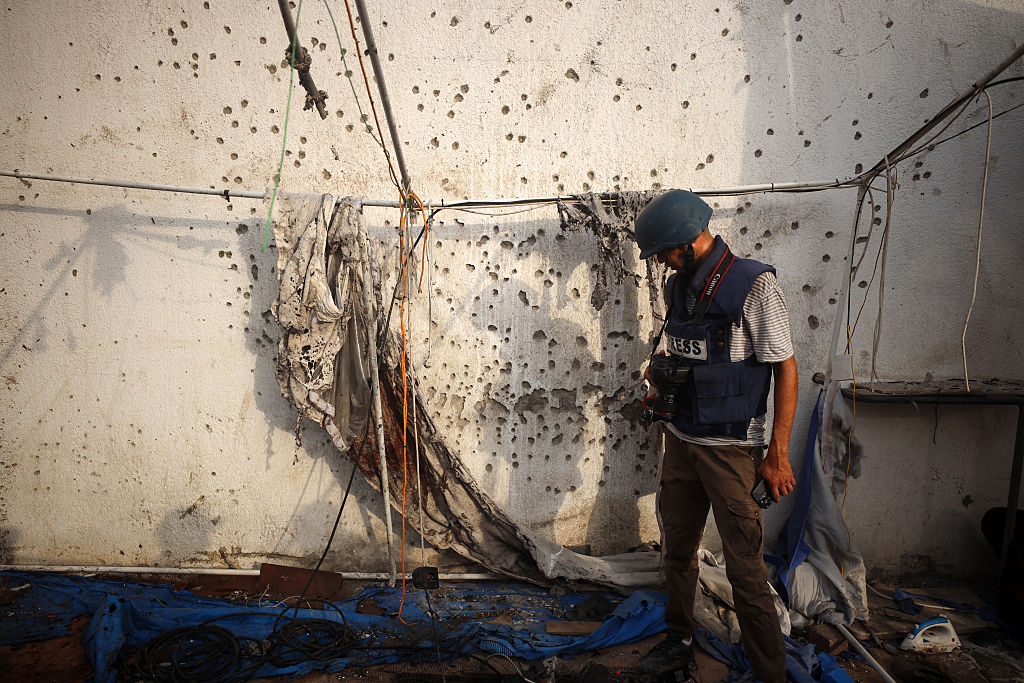
A Palestinian journalist checks the destroyed Al Jazeera tent at Al-Shifa Hospital in Gaza City, Palestine, on August 11, 2025, following an overnight strike by the Israeli military.  Majdi Fathi / NurPhoto via Getty Images

On June 25, 2026, the Committee to Protect Journalists announced that it had removed 20 names from its list of journalists killed in the Gaza Strip, confirming only eight names while leaving the remaining cases under review. When I read the announcement, I did not focus on the numbers. Instead, I found myself asking a single question that has haunted me ever since: If I am killed tomorrow while doing my job, will I be recognized as a journalist, or will my name also disappear from the list?

Since the beginning of Israel’s war on Gaza, more than 260 journalists in Gaza have been killed, according to the Palestinian Journalists Syndicate, making it one of the deadliest conflicts for media workers in modern history. Despite this unprecedented toll, international organizations dedicated to protecting journalists have been unable to stop their killings or provide meaningful protection.

I began working as a journalist in 2024, in the midst of the genocide unfolding in Gaza. My goal was never simply to report the news. I wanted to tell the world what we, as Palestinians, were living through. I wrote about our forced displacement, the complete destruction of my family’s home, and the interruption of my university education for an entire year. I documented the suffering of families who lost loved ones, people who were wounded or amputated, and women who became the sole providers for their households after losing their husbands.

I understood from the beginning that journalism in Gaza could cost me my life. Every story means leaving my home and traveling to places that could be bombed at any moment. Yet I constantly remind myself: We are all living under the threat of death in Gaza. If I am killed, at least I will have died doing my work as a journalist.

On July 18, 2026, that possibility came frighteningly close.

Related Story

Israel Kills Famous Gaza Reporter Anas Al-Sharif in Targeted Strike
Al-Sharif was hailed as the “voice” of Palestinians in Gaza, and was openly targeted by Israeli authorities.  By Sharon Zhang , Truthout  August 11, 2025


Journalism in Gaza could cost me my life. Every story means leaving my home and traveling to places that could be bombed at any moment.

I was on my way to Gaza City’s Al-Nasr neighborhood to interview a woman who had lost her husband and become the sole breadwinner for her family. As I approached the area, an apartment building approximately 200 meters away was hit by an Israeli airstrike. I watched shrapnel scatter through the air around me. Terrified, I turned back and rushed home.

When I arrived, the fear was written all over my face. Standing there, I asked myself a simple but devastating question: If I had been killed just minutes earlier, would the world have recognized me as a journalist? Or would my professional identity also have been questioned after my death?

Journalists in Gaza work with the bare minimum. I do not own a professional camera, a laptop, or even a microphone for recording interviews. Everything I do depends on my personal mobile phone. I record interviews, take photographs, write my reports, and submit them using that single device.

Nor do I have protective equipment such as a press vest or helmet. Without them, there are many places I simply cannot risk entering because doing so would put my life in even greater danger. Although protective gear has failed to save many journalists in Gaza — where journalists and human rights organizations accuse the Israeli military of deliberately targeting media workers — it can still offer some protection against shrapnel and stray bullets.

After I had spent a year and a half of working as a journalist, my father urged me to apply for a press card from the Palestinian Journalists Syndicate to formally establish my professional status.

I visited the syndicate’s office in Gaza, where I met Ahed Farwana, Secretary-General of the Palestinian Journalists Syndicate in Gaza. I told him that I wanted to obtain membership and a press card. He explained that membership is not merely symbolic; it is essential for protecting journalists’ rights. If a journalist is killed or injured, the syndicate obtains authorization from the journalist’s family to pursue legal action before the International Criminal Court and other legal bodies, even though these efforts have so far failed to hold those responsible for killing journalists accountable.

Obtaining membership, however, is not automatic.

Farwana explained that the Palestinian Journalists Syndicate does not grant membership to just anyone. Applicants must demonstrate that they are practicing journalists by submitting published work and official letters from the media organizations they work with.

I submitted links to my published reporting, along with official documentation from the media outlets that publish my work. Four months later, my application was approved, and I officially became a member of the Palestinian Journalists Syndicate.

Holding my press card in my hands felt like a personal victory. It was more than an identification card — it was official recognition that I was a journalist.

On July 21, 2026, I returned to the syndicate’s office to interview Ahed Farwana about the Committee to Protect Journalists’ decision to remove Palestinian journalists’ names from its casualty list.

Farwana said the Palestinian Journalists Syndicate categorically rejects questioning the identity of any journalist whose name it has recognized, stressing that the syndicate is the only body authorized to determine who qualifies as a journalist in Gaza, based on clear professional standards and criteria.

He added that the international community has failed to protect Palestinian journalists despite the unprecedented number of killings, limiting its response to statements of condemnation while journalists continued to be targeted.

He also urged international organizations not to adopt Israeli narratives questioning the identity and credibility of Palestinian journalists, arguing that such claims serve only to shield those responsible from accountability.

Today, I carry a press card that officially recognizes me as a journalist. Yet the question that first entered my mind after reading about the removal of journalists’ names from casualty lists has never left me: If I am killed while doing my job, will this card be enough for the world to recognize that I was a journalist? Or will I, too, become another case to be questioned after my death?

This article is licensed under Creative Commons (CC BY-NC-ND 4.0), and you are free to share and republish under the terms of the license.


Ohood Nassar
Ohood Nassar is a journalist and writer from northern Gaza. Her work has been published in Prism, The New Arab, We Are Not Numbers, Electronic Intifada, Palestine Deep Dive, The Progressive, Washington Report, and Al Jazeera.
Interview

When a Fascist Organization Set Up Shop in Their Town, Residents Fought Back

Michael Edison Hayden’s new book tells the story of an Appalachian town’s fight against an anti-immigrant behemoth.

July 27, 2026

An aerial view of the Berkeley Castle on December 8, 2022, in Berkeley Springs, West Virginia. Peter Brimelow of the web site VDARE.com is currently the owner of the property.
Ricky Carioti / The Washington Post via Getty Images

There is a certain symmetry to what we have experienced over the past decade of collapsing national consensus and far right radicalization. In cities and small towns around the country, people are watching as their friendships break down along lines of political or moral agreement, and as the shadow of white nationalism towers over even the most seemingly idyllic environments.

This is the conflict that researcher and journalist Michael Edison Hayden found when looking at Berkeley Springs, a small and astoundingly beautiful corner of West Virginia nestled along the edge of Appalachia, where the anti-immigrant group VDARE, a popular far right publication founded in 1999 that mixed edgy Republicans like Pat Buchanan and Ann Coulter with explicit white nationalists, decided to purchase a literal castle to use as its home base. What happened next was a clash between residents and some of the most vocal and best-funded white supremacists in the country, and Hayden was pulled directly into that story as he stood with the town’s residents and faced personal and emotional catastrophe along with them.

This story is woven through his new book, Strange People on the Hill, a mix of deep reporting and painfully honest memoir that tells the story of people trying to survive alongside the increasing strangeness of the communities where we once felt at home.

I spoke with Hayden about what drove this project, how it evolved, the activism Berkeley Springs residents took up, and what this all means for a far right that has unmatched power in Donald Trump’s second term.

Shane Burley: We get a lot of books each year about the growth of the American far right, but yours was different. What brought you to the uniquely personal approach you took, and how did it change along the way?

Related Story


Collapse of White Nationalist Party Offers Lessons for Anti-Fascist Strategy
The inherent instability of white supremacist groups offers anti-fascists the tools to sow chaos within the movement. By Shane Burley , Truthout  April 15, 2024


Michael Edison Hayden: I tried to do something different. We’ve been writing about this era for a long time, and I wanted to do something that would center the psychological conditions of the moment more than necessarily the bad guys doing it. I wanted to focus on what it’s like to live in this time where everybody is so obsessed with the “Great Replacement” conspiracy theory, and how crazy it’s making people.

When Bold Type [Books] approached me about doing a book, I thought it would be an opportunity to help further distinguish the difference between the town and VDARE by showing what it had done to Berkeley Springs, lifting up the town’s story and showing that the area is worth saving. I didn’t want to leave my work with the town unfinished.

But then it changed a lot when I ran into all those issues with the Southern Poverty Law Center (SPLC), where I worked, because I couldn’t actually write the book without dealing with what had happened there. [After being terminated from the SPLC, Hayden threatened a discrimination lawsuit. The organization ultimately settled.] I happened to be in Berkeley Springs in December 2023 when I dealt with suicidal ideation, which stemmed not only from the hell of reporting on this material but also what happened at the SPLC … union-breaking tactics and discrimination. One of the more important events in the town at that moment was me coming there to speak to people, so I couldn’t keep myself out of the story.

The book deal was all I had when I went into a psychiatric hospital, because I’d lost my job, I’d lost everything. So I was working on the book while I was hospitalized. I wrote and rewrote the first lines of the book through a lot of difficulties like memory loss from medication and the changing environments as I went through treatment.

For me, the story shows that everybody is going through a tremendous loss of sanity because of the era we’re in. If you look at things like those execution-style shootings in Minneapolis and how quickly people on the MAGA right rushed to defend it without getting any more information, we’re really going crazy.

I wanted to capture that feeling, that we are all going through this horrible thing together.

You land in this small town of Berkeley Springs in Appalachia, a tourist enclave that is now essentially being threatened by a white nationalist institution setting up shop. Tell me a bit about this town, and how these community members started trying to build a plan to push VDARE back out of their neighborhood. This is something that is likely familiar to a lot of people. Over the past 10 years, many folks without any history as activists have been forced into situations where they have to rapidly become community organizers.

The most defining thing is there are not a lot of people from Appalachia living in Berkeley Springs. It is a town full of people who came from somewhere else. It’s an affordable place for people who like nature, so it brings people from all over, especially retirees. This is part of what leads it to be economically defined by tourism, people who make a living selling knickknacks or coffee, and their market is the visitors who come to town.

It’s an interesting question whether or not the main characters of the book consider themselves activists. There’s that anti-fascist motto, “we protect us.” This is something really primal for people. None of these people were really into radical leftist politics. For the most part, they’re liberals who embodied the “we protect us” mindset by necessity, not as some sort of deeply ideological political stance.

This was more like, wait, we’re all screwed. All our businesses — this is how we make money. Then this person comes in, they have radical anti-immigrant beliefs, and they’re about to become the most famous and possibly wealthiest people in town. What do you do about that?

So they came together as business owners in the beginning to try to solve a problem that had no obvious solution. Peter and Lydia Brimelow bought their castle privately. It’s their property. So how do you even fix that?

From there, they end up becoming activists. They hadn’t thought in those terms before, but I think they would probably look back and say that they were.

Peter Brimelow had been incredibly influential on the anti-immigrant right, and in the creation of the “alt-right” and the radicalization of people like Ann Coulter and Stephen Miller (which you’ve written about). But what was his significance at the point in which he arrived in the town?

At the time Peter Brimelow purchased the castle in 2020, I think he believed this was the start of a VDARE dynasty. This organization he built would radiate outward from this castle beyond his death and become an institution for nativists and, if you would like, fascists.

But they ran into a huge problem. After Charlottesville, there was a growth of activists who worked to institute social punishment and accountability for what was witnessed there. That meant calling people’s jobs, calling people in the towns where they grew up and saying, “Did you know this happened?” One of the most important ways was to call people hosting [fascist] events and ask if they want something like what happened in Charlottesville to happen here, too.

That’s what happened to VDARE when they tried to set up conferences. VDARE lost access to multiple hotels due to this type of activism. Peter and Lydia believed they found an answer by purchasing the castle. This can finally be a home base where the “dissident right” can gather.

What he didn’t understand was that when he signed off on that castle purchase, that was the end of VDARE.

He had previously been at the height of his influence. You had Stephen Miller in the White House, somebody who looked up to Peter Brimelow. You had people listening to Pat Buchanan and Ann Coulter, both VDARE contributors.

Peter was at peak influence, and I think ultimately, to use a cliché, they flew too close to the sun.

The people they were bringing into the movement didn’t always have the same kind of snobby Brimelow manners, like Unite the Right organizer Jason Kessler or Kevin DeAnna, who had even more explicit interest in neo-Nazi politics than Brimelow. In the same way that the younger generation of the MAGA movement is more wild and reckless, the same thing was true of the type of people VDARE was cultivating. Then financial troubles followed, as did New York State investigations into this nonprofit status. Things crumbled quickly.

We watch as the residents begin a kind of desperate attempt to organize the town against Brimelow, but fractures start forming. This is also quite familiar for people whose relationships were, perhaps before Trump and the alt-right, primarily apolitical, but who now experience sharp barriers forming between them. How do they change during this process?

I think it’s something that everybody who has engaged in any kind of political activism understands.

In our most naive, childlike state, when we first take political action, we may assume everyone knows what we are doing is right, and then you’re surprised to find that not everybody agrees. And that opposition can even come from ostensibly liberal allies who simply don’t agree with speaking out. Once you start speaking up about life and struggle, there will be blowback.

That’s what happens to most of the people in Berkeley Springs. That includes both people who made a stand defending VDARE and people who stood up against it. I don’t defend VDARE supporters in any way when I’m saying this. I’m just saying that anybody who spoke up about anything was met with either antagonism from people who believed the opposite, or from a crowd of people who wanted everybody to just shut up and not disrupt the apple cart.

In the case of Trey and Paul — two of the book’s main characters, whose coffee shop is at the center of the story — they had people who were ostensibly liberal and with them ideologically, but who really went off trying to undercut them and make them look foolish. Multiple people accused Trey of bringing journalists, outsiders, to Berkeley Springs to spark bad press. These are people who may have agreed with them and been against VDARE but couldn’t rationalize the significance of the situation and just wanted everybody to stop talking about it.

We watch as they throw everything at the wall, with limited results. This is an experience that I think resonates particularly across rural communities that have tried to scrape together strategies with few resources and a lack of uniform political support. What did they learn from this experience, and what lessons do you think this offers to all of us thinking about how to mobilize our communities during a time of far right government capture?

I think everybody in town is eager to move on and put the VDARE years behind them. It’s like you finally broke up with your shitty ex, but her stuff is all over your house. They know VDARE is gone and doesn’t have the kind of presence it used to have, but the castle is still owned by Peter and Lydia Brimelow, and they are still in town.

I think the townspeople who opposed VDARE in Berkeley Springs are surprised and impressed with themselves to a degree, and I think they also know that there is no total victory for them.

As for what everybody else can learn, I’ve given that a lot of thought. The thing to do — and it’s a difficult thing — is that when you see something that is wrong, it doesn’t matter if it seems impossible. You need to speak up and do something about it.

Berkeley Springs had an impossible situation. VDARE bought that castle with a fountain of dark money. The town had no access to funds by comparison. When you’re stuck with a situation that seems impossible, but you know it’s wrong, you still have to speak up. They tried everything, and they were able to find wiggle room and dislodge VDARE.

One thing that’s not in the book (I only found out afterward) is that people from the town were calling New York State Attorney General Letitia James, who ultimately opened the crushing investigation into VDARE’s nonprofit, and trying to get her to pay attention to what was happening in Berkeley Springs. Even sending my articles to her.

They tried everything. On the day of a VDARE conference at the castle, they hosted a pro-immigration event in town. There were a bunch of different flags from different countries, a bunch of cookies, and maybe five people. But there was enough to have a pro-immigration sign visible in the town.

Whose mind was changed that day? We don’t know. You just don’t know.

In order to live, you need to act. That is the lesson from their activism. The easiest thing to do is try to get your money together and move away. Say it’s a lost cause.

And they didn’t do that.

The center of the U.S. far right movement seems to be shifting away from fascist organizations and into posts of formal political power. We see as, to a degree, white nationalist organizations have shrunk, but that may correlate with how well those ideas have percolated into the mainstream GOP. So where does the heart of the U.S. far right sit today?

They don’t need groups anymore. If you want to be a Proud Boy or you want to be in the Patriot Front, why wouldn’t you just join ICE [Immigration and Customs Enforcement]?

There’s no way to statistically quantify how many people who have been in groups like that, or have been attracted to groups like that, are in ICE. But there’s an opportunity to get paid for it. And when you look at the propaganda that comes out of the DHS [Department of Homeland Security] Twitter account and all these things, there’s just no reason for some of these organizations anymore. It’s nominally a neo-fascist collective with cryptocurrency schemes, setting up UFC fights.

There’s no need for these fringe white nationalist organizations anymore, necessarily. We’ve seen the Daily Stormer’s editor Andrew Anglin hanging it up, for example. The MAGA movement has peaked. Now the question is: What will the movement do now that it has ascended and become such a dominant cultural force?

We don’t need to worry about whether MAGA is a fascist movement. Of course it is. After January 6, after Minneapolis, it’s a fascist movement.

The question is: What will they do going forward?

Will they succeed in taking some sort of autocratic hold on the country, a grip on a weakened democracy? We don’t know yet. We don’t know if they have the savvy to govern purely as an authoritarian movement. Right now, we have authoritarian moments and symbols and events overlaid onto something that still resembles the United States we knew before Trump.

I think right now we’re going to find out whether this very fascist movement is able to dominate in the way we know they want to.


This article is licensed under Creative Commons (CC BY-NC-ND 4.0), and you are free to share and republish under the terms of the license.


Shane Burley

Shane Burley is the author of Why We Fight: Essays on Fascism, Resistance, and Surviving the Apocalypse (AK Press, 2021) and Fascism Today: What It Is and How to End It (AK Press, 2017). His work has appeared in places such as NBC News, Jacobin, Al Jazeera, The Baffler, The Daily Beast, Truthout, In These Times and Protean. He is currently working on an anthology of anti-fascist writing called ¡No pasarán! and writing a book on antisemitism. Follow him on Twitter: @shane_burley1.
Trump Escalates Campaign Against Smithsonian With New “Warning Signs” Order


Trump’s executive order bashed the Smithsonian Institution for attempting to advance ideas of “social justice.”
July 28, 2026

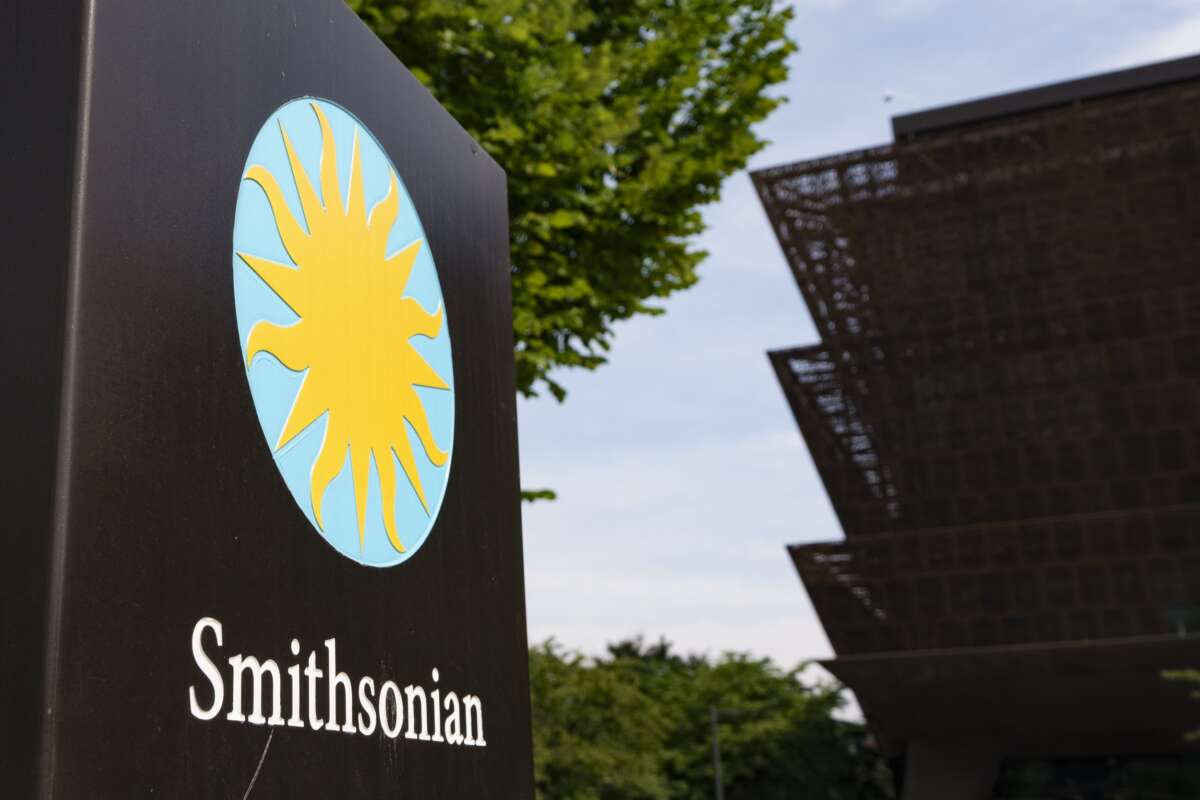
A Smithsonian sign is displayed in front of the National Museum of African American History and Culture on July 10, 2026 in Washington, DC.
Kevin Carter / Getty Images

President Donald Trump issued an executive order this past weekend demanding new signage outside the Smithsonian Institution’s National Museum of American History (NMAH), due to what his administration has alleged are displays that demonstrate an unpatriotic view of the past.

The signs will “warn” visitors about a supposed “ideological capture” of the NMAH. They also claim that the museum’s displays depict historical events using a “radical view of American history.”

The latest action follows 16 months of the Trump administration pressuring the Smithsonian Institution to change its content, threatening to review current exhibits and cut off funding for the museums unless they adhere to the White House’s standards. The effort has resulted in the ouster of at least one museum director.

The Smithsonian is not governed by a single branch of government, making the administration’s demands highly unusual and likely unprecedented. Instead, the museums are managed by a board of regents, which includes members from all three branches of government, as well as nine additional citizen members.

Trump’s executive order issued on Friday calls for the Interior Department and the National Park Service (NPS) to “install temporary signage” along sidewalks at the NMAH to inform passersby of a report issued by the administration regarding the accuracy of the museum’s exhibits. That report claims that “the Smithsonian leadership does not present American history as a shared national inheritance to be taught and celebrated, but instead views American history as a ‘prime tool’ to advance ideas of social justice and the radical transformation of our society.”

Related Story
Interview |
Racial Justice
Many Call Authoritarianism “Un-American.” 250 Years of History Show Otherwise.
A group of Indigenous scholars are countering erasures in US history in Rebecca Nagle’s new “First America” podcast.
By Petala Ironcloud , TruthoutJuly 18, 2026

The Trump administration’s allegations are ironic, given that Trump himself demonstrably lied to the American public tens of thousands of times during his first term in office, and has continued to lie during his second term.

During a congressional hearing last week, NMAH director Anthea Hartig denied that the museum’s exhibits are ideological. Said Hartig:


Our work is governed by the Smithsonian standards of scholarship, accuracy, independence, and nonpartisanship. The museum does not take sides in America’s political debates. We preserve and document the evidence of American life in all of its breadth, so that the public can encounter the past and draw their own conclusions.

The claims by the White House do not “fairly or accurately” represent the museum’s standards, Hartig added.

Rep. Melanie Stansbury (D-New Mexico), ranking Democrat on the Oversight Committee, blasted the administration for targeting truthful exhibits at the museum.

“This EO is a clear political overreach, driven by an ideological agenda to rewrite American history,” Stansbury said on social media. “Our Smithsonian institutions do not belong to the President, but to the American people and so does our nation’s history.”

American Historical Association executive director Sarah Weicksel also criticized the executive order, noting that there is “no precedent” of a president demanding that a museum “present a completely alternative narrative” — one based on a “very narrow and very circumscribed definition of patriotism.”

The executive order is “an absolute affront to the professionals who work in that building,” Weicksel added in comments shared with The Washington Post.
Democrats Call FIFA President to Congress After Trump’s World Cup “Quid Pro Quo”

Meanwhile, FIFA announced that it is planning to sell a major stake in the World Cup to a Kushner family firm.

July 28, 2026

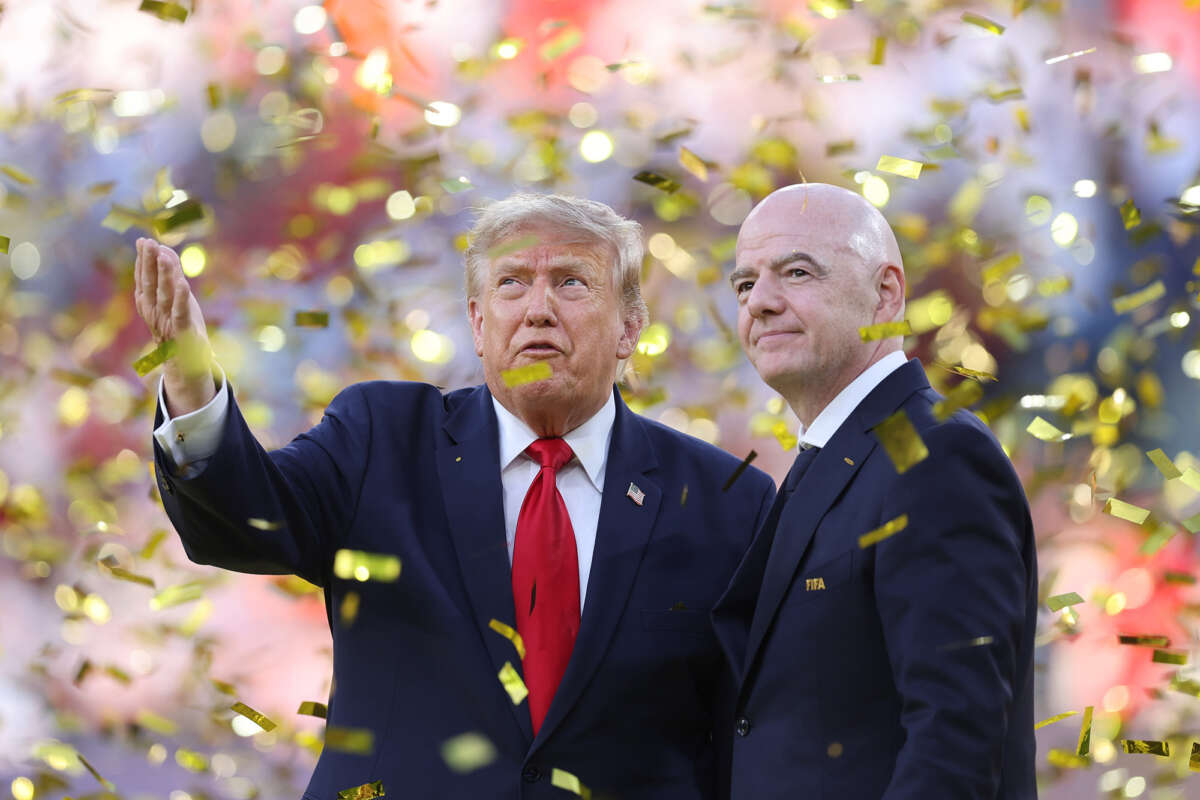
FIFA President Gianni Infantino and President of the United States Donald J Trump stand as confetti comes down after the FIFA World Cup 2026 Final match between Spain and Argentina at New York New Jersey Stadium on July 19, 2026 in East Rutherford, New Jersey.  Catherine Ivill - AMA / Getty Images

The Democrats on the House Judiciary Committee have launched an investigation into dealings between President Donald Trump and the leaders of FIFA on the heels of the World Cup, accusing the leaders of conducting a “bribery and corruption scheme” to enrich themselves at the expense of soccer fans around the world.

On Monday, the committee’s ranking member, Rep. Jamie Raskin (D-Maryland), demanded that FIFA turn over any documents or records with relation to its dealings with Trump, including visitor logs for FIFA’s office in New York’s Trump Tower, which the organization has leased for a year. Raskin also demanded that President Gianni Infantino sit for an interview with members of Congress.

In a letter to Infantino, Raskin excoriated the Trump administration’s sudden dismissal of the Justice Department’s indictments in its wide-ranging corruption probe of FIFA earlier this year, which involved over $200 million in “bribes and kickbacks” across 20 countries for decades.

The lawmaker also criticized FIFA for charging customers outrageous prices. Some tickets for the final listed by FIFA, he noted, surged to a price of $33,000 at one point. Meanwhile, ticket buyers reported FIFA moving them into worse seats after their tickets were purchased. FIFA’s revenue for this World Cup surged to a record $15 billion, double the $7.5 billion made during the 2022 Qatar World Cup.

He said that FIFA has engaged in “outright bribery” related to this years’ and previous World Cups. This includes FIFA’s “hilariously fake” peace prize it granted to Trump after he was not awarded the Nobel Peace Prize in 2025, as well as Trump’s call to Infantino to overturn a U.S. players’ suspension during the tournament. The office in Trump Tower, meanwhile, largely sits empty, officials have said, despite Raskin estimating that renting such a space may cost $600,000 a year.


US Golfer Tried to Call Trump to Overturn Penalty, on Heels of World Cup Scandal
Right-wing golfer Bryson DeChambeau has previously visited the Trump White House and played golf with the president.  By Sharon Zhang , Truthout  July 21, 2026


“In exchange for leasing an office in Trump Tower at inflated costs for limited use and inventing a bogus ‘peace prize’ for the President, the Trump Administration abandoned anti-corruption enforcement and allowed FIFA to operate as a multinational criminal enterprise with impunity,” read a press release on the investigation.

The investigation comes as Infantino is facing yet more scrutiny for Trump ties. On Tuesday, the organization announced that it is planning to sell a minority stake in a new company, FIFA Forward Enterprises, that will run the men’s and women’s World Cup competitions.

The organization said it’s planning to sell up to 21 percent of the company to investors — and that the investment group would be led by a firm run by Joshua Kushner, brother to Trump’s son-in-law and top adviser Jared Kushner.

This would even further entrench Trump’s sphere of influence into FIFA, and has already faced criticism. Sky News reported that European nations are considering a boycott as a result of the plan.

In a statement, Europe’s governing body for soccer, Union of European Football Associations (UEFA), said that the proposed deal “crosses a line that football’s governing institutions should never cross.”

“The soul and governance of football are not assets to trade — especially with zero transparency as to who gains financially,” the group said. “None of us are the owners of football. It is not FIFA’s to sell.”
Trump Is Already Outpacing His First-Term Record Number of Airstrikes on Somalia

The Trump administration cut humanitarian aid to Somalia while continuing to pound it with military airstrikes.

July 27, 2026

Displaced people collect water from a well inside a camp for internally displaced persons in the outskirts of Kismayo, Somalia, on April 21, 2026.
Simon Maina / AFP via Getty Images

In a recent video released by the State Department, Secretary of State Marco Rubio declared, “The inspiration of America to the rest of the world has been extraordinary.” The video, which commemorates the 250th anniversary of the U.S. Declaration of Independence, hails the legacy of the framers while a voiceover praises the generations who “dedicated themselves to building a more peaceful and prosperous world.”

Just weeks before the video was released, the U.S. carried out its most intensive recent bombing campaign in Somalia, launching a blitz of airstrikes in a five-day operation in the port city of Kismayo — a contradiction that seems lost on this administration. On July 5, an additional airstrike was carried out in the Juba Valley. AFRICOM, the U.S. military command that oversees security operations across Africa, has released no information about casualties or the identities of those killed, leaving the human toll of the campaign unknown. In 2025, AFRICOM spokesperson Lt. Col. Doug Halleaux confirmed it would no longer release specific details about airstrikes to ensure “operations security.”

The first Trump presidency ended with 219 U.S. airstrikes in Somalia, the highest recorded total across previous administrations. His current administration is already on track to surpass that number at more than 207. Kismayo and the surrounding region are frequent AFRICOM targets. Last year, a series of airstrikes in Jamaame, a neighboring town, killed at least 12 people, including eight children and a pregnant woman, according to an investigation by The Guardian. The bombing was the deadliest U.S. airstrike for civilians in East Africa in recent history.

As the intensity of U.S. operations grows, the conflict has become increasingly opaque, making independent monitoring by journalists and human rights groups nearly impossible. Mohamed Gabobe, a Mogadishu-based journalist who investigated the Jamaame massacre, describes a widening gap between events on the ground and the State Department’s official account. “The narrative has been hijacked,” he told Truthout. The authority to exercise military power confers the authority to shape public record, allowing the U.S. narrative to go “unopposed and unchallenged.” The result is a conflict that persists with little scrutiny or oversight — effectively a shadow war, a concept that can be traced back to the Cold War, when superpowers fought through covert operations and proxy conflicts rather than direct confrontation on the battlefield.

In the decades that followed, the so-called global “war on terror” transformed the Cold War doctrine of a war without fronts into an enduring counterterrorism framework: sustained, low-visibility military engagement with no clear endpoint or objective, transforming conflict from a discrete event into a permanent condition. In an interview with Truthout, Samar Al-Bulushi, a professor of anthropology at University of California, Irvine, described this post-9/11 security landscape as one of both “continuity and change.” The U.S. has long sought to “cultivate partners” by training foreign militaries that could “serve as extensions of U.S. power.” In Somalia, this has allowed the U.S. government to conduct military operations for over two decades without a formal declaration of war.


Trump Perpetuates Undeclared War in Somalia With Renewed Airstrikes
The United States has been carrying out operations in Somalia since at least 2002 without a formal war declaration. By Jamila Osman , Truthout  March 3, 2025


The Making of a Shadow War


U.S. military involvement in Somalia is not new. Following the collapse of the Somali government in 1991, the United States joined a UN mission to secure the delivery of humanitarian aid amid civil war, drought, and famine. The operation evolved into a nation-building campaign to capture Mohamed Farrah Aidid, a military officer, whose forces played a key role in overthrowing Siad Barre’s government.

AFRICOM, the U.S. military command that oversees security operations across Africa, has released no information about casualties or the identities of those killed, leaving the human toll of the campaign unknown.

The 1993 Battle of Mogadishu, in which hundreds of Somalis and 18 U.S. soldiers were killed, became a turning point in U.S. foreign policy. Images of dead U.S. troops being dragged through the streets prompted demands for immediate withdrawal and played a role in making future large-scale troop deployments and ground invasions more politically costly.

In Somalia, overt military intervention gave way to a more diffuse model of warfare characterized by security partnerships and cooperation agreements with the Somali federal government, and military assistance. The “Mogadishu Effect” did not mark the end of U.S. involvement in Somalia: It transformed it, altering who could see it, contest it, be held accountable for it, and ultimately, who would bear its cost.

Although AFRICOM press releases describe counterterrorism operations as being conducted “in coordination with” the federal government of Somalia, The Guardian’s investigation into U.S. strikes in Jamaame suggests Somalia’s role in this partnership might be little more than a formality. Jethro Norman, a researcher at the Danish Institute for International Studies who has conducted fieldwork in Somalia, said: “Sometimes they’ll call an hour before and say: ‘We’re going to hit this target, please sign this piece of paper.’”

AFRICOM operates within a broader ecosystem of intervention in Somalia that includes the African Union, the United Nations, regional training forces from neighboring countries, European Union training programs, private security contractors, and intelligence agencies. These overlapping institutions form a landscape where one of the state’s most fundamental responsibilities, the provision of security, is outsourced to foreign actors. While this infrastructure is designed, funded, and coordinated by external powers, it relies on Somali and other African troops who are recruited to “die in the name of protecting U.S. interests.”

The Danab Brigade, an elite counterterrorism force established in 2014 through Bancroft Global Development, a private military contractor funded through the U.S. State Department, illustrates the contradiction at the heart of Somalia’s security infrastructure. Its personnel, made up of military officers and soldiers from several countries, were responsible for training and mentoring thousands of Somali army recruits. In 2024, the Somali government and the United States signed a memorandum of understanding to construct up to five military bases for the brigade, a project valued at over $100 million. Danab is considered the first line of defense in the fight against Al-Shabaab and a model for the future of Somalia’s national army, yet remains heavily dependent on foreign funding, training, and equipment. Although AFRICOM frames its mission as building Somali capacity to reduce reliance on external support, foreign military assistance is presented as a pathway to sovereignty even as it increasingly functions as a substitute for it.

The Price of Partnership


At the World Economic Forum meeting in Davos this January, President Donald Trump said Somalia is “not a country … not a nation, got no government, got no police.” A month earlier, as part of a racist rant against Minnesota’s Somali community before he unleashed a devastating flood of immigration police in the state, Trump described Somalia as a place where people just “run around killing each other.” His remarks draw on a familiar but outdated trope disparaging Somalia as a failed state, a term that is overwhelmingly used to describe African and Middle Eastern countries. Like the language of “partnership” and “cooperation,” “failed state” actively conceals an asymmetry of power. It obscures the socio-political and historic origins of state dysfunction, presenting it as an inherent condition, and normalizes continued intervention and diminished sovereignty.


As the intensity of U.S. operations grows, the conflict has become increasingly opaque, making independent monitoring by journalists and human rights groups nearly impossible.

African scholars and political leaders have long warned that previous systems of colonial governance did not end with independence, but were replaced by new forms of economic and political domination often mediated through foreign aid. Somalia is one of the most aid-dependent states in the world. According to the International Monetary Fund, foreign assistance has accounted for roughly 20 to 30 percent of its GDP in the last decade. The United States has historically been one of its largest bilateral donors.

In Neo-Colonialism: The Last Stage of Imperialism, Kwame Nkrumah argued that aid relationships structured by unequal power reproduce dependency and undermine self-sufficiency. Although his analysis centers economic aid, his warning applies equally to the security sphere, particularly in the post-9/11 era where development and counterterrorism agendas have become increasingly intertwined. Over half a century ago, Nkrumah warned that “the only type of aid which the neocolonialist masters consider as safe is ‘military aid.’” Somalia provides a contemporary example to understand that claim.

Recent cuts to U.S. foreign aid programs have disproportionately affected Somalia’s humanitarian sector, worsening food insecurity amid ongoing famine and drought. Numerous health facilities have been forced to close, and between late 2025 and April 2026 in Buur Hakaba, a town north of Mogadishu, the proportion of acutely malnourished children under 5 years old has almost doubled. Funding for military assistance and counterterrorism programs have remained largely intact.

Still, decades of increased counterterrorism operations and deepening security cooperation have failed to deliver on the promise of a self-sufficient security apparatus. The clearest evidence is Washington’s decision to end funding for the African Union Support and Stabilization Mission in Somalia in July, citing Somalia’s inability to sustain its security gains or “take ownership of … its own security functions.”

Al-Bulushi told Truthout the structures that created aid dependency are the same structures that give African states little choice when it comes to becoming partners of the United States in the war on terror: “The sources of funding are narrowing and becoming almost exclusively focused on security.” The issue goes beyond how donor countries shape government priorities, but how they shape civil society and civilian life. As Al-Bulushi observed, even local organizations are being forced to “frame their work through the lens of security” in order to access funding. The central contradiction of aid dependency is that it can reproduce the very conditions it seeks to alleviate. Foreign assistance has undoubtedly prevented suffering and helped avert state collapse in Somalia, but it has also produced a system of governance where dependency is not a temporary feature of the post-conflict state, but its organizing principle.

The Illusion of Sovereignty


According to Gabobe, there is a misconception that the presence of U.S. and foreign forces make life safer for ordinary Somalis. “They support the Somali government, not the Somali people. There’s a difference between the two. Their main job is to keep the Somali government from falling.” For many Somalis living in rural areas, the U.S. presence is not experienced as a provision of safety or the absence of violence, but rather through the constant threat of aerial surveillance and bombardment. “They can see the planes in the skies [and] hear them buzzing. People are afraid to go to sleep because they might not wake up. A missile can hit their home.”


Recent cuts to U.S. foreign aid programs have disproportionately affected Somalia’s humanitarian sector, worsening food insecurity amid ongoing famine and drought.

Al-Bulushi describes the irony at the heart of the matter: “The counterterrorism industry has effectively created the very problem that it claims to address.” To Gabobe, the issue is even more fundamental: “When you outsource security, you outsource sovereignty. I don’t think some American official should get to decide which [Somali] village to bomb today.”

Achille Mbembe, the Cameroonian political theorist, defines sovereignty as the state’s monopoly on life and death — its “power and capacity to dictate who may live and who must die.” In Somalia, that power does not rest in the hands of the Somali state, but with foreign militaries and their security proxies who authorize drone strikes, greenlight ground raids, and sanctify extrajudicial killings with near impunity. In the political lexicon of empire, the distinction between sovereignty and subordination collapses, and “cooperation” becomes a technology of violence — one that does not distinguish between civilians or combatants, between mothers or armed militants.

On July 1, Somalia marked the 66th anniversary of its independence from colonial rule. President Hassan Sheikh Mohamud joined the celebrations in Mogadishu wearing a sash emblazoned with the national coat of arms: two leopards standing on spears. A more fitting emblem might have been the ouroboros, the ancient symbol of a snake consuming its own tail. For decades, Somalia has been mired in a cycle where instability becomes the pretext for foreign intervention, the raison d’être that not only necessitates it, but sustains it. This year’s independence day commemoration took place shortly after the renewed U.S. offensive in June and on the eve of Turkish airstrikes in Somalia’s Lower Shabelle region — a bleak reminder that the country’s security is being shaped by an ever-expanding constellation of foreign actors.


This article is licensed under Creative Commons (CC BY-NC-ND 4.0), and you are free to share and republish under the terms of the license.


Jamila Osman
Jamila Osman is a Somali writer from Portland, Oregon.