Tuesday, August 25, 2026


Germany and Italy clash over migrant rescue ships and returns
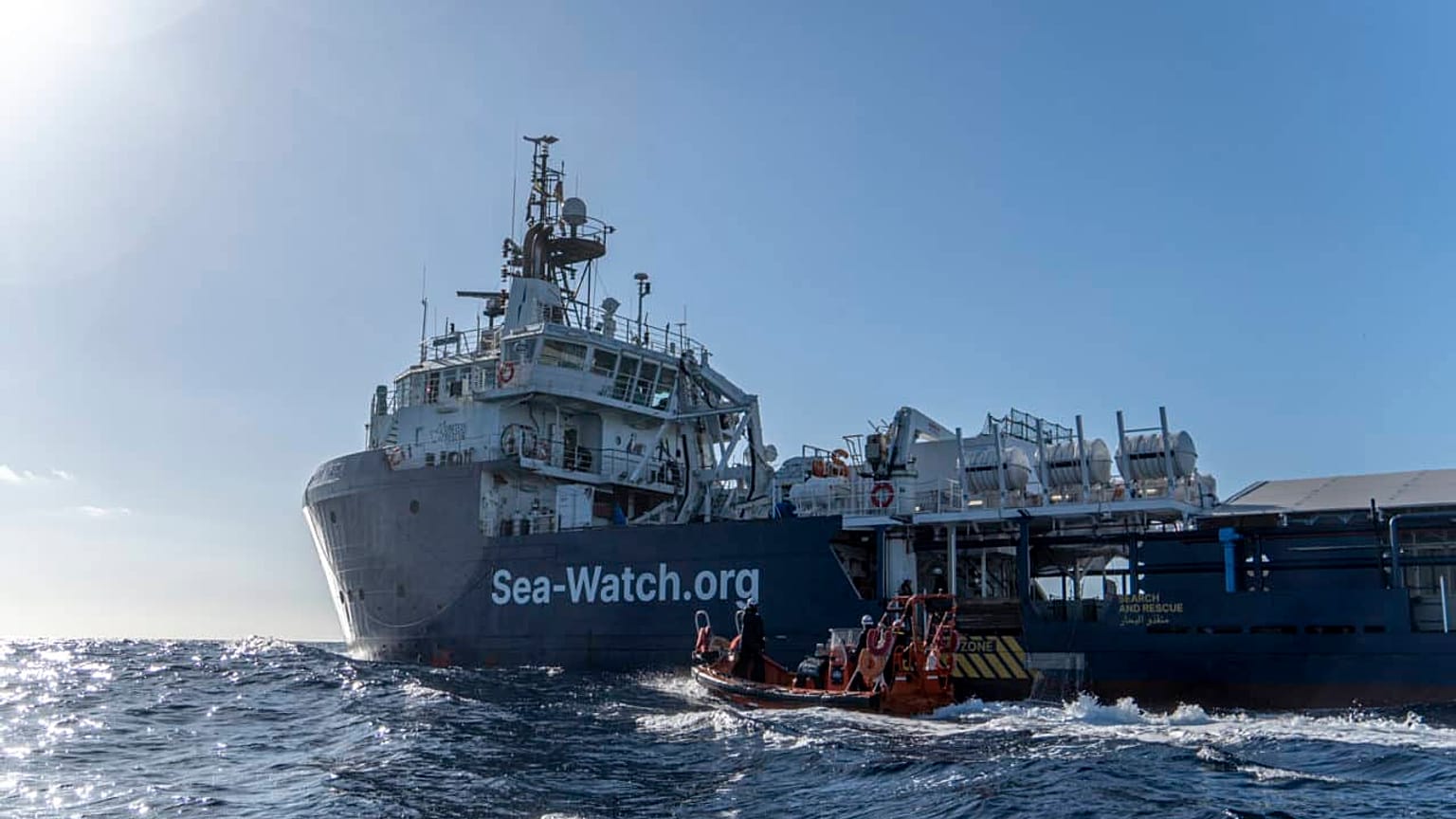
Sea-Watch was founded in late 2014.
Copyright Luna Wolf/ Sea-Watch e.V.

By Maja Kunert
Published on

Berlin and Rome are increasingly at odds over who should rescue migrants in the Mediterranean — and which country should ultimately take responsibility for them. Are private rescue ships offering vital aid or ultimately helping people smugglers?

The detention of a German rescue ship in Italy has reignited a long-running dispute over the role of private vessels rescuing migrants in the Mediterranean. Italian authorities detained the Sea-Watch 5 for 45 days last weekend and fined the German organisation operating it €7,500.

On 13 August, the vessel rescued six people in the Mediterranean and, according to Sea-Watch, encountered an unidentified armed boat and documented the deaths of eight people.

The Italian Interior Ministry said the vessel was detained for failing to inform the Libyan coastguard about the rescue operation.

Sea-Watch said it planned to appeal against the detention, probably in the coming week.

"The detention of Sea-Watch 5 is based on the claim that the ship's crew failed to inform Libyan actors about the rescue in international waters. Yet the Italian Maritime Rescue Coordination Centre never instructed us to do so," Sea-Watch spokesperson Giulia Messmer said.

Messmer added that the Libyan coastguard was present at the scene following the rescue and had communicated with the Sea-Watch crew by radio.

The case is the latest in a long-running dispute between Italy and German sea rescue organisations operating in the Mediterranean.

Critics of the NGOs, including politicians from Germany's conservative CDU/CSU alliance and the Alternative for Germany (AfD), have accused rescue organisations of encouraging dangerous Mediterranean crossings and indirectly assisting people-smuggling networks.

The organisations reject such accusations and argue that their operations save lives on one of the world's deadliest migration routes.

A central point of contention is where people rescued at sea should be taken. NGO vessels generally bring those they rescue to European ports rather than returning them to Libya, which the United Nations does not consider a safe place for migrants to be returned to.
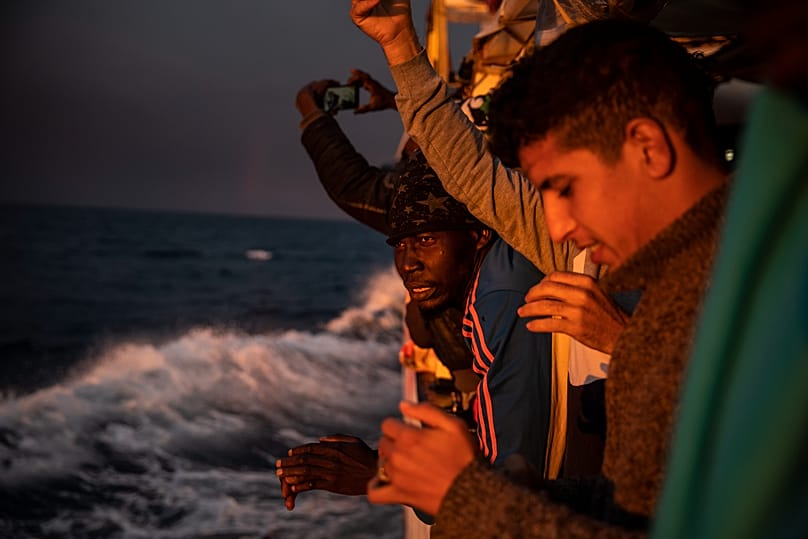
Men from Nigeria and Morocco on board the rescue ship Open Arms in January 2020. The ship had previously rescued 118 people in distress off the Libyan coast. Copyright 2020 The Associated Press. All rights reserved.

A conflict with a long history

The dispute over civilian rescue operations in the central Mediterranean dates back more than a decade.

Sea-Watch was founded in 2015, shortly after Italy ended its large-scale naval search-and-rescue mission Mare Nostrum in October 2014. It was succeeded by Triton, an EU border operation with a more limited search-and-rescue role.

German civilian sea rescue gained international attention in 2019, when Carola Rackete, captain of the Sea-Watch 3, entered the Italian port of Lampedusa with dozens of rescued migrants on board despite being denied permission to dock.

Rackete later entered the European Parliament for Germany's Left party in 2024, before resigning her seat in 2025.

Since Giorgia Meloni became prime minister in October 2022, Italy has tightened the rules governing private rescue vessels.

Under legislation introduced in 2023, commonly known as the Piantedosi decree, rescue vessels are required to head to an assigned port without delay after carrying out a rescue. NGOs have criticised the policy because the ports assigned by Italian authorities can be hundreds of kilometres from the rescue area, preventing ships from remaining at sea to respond to further emergencies.

Italy tightened the rules again in December 2024, extending potential liability beyond the captain to shipowners and operators in cases of repeated violations involving the same vessel within five years.

According to Sea-Watch, Italian authorities have detained civilian rescue ships 44 times since 2023, keeping them out of operation for a combined total of more than 960 days.

Organisations and funding

Alongside Sea-Watch, Sea-Eye, SOS Humanity and the smaller RESQSHIP operate their own vessels in the central Mediterranean. Several ships, including Sea-Watch 5 and Humanity 1, also serve as alliance ships for United4Rescue, a charity founded in 2019 that raises and distributes donations.

According to its own annual report, in 2025 Sea-Watch financed itself almost entirely through donations, with income of around €13.5 million from just under 59,200 supporters. United4Rescue raised around €1.5 million in 2024 from about 4,000 individual donors, organisations and municipalities.

Up to 2025, additional money came from the German state: In 2022, the Bundestag, under foreign minister Annalena Baerbock, approved €8 million for the years 2023 to 2026. In spring 2025, the new foreign minister Johann Wadephul (CDU) stopped this funding despite the ongoing Bundestag decision, arguing that it was not the task of his ministry.

ADVERTISEMENT

Other European organisations are also active: the Franco-German SOS Méditerranée with the Ocean Viking; the Spanish Proactiva Open Arms, which according to the Süddeutsche Zeitung has one of the largest budgets in the sector; and the Italian Mediterranea Saving Humans, which has been operating the Mare Jonio since 2018.

Nevertheless, according to the Italian Interior Ministry, more than half of all migrants brought to Italy on private ships since October 2022 have been rescued by German organisations.
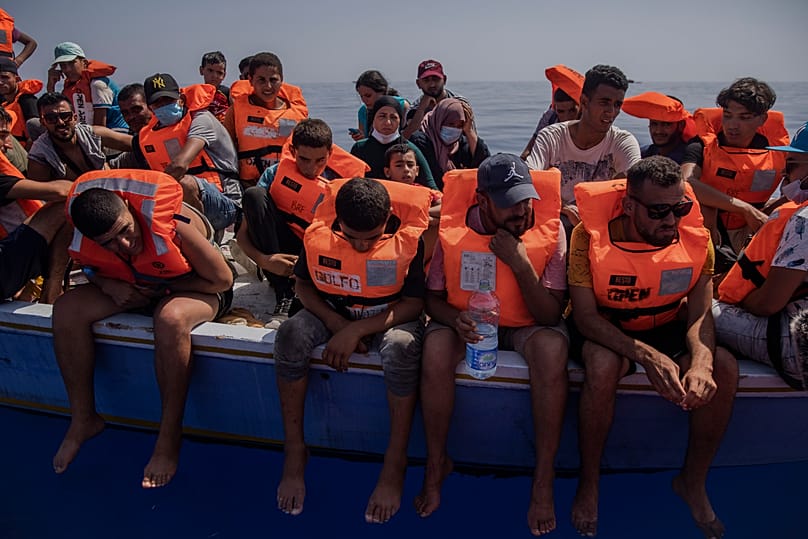
Archive image: Migrants wait off Lampedusa in 2021 to be rescued by the Spanish NGO Open Arms. Copyright 2021 The Associated Press. All rights reserved.

Do rescue ships encourage crossings?

German Chancellor Friedrich Merz has argued that sea rescue should be the responsibility of the state rather than private organisations.

Speaking on German television programme Maischberger in 2025, Merz said sea rescue was "not a task for private enterprise".

Foreign Minister Johann Wadephul has previously gone further. In 2023, when he was the CDU/CSU's foreign policy spokesman, he argued that rescue organisations were unintentionally helping people-smuggling networks.

"In practice, albeit unintentionally, the rescue organisations enable the inhuman smuggling gangs to run their business. No German tax money should be used for that," he said.

The AfD has called for an end to all state support for civilian rescue organisations and has repeatedly referred to them as "NGO smugglers".

Rescue organisations strongly reject the suggestion that their presence encourages people to attempt dangerous Mediterranean crossings.

SOS Humanity managing director Till Rummenhohl described Wadephul's claim as "fundamentally wrong", saying academic studies had repeatedly found no evidence that rescue ships cause increased migration across the Mediterranean.

Frontex executive director Hans Leijtens has also told Euronews that he had never seen evidence of such a "pull factor".

German parties divided

The issue has also exposed political divisions within Germany, including between Merz's conservative CDU/CSU and its coalition partner, the Social Democrats (SPD).

In April, 128 MPs from the SPD, Greens and Left signed an appeal calling on the German government to push for a state-funded EU sea rescue programme. The initiative also called for greater protection for civilian rescue organisations and ships operating under the German flag.

Green MP Jamila Schäfer has described sea rescue as "not an optional extra, but a humanitarian duty".

Clara Bünger, the Left's spokesperson on domestic and refugee policy, accused both Italy and Germany of double standards.

"Punishing people for saving lives while at the same time cooperating with Libyan actors accused of the most serious human rights violations is hypocrisy of the most repellent kind," she told Euronews.

Bünger is calling for a state-organised civilian sea rescue programme so that aid organisations no longer have to shoulder the responsibility alone.

The CDU/CSU takes a different position. The German government ended federal funding for civilian sea rescue organisations in 2025, a move supported by leading conservatives but opposed by some members of its SPD coalition partner.

Günter Krings, deputy leader of the CDU/CSU parliamentary group, also defended Italy's right to enforce its rules against NGO vessels.

"If ships are in Italian waters, they must comply with Italian law. That obviously also applies to NGO ships," he told Euronews.

"So, to begin with, I don't consider what has happened unusual. In any case, it is not something that should become a political scandal."

The far-right AfD goes further, arguing that the work of civilian rescue organisations is itself part of the problem.

"Italy is right to refuse to take responsibility for migrants arriving who have previously been picked up by German smuggler ships off the African coast and then proactively taken to Italy," the party's domestic affairs spokesman, Gottfried Curio, told Euronews.

The AfD has long called for migrants to be refused entry to Germany if they have travelled through a country it considers safe before reaching the country.

An additional strain: the dispute over returns

The Sea-Watch 5 case comes at a time of already strained relations between Germany and Italy over migration.

Since the EU's new migration and asylum rules came into force in June, Germany has been pushing for the return of so-called Dublin cases — asylum seekers for whom Italy is considered responsible because they first entered the EU there before travelling on to another member state.

Italy has resisted such transfers for years. Since 2023, it has rejected around 80,000 requests from European countries to take migrants back, citing pressure on its reception system. Since the new EU rules came into force, it has not taken back a single migrant from Germany.

Deputy Prime Minister Matteo Salvini said at a Lega party meeting in Trento that Italy would, for the time being, continue to refuse transfers from Germany.

"Germany has no right to send back even a single illegal immigrant to us as long as German NGO ships are operating in the Mediterranean to bring thousands of illegal immigrants ashore in Italy and Europe," he said.

Interior Minister Matteo Piantedosi has also called for Germany to compensate Italy for migrants brought ashore by German rescue organisations.

"My German counterpart and I share the view that the activities of the NGOs are a pull factor for irregular migration," Piantedosi said.

According to the Italian Interior Ministry, German organisations have brought around 22,500 migrants to Italy since Giorgia Meloni's government took office in October 2022, accounting for more than half of those brought ashore by private rescue vessels over the same period.

Piantedosi and German Interior Minister Alexander Dobrindt are expected to meet in the coming weeks in an attempt to resolve the dispute.

Bone of contention: the Libyan coastguard

Another central point of disagreement is the role of the Libyan coastguard.

Libya declared its own search-and-rescue region in the central Mediterranean in 2018, meaning its coordination centre is recognised by Italy as the relevant authority for rescues within that area. Italian rules require rescue organisations to cooperate with the authorities responsible for coordinating operations, with failure to do so potentially resulting in sanctions.

Sea-Watch and other rescue organisations challenge such cooperation, arguing that Libya cannot be considered a safe place for people rescued at sea and pointing to serious allegations of human rights abuses involving Libyan authorities.

Human rights organisations have also repeatedly challenged European cooperation with Libya. In July, 31 groups, including Human Rights Watch, called on the EU and its member states to end cooperation with Libyan authorities on migration control, citing widespread abuses against migrants and asylum seekers.

Sea-Watch and other NGOs have also stopped communicating with the rescue coordination centre in Tripoli, arguing that doing so legitimises authorities they accuse of endangering migrants and rescue crews.

The Italian government, by contrast, argues that its approach is helping to reduce irregular migration across the Mediterranean. Piantedosi has pointed to falling arrival numbers and credited cooperation with Libya and Tunisia as one factor behind the decline.


Monoskop.org

https://monoskop.org/images/9/95/Hardt_Michael_Negri_Antonio_Empire.pdf

4.3 The Multitude against Empire. 393. Notes. 415. Index. 473. Page 11. PREFACE. Empire is materializing before our very eyes. Over the past several decades, as ...

Rebels-library.org

http://rebels-library.org/files/multitude.pdf

Page 1. MULTITUDE. WAR AND DEMOCRACY. IN THE AGE OF EMPIRE. MICHAEL HARDT ... Empire calls on war for its legitimation, the multitude calls on democracy as its ...


Newleftreview.org
https://newleftreview.org/issues/ii120/articles/empire-twenty-years-on.pdf

Just as today's. Empire was formed in response to the insurgencies of the multitudes from below, so too, potentially, it could fall to them, as long as those.


Record numbers of climate crisis insects: what to do if you spot a praying mantis

The praying mantis - Mantis religiosa
Copyright Alvesgaspar, CC BY-SA 3.0 , via Wikimedia Commons


By Kirsten Ripper & Euronews with NABU
Published on

This summer, unusually many praying mantises can be spotted in German gardens. How to distinguish the "Mantid religiosa" from a grasshopper and what to do…

This exceptionally hot summer of 2026, with one heatwave following another, is ideal for the praying mantis. The mantis is a warmth-loving species and prefers sunny, dry habitats.

The praying mantis is among the largest native insects: males grow up to 6 centimetres long and females even up to 8 centimetres.

The insect with compound eyes: Mantis religiosa AP Photo


In Germany, this big-eyed insect, which fascinates many people because of its sexual cannibalism, can still be spotted in gardens and parks right into October. And apparently there have never been as many in Germany as there are in 2026.

The praying mantis originally comes from Africa, but it has long been native to the Mediterranean region. "Its migration to Europe goes back around 10,000 years," explains the German Nature and Biodiversity Conservation Union (NABU). It was introduced to the USA at the end of the 19th century and has since spread widely there as well.

Praying mantis in Arizona, USA AP Photo

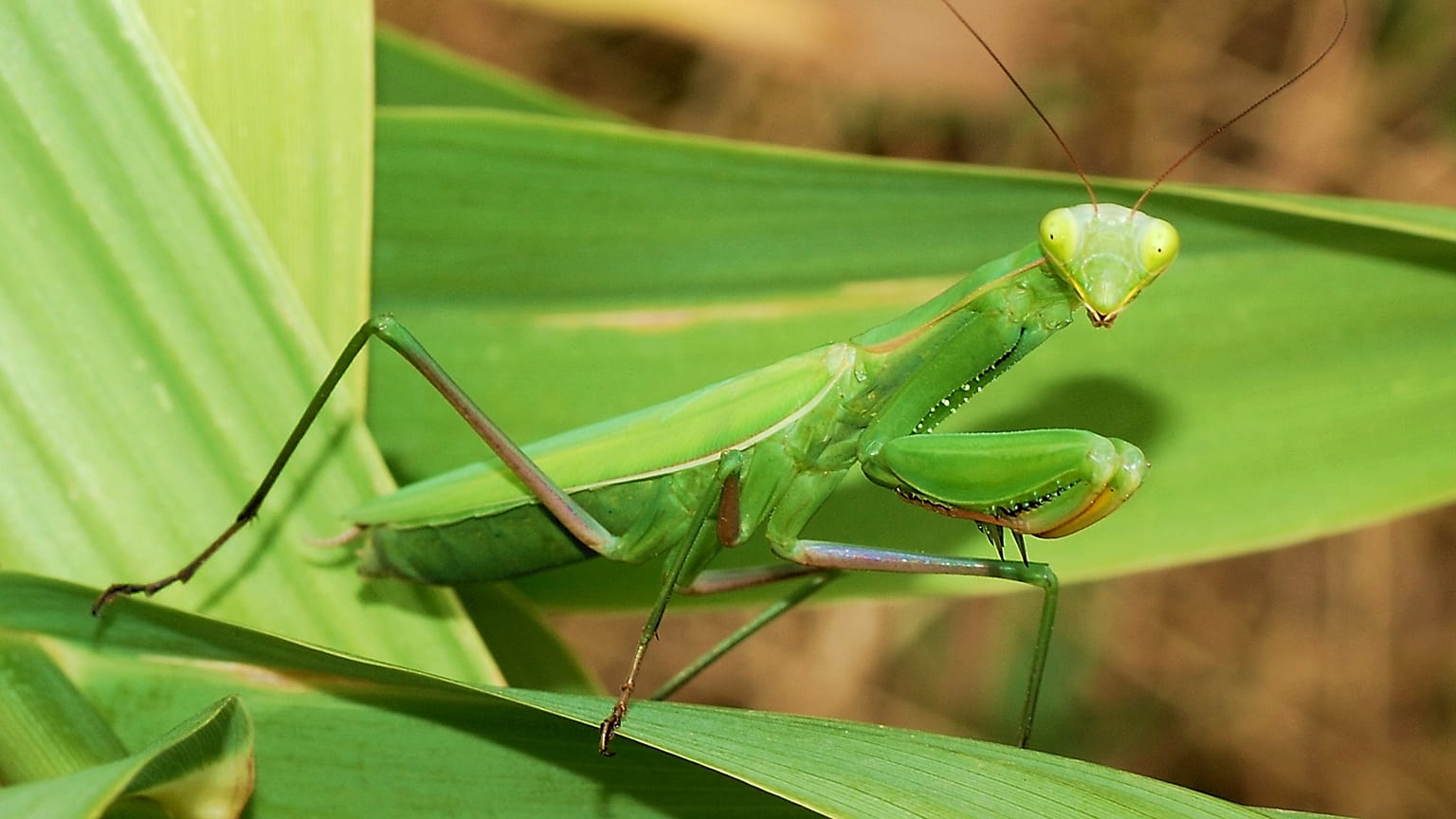
It owes its German name "Gottesanbeterin" to its two raptorial forelegs, which it holds in front of its body when at rest and which resemble arms raised in prayer.

Record reports to NABU

If you spot a praying mantis, you are asked to report it to the German Nature and Biodiversity Conservation Union on the Naturgucker page online (source in German) – ideally with a photo.

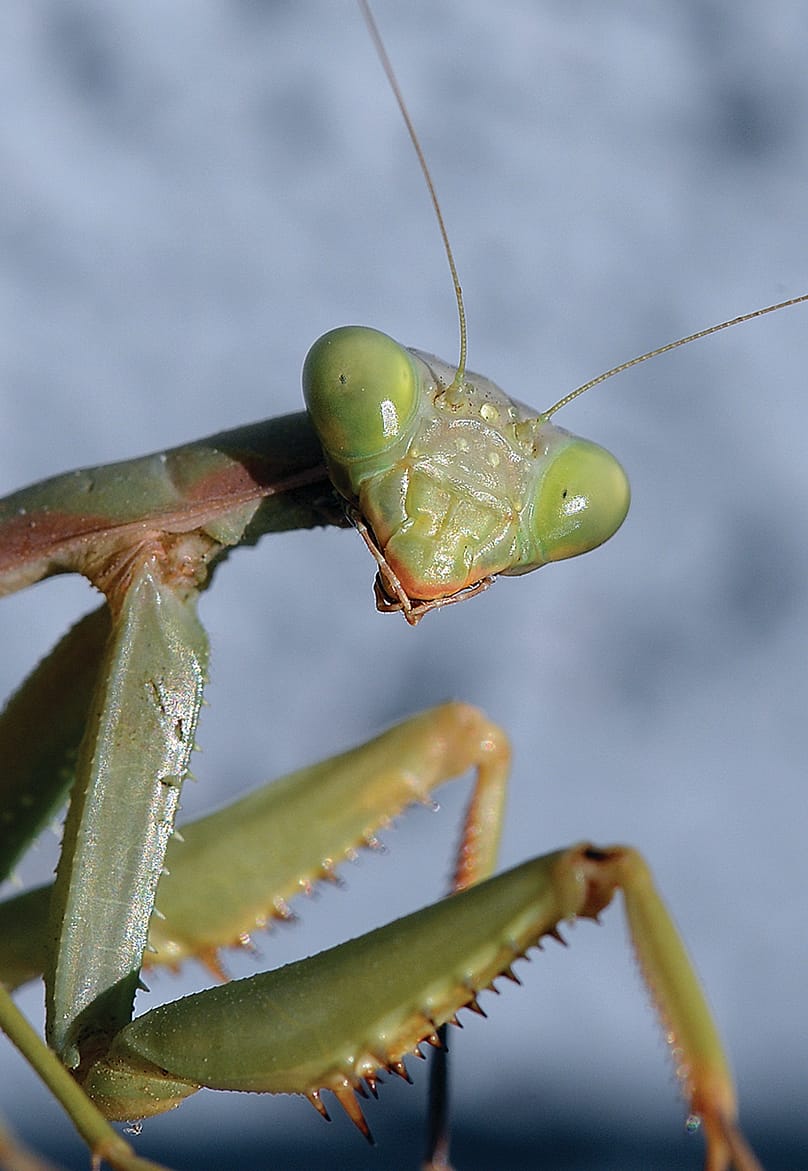
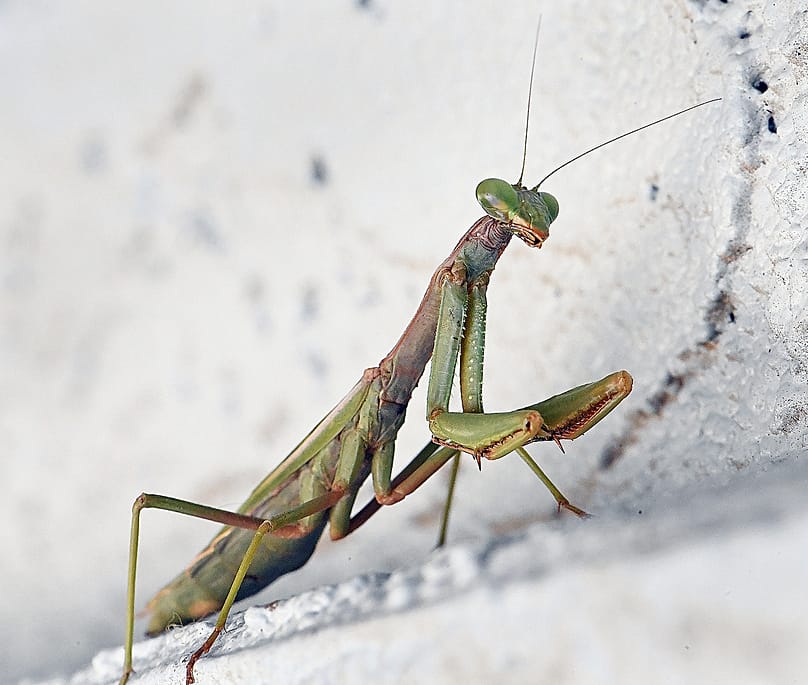
The species Mantis religiosa can be green or brown and is roughly twice the size of a bush-cricket or a grasshopper. The praying mantis has a rather triangular, mobile head on a neck, whereas in grasshoppers the head sits directly on the thorax.

Mantis religiosa at Zurich Zoo AP Photo

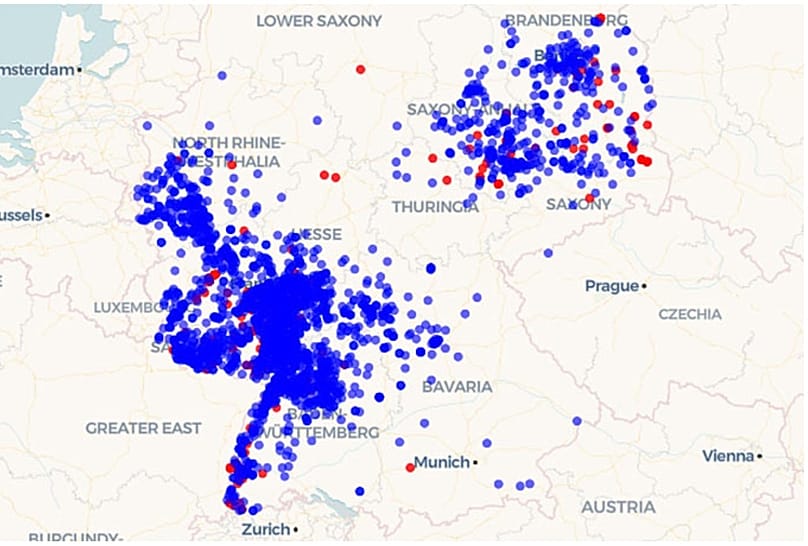
NABU and other researchers want to find out where in Germany – also against the backdrop of climate change – Mantis religiosa is now occurring more frequently. After the warm spring, particularly large numbers were recorded in Baden-Württemberg.

They also want to know whether the metapopulations observed in south-western and eastern Germany are merging. Up to now it has been too cold for the praying mantis in the north.

From the beginning of July to mid-August 2026, NABU-naturgucker.de recorded more than 15,000 reports. That is more than in the whole of 2026. Even though the photos "occasionally included a bush-cricket or a sickle-bearing bush-cricket uploaded as a praying mantis", 99.9 percent of the pictures are correct, according to NABU. The organisation says that with an error rate of just one per thousand, the results are "sensationally good".

Where Mantis religiosa was sighted in 2026 in BLUE, in previous years in RED NABU

Praying mantises cannot sting

There is no need to be afraid of the mantis: the praying mantis poses no danger to humans. It has no venom and cannot sting.

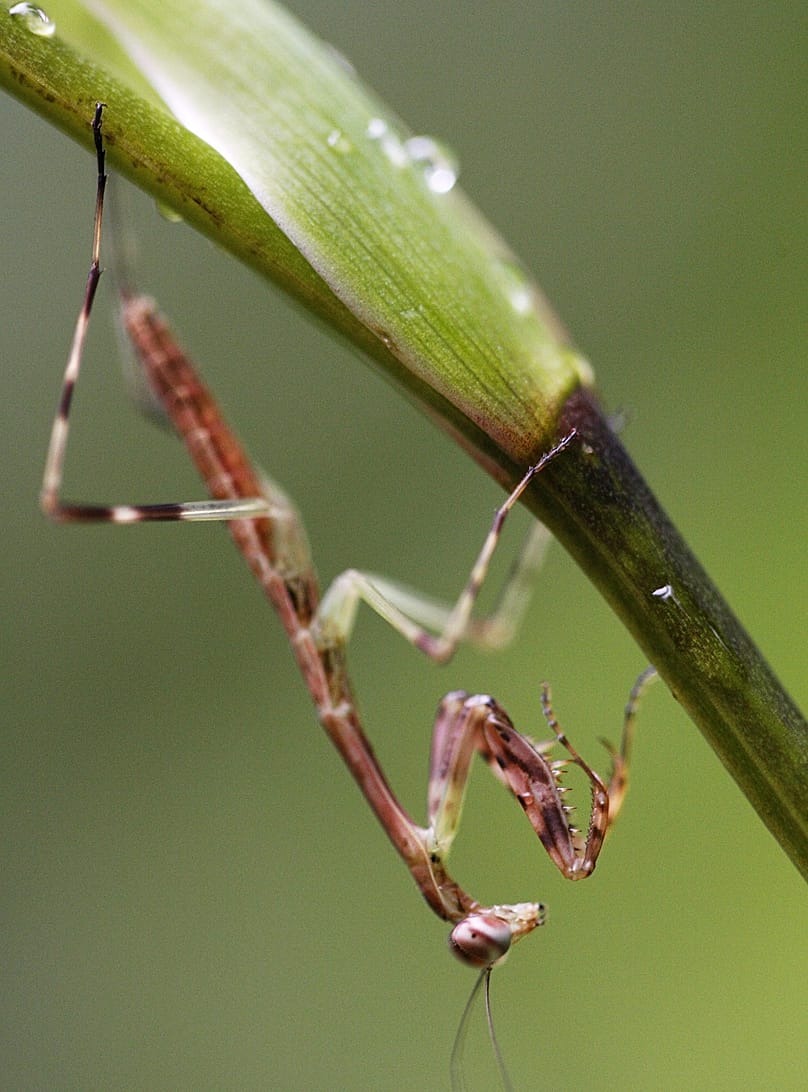
Both larvae and adult praying mantises feed exclusively on insects and spiders. They lie in wait motionless for prey, usually approach in slow motion and then strike with lightning speed. As NABU describes, the prey is held fast and eaten alive.

Most male praying mantises die after mating and are eaten by the females, which use this to build up strength for the demanding production of eggs. Only the eggs survive the winter.


Potato shortages could hit France as farmers warn of record-low yields following heatwaves

This drop comes after an exceptional water deficit and several heatwaves, resulting in smaller tubers and sharply lower yields.
Copyright Carlos Osorio/Copyright 2021 The AP. All rights reserved.

By Barbara Loundou
Published on

This year's French potato harvest is expected to be particularly challenging.

French farmers are warning that they may not be able to deliver the amounts of potatoes set out in contracts. Extreme heat and lack of rain have left farms parched - with the National Union of Potato Producers (UNPT) saying production could fall by around 23 per cent year on year. This drop would make the season one of the worst ever recorded for the sector. "This season could mark one of the largest production slumps ever recorded for French potatoes", the organisation says.

The fall in yields could prevent some producers from meeting the volumes set out in their contracts with processors. The industry is therefore calling for "contracted volumes to be adjusted to reflect the reality of the harvest".

The average yield of table potatoes is expected to reach only 37.4 tonnes per hectare, compared with 43.5 tonnes in 2025. The UNPT is already talking about "the lowest yield seen in more than 30 years". The drop would be even sharper than that caused by the historic drought of 2022.

The situation is causing serious concern among growers. On some farms, the combined effects of heat and lack of water could lead to major losses and undermine their economic viability. For the UNPT, "the disastrous economic consequences of this exceptional situation" cannot be shouldered by farmers alone.

Faced with this situation, producers are demanding "exceptional" support and calling on the government to "engage in determined dialogue", particularly with its European partners. They want to avoid a "double whammy": substantial agricultural losses compounded by commercial difficulties.

As the harvest approaches, anxiety is growing across the sector. This season could leave a lasting mark on French potato production.

Trees 'giving up': climate change hammers historic English gardens

Hampton Court (United Kingdom) (AFP) – At Hampton Court Palace, head gardener Graham Dillamore strode across the burnt beige grass in the spectacular formal gardens southwest of London, laid out in the 17th century.

Issued on: 25/08/2026 - RFI

Britain's record summer heatwave has burnt the grass at Hampton Court Palace © JUSTIN TALLIS / AFP

"If we have a summer like this next year, by God, it's going to be a struggle," said Dillamore, who has spent more than 20 years tending the gardens of the Baroque and Tudor red-brick palace where King Henry VIII once caroused.

Created by master designers such as Lancelot "Capability" Brown and William Kent, the gardens of stately homes such as Hampton Court, Blenheim Palace, and Chatsworth House are among England's top visitor attractions.

But their historic style of planting and ancient trees are being hammered by climate change -- including record heatwaves and drought this summer.

Gardeners told AFP they were not embarrassed by straw-like lawns -- feeling visitors, also facing water restrictions, are understanding -- but the concern is for the long-term consequences and keeping the spirit of their gardens alive.

Mature trees that take decades to establish are drooping, and some have leaves turning brown in August in a stress reaction to excessive heat.

"Some of these trees have actually given up. They're not going to come back, they're finished," said Dillamore, who also oversees gardens at Kensington Palace, the official London residence of Prince William and his wife, Catherine.

"We're losing mature tree stock and that's tragic in a historic garden."

"We've already lost trees," said Rosie Fyles, head of gardens at Chiswick House in west London, whose Kent-designed shady lawns dotted with statues and cedars of Lebanon date back to the 18th century.

Suffering most are trees "we really associate with an English garden or an English landscape", she said: oaks, sycamores, birch, limes.

"I think there's only so much stress they can withstand," said the gardener, who tends 1,800 trees.

It is not practicable to water mature trees, gardeners explained.

At Chiswick, staff were watering drooping camellias and lilacs, shrubs that normally thrive in sun.

The garden has boosted its capacity to harvest rainwater, but its stocks ran out several months ago.

"There's only so much we can intervene and control," said Fyles, admitting this was hard to accept as a professional gardener.

"It's sobering. It means that we're having to think about what we plant going forward, what trees will be sustainable going forward in the future climate."

"I get the feeling we're in uncharted territory," said Dillamore.

"I've never felt so uncertain about the future in historic gardens and landscapes as I do now."
'On the front line'

Staff at historic gardens surveyed by the National Lottery Heritage Fund earlier this year all said climate change was having an impact -- not just drought, but also heavy storms and excessive rain in winter that spawns fungus and bugs.

Historic gardens are "really on the front line of climate change", said Drew Bennellick, the Heritage Fund's head of lands, seas and nature policy, and "the changes are happening actually quite quickly now".

"We've seen sites that lost 80 percent of their tree cover," he told AFP.

Climate modelling by researchers at the Royal Botanic Gardens at Kew, a UNESCO World Heritage site, predicted that by 2090, 50 percent of their trees will be at risk of death.

Historic gardens "must be protected and preserved", said Dillamore.

"But they've also got to change over the next few years -- otherwise we're going to lose them."

And this calls for "some very, very difficult decisions", he admitted.

Some are shifting to Mediterranean plants, Bennellick said, "more grasses, more herbaceous perennials that can survive the drought conditions".

At Hampton Court, Dillamore pointed to vibrant pink flowers with bright green foliage.

Garden designer Ann-Marie Powell created test beds of long-lived plants happy in high temperatures, including Siskiyou Pink plants, native to the southern United States.

Planted in April, they look vigorous despite no automatic irrigation, as do other flowers such as daisy-like echinaceas from US prairies.

Gardeners at the historic site are worried about the long-term effects of hotter summers © JUSTIN TALLIS / AFP

Dillamore said he was happy with the result.

Hampton Court and Chiswick have also stopped digging over flowerbeds and relaxed about weeds.

The Royal Horticultural Society gardening charity announced this month it is considering moving some of its heat-stressed hydrangea collection from Surrey, southwest of London, to other regions of England.

"The gardens tell the story of Hampton Court just as much as the palace, so I can't pack this garden up and move it," said Dillamore.

"We've got to retain that feel, the spirit of the place."

© 2026 AFP

GREEN CAPITALI$M

UK firm running Portugal's largest solar plant files for insolvency

Solar panels in operation on 28 April 2026 at a farm in Christiana, Tennessee
Copyright AP Photo/Joshua A. Bickel, File

By Ema Gil Pires
Published on

Based in Alcoutim, in the Algarve, Solara4 has been operating for five years, but over that time it has repeatedly run into a series of setbacks.

The British company Welink Energy Portugal 2 UK, which owns Solara4, the largest solar power plant in the country, has entered insolvency proceedings, according to a report published this month by consultancy BDO, cited by the weekly newspaper "Expresso" (source in Portuguese). The case concerns a large-scale project in the Algarve region with 219 MW of installed solar capacity, according to the Welink Group website (source in Portuguese).

Located in Alcoutim, Solara4 has been in operation for five years, having been inaugurated in 2021, but has been facing a series of setbacks. According to the same report, since quoted by several national media outlets (source in Portuguese), this solar plant "has been through a combination of operational and market challenges that have adversely affected its performance and cash flow generation".

The document further states: "Electricity production has consistently fallen short of initial forecasts. At the same time, the Iberian energy market has seen significant growth in solar generation capacity. This increase in supply has driven down wholesale prices, which at times drop to zero or into negative territory." Due to the confluence of these factors, "revenues have been lower than expected".

However, as reported by "Expresso", disputes between the British company and the contractor, China Triumph International Engineering (source in Portuguese), a subsidiary of a Chinese state-owned industrial conglomerate, as well as fires and other technical problems, have also hampered Solara4's operations.

Despite this turbulent trajectory, the "Jornal Económico" (source in Portuguese) reported in 2024 that Welink had decided to "hybridise" the solar plant, through a €400 million investment to boost solar capacity while also adopting wind power and battery storage solutions.

The initial idea was to enable uninterrupted electricity production by installing a further 50 MW of solar capacity, 264 MW of wind power through 40 turbines and a 100 MW battery energy storage system (BESS), for a "total of more than 600 MW of installed capacity upon completion", according to the Welink Group's own website.

However, the ambitious project received an unfavourable opinion from the assessment committee led by the Portuguese Environment Agency (source in Portuguese) (APA), which considered that it would not be "compatible with safeguarding the environmental values present in the affected area". The plan was later revised, cutting the number of planned wind turbines to just over half, and was put out to public consultation. However, the APA has not taken any definitive decision on the matter.

All this came after Solara4 had already been close to being sold. And indeed, within the insolvency process now under way, the priority, once again, is to find new investors willing to buy the asset, the weekly "Expresso" further reports.

'Traumatic' tornado shatters French village

Pomas (France) (AFP) – Two people were in critical condition and thousands of households were without power on Tuesday after a "tornado of severe intensity" wreaked havoc in southern France, officials said.

Issued on: 25/08/2026 - FRANCE24

The tornado hit hardest the village of Pomas © Idriss Bigou-Gilles / AFP


The tornado, which swept through the Aude department on Monday, hit the village of Pomas hardest, damaging around 300 homes and injuring 39 people, two severely.

Seventeen people were hospitalised, officials said.

By early Tuesday, 7,250 household across the Languedoc-Roussillon region were without power including 1,600 in Aude, said grid operator Enedis.

"A tornado of rare intensity struck Aude late yesterday afternoon, severely damaging the village of Pomas," Interior Minister Laurent Nunez said on X.

Marie-Helene Bouissac, the regional deputy prefect, said the tornado was "an exceptional and highly traumatic event".

On Tuesday, under clear skies, roofs ripped apart by the storm had already been covered with blue and green plastic tarpaulins, an AFP journalist saw.

France sees several dozen tornadoes of varying intensity each year 
© Idriss Bigou-Gilles / AFP

Nearby fields were littered with broken deckchairs, scraps of fiberglass insulation and pieces of wire fencing ripped apart by the fierce winds that struck the village and its surroundings.

Firefighters, including a canine search unit, inspected the site.

Emergency crews had worked throughout the night.

"Search and inspection operations are still under way, involving 75 firefighters supported by specialist reinforcement teams," the prefecture said.

At a police checkpoint, relatives and friends of those affected waited for permission to enter the affected area, bringing supplies or offering assistance.

Jose Gomes, a resident of the nearby village of Trebes, said a friend's house had collapsed.

France sees several dozen tornadoes of varying intensity each year, according to weather agency Meteo-France.

© 2026 AFP

Tornado devastates village in southwestern France’s Aude region


A tornado tore through the southwestern French village of Pomas on Monday, injuring 41 people and damaging about 300 homes, authorities said. The storm ripped roofs from buildings as severe weather battered the region, causing power outages, transport disruption and forcing officials to cancel a Vuelta a Espana cycling stage.

Issued on: 25/08/2026 -
Share
By: FRANCE 24
Video by: Morgan AYRE

Cover image: The tornado damaged 300 homes in the village of Pomas, in southwestern France, authorities said © Idriss Bigou-Gilles, AFP
01:04


A tornado tore through a village in southwestern France on Monday, injuring 41 people and damaging hundreds of homes, authorities said.

French authorities had placed swathes of the country's southwest on orange alert for storms, and numerous areas were hit by power outages and transport chaos.

In the Aude department, officials cancelled the third stage of the Vuelta a Espana cycling race, which was being held in the area, when a hailstorm forced riders to seek shelter.

The tornado hit hardest in the village of Pomas – which has a population 1,000 – damaging an estimated 300 homes and in some cases ripping their roofs off.

France: Residents in shock after mini tornado hits north of Paris
 © France24
00:43


More than 120 emergency workers were deployed to the scene, local authorities said.

Fifteen of the injured were taken to hospital. They included a pregnant woman who was hurt when her house collapsed on her, the woman's husband told AFP.

The national weather service, Meteo-France, said winds had reached up to 117 kilometres (73 miles) per hour in the nearby village of Arquettes-en-Val.

Storms across southern France upended the transportation network, delaying trains, forcing road closures, and causing delays and cancellations at airports in Bordeaux, Marseille, Nice, Toulouse and even Paris to the north, said Transport Minister Philippe Tabarot.


Cover image: © France 24
01:50


An estimated 2,800 homes were left without electricity across 10 villages, officials said.

France sees several dozen tornadoes on average per year.

The impact of global warming on their frequency and intensity is unclear, according to Meteo-France.

(FRANCE 24 with AFP)

French village reels from tornado that damaged hundreds of homes

Hundreds of damaged homes, widespread power cuts and blocked roads confronted residents of southwestern France on Tuesday after a tornado tore through the village of Pomas, injuring 39 people, two of them critically.

Issued on: 25/08/2026 - RFI

\
This video grab taken from Villefloure, shows a tornado hitting Pomas, southwestern France, on 24 August 2026. AFP - CYRILLE KALDOR / UGC / AFP

The tornado struck Pomas, a village of around 1,000 people in the Aude department, on Monday afternoon, damaging an estimated 300 homes and ripping roofs from some buildings.

More than 120 emergency workers were deployed to the scene. Fifteen of the injured were taken to hospital.

They included a pregnant woman who was hurt when her house collapsed on her, her husband told French news agency AFP.

A large tornado moves through Verzeille, France, 24 August 2026, in this screen grab obtained from a social media video. DENIS MARECHAL via REUTERS - DENIS MARECHAL


Extensive damage

"There are no roof tiles left, no roofs at all," Pomas resident Fabien told Franceinfo. "Houses with an upper floor have lost it. I wouldn't even know how to describe it to you; it’s just so hard to believe."

"Half the village is destroyed," Pierre, a resident of the neighbouring town of Rouffiac, told public broadcaster ICI Occitanie. "I was driving back from Carcassonne and saw what looked like a huge chimney, with debris flying through the air – it was an incredible sight."

France's national weather service, Météo-France, said winds had reached up to 117 kilometres per hour in the nearby village of Arquettes-en-Val.

Officials cancelled the third stage of the Vuelta a España cycling race, which was being held in the area, after a hailstorm forced riders to seek shelter.

Transport chaos

Storms across southern France disrupted transport, delaying trains, forcing road closures and causing delays and cancellations at airports in Bordeaux, Marseille, Nice, Toulouse and Paris, Transport Minister Philippe Tabarot said.

Around 1,400 households were still without electricity on Tuesday morning.

Several departmental roads in Aude also remained closed because of fallen trees, with the prefecture urging motorists to check for updates.

France sees several dozen tornadoes a year on average. The impact of global warming on their frequency and intensity remains unclear, Météo-France said.

(with newswires)


Shock following 'traumatic' tornado in the south of France

25.08.2026, dpa

People in the southern French commune of Pomas are in a state of shock after a tornado tore through the community, damaging buildings and injuring dozens.

"You'd think we'd been bombed," resident Bruno told the broadcaster BFMTV on Tuesday. "Everything needs to be rebuilt; everything is destroyed."

Around 300 houses in Pomas, in the foothills of the Pyrenees, were damaged by the storm. Of the 39 people hurt, 17 were taken to hospital and two suffered serious injuries.

Marie-Hélène Bouissac from the Aude prefecture described it as "an extraordinary event that has been deeply traumatic for all residents."

The tornado struck late on Monday afternoon. "It came so quickly, we couldn't do anything," resident Amandine told BFMTV. She said she saw objects flying around and sought shelter.

The most intense part of the storm lasted only a few minutes. "I went back outside. It was chaos," she said through her tears.

"There are no more bricks, no more roofs. The houses that had an upper storey have lost it," resident Fabien told France Info.

The full extent of the damage in Pomas is not yet clear. Emergency services are still on-site, inspecting the houses. They are also inspecting buildings that do not appear to have been affected at first glance.

Residents have been asked to leave their homes until the situation is clear, says Bouissac.

Around 1,400 homes in the area were still without electricity following the storm. There was also disruption to air travel, road traffic and train services due to the storm the previous day.


Europe’s mosquito problem is getting harder to control

 Europe does not have a consistent system for controlling the mosquitoes that carry these diseases.
Copyright Canva


By Giedre Peseckyte
Published on

Europe is facing a growing mosquito-borne disease threat — and the continent’s ability to fight it remains uneven, according to the EU’s disease prevention agency.

The European Centre for Disease Prevention and Control (ECDC) warned that Europe needs to strengthen mosquito surveillance and expand the tools available to control the insects as West Nile virus continues to spread and invasive mosquito species become established in new areas.

“The expansion of West Nile virus transmission as well as the spread of invasive mosquito species demonstrate why Europe needs to strengthen its mosquito-control capacity,” said Céline Gossner, ECDC expert in food, water, vector-borne and zoonotic diseases.

The warning comes as the summer transmission season enters its most active period. Six European regions have reported locally acquired West Nile virus infections for the first time this year, while 429 locally acquired cases had been recorded across nine European countries as of August 13, according to the ECDC. Transmission typically peaks in August and early September, meaning the tally is expected to rise.

At the same time, the Asian tiger mosquito, Aedes albopictus, has become established in 16 European countries — twice as many as 12 years ago. The species can transmit dengue and chikungunya, diseases that were once largely associated with tropical and subtropical regions.

A patchwork across Europe

The changing picture is exposing a less visible problem: Europe does not have a consistent system for controlling the mosquitoes that carry these diseases.

A new ECDC survey of mosquito surveillance and control practices found substantial differences between countries in how programmes are organised, funded and implemented. Of the 38 countries and jurisdictions contacted, 26 returned questionnaires.

The report found that many mosquito surveillance and control programmes rely on short-term funding and lack long-term planning. Responsibility can also sit at different levels of government — national, regional or local — making approaches difficult to coordinate across borders.

That matters because mosquitoes do not respect those borders.

“For effective mosquito control, we need close cooperation in Europe and an integrated approach that brings together mosquito monitoring, community engagement, and targeted mosquito control solutions that take environmental impact into account,” Gossner said.

The ECDC says reactive mosquito control is often ad hoc and focused on adult insects, while longer-term strategies to eliminate invasive populations are frequently missing. For Aedes mosquitoes, countries use a mixture of chemical and non-chemical measures, including efforts to target immature mosquitoes and campaigns to get communities involved.

Climate change is adding urgency to the problem. Longer and more intense transmission seasons are already being observed for West Nile virus, dengue and chikungunya, according to the ECDC's new report. Warmer conditions can create more favourable environments for mosquitoes and extend the periods during which viruses can circulate.