Tuesday, August 25, 2026

Netanyahu got his Iran war, but maybe not his desired result

Jerusalem (AFP) – After decades of urging the United States to attack Iran, Israeli Prime Minister Benjamin Netanyahu finally got his wish. But after six months of inconclusive hostilities, Israel may ultimately find itself in a worse position than it was before the war.


Issued on: 25/08/2026 - RFI

Israeli Prime Minister Benjamin Netanyahu has long cast Iran as an existential threat to his country © ilia YEFIMOVICH / AFP/File

The Islamic republic, which Netanyahu has long cast as an existential threat, has not only survived but appears emboldened.

Underlying Netanyahu's dilemma have been the wild swings in the approach of US President Donald Trump, who joined Israel in launching the conflict in late February, but by April abruptly called a ceasefire and sought a negotiated settlement in the face of souring public opinion and soaring oil prices.

"It's a colossal failure of Israeli strategy regarding Iran," said Danny Citrinowicz, a former top Israeli intelligence analyst on Iran who is now at the Tel Aviv-based Institute for National Security Studies.

"Yes, we had operational achievements, but strategically we've failed."

Israel on the very first day killed Ayatollah Ali Khamenei, the supreme leader who ruthlessly suppressed dissent in Iran, including mass protests earlier this year, and backed virulently anti-Israeli groups like Hamas, which led the October 7, 2023 attacks.

But Khamenei was also seen as holding back on full-blown pursuit of nuclear weapons, a reluctance that could now end if the Islamic republic feels it has lost its conventional deterrents.

While Trump has recently declared economic warfare on Iran and periodically ordered new strikes, he has voiced support for a deal that would see sanctions relief.

Netanyahu had adamantly rejected a 2015 nuclear deal negotiated by then-president Barack Obama.

Citrinowicz said Israel now had a choice between accepting a new nuclear deal that would strengthen Iran, or trying to weaken it further and increasing the risk that it will seek a nuclear weapon.

"Israel is trying to do both but it's not going to work," he said.
Degrading vs toppling

An extraordinary 92 percent of Israelis believe Iran won or gained more from the conflict, according to a June survey by the Hebrew University of Jerusalem in collaboration with the Agam Institute -- a warning sign for Netanyahu ahead of October 27 elections.

Netanyahu had said he was hoping to "create conditions for regime change" but did not explicitly make toppling the Islamic republic his goal.

Instead, some see Netanyahu following an Israeli playbook witnessed in Gaza, Lebanon and Syria -- inflict overwhelming damage that will allow Israel to return and attack later as it sees fit, a strategy the country euphemistically calls "mowing the grass".

"Netanyahu doesn't see this as a loss. He has the United States directly at war with Iran, with Israel for now on the sidelines," one foreign diplomat based in Israel told AFP on condition of anonymity.

Iranian counter-strikes killed 25 people in Israel and four in the occupied West Bank, but Iran has focused its fire more recently on Gulf Arab states that provide bases for US troops.

Alex Grinberg, a senior fellow focused on Iran at the Turan Research Center, said the war set back Iran significantly by eliminating infrastructure and people in the nuclear programme and imposing massive economic damage.

"I think Israel did achieve its strategic goals, meaning denying the Iranian regime the strategic capacity to threaten Israel," he said, while casting doubt on the prospects for a favourable US-Iran deal.


Risking public opinion

The war has already complicated Israel's relationship with its most crucial ally, and may preclude any possibility of a future reconciliation with the Iranian people.

The increasingly unpopular conflict triggered a surge of criticism of Israel in the United States, where its war against Hamas in Gaza had already dealt a heavy blow to its standing in the public eye.

Public perceptions of Israel inside Iran are difficult to gauge, as polling is difficult, but the two countries were allies before the Islamic revolution, and protests before the war indicated noticeable public opposition to the clerical government.

And while Netanyahu and Trump have both publicly professed to support the Iranian people, the US and Israel have issued apocalyptic threats over the course of the war that appeared to make little distinction between the Islamic republic and its citizens, and their strikes have destroyed infrastructure including top universities.

There is "a real possibility of lasting hostility towards Israel and the United States, particularly if the war is remembered through civilian casualties and damage to the country rather than solely through the removal of senior regime figures", said Liora Hendelman-Baavur, a senior research fellow at the Alliance Center for Iranian Studies at Tel Aviv University.

"That hostility would not necessarily restore the Islamic republic's legitimacy, but it could complicate future relations long after the present leadership has changed."
Turkey seeks Interpol arrest warrant for Netanyahu over Gaza flotilla detention


Turkey said Friday it is seeking an international arrest warrant from Interpol for Israeli Prime Minister Benjamin Netanyahu as part of a domestic criminal case over Israel's interception and detention of dozens of activists attempting to deliver humanitarian aid to the besieged Gaza Strip in May. In response, Netanyahu's office called Turkish President Recep Tayyip Erdogan an "anti-Semitic dictator" and vowed to "act forcefully against Turkey's attempts to destabilise the region".


Issued on: 21/08/2026 - 
By: FRANCE 24
Video by: Charlotte Lam


Cover image: An activist from the Global Sumud Flotilla is carried on a wheel stretcher upon her arrival at Istanbul Airport on Thursday, May 21, 2026. © Emrah Gurel, AP
01:39


Turkey said Friday it would seek an Interpol red notice for the arrest of Israeli Prime Minister Benjamin Netanyahu as part of a domestic criminal case linked to ​an attack ‌on activists seeking to deliver humanitarian aid to Gaza.

NATO member Turkey has been ⁠one of the fiercest critics of Israel's devastating assault on Gaza and has previously issued domestic arrest warrants for Netanyahu over the war there. It has repeatedly called ‌for international measures against Israel over what Ankara calls its violations of human rights and international ⁠law. Israel denies those charges.


Turkey seeks arrest warrant for Israeli PM Netanyahu, fueling tensions

Cover image: © France 24
02:06


In May, Israeli forces opened fire on at least two vessels from the Global Sumud Flotilla sailing towards Gaza as it was making a renewed attempt to ​deliver aid to the enclave after earlier missions were intercepted by Israel in international ‌waters.

About 50 vessels were in the Global Sumud Flotilla that left Turkey in May heading for the besieged Palestinian territory. The activists were detained in the Mediterranean by the Israeli military and then taken to an Israeli prison before being expelled. A number of activists accused Israeli security forces of physical or sexual violence during their detention.

Israel's far-right National Security Minister Itamar Ben-Gvir also sparked outrage by releasing a video showing himself taunting flotilla activists who were on their knees with their hands tied behind their backs.

France, Italy and Australia have also launched judicial proceedings related to Israel's detention of the activists.

Freed Gaza flotilla activists allege Israeli abuse including rape
Cover image: © France 24
03:47


In a post on X, Turkish Justice Minister Akin Gurlek said arrest warrants had been issued for Netanyahu and another Israeli, named as Afek Moskovitch, on charges that included genocide, crimes against humanity and torture as part of a case against 35 people ‌over the Israeli interception in international waters.

"In line with the arrest warrants issued against Benjamin Netanyahu ... our justice ministry has requested that the interior ministry issue (Interpol) red ​notices for them so that they may be sought internationally," Gurlek said.

According to Turkey's IHA news agency, Moskovitch is an Israeli soldier who is also accused over actions in Gaza.

IHA, citing the indictment, said Moskovitch had posted footage on Instagram showing tanks and a bulldozer destroying buildings at the Islamic University of Gaza, including a hospital and medical faculty

Turkey will use all available legal mechanisms to ensure Israel is held accountable for its crimes in Gaza, he added.


Red notice

A red notice is a ​request to police forces worldwide to locate and provisionally arrest a person pending extradition.

Interpol reviews requests submitted ​by member states before deciding whether to issue red notices.

Asked about ​Gurlek's statement, Netanyahu's office said: "(Turkish President Tayyip) Erdogan's pathetic attempt to intimidate the leaders and soldiers of Israel, the only true democracy in the Middle East, ​will go nowhere."

The prime minister's office also accused Erdogan of being an "anti-Semitic dictator".

A statement from the Turkish president's office in turn denounced what it described as Netanyahu's "petty political tactics", slamming the Israeli government's attempt "to present Turkey as a new threat".


Netanyahu focused on reelection as Israeli govt grows 'less concerned' about international isolation

Cover image: © France 24
06:51


Turkey and Israel also traded barbs this week over Syria, where Israel carried out air strikes on an air base it said Turkish troops could be deployed to, drawing condemnation from Ankara and criticism from the United States. Syria has said there were no plans to deploy Turkish troops to the base.

Turkey's influence in Syria ⁠as an ally of Syrian President Ahmed al-Sharaa has stirred Israeli alarm since Sharaa toppled veteran leader Bashar al-Assad in 2024.

Ankara has ⁠said Israeli rhetoric against Turkey ​and its actions in Syria are fuelled by the approach of a parliamentary election in Israel in October.

(FRANCE 24 with Reuters and AFP)
'Thermal safety: Not just climate in action; it's biology & physiological capacity to cope & recover

Issued on: 25/08/2026 -  FRANCE24


Eve Irvine is pleased to welcome Ronita Bardhan, Professor of Sustainable Built Environment and Health at the University of Cambridge. Extreme heat is no longer simply a question of climate exposure. It is a question of thermal safety, public health, energy security, urban design and inequality, explains Professor Bardhan. Her starting point is that, in an emergency, protecting human life must come first: people need immediate access to cooling, through shade, hydration, cooling centres, passive design or, where necessary, air conditioning. The challenge, she says, is not to choose between adaptation and mitigation, but to pursue both simultaneously.

Video by: 
Eve IRVINE


How will European politicians react to a summer of extreme heat?

Issued on: 23/08/2026 - FRANCE24

Europe this summer has had to face record breaking temperatures, which caused droughts, deaths, and caused devastating wildfires. While the latest heat dome has dissipated, the damage remains – the continent continues to be the fastest warming globally. Will this summer serve as a global climate reckoning? Answer with Stefan Eye-cot, professor of sociology at the University of Hamburg.


Iran discovers major new gas reserves amid war-hit energy sector


Iran on Sunday said it had discovered more than 200 billion cubic metres of natural gas in the southern Fars province, with more than 160 billion cubic metres potentially recoverable. The find comes as the country’s energy sector faces disruption after months of US-Israeli strikes on gas facilities, oil depots and transport routes.


Issued on: 23/08/2026 
By:  FRANCE 24

Iranian Oil Minister Mohsen Paknejad looks on during the 27th Gas Exporting Countries Forum (GECF) ministerial meeting in Doha on October 23, 2025. © Mahmud Hams, AFP

Iran said on Sunday it had discovered more than 200 billion cubic metres of natural gas, months into the Middle East war that has hit the country's energy infrastructure and production.

"New gas reserves were discovered in the south of Fars province," Petroleum Minister Mohsen Paknejad told state television, adding that over 160 billion cubic metres could be extracted from the field.

He described it as sweet natural gas, which has very little of the toxic gas hydrogen sulphide, resulting in lower operating and development costs.

According to Bloomberg, any new production from the site would likely be years away.


Iran's energy sector has taken a hit since joint US-Israeli strikes on the Islamic republic launched the Middle East war in late February.

The countries have struck Iran's energy infrastructure such as gas production facilities or oil depots, as well as transport routes.

(FRANCE 24 with AFP)
US delays Lockerbie bombing trial over new evidence

Washington (United States) (AFP) – A US federal judge postponed on Monday the trial of a Libyan man accused of making the bomb that destroyed a Pan Am flight over Scotland in 1988, killing 270 people, citing new evidence.


Issued on: 25/08/2026 - FRANCE24

Pan Am Flight 103, bound for New York, was blown up 38 minutes after it took off from London, killing 270 people © Anna Moneymaker / GETTY IMAGES NORTH AMERICA/AFP


Jury selection for the trial of Abu Agila Mohammad Masud, who allegedly worked as an intelligence operative for the government of Libyan dictator Muammar Gaddafi between 1973 and 2011, had been due to start on Wednesday.

Judge Dabney Friedrich cited "newly discovered evidence" and "evidence located in other countries" as the reason for postponing the trial.

No new trial date was set but a court hearing was scheduled for September 1 to discuss the status of the case.

Masud, who has been in US custody since 2022, has pleaded not guilty to charges related to the "destruction of an aircraft resulting in death." If convicted, he could face life in prison.

Pan Am Flight 103, bound for New York, was blown up 38 minutes after it took off from London, sending the main fuselage plunging to the ground in the Scottish town of Lockerbie and spreading debris over a vast area.

The bombing -- which is the deadliest-ever terror attack in Britain -- killed all 259 people on board, including 190 Americans, and 11 people on the ground.

Only one person has so far been convicted for the bombing.

Two alleged Libyan intelligence operatives -- Abdelbaset al-Megrahi and Al Amin Khalifa Fhimah -- were charged with the bombing and tried by a Scottish court in the Netherlands.

Al-Megrahi was convicted in 2001 and spent seven years in a Scottish prison. Fhimah was acquitted.

Al-Megrahi was released by Scottish authorities on compassionate grounds in 2009 as he was suffering from terminal cancer. He died in Libya in 2012, maintaining his innocence.

Gaddafi's government officially acknowledged responsibility for the attack in 2003 and paid $2.7 billion in compensation to the victims' families.

After Gaddafi's fall in 2011, American and Scottish investigators went to Libya in search of new evidence in the case.

British media at the time identified Masud and Abdullah Senussi, the former head of the Libyan intelligence services and Gaddafi's brother-in-law, as possible suspects.

The investigation was reopened in 2016 when US authorities learned that Masud had been arrested following Gaddafi's fall, and had confessed his involvement in the bombing to the new Libyan authorities.

Masud was sentenced to 10 years in prison in Libya in 2015 after being accused of using remote-detonated bombs against Libyan opposition members in 2011, The New Yorker reported at the time.

He also confessed his involvement in the Lockerbie bombing, as well as an attack on a nightclub in Berlin in 1986, to Libyan authorities during an interrogation in 2012, according to US court documents.

Masud was extradited from Libya to the United States in 2022.


From iPods to wired headphones: Why more Gen Zers are picking retro tech

Four young people sitting in a retro-themed room.
Copyright RDNE Stock Project/Pexels

By Indrabati Lahiri
Published on

As social media fatigue grows, Gen Zers are opting to take a break with retro devices like flip phones and vinyl records.

Social media and the digital sphere has taken over much of our lives in the last few years. This has especially impacted younger generations such as Gen Z and Gen Alpha, who have practically grown up in the digital era.

Endless screen time, constant notifications and rising fear of missing out (FOMO) have led to more chronically online users and more mental health issues such as depression, anxiety and low self-worth.

A rising number of ads and tracking features, along with more data privacy and security concerns have also contributed to growing unease around popular social media platforms like Instagram, TikTok and Facebook now.

This has led to an increasing number of Gen Zers choosing to adopt more retro tech like flip phones, iPods and vintage cameras as a way to digitally detox and take a break from social media.

Why retro tech is becoming so popular with younger people

More Gen Zers are interested in early and mid-2000s tech, as a way of escaping the constant stream of notifications, pressure and anxiety that often accompanies most social media platforms.

Some also see tech like “dumb phones” as a way to reduce hours of daily smartphone scrolling and the resulting algorithmic noise, offering a slower, more peaceful experience.

These simpler, single-purpose gadgets also provide fewer distractions, as they lack ads, tracking and constant notifications, allowing people to focus fully on more important goals or just be present for friends and family. In some cases, it also means simply being less reachable.

In many cases, retro and physical tech provides tangible ownership, rather than endless streaming subscriptions, which could change rules or hike prices unexpectedly. This provides a tactile, intentional experience and real ownership of media, without the risk of losing albums due to sudden digital licensing dropouts.

For some Gen Zers, retro tech, such as vintage cameras and grainy photos can signify more authenticity than hyper-curated and filtered digital feeds. Similarly, some retro gadgets are increasingly sought after due to their unique designs and colours, in contrast to increasingly modern, minimalist tech.

In some cases, vintage tech is also a fun style or personal statement for Gen Zers interested in mid-2000s culture.

Which retro tech is Gen Z loving right now?

Although there are several retro gadgets making a comeback right now due to rising Gen Z interest, there are a few which have become particularly popular.

Early-2000s digital cameras and camcorders

These early digital cameras are once again seeing a rise, despite still being grainy, oversaturated and imperfectly designed. They represent a perfect escape from over-processed smartphone photography and capture raw aesthetics.

Gen Zers are loving the vintage colour grading and harsh flash glare offered by Y2K cameras, along with the element of surprise that comes from not seeing a flawless live preview. Handheld tape camcorders are also massive hits for filming nights out and festivals with a distinct nostalgic texture.

Some popular models include the Canon PowerShot series, with older models like the PowerShot ELPH and G-series seeing a marked boost due to viral social media trends and celebrity visibility.

The slim and colourful pocket friendly Sony Cyber-shot from the mid-2000s is also still valued for their distinct, retro built-in flash look, along with the Nikon Coolpix for its chromatic grain and early-era colour science.

Dumbphones and flip phones

Basic single-purpose phones are also making a huge comeback right now, mainly as a secondary device for weekends and social outings. Users often swap their SIM cards into vintage flip phones to intentionally disconnect.

These devices effectively limit access to notifications and apps that can distract from the social plans at hand, while still keeping essentials like calling and text messaging working.

This also helps cut down on screen time and doomscrolling, potentially boosting mental health.

While some believe that this is mainly a temporary trend-driven fad, others think that more people could choose to keep smartphones for their daily life and on the weekdays, while switching to dumb phones for fun plans.

Brands like Nokia/HMD are becoming particularly popular again, especially models like the Nokia 2660 Flip, prized for its outstanding battery, low cost and pocket-friendly size.

Handheld and classic consoles

Devices like the Nintendo Game Boy and PlayStation Portable (PSP) are other retro gadgets seeing a rise at the moment. These offer distraction-free gaming without the constant update loops and microtransactions often seen in modern gaming consoles now.

This provides an offline, low stress environment to people who still genuinely enjoy gaming with complete, functional games. It also removes the pressure of online leaderboards, daily quests and competitive multiplayer games.

Unlike modern digital libraries tied to expiring subscriptions, a dedicated handheld or physical cartridge also feels much more permanent and authentic, while costing far less.

In many cases, collecting older systems like the Game Boy, PS2 or SNES has become a trendy, culturally-driven hobby too, valued for long-lasting physical durability too.

Wired headphones and earphones

Wired headphones and earphones are seeing a boost too, mainly due to a mix of Y2K retro fashion trends, with the dangling wires being seen as a style statement. This has been driven by celebrity and pop star influence as well.

They are also considered to be more practical, as they don’t need to be charged and offer uninterrupted, lag-free audio for watching videos, gaming or listening to music. They are also much more affordable than high-end wireless alternatives, with the wire making them harder to drop and lose as well.

In some cases, it supports mindful tech habits, turning listening to music into a deliberate action rather than an invisible, all-day background noise.

Vinyl records and CDs

Vinyl records, CDs and retro-style cassette players also provide a fun, tactile ritual to music listening, which streaming platforms like Spotify lack. Touching album art, opening CD cases and sliding tapes into a deck can make music feel much more real and special.

Instead of skipping tracks every 10 seconds, putting on a whole album forces people to listen from start to finish, offering a deep listening experience.

Like dumb phones and handheld consoles, these offer real ownership forever too, something that is increasingly rare nowadays, while giving users a break from screen fatigue and digital noise.

Older, uniquely designed tech also provides a personal touch to spaces like bedrooms, allowing people to show off their distinct styles and taste.


Indian police used excessive force during protests, Amnesty International says

Protesters celebrate after Education Minister Dharmendra Pradhan resigned in Mumbai, 26 July, 2026
Copyright AP Photo

By Gavin Blackburn
Published on

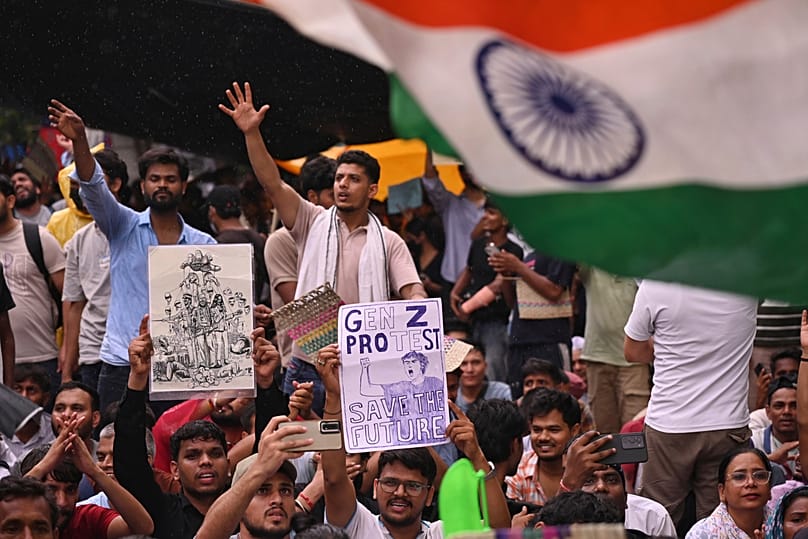
Demonstrations in the capital New Delhi, triggered by the leak of the national medical entrance test, turned violent on 20 July when thousands of protesters attempted to march towards parliament.

Indian police used excessive force, including electric shock devices and pellet guns, against youth-led protests that forced the education minister to resign last month, Amnesty International said on Monday.

A report from the rights' group clashes with the police account that force was used only after protesters turned violent, and comes after India's Supreme Court set up a panel on Thursday to investigate violence by both police and demonstrators.

Demonstrations in the capital New Delhi, triggered by the leak of the national medical entrance test, turned violent on 20 July when thousands of protesters attempted to march towards parliament.

Amnesty said witness testimony and visual evidence it had verified confirmed the use of "pellet-firing shotguns, tear gas launchers, grenades, batons and electric shock devices against protesters" in Delhi and the eastern state of Bihar.

Amnesty said it had also verified two instances of a police officer "unlawfully using lethal force against a crowd" in Bihar's Siwan district. No one was killed.

Protesters chant slogans during a demonstration demanding educational reforms in New Delhi, 24 July, 2026 AP Photo

"The weapons were deployed in a manner that breached international law and standards and domestic policing guidelines," it added.

Amnesty said that there were "isolated incidents of protesters throwing stones," but that the "heavy-handed response was state-sanctioned violence masked as crowd control."

Delhi Police said in a Supreme Court hearing last week they had used force only after protesters "resorted to violence."

They said anti-social elements "masquerading as aggrieved students" caused "grievous injuries" to security forces.

On Friday, opposition leader Rahul Gandhi staged a sit-in outside a Delhi police station with a 19-year-old protester who said he was injured by pellets during the July demonstration.

Gandhi demanded a police investigation into the shooting and officers later registered a case over the complaint.

Led by the online Cockroach Janta Party, the protests broadened from anger over exam irregularities into a wider movement over unemployment, opportunities for young people and what critics describe as Prime Minister Narendra Modi's increasingly authoritarian rule.

The protests proved to be the biggest challenge that Modi has faced after winning a third term in 2024.


Co-Owner of Swiss bar in deadly New year blaze held for domestic abuse, media say

Jacques and Jessica Moretti from France, the owners of "Le Constellation", are to appear before the public prosecutor on Wednesday 11 February 2026.
Copyright AP Photo

By Nela Heidner & Gavin Blackburn
Published on

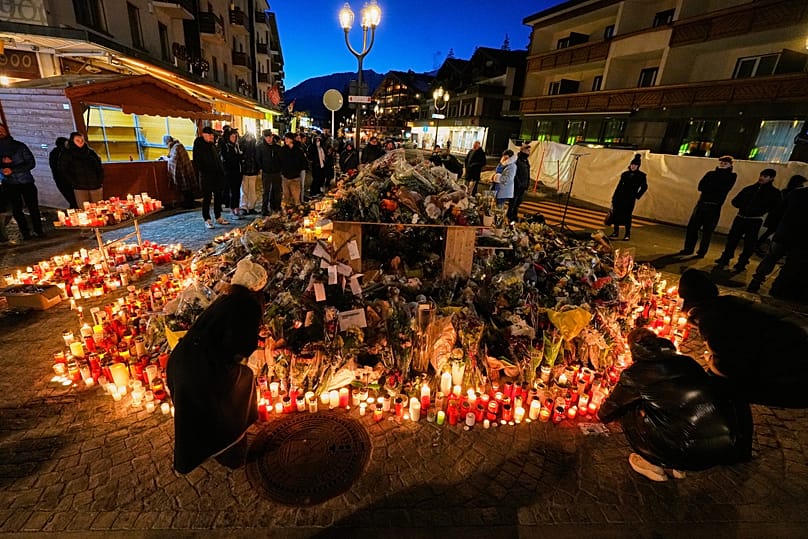
French couple Jacques and Jessica Moretti have been the focus of intense scrutiny since the fire ripped though their bar Le Constellation, in the Crans-Montana ski resort in the early hours of 1 January.

The owner of the Swiss bar ravaged by a deadly New Year fire is in pre-trial detention, accused of domestic abuse against his wife and co-owner of the establishment, media reported on Sunday

French couple Jacques and Jessica Moretti have been the focus of intense scrutiny since the fire ripped though their bar Le Constellation, in the Crans-Montana ski resort in the early hours of 1 January.

The blaze killed 41 people, most of them teenagers, injuring 115 other people.

The Morettis are among 16 people facing criminal investigation in the case. They face charges including manslaughter by negligence and arson by negligence over the fire.

Jacques Moretti has now been arrested and detained following alleged violence against his wife earlier this month, local Geneva broadcaster Léman Bleu reported.


People light candles and place floral tributes outside the sealed off Le Constellation bar in Crans-Montana, 3 January, 2026 AP Photo

The incident reportedly happened on the night of 11 August at the couple's home in Switzerland's southwestern Wallis canton and was so serious that Jessica Moretti had to be hospitalised.

Neither the public prosecutor's office nor the couple's lawyers responded immediately to requests for comment.

However, the Moretti's lawyers released a statement on Sunday evening referring to the report, stressing that the alleged events were being investigated in a separate case pertaining "exclusively to their private life."

"They should not be confused with the Constellation tragedy," the lawyers said in the statement.

They added though that the reported events "nevertheless fall within a context that cannot be ignored: that of a particularly intense ordeal that the Morettis have been trying to face together since 1 January."


Balloons take years to decompose: UK researchers invent ‘Bioloon’ as nature-friendly alternative

Bioloon co-founders Charlotte Melia and Juliana Cumming
Copyright Bioloon

By Ruth Wright with AFP
Published on

Discarded balloons “leak toxic chemicals into the environment" and can easily be swallowed by animals.

A UK PhD student may have found the solution to a global problem - the deadly risk that discarded balloons pose to wildli

While they are a symbol of joy and celebration, balloons can be harmful and even lethal to marine life and birds when they end up on rubbish heaps, beaches and in the sea.

A 2019 study by the University of Tasmania found balloons were "the highest-risk plastic debris item" for seabirds, 32 times more deadly than ingesting hard plastics.

The ‘Bioloon’ hopes to solve that problem. The new invention is made from a material that biodegrades within nine months.

Its inventors hope to be selling it by 2028 - and as an added bonus for those planning a shindig, the balloon inflates as easily as a conventional one.

Pink and purple bioloons Bioloon

Bioloon: 100 per cent degradable balloon

"There were hundreds of trials. We had many, many failures," admits Juliana Cumming, a PhD student at Imperial College London and co-creator of the ‘Bioloon’.

In a university laboratory, the 29-year-old proudly showed the AFP news agency a flask containing a precious yellow liquid. Once solidified, it becomes a soft, elastic material with a texture comparable to that of a conventional balloon.

But there is one crucial difference - it breaks down completely within nine months unlike traditional balloons, according to Cumming.

The Bioloon is the result of a public-private partnership launched by Charlotte Melia, an events entrepreneur, who describes herself as environmentally minded. "I was a party planner for over 10 years and...I was very sustainably focused. The final stumbling block for me was the balloon waste," she tells AFP. "We were putting out thousands of party balloons every single week," she shares, but they were only there "for a matter of hours simply to be popped and thrown in the trash".

The final straw came when she realised "balloons were non-biodegradable" even though the packaging said they would break up "at the rate of an oak leaf".

Convinced that a sustainable alternative was possible, Melia decided with an associate to put up some £30,000 (€35,000) to partly fund Cumming's doctoral research.

Balloons “leak toxic chemicals into the environment"

Imperial College's department of chemical engineering estimates that between 20 and 25 billion balloons are purchased worldwide every year but most buyers are unaware of the environmental impact of traditional balloons which, despite their advertising, do not degrade. A number of studies have documented the dangers posed by balloons once they end up in nature, particularly for marine life and birds.

Cumming spent three years developing her formula. The starting point is the same as for an ordinary balloon: natural latex derived from the sap of the rubber tree, native to the Amazon - a basis which has changed very little since the balloon was invented in 1824.

"In order to turn the natural latex into something that we refer to as rubber it goes through this process called sulphur vulcanisation," she explains. That involves adding "sulphur accelerators, antioxidants, and activators into the material" which "prevents the biodegradation of balloons" and also leaks "toxic chemicals into the environment".

Condoms and clothing next?

It was this stage of the manufacturing process which became the focus of Cumming's research.

"Our balloon is still made with natural latex, but we blend it with another biodegradable polymer and we don't add any of these additives that are used in traditional balloons," she said.

"So this retains the biodegradability," she added, declining to reveal further details of the patented process.

According to the creators, the Bioloon breaks down regardless of where it ends up. The researchers "tested it in soil, seawater and deionised water”.

“It degraded in all of those conditions...and we estimate that it would biodegrade within about nine months," explained Cumming.

For Melia, the technology's potential extends far beyond party decorations, and could be adapted for everyday and medical products, including household gloves, surgical gloves, latex clothing and condoms.


‘Nature makes every colour in the world’: Meet the company brewing an end to toxic chemical dyes


By Denis Loktev
Published on

The fashion industry's toxic petrochemical dyes often end up in oceans. Could colours be 'brewed' from nature instead?

The fashion industry is among the most polluting on the planet, and dyeing fabric a big reason why. The process consumes huge volumes of water, energy and chemicals, leaving a lasting mark on the environment.

"The industry uses upward of 70 highly toxic chemicals in the dyeing process," Orr Yarkoni, CEO and co-founder of Colorifix, tells Euronews Earth.

He explains that this figure covers not just the dyes themselves but the additional chemicals needed to help colour bond to fabric. "Over 30 of them are irretrievable, meaning no matter what you do to the water after you use them, they stay in the water, so they'll end up in the ocean."

According to Yarkoni, the industry's reliance on synthetic dyes dates back to the 19th century, when manufacturers shifted away from natural alternatives.

"The industry moved to using cheap, effective chemistry that unfortunately proves to be quite toxic for life in general, including humans," he says. Moving away from these chemicals has proven slow, largely due to a lack of viable alternatives that can operate at scale.

Colorifix creates dyes using biology instead of chemistry The Earthshot Prize

Brewing colour like beer

Colorifix's approach borrows directly from nature's own methods of producing pigment, without extracting it from plants or animals. "We borrow the information of how the pigment or dye stuff is made in nature," Yarkoni tells Euronews Earth.

The company inserts that genetic code into bacteria, which are then grown in fermentation tanks. "Very similar to how you make beer, but instead of alcohol, we're brewing the colour," he explains.

Once harvested, the biological dye – along with the biomass used to help it bond to fabric – replaces the synthetic chemicals typically used in the dyeing process.

Yarkoni says this delivers significant environmental savings, citing figures specific to polycotton: "We're seeing upward of 77 per cent savings in water, 51 per cent savings in energy, and 31 per cent savings in emissions by doing things biologically."

He is careful to stress that natural origin does not automatically mean a product is safe. "Natural does not mean non-toxic," he says, noting that Colorifix tests every dye it produces for cytotoxicity, skin irritation and allergenicity, going beyond standard testing required for synthetic dyes.

"We don't want to repeat the mistakes of the past of pushing with something that looks good and causes serious problems down the line."

Producing dyes that meet the performance demands of the textile industry has also been a challenge. Colours must resist fading in sunlight, survive repeated washing and not rub off onto skin.

"We developed hundreds of colours," Yarkoni says, adding that Colorifix now offers a full colour range for synthetic fibres such as polyester, with a more limited but growing palette for cotton and other cellulosic fabrics.

Bacteria can produce a wide range of colours The Earthshot Prize


From lab to industry

Colorifix has moved beyond research and into commercial use, with major fashion brands adopting the technology, according to Yarkoni. The company has also begun shipping its dyes as ready-to-use concentrates, rather than requiring manufacturers to install fermentation equipment on site.

"We're releasing these products now as concentrates... that means we can ship the product ready to use in the dye machine without having to do any additional processing on site," he says.

Yarkoni credits Colorifix's recognition as an Earthshot Prize finalist with raising the company's profile among manufacturers and brands. "It's helped really highlight our solution to the problem and bring more awareness to brands and manufacturers," he says. "We've had outreach from all over the world following the exposure."

Looking ahead, Yarkoni argues that petrochemicals should be reserved for uses where no natural alternative exists, rather than applied broadly across industries such as fashion: "Colour is one of the worst things to make out of petrochemicals because nature makes every colour in the world, and rivers still run clean".