Tuesday, August 25, 2026

AKA FISHING BOAT

US strike on alleged drug-smuggling boat in Pacific Ocean kills at least two

Legal experts and rights groups say the strikes could amount to extrajudicial killings.

A vessel accused of trafficking drugs in the eastern Pacific Ocean shortly before it was destroyed by the US military, 23 January, 2026
Copyright AP Photo

By Gavin Blackburn
Published on

The US military launched operation "Southern Spear" in early September, with President Donald Trump arguing Washington is effectively at war with drug cartels operating out of Latin America.

The United States military said on Monday it carried out a strike on an alleged drug trafficking boat in the Pacific Ocean, killing two people.

US Southern Command (SOUTHCOM) said in a post on X that the strike, which took place on Sunday, targeted a vessel "operating along established narco-trafficking routes in the Eastern Pacific."

"Confirmed intelligence revealed the vessel's active involvement in narco-trafficking," it added.

"This operation is a clear and decisive reminder that SOUTHCOM is taking the fight directly to the cartels," SOUTHCOM said.

Grainy black-and-white video footage accompanying the post showed a boat moving through the water before a large explosion.

The US military launched operation "Southern Spear" in early September, with President Donald Trump arguing Washington is effectively at war with drug cartels operating out of Latin America.

Since then, more than 200 people have been killed in strikes in the Eastern Pacific Ocean and Caribbean Sea, according to a tally by the AFP news agency.

Trump's administration has not provided definitive evidence that the vessels it has been striking are involved in drug trafficking.

Legal experts and rights groups say the strikes could amount to extrajudicial killings.


SOS SAVE OUR SAILORS

Six months into Iran war, Hormuz traffic way down, sailors stranded


Paris (France) (AFP) – Six months since the start of the Middle East war, the strategic Strait of Hormuz remains largely paralysed, with thousands of sailors still stranded in the Gulf and commodity carrier traffic way below its normal level.


Issued on: 25/08/2026 - RFI

Cargo ships anchor off the eastern coast of the United Arab Emirates at Khor Fakkan © - / AFP/File


Only a few transits per day

Before Iran blocked the strait in response to joint US-Israeli strikes in February, around one fifth of the world's oil and liquefied natural gas exports passed through the waterway.

Iran's Guards have also warned of a "danger zone" covering 1,400 square kilometres where mines may be present.


Strait of Hormuz and raw materials: traffic six times less between February and August 2026 © Sophie RAMIS, Luca MATTEUCCI / AFP

After Iran closed the strait on March 1, commodity carrier traffic plummeted to an average of 10 transits per day, compared with a daily average of 95 in February, according to an AFP analysis of data from maritime tracker Kpler.

An agreement signed by the United States and Iran in June led to a temporary rebound to 36 transits per day, before they dropped back to an average of 15 between the resumption of hostilities on July 8 and August 22.
New routes, 'dark' transits

Before the war, vessels crossed the strait freely via a route through the centre of the waterway adopted by the International Maritime Organization (IMO).

There are now two distinct routes: one to the north, near the Iranian coast -- the only one approved by Tehran -- and another to the south, between the Omani coast and potentially mined areas.
Strait of Hormuz: Navigation split into two rival routes © Nicholas SHEARMAN, Sherine ELSAYARY, Luca MATTEUCCI / AFP

During the relatively calm period between June 17 and July 7, an average of nine ships per day used the Iranian route and eight the Omani one. The rest transited via unidentified routes or the traditional IMO corridor.

Ever since the ceasefire collapsed on July 8, two-thirds of transits have become "dark", or unknown, compared with less than one percent before the war, according to Kpler.

These transits involve vessels whose exact route cannot be confirmed due to insufficient data stemming from disabled transponders, jammed signals or missing satellite imagery.
Thousands of sailors stranded

Some 6,000 sailors and 500 ships have remained stuck in the Gulf since the beginning of the conflict, the IMO told AFP.

The organisation said there were "ongoing discussions" to ensure a secure maritime route, adding that their outcome "depends on de-escalation in the region".

The IMO had begun an initiative in June to evacuate more than 11,000 seafarers stuck in the Gulf, but the effort was soon suspended following an attack on a vessel.

Over the past six months, at least 20 sailors and dockworkers have been killed in incidents or attacks in the region, according to the IMO.

© 2026 AFP


Hope Fades for Survivors as Indian Coast Guard Finds Lost Bulker's Lifeboat

lifeboat search
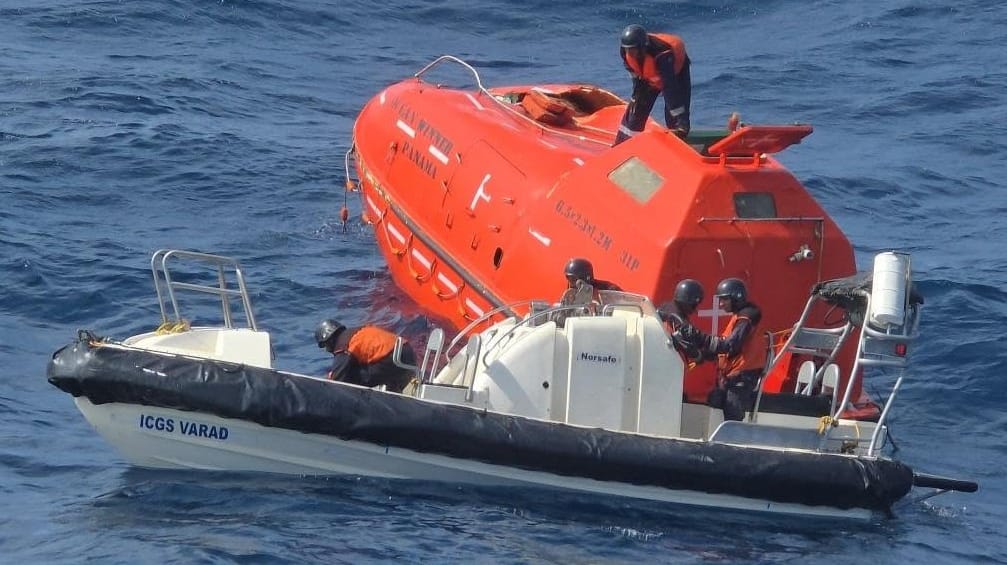
Indian Coast Guard searched a damaged lifeboat from the bulker (ICGS)

Published Aug 25, 2026 1:32 PM by The Maritime Executive


The Indian Coast Guard, working with the Indian Navy, intensified the search for 22 crewmembers missing from a bulker that was believed to have sunk in the Bay of Bengal on Saturday. Additional resources have been deployed, but the Coast Guard said hope was fading after they searched a lifeboat from the vessel.

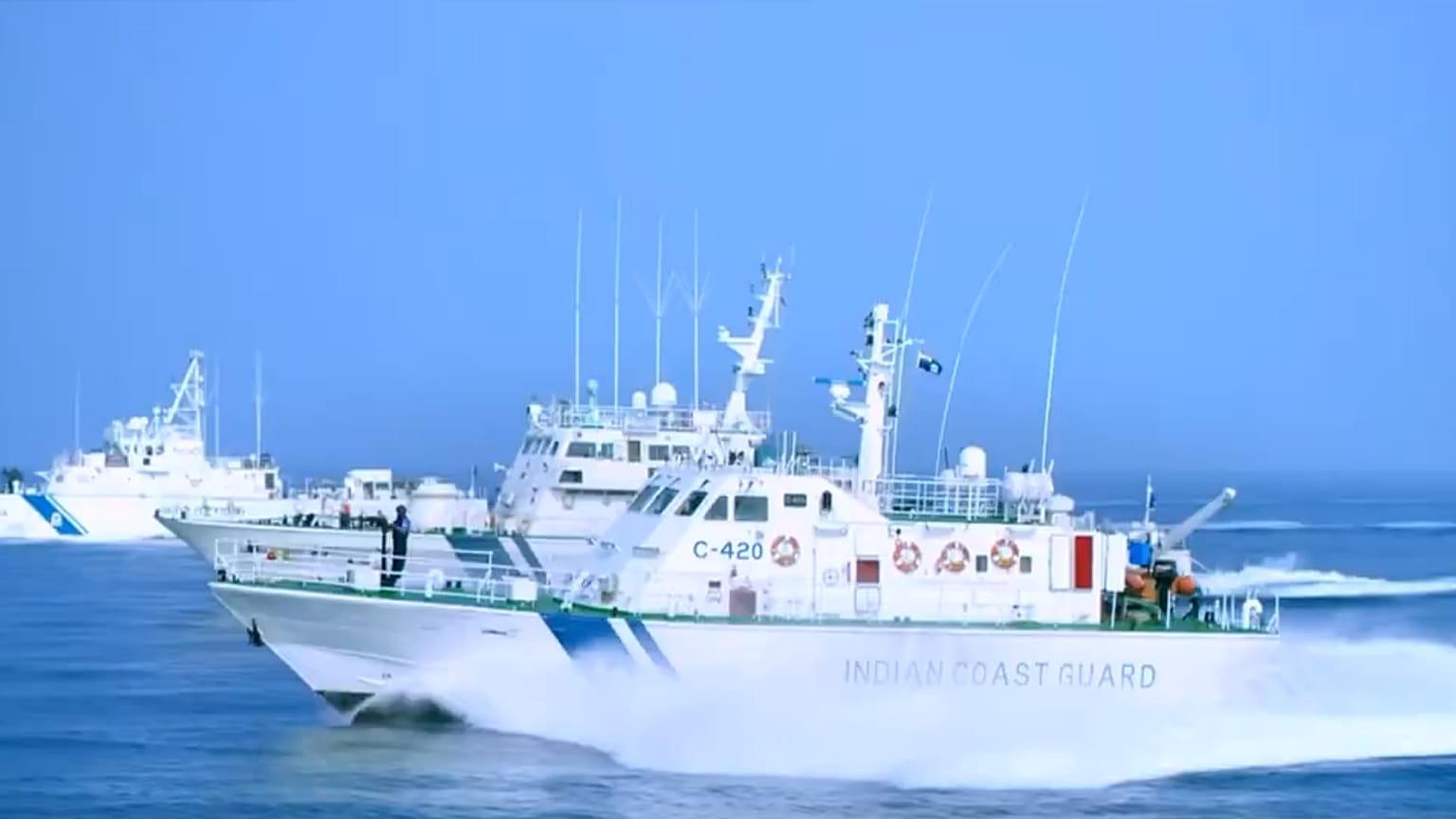
A reconnaissance aircraft from the Indian Navy picked up a distress signal from the Panama-flagged bulker Ocean Winner and visually spotted three lifeboats and rafts from the vessel. The aircraft supplied the coordinates to the Indian Coast Guard, and the patrol boat ICGS Varad reached the coordinates. It recovered the vessel’s emergency beacon and also searched a damaged lifeboat, but no one was aboard.

The Navy also reported seeing an oil slick believed to be coming from the lost bulker. The position is approximately 230 nautical miles off the Odisha coast. The Ocean Winner (72,928 dwt) had departed Paradip, India, on August 20, bound for Singapore. Built in 1998, the vessel is managed by a Chinese company. It was last inspected in June, with the reported deficiencies related to fire safety.

The Coast Guard said on Tuesday that additional resources were being deployed. Two merchant ships also joined the search. 

A good Samaritan vessel, the tanker Aisopos, reported late on Saturday that it had recovered two crewmembers from the bulker in life rafts. 

The crew told them that the ship had taken on a sudden list on Saturday morning. They said it was possibly just eight minutes until the vessel began sinking. The crew said the ship had been holding off Pradip since August 3 and had experienced significant heavy rain during that time. It then proceeded to load 72,200 tonnes of iron ore fines.

Suspicions are focusing on possible liquefaction of the cargo, but Coast Guard officials are emphasizing that no cause has been determined. They highlighted that there are prescribed transportable moisture limits for cargo and that wet loading of iron ore is prohibited. They will be investigating the conditions during loading.

The ship had a total of 24 crewmembers, including 20 Chinese nationals, three from Myanmar, and one from Bangladesh. The two rescued crewmembers are reported to be Chinese.

The Coast Guard vessels Anmol and Vijit joined the Varad and are all working the search area. 


Indian Coast Guard launches search and rescue operation after cargo vessel sinks in Bay of Bengal

Indian Coast Guard
Copyright Indian Coast Guard/X

By Nathan Rennolds
Published on

The crew consisted of 20 Chinese nationals, three Myanmar nationals, and one Bangladeshi, the Indian Coast Guard said.

The Indian Coast Guard has launched a search and rescue operation off the coast of eastern India after a cargo ship sank in the Bay of Bengal.

According to the Coast Guard, the MV Ocean Winner vessel issued a distress alert while southeast off the port of Paradip on Saturday before contact was lost.

Two of the 24-strong crew have been rescued from life rafts, while the Coast Guard has deployed three ships to carry out surface searches for the remaining crew members.

The crew consisted of 20 Chinese nationals, three Myanmar nationals, and one Bangladeshi, the agency said.

The cause of the sinking is not yet clear.

Sarbananda Sonowal, India's Minister of Ports, Shipping and Waterways, said the Panama-flagged vessel had been carrying iron ore from the port of Paradip to China when it sank.

"All agencies are coordinating closely and actively doing search and rescue efforts. 2 survivors have been successfully rescued and are being given medical care; their rank and identity are currently being verified," he wrote in a post on X.

"My prayers for the safety of the remaining crew," he added.


Search continues for 22 after bulk carrier sinks off India

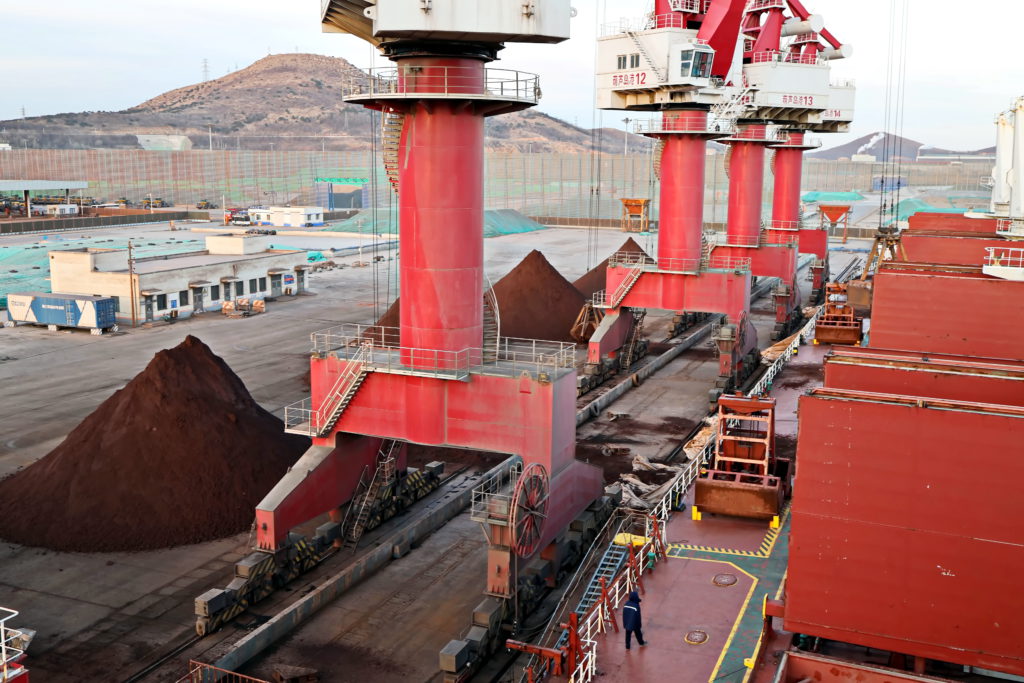
Cargo terminal for unloading bulk cargo of iron ore by shore cranes and grabs. Huludao, China. Stock image.

India’s Coast Guard and Navy continued search-and-rescue operations off the eastern coast on Sunday after a Panama-flagged cargo vessel carrying 24 crew sank, with two Chinese nationals rescued, a senior official said.

The two rescued Chinese seafarers said the vessel developed a list on Friday and sank within eight minutes, forcing crew to abandon ship, Shyam Jagannathan, director general of India’s Maritime Administration, told Reuters.

Jagannathan said the chances of finding survivors generally fall sharply after 12 hours, but rescuers were continuing the search.


Twenty-two crew members remain missing from the Ocean Winner, including 18 Chinese nationals, three Myanmar nationals and one Bangladeshi, according to the Indian Coast Guard.

The Indian Navy is closely coordinating with the Coast Guard to locate the remaining crew, the Navy said in a post on X.

The Coast Guard has sent two vessels from Sri Vijaya Puram, formerly known as Port Blair, for the search-and-rescue operation, a Coast Guard spokesperson said.

The Ocean Winner was carrying iron ore bound for China after departing from India’s eastern Paradip port on Friday, according to an initial report prepared from India’s Maritime Administration.

The cargo ship sank about 240 nautical miles from the port, according to government sources.

The cause of the sinking was not immediately known.

(Additional reporting by Disha Mishra in Bengaluru; Writing by Mayank Bhardwaj; Editing by Raju Gopalakrishnan)


Namibia paves way for phosphate mining in the Atlantic Ocean

"Marine phosphate mining at this scale has never been conducted anywhere in the world" 


Windhoek (AFP) – Namibia has granted environmental clearance for an offshore phosphate mining project that paves the way for the world's first commercial seabed-dredging operation for the mineral, despite opposition from green groups and the fishing industry.


Issued on: 25/08/2026 - RFI

The planned phosphate dredging project would operate 120 kilometres off Namibia's Atlantic coastline. © MARCO LONGARI / AFP

Deep-sea mining seeks to tap previously untouched seabed deposits of a range of commodities, including cobalt and nickel, but the fledgling industry has long been stalled by environmental concerns.

The government certificate issued this month is the next step in plans by Namibian Marine Phosphate (NMP) to dredge the ocean floor around 120 kilometres off the town of Walvis Bay for the key ingredient of fertilisers vital to agriculture.

NMP said the clearance does not mean it will immediately begin commercial mining operations as it still needs to complete permitting, including for the necessary land-based infrastructure.

But the certificate has raised alarm among conservationists, with the Confederation of Namibian Fishing Associations reportedly threatening to challenge its validity.

Should it go ahead, the Sandpiper Project would be a world-first, with other offshore phosphate mining projects having been held back by environmental concerns.

NMP has said it envisaged controlled dredging across approximately 1.7 square kilometres (0.65 square miles) annually to produce three million tonnes of phosphate concentrate per year.

Over the 20-year licence period, this would represent the equivalent of 0.002 percent of Namibia's seabed, it said after the clearance was announced.

However, "no immediate or urgent commercial operations are planned by NMP," said the group, which is 85 percent owned by an Oman-based mining company.

The government's announcement that the environmental certificate had been cleared ended a decade-long silence about the project.

The group was given a licence in 2011 but came to a standstill in 2013 over concerns about the impact on marine ecosystems and Namibia's multi-million-dollar commercial fishing industry.
Toxins, fish

Sediment plumes generated by seabed excavation and processing pose significant risks to ecosystems and public health, said marine scientist Bronwen Currie.

Underwater dredging risks releasing heavy metals and toxic substances trapped deep in the seabed, which could enter the marine food chain and jeopardise commercial fish stocks, she told AFP.

"It is really not a good idea, considering this would liberate very toxic elements from the seabed, as a lot of heavy metals are buried deep in the sediment," Currie said.

And, because phosphate is a low-value commodity, vast quantities must be dredged to make operations viable, she said.

"All of these dangers have not yet been addressed in any of the environmental impact studies," she said

While Namibia is not unique in having phosphate deposits, other nations have decided against ocean mining, she said. "New Zealand has shown categorically that it is not viable, both environmentally and financially."

Environmental specialist Peter Cunningham told AFP that potential sediment plumes could impact rocky shoreline habitats, crayfish spawning and breeding species.

"It is not worth it for Namibia to experiment on its seabed, putting its marine life and the entire movement of ocean water at risk for something as simple as phosphate," he told AFP..

"If we have a problem with above-ground mines, you can just imagine what the problem would be for underwater mines," Cunningham said.

The Ocean Conservation Namibia non-profit group said the project "threatens to turn Namibia's marine ecosystem into an untested experimental zone, putting our ocean habitats, water quality, and local fisheries at immediate risk."

"Marine phosphate mining at this scale has never been conducted anywhere in the world," it said after the certificate was issued.

"We cannot allow Namibia to become a global guinea pig."


World's oceans hit hottest temperature ever recorded in August as El Niño takes hold

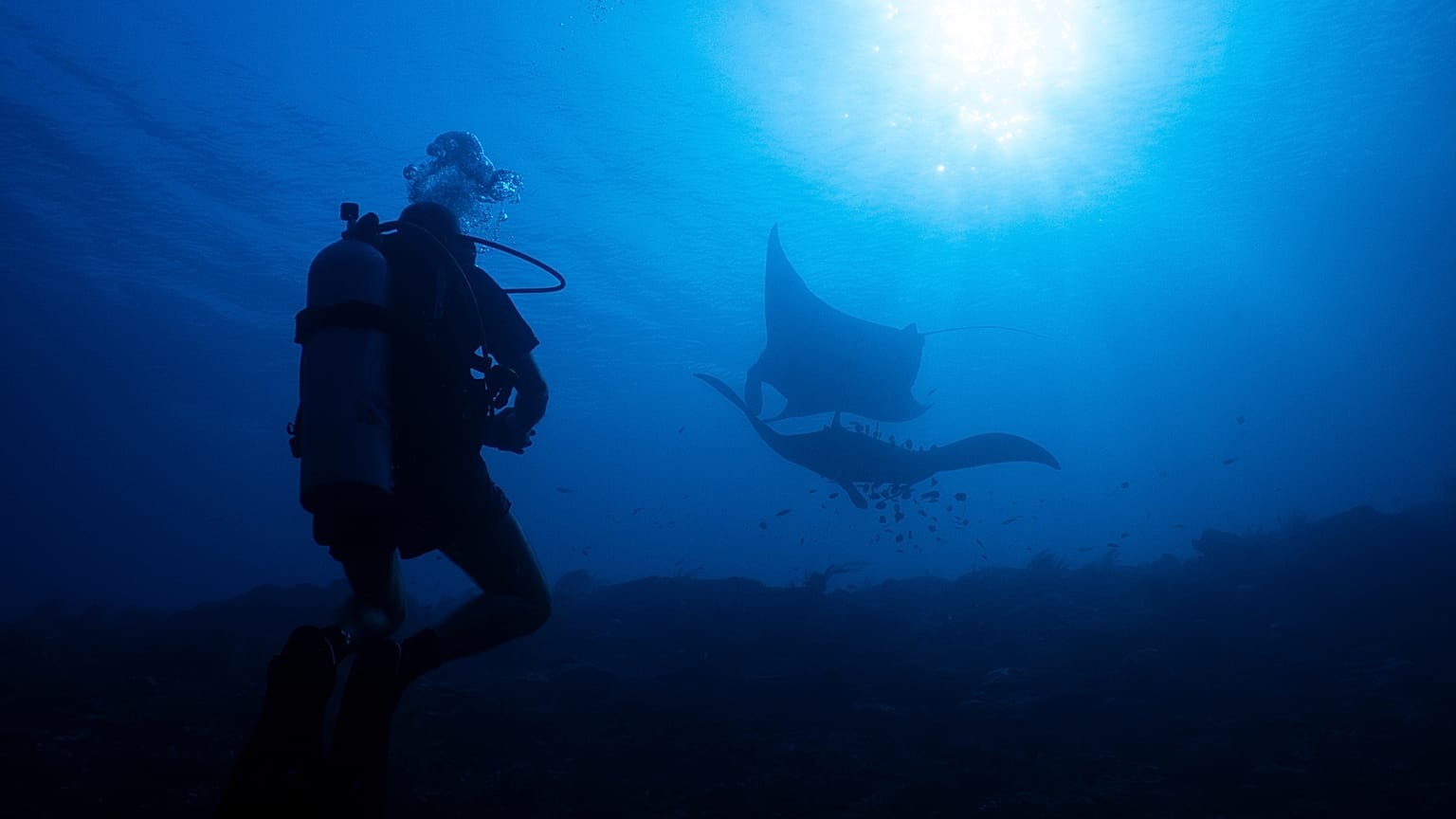
A scuba diver watches oceanic mantas at the Manta Ridge dive site in Raja Ampat, Indonesia, Saturday, March 7, 2026.
Copyright AP Photo / Claudia Rosel

By Marta Pacheco
Published on

The average global sea surface temperature outside polar regions reached 21.1°C on Saturday.

The world's oceans have reached their highest daily temperature on record, with global sea surface temperatures hitting 21.1°C on 22 August - a new high made particularly striking by the time of year, according to the European Union's climate change data.

The reading, recorded by the EU's Copernicus Climate Change Service, narrowly surpassed the previous daily record of 21.09°C, set in March 2024.

Ocean temperatures typically reach their global peak in March and April, following the southern hemisphere summer, Copernicus explains. This new record being set in August, when temperatures would normally be declining, highlights the persistent warmth spreading across the world's oceans.

The latest figure also beats the previous August record of 20.98°C, set in 2023.

While swimmers may like warmer oceans, the consequences are devastating and wide reaching for both humans and animals.

What is the link between El Niño and warmer oceans?

The record comes as a strong El Niño develops in the tropical Pacific, adding further heat to an ocean that has already warmed significantly over decades because of human-driven climate change.

El Niño is expected to strengthen in the coming months, with the World Meteorological Organization forecasting a strong event. Copernicus seasonal forecasts suggest it could reach levels not seen for several decades.

But scientists caution against viewing El Niño as the sole explanation for the record.

“This record is another clear signal of an ocean under growing stress,” says Samantha Burgess, strategic lead for climate at the European Centre for Medium-Range Weather Forecasts.

“El Niño is adding heat to the system, but it is doing so on top of decades of human-driven warming,” she says.

What is the problem with warmer oceans?

"From the Atlantic waters off Ireland to the Mediterranean Sea, Europe's seas are experiencing an alarming surge in temperatures," Thomas Frolicher, an environmental physicist at the University of Bern, Switzerland, said in a study published last week.

"Our research shows clearly that this is being driven by climate change, in particular by the continued burning of fossil fuels," he adds.

The consequences of warmer oceans stretch from marine ecosystems to coastal communities.

Higher sea temperatures increase the likelihood and intensity of marine heatwaves, which can damage coral reefs and seagrass meadows and disrupt marine food webs.

Fisheries and aquaculture industries can also be affected as marine species move in response to changing conditions.

The global ocean has already experienced a sharp increase in marine heatwaves, with the number of marine heatwave days more than tripling since the early 1990s, according to Copernicus.

Warmer seas also contribute to rising sea levels because water expands as it heats. At the same time, a warmer ocean can transfer more heat and moisture into the atmosphere, potentially increasing the intensity of some rainfall and storm systems.

Another concern is that the ocean absorbs a large share of the carbon dioxide produced by human activity, but warmer water is less efficient at taking up CO2, Copernicus data revealed, noting that continued warming could weaken one of the planet's important carbon sinks against climate change.

Scientists are now watching to see whether the latest record proves to be a short-lived spike or becomes part of a more persistent period of extreme ocean warmth.

 Volkswagen workers boo boss during speech on job cuts


AFP
August 25, 2026 

VW has struggled with Chinese competition, US tariffs and patchy demand in Europe – Copyright AFP Jens Schlueter

The boss of German carmaker Volkswagen warned workers on Tuesday to brace for more job losses, earning boos and jeers from the crowd, as the crisis-hit company faces a drastic round of cost-cutting.

VW, long a titan of German industry, has struggled with Chinese competition, US tariffs and patchy demand in Europe, including for its electric vehicles.

About 50,000 job cuts have already been agreed across the 10-brand Volkswagen Group — mostly at VW, Audi and Porsche — but the firm has said another 50,000 could be required worldwide to slash costs.

Speaking in front of about 10,000 workers at VW’s Wolfsburg factory, CEO Oliver Blume said for the first time that it was likely “about half of the adjustments required would fall in Germany”.

He also cast doubt on the long-term future of three VW plants and an Audi factory, all in Germany, while stressing the company was searching for ways to keep them open into the 2030s.

“If we carried on in Germany as we have been, we would be at a permanent disadvantage to the tune of 1.5 billion euros ($1.75 billion) a year,” he said, stressing that “we are under real pressure to act”.

Unions have accused VW of not being straight with workers after the latest plans were first reported by media and only later communicated internally.

Speaking to the crowd, VW Works Council chief Daniela Cavallo earned hearty applause as she accused management of keeping employees in the dark.

“Our trust in the board, in particular in its head Oliver Blume, has been damaged,” she said. “You can’t work with a CEO who doesn’t tell his staff what’s going on.”

Blume’s speech was repeatedly interrupted by jeering and whistling, a person present at the meeting told AFP, and workers held aloft signs saying: “Don’t balance your books with our jobs”.

IG Metall union leader Christiane Benner in a radio interview acknowledged the difficulties brought by Chinese competition and US tariffs but advocated cost-cutting measures other than job cuts.

Collapsing sales in China have started to look less like a blip for VW and more like the new normal at the same time as Chinese competitors like Chery and BYD gain market share in Europe.

Other carmakers have warned that German auto plants need to learn to do more with less as cost pressure has risen.

BMW opened a new plant in lower-cost Hungary last year and Mercedes-Benz unveiled an extension to its Hungarian Kecskemet plant last month, making it the firm’s largest in Europe.

Mercedes-Benz has a cost gap of about 70 percent between its Hungarian and German operations, CEO Ola Kaellenius said last month.

Any cuts at Volkswagen have to be negotiated rather than imposed, setting the scene for protracted and difficult talks.

Labour representatives have half the seats on supervisory boards at big companies under Germany’s system of co-determination.

The German state of Lower Saxony — a shareholder that is home to several VW plants including the Wolfsburg factory — also holds seats on the board.

Volkswagen workers condemn ‘disastrous’ communication over job cuts

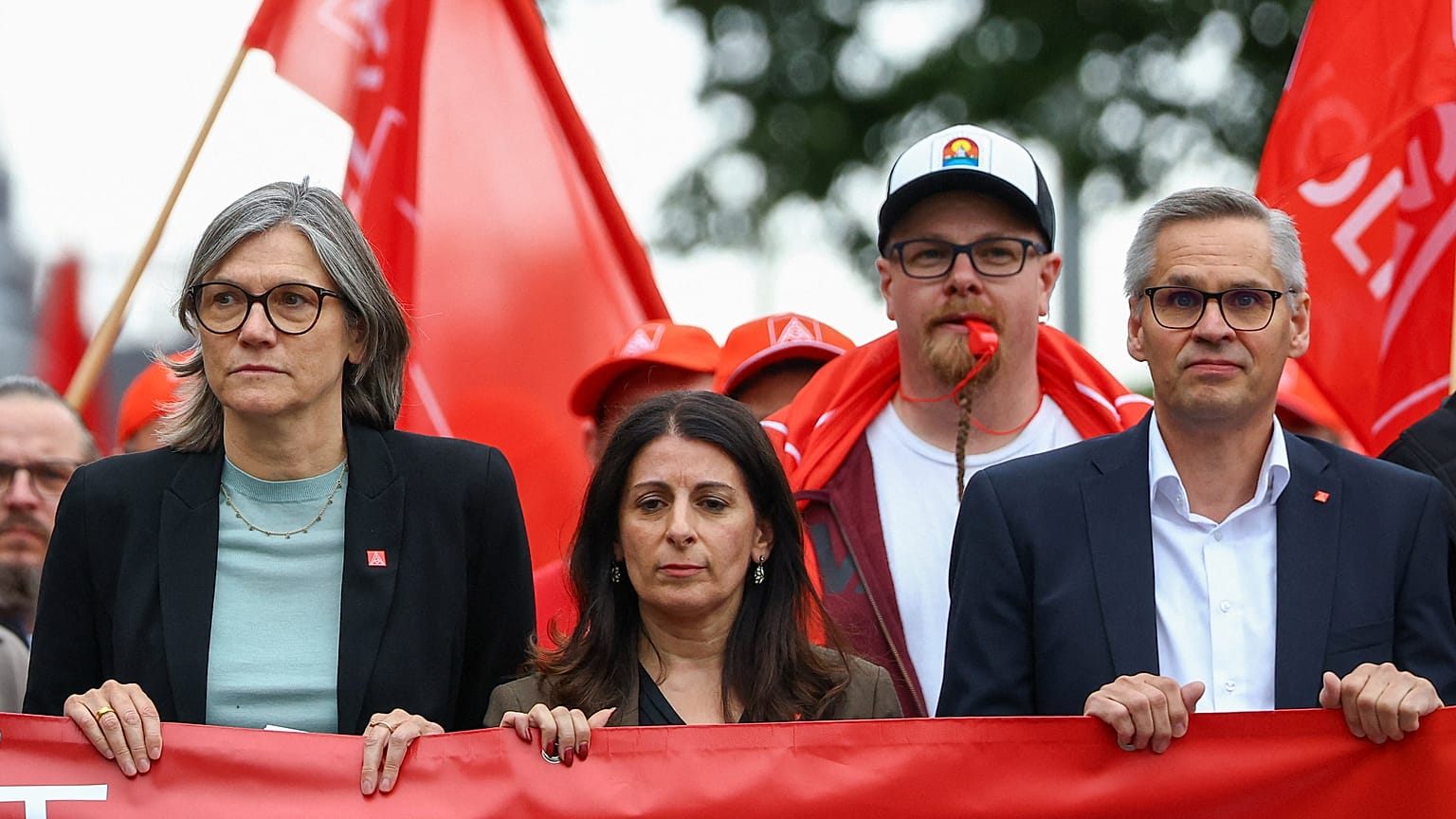
File - From left: IG Metall’s Christiane Benner, VW works council chief Daniela Cavallo and union official Thorsten Groeger at a Wolfsburg rally on 9 July 2026.
Copyright AP Photo

By Doloresz Katanich with AFP
Published on

Employees have criticised Volkswagen’s management as the German carmaker considers further job cuts and the future of several plants.

Volkswagen workers have sharply criticised the company’s management amid growing uncertainty over possible job cuts and the future of several German factories.

The chance to express their criticism and expectations of CEO Oliver Blume and the rest of the board via the company intranet led to ranking the communication as employees' number one grievance, even ahead of concerns about job security or possible factory closures.

According to the German Press Agency, employees and their families were left "uncertain and frightened."

The consultation was organised by Volkswagen’s works council ahead of a series of meetings between senior executives and employees.

CEO Oliver Blume and other board members are beginning a tour of Volkswagen sites for meetings with workers this week, and executives are expected to provide initial answers to the questions and responses to the criticism during these nine extraordinary works meetings, the first of which will take place on Tuesday, 25 August, in Wolfsburg.

It will be followed by others at followed by others at sites including Emden, Zwickau, Braunschweig and ending in Hannover on 31 August.

Volkswagen is seeking deeper cost cuts as the group struggles with fierce Chinese competition, weaker demand and US tariffs.

In a separate intranet post seen by AFP on Sunday, Blume said: "The situation is more than critical," adding that the firm was not making enough money to "ensure we have the means over the long term for new technologies, new products and our locations".

Volkswagen reported an 11.6% decline in its first-half operating result to €5.9bn, while its operating margin fell from 4.2% to 3.8%.

Volkswagen has already agreed to about 50,000 job cuts across brands, including its namesake as well as others like Audi and Porsche, but Europe's largest carmaker has since said cutting another 50,000 positions could be required.

Uncertainty also surrounds four German plants: Volkswagen sites in Emden and Zwickau, the Volkswagen Commercial Vehicles factory in Hannover and Audi’s plant in Neckarsulm.

Volkswagen's supervisory board are discussing turnaround plans.

Blume said Sunday that Volkswagen and the rest of Germany's car industry are facing "the biggest upheaval in their history" from global headwinds and Chinese competition.

Other German carmakers have also warned about the country’s high production costs. Mercedes-Benz chief executive Ola Källenius said last month that costs at the company’s German operations were about 70% higher than at its plants in Hungary.

Reports about possible further job cuts at Volkswagen have angered unions, which have accused Volkswagen’s management of failing to communicate openly with employees.

Blume confirmed in July that the equivalent of up to 50,000 additional positions could be affected, but said the figure had been leaked to the media without his approval.


VW chief warns carmaker’s situation ‘more than critical’

AFP
August 23, 2026


Volkswagen’s bosses want to drastically cut production capacity and trim its range of models – Copyright AFP Blanca CRUZ


Volkswagen’s CEO warned Sunday the company was in a “more than critical” state ahead of meetings with the car giant’s staff where he will defend the company’s savings plans.

In an interview posted on the company’s intranet and sent to AFP, Oliver Blume said Volkswagen and the rest of Germany’s car industry are facing “the biggest upheaval in their history” from global headwinds and Chinese competition.

The carmaker is weighing up huge job cuts. In the coming days, Blume will meet with employees at Volkswagen’s headquarters in Wolfsburg and sites in Zwickau and Emden to give updates on the company’s plans.

In the interview, Blume said that no decision had been taken on plant closures but reiterated the company’s position that for plants in “Emden, Hannover, Zwickau and Neckarsulm we cannot currently see any way of them remaining profitable in the 2030s.”

He said that the company also had to deal with the over-production of 500,000 vehicles per year in Europe.

Closing factories would always be “the last and most expensive solution.” Blume said.

He added that at sites where car production may stop, Volkswagen was exploring other “industrial solutions”, pointing to advanced talks with companies from the defence industry over using its factory in Osnabrueck.

Blume described the situation facing the company as “more than critical” and said its current level of profits was not sufficient to “ensure we have the means over the long term for new technologies, new products and our locations.”

– US tariffs, Mideast war –

Alongside competition in and from China, Blume named US tariffs, the war in the Middle East and regulatory burdens as key challenges for the company.

Asked whether he expected the situation to improve, Blume said “on the contrary, we have to assume that risks will get worse, worldwide.”

In July, Blume presented saving plans to Volkswagen’s supervisory board but no decision was taken.

German media reported at the time that the Lower Saxony state government, a major shareholder in the Volkswagen Group which holds 20 percent of the voting rights, refused to sign off on the plans.

The group has already ordered 50,000 job cuts and Blume said that agreements have already been reached with 37,000 employees.

Blume appealed to employees to pull together for the sake of the auto giant.

“We will only be successful if everyone in the company supports this plan,” he said.

The head of the IG Metall union on Friday sharply criticised management and promised to resist the factory closures.

Volkswagen’s “workers have already to accept hefty and painful cuts and now are getting another slap in the face,” Christiane Benner told the Wirtschaftswoche weekly.


US robotaxi firm Waymo plans to launch in Germany

AFP
August 25, 2026 

Waymo robotaxis have become a common sight on the streets of San Francisco – Copyright GETTY IMAGES NORTH AMERICA/AFP Heather Diehl

Self-driving car company Waymo said Tuesday it will launch its robotaxis in the German city of Munich next year, marking the US group’s first foray into the European Union.

Waymo, a subsidiary of Google parent Alphabet, will in the coming weeks start mapping the city’s streets and conducting tests with specialist drivers at the wheel.

Commercial ride-hailing will be offered to the public at the end of 2027, the company said in a statement.

The firm, whose robotaxis currently operate in several US cities, is also planning to expand to London and Tokyo this year.

“Munich is a world-class hub for mobility and engineering, and becoming part of this city marks an important milestone in our global expansion,” said Waymo co-chief executive Tekedra Mawakana.

Florian Herrmann, a minister in the Bavaria state government, welcomed the news.

“Autonomous driving is a key technology for the future of mobility and for the transformation of our automotive industry,” he said.

Bavaria, of which Munich is the capital, is a traditional centre of Germany’s car industry, home to BMW and numerous auto suppliers.

But the sector is facing an unprecedented crisis as it battles Chinese competition, a tricky transition to electric vehicles and weak demand.

Waymo is the latest firm to launch trials in Europe, where uptake of robotaxi services has been much slower than in the United States and China.

Chinese and US firms have announced trials in places including Croatia, London and Madrid.


Facebook, TikTok promoted Colombian armed groups’ content to recruit children: HRW

AFP
August 24, 2026
At a press conference in Bogota, Human Rights Watch discussed its report accusing Facebook and TikTok of failing to stop child recruitment online by Colombian armed groups – Copyright AFP Raul ARBOLEDA

Facebook and TikTok failed to prevent the spread of content produced by Colombian armed groups to recruit children and in some cases even “appeared to promote these posts,” Human Rights Watch reported on Monday.

HRW said the circulation of social media content by armed groups “glorifies life in armed group ranks” and promotes “deceptive job offers.”

Since 2021, around 1,500 children have been recruited by armed groups, according to the non-governmental organization.

Armed groups use children for combat, handling weapons, drones and explosives, and intelligence gathering, the HRW report said.

In some cases, children without combat training are used as “cannon fodder,” it said.

“Digital platforms must recognize that they are being used for the recruitment of children” which means they are being used to commit crimes, “including committing war crimes,” HRW Americas director Juanita Goebertus told a press conference in Bogota.

According to the report, almost half of child recruits are Indigenous children, despite Indigenous people only representing around four percent of the population.

Girls account for around 40 percent of child recruits, and are “particularly exposed to sexual violence.”

In the report, HRW described social media posts showing members of armed groups flaunting wads of cash and jewelry.

In other posts, they appear in training camps or listening to “narcocorridos” — a Mexican music genre which celebrates the exploits of infamous drug traffickers.

“What armed groups do really well on social media is to sell a lifestyle,” Mathew Charles, founder of the Mi Historia foundation which works with child victims of conflict, told reporters.

They project “tough-guy masculinity” and the possibility of earning “easy money,” he said, calling on the state and other NGOs to combat “these lies and create counter-narratives.”

HRW said dissident groups that emerged from the now-defunct Revolutionary Armed Forces of Colombia (FARC) have been responsible for 74 percent of child recruitment cases documented between 2021 and 2025.

HRW said it had informed Meta, Facebook’s parent company, and TikTok’s owner ByteDance of the problem. Both said they had removed the specific content mentioned.

Meta said it “constantly strives to refine (its) approach to combating” child recruitment efforts across its platforms.

TikTok said it “proactively (prevents) illegal armed groups and organized criminal groups from using TikTok, including to target, exploit or recruit minors.”

The historic 2016 peace agreement ended a half-century of war between the government and FARC guerrillas, but remaining armed groups continue to control large swaths of territory in remote parts of Colombia’s northeast and south.

Newly inaugurated President Abelardo de la Espriella has vowed to crack down on armed groups and plans to forge a military alliance with the United States and Israel.


Meta glasses banned by ‘many’ cinemas amid piracy concerns

24.08.2026, dpa

Photo: Vuk Valcic/ZUMA Press Wire/dpa

Many cinemas in the UK are banning or restricting the use of Meta glasses due to privacy and piracy concerns, an industry group has said.

Cinemas have become the latest industry to clamp down on use of the smart glasses after action from pub operators and theatres in recent weeks.

The move comes as France, Germany and the Netherlands have been considering outright bans on Meta's smart glasses as "disguised cameras."

The UK Cinema Association (UKCA) said many venues are currently looking into their policies around smart glasses.

As a result, numerous venues have already prohibited and restricted their use by cinemagoers.

A UKCA spokesman said: “UK cinema operators are aware of the increasing availability and use of wearable technology such as smart glasses and the extent to which these can provide benefits to those with specific access requirements.

“However, they are also mindful of the issues around privacy and film piracy that arise around the use of such technology in cinemas, and as a result many are introducing policies to prohibit and/or restrict the wearing of camera-enabled smart glasses in particular in their venues.

“This is clearly a developing area, and we will continue to work with our members to ensure their approach remains relevant and proportionate.”

A number of pub firms, including UK chain Wetherspoons, have indicated that they will not allow people to record with the glasses inside their venues.

Meta first started selling Meta glasses in 2021 but has seen demand grow in recent years on the back of partnership with brands Ray-Ban and Oakley, with around seven million pairs sold last year.

The technology company said it recognises that films should not be recorded without authorisation.

A Meta spokeswoman said: “People use our glasses because they’re helpful and let them stay in the moment, from listening to music to live translation or hands-free calls.

“They also provide critical new technology for people in the blind and low vision community and limiting how people can use this technology would be a major step backwards.

“Naturally some places shouldn’t be filmed at all and that’s reasonable but rules should be applied consistently.”

Brazil fines TikTok $30 mn in ‘powerful signal’ over child safety

AFP
August 25, 2026 

Brazil has taken a tough stance on the regulation of social media platforms, cracking down on disinformation and requiring users under 16 to have their accounts linked to those of their parents – Copyright AFP/File Kirill KUDRYAVTSEV

Brazil’s data protection agency on Tuesday fined TikTok nearly $30 million for failing to implement child safety measures in what it said was a “powerful signal” to social media companies.

Brazil has taken a tough stance on the regulation of social media platforms, cracking down on disinformation and requiring users under 16 to have their accounts linked to those of their parents.

Fabricio Lopes, an enforcement director with the ANPD data protection agency, told a press conference that TikTok “was not taking the necessary measures to prevent adolescents from accessing the platform and from having the data of these children and adolescents processed.”

This data was “being used to offer advertising to adolescents.”

He said the fine of 153.7 million reais ($29.9 million) was a “powerful signal to other platforms regarding how seriously the ANPD takes this work” and that the agency hoped they would “get the message.”

TikTok agreed last week to pay $400 million to settle a lawsuit with the US Department of Justice over claims that the video-sharing platform collected children’s personal data without parental permission.


– Tougher enforcement –


The ANPD this month also ordered popular streaming platform Discord to suspend livestreams and video calls after a teenage girl was allegedly encouraged to take her own life during a broadcast.

The agency told AFP that an appeal filed by Discord on Monday against the suspension is under review.

ANPD director Lorena Giuberti Coutinho said the agency had last week initiated proceedings to verify the compliance of 22 social media networks and platforms with a law passed this year to protect children and teens online.

“I think we can expect much stronger enforcement action” in coming months, she said.

In addition to the fine, the ANPD ordered TikTok parent company ByteDance to delete data collected in violation of regulations.

Coutinho said TikTok had committed to suspending all advertisements for users who are not logged in.

TikTok has committed to “implementing a compliance plan to improve the protection of children and adolescents,” the ANPD said.

The platform will be required to automatically apply stricter privacy settings to accounts belonging to children under the age of 16, strengthen parental supervision systems, and implement stricter content filters.

In a statement sent to AFP, TikTok said the fine stems from concerns raised in 2021 and “does not take into account” measures that have been implemented since then.

The statement said TikTok has rolled out over 50 safety features aimed at teens over the past six years.

These include restricting direct messaging for children under 16, not recommending this age group’s content to strangers, and allowing parents to set screen-time limits and block accounts.

According to the ANPD, TikTok has ten days to appeal the fine.

In 2024, the platform X was blocked for 40 days in Brazil until the social media network owned by the world’s richest person, Elon Musk, complied with the Supreme Court’s orders to remove accounts spreading disinformation.

TikTok to pay $400 mn settlement in US children’s privacy case

AFP
August 21, 2026

 © AFP/File Antonin UTZ

TikTok and parent company ByteDance have agreed to pay $400 million to settle a lawsuit with the US Department of Justice over claims that the video-sharing platform violated federal children’s privacy laws, the department announced on Friday.

“Under the settlement, TikTok will pay $300 million immediately and an additional $100 million upon entry of an order vacating a prior consent decree entered against TikTok’s predecessor, Musical.ly,” the department said in a statement.

It’s “one of the largest recoveries ever obtained” from a case involving the Children’s Online Privacy Protection Act (COPPA), the statement continued.

COPPA bars websites from gathering the personal information of children younger than 13 without parental permission.

The Justice Department and Federal Trade Commission jointly sued TikTok in 2024, alleging that it had placed the safety of millions of children in jeopardy by collecting their personal data without parental permission.

They claimed that TikTok allowed children to use the app in addition to collecting and using personal data from young users without letting their parents know.

Even accounts created in a “Kids Mode” intended for users younger than 13 gathered email addresses and other personal information, the suit claimed.

In 2019, the US filed a COPPA lawsuit against an app called Musical.ly, which ByteDance bought in 2017 and then merged into TikTok.The Justice Department and Federal Trade Commission jointly sued TikTok in 2024, alleging that it had placed the safety of millions of children in jeopardy by collecting their personal data without parental permission – Copyright AFP/File Yuichi YAMAZAKI

TikTok did not immediately respond to a request for comment.

According to an ABC News report in May, the Trump administration was considering using the funds for ongoing “beautification” projects, which have included resurfacing the Lincoln Memorial Reflecting Pool, renovating the White House ballroom and building an arch.

It was not immediately clear what the settlement funds will be used for.

– Global crackdown –

The US settlement comes amid a growing global crackdown on the video app.

Brussels began a probe into TikTok in 2024 under the Digital Services Act (DSA) — a content law and major weapon in the EU’s boosted legal armory that it has deployed to rein in Big Tech in recent years.

In July, the European Union accused TikTok of failing to protect children through account settings that can expose them to risks like cyberbullying and predatory behavior, putting the company at risk of a large fine.

The EU said minors’ accounts should only be visible to those they have given permission to. Children ages 13 and over can use TikTok.

“A high level of protection should not be an opt-in; it should be the default,” EU tech chief Henna Virkkunen said in a statement at that time.

Under the DSA, children’s account settings have, by default, the strongest safety and security protections.

“TikTok’s account settings fail to meet this standard, as they expose minors’ accounts and content too widely,” the EU said in its preliminary view.

Britain’s communications regulator also launched an investigation into TikTok in July.

The UK probe will look into whether TikTok is doing enough under UK law to protect children from harmful content.

“This investigation will seek to establish whether there are reasonable grounds to believe that TikTok has failed, or is failing, to comply with its legal obligations,” Ofcom said in a statement.

It added that it would in particular look at TikTok’s age-verification model.