Tuesday, August 25, 2026


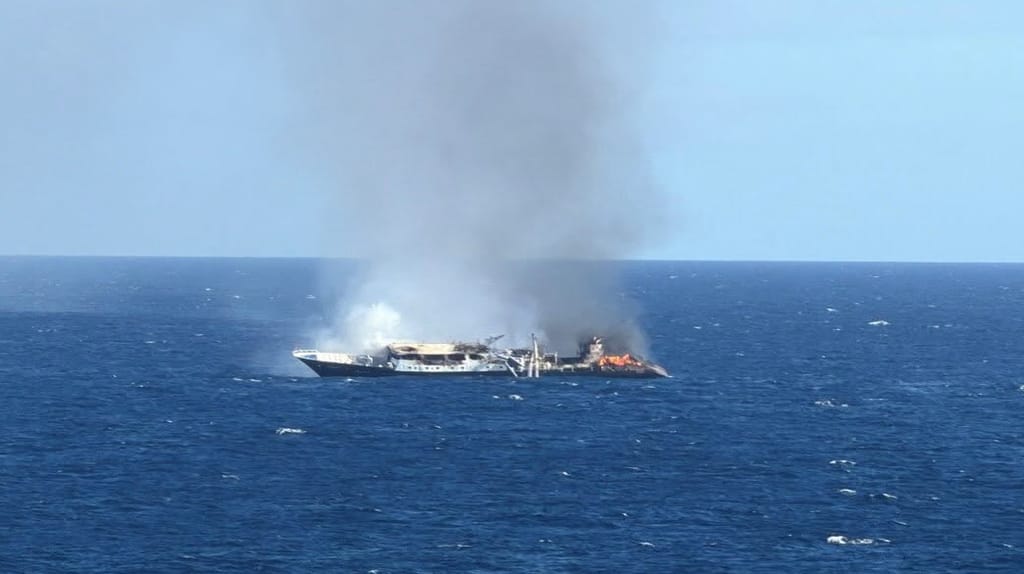
Good Samaritans Rescue 27 From Burning Tuna Seiner Off Galapagos

Drennec, her mast collapsed, burns off the Galapagos (USCG)

Published Aug 23, 2026 11:25 PM by The Maritime Executive


Last week, with assistance from the U.S. Coast Guard, a good Samaritan vessel rescued 27 crewmembers from a tuna seiner that had caught fire off the Galapagos Islands.

At about 2000 hours on Thursday, the U.S. Coast Guard's Southwest District received distress alerts from the fishing vessel Drennec. In addition to an EPIRB alert, the service received a message from a Garmin inReach satellite text-messaging device via the Iridium network. The crewmember with inReach service informed Garmin that the vessel had caught fire at a position about 450 nautical miles southwest of the Galapagos, and all crewmembers aboard had abandoned ship safely into a life raft. Garmin then relayed the message to the Coast Guard. 

The high-seas region of the casualty is far beyond the reach of helicopter SAR capabilities, so watchstanders at Southwest District activated the AMVER system to identify nearby vessels that might be able to assist. The boxship Oluf Maersk and the fishing vessel Ricky A agreed to divert from their voyages to assist. The two vessels arrived on scene, and Ricky A recovered all 27 members of the Drennec's crew in good health. Ricky A plans to return them to shore at Guayaquil, according to the Coast Guard. 

“Rescuing 27 crew members within 11 hours of the distress alert in a remote area of the Pacific Ocean is an incredible achievement,” said Doug Samp, the search and rescue mission coordinator for the case. "We sincerely appreciate the response from the Oluf Maersk and Ricky A, who directly contributed to 27 lives saved.”

Drennec is an 80-meter tuna seiner homeported out of Guayaquil, Ecuador. The vessel does not appear to regularly report positioning via AIS, and her pattern of commercial activity is unknown. 


Croatian Army Works to Free Grounded Roman Ship Replica

OSRH
Courtesy OSRH

Published Aug 23, 2026 11:45 PM by The Maritime Executive


An unprecedented drop in water levels across much of Europe’s inland waterways, driven by a prolonged heat wave and severe drought, is continuing to have damaging effects — the latest being the stranding of a replica Roman ship in Croatia.

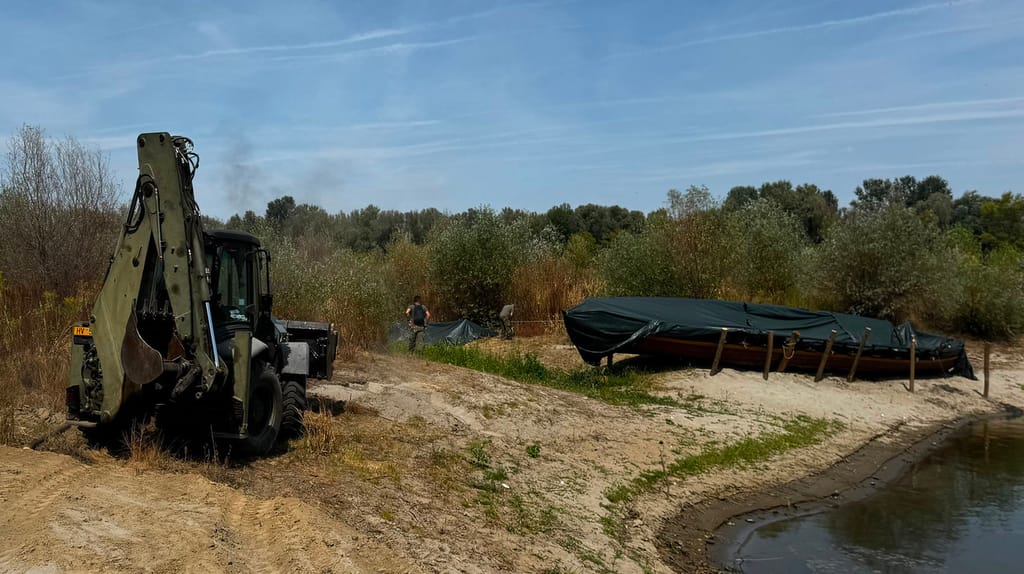
Authorities in Croatia said the vessel, a Roman ship replica belonging to Germany’s University of Erlangen-Nuremberg (FAU), was left stranded on a sandbank in the Drava River near Osijek, where water levels have fallen to their lowest point in nearly two centuries.

The Croatian Army was deployed to save the boat, which faced the risk of permanent damage and even complete loss if it were not recovered in time.

The 18-meter boat, which weighs about five tons, was built a few years ago by FAU with European Union funding. It is used for reconstructing ancient methods of maritime trade on the Danube and Drava, and is currently based in Osijek, where it is kept in cooperation with the Archaeological Museum in Osijek.

While FAU has a fleet of three replica Roman vessels, the Danuvina Alacris is the only one built as part of the EU Interreg DTP project “Living Danube Limes.” (The Danube Limes is the historical term for the Roman imperial border along the Danube.) The boat was launched in 2022 after a construction phase lasting nearly a year and a half, and it is a full-scale replica of the river craft the Romans used along the Rhine and Danube from the first century AD onward. With no roads, only ships on the rivers could carry troops, goods and news between distant regions and the frontier in the north.

After three years traveling the Danube and its tributaries in Austria, Slovakia and Hungary, the Danuvina Alacris returned to FAU’s boatyard for a complete overhaul in October last year. She returned to the water in April to continue research through which FAU is seeking to better understand Roman boat-building methods and how ancient vessels behaved in the water.

Together with the other two boats in FAU’s fleet, the Danuvina Alacris is used for research into ancient waterways and the reconstruction of historical navigation routes along the Danube and Drava rivers.

With water levels on the Drava at extreme lows because of the heat, the boat grounded, prompting members of the Guards Armored Mechanized Brigade of the Croatian army to undertake a delicate salvage operation. The army had to work in demanding terrain in an operation intended to prevent further damage and preserve the ship’s structure.

“This engagement shows that the Croatian Armed Forces, in addition to its basic task, has capabilities that can be made available to civilian institutions in various circumstances. In this case, it is support in the protection of a valuable specimen that serves the research and presentation of ancient cultural heritage,” the Croatian army said in a statement.

Meanwhile, the low waters of the Danube are revealing all kinds of historical secrets, from unexploded WWII-era and 19th-century ordnance in Hungary to a lost Nazi riverboat fleet in Serbia. Given Europe’s long history of conflict in the last two centuries, citizens have been cautioned not to handle any possible cannon rounds, bombs or grenades found on the newly-dry riverbanks.

PHILIPPINES

Video: Tug Capsizes During Salvage Tow off Luzon

Crewmembers dive off as the tug begins to roll over (PCG)

Published Aug 24, 2026 5:28 PM by The Maritime Executive


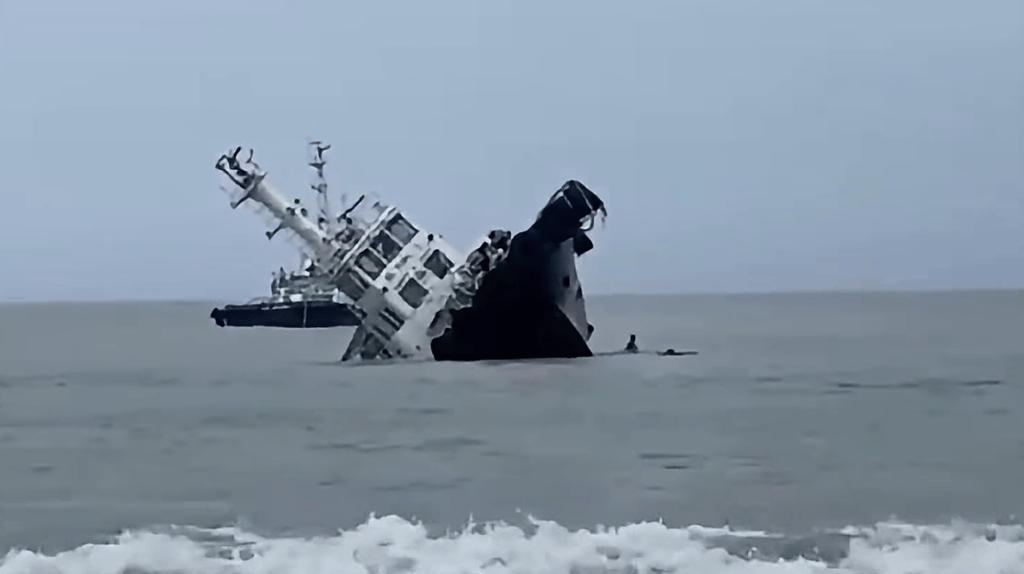
On Monday morning, a tugboat that had run aground off the coast of western Luzon capsized in gentle swells, forcing the crew to jump over the side just yards from shore. 

The tug SL Sual 1 had been intentionally grounded near the Bucao River in Barangay Bangan, Zambales on August 14 in an attempt to prevent it from sinking. The vessel had sustained a hole in the hull followed by engine room flooding, the PCG told the Inquirer. The operator made salvage plans and dispatched a second tug to tow it off the beach. 

On Monday, at about 0745 hours, the refloat operation was under way and towing had commenced when a loud banging sound was heard, possibly a sign of contact with an underwater obstruction. Shortly after, SL Sual 1 began listing to starboard. The list became progressively worse, and it became clear that the workboat was going to capsize.

The crew abandoned ship over the port side as the tug slowly rolled over. All 10 personnel aboard managed to make it off safely by jumping into the water. Within seconds, the tug began sinking by the stern, its bow pointed skyward. The prow vanished below in less than two minutes after the crew began abandoning ship. 


According to the Philippine Coast Guard, the tug has about 4,000 gallons of diesel on board. Spill response gear is staged nearby if needed, and the agency has stood up a beach patrol to watch for any signs of pollution coming ashore. 

An investigation into the cause of the casualty is under way, and the PCG is examining whether the tug may have made contact with the remains of a previous shipwreck, resulting in hull damage.  

False Flag Ops Continue to Grow in Avoidance of Sanctions

UK board shadow fleet tanker
Despite the crackdowns in Europe stopping and detaining false flagged tankers the number of false registries continue to grow (UK Royal Navy)

Published Aug 24, 2026 7:53 PM by The Maritime Executive


The challenge of false flag operations continues to spread as unscrupulous operators seek the latest techniques to avoid detection and sanctions enforcement. Maritime AI data analytics firm Windward released a new report detailing the growth of false flags and the challenges of tracking down the perpetrators.

In its Q2 analysis, Windward reports there are 22 distinct fraudulent ship registries that have been identified globally. It points out they generally fall into two categories: states that do not actually have an international ship registry, or false operators who mimic legitimate flags with false operations. There are also the ships that make false claims to a legitimate flag.

The latest false flags that are emerging, according to Windward, are Syria and Myanmar, which appeared for the first time last quarter. Neither state operates an international ship registry. It points out that these countries joined Nicaragua and Equatorial Guinea, which were newly used in the first quarter.

Windward tracked 275 internationally trading tankers during the second quarter that were broadcasting the flag of a fraudulent registry. It was down slightly from the first quarter when 290 were tracked, but Windward reports “the overall  universe of falsely flagged vessels has continued to grow.” The IMO currently lists 580 falsely flagged vessels, which was up from the 550 at the end of the first quarter of 2026 and 470 at the end of 2025.

Windward writes that the practice of flying false flags is centuries old, dating back to the romantic era of piracy in the 18th century and before. Then as now, legitimate nations struggled to fight the scourge of false flags and piracy.

“What has changed in 2026 is the operational scale of the practice and the specific commercial and geopolitical purposes it now serves,” writes Maya Romi, Maritime Intelligence Content Specialist at Windward. “The scale of false flag broadcasts in 2026 is a direct response to the sanctions environment.”

As an example, Windward calculates that there are approximately 430 tankers currently active in the Iranian trade. It says 62 percent are falsely flagged, and 87 percent are sanctioned. 

The driver of false flag operations is sanctions evasion. Windward calculates that around 90 percent of tankers using fraudulent registries are Western-sanctioned. As the sanctions continue to grow, so too do the efforts at evasion and the use of fraudulent registries. 

Windward calculates that four registries, the Netherlands Antilles, Guyana, Guinea, and Madagascar, account for a large share of the falsely flagged tankers in early 2026.

“Detecting false flag vessels requires all-source intelligence that combines behavioral analysis, ownership tracing, and cross-referencing against verified maritime registry records rather than relying on the declared flag alone,” writes Romi.

Countries detect the operations and issue public notices, which discourages the fraudulent operators. For example, the landlocked Central Asian Kyrgyz Republic issued a warning to the IMO at the end of July and asked that the notification be widely distributed. Madagascar and landlocked Zimbabwe warned the IMO of illegal activity and the use of their flags, as did Vanuatu, the Cook Islands, and Tonga, while Cameroon, after seeing a massive spike in its legitimate registry and international pressure, began efforts to purge the fraudulent operators. In 2025, it was uninhabited Matthew Island east of New Caledonia that a shadowy operator was promoting as a host for a registry.

When the fraud is discovered, Windward reports some tankers shift to different fraudulent registries. Others move to legitimate flags known for weak enforcement, and it also tracked approximately 60 tankers in the first half of 2026 that, when discovered or when the pressure grew at the registries, moved to Russia’s flag. Famously, in January, the tanker Bella 1 attempted to change its name to Marinera and hide behind the Russian flag in the middle of the North Atlantic as it was being pursued by the U.S. Coast Guard. In the past, tankers have also suddenly claimed Iranian registry when they were being pursued.

Flag hopping overall, Windward says, however, has declined. It recorded a 26 percent decline in Q1 2026 compared to Q4 2025. It says seizure pressure pushed vessels toward more stable false-flag identities. There have also been efforts by many of the flags to specifically crack down on the hopping activities.

While the pressure continues to grow with sanctions and surveillance of the shadow fleet, the use of false flags persists. Even with the crackdowns such as those seen in France or Sweden, these operators continue to attempt to avoid the regulations through the use of false registries.

Ukraine Hits Another Russian Refinery as Fuel Crunch Worsens

Ukraine continues to pound Russian refineries in nearly daily drone attacks that damage refining infrastructure, deepen the fuel crisis in Russia, and tighten global fuel markets.

In the latest attack on Monday night, Ukrainian forces hit the 180,000-barrels-per-day Afipsky refinery in the southern Russian region of Krasnodar.

A fire broke out at the refinery as a result of the strike, the governor of the Krasnodar region, Veniamin Kondratiev, wrote in a post on Telegram on Tuesday.  

At least 10 homes were damaged in the Afipsky village and drone debris killed two people at the local railway station, the governor added.

The Afipsky refinery, owned by privately-held firm ForteInvest, has been targeted by Ukrainian strikes before. The most recent attack on the refinery was last month as Ukraine has intensified its campaign to reduce domestic fuel supply in Russia.

Russia has been suffering from a gasoline and diesel crunch since the spring, when Ukraine intensified its drone attacks at Russian refineries, aiming to cripple fuel supply to the front lines and to the domestic Russian market.

The drone hits on refineries, including deep into Russian territory more than 1,000 miles from the border with Ukraine, have become a nearly daily occurrence.

Russia’s Deputy Prime Minister Alexander Novak, who is in charge of energy issues including Russia’s OPEC+ talks, sought to alleviate concerns on Monday, saying that some oil refineries in Russia have resumed operations after repairs, which could soon raise supply on the domestic market. 

Russia has been scrambling to ease concerns amid the crisis that has seen fuel rationing in many regions, gas stations in big cities running out of fuel, and long queues at many gas stations.

Russia’s diesel and gasoil exports have crashed so far this month to the lowest in many years, as Moscow extended restrictions on diesel exports amid the fuel crisis. The lack of Russian diesel adds to Middle East supply disruptions to tighten the global middle distillate market.

By Tsvetana Paraskova for Oilprice.com


Ship's Cook Survives Drone Attack, Then Dies in Attack on Rescue Vessel

A Ukrainian strike drone flies past the Ural (Russian social media)

Published Aug 24, 2026 10:11 PM by The Maritime Executive


A series of Ukrainian drone strikes on two cargo ships off Novorossiysk left eight injured and one dead, according to local media in Turkey. The victim was the cook on the first vessel to be hit, was rescued by the second vessel, then was killed in a later strike on the second vessel. 

On August 18, the Turkish-owned, San Marino-flagged freighter Necibe (IMO 9548732) came under attack by Ukrainian drones while loading wheat off Tuapse. The 18 crewmembers abandoned ship safely and were rescued by the Turkish-owned ro/ro cargo ship Ural (IMO 7725386), an aging vessel flagged in Cameroon. 

On August 21, Ural - still located in the region - also came under attack by Ukraine's drone forces. This time the crewmembers were not so lucky: eight were injured and one, Ilker Lazoglu, lost his life. 

Lazoglu, 47, was the head cook aboard the Necibe and had been rescued from the initial attack by the crew of the Ural

"He called me when the ship [Necibe] was bombed. He said he was alive and that I shouldn't worry. He said that another ship would come soon to rescue him and that he would transfer to that ship [Ural]," Ilker Lazoglu's uncle Faruk told Turkish outlet Cumhuriyet. 

On the night of the 21st, Faruk Lazoglu got a call from a company official, who said that the Ural had been bombed as well and Ilker had been seriously wounded. He passed away before he could receive medical attention. He leaves behind two young daughters, his uncle said. 

The Ural has returned to Turkey to disembark the survivors and repatriate Ilker Lazoglu's remains. 

The repeat attacks illustrate the high risks for Turkish shipping in the Black Sea. Small Turkish coasters carry much of the region's cargo, and serve both Russian and Ukrainian routes. Turkish vessels have been hit by both of the belligerents, with multiple fatalities.

Ukraine has warned shipping interests to stay away from Russia's Black Sea ports, and says that these areas are inherently dangerous. 

“Our aim is not to kill civilians; civilians are not our target. Unfortunately, they are victims of war,” Ukrainian Ambassador to Ankara Naryman Dzhelialov told Turkish outlet Yetkin Report. “Before Russia attacked Ukraine, the Black Sea was a zone of peace. The Black Sea is not a safe place. Shipowners need to take this into account as well.”


“British Tanker” Finds Itself Caught in Argentine Political Battle

tanker at dock
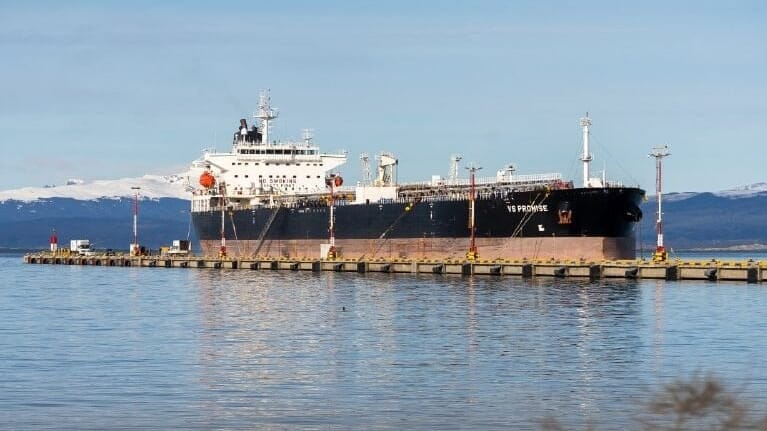
VS Promise's brief stop in Ushuaia was used for a political message by the local governor (Gobierno de la Provincia de Tierra del Fuego)

Published Aug 25, 2026 3:24 PM by The Maritime Executive


The provincial government for the southernmost region in Argentina, Tierra del Fuego, used the arrival of a tanker that it labeled as “British” as the latest step in its fight for control of the Port of Ushuaia. The federal government seized control of the port in January and it remains a hotly contested political battle between the governor, who is an opponent of Argentine President Javier Milei, and the federal government.

Governor Gustavo Melella issued a statement that “condemns and rejects” the arrival of the tanker VS Promise (69,994 dwt) in the Port of Ushuaia. He called the arrival of the vessel in the port "unacceptable," highlighting that it is the province that also claims rights to the Falkland Islands, South Georgia, and the South Sandwich Islands, which they assert are illegally occupied by Great Britain. Local reports highlight that in the same port, not far from where the tanker was docked, is a war memorial to the 649 Argentines who died in the 1982 war.

The province has had a local law since 2011 that bans the presence, mooring, and resupply of British-flagged ships in its ports. Similar legislation was also adopted by neighboring provinces for their ports.

The VS Promise, built in 2007, is a crude oil tanker that, however, is owned and registered by a company in the Isle of Man. The intricacies of the British structure were either not understood (or ignored), as the Isle of Man is not officially part of the United Kingdom, but instead is a possession of the crown. It is a self-governing Crown Dependency with an independent government. The tanker’s homeport is Douglas, the capital of the Isle of Man.

Melella, in his statement, is calling out what he sees as the hypocrisy of the federal government, which he says invoked the strategic status of Ushuaia and its need to safeguard sovereignty and interest in the South Atlantic when it took control of the port in January. He demands to know under what political, strategic, and administrative criteria was the tanker permitted to dock in the port. 

“The national government attempted to justify the intervention in the Port of Ushuaia by invoking its strategic status and the need to safeguard national sovereignty and interests in the South Atlantic. Today, events have laid bare the contradiction between that argument and the actions the national government has taken since removing the provincial authorities,” the statement asserts.

He goes on to cite the strategic location of the port at the southern tip of Argentina. He says it acts as a gateway to Antarctica and is in a central location for the defense of Argentia. 

“It demands the cessation of the intervention and the immediate restoration to the province of the administration of its port, without prejudice to the legal actions already promoted against a measure that we consider illegitimate and harmful to provincial autonomy,” concludes the statement.

In January the federal government suspended the port authority and placed the port of Ushuaia under a trustee for 12 months. President Milei cited alleged misappropriation of money as well as ongoing infrastructure and operational challenges at the port. The federal port authority said it had taken the decision because of a “lack of concrete responses” from provincial authorities, alongside workers’ complaints and concerns raised by shipping companies operating at the port.

The VS Promise departed the port and is back underway without any more serious consequences. It is heading to the Rio Cullen oil terminal, which is operated by TotalEnergies.


Callao Becomes First Port in Latin America With Cold Ironing

Shore power
Courtesy DP World

Published Aug 25, 2026 3:11 PM by The Maritime Executive


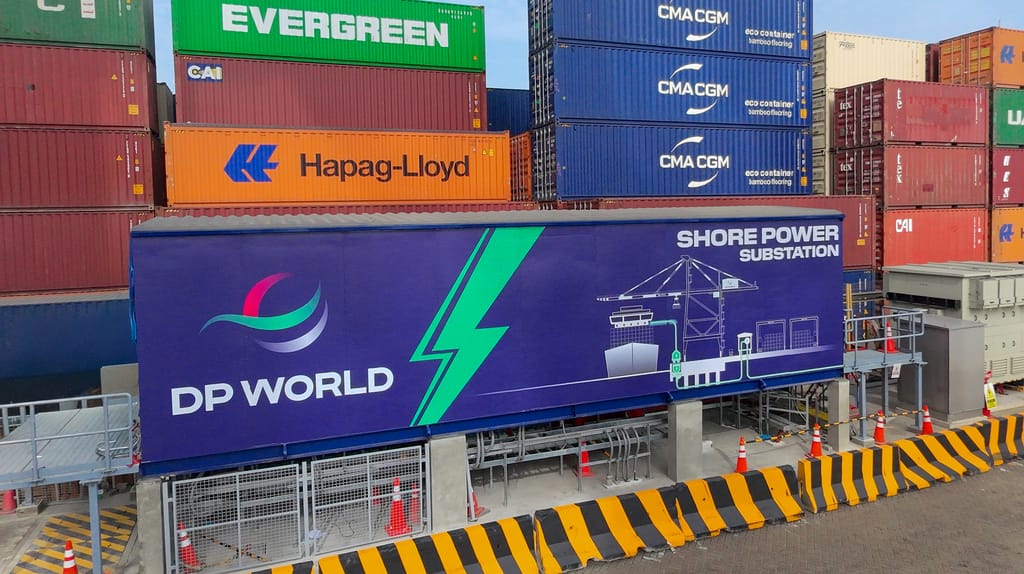
The Port of Callao, Peru has become the first port in South America with a shore power system for merchant ships. The installation - enabled by investments from DP World - allows vessels to run their electrical bus with renewable power while berthed. 

DP World is putting about $1 billion into infrastructure investments at Peru's ports, including $400 million at Callao, and the shore power project went into the broader scope for the full project. It is sized to handle the largest boxships calling at the port, and will avoid over 6,000 tonnes of CO2 every year - about 30 tonnes per port call. Most of the ships calling at Callao's Pier 3 are already equipped to use shore power, including four out of seven ships assigned to the core Asia-South America services calling Callao weekly. 

"We are not only moving cargo; we are moving Peru toward the future. We’re talking about a technology that may seem simple but is of enormous importance, since only 3% of the world’s ports have this technology, and we’re proud that Peru is part of this group," said Keiko Fujimori, President of Peru in a statement. 

In addition to its carbon benefits, the investment will reduce health-related emissions from auxiliary engine use by about 90 percent. NOx, SOx and PM are a perennial health hazard for fenceline communities in port cities, and the cold-ironing system will improve local air quality at Peru's biggest container port. 

Malaysia’s ALAM Maritim CEO Briefly Detained in Corruption Investigation

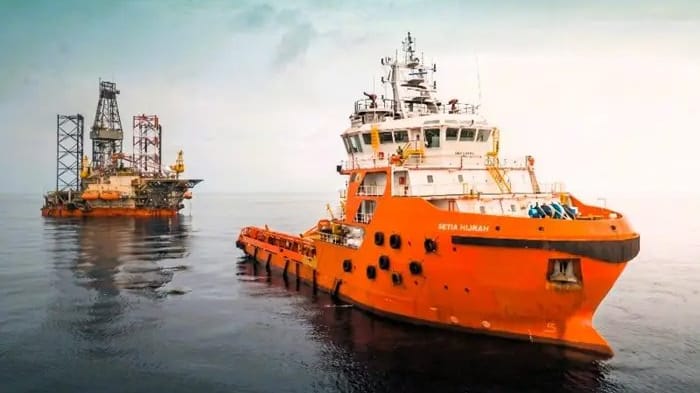
offshore oil and gas services
ALAM Maritim, an offshore services firm, reported its CEO was briefly detained in an ongoing corruption investigation (ALAM Maritim file photo)

Published Aug 19, 2026 4:54 PM by The Maritime Executive

Malaysia’s offshore services firm for the oil and gas industry, ALAM Maritim Resources, confirmed reports that its CEO was briefly remanded earlier this week by the Malaysian Anti-Corruption Commission as part of an ongoing investigation. The company said that Datuk Azmi has resumed all executive roles and leadership responsibilities and that the day-to-day business operations, financial position, and strategic government remain stable and unaffected.

The company reported in a stock exchange filing on Monday, August 17, that its Group Managing Director and Group Chief Executive Officer, Dato' Azmi bin Ahmad (Dato' Azmi), was under remand to facilitate an ongoing investigation by the Malaysian Anti-Corruption Commission. Two days later, on Wednesday, August 19, it said he had been released from remand. Media reports highlight that he could only be held for 24 hours without court action, but the police can hold the person to decide whether there is enough evidence to charge a suspect or to complete an investigation.

“The remand is for the purpose of facilitating the ongoing investigation and does not constitute any finding of wrongdoing,” the company stated. 

The report, however, raised concerns as ALAM Maritim only recently emerged from a reorganization. The company completed a refinancing in October that included debt reduction and a reverse merger of its stock, along with issuing rights and warrants. The restructuring focused on the offshore support ship segment, which had accumulated a large amount of debt. In 2022, the company’s external auditors had issued a denial of opinion regarding the group’s audited financial statements.

The company submitted an application in May to the stock exchange to no longer be classified as a “financially charged company.” The application was accepted in June, and the company returned to the full exchange.

The company did not comment on the nature of the investigation underway by the Malaysian Anti-Corruption Commission. Media reports, however, noted that the commission is pursuing a probe into the findings from the Royal Commission of Inquiry into a state-run savings scheme for Malaysian hajj pilgrims. The fund makes investments in Malaysian companies and is reported to have supported the expansion into the offshore support vessel business.

The company, through a subsidiary, had formed a joint venture in 2009 to manage the OSV business. It partnered with the pilgrim fund.

The Royal Commission highlighted that the fund had taken large impairment charges on its investments in ALAM Maritim. A subsequent recovery assessment estimated that only a small fraction could be potentially recovered.

MACC is believed to be investigating the joint venture and the financial losses from operations.

Dato Azmi has led the company as its chief executive since 2006.


Scotland’s Troubled Ferguson Shipyard Plans to Lay Off a Quarter of Staff

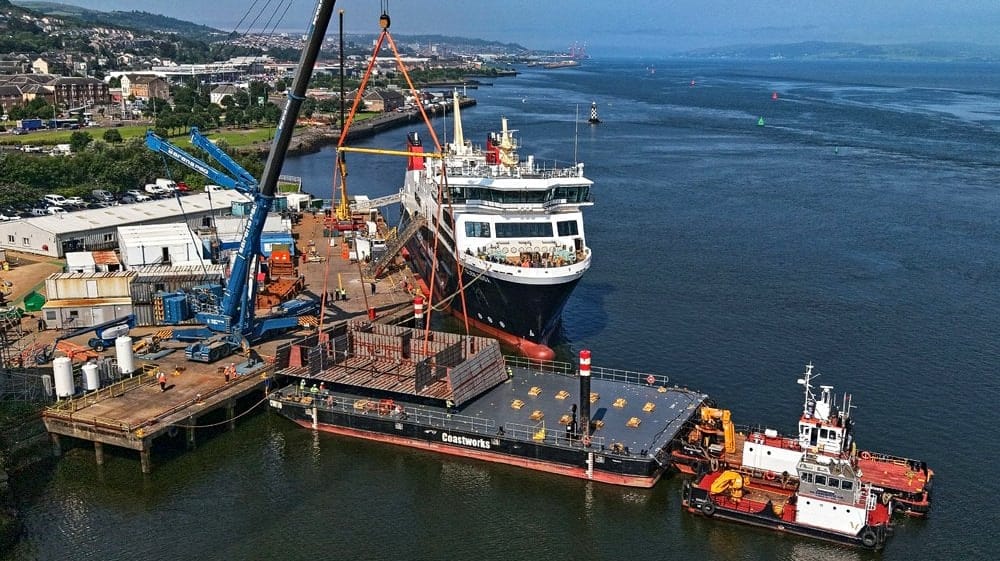
Ferguson Marine yard with ferry and frigate blocks
Ferguson Marine says it is in transition after the frigate blocks were loaded out and the ferry Glen Rosa departed for drydocking and final fitting out (Ferguson Marine)

Published Aug 18, 2026 5:39 PM by The Maritime Executive


Saying that the state-owned shipyard is entering a transition period, Scotland’s financially troubled shipbuilder Ferguson Marine announced it will start a voluntary program of staff layoffs. The company said it expects to see up to 70 employees depart, which media reports highlight would represent a quarter of its staff.

The shipyard has been struggling to maintain its operations and reduce the financial pressures. After years of struggle, it was nationalized by Scotland in 2019 as the last commercial shipyard on the Clyde, a once-prosperous area for shipbuilding. The yard has struggled to complete a long-overdue project for two LNG-powered ferries for CalMac and its parent company CMAL (Caledonian Maritime Assets Limited) and to find new work.

The yard highlighted in mid-June that the second of the two ferries, Glen Rosa, had finally left the building area for a final dry docking and hull cleaning. Years behind schedule, the vessel’s hull was cleaned and coated while the thrusters and propellers were also cleaned and polished.

Ferguson reports the focus is on outfitting the ship’s interiors, including painting, installing the flooring, fitting ceiling tiles, and wall panels. A final inspection is due to commence shortly, with sea trials and the handover finally expected to be completed in Q4 2026.

The yard also reported at the end of July that it had completed delivery of blocks built for the UK’s new Type 26 frigate. Ferguson, along with Malin Abram and Coastworks, was awarded contracts to build three structural units for the Royal Navy’s HMS Birmingham. It is the fourth ship of the Type 26 frigate program being executed by BAE Systems. 

“Our immediate focus remains the safe, high-quality handover of Glen Rosa in Q4 2026,” said Graeme Thomson, CEO of Ferguson Marine. “However, as the vessel nears completion, we face an inevitable gap in workload while we work with the Scottish Government to make the relevant preparations to enable us to proceed with contract negotiations… At the same time, we are doing everything in our power to ensure the yard is structured to offer secure, long-term careers once the new build program gets underway.”

The continuing problems at the shipyard became a politically charged issue, and after debate, the government resolved to make an investment in the yard and award it four new building contracts. The government provided £14.2 million (approximately $19 million) in capital investments. It is being used for infrastructure improvements and equipment upgrades to aid the yard in becoming more competitive. 

The Scottish Government announced in March its intention to provide a strategic direct award to Ferguson Marine for four new vessels as a lifeline to keep the operation going. They proposed two ferries for Caledonian Maritime Assets Limited (CMAL), a Marine Protection Vessel (MPV), and a Marine Research Vessel (MRV). Ferguson reports that due diligence for these programs is currently underway, while saying the staff reductions are designed to address the size of the business and align skills across the yard, so it is fully prepared to commence work as soon as the contracts are finalized.


Hengli Heavy Industries Emerges as a Winner of China's Shipbuilding Boom

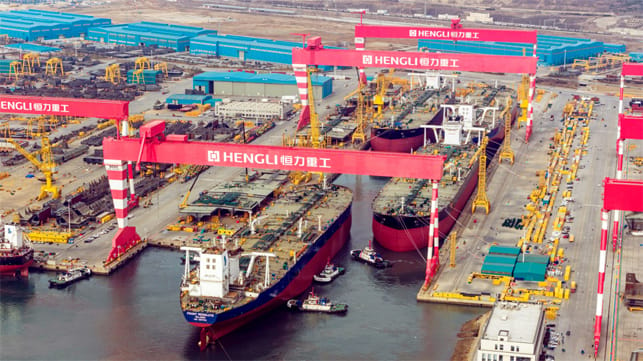
File image courtesy Hengli Heavy Industries

Published Aug 25, 2026 5:28 PM by The Maritime Executive


China's state-owned shipyards are a dominant force in the shipbuilding industry, but their full orderbooks are creating opportunities for privately-held competitors as well - notably Hengli Heavy Industries, which in a few short years has expanded to become the world's largest single shipyard (by order backlog).

In its latest quarterly report, released August 24, Hengli Heavy said that it received 207 vessel orders in the first half of the year - a new all-time global record for a single yard. (State-owned goliath CSSC remains the world's largest shipbuilder overall, but its operations are distributed across China.) For reference, this is nearly twice the number of orders it received in all of 2025. Current backlog stands at about 380 ships through 2030, and production is running at about seven ships a month. 

Three-quarters the orders were for tankers and boxships, reflecting demand patterns and the yard's stock in trade - batch series builds and on-spec construction. 

Looking ahead, its managers are investing heavily in infrastructure and workforce, hoping to increase throughput and make room for more slots in the years ahead. Its recruitment objective is to hire another 100,000 people by the end of 2026 - about the payroll size of the entire U.S. shipbuilding sector - on top of the 110,000 people it already employs, according to eWorldShip. 

The shipbuilding boom has been kind to Hengli, which only restarted operations a few years ago. Revenue rose 250 percent in the first half, and net profit rose by 450 percent to reach about $540 million. 

Hengli Heavy's roots trace back to the last shipbuilding boom, two decades ago. Founded in 2006 by Korean conglomerate STX as STX Dalian, it saw considerable success in the boom years but the downturn of the 2010s put it in bankruptcy by 2015. It sat idle until 2022 when it was bought by the giant conglomerate Hengli Group. Under Hengli's ownership it relaunched in 2023, one of many Chinese private yards to reboot amidst an ordering boom. 

Hengli Group took the shipyard unit public in 2024-25 in a SPAC-style transaction by selling it to a Shanghai-listed subsidiary, Guangdong Songfa Ceramics Co. Ltd., a small-cap consumer tableware company. Hengli Heavy Industry's stock trades under Songfa's name.