Tuesday, August 25, 2026


CK Hutchison Ups the Ante Starting Second $1.5B Arbitration Against Panama
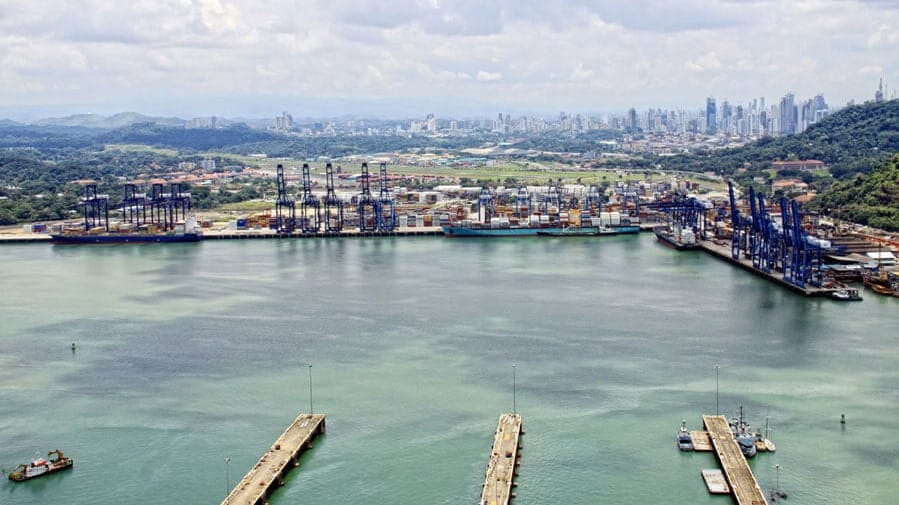
Balboa Panama container terminal
CK Hutchison is seeking additional compensation for Panama's breaches of investment protection (Balboa Port - Hutchison Ports)

Published Aug 20, 2026 8:43 PM by The Maritime Executive


Hong Kong-based CK Hutchison Holdings has started a second arbitration against the Republic of Panama over the cancellation earlier this year of its subsidiary’s port concession. While the Panama Ports Company is already pursuing an arbitration that it said could amount to more than $2 billion in damages for the contract, the parent company is now seeking damages of more than $1.5 billion for breaches of treaty obligation and international law.

The company asserts breaches of an investment protection treaty through sovereign acts that targeted the concession and destroyed CK Hutchison’s investments in Panama. It is asserting that Panama, starting in early 2025, launched a campaign with a series of state actions targeting its investments. CK Hutchison cites a “sudden new investigation that lacked due process, a reversal of its longstanding legal position that protected the concession,” and a scheme to replace the Panama Ports Company. 

In harsh language, CK Hutchison is saying that Panama “sought to cover up its conduct through disinformation.” It says the campaign culminated in the taking over of property, technology, employees, and proprietary and protected documents and materials.

It is also picking up a line from the criticisms by the Chinese government. CK Hutchison says that by not respecting the laws, “Panama has demonstrated that it has become a risky country.” 

In filing the arbitration claim, the company asserts that Panama failed to take steps to resolve the treaty dispute. The company says it responded with a supplemental treaty notice and that Panama has conducted “only one perfunctory consultation meeting.” Further, it says there has been no offer of compensation or resolution.

The Panama Supreme Court ruled at the beginning of 2026 that the enabling laws for the concession to operate the port terminals in Balboa and Cristobal were unconstitutional and void. The concession had been in place since 1997 when Panama began assuming operations at the end of the United States’ treaty to build and operate the canal. Panama had renewed the concession in 2021 with the Panama Ports Company for an additional 25 years.

Panama gave temporary contracts to MSC’s Terminal Investments Limited and Maersk’s APM Terminals to take over the operations. The country has declared its intent to conduct a new tender and has said it would limit bidders to only one of the terminals as opposed to the single contract in the past. It has also declared a new tender for competing new greenfield terminals in each port.

The new arbitration filing is the latest in a series of actions by CK Hutchison and the Panama Ports Company. The port subsidiary has its arbitration claims, and they have also been pursuing claims against Maersk and MSC for their "interference" with the business. 

The Chinese government also said Panama had become a risky place to do business, and reports said it had warned other Chinese companies about doing business in Panama. COSCO suspended some of its shipping service to Panama, and China was accused of running a campaign of retaliation that included a dramatic increase in port state inspections and detentions for Panama-flagged ships calling in Chinese ports. 

While CK Hutchison had agreed to sell the two Panama ports as part of its larger exit from international port operations, Bloomberg reports it was unlikely to have been a factor in the failure to complete the port sale. It writes that the deal for CK Hutchison to sell its international port operations is likely “waiting for clearer political signals before moving the sale ahead.” 

It speculates that Panama and CK Hutchison will settle the dispute. Furthermore, it believes CK Hutchison is increasing the pressure, aiming to force Panama into negotiations.

 

Fertility Rate Curbs Japanese Shipbuilding Boom

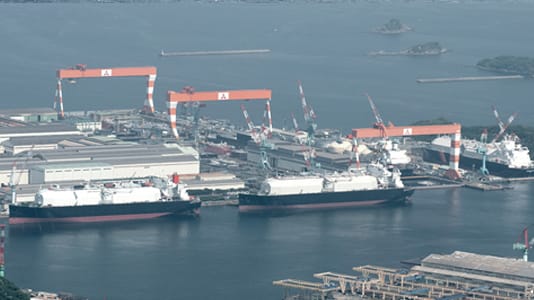
Mitsubishi shipyard
Courtesy Mitsubishi Heavy Industries

Published Aug 23, 2026 9:22 PM by The Maritime Executive


The Japanese government’s plan to double domestic shipbuilding capacity by 2035 is creating a wave of investment in the sector, attracted by the prospect of sharing a government injection of $6.5 bn in funding and tax incentives. The plan being advanced by the government of Japanese Prime Minister Sanae Takaichi seeks to reverse a decades-long decline in shipbuilding, and forms part of a wider strategy to revive the world’s fourth biggest economy by investing in 17 key security-related areas which in turn will boost Japan’s ability to defend itself. Alongside shipbuilding, the government is also seeking to build stand-alone capability in Artificial Intelligence and semi-conductor design and manufacturing.

According to OECD figures, the Japanese shipbuilding industry held 11% of the global market in 2024, behind China’s 71% and South Korea’s 17% for South Korea. Notwithstanding having slipped in the global rankings, Japan has retained niche market share in the sophisticated segment where vessels must meet demanding compliance or technical requirements, whereas China has gone for a low-cost, high-volume model.

From its heyday in the 1970s, when Japan built about half of the world’s ships, over the last 20 years Japanese yards have suffered a gradual erosion in orders, forcing midsized yards to diversify into other sectors and into ship-repair work. The historical strength of shipbuilding in Japan was built on its need as an isolated global trading island to have a large merchant marine. The Takaichi plan to revive shipbuilding is built on the same premise and on the need to foster sovereign strategic capabilities, the relevance of which has been emphasized by military expansionism in China, but also by the Trump tariff wars and conflict in the Gulf.

Progress with rolling out the plan has been seen in a number of areas.

Namura Shipbuilding is planning to build a dry dock for large vessel construction at its site in Imari Bay on the northwestern coast of Kyushu, north of Nagasaki. The dry dock is to be completed by 2035. Namura in the interim is planning to revive the building of LNG carriers, with Imabari Shipbuilding on Shikoku and Kawasaki Heavy at Kobe planning to do likewise, such that Japan will be producing between three and five LNG carriers per year.

Expansion of merchant shipbuilding is competing for scarce numbers and skills in shipyard labor forces with orders for warships. Mitsubishi Heavy Industries for example have taken three-ship orders for Mogami Class frigates this year, both from the Royal Australian Navy and the Japan Maritime Self-Defense Force (JMSDF). Japan Marine United is busy rolling out new Sakura-class offshore patrol vessels, and there is an active and well-funded program to keep the over 100-strong JMSDF fleet refurbished and replaced as necessary.

Shortage of the necessary skilled workforce is behind this year’s 15% fall in shipbuilding orders, despite the push from Tokyo. Imabari Shipbuilding president Yukito Higaki has said his yards are struggling to meet Japanese replacement orders, let alone having the capacity to take up the rising demand for export orders or having spare capacity to help with the backlog of US Navy repair and refurbishment work. So his company, like others, is intensifying its search for labor-saving technology as well as recruiting skilled workers from overseas.

Even so, it has been estimated that Japanese shipbuilders will need an additional 12,000 workers if they are to meet the target of doubling tonnage delivered. Japan’s dramatically falling birthrate - which hit a record low of 1.14 in 2025 - is shrinking the size of the available workforce every year, and labor shortages are likely to be the biggest impediment to the government’s shipbuilding expansion plans.

Canada Awards Quebec’s Largest Shipbuilding Project for Arctic Icebreakers

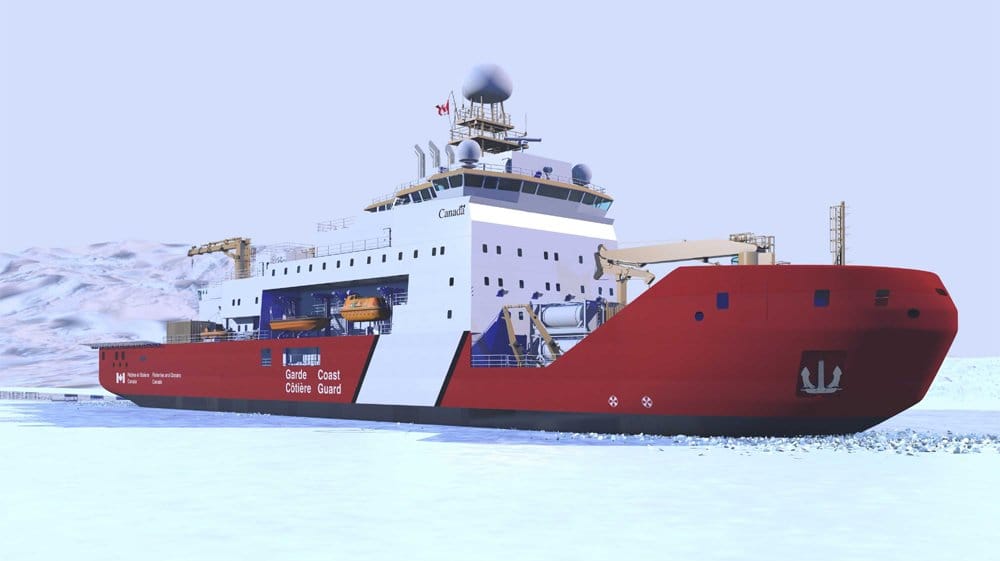
Canadian Coast Guard Arctic icebreakers
Canada will build six new Arctic Icebreakers (Davie)

Published Aug 24, 2026 4:01 PM by The Maritime Executive


Canada’s Prime Minister Mark Carney announced the awarding of a contract valued at C$11 billion (US$7.9 billion), which will be the largest single shipbuilding contract ever awarded in Quebec’s history. Chantier Davie will build six large new Arctic icebreakers, which will be replacements for aging vessels in the Canadian Coast Guard fleet.

The order comes as Canada is locked in a trade battle with the United States and is facing growing activity in the Arctic region. The vessels will provide critical services while maintaining Canada’s presence in the Arctic as the United States and others also look to grow their presence in the Arctic.

The six new ships will start construction in 2027, with the first delivered in five years and the full program completed by 2038. It is the next step in a program that was first announced in 2019 as part of the country’s National Shipbuilding Strategy. Davie was contracted in 2024 to begin development work for the vessels.

The ships are designed for operations in the Arctic, Atlantic Canada, and the St. Lawrence region into the Great Lakes with the capability to operate in the depths of the Canadian winter and through the summer season. They will provide services including supporting navigation by cutting and maintaining channels, supporting search and rescue operations, environmental response, supporting northern resupply missions, and vessel traffic services.  The ships will also respond to aid vessels that become trapped in the ice.

“These six state-of-the-art icebreakers will keep the trade routes that carry Canadian goods to the world accessible and secure,” said Prime Minister Mark Carney during today’s ceremony. “Built in LĂ©vis by Canadian workers, they are a lasting investment in a stronger, more self-reliant Canada."

Carney said the ships would grow Canada’s domestic shipbuilding industry, strengthen the ability to keep critical trade routes open, and reinforce Canada’s strategic autonomy. They are emphasizing that this project will be conducted entirely in Canada and incorporate Canadian components, including steel and other domestic materials.

The announcement highlighted the shipbuilding project as part of a broader effort at investing in Canada’s infrastructure, ranging from ports to corridors that move Canadian goods and the ships that keep the routes open. They reported that Canada’s new government is “laser-focused” on building a stronger, more independent, more resilient Canadian economy. Other investments include expansion at the Port of Montreal with the new Contrecoeur terminal and at the Port of Quebec, as well as efforts planned on the West Coast, including in Vancouver.

The project is a major win for Davie, which has already received more than C$7.74 billion (US$5.6 billion) in contracts since 2012 as part of the National Shipbuilding Strategy. Davie, along with Seaspan in Vancouver, received contracts to build new Polar Max icebreakers, which will be among the largest and most powerful vessels. Davie is sharing the work with the Helsinki Shipyard, which is also part of the group. Work has begun on the hull for the new vessel in Finland, and it will be transferred to Davie for outfitting and commissioning. Davie is also supporting the U.S. Arctic Security Cutter program through its newly launched Davie Defense in Texas while work has begun on the first vessels in Finland. Helsinki Shipyard and Davie will also support the development of the icebreaker shipbuilding skills in Texas.

The Canadian Coast Guard maintains a very active role both in the Arctic and Atlantic shipping. Earlier this month, it highlighted that its largest icebreaker had arrived at the North Pole. It is part of an effort that involves nine CCG icebreakers deployed and operating in the Arctic from June to November 2026 to support Northern communities, carry out services, and support Government of Canada Arctic missions. It was also recently announced that Canada is taking the Finnish government-owned icebreaker Nordica on charter to augment its operations in the Arctic.

 CANADA

Three Studies Confirm Viability of Year-Round Shipping in the Hudson Bay

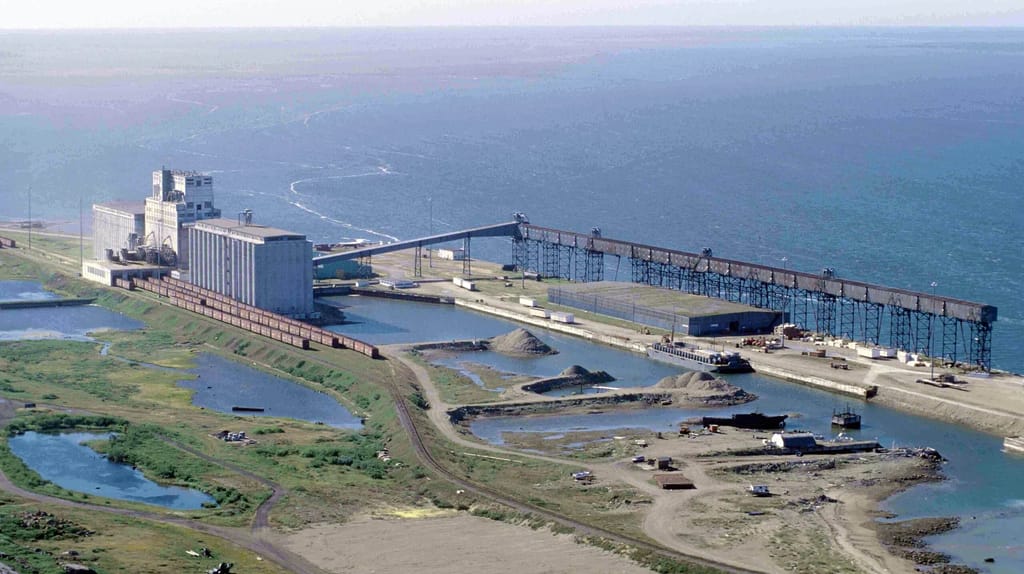
Port of Churchill (Ansgar Walk / CC BY)

Published Aug 23, 2026 5:34 PM by The Maritime Executive


Canada is pushing forward with plans to diversify its trade and double exports to non-US markets, and three new studies have confirmed that extended navigation periods in the Hudson Bay are now possible. This gives hope to the ambition of year-round shipping through the Port of Churchill in the near future.

Last week, the federal government and the Province of Manitoba - alongside Churchill Port’s owner and operator, the Arctic Gateway Group - welcomed the findings of potential extended navigable seasons in the Hudson Bay and the Hudson Strait.

The studies include two done by researchers from University of Manitoba and Fednav Limited, while the other is a feasibility report by the Arctic Research Foundation (ARF). A common finding shared by these studies is that the existing marine technology and Arctic operating experience make year-round navigation through the broader Churchill shipping corridor possible, especially using modern ice-capable vessels.

The three studies looked into different parts of this transition. Fednav, which is Canada’s largest dry bulk shipping company and has deep expertise in Arctic navigation, studied ice conditions, vessel capabilities and practical requirement of navigating to Churchill. The analysis combined a 10-year review of Canadian ice charts, satellite imaging and regulatory requirements. It is this study that confirmed that existing ice-class vessel designs could support year-round shipping in the corridor with decreasing icebreaker support over the years.

The University of Manitoba examined how sea ice conditions have changed. The study found that the shipping season serving the Port of Churchill is increasingly expanding outside of the existing four-month period. Within this century, the season is projected to continue lengthening. The research shows that declining sea ice is the reason the navigable season is extending in the Hudson Bay.

Lastly, ARF’s study identified significant opportunities for northern supply chains. Already, the Port of Churchill is seeing significant increase in supply ships bound for Arctic communities. Further, grain exports are resuming this year through the port after a five-year pause.

“With the return of grain, shipments of zinc and potash, we are seeing the most diversified shipping season in the port’s history,” said Mike Spence, Board Chair of the Arctic Gateway Group. “The opportunity now is to build on that momentum. With the right investments in the port, a modern industrial-weight Hudson Bay Railway connected more strongly to Canada’s Class I network and year-round marine access, Churchill can become a truly year-round multimodal trade route connecting Northern and Western Canada to global markets.”

Commenting on the results of the studies, Premier of Manitoba Wab Kinew said that the confirmation of year-round shipping out of the Port of Churchill is a major breakthrough. “This means we can stop asking if year-round shipping from Churchill is possible and start building the infrastructure and attracting the investment we need to get it done,” commented Kinew.

The Premier added that it will cost CA$70-80 billion to expand Churchill’s capabilities, including the cost for the construction of an offshore liquefied natural gas terminal in Hudson Bay.  

Top image: Ansgar Walk / CC BY SA 4.0


Disney Provides a Peek at the Next Phase of Its Aggressive Growth Strategy

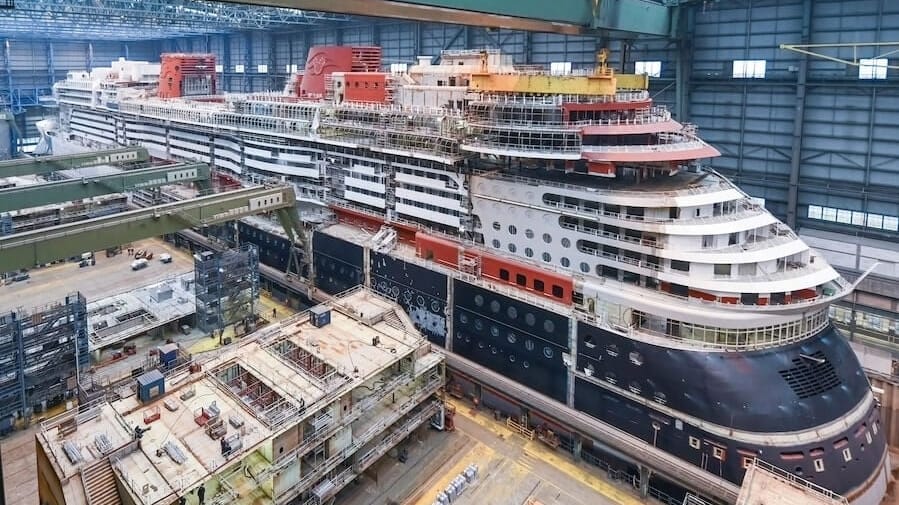
Disney cruise ship under construction
Disney doubled its passenger capacity with three new ships between 2022 and 2024 and has another under construction now (Disney Cruise Line)

Published Aug 24, 2026 8:47 AM by The Maritime Executive


Disney Cruise Line is midway through an aggressive growth strategy that will see the brand reach 13 cruise ships by late 2030 and increase capacity by nearly four times. It has already doubled its passenger capacity and added Singapore to its homeports with ambitions to take the cruise line far more global in the next few years.

During the recent “Horizons: D23 Disney Experiences Showcase,” where the corporation highlights its plans for everything Disney, it included a peek at the future of the cruise line. Currently with seven ships in service, it plans to add an eighth in late 2027. The fourth ship in the “Wish Class,” Disney Believe, carries a familiar approach but incorporates its own theming and dĂ©cor.

The line says Disney Believe honors “the dreamers and doers who dare to pursue their own happily ever after.” It said the new ship has a story to tell of “promise and possibilities,” revealing that the Tinkerbell character will adorn the vessel's bow, hints of an idyllic South Pacific setting and Polynesian finishes will be featured in the main lobby, and on the stern will be the characters Woody and Buzz Lightyear from the Toy Story movies.

However, after the launch of Disney Believe, the cruise line looks to enter a new phase of accelerated expansion. A revised timeline was unveiled to investors showing three new ships in calendar 2029 and a fourth in late 2030.

In a partnership with Oriental Land Co., the operator of the Disney resort in Tokyo, it will have a Disney-themed cruise ship sailing year-round from Japan by 2029. The ship is based on the Disney Wish design but is being adapted to reflect Japanese travelers’ preferences. Oriental Land will operate the ship with NYK and reports it expects 400,000 passengers per year as it runs short 2- to 4-night cruises from Tokyo. It is also already talking of a second ship once the first is established.

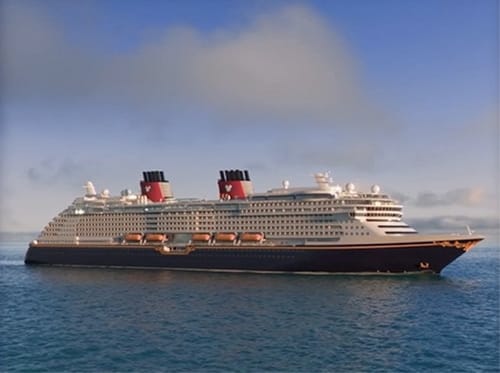
There’s even more anticipation over the closely guarded details of a new class of three cruise ships Disney has ordered from Meyer Werft. Two are scheduled for 2029 and a third by the end of 2030. A first rendering appeared in a brief teaser video for ships that will be approximately 100,000 gross tons. It says the intermediate size is in a "sweet spot" that will give the cruise line more flexibility. 


First peek at the look of Disney's three new midsized ships to expand the reach of the cruise line (Disney Cruise Line)


“These three ships will introduce an entirely new class to the fleet and occupy a unique place in Disney Cruise Line’s growing lineup,” the company told the audience. The ships are in the middle size-wise between the existing ships, and Disney said, “That gives us some amazing opportunities to visit new places and reach brand new audiences.”

The new ships will give the line approximately another 17,000 berths and bring the fleet to 13 ships, assuming none are retired. The brand, which had been at just over 13,000 berths, has gone to a current 32,000 berths, and will potentially near 50,000 berths and a fleet of 1.7 million gross tons.

The cruise line started in 1998 more as an adjunct to the theme parks and Disney resorts. Disney had licensed its charters to a separate company called Premier Cruises, which had started in the early 1980s as a pioneering operation in family cruising from Port Canaveral. It quickly developed packages with the theme parks and then introduced the characters aboard its ships, which famously became known as the “Big Red Boat” because of their brightly colored red hull livery.

Disney took the cruise operation in-house with the launch of two Fincantieri-built ships, Disney Magic and Disney Wonder (84,000 gross tons), which were introduced in 1998 and 1999. The ships, which each accommodate approximately 2,700 passengers, continue to sail for Disney, but it would be another decade before Disney sought to expand its cruise operations. In 2011 and 2012, it introduced the sisterships Disney Fantasy and Disney Dream (130,000 gross tons) built by Meyer Werft, each with a capacity of approximately 4,000 passengers.

Again, it would be another decade before Disney expanded the cruise operations, but by this time the cruise line was a significant contributor to the corporation’s revenues and profits. The line ultimately built three 144,000 gross ton ships (Disney Wish, Disney Treasure, and Disney Destiny) also at Meyer Werft. LNG-fueled ships, they each also accommodate approximately 4,000 passengers. Introduced between 2022 and 2024, these ships doubled Disney’s passenger capacity and expanded the markets the line operates in, but it remains a North American-centric operation.


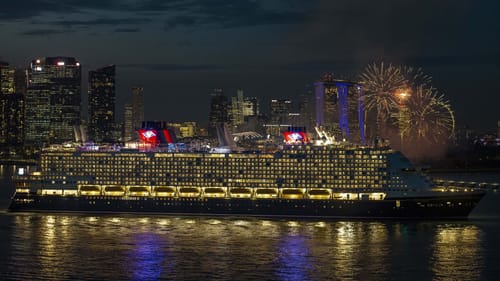
Ultra-large Disney Adventure arriving in Singapore (Disney Cruise Line


Disney launched its year-round homeporting from Singapore in March 2026 with the 208,000 gross ton Disney Adventure. The incomplete ultra-large cruise ship was under construction for Genting Hong Kong when it went bankrupt and was acquired by Disney and completed by Meyer Werft. It elevates the Disney experience with seven unique zones and brings the cruises to a large Disney audience.

Disney told investors that bookings are strong for its cruise ships and the latest additions, Disney Destiny and Disney Adventure, are performing very well. The line has already announced that Disney Wish will operate in 2027 in Europe for the first time and that it will expand its presence in San Diego, California. 

Senior Vice President and General Manager of the Disney Cruise Line, Tracy Wilson, has said they have a focus on “places with a high Disney affinity” and where audiences have had low access to the brand. As it moves into this next phase of growth, the expectation is that it aims to introduce new homeports, bringing the brand closer to more audiences. 


ZeroUSV Achieves World First with Autonomous Deployment of Surface Drones

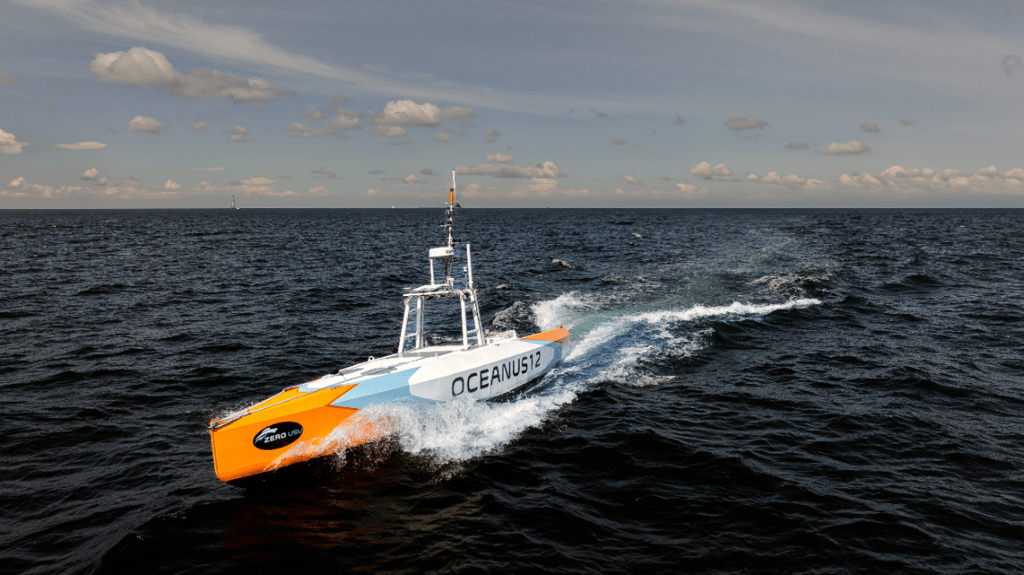
ZeroUSV successfully demonstrates the autonomous launch of multiple drones from its Oceanus12 vessel.

ZeroUSV Achieves World First with Autonomous Deployment of Oshen C-Star Surface Drones from Oceanus12

Published Aug 25, 2026 3:29 PM by The Maritime Executive

[By ZeroUSV]


ZeroUSV has achieved a world first by successfully demonstrating the autonomous deployment of multiple autonomous surface drones (ASVs) from a 12 metre Oceanus class uncrewed surface vessels (USVs), marking an important milestone in proving the payload flexibility of the Oceanus class USV platforms.

During trials in Plymouth, ZeroUSV's Oceanus12 deployed two Oshen C-Star’s, demonstrating for the first time how one autonomous surface vessel can deploy multiple marine surface drones as part of a coordinated mission.

The demonstration was part of ongoing UK Defence Innovation (UKDI) backed programme, led by ZeroUSV alongside partners Oshen and MarineAI.

Centred around ZeroUSV's Oceanus12 USV, the project brings together, Oshen's C-Star and MarineAI's GuardianAI autonomy software technology, proving the integration of drone payloads and deployment with an integrated, multiplatform autonomous capability for defence and security applications.

For the trial, the lightweight, sail and solar-powered C-Star was configured to collect high quality acoustic data, though it can also be equipped with a wide range of sensors to support environmental monitoring, defence operations and critical underwater infrastructure monitoring.

MarineAI’s Guardian autonomy suite provides the navigational autonomy software that enables autonomous platforms to safely plan, coordinate and execute complex missions with minimal operator input, whilst integrating multiple payloads for autonomous deployment capability allowing execution of tactical missions.

The Oceanus12 USV has been developed as a flexible, modular autonomous platform capable of rapidly deploying a wide range of payloads and being re-configured for different missions and different payloads quickly and effectively.

The successful trial demonstrates how the Oceanus class can deploy and support multiple assets, extending the reach of autonomous operations while reducing the need for personnel to operate in hazardous maritime environments, and freeing up crewed platforms for dedicated taskings.

Beyond deployment, Oceanus12 USV also enables operators to verify the location, status and performance of deployed autonomous assets in environments where traditional communications may be unavailable, unreliable or deliberately denied.

This provides greater mission assurance during complex autonomous operations and reinforces Oceanus class role as an active participant in autonomous mission execution, rather than simply a launch platform.

The next phase of the programme will see Oceanus12 USV autonomously deploy four C-Star vehicles simultaneously, demonstrating how distributed autonomous systems can operate together at greater scale.

Matthew Ratsey, Managing Director of ZeroUSV, said: "This is a significant milestone, not only for ZeroUSV, but for the take up and use of Oceanus USV in theatre. Oceanus12 has been designed as a highly flexible autonomous platform capable of supporting a wide range of mission requirements, and this demonstration proves its ability to rapidly deploy autonomous systems while maintaining a low operational footprint.

"Autonomous operations are becoming increasingly complex, requiring multiple systems to work together seamlessly. Oceanus12 enables operators to deploy autonomous assets where they are needed, while also providing greater confidence in their location, status and performance in situations where traditional communications may not be available.

"Demonstrating the launching of maritime robots is another important step towards delivering truly scalable autonomous capability for defence and security customers. It shows how a single autonomous platform can support multiple operational requirements while reducing risk to personnel and increasing operational flexibility."

Anahita Laverack, CEO of Oshen, said: "This demonstration represents an important step towards a future where autonomous systems work together to undertake missions that would otherwise expose people to unnecessary risk. Having robots launch robots means we can safely, and rapidly, deploy sensing capabilities into tactile locations at short notice, without putting crews in harm's way.

"That not only improves safety, but also expands our ability to collect valuable maritime and underwater data from places that have traditionally been difficult or dangerous to access. Successfully launching two C-Star vehicles is an exciting milestone, but this is the tip of the iceberg. We're now looking forward to demonstrating the deployment of 100’s of autonomous systems operating together."

By combining Oceanus12's deployment capability with Oshen's C-Star autonomous surface vehicles and MarineAI's Guardian autonomy software, the programme is demonstrating how distributed autonomous surface platforms can work together to deliver persistent sensing, intelligence and mission assurance in contested and communications-constrained environments.

As demand continues to grow for autonomous maritime capability across defence and security, the trial further reinforces Oceanus12's versatility as a rapidly deployable, multi-role autonomous platform capable of deploying and supporting distributed autonomous systems across a broad range of maritime missions.

Oliver Thompson, Technical Director of MarineAI, said: "This demonstration shows how maritime autonomy is evolving beyond individual autonomous platforms to coordinated autonomous teams. Guardian provides the decision-making framework that allows multiple autonomous systems to work together safely and intelligently, enabling Oceanus12 and the C-Star vehicles to operate as a single coordinated mission capability rather than as separate assets.

"Bringing together multiple autonomous surface systems creates a much more capable operational solution. It enables complex missions to be carried out with minimal operator intervention, extends operational reach and helps keep people out of harm's way, particularly in environments that are hazardous, remote or where communications are constrained.

The products and services herein described in this press release are not endorsed by The Maritime Executive.

RUSSO-JAPANESE CONFLICT

Russia Launches Oniks Cruise Missile from Disputed Kuril Islands

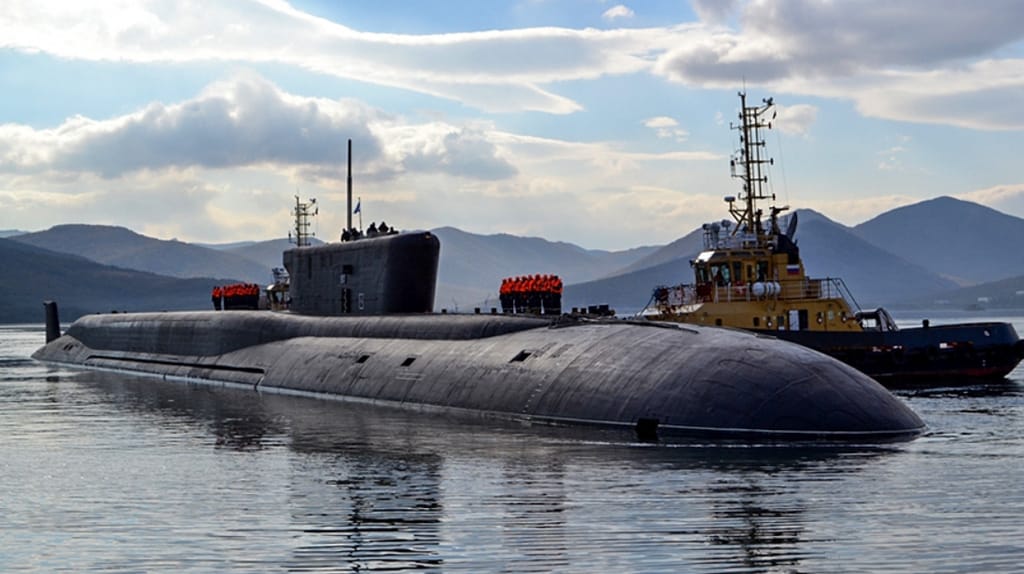
The Pacific Fleet’s Borei Class Ballistic Missile Submarine RFS Vladimir Monomak (Russian Navy file image)

Published Aug 23, 2026 6:38 PM by The Maritime Executive


Russia’s Pacific Fleet has followed up the provocative visit by President Putin on August 13 to one of the Kuril Islands (disputed with Japan) by conducting a series of missile launches in adjacent sea areas. President Putin has used the visit, along with the subsequent missile exercises, as part of his patriotic-nationalist appeal to the Russian electorate ahead of forthcoming Duma elections, and also took the opportunity to threaten the United Kingdom, among others, for supplying defensive weapons and counter-attack capability to Ukraine.

The Russian Navy issued a Notice to Mariners covering the impact area in advance of the launches. A P800 Oniks missile was fired from Bastion coastal defense missile battery based on the Russian-occupied island of IturĂşp, known as Etorofu in Japan, hitting a target 160 nautical away. This is believed to have been the first live-firing by the Bastion unit based on Etorofu since it was first stationed there in 2016.

The Pacific Fleet also engaged targets with two missiles fired from the Slava class missile cruiser RFS Varyag (D11), confirmed to have been P-1000 Vulkan (SS-N-12 Sandbox) anti-ship missiles fired from two of the 16 missile tubes with which the Varyag is equipped. The P-1000 Vulkan has a range of 375 nautical miles, and can carry either a 1,000-kilo high-explosive warhead or a 350-kiloton nuclear payload.

TASS also announced that a Granit anti-ship cruise missile had been fired from the nuclear-powered Oscar Class submarine RFS Omsk (K186). The P-700 Granit SS-N-19 (code-named Shipwreck), is a heavy anti-ship missile fired from a torpedo tube, with a range of 300 nautical miles. The Borei Class (Project 955) ballistic missile submarine RFS Vladimir Monomakh (K-551) and an unidentified Kilo-class submarine were earlier also pictured in the exercise area.

The waters around the Kuril Islands, and in particular the La Perouse Strait, are of strategic importance to Russia because they are a choke point on the route between Vladivostok to the West and the Rybachiy and Vilyuchinsk submarine bases in Avacha Bay on the Kamchatka Peninsula, as well as the open waters of the North Pacific adjacent to Alaska.

The missile launches are believed to have taken place on August 20, and Japan had lodged objections beforehand. The Japanese Foreign Minister Toshimitsu Motegi condemned the missile tests. The Japanese Prime Minister Sanae Takaichi had previously described President Putin’s visit to Etorofu as “absolutely unacceptable,” hardening “anti-Russian sentiment within Japan and making the medium- to long-term recovery of relations more difficult.”

Hitherto, both Russia and Japan have avoided any provocative actions in the area while negotiations proceeded on the future status of the Kuril Islands, with Japan compromising by seeking only the recovery of the southern two of the four islands. The Kuril Island dispute, if resolved, could also lead to a formal peace treaty between Russia and Japan, which the Second World War ended without.


Antarctica Could Get its First Subsea Data Cable

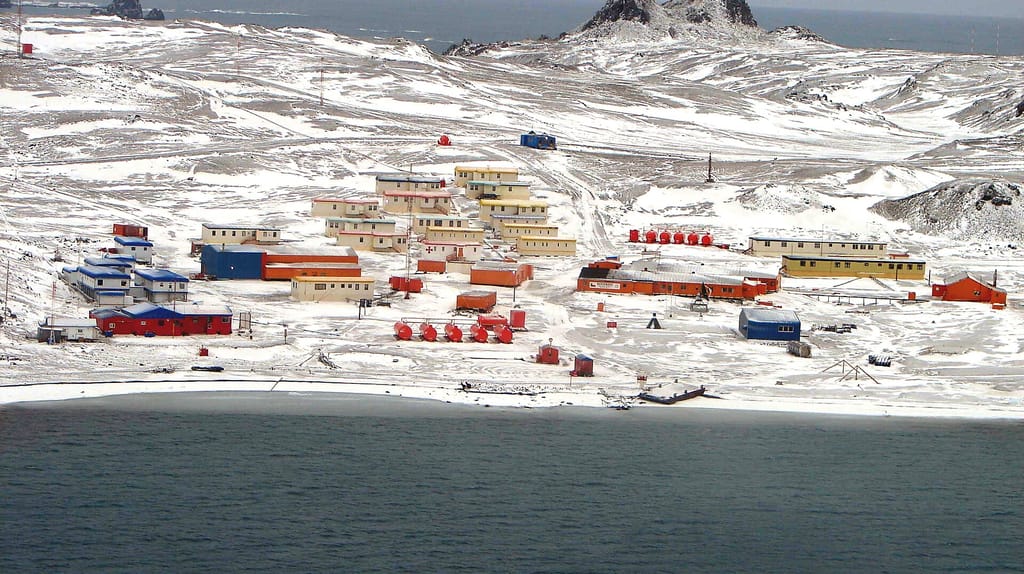
Chile's Base Presidente Eduardo Frei Montalva (Mefisto29 / CC BY SA 4.0)

Published Aug 23, 2026 8:46 PM by The Maritime Executive


Chile has achieved a significant milestone in a project likely to see Antarctica get connected to the global fiber-optic network. Last week, a feasibility study assessing the Antarctica cable system was finalized, confirming technical viability of the project. The study began last year in February, led by Salience Consulting and Pioneer Consulting on behalf of Chile’s telecommunications regulator Subtel. The exercise was financed by the Development Bank of Latin America and the Caribbean (CAF) and the Chinese state-backed Multilateral Cooperation Center for Development Finance (MCDF).

With Chile leading the efforts, the digital infrastructure project in Antarctica is seen as an important pillar for scientific research interests in the region. Currently, Antarctic science leaves the continent in suitcases full of hard drives, said Juan Pablo, who is one of the team leaders in the Antarctica cable pre-feasibility study.

“With the cable, the data will travel in real time. And with smart sensors integrated into the fiber, the cable itself becomes a scientific instrument: temperature, pressure and seismic activity, measured live from the bottom of the Drake,” added Pablo.

For over a year, the team assessed 55 Antarctic facilities, providing several key findings in close to 2,000 pages of the final report. The cable will be connected to Antarctica from Chile’s Magallanes region through the Drake Passage. The study mapped out two deployment routes for the connection, divided into stages based on length and cost.

The first is the base route, which connects Punta Arenas and Punta Williams with the three Chilean Antarctic bases at a cost $370 million. The length of this connection will be about 1,600 kilometers. The other route is the full configuration that would extend for about 4,100 kilometers, with nine landing points in Antarctica. This would see Antarctic bases from five countries connected including Argentina, Brazil, United States and the United Kingdom. The complete route is estimated to cost $620 million.

However, the study noted that although the technology to implement this project already exists, the difficult part will be to mobilize financing and political will. Chile has to get buy-in from the other Antarctic states.

The feasibility study has been submitted to Chile’s Ministry of Foreign Affairs. The ministry is expected to present a report of the findings to the nation’s Antarctic Policy Council for final deliberations. If a decision to proceed is reached, the Council will lead international coordination efforts to onboard the other Antarctic states. Factoring these international agreements, the cable project is estimated to take around eight years.

Top image: Chile's Base Presidente Eduardo Frei Montalva (Mefisto29 / CC BY SA 4.0)


Op-Ed: "Alternative" GHG Proposals Would Derail IMO's Climate Progress

iStock
iStock

Published Aug 23, 2026 10:49 PM by Lukas Leppert


The shipping sector makes up 2-3% of global greenhouse gas emissions - about the same as the world’s fifth biggest emitting country, Japan. With accelerated climate warming already driving devastating impacts around the world, such as record heatwaves, flooding, wildfires and droughts, there is no doubt that the industry must rapidly lower its greenhouse gas emissions. For the shipping sector, the question is no longer whether it needs to decarbonize, but how best to meet the goals of the International Maritime Organization’s (IMO) GHG (greenhouse gas) Strategy and to reach net zero by 2050.  

Four proposals of concrete measures to lower shipping’s climate impact have been circulated among IMO member states for potential adoption at MEPC 85 in December. Among them is the IMO’s long-negotiated compromise agreement, the Net-Zero Framework (NZF).

While not perfect, the NZF has received broad political support from IMO member states, and remains the best tool available to meet the IMO’s GHG Strategy goals on climate, decarbonization and a just and equitable energy transition for the shipping industry The result of multiple rounds of negotiations, the NZF is already by any measure an acceptable compromise. Any further weakening would lead to a less effective, slower, and costlier transition.

The NZF includes a “global fuel standard” (GFS), which requires ship operators to gradually decrease the amount of greenhouse gas emitted by shipping fuels - or pay penalties. The framework also introduces a mechanism that puts a price on the greenhouse gases ships emit, giving the industry a clear financial incentive to reduce emissions in line with the global fuel standard.

Back in May, my colleague John Maggs wrote that the “IMO’s Net-Zero Framework is back on track”, but that supporters must remain “vigilant and strong in order to parry inevitable future attacks and attempts to further delay the process of adoption, which is scheduled for early December”.

With the next round of negotiations, the IMO’s Intersessional Working Group on Reduction of GHG Emissions from Ships (ISWG-GHG 22), coming up next week, those threats have materialized in the form of “alternative” proposals from a number of IMO member states. Having analyzed the available proposals, the Clean Shipping Coalition has found two of them unfit for decarbonization: those submitted by Liberia and Japan.

Liberia

Instead of setting reduction targets on a path to net zero, the submission from Liberia - the world’s largest flag state - would allow ships to stick to conventional fuels if they think cleaner alternatives are too costly or unavailable.

Additionally, Liberia’s proposal puts greater emphasis on trading of surplus units, while removing the idea of mandatory payments into a Net-Zero Fund. Without reduction targets or financial incentives, this would not cause a shift in the shipping sector beyond business-as-usual, while the lack of available funds would make it impossible to address disproportionately negative impacts on states.

Liberia’s proposal constitutes a fundamental redesign which will fail to deliver on the goals set out in the 2023 IMO Greenhouse Gas Strategy.

Japan

Japan's proposal would not deliver on the goals set out in the GHG Strategy 2023. Japan has put forward a questionable alternative to compliance payments flowing into a centralized fund, which would allow shipowners to direct payments to projects of their own choice.

Without safeguards and oversight from a governing board, such a system risks creating a scheme where money is invested into projects that look good, but achieve little. This system would divert necessary investments from zero or near-zero (ZNZ) technologies and fuels, which require support and incentives early in the transition, and instead support incremental dead-end ‘solutions’ involving fossil fuels like LNG, or biofuels, causing a technological lock-in and sunk costs.

Furthermore, a central fund administered by the IMO or another independent body and sufficient contributions to it are key to enable a just and equitable transition. In order to leave no one behind, states facing disproportionately negative impacts - like small island developing states and least developed countries - need financial support, which they made abundantly clear at previous negotiations. Japan's proposal would lose the support of one group of states in an attempt to appease another.

Japan’s proposal also carries serious procedural risks. As it wasn't circulated six months ahead of the meeting (as is the normal requirement), it cannot be adopted under normal rules at MEPC 85. 

The IMO already delayed its planned timetable of establishing a climate framework for global shipping in 2025 by adjourning MEPC ES.2 for a year. By diverting attention from circulated proposals, the submission from Japan risks throwing the IMO further off-course.

Getting to the Net-Zero Framework is the result of multiple years of negotiations. The result is based on a Comprehensive Impact Assessment, and has the ability to deliver on the goals of the IMO GHG Strategy 2023. Now is the moment for the IMO and all its member states to have the courage to protect and adopt the Net-Zero Framework “as is”.

Lukas Leppert is President of the Clean Shipping Coalition.