Tuesday, August 25, 2026


Op-Ed: Chinese exports help ease the pain for London zinc shorts
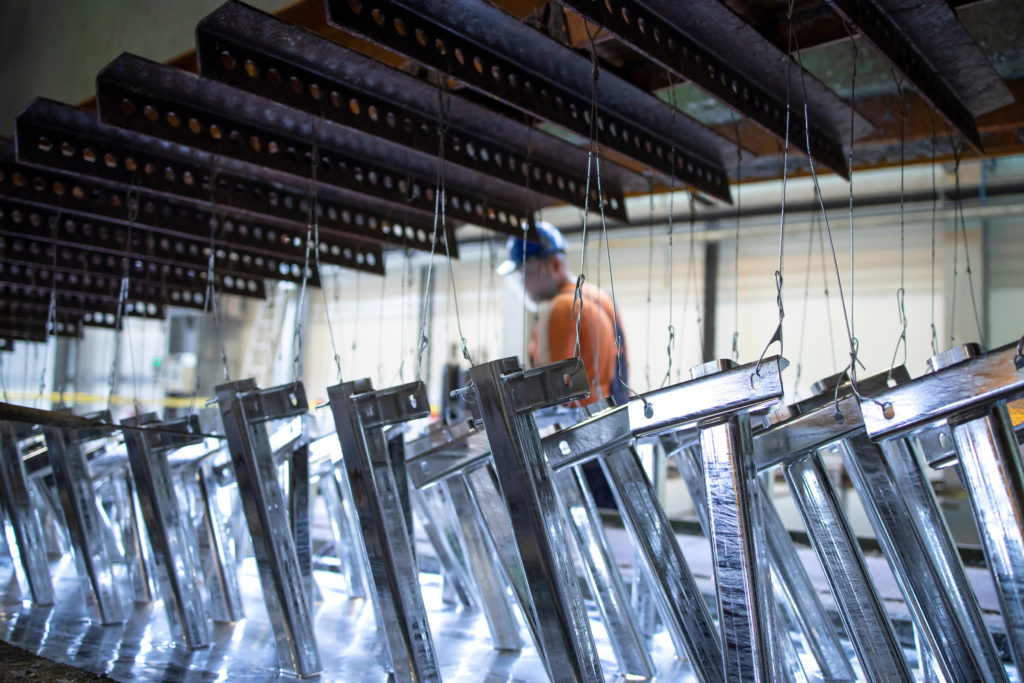
Metal parts being treated with zinc coating. Stock image.

(The opinions expressed here are those of Andy Home, a columnist ​for Reuters.)

The London zinc market remains a dangerous place for bears.

The metal that everyone thought would go down in price this year is marching ever higher. London Metal Exchange (LME) three-month zinc hit a fresh four-year peak of $3,858 per metric ton on Tuesday morning.

More worryingly for zinc short-position holders, the relentless ​rally is being accompanied by a sharp contraction in LME time-spreads.

The premium for cash metal over three-month delivery has flexed out to $131 per ton, a flashback to last October ‌when it hit a record-breaking high of $323 per ton.

Low LME inventory was the trigger for last year’s squeeze and is the reason the market is tightening again.

The good news for LME shorts is that help may be on its way. China has started lifting exports, dispatching metal straight to LME warehouses in Hong Kong.

LME zinc 3-month metal and cash-3s spread

A tale of two markets

It’s not as if zinc demand has been booming. The International Lead and Zinc Study Group (ILZSG) estimates global usage grew by ​a modest 1.5% year-on-year from January to May.

Refined metal output grew faster, at 3.5%, leading the Group to assess a global supply surplus of around 145,000 tons in the first five ​months of the year.

The catch, however, is that most of the refined production growth came from China, as was the case last year. Western smelters have ⁠suffered a string of supply hits and are under extreme margin pressure due to the collapse in treatment terms.

Discover more
Dictionaries & Encyclopedias
Mineral exploration services
Buy Gold Online

Most of the surplus metal, therefore, is also in China.

Stocks registered with the Shanghai Futures ​Exchange have more than doubled to 155,954 tons since the start of January.

LME stocks, including those sitting in off-warrant storage, are still 6,500 tons lower at 124,677 tons despite the recent daily deliveries into ​LME warehouses.

Hong Kong fast track

LME and Shanghai stocks of zinc

There has been daily warranting action since the start of last week as the rising LME premium for cash delivery draws metal into the system.

Volumes have totalled a modest 17,000 tons so far, but they’ve been enough to stabilise on-warrant inventory around the 95,000-ton level.

There has also been a build in off-warrant stocks, which have risen from a July low of 15,480 tons to 29,627 tons.

Hong Kong has accounted for around two-thirds of the ​deliveries onto LME warrant and holds another 5,000 tons in off-warrant storage.

The LME approved the city for good delivery in January last year, and the first warehouse only opened for business in July, but Hong ​Kong is clearly already acting as a fast-speed conduit for physical arbitrage.

China has historically been a big importer of refined zinc. Volumes were as high as 445,000 tons as recently as 2024.

But domestic smelter capacity has grown to ‌the point ⁠that the country is approaching self-sufficiency.

Imports fell by a third to 299,000 tons last year and China turned net exporter in both November and December, delivering metal to LME warehouses in Singapore and Taiwan to profit from the cash squeeze on the London market.

It turned net exporter again in July to the tune of 4,100 tons as outbound volumes rose to 9,200 tons and imports continued to tumble, according to local data provider Shanghai Metal Market (SMM).

The pace of arrivals is clearly slower this time around.

So far.

Turning bullish

Bulls are betting that even China’s smelters will have to rein back operating rates as bombed-out ​treatment charges compress margins.

And there are plenty of ​zinc bulls back in town. Investment funds have ⁠accumulated over 110,000 tons of long positions, by some margin the largest collective bet on higher prices since the LME started publishing its positioning reports in 2018.

Rekindled enthusiasm for zinc is also evident in the LME options market. There are almost 1,500 lots of open interest on December calls at ​a strike price of $4,000 per ton and another 757 lots at the $4,500-per-ton strike.

The bull narrative is one of restricted mine supply. After three consecutive years ​of decline, global mine production jumped ⁠by 4.8% last year. However, the impetus has quickly faded this year, with annual growth slowing to just 1.1% from January to May, according to ILZSG.

The competition for mined concentrates has been so fierce that spot treatment charges for Chinese imports are now sitting at a record low of minus $117.50 per ton, according to SMM.

Yet China’s smelters are battling on. Growth was still “significant” in the first five months of 2026, according to ILZSG.

Just how significant ⁠will be the ​key for both LME bulls and, more urgently, LME short-position holders.

(Writing by Andy Home; Editing by Marguerita Choy)

MINING #METOO

Fortescue suspends executive over sexual harassment allegations

Image: Christmas Creek iron ore mine. (Courtesy of: Fortescue Metals Group.)

Fortescue (ASX: FMG) announced the temporary suspension of an unnamed executive amid sexual assault allegations, as law firm MinterEllison conducts an independent investigation on the matter.

In a new statement, Fortescue said the allegation is being treated “extremely seriously” and that the executive was suspended from their activities in the company as the investigation progressed, though no findings have been made. 

“Sexual harassment, unlawful discrimination and any behavior that makes people feel unsafe have no place at Fortescue,” the company told Bloomberg.

\

The Australian Financial Review reported that no timeline was given for MinterEllison to submit their report and findings, which will be reviewed by a subcommittee of Fortescue’s board members.

A week before this, Fortescue had decided to keep the senior executive at work as the investigation was underway. 

The company is already facing a class action lawsuit that alleges they failed to protect female workers from sexual harassment and discrimination in its sites.

An industry problem

The allegations put renewed attention on workplace culture at Fortescue, Australia’s third-largest miner, as Western Australia’s resources industry continues to grapple with sexual harassment and assault allegations at remote operations.  

The latest investigation follows an earlier dispute with Western Australian authorities over Fortescue’s handling of alleged misconduct. The miner avoided charges for failing to provide documents concerning dozens of alleged sexual harassment cases after settling the matter in late 2023.

Under that settlement, Fortescue agreed to spend A$1.4 million ($1 million) on strategies aimed at addressing inappropriate workplace behaviour across the mining industry.

Fortescue shares fell 1.2 per cent on Thursday to $17.71, and are down 11 per cent over the past year, the Australian Financial Review reported.

(With files from Bloomberg)


Tankers stack up as Venezuela sells oil faster than its ports can handle

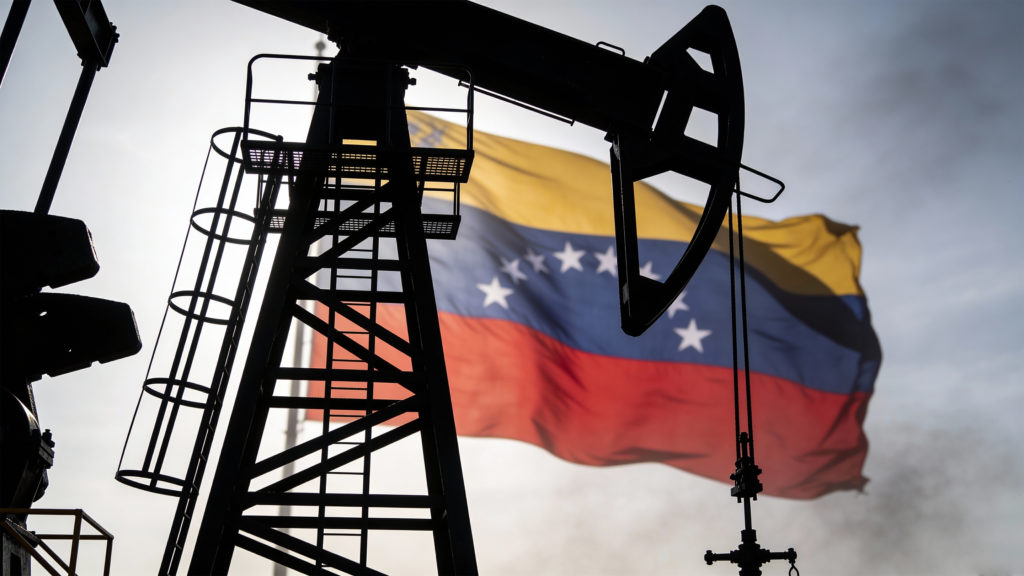
Stock image.

Venezuela’s dilapidated oil port terminals are imposing a de facto export cap on the country’s resurgent crude production, with tankers having to wait up to 30 days to load because of aging infrastructure, power outages and quality issues, according to shipping data, sources and documents.

The delays are putting roadblocks on a U.S. plan to quickly boost Venezuela’s oil exports following a flagship pact with global trading houses. The fight for infrastructure looks likely to intensify as many partners of state energy firm PDVSA get ready to market their share of output independently under new contract terms.

The last time Venezuela’s oil customers had to deal with such long delays was during a naval blockade imposed by the U.S. on the South American country late last year, part of a strategy that culminated with the Jan. 3 capture of then-President Nicolas Maduro. Since then, interim leader Delcy Rodriguez has been sticking to Washington’s plan to reanimate oil exports.


But in recent months, PDVSA and its partners have been unable to surpass 1.25 million barrels per day of exports even amid rising crude output, stock drainage and high global demand, vessel monitoring data showed.

When output peaked at more than three million bpd more than two decades ago, the nation’s terminals were able to handle over 2.5 million bpd of exports, with vessels getting in and out of Venezuelan waters in less than a week.

The loading hiccups are triggering disputes over demurrage, crude quality and ship contamination, according to maritime documents, four sources and vessel monitoring data.

“The speed of crude transfers from tanks to vessels is incredibly slow, which forces tankers to occupy docks for longer than their assigned loading windows. And if a ship arrives to discharge imports, it takes even longer due to lack of fuel storage capacity,” a PDVSA source said.

Venezuela’s oil ministry and PDVSA did not reply to requests for comment.

The delays are visible in the dozens of tankers that swirl waiting for oil cargoes at the country’s anchorages, particularly near the Jose port on Venezuela’s northeastern coast, which handles about 70 per cent of the country’s overall exports.

Company shipping reports seen by Reuters showed interruptions this year due to equipment malfunctions, quality issues and power outages when loading and unloading at Jose.

Even companies in more privileged positions to use docks after decades of partnership with PDVSA, like U.S. oil major Chevron, are looking for solutions to improve loading, including requesting access to ports so far dedicated to domestic shipping, sources said.

Chevron did not reply to a request for comment.

Venezuela’s oil export agreement with the U.S., extended several times, has allowed traders including Vitol and Trafigura to ship over 140 million barrels of crude and fuel this year, with most cargoes bound to the U.S. and others re-entering markets that had not seen Venezuelan barrels for years, such as Europe and India, as U.S. sanctions are eased.

But as Washington pushes a US$100 billion energy reconstruction plan in Venezuela that is mainly focused on boosting crude output, midstream and downstream projects – including those to repair terminals and refineries – are not being prioritized.

U.S. and Venezuelan officials praised the oil export recovery in two conferences in Houston this week, and acknowledged infrastructure challenges they said can be addressed through fresh investment.

“We are today in a phase of recovery, but the infrastructure is there,” said PDVSA’s vice president Jovanny Martinez at one of the conferences. “There are deficiencies and reliability must improve.”

Between rust and leaks

The traffic jam at the Jose and neighboring Pozuelos anchorages partly predates the current export boom. Venezuela’s oil docks are cluttered with relics of the years in which the country was under severe U.S. sanctions, such as blacklisted tankers that arrived quietly and have been unable to leave.

One of them, flying a false Guyanese flag, is docked at PDVSA’s Guaraguao port in Puerto La Cruz, its hull and deck visibly rusty even from a distance. Once known as Syrma and used to transport oil to Cuba before being renamed Consul, it has remained there for two years sheltering from a U.S. crackdown on dark fleets that brought seizures and arrests, shipping data and maritime databases showed.

Like many others, the vessel is occupying berth space now at a premium, even as foreign companies seek to reactivate idled terminals to expand crude exports. In mid-August, only two of Guaraguao’s seven docks were fully in service, a worker from the terminal said.

The competition for port capacity has prompted many customers to resort to terminals and ship-to-ship transfer areas where oil leaks that stain their tankers’ hulls are frequent, causing additional delays and costs, according to the sources and documents.

PDVSA, meanwhile, is increasingly being charged thousands of dollars for demurrage — a delay surcharge applied for each day a tanker remains waiting beyond its assigned loading window — which it has agreed to pay only in crude.

The state company is requiring new customers to pay for cargoes at delivery without any form of credit, which complicates invoicing if those customers claim surcharges or quality-related price discounts, the sources added.

The migration of dozens of oil contracts to new terms approved in a sweeping energy reform that took effect in late July is expected to exacerbate the fight for infrastructure.

But PDVSA has made clear, the sources said, that it will keep control of its terminals, including all cargo scheduling, at least for now.

(Reporting by Marianna Parraga in Puerto La Cruz; additional reporting by Mircely Guanipa in Maracay and Kemol King in Georgetown; Editing by Nathan Crooks and Nia Williams)


Tankers Wait a Month as Venezuela Hits an Oil Export Ceiling

Venezuela has plenty of oil buyers again. What it does not have is enough functioning port infrastructure to get them their crude.

Tankers are waiting as long as 30 days to load Venezuelan oil as aging terminals, power outages and crude-quality problems create a de facto ceiling on exports, according to Reuters.

That ceiling appears to be around 1.25 million barrels per day.

PDVSA and its partners have been unable to push exports meaningfully above that level in recent months despite rising production, inventory drawdowns and strong demand for Venezuelan heavy crude.

The bottleneck is particularly awkward for Washington, which has been pushing to revive Venezuelan production and exports following the removal of Nicolas Maduro in January.

More than 500,000 bpd of Venezuelan crude is already heading to U.S. refineries, according to U.S. Energy Department officials, much of it to Gulf Coast plants designed specifically to process the country’s heavy, sour barrels.

Traders Vitol and Trafigura have exported more than 140 million barrels of Venezuelan crude and fuel since January under an agreement with Washington.

Getting additional barrels onto ships is becoming the problem.

Jose, which handles roughly 70% of Venezuela’s exports, has suffered loading interruptions caused by equipment failures, power outages and quality problems. At nearby Guaraguao, only two of seven docks were fully operational in mid-August.

Some berth space is even occupied by old sanctioned tankers that arrived during Venezuela’s years in the shadows and never left.

Customers are now fighting over terminal access while PDVSA racks up demurrage charges for vessels stuck waiting beyond their loading windows. The state company has agreed to pay some of those penalties in crude.

The constraint could become more severe as PDVSA partners begin independently marketing their production under Venezuela’s new oil contract rules.

Washington is simultaneously promoting a $100 billion reconstruction of Venezuela’s energy sector, but the emphasis so far has been on increasing crude production.

That creates an obvious problem: producing another barrel does considerably less good when the port needed to export it is already occupied.

By Julianne Geiger for Oilprice.com