Saturday, September 19, 2026

'Little pr*ck': Which celebrities are backing Macklemore and criticising Ed Sheeran?

'Little pr*ck': Which celebrities are backing Macklemore and criticising Ed Sheeran?
Copyright AP Photo - Canva


By David Mouriquand
Published on

Former Pink Floyd member Roger Waters has sent a message to “little prick” Ed Sheeran amid the Macklemore-Palestine row and Sheeran refusing to "take sides". Waters is not the only one speaking out...

People aren't loving the shape of Ed Sheeran right now...

All of the remaining support acts on the British singer's US tour have quit, after the rapper Macklemore was dropped from the line-up for making pro-Palestinian remarks on stage.

The Israeli American Council had launched a petition to remove Macklemore from the tour following the rapper's "Free Palestine" comments at the MetLife Stadium on 4 September.

Irish singer-songwriter Aaron Rowe, Irish folk band Beoga, Danish band Lukas Graham, and Finneas, the brother of pop star Billie Eilish, all announced they were dropping out.

Rowe said that Sheeran had been a friend to him, “but as Irish people we know all too well about genocide, forced famine and violent occupation”.

“I cannot stand by and allow billionaires to use their position of power to silence the rightful voices of those who speak up against Israeli genocide and who highlight the savage murder of children. I would lose all respect for myself to carry on as normal.”

Beoga stated on Instagram that they would no longer be a part of Sheeran’s band “following the silencing of Macklemore by zionist lobbies”. They added that while they have been friends with Sheeran for over 10 years and will continue to be, “to play in venues that silence anyone advocating for Free Palestine is simply not an option for us”.

Finneas, who was due to tour with Sheeran in South America later this year, wrote on Instagram: “Artists must not be silenced when they speak up for the oppressed. I have decided to withdraw from my upcoming tour dates with Ed Sheeran. I stand with Palestine and its people.”

Sheeran's damage control backfires

After Macklemore announced that he had been dropped from Sheeran's tour, he claimed that the decision came after an intervention from the billionaire Robert Kraft, who owns the New England Patriots and Gillette Stadium - one of the concert venues that Sheeran is next scheduled to play at. Kraft is also a prominent donor to Israel.

Ed Sheeran said he would not be drawn into a public debate over Gaza, and stressed he was not responsible for Macklemore being removed from the tour.

He did confirm that venue owners had threatened to pull the tour entirely if Macklemore wasn’t dropped from the bill, and that he will carry on with the tour.

"I would never let down the fans who had made plans, nor would I abandon the touring crew and the other support acts and musicians who rely on me for work and to make a living."

Despite his attempts at damage control, the final leg of Sheeran's tour remains in crisis, and many are calling the singer out for not standing up for Macklemore and his fellow artists. Some are calling Sheeran's stance "morally bankrupt" and labelling the singer as a "lowlife coward whose music sounds exactly like he is."

Check out some of the reactions below:

Many have also pointed out that Sheeran has previously campaigned and fundraised for Ukraine, thereby making his statement as an artist who doesn't want to "take sides" seem hypocritical.

"Ed Who?" Musicians back Macklemore

Sheeran has also faced backlash from other musicians and celebrities, who have expressed support for Macklemore.

Irish band Kneecap wrote “all love and solidarity to @macklemore” on Instagram, while Irish singer CMAT posted pictures of the Palestinian flag alongside the message "Free Palestine".

Other artists followed suit, including Zara Larsson, Paloma Faith and rock band Garbage, who called Macklemore’s removal "sheer madness".

"This is so wildly unjust. Can I remind everyone that nothing Macklemore actually said was violent or hateful or remotely radical," they wrote. "Those who exile, silence and censor others are never the good guys. No matter what you tell yourself. Just because you ignore the truth doesn’t make the truth go away or make it any less potent. It is all so utterly obscene."

Children's educator Rachel Accurso accused Sheeran of taking a political stance when supporting Ukraine while remaining silent on Palestinian suffering.

“Imagine being a Palestinian kid and seeing he did a concert for Ukraine but when over 20,000 Palestinian children are killed he’s silent. When his opening act says Palestinians should be free and not in a genocide he lets a billionaire kick him off,” Accurso wrote on Instagram.

Hacks actor Hannah Einbinder wrote on Instagram: “Ed Sheeran, I say this as a ginger. I hope you get a REALLY bad sun burn the kind on the back of your entire body where it hurts to lie down or walk or sit.”

Then came one of the harshest digs at Sheeran, courtesy of former Pink Floyd member Roger Waters, who shared a video on his social media channels.

The clip began with text that read “Ed Who?” and then went into a video of him.

“This is a little message for Ed Sheeran,” he said, before showing an image of United Nations Special Rapporteur Francesca Albanese behind him, as well as an unnamed woman from Gaza pictured with tears in her eyes.

“I just have a little message for [Sheeran],” Waters added. “There are two kinds of people in this world. There’s people who do the right thing – the rapper Macklemore would be one of those people. And there’s people – many of them, sadly – little f… excuse me, I nearly used the F-word then… pricks like you who do the wrong thing. Goodbye.”

Elsewhere, New York congresswoman Alexandria Ocasio-Cortez argued the controversy was bigger than either performer, framing it as an example of powerful interests allegedly being able to silence artists who speak on political issues.

"It's become clear that this is not just about one music artist or two music artists, but this is about how just a handful of stadium owners and the elite can prevent an entire massive issue, in this case, the genocide in Gaza, but it doesn't stop there," Ocasio-Cortez told TMZ.

One of the few voices – apart from the Israeli American Council - expressing sympathy for Sheeran is British Culture Secretary Lisa Nandy, who said that she felt the singer had been left in an “impossible position”.

“I hope it doesn’t harm his tour. He’s one of our most successful artists and also one of the nicest people I’ve ever worked with… I have enormous sympathy for the position that he finds himself in,” Nandy told LBC on Wednesday. “The world is quite a difficult place at the moment, and I think a lot of people do also quite like to have a space where they can go, where they can leave all of that aside.”

Hamas launched an attack on Israel on 7 October 2023. The Gaza health ministry has reported more than 73,000 deaths in the last three years of Israeli bombardment. Organisations including Amnesty International, Human Rights Watch and the United Nations have described Israel's actions as "genocide".

A report published in June by a UN independent commission found that "Israeli authorities and security forces have deliberately targeted Palestinian children, resulting in genocide and atrocity crimes in the Gaza Strip and war crimes in the West Bank."

A previous report last September found that Israel had committed genocide and claimed that these acts were incited by senior Israeli officials, including prime minister Benjamin Netanyahu. Israel has repeatedly labelled the accusations as “defamatory” and “distorted”.

 

Russia seizes control over assets of Nestle, French firms


By Doloresz Katanich with AFP
Published on

Russia has placed the local businesses of Nestlé, Auchan and other Western-linked companies under temporary administration. Nestlé is weighing its options, while Auchan and Lemana Pro say their Russian operations continue as normal.

A little-known Russian company called L.E.V. Management has been handed temporary control of 16 businesses linked to Nestlé, Auchan and several other Western groups.

President Vladimir Putin signed a decree on Thursday placing the management of stakes and shares in the 16 Russian companies under the control of the firm.

The move tightens Moscow’s control over Western-owned assets amid its confrontation with Western countries over sanctions imposed following Russia’s invasion of Ukraine.

"Of course, one of the factors taken into account when making this decision was that these are unfriendly countries, which are currently most actively involved in military operations against our country," Kremlin spokesman Dmitry Peskov said at a press conference on Friday.

The businesses concerned include Nestlé Russia, Nestlé Kuban, French retailer Auchan’s Russian subsidiary, two local FM Logistic entities and Le Monlid, which operates the former Leroy Merlin DIY chain under the Lemana Pro brand.

The measure does not formally confiscate the businesses or change their ownership, according to Russian lawyers cited by business newspaper Kommersant. However, temporary administration has previously preceded the sale or transfer of Western-owned assets to Russian buyers.

L.E.V. Management was registered in Moscow in October 2024, and its shareholders are not publicly disclosed. According to Kommersant, the company showed no active business operations in its publicly available 2025 accounts.

Andrei Krayushkin was appointed its general director on 10 September, one week before the decree was issued. Independent outlet Novaya Gazeta Europe reported that his name and date of birth match those of a Russian interior ministry major general. This has not been independently confirmed.

Most Western companies quickly sold or ring-fenced their Russian businesses after Moscow launched its full-scale invasion of Ukraine in 2022. Russia has since made it increasingly difficult for foreign companies to leave, requiring presidential approval for deals and placing some assets under temporary administration.

In a statement, Nestlé said it was “assessing the situation and its options”.

“Nestlé is committed to taking all necessary steps to protect its rights and ensure continuity of business operations in the interests of all stakeholders, particularly its employees,” it said.

Nestlé has around 7,000 employees and six factories in Russia. It has suspended most non-essential sales, imports and exports, as well as advertising and capital investment, while continuing to supply products it considers essential.

Jean-Philippe Bertschy of Swiss investment bank Vontobel said the financial impact was expected to be limited because Russia now accounts for around 1% of Nestlé’s group sales, down from approximately 2% before the war.

Auchan Retail Russia told Russian business news outlet RBC that it had asked the authorities to clarify the decree and would comment further after receiving more information. It said its stores and other facilities continued to operate normally.

Auchan employs around 30,000 people and operates approximately 230 stores and an online business in Russia.

Lemana Pro told Kommersant that it had not yet received official information from the authorities and continued to operate normally.

Leroy Merlin’s French parent company, Adeo, transferred control of its Russian business to local management in 2023. The operation was subsequently rebranded as Lemana Pro and now has 112 stores.

FM Logistic had not publicly commented at the time of publication.

The move echoes Moscow’s 2023 takeover of Danone’s Russian business. It was initially placed under the management of Yakub Zakriev, a nephew of Chechen leader Ramzan Kadyrov, before Danone sold the operation at a substantial discount in 2024.


Portugal braces for rising temperatures and possible heatwave

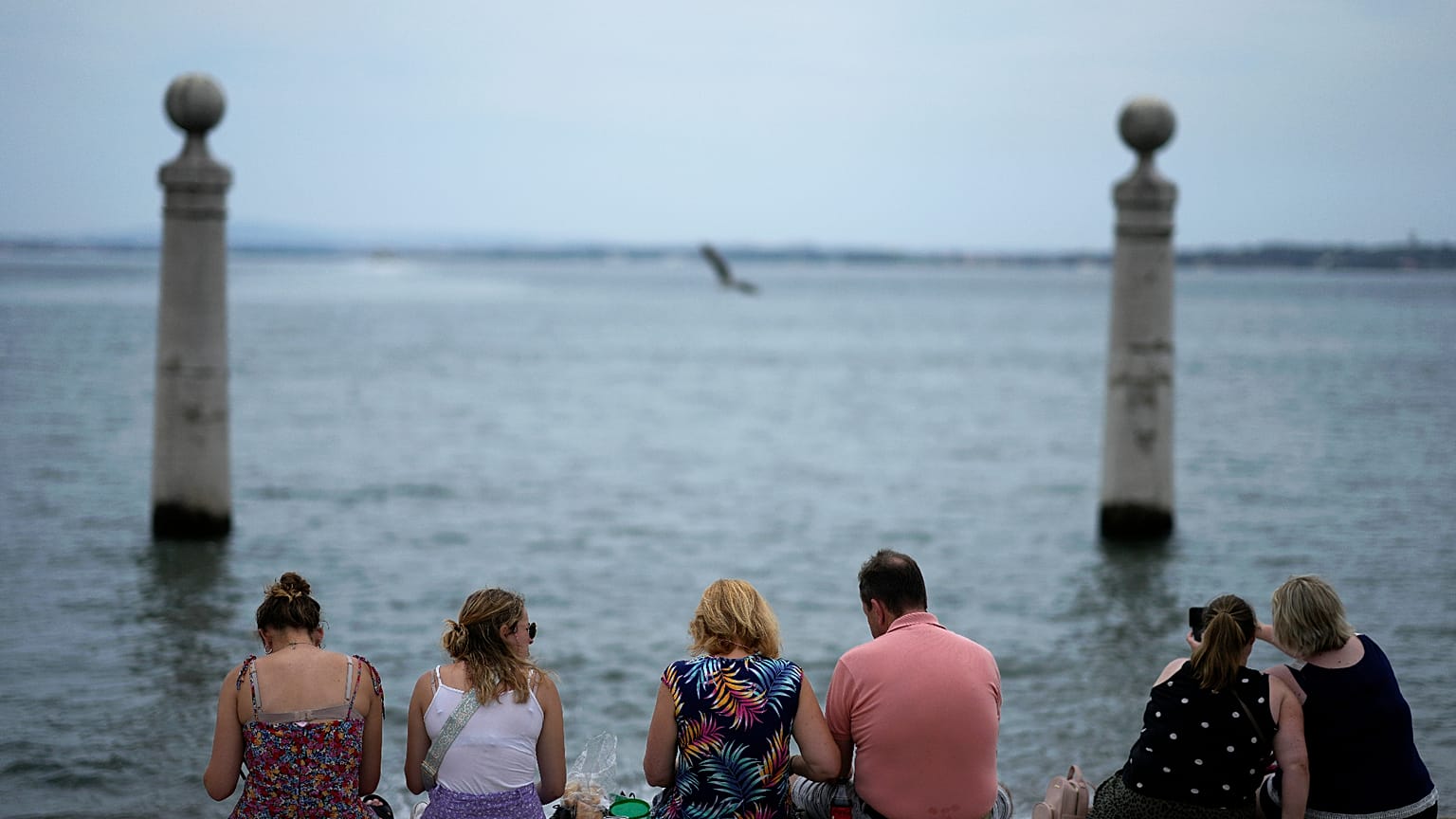
People at Cais das Colunas in Lisbon in July, during a spell of high temperatures in Portugal
Copyright AP Photo/Armando Franca

By Lina Ferreira
Published on

In Portugal, temperatures could climb close to 38°C in the Alentejo and the Tagus Valley, driven by an anticyclone positioned north of the Azores.

Portugal is set to see a gradual rise in temperatures from this Saturday. The Portuguese Institute for Sea and Atmosphere (IPMA) has raised a yellow warning for nine districts (source in Portuguese).

For this Saturday three districts are under a yellow warning: Coimbra, Leiria and Lisbon. On Sunday, the warning is extended to Setúbal, Santarém, Aveiro, Porto, Braga and Viana do Castelo. The alert will remain in force in these nine districts at least until eight o'clock on Monday evening.

The yellow warning is the lowest level of risk on a scale that also includes orange and red alerts. According to the institute's website, it indicates a "situation of risk for certain activities".

The IPMA says there is a likelihood of a heatwave:

"This spell of hot weather will be defined mainly by its duration, with a high probability of meeting the criteria for a heatwave across much of the territory", the institute said in a statement (source in Portuguese).

The document explains that a heatwave occurs when "over a period of six consecutive days, the maximum air temperature is 5 °C above the average value of the daily maximum temperatures".

Temperatures are therefore expected to reach above 30 °C on the mainland. In some areas, such as Lisbon and the Tagus Valley, they could even approach 38 °C.

Minimum temperatures will also rise, staying above 20 °C in some parts of Alto Alentejo, Beira Baixa, the Tagus Valley and the eastern Algarve.

"Although the forecast maximum temperatures are lower than those recorded in some episodes this summer, they will be substantially above the average values for the second half of September", the statement adds.

The hot weather is due to "the influence of an anticyclone located to the north of the Azores, extending in a ridge as far as the Bay of Biscay". This will bring "a mass of air of continental origin (hot and dry) over the Iberian Peninsula".

In July, Portugal had already experienced anomalous temperatures, with red warnings in most of the country and the government declaring an alert situation. That situation extended to the rest of continental Europe during July.

A report by the non-profit organisation Climate Central concluded that the continent was "the most abnormally warm region on the planet". Almost nine in ten Europeans lived through an entire month of "dangerous heat".


The world’s first laser fusion power station is being built in Germany

Euronews
By Hans von der Brelie
Published on


The world’s first laser fusion power station is being built in Germany. On the site of the decommissioned Biblis nuclear power station, the switch is being made: from nuclear fission to fusion power. Euronews reporter Hans von der Brelie got access to the protected site.

The race to develop the energy source of the future is gathering pace. Who will win? The US and China? Or Europe? German start-up Focused Energy, based in Darmstadt, aims to become the global leader in the construction of commercial laser fusion power stations.

The development of fusion energy is on top of the political high-tech agenda of Germany and the European Union. Fusion start-ups are being founded in great numbers around the planet, especially laser based fusion technology, which attracts huge amounts of risk capital. This spring, Focused Energy raised $240 million dollars alone – the largest figure ever raised in the first round of financing in the global fusion industry.

Focused Energy aims to become the global leader in the construction of laser fusion power plants. The company’s laboratories are based in Darmstadt.
Focused Energy aims to become the global leader in the construction of laser fusion power plants. The company’s laboratories are based in Darmstadt. Euronews

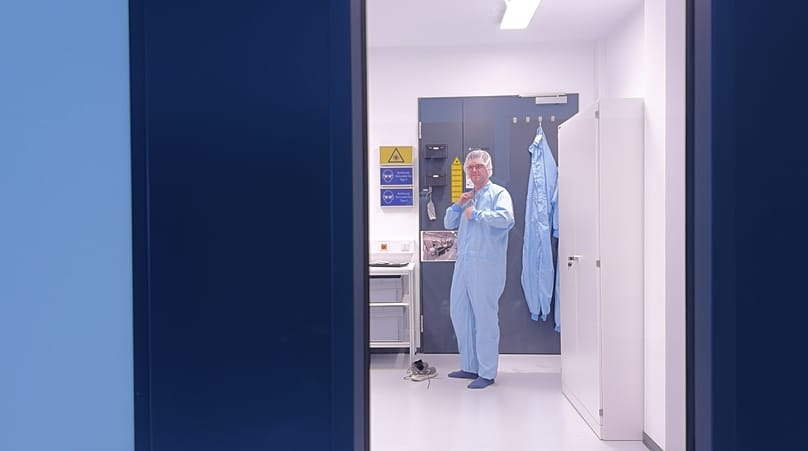
After a tough security check, the gates of the Biblis power station open for Euronews. The site was used to be one of Germany’s largest nuclear fission power stations. Now it is where the new laser fusion facility will be built.

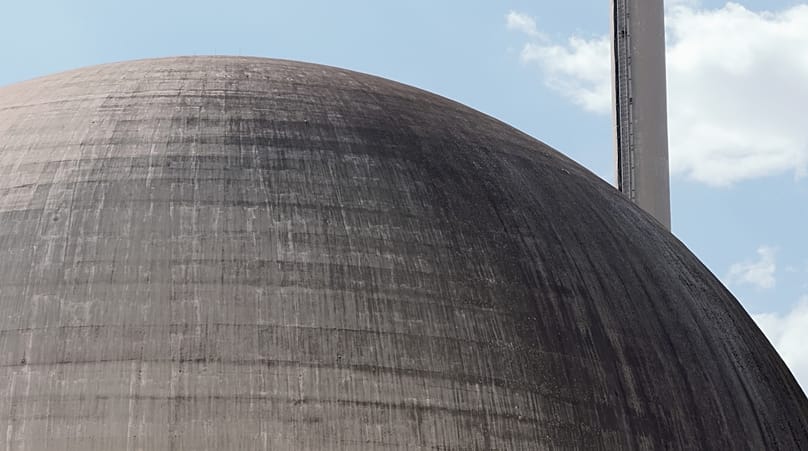
Germany is getting serious about phasing out nuclear fission. All over the country, buildings are being decontaminated and cooling towers demolished. The giant reactor domes at Biblis, however, will remain in place. But in future, it will be nuclear fusion inside - rather than nuclear fission. RWE, one of Europe’s largest energy companies and the site’s owner, has invested €60 million in Focused Energy.

The reactor domes at Biblis will remain in place. But in future, it will be nuclear fusion inside - rather than nuclear fission.
The reactor domes at Biblis will remain in place. But in future, it will be nuclear fusion inside - rather than nuclear fission. Euronews

The company rolls out an extremely ambitious roadmap. “In five years’ time, I want to have a first laser fusion demonstrator here in Biblis,” Ulrich Sigel, Focused Energy’s Vice President, tells Euronews. “In ten years’ time, we want to build the pilot power station there, and in 15 years’ time, the world’s first commercially competitive laser fusion power station.”

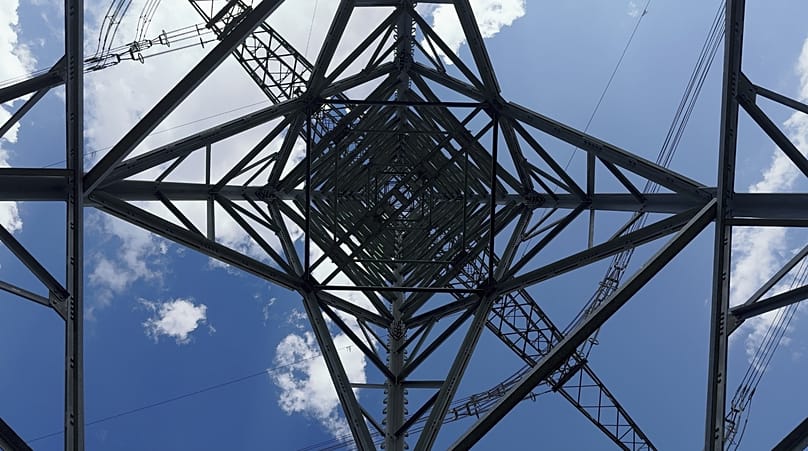
Why Biblis? “The conditions here are simply superb”, explains Sigel while showing us around. “We can make use of the existing infrastructure – from the grid connection right through to buildings.”

„We can make use of the existing grid infrastructure“, Ulrich Sigel, Focused Energy’s Vice President, tells Euronews.
„We can make use of the existing grid infrastructure“, Ulrich Sigel, Focused Energy’s Vice President, tells Euronews. Euronews

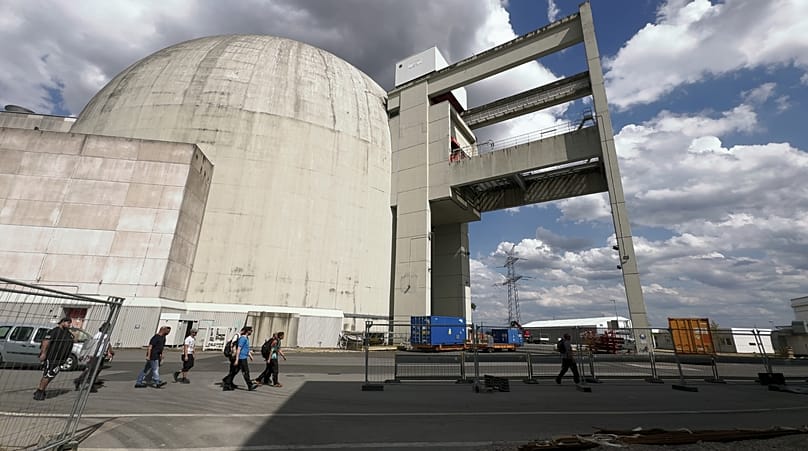
Sigel points to the main reactor dome of the decomissioned nuclear power station: “In the former Reactor Block A, our pilot laser fusion power station is to be built.”

The pilot laser fusion power station is to be built in the former Biblis Reactor Block A.
The pilot laser fusion power station is to be built in the former Biblis Reactor Block A. Euronews

The fusion power station is set to produce almost one gigawatt of electricity, enough for two million households. Critics consider the technology to be not yet developped enough and too expensive. Focused Energy, on the other hand, believes that laser fusion will be competitive – even when compared with electricity generated from nuclear fission or renewables.

Focused Energy believes that laser fusion could be competitive - even when compared with nuclear fission or renewables.
Focused Energy believes that laser fusion could be competitive - even when compared with nuclear fission or renewables. Euronews

However, the remaining technical challenges are enormous. There are unsolved problems linked to the fuel cycle and the scaling up of the first promising results incoming from the laboratories to be overcome.


EU weighs windfall taxes on energy firms amid growing economic strain

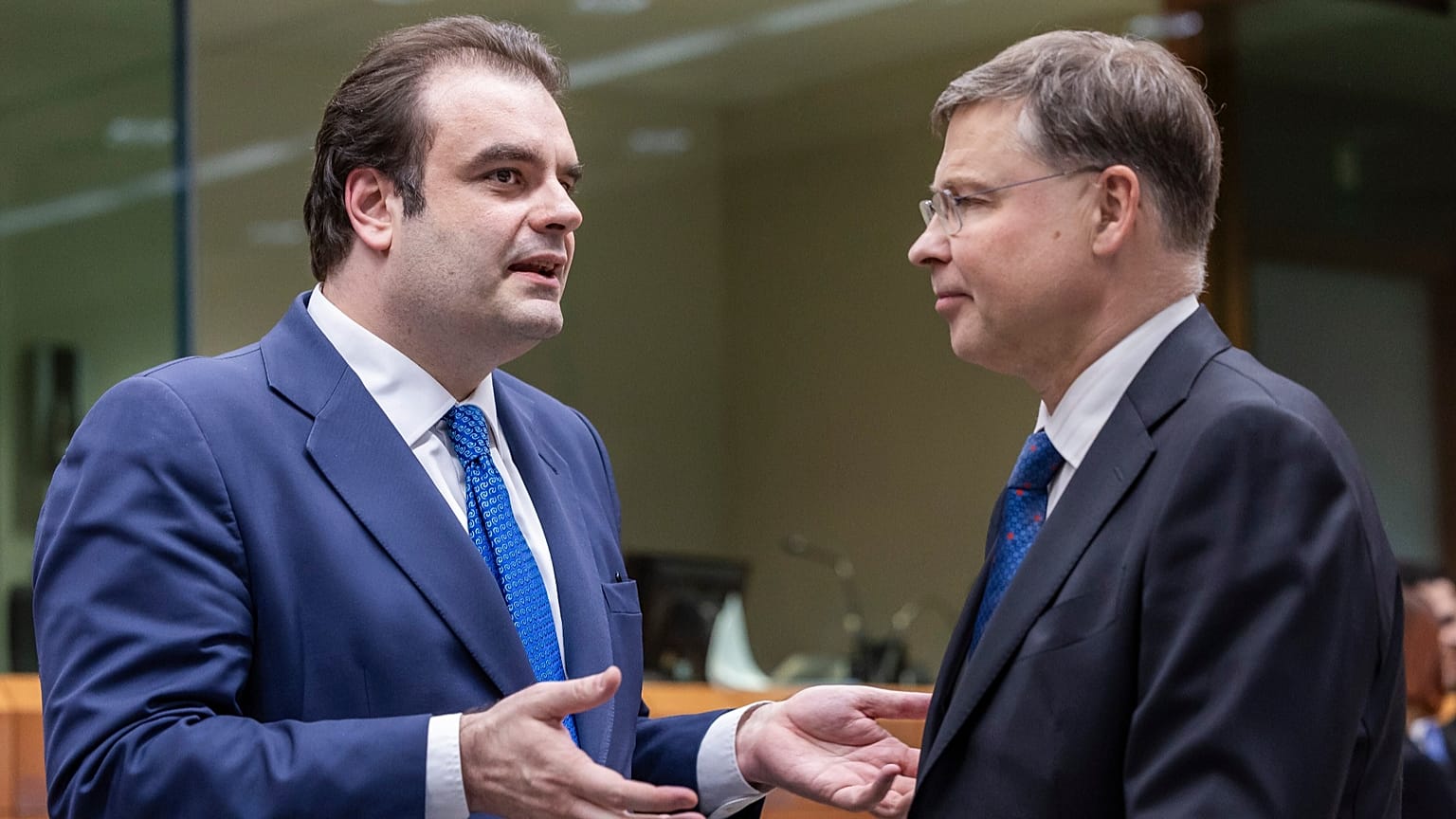
Eurogroup President Kyriakos Pierrakakis, left, speaks with European Commissioner for Economy Valdis Dombrovskis in Brussels.
Copyright AP Photo/Geert Vanden Wijngaert


By Eleonora Vasques & Marta Pacheco
Published on

EU ministers meeting in Dublin on Friday and Saturday are considering a windfall tax on energy companies, as price volatility continues to destabilise the economic outlook.

A windfall tax for firms profiting from energy price volatility is one of the ideas circulating among EU ministers meeting in Dublin on Friday and Saturday for the periodic meetings of the Eurogroup and Economic and Financial Council.

With the war in the Middle East continuing, Brent crude oil prices have surpassed $100 per barrel, and extreme volatility in energy prices is driving inflation higher across the bloc, which is not expected to return to the 2% target before the end of 2027.

While growth indicators are still performing well this year, the European Commission expects economic growth to slow down in 2027.

The EU is urging member states to pursue prudent fiscal policies and remain within the existing fiscal flexibility of 1.5% for defence spending, of which 0.3% can be used to contain energy prices.

Meanwhile, the European Central Bank (ECB) is gradually raising interest rates to contain inflation.

“There are several member states that put forward this initiative, it is part of our discussions," European Commissioner for Economy Valdis Dombrovskis said during a press conference on Friday, referring to the windfall tax.

"Member states can already implement windfall profit taxes at the national level if they decide to do so. From the Commission side, we are ready to support those member states by sharing best practices and finding a good way forward.”

German Finance Minister Lars Klingbeil is pressing the European Commission to present models for a windfall tax, asking to have something on the table by the next Economic and Finance Council meeting in October.

"You know that I have been fighting for this for a long time, together with other European finance ministers," Klingbeil said on the sidelines of Friday's meeting.

The Spanish Finance Minister Carlos Cuerpo also expressed his favour for the proposal on Friday.

“We are managing to lower the bill for homes, companies, industries, transport companies, and this at the expense of the taxpayer's money. We believe there may be fairer ways to distribute this cost,” Cuerpo said.

French Finance Minister Roland Lescure has been more cautious about the proposal.

“This [energy] shock can have a different impact on different countries. We do feel that whatever discussion we have, whatever work has been done, needs to take into account the specificities of each country," he said ahead of the meeting on Friday, specifying that France has a "bigger electricity mix".

To the direct question on whether he supports the proposal or not, Lescure said that he support any work that’s being done, but that "I can’t support something before I’ve seen it".

"I’ll see what the work comes out with, and then we’ll have a discussion.”

Energy taxes: the bulk of pricing

Although the energy crisis is affecting the bloc, not all member states are affected in the same way, with prices at the pump varying greatly

Finland, Denmark and the Netherlands, the three EU countries currently paying the most for diesel, impose some of the highest fuel taxes in the world, pushing retail diesel prices much higher.

On the other hand, countries in Eastern Europe such as Bulgaria and Poland set excise duties far lower, keeping their pump prices down.

Yet according to EU official data published on Thursday, the EU country paying the least for diesel is Malta, with €1.20 per litre charged at the pump on 14 September.

The significant discrepancy in diesel prices across the EU is driven mainly by divergent national tax policies – excise duties and VAT – which make up the largest portion of the retail price of diesel.

However, the difference between diesel prices before and after taxes is staggering. Per the data released on Thursday, Finland’s diesel price stood €1.48 per litre before taxes and €2.50 after taxes.

Denmark also ranked high, with diesel at €1.43 before taxes and €2.50 per litre after taxes, while Dutch citizens would pay only €1.50 per litre of diesel without taxes and €2.49 with taxes.

France, which has the third-highest government debt in the EU, has chosen targeted to offer assistance for the sectors most exposed to the price shock rather than cutting fuel taxes.

French Prime Minister Sébastien Lecornu asked ministers to extend support for sectors most exposed to higher energy costs until 31 December. Meanwhile, diesel prices at the French pump stood at €2.29 per litre on 14 September, against €1.30 before taxes.

Regional refining capacity also further amplifies energy pricing. All EU countries buy crude oil from the same volatile global markets, but the price motorists ultimately pay at the pump depends on whether there is sufficient refining capacity nearby, how easily fuel can be transported from other regions and how well local refineries can process the particular type of crude available.

During a supply shock like the one the EU is currently suffering, EU countries with spare refining capacity, diversified import routes and strong links to neighbouring fuel markets may be able to cushion the disruption more easily.


Climate risks reshape investment and financing decisions in Slovenia

Climate risks reshape investment and financing decisions in Slovenia
/ IntelliNewsFacebook
By IntelliNews September 16, 2026

Climate change is increasingly becoming a financial and operational risk for Slovenian companies, affecting investment decisions, supply chains and potentially the cost of bank financing, business and public-sector representatives said at a conference on September 15.

Europe is warming about twice as fast as the global average, while Slovenia has experienced a temperature increase of more than two degrees Celsius over the past six decades, according to data presented at the Green Breakfast event organised by the CER Partnership for Sustainable Economy.

Weather and climate-related events caused about 929bn euros in economic losses and around 440,000 deaths in Europe between 1980 and 2025, said Blaž Kurnik, head of the Climate Risks and Resilience Unit at the European Environment Agency.

Slovenia has been particularly affected by the 2023 floods, with cumulative losses equivalent to almost 9,000 euros per capita, Kurnik said.

"The climate is changing faster than we can keep up with the legislative framework and implementation. We are always a little behind," he said.

Around half of climate-related losses in Europe are uninsured, with the proportion rising to about 90% in southern and eastern Europe, Kurnik said, increasing the burden on governments and households.

The effects are also becoming more relevant to companies' financial planning. An initial assessment by CER found that companies had an average climate preparedness level of about 61%, while only 15% currently factor climate risks into financial and investment planning.

At the same time, 95% of participating companies identified business opportunities linked to climate adaptation.

Banks are also beginning to incorporate physical climate risks into lending decisions. Rok Kogej of the Association of Banks of Slovenia and Intesa Sanpaolo Bank said lenders increasingly need information such as the location of production facilities and the share of revenue generated at different sites.

"The more resilient a client is to climate change in various dimensions, the cheaper sources of financing they will be able to secure," Kogej said.

Businesses are already responding. Food group Atlantic Grupa cut annual water use in one process from about 8,500 cubic metres to 500 cubic metres after introducing free cooling technology, while spa operator Thermana Laško said floods in 2023 caused about 7mn euros in damage and prompted it to raise critical equipment in future projects.

Energy infrastructure requires even longer-term planning. ELES said transformer stations are designed for about 40 years and transmission lines can operate for up to a century, making historical climate data insufficient for new investments.

The World Business Council for Sustainable Development said 70% of surveyed global companies had completed climate-risk assessments, while 63% were developing adaptation plans.

The LIFE4ADAPT project, under which the event was held, is a seven-year programme worth about 26.5mn euros aimed at developing climate services, financial mechanisms and practical adaptation measures in Slovenia.

" A country cannot be climate resilient if its economy is not resilient."