Showing posts sorted by relevance for query TRAUMATIC BRAIN INJURIES. Sort by date Show all posts

Friday, April 11, 2025


Police officers face twice the risk of traumatic brain injuries and PTSD, survey finds


Police officers are more than twice as likely to have traumatic brain injuries compared to the general population


University of Exeter


Police officers are more than twice as likely to have traumatic brain injuries compared to the general population. Officers who incur these injuries while on duty face more than double the risk of developing complex post-traumatic stress disorder (PTSD).

That’s according to a new survey-based study from the University of Exeter, published in The Journal of Head Trauma Rehabilitation, which found a connection between traumatic brain injuries and PTSD in police officers. Authors say the findings raise concerns over the long-term effects on officers’ personal and professional lives and highlights the need for better action and support for officers who have sustained a head trauma in the workplace.

Professor Stan Gilmour has 30 years’ experience in law enforcement and received The King’s Police Medal for his service. He is now a Senior Research Fellow at the University of Exeter and co-convenor of the Global Law Enforcement and Public Health Association’s Neurodisability Special Interest Group. Stan said: “Police officers are exposed to high-stress situations, physical confrontations, and the possibility of injury every day. Adding to that the increased risk of traumatic brain injuries and PTSD only compounds the challenges officers already face, and this study highlights the urgent need for better monitoring of head injuries and their long-term effects.”

The study surveyed 617 current serving frontline police officers from England, Scotland, and Wales and found 38 per cent had sustained at least one traumatic brain injury - defined as an injury to the head that caused someone to lose consciousness, or develop symptoms such as confusion, disorientation, or memory loss. This is compared to the rate of 12 per cent found in the general population. Of those officers, 61 per cent report they had experienced these types of injuries on multiple occasions.

Researchers found police officers who reported a history of multiple traumatic brain injuries were more than twice as likely to meet the criteria for complex PTSD - which has similar symptoms to PTSD, but may also include feelings of worthlessness, shame and guilt, problems controlling emotions, and relationship issues. In the study, 22 per cent of respondents had sustained traumatic brain injuries during their policing duties and these officers were more than twice as likely to develop probable complex PTSD.

The results found police officers with a history of multiple traumatic brain injuries also face more severe difficulties in their daily lives, including their ability to perform work duties, maintain relationships, and carry out other important activities like parenting. They also reported physical and cognitive symptoms at a more severe level, including headaches, fatigue, sleep disturbances, and concentration problems.

The study calls for assessments for traumatic brain injuries and related symptoms during routine occupational health checks, with targeted interventions for officers who experience both a traumatic brain injury and PTSD.

Nick Smith, lead researcher and Postdoctoral Research Associate at the University of Exeter, said: “Our findings highlight a critical gap in support for police officers who suffer traumatic brain injuries and PTSD. Many officers are grappling with the lingering effects from past injuries while simultaneously managing PTSD symptoms and this creates a double burden that can significantly impair their ability to work, have healthy relationships, and overall quality of life.


“Early action and support are essential to prevent long-term consequences and improve outcomes for these officers. For example, police forces could emulate concussion guidelines in sport by developing traumatic brain injury assessments and graduated return-to-duty protocols, which are crucial to reduce risk of further injury when still symptomatic.”

The survey is the largest of its kind to examine the link between policing, traumatic brain injuries and PTSD, and included participants from across the UK. As the research was survey-based, the data is self-reported – however, researchers took steps to ensure it was not obvious to respondents that they were investigating links between head injuries and PTSD. The study entitled "Co-occurrence of Traumatic Brain Injury and Post-Traumatic Stress Disorder in a National Sample of UK Police Officers: Impact on Social Well-being and Employment Outcomes” was funded by the Engineering and Physical Sciences Research Council and is published in the Journal of Head Trauma Rehabilitation.

“Something had changed in my mentality”

Tim Ockenden is a current serving Police Sergeant who developed PTSD following a road traffic collision while on duty. In November 2022, Tim was driving with a colleague on a blue light run when they were hit by another car going through traffic lights.

“After I was physically checked after the incident, I came back into work the next day,” Tim said. “I tried to crack on like normal, but something wasn’t quite right. Something had changed in my mentality. I really noticed a shift in my behaviour, and I’d get angry at the drop of a hat. I couldn’t put my finger on what was wrong. I’d never been an anxious person before, but I started to get anxious.”

Tim was then off work for three months with stress and burnout and around the same time his wife gave birth to their son.

“I was absolutely loving my home life, but I would also turn on a dime,” he continued. “It probably got to its worst about five months after the incident when I was in the shops with my wife and son, and she was asking me what I wanted for lunch. I couldn’t process it, and I just lost it. I got really angry and shouted at my wife, which I’d never done before.

“She told me I’d changed over the past few months and around the same time a colleague pulled me aside and said, ‘nobody wants to work with you. Nobody wants to even sit in the same office as you. You need to get some help because something’s not right’.”

Tim sought help through official work channels and his GP surgery, but was told support could take months or even longer. He then reached out to independent charity Police Care UK.

Tim said: “By the following week I’d spoken to somebody on the phone and by the end of the week I’d had a clinician assessment. Two weeks later I started therapy for PTSD. It’s made a massive difference, sort of resetting myself, and I’m back to relative normality now. But I can still get angry really easily, which I never used to before. I can sense my PTSD symptoms building and if I don’t correct them in time I lose it.”

Tim says from what he’s experienced as a police officer, the findings from the research don’t surprise him: “For me, this study is long overdue because I think there are huge numbers within the police with undiagnosed PTSD. I’m a big rugby fan and I’d like to see some sort of protocol put in place similar to the head injury assessment in sports. Something that isn’t subjective but

a pass or fail and identifies if someone is at risk PTSD. Then it’s equally important what care is in place after that is identified.

“Those two things need to go hand in hand – the protocol and then the treatment. People can’t wait six months. If you fail the test on the Monday, then on the Tuesday you’re getting help.”

Thursday, October 03, 2024

BRAIN INJURIES ARE NOT HEADACHES

Trump’s Ex-Defense Secretary Knocks His Claim That Soldiers’ Injuries Were ‘Headaches’

Jennifer Bendery
INSIDER
Wed, October 2, 2024 

WASHINGTON — Former President Donald Trump’s defense secretary, Mark Esper, on Wednesday pushed back on Trump’s claims that the dozens of U.S. troops who sustained traumatic brain injuries in a 2020 ballistic missile strike in Iran just had “headaches.”

“That’s obviously not accurate,” Esper said flatly in a CNN interview.

The former defense secretary recalled the events of the attack, which took place on Jan. 8, 2020, when Trump was president. At least 109 U.S. soldiers were injured after Iran dropped missiles on the Al-Asad Airbase in Iraq.

“Our troops defended extraordinarily well,” said Esper. “But over time we came to learn, as troops did self-reporting … that we had I think dozens, over 100 cases reported, and several were very serious traumatic brain injuries.”

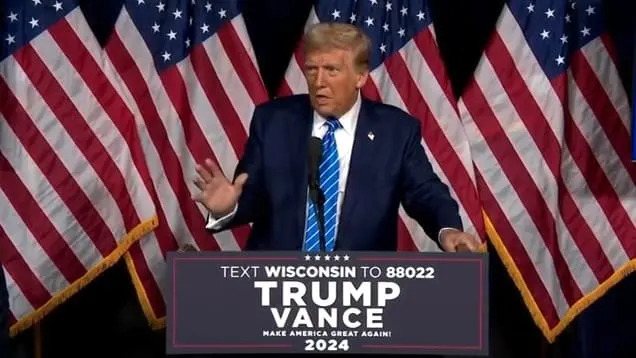
His comments come a day after Trump scoffed at the idea that any American troops were injured in the 2020 attack. The Republican presidential nominee was asked about it during a campaign event in Wisconsin, in light of Iran launching missiles at Israel earlier Tuesday.

“So, first of all, ‘injured.’ What does injured mean? Injured means, you mean, because they had a headache?” Trump said to a reporter. “Because the bombs never hit the fort.”

After claiming “there was never anybody tougher on Iraq” than him — and mixing up Iraq with Iran — Trump appeared ruffled by the idea that he wasn’t “tough enough” on Iran at the time and boasted that none of Iran’s missiles hit the fort that day.

“They all hit outside, and there was nobody hurt other than the sound was loud, and some people said that hurt, and I accept that,” he added.

Trump similarly dismissed how badly U.S. troops were injured in the weeks after the Jan. 2020 attack, saying the Americans hurt that day “just had headaches.”

A traumatic brain injury, which is caused by an outside force like a powerful bump or blow to the head, is nothing like a regular headache. Some types can lead to short-term problems with brain function, like how a person thinks, acts or communicates. More serious cases can lead to severe disabilities and even death.

Esper said Wednesday that traumatic brain injuries are “a new harm” the U.S. military has come to understand better from the wars in Afghanistan and Iraq. He recalled visiting a soldier at a military hospital a couple months after the Iranian attack and listening to his experience, calling it “quite a traumatic night.”

“Large blasts, much like were experienced in the ballistic missile attack in Al-Assad, can create traumatic brain injuries,” he said. “They’re unseen, if you will, casualties of war.”

Trump got it wrong on a past Iranian missile attack and again cast aside the US troop injuries as nothing more than headaches

Chris Panella
Wed, October 2, 2024


Trump recently got the details of a 2020 Iranian missile strike on US forces wrong.


He also again downplayed the resulting traumatic brain injuries of more than 100 US service members.


The former President has repeatedly dismissed the TBIs as "not very serious" or just "headaches."


Following Iran's massive ballistic missile strike on Israel, former President Donald Trump found himself discussing the 2020 Iranian attack on US forces in Iraq. He botched the details and again downplayed the injuries it caused for over 100 US service members.

The former president has repeatedly dismissed the traumatic brain injuries suffered by US forces as "not very serious" and just "headaches," trivializing what can be serious ailments.

During a press conference on Tuesday, the former president and current Republican presidential nominee said that the "bombs never hit the fort," apparently referring to the two Iraqi bases where US troops were stationed at the time.

Trump also dismissed the injuries to US soldiers caused by the attack, asking: "What does injured mean? You mean because they had a headache?" And in response to a question on whether he should have "been tougher on Iran" in the wake of the strike, he said there was "nobody ever tougher on Iraq."

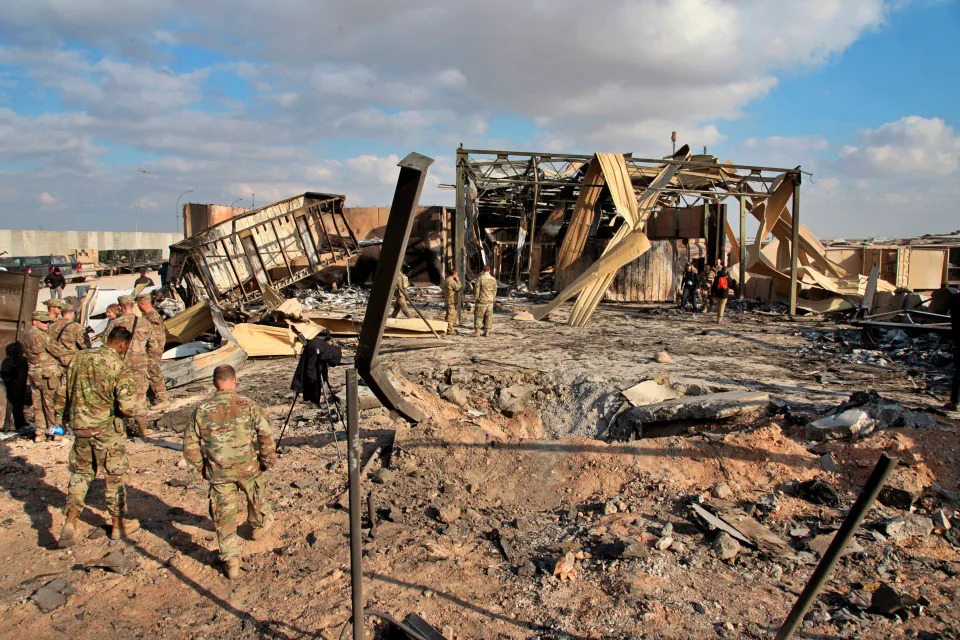
Iran's missiles did, in fact, strike US positions in Iraq. The attack, which was in response to the killing of Iranian Gen. Qasem Soleimani, was the largest ballistic missile attack ever against US forces abroad. There's visual evidence of the destruction.


US soldiers standing at the spot hit by Iranian strikes at Ain al-Asad air base, in Anbar, Iraq.AP Photo/Qassim Abdul-Zahra

Trump's inaccurate comments on the injuries echo his previous stance on the over 100 US service members who were diagnosed with traumatic brain injuries after the attacks.

Not long after the attack, Trump told reporters that he "heard that they had headaches and a couple of other things," but his view was that it wasn't serious.

"I don't consider them very serious injuries relative to other injuries that I've seen," he said.


At the time of the 2020 strike, brain injury experts and former US service members told Business Insider about the injuries, saying that Trump's comments trivialize the severeness of the conditions, which can be slow to appear and can be debilitating.

One former Vermont Army National Guard infantryman who was deployed to Afghanistan in 2009 and suffered a mild TBI in combat told BI that over 10 years later, he still was still waking up with headaches every day, experienced concentration issues, and occasionally had dizzy spells.

Any brain injury, such as a TBI, can leave injured patients with troubling physical, cognitive, emotional, and behavioral issues, some of which may last their entire lives.

Trump's downplaying on the injuries also ran at odds with the Pentagon, which, in January 2020, acknowledged the potential ongoing issues for service members and said it would "monitor them the rest of their lives and continue to provide whatever treatment is necessary."

Some of the US service members affected by the attack were later awarded the Purple Heart for their involvement in the attack, but initially, they were denied. One service member who was affected by the Iranian attack told CBS News a few years ago that he was struggling with vision problems, memory loss, constant headaches, and hearing issues.


Iran's attack on Israel was in response to the killings of a Hezbollah and Hamas leader.REUTERS/Amir Cohen

In response to Trump's comments on Tuesday, Minnesota Gov. Tim Walz, a National Guard soldier and the present Democratic vice presidential nominee, said during the vice presidential debate with Republican nominee Ohio Sen. JD Vance that Trump "wrote off" the troops' injuries as "headaches."

Trump's comments about the 2020 strike came on the heels of Iran's massive missile strike on Israel, which involved over 180 ballistic missiles. US and Israeli officials said the significant attack was largely intercepted and "ineffective," with Israel vowing to respond.

In response to the attack, Vice President Kamala Harris said that while "we are still assessing the impact," the "initial indications are that Israel, with our assistance, was able to defeat this attack." She said "our joint defenses have been effective."


Trump Mocks 100 U.S. Troops Injured in Iran on His Watch: ‘They Had a Headache’

Charisma Madarang
Tue, October 1, 2024 
ROLLING STONE


Donald Trump once again showed his disdain for United States military personnel during a campaign event in Milwaukee on Tuesday.

When taking questions from reporters during the event, a journalist asked Trump if he thought Israel should retaliate against Iran’s Oct. 1 missile attacks against the nation. The reporter also asked if Trump believed he should have been “tougher on Iran” during his presidency “after they had launched ballistic missiles in 2020 on U.S. forces in Iraq,” which left “more than 100 U.S. soldiers injured.”


The Republican candidate bristled at the idea of taking accountability for the tragic event, and instead mocked U.S. troops. “What does injured mean?” he retorted. “Injured means, you mean, because they had a headache? Because the bombs never hit the fort.”

“There was nobody ever tougher on Iraq,” Trump continued, confusing Iraq for Iran. “When you say not tough, they had no money. They had no money for Hamas. They had no money for Hezbollah. And when we hit them, they hit us. And they called us, and they said, ‘We’re going to shoot at your fort, but we’re not going to hit it.’”

The former president proceeded to insult the journalist, while downplaying the injuries sustained by troops. “If you were a truthful reporter, which you’re not, you would tell the following: None of those very accurate missiles hit our fort,” he said. “They all hit outside, and there was nobody hurt other than the sound was loud and some people said that hurt, and I accept that.”

Minnesota Gov. Tim Walz appeared to reference Trump’s comments later on Tuesday night during the vice presidential debate. “When Iranian missiles did fall near U.S. troops and they received traumatic brain injuries, Donald Trump wrote it off as headaches,” he said.


In 2020, the Defense Department confirmed that 109 U.S. service members were diagnosed with traumatic brain injuries after Iran attacked the Ain al-Asad air base in Iraq. At the time, Trump appeared to dismiss the severity of the injuries and said, “I heard that they had headaches and a couple of other things, but I would say, and I can report, it is not very serious.”

Trump’s remarks on Tuesday follow his long history of insulting U.S. military. In August, Trump drew backlash from veterans groups when he said the Presidential Medal of Freedom is better than the Congressional Medal of Honor because the former doesn’t involve sacrifice. The 2024 candidate later doubled down on those comments.

Later that month, when visiting Arlington National Cemetery, Trump treated the burial grounds as a political campaign opportunity despite federal laws expressly barring such behavior. Trump and his campaign staff received widespread criticism “verbal and physical altercation” that reportedly took place during a wreath-laying ceremony when Trump’s staffers tried to enter an area reserved for recently deceased service members. The Army confirmed that someone from Trump’s team “abruptly pushed” a cemetery staffer.

The Republican hopeful attempted to blame the incident on the Gold Star families, not his campaign, who distributed images and videos of him at Arlington National Cemetery.


Trump downplays troop injuries in 2020 missile strike: ‘You mean because they had a headache?’

Brett Samuels
THE HILL
Tue, October 1, 2024 

Former President Trump on Tuesday dismissed injuries sustained by U.S. troops during a 2020 Iranian missile strike on an Iraqi base as he argued he has been tougher than the Biden administration on Tehran.

Trump fielded questions from reporters during a campaign stop in Milwaukee and was asked by one journalist whether he should have responded more strongly to Iran after it launched missiles at U.S. forces stationed at a base in Iraq in 2020, leaving dozens with traumatic brain injuries.

“So first of all, injured. What does injured mean? Injured means — you mean because they had a headache? Because the bombs never hit the fort,” Trump said.

“So just so you understand, there was nobody ever tougher on Iraq,” Trump continued, saying Iraq instead of Iran. “When you say not tough, they had no money. They had no money for Hamas. They had no money for Hezbollah. And when we hit them, they hit us. And they called us, and they said, ‘We’re going to shoot at your fort but we’re not going to hit it.'”

“And if you were a truthful reporter, which you’re not, you would tell the following: None of those very accurate missiles hit our fort,” he added. “They all hit outside, and there was nobody hurt other than the sound was loud and some people said that hurt, and I accept that.”

More than 100 U.S. service members suffered traumatic brain injuries in January 2020 as a result of an Iranian missile strike on an Iraqi base, according to Department of Defense officials.

The missile strike on the Iraqi airbase was in retaliation to Trump ordering the drone strike that killed Iranian Gen. Qassem Soleimani in early January 2020.

Trump similarly downplayed the injuries at the time, saying he had “heard that they had headaches and a couple of other things.”

The former president spent part of his campaign swing through Wisconsin on Tuesday criticizing the Biden administration’s foreign policy in the wake of Iranian missile attacks against Israel.

Trump, who withdrew from the Iran nuclear deal and reimposed sanctions on Tehran during his first term, told reporters in Milwaukee there was “nobody ever tougher on Iran” than he was.

Copyright 2024 Nexstar Media, Inc. 


Trump Shrugs Off U.S. Soldiers’ Traumatic Brain Injuries as ‘Headaches’

William Vaillancourt
 Daily Beast.
Tue, October 1, 2024

YouTube

Donald Trump on Tuesday again downplayed dozens of U.S. soldiers getting traumatic brain injuries from Iranian airstrikes under his watch, telling a reporter dismissively that “they had headaches.”

In Milwaukee, Wisconsin, Trump was asked about the January 2020 airstrikes near U.S. forces in Iraq, in light of how Iran launched a missile attack against Israel earlier Tuesday.

“Do you believe that you should have been tougher on Iran after they had launched ballistic missiles in 2020 in Iraq, leaving more than 100 U.S. soldiers injured?” the reporter asked, referencing Iran’s response to the U.S. drone killing of Iranian Revolutionary Guard Gen. Qassem Soleimani.

“So, first of all. Injured. What does injured mean? Injured means—you mean, because they had a headache? Because the bombs never hit the fort?” he said.

“Just so you understand: There was never anybody tougher on Iraq,” Trump continued, confusing the site of the strikes with the country behind it.


“If you were a truthful reporter, which you’re not, you would tell the following: None of those very accurate missiles hit our fort,” he continued. “They all hit outside, and there was nobody hurt other than the sound was loud and some people said that hurt, and I accept that.”

Trump Demands Biden Remove Ad of Him Calling Dead Soldiers ‘Suckers’ and ‘Losers’

Tuesday wasn’t the first time Trump has minimized those troops’ injuries. A few weeks after the strikes, Trump falsely claimed that “no Americans were harmed.” According to the Defense Department, 109 troops had suffered traumatic brain injuries.

In Tuesday night’s vice presidential debate, Minnesota Gov. Tim Walz alluded to Trump’s history of shrugging off the fallout from the strikes.


“When Iranian missiles did fall near U.S. troops and they received traumatic brain injuries,” he said, “Donald Trump wrote it off as ‘headaches.’”

Sunday, February 16, 2020


Why aren’t brain injuries taken seriously?


Mike Bebernes Editor, Yahoo News 360•February 11, 2020
“The 360” shows you diverse perspectives on the day’s top stories and debates

What’s happening

More than 100 members of the U.S. military suffered traumatic brain injuries as a result of an Iranian missile attack on a base in Iraq that housed American troops, according to the U.S. Department of Defense.

Iran bombarded the base in early January in retaliation for an American airstrike that killed Qassem Soleimani, one of the country’s top generals. Though there were no U.S. fatalities, the number of military members who have been treated for brain injuries has gradually increased in the weeks since the attack. Last month, President Trump downplayed the injuries, saying the soldiers were experiencing “headaches,” which he didn’t consider “very serious injuries relative to other injuries.”

To the general public, traumatic brain injury (TBI) is most commonly understood to be caused by a direct blow to the head like the ones football players endure. The impact from an explosion — even if it doesn’t cause bodily injury — could cause TBI. Brain injuries have been called the “signature wound” of the wars in Afghanistan and Iraq, where improvised explosive devices have been a persistent threat. More than 413,000 American soldiers have suffered TBI since 2000, according to the Department of Defense.

Most of those cases involved mild TBI, which can lead to headaches, cognitive impairment, mood changes and fatigue in the short term. Research has shown that even mild brain injuries can be linked to a increased long-term risk of depression, post-traumatic stress disorder and suicide.

Why there’s debate

The president’s comments echo a view, prevalent in the military and in sports, that brain injuries aren’t considered as serious as physical injuries. Part of the disconnect may stem from the nature of the injuries. A bullet wound, for example, is immediately noticeable and easily understood as life-threatening. The symptoms of head injuries, however, can take days to show up and are often difficult to define. Severe outcomes, like depression, may not manifest for months or even years and can be difficult to attribute directly to head trauma.

Some military veterans say the culture of the armed forces puts pressure on soldiers to return to action unless physically unable, which can lead to TBI symptoms going unreported. Others argue that military leadership has been too slow to respond to the issue and that the government doesn’t do enough to provide mental health services to veterans after their service is complete.

What’s next


The modern understanding of the impact of traumatic brain injuries is still relatively new. Scientists and doctors are working to develop better methods to diagnose, monitor and treat TBI. The military has instituted new procedures for managing brain injuries within its ranks in recent years. President Trump, however, appears committed to his view that TBI isn’t as serious as other injuries. “I viewed it a little bit differently than most, and I won't be changing my mind on that," he said Monday.
Perspectives

Symptoms can take time to surface

“The long-lasting effects of TBI can be delayed, and its victims can appear unchanged to the eye. Because of this, it is easy to dismiss mild TBI or concussion as a bump to the head, and the victims of TBI are often returned back to the field, the court, work or the battlefield all too soon without the necessary neuropsychological testing and subsequent treatment.”
— Neurologist Starane Shepherd, Newsweek

Veterans often see their symptoms as personality problems

“Victims of traumatic brain injury often blame themselves for their changed behavior, not realizing that blows or force to the head have caused lasting harm. … Step one is helping them understand they have injuries, not character flaws.” — Dr. Chrisanne Gordon, Columbus Dispatch

Fear of judgment prevents soldiers from seeking treatment

“A major hurdle has been to destigmatize brain injury and make people realize that injuries to the brain that can’t be seen are just as serious — and sometimes more difficult to treat — than bloody wounds to other parts of the body.” — Editorial, Washington Post

Mental health is consistently treated as less seriously than physical health

“Historically, mental health services get shortchanged in funding and support across the country, but the failure to care for the war fighters has been notably shameful. Looking back 18 years, we find that the medical campaign to treat psychological problems and brain injury has largely failed.” — Stephen N. Xenakis, USA Today

Medical science is only starting to understand brain injuries

“It's the brain — and medicine is only on the forefront of understanding what, exactly, goes on in there.” — Leah Asmelash, CNN

Many doctors still rely on ineffective treatments

"A lot of physicians will say, 'Well, you shouldn't do anything. Go into a dark room, don't strain the brain and wait until you recover.’ … And we have a national epidemic of people that are sitting in a room waiting for their headache to go away.” — Dr. Jamshid Ghajar to Military.com

TBI symptoms are often discounted

“What I know is that if you show most people an invisible wound, you’ll get invisible compassion. Wear earplugs all the time, and even your close friends will just blow it off. … Empathy requires stimulus, and in the average person’s perspective, anybody can just ‘fake’ post-traumatic stress or a TBI.” — Military veteran Bryan Box, New Republic


Brain Injuries Are Common in Battle. The Military Has No Reliable Test for Them.
WHAT THEY CALL CONCUSSION OR SERIOUS BRAIN TRAUMA WAS ONCE KNOWN AS SHELL SHOCK AND LAST CENTURY DURING THE BIG ONE WWI IT WAS AN EXECUTABLE OFFENSE ON THE BATTLEFRONT FOR COWARDICE
SEE  https://plawiuk.blogspot.com/search?q=WWI
SEE  https://plawiuk.blogspot.com/search?q=SHELL+SHOCK
SEE  https://plawiuk.blogspot.com/search?q=BATTLE+FATIGUE
Brain Injuries Are Common in Battle. The Military Has No Reliable Test for Them.


Dave Philipps and Thomas Gibbons-Neff

U.S. troops at Ayn al Asad Air Base in western Iraq hunkered down in concrete bunkers last month as Iranian missile strikes rocked the runway, destroying guard towers, hangars and buildings used to fly drones.


© Sergey Ponomarev for The New York Times Ayn al Asad Air Base in western Iraq after an Iranian missile attack on Jan. 8. The number of service members experiencing symptoms associated with brain injuries has since topped 100.

When the dust settled, President Trump and military officials declared that no one had been killed or wounded during the attack. That would soon change.


A week after the blast, Defense Department officials acknowledged that 11 service members had tested positive for traumatic brain injury, or TBI, and had been evacuated to Kuwait and Germany for more screening. Two weeks after the blast, the Pentagon announced that 34 service members were experiencing symptoms associated with brain injuries, and that an additional seven had been evacuated. By the end of January the number of potential brain injuries had climbed to 50. This week it grew to 109.

Sign Up for the Morning Briefing Newsletter

The Defense Department says the numbers are driven by an abundance of caution. It noted that 70 percent of those who tested positive for a TBI had since returned to duty. But experts in the brain injury field said the delayed response and confusion were primarily caused by a problem both the military and civilian world have struggled with for more than a decade: There is no reliable way to determine who has a brain injury and who does not.

Top military leaders have for years called traumatic brain injury one of the signature wounds of the wars in Iraq and Afghanistan; at the height of the Iraq war in 2008, they started pouring hundreds of millions of dollars into research on detection and treatment. But the military still has no objective tool for diagnosing brain injury in the field. Instead, medical personnel continue to use a paper questionnaire that relies on answers from patients — patients who may have reasons to hide or exaggerate symptoms, or who may be too shaken to answer questions accurately.

The military has long struggled with how to address so-called invisible war wounds, including traumatic brain injury and post-traumatic stress disorder. Despite big investments in research that have yielded advances in the laboratory, troops on the ground are still being assessed with the same blunt tools that have been in use for generations.

The problem is not unique to the military. Civilian doctors struggle to accurately assess brain injuries, and still rely on a process that grades the severity of a head injury in part by asking patients a series of questions: Did they black out? Do they have memory problems or dizziness? Are they experiencing irritability or difficulty concentrating?

“It’s bad, bad, bad. You would never diagnose a heart attack or even a broken bone that way,” said Dr. Jeff Bazarian a professor of emergency medicine at the University of Rochester Medical Center. “And yet we are doing it for an injury to the most complex organ in the body. Here’s how crazy it gets: You are relying on people to report what happened. But the part of the brain most often affected by a traumatic brain injury is memory. We get a lot of false positives and false negatives.”

Without a good diagnosis, he said, doctors often don’t know whether a patient has a minor concussion that might require a day’s rest, or a life-threatening brain bleed, let alone potential long-term effects like depression and personality disorder.

At Ayn al Asad, personnel used the same paper questionnaires that field medics used in remote infantry platoons in 2010. Aaron Hepps, who was a Navy corpsman in a Marines infantry company in Afghanistan at that time, said it did not work well then for lesser cases, and the injuries of many Marines may have been missed. During and after his deployment, he counted brain injuries in roughly 350 Marines — about a third of the battalion.

After the January missile attack, Maj. Robert Hales, one of the top medical providers at the air base, said that the initial tests were “a good start,” but that it took numerous screenings and awareness among the troops to realize that repeated exposure to blast waves during the hourlong missile strikes had affected dozens.

Traumatic brain injuries are among the most common injuries of the wars in Iraq and Afghanistan, in part because armor to protect from bullet and shrapnel wounds has gotten better, but they offer little protection from the shock waves of explosions. More than 350,000 brain injuries have been reported in the military since 2001.

The concrete bunkers scattered around bases like Ain al Assad protect from flying shrapnel and debris, but the small quarters can amplify shock waves and lead to head trauma.

The blasts on Jan. 8, one military official said, were hundreds of times more powerful than the rocket and mortar attacks regularly aimed at U.S. bases, causing at least one concrete wall to collapse atop a bunker with people inside.

Capt. Geoff Hansen was in a Humvee at Ayn al Asad when the first missile hit, blowing open a door. Then a second missile hit.

“That kind of blew me back in,” he said. “Blew debris in my face so I went and sat back down a little confused.”

A tangle of factors make diagnosing head injuries in the military particularly tricky, experts say. Some troops try to hide symptoms so they can stay on duty, or avoid being perceived as weak. Others may play up or even invent symptoms that can make them eligible for the Purple Heart medal or valuable veteran’s education and medical benefits.

And sometimes commanders suspect troops with legitimate injuries of malingering and force them to return to duty. Pentagon officials said privately this week that some of the injuries from the Jan. 8 incident had probably been exaggerated. Mr. Trump seemed to dismiss the injuries at a news conference in Davos, Switzerland, last month. “I heard they had headaches,” he said. “I don’t consider them very serious injuries relative to other injuries I have seen.”

In the early years of the war in Iraq, troops with concussions were often given little medical treatment and were not eligible for the Purple Heart. It was only after clearly wounded troops began complaining of poor treatment that Congress got involved and military leaders began pressing for better diagnostic technology.

Damir Janigro, who directed cerebrovascular research at the Cleveland Clinic for more than a decade, said relying on the questionnaire makes accurate diagnosing extremely difficult.

“You have the problem of the cheaters, and the problem of the ones who don’t want to be counted,” he said. “But you have a third problem, which is that even if people are being completely honest, you still don’t know who is really injured.”

In civilian emergency rooms, the uncertainty leads doctors to approve unnecessary CT scans, which can detect bleeding and other damage to the brain, but are expensive and expose patients to radiation. At the same time doctors miss other patients who may need care. In a war zone, bad calls can endanger lives, as troops are either needlessly airlifted or kept in the field when they cannot think straight.

Mr. Janigro is at work on a possible solution. He and his team have developed a test that uses proteins found in a patient’s saliva to diagnose brain injuries. Other groups are developing a blood test.

Both tests work on a similar principle. When the brain is hit by a blast wave or a blow to the head, brain cells are stretched and damaged. Those cells then dispose of the damaged parts, which are composed of distinctive proteins. Abnormal levels of those proteins are dumped into the bloodstream, where for several hours they can be detected in both the blood and saliva. Both tests, and another test being developed that measures electrical activity in the brain, were funded in part by federal grants, and have shown strong results in clinical trials. Researchers say they could be approved for use by the F.D.A. in the next few years.

The saliva test being developed by Mr. Janigro will look a bit like an over-the-counter pregnancy test. Patients with suspected brain injuries would put sensors in their mouths, and within minutes get a message that says that their brain protein levels are normal, or that they should see a doctor.

But the new generation of testing tools may fall short, said Dr. Gerald Grant, a professor of neurosurgery at Stanford University and a former Air Force lieutenant colonel who frequently treated head injuries while deployed to Iraq in 2005.

Even sophisticated devices had trouble picking up injuries from roadside bombs, he said.

“You’d get kids coming in with blast injuries,” he said, “and they clearly had symptoms, but the CT scans would be negative.”

He was part of an earlier effort to find a definitive blood test, which he said in an interview was “the holy grail.” But progress was slow. The grail was never found, he said, and the tests currently being developed are helpful for triaging cases, but too vague to be revolutionary.

“Battlefield injuries are complex,” he said. “We still haven’t found the magic biomarker.”

Why aren’t brain injuries taken seriously?


WWI helmets protect against shock waves


WHAT THEY CALL CONCUSSION OR SERIOUS BRAIN TRAUMA WAS ONCE KNOWN AS SHELL SHOCK AND LAST CENTURY DURING THE BIG ONE WWI IT WAS AN EXECUTABLE OFFENSE ON THE BATTLEFRONT FOR COWARDICE

SEE https://plawiuk.blogspot.com/search?q=WWI

SEE https://plawiuk.blogspot.com/search?q=SHELL+SHOCK

SEE https://plawiuk.blogspot.com/search?q=BATTLE+FATIGUE

Monday, September 13, 2021

Preventing the long-term effects of traumatic brain injury


New study points to a potential new treatment that could prevent chronic complications

Peer-Reviewed Publication

GLADSTONE INSTITUTES

Gladstone scientists Jeanne Paz and Stephanie Holden 

IMAGE: A TEAM OF RESEARCHERS LED BY JEANNE PAZ (LEFT) AND STEPHANIE HOLDEN (RIGHT) POINTS TO A POTENTIAL NEW TREATMENT THAT COULD PREVENT THE LONG-TERM EFFECTS OF TRAUMATIC BRAIN INJURY. view more 

CREDIT: PHOTO: MICHAEL SHORT/GLADSTONE INSTITUTES

SAN FRANCISCO, CA—September 9, 2021—You’ve been in a car accident and sustained a head injury. You recovered, but years later you begin having difficulty sleeping. You also become very sensitive to noise and bright lights, and find it hard to carry out your daily activities, or perform well at your job.

This is a common situation after a traumatic brain injury—many people experience bad side effects months or years later. These long-term effects can last a few days or the rest of a person’s life.

“No therapies currently exist to prevent the disabilities that can develop after a brain trauma,” says Jeanne Paz, PhD, associate investigator at Gladstone Institutes. “So, understanding how the traumatic brain injury affects the brain, especially in the long term, is a really important gap in research that could help develop new and better treatment options.”

In a new study published in the journal Science, Paz and her team helped close that gap. They identified a specific molecule in a part of the brain called the thalamus that plays a key role in secondary effects of brain injury, such as sleep disruption, epileptic activity, and inflammation. In collaboration with scientists at Annexon Biosciences, a clinical-stage biopharmaceutical company, they also showed that an antibody treatment could prevent the development of these negative outcomes.

A Vulnerable Brain Region

Traumatic brain injuries, which range from a mild concussion to a severe injury, can be the result of a fall, sports injury, gunshot injury, blow to the head, explosion, or domestic violence. Often, soldiers returning from war also suffer head injuries, which commonly lead to the development of epilepsy. Traumatic brain injury affects 69 million people around the world annually, and is the leading cause of death in children and a major source of disability in adults.

“These injuries are frequent and can happen to anyone,” says Paz, who is also an associate professor of neurology at UC San Francisco (UCSF) and a member of the Kavli Institute for Fundamental Neuroscience. “The goal of our study was to understand how the brain changes after traumatic brain injuries and how those changes can lead to chronic problems, such as the development of epilepsy, sleep disruption, and difficulty with sensory processing.”

To do so, Paz and her team recorded the activity of different cells and circuits in the brain of mice after brain injury. The researchers monitored the mice continually and wirelessly, meaning the mice could go about their normal activities without being disrupted.

“We collected so much data, from the time of injury and over the next several months, that it actually crashed our computers,” says Paz. “But it was important to capture all the different stages of sleep and wakefulness to get the whole picture.”

During a trauma to the head, the region of the brain called the cerebral cortex is often the primary site of injury, because it sits directly beneath the skull.

But at later time points, the researchers discovered that another region—the thalamus—was even more disrupted than the cortex. In particular, they found that a molecule called C1q was present at abnormally high levels in the thalamus for months after the initial injury, and these high levels were associated with inflammation, dysfunctional brain circuits, and the death of neurons.

“The thalamus seems particularly vulnerable, even after a mild traumatic brain injury,” says Stephanie Holden, PhD, first author of the study and former graduate student in Paz’s lab at Gladstone. “This doesn’t mean the cortex isn’t affected, but simply that it might have the necessary tools to recover over time. Our findings suggest that the higher levels of C1q in the thalamus could contribute to several long-term effects of brain injury.”

The Paz Lab collaborated with Eleonora Aronica, MD, PhD, a neuropathologist at the University of Amsterdam, to validate their findings in human brain tissues obtained from autopsies, in which they found high levels of the C1q molecule in the thalamus 8 days after people had sustained a traumatic brain injury. In addition, by working with fellow Gladstone Assistant Investigator Ryan Corces, PhD, they determined that C1q in the thalamus likely came from microglia, the immune cells in the brain.

“Our study answered some very big questions in the field about where and how changes are happening in the brain after a trauma, and which ones are actually important for causing deficits,” says Paz.

The Right Window to Treat Chronic Effects After Traumatic Brain Injury

The C1q molecule, which is part of an immune pathway, has well-documented roles in brain development and normal brain functions. For instance, it protects the central nervous system from infection and helps the brain forget memories—a process needed to store new memories. The accumulation of C1q in the brain has also been studied in various neurological and psychiatric disorders and is associated, for example, with Alzheimer’s disease and schizophrenia.

“C1q can be both good and bad,” says Paz. “We wanted to find a way to prevent this molecule’s detrimental effect, but without impacting its beneficial role. This is an example of what makes neuroscience a really hard field these days, but it’s also what makes it exciting.”

She and her group decided to leverage the “latent phase” after a traumatic brain injury, during which changes are occurring in the brain but before long-term symptoms appear.

“My cousin, for example, was hit in the head when he was 10 years old, and the impact broke his skull and damaged his brain,” says Paz. “But it wasn’t until he was 20 that he developed epilepsy. This latent phase presents a window of opportunity for us to intervene in hopes of modifying the disease and preventing any complications.”

Paz reached out to her collaborators at Annexon Biosciences, who produce a clinical antibody that can block the activity of the C1q molecule. Then, her team treated the mice who sustained brain injury with this antibody to see if it might have beneficial effects.

When the researchers studied mice genetically engineered to lack C1q at the time of the trauma, the brain injury appeared much worse. However, when they selectively blocked C1q with the antibody during the latent phase, they prevented chronic inflammation and the loss of neurons in the thalamus.

“This indicates that the C1q molecule shouldn’t be blocked at the time of injury, because it’s likely very important at this stage for protecting the brain and helping prevent cell death,” says Holden. “But at later time points, blocking C1q can actually reduce harmful inflammatory responses. It’s a way of telling the brain, ‘It’s okay, you’ve done the protective part and you can now turn off the inflammation.’”

“There is a paucity of treatments for patients who have suffered from an acute brain injury,” says Ted Yednock, PhD, executive vice president and chief scientific officer at Annexon Biosciences, and an author of the study. “This result is exciting because it suggests that we could treat patients in the hours to days after an acute injury like traumatic brain injury to protect against secondary neuronal damage and provide significant functional benefit.”

Path to a Potential Treatment

In addition to chronic inflammation, Paz and her team also uncovered abnormal brain activity in the mice with traumatic brain injury.

First, the researchers noticed disruptions in sleep spindles, which are normal brain rhythms that occur during sleep. These are important for memory consolidation, among other things. The scientists also found epileptic spikes, or abnormal fluctuations in brain activity. These spikes can be disruptive to cognition and normal behavior, and are also indicative of a greater susceptibility to seizures.

The scientists observed that the anti-C1q antibody treatment not only helped restore the sleep spindles, but also prevented the development of epileptic activities.

“Overall, our study indicates that targeting the C1q molecule after injury could avoid some of the most devastating, long-term consequences of traumatic brain injury,” says Holden. “We hope this could eventually lead to the development of treatments for traumatic brain injury.”

Annexon’s anti-C1q inhibitors are designed to treat multiple autoimmune and neurological disorders, and are already being examined in clinical trials, including for an autoimmune disorder known as Guillain-Barré syndrome, where the drug has been shown to be safe in humans.

“The fact that the drug is already in clinical trials may speed the pace at which a treatment could eventually be made available to patients,” says Yednock. “We already understand doses of drug that are safe and effective in patients for blocking C1q in the brain, and could move directly into studies that ameliorate the chronic effects after traumatic brain injury.”

For Holden, who previously worked with individuals who experienced brain injury and heard many of their personal stories, the impact of this study is particularly meaningful.

“Brain injury is a hidden disability for many of the people I met,” she says. “The side effects they experience can be difficult to diagnose and their physicians often can’t provide any medical treatment. Being able to contribute to finding ways to treat the detrimental consequences of the injury after it happens is really inspiring.”

Paz and her lab are continuing to expand their understanding of what happens in the brain after injury. Next, they will focus on studying whether they can help prevent convulsive seizures, which are often reported by people with severe traumatic brain injuries.

“The holy grail would be to have a treatment that could be offered to a patient after a trauma and that would prevent chronic inflammation in the brain, sleep disruption, and seizures,” she adds. “Wouldn’t it be wonderful if our study helped make that a reality?”

###

About the Study

The paper “Complement factor C1q mediates sleep spindle loss and epileptic spikes after mild brain injury" was published by the journal Science on September 10, 2021.

Other authors include Fiorella C. Grandi, Oumaima Aboubakr, Bryan Higashikubo, Frances S. Cho, Andrew H. Chang, and Allison R. Morningstar from Gladstone; Alejandro Osorio Forero and Anita Luthi from the University of Lausanne; Vidhu Mathur, Logan J. Kuhn, Poojan Suri, Sethu Sankaranarayanan, and Yaisa Andrews-Zwilling from Annexon Biosciences; Andrea J. Tenner from the University of California, Irvine; and Eleonora Aronica from the University of Amsterdam.

The work at Gladstone was funded by the Department of Defense (grant EP150038), as well as the National Institutes of Health (grants R01 NS078118, T32-GM007449, and F31 NS111819-01A1), the National Science Foundation (grants 1608236 and 1144247), Gladstone Institutes, the Michael Foundation, the Vilcek Foundation, the ARCS Foundation, the Kavli Institute for Fundamental Neuroscience at UCSF, the Ford Foundation Dissertation Fellowship, the Weill Foundation, the American Epilepsy Society, and the Graduate Division at UCSF.

About Gladstone Institutes

To ensure our work does the greatest good, Gladstone Institutes focuses on conditions with profound medical, economic, and social impact—unsolved diseases. Gladstone is an independent, nonprofit life science research organization that uses visionary science and technology to overcome disease. It has an academic affiliation with the University of California, San Francisco.