AMD unveils ‘personal super computer’ for new era of computing
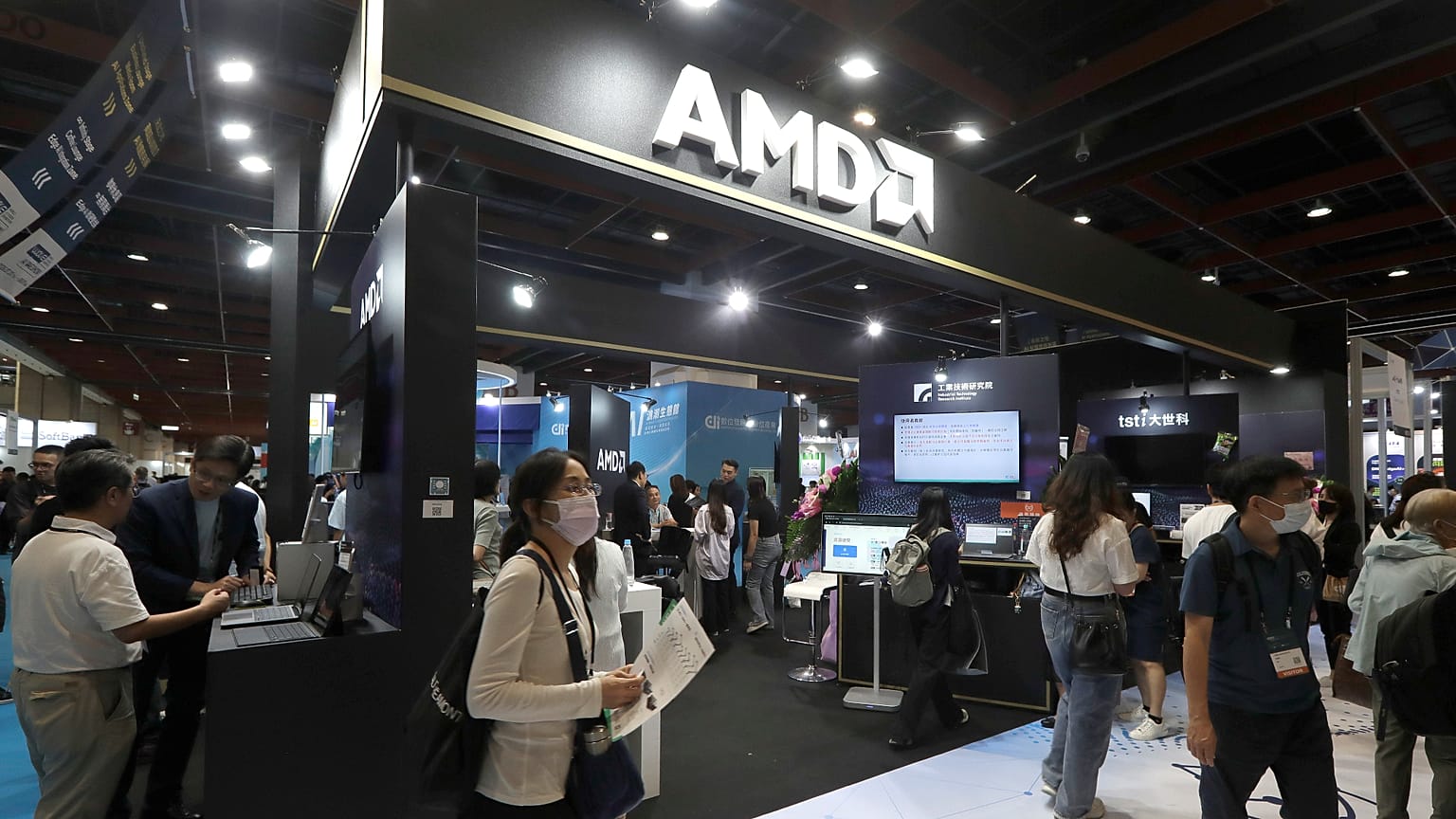
The American chipmaker launched what they have described as a ‘personal supercomputer’ in Berlin on Friday, designed and made for a “completely new era of computing” driven by AI.
The supercomputer, called the Threadripper Halo Station, was unveiled at the German tech event Internationale Funkausstellung by AMD Senior Vice President Jack Huynh.
The Threadripper Halo is an ultra-high-performance workstation equipped with up to two terabytes of system memory, up to 576 gigabytes of high bandwidth memory (HBM3E), along with 96 cores of Threadripper Pro, two MI350P data centre accelerators, all supported by liquid cooling.
Huyn said the new supercomputer is the “most powerful workstation in the world”, capable of running AI models with more than a trillion parameters.
The AMD executive gave a brief demonstration of its potential at the event by generating an entire 3D world and flight simulator from a single prompt.
The company’s pitch is to bring data-centre level AI performance and capacity to a desktop format, as demand for AI rapidly grows around the world.
The supercomputer is slated for release early next year, however AMD are yet to reveal how much it will cost. It is expected that it could exceed €100,000, geared towards corporate and institutional budgets rather than as personal computers as originally pitched.
Yet it will give its consumers a platform to deploy large-language models and agentic AI systems themselves rather than rely on increasingly expensive cloud computing.
The Threadripper Halo Station’s direct competitor is the NvidiaDGX Station, with both able to run large AI models in a desktop form, however they differ in how they approach this challenge.
AMD’s supercomputer dominates on memory capacity and bandwidth, offering more than three times as much memory than Nvidia’s, allowing it to run on trillion parameter AI models locally.
However, Nvidia’s offering more seamless integration when moving code from a local workstation to the cloud and, crucially, it is already available, retailing at around €100,000.
Industry analysts see AMD's announcement as a potential catalyst for reshaping the competitive landscape of the local AI computing market.
With cloud AI subscription costs adding up for many institutions and businesses, demand for computers such as the Threadripper Halo Station to run large models on their own infrastructure will continue.
Therefore, AMD's approach of delivering data-centre-class performance using standardised components to lower the barrier to entry could be a major turning point in the expansion of the AI and personal computing sectors.

No comments:
Post a Comment