Monday, May 02, 2022

German term 'Putinversteher' goes international

The German word used to describe Putin sympathizers now has its own English Wikipedia page. But what does "Putinversteher" mean and who does it refer to?
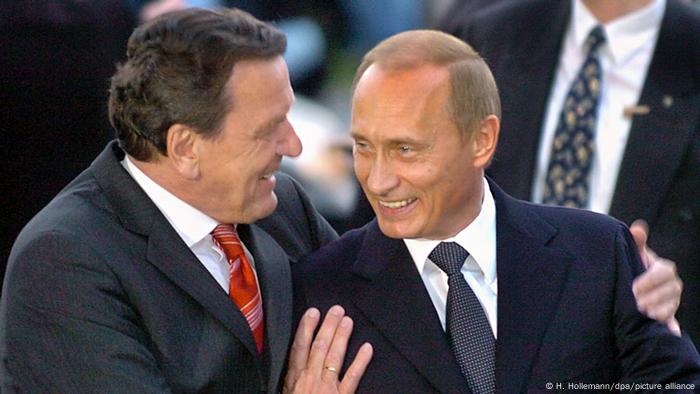
Former German chancellor Gerhard Schröder (Social Democrats) is seen

 as one of the most prominent Putinversteher WHEN PUTIN STILL HAD HAIR

If an entry in Wikipedia is considered some marker of acknowledgement in the present day, then the world should be on the lookout for the new English-language page dedicated to the German word "Putinversteher," which translates literally to "one who understands Putin."

The term combines the name of Russia's president Vladimir Putin with the German noun "Versteher," which means "understander."

With its own English-language Wikipedia page, the word joins other German terms that have come into use in the English language over recent years.

One prominent example is "Lügenpresse," a slur popular in the Nazi era that translates roughly to "lying press," used to discredit media reports that do not align with the user's ideology. In recent years, the term made a comeback under the far-right Alternative for Germany party and by Donald Trump supporters in the US.
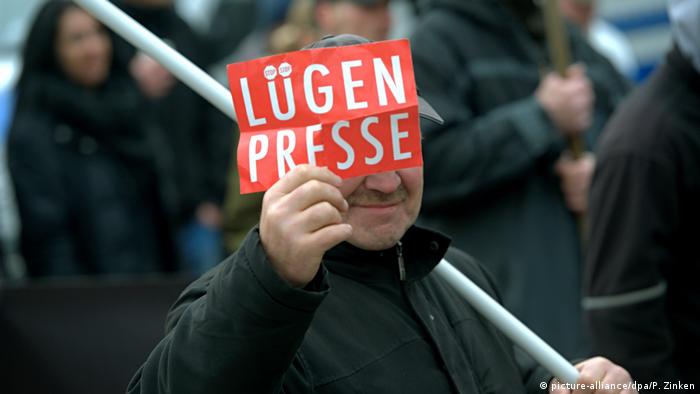
'Lügenpresse' is a pejorative German term which has also come into use in

 the English language in recent years

When "Versteher" is added to the end of a word in German, it's typically done to indicate a mix of irony and flattery, as a recent Economist article points out. For example, a "Frauenversteher" (Women understander) typically describes a man who boasts excessively about his relations with women.

Likewise, a "Putinversteher" is often used to describe someone who expresses empathy for Russian president Putin.

The term, which was already in use following Russia's annexation of Crimea, typically has a negative connotation — and particularly since the invasion of Ukraine on February 24. 

When Russia launched its attack on Ukraine, people who could be described as "Putinversteher" — including prominent German politicians and talk show pundits — would for example point out that NATO's eastward expansion should be understood as a real threat to Russia, or would compare the invasion of Ukraine to the United States' 2003 invasion of Iraq, which was another illegal war.

It's not to say that such "Putinversteher" (which is also the plural) support the current violence; but rather, as Wikipedia puts it, their attitude towards President Putin and the way he is leading Russia might involve some sort of "Yes, but you have to understand Putin's position."

Also widespread among "Putinversteher" is a strategy widely known as "whataboutism," or deflecting criticism of Russia by pointing to different abuses committed in the West.

'Putinversteher' across the political spectrum

The sentiment can be found across the political spectrum in Germany, and particularly among populist parties — though some politicians who were labeled as "Putinversteher" following the annexation of Crimea may have since backtracked or at least stopped stating their support publicly.  

Many far-right politicians were happy to showcase their ties to Putin before the war,

 including Marine Le Pen, here in 2017

Like many of Europe's far-right political parties, members of Germany's far-right party AfD have maintained close ties with Russia in recent years. Following the invasion of Ukraine, however, the party struggled to adopt a single position.

Former co-leader of Germany's Left Party, Sahra Wagenknecht, was also renowned for trying to justify Putin's actions: "Maybe we should just take Russia seriously and respect that it has security interests," she said for instance on a talk show in February, days before the invasion of Ukraine. 

English-language writers use it

Before the term obtained its Wikipedia entry, and before Russia's current war on Ukraine, the word "Putinversteher" was already used in various English-language articles.

In a January 2021 article published on Riddle — a political analysis website that focuses on Russia — political scientist and historian Dmitiri Stratievski looked into whether Armin Laschet, who served as the leader of the Christian Democratic Union (Chancellor Merkel's center-right party), should be seen as a "Merkelian Putinversteher" for his support of Germany's reliance on Russian gas.

Paul Gregory, a professor of Economics at Houston University who has a blog on Forbes, used the term in the title of an article in April 2014: "Empathizing With The Devil: How Germany's Putin-Verstehers Shield Russia." It details how a number of top-level German politicians have sided with Russia despite its government's poor human rights record and the annexation of Crimea.

Gregory cites former German Chancellor Gerhard Schröder, who led the country from 1998 to 2005, as one of the most "egregious Putinverstehers."

An unknown artist hung a painting of Schröder hugging Putin at Berlin's East Side Gallery on April 2

Schröder, who masterminded the Nord Stream gas pipeline project together with Putin while he was still chancellor, later became head of the supervisory board at the Russian state energy company, Rosneft.

He is considered to be a personal friend of the Russian president.

Even as Russia invaded Ukraine, Schröder refrained from making comments that could incriminate the Russian regime, so much so that all employees in his office resigned.

In mid-March, Schröder even flew to Moscow and spoke with the Russian president in person.

But as new atrocities in the war in Ukraine are reported daily — such as reports of targeted killings of citizens and mass graves in Bucha — calls to sanction Schröder himself have been growing in Germany, and the arguments typically used by "Putinversteher" have definitely lost their credibility.


Edited by: Elizabeth Grenier

 GERMANY

Open letter about weapons deliveries to Ukraine draws criticism

The publication of an open letter to German Chancellor Scholz signed by leading cultural figures has triggered a fierce debate about the planned delivery of heavy weapons to Ukraine — especially on social media.

Journalist and feminist Alice Schwarzer was one of the first signatories of the letter to Scholz

An open letter addressed to Chancellor Olaf Scholz, initially signed by 28 German cultural figures and published on April 29 on the website of feminist magazine Emma, is fueling discussion in the country. 

In it, prominent German signatories — including feminist and journalist Alice Schwarzer, writer Juli Zeh, singer Reinhard Mey, author Alexander Kluge and actor Lars Eidinger — made an urgent appeal to the chancellor not to supply more heavy weapons to Ukraine.

Unlike previous critics who have accused Scholz of being too indecisive on the issue, the signatories of the letter praise him for having "so far considered the risks so carefully" and for having done everything possible to prevent the war in Ukraine from escalating into a third world war.

The letter was published a day after the German Parliament's decision on April 28 to deliver heavy weapons to Ukraine, a vote which was approved with a large majority.

In the run-up, pressure on the government, both from the public and the Bundestag, had increased massively.

Canisters full of ballots over vote to supply heavy weapons to Ukraine on April 28, 2022

A battle of opinion on Twitter

Since the publication of the open letter, the debate about the planned arms deliveries has been gaining momentum — particularly in social media.

Ukrainian Ambassador to Germany Andriy Melnyk directly attacked Emma editor Alice Schwarzer on Twitter, calling her "celebrated feminism" a "facade" in the face of mass rapes of Ukrainian women by Russian soldiers and accusing her of cynicism.

Alice Schwarzer reacted no less sharply to Melnyk's criticism in an interview with the daily Die Welt : "This is naked demagogy and this ambassador is harming his country," Schwarzer said. "This is not the first time that the Ukrainian ambassador has said outrageous things."

Divided over decision

The open letter has also been criticized by politicians across the party spectrum. For example, Green Party politician Peter Heilrath asked on Twitter whether the letter's supporters would also have advised the fighters in the Warsaw ghetto to give up "in order to prevent unnecessary victims."

Konstantin Kuhle, deputy chairman of the Free Democrats parliamentary group in the Bundestag, called the position of the signatories "madness" on Twitter. His party colleague Marie-Agnes Strack-Zimmermann wrote that the only possible compromise was the "full restoration of Ukraine's territorial integrity."

Bundestag member Sahra Wagenknecht, on the other hand, remains true to her Left party's pacifist line and shares the opinion of the initial signatories. On Twitter, Wagenknecht describes the letter as an "important call from artists and intellectuals," adding that even though the praise for Scholz is now outdated following the parliamentary decision to supply weapons, the letter's demands to prevent a third world war are "all the more urgent."

The German population is divided on the question of whether Germany should supply heavy weapons to Ukraine: 45% are in favor and just as many are against. That was the latest finding of a representative survey conducted by infratest dimap for ARD-DeutschlandTrend.

As of mid-day on May 2, more than 155,000 people had signed the open letter, posted as a petition on change.org, the worldwide platform for online activism.

This text was originally written in German.

Trump floated shooting protesters in legs: ex-defense secretary
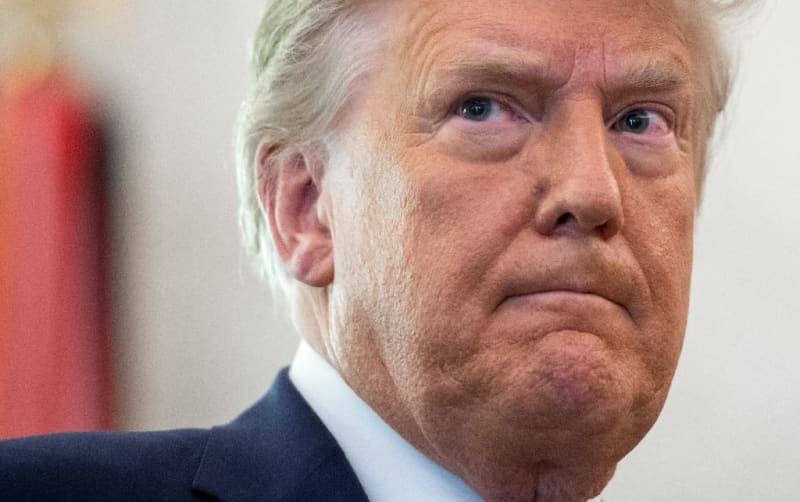
FOR TRUMP THERE IS ONLY THE 2ND AMENDMENT
2022/5/2 
© Agence France-Presse
Donald Trump has faced accusations -- including from his own former Pentagon chief Mark Esper -- that he sought to use excessive force to push back protesters demonstrating outside the White House in 2020 when he was president


Washington (AFP) - Donald Trump vented fury at protesters outside the White House in 2020, saying "Can't you just shoot them?" according to then defense secretary Mark Esper in book excerpts released Monday.

Esper wrote that he sat in the Oval Office with "the president red faced and complaining loudly about the protests under way in Washington" over the police killing of a Black man.

"Can't you just shoot them? Just shoot them in the legs or something?" Trump is quoted as saying in a preview of Esper's memoir seen by the Axios news website.

The protests, which were marked by violence as protesters clashed with security forces, were part of a nationwide wave of demonstrations in the wake of the May 2020 killing of George Floyd by Minneapolis police.

Esper's account appeared to confirm previous reports of Trump arguing that the military should intervene to quell the spiraling civil unrest.

An earlier book by journalist Michael Bender quoted sources saying the chairman of the Joint Chiefs of Staff, General Mark Milley, argued with Trump against using the military as the president demanded a stronger response.

Bender had quoted Trump as saying "shoot them in the leg -- or maybe the foot... but be hard on them!"

US Park Police and National Guard troops deployed tear gas and flash bangs to clear protesters outside the White House.


Esper publicly stated at the time that he opposed invoking the Insurrection Act, a rarely-used 200-year-old law which permits troops to be actively deployed within the United States.

His stance reportedly enraged Trump, and he was sacked in November 2020.


Axios said Esper's book, which will be released on May 10, had been vetted by the Pentagon and reviewed by generals and cabinet members.

It quotes Esper describing a "surreal" atmosphere in Trump's inner circle, with the idea of troops opening fire on Americans "weighing heavily in the air."

"I had to figure out a way to walk Trump back without creating the mess I was trying to avoid," he wrote in the memoir called "A Sacred Oath."
Union loses bid to organize second New York City Amazon facility


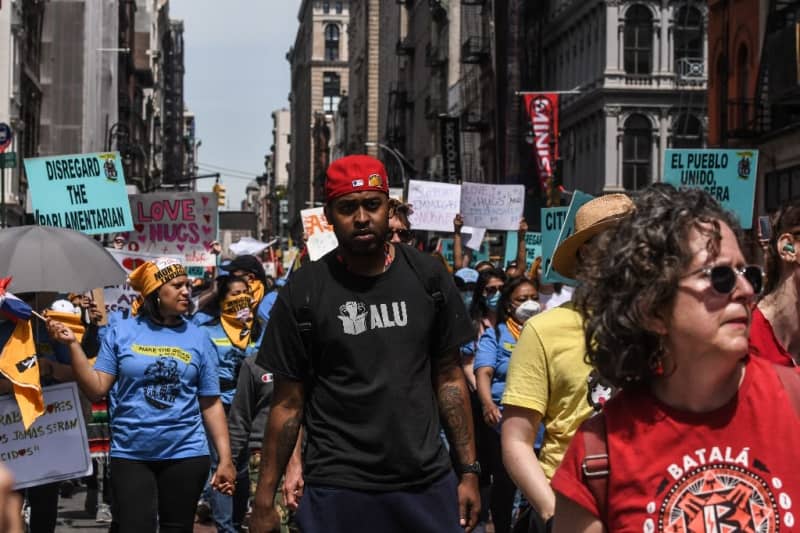
Workers at a sorting facility in Staten Island, New York, rejected a unionization bid by the Amazon Labor Union. 
File Photo by Jim Ruymen/UPI | License Photo

May 2 (UPI) -- An upstart labor union that successfully organized an Amazon.com facility in New York City last month has failed to repeat that win at another nearby workplace, U.S. officials announced Monday.

Workers at the LDJ5 Amazon sorting facility in Staten Island voted against the Amazon Labor Union's proposal 618-380, according to a count conducted by the National Labor Relations Board's Brooklyn office.

The result after a week-long voting period was a setback for the newly established ALU, which on April 1 pulled off a historic win at the much larger JFK8 Staten Island fulfillment center -- the first unionization of an Amazon warehouse in the United States.

The online retailing giant said it is "glad that our team at LDJ5 were able to have their voices heard" in a statement issued to CNN. "We look forward to continuing to work directly together as we strive to make every day better for our employees."

"The count has finished. The election has concluded without the union being recognized at LDJ5 -- sortation center on Staten Island," the ALU said in a Twitter post. "The organizing will continue at this facility and beyond. The fight has just begun."

The failed bid came despite a push by such notable pro-union lawmakers as Sen. Bernie Sanders, I-Vt., and Rep. Alexandra Ocasio-Cortez, D-N.Y., who attended a rally at the facility before the start of voting.

Both took aim at Amazon co-founder and executive chairman Jeff Bezos, who is fighting to have the results of the JFK8 election overturned.

"I don't know how, when you're worth $170 billion, you are spending money trying to break a union, so that workers can have decent wages, decent working conditions, decent healthcare, decent housing," Sanders said, adding, "How much money does Bezos and the other billionaires need?"

Amazon's case challenging the first vote has been handed off from the NLRB's Brooklyn office to the regional office in Phoenix after the company requested a transfer.

Amazon complained in its challenge that the New York office engaged in unfair behavior during the election, calling into question its "neutral stance."

New York Amazon workers deal setback to union drive

2022/5/2 
© Agence France-Presse
Workers hoping to unionize a second Amazon facility in Staten Island came up short, according to election results

New York (AFP) - Workers at an Amazon facility in New York have roundly voted against unionization -- dealing a setback to a burgeoning organized labor movement one month after a landmark win at a nearby warehouse.

Sixty-two percent of workers at the Staten Island facility opposed the union push, with 618 employees voting no and 380 in support, according to results released Monday by US officials.

The election at the LDJ5 warehouse followed on the heels of an upset April 1 win by the Amazon Labor Union (ALU) at the much larger JFK8 Staten Island company site -- which established the first American union at the retail colossus.

Last month's win stood as one of the biggest recent victories by US organized labor, winning plaudits from President Joe Biden and other leading unions, some of which visited Staten Island ahead of the second vote.

But the ALU acknowledged its latest setback at Amazon -- the second biggest private employer in the United States after Walmart.

"The count has finished. The election has concluded without the union being recognized," the ALU said on Twitter. "The organizing will continue at this facility and beyond. The fight has just begun."

Backers of the union drive said Amazon was well prepared for the latest vote, and had aggressively campaigned to quash momentum from the earlier victory.

Further complicating their efforts, union leaders were not as well known as at JFK8, where the ALU's president Christian Smalls had previously worked.

Smalls launched the drive after being fired in March 2020 for organizing a protest for personal protective equipment during New York's first major Covid-19 outbreak.

"At the end of the day, this is a marathon not a sprint," Smalls told reporters. "We all know there are going to be wins and losses, we're going to fight another day."
More wins needed

On the other side of the fight, Amazon spokeswoman Kelly Nantel said the company was "glad that our team at LDJ5 were able to have their voices heard."

"We look forward to continuing to work directly together as we strive to make every day better for our employees."

Since its launch in the 1990s, Amazon has fiercely fought to remain union-free, seeking to maintain its direct line to workers and boosting pay and benefits during the pandemic when "essential workers" in logistics kept the economy going.

Eric Milner, an attorney representing the ALU, called Monday's result "disappointing" but said it reflected the effects of "illegal conduct" on Amazon's part in patterns of disciplining workers and otherwise working to "chill" union activity.

Analyzing the result, Patricia Campos-Medina, co-director of the Worker Institute at Cornell University, said Smalls' experience as an employee gave him "credibility" with workers -- but that he had lacked time to build credibility at the second facility.

She said it will be pivotal for the union to "keep winning" to put pressure on Amazon to negotiate, drawing on backing from the Teamsters and other established unions.

"They already expressed willingness to support ALU, logistically and legally," Campos-Medina said.

"What now needs to happen is actually all these unions who were planning to organize Amazon, they actually now need to do it. It has to be a multifaceted organizing effort of the corporation, it cannot just be one by one."

For now, Amazon is challenging the ALU's April victory, saying representatives of the labor group intimidated workers and that US officials with the National Labor Relations Board were biased against the company.

A hearing on the Amazon complaints is set for May 23 in Phoenix.

The ALU has rejected the Amazon complaints as groundless, arguing the company is using stalling tactics to avoid negotiations on a contract.

Opinion: The tug-of-war over press freedom

Authoritarian regimes are united in tactics to suppress freedom of the press — but journalists banding together to circumvent these efforts offer hope, writes exiled journalist Can Dündar.

May 3 marks Press Freedom Day

The Berlin office where I now work resembles a political thermometer for the world. When I came here six years ago, fellow journalists heard a wealth of censorship stories from Turkey.

The young political cartoonist who had escaped from Abdel Fattah al-Sisi's regime in Egypt drew our attention to the military oppression in Cairo. In the fallout from the Nagorno-Karabakh crisis, our colleagues from Baku knocked on the door. Once the biggest newspaper in Hungary was closed down, we welcomed its editor-in-chief and compared notes.

As you might imagine, my neighbor these days is a pacifist Russian journalist. 

Can Dündar portrait

Can Dündar is an exiled Turkish journalist living in Germany

We had all been forced to leave our homelands because of our ideas and the reports we had filed. We were all determined to carry on working in exile. Us 'old hands,' those of us who had been here longer, told the newcomers what we learned about establishing media in exile.

Our dialogues revealed the woeful state of the freedom of the press: "Which report got you arrested?" "How long were you inside for?" "How did you manage to get out?" and "Do you think you'll ever go back?"

Next, we debated how to scale those towering walls of censorship so we could be heard back home; which alternative ways would help us reach our readers with our banned articles; and how to shake off the intelligence agents dogging our footsteps. 

Even the sight of an office filled with journalists from different countries is enough to flag up where freedoms are wounded. Just as we teach one another how to fight against censorship, autocrats across the world appear to copy from one another, too. They resort to similar methods to tighten their grip on power: First, slash the means of communication to silence the spoken and the written word. It is much easier to rule masses rendered deaf and mute, after all. 

A further change that happened in this period is a less welcome kind of communication: attacks on the press — hitherto assumed to be "a totalitarian habit specific to the darker corners of the world" — spread to the West, that bastion of freedom of expression, which had been a natural right until then.

In Washington, then-US President Donald Trump hurled abuse at the press and banned critical journalists from White House briefings. In London, whistleblower Julian Assange was arrested. And, in Paris, journalists taking photos or videos of yellow-vest protests were dragged to the ground.

Just like COVID-19, censorship was spreading like wildfire over borders, regions and regimes. Our Western colleagues used to ask us, "What can we do for you?" Suddenly, we were all asking one another, "What can we do together?"

And we realized that there was an awful lot we could do together. Escalating repression triggered not only a massive displacement of journalists, but also an opportunity: media in exile operating from Western capitals had exposed to European eyes those oppressive regimes —  and paved the way for international cooperation within media.

Given the global nature of the attack on freedom of thought, the response also needed to be global. Thus spread news reporting beyond borders.

Dictators may gang up so they can develop tactics to suppress opposition and freedom of the press; but now, we all collaborate in order to reveal their secret bank accounts, dirty war tricks, and nasty tactics such as tapping opponents' telephones or poisoning rivals. 

A global network of journalists grows by the day. The struggle to defend the freedom of the press and the freedom of information expands across the globe in defiance of growing repression and censorship. 

It may well be this tug-of-war that will determine the future of the world.

Can Dündar is a Turkish journalist and writer. He stepped down from his post in Turkey as the editor-in-chief of the daily Cumhuriyet in 2016, after he was jailed for three months and survived an assassination attempt. He was sentenced to 27 years' imprisonment in absentia due to his report on the Turkish Intelligence Service's involvement in Syria. Now living in Germany, he writes for Die Zeit and The Washington Post. He founded Özgürüz ("WeAreFree") Radio and #Özgürüz Publishing House while in exile. He has written 40 books.

Mexican tourist train raises fears for subterranean treasures


A tourist swims in a sinkhole known as cenote near the construction site of a new Mexican railroad that activists fear will cause irreparable environmental damage
 (AFP/Pedro PARDO)


Yussel Gonzalez
Mon, May 2, 2022

Bulldozers sit idle next to tree stumps along the disputed route of a new Mexican tourist train. Beneath the jungle, environmentalists warn that a magical labyrinth of underground rivers and caves is also under threat.

The rail link under construction between popular Caribbean beach resorts and archeological ruins is at the center of a legal battle between authorities and activists.

Last month a judge suspended work on part of the roughly 1,500-kilometer (950 mile) long Mayan Train -- a flagship project of President Andres Manuel Lopez Obrador.

Opponents fear that a section between the resorts of Playa del Carmen and Tulum will cause irreparable damage to a subterranean network of caves, rivers and freshwater sinkholes known as cenotes connected to the Caribbean Sea.

"It's suicide," said Tania Ramirez, a 42-year-old activist and cave expert.

"It's like cutting your wrists," she told AFP.

Often filled with stunning emerald or turquoise waters illuminated by a shaft of light from above, cenotes are a major attraction for tourists visiting the Riviera Maya in the Yucatan Peninsula.

The sinkholes number in the thousands in the lush Mayan jungle and are connected to a giant aquifer that is a source of drinking water for local communities.

The most recently discovered cave holds archaeological remains, said Ramirez, who believes that Maya indigenous people once kept food there.

"You can find a cave at every step," she said.

While authorities often insist the caves are not on the planned line but rather next to it, in reality everything is connected, Ramirez added.


Activists describe the area in southeastern Mexico as "gruyere cheese" 
because of all the holes 


- 'Gruyere cheese' -


Activists describe the area below ground as "gruyere cheese" because of all the holes.

"It's a hollow area that wouldn't support the weight of a train," said Vicente Fito, a 48-year-old diver who ventures into the subterranean world almost daily.


The line "is going to go through places where everything is like that, with or without water, but hollow."

The original plan for the disputed section was for an overpass over a highway, but the route was modified at the start of the year to go through jungle at ground level.


Lopez Obrador, who hopes to inaugurate the railroad at the end of 2023, said the reason was that the land is firmer in the jungle further inland with fewer cenotes and rivers.

The original route also upset the hotel industry due to the congestion caused by construction work in the urban area.


In April, a court in the southeastern state of Yucatan ordered the suspension of work on the disputed section -- one of several being built by the military -- pending resolution of an injunction sought by activists.

The judge cited a lack of environmental impact studies -- grounds that the government plans to challenge in upcoming hearings.

NEOLIBERAL AMLO


Mexican President Andres Manuel Lopez Obrador is betting that the train will help economic development in one of the country's most impoverished regions 
(AFP/Pedro PARDO)

- 'Imposters' -

"The train's not going to affect cenotes. It's not going to affect underwater rivers. That's an invention," Lopez Obrador said.

He alleged that environmentalists had been infiltrated by "impostors" and that some non-governmental organizations were financed by hotel owners and the United States.

Lopez Obrador said that the government had reforested almost 500,000 hectares in the region.

Mexico's president is betting that the $10 billion train project will help economic development in one of the country's most impoverished regions.

Lenin Betancourt, president of the Riviera Maya Business Coordinating Council, sees the railroad as an opportunity to reduce poverty that has worsened in the resort cities of Cancun and Tulum despite the benefits of tourism.

"We need to create this type and scale of project," he said, while also calling for the smallest possible environmental impact.

Tourism represents almost nine percent of Mexico's economy.

Otto Von Bertrab, a caver and activist, believes the only answer is to revert to the original route with a train over the highway carrying tourists and workers to hotels and towns along the way.

Otherwise, "this president's legacy is going to be one of destruction," he said.


yug/dr/mdl
Amazon will reimburse employees who travel for abortion care and other medical procedures

Alex Woodward
Mon, May 2, 2022


Amazon has joined several other large corporations that will reimburse US employees’ travel costs for non-threatening medical treatments, including abortion care, following a wave of state-level legislation to restrict access or criminalise abortion across the US.

The nation’s second-largest employer and biggest online retailer will cover up to $4,000 for healthcare travel if treatments are not available within a 100-mile range of the employee’s home, according to the company’s announcement, first reported by Reuters.

Amazon joins companies like Apple, Citigroup and Yelp in providing for travel expenses for abortion care, as Republican state legislators file a wave of anti-abortion legislation and begin dramatically reducing access ahead of the US Supreme Court’s ruling in a case that could upend decades of precedent protecting abortion rights.

“In response to changes in reproductive health-care laws in certain states in the US, beginning in 2022 we provide travel benefits to facilitate access to adequate resources,” according to a message from Citigroup to its investors following a Texas law banning abortion after six weeks of pregnancy.

Oklahoma Governor Kevin Stitt also has signed a bill into law blocking abortion at six weeks. He also has signed a bill making abortion care a felony, punishable up to 10 years in prison.

Several other state officials have also moved to criminalise or effectively ban abortion in their states, and at least 26 states are likely to ban the procedure entirely if the Supreme Court overturns precedent from from the 1973 ruling in Roe v Wade that establishes constitutional protections for abortion care.

Amazon also announced that it is cutting employee’s paid medical leave for Covid-19 and replacing paid sick days for five days of excused unpaid leave, CNBC reported.

The corporate giant – where alleged failures to protect employees from Covid-19 sparked widespread worker backlash and a union campaign – had initially offered up to two weeks of paid sick leave for employees quarantining because of Covid-19. That leave was reduced to one week, or up to 40 hours, at the beginning of the year.

Amazon also will scale back notifications of confirmed infections in the workplace and end vaccination incentives, CNBC reported.

“The sustained easing of the pandemic, ongoing availability of Covid-19 vaccines and treatments, and updated guidance from public health authorities, all signal we can continue to safely adjust to our pre-COVID policies,” according to the notice reviewed by the network.

Covid-19 infections are rising in most of the US, with roughly 55,000 new daily cases in a seven-day average.

News of the company’s latest medical policies comes as results from a closely watched union election at a second Staten Island warehouse were revealed on 2 May, with the union campaign losing by a vote of 618 to 380 in a facility with roughly 1,600 workers.

The outcome of that election follows a surprising victory from the upstart Amazon Labor Union at the JFK8 warehouse in Staten Island and international momentum towards unionising other facilities.
US megadrought reveals 1980s body in lake, with more to come: police


Lake and reservoir beds usually under water are being exposed across the western US as a historic drought takes its toll on water supplies
 (AFP/JUSTIN SULLIVAN)

Mon, May 2, 2022,

A worsening drought has revealed a four-decade-old body dumped in a US lake, police said Monday, warning that falling water levels would lead to the uncovering of more corpses.

Boaters on Lake Mead near Las Vegas discovered a corroded barrel with its sinister contents during a weekend pleasure trip.

Detectives probing the mystery say the contents of the container point to its having been in the huge reservoir since the 1980s.

"It's going to be a very difficult case" to solve, Las Vegas Metro police officer Ray Spencer told the local 8newsnow.com, without giving details about what was inside the barrel.

"I would say there is a very good chance as the water level drops that we are going to find additional human remains."

Nearby Las Vegas has historically been a hive of mob-related villainy, with Mafiosi commonly believed to dispose of the bodies of their enemies in deep water.

A historic drought that is gripping much of the western United States is putting a strain on water sources, with reservoirs and lakes dropping to unprecedently low levels.

Lake Mead, which is fed by the Colorado River after it has passed through the Grand Canyon, is the largest manmade reservoir in the United States.

It was created in the 1930s with the construction of the Hoover Dam and supplies drinking water to 25 million people.

But its current level, at just 1,055 feet (321 meters), is its lowest since 1937.

Water authorities last month said intake valves -- the pipes that take water to be cleaned for human use -- were now visible, a worrying indicator of the health of the reservoir.

Scientists say the decades-long megadrought in the western US is being exacerbated by human-made global warming.

The unchecked burning of fossil fuels has caused our planet to warm, changing weather patterns and sparking violent storms in some areas while others bake in painful droughts.

hg/amz/mdl

New Delhi driver grows garden on autorickshaw roof to beat the heat

       Published May 3, 2022 -
MAHENDER Kumar waters the ‘garden’ on his vehicle’s roof.—AFP

NEW DELHI: Yellow and green autorickshaws are ubiquitous on New Delhi’s roads but Mahendra Kumar’s vehicle stands out — it has a garden on its roof aimed at keeping passengers cool during the searing summer season.

Kumar says the thick patch of green keeps the vehicle cool even when temperatures are touching 45 degrees Celsius (113 Fahrenheit) in the Indian capital, enough to melt the tar on roads.

Kumar, 48, has grown over 20 varieties of shrubs, crops and flowers, attracting commuters and passers-by who stop to click selfies and photos of the unique “moving garden”.

Garden-on-auto-roof-750x450

Mahender Kumar stands beside his vehicle with a 'garden' on its roof in New Delhi on Monday. AFP

“Around two years ago I had this idea during the peak of the summer season. I thought if I can grow some plants on the roof, it will keep my auto cool and give relief from the heat to my passengers,” Kumar said.

Kumar also installed two mini coolers and fans inside.

“It is now like a natural AC (air conditioner). My passengers are so happy after the ride that they don’t mind paying me an extra 10-20 bucks ($0.13-.26),” said the father of three.

Kumar said he was doing his “own small bit” for the environment by planting lettuce, tomatoes and millets on his autorickshaw.

Preparing the roof for sowing was simple: Kumar first put a mat followed by a thick sack on which he sprinkled some soil.

He got grass from the roadside and seeds from friends and acquaintances and within days, the seeds sprouted into green shoots.

“It does not require much effort at all. I just water the plants using a bottle twice a day,” he said.

Kumar’s initiative is an inspiration for his fellow drivers who have been asking him for tricks and tips.

Published in Dawn, May 3rd, 2022

Record-breaking heat waves show we need to adapt to the climate crisis now

India is just the latest country to face life-threatening temperatures before summer has even started. As extreme heat becomes more frequent around the world, how can affected areas adapt to remain liveable?


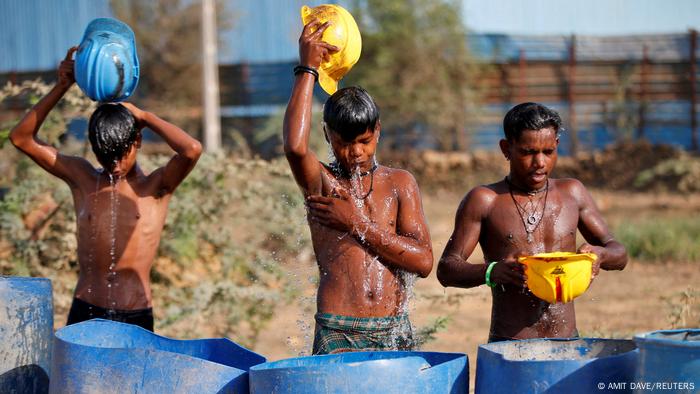
Workers use their helmets to pour water to cool themselves off near a construction site on a hot summer day on the outskirts of Ahmedabad, India

The effects of India's heatwave, one of dozens just this year, are all-encompassing. Temperatures topping 40°C (104°F) across the country have put millions at risk for heat-related illnesses, decimated wheat crops, intensified a power crisis and interrupted schooling.

India is not alone. Neighboring Pakistan is also battling scorching temperatures before summer has even begun. And earlier this year, central South America was the hottest place on the planet before Western Australia claimed the title.

As the climate crisis exacerbates heat waves around the world and temperatures increasingly soar unseasonably early, countries are faced with the question of how to remain liveable.

It comes down to wealth and preparedness

Ramping up electricity bills with air conditioning, cooling down with fans, working indoors — these options are only available to a privileged few.

"The story of climate change is one of high inequality and we're seeing that playing out already in the poorest and hottest regions of the world," said Tamma Carleton, assistant professor of economics at UC Santa Barbara's Bren School of Environmental Science and Management.

Carleton co-authored a 2022 study that distilled a city's ability to minimize deaths during extreme temperatures to two main factors: affluence and the number of hot days it experiences.

Money decides which technologies a city can afford to shield its most vulnerable. And when these adaptation costs aren't covered by the state, the burden falls on individuals to finance their own protection, says Carleton. A situation that leaves the poorest high and dry.

But even wealthy cities can suffer if they are caught off guard without an action plan. That happened in the Pacific Northwest of the US, a wealthy region known for its temperate climate, where more than 100 people were killed in last year's heat wave.

"We tend to see in our projections of climate change into the future that poorer places are going to be facing a really large increase in death risk and wealthier places are going to see an increase in adaptation costs," said Carleton.
 

Outdoor workers are especially vulnerable to heat waves

Spurring into heat action

Just how high this death risk is in developing countries became clear when Ahmedabad, a city in western India's Gujarat state, lost more than 1,344 people as thermometers hit 47°C (116°F) in 2010.

The toll spurred the city into action. In 2013, it rolled out a plan that has prevented about 1,100 heat induced deaths each year since, according to a study.

The first heat action plan in South Asia, it includes an early warning system, community outreach to vulnerable populations and education for health staff about possible signs of heat exposure. It also organizes cooling centers in buildings such as temples and malls as well as reduced or staggered working times for outdoor laborers, among other things.

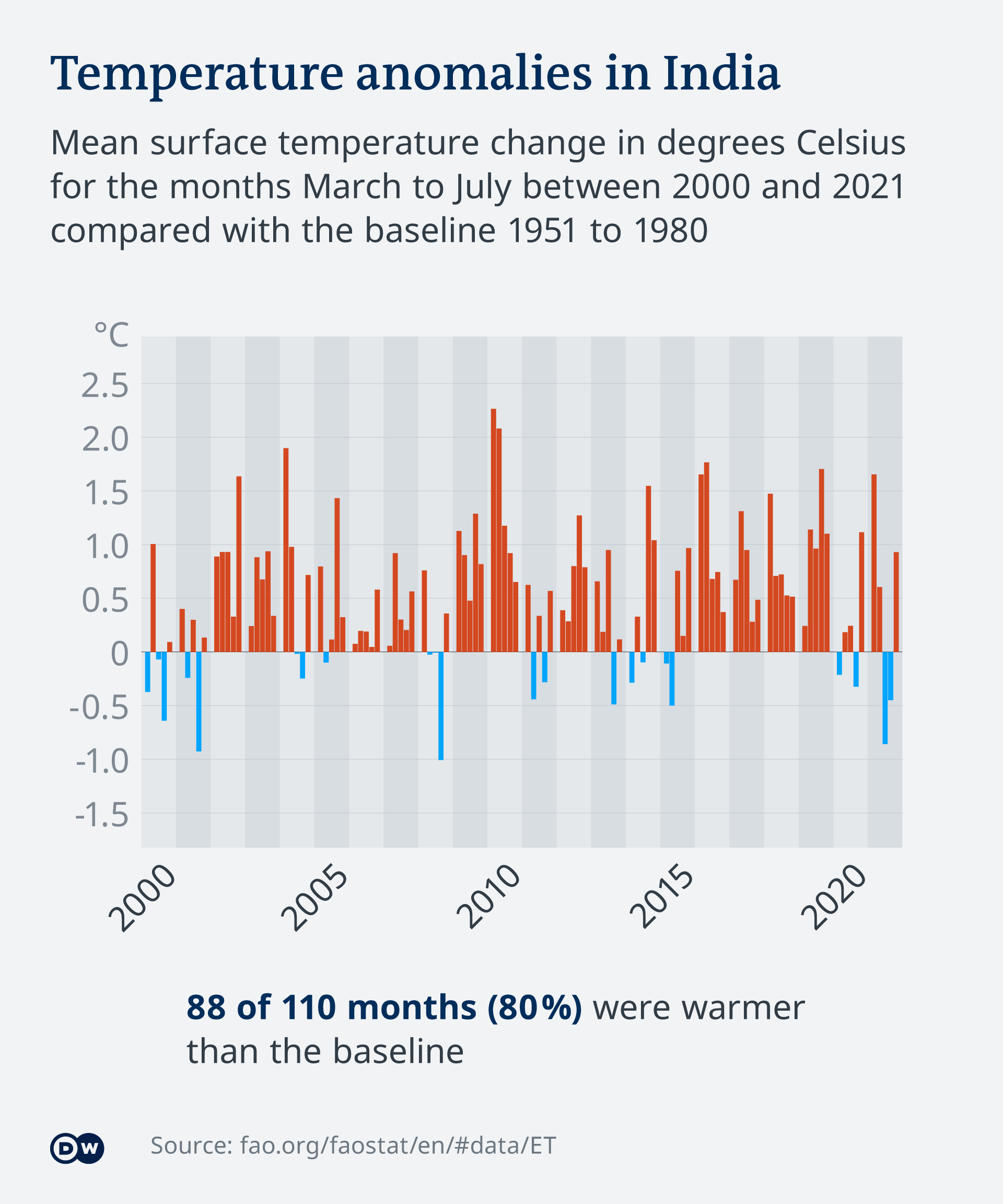
As India's temperatures consistently surpass the baseline in spring and summer months, the Ahmedabad heat plan has since served as a template for similar models in 23 of the country's 28 states.


But as high temperatures persist, these models undergo regular updates, according to Polash Mukherjee, Lead for Air Pollution and Climate Resilience at the Natural Resources Defense Council's India program. The non-profit helped develop Ahmedabad's heat action plan.

"The focus has shifted significantly in the last couple of years from merely protecting human health and mortality against extreme heat to more proactive measures," said Mukherjee. "These include changing building by-laws so that new constructions are better insulated, and the cool roofs program."

A low-cost solution to reduce indoor temperatures, the cool roofs program primarily targets badly insulated houses in slums where informal workers and other vulnerable groups reside. When a roof is coated with materials like lime-based whitewash or white tarp, it becomes more reflective and absorbs less heat.

Cool pavements and green passages

Ideas like these are budding around the world. The Japanese capital Tokyo has introduced cool pavements, which work with thermal-barrier coating, for example. Medellin in Colombia has planted "green corridors," vegetated passages that offer more shade in public spaces, while the city of Toronto, Canada, offers grants for people to install green or cool roofs.


Some cities have introduced heat officers, whose task it is to coordinate the response to rising temperatures.

Eugenia Kargbo became Africa's first heat officer when she took the post in Freetown, Sierra Leone. A goal of hers is to provide reflective market shade covers that protect women selling produce outdoors. To make the capital more liveable, she has also introduced a tree planting program, in which planters can collect micro-payments on an app.

"This is the future I envision for my children and all the children in Freetown: A safe environment not limited by the risk of extreme heat," she told DW's EcoAfrica.

Focus on the climate crisis


Even as some regions find ways to alleviate some of the effects of scorching heat waves, many scientists emphasize that governments shouldn't forget the root cause of the rising temperatures: the climate crisis.

Aditi Mukherji, who co-authored the water chapter in the IPCC's assessment on "Impacts, Adaptation and Vulnerability," says the onus to come up with solutions shouldn't be on the most affected, who historically have emitted the least amount of CO2.

"I feel that when it comes to these kinds of heat extremes, the only solution is that the high emitting countries stop emissions immediately and stop burning fossil fuels," she said.
Edited by: Tamsin Walker


IN PICTURES: INDIA SWELTERS AS SEVERE HEAT WAVE SWEEPS REGION
Skyrocketing temperatures sweep country
A girl uses sunglasses, a mask, a long cloth and an umbrella to protect herself from the sun on her way to school in Prayagraj, Uttar Pradesh. In April, northwest and central India recorded average maximum temperatures of 35.9 and 37.78 Celsius (96.6 and 100 Fahrenheit) respectively, the highest since the Indian Meteorological Department began keeping records 122 years ago.
1234567