Friday, July 22, 2022

Call on Your MP to Protect Our Oceans and Stop Deep Sea Mining Before It Starts

EDITOR MESSAGE
MININGWATCH. CA
1 June 2022, 

Mining could soon begin in one of the most fragile ecosystems on the planet: the deep seabed. And while Canadian companies are at the forefront of efforts to expand this destructive industry into our oceans, the Canadian government has largely remained silent. Canada is failing to join a global movement calling for a moratorium and has no official position on deep seabed mining in either domestic or international waters. That needs to change.

The ocean is already being threatened by pollution, overfishing, climate change, and biodiversity loss. Frontline communities, scientists, and organizations are all warning that deep seabed mining could cause catastrophic biodiversity loss that could never recover on a human timescale. We know that our oceans depend on healthy ecosystems to store carbon, provide habitats, and recycle nutrients. While much work needs to be done to restore the health of our oceans, deep sea mining is a new and tangible threat that we can stop before it starts — but we have to act quickly.

It’s time for Canada to protect our oceans. Call on your Member of Parliament to oppose deep seabed mining and to support policies that will protect the seabed along Canada’s coasts and in the international waters that belong to all of us.


CTHULHU SAYS

Ban octopus farming in Canada!

Change.org

— Several countries have plans to begin commercial octopus farming within the next year. Farming carnivorous animals like octopuses places even more strain on the oceans because it means taking another species out of the ocean to feed them. There is no reliably humane way to slaughter octopuses on a commercial scale. Petition starter Karina is asking the government to ban commercial octopus farms in Canada, as well as the import of farmed octopus, so octopuses aren’t raised to simply die a painful death. If you agree with Karina, sign the petition now.

Ban octopus farming in Canada!

72 have signed Karina H’s petition. Let’s get to 100!


Octopuses are some of the most intelligent animals. They play, they’re curious, and they’re solitary creatures that need lots of stimulation. While they are subjected to cruel practices all across the world, the biggest threat they face is factory farming.

Factory farming octopuses is something that’s just getting started. The first one plans to sell farmed octopus in 2023, and hopes to farm 275,000 of them each year. It claims that it will help wild octopus populations by getting people to eat their farmed octopuses instead.

Octopuses can’t thrive in a farmed setting, and humane methods of slaughter on such a huge scale would be very difficult. Not only that, but this farm and future farms could pollute the environment, spread diseases to the local wild octopus populations, and contribute to overfishing. Not only that, but it could cause demand for octopus meat to skyrocket as people develop a taste for it.

If we really want to help octopuses, we have to eat less of them and impose stronger regulations on the fishing of wild octopus.


This petition calls for Canada to ban farmed octopus and the importation of farmed octopus. Canada already has some laws protecting octopuses, so banning farmed octopus is not a huge demand.


Sign now with a click

Visit petition page

New Analysis Confirms High Risk, Threats Posed by B.C.'s Booming Mining Sector

NEWS RELEASE
14 July 2022, 
British ColumbiaWaste Rock and Tailings
Source: BC Mining Law Reform – SkeenaWild Conservation Trust

Risks escalating due to more frequent catastrophic climate change-related weather events

The waste created by British Columbia’s accelerating mining boom is a growing threat to communities and watersheds throughout the province, according to a new report released today. The increase in extreme weather events brought on by climate change intensifies this threat: severe flooding is one of the main causes of tailings dam failure at mine sites around the world.

The report, by Dr. Steven Emerman, a respected geophysicist and international expert specializing in groundwater and mining, coincides with the publication of an interactive online map that fills a knowledge gap by providing communities with easier access to critical information about the risks that billions of cubic metres of toxic liquid mine waste, called tailings, pose to them and the environment.

The tailings are known to contain a range of toxic elements including arsenic, cyanide, mercury, selenium, and other heavy metals harmful to human health and the environment. They are stored behind some of the highest dams in the world – and there are plans to build even more throughout B.C.

NEW DATA + ANALYSIS

Dr. Emerman analyzed B.C. government and industry data for 86 mine sites with tailing: 57 mines that are closed or under care and maintenance, 18 that are operating, and 11 proposed.

Among Emerman’s key findings are:The death toll following a failure at many of the highest risk dams could be in the hundreds and could irreparably destroy salmon habitat, commercial farms, and vital infrastructure.
Communities in the Fraser River watershed, including Abbotsford, Burnaby, Coquitlam, Delta, Richmond, Surrey and Vancouver are at risk. For example, a dam breach at just one of the tailings facilities at Highland Valley Copper in the Fraser Basin, with a dam capacity equal to 480,000 Olympic-size swimming pools, could devastate communities far downstream.
The quantity of tailings currently being stored at B.C. mines is conservatively estimated to be 2.5 billion cubic metres, equivalent to the volume of one million Olympic-size swimming pools. This volume is expected to increase by 75 per cent with the addition of 11 new mines.
Catastrophic flooding has become a regular event in B.C. and has the potential to destabilize tailings storage facilities in high rainfall areas. This is a major cause of dam failures globally.
Several large tailings storage facilities in B.C. are in high-risk earthquake zones, which adds to the threat of dams being breached.
Recent B.C. government data shows the number of operating coal and metal mines in B.C. will double over the coming years to meet the growing demand for raw materials to transition the global economy away from carbon.

BIGGER DAMS MEAN BIGGER THREATS TO PEOPLE AND WATERSHEDS

The height of B.C. tailings dams has grown exponentially in recent years, allowing mines to add hundreds of millions of cubic metres of tailings to storage facilities. B.C. already has some of the highest tailings dams in the world. Several proposed new mines would add to the total.In southern B.C. the owners of the Copper Mountain copper mine near Princeton on the Similkameen River plan to increase the height of one tailings dam to 260 metres – 60 metres higher than Vancouver’s tallest building the Shangri-la tower. This would make the Copper Mountain Mine tailings dams the second and third tallest in the world. The sheer volume of the mine tailings looming over the Similkameen is deeply concerning, earning the Copper Mountain Mine a ranking in the “Dirty Dozen” mines for poor environmental practices and non-compliance with B.C.’s environmental regulations.
In northern B.C., the tailings dam at the proposed KSM mine near the Alaska border could rise to 239 metres – 38 metres taller than the Shangri-la tower – and hold back up to 1.15 billion cubic metres of tailings, equivalent to the capacity of 460,000 Olympic-size swimming pools.

The interactive online map and report were commissioned by the BC Mining Law Reform network in partnership with SkeenaWild Conservation Trust.

QUOTES

“Dr. Emerman’s analysis shows the level of risk British Columbians and our U.S. downstream neighbours face from existing and planned mining operations in the province. Mining companies need to be reducing their tailings volumes—not increasing them—and designing tailings facilities to meet internationally accepted safety standards and withstand increasing climate change impacts. It’s on the B.C. government to ensure this happens before we face another major mining disaster.” Adrienne Berchtold, Ecologist & Mining Impacts Researcher, SkeenaWild Conservation Trust

“The Mount Polley mine disaster was a wake-up call to B.C.’s mining companies and the province. This map and report show that the risks to the environment and communities from tailings dams are still high and growing. More action is needed to follow through and get B.C. on a path to zero failures—from cutting the inventory in half, to phasing out certain mine dam construction methods. The government needs to act now to improve safety standards as mining continues to expand in the province.” Jamie Kneen, Canada Program Co-lead, MiningWatch Canada, Co-Chair of BC Mining Law Reform

REACTION TO THE REPORT

First Nations Energy and Mining Council (FNEMC)

"FNEMC has profiled in our analysis how dozens of First Nations communities could be impacted by tailings failures just in Northern British Columbia. This new report from BC Mining Law Reform (BCMLR) and SkeenaWild illustrates how the risks to First Nations in British Columbia are growing. FNEMC is deeply concerned about the management of tailings facilities in B.C., especially in light of more flooding from climate change. The B.C. government must engage directly with Nations that could be impacted by a failure of a tailings dam to avoid the disaster we’ve already seen with Mount Polley.

“FNEMC also welcomes BCMLR's new interactive online map which will fill the knowledge gap to help equip communities with information about mining activity in their territories."

See:

Report by Dr. Steven Emerman: 
Is Poilievre’s pledge to make Canada ‘the freest nation on earth’ the silliest campaign promise on earth?

by Rick SalutinJuly 22, 2022

You do not “make” a people or nation free. They free themselves. The notion that Poilievre must himself free(er) us reeks of arrogance.

So what’ll he devote his effort to as PM — housing? Climate? Health? No: making us even freester (since we’re already freest). How gloriously pointless. Credit: Pierre Poilievre / Instagram

Tory leadership candidate Pierre Poilievre’s pledge to make Canada “the freest nation on earth” may be the silliest campaign promise on earth. Why? Well, to start, we’re already almost there. There are indeed insipid freedom rankings by right-wing think-tanks like Cato and Fraser, beloved of right-wingers like Poilievre, that batten on “personal” and “economic” freedoms — e.g., can you do anything you want and get rich as hell (or alternately, live in a cardboard box under a bridge, if that’s your thing)? From this dubious data they tote up a comparative Freedom Index.

And Canada ranks #8 of 165, a mere .36 of a point behind Switzerland, which is surely a statistical tie. In fact, because those ahead of us are all smaller, less diverse, therefore easier to govern, etc., I’m giving us the lead.

The whole exercise has all the indignity of august Canadian universities grovelling and sweating over where they stand in the innumerable global uni rankings that now jostle for space. So by Poilievre’s own right-wing standards, Canada’s already ahead of almost everyone — including the U.K. and U.S., ranked 14 and 15. So what’ll he devote his effort to as PM — housing? Climate? Health? No: making us even freester (since we’re already freest). How gloriously pointless.

But let me pause to calm down and say why it’s basically idiotic.

You do not “make” a people or nation free. They free themselves. Either by literally rebelling, or replacing their leaders. We don’t require Poilievre to fire the gatekeepers, as he likes saying, who are either elected or appointed by those who were. We vote them out and it’s done. The notion that Poilievre must himself free(er) us reeks of arrogance and smells of top-down leaderism.

“Freest” as a comparative adjective is bizarre. Freedom’s not about checked boxes. You could do the same with love: most loved on earth, in town, on your street — but why would you? Everything varies with what you value about freedom: getting to shoot your mouth off, or be crazy rich, or endanger others by refusing to be vaxxed and exposing them to you.

Or alternately, being able to achieve freedom only alongside others, as Percy Shelley wrote: “What art thou Freedom? O! could slaves / Answer from their living graves … Thou art clothes, and fire, and food / For the trampled multitude— / No — in countries that are free / Such starvation cannot be…”

It essentially comes down to freedom for me (“personal freedom” à la the indexes) or freedom through commonality, as in Shelley — or FDR’s New Deal. Note in passing that the foundational revolutionary French demand for Liberté immediately appended equality and fraternity.

But let’s skip directly to the germinal event in the current blahblah about freedom in Canada: the truckers’ convoy which Poilievre embraced. In fact, it was less truckers than truck owners who could bring and stay in their rigs. Actual truck drivers were largely absent, since they were on the road working.

The freedom demanded there was almost all “personal”: snarling traffic, blaring horns till residents felt deranged. And an ultimatum to end COVID mandates — which BTW never forced anyone to get vaxxed, but did prohibit participation in public situations to protect others’ freedom not to get sick.

So some people’s “freest” might easily be other people’s utter hell. Such complexities do not simple campaign slogans make.

During the civil rights years in the U.S., there was an anthem called “Oh Freedom!” When the singer sang, Over me, others echoed, Over me — because we were fighting for freedom over us all. I had a dear friend who occasionally slipped into schizoid phases and if we were out walking and singing that, he’d sometimes chime back, Over you. He took it literally. It was delightful.

I feel as if Pierre Poilievre responds, Over you, to calls for freedom, especially from those he favours. He’s a personal freedom kind of guy who doesn’t view freedom as a necessarily shared activity. Nor does he have the excuse of being endearingly nuts. It’s just the way he thinks.

This column originally appeared in the Toronto Star.


The inconvenient anti-choice record of ‘pro-choice’ Pierre Poilievre

by Joyce Arthur
July 19, 2022
The Abortion Rights Coalition of Canada (ARCC) keeps a list of anti-choice Members of Parliament and has always rated Poilievre as anti-choice.


It's reasonable then to wonder if Poilievre’s pro-choice assertions are made for political reasons and to question if they are genuine or trustworthy.

Pierre Poilievre is the current front runner for the Conservative Party leadership, and he might owe his leading position in part due to recent claims that he is pro-choice on the abortion issue. But how credible are these declarations, given that Poilievre has been a long-time anti-choice advocate?

The Abortion Rights Coalition of Canada (ARCC) keeps a list of anti-choice Members of Parliament and has always rated Poilievre as anti-choice and continues to do so. Fourteen years ago, Poilievre opposed giving Dr. Henry Morgentaler the Order of Canada. Since then, he has consistently voted in favour of anti-choice private member bills and motions, with just one exception – he voted against Bill C-233 in 2021 (to ban sex selection abortion).

Based on this history, it’s not enough for Poilievre to suddenly start making pro-choice comments in public, because this could be a political gambit to secure the leadership spot. It was the same story with previous Conservative Party leader Erin O’Toole, who claimed to be pro-choice but had courted the anti-abortion movement during his leadership bid, was willing to welcome private member bills on the issue and allow a free vote, and had himself voted in favour of such bills in the past.

Pierre Poilievre notably insisted that he is “pro-choice” and “pro-choix” at the French language debate in May 2022, but it was January 2020 when he first changed his tune. The anti-choice group Campaign Life Coalition explains that Poilievre “abandoned his past pro-life beliefs during the previous leadership race when he was considering running, deciding that the ‘pro-life’ label was no longer useful.” In January 2020, Poilievre told a journalist: “On this issue, I stand with [Stephen] Harper. I do not want to reopen the abortion debate.” If Poilievre’s position is the same as Stephen Harper’s, it must be noted that ARCC has always designated Harper as anti-choice.

It’s reasonable then to wonder if Poilievre’s pro-choice assertions are made for political reasons and to question if they are genuine or trustworthy. After all, Poilievre knows that a public anti-choice stance will not give him the credibility he needs for a victory.
There’s just too many other reasons to doubt Poilievre’s pro-choice claims

Like Erin O’Toole, Poilievre would allow private member bills against abortion to be introduced and would allow a free vote. In a majority Conservative government, such a bill could pass despite his promise to not let that happen. If Poilievre was truly pro-choice, he should instead promise that he would forbid any member of his party from introducing private member bills that challenge human rights.

Poilievre was silent after the draft Roe v. Wade decision was leaked in the U.S. and has not spoken up since to defend abortion rights. He has never discussed the steps he would take to improve abortion access across Canada, such as through more rigorous enforcement of the Canada Health Act to ensure abortion care is available in every region of Canada. A current Lead Now petition with over 20,000 signatures is calling on the Conservative Party leadership to affirm its support for access to abortion and reproductive services. Where is Poilievre’s voice on this issue?

Poilievre has pledged his support for compelling “freedom of expression” on university campuses. This is a dog-whistle to the anti-choice movement and other right-wing groups so they can freely spread propaganda and hatred. Anti-choice groups have a long history of battling to establish their presence at campuses across Canada, such as by applying for club status and funding, displaying graphic imagery, and holding events that spread misinformation.

Outspoken anti-choice MP Garnett Genuis has recommended that social conservatives vote for Poilievre as their second choice after Leslyn Lewis. While Campaign Life Coalition disagrees, anti-choice group RightNow gave Poilievre a respectable passing grade of 68% in their survey. In other words, he’s got a lot going for him in social conservative circles.

Indeed, Poilievre has a generally right-wing voting record on other issues, as indicated by Campaign Life Coalition. He was an opponent of same-sex marriage until publicly changing his stance at exactly the same time he switched from anti-choice to pro-choice. He has recently supported the Freedom Convoy and opposed COVID-19 vaccine mandates, and appears to still oppose the right to medical assistance in dying.

In June 2022, ARCC actually removed five Members of Parliament from its list of anti-choice MPs because they reached out to the group, provided evidence that they were solidly pro-choice, and indicated they had been misled by Bill C-225 in 2016, which would have established some fetal rights (each had voted in favour of only that bill, or an earlier similar one, Bill C-484). These MPs plan to exercise greater caution for future similar bills and are now aware of ARCC’s arguments against Bill C-225.

Poilievre has never reached out to ARCC either now or in the past. But if he were to ask the group to designate him as pro-choice, ARCC would refuse. Given the evidence listed above, he has a considerably higher bar to scale than the MPs that were recently removed. And as a potential party leader, ARCC would apply a higher standard.

In sum, voters should not trust Poilievre’s convenient flip-flop on his abortion views. If he ever became Prime Minister, not only would he allow free votes on private member bills that challenge reproductive rights, it’s likely he would take other regressive steps. For example, he could end the Liberal government’s Sexual and Reproductive Health Fund, withdraw Canada’s foreign aid for reproductive health including safe abortion, and let anti-choice groups continue to spread misinformation and undermine rights, while preserving their charitable tax status.

The best-case scenario is that a Prime Minister Poilievre might do nothing at all on the abortion issue – including not lifting a finger to improve access to abortion care despite the dire need. That’s simply not good enough.

Canadians expect pro-choice politicians to take pro-active steps to defend abortion rights and make sure that every citizen who needs abortion care can access it without barriers, no matter where they live or who they are.


JOYCE ARTHUR
Joyce Arthur is the founder and Executive Director of the Abortion Rights Coalition of Canada, a national pro-choice group in Canada. More by Joyce Arthur
PARTY INSIDER
Marjory LeBreton: The Conservatives' existential identity crisis

Special to National Post - 


The Conservative Party of Canada is in the throes of an identity crisis.


Conservative leadership candidates take part in a debate in Ottawa on May 5.

I have been a Conservative all of my adult life, witnessing firsthand the party’s evolutions and iterations over 60 years. Throughout that time — as I went from being a secretary at party headquarters and in John Diefenbaker’s office, through years as a war horse in battles that all seemed momentous at the time, to my grateful service in the Senate of Canada — there was always a common bond that held Conservatives together as we worked in the best interests of the party and of the country.

It is true that the Conservatives’ challenges have always been more difficult, given the particular makeup of our party, representing as it does the diverse interests and regions of the country. This has been part of our strength, but also the source of our difficulties in expanding our electoral appeal. As evidence of this, I point out the simple fact that since I first joined the staff of the party during the final year of the Diefenbaker government in the 1960s, our party has been in power only three times — in 1979, with the short-lived Clark government; from 1984-1993 with the government led by the visionary and courageous Brian Mulroney; and from 2006-2015 under the highly intelligent and disciplined Stephen Harper. If you do the math, that’s a grand total of 19 years in the past six decades.

Now, I fervently believe that the Conservative party has reached an existential choice. The current leadership race is the third in six years, and the message that sends to Canadians in general cannot go unheard by Conservatives in particular: we have to get it right this time. I fear that if we don’t, the great accommodation reached by Stephen Harper and Peter MacKay in the fall of 2003 could fracture, possibly beyond repair.

Clearly, this trend cannot continue if we are serious about earning the support of Canadians in future elections. Setting aside the unseemliness of the treatment of the last leader, Erin O’Toole, and what that says on a human scale, it was clear that he had lost the support of the caucus. The party moved swiftly to set in motion the process for choosing the next leader. Personally, I applauded the leadership election organization committee for resisting demands for an early vote, opting instead for a longer campaign. The wise decision to hold the vote on Sept. 10 would allow the time required for potential leaders to enter the race, organize their campaigns, sell memberships and introduce themselves to the membership.

In an essay written for Centre Ice Conservatives , a centrist group I joined in February, I urged leadership candidates to conduct themselves in a serious and respectful manner, to focus the discussion and debates on issues and solutions people actually care about and, by their actions, demonstrate who we are, what we stand for and how we would govern the country if given the chance. I wrote that if they did so, we would all be winners. I cautioned about the dangers of divisive and excessive rhetoric and felt then, as I do now, that fanning the flames of vitriol, grievance and anger solves nothing, making it even more difficult to work through some very serious issues facing our country. Eventually, anger subsides and people look for solutions. Sadly, for some, when the anger page is turned, the next page is blank; there’s no there there.

Since writing that overly optimistic (perhaps naive) essay, I have observed the subsequent spectacle — and yes, it is a spectacle — with growing alarm. Six individuals met the candidate requirements and were approved by the party to run for the leadership. It should have been relatively easy for each one to communicate a positive message on why they felt they were the best choice. No such luck.

Obviously, sharp divisions, conflicting points of view and bruised egos were to be expected. But how on earth can we ever be taken seriously when some potential leaders resort to untruths, bullying and generally reprehensible behaviour, calling competitors corrupt, liars or the laughable “Liberal” tag? When I hear such nonsense, I wonder what happened to the broadly recognized truth that the Conservatives can’t succeed without appealing to voters who’ve voted for other parties?

While the two party-sponsored debates in May did produce a few positive moments, the overall view is that the opportunity for members to assess each candidate’s ideas and leadership skills fell short. Therefore, it is absolutely imperative that the party sponsor a third debate now that the membership list is set. Rumour has it that this is being seriously considered but that some campaigns are resisting. Shame on all of us if the party capitulates to the threats of one or more of the candidates. A third debate will provide one last chance for the membership to truly test the candidates in full public view.

I have not joined the campaign of any leadership candidate, deciding to join Centre Ice Conservatives instead, to add my voice to the majority who see themselves in the moderate, mainstream centre, centre/right. In February, I resigned from the Carleton riding board over the so-called Freedom Convoy. An illegal blockade is an illegal blockade, whether it is of a border crossing, a pipeline, a railroad or a city and its citizens. Respect for the law is at the core of my conservative beliefs and indeed law and order is a cornerstone of conservatism. When I resigned, I referenced a Policy Magazine article by veteran party strategists Geoff Norquay and Yaroslav Baran, who astutely stated that the next party leader should be “a uniter not a headwaiter.” “A successful leader, whoever he or she may be,” Norquay and Baran wrote, “will be one who serves not as a headwaiter to the factions, but rather as a co-ordinator and steward channelling all their energies forward toward a common goal and collective vision.”

It has been suggested by some that those who share my views resist change. This is ludicrous. Throughout all my years in the party, we have evolved and changed as is necessary for any modern-day political party. I am all for change. This, in fact, is the question for members of the Conservative party. Are we changing with the times? Do we represent positive change? Do we recognize and support Canada’s changing demographics? Will a significant number of Canadians see themselves in our party and change their opinions and consider voting for Conservative candidates when they next head to the polls?

We are indeed at an existential moment and I repeat: we must get it right this time. I urge all voting members of the Conservative party to think long and hard about their vote by using the power of the secret ballot to choose a leader who can appeal to the whole country and lead us to victory in the next election over the incompetent, directionless and ethically challenged Liberal government. Our party’s beliefs, hopes, views and issues will never be addressed unless we are electable. The future of our party, but more importantly, the future of our country is at stake.

This essay originally appeared in Policy Magazine and is republished here with permission.

Marjory LeBreton is a longtime Conservative who has worked for the party since the Diefenbaker years. Appointed to the Senate by Prime Minister Brian Mulroney in 1993, she was named government leader in the Senate by Prime Minister Stephen Harper in 2006, and served in cabinet until 2013. She retired from the Senate in 2015.
Truckers' protest shuts down California's Port of Oakland


July 21 (UPI) -- Trucker protests shut down the Port of Oakland in California's Bay Area on Thursday, the major cargo hub announced.

The truckers, in their fourth day of demonstrations, have stopped working in response to California's labor law, Assembly Bill 5. The law was passed in 2019 and requires companies to define some independent contractors as employees.

Lawmakers hailed the law as a way to reduce employees being misclassified as gig workers, which denies the workers certain basic protections, including minimum wage, paid sick days and health insurance benefits.

But the truckers, which The New York Times described as primarily independent owners and operators, say the law would require them to choose between obtaining jobs with specific trucking companies or obtain licensing and insurance to operate as a small business

There are some 70,000 truckers who work as independent contractors in California.

Immediately after its passage, ride-sharing companies Uber and Lyft challenged AB5 in court, saying that reclassifying drivers as employees would drive up costs and be detrimental to their bottom line.

Californians voted in favor of Proposition 22, which would allow companies to continue to use gig workers.

A Superior Court judge struck down Prop 22 in October 2020, but allowed Uber and Lyft to continue to be exempt from AB5 while the case continues. Truckers, however, were not given an exemption when it went into effect June 30 after the U.S. Supreme Court declined to hear the case.

The California Trucker's Association took issue with the ruling and called on the state Legislature and Gov. Gavin Newsom to take action,
KRON-TV in San Francisco reported.

"Gasoline has been poured on the fire that is our ongoing supply chain crisis," the organization said in a statement.


Japan OKs preparation step for Fukushima plant water release


This photo shows tanks (in gray, beige and blue) storing water that was treated but is still radioactive after it was used to cool down spent fuel at the Fukushima Daiichi nuclear power plant in Okuma town, Fukushima prefecture, northeastern Japan, on Feb. 27, 2021. Japan’s nuclear regulator on Friday, July 22, 2022, approved the release of treated radioactive wastewater from the wrecked Fukushima nuclear power plant into the sea next year.
 (AP Photo/Hiro Komae, File) 

MARI YAMAGUCHI
Fri, July 22, 2022 

TOKYO (AP) — Japan’s nuclear regulator on Friday approved details of a planned release of treated radioactive wastewater from the wrecked Fukushima nuclear power plant into the sea next year.

The approval by the Nuclear Regulation Authority will enable Tokyo Electric Power Co. to start building necessary facilities ahead of the discharge. It came two months after a preliminary greenlight and a subsequent public review process.

Tokyo Electric Power Company Holdings submitted the plan in December based on a government decision last year to release the wastewater as a necessary step for the plant’s ongoing decommissioning.


A massive earthquake and tsunami in 2011 destroyed the Fukushima Daiichi plant’s cooling systems, causing triple meltdowns and the release of large amounts of radiation. Water that was used to cool the three damaged reactor cores, which remain highly radioactive, has since leaked into basements of the reactor buildings but was collected and stored in tanks.

Local fishing communities and neighboring countries have raised concerns about potential health hazards from the radioactive wastewater, which TEPCO and government officials say will be treated to levels far below releasable standards. They maintain that the environmental and health impacts will be negligible.

Japan nuclear authority chairman Toyoshi Fuketa told reporters Friday that the release plan had no major technical or safety issues. He said the regulators will ensure approved procedures are strictly followed with transparency.

The government and TEPCO say that of more than 60 isotopes selected for treatment, all but one, tritium, will be reduced to meet safety standards. Scientists say impacts of long-term, low-dose exposure to tritium for the environment and humans are still unknown. Tritium affects humans more when it is consumed in fish, they say.

The contaminated water is being stored in about 1,000 tanks at the damaged plant. Officials say they must be removed so that facilities can be built for its decommissioning. The tanks are expected to reach their capacity of 1.37 million tons next year.


TEPCO said it plans to transport treated and releasable water through a pipeline from the tanks to a coastal facility, where it will be diluted with seawater and then sent through an undersea tunnel with an outlet about 1 kilometer (0.6 miles) away to minimize the impact on local fishing and the environment.

The government and TEPCO still need to gain local consent for building the tunnel and other related facilities. They plan to begin gradually releasing the treated water in spring 2023.

China on Friday renewed its protest over the planned wastewater release and urged Japan to carry out the disposal in “a scientific, open, transparent and safe manner.”

Foreign Ministry spokesperson Wang Wenbin demanded Japan "stop pushing the discharge plan before reaching a consensus with all stakeholders and relevant international agencies.”

Japan has sought help from the International Atomic Energy Agency to ensure the water release meets international safety standards and reassure local fishing and other communities and neighboring countries that have opposed the plan.

Experts from the IAEA visited the plant earlier this year and said Japan was taking appropriate steps for the planned discharge.

In a statement Friday, TEPCO pledged to sincerely respond to the IAEA reviews, ensure safety, provide data to the public and strengthen its radiation monitoring. The company also vowed to do its utmost to explain the water discharge plans and gain the public’s understanding about the decommissioning.

___

AP video producer Liu Zheng in Beijing contributed to this report.

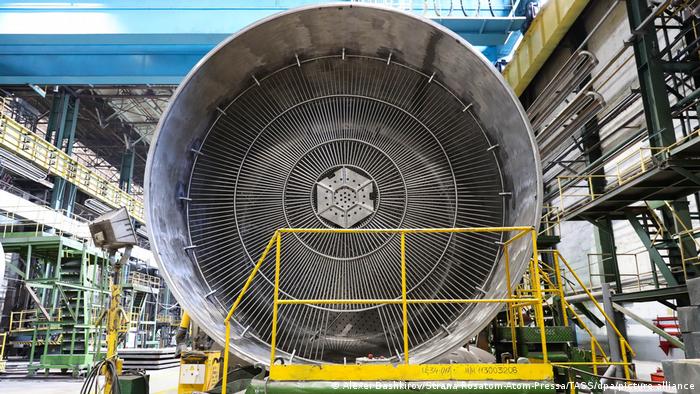
Russian company starts building Egypt's first nuclear plant

After years of delays, Russia's atomic energy giant Rosatom started work on Egypt's first nuclear power plant, calling it "the largest project of Russian-Egyptian cooperation" since the 1950s.

El-Dabaa plant is set to be built on the coast of the Mediterranean Sea, 

some 300 kilometers north-west from Cairo

Russian state atomic energy corporation Rosatom has begun construction of Egypt's first nuclear power plant, according to a joint statement from Rosatom and Cairo.

Egyptian President Abdel-Fattah el-Sissi and Russian President Vladimir Putin had signed the final agreement to build the plant at el-Dabaa, on Egypt's north coast, five years ago.

Rosatom chief Alexey Likhachev and Egyptian Energy Minister Mohamed Shaker on Wednesday poured concrete into what will serve as the base for the plant, marking a "historic event" for Egypt, said Shaker.

Likhachev said that Egypt has now "joined the nuclear club."

Egypt's first nuclear plant

The project, paid for with a loan from Russia, is expected to cost around $25 billion euros, according to the Egyptian media. It is planned to have four 1,200 megawatt reactors. 

The statement did not specify when construction would end. In 2017, after el-Sissi and Putin signed the deal, Rosatom said the plant would be finished in either 2028 or 2029, but construction has already been delayed for several years.

According to the joint statement, the el-Dabaa plant is set to use pressurized water reactors, similar to those at Russia's Novovoronezh and Leningrad nuclear power plants.

Cairo first announced considering a nuclear plant at El-Dabaa in the 1980s, although the project was suspended after the 1986 Chernobyl disaster. But el-Sissi, who has launched multiple mega-projects since he took power in 2014, seemed determined to embark on the flagship nuclear initiative.

Under el-Sissi's rule, Egypt has worked on rapidly expanding its power generation capacity, notably with gas-fired plants built by the German company Siemens. Cairo is also planning to expand electricity exports to several Middle Eastern countries.

As the host of this year's UN climate summit COP27, Egypt is seeking to raise the share of its power generation capacity from renewable sources to 40% by 2030 and 42% by 2035.

Russian-Egyptian ties

"The plant will be the largest project of Russian-Egyptian cooperation since the Aswan High Dam," Likhachev said on Wednesday. He was referring to the 111-metre-high and 3.6-kilometer-wide dam harnessing the Nile river for hydropower and irrigation.

The Aswan High Dam, in southern Egypt, was built with Soviet support. It was a major project in the early 1950s of then-President Gamal Abdel Nasser, a key figure of the pan-Arabism ideology. 

Since Russia invaded Ukraine, Egypt has not officially picked a side. Russian Foreign Minister Sergey Lavrov is heading to Cairo this weekend, where he is set to meet with the 22-member Arab League.

Still, el-Sissi has maintained close ties with the West.

Last month, the European Union turned to Egypt and its neighbor Israel in a bid to reduce to bloc's dependency on Russian natural gas.

In 2020, Egypt was one of the largest recipients of US military aid after Israel and Afghanistan, according to Statista.

fb/dj (AFP, Reuters)

The end of Bollywood?

Bollywood was once seen as synonymous with Indian cinema. But film tastes are changing, and mainstream Hindi movies are taking a back seat as Indian filmmakers embrace diverse genres.


The Bollywood film "Dilwale Dulhania Le Jayenge" screens in Mumbai


The Indian Film Festival in the German city of Stuttgart is taking place this week with live audiences for the first time since 2019. Until 2011 the festival was actually called "Bollywood & Beyond" but the name was dropped because Indian cinema is so much more than mainstream Hindi-language movies.

"Bollywood" is a compound of the terms Bombay (the old name of the city of Mumbai) and Hollywood. A film critic invented the word crossover in the 1970s to make one of the world's most successful movie industries more palatable to Western audiences.

Bollywood also stands for films made in the Hindi language, as opposed to India's other 120-odd tongues including Urdu, Malayalam, Tamil, Sanskrit and Bengali — some of which also have their own film industry.
Largest number of films worldwide

India produces more films than any other country worldwide, with Hindi-language films most strongly represented among the more than 1,000 productions a year. The Indian film industry generates nearly $2 billion (€1.9 billion) a year. US productions that set standards elsewhere in the world traditionally have little influence in India.


Romance plays a major role in Bollywood movies


The Hindi film industry originated in Mumbai in the 1930s and had its first heyday in the 1960s and 1970s with romance films, dramas and action flicks. The movies are over three hours long and have an intermission and most feature singing and dancing.
Roller coaster ride of emotions

Over the decades, Hindi cinema developed a formula for success that includes the so-called nine rasas, or basic human emotions in traditional Indian arts — joy, fear, anger, love, courage, sadness, amazement, disgust and calmness. A Bollywood film can be a veritable roller coaster of emotions: tragedy and comedy alternate, as do action and romance. The plot is almost always about love.

Bollywoodmovies were firmly in the hands of actors who also produced the biggest blockbusters. In the 1990s and 2000s, Sha Rukh Khan, Ameer Khan and Salman Khan were the most famous outside India. Screenwriters and filmmakers had comparatively small profiles power during Bollywood's heyday.

Breakthrough in Europe

2001 was a pivotal year for Indian cinema, and for Stephan Holl, who with wife Antoinette Köster owns the Cologne-based Rapid Eye Movies film distribution company.

Fascinated with Indian cinema, they decided to distribute Indian films in Germany and Europe. At the time, that was a big risk, but the move also promoted Indian cinema beyond Asia. Rapid Eye Movies, actually an arthouse distributor, was partly responsible for a veritable Bollywood wave that took place throughout Europe a short time later.

"We brought Bollywood and Indian indie films to Germany. Bollywood had a 95% market share in India at the time," Holl told DW, adding the movies included the early films starring Shah Rukh Khan, real evergreens that people loved."
Bollywood's 'homemade crisis'

But Bollywood's recipe for successful also left a bad taste. A few superstars had too much power. There were too few female producers and directors. In addition, recurring Hindi mainstream cinema plots were becoming tired and clicheed.

In the early 2010s, box offices saw the first big flops. "What was tried and true didn't work anymore, there was a lot of uncertainty," said Stephan Holl, arguing that the crisis was homemade, and that people relied too much on the stars to fix it. He said the films were increasingly flat and formulaic.

Independent filmmakers saw an opportunity and took it.

"Suddenly there were many more female filmmakers and films without stars that had a good story and that worked, that got by on much smaller budgets," Holl said. "Arthouse filmmakers entered the scene, suddenly Indian films were showing at the Cannes Film Festival."

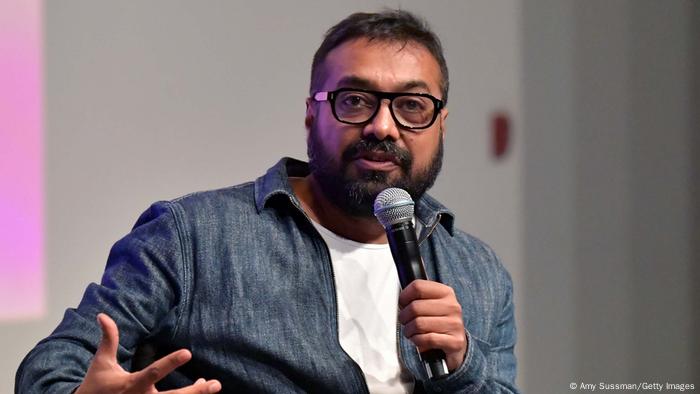
Anurag Kashyap, for example, is a successful Hindi language director who also produces and writes screenplays that break the Bollywood mold. His internationally acclaimed 2016 film "Raman Raghav 2.0," inspired by the serial killer of the same name, brought a darker, neo-noir edge to Indian cinema.


Anurag Kashyap breaks with cliches


But does this shift mean that Bollywood mainstream films will eventually die out?
Greater cinematic diversity

Anu Singh, Indian filmmaker, award-winning journalist and screenwriter, does not see a crisis in mainstream cinema.

"Some of the biggest blockbusters have been in the last seven years," Singh told DW. It's the Covid-19 pandemic and the huge success of streaming services that are a threat to traditional mainstream Indian cinema, she argued, as well as the increasingly successful film industries of South India.

But Anu Singh sees diversification as a great opportunity for Indian cinema. "The changes have led to bold collaborations. The mainstream is opening up to other languages," she said. "Bollywood is no longer just Hindi cinema. It also means transfer to other lifestyles and adaptation. If the so-called mainstream can learn from smaller currents, it will be richer for it."

Choreographer, producer and director Farah Khan


Ever-changing audience

Like Stephan Holl, Anu Singh sees the future of Bollywood in more diverse themes and casts. Currently, she said, there is still a struggle with what kind of stories filmmakers want to tell to "capture the imagination of an ever-changing audience" — an audience that is well-versed in international film thanks to streaming services.

She says she is in greater demand as a screenwriter than ever before due to a demand for new storytelling voices and perspectives.

The success of streaming services and the major changes in distribution structures are also reasons why Rapid Eye Movies has not been renting Indian films for several years.

But Stephan Holl is still a fan.

He says he watches the films — but not on Netflix. The films need a big screen, he says.

"If anything is a communal experience, it's definitely these films," he said, adding the viewing experience remains once of "celebrating [and] being swept away."


HIGHLIGHTS OF THE INDIAN FILM FESTIVAL STUTTGART 2022
'Jhund'
Titled "Jhund," Hindi for mob, this movie tells the story of Vijay Barse, who founded the NGO Slum Soccer in the western Indian city of Nagpur in an attempt to improve the lives of underprivileged children. Superstar Amitabh Bachchan plays Barse in the movie.
12345678


This article was originally written in German.
Protecting Berlin's homeless from extreme heat

An estimated 2,000-6,500 people in the German capital are homeless. Without a roof over their heads, they're particularly vulnerable during days of extreme heat. A new project aims to offer some respite.


It is dangerous for homeless people to stay outside during a heatwave


Temperatures in Berlin reached a record of 39 degrees Celsius (102 F) on Wednesday. While many Berliners turned on their electric fans and pulled down the shades, those without a roof over their heads were left with few places to cool down and avoid the health risks posed by the extreme heat. For example, Lilyana and her friend Elias.

"I look like a tourist," Lilyana said, readjusting her floppy hat.

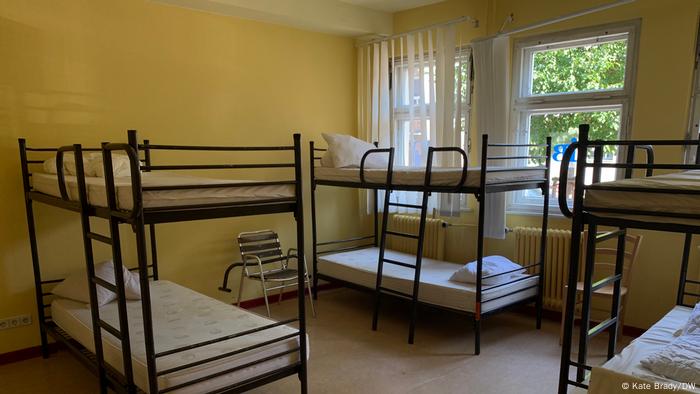
The two friends, originally from Bulgaria, were sitting in the shade, waiting for the doors to open at 10 a.m. for a new pilot project that was launched in Berlin's Schöneberg district. The "Hitzehilfe" (Heat Aid) is open until 8 p.m. and offers people seeking a cool refuge a shower in privacy and a nap on one of 30 available beds.


The 'Heat Aid' facility offers a place to rest indoors during the hot daytime hours

For Lilyana, a cool shower was top of the list at the "Hitzehilfe" shelter. "On the streets, we can sometimes make our way with food and drink. But without a shower and without sleep, life just doesn't work," she said.

During the pandemic, the 31-year-old lost her apartment and her job. "I've been homeless for just over a year," she explained. "I used to work on the streets in prostitution, but I gave that up."

Elias said that he could not work because he had lost all his documents. "We're starting to move forward with the paperwork now though," he explained, before heading to one of the rooms for a nap.


Lilyana and her friend Elias went to the 'Heat Aid' shelter for a shower and a nap
Berlin government raising awareness

In the "Hitzehilfe" communal area, plates of freshly chopped watermelon were ready to be snacked on and there were crates of bottled water stacked up against the wall. At the back of the room, a long table was covered in refillable bottles, sunscreen, hats, sleeping bags, toiletries, face masks, and fresh clothes. Laundry facilities were also on hand.

The Berlin Senate is financing the pilot project, with around €106,000 (ca. $107,000). Launched by the social association IB Berlin-Brandenburg, "Hitzehilfe" aims to take to the heat off the homeless — at least for a few hours a day.


The shelter provides free meals and soft drinks throughout the day to help ward off dehydration

The building, made available by the district of Schöneberg, is usually used in the winter months for the "Kältehilfe" (Cold Aid) initiative, which provides a warm shelter, particularly at night. But in the extreme heat, it's during the day that shelter is most needed.

Katja Kipping, Left Party politician and Berlin Senator for Integration, Labor, and Social Affairs said Wednesday that society should be made aware of the dangers posed by extreme temperatures.

"Many people in Berlin already have the number of the 'Kältehilfe' hotline on their phone in case they see someone in need in the winter months. But they are not as aware of the other extreme, in the summer," she said.


Berlin Senator for Social Affairs, Katja Kipping, wants to make people aware of the dangers posed by extreme heat

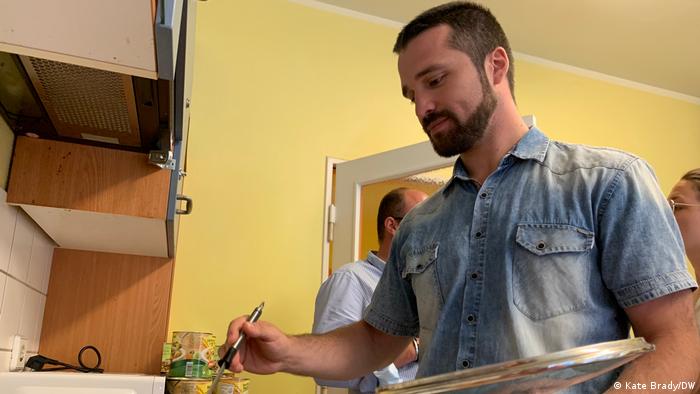
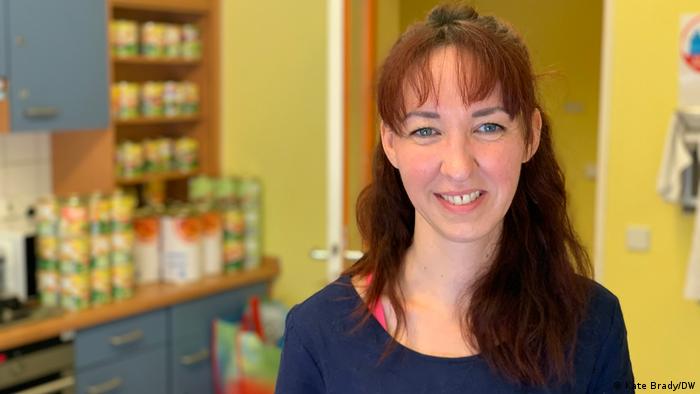
"So far, the project's been well-received," social worker Artur Keil told DW, careful to make sure that the bubbling stew on the hob did not boil over. Food is prepared throughout the day, with row upon row of tinned soups and stews piled high on the kitchen counter.

"Most of the people who have come by are those we know from 'Kältehilfe' and news of the project has largely spread by word of mouth," said Keil.


Artur Keil said there were many familiar faces among the homeless now seeking shelter from the heat

The challenge of extreme temperatures

"What we've noticed in the first couple of days is that a lot of people just want to sleep in peace. That's almost impossible outside in these temperatures," said regional leader of the IB social association Janette Werner.

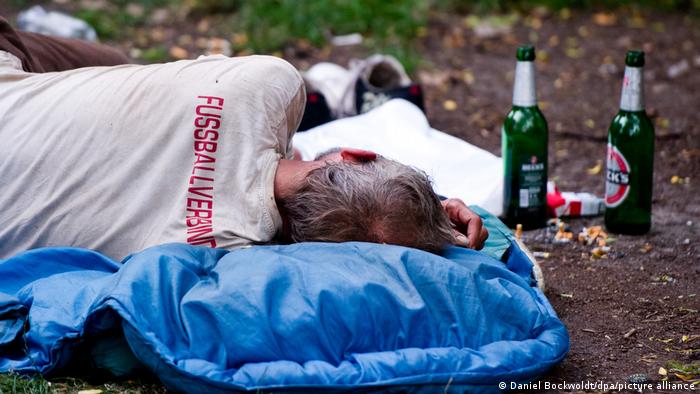
Excessive alcohol or drug consumption also adds to the risks, she told DW. "After drinking a lot, for example, people don't realize when they've fallen asleep in the heat; they get badly burnt; become more dehydrated, and in the worst case can die."

On-site social workers also offer counseling and support. "When the people start to come regularly, for example, they often start to open up, and trust is developed," said Werner.


Janette Werner says that many homeless fall asleep in the scorching sun after excessive alcohol or drug consumption

Elsewhere in Berlin, 23 workers from the "Karuna" initiative were also on the road distributing water, sunscreen, sunglasses, and toiletries to people without a home. The team has been working since 2020 and also operates several "cooling buses" where people can temporarily stay and recover from heat stress.

"If you see someone on the street, especially during this hot weather, the best thing you can do is ask if they're okay," said Werner. "If they're not, then ring emergency services. But keep in mind that anyone would be happy to get a bottle of water right now."

The "Hitzehilfe" summer pilot project runs until the end of September when the social association will evaluate which facilities were in highest demand.

Edited by: Rina Goldenberg


STAYING COOL IN EUROPE'S BLAZING SUMMER
A giant public shower
In the Lithuanian capital Vilnius, a young boy cools down in a public fountain. The Baltic States in northern Europe have also been experiencing record temperatures. It was over 30 degrees Celsius (86 degrees Fahrenheit) on June 26 in Vilnius.


Russian air strike on Syria kills seven: Monitor

AFP , Friday 22 Jul 2022

A Russian air strike killed seven people, four of them children, in Syria's rebel-held Idlib region on Friday, a war monitor said.

Idlib, Syria
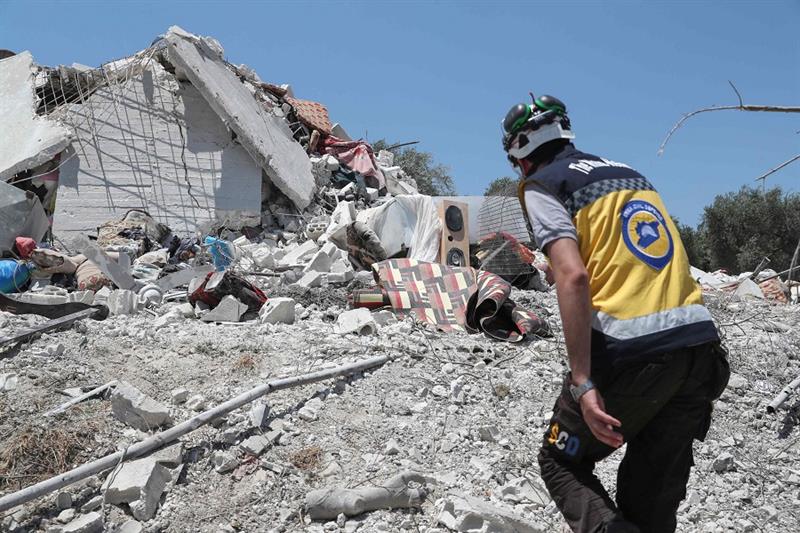
A member of the Syrian civil defence known as the White Helmets walks on the rubble of a house following a Russian air strike on the outskirts of the rebel-held city of Jisr al-Shughur in Syria s northwestern province of Idlib on July 22, 2022. AFPLinkedIn

The Syrian Observatory for Human Rights said the deaths "including four children who are siblings, two men and an unidentified person... as a result of Russian air strikes", in the Jisr al-Shughur countryside of northern Syria.

Ayhman Mozan, 31, lost all four of his children in the attack that destroyed his home.

"My children are gone... the dearest people to my heart are gone," he told AFP, breaking down in tears as he called out his children's names.

He and his family were sleeping when the first strike hit their home, he said, lying in a hospital bed in the border city of Darkush.

He helped rescue his wife from under the rubble but when he looked for his children, he could not find them.

The house has been completely destroyed, an AFP correspondent at the site of the attack said, with toys, furniture and clothing scattered across the rubble.

The children killed were all under 10 years old, said Rami Abdel Rahman, who heads the British-based Observatory.

The monitor said that more people, including women and children, were still trapped under the rubble.

The victims have mostly displaced Syrians from neighbouring Hama province, said the monitor, which relies on a wide network of sources inside Syria.

Russia, which did not comment immediately on the raid, is the main backer of President Bashar al-Assad's regime.

With Russian and Iranian support, Damascus clawed back much of the ground lost in the early stages of Syria's conflict, which erupted in 2011 when the government brutally repressed pro-democracy protests.

The last pocket of armed opposition to the regime includes large swathes of Idlib province and parts of the neighbouring Aleppo, Hama and Latakia provinces.

Hayat Tahrir al-Sham, headed by ex-members of Syria's former Al-Qaeda franchise, is the dominant group in the area but other rebel groups are also active, with varying degrees of Turkish backing.

Syria's war has killed nearly half a million people and forced around half of the country's pre-war population from their homes.

SEE

Will Turkey attack Syria Kurds without nod from Russia and Iran

Syria formally breaks diplomatic ties with Ukraine

 Putin in Iran for Syria summit overshadowed by Ukraine war