Monday, October 20, 2025


Morocco vows social reforms after youth-led protests shake government


Morocco’s government promised major improvements to healthcare, education and youth participation in politics on Sunday, in a direct response to a wave of Gen Z–driven protests sparked by public anger over inequality and corruption. The pledges mark the first concrete reforms since the demonstrations erupted last month.


Issued on: 20/10/2025 
By: FRANCE 24
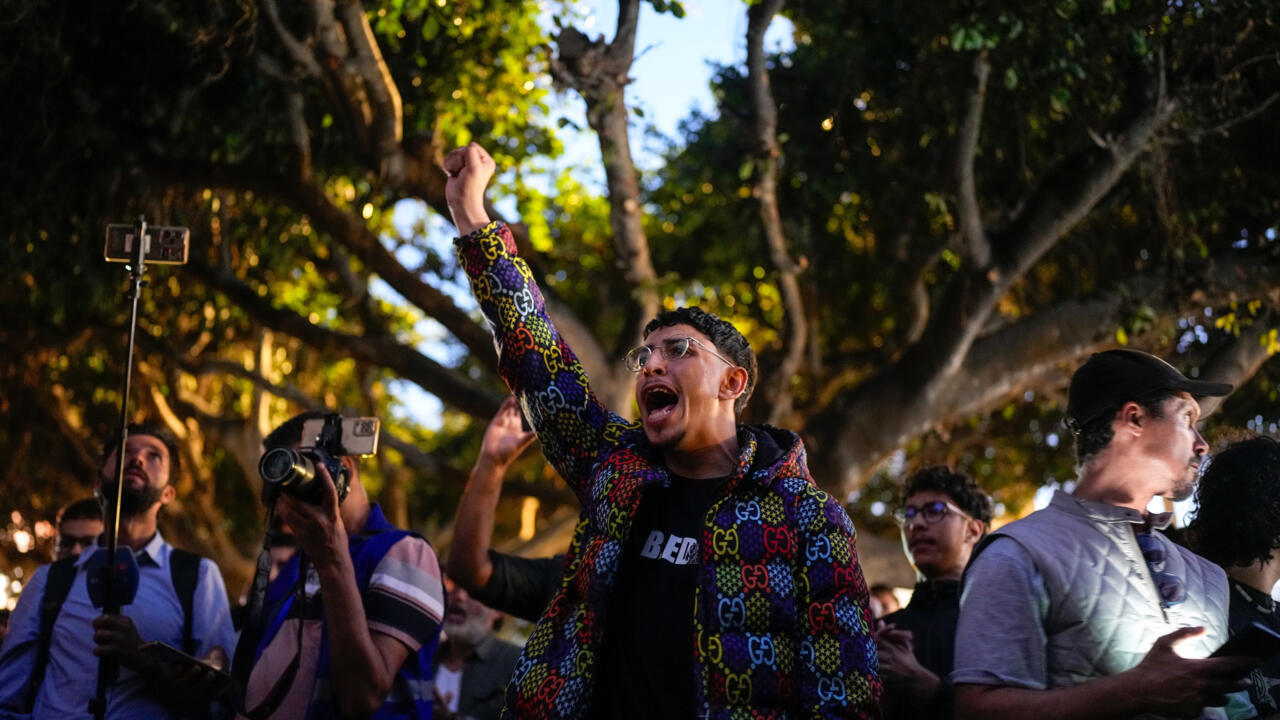

People take part in a youth-led protest against corruption and calling for healthcare and education reform, in Rabat, Morocco. © Mosa'ab Elshamy, AP

The Moroccan government on Sunday pledged improvements to healthcare and education in response to a wave of youth-led protests that took authorities by surprise, state media reported.

It announced a set of measures aimed at encouraging young people to engage in politics and committed to broad social reforms, the state news agency MAP said.

The 2026 draft finance bill would strengthen social services – including public education and healthcare – two key sectors that demonstrators have urged the government to reform.

Another draft bill seeks to boost civic participation by inviting “people younger than 35 to enter politics”, according to MAP. It would ease eligibility rules for young candidates and offer financial incentives covering up to 75 percent of campaign expenses.

A separate proposal aims to enhance the role of political parties, improve transparency, and help more women and young people join or establish them, MAP added.

The Gen Z protests took the usually stable kingdom by surprise late last month, following the deaths of eight pregnant women at a hospital in the southern city of Agadir.

The online-based movement, calling itself “Gen Z 212”, later broadened its demands to include ending corruption and changing the current government.

Read moreShortages, sanitation issues and corruption: Morocco’s public hospitals at a breaking point

The government said it would prioritise social spending next year – with nearly $13 million allocated to health and education – and create more than 27,000 jobs in those sectors, MAP reported.

Social inequalities remain a major challenge in Morocco, where deep regional disparities persist alongside a wide gap between the public and private sectors.

Official figures show that lack of education is a key driver of poverty, which has nevertheless fallen from nearly 12 percent of the population in 2014 to 6.8 percent in 2024.

(FRANCE 24 with AFP)


In the Sahel, no reprieve under jihadist blockade

Abidjan (AFP) – Islamist militants still severely impact large swathes of Burkina Faso and Mali, imposing roadblocks, launching attacks and cutting off supply lines as they expand their decade-long presence, according to residents' testimonies.

Issued on: 20/10/2025 - FRANCE24

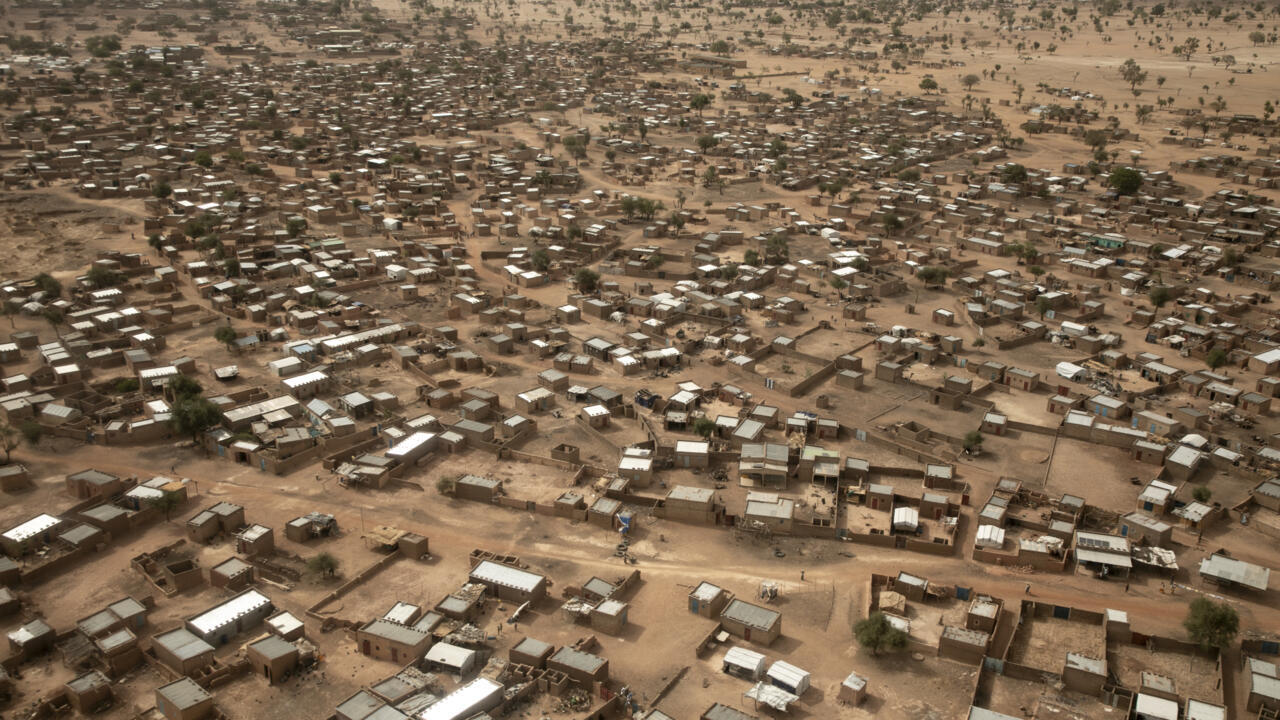
Towns like Barsalogho in Burkina Faso have struggled with jihadist attacks from groups affiliated with Al-Qaeda © - / AFP/File

Several towns in central and northern Burkina Faso are currently under blockade by jihadists and army supply lines are regularly targeted.

The town of Arbinda has been isolated for several months.

"Arbinda is experiencing a food crisis. People are suffering from a lack of food and basic necessities," one resident told AFP by telephone, insisting, like others, on speaking anonymously for security reasons.

"The town has not received supplies for more than six months. We just want to eat," another resident said.


Burkina Faso and Mali have struggled with violence from jihadist groups linked to Al-Qaeda and the Islamic State for a decade.

Both countries have been run by military governments since coups carried out between 2020 and 2022.

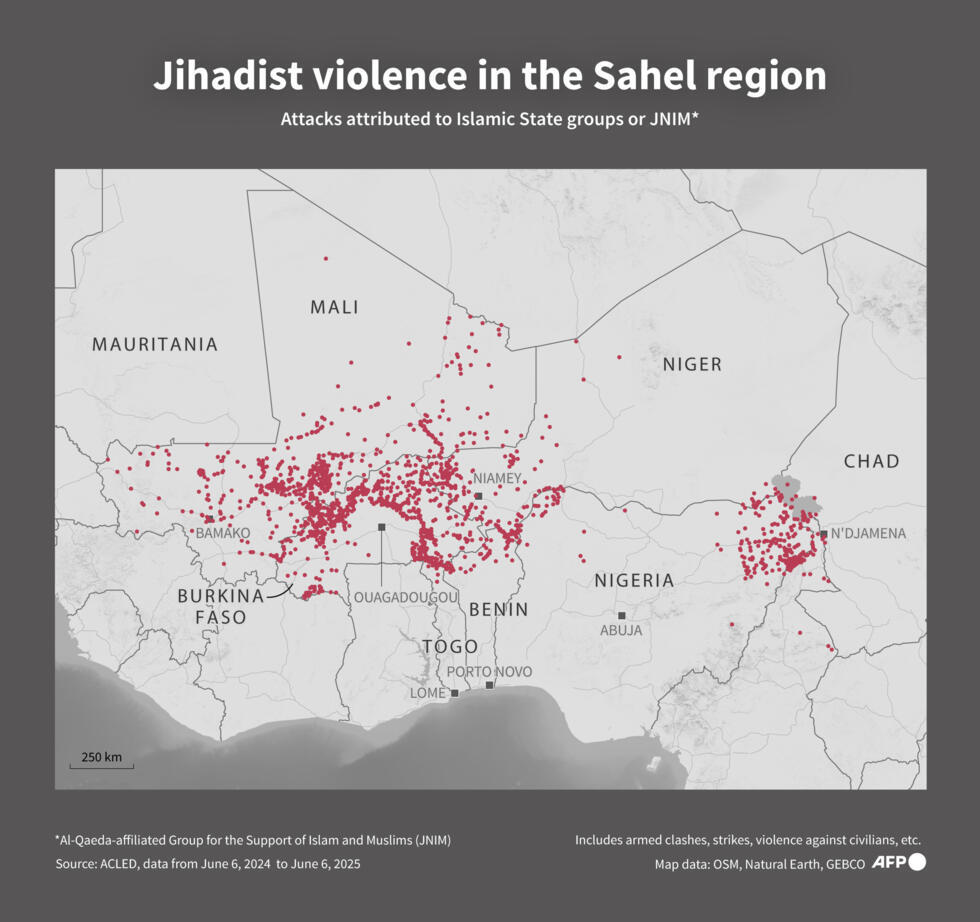
But analysts say the military rulers have mostly failed to meet their promises of defeating the jihadists and making their countries safer, as data shows violence in the region is worsening.

In Solhan, further east in Burkina, residents expressed similar worries to those in Arbinda.


Jihadist violence in the Sahel region © Ioana PLESEA, Valentina BRESCHI / AFP


"People are hungry. The last scheduled food convoy was ambushed, worsening the situation for an already exhausted population," said one resident.

"We can't farm or do anything outside the town. Even carts used to fetch firewood are seized. We are calling out for help just to survive," said a resident in Bourzanga, another town.

The Group for the Support of Islam and Muslims known by its Arabic acronym JNIM, affiliated with Al-Qaeda, is the most influential group in both countries and the "most significant threat in the Sahel", according to the UN.

Its victims, both civilian and military, number in the thousands.

About four million people are now displaced across Burkina Faso, Mali, Niger and neighbouring countries -- around two-thirds more than five years ago -- reflecting the insecurity, limited access to services and effects of climate change, the UN said this month.

In Mali, the JNIM has stepped up its attacks since September in western and southern parts of the country by imposing a blockade on petroleum products, causing a fuel shortage that is worsening the already precarious situation for millions of people.
'Deserted the town'

"For two weeks, we've been running out of fuel. Our fields have started to dry up from a lack of fuel for pumps," a resident of San, in central Mali, said.

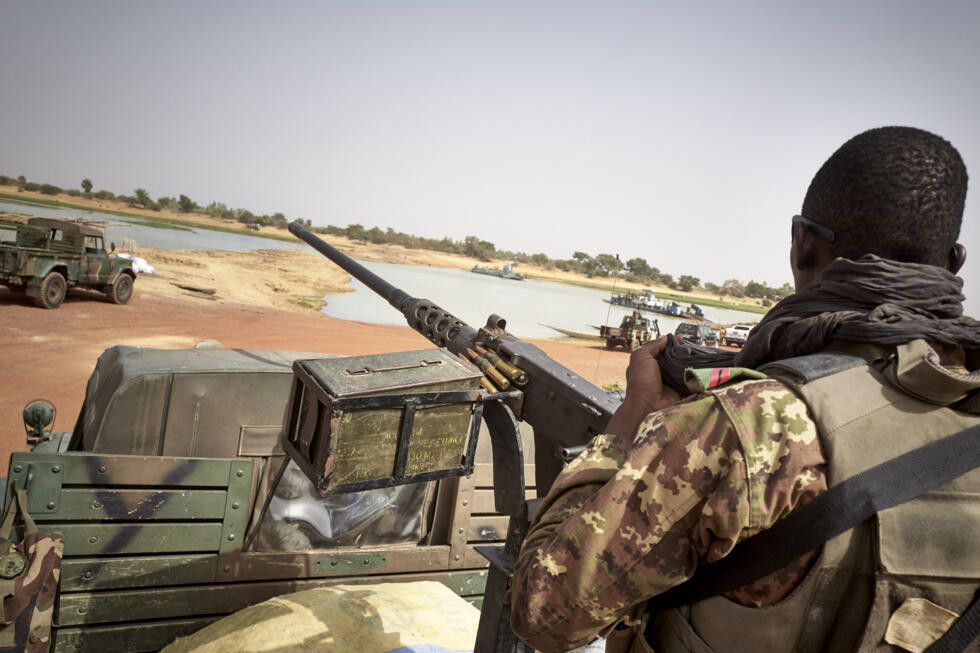
Malian soldiers have been battling jihadists for more than a decade
 © MICHELE CATTANI / AFP


"Today, truckers no longer come because the jihadists have cut off the roads. Our produce is rotting or drying up at the edge of our fields. How can we pay our debts?" said a producer and member of the Regional Assembly of Chambers of Agriculture in Sikasso, in southern Mali.

In the central Malian town of Macina, the jihadists' presence is also making the presence of the state disappear.

"We have no birth certificates, no official marriage certificates. The jihadists said they didn't want any symbols of the state, so the civil registrars and administrators have deserted the town," said a local nurse.

Military authorities who rarely report any causalities among their ranks regularly claim victories in their anti-jihadist fight.

But residents under jihadist blockade have little faith.

"We're told the army is gaining strength. But if terrorists are still capable of occupying a town like Gomboro for days, in an important military region, then things are really not going as they say," said a resident of Gomboro town in northwestern Burkina Faso.

Niger, a neighbour and ally of Mali and Burkina Faso and also ruled by a military junta, faces deadly jihadist attacks from Boko Haram, as well as from the groups linked to Al-Qaeda and the Islamic State.

© 2025 AFP
Louvre heist raises decades old questions about museum security

The heist at the Louvre on Sunday morning, which saw thieves flee with eight royal jewels, has raised questions about how well France's priceless historical artefacts and cultural heritage are being protected.

Issued on: 19/10/2025 
By: FRANCE 24

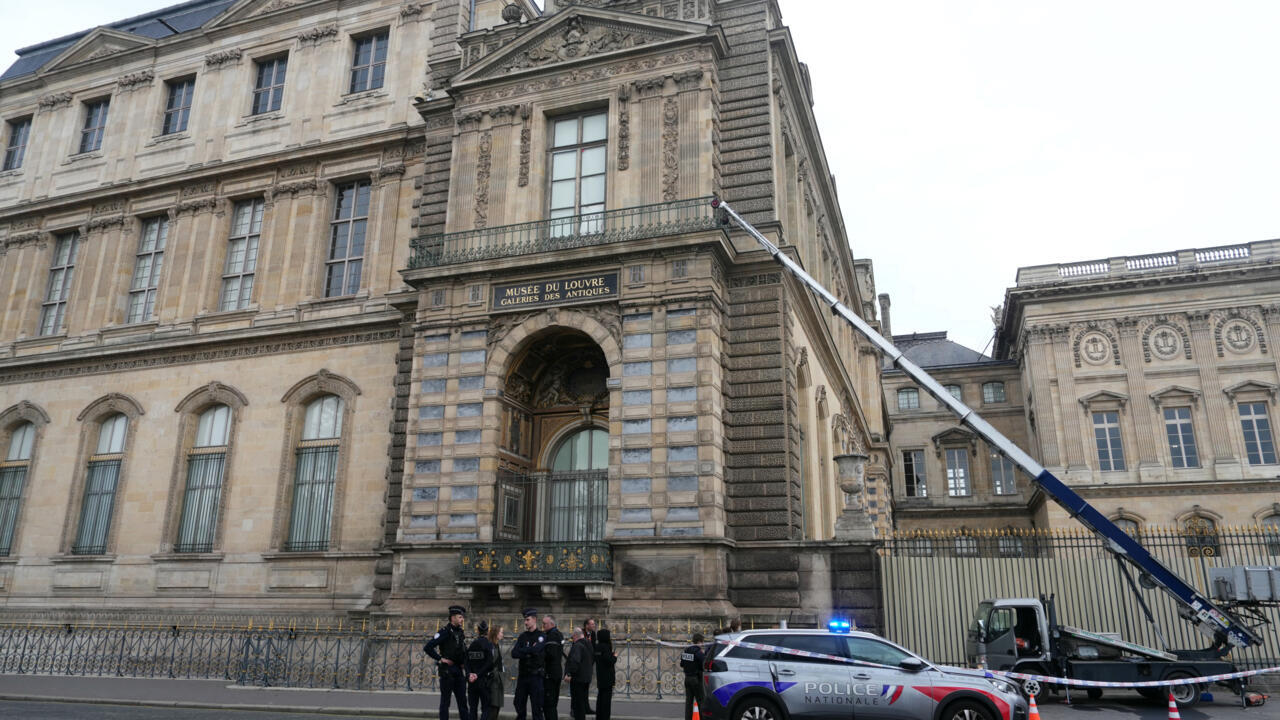
Sunday's raid targetted the Gallerie d'Apollon (Apollo's Gallery) © Martin Bureau, AFP

A raid on France's top museum that saw thieves flee with royal jewels has raised awkward questions about how well the country's priceless cultural heritage is being protected.

How could robbers with power tools break in and steal crowns, sapphire and emerald necklaces? And how can a museum spanning 73,000 square metres and housing around 35,000 works of art be secured?

The government said authorities had already begun reviewing security at the vast Paris venue before the heist. Labour unions there have complained that security staff positions have been cut.

Here are some of the issues raised by Sunday's drama.

Security warning decades ago


The Louvre's then director Pierre Rosenberg warned that the museum's security was "fragile" after a painting by French master Camille Corot was stolen in broad daylight in 1998.

Taking over in 2021, its current director Laurence des Cars asked the Paris police to conduct a security audit of the museum.

Following this audit, recommendations were made "a few weeks, a few months ago", said Culture Minister Rachida Dati on Sunday after the raid.

Read moreThe Louvre heist: A look at other famous robberies in museums worldwide

They "are beginning to be implemented", she said, without elaborating.

Contacted by AFP, the Louvre did not comment.

The culture ministry said in a statement that alarms linked to the windows of the Apollo Gallery went off when the thieves penetrated them in a "particularly fast and brutal break-in".

It said five museum guards present in the gallery and nearby spaces "immediately intervened to implement security protocol", prompting the thieves to flee. No one was hurt, it said.

Security staff cuts

Labour unions said the museum's security had been undermined by staff reductions in recent years, even as museum attendance has soared.

One union source, who asked not to be named, said the equivalent of 200 full-time posts had been cut at the museum over the past 15 years, out of a total workforce of nearly 2,000.

"We cannot do without physical surveillance," the source said.


The SUD union, in a statement on Sunday, complained of "the destruction of security jobs" at the Louvre.

In mid-June, museum staff staged a brief walkout to protest "understaffing" issues they said prevented them from carrying out their duties.

"This robbery comes a few months after museum employees warned about security flaws," said a deputy mayor of Paris, David Belliard of the Green party.

"Why were they ignored by the museum management and the ministry?" he wrote on X.
Hundreds of millions for revamp

In response to warnings about the state of the Louvre, France's President Emmanuel Macron this year announced a colossal renovation project, estimated to cost up to $930 million.

It plans to install a new entrance to relieve congestion at the museum's landmark glass pyramid by 2031 and an exhibition hall dedicated to the Mona Lisa.

Read more Thieves steal 8 objects from the Louvre in daring daytime heist

Dati said on Sunday the renovation project featured a new "security master plan".

The culture ministry said Sunday that security measures would be "improved with new-generation cameras deployed".

The union source interviewed by AFP hoped that the amount spent "will be up to the protection required by our establishment".
Multiple museum thefts

The Louvre was just the latest French museum to be targeted. Just last month thieves broke into the Natural History Museum in Paris at night and stole six kilos of gold nuggets.

"Museums are increasingly targeted for the valuable works they hold," the Central Office for the Fight against Trafficking in Cultural Property (OCBC) told AFP earlier this month.

Gold objects "are particularly exposed, especially since the security of a museum does not equal that of a bank".

© France 24
01:25


According to the office's figures, museum burglaries peaked at 31 in 2015, with nine recorded in 2023 and 21 in 2024. There are 1,200 venues designated as national museums in France.

'Unsellable' treasures


Authorities and the art world speculated on Sunday about who the suspects were and where the stolen Louvre jewels may be headed.

Interior Minister Laurent Nuñez said on the radio that "a seasoned team" of thieves was suspected to be behind it, one that had "already committed other deeds of this nature".

The president of the leading auctioneer Drouot Patrimoine, Alexandre Giquello, said Sunday he found it "hard to believe" the Louvre jewels were stolen to order, judging the famous treasures "totally unsellable in their current state".

"In this operation, the most complicated part is not the theft, but the fencing," he told television channel LCI.

(FRANCE 24 with AFP)

French police hunt experienced, possibly ‘foreign’, Louvre heist team


French police continue its manhunt for the brazen team of robbers who stole eight “priceless” pieces of royal jewellery from Paris’s Louvre museum in broad daylight on Sunday. Some 60 investigators are currently working on the case. Officials say the thieves appear to have been experienced and are possibly “foreign” nationals.

Issued on: 20/10/2025 
By: FRANCE 24


The whole raid took just seven minutes, officials say. © Dimitar Dilkoff, AFP

The hunt was on Monday for the band of thieves who stole eight priceless royal pieces of jewellery from the Louvre Museum in the heart of Paris in broad daylight.

Officials said a team of 60 investigators were working on the theory that the raid was planned and executed by an organised crime group.

In France, it reignited a row over the lack of security in the country's museums, which the new Interior Minister Laurent Nuñez acknowledged Sunday was a "major weak spot".

The thieves arrived between 9:30 and 9:40am (07:30 and 07:40 GMT) Sunday, shortly after the museum opened to the public at 9:00am, a source close to the investigation said.

They used an extendable ladder to access the Apollo Gallery, home to the royal collection, and cutting equipment to get in through a window and open the display cases.

A brief clip of the raid, apparently filmed on the phone of a visitor to the museum, was broadcast on French news channels.

The masked thieves stole nine 19th-century items of jewellery, one of which — the crown of the Empress Eugénie — was dropped and damaged as they made their escape.
Seven-minute raid

Eight "priceless" items of jewellery were stolen, the culture ministry said Sunday. The list they released included an emerald-and-diamond necklace that Napoleon gave his wife Empress Marie Louise.

Also stolen was a diadem that once belonged to the Empress Eugénie, which has nearly 2,000 diamonds; and a necklace that once belonged to Marie-Amelie, the last queen of France. It has eight sapphires and 631 diamonds, according to the Louvre's website.

The whole raid took just seven minutes and was thought to have been carried out by an experienced team, possibly "foreigners", said Nuñez.

The intervention of the museum's staff forced the thieves to flee, leaving behind some of the equipment used in the raid, said the culture ministry in a statement.

The loot would be impossible to sell on in its current state, said the president of the leading auctioneer Drouot Patrimoine, Alexandre Giquello.
National 'humiliation'

It was the first theft from the Louvre since 1998, when a painting by Corot was stolen and never seen again.

Sunday's raid relaunched a debate over what critics said is the poor security at the nation's museums, far less secure than banks and increasingly targeted by thieves.

In an interview with French radio station France Inter, Justice Minister Gerard Darmanin said the jewelry heist gave a very negative image of France because of its incapacity of protecting its museums.

"What is certain is that we have failed, since people were able to park a furniture hoist (mechanical lift) in the middle of Paris, get people up it in several minutes to grab priceless jewels," he said.

Sunday's robbery sparked angry political reactions.

"How far will the disintegration of the state go?" said far-right National Rally party leader Jordan Bardella on social media, calling the theft "an unbearable humiliation for our country".

President Emmanuel Macron said on social media that "everything is being done" to catch the perpetrators and recover the stolen treasures.

(FRANCE 24 with AFP)


Centrist outsider Rodrigo Paz wins Bolivian presidency, ending socialist rule

Centrist senator Rodrigo Paz won Bolivia’s presidential election on Sunday, preliminary results showed, in a surprise victory that ended 20 years of dominance by the left-wing Movement Toward Socialism party. His win reflected growing anger over the country’s deepening economic crisis, fuel shortages and soaring inflation.

Issued on: 20/10/2025 
By: FRANCE 24

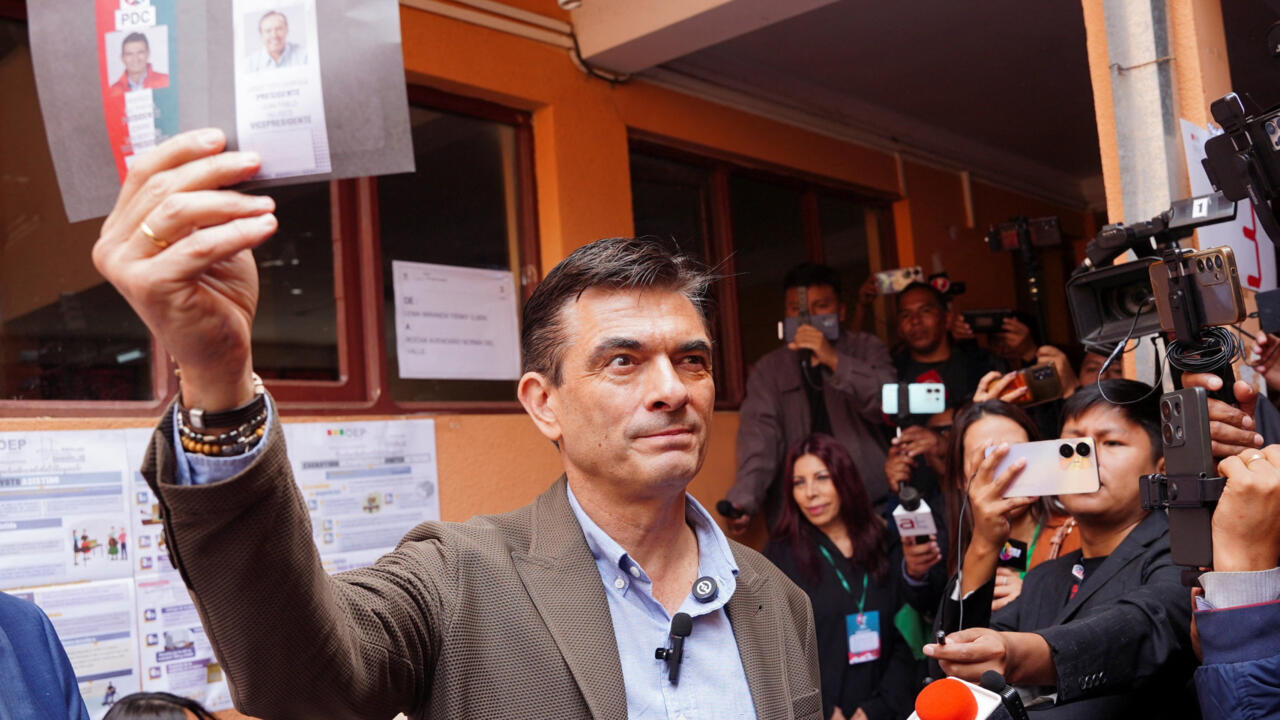
Centrist senator and presidential candidate Rodrigo Paz of the Christian Democratic Party (PDC) shows his ballot to the media before casting his vote, during the presidential runoff election. © Sara Aliaga, Reuters

Rodrigo Paz, a centrist senator who had never been a nationally prominent figure until now, won Bolivia’s presidential election on Sunday, preliminary results showed — galvanising voters outraged by the country’s economic crisis and frustrated after 20 years of rule by the Movement Toward Socialism (MAS) party.

“The trend is irreversible,” said Oscar Hassenteufel, the president of the Supreme Electoral Tribunal, which released early results showing that Paz, 58, secured more than 54 percent of the vote. His rival, former right-wing president Jorge “Tuto” Quiroga, took just over 45 percent.

Paz and his popular running mate, former police captain Edman Lara, gained traction among working-class and rural voters disillusioned with the unrestrained spending of the long-ruling MAS party but wary of a radical turn away from its social protections.

Although Paz plans to end Bolivia’s fixed exchange rate, phase out generous fuel subsidies and cut back public investment, he has pledged a gradual approach to free-market reforms in hopes of avoiding a sharp recession or a spike in inflation that could further anger the public.

Quiroga, by contrast, advocated turning to the International Monetary Fund for a shock-therapy package of the kind Bolivians came to know and fear in the 1990s.

Paz’s victory sets this nation of 12 million on a sharply uncertain path as he seeks to enact major change for the first time since the 2005 election of Evo Morales, the founder of MAS and Bolivia’s first Indigenous president.

Since 2023, the Andean nation has been crippled by a shortage of US dollars that has locked Bolivians out of their own savings and hampered imports. Year-on-year inflation soared to 23 per cent last month — the highest rate since 1991 — while fuel shortages have paralysed the country, with motorists often waiting days in line to fill their tanks.

Both Quiroga and Paz vowed to break with the budget-busting populism that has dominated Bolivia under the MAS party.

“We are closing one cycle and opening another,” Paz told supporters as he cast his ballot in his hometown of Tarija alongside his father, former president Jaime Paz Zamora, earlier Sunday.

Some voters said they felt energised by the promise of change as they lined up to vote.

“Since 2005 we haven’t had any real options, so this is exciting for me,” said Carlos Flores, 41, a secondary school teacher waiting to vote for Paz.

(FRANCE 24 with AP)


Bolivia's new president faces worst economic crisis in decades

La Paz (AFP) – Bolivians elected Rodrigo Paz as president on Sunday, selecting the center-right senator and economist to address the country's worst economic crisis in 40 years.

Issued on: 20/10/2025 - FRANCE24

Bolivians elected Rodrigo Paz as president as the country faces its worst economic crisis in decades © Lucas AGUAYO / AFP/File

Paz, 58, campaigned on slashing public spending, especially on fuel subsidies, and vowed a "capitalism for all" approach to economic reform in a marked shift from the preceding two decades of socialist government.

The president-elect, who will assume office on November 8, has promised that his governance style will be one of "consensus," as he hopes to gain public trust in a divided society.

Economy

Bolivia is in the grips of an economic crisis, with year-on-year inflation at 23 percent and a chronic shortage of fuel.

One of Paz's main challenges at the start of his tenure will be to find a way out of the fuel crisis and overcome a severe shortage of dollars -- the result of large government subsidies and a decrease in gas exports -- while curbing an uptick in the cost of living.

"Stabilizing the economy will require very firm measures," economist Napoleon Pacheco, a professor at La Paz's San Andres university, told AFP.

But analyst Daniela Osorio of the German Institute for Global and Area Studies warned that such measures "could lead to a social uprising."


Mistrust


Maria Teresa Zegada, a sociologist at San Simon university in La Paz, said there was "growing public dissatisfaction with politics."

A breakdown of the results of Sunday's run-off illustrates the divisions in the country, with the more conservative and richer east largely supporting right-wing candidate Jorge Quiroga, while the more impoverished west and its large Indigenous population backed Paz.

Osorio said these trends point to a revival of traditional "divisions between the east and the west, as well as between urban and rural areas."

Maria Choquetapi, a woman from the Aymara Indigenous group, told AFP from her town of Laja west of the capital: "I would like the new government to roll up their sleeves and really get to work, not like their predecessors."

Parliament

Paz's party is the biggest in parliament. But with no outright majority, the new president will have to "find agreements" to rule effectively, said Zegada.

The four right-wing parties in Bolivia's parliament will hold 119 of 130 seats in the Chamber of Deputies and all 36 in the Senate.

That means Paz will have to work with some of his political rivals despite painful "wounds" from the run-off campaign, according to Osorio.

Morales


Evo Morales, who served as president from 2006 to 2019 and was barred from running again this year, remains popular, especially among Indigenous Bolivians.

He cast a long shadow over the campaign, and in the first round, got nearly one in five voters to spoil their ballot over his exclusion from the election.

But internal divisions in his Movement Towards Socialism party have seen Morales's influence weaken.

The former president is also the target of an arrest warrant for human trafficking over an alleged sexual relationship with a minor -- an accusation he denies.

Analyst Osorio said that even a weaker Morales "remains a destabilizing factor."

Zegada, the sociologist, said that his supporters "have already warned that if the next government does not live up to its promises, they will mobilize to overthrow it."

© 2025 AFP
Can A Religion Other Than Islam Ever Be Accepted By Allah? – OpEd


October 20, 2025 
By Rabbi Allen S. Maller


Twelve years ago the United Nations General Assembly proclaimed the first week of February of each year as Interfaith Harmony Week for all religions, faiths and beliefs with a resolution that recognized “the imperative need for dialogue among faiths and religions in enhancing mutual understanding, harmony, and cooperation among people.”

So this Reform Rabbi offers this article on religious pluralism in the Qur’an.


Has Islam been the one true religion acceptable to God since the days of Prophet Muhammad? Does Islam claim to replace Christianity and Judaism, the way Christianity claimed (until recently) to have replaced Old Testament Judaism?

One does frequently hear extremist, and even some non-extremist Muslims, quote the Qur’anic verse: “And whoever seeks a religion other than Islam, it will never be accepted of him, and in the hereafter he will be one of the losers.” (Qur’an 3:85) That sounds pretty exclusive.

But the Qur’an also states, and then repeats: “Verily, those who believe, and those who are Jews and Christians, and Sabians; whoever believes in Allah and the Last Day and does righteous deeds; shall have their reward with their Lord. On them shall be no fear, nor shall they grieve.” (Quran 2:62 & 5:69)

And the Qur’an goes even further, proclaiming that religious pluralism is the will of Allah. “If Allah had so willed, He would have made you a single people, but (God’s plan is) to test (each group of) you in what He has given you: so compete in all virtues as in a race. The goal of you all is to (please) Allah who will show you on judgment day the truth of the matters which you dispute.” (Qur’an 5:48)


This means that religious pluralism is the will of God. Thus, we will not know “the truth of the matters which you dispute” until judgement day. What we can know is who is the kindest and most charitable among us.Yet for centuries many believers in one God have chided and depreciated each other’s religions, and some believers have even resorted to forced conversions, expulsions, inquisitions and massacres to spread their faith even though monotheists all pray to the same God, and all prophets of monotheistic faiths are inspired by the same God.

The two Quran verses above (Quran 2:62 & 5:69) place Jews, Christians, and Sabians alongside Muslims; and say that any one among them who “believes in Allah and the Last Day and does righteous deeds shall have their reward with their Lord, on them shall be no fear, nor shall they grieve”.

Although these two verses (Quran 2:62 & 5:69) seem to be completely contradictory to the first verse (Qur’an 3:85), and it is possible that one view abrogates the other, there is a much simpler explanation.

There are two meanings for the word “Islam”. First, there is basic, fundamental Islam (submission to God) which, according to Islam, was the religion of all the prophets from Adam to Muhammad.

Second, there is the special and unique religion, or more accurate way of life of Islam, taught in Hadith by Prophet Muhammad.

The two verses quoted above refer to basic, fundamental, Islam and not to the special and unique religion of Islam. In today’s terms; basic Islam should be spelled ‘islam’ without a capital letter ‘I’, and special and unique Islam should be spelled with a capital ‘I’. The same is true for the word Muslim, a member of a special and unique community, and ‘muslim’ referring to one who follows the fundamental monotheistic “religion” of living in obedience to the commandments of the one God as taught by Moses, Jesus, or any other prophet of the one God.

Thus, “And whoever seeks a religion other than (monotheistic) islam, it will never be accepted of him, and in the hereafter he will be one of the losers.” (Qur’an 3:85) includes Jews, Christians, and Sabians (whoever they are) but does not include atheists on one hand, and polytheists on the other hand.

Religious pluralism as the will of God is very different from religious, moral or cultural relativism. Relativism teaches that all values and standards are subjective, and therefore there is no higher spiritual authority available for setting ethical standards or making moral judgements. Thus, issues of justice, truth or human rights are, like beauty, just in the eye of the beholder. Most people, especially those who believe that One God created all of us, refuse to believe that ethics and human rights are simply a matter of taste. Religious pluralism as the will of God is the opposite of cultural or philosophical relativism.

The fundamental idea supporting religious pluralism is that religious people need to embrace humility in many areas of religion. All religions have always taught a traditional anti self centered personal egoism type of humility. Religious pluralism also opposes a religious, philosophical, and self righteous intellectual egoism that promotes a tendency to turn our legitimate love for our own prophet and Divine revelation into universal truths that we fully understand and know how to apply.

Religious pluralism teaches that finite humans, even the most intelligent and pious of them, can not fully understand everything the way the infinite One does. This is true, for every human being, even for God’s messengers themselves. When prophet Moses.”who God spoke with face to face, as a person speaks with a friend” (Exodus 33:11) asks to see God face to face, he is told, “You cannot see My face, for no man can see My face and live.” (33:20)

Similarly, in the Qur’an prophet Jesus admits to God, “You know everything that is within myself, whereas I do not know what is within Yourself”. (7:116) In the New Testament when prophet Jesus is asked, in private, by his disciples, “What will be the sign for your coming (back) and the end of the age?” (Matthew 24:3) Jesus warns his disciples about all kinds of upheavals and false Messiahs that will come. Then Jesus concludes by saying, “But about that day and hour no one knows, not even the angels in heaven, not even the son: only the Father”. (24:36)

A similar statement was made by prophet Muhammad when he was asked, “Tell me about the Hour”. Muhammad replied: “The one questioned about it, knows no better than the questioner.” (Muslim book 1:1&4) Prophet Muhammad taught the general principle of epistemological humility to his followers when he said, “I am no novelty among the messengers. I do not know what will be done to me, or to you.” (Qur’an 46:9)

The famous Qur’an verse (2:255) called Ayat Al-Kursi, the “Throne verse” is known for its profound meaning and its inspiring message. Allah is well described, and we are informed that the knowledge of Allah is incomparable to our own humble efforts. The Throne verse begins:

“Allah! There is no god but He, the Living, the Self-Subsisting, Supporter of all.” and ends: “They shall not encompass any of His knowledge except as He wills. His Throne/dominion extends over the heavens and the earth, and He feels no fatigue in guarding and preserving them. For He is the Most High, the Supreme in glory.”

And the very next verse states: “There shall be no compulsion in (acceptance of) the religion (Islam).” (Qur’an 2:256) because all humans have limited knowledge and no one should force anyone else to believe what is knowable only to Allah. Only this kind of modesty can lead us to a more peaceful world.

And when religious modesty eliminates self-righteous readings of verses like: “And whoever seeks a religion other than Islam, it will never be accepted of him, and in the hereafter he will be one of the losers.” (Qur’an 3:85) the religious world will have made a major contribution to Prophet Isaiah’s declaration::

“In that day there will be a highway from Egypt to Assyria. The Assyrians will go to Egypt, and the Egyptians to Assyria. The Egyptians and Assyrians will worship together. On that day Israel will join a three-party alliance with Egypt and Assyria, a blessing upon the heart. The LORD of Hosts will bless them saying, “Blessed be Egypt My people, Assyria My handiwork, and Israel My inheritance.”…(Isaiah 19:23-5)


Rabbi Allen S. Maller

Allen Maller retired in 2006 after 39 years as Rabbi of Temple Akiba in Culver City, Calif. He is the author of an introduction to Jewish mysticism. God. Sex and Kabbalah and editor of the Tikun series of High Holy Day prayerbooks.

Dartmouth Needs To Mitigate Risks Of Trump’s Great Reform Agenda Campaign 
For Arctic Research – OpEd


October 20, 2025 
By Michael Walsh


Last weekend, President Donald Trump announced that the U.S. Government is going to aggressively move forward with implementing the Great Reform Agenda in Higher Education. That announcement poses a major risk to the status quo in the U.S. Arctic research community.

Over the last few years, many U.S. Arctic research institutes have aligned themselves with priority areas that were previously articulated by the Biden Administration. However, some of those priority areas are now openly opposed or tacitly depreciated by the current administration. That includes research on climate change and diversity and inclusion. That change poses a serious problem for the U.S. Arctic research institutes that are directly and/or indirectly invested in those research areas. That includes the Institute of Arctic Studies at Dartmouth. The time has therefore come for Dartmouth President Sian Beilock to respond to that challenge. The problem is that it will not be easy. It may require permanently severing the relationship that currently exists between the Institute of Arctic Studies and the John Sloan Dickey Center for International Understanding.


Dickey Center

The Dickey Center is an interdisciplinary center. According to the school website, it seeks “to bring the world to Dartmouth and Dartmouth to the world to engage with today’s great issues.” The current director of the Dickey Center is Victoria Holt.

Under the Obama Administration, Holt served as the U.S. Deputy Assistant Secretary of State for International Security.

Institute for Arctic Studies

The Dickey Center hosts the Institute of Arctic Studies. The institute not only provides a “hub for research, discussion, and education” on polar issues. It conducts policy-relevant research that demonstrates a “respect of Indigenous Knowledge systems.”

The Institute of Arctic Studies is a key node in the polar research network. Among other things, it works “with national and international organizations on scientific research, policy development, conferences and workshops, and environmental network development.” Those institutions include Ilisimatusarfik, University of the Arctic, and University of Alaska Fairbanks.

The Director of the Institute of Arctic Studies is Melody Brown Burkins. Trained as a polar scientist, Burkins has focused on several topics that have been roundly criticized by President Trump and his core supporters, including inclusion, climate change, and sustainable development.

Magro Family Distinguished Visitors

The Magro Family Distinguished Visitors in International Affairs is one of the most prominent programs of the Dickey Center. It provides a platform to host academics, diplomats, and policy wonks who have made significant contributions to international affairs.

The Magro Family Distinguished Visitors poses a challenge for the Institute of Arctic Studies. That is because there appears to be a partisan bias in the program toward those who fall squarely on the opposite side of the political spectrum from President Trump and his core supporters.

During the first term of the Trump Administration, Jake Sullivan and Ambassador Johnny Carson served as Magro Family Distinguished Visitors. The former would go on to serve as the National Security Advisor for President Joe Biden. The latter would become “Biden’s Point Man on Africa.”

During the Biden Administration, Spencer Boyer and Elizabeth Shackelford served as the Magro Family Distinguished Visitors. The former had been appointed as the Deputy Assistant Secretary of Defense for European and NATO Policy by President Biden. The latter had resigned as a career diplomat in the U.S. State Department in public protest against the Trump Administration.

To compound matters, several participants have known ties with global advisory firms and public policy think tanks that are closely linked to Democratic political elites. One was Ambassador Erica Barks Ruggles.

Ambassador Ruggles has not only served as a Magro Family Distinguished Visitor. She has also quietly served as a Senior Advisor at WestExec – a global advisory firm co-founded by Obama-insiders Antony Blinken, Michèle Flournoy, Sergio Aguirre, and Nitin Chadda. For whatever reason, WestExec does not appear on her Dartmouth bio though.

Other Visiting Scholars and Practitioners

The Magro Family Distinguished Visitors in International Affairs is not the only mechanism that the Dickey Center uses to bring external scholars and practitioners to Dartmouth. Nor is the only one that could draw the ire of President Trump and his core supporters.

Earlier this year, the Dickey Center hosted Derek Penslar and Yael Berda for a discussion on whether Zionism counts as settler colonialism. That was a noteworthy panel. Both of the panelists have been subjects of conservative backlash.

In the case of Penslar, a lot of the criticism can be traced back to his decision to sign an open letter that referred to the Government of Israel as a “a regime of apartheid.” Those sorts of comments appear to have motivated U.S. Representative Elise Stefanik (R-NY) to publicly condemn Penslar for making “despicable antisemitic views and statements.”

Those sorts of events have not only provoked public backlash. They have left some conservative political elites with the indelible impression that the Dickey Center is not an academic institution. It is a covert partisan one.

In response, the administration could point out that the Dickey Center has hosted several prominent scholars and practitioners from the other side of the domestic political spectrum (e.g., Randall Schriver). However, those replies would be unlikely to change the minds of conservative political elites given the history.

Protecting Arctic Researchers

Of course, the Institute of Arctic Studies is not the only institution that risks being targeted on campus by the Trump Administration. There are many others.

The reality is that Dartmouth College is well-known for leaning far to the left among conservative political elites. Per Bill Hamlen, over 99% of the political donations by Dartmouth faculty are going to Democratic candidates. In his words, that “isn’t just a skew. It’s a red flag.”

Another challenge is that Dartmouth College appears primed to resist the Great Reform Agenda in Higher Education. Over “half of Dartmouth faculty members” have reportedly signed a petition against the “Compact for Academic Excellence in Higher Education.” And there are many students and faculty who are reportedly in solidarity with the Join, or Die Campaign.

Given the stakes of the game being played, President Beilock and the Dartmouth Board of Trustees have a responsibility to take urgent action to mitigate the risks that are posed to Arctic researchers at Dartmouth.

The question therefore turns to where to start.

One place would be the internal institutional relationship that exists between the Dickey Center and the Institute of Arctic Studies.

Wherever one stands on domestic politics, the reality is that the Dickey Center has made past decisions that have tarnished its reputation as a nonpartisan educational institution in the eyes of conservative political elites, and that reputation cannot be easily restored anytime soon.

For those reasons, President Beilock might want to consider permanently severing the internal institutional relationship that currently exists between the Dickey Center and the Institute of Arctic Studies.

Note: Michael Walsh is an Arctic researcher and a Dartmouth alumnus. The views expressed are his own.


Michael Walsh

Michael Walsh (@FPCommentary) is an academic researcher at the University of the Witwatersrand. He is a former member of the Communications Committee of the Arctic Research Consortium of the United States (ARCUS) and a former member of the Experts Working Group on Emerging Security Challenges co-chaired by the North Atlantic Treaty Organization (NATO) and the Partnership for Peace Consortium (PfPC).
Mexico’s Scientists Urge Rules On Gene-Edited Crops


Researchers have issued a public statement and a petition calling for evidence-based regulation to enable the use of gene editing to improve crop traits. Copyright: Lance Cheung / USDA Media (Public Domain Mark 1.0).

October 20, 2025 
By Aleida Rueda

Researchers in Mexico are urging the government to develop clear regulations that distinguish gene-editing technologies, such as CRISPR, from genetically modified organisms (GMOs) — a distinction already made in most Latin American countries.

Mexico, along with Bolivia, Venezuela, and Peru, remains one of the few countries in the region without a legal framework for gene editing in agriculture. By contrast, Argentina and Chile introduced pioneering regulations in 2015 and 2017, respectively.

To address this gap, 28 researchers from various Mexican institutions have issued a public statement and a petition on Change.org, calling for evidence-based regulation to enable the use of gene editing to improve crop traits such as nutritional value and drought tolerance.

“We are concerned that if this technology remains restricted in Mexico, other countries will develop improved crops that we will later have to import,” said Luis José Delaye Arredondo, director of the Advanced Genomics Unit at the Center for Research and Advanced Studies, and one of the statement’s signatories.

Their call comes after Mexican President Claudia Sheinbaum signed a decree in March banning the cultivation of genetically modified maize, or corn.

The decree states that maize production in Mexico “must be free of genetic modifications produced with techniques that overcome natural barriers to reproduction or recombination [the process of breaking and reforming DNA to create new gene variants], such as transgenic [genetically modified] crops”.


Although the decree specifically targets maize, researchers fear it could be interpreted to cover other crops and techniques, including gene editing tools such as CRISPR-Cas, which allow precise modifications to an organism’s DNA without necessarily introducing foreign genes.

“Differentiated regulation of gene editing doesn’t mean opening it up indiscriminately,” said Alejandra Quadrana, a postdoctoral researcher at the National Autonomous University of Mexico’s Institute of Social Research. “It’s about monitoring innovation processes and making sovereign decisions about them.”What is CRISPR-Cas?

CRISPR-Cas is a genome-editing system that enables scientists to make targeted changes to DNA — cutting, silencing, or modifying specific genes. It has broad applications in medicine, agriculture, and biotechnology.

Agustín López-Herrera, an agricultural engineer at the Autonomous University of Chapingo, Mexico, who was not involved in the petition, said the government’s current stance implies that every new biotechnology is being judged to be harmful, making regulation both “urgent and appropriate”.

Delaye says one of the main challenges is that “everything ends up being lumped together as GMOs”.

“Precision genetic editing doesn’t necessarily involve GMOs and therefore deserves its own regulation,” he said.

Gene editing, he explained, involves targeted, controlled changes to an organism’s DNA sequence to alter gene function. Unlike genetic modification, it does not necessarily introduce genetic material from another species.

What those calling for regulation argue is that the result of applying this editing technique is no different from the result of a natural mutation — “except that with this technology, the properties of a crop can be changed with greater precision,” Delaye explained.

However, not all scientists agree. Alma Piñeyro, a molecular genetics specialist at the Autonomous Metropolitan University, Mexico, cautioned that these technologies carry inherent risks.

“Natural selection doesn’t have directionality, but these techniques do,” she said. “They typically affect genes with complex genetic characteristics, so their unexpected effects can be magnified.”

Piñeyro added that assuming gene-edited plants are equivalent to natural mutations is “simplistic”.

“When they leave the controlled environment of the laboratory, the interactions of gene-edited plants are going to be much more complex than we can anticipate. That requires a multidisciplinary analysis,” she said.
Lessons from Latin America

Argentina was the first country in the world to adopt specific gene editing regulations for plant breeding. Its system evaluates products on a case-by-case basis to determine whether they meet the criteria for GMOs. If not, they are treated as conventional products.

This is the approach that has been applied in most countries.

In Chile, if the regulatory authority determines that the product does not contain DNA from another organism, it is also considered a normal product.

“There are no biosecurity measures to be applied, no monitoring, no traceability, no labelling, nothing to be done. It’s common and is treated as such,” said Miguel Sánchez, a doctor in biological sciences and executive director of ChileBio, an association of agricultural biotechnology companies.

Sánchez added that genetic editing reduces the time and costs of developing new crop varieties to help us adapt to climate challenges and strengthen food security. “And Mexico is currently missing out.”
A broader debate

While many researchers see the lack of regulation in Mexico as a barrier to innovation, others argue that the discussion must go beyond the scientific and technical aspects.

“We’re late to the public debate on genome editing,” said Piñeyro.

“But we must learn from the debate on GMOs in recent decades and understand that the use of new technologies cannot be restricted solely to a technical and scientific discussion of how the technology works, but requires a broader debate that responds to the needs of Mexican agriculture.”

She warned against what she called “techno-optimism”.

“Not all problems can be solved solely with technology,” she added. “Many are social or economic — related to wealth distribution or market access — and biotechnology alone won’t fix them.”

Quadrana believes that new regulations could bring together these opposing views.

For her, technologies are not inherently good or bad — it depends on how they’re used, in what context, and with whose interests.

“This statement is a way to begin putting this issue on the table for debate,” she added.

“It’s a good opportunity to compare different opinions, build consensus, discuss ideas, and for this to be translated into regulation. That would be ideal.”


This article was produced by SciDev.Net’s Latin America and Caribbean desk.


Aleida Rueda

Aleida Rueda is a science journalist based in Mexico City. She graduated in Journalism from the National University of Mexico (UNAM) and did a Master’s degree in Journalism for News Agencies at the University Rey Juan Carlos (Spain), which included an internship at the editorial desk of EFE agency in Cairo, Egypt. She also did a Diploma Course in Journalism for Developing Countries at the Indian Institute of Mass Communication, in New Delhi.


President Trump At ASEAN Summit: Bull In Southeast Asia Shop – OpEd


October 20, 2025 
By Lim Teck Ghee

With the clock ticking down on President Donald Trump’s attendance at the ASEAN summit meeting being held in Kuala Lumpur shortly, opposition to the invitation has intensified in the regional social media, although none of the mainstream media especially from the West has seen it newsworthy to report on this opposition

The call from many ASEAN social media commentators for the bloc to withdraw its invitation to Trump stem from a mix of historical precedent, current economic and geopolitical anxieties, and a rejection of his political style and policies.

These concerns can be discerned in several key areas:


1. Significant and Multifaceted Adverse Economic Impacts

Trump’s tariff war is arguably the most potent and immediate threat to ASEAN’s near-to-medium-term economic outlook. While internal challenges are significant, the US-driven global trade war would be an exogenous shock of a magnitude that could easily overshadow them and become the dominant negative factor for the region’s development.

· Broken Links: ASEAN is a critical node in global supply chains, particularly in electronics, automobiles, and textiles. Many products are manufactured across ASEAN, China, other Asia and Europe with components crossing borders multiple times. Trump initiated tariffs have disrupted this complex network and made it more expensive and logistically chaotic.

· Increased Production Costs: Companies have to deal with higher costs for imported components, squeezing profit margins and forcing costly and rapid reconfigurations of their supply chains.

· Global and Regional Slowdown: The IMF and World Bank have downgraded global growth forecasts due to the trade war. A weaker global economy means less demand for ASEAN’s exports, reduced earnings, greater fiscal challenges, rising unemployment and worsening of poverty in the region.

· Commodity Price Volatility: The uncertainty has led to fluctuations in global commodity prices, affecting key ASEAN agrarian sectors and rural populations.

2. Fear of Disruption and “MAGA” Diplomacy


ASEAN’s central principle is consensus and neutrality. The bloc operates through careful, quiet diplomacy, avoiding public confrontation and maintaining a balance between major powers.

· Trump’s Disruptive Style: Commentators point to his previous performances at international forums (like the G7 and NATO) where he openly berated allies, dismissed multilateralism, and prioritized bilateral transactional deals. They fear he would use the ASEAN summit as a stage to:Publicly pressure individual leaders on trade deficits or security commitments

Force a binary “with us or against us” choice regarding China, which ASEAN fiercely resists
Disrupt the carefully crafted, consensus-based language of the summit’s final communiqué.

· Perception of Disregard and Disrespect: His past behavior, such as skipping key ASEAN-related meetings during his previous presidency, has left a perception that he does not value the member organisation or its leaders. Inviting him back is seen as rewarding this dismissive and arrogant attitude.

3. Damage to ASEAN’s Centrality and Cohesion

“ASEAN Centrality” is the cornerstone of the bloc’s foreign policy. This is the long held and repeatedly reaffirmed position that ASEAN should be the primary driving force for regional architecture and geopolitics. Hence ASEAN’s fear and rejection of anti China groupings such as QUAD and AUKUS which U.S. foreign policy makers have initiated to contain China in the Indo Pacific region.

· Undermining the Bloc: Trump’s well-documented preference for unilateralism over multilateralism or even bilingualism is a direct threat to this concept. By dealing with countries one-on-one in the tariff war he is seen as weakening ASEAN’s collective bargaining power.

· Creating Division: Commentators fear he will exploit existing divisions within ASEAN (e.g., between claimants and non-claimants in the South China Sea) to benefit the U.S., thereby fracturing the unity that is essential for the bloc’s survival and relevance.

4. Concerns Over a Volatile and Unpredictable Agenda

Unlike a traditional political leader, Trump’s agenda is highly personal and unpredictable. This is the consensus not only of foreign governments and allies but also his domestic opposition in the U.S.

· Focus on Grievances, Not Cooperation: There is a concern that he is not coming to discuss regional cooperation on climate, digital economy, or infrastructure, or any of the region’s concerns but to air threats and grievances about trade, demand support for his political narrative, or launch new verbal attacks on China.

· The “Trump Show”: The summit could be hijacked and become about Trump himself – his statements, his controversies, his feuds – rather than about the substantive challenges and issues facing Southeast Asia. This diverts attention from ASEAN’s own goals and priorities.


5. Ideological and Normative Opposition


Many in Southeast Asia’s civil society and the educated youth are aligned with liberal democratic values. At the same time they are against any form of external pressure on how these values are manifested, and how outside forces may seek to impose their version on other societies.

· The “Trumpism” Brand: Trump’s political brand is associated with policies and rhetoric that are unpopular with these segments.

· Climate Change Denial: This is a critical issue for vulnerable ASEAN nations like Vietnam, the Philippines, and Indonesia.

· Authoritarian Sympathies: His praise for strongmen and autocrats is seen as undermining democratic movements and human rights in the region.

· Divisive Rhetoric: His comments on race, religion, and immigration are viewed as contrary to the pluralistic character of many Southeast Asian societies.

· Legitimizing a Figure They Oppose: For these commentators, inviting Trump is seen as legitimizing a figure many view as a threat to global stability and democratic norms. They do not want their region to be a platform for his political dominance and any new form of American hegemony.

6. The Domestic U.S. Political Contex
t

The invitation is not happening in a vacuum.

· Legal Troubles: Trump is currently a defendant in multiple criminal and civil cases. Some commentators argue that it is inappropriate to extend a state-level invitation to a figure facing such serious legal charges.

· Political Instability: Inviting a leader who continues to challenge the legitimacy of U.S. electoral institutions and is engaged in military action and acts of war against Venezuela and other neighbouring countries in Latin America is seen as injecting U.S. domestic and foreign policy political turmoil into the ASEAN summit.


Conclusion: A Clash of Values and Styles

In summary, the call to withdraw the invitation is a reaction to the profound mismatch between the “ASEAN Way” (consensus, quiet diplomacy, neutrality, institution-building) and the “Trump Way” (transactional, unilateral, confrontational, personality-driven).

For the social media commentators and opponents against the visit, Trump represents volatility, disrespect for institutional norms, a forced choice in the U.S.- China rivalry that Asean (with the exception of one or two member countries) would prefer not to be entangled in, and what is seen as the latest manifestation of American hegemony in MAGA. They believe his presence can :Undermine ASEAN’s cohesion and centrality.
Shift the focus from regional concerns and cooperation to U.S. politics and geopolitical confrontation with China.

Legitimize a foreign policy and political style they find damaging to regional and global stability.

Therefore, they see disinviting him not as an act of hostility toward the United States, but as an act of protection for ASEAN’s own interests and principles.

The reality facing opponents of Trump’s visit is that there is no way the visit will not take place. A disinvitation may be seen as diplomatic harakiri for ASEAN. Hence the better strategy is to encourage Trump to play a positive role in supporting the bloc’s peaceful and sustainable development by curtailing American foreign policy and economic actions aimed at bullying and exploiting the organization’s member nations.

One recent positive example is in the most recent outbreak of armed conflict between Thailand and Cambodia. The breakthrough ceasefire was the result of a coordinated effort. Malaysian Prime Minister Anwar Ibrahim played the central role as the host and mediator, while Trump, according to some sources, is said to have applied diplomatic and economic pressure credited with pushing the parties to agree to a truce.*

On its part, ASEAN should also, at the summit, explore the possibility of playing a mediator role in the current U.S.- China trade conflict. Whilst ASEAN’s primary focus should be on shielding its own economies from the collateral damage of the trade war and strengthening its own regional resilience, ASEAN actions and strategic importance can create important indirect pathways to influence the broader dynamic of deals that can benefit member countries now facing Trump’s tariff bazooka.

*Trump and his admirers claim he stopped seven or eight wars when proposing he should be awarded the Nobel Peace Prize. Seven was a frequently cited number by Trump, particularly in the context of his claims at the U.N. General Assembly. This number includes his role in the recent Thailand – Cambodia conflict.


Lim Teck Ghee

Lim Teck Ghee PhD is a Malaysian economic historian, policy analyst and public intellectual whose career has straddled academia, civil society organisations and international development agencies. He has a regular column, Another Take, in The Sun, a Malaysian daily; and is author of Challenging the Status Quo in Malaysia.


Sunday, October 19, 2025

MULTIPOLAR WORLD

Korea And The Reform Of Global Governance: Strategic Convergence With The EU And G7 – Analysis


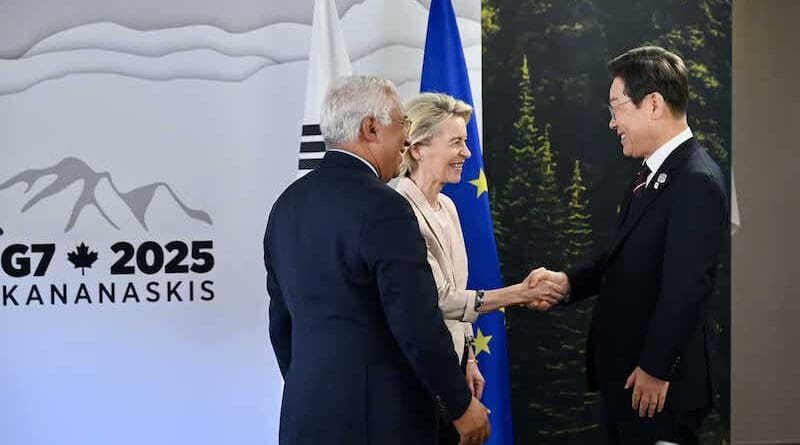
Handshake between Lee-Jae Myung, President of South Korea (on the right), and Ursula Von der Leyen, in the presence of Antonio Costa (on the left). Photo: Dati Bendo – EC Audiovisual Services / ©European Union, 2025.


October 20, 2025 
 Elcano Royal Institute
By Yun Byung-se


1. Introduction: navigating a fragmented global order

The 21st century global order is undergoing a profound transformation, driven by a convergence of systemic crises: geopolitical rivalries, geo-economic fragmentation, technological disruption and leadership deficit. The rules-based international order (RBIO), which emerged after World War II and was reinforced by the post-Cold War liberal democracy, is under unprecedented stress.

The return of great-power competition –exemplified by Russia’s invasion of Ukraine and the worsening US-Chinese strategic competition across domains and across regions, especially in the Indo-Pacific– is reshaping the international landscape. Simultaneously, internal strains within Western alliances and the revival of populist and unilateralist policies are eroding the cohesion and leadership of traditional democratic powers.

In this context, South Korea and Europe, led by the EU, are increasingly recognised not only as regional actors but as global players capable of contributing to systemic stability. Both are pivotal powers with strong stakes in preserving multilateralism, open markets and democratic values. Their cooperation has matured over decades and now holds the potential to shape the future of global governance reform.
2. The evolving nature of the Korean-EU partnership

The formal foundation of Korean-EU relations was laid in 2010 through three landmark instruments: the Framework Agreement, the Free Trade Agreement (FTA) and the establishment of a ‘Strategic Partnership’. This was followed by the Framework Participation Agreement on Crisis Management in 2014. Particularly since the agreement on the Strategic Partnership, relations have been growing by leaps and bounds. It is deep and addresses a wide range of political, security, trade, economic, environmental, scientific and cultural issues.

The initial focus was primarily economic and institutional but, over time, the relationship has evolved to address a broad array of global concerns, including security, development, climate change, digital governance and democracy. This expansion is grounded in shared values –democracy, human rights, the rule of law and multilateralism– and a convergence of strategic outlooks.


In 2023 the two partners marked the 60th anniversary of diplomatic relations with a comprehensive joint statement consisting of 45 paragraphs. More than one-third of them addressed global governance cooperation through multilateral platforms such as the UN and the G20. The statement underscored a shared commitment to addressing transnational threats –from climate change to pandemics to digital disruption– through inclusive, rules-based and forward-looking governance mechanisms.
3. Why Korea and the EU need each other more than ever

There are several compelling reasons for Korea and the EU to deepen cooperation on global governance: (1) the collapse of old certainties; (2) the leadership vacuum; (3) the rise of minilateralism and regionalism; (4) the strategic convergence of the Indo-Pacific and Euro-Atlantic regions; and (5) the complementarity of strengths.
3.1. The collapse of old certainties

Institutions like the UN Security Council, WTO and Paris Climate Agreement are no longer delivering predictable, fair or enforceable outcomes. The rules-based order is fragmenting into spheres of influence, while critical global issues –climate, AI and pandemics– require coordinated responses that unilateral actors cannot deliver alone.

In this era of Shock and Awe, a threat to the rules-based order anywhere undermines respect for it everywhere.
3.2. The leadership vacuum

The US is no longer perceived as a reliable champion of multilateralism, particularly under the MAGA doctrine. China, while expanding its influence, promotes an alternative governance model aimed at many in the Global South, but which is increasingly regarded as a threat or as interventionist by recipient states. When the provision of public collective goods is needed most, global leadership is in a deep deficit and global governance is in great turmoil.

Under these circumstances, the EU and Korea, as stable democracies with a global reach, can help fill the leadership vacuum through principled and pragmatic engagement.
3.3. The rise of minilateralism and regionalism

As universal institutions falter, issue-based coalitions and regional/cross-regional compacts are proliferating. Korea and the EU are active participants in these formats –ranging from MIKTA and the Global Gateway to the Indo-Pacific Strategy and NATO’s partnership with four Indo-Pacific countries, namely South Korea, Japan, Australia and New Zealand–. Coordinated engagement across such mechanisms enhances their global leverage.
3.4. The strategic convergence of the Indo-Pacific and Euro-Atlantic regions

Increasingly, challenges in one region reverberate across the other. NATO’s Strategic Concept, the EU’s Indo-Pacific Strategy, and the US National Security Strategy all highlight the interdependence of these two theatres.

China, which declared a no limit partnership with Russia just before the latter’s invasion of Ukraine in 2022, made it clear recently that it cannot accept a Russian defeat in Ukraine, fearing it would free up Western resources to contain Beijing, especially as regards the Taiwan Strait crisis. The NATO Secretary-General, Mark Rutte, also envisaged this two-front war scenario in a recent interview with The New York Times.

The 2024 treaty on ‘comprehensive strategic partnership’ between Russia and North Korea and the latter’s participation in the Russian-Ukrainian war reinforces this aspect, having further implications on any future inter-Korean armed confrontation. Under these circumstances, war in Ukraine or other spots in NATO territories, the Taiwan Strait crisis and inter-Korean tension are likely to affect each other in one way or another: by intention, miscalculation or escalation.

This geopolitical calculus reinforces the need for cross-regional cooperation between the Euro-Atlantic and Indo-Pacific. Korea, positioned at the heart of North-East Asia and deeply engaged with the Euro-Atlantic community, is uniquely placed to serve as a bridge and linchpin.
3.5. The complementarity of strengths

Korea’s technological capabilities (AI, semiconductors, quantum), soft power and strategic geography complement the EU’s institutional depth, normative influence and regulatory reach. Together, they form a powerful coalition capable of proposing and implementing reforms in global governance.
4. The guiding tenets of Korean-EU strategic cooperation

At the heart of Korean-EU cooperation is the 2010 Framework Agreement, which outlines shared principles and modalities for engagement. Article 1, in particular, provides three foundational tenets:A mutual attachment to democratic principles, human rights, the rule of law and multilateralism.
A recognition of the comprehensive nature of bilateral relations.
A commitment to raising ties to the regional and global levels.

These principles have been reinforced through multiple joint declarations, ministerial dialogues and bilateral agreements with EU member states. Korea’s recent strategic partnerships with countries like Spain and its enhanced participation in EU-led programmes demonstrate the growing institutional density of the relationship.

Moreover, both sides are committed to aligning their respective Indo-Pacific strategies, particularly in areas such as climate resilience, digital transformation, sustainable development and maritime security. This alignment is especially significant given China’s growing influence in the Global South and the intensifying strategic competition across the Indo-Pacific.
5. Current mechanisms for global governance cooperation

Korea and the EU are already deeply engaged in a range of multilateral and minilateral mechanisms:The UN system, with active coordination in the UN Security Council, the Human Rights Council and peacekeeping operations.
The G20 and G7, with Korea having been invited regularly to G7 summits and being an active member of the G20, working with EU members on issues such as pandemic response, economic resilience and energy transition.
Digital governance, with the 2022 Digital Partnership between Korea and the EU providing a platform for coordination on AI regulation, cybersecurity and semiconductor policy.
Climate governance, with joint initiatives to promote carbon neutrality, green finance and technology transfers to developing countries.
Development cooperation, engaging with ASEAN, Africa and the Pacific Islands through mechanisms such as the EU’s Global Gateway and Korea’s Official Development Assistance programmes.

Together, these mechanisms constitute a web of cooperation that allows Korea and the EU to act not just as bilateral partners but as coalition-builders in broader global governance frameworks.
6. Priority areas for future Korean-EU cooperation on global governance

In response to mounting global challenges, Korea and the EU are strategically aligned to act in nine key domains that define the agenda for global governance reform: (1) global health governance; (2) climate and energy transition/green partnership; (3) digital and AI governance; (4) the security and defence partnership; (5) economic security and supply-chain resilience; (6) development cooperation and Global South engagement; (7) democratic resilience and human rights; (8) UN system reform; and (9) trade and WTO reform.
(6.1) Global health governance

The COVID-19 pandemic exposed the limitations of global preparedness and coordination. Korea and the EU can jointly empower the World Health Organisation (WHO) with greater funding and enforcement capacity. By supporting binding frameworks for data sharing, pandemic preparedness and equitable vaccine distribution they can lead the institutionalisation of global health norms.
6.2. Climate and energy transition/green partnership

As frontrunners in carbon neutrality and green technology, Korea and the EU can work together to accelerate the Paris Agreement’s implementation. Reforming international climate finance –especially to better serve developing countries– is a shared goal. Both partners can push for global carbon-pricing mechanisms, green infrastructure investment and joint R&D on clean energy.
6.3. Digital and AI governance

Korea’s strength in AI, semiconductors and digital platforms pairs naturally with the EU’s global leadership in regulation and digital rights. The 2022 Digital Partnership provides a foundation for cooperation on AI ethics, data governance, cybersecurity and emerging technologies. Joint initiatives in responsible military AI, framed by the REAIM summit platform and other related initiatives, can shape global norms in military technology.
6.4. The security and defence partnership

Security is not limited to traditional military and defence-related issues but increasingly encompasses a broader range of closely linked areas, ranging from the cyber and hybrid spheres to maritime and outer space.

In November 2024, Korea and the EU agreed on 15 specific areas of security cooperation. These include international peace and crisis management, maritime security, cyber security (EDT), hybrid threats, countering foreign information manipulation and interference (FIMI), counterterrorism, WMD non-proliferation, space security, peace mediation and conflict prevention.

EU participation in Indo-Pacific security frameworks and Korea’s engagement with NATO enhance cross-regional stability. Joint projects on maritime governance and cyber defence can be expanded under the Indo-Pacific strategies of both partners.
6.5. Economic security and supply-chain resilience

Korea and the EU are leading voices in the emerging field of economic security. Coordination on critical materials, rare earths and semiconductor value chains is essential. They can jointly invest in transparency and strategic stockpiling, while also shaping international norms on economic coercion and technology controls.
6.6. Development cooperation and Global South engagement

China’s expanding role in global governance presents both a challenge and an opportunity. Through platforms like the Belt and Road Initiative (BRI), the Global Development Initiative (GDI) and expanded BRICS membership, China is intent on offering an alternative model of multilateralism. Absence of US leadership or MAGA 2.0 is even feared to inadvertently Make China Great Again (MCGA).

Korea and the EU can work actively to compete for influence in the Global South. Through initiatives like the Global Gateway (EU) and Korea’s Indo-Pacific Strategy and ODA, they can pool resources and align development policies. This includes policy dialogue on SDGs, climate resilience, food and energy access, and inclusive growth.

Their collaboration on supply chain resilience, infrastructure investment, development cooperation and digital standards can serve as a counterbalance to Chinese influence –particularly in Africa, South-East Asia and the Pacific–. Their shared commitment to sustainability and transparency offers a compelling alternative to opaque or conditional development models.

In the Indo-Pacific this coalition can be reinforced by the US Indo-Pacific Strategy.
6.7. Democratic resilience and human rights

Amidst growing autocracy and retreating democracy worldwide, Korea and the EU can jointly promote democratic norms. This includes media freedom, civic participation, electoral integrity and gender equality. By leading initiatives through the UN Human Rights Council and bilateral aid programmes, they can support democratic institutions in fragile states and serve as global role models of inclusive governance.
6.8. UN system reform

Korea and the EU support expanding the Security Council to reflect contemporary geopolitical realities. Strengthening the General Assembly’s authority, reforming ECOSOC and modernising the UN Development System are also high on the agenda. Both actors can coordinate to ensure that underrepresented countries have a greater voice in decision-making.
6.9. Trade and WTO reform

The ongoing tariff war between the US and the rest of the world has awakened the urgency of reformed trade rules. The paralysis of the WTO’s dispute settlement system threatens global economic stability. Korea and the EU can jointly support reform of the Appellate Body, advocate updated trade rules reflecting the digital economy and champion plurilateral agreements in areas where full consensus is elusive. Promoting sustainable trade and fighting protectionism should be a core part of their joint platform.

Last September, UN Summit for the Future hosted by the UN Secretary-General adopted the Pact for the Future which listed several dozen action plans on transforming global governance. Several elements of this pact have salience for enhanced cooperation between the EU and the ROK. That includes peace and security, sustainable development, climate and financing for development, digital cooperation and human rights, etc. Most of these elements are in sync with the above nine priorities.

Robust implementation of these priority areas in the future will make Korea-EU relations a model that other bilateral partnerships could aspire to achieve.
7. Structured engagement with the G7: a strategic imperative

The G7 –comprising the most advanced democracies– has become a critically important venue for shaping global standards and the new international order, particularly as existing multilateral institutions struggle. It is now redefining its role on global leadership.

Korea has been regularly invited as a guest to G7 summits, but the current geopolitical climate calls for more structured and sustained engagement for similar reasons explained above with regard to the need for further cooperation between Korea and the EU.

Korea is one of few countries who are like-minded with the G-7. They are most like-minded on many daunting challenges and crises in the evolving international order, fragmenting into Global West, Global East and Global South. We are more aligned, synchronised and in lockstep than ever. Such convergence between the two sides explains why Korea fits in the G7 framework:First, value alignment. Korea shares the G7’s foundational values, such as liberal democracy, RBIO and the rule of law, human rights and respect for international norms.
Secondly, strategic relevance. We are like-minded in strategic interests across regions and across domains, such as geopolitical and geo-economic issues. That includes Ukraine, the Middle East, the DPRK, Indo-Pacific Strategy, climate change, economic security and supply chain resilience, tech security, cyber security, maritime and space security, energy and food security, health and human security, etc.

We have adopted a series of joint statements on common visions and values, strategies and roadmap for the future over the last couple of years: bilaterally, minilaterally, regionally, inter-regionally (NATO) and globally (G20, UN).

Individually, EU G7 members, US, Canada, Japan and Korea all adopted Indo-Pacific Strategy and complement each other. EU G7’s strengthened presence in the Indo-Pacific is in alignment with EU’s Strategic Compass, NATO’s New Concept, National Security Strategies of US, Japan and Korea. Especially, there is a decisive convergence between the ROK and G7 countries in the domain of international security and economic security.Third, institutional strategic framework. Korea is a frequently invited guest to the expanded G7 and NATO summits (the ITPP partnership and IP-4). It is one of the EU’s 10 strategic partners. It is the US’s global comprehensive strategic partner and one pillar of trilateral summit mechanism of the US, Japan and the ROK. Korea is also a strategic partner of the UK and Canada. G7 members are connected through the UN Command in Korea and Japan since the end of the Korean War in 1953, as well as the UN Security Council.
Fourth, representation balance. Korea’s inclusion would enhance Asian representation and strengthen the G7’s legitimacy, particularly in light of expanded BRICS and Global South engagement.

Recent summits –such as the 2023 Camp David Trilateral (US-Japan-Korea)– demonstrate Korea’s capacity for sustained, high-level strategic alignment. This includes its commitment to consultative mechanisms, cross-domain cooperation and deterrence postures in the Indo-Pacific. These arrangements echo the very principles underpinning the G7’s role as a pillar of the global governance order. A more institutionalised role –what might be termed ‘G7+1’ or a ‘G7 Plus’ structure– would allow Korea to co-shape the group’s agenda in not only traditional agendas, but also in emerging areas.
8. Building a new pragmatic multilateralism

Korea is uniquely situated to serve as a connector between the Global West and the Indo-Pacific, and between traditional institutions and emerging coalitions. This is not only due to geography but also because of its diplomatic posture and economic capacity to harmonise interests between the US, China, Japan, the EU and other powers.

Korea participates in:Trilateral US-Japan-Korea cooperation (summit).
Trilateral Korea-Japan-China cooperation (summit).
NATO’s Indo-Pacific partnerships (IP4).
Digital, trade, and climate compacts with EU members.
G20 and MIKTA (a coalition of middle powers).
EAS, APEC and ASEM (founding member).
UN Command and peacekeeping operations.

These linkages position Korea as a system-shaping actor, capable of building bridges between regions, values and governance models.

The reform of global governance will not be achieved through abstract declarations or hegemonic imposition. It will emerge from coalitions of like-minded actors who share both values and interests. Korea and the G7 are natural leaders in such coalitions.

Together they will be able to focus on:Flexible, issue-based coalitions on global governance (eg, REAIM, Digital Partnerships).
Inclusive engagement with the Global South.
Balancing universal norms with regional realities.
Gradual institutional reform, not revolutionary overhaul.

Korea’s cooperation with G7 countries in forums such as the G20, the UN, the Human Rights Council and emerging AI governance bodies is a good example of how this can be operationalised. Both parties can play leadership roles, coordinate policy positions, and shape new regimes on global public goods.
Conclusions: The responsibility of system-shaping states

South Korea’s strategic alignment with the EU and G7 will strengthen the roles of ‘system-shaping’ actors: states that possess the normative legitimacy, operational expertise and capability, and institutional reach to drive global agenda-setting and reform. The challenges of our time –geopolitical confrontation, climate collapse, digital revolution and authoritarian resurgence– require exactly this kind of principled, collaborative leadership.

Korea’s potential structured engagement with the G7, its convergence with the EU across strategic domains, and its commitment to an open, inclusive world order will be able to position it as a key driver of global governance reform in the 21st century.

At a time when the world is returning to spheres of influence and a zero-sum logic of power, Korea and the EU, as well as the G7 plus, remind us that multilateralism –if reinvented and reinvigorated– remains not only viable, but indispensable. Their cooperation would bolster the collective capacity to address global challenges of the fragmented multipolar world and reaffirm the value of rules-based cooperation, rejecting a world in which might makes right. Korea, Europe and the G7, united in purpose, can serve as guardians and architects of a new global order.


About the author: Yun Byung-se is Chairman of the Seoul International Law Academy (SILA), co-Chair of the GC REAIM (The Global Commission on Responsible AI in the Military Domain) and former Minister of Foreign Affairs of the Republic of Korea from March 2013 to June 2017.

Source: This article was published by Elcano Royal Institute in association with the Korea Foundation


Elcano Royal Institute

The Elcano Royal Institute (Real Instituto Elcano) is a private entity, independent of both the Public Administration and the companies that provide most of its funding. It was established, under the honorary presidency of HRH the Prince of Asturias, on 2 December 2001 as a forum for analysis and debate on international affairs and particularly on Spain’s international relations. Its output aims to be of use to Spain’s decision-makers, both public and private, active on the international scene. Its work should similarly promote the knowledge of Spain in the strategic scenarios in which the country’s interests are at stake.