Sunday, October 26, 2025

Nigeria refinery aims to be world’s biggest with expansion


By AFP
October 26, 2025


The expansion aims to make the Dangote refinery in Nigeria the world's biggest - Copyright AFP/File Idrees Mohammed

Nigeria’s Dangote oil refinery, already the largest in Africa, aims to become the biggest in the world in three years’ time with an expansion doubling its capacity, its owner said on Sunday.

“We are more than doubling the barrels… to 1.4 million from 650,000,” said Aliko Dangote, a Nigerian businessman who is Africa’s richest person.

“This will make it the largest refinery” globally, surpassing India’s Jamnagar Refinery, he said.

The privately run Dangote refinery, which started operations last year, is a gamechanger for Nigeria, which previously had to import almost all its petrol despite being a major oil producer.

After years of neglect and mismanagement of public refineries, Dangote has shaken up the corruption-marred players in Nigeria and driven down prices of petrol for consumers.

“This expansion reflects our confidence in Nigeria’s future, our belief in Africa’s potential and our commitment to building energy independence for our continent,” Dangote said.

The Dangote refinery has sparked monopoly fears as it becomes a powerful player itself.

Recent moves to bring its own, natural gas-powered trucks to distribute petrol in the country in September sparked a strike by a fuel tanker drivers’ union, which accused the company of hiring new drivers on the condition they didn’t join a union.

The refinery denied the allegations.

The refinery suffered a two-day strike that ended October 1 after government mediation.

The PENGASSAN oil and gas workers’ union accused the refinery of firing 800 local workers because they unionised, and replacing them with 2,000 workers from India.

The refinery called the allegation false, and said it had fired an unspecified number of workers over “acts of sabotage”.


Newmont said to eye deal for Barrick’s prized Nevada assets

Nevada Gold Mines, the world’s biggest gold mining complex. (Image from Barrick)

Newmont Corp. is studying a potential deal to gain control of Canadian rival Barrick Mining Corp.’s prized Nevada gold assets, people with knowledge of the matter said.

Denver-based Newmont has a minority stake in a Nevada gold mining joint venture with Barrick, which is operated and majority owned by Barrick. Newmont is in the early stages of considering various transaction structures that would allow it to gain full ownership of the assets, the people said, asking not to be identified because the information is private.

It’s unclear how receptive Barrick would be to any overtures, especially as the Nevada gold mines are considered to be among its most valuable assets. Newmont could consider options including a bid for Barrick’s stake in the venture as well as a full takeover of the company followed by divestments of assets it views as non-core, the people said.

The US miner is less interested in Barrick’s African operations and the large Reko Diq copper-gold project in Pakistan, some of the people said. Deliberations are ongoing and there’s no certainty the companies will pursue any deal, the people said.

Representatives for Newmont and Barrick declined to comment. Shares of Barrick, which is listed in New York and Toronto, have roughly doubled this year on the back of a record rally in gold prices, giving the miner a market value of about $54 billion. Newmont shares have gained 129% in US trading this year, giving the company a market capitalization of $93 billion.

Shares of Barrick rose as much as 4.5% in New York trading.

Barrick’s operations in Pakistan, Mali and Papua New Guinea have weighed on the company’s shares in recent years as it wrestles with operational setbacks in each country. Its North American assets, meanwhile, have benefitted from recent expansions and safer jurisdictions.

The Nevada joint venture between the companies dates back to 2019. Barrick had made a hostile takeover bid for Newmont — which at the time was the smaller of the two companies — before eventually dropping the offer and instead agreeing to pool together their nearby projects in the US state.

In the past year, Toronto-based Barrick itself has studied the possibility of a split or breakup, some of the people said. In one potential scenario, it could separate into two listed companies, hiving off its top-tier North American operations from the rest of its sprawling portfolio in more challenging jurisdictions, they said. It’s unclear if the idea is still under consideration.

Barrick is seen as vulnerable after announcing the surprise departure of chief executive officer Mark Bristow in September. It appointed Mark Hill, the head of its Latin American and Asia Pacific regions, as interim CEO while it looks for a permanent replacement. John Thornton, a former Goldman Sachs Group Inc. investment banker, is chairman of Barrick.

On the same day that Barrick announced Bristow’s departure, Newmont said Tom Palmer would step down from the CEO role on Dec. 31 and be succeeded by chief operating officer Natascha Viljoen, in what was a largely expected transition.

Newmont investors could be wary of any major move. The company’s expenses jumped after it acquired Australia’s Newcrest Mining Ltd. in 2023 for around $15 billion. The company has been studying plans to drive down costs that could lead to deep job cuts, Bloomberg News reported in August.

(By Julian Luk, Dinesh Nair, Paula Sambo and Jacob Lorinc)

A Kansas man ‘married’ a ghost in 1927. 
They did not live happily ever after.


A 1905 double exposure “spirit” photograph shows a girl surrounded by spectral figures. It was made by G.S. Smallwood of Chicago. (Library of Congress)


October 26, 2025 

When it came time for John Seybold to place the ring on his bride’s finger, he was given a warning: he must not touch any other part of her body or risk death.

That should have been enough to alert the 71-year-old retired Kansas farmer that things were not as they seemed, but love does weird things to people. He proceeded with the ceremony, held in a darkened séance room, and later sat during a festive wedding dinner next to an empty chair reserved for his spectral bride.

Seybold was in love with “Sarah,” the ghost of a girl he had known in his youth back in Ohio, and he trusted the spirit medium who had summoned her from the great beyond.

The medium, 36-year-old Nellie Moore, had been holding classes in spiritualism in Wichita for the curious and the credulous. She had introduced others to their ethereal soulmates, but being matchmaker to Seybold and his gossamer love had been a singular achievement.

She had enjoyed material benefits from her association with the lonely farmer, who had come to her two years before from Liberal and asked to make contact with his long-dead son. In a darkened room with black curtains and a wardrobe that produced such wonders as spirit photos and floating luminous stars, Moore had done just that.

Or at least Seybold thought she had.

Soon, Moore had a new car and furniture and even deeds to the farms Seybold owned, one near Liberal, a couple of hundred miles away in southwestern Kansas, and another across the state line in Oklahoma.

When it finally dawned on Seybold that he’d been taken for his life savings, he did what many disappointed spouses do: He sued. The case must have been one of the strangest ever to come before a Wichita judge, and it made headlines across the country.

“She was really after his money,” author and historian of the strange Tim Shepard told me. “When it was all over, she got him for $7,500.”

Because I’m a diurnal skeptic when it comes to paranormal activity — my answer changes according to how often things go bump in the night — I asked Shepard for his take on Wichita’s “ghost bride” case.

Shepard is the author of two books of Kansas ghost stories, the most recent of which is “Return to the Prairie: More Tales of History and Hauntings.” He’s working on a forthcoming book about hauntings along Route 66, and as research for that book he drove the length of the mother road in a 1934 Hudson Terraplane. He’s given ghost tours across the state, worked at the Red Rocks State Historic Site at Emporia, and at 52 says he’s considered the grandfather of ghost hunting in Kansas.

“Moore’s tactics were very similar to what most spiritualists were doing in the late 1800s,” Shepard said. “The room she held her séances in was painted black, with black curtains, a large wardrobe, and a couple of chairs. She actually told him not to touch the spirits because if he did both he and she would die. Based on the details he gave of meeting Sarah, there was probably somebody hidden in the cabinet.”

At one séance, Moore was instructed to write a $500 check to an organization for wayward girls. He did so, Shepard said, and an otherworldly hand took the check.

While Seybold’s actions may seem foolish now, he seems to have had a serious interest in spiritualism, a belief system that holds the soul survives death and spirits of the dead can communicate with the living.

It all began with the Fox Sisters in western New York in the 1840s, who claimed they could communicate through raps and knocks with the spirit of a murdered peddler. The sisters were soon demonstrating spirit communication at public events that drew hundreds, dividing the press and the public on whether they were genuinely in touch with the spirit world or youthful hoaxers seeking money and attention.

During and after the Civil War, spiritualism surged in popularity. The bloodiest conflict in American history drove many to the comforting belief that they could communicate with their beloved dead. Even Mary Todd Lincoln held séances at the White House. Years after the war, the last photograph taken of Mrs. Lincoln contributed to another spiritualist-related craze, spirit photography. A photo by Boston photographer William Mumler purports to show the ghost of Abraham Lincoln looking kindly down upon her, hands on her shoulders. But it was a cheap photographic trick relying on a double exposure.

Spiritualism was not just a fad in Victorian American, but a serious societal and political movement. The first woman to run for president was Victoria Woodhull, a trance medium and “free love” radical. Kate Bender, of the murderous Bender Family of Kansas, also claimed to be one. While some mediums were perpetrating hoaxes on their credulous victims, often with the use of mechanical tricks such as the magic slate tablet, there were millions of Americans who embraced spiritualism as proof of life after death.

After the First World War, the movement gained renewed popularity. Its chief proponent was Sir Arthur Conan Doyle, the creator of Sherlock Holmes. Despite having created the epitome of the rational detective and being trained as a medical doctor, Doyle was gullible and proclaimed his belief in spirits, including the now-debunked Cottingley Fairies photos.

If Doyle was the champion of mediumship, Harry Houdini was its nemesis. The world-famous magician and escape artist (and friend of Doyle’s) spent much of his career campaigning against charlatanism. He devoted himself to exposing the tricks used by fake mediums. Houdini was an expert in those tricks, because he and his wife Bess had started their careers by using them.

In November 1897, they had appeared at the opera house in Garnett, Kansas, promising to name the killer of a recently murdered local woman. Houdini had already demonstrated an escape from the local jail, according to “The Secret Life of Houdini” by William Kalush and Larry Sloman. Bess had been promoted as a “psychometric clairvoyant” and her séances with Houdini were a hit. But it was all trickery, and in Garnett, according to the authors, Bess feigned a swoon at the climactic moment to avoid actually naming the murderer.

In addition to tricks like the spirit slates, charlatans used rhetorical sleight-of-hand. If a medium failed to materialize a spirit it was because there were unbelievers present. Some, like Nellie Moore, claimed they couldn’t remember anything while under control of spirits. If Seybold’s dead son or the ghost of “Sarah” told the old farmer to do things, such as take $3,000 out of the bank to give to her, she would just have to take other people’s word for it.

“During the wedding ceremony,” Shepard said, “he actually places a diamond ring on the ghost’s finger. And he said it felt solid.” But the old man was so fearful of dying from touching the ghost that he dared not embrace his bride.

Seybold, who had two previous marriages to living women, moved from Liberal to Wichita to be close to his medium and was directed to deed all of his property to her. When the aging farmer said he wanted to consult an attorney, Moore produced the ghost of Samuel B. Amidon, a recently deceased Wichita lawyer. But it seems unlikely the famous jurist would have advised him to trust Moore.

“In the very first séance, Mrs. Moore, in a semi-trance, told the Kansan his son had come to her and was telling her what to say,” reported the San Francisco Examiner in July 1927. He was cautioned that turning on the lights, or otherwise interfering with the spirits, would result in immediate death.

Like many of us, Seybold was susceptible to flattery. He was called “doctor” by those in his medium’s orbit, apparently after healing somebody of a headache, and was told he could quickly become proficient at piano if only he bought one for Moore’s home.

“Here’s a lonely old man,” Shepard said. “He believed he was really in love with a ghost. At trial, he pondered whether he was really married to her or did he need to get a divorce?”

The only time “Sarah” visited him in his bedroom, according to Shepard, Seybold became suspicious. “All he saw of her was her hands,” he said. “But instead of just fading away, she backed out of his room and around the corner. Ghosts don’t do that, do they?”

The case went to trial in November 1927.

Moore claimed that Seybold came to establish a “spiritualistic class room,” but that he soon began claiming healing powers of his own. She admitted she had been the recipient of gifts and loans secured by mortgages, but denied having hoodwinked Seybold. Witnesses testified, however, that Moore had shown them devices used in her séances, including a speaking trumpet with a rubber hose and a star that glowed with luminous paint.

“An Aged Farmer Loses his Battle with the Spooks,” the Wichita Eagle reported Nov. 17. “Superlative advice might come from the trusted sources of the spirit world, but all of Seybold’s business transactions were drawn in black and white.”

The judge, J.E. Alexander, ruled Seybold had no case because he had reached a compromise settlement with Moore before bringing his suit. Any question of spectral evidence was not considered. Even if fraud had been involved in summoning “Sarah,” it was not for the court to decide whether spirit communication was possible or had been practiced by Moore.

While Seybold’s faith in Moore was shattered, he remained an ardent spiritualist. He later married again, this time to a woman named Dollie who was an ordained spiritualist minister.

“He was looking for something,” Shepard said. “I think we all desire to connect with something beyond ourselves.”

In the years he’s been investigating the paranormal, Shepard said, he’s run into only three people he considered true mediums. One of them is a woman in Topeka, and when she does her readings for groups of 30 or 50 people, she doesn’t turn the lights off.

“Real paranormal research isn’t done in the dark,” he said. “They want the lights on. They want to see what’s happening around them. They’re trying to answer the questions we’re still searching for. Where do we go when we die? Is there life after death?”

Shepard said he was both a believer and a skeptic. He says he believes there are spirits out there, but that he doesn’t necessarily believe every story that’s told to him.

But there is still mystery to the “ghost bride” case, he said.

What was Seybold’s son’s name, and how did he die? What was Sarah’s last name? Seybold said he knew her during his youth in Dayton, but there’s no evidence from him of how she crossed over — or whether she existed at all.

We may never know.

Seybold died in 1941, aged 85, of lingering injuries suffered when he was struck by a car a year earlier at Third and Broadway in Wichita. Moore moved to California, where she died in 1974, at San Diego. She was 83.

A century after Seybold attended that first séance in Wichita, it might be easy for us to dismiss him as a fool. Here in the modern and allegedly rational age, we would never fall for such tricks. Right?

But there are people who fall in love with their AI chatbots. This year, a Colorado man “married” his digital companion, with the approval of his real-world wife. And the MIT Technology Review cautions that it’s easy to stumble into an emotional relationship with a digital assistant.

We’re all looking for something, whether it’s “Sarah” or “Siri.”

Perhaps in a hundred years, some cyber columnist will look back and be incredulous that any chatbot could ever fall for an ephemeral something made of meat and bone.

Max McCoy is an award-winning author and journalist. Through its opinion section, the Kansas Reflector works to amplify the voices of people who are affected by public policies or excluded from public debate. Find information, including how to submit your own commentary, here.

Napoleon’s diamond brooch heads to auction for the first time

THE ONE THAT DID NOT GET STOLEN FROM THE LOUVRE

Stock image.

A unique diamond brooch once owned by Napoleon Bonaparte — and said to have been retrieved from the chaos of the Battle of Waterloo — will go under the hammer for the first time this November.

No, it’s not those French crown jewels, the ones stolen from the Louvre museum this week in a brazen heist. The brooch, reportedly abandoned by Napoleon himself as he fled the battlefield after his crushing defeat in 1815 and owned for centuries by descendants of the victorious King of Prussia, will be auctioned at Sotheby’s Royal & Noble Jewels sale in Geneva on Nov. 12.

The circular brooch has an oval diamond of over thirteen carats in weight at its center and is surrounded by nearly one hundred old mine cut diamonds of varying shapes and sizes. Created in a Parisian atelier around 1810, the brooch, which most likely adorned Napoleon’s bicorne on special occasions, is expected to fetch between $150,000 and $250,000, Sotheby’s told Bloomberg.

Offered as a spoil of war only three days after Napoleon’s defeat, the brooch remained in the House of Hohenzollern — the former German imperial dynasty — for centuries. It was passed down from King Friedrich Wilhelm III to the last German emperor, Queen Victoria’s grandson Kaiser Wilhelm II, and eventually to his grandson Louis Ferdinand, Prince of Prussia. It has been part of a different private collection for the last few years.

In an uncertain global market, collectors are increasingly turning to rare, storied pieces as tangible stores of value. Sotheby’s Royal & Noble auction is an annual sale dedicated to showcasing illustrious jewels with provenance. In previous auctions, Sotheby’s sold a diamond necklace with possible links to a scandal that led to the downfall of Marie Antoinette for $4.8 million. One of the most famous sales was in 1987 when a collection of jewels owned by the late Duchess of Windsor was sold for $50 million, more than six times the expected figure.

Napoleon’s brooch is the showpiece of the upcoming auction, which will also feature a diamond ring that once belonged to one of the last Ottoman princesses, Neslishah Sultan.

(By Allegra Catelli)

World’s largest museum devoted to ancient Egypt to open by Giza pyramids

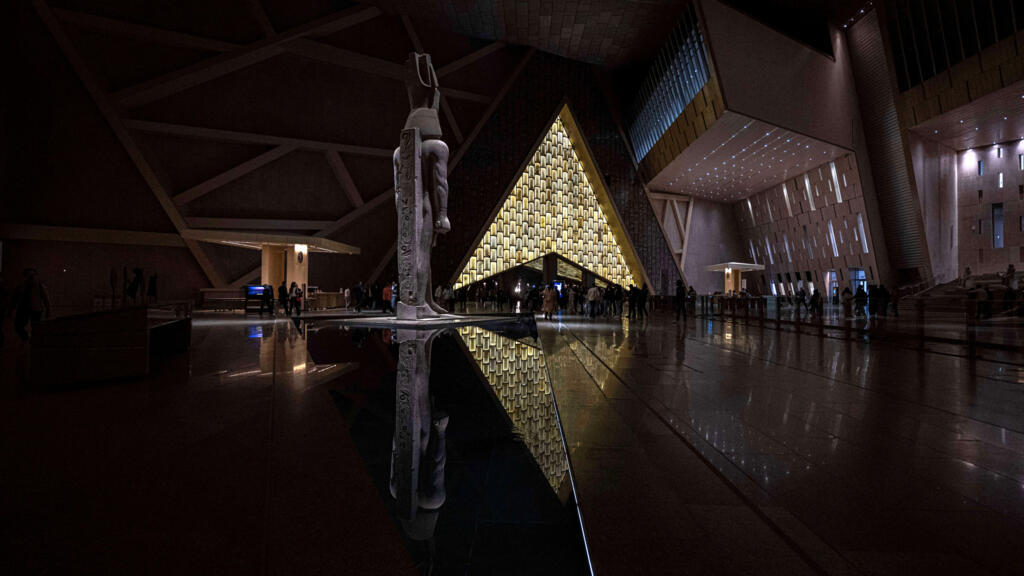
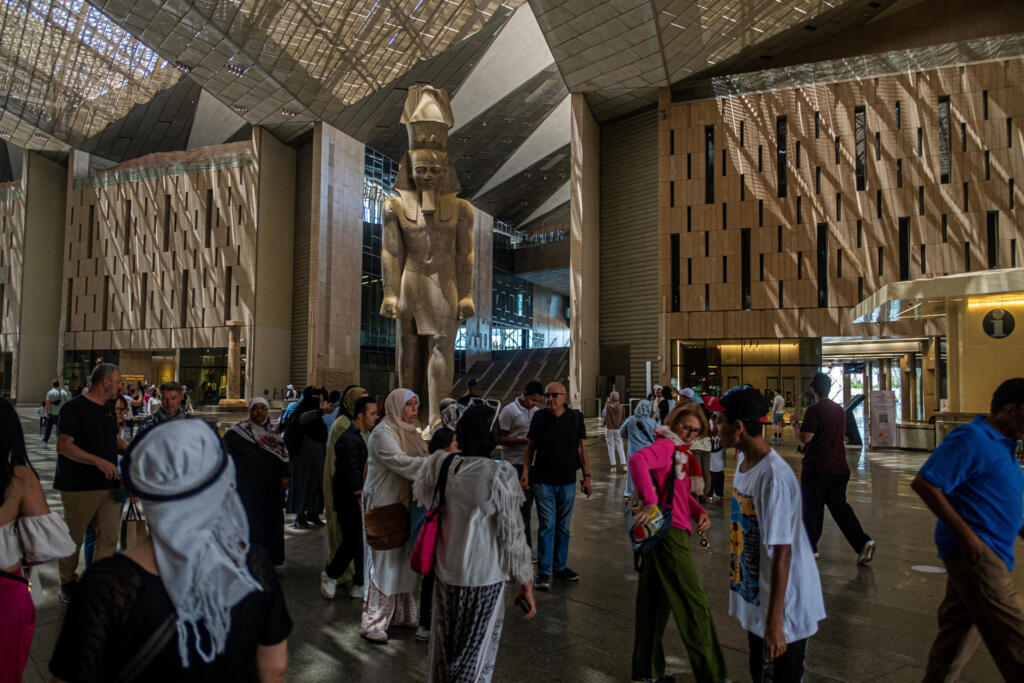
After years of delays, the long-awaited Grand Egyptian Museum – set to be the world’s largest devoted to ancient Egypt – will finally open its doors near the Giza pyramids.


Issued on: 26/10/2025 - RFI

Visitors walk next the 3,200-year-old pink-granite colossal statue of King Ramses II at the entrance of the Grand Egyptian Museum, in Giza on the outskirts of the capital Cairo on 7 February, 2025, © AFP - Khaled Desouki

The opening of the Grand Egyptian Museum (GEM), which has been more than twenty years in the making, had been slated to open its doors back in 2013.

After countless delays – from the Covid-19 pandemic to regional instability – the grand unveiling is now set for 1 November.

Located just a stone’s throw from the pyramids of Giza, the museum will be the largest archaeological and antiquities museum in the world dedicated entirely to ancient Egypt.

In October 2024, GEM offered a sneak peek, opening its first 12 galleries to around 4,000 lucky visitors.

This picture taken on 22 April, 2022 shows an aerial view of the Great Pyramid of Khufu (Cheops) and (top-L) the under-construction Grand Egyptian Museum. © AFP - Amir Makar

Why is France so fascinated by exhibitions on Ancient Egypt?


Monumental design

The final phase, planned for 2025, will unveil the Tutankhamun treasure rooms. Some 5,000 objects from the boy king’s tomb – including his world-famous gold funerary mask – will go on show.

Designed by Irish architect Roisin Heneghan, the building features a facade of translucent alabaster.

Its north and south walls are precisely aligned with two of the Great Pyramids – those of Khufu and Menkaure – creating a direct visual link between past and present.

A visitor looks out towards the Giza pyramid complex as she tours the Grand Egyptian Museum in Giza. © AFP - Khaled Desouki

Extraordinary treasures of Egypt's Ramses the Great go on display in Paris


100,000 artefacts

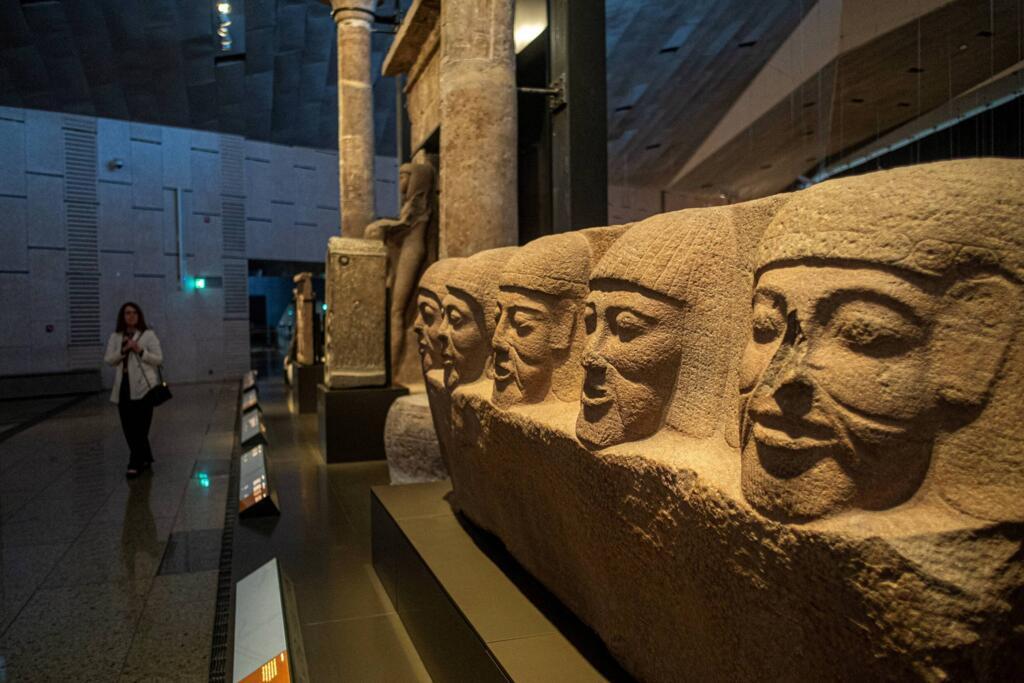
“This museum is the largest in the world dedicated to a single civilisation – in this case, ancient Egypt,” Ahmed Ghoneim, director of the Grand Egyptian Museum, told RFI.

“It’s a museum that embraces the latest scientific innovations, using state-of-the-art technology to restore and conserve artefacts.

“It also reflects the most modern museography, with carefully curated displays that bring history to life. We’re proud that Egypt can share this with the world.”

More than 100,000 artefacts from Egypt’s ancient past will be displayed across 22,000 square metres of exhibition space.

A visitor tours the Grand Egyptian Museum in Giza. © AFP - Khaled Desouki

A visitor walks near a bust of the ancient Egyptian king Akhenaten while touring the Grand Egyptian Museum, in Giza on 7 February, 2025. © AFP - Khaled Desouki


King Tut’s treasures come to Paris, record visitors expected


A billion-dollar wonder

Building the museum has cost more than one billion dollars, a investment covered in part by international touring exhibitions of Egypt’s most iconic treasures, including those of King Tutankhamun and Ramses II.

In 2019, the exhibition "Tutankhamun: Treasures of the Golden Pharaoh" drew nearly 1.5 million visitors to Paris’s Grande Halle de la Villette – a record-breaking success that helped raise funds for the GEM project.

With its grand opening finally approaching, the Grand Egyptian Museum aims to welcome up to five million visitors each year.

Visitors tour the Grand Egyptian Museum. © AFP - Khaled Desouki


This was adapted from an original article by RFI's Spanish service and lightly edited for clarity.

How risky is the growth in US private credit?

By AFP
October 25, 2025


Image: — © GETTY IMAGES NORTH AMERICA/AFP/File JUSTIN SULLIVAN


John BIERS

The recent bankruptcies of US companies First Brands and Tricolor have focused attention on risks associated with the growth in the private credit market, or lending outside traditional banks.

Bank of England Governor Andrew Bailey told a parliamentary panel this week that it was too soon to know whether the problem was isolated to those two firms or the “canary in the coal mine” to a 2008-scale financial crisis.

JPMorgan Chase Chief Executive picked a different metaphor when discussing Tricolor, which cost the giant US lender $170 million.

“When you see one cockroach, there are probably more,” Jamie Dimon said earlier this month, adding that his firm was scouring its loan book for other potential problems.

– What is the private credit market and why has it grown? –

Estimating the exact size of the private credit market is difficult because of opacity in the financial system and differences in what is included in the category.

But broadly speaking, nonbank finance has grown rapidly as conventional banks have backed off from some lending in response to regulations designed to limit risk.

Banks have something of a symbiotic relationship with nonbank financial institutions (NBFIs), which are also competitors.

Bank lending to NBFIs has more than doubled since 2019 to more than $1 trillion at the end of 2024, according to an S&P Global report from February that described the trend as a source of “risks and rewards.”

As the system has evolved, “you have the non-bank that lends to the consumer and the bank that lends to the non-bank,” said Brendan Browne, a credit analyst S&P Global.

This structure means banks don’t have to hold as much emergency capital but leaves them more in the dark about the ultimate recipient of the funds.

– Why are markets suddenly worried? –

The rising importance of NBFIs has been on the radar of policy makers, including the Federal Reserve, which included a scenario of “rapid deterioration” in NBFI asset quality in the most recent stress tests.

Total bank loan losses would be around $490 billion, according to the Fed, which concluded in June that large banks were “well-positioned to withstand significant” NBFI stresses.

However, anxiety about the sector rose following bank losses from First Brands, a US auto supply company and Tricolor, a subprime auto lender. Both cases involve alleged fraud.

The worry is that an economic downturn could bring to the surface more widespread problems with ill-advised lending made in recent years, especially after pandemic-era central bank policies flushed financial markets with liquidity.

– Will this blow up into a full-blown financial crisis? –

It’s too early to say, but the reaction to recent bank earnings suggests markets view the issue as an item to watch, rather than an area of impending doom.

A group of midsized banks saw their share prices tumble on October 16 after Zions Bancorp disclosed that it was pursuing litigation with a borrower over alleged fraud and would take a $50 million hit. But bank shares recovered the next day after multiple regional banks reported clean results.

So far the problem appears to be “some one-off bad apples,” said Stuart Plesser, an analyst at S&P Global, adding that in general bank credit quality was “good” in the most recent batch of results.

But Plesser said the recent cases point to the need to tighten terms, given instances where the same collateral was promised to multiple lenders.

Another key wildcard is the extent that credit quality deteriorates if the job market slows significantly.

Given the rapid growth in lending to NBFIs, “there is likely to be a wobble at some point,” Lazard Chief Executive Peter Orszag said this week on CNBC. “I just don’t think that’s what we’re experiencing today.”

Op-Ed: Deflation and cost of living – Who’s winning?


By Paul Wallis
EDITOR AT LARGE
DIGITAL JOURNAL
October 24, 2025


Americans are making tough choices at the grocery store to stretch their budgets for the holiday meal. — © AFP

Pressure on rampaging prices is inevitable during a high cost-of-living crisis. The no-brainer solution is to lower prices to bearable levels. It’s called deflation. That’s not happening, and “liquidity drainage” is producing a money desert worldwide.

If you read the Investopedia definition of economic deflation, which is remarkably clear, it’s also a hoot in some ways.

Some quotes and paraphrases from that definition are required here:

Deflation is characterized by a general decline in prices, which increases the purchasing power of money but can harm borrowers and financial markets.

“… can harm financial markets?” You mean those lotus lands of endless charm and obsessive social responsibility? How awful.

The definition then goes on to say that Governments and central banks often counter deflation with reducing interest rates and economic stimuli, like increased government spending.Deflation refers to falling prices of goods and services and is caused by a number of factors, including waning consumption – Copyright AFP/File Jade Gao

Like lower government spending doesn’t run a herd of bulls through the fragile economics of everyone who’s not absurdly wealthy. It affects everyone, particularly the business sector. It also hits government contracts like defence, infrastructure, and other big words for infantile intellects.

If this all looks strangely familiar, it should, and so it is. The key point here is a total lack of ideas. A formulaic situation produces a formulaic response. The disasters create disasters in response. Facts have no role in these responses.

For example, the global housing problem:

Problem: People have nowhere to live. Prices and greed have driven them out.

Solution: Build more houses in the next ten years with no clear forward big picture planning for future prevention in macro scale.

Fact: The sheer number and scale of vacant housing and convertible buildings could solve the accommodation problem in a year, not a decade.

Houses taken from above. Image by Tim Sandle

On Main Street, where people eat and pay bills, it’s cumulatively worse. Even food prices are being incinerated by added costs. Income is eroded at the same time prices go nuts across the board. There’s not even the pretense of doing anything at all about that.

Global trade dictates what you pay for everything, directly or indirectly. Never mind “Made in Wherever”, costs are hit by every breeze that blows in such an unstable economic structure. Suppliers have to ride the hurricane, and buyers have to try to survive.
The trade war between Beijing and Washington has reignited with export restrictions and threats of additional retaliatory tariffs – Copyright AFP –

The world can’t operate on a car boot sale of outdated trade policies and whimsical politics. For the last 40 years, the holy grail of growth was based on a free market. That market delivered real profitability without the confetti-like big ticket prices.

The real value of money has been progressively deteriorating severely as a result of this Carnival of the Idiots. Productivity was based on real physical production, not innuendo. Now, it’s a talkfest for limited vocabularies.

That’s why the tariff wars are so important. Every single purchase is affected. This is where the pressure for deflation is originating. That pressure isn’t going away anytime soon. Things are so bad that there aren’t really any options but deflation. Wince now, while you can still afford it.

Decreased real income means decreased demand.

Demand for credit can go only so far before people get scared of personal debt.

Increased prices through tariffs dry up demand instantly.

Margins are hit with added sledgehammers on an hourly basis.

Systemic deflation reduces margins, with impacts on the entire supply chain.

This unbelievable mess comes down to China and America. The world’s biggest producer vs the world’s biggest consumer market.

The deflationary pressure for China is enormous. Domestic trade and global trade issues carry a lot of weight, and the demand is for lower prices.

In America, cumulative real-world inflation is the major issue. We’re not talking about CPI; we’re talking about “Everybody’s broke and nobody can afford anything” as the general assessment.

Result, black markets in everything from serial offenders like pharmaceuticals and other major contributors to retirement plans for organized crime.

Either you control prices or they control you.

______________________________________________________________

Disclaimer
The opinions expressed in this Op-Ed are those of the author. They do not purport to reflect the opinions or views of the Digital Journal or its members.

A year after the Novi Sad disaster, Belgrade faces one crisis after another

A year after the Novi Sad disaster, Belgrade faces one crisis after another
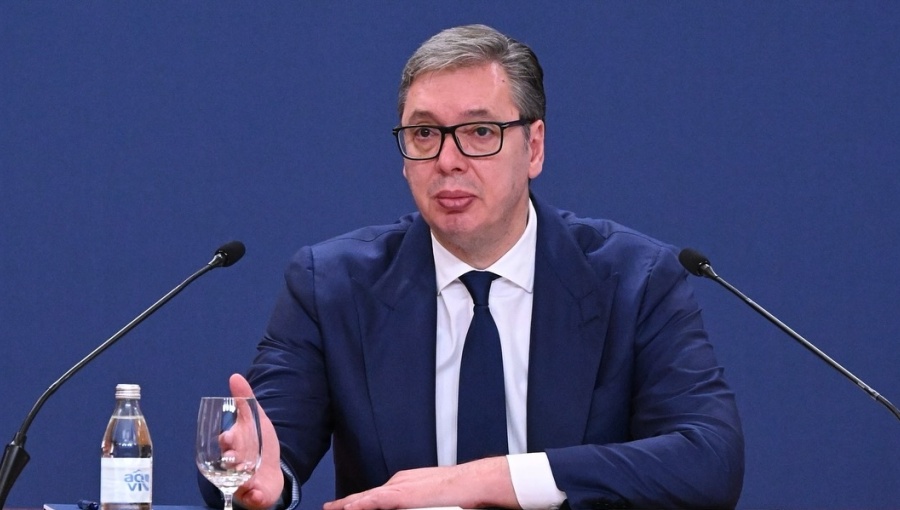
/ Facebook/Aleksandar Vucic
By Tatyana Kekic in Belgrade October 26, 2025

A year after the Novi Sad train station collapse triggered nationwide protests, Serbia’s government is grappling with a convergence of crises — political, economic and diplomatic — which threaten to erode President Aleksandar Vucic’s once-dominant position.

The protests that began as an outpouring of grief and outrage in response to the deadly infrastructure failure in Novi Sad have evolved into a broader reckoning with a system many Serbians view as brittle and exhausted.

“Serbia is exploding under our asses,” media executive Stan Miller joked in an embarrassing phone call leaked in August, as he discussed plans with state telecom boss Vladimir Lucic to undermine independent media. The offhand remark now captures a country under strain on all fronts.

The political temperature rose this week after a shooting and arson attack outside the Serbian parliament. A 70-year-old former security official opened fire on a camp of pro-government supporters before setting one of the tents ablaze. Vucic condemned the incident as a “terrorist act,” blaming opposition groups for fomenting hatred.

The attack came just over a week before the November 1 anniversary of the Novi Sad disaster, when the collapse of a train station canopy killed 16 people and sparked months of student-led demonstrations, university sit-ins, marches and strikes. Organisers of the anniversary protest, set to take place in Novi Sad, describe it as a “culmination of resistance and remembrance”.

The ruling Serbian Progressive Party (SNS), in power since 2012, has faced its most serious and persistent challenge in over a decade. For many younger Serbians, the movement has evolved beyond the initial demands for accountability, becoming a rallying point for grievances over corruption and the rule of law.

Belgrade is now also feeling the squeeze abroad. The European Parliament this week passed a harshly-worded resolution against the government in Serbia, citing democratic backsliding and alleged human rights abuses. The resolution urges Brussels to consider targeted sanctions unless Serbia aligns with EU foreign policy, especially regarding Russia, and called for early elections and independent oversight of police accused of using excessive force against demonstrators.

Compounding the political turmoil is a looming energy crisis. Moscow’s decision in mid-October to offer only a short-term extension to Serbia’s gas supply contract dashed hopes for a three-year deal. The move followed the imposition of US sanctions on NIS, Serbia’s Gazprom-owned oil firm, and signals Russia’s intent to retain leverage over Belgrade amid ongoing talks on restructuring the company.

Serbia depends on Russia for roughly 90% of its gas imports, most of which transit EU territory via Bulgaria and Hungary. With the EU planning to ban Russian gas transit to third countries, Belgrade faces mounting energy risks. Finance Minister Sinisa Mali called the EU decision “catastrophic” and warned that supply disruptions could occur if neighbouring EU states (namely, Bulgaria) cut off gas flows.

Economic indicators are also weakening. The International Monetary Fund this month slashed Serbia’s 2025 growth forecast to 2.4% from 3.5%, the sharpest downgrade in the Western Balkans. Inflation has remained stubbornly high all year, construction activity has stalled and foreign direct investment plunged by more than half in the first eight months of the year, according to official statistics.

The government’s September decision to impose price caps on essential goods has done little to ease inflationary pressures and may have worsened business sentiment. Retailers report margin losses and supply disruptions, warning of possible store closures and job cuts.

Investor sentiment, already fragile, has been undermined by perceptions of corruption and poor governance following the Novi Sad disaster. The combination of slowing growth, regulatory unpredictability and political unrest could discourage investment at a time when Serbia needs foreign capital to cushion against energy and fiscal shocks.

For years, the government has navigated a delicate balance between East and West — cultivating ties with Moscow and Beijing while maintaining EU accession as its official goal. But that balancing act seems increasingly precarious as Serbia’s domestic fragility collides with external pressure from both directions.

The convergence of political, economic and diplomatic challenges leaves Belgrade following a narrowing path. The Novi Sad anniversary will test whether the government’s authority has been further diminished by recent crises, and whether the protest movement retains the momentum to shape Serbia’s political trajectory over the longer term.

Cameroon opposition leaders arrested as protests erupt over contested elections

Two Cameroonian opposition figures and backers of presidential hopeful Issa Tchiroma Bakary, who challenged President Paul Biya's 43-year grip on power in recent elections, have been arrested just two days before the official outcome is due to be announced.


Issued on: 25/10/2025 - RFI

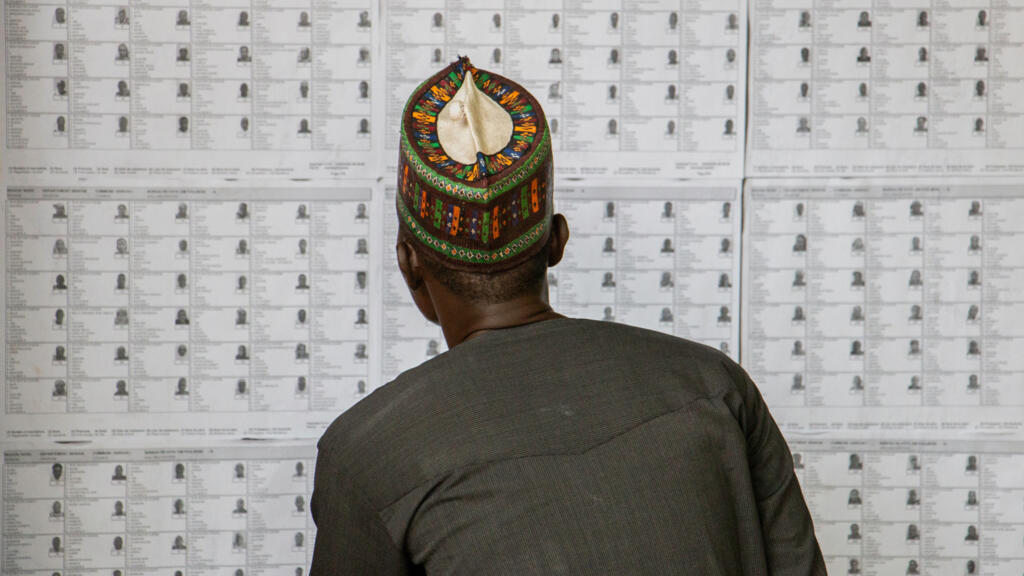
A voter checks his name on the voters' list before casting his ballot at a polling station in Garoua, Cameroon, on 12 October. AP - Welba Yamo Pascal

Anicet Ekane, leader of the African Movement for New Independence and Democracy (MANIDEM), and Djeukam Tchameni of the Movement for Democracy and Interdependence (MDI) were detained in their homes in Douala on Friday, the Union for Change 2025 opposition grouping said in a statement.

They were held by "hooded and armed" members of an elite military force and taken to "an unknown destination", the statement added.

MANIDEM and MDI are members of the Union for Change 2025 coalition that endorsed Tchiroma Bakary for the 12 October election and his claim to have defeated President Biya.

Although official results are not expected until Monday, Tchiroma said earlier this week that he'd won 54.8 percent of the votes against Biya's 31.3 percent.

Biya's RDPC party has slammed Tchiroma's victory claim as "a grotesque hoax" and an "unacceptable fraud in a state of law", saying in a statement they were "calmly awaiting the official results".

MANIDEM said its treasurer and other members were also "kidnapped" by local security forces.

The coalition denounced the "abusive arrests, whose clear aim is to intimidate (Cameroonians) who are waiting for the election results to be respected".

Meanwhile, the MDI in a separate statement accused the government of "gross manipulation" and "political intimidation".

It criticised the spread of "false information... suggesting that weapons or fake electoral records had been found at Tchameni's home".

Cameroon's 92-year-old president poised for eighth term
Calls for mobilisation

Biya, the world's oldest serving head of state aged 92, has been in power since 1982 and has won every election in the past 20 years with more than 70 percent of the vote. But former employment minister Tchiroma generated unexpected enthusiasm among voters.

The arrests have sparked speculation that Issa Tchiroma Bakary could be next in line.

In a Facebook post on Friday, he hinted at attempts to arrest him, saying that such a move would constitute "an assault against the entire Cameroonian people".

On Wednesday, Tchiroma called on Cameroonians to protest if the Constitutional Council – the only body authorised to proclaim the outcome of the elections – announces "falsified and distorted results" on Monday.

He has also called for peaceful march across Cameroon on Sunday at 3 p.m. "to show the world that it is the people who choose their leader".

The government has denounced his statement as incitement to insurrection. In a press briefing, Communication Minister and government spokesperson René Emmanuel Sadi urged journalists to act responsibly and avoid "fanning the flames".

“The media play a structuring role in shaping public opinion in any democratic society,” Sadi said. "Acting in this way is neither a denial nor a dilution of the sacred principle of press freedom, which is central to democracy and the rule of law."

Rather than "pouring oil on the fire and fanning the flames", he said the role of the media "should be that of an extinguisher – one that calms and strengthens democracy" in Cameroon.

Cameroon: Amnesty calls for release of 36 activists, five years after crackdown

On Wednesday, officials banned public gatherings and the movement of motorcycle taxis in several cities after opposition supporters staged protests warning against an attempt to rig the vote.

Protests were held Saturday in Bafoussam, the capital of the West Region, as motorcyclists flooded major roads, calling for a credible election process.

Protesters clashed with security forces in other cities earlier in the week. Some were arrested and one person, who was not among the protestors, was killed in the northern city of Garoua, authorities said.

Internet monitor NetBlocks has recorded significant disruptions to internet access in Cameroon in recent days, which it said "could limit coverage of events on the ground amid calls to annul the presidential election results".

(with newswires)
How deepfakes and cloned voices are distorting Europe's elections

Europe’s busy election schedule in 2025 and 2026 is being targeted by AI-generated manipulation on social media. But this time around, Europe’s political landscape is transforming. The fight for voters’ hearts is no longer waged on the streets but on screens, through artificially generated images, cloned voices and sophisticated deepfakes.


Issued on: 24/10/2025 - RFI


A woman looks at a phone as she uses the Albanian government portal "E - Albania", now assisted by government artificial intelligence cabinet minister avatar "Diella". AFP - ADNAN BECI

By:Jan van der Made


It began in Moldova. In late December 2023, a video purportedly showing President Maia Sandu disowning her government and mocking the country’s European ambitions went viral on Telegram.

The Moldovan government swiftly dismissed the clip as fake, but the damage was done.

According to Balkan Insight, an investigative news website, and Bot Blocker, a fake-news watchdog, the Kremlin-linked bot network “Matryoshka” generated the clip using the Luma AI video platform.

The footage, voiced in Russian, caricatured Sandu as ineffective and corrupt, recycling earlier disinformation tied to fugitive oligarch Ilan Shor.

French cybersecurity agency Viginum later described how AI-generated deepfake videos, including the one mimicking President Sandu, were distributed through Telegram and TikTok by a pro-Russian propaganda network affiliated with the Russian media outlet Komsomolskaya Pravda.

Viginum said websites like moldova-news.com were backed by what it called a “structured and coordinated pro-Russian propaganda network.”
Troll factories and cloning

Saman Nazari, a researcher with Alliance4Europe, a Europe-wide pro-democracy platform, told RFI the use of AI to influence elections is massively increasing.

In the past, he said people who wanted to influence elections would copy-paste the same text over and over again.

“They just have AI rewrite them, publish them across different accounts, different pages, with small variations aimed at specific target audiences,” Nazari said.

Nazari also said AI tools are now used to make disinformation operations look legitimate.

France’s Foreign Ministry said Storm 1516, a cyber-attack group, had launched 77 Russian disinformation campaigns targeting France, Ukraine and other Western countries since 2023.

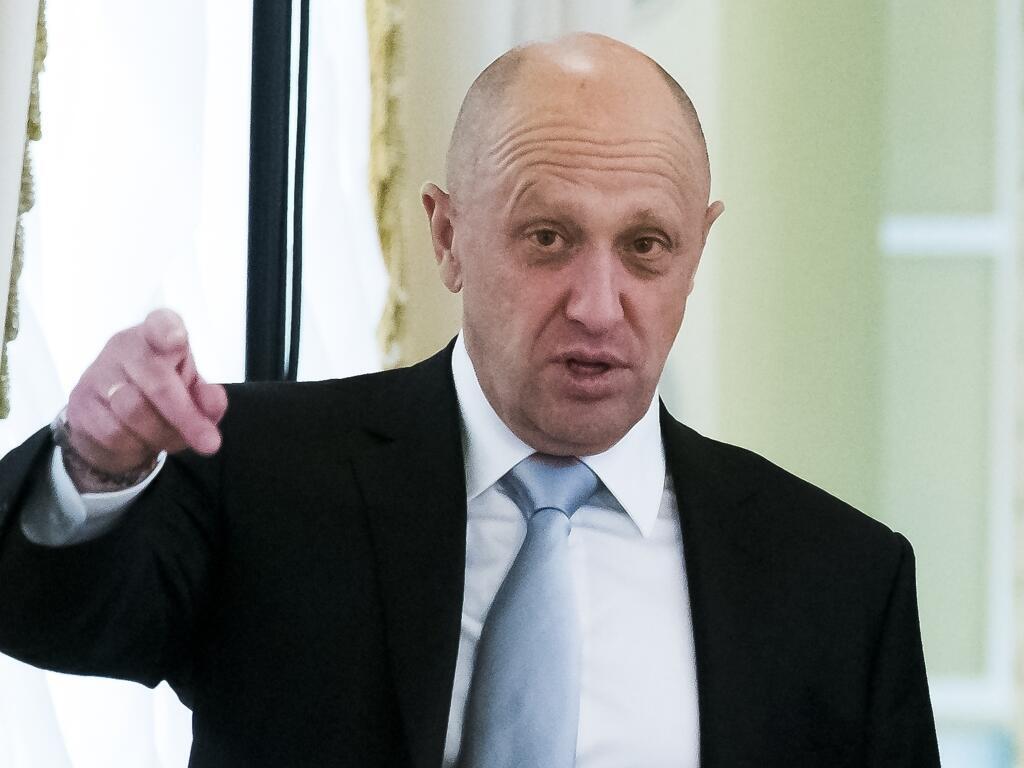
According to Nazari, the operations were run by the successor to the Saint-Petersburg-based Internet Research Agency [founded by Yevgeny Prigozhin in 2013 and dissolved in 2023], the Russian Foundation for Battling Injustice – which created websites that look exactly like well-known media outlets.

The groups running these websites clone news sites, fill them with stolen articles that are rewritten or translated and then re-publish them to appear credible, Nazari said.

Alliance4Europe has counted hundreds of such websites during European elections.

"In the past, it was quite a big job to create a website and fill it with content, but now it's being done almost automatically," Nazari said.

Yevgeny Prigozhin, founder of the Internet Research Agency, later head of the Wagner group and killed in a plane crash in 2023. AP - Alexander Zemlianichenko

Personal targets

The threat is spreading into Western Europe. Professor Dominique Frizon de Lamotte of CY Cergy Paris University was targeted by an AI-generated video that faked his image and voice and attempted to link him to pro-Russian groups in Moldova.

“I have no connection with Moldova; I don’t even use Telegram,” he told France 3 television. The video was flagged by EUvsDisinfo, an EU misinformation monitoring group, and French media as an attempt to undermine trust in academics.


The older generation may not be able to distinguish between a real video and a deep fake. And there is a large portion of the voting popultation which is in that upper bracket.


The older generation may not be able to distinguish between a real video and a deep fake. And there is a large portion of the voting popultation which is in that upper bracket.

03:11

REMARKS by Saman Nazari, researcher 

with Alliance4Europe

Jan van der Made

The 2024 presidential election in Romania brought further evidence of AI-linked interference.

Officials said the interference, widely attributed by European governments to Russian-backed actors, led to the annulment of the election results by Romania’s Constitutional Court, an unprecedented move in Europe.

During the rerun in mid-2025, far-right narratives and fabricated content circulating on TikTok and Telegram sought to influence public opinion. Pro-European candidate Nicusor Dan ultimately won the repeat vote.
All eyes on Hungary

Hungary is preparing for a flood of AI-influenced content ahead of its 2026 elections.

Pro-government groups, including the National Resistance Movement, have already spent over €1.5 million promoting unlabelled AI videos attacking opposition leader Peter Magyar.

Some clips show fabricated scenes of Hungarian soldiers dying in Ukraine to provoke nationalist sentiment. Magyar has called the videos “pathetic” and “election fraud”.

Analysts say that even when viewers think content might be fake, emotional impact still shapes opinions.

Within a larger legal framework, the European Union has rules forcing platforms to show who is behind political adverts.

Within a wider framework, the European Union has already introduced the Digital Services Act in 2022 to strengthen platform rules on transparent political advertising.

The commission also operates a Rapid Alert System and an AI Integrity Taskforce to detect and counter manipulative content across languages and borders.

French cyber agency warns TikTok manipulation could hit Romania's vote, again


Voters at risk

Nazari said young people are used to seeing altered images and deepfakes online.

“Young people have grown up with memes, with people making deep fakes. Edited images and videos and so on. [They] are familiar with the concept.”

But older voters, he told RFI, are more likely to be misled.

“They might not be able to distinguish between a real video and a deep fake video,” Nazari said, adding they are especially vulnerable in countries where digital literacy is not very high.
TikTok under scrutiny as toxic videos reach young users within minutes

Teens can be shown self-harm and suicide content on TikTok within minutes of joining the app, Amnesty International has warned, as families in France pursue legal action and MPs examine the platform’s impact on young users.


Issued on: 26/10/2025 - RFI

Concerns are growing about self harm and suicide videos on TikTok. 
© AFP - Loic Venance


A French teenager called Emma (not her real name) told RFI she was quickly drawn into toxic content.

Two years ago, the now 18-year-old installed the app on her phone for the first time. At first, the videos matched the interests she had selected. But after a few minutes, a music video caught her attention.

“The song talked about the struggles the singer faced with mental distress. Since I stayed on the video for quite a while, I was shown more like it. That is when I started falling into that spiral. And it kept getting worse and worse”, Emma remembers.

Within a week – and without having actively looked for it – she was being exposed to content that "normalised death, that encouraged self-harm, all kinds of dangerous and harmful behaviors”.


Emma’s mental health deteriorated. Visits to a psychologist were no longer enough. She became depressed and was hospitalised six times.

Self-harm and suicide

Her testimony echoes an Amnesty International report released this week. The NGO spent months looking into how TikTok affects the mental health of young users.

It created three fake accounts of 13-year-olds and found that dangerous content appeared very quickly, even before users expressed any interest.

“When we created the three fake teenage accounts, we did not like anything, share anything, comment or even search,” says Katia Roux, advocacy officer at Amnesty International France.

“We only watched two videos related to mental health. And yet, that was enough to see the feeds of those accounts filled, almost flooded, with this kind of content. And after 45 minutes, we had the first content related to self-harm and suicide on two of these three accounts.”

French parliament to probe psychological effects of TikTok on children

Legal Action

Amnesty says TikTok’s moderation policies remain inadequate. It wants the platform to rethink its business model, which keeps users on the app as long as possible, in order to protect them better.

That is also the view of Stéphanie, whose daughter died by suicide five years ago after watching toxic content on TikTok.

“We could have shown her more friendly content or sport programmes or told her: go for a walk," she says.

"But the problem is, if you show her that, she will not stay on the platform. And in fact, TikTok’s model is to maximise time on the social network. They do not care about childhood.”

TikTok says it has moderation systems, parental controls and mental health resources in place.

Together with 10 other families, Stéphanie has filed a complaint in France for incitement to suicide. The case is still being investigated.

As for Emma, progress has been slow.

“I saw those videos, and some of them remain burned in my retina. I will have those contents for a very long time,” she says.

Now, however, she reports all toxic content she comes across on social media.
Political scrutiny

In March 2025, a French parliamentary inquiry opened to examine TikTok’s impact on young people. It will not investigate ongoing cases but has looked at whether the app shows more dangerous content to vulnerable groups.

On a broader European level, the Digital Services Act now requires stronger oversight of online platforms.

This article was adapted from the original version in French and edited for clarity.