Monday, April 27, 2026


Leftist candidate in copper giant Peru wants new mining rules

Roberto Sanchez. Image from Sanchez’ Facebook.

A leftist presidential candidate on the verge of reaching Peru’s runoff election is pledging to overhaul mining rules in one of the world’s leading copper-exporting countries.

Vowing to redistribute wealth to Peru’s rural communities, Roberto Sánchez, 57, plans to review tax contracts with major mining companies, redraft the country’s market-friendly constitution and hike taxes to levy windfall profits at a time of buoyant metals prices. He also wants to phase out open-pit mining — the way virtually all of Peru’s big mines operate — blaming the practice for harming the environment.


“We don’t want to expropriate a single dollar or an inch of land from anyone, we want to broaden the benefits by democratizing access to wealth,” Sánchez said in an interview. “Neocolonial Peru is over.”


Sánchez currently holds a razor-thin margin of only around 17,000 votes over right-wing populist Rafael López Aliaga for the chance to take on conservative Keiko Fujimori in a June 7 runoff. An electoral court is reviewing tally sheets that represent as many as a million votes. Whoever wins will become Peru’s 10th president in a tumultuous era and will not have a congressional majority, which could hinder any efforts to revamp existing policies.

The Andean country is the world’s third-largest copper producer and a key supplier of gold, silver and zinc, with mining accounting for 60% of its exports. It is a significant base of operations for global mining companies including Glencore Plc, Anglo American Plc, Freeport McMoRan Inc. and MMG Ltd.

Sánchez also said he wants to review free trade agreements and a host of contracts involving the Camisea natural gas fields which supply a major liquefaction terminal, known as Peru LNG, on the Pacific coast. Major players in Camisea include Pluspetrol SA and Shell.

“Standards must be set in a way that benefits the people,” Sánchez said in the interview at his party headquarters in the capital Lima. He declined to say who are serving as his top economic advisers.

Tapping international reserves

Sánchez has been critical of Peru’s veteran central bank chief Julio Velarde, considered the steady hand that has largely insulated the resource-based economy from the country’s chronic political turmoil.

He declined to say whether he’d nominate Velarde for a fifth term, stressing he would meet with him with the caveat that “no one is indispensable.”

But in a sign of pragmatism, he stressed the importance of preserving the institution’s autonomy and the country’s macroeconomic stability.

Sánchez added he is considering using Peru’s almost $100 billion in international reserves — which are vast by any measure, at about a third of gross domestic product – to fund spending on health, infrastructure and education.

“We need a strong fiscal chest for the major transformations we want to carry out,” he said.

Sánchez said the country’s needs would prevent him from prioritizing a controversial plan to buy new fighter jets, a decision that current Interim President José María Balcázar has said will fall onto the next administration.

A signing ceremony for an up to $3.5 deal with Lockheed Martin Corp. was abruptly postponed last week, drawing US backlash. In the wake of the controversy on Wednesday, Peru’s defense and foreign ministers resigned.

Currently a lawmaker, Sánchez served as foreign trade minister under the administration of ousted former President Pedro Castillo, while Fujimori will face her fourth consecutive runoff vote, having lost the last three.

Overall, Sánchez’s platform mimics the key promises that swept Castillo into the presidency in 2021, spooking investors at the time while drawing support in Peru’s impoverished Andean regions. Castillo was eventually ousted and arrested in late 2022 after attempting to shut down congress and the judiciary.

Sánchez has campaigned as Castillo’s heir, donning the same traditional hat from Peru’s Cajamarca region and promising to pardon him on Day 1 of a future administration.

Since Peru’s April 12 election, the country’s sol currency has been the worst performer in Latin America, with analysts pointing to Sánchez’s unexpected rise as the key factor. Government bonds handed investors less than 0.3% return, underperforming most emerging-market sovereign peers.

Still, if elected, Sánchez’s ambitious reforms are bound to hit roadblocks, including a new bicameral congress where left-wing forces will be outnumbered by conservative ones. To redraft Peru’s constitution, for example, Sánchez is proposing to repeal a law that prohibits convening a constituent assembly through a referendum. But to do that he would need conservative support in congress.

Similarly, while Castillo offered big reforms during his presidential campaign, once in office he failed to deliver them, a fate that could also beset a Sánchez presidency.


The leader of the Juntos por el Perú party is now in second place in the official vote count with just over 94% of votes tallied. But with as many as one million challenged ballots, Sánchez’s spot in the second round still isn’t secured. Electoral authorities say final results may take until mid-May.

The first round got off to a rough start when ballots arrived late to some polling stations mainly around Lima, which prompted authorities to allow some voters to cast ballots the next day.

López Aliaga, who has the most support in Lima, seized on the logistical problems to allege fraud. Sánchez has said he will respect the final results.

Since election day, López Aliaga has called for a redo of the entire election, later softening his demands to propose adding more voting days to accommodate the large share of Lima voters who were impacted by the logistical snags.

Sánchez said the delays had not tainted the election and criticized the resignation of electoral agency head Piero Corvetto amid the controversy. The candidate claimed the pressure that led to Corvetto’s departure was part of an alleged right-wing plot to “take control of the country’s institutions.”

“This is a serious damage because they intend to boycott and disregard the will of the people,” he said.

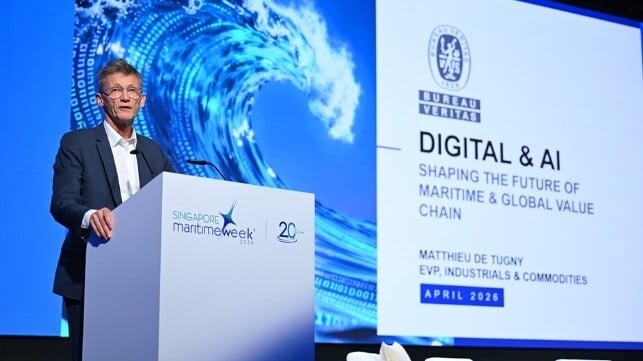
 

BV Calls for Greater Connectivity Across Value Chains

Matthieu de Tugny

Published Apr 26, 2026 10:17 PM by The Maritime Executive


[By BV]

Bureau Veritas Marine & Offshore (BV), a world leader in testing, inspection, and certification (TIC), declared its vision for the future of maritime trade during Singapore Maritime Week, with Executive Vice-President, Industrials & Commodities, Matthieu de Tugny delivering a keynote address detailing how digitalization, artificial intelligence, and the energy transition are fundamentally reshaping shipping and the global value chains it underpins.

During the keynote address, de Tugny outlined that the industry’s trajectory will be shaped by three intersecting forces: decarbonization, digitalization, and industry resilience. He stressed that the sector is moving beyond fragmented, vessel-level optimization towards more sophisticated inter-connected intelligence across the entire value chain, a shift that demands multi-sector collaboration.

Regarding artificial intelligence, de Tugny highlighted that AI is already generating tangible results across vessel operations, engineering, ports, and supply chains. The integration of sophisticated smart systems is supporting voyage optimization, predictive maintenance, digital twins, routing efficiency, and smarter logistics, delivering real-world gains today.

However, de Tugny also cautioned that AI’s potential can only be realized when underpinned by reliable, structured, and trusted data. Critically, he emphasized that human expertise remains central to the industry’s future, with AI serving to augment decision-making rather than replace the professionals who drive it.

De Tugny also highlighted BV’s capabilities in this area, having developed a suite of advanced solutions designed to help clients as they navigate this transformation:

  • - Digital Class: Integrates design, construction, and operational data to enable continuous, real-time assurance in place of periodic inspections, giving operators and owners a live view of vessel condition and compliance.
  • - Augmented Surveyor 3D: Combines drone-based inspections, AI-supported defect detection, and digital 3D asset models to improve the speed, accuracy, and safety of survey operations.
  • - SmartShip Framework: Supports clients along a progressive journey from connected vessels to autonomous functions and fully integrated maritime ecosystems, managing both the technical and regulatory dimensions of the transition.

De Tugny also addressed the global energy transition, calling for ambitious long-term planning alongside pragmatic near-term action. While next-generation fuels – including LNG, methanol, and ammonia – alongside new infrastructure and financing models are essential to achieving net-zero targets, de Tugny emphasized that existing fleets can already reduce their emissions footprint today through digital optimization, energy-saving technologies, and improved operational performance.


SINAY Boosts Maritime Intelligence Platform with MariTrace Acquisition

SINAY
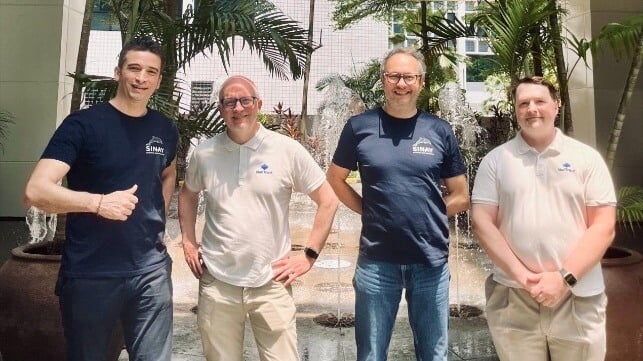
(L-R) Yanis Souami, CEO & Founder of SINAY; Thomas Owen, CEO & Founder of MariTrace; David Lelouvier, COO & Managing Director at SINAY; and Simon Rathbone, Director of Software Development at MariTrace

Published Apr 26, 2026 5:38 PM by The Maritime Executive

[By: SINAY]

Maritime intelligence specialist SINAY has acquired UK-based vessel tracking platform MariTrace, strengthening the French company's position as an integrated provider of security, operational and environmental intelligence.

The move builds on earlier acquisitions of marine weather analytics provider OpenOcean in 2022 and container tracking service Safecube in 2024, and represents another step towards combining vessel, cargo and environmental data into a single source of operational intelligence for maritime stakeholders.

CRITICAL INTELLIGENCE PLATFORM
Amid strong market demand for reliable data, MariTrace provides real-time intelligence across maritime security, risk assessment, trade analytics and vessel tracking, with particular strength in the world's highest-risk maritime corridors, including the Strait of Hormuz, the Gulf of Aden and the Red Sea. The platform is used by 100-plus customers across insurance, security, ship-owning, offshore contracting and commodities, and operates in 24 countries worldwide.

SINAY CEO and founder Yanis Souami said: "This acquisition fully aligns with our mission to become the leading full end-to-end supply-chain visibility platform in the maritime industry. By bringing together vessel tracking, cargo visibility and environmental intelligence, we are giving customers the tools they need to make better-informed operational and commercial decisions in an increasingly complex risk environment."

STRATEGIC SYNERGIES
Safecube already enables SMBs to track their containers with ease, centralising shipment data and delivering automated alerts for ETAs and key events. Integrating MariTrace's vessel tracking with Safecube's container-level visibility gives customers a unified view that links cargo to its carrier, enriched with risk intelligence and more accurate ETA predictions.

At the same time, SINAY's expertise in environmental monitoring – including CO2 emission calculators and underwater noise assessment tools – provides an additional environmental compliance layer for MariTrace's customer base of vessel owners, offshore contractors and insurers, alongside existing security and risk data.

MariTrace CEO and Co-founder Thomas Owen said: "Joining SINAY allows us to expand our offering by combining our risk and tracking capabilities with a broader set of data and analytics. Together, we can deliver deeper insight into both operational risk and performance."

Founded in 2008, SINAY has grown into an international provider of maritime data intelligence, with 130 employees, EUR 10m in annual revenue and EUR 12m raised from international investors.

The products and services herein described in this press release are not endorsed by The Maritime Executive.

Winning Formula

For residents living near ports, seafarers working aboard ships and passengers stepping ashore, the question is no longer abstract: Why am I still breathing this?

Auramarine

Published Apr 22, 2026 10:19 PM by Sean M. Holt

(Article originally published in Jan/Feb 2026 edition.)


Sulphur oxides (SOx), nitrogen oxides (NOx) and particulate matter (PM) from ship exhausts are a daily reality in many port cities. A 2023 World Bank report estimated that more than 250 million people globally are exposed to air pollution around ports, underscoring that maritime emissions are not only a climate issue but a public-health issue.

Regulators are increasingly shifting the conversation beyond what comes out of the funnel to *well-to-wake emissions* — the full carbon and pollution footprint of a fuel – from how it's produced and transported to how it's ultimately consumed onboard.

Beginning in 2030, the E.U.'s FuelEU Maritime regulation will require container and passenger vessels to connect to onshore power supply when docked or demonstrate equivalent well-to-wake emissions reductions through alternatives such as biofuels, fuel cells and e-fuels. What matters now is not which fuel wins in 2050 but what can be deployed today without disrupting operations.

As regulators push shipowners to account for emissions beyond the exhaust stack, including upstream fuel production and transport often captured under so-called Scope 3 emissions, attention is shifting toward systems that make those fuels usable at sea.

That lens puts the spotlight on companies like Auramarine, a Finnish specialist in alternative-fuel readiness for marine fuel supply systems, and PowerCell, a Swedish hydrogen fuel cell developer bringing megawatt-scale electric power into commercial maritime operations.

Auramarine: A Layered Approach

Auramarine frames today's reality through a pragmatic split between newbuilds and retrofits.

In newbuilds, momentum is shifting. "The focus, especially in newbuilds, is increasingly methanol-fueled dual-fuel vessels," the company says, pointing to an orderbook that already runs into the hundreds of methanol-capable ships expected over the next few years.

Retrofits are being shaped by safety rules, downtime and economics. Auramarine says the near-term focus is on fuels that are directly compliant with SOLAS Chapter II-2 without requiring alternative design approvals. In Auramarine's internal terminology, "biofuels" refers specifically to liquid, non-toxic, non-volatile fuels with a flashpoint above 60 degrees Celsius, including hydrotreated vegetable oil (HVO) and fatty acid methyl ester (FAME). These can often be drop-in replacements (i.e., usable in existing engines and fuel systems with little or no modification).

"These SOLAS II-2 compliant fuels provide an opportunity to meet carbon reduction targets with minimal capital expenditure," Auramarine explains. It adds that "especially the biofuels covered by ISO 8217:2024 offer a rare combination of safety, immediate emissions reduction and near zero capital expenditure," making them one of the most practical tools for short- to mid-term decarbonization.

Beyond higher-flashpoint biofuels, Auramarine says operators are evaluating low-flashpoint and gas-fueled dual-fuel pathways such as methanol, ethanol, liquefied biogas (LBG) and ammonia, particularly for newbuilds and younger vessels.

For smaller fleets, "emissions pooling" (meeting emissions targets collectively rather than ship by ship) can also play a role, helping manage exposure to the Carbon Intensity Indicator (CII) framework and the E.U. Emissions Trading System (EU ETS) while technical upgrades are phased in.

The result, Auramarine says, is a layered approach: near-term efficiency improvements, mid-term system upgrades and longer-term alternative-fuel strategies with the fuel supply system increasingly treated as a critical enabler of that multi-step transition.

From a fuel-supply perspective, the easiest retrofit pathways are those that avoid structural change. "Higher-flashpoint, drop-in biofuels fit this best," Auramarine says, because they typically require minimal tank, piping or safety-system modifications, delivering meaningful carbon reductions with low capital expenditure and minimal downtime.

Vessel age heavily influences practicability: Older ships tend to stick with low-capital blends, mid-life vessels can justify moderate upgrades and younger ships and newbuilds typically support the economics of full dual-fuel installations aimed at long-term transition readiness.

Automation and monitoring are becoming central to this equation, and owners are getting more disciplined about what they measure.

Auramarine says decisions often hinge on fuel-consumption stability, system reliability and uptime, maintenance impact and component lifetime, automation and reporting quality and operational flexibility when switching fuels or modes: "The most successful solutions are those that deliver measurable emissions benefits without introducing operational risk and that support a transparent, data-driven compliance pathway."

Where is adoption moving fastest?

Auramarine points to segments where regulatory exposure, commercial pressure and predictable operations align. Short-sea, feeder and regional vessels with frequent calls in European waters are often early adopters. Tanker, ro-ro and ro-pax fleets with regular schedules and centralized fleet management are also moving quickly.

In the newbuild space, container feeders and chemical and product tankers show strong momentum for methanol dual-fuel solutions.

PowerCell: Past the Pilot Stage

PowerCell approaches the problem from the conversion side: turning clean fuels into electricity onboard. It argues that while deep-sea tonnage dominates emissions, a large near-term opportunity exists in smaller vessels.

"While large ocean-going ships make up approximately 85 percent of the industry's carbon footprint," the company explains, "the other 15 percent of smaller shortsea vessels, representing approximately 150 million tons of annual carbon emissions, can almost all realistically be decarbonized via fuel cells right now."

Fuel cells have historically been strongest in short-sea, fixed-route operations like passenger ferries and in shoreside "cold ironing" (powering berthed ships from shore) solutions where grid connections are limited.

PowerCell says that picture has broadened: "Hydrogen and methanol marine fuel cell systems matured significantly in 2025" with commercial orders now spanning ro-pax vessels, bulk carriers, superyachts and cruise ships. Megawatt-scale orders indicate growing confidence in longer, more varied duty cycles.

A milestone was PowerCell's first commercial sale of its integrated methanol-to-power system, valued at approximately $17 million and including a 2 MW installation (enough to power approximately 2,000 homes).

For cruise operators, the company sees a clear target: auxiliary engines and generators that power hotel loads. Fuel cells can eliminate SOx, NOx, and PM at the point of use and reduce greenhouse gas emissions when powered by green fuels. Proton-exchange membrane (PEM) fuel cells also offer a practical onboard advantage: low vibration and noise.

Methanol reforming enables onboard conversion of methanol to hydrogen, providing a practical pathway to hydrogen-electric systems without waiting for dedicated hydrogen bunkering infrastructure to mature.

PowerCell adds that methanol can be used about 30 percent more efficiently in fuel cells than in internal combustion engines and that PEM systems deliver high power density in a compact footprint. It argues that reformer technology can also make fuel cells more fuel-agnostic over time and that developing ammonia reformers is technologically feasible, offering a pathway toward a zero-carbon solution if fuel production scales.

Demonstration projects remain essential for an industry built around reliability.

"The most important learning comes from operational data over time," PowerCell says, including reliability, uptime, degradation rates, maintenance needs and performance under variable loads and conditions. It says this kind of transparency is what de-risks adoption and builds confidence among shipowners, yards, class societies and regulators.

One Ship at a Time

Fuel availability, for now, sets the outer boundary.

PowerCell expects renewable methanol and other green fuels to remain scarce in the near term. Auramarine faces the same operational challenge: more complex fuels require careful design, system integration, crew training and real-world operating experience.

Progress is incremental by necessity, but each vessel that clears those hurdles lowers the barrier for the next.

The opinions expressed herein are the author's and not necessarily those of The Maritime Executive.


Report: The Race is On to Bring Unmanned Combatants to Life

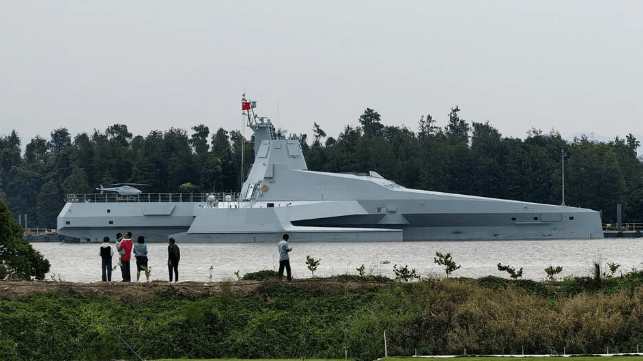
The JARI "Orca" unmanned combatant vessel (via Chinese social media)

Published Apr 22, 2026 5:48 PM by The Maritime Executive


American defense tech consultancy Janus has just published a major review of autonomous naval systems in all global markets. After Ukraine's success with USVs in the Black Sea, interest in unmanned naval warfare is taking off - notably in the United States, with real backing from the U.S. Navy. But America is not alone in seeking an unmanned edge: China is moving towards development of "larger, more capable unmanned surface vessels" with long endurance and heavier payloads - "beyond anything the United States currently has deployed," the consultancy warns. 

Janus points to the unveiling of CSSC's JARI-USV-A, or Orca, the world's largest (acknowledged) unmanned surface combatant. The trimaran vessel was revealed to the public at the Zhuhai Airshow in November 2024, and at a displacement of about 300-500 tonnes, it is about three times larger than the U.S. Navy's nearest equivalent, the Sea Hunter.  The Orca is outfitted with VLS cells, torpedo tubes, an AESA radar, and a helideck for multipurpose operations. As a shallow-draft trimaran, it would be suitable for littoral operations in the Taiwan Strait, Janus says. 

Looking ahead, China's abundant shipyard capacity positions it not just as a leader in modern warship and merchant ship production, but also as a tough competitor in scaled-up unmanned systems. "Chinese commercial shipyards produce more tonnage annually than the rest of the world combined. The structural advantage in production capacity that underlies every U.S. concern about naval competition does not disappear because the vessels are unmanned. It is, if anything, more relevant when the goal is to build dozens or hundreds of vessels rather than a handful of exquisite ones," Janus warns. 

In the U.S., the unmanned-vessel space is crowded with competitors - a good thing for choice, but it is likely to lead to future consolidation, according to Janus. The big names in the startup world - Saronic, Anduril, Blue Water Robotics and others - are being joined by countless smaller companies, and by the defense primes as well. "The Navy will have a sustained number of orders once programs of record materialize, but not at the kind of scale that will keep a dozen companies in business simultaneously," predicts Janus. 

The consultancy expects the Navy to begin moving swiftly into production orders under the newly-restructured MUSV "marketplace" concept (formerly MASC). The Navy now wants production-ready products, not development programs, and reliability at sea will be a primary focus, Janus says. This year should be one to watch for the future of the industry. "The structure of the award — how many companies receive contracts, whether it includes one or multiple hull variants, and how the OTA pathway shapes ongoing development will determine the industry landscape for years," the firm says. 


Report: Three Injured in Fire Aboard USS Zumwalt

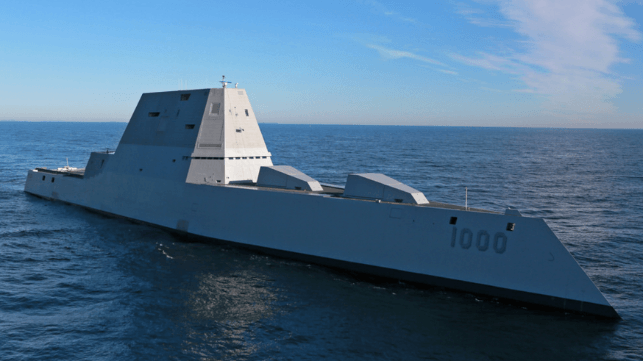
USS Zumwalt on her initial sea trials (USN file image)

Published Apr 22, 2026 7:37 PM by The Maritime Executive


A fire aboard the first-in-class destroyer USS Zumwalt has injured three sailors, according to the U.S. Navy. 

Zumwalt is currently at shipyard in Pascagoula, Mississippi to undergo modifications needed to launch the service's next-generation hypersonic missile. Launch tubes and equipment have replaced both of the Zumwalt's iconic deck guns, which were designed to deliver high velocity, high tech shore bombardment from a stealthy platform. 

According to USNI and Naval Surface Forces, a fire was reported aboard Zumwalt at about 2145 hours on April 19. The crew managed to put it out, but three sailors were injured; two were treated at the scene, and the third was taken to the hospital. All are in stable condition. 

An investigation into the circumstances of the blaze and the extent of the damage is under way. 

The U.S. Navy's futuristic Zumwalt-class destroyers have had an uneven history in service, and have deployed only rarely. Their unique deck guns have never been used: After the number of vessels in the class was cut back from 32 to three due to budget concerns, the manufacturing cost per round for their special ammunition rose to an impractical $800,000-$1 million per shot. The production run of ammunition was canceled, and the guns are functionally unusable.

Aboard USS Zumwalt, the deck guns have now been replaced with four launch tubes for the Conventional Prompt Strike hypersonic missile system, each built to carry an all-up round pack with three missiles. This high-powered arsenal adds to Zumwalt's 80 existing VLS cells. The modification will cost up to $2 billion to complete for all three vessels in the series. 


Future Ford-Class Carrier Orders May Be at Risk

BEFORE NAVY SEC. PHELAN WAS FIRED

A weapons elevator aboard USS Ford (USN)

Published Apr 21, 2026 10:20 PM by The Maritime Executive


The future of the world's most expensive warship program is in doubt, according to the Associated Press. The long-delayed, much-scrutinized Ford-class carrier series is under review, and on Tuesday, Navy Secretary John Phelan refused to rule out the possibility that future orders might be called off. 

The Ford-class is a 100,000-tonne warship built around first-of-a-kind electromagnetic systems for the carrier's core equipment - her catapults, arresting gear and weapons elevators. These were not fully tested to a mature state of development before installation, leading to multiyear delays and cost overruns.

First-in-class USS Gerald R. Ford's keel laying was held in 2009 for a 2015 delivery date - but due to a variety of setbacks and defects, construction cost increased by $2.8 billion and the schedule for her commissioning slipped. The Navy accepted delivery of an incomplete ship in 2017; none of Ford's 11 weapons elevators worked at the time, and the service spent the next four years in a concerted effort to make repairs. Ford finally achieved initial operational capability in December 2021, 12 years after keel-laying; she is currently operating in the Red Sea, carrying out the longest carrier deployment since the Vietnam War. 

Second-in-class USS John F. Kennedy (CVN-79) has also been delayed by problems with the class's complicated weapons elevators, and its 2025 delivery date has slipped to 2027. The ship is now out on sea trials. Third-in-class USS Enterprise (CVN-80) is now expected to deliver in 2030, pushed back from 2028. The fourth hull, USS Dorris Miller (CVN-81), was initially expected to deliver in 2030. (Huntington Ingalls Industries (HII), the U.S. Navy's sole contractor for carriers, has said that the third and fourth ships in the series will benefit from lessons learned during construction of USS Gerald R. Ford.)

As the world's most expensive weapon of any kind, and the most expensive self-propelled ship ever built, Ford was going to attract outside attention no matter what; the program has been under scrutiny for years, including recurring oversight from the Pentagon's internal testing watchdog and the Government Accountability Office. President Donald Trump has criticized the program on several occasions, taking aim at the design of the ship's catapults. Navy leadership has also critiqued the design process that led to a newbuild with so many untested technologies aboard. In 2021, then-CNO Adm. Mike Gilday described the long process of fixing Ford's elevators as "painful." "We really shouldn’t introduce more than maybe one or two new technologies on any complex platform like that in order to make sure we keep risk at a manageable level," he said at the time. 

Despite the developmental issues, the Navy has defended the Ford-class program throughout, and has repeatedly praised USS Gerald R. Ford's real-world operational performance. That consistent advocacy may be changing: Navy Secretary John Phelan told the AP on Tuesday that the program is now under a "prudent and practical review." The service is evaluating the cost of the design and ensuring that the Ford-class meets all future requirements, Phelan said. 

When asked about whether any as-yet-unordered ships in the series (CVN-82 through CVN-87) could be canceled, Phelan told AP that it is too early to say. "But we will have carriers," he added.

Phelan recently cancelled the Constellation-class frigate program, citing persistent delays and cost overruns, and he has restructured a procurement program for midsize unmanned surface combatants. He is also a driving force behind the proposed "Trump-class" battleship program; the first-in-class would cost $17 billion and could start construction in 2028, Phelan said Tuesday. 


From Fossil Fuels to Shore Power With the Port of San Diego

Port of San Diego

Published Apr 22, 2026 7:44 PM by Port of San Diego


The maritime industry has evolved to integrate renewable energy, emissions reduction strategies, and eco-efficiency within every aspect of its operations. From cruise efforts to create an inviting and welcoming environment to streamlining cargo and trade operations with modern technologies and sustainable systems, the Port of San Diego’s latest shore power efforts and milestones serve as a prime example of how small shifts within daily operations can make a huge impact on delivering cleaner air and streamlined logistic processes.

Shore Power and the Port of San Diego

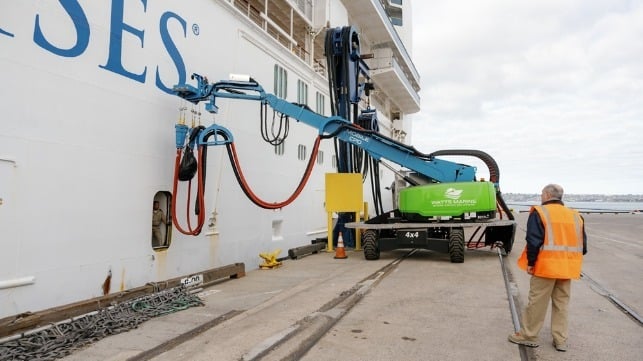
To start, shore power is an emissions reduction system that allows vessels to shut down their diesel engines while at berth and access landside electrical power. This action of recharging by use of electrical power significantly reduces release of harmful air pollutants and greenhouse gases like nitrogen oxides (NOx), sulfur oxides (SOx), and diesel particulate matter (DPM), as well as greenhouse gas emissions (CO2e).

Shore power innovation at the Port of San Diego

Port of San Diego Milestones

• The Port of San Diego’s shore power journey began in 2010 with the installation of the first shore power outlet available for ocean going vessels. This milestone is celebrated as a “Famous First” for California.

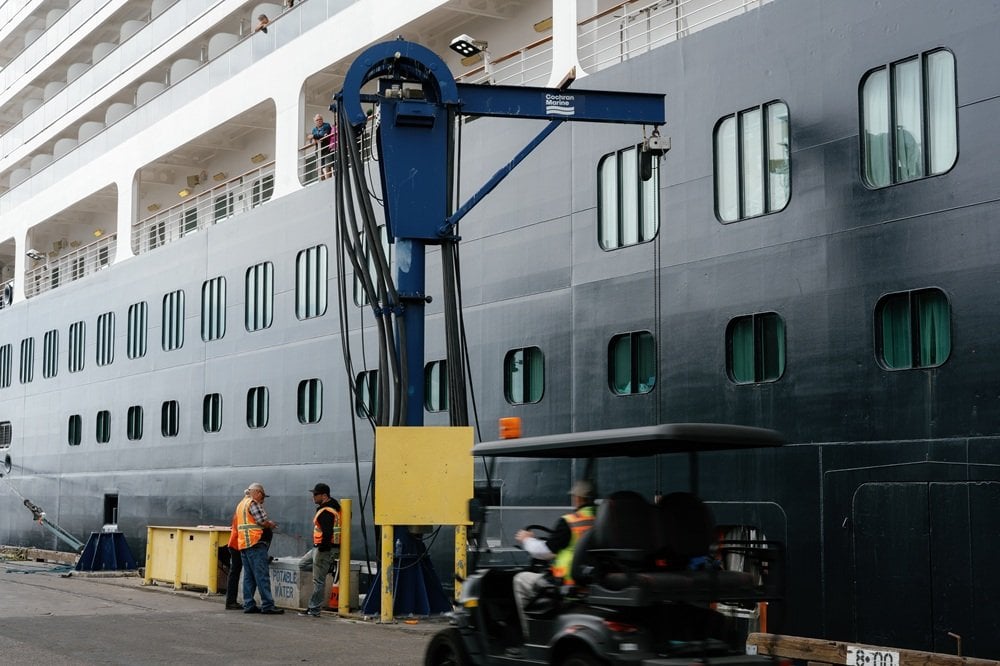
• A second shore power plug was installed in 2023 allowing for two ships to simultaneously use shore power and in 2024, the cruise shore power system was further expanded to enable vessels with starboard connections to access shore power, adding further versatility to the Port’s existing systems.

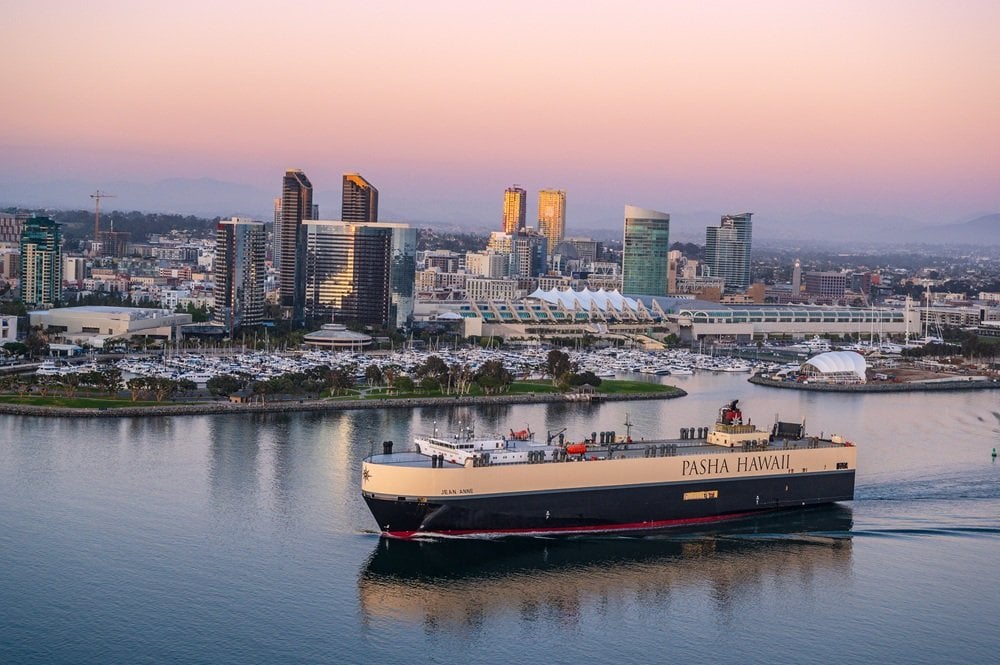
• Partnering with Pasha Automotive Services, in 2025 the Port of San Diego commissioned a new shore power system to support the country's first connection for a roll-on/roll-off (ro-ro) vessel, the Jean Anne, at the National City Marine Terminal.

Who is Jean Anne? Pasha Hawaii’s MV Jean Anne is a Jones Act-qualified (U.S.-built, owned, flagged and crewed) ro-ro vessel that carries cars, trucks, heavy machinery and more between the Port of San Diego and the Port of Honolulu. 

Ro-ro vessel smoothly navigating through San Diego Bay

In 2026, the Port proposed the installation of three shore power connection points for commercial harbor craft vessels at Fish Harbor Pier located along the Embarcadero adjacent to Seaport Village.

Collective Efforts Toward a Cleaner Future

In addition to the reduction of harmful air pollutants and greenhouse gases, the Port of San Diego’s shore power systems support efficient, modern and sustainable maritime operations. For example, when implemented alongside sustainable efforts like the previously mentioned Jean Anne, the streamlined efficiency and effect is significant. Shore power installations also reinforce the Port's commitment to the California Air Resources Board’s (CARB) At-Berth Regulation.

This message is sponsored by the Port of San Diego.

The opinions expressed herein are the author's and not necessarily those of The Maritime Executive.


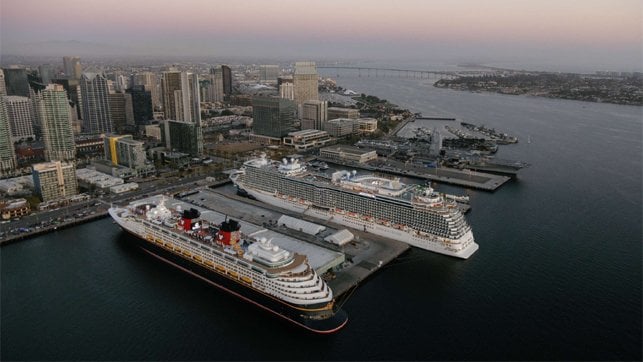
Disney and Port of San Diego Extend Homeport Through At Least 2031

cruise ships in Port of San Diego
Disney Cruise Line will be doubling annual sailing from Port of San Diego

Published Apr 25, 2026 2:51 PM by The Maritime Executive


Disney Cruise Line and the Port of San Diego today announced a new agreement through at least 2031, which will approximately double the number of Disney cruises out of San Diego each year.

For guests, this means more opportunities to embark on magical vacations to Catalina Island, Baja and the Mexican Riviera, with a broader range of seasonal itineraries and more frequent departures.

“San Diego has been an important part of our West Coast operations for more than a decade, and a place our guests love sailing from,” said Jose Fernandez, Vice President of Port Strategy, Development & Operations, Disney Cruise Line. “This new agreement supports our long-term growth and helps us continue contributing to the region’s economy.”

“We are grateful to continue our long-standing relationship with Disney Cruise Line,” said Chair Ann Moore, Port of San Diego Board of Port Commissioners. “This agreement not only enhances business operations between the Port, Disney and all our cruise line partners – it also supports a thriving cruise industry that injects millions into the region’s economy and welcomes thousands of visitors to our waterfront each year.”

The agreement secures Disney non-exclusive priority access to the Port’s North and South berths at the B Street cruise terminal, enhancing the arrival experience for passengers while also helping the Port better plan and maximize the use of its cruise ship terminals. This announcement comes as the Port is seeing an upward trajectory in cruise calls and passengers.

More than 1 million Disney passengers are anticipated through the Port during the course of the agreement, representing the first time in more than 20 years that a cruise line has offered a minimum annual guarantee at the Port of San Diego. Disney Cruise Line's seasonal call on San Diego will continue to bring meaningful economic benefits for the region, supporting local businesses and fueling jobs tied to cruise operations, tourism and port activity. 

Disney Cruise Line has been a proud member of the San Diego community since it first began sailing from the Port in 2012 and remains committed to making meaningful and positive impacts in the region. This work includes collaborations with local nonprofits that focus on youth empowerment and environmental conservation. 

Most recently, Disney Cruise Line provided career development and financial literacy opportunities to local students from Junior Achievement of San Diego and collaborated with San Diego Coastkeepers to help protect the natural beauty of the California coastline.

Representing the latest wave in Disney Cruise Line’s period of unprecedented global growth, this agreement ensures that San Diego remains a primary gateway for Disney’s signature brand of storytelling at sea. 

San Diego will soon welcome two Disney Cruise Line ships for the 2026-2027 season, significantly expanding West Coast sailing options for the cruise line. The Disney Magic arrives in October, offering three- to seven-night voyages through November followed by a 14-night Panama Canal transit to Galveston. The Disney Wonder will homeport in San Diego from October 2026 through April 2027, sailing three- to seven-night itineraries to destinations including Catalina Island, Cabo San Lucas, Ensenada and Puerto Vallarta.
 

The products and services herein described in this press release are not endorsed by The Maritime Executive.


Paying the Piper

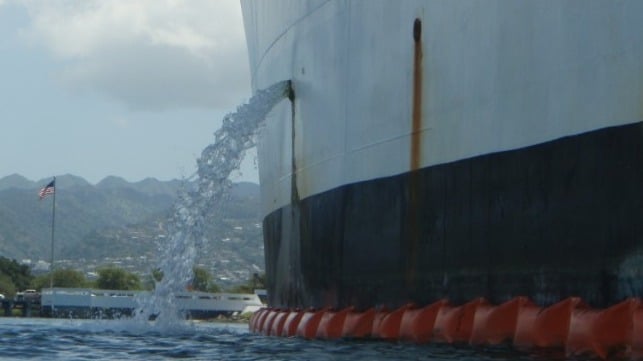
Ballast discharge
USDA file image

Published Apr 23, 2026 8:16 PM by Paul Benecki

(Article originally published in Jan/Feb 2026 edition.)


The average merchant ship has a service life of 20-25 years, in some cases more. That's a long time to stay in compliance with all the rules that govern shipping, and owners know they have to set themselves up for success.

It's not enough to meet regulations on day one: Every ship system has to be supported throughout a lifetime of industrial service if it's going to satisfy inspectors on day 5,000. Without solid backing from the original equipment manufacturer (OEM), any complex system becomes difficult to maintain – a reality that's coming home to roost for owners who bought ballast water treatment systems (BWTSs) over the past few years.

FIT FOR THE LONG RUN

In the boom days of the ballast water treatment market when shipowners were rushing to meet the IMO deadline for installation, dozens of small suppliers and shipyards got into the business and marketed affordable new systems. At the time, established OEMs cautioned that there would be a wave of consolidation after this big surge died down and that many suppliers would have to exit the market – with implications for long-term aftersales support.

That has indeed turned out to be the case. Some OEMs have thrived. Others have folded. Some have quietly refocused on other products.

The net result is that many owners are already replacing treatment systems that no longer work, are no longer well-supported, or both. They have few other options as port state control (PSC) authorities are ramping up the stringency of their inspection regimes.

"A lot of vessel owners in the early stages chose systems that were cheap, designed by the shipyard, with filters that were not really useful in challenging water conditions," says Rudolph Mes, Senior Vice President of Operations at BWTS supplier Scienco-Fast. "It was more like, 'Let's go for the cheapest one.' Now you see a shift and more people are saying, 'Oh, we have the wrong system. We have to look for a replacement.'"

Common complaints include high maintenance, poor diagnostics, high usage of consumables and poor or slow performance in certain water conditions (excess silt, low temperature or low salinity). For compliance, it's no longer enough to carry a documented BWTS on board. In many ports, the system has to have a record of functionality and crew competency in order to pass muster, much like the ship's oily water separator.

TOUGHER INSPECTIONS

Last year, the Paris and Tokyo MoUs ran a concentrated inspection campaign targeting BWTS functionality, and many owners found out the hard way that their systems needed improvement.

"Shipowners are under growing pressure to demonstrate that their BWTS can operate reliably across different water qualities, trading patterns and ports and that crews are able to explain and defend system operation during inspection," says a spokesperson for leading OEM Alfa Laval. "Tolerance for recurring alarms, derated operation or informal workarounds has decreased significantly."

The new PSC emphasis on checking capability has resulted in a wave of BWTS-related deficiencies, detentions and follow-up inspections in some regions. For shipping, time is money, and an off-hire event because of a simple BWTS failure is a costly problem both in the short term (revenue) and the long term (customer relations).

A growing number of owners are opting to replace unreliable BWTS equipment, finding the expense of an early retrofit to be lower than the lifecycle cost of an unsupported system.

"In many cases, the technical problems they experience are manageable in isolation," says an Alfa Laval spokesperson, "but the lack of confidence that their BWTS supplier will remain engaged, resourced and accountable over the vessel's lifetime becomes the decisive factor." As a replacement, lots of owners are turning to the company's PureBallast 3 retrofit system, and so far Alfa Laval has completed more than 300 projects to remove another OEM's equipment and install its own.

PERFORMANCE TESTING & VALIDATION

For now, most PSC inspection regimes are still looking at records of compliance rather than performing lab tests on actual BWTS discharge water, but there are signs that this may change.

"Some inspection regimes are more stringent, and [with testing] they see that about 30 percent of the currently installed systems are not compliant," says Scienco-Fast's Mes. "So noncompliant water is being pumped over."

For owners, this raises another future-proofing question: Can their BWTS stand up to performance testing and, if so, can they easily demonstrate that the discharge water meets standards? Owners can check it with a lab testing service like SGS's marine services, but some BWTS suppliers offer real-time testing built right into the equipment.

For Scienco-Fast, this is a big selling point. Its InTank chlorination system finishes its work while under way, so the details of chemical treatment can be demonstrated to PSC officials even before water discharge begins. "You can pull out of the system a certificate of compliance that shows which tanks were treated, how long the chemicals were in the tanks, and authorities can see exactly what you've done with your water treatment," Mes says.

In the broader market, inadequate treatment is so common that some ports are looking at setting up dedicated ballast water reception facilities. Bio-UV, a leading BWTS OEM based in France, sees port-side treatment as a growth area for its business as inspection regimes intensify.

To serve this new market, it's partnered with biological monitoring company MicroWISE to build an integrated test-and-treat solution for shoreside ballast water disposal. The combined system gives an assessment of ballast water compliance in real time, at the point of treatment – allowing the port to remediate a ship's noncompliant ballast water without slowing down operations.

"Many ships are fitted with ballast-water systems that do not consistently perform under real operating conditions," says Maxime Dedeurwaerder, Business Unit Director for BIO-UV Group's maritime division. "As a result, the burden of compliance is shifting toward ports, which will need practical, scalable solutions to handle non-compliant discharges."

RETROFIT SKILLS

Many of these big refits have to happen in a shipyard, and yard days cost the owner money twice: once for the shipyard's expenses and once for the lost off-hire time. For OEMs and yards, that means getting vessels in and out fast is key to winning clients for refit work.

During the peak years of BWTS refits, Chinese shipyards reported a 48 percent jump in workload, and many regional yards like Turkey's Tuzla Shipyard and Estonia's BLRT made a name for themselves by doing fast, high-quality work. German water purification specialist Amollo lays out what it takes to compete for refit work, and it isn't easy. The space has to be cleared of existing systems and obstructions and prepared to receive the new equipment, sometimes while the ship is under way. All components must be factory-tested, then each piece has to be moved into the compartment through existing hatches and installed into tight spaces. This kind of work requires adaptability to fit the circumstances of the job.

In the cruise and naval markets, space is especially key. Many of these operators now want to retrofit their blackwater systems to treat their graywater too, says ACO Marine's Head of Sales, Chaitanya Shah. That goes beyond legal requirements, and handling that extra volume requires adding more capacity.

One solution is to buy a big treatment plant that can handle the largest anticipated peaks of graywater and blackwater production. A more creative alternative – and the one Shah recommends – is to convert an existing ballast or blackwater tank space into a holding tank that absorbs all the peak wastewater loads. Then you can install a smaller treatment system that draws down the tank at a constant rate.

The tank conversion requires input from the naval architect, the class society and the shipyard, "but we have made it work very well," says Shah. This saves money and space while allowing the customer to exceed treatment requirements.

WASTE DISPOSAL

Evac Group, one of the largest wastewater treatment suppliers, has another recommendation for cruise operators: carbonizing their messy organic solid waste into biochar. Its newly-developed HydroTreat system takes the ship's food waste and bio-sludge, heats it up to about 400 degrees Fahrenheit and pumps it out as sterilized charcoal.

The biochar can be dewatered and disposed of without further special handling, allowing the ship to handle its own waste under way, avoiding costly in-port sewage fees, over-the-side discharge or emissions-intensive incineration.

Carnival's TUI Cruises is installing the system on three new cruise ships currently under construction. "This is not just a ground-breaking innovation for the cruise industry, but for waste management in general," says Georgios Vagiannis, TUI Cruises' newbuild chief.

The opinions expressed herein are the author's and not necessarily those of The Maritime Executive.