Wednesday, May 06, 2026

France urges faster methane cuts as emissions remain at record high

France is using its G7 presidency to press for quicker global action on methane, as a major energy report warned emissions from fossil fuels remain stubbornly high.


Issued on: 04/05/2026 - RFI

France's Environment Minister Monique Barbut at the G7 Environment Ministers' meeting in Paris on 24 April 2026. AFP - DIMITAR DILKOFF

Officials, industry leaders and experts gathered in Paris at France’s invitation on Monday, with the aim of building momentum ahead of the UN’s COP31 climate summit in Antalya, Turkey this November.

The meeting comes at a critical moment for methane – the second biggest driver of global warming after carbon dioxide, but far more potent in the short term.

Over a 20-year period, methane traps roughly 80 times more heat than CO2, even though it lingers in the atmosphere for a much shorter time. That makes cutting methane one of the fastest ways to slow warming.

“I sincerely hope that the discussions we will have today will enable us to join our forces to accelerate the implementation of effective solutions to reduce methane emissions,” French Ecological Transition Minister Monique Barbut told participants.

She stressed that no single country or sector can tackle the problem alone – “nobody can win it alone,” she said.

Fossil fuels still lag behind

The urgency of her message was underlined by new findings from the International Energy Agency (IEA), which said methane emissions from the fossil fuel sector remain “near record highs”.

According to the IEA’s Global Methane Tracker 2026, oil, gas and coal operations account for about 35 percent of human-caused methane emissions. Despite the availability of relatively simple fixes, there is little evidence that emissions are falling.

Methane leaks can occur across energy systems – from pipelines and processing facilities to storage infrastructure – and are sometimes released deliberately during maintenance. The IEA said these emissions could often be cut quickly and at relatively low cost using existing technology.

There is also a strong economic case for action. If countries with spare gas export capacity and major importers adopted widely available methane-reduction measures, nearly 15 billion cubic metres of gas could be brought to market in the short term.

Over time, that figure could rise to almost 100 billion cubic metres annually. Eliminating routine gas flaring – the practice of burning off excess gas – could unlock a further 100 billion cubic metres each year.

Barbut highlighted the energy sector as a clear starting point. “We must, however, be clear the energy sector offers today the fastest and often the most cost-effective reductions,” she said, adding that tackling leaks, venting and flaring is well within reach.

Broader emissions challenge


While fossil fuels are a major source, methane emissions extend far beyond the energy sector. Agriculture is a significant contributor, particularly through livestock such as cows and sheep, which release methane during digestion and via manure.

Rice farming also plays a role, as flooded fields create ideal conditions for methane-producing bacteria. Meanwhile, household waste adds to the problem when organic material decomposes in landfills without proper management.

Global efforts to rein in methane have gathered pace in recent years. Under the Global Methane Pledge – launched at COP26 in Glasgow in 2021 – nearly 160 countries have committed to cutting emissions by 30 percent by 2030, compared with 2020 levels.

Yet progress remains slow. Barbut warned that the world is still “very far” from meeting that target.

With COP31 on the horizon, France is hoping its push at the G7 level can help close that gap.
Are Mali’s Tuareg-led FLA fighters terrorists or separatists?

A Tuareg-led separatist group in Mali has insists it is not a “terrorist” organisation despite carrying out coordinated attacks with al-Qaeda-linked fighters that hit military targets and killed the country’s defence minister last month. The group, known as the Azawad Liberation Front (FLA), was formed in December 2024 and is seeking independence for northern Mali.


Issued on: 04/05/2026 - RFI

The Coordination of Azawad Movements, an alliance of predominantly Tuareg armed groups formed in 2014 following the unilateral declaration of independence of Azawad in 2012. © AP

The FLA issued a statement on Friday rejecting the term “terrorist”, which has been used by Mali’s transitional authorities and by several international actors in response to the coordinated attacks on 25 April.

Fighters from the FLA and militants from Jama’at Nusrat al-Islam wal-Muslimin (JNIM), a group linked to al-Qaeda, carried out the attacks across the country, hitting the main army base outside the capital and killing Defence Minister General Sadio Camara.

The group presents itself as a politico-military movement and rejects the label.

“The FLA is not a terrorist organisation because it carries the aspirations of an entire people,” Mohamed Elmaouloud Ramadane, the group’s spokesperson, said in its statement. “It has a political project for the self-determination of the people of Azawad.”

Independence drive

Tuareg separatists with the Movement for the National Liberation of Azawad (MNLA) declared independence in April 2012.

“The FLA is simply the continuation of a struggle that has long been waged by this population, which has suffered so many massacres and is now resisting,” Ramadane said. “The FLA is fighting for a population that aspires to live freely and with dignity on its own territory.”

The rebels are allied with JNIM fighters, who have targeted civilians, taken hostages and imposed blockades on communities.

“It is a tactical military coordination to confront a common enemy,” Ramadane said. “The FLA is in no way responsible for the actions carried out by JNIM.”

He also said the FLA does not target civilians and accused the Malian army and its Russian partners from the Wagner paramilitary group, now known as Africa Corps, of abuses.
'Violent methods'

The alliance with JNIM has led some analysts to argue the FLA should be classified as a terrorist group.

“It has entered into an explicit operational alliance with JNIM, which is affiliated with al-Qaeda, to carry out coordinated actions against strategic Malian positions,” Ahmadou Touré, director of the Bamako-based Centre for Research on Governance, Mediation and Security in the Sahel, told RFI.

This “hybridisation of separatism and international jihadism” goes beyond a rebellion and threatens Mali’s stability, Touré said.

“Through its violent methods, the FLA threatens Mali’s territorial integrity, causes population displacement and undermines national stability,” he said, adding that claiming a political cause does not justify working with a group designated as terrorist by the UN, the United States and others, or using force against a sovereign state.

“Genuine peace talks require disarmament as a precondition and a clear rejection of terrorism.”

Peace deal collapse

The debate reflects a wider pattern seen in conflicts around the world.

The armed groups that now make up the FLA are the same actors that signed a peace agreement with Bamako in 2015.

The deal reduced violence, kept separatists within the Malian state framework and distanced them from jihadist groups, but its implementation was slow and incomplete.

Mali’s military-led government, which took power after coups in 2020 and 2021, withdrew from the agreement in 2024, creating conditions for renewed conflict.

This article, adapted from the original in French by David Baché, has been lightly edited for clarity.
France's public broadcasting sector facing major 'crisis': parlimentary report

The French public broadcasting sector is in "a financial and administrative crisis," and has "lost touch with the expectations of the French people". This is according to a report following a parliamentary inquiry, published on Tuesday, the conclusions of which have drawn sharp criticism from across the political spectrum.


Issued on: 05/05/2026 - RFI

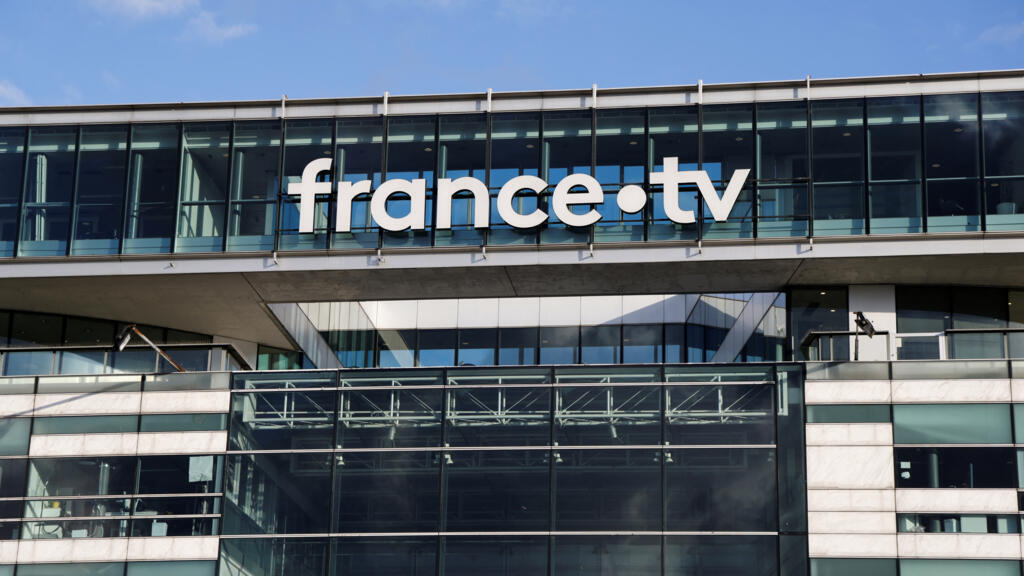
The headquarters of France Televisions public broadcasting, Paris, 2025. 
© AFP - LUDOVIC MARIN

After nearly six months and close to 70 interviews, the 551-page report into the "neutrality, operation and financing of public broadcasting" was published on Tuesday morning on the National Assembly website.

The inquiry was launched at the request of the UDR, the small party of Éric Ciotti, an ally of the far-right National Rally (RN).

For UDR member Charles Alloncle, the MP who presented the report, French public broadcasting is in "crisis" owing to a lack of neutrality and oversight, conflicts of interest and excessive costs.

He writes that the country's "public broadcasting system is ill-suited to the challenges of our time" and calls for a "total or partial overhaul" of the sector's major institutions, beginning with France Télévisions and Radio France.

The report's 69 recommendations would deliver savings of more than €1 billion from the €4 billion in state funding that currently supports France Télévisions, Radio France, and France Médias Monde – the group which encompasses France 24, RFI and MCD.

Among the most significant proposals were the abolition of children's channel France 4, the merger of France 2 and France 5, the merger of franceinfo and France 24, and the consolidation of the France 3 Régions and ICI television and radio networks.
Duty of neutrality

Other recommendations include greater regulation of public broadcasting employees' online activity on social media, by establishing "a duty of neutrality" similar to that required of judges.

A breach of this duty would then be subject to disciplinary action.

"When you are committed to a mission as demanding as public service, you must serve the public interest and set aside your personal convictions more than if you worked for the private sector," said the report.

Environmental reporting varies sharply across French media, study shows

Alloncle also wants to reinstate the appointment of the heads of France Télévisions and Radio France by the president of the Republic and have these entities depend on the president's office rather than the Ministry of Culture.

He also suggests reducing the budget allocated to games and entertainment on public television by three-quarters and cutting the sports budget of France Télévisions by a third, in a bid to maintain public assets and reduce the national debt.

The MP cites examples of what he calls "activist bias" and "targeted and deliberate hostility" toward the RN among certain figures on public television and radio, and "humour used as a form of activist expression".

The rapporteur of the National Assembly enquiry committe on the neutrality, operation, and funding of public broadcasting, UDR's MP Charles Alloncle, on 17 December, 2025. AFP - STEPHANE DE SAKUTIN


Among what he called the "dysfunctions", he said "the most serious is unequivocally the disengagement of the supervisory and oversight authorities, which has allowed this public service to suffer abuses" – referring to the French state and the Court of Auditors.

The report – adopted by a narrow margin last week – was met with anger by several MPs who criticised Alloncle's tone and what they called "lies" and "defamatory remarks".

The chairman of the inquiry committee, Horizons MP Jérémie Patrier-Leitus, accused Alloncle of "discrediting the sector" and wanting to "prepare public opinion" for the privatisation of public broadcasting, a move desired by his allies in the National Rally.

Speaking on ICI radio in Brittany on Tuesday, MoDem MP Erwan Balanant, who was a member of the inquiry committee, pointed to "a desire to dismantle public broadcasting". He announced that he planned to publish a counter-report "before the summer".
'Missed opportunity'

French Prime Minister Sébastien Lecornu called the report a "missed opportunity".

"Let's be clear: this report unfortunately misses the point," Lecornu wrote on social media platform X (formerly Twitter). "Reforms will be necessary", he said, but they must "respond to a vision".

For the president of France Télévisions, Delphine Ernotte Cunci, it is "a biased report, built on insinuations, approximations, and falsehoods".

"All this to end up here?... a text which claims to strengthen public broadcasting by proposing its historic weakening," she wrote on X.

The president of the RN, Jordan Bardella, reaffirmed his promise of "privatisation" if his party comes to power, a process which experts have said would be very complex.

Alloncle hopes to incorporate part of his report into a bill. He would like the issue of conflicts of interest to be on the agenda for the UDR party's allotted time slot in the National Assembly on 25 June.
INTERVIEW

Global press freedom in 'deplorable' state, journalism federation chief tells RFI

As the International Federation of Journalists opens the 32nd world congress in its 100-year history, outgoing president Dominique Pradalié condemned the "deplorable" state of global press freedom in an interview with RFI.


Issued on: 05/05/2026 - RFI
Mourners and colleagues holding 'press' signs surround the body of Al-Jazeera Arabic journalist Ismail al-Ghoul, killed along with his cameraman Rami al-Refee in an Israeli strike on 31 July, 2024. © Omar Al-Qattaa / AFP

More than 300 delegates representing journalists’ unions and organisations around the world are gathering in Paris for the event from 4 to 7 May, hosted by the International Federation of Journalists' (IFJ).

Outgoing IFJ president Dominique Pradalié, whose mandate ends on Monday, called the congress an opportunity "to debate the major challenges facing journalism today, such as surveillance and ongoing impunity for crimes against journalists, artificial intelligence, declining workers’ rights, among many others".

On World Press Freedom day, RFI spoke with Pradalié about the urgency of raising the alarm over the dangers faced by journalists.

Dominique Pradalié: The obstacles for journalists are manifold. They range from direct, specific threats to threats against one’s family. These arrests and disappearances are not just happening in the Sahel or in Africa, they are happening all over the world.

And as president of the International Federation of Journalists, which represents some 600,000 journalists worldwide, we have sounded an alarm bell regarding the deplorable state of press freedom and the terrifying threats that haunt journalists day and night.

On 1 May, we published a global monitoring report highlighting systemic and unprecedented surveillance targeting journalists. As well as traditional phishing emails, fake websites now coexist with state-sponsored spyware, compromising the safety of journalists and the protection of their sources, without any meaningful or active legislative or regulatory oversight. And what is happening? The result is that in 2025, 128 journalists were murdered.


Dominique Pradalié, outgoing president of the International Federation of Journalists, in the RFI studio on 3 May. © RFI/Benoît de Solminihac


RFI: Two-thirds of these deaths are attributed to Israel, including 86 in Gaza, making it one of the deadliest places in the world for journalists. Yet the protection of journalists in war zones is guaranteed by international law. Why, in your view, are these principles so difficult to apply in Gaza today?

DP: In Gaza, a genocide is under way. To prevent any testimony, the Israeli army, the Israeli government – dominated by the far right – has decided to target all journalists. At least 250 have been killed in two years. A massacre that no one, even in their worst nightmares, would have imagined possible.

You mentioned international conventions. Nothing specific exists for the protection of journalists. Absolutely nothing. They are considered civilians, that is all. Civilians are more or less protected depending on the parties involved and the nature of the wars.

But journalists need specific protection. After working extensively with international lawyers, we have drawn up a convention, a text against impunity. Nothing exists at the international level against impunity for the murderers of journalists. And this text provides, in particular, for permanent annual monitoring. This means that every country, every year, will have to report on what it has done to promote press freedom.

Independent international teams will be deployed to investigate in countries where journalists have been killed and where justice has not been served. They will attempt to find not only the killers but also the instigators, and bring them to justice.

Record killing of journalists reveals rising global threat to press freedom

RFI: Is there currently evidence available in any of these cases that could help establish clear accountability?

DP: Absolutely. I’ll give three examples. In Serbia and in Greece, there have been acquittals very recently for the murderers of journalists, on the grounds that it wasn’t fully proven that they had actually tried to kill them. I’ll leave it to you to interpret and understand what these words might mean for the family and for the profession. These journalists were deliberately killed. The third example is in Latin America, and there are numerous examples in Mexico where [journalists] are effectively being hunted down.

But I am thinking of our Lebanese colleague Amal Khalil, who was deliberately targeted, warned that she would be targeted if she continued, and who was murdered – just like Shireen Abu Akleh in Jenin four years ago.

In other words, governments no longer bother with any precautions whatsoever. They simply decide to eliminate inconvenient witnesses. And that is impunity, pure and simple. It is a cancer eating away at all democracies. And since journalists are part of the proper functioning of democracy, every country – and France has not yet taken a stand – must publicly declare its support for an international convention against impunity.

If this is not done by 2 November, the day designated by the United Nations to condemn impunity for the killers of journalists, everything will seem like a joke.


Lebanese journalist Amal Khalil, pictured on 22 March, 2026, was killed on 22 April, 2026. AP - Mohammed Zaatari


RFI: In the United States, President Donald Trump’s rhetoric against the media is consistently confrontational. There too, press freedom is under serious threat.

DP: Donald Trump is setting a bad example to the whole world. This man isn’t controversial just because he is president of the United States, and that is an important office. This man lies constantly. I think it was the New York Herald or the Washington Post, I can’t remember which of the two, in its list covering his two terms, reported that the US president had told more than 2,000 lies.

The press is trying to do its job, lies or no lies, and the politicians on the other side are doing what they can to keep their seats and their illegal, illiberal and harmful practices for the whole world.

RFI: How can the IFJ take concrete action in the face of the increasing number of attacks on press freedom?

DP: Well, we go out into the field whenever we can. I do it very often. Members of our executive committee do it. We file complaints, and we’re going to bring all these complaints together at an international level.

We have a pool of international lawyers who will begin working publicly on Monday at the opening of the world congress in Paris to create specific international legal remedies for all journalists, so that they are no longer hunted down like game, but can, on behalf of everyone, fulfil their mission in the public interest.

Kidnapped, killed or silenced: Africa's journalists increasingly under threat

RFI: What measures can you put in place to provide concrete protection for reporters in the field?

DP: Well, there are two types of measures for journalists, before and during their trips. We run a huge number of training courses for journalists – as you will understand, we keep these discreet, and the countries involved are also discreet – to train them in warfare techniques, espionage techniques and protection techniques.

And then, on the ground, we provide aid in Ukraine in particular, but also in Gaza. We have three aid centres in Gaza, where we provide protective equipment and all sorts of forms of daily assistance. That’s part of our day to day work. The same is true in Sudan, and it’s true in Iran too, where we do what we can. But there too, we’re discreet above all else. So, we’re providing training and direct support through our affiliates. We have 188 affiliates worldwide. We’re not doing enough, but at least we’re doing something.

RFI: Is press freedom making progress in any part of the world?

DP: I won’t go through all 148 countries where we have affiliates in detail, but I would say that there are indeed a number of countries [where this is the case], such as Uruguay, from where I have just returned. There, in the name of press freedom, they are creating a press council and a specific chamber set aside in the Uruguayan parliament. And this is something could be done everywhere for journalists, to demonstrate the importance a government attaches to press freedom.

This article has been adapted from the original interview in French by Olivier Chermann and lightly edited for clarity.
Jailed French journalist drops appeal in Algeria and eyes presidential pardon

French journalist Christophe Gleizes has withdrawn his appeal to Algeria’s highest court, in a move his family hopes will open the door to a presidential pardon – and, ultimately, his release.

Issued on: 05/05/2026 - RFI

A portrait of Christophe Gleizes is unveiled during a demonstration organised by the Occitanie Press Club and Reporters Without Borders to demand his release, in Montpellier, France on 29 January. AFP - GABRIEL BOUYS

The 36-year-old sports reporter, currently imprisoned in Algeria, has decided to drop his case before the Court of Cassation – a step described by his family as both calculated and symbolic.

Speaking on France Inter radio on Tuesday, his mother Sylvie Godard said the decision demonstrated a deliberate show of trust in Algerian President Abdelmadjid Tebboune.

“He is placing his complete trust in President Tebboune’s clemency. It is a very powerful, symbolic gesture,” she said.

The family believes the move could significantly improve the chances of a pardon, particularly as diplomatic relations between France and Algeria have shown signs of warming after a prolonged period of tension.

Gleizes was arrested in May 2024 while reporting in the Kabylie region and was later sentenced on appeal in December to seven years in prison on charges of “glorifying terrorism” – allegations his supporters strongly contest.

Diplomatic thaw

Gleizes’ relatives are cautiously optimistic that a recent improvement in bilateral ties could work in his favour. His stepfather, Francis Godard, pointed to a shifting political climate between the two countries as a key factor.

“If Christophe is in prison, it is also because of opposition and a climate of hostility between our two countries,” he said, adding that recent developments suggest “a new phase” in relations.

A notable moment came with the February visit of French Interior Minister Laurent Nuñez to Algeria, where he met Tebboune. The trip marked an effort to ease a diplomatic crisis that has been simmering since the summer of 2024

For the family, these developments offer a glimmer of hope.

They were able to visit Gleizes on 21 April at Koléa prison, west of Algiers, and described him as resilient. “He is strong. And he makes us fight for him,” said his mother.

Support has also come from prominent figures, including former French minister Ségolène Royal, now head of the France-Algeria association, who visited the journalist again on 1 May. According to the family, she too found him “in good spirits”.


INTERVIEW

'Economic diplomacy' key in Algeria, French employers' union chief tells RFI


Following a recent visit to Algeria, Patrick Martin – the head of France’s main employers’ union, Medef – spoke to RFI about economic diplomacy at a time of strained relations between Paris and Algiers, Chinese competition in Africa and what he called the “savagery” of the current tariff war.


Issued on: 06/05/2026 - RFI

Algerian and French flags fly in the Algerian capital Algiers in 2022. 
AFP - ALAIN JOCARD


RFI: You’ve just returned from a four-day visit to Algeria, where you kept a relatively low profile. Perhaps because given tensions over last two years, it’s best not to say anything that might cause offence?

Patrick Martin: I wouldn’t say I kept a low profile. Algerian media, for instance, covered the visit quite extensively. But by accepting the invitation of my Algerian counterpart at the council for Algerian economic renewal (CREA), I do think I’ve helped to stabilise what are important and historic relations between France and Algeria.

RFI: Since the diplomatic rift in 2024, Algeria has been importing far fewer French products – cereals and cattle, for example. Do you expect those exports to pick up again after your visit?

PM: I certainly hope so. But we shouldn’t overstate things either. France remains, for example, Algeria’s second-largest foreign investor. I saw some excellent French companies operating there, often run by dual nationals. So yes, our exports have fallen, and others are taking our place. Italy comes to mind, but also Germany and Turkey. We need to be attentive, because Algeria has real potential. It has a sizeable domestic market – nearly 47 million people – and like I said, there are some very strong businesses there. That said, there are a number of issues where the state is interfering, and clearly we would like those to be resolved.


French employers' lobby group Medef president Patrick Martin in 2024. © AP - Ludovic Marin

RFI: After Interior Minister Laurent Nuñez's visit, does this mean France and Algeria are patching things up through security and business ties?

PM: I firmly believe, in my own role, in economic diplomacy. That’s what led me, for example, to travel to China last year with the foreign minister, to help resolve the very sensitive issue of our Cognac and Armagnac exports. It’s also in that spirit that, a few years ago, we helped mend relations between Italy and France when they had briefly deteriorated diplomatically. I also travelled to Morocco several times in the first half of 2024, and I think it’s fair to say that, together with our Moroccan counterparts, we helped strengthen state-to-state relations there as well. Without overstating our influence, I do believe economic diplomacy plays an important role in international relations.

RFI: So are you effectively a second foreign minister?

PM: Certainly not. I think the economy is important enough to stand on its own.

RFI: Another major event is the upcoming Africa-France summit in Nairobi, with a large business forum expecting around 2,000 African and French participants. Does this suggest French business is turning away from francophone Africa in favour of English-speaking countries?

PM: No, not at all. I’d point out that five years ago the Medef launched the Alliance of Francophone Employers’ Organisations – a business initiative alongside long-standing political and cultural ties. But in the major reshuffle of global trade, we have to take an interest in all kinds of countries, whether they’re francophone or not, if there is demand.

RFI: Are French companies sometimes more cautious than their Chinese or Turkish competitors in certain African markets?

PM: French companies have a strength – and perhaps it’s true of the French more generally – when they set up somewhere, they’re there for the long term. It hasn’t escaped me that the Chinese, in particular, are very aggressive in certain sectors. But we also see that they can leave as quickly as they arrived. They’re highly competitive because they are very predatory, very aggressive on pricing. We’re fairly convinced that, in a number of cases, on major contracts, they are operating at a loss – and that’s probably part of a state-driven strategy of influence.

A photograph shows the port of Algiers, Algeria, on 16 February, 2026. 
AFP - STRINGER


RFI: In which sectors, for example?

PM: Infrastructure.

RFI: So they’re building stadiums, roads, bridges at a loss?

PM: At the very least, it’s hard to see how they’re making money at the prices they’re offering on certain contracts.

Despite pause on US tariffs, African economies face uncertain future

RFI: On the sidelines of this year’s G7 summit in France, Medef is organising a business summit bringing together employers’ organisations from the seven richest Western economies. What impact could that have for Africa?

PM: Any impact for Africa would be indirect. Our priority – shared by my counterparts in the United States, Germany, the UK, Japan and Italy – is to restore rules to economic and trade relations, because what we’re seeing at the moment is a form of savagery creeping into global trade.

RFI: What are you referring to?

PM: Tariffs. We need international trade, we need well-designed, sensible free trade agreements. Otherwise – to put it simply – the 20 percent of French workers whose jobs depend on exports could see those jobs come under threat. So the seven business organisations I’ve mentioned are calling for this, and we will be telling our governments that rules need to be restored.

RFI: Would that also benefit American businesses?

PM: Of course. They themselves are unsettled. I won’t go any further than that, but they are clearly affected by the back-and-forth decisions their own administration is making in international relations.

This interview has been adapted from the original in French by Christophe Boisbouvier and lightly edited for clarity.
French court to rule on Rwanda genocide case against former first lady

France’s judiciary is set to rule on Wednesday in a long-running investigation linked to the 1994 genocide against the Tutsi in Rwanda, as prosecutors and civil parties seek the indictment of Rwanda’s former first lady Agathe Habyarimana.


Issued on: 06/05/2026 - RFI

Agathe Habyarimana, widow of former Rwandan president Juvénal Habyarimana, whose killing triggered the 1994 genocide against the Tutsi. Her alleged role during the massacres remains at the centre of a long-running legal case in France. AFP - BERTRAND GUAY

Now 83, Habyarimana has been under investigation in France since 2007 after a complaint by the Collective of Civil Parties for Rwanda (CPCR). She is suspected of complicity in genocide and crimes against humanity, allegations she has consistently denied.

Despite the length of the investigation, she has never been formally charged. Since 2016, she has held the intermediate legal status of an assisted witness, which falls short of indictment.

In 2025, two Paris investigating judges dismissed the case, citing insufficient evidence. That ruling is now under appeal.

Disputed role

At the centre of the case is whether Habyarimana played a role in planning or encouraging the mass killings that followed the assassination of her husband, former president Juvénal Habyarimana, on 6 April, 1994.

His death triggered violence that killed around 800,000 people over three months, according to the United Nations, mostly Tutsis and moderate Hutus.

Civil parties argue that Habyarimana was a key figure in the so-called Akazu, an alleged inner circle of Hutu elites accused of organising the genocide. She rejects that claim and says she was a mother of eight with no political role.

In their August 2025 ruling, the investigating judges backed her account. They said there was no convincing evidence she had been an accomplice to genocide or part of a conspiracy to commit it. They instead described her as a victim of the attack that killed her husband and several relatives.

That decision was immediately challenged by France’s National Anti-Terrorism Prosecutor’s Office (PNAT), which handles crimes against humanity cases, along with civil parties. The case is now before the Investigating Chamber of the Paris Court of Appeal.


Calls for further inquiry

In submissions dated January, the advocate general called the dismissal “at the very least premature”.

He pointed to what he described as “serious and corroborating evidence” suggesting Habyarimana’s involvement in a conspiracy and support for genocidal intent.

He also said the investigation remained incomplete, citing requests made by prosecutors in 2022 and 2024 for further inquiries, including witness testimony, confrontations and a review of Habyarimana’s asylum. He said those requests were ignored or rejected by the investigating judges.

The advocate general said the “imperative of speed” should not outweigh the search for truth in what he described as a case of “historical significance”.

The debate has also spread into public discussion. In a March opinion piece published in Le Monde, 56 public figures, including historians, criticised the dismissal and said it overlooked research and testimony, especially concerning the existence of the Akazu.

Defence rejects accusations

Alain Gauthier, head of the CPCR, insists the network existed and that Habyarimana held significant influence within it.

He said that although France has secured several genocide-related convictions since 2014, “much remains to be done”.

For survivors and victims’ families, he said, the ruling will test whether the French justice system can meet their expectations.

Habyarimana’s lawyer Philippe Meilhac said that after nearly two decades of proceedings, including long periods of inactivity, the case should end.

Habyarimana was evacuated to Europe with her family on 9 April, 1994, reportedly at the request of former French president François Mitterrand, a close ally of her husband. France later rejected Rwanda’s extradition requests, while also refusing to grant her asylum.
Amazon ramps up French operations with €15bn expansion and 7,000 jobs

Amazon will invest more than €15 billion in France over the next three years and create more than 7,000 permanent jobs, the US e-commerce giant said, as it expands its logistics network, cloud services and artificial intelligence operations.


Issued on: 06/05/2026 - RFI

Amazon says it will invest more than €15 billion in France over the next three years. REUTERS - PASCAL ROSSIGNOL

The investment is Amazon’s biggest in France so far. It will fund new logistics sites, develop cloud and AI services and strengthen the company’s existing network, Amazon said in a statement on Tuesday.

Four new distribution centres are planned across northern, eastern and central France. Job creation will begin in 2026 with the opening of the first three sites.
New sites and jobs

The first wave will create 1,000 permanent jobs in Illiers-Combray, south-west of Paris, another 1,000 in the northern city of Beauvais and 3,000 near Lyon in southeastern France.

A fourth distribution centre is due to open near the German border in Ensisheim, in eastern France, at the end of 2027, creating another 2,000 permanent jobs.

The company has already invested more than €30 billion in France since 2010.

The investment would bring “faster deliveries, a wider choice and low prices accessible across France, as well as a reduced environmental footprint thanks to a local logistics network”, Amazon France chief executive Jean-Baptiste Thomas said.

France expansion

Amazon said the investment would also directly benefit local areas and French businesses using Amazon’s marketplace, technology, cloud and AI services.

“More than 7,000 permanent jobs will be created, and French companies that rely on our marketplace, our technologies and our cloud and AI solutions to grow will also benefit directly,” Thomas added.

Amazon was founded in 1994 and entered the French market in 2000.

France was the third country outside the United States where Amazon launched operations, after Germany and the United Kingdom.

The company has previously faced criticism in Europe over warehouse working conditions and anti-union practices.

More than 25,000 people now work for Amazon in France on permanent contracts across more than 35 sites, including logistics centres and offices.


North Korea drops references to unification with South from constitution, Seoul says

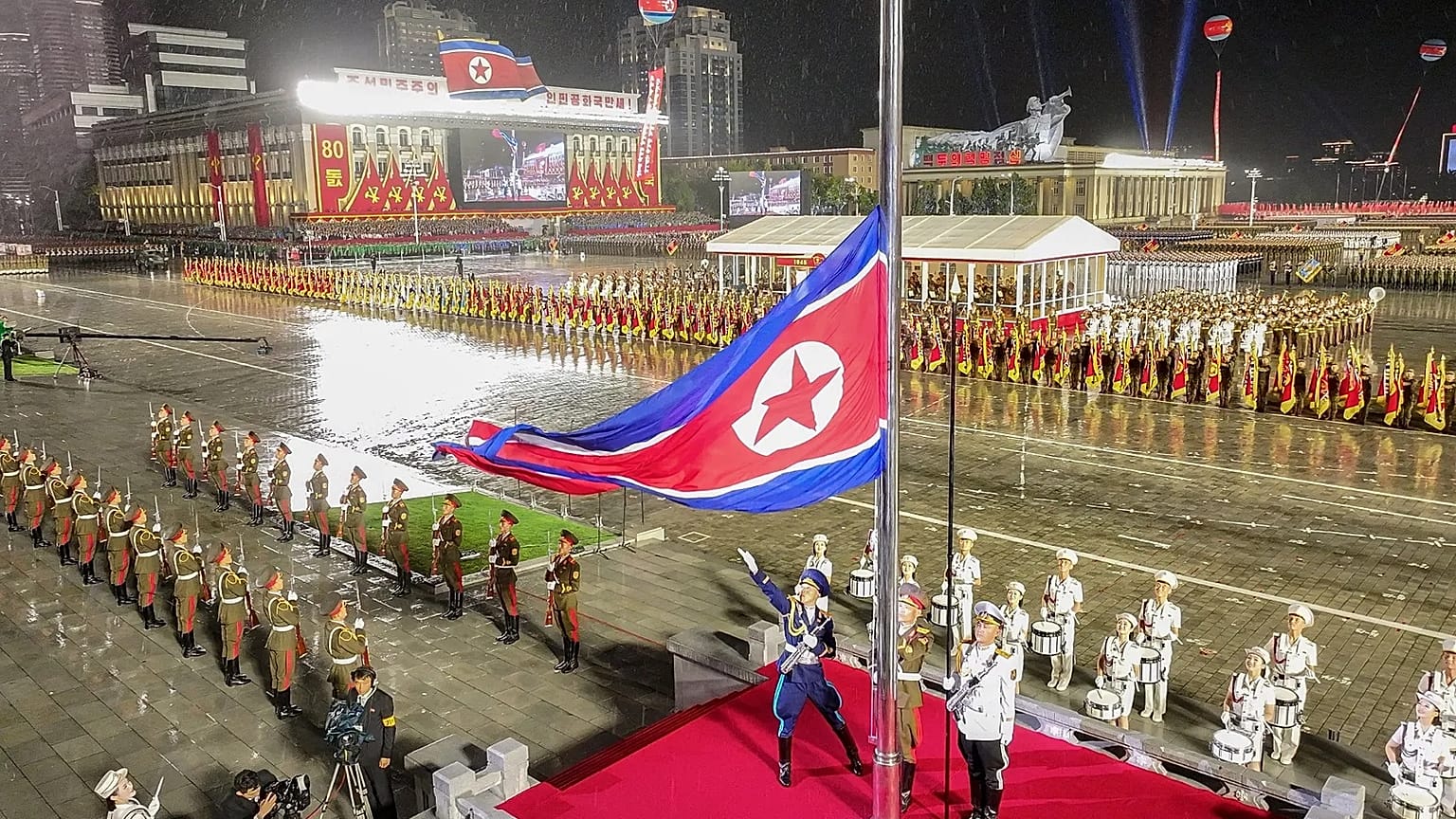
A North Korean flag is raised during the military parade marking the 80th anniversary of the founding of the ruling Worker's Party in Pyongyang, 10 October, 2025
Copyright AP Photo

By Gavin Blackburn
Published on 


China has long been the country's main economic backer, though Pyongyang has drawn closer to Moscow since it launched its full-scale invasion of Ukraine in 2022.

North Korea has removed all references to reunification with the South from its constitution, according to a document seen by the AFP news agency on Wednesday, underscoring Pyongyang's push for a more hostile policy towards Seoul.

A clause stating that North Korea aimed "to realise the unification of the motherland" no longer appears in the latest version of the constitution, which was shared at a news conference held at South Korea's Unification Ministry.

The development comes after North Korean leader Kim Jong Un labelled Seoul as the "most hostile state" in a policy address in March.

The revised constitution, which the document indicated was introduced in March, also includes a new clause delineating North Korea's territory.

Using South Korea's official name, it says that includes the area bordering China and Russia to the north, "and the Republic of Korea to the south."

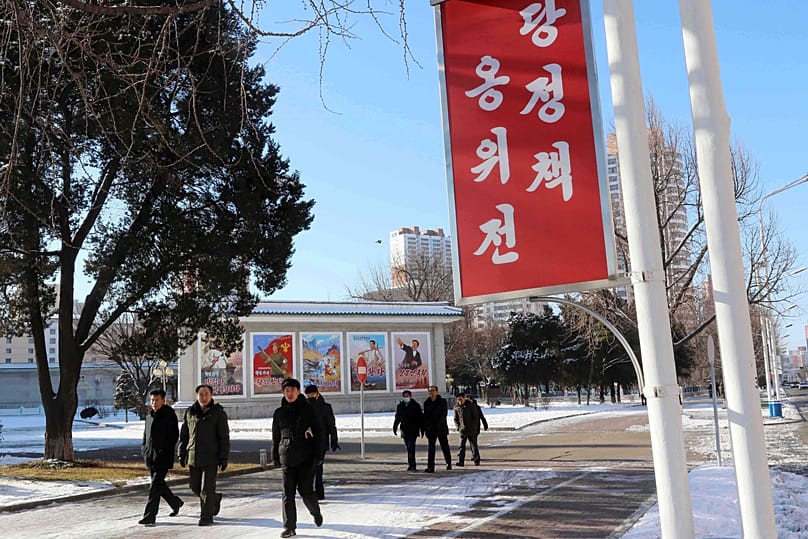
People walk in the street of the Central District of Pyongyang, 25 December, 2025 AP Photo

North Korea "absolutely does not allow any infringement on its territory," it added.

South Korea's President Lee Jae-myung has called for talks with the North without any preconditions, saying the countries are destined "to make the flowers of peace bloom."

But the North has not responded to the Lee administration's overtures and has repeatedly called the South its "most hostile" adversary.

Kim has vowed to boost his nuclear forces and Pyongyang conducted four missile tests in April, the most in a single month for more than two years.

The South’s unification ministry said in April that the North Korean economy was showing signs of recovery as Pyongyang deepens trade and diplomatic ties with Russia and traditional ally China.

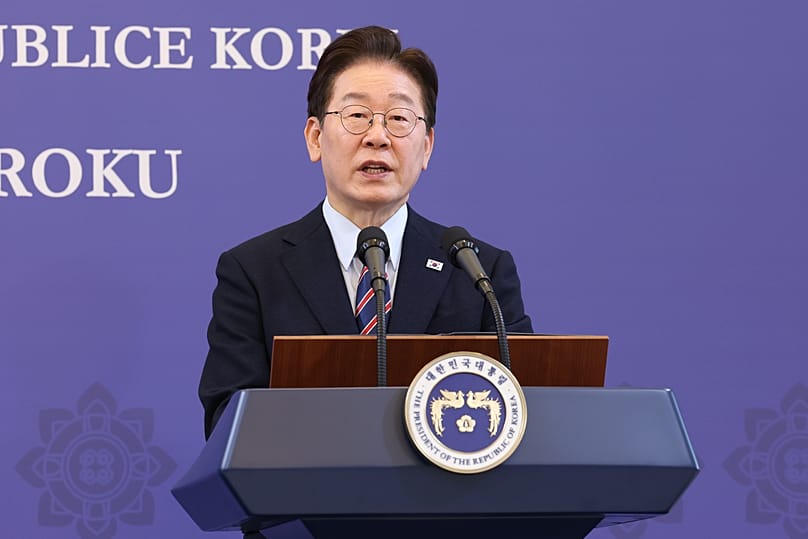
South Korean President Lee Jae Myung speaks during a press conference at the presidential Blue House in Seoul, 13 April, 2026 AP Photo

China has long been the diplomatically isolated country's main economic backer, though Pyongyang has also drawn closer to Moscow since it launched its full-scale invasion of Ukraine in 2022.

Pyongyang and Moscow inked a defence treaty in 2024 that calls for military support in the case of either country being attacked.

That year, the North sent thousands of troops to Russia to support its war on Ukraine. They were deployed to the western Kursk region to held fend off a months-long counter-offensive by Kyiv's forces.

Several senior Russian officials have also visited North Korea recently.

Ukraine strikes Russian military facility more than 1,000 kilometres into Moscow's territory

Flamingo missiles are seen at Fire Point's secret factory in Ukraine on Thursday, Aug. 14, 2025.
Copyright AP Photo


By Sasha Vakulina
Published on 

Ukraine launched a long-range strike against Russia’s military site over 1,000 km from its border, just days before Moscow’s Victory Day parade.

Ukraine struck a critically important military-industrial complex in Russia on Tuesday, just days before the Kremlin’s Victory Day parade on 9 May.

Ukrainian President Volodymyr Zelenskyy published a video of launches of domestically-made Flamingo cruise missiles, which he said covered a distance of more than 1,500km to strike a facility in Cheboksary in the Russian Federation's Chuvash Republic.

The facility in question is a Russian state institute that produces components for high-precision weapons used by Moscow to attack Ukraine.

"The struck military production facility manufactured relay protection systems, automation equipment, and low-voltage apparatus," Zelenskyy wrote.

"Russia must end its war and move to real diplomacy. We have made our proposal."

Zelenskyy announced on Monday that Ukraine is declaring a ceasefire beginning at midnight on Wednesday. The proposal came in response to Russia’s unilateral declaration of a ceasefire for its Victory Day parade.

“We believe that human life is far more valuable than any anniversary ‘celebration’,” Zelenskyy said, referring to Russia’s upcoming 9 May commemorations.

He warned that the timeframe of the proposed truce at midnight on the night of 5–6 May would be enough to test whether a genuine pause in fighting could be respected.

“We will act reciprocally starting from that moment,” Zelenskyy said.

"It is time for Russian leaders to take real steps to end their war, especially since Russia’s defence ministry believes it cannot hold a parade in Moscow without Ukraine’s goodwill."

Victory Day blackout

Russia has reportedly started cutting off mobile internet services to many users starting from Tuesday.

Russian banks, including the country’s largest, Sberbank, also cautioned that there could be issues with mobile internet and cash withdrawals.

This year the parade in Moscow will also be significantly scaled back, according to the Kremlin.

It would not feature military vehicles or cadets due to what the Kremlin described as "current operational situation”.

“All measures are being taken to minimise the danger," Putin's spokesperson Dmitry Peskov said earlier as he referred to what Moscow called a “terrorist threat” from Ukraine.

The fact that the parade is scaled down is seen as an important indicator of the situation in Russia’s military and of personnel and equipment shortages.

The US-based Institute for the Study of War (ISW) think tank assessed that in April, Russian forces lost territory they occupied in Ukraine for the first time in over a year and a half.

The ISW said it has evidence that Moscow lost control of 116 square kilometres over the course of last month.

The think tank explained that the Russian rate of advance across the battlefield has been steadily declining since November 2025," as continued Ukrainian ground counterattacks and mid-range strikes, the February block on Russia’s use of Starlink terminals in Ukraine, and the Kremlin’s throttling of Telegram have exacerbated existing problems within the Russian military.