It’s possible that I shall make an ass of myself. But in that case one can always get out of it with a little dialectic. I have, of course, so worded my proposition as to be right either way (K.Marx, Letter to F.Engels on the Indian Mutiny)
Wednesday, May 06, 2026
Canadian miner invested in Cuba says it’s assessing Trump’s fresh sanctions
A Canadian mining company that is among Cuba’s largest foreign investors is consulting with advisers and stakeholders after President Donald Trump expanded US sanctions against the struggling Caribbean nation.
Sherritt International Corp., which is due to report earnings next week, issued a statement Monday after markets closed saying it’s assessing the implications of Trump’s latest measures.
The executive order signed on Friday targets almost any non-US citizen or entity that conducts business on the communist-run island, which has been subject to broad economic sanctions since the 1960s. The new measures will focus on key sectors including defense, mining, finance and security.
Toronto-based Sherritt mines cobalt and nickel in eastern Cuba, processing the metal at its refinery in Alberta. In February, after Trump imposed a de facto fuel blockade on the island, the company announced a temporary halt to its Cuban operations.
Trump seized the leader of Venezuela, Cuba’s main ally, in early January and then blocked all but one Russian tanker from delivering oil to the island — exacerbating chronic power outages and leading to a dearth of gasoline, diesel and jet fuel. The US president is hoping intense economic pressure will topple Cuba’s government after 67 years of one-party rule.
Sherritt gambled on entering Cuba in the 1990s, when Fidel Castro tentatively opened the island’s economy to foreign investment after the fall of the Soviet Union. Once seen as a barometer for for the country’s economic prospects, Sherritt’s stock is trading at around 27 Canadian cents, giving it a market value of C$186 million ($137 million). That’s down from a peak of C$4.8 billion in 2008.
A claim against Sherritt’s mine in eastern Cuba is among thousands of outstanding property disputes certified by the US government, with the asset valued at more than $88 million before interest. The facility was owned by a subsidiary of what is now Freeport-McMoRan Inc. before it was nationalized after the 1959 revolution that brought Castro to power.
(By Stephen Wicary)
Rio Tinto’s water use dries sacred waterhole, Aboriginal group says
A sacred waterhole used for thousands of years by Aboriginal people in Western Australia has run dry for the first time in living memory, with the Robe River Kuruma Traditional Owners blaming years of unsustainable water pumping by Rio Tinto.
Robe River Kuruma, on whose land Rio Tinto operates an iron ore joint venture of the same name, were attending Rio Tinto’s annual general meeting in Perth on Wednesday.
Robe River Kuruma representative, Jason Masters, said that Rio Tinto’s over-extraction of water had caused irreparable damage to his traditional lands in the West Pilbara region, and asked Rio Tinto to curtail its water use.
“This is a place where my grandmother was born, a sacred permanent water pool that held water through every drought our old people can remember, now dry for the first time in living memory,” he said.
“Even after heavy rainfall from cyclone Narelle, it remains dry today, he said, adding that old river gum trees fringing a nearby water system have died.
New plant to help reduce water use
Rio Tinto and the state government are building an A$1.1 million ($799,810) desalination plant due to start operating later this year and eventually supply eight gigalitres of water annually, as part of plans to reduce water use.
“We are doing everything we can to try to get water back into the system, and that is well underway,” said Rio Tinto chairman Dominic Barton at the AGM.
“In terms of the irreversible impact and damage, we are very keen to discuss with you what we can do to help to deal with that.”
In March, Rio Tinto said that the region had, over the past five years, frequently experienced annual rainfall and streamflow that were below the long-term average.
“This has reduced important groundwater recharge at the Millstream and Bungaroo aquifers, which supply the West Pilbara Water Supply Scheme,” it said.
Rio Tinto in 2020 destroyed a rock shelter sacred to Australia’s Puutu Kunti Kurrama and Pinikura people, which caused a broad public uproar and ultimately led to the departure of the CEO, chair and other executives.
($1 = 1.3753 Australian dollars)
(By Melanie Burton; Editing by Bernadette Baum)
Dominican Republic halts GoldQuest project following protests
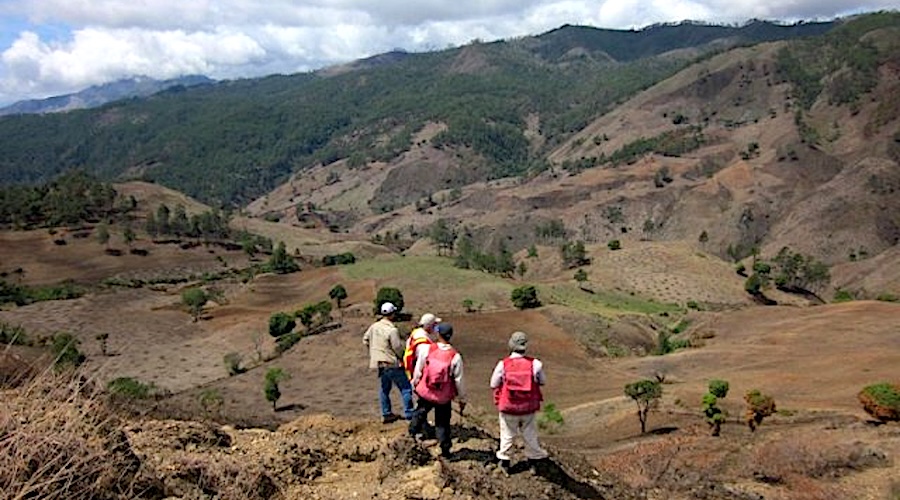
Geologists at the Romero project site. (Image courtesy of GoldQuest.)
Dominican Republic President Luis Abinader has ordered a suspension of all activity at GoldQuest Mining’s (TSX-V: CQC) Romero gold-copper project after mass protests over environmental risks.
Thousands of demonstrators marched about 20 kilometres on Sunday through San Juan province to the Sabaneta Dam, a critical water source they fear could be affected by the proposed mine. Abinader said late Monday his government had “listened with attention, respect and responsibility” to those concerns and would halt all related work in the country’s west.
“When citizens express worries and concerns, our duty is to act with caution and transparency,” Abinader said, adding the project remains in the environmental assessment phase despite exploration concessions granted in 2005.
The suspension underscores mounting social pressure on mining projects in the Dominican Republic, where communities are increasingly weighing economic benefits against risks to water and agriculture in a country where mining contributes about 2% of GDP but competes with tourism and farming for land and resources.
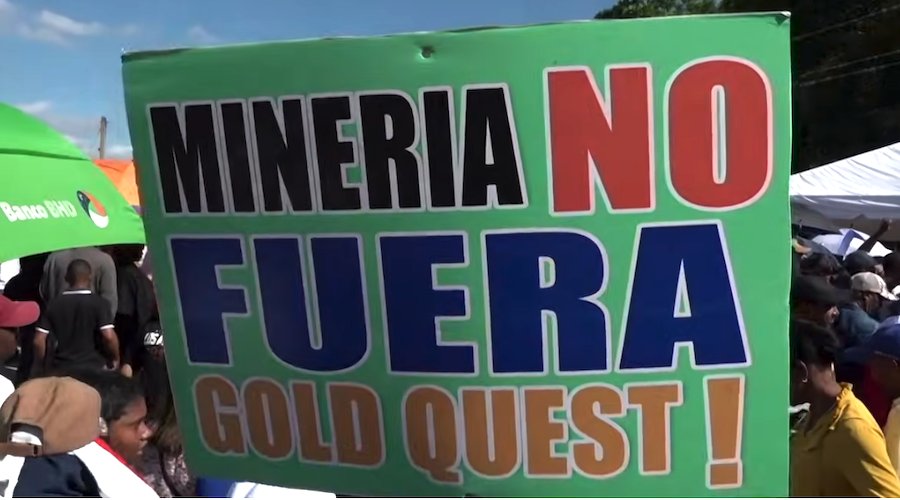
Protesters holding a “No to mining. Out with GoldQuest” sign. (Screenshot from AFP Spanish | YouTube.)
GoldQuest did not immediately respond to MINING.COM’s request for comment after the order, though earlier Monday it said it acknowledged the demonstrations, adding it remained committed to transparent development.
The Canadian Investment Regulatory Organization halted trading in the company’s shares midday Monday after a drop of more than 19%, with trading set to resume Tuesday morning.
Regional trend?
Local opposition remains firm. Ruben Moreta, a leader of a water protection movement, warned protests would continue without government action and said a broad cross-section of society joined the march, including teachers, doctors and farmers who fear potential contamination of farmland.
The move reflects a broader regional trend where governments are increasingly responding to grassroots pressure, as seen in Panama’s closure of First Quantum Minerals’ (TSX: FM) Cobre Panama mine following sustained nationwide protests, highlighting how social licence can decisively shape the fate of major resource projects.
Pueblo Viejo, Latin America’s largest gold mine owned by Barrick Mining (TSX: ABX) (NYSE: B), has been in operations in the country since 2012. The mine is undergoing an expansion project intended to extend its mine life beyond 2040.
In 2024, the Dominican Republic said it will create a state mining firm to explore and exploit the nation’s key mining resources, including rare earth minerals.
The Dominican presidency said in a statement that the state firm, Empresa Minera Dominicana SA, or Emidom, will explore, exploit and run economic viability studies on the country’s natural resources.
Mining halted at Baowu-led Simandou site over pay dispute
Simandou deposit, Guinea. (Image courtesy of Rio Tinto.)
Workers striking over a pay dispute have halted mining since last week on the two blocks of Guinea’s giant Simandou iron ore project operated by a consortium led by China’s Baowu Resources, four sources told Reuters.
Blasting, loading, hauling and dumping have stopped, though rail and port operations continue, a consultant to the project and two union representatives said.
Management and workers were holding talks on Wednesday, the union representatives said, adding that the strike – the first at the Baowu joint venture – involved around 3,000 workers.
All of the sources asked not to be named as they were not authorized to speak.
Baowu Winning Consortium Simandou (BWCS), a China- and Singapore-backed joint venture led by Baowu, the world’s biggest steelmaker and operator of Simandou’s blocks 1 and 2, said it remains in compliance with Guinea’s labour and mining regulations.
In responses to questions, BWCS said staff classifications at its Kerouane mine operations were established in line with applicable rules and in consultation with authorities.
The company remains committed to “constructive” engagement with workers’ representatives and respect for local regulations and the development of Guinean human capital, BWCS added.
Guinea’s mines ministry did not immediately respond to a request for comment.
Dispute over new pay structure
Guinea introduced a unified mining pay structure in 2025 to standardize wages and reduce disparities across the sector. And most operators are now broadly compliant, a Guinea mining executive told Reuters.
Workers at BWCS, however, stopped work on April 28 claiming the company had failed to apply the new salary grid, the consultant and union representatives said.
“There is no mining activity as we speak,” the consultant said. “There is a direct impact on production and they need to find a solution very quickly.”
A source at Baowu said the workers were seeking parity with their counterparts on Simandou’s southern blocks 3 and 4, which are being mined by Simfer, a joint venture between Chinalco, Rio Tinto and the Guinean state.
“My pay is like two, three times lower than my colleagues at Simfer,” said a truck driver, who has worked with BWCS since 2020.
He said the company had asked workers to accept low pay during the mine’s development, promising increases once production began, but that salary increases never materialized.
A Guinea government team met with the workers on Tuesday but failed to negotiate an end to the strike, the driver said.
Simandou, home to the world’s richest untapped deposits of iron ore, began exports in November after decades of delays. At its peak, it is expected to produce 120 million metric tons of iron ore annually.
BWCS employed more than 10,000 workers during construction of the mine, rail and port infrastructure and is now scaling down as production ramps up.
(By Maxwell Akalaare Adombila; Editing by Robbie Corey-Boulet, Joe Bavier and Matthew Lewis)
BHP loses bid to appeal Brazil dam disaster ruling
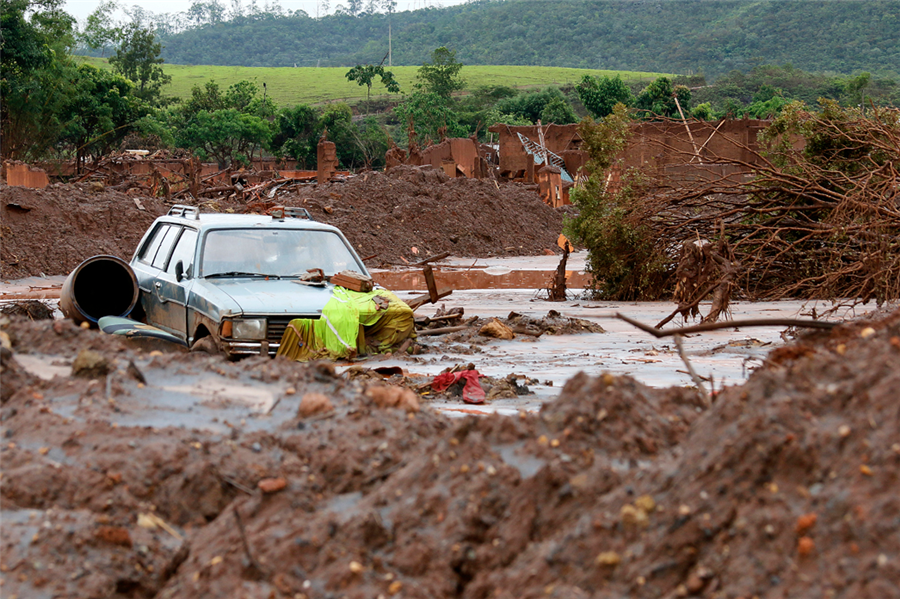
BHP (ASX: BHP) cannot appeal a UK court ruling that found the world’s largest miner liable for Brazil’s deadliest environmental disaster, tightening pressure ahead of a damages trial tied to the 2015 Fundão dam collapse .
London’s Court of Appeal ruled Wednesday there was “ample evidence” supporting a previous High Court decision that held BHP legally responsible under Brazilian law for the disaster at the Samarco iron ore operation in Mariana, southeastern Brazil. Samarco was jointly owned by BHP and Vale (NYSE: VALE). The Court of Appeal rejected BHP’s argument that the trial judge failed to properly consider the company’s submissions.
The collapse of the Fundão tailings dam in Mariana, southeastern Brazil, unleashed a torrent of toxic sludge that killed 19 people, displaced thousands, destroyed forests and contaminated the Doce River along hundreds of kilometres.
“The Court of Appeal has now joined the High Court in finding that BHP’s grounds of appeal have no real prospect of success – an emphatic and unambiguous outcome,” Jonathan Wheeler, lead partner for the Mariana litigation at Pogust Goodhead, said in a statement Wednesday. “BHP remains liable for the worst environmental disaster in Brazil’s history, and it will not be given another bite at the cherry”.
Judge Fraser wrote in the ruling that he did “not accept that any of the grounds relating to BHP’s liability for the dam breach are reasonably defensible” and found “no basis” to argue the trial judge failed to consider BHP’s case properly.
BHP said Wednesday it remained confident that remediation work completed since 2015 and the Brazil settlement “provide the quickest and most efficient solution” for those affected.
“Since 2015, we have supported Samarco in ensuring full and fair reparation, and that is why we are willing to defend the UK case robustly and for as long as it takes,” BHP said in an emailed statement. “Following the Stage 2 trial, further trials to assess damages are not expected to conclude until 2030 and beyond.”
BHP said the roughly $32-billion Brazil agreement and remediation programs launched after the disaster have already provided compensation to more than 625,000 people.
The miner also said about 240,000 claimants, representing roughly 40% of the claimant group, had already received indemnification in Brazil and would discontinue their UK claims.
“The court in its trial judgment recognized the compensation programs delivered in Brazil since 2015 and upheld releases signed by those impacted by the dam failure,” BHP said. “This underscores the importance of the work done over the past 10 years in Brazil.”
Two-year trial and counting
At the trial, which began in 2024, lawyers representing hundreds of thousands of Brazilians and other claimants accused BHP of attempting to sidestep accountability. The miner argued the UK proceedings duplicated ongoing legal actions, compensation efforts and environmental repair programs already under way in Brazil.
During the first week of the London proceedings, Brazil signed a 170-billion-real ($34.6 billion) compensation agreement with BHP, Vale and Samarco tied to the dam failure.
Pogust Goodhead called Wednesday’s ruling “another victory” for victims seeking justice more than a decade after the disaster and “a major setback” for BHP. The law firm said the Court of Appeal decision effectively closes BHP’s last ordinary avenue in England to challenge the liability ruling.
“Our clients have waited more than a decade for justice, while BHP pursued every procedural avenue to avoid liability; those avenues are now closed,” Wheeler said. “We are focused on securing the compensation that hundreds of thousands of Brazilians have long been entitled to.”
The lawsuit is among the largest environmental cases ever heard in the UK and could expose BHP to billions more in damages. A second phase of the trial to determine compensation for affected communities, businesses and municipalities is scheduled to begin in April 2027.
Rio Tinto boss pushes cost cuts with jobs in focus
CEO Simon Trott at the 2026 AGM in Perth. (Image supplied by Rio Tinto.)
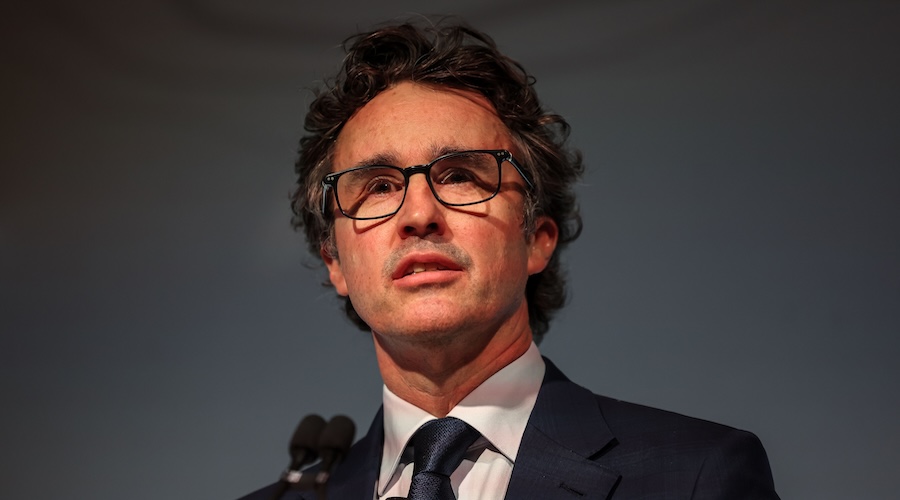
Rio Tinto’s (ASX, LON: RIO) chief executive Simon Trott said on Wednesday he will continue to streamline the company’s global operations with the goal of reaching billions of dollars in cost savings, asset sales and productivity gains.
The mining giant has already reorganized into three divisions — Iron Ore, Aluminum & Lithium, and Copper — since Trott took over in August 2025 as part of a broader effort to simplify management and improve accountability.
Speaking at Rio’s annual general meeting in Perth, Trott reiterated a target to unlock $5-$10 billion from the company’s asset base through divestments and operational efficiencies after delivering $650 million in productivity benefits so far.
Reports this week said Rio could cut as much as 20% of its white-collar workforce in Perth. Trott declined to comment on the scale or timing of any layoffs but confirmed the company was streamlining operations across all divisions globally while protecting frontline roles.
“Last year, we outlined a plan to really drive decision-making as close to the point of impact as we could,” he told reporters following the meeting. “And that’s about having a stronger company. That’s about having a simpler company, reducing complexity, being really clear around where accountabilities lie, and making sure that people are where the decisions are made.”
‘Winning formula’
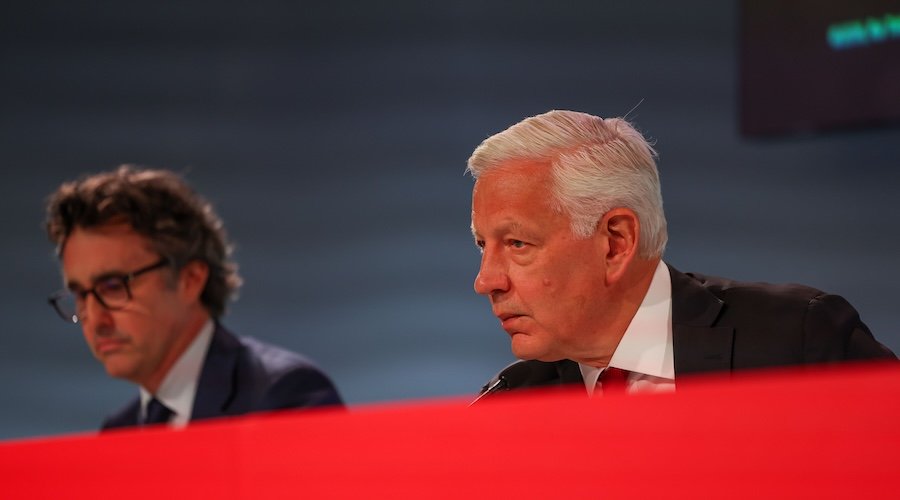
Trott and Rio chairman Dominic Barton used the AGM to defend the company’s diversified mining strategy, calling it “winning formula” for growth and returns as geopolitical tensions and supply chain fragmentation reshape commodity markets.
Trott said Rio’s exposure to iron ore, lithium, aluminium and copper positioned the company to benefit from long-term demand tied to electrification and energy security.
“I believe in the diversified model and we’ve got a fantastic iron ore business,” he said. “We’ve brought on lithium, and we’ve got some amazing assets and development assets in lithium, aluminum and copper. When you take those together across the three product groups that we really want to focus on, we think that positions us really well for the future.”
L-R: CEO Simon Trott and Chairman Dominic Barton at the 2026 AGM in Perth. (Image supplied by Rio Tinto.)
Trott said the company was still assessing how geopolitical uncertainty could affect commodity demand and customer behaviour.
Barton noted growing de-globalization and supply chain disruption were increasing competition for mined materials and reinforcing long-term demand.
“I don’t know if we’re close to a world war, but I definitely think the complexity, the intensity of the changes, fragmentation – it’s got to be at a 50 or 60-year high,” he said. “The fragmentation and the fact that everyone wants materials for their own place totally affects the supply chain, which means we have more demand, and it’s still hard to put these online.”
Rio Tinto’s restructuring mirrors a wider push across the mining industry to cut costs, simplify corporate structures and increase exposure to metals tied to the energy transition as producers navigate volatile markets and rising geopolitical risk.
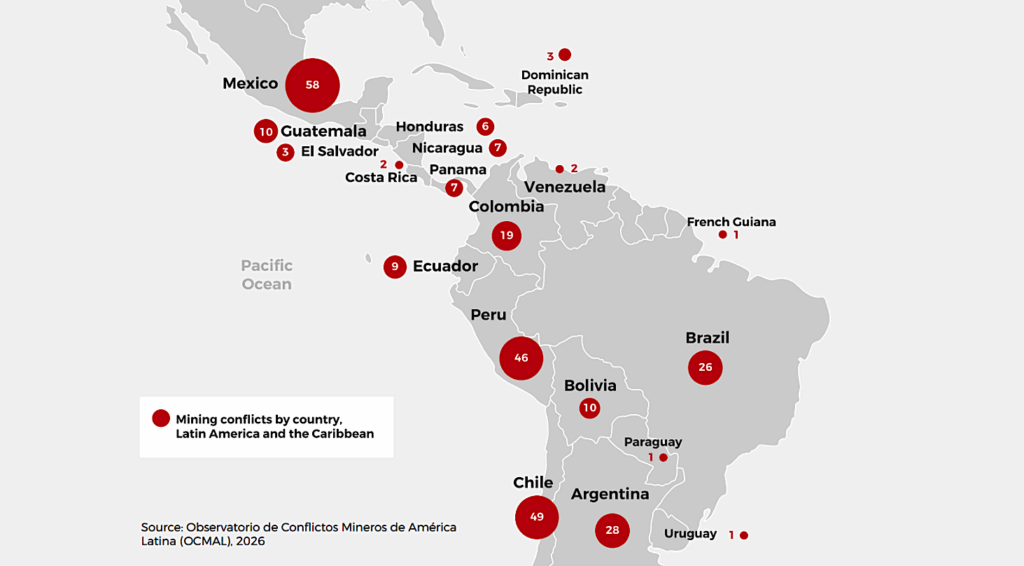
Argentina’s mining sector is increasingly becoming a focal point of geopolitical competition, as global powers and multinational firms vie for access to the country’s vast mineral reserves.
Set against a backdrop of economic volatility, shifting regulatory frameworks and regional political dynamics, Argentina offers both high-risk uncertainty and high-reward potential for miners.
The country is also part of the “Lithium Triangle”, with Chile and Bolivia, which contains over 70% of global lithium resources. It is the world’s third-largest reserve holder and fourth-largest producer, with output projected to increase by 340% between 2024 and 2035.
As demand for energy transition materials accelerates, the country’s resource-rich provinces are emerging as strategic battlegrounds where domestic policy, foreign investment and international alliances intersect—reshaping not only Argentina’s economic trajectory, but also its role in the global minerals supply chain.
On the ground
Despite the bullish outlook, operational risks remain evident. Argentina has not produced copper since the Alumbrera mine closed in 2018, but it has a pipeline of projects that could elevate it into the top tier of global producers.
A recent court-ordered suspension affecting Vicuña Corp, a joint venture between BHP and Lundin Mining, underscored how environmental concerns and provincial disputes can disrupt projects The halt, imposed in La Rioja over alleged environmental risks, was lifted within a week.
Conflicts over mining in Argentina are intense, featuring mass protests and legal battles amid the recent loosening of environmental laws by President Javier Milei’s government to encourage foreign investment in copper and lithium.
Argentina’s Congress approved a government-backed bill that opens sensitive high-altitude regions to mining, triggering warnings over water security and environmental risks. Lawmakers in the lower house passed the reform 137–111, with three abstentions, clearing a final hurdle after Senate approval in February.
Critics, including environmentalists and scientists, argue that the move directly threatens crucial freshwater reserves in the Andes.
Thousands have taken to the streets in protest, using slogans like “water is not for sale,” while opponents argue the law prioritizes “short-term economic gains over long-term water security”. Major projects are concentrated in the northwestern provinces of Salta, Jujuy, and Catamarca.
Argentina is viewed as having the potential to become a top-10 global copper producer by 2035, despite currently having no active, large-scale production. The country holds an estimated 44 million tonnes of copper reserves, with major projects like Los Azules, which McEwen Copper is in talks with global lenders to secure about $4 billion in financing to develop.
A growing number of miners are seeking access to the program in a country once considered a pariah for foreign investment due to capital controls and state intervention.
Gold and silver are currently the backbone of Argentine mining exports, with major operations in the Patagonia region of the Santa Cruz province, such as Cerro Negro, where gold giant Newmont said it will invest approximately $800 million.
Argentina is trying to regain the confidence of companies as President Milei offers a way to bulletproof their capital commitment.
“Noteworthy headway”
Milei’s reforms mark a break from years of policy instability, capital controls and regulatory unpredictability that had deterred foreign investment. Legal analysts from McCarthy Tetrault say that in the year and a half since Milei assumed the presidency, his government has made “noteworthy headway” in stabilizing the macroeconomic environment while improving investor confidence.
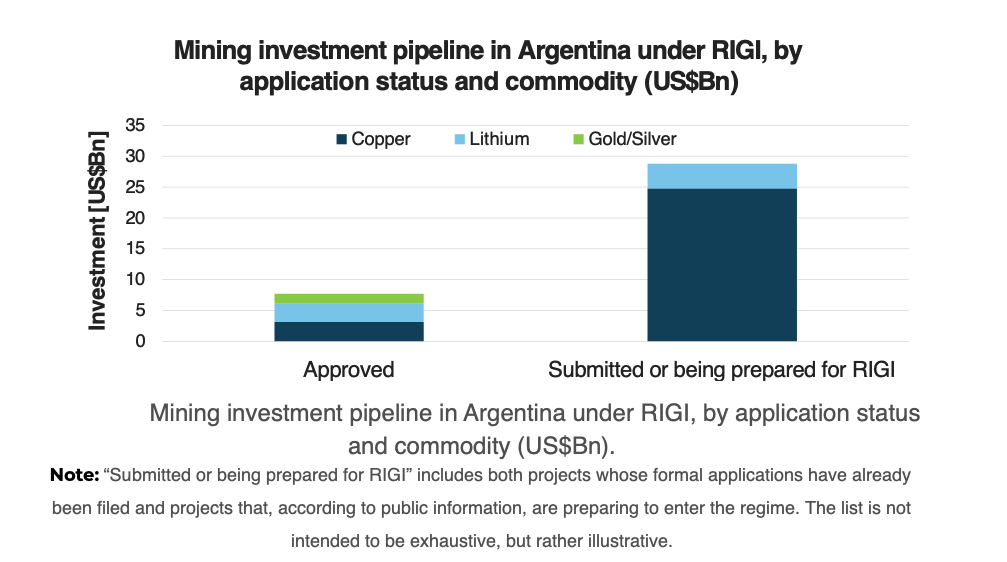
The RIGI program, extended to July 2027, has already approved 10 projects worth $25.5 billion and is seen as a cornerstone of Argentina’s investment strategy. It provides 30-year tax, customs, and foreign exchange stability for qualifying investment projects of $200 million or more across sectors including energy, mining, oil and gas, technology, infrastructure, steel, forestry, and tourism.
PromArgentina released its updated Investor’s Guide, Doing Business in Argentina 2025, prepared with Deloitte. Its the first revision in seven years and covers everything from setting up a company and navigating the tax system to understanding labour law and accessing investment incentives.
Strategic alliances
Ed Zamanillo and Marta Rivera, co-founders of Geopolitical Mining, are researchers focusing on how critical minerals, policy, and technology are redefining 21st-century power.
Argentina is increasingly aligning with Western partners, particularly the United States, through financing frameworks and strategic coordination, they told MINING.COM, adding that this shift brings new sources of capital, political backing, and institutional support.
However, this does not signal a departure from China. Chinese companies remain deeply embedded in Argentina’s mining sector—especially in lithium. Firms such as Ganfeng continue to operate in provinces like Salta and maintain a significant national footprint.
Argentine President Javier Milei with US President Donald Trump. (Image courtesy of US embassy in Argentina.)
“Argentina is aligning more visibly with Western financing and strategic coordination, especially through its framework with the United States, but it is not stepping away from China,” Zamanillo and Rivera said.
“Chinese firms remain active in Argentina’s lithium sector, including Ganfeng’s operations in Salta and its broader footprint in the country, while the US lane adds a new source of capital, financing, and political support,” Zamanillo and Rivera said.
“For Argentina, and for other mineral rich countries, the key is not to choose one bloc over another, but to use this competition to attract investment, accelerate projects, and move further along the mining value chain.”
Geopolitical risk mispriced?
Geopolitical mining researchers frame this less as a case of geopolitical risk being mispriced and more as Argentina being repriced as a strategic opportunity.
“Today the country is offering a relatively rare combination: strong resource potential, a clearer pro-investment signal, and long-term stability under RIGI, which the government highlighted at PDAC 2026 alongside a visible pipeline of approved and in-review mining projects,” Zamanillo and Rivera said.
“The more important question is whether Argentina can turn this window into a durable state backed mining strategy that survives political cycles and supports not only extraction, but also a broader role across the value chain,” they point out.
Federal vs. provincial power dynamics
Federal and provincial dynamics are central to Argentina’s mining story. The national government can shape foreign policy, investment regimes, and strategic direction, but mining development occurs province by province. San Juan, Catamarca, and Salta have been among the most mining-friendly, while others remain cautious, and some, such as Mendoza, are becoming more proactive.
Foreign mining companies often fail when they treat Argentina as a single jurisdiction. In practice, project economics are shaped by both federal policy and provincial realities, including permitting, water access, royalties, labour, and local politics, Juan Ignacio Guzmán, CEO of GEM Mining Consulting, told MINING.COM.
“The financing picture has improved materially since late 2023 due to macro liberalization, the removal of many import and foreign-exchange restrictions, and the introduction of the RIGI investment regime,” Guzmán said.
In some cases, Zamanillo and Rivera note, provincial governments are also working more deliberately on social legitimacy through public hearings, workshops, participatory monitoring, and community-facing development efforts tied to electricity, infrastructure, and local services, because projects tend to move more solidly when nearby communities understand what is being proposed and see a local development case around it.
Successful projects tend to have four features, Guzmán said: strong sponsors, a realistic infrastructure plan, good provincial alignment, and a development strategy that is phased rather than overly ambitious.
Projects that struggle usually combine optimistic ramp-up assumptions with unresolved water, social, or logistics questions, he said.
Risk beyond national policy
Analysts say the most significant risks lie at the provincial level, where political dynamics and community resistance can halt projects regardless of national policy support.
“The biggest risk in Argentina is assuming the national picture tells the full story,” according to Mariano Machado, Americas Principal Analyst at risk intelligence firm Verisk Maplecroft.
“The bigger blind spot is provincial politics, uneven enforcement, exposure to corruption, and community opposition that can stop projects even in formally pro-mining jurisdictions.”
Argentina’s federal structure gives provinces significant control over natural resources, creating a fragmented regulatory landscape that can vary sharply from one jurisdiction to another.
“Provincial governments differ sharply because they own the resources, run their own mining procedures, and apply environmental and permitting rules with varying levels of capacity and political discretion,” Machado explained. “That creates major differences in concession processes, water management, public access to information, and the practical speed and consistency of enforcement.”
(Courtesy of GEM Consulting.)
Machado cautioned that even pro-mining regions are far from being risk-free. “Lower risk does not mean low risk,” he added, pointing to ongoing issues such as permitting delays, social licence challenges and uneven enforcement across the country.
Legal recourse is available to companies operating in Argentina, but it comes with limitations.
“Mining contracts are enforceable in Argentine courts, but the process is slow and vulnerable to political influence,” Machado said. While foreign firms receive equal procedural treatment, “delays, case backlogs, an understaffed judiciary and political interference can make outcomes lengthy and less predictable in sensitive cases.”
While international arbitration frameworks provide some protection, domestic legal processes remain slow and subject to political influence. Operational challenges, including foreign exchange volatility and infrastructure gaps, continue to weigh on investor decisions.
Investment surges
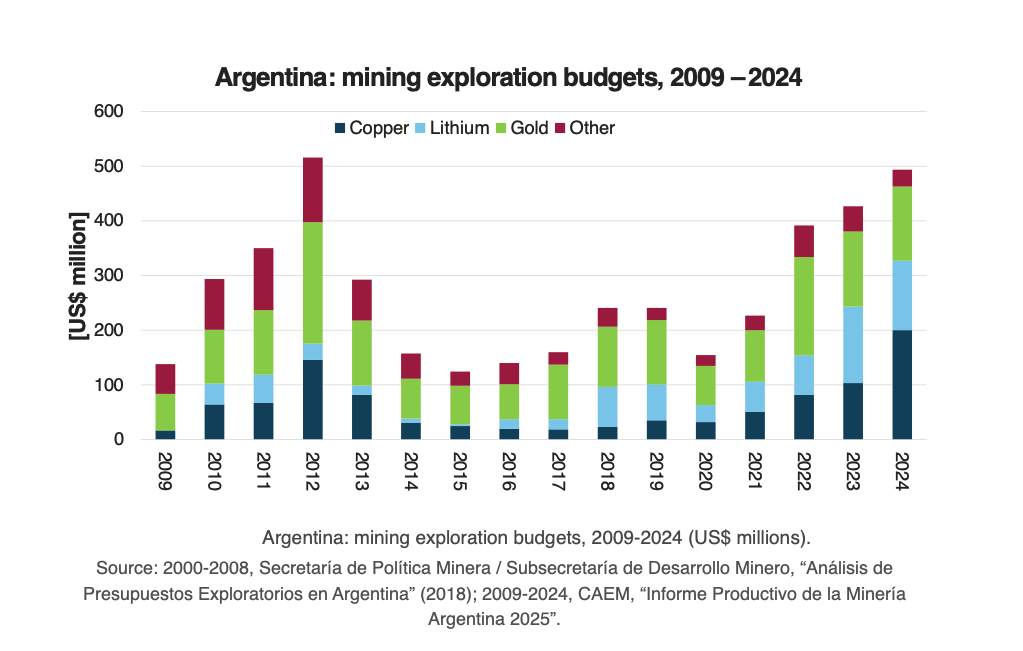
Mining investment has accelerated sharply, driven by policy reforms and global demand for critical minerals. Copper dominates the pipeline, accounting for roughly $42 billion of the estimated $62.7 billion in projected mining investment, compared with $18 billion for lithium. The total represents roughly 19.3% of the initial capital expenditure projected for Latin America.
Mining Minister Luis Lucero said on Wednesday the country’s goal is to export lithium worth $12.1 billion and copper worth $20.6 billion within 10 years. He added that the total value of mining projects approved and submitted under the country’s RIGI amounts to $50.7 billion.
(Courtesy of GEM Consulting.)
“Mining investment has experienced significant growth over the past three to five years, with a particularly strong acceleration in the last two years,” Juan Carlos Guajardo, executive director at strategic consultancy firm Plusmining told MINING.COM, linking the trend to Argentina’s political transition and the introduction of the RIGI investment regime.
While activity is moderating after an initial surge, analysts see this as a natural pause, with early-stage projects expected to drive the next wave of growth particularly in the copper sector.
“Shovel-ready projects have already secured commitments, we are now observing a moderate deceleration in activity,” Guajardo said. However, this is “a natural pause in the cycle rather than a structural slowdown.”
Capitalizing on potential
Argentina’s mining revival reflects a rare alignment of policy reform, geological potential and global demand, but long-term success will depend on consistent execution across jurisdictions and sustained social acceptance.
At sector level, the headline is simple, GEM CEO Guzmán believes the country’s policy framework is more investable than it was two years ago, but execution has become more discriminating.
“The new winners are not necessarily the projects with the best slide decks,” Guzmán said. “They are the ones that reduce uncertainty where lenders care most: permits, infrastructure, community relations, product quality, and balance-sheet strength across copper, lithium and gold.”
The opportunity is clear— but so is the need for long-term strategic coherence.
———
Latin America is heading into 2026 with resources at the centre of a growing global power struggle, as governments and investors focus on who controls critical minerals and the supply chains behind them. If the region matters to you, don’t miss MINING.COM’s new series tracking the geopolitical forces reshaping it and why markets are increasingly driven by global alliances as much as local politics.
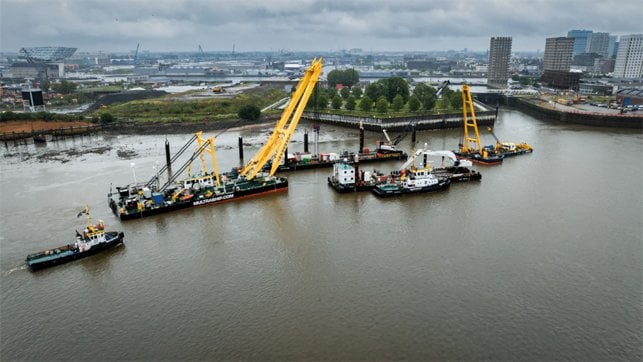
A lifting operation on Sunday, May 3, removed the sunken inland cargo ship Sola Gratia, which had gone down in an important shipping lane for Antwerp and Belgium. The ship sank just over two weeks ago, fortunately in a period in which the Royers Lock near Antwerp was closed for maintenance.
The contract for the removal of the 86-meter (282-foot) inland cargo ship was awarded to Multraship Salvage and Herbosch-Kiere. They pointed out that it was a challenging operation because of strong currents and tides in the Scheldt and the important nature of the shipping lane.
The Sola Gratia was loaded with a cargo of sand and inbound for Antwerp on the night of April 17-18 when it struck mooring bollards on the side of the river. The master told responders that the vessel had lost maneuverability, according to local news outlet NT. The crew was rescued without injuries, but the ship came to rest at a depth of 15 meters (49 feet) at low tide.
The first portion of the operation began at the beginning of last week. They pumped the approximately 1,600 tonnes of sand the ship was carrying from the hull.
Teams positioned three sets of heavy steel cables that were making up the hoisting slings for the hull. They were put at three positions on the hull to distribute the weight and reduce the risk of the ship breaking apart during the lifting operation.
“Applying the lifting slings and steel cables is precise and risky work,” explains Leendert Muller, CEO of Multraship Salvage. “The hoisting itself also had to proceed in a highly controlled manner. The weight had to be evenly distributed to prevent the ship from breaking apart.”
Two floating cranes, two crane pontoons, tugboats, auxiliary equipment, and specialized divers were deployed for the operation on Sunday. It was timed to start with slack tide at approximately 1300 and continued for several hours.
Multraship reports the vessel is now above water and continues to be held in the sling. They had hoped to dewater the hull to restore buoyancy, but they report there is extensive damage to the hull. The ship will remain in the sling while it is also determined where the ship will be repositioned to remove the obstacle from the waterway.
Iran's Jask Oil Terminal: A Squandered $2 Billion Investment
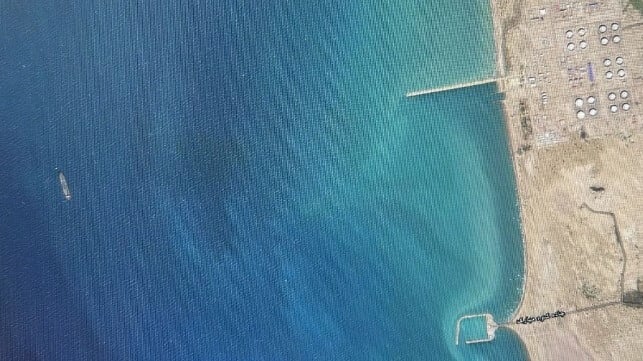
The sanctioned VLCC Dore loading at the Kooh Mobarak SBM on March 7 (Sentinel-2)
President Rouhani of Iran, in his last days in office in July 2021, declared the Jask oil terminal project completed. The $2 billion project involved the construction of a 685-mile, 42-inch pipeline to bring oil from the crude collection point at Goreh in Bushehr Province to a storage facility and oil export terminal at Kooh Mobarak, 33 miles north-west of Jask in the Gulf of Oman.
The opening of the project was premature, and in parliament the President was criticized for damaging the pipeline by bringing it into service before testing had been completed. When fully in service, the project was supposed to reduce a single point of failure dependency on Kharg Island, and to allow a third of Iran’s crude exports to be loaded at a terminal outside the Gulf - free from the risks associated with the Strait of Hormuz. Tankers were to load 1 million bpd from three Single Buoy Moorings (SBMs) off the Kooh Mobarak oil storage facility. The terminal lies just off the main shipping route out of the Straits of Hormuz heading east, which should have made detection-free breaking of oil export sanctions somewhat easier, as well as cutting sailing times.
After the opening in July 2021, only four of the 500,000 barrel storage tanks, and only one SBM was operational. For the rest of 2021 and then 2022, repairs interrupted operations. The one operational SBM was used periodically to load 300,000 bpd, primarily onto Medium Range tankers used for short-range shipments to the Indian subcontinent. All 20 storage tanks were only completed in mid-2025. There is still today only one SBM operational, and even this single SBM is leaking crude.
In the meantime, there were long periods when there were no loadings whatsoever. Nothing was spotted at the SBM buoy between October 2024 and April 2025 except for the oil slicks leaking from the SBM. A 252-meter VLCC was seen loading at the SBM on December 30, 2025, but the SBM does not appear to have been used at all in January and February this year.
Finally, after the start of the war on February 28, the US-sanctioned, Iranian-flagged shadow fleet VLCC Dore (IMO 9357717) was seen at the SBM on March 7 and through thick cloud on March 8, loading 1.77 million barrels. The Dore then set off for the Malacca Strait, where it conducted a Ship-To-Ship transfer of its cargo to the Aruba-flagged Lattafa (IMO 9245794), which is also US-sanctioned. The Lattafa then sailed to unload its cargo at Dongjiakou, in the teapot oil refinery district of Shandong Province in China at the end of April. Neither the Dore or the Lattafa have had their AIS transponder switched on since April 16.
Gulf states who have lost their direct access to the open seas by dint of the closure of the Strait of Hormuz will be looking for alternative export terminals outside the Gulf, to be serviced by newly-constructed pipelines. Saudia Arabia and the UAE will respectively be seeking to expand the throughput of the East-West and the Habshan pipelines respectively. Saudi newspapers have speculated that Aramco may wish to connect the Shaybah oilfield with a new pipeline to the Omani oil terminal at Ras Markaz on the Arabian Sea coast.
Planners would be well-advised, in the light of the Iranian’s squandered $2 billion investment in its Jask pipeline project, to reconsider critical vulnerabilities. This was something clearly not taken seriously by the Iranian business continuity team when building the Jask pipeline, whose continued operation depends on the survival of a single 17-meter-diameter SBM, well within the Circular Error Probable design of most in-service ship or air launched anti-ship missiles.
The opinions expressed herein are the author's and not necessarily those of The Maritime Executive.
Austal USA Starts Construction on Fifth Navy Landing Craft Utility Vessel
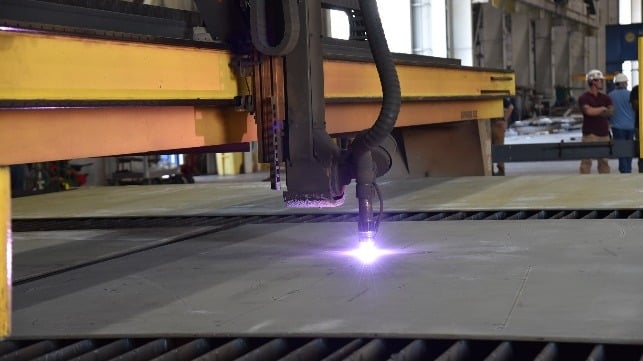
Austal USA celebrated the start of construction on its fifth U.S. Navy Landing Craft Utility (LCU) 1700-class vessel, LCU 1714, at its Mobile, Ala. ship manufacturing facility on April 27, 2026.
This progress highlights continued momentum for the LCU program, a key component of the U.S. Navy and U.S. Marine Corps’ expeditionary capabilities. Austal USA was awarded a $91.5 million contract in September 2023 for the design and construction of up to 12 LCUs and associated support efforts. Currently, five construction contracts have been awarded to Austal USA.
“Austal USA is proud to continue advancing the LCU program with the start of construction on LCU 1714,” said Bill Bingle, acting vice president of surface ship programs. “This milestone reflects the strength of our serial production approach and the dedication of our workforce to delivering high-quality ships that support critical Navy and Marine Corps missions.”
LCU vessels are deployed from the Navy’s amphibious assault ships and operate across a wide range of missions, transporting Marine Corps vehicles, equipment and personnel from ship to shore and back. These platforms provide significant heavy-lift capability, carrying payloads comparable to multiple C-17 aircraft.
LCU 1710, the first vessel in the program constructed at Austal USA, recently conducted acceptance trials and will be delivered to the Navy soon. The program continues to scale as part of Austal USA’s growing steel shipbuilding portfolio.
The LCU program is one of three ship platforms under serial production at Austal USA. In total, 12 ships are under construction across the company’s programs with three vessels preparing for sea trials. This demonstrates the company’s ability to execute multiple programs simultaneously while maintaining production efficiency.
Austal USA continues to leverage its advanced manufacturing facilities, uniquely supporting both aluminum and steel shipbuilding, along with lean production techniques to meet the Navy’s evolving fleet requirements and deliver ships on schedule.
The products and services herein described in this press release are not endorsed by The Maritime Executive.