Tuesday, June 02, 2026

PUTIN'S WAR ON CIVILIANS
Russian attacks kill several people and wound more than 100 across Ukraine


Russian air strikes hit several major Ukrainian cities early on Tuesday, killing at least 18 people and wounding more than 100, authorities said. Kyiv, Dnipro and Kharkiv were among the hardest hit, with residential buildings damaged and thousands of residents sheltering underground amid ongoing air raid alerts.


Issued on: 02/06/2026 
By: FRANCE 24

People look at the site of Russian missile strike that hit a residential building in Kyiv on June 2, 2026. © Efrem Lukatsky, AP
01:54


Russian air attacks on major Ukrainian cities including Kyiv, Dnipro and Kharkiv killed at least 18 people and wounded more than 100 early on Tuesday, authorities said, after days of warnings that Moscow was planning a major assault.

Russia has targeted Ukraine's power supply ​and infrastructure while Ukraine ‌has stepped up attacks this year on Russian oil facilities in a war that has now dragged on for more ⁠than four years, sometimes causing casualties. Both Kyiv and Moscow deny targeting civilians.

Twelve people were killed and 36 injured in a Russian missile and drone attack on the southeastern city of ‌Dnipro, regional governor Oleksandr Hanzha said on messaging app Telegram.

All those injured were hospitalised and were reported to be in a moderate condition, he said, posting pictures of heavily damaged residential buildings, burnt-out vehicles and a destroyed children's playground.


One of the dead was a rescue worker who had been killed in a "double-tap" strike targeting first responders, according to emergency services.

At least six people were killed and 66 injured, including children, across the capital of Kyiv, Mayor Vitali Klitschko said.

READ MORETalk to Russia? First, Europe needs to pick an envoy – and know what it wants to say

A suspected missile strike on a 24-storey apartment building triggered a collapse, with people likely trapped under the rubble.

Other buildings, including a nine-storey apartment block, caught fire from suspected missile debris, he said.

“In the Obolon district, cars are burning after being struck by falling missile debris. There are also fires at two locations in open areas, including one near a kindergarten,” Klitschko said.


Russia launches wave of deadly strikes across Ukraine
© France 24
04:41


"We couldn't understand what was happening – some kind of apocalypse?" said Olha Mudra, speaking at the site of one strike, accompanied by her six-year-old daughter ⁠Natalia.

"Everything was covered (with debris), everything in smoke, you could see nothing," she added, as she stood in front of a destroyed residential building and damaged cars.

Thousands of Kyiv residents were taking refuge in metro stations and other shelters, witnesses said, after air raid warnings covered much of the country early on Tuesday.

The ⁠overnight ​​attack cut electricity to 140,000 residents ​of ‌Ukraine's ⁠capital, power company DTEK ⁠told Reuters on ​Tuesday.

Utility workers ‌had since restored ‌electricity to ​110,000 residents, DTEK said, adding that ​two ​of its ​engineers had ​been injured.


Residents take shelter inside a metro station during a Russian missile and drone strike in Kyiv on June 2, 2026. © Alina Smutko, Reuters

Warnings of a major attack


Ukraine's air force said Russia launched 656 drones and 73 missiles overnight, mainly targeting Kyiv. In a statement on Telegram, the air force said 40 ​missiles and 602 drones had been downed or neutralised.

An air force spokesman said the attack included eight Zircon hypersonic missiles, likely the largest number of those missiles used by Russia during the war. The Zircon has a range of 1,000 kilometres and travels at nine times the speed of sound, according to Moscow.

Russia's defence ministry said it had carried out ​a "massive strike" on Ukraine's defence industry facilities using high-precision long-range weapons.

Ukrainian President Volodymyr Zelensky on Monday reiterated warnings of a potentially major assault and urged residents to pay special attention to air raid alerts.

“Intelligence warnings regarding Russian strikes remain in effect. A massive strike is possible, they have prepared one,” Zelensky said in his nightly video address.

“Our defenders are ready 24/7 to the fullest extent possible with the supplies currently available.”

Russia last week warned that it intended to launch “systematic strikes” on targets in Kyiv linked to the Ukrainian military as well as decision-making centres, and urged foreigners to leave.

It said the action was in response to a drone strike last month on a student dormitory in Ukraine's Russian-held Luhansk region, which killed 21 people. Ukraine denied targeting civilians, saying that it had carried out a series of strikes on military assets.

In Ukraine's north-eastern Kharkiv region, 10 people, including a child, were injured in drone and missile attacks, Mayor Ihor Terekhov said on Telegram.

Russia's Ilsky oil refinery, in the southern region of Krasnodar, caught fire after a drone attack, local authorities said on Telegram on Tuesday.

Air defence systems were also repelling drone attacks ⁠over Sevastopol, a Russian naval fleet base, in Russia-occupied Crimea, authorities there said.

The war in Ukraine has ground on for more than four years since Russia launched its full-scale invasion in February 2022.

Efforts to end the conflict have made little progress, with the administration of US President Donald Trump focused on conflicts in the Middle East.

(FRANCE 24 with Reuters and AFP)


Ukraine's president says US air defence 'absolutely necessary' after Russian strikes
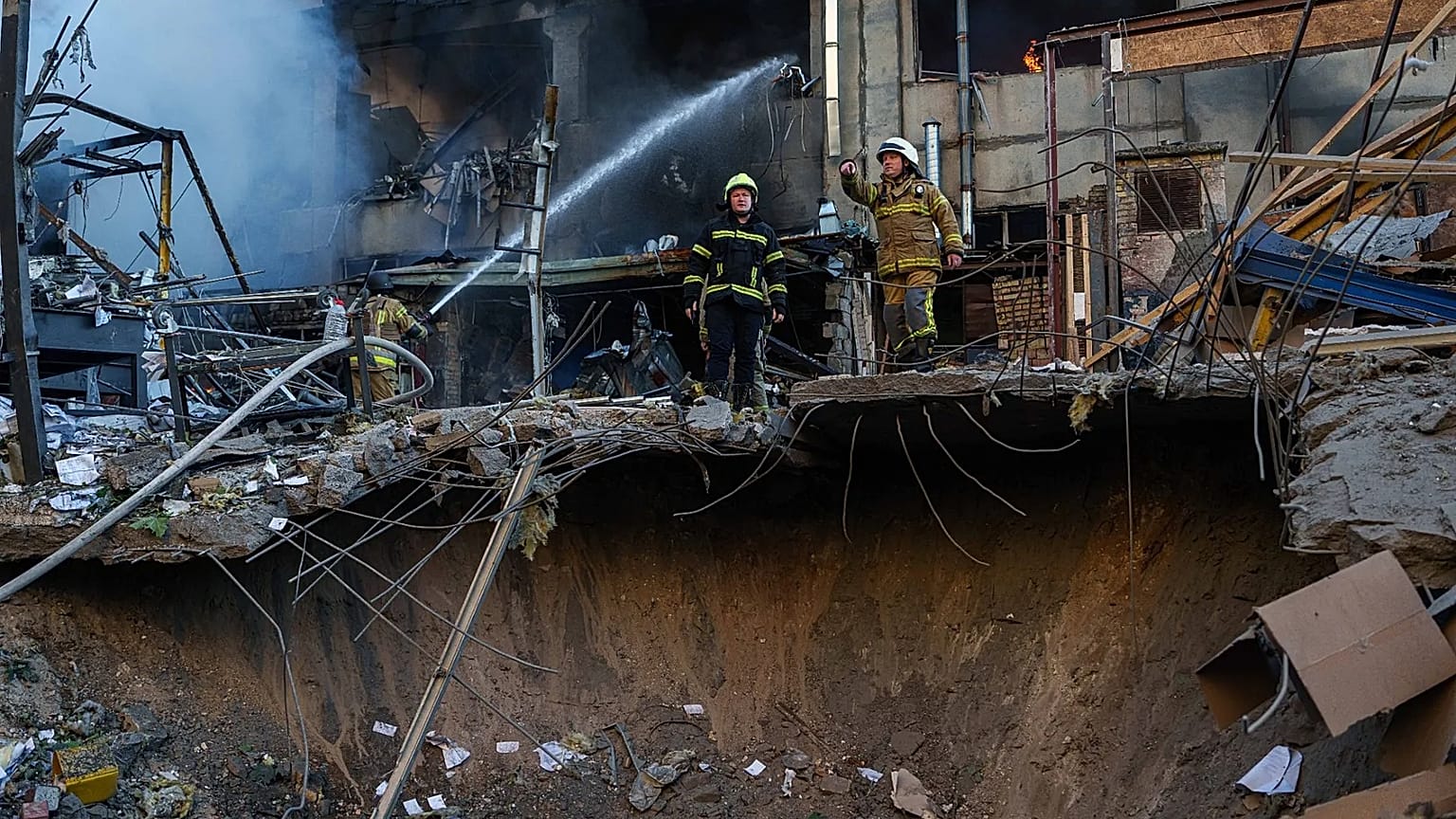
A rescue worker puts out a fire of a building damaged after a Russian strike on Kyiv, 2 June, 2026
Copyright AP Photo

By Gavin Blackburn
Published on

Russia launched a record 8,150 long-range drones at Ukraine in May, an AFP analysis of Ukrainian air force data showed, up 24% from April.

Ukrainian President Volodymyr Zelenskyy called on Europe on Tuesday to develop its own air defence systems and urged more support from Washington after Russia's latest deadly drone and missile barrage.

"Europe needs its own anti-ballistic defence so that this war can finally be brought to an end. And assistance from the United States in supplying missiles for Patriot systems is absolutely necessary," Zelenskyy wrote in a post on X.

"A large-scale attack and an absolutely clear statement from Russia: if Ukraine is not protected from ballistic and other missile strikes, these attacks will continue."

Zelenskyy’s remarks were echoed by his Foreign Minister Andrii Shyiiba who said that the wave of strikes showed that Russia’s President Vladimir Putin was running out of military options in his full-scale invasion of Ukraine.

"Putin is a war criminal and loser who has no cards except terror. Moscow is losing on the battlefield. No number of missiles can change this," Shyiiba said in a statement on social media.

"Terrorists in Moscow must realise that their brutal attacks won’t bring them anywhere. That the price for their regime will only increase. That the only way out for Putin is to immediately end this war."

Strikes on Ukraine

The remarks from the senior leadership came after a Russian barrage of Ukraine early on Tuesday which killed at least 13 people and injured 100 others.

Authorities in the Ukrainian capital had been sounding the alarm that Russia was preparing another massive barrage, the latest in a string of deadly strikes that have escalated the four-year war and dented already slim hopes for peace.

The Ukrainian air force said Russia had launched 73 missiles and 656 drones, adding it had downed 602 of the drones and 40 of the missiles.

Moscow has bombarded Ukraine almost daily since launching its full-scale invasion in February 2022, a war that is now the bloodiest on European soil since World War II, with hundreds of thousands killed and millions displaced.

Russia said on Tuesday that it had carried out a huge strike, including with hypersonic missiles, targeting Ukraine's military-industrial complex.

It denies that its forces target civilians.
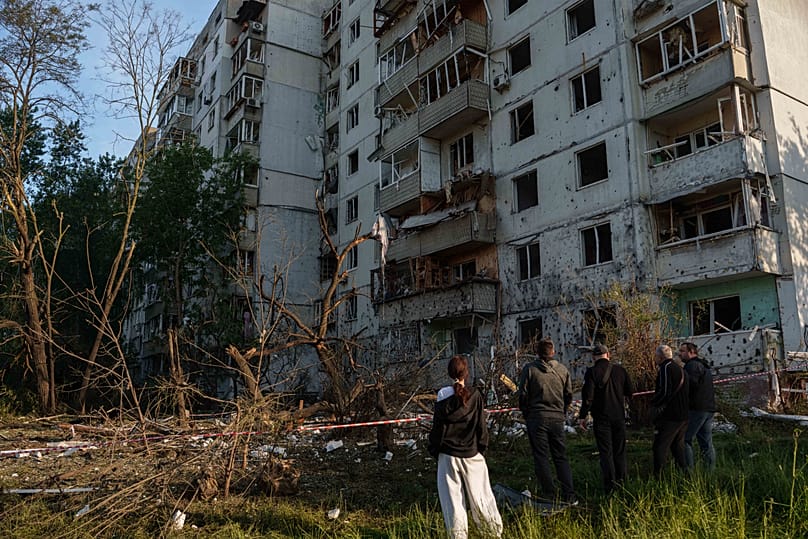
People look at a residential apartment building damaged after a Russian strike on Kyiv, 2 June, 2026 AP Photo

'Protect your lives'

Last month, Kyiv and Moscow agreed a three-day ceasefire mediated by the United States. The truce was marred by allegations of violations on both sides but had raised the prospect of a longer halt in fighting.

An uptick in strikes since has dulled peace prospects, particularly with the White House distracted by the Iran war.

Meanwhile, a Ukrainian drone strike killed one person in Russia's Kursk region, near the Ukrainian border, regional governor Alexander Khinshtein said.

Another drone sparked a fire at an oil refinery in the southwestern city of Krasnodar, its operational headquarters said on Telegram.
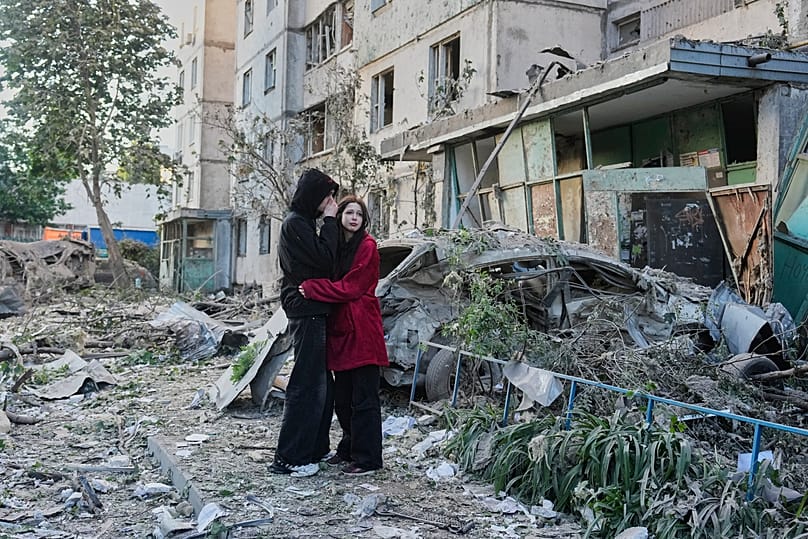
People react as they look at the site of a Russian missile strike that hit a residential building in Kyiv, 2 June, 2026 AP Photo

Zelenskyy had said last week that Ukraine had learnt that Russia was preparing a new massive strike and urged people to heed the sirens, go to shelters and "protect your lives."

Russia launched a record 8,150 long-range drones at Ukraine in May, an AFP analysis of Ukrainian air force data showed, up 24% from April.

Kyiv intercepted about 90% of all incoming drones and missiles in May, according to air force data, but struggles to down ballistic missiles.


EU ready to 'step up' in Ukraine-Russia talks but ceasefire must come first, summit draft shows
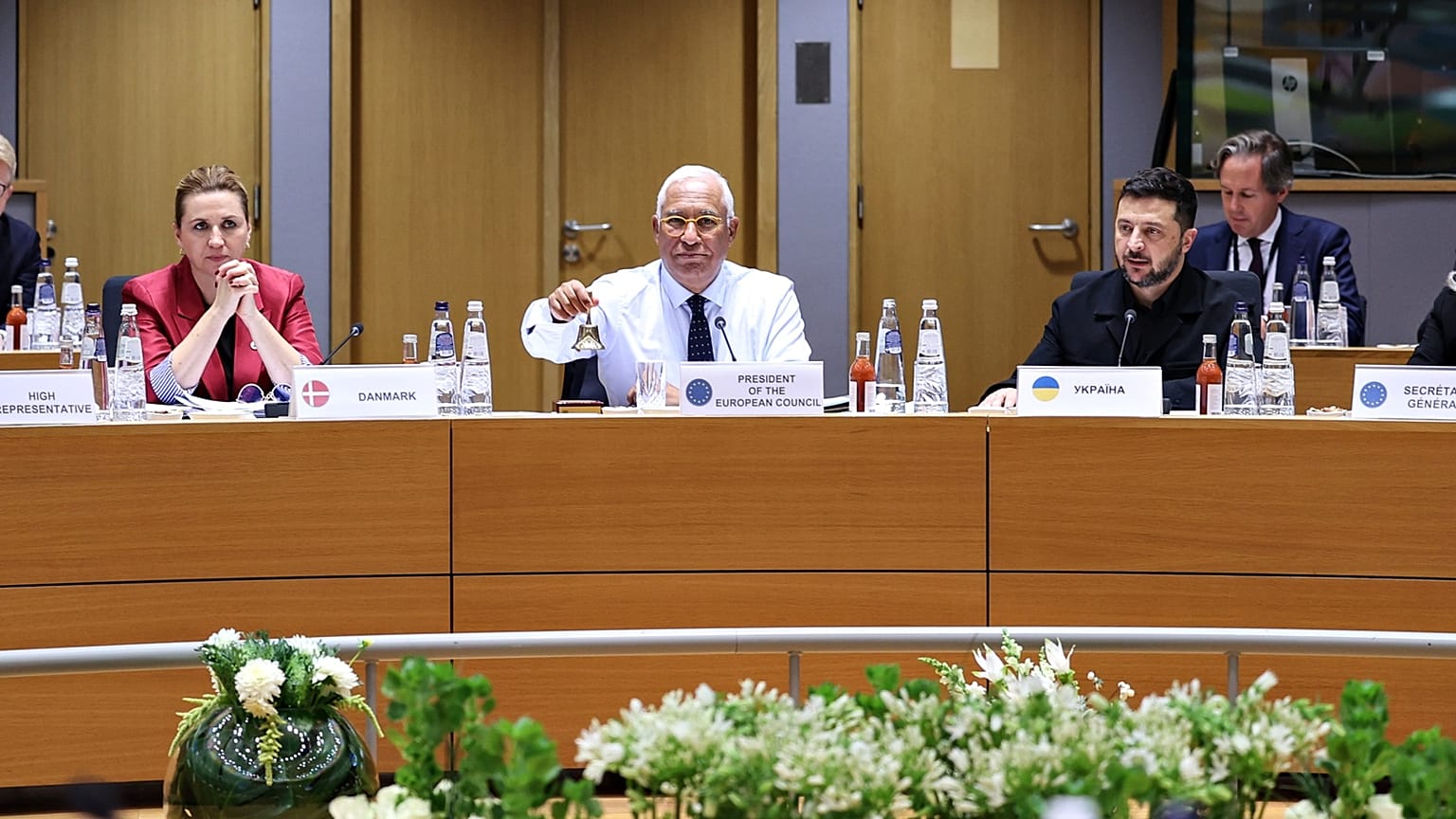
 European Council President António Costa (centre) will chair the summit.
Copyright European Union, 2026.


By Jorge Liboreiro & Maria Tadeo
Published on

EU leaders are set to discuss the possibility of engaging in direct talks when they meet on 18-19 June. But the latest draft of the summit's conclusions suggests a mandate for a special envoy is still far away.

The European Union is ready to "step up" its role in the diplomatic process to end Russia's full-scale invasion of Ukraine, but only when Moscow demonstrates a serious commitment to negotiations and establishes an "unconditional ceasefire", according to draft conclusions prepared ahead of a key leaders' summit on 18-19 June.

It marks the first time the conclusions speak of the bloc taking a hands-on approach to the peace process, which the United States has so far led and is currently stalled.

The provisional wording, subject to changes, falls short of endorsing the appointment of a special envoy, as some member states have demanded. The references could still change further before the summit takes place.

"The European Council supports diplomatic efforts to bring the war to an end and underlines the European Union's readiness to step up its engagement in peace negotiations," the draft, seen by Euronews and dated 1 June, says.

"However, Russia has not shown any genuine willingness regarding a fair and sustainable peace," the paragraph continues.

"The European Council urges Russia to agree to a full, unconditional and immediate ceasefire and engage in meaningful negotiations towards a just and lasting peace."

The document is used as a working basis for talks held by EU27 leaders.

The draft document also forcefully condemns Russia's deadly large-scale attacksagainst Ukraine and open threats against foreign citizens, diplomats and international organisations based in Kyiv, as well as last week's incident that saw a Russian drone with explosives crash in a residential building in Romania.

The series of escalatory developments has shifted the debate on whether the EU should break its diplomatic isolation and launch direct talks with Russia.

The matter gained momentum in early May after Ukrainian President Volodymyr Zelenskyy, frustrated with the White House's attention on the Middle East, called on Europeans to appoint a common representative and revive the negotiations.

Among the names casually floated for the high-risk job were European Council President António Costa, Finnish President Alexander Stubb, former Italian Prime Minister Mario Draghi and former German Chancellor Angela Merkel.

Costa, who will chair the summit, was one of the first leaders to speak publicly in favour of the direct talks, provided the circumstances are right.

Yet, divisions among capitals remain entrenched, as reflected in the wording of the draft conclusions. Germany, Poland, the Nordics and the Baltics believe the Kremlin's maximalist demands would make any outreach pointless.

Last week, High Representative Kaja Kallas said the EU would "never" be a neutral mediator between Ukraine and Russia.

"We can't be neutral, treating them equally, because we have been clearly on Ukraine's side," she said after hosting an informal meeting of foreign affairs ministers in Cyprus.

Instead, she argued, member states should strive to agree on a common set of concessions and conditions that Russia should fulfil at the negotiating table.

"All our efforts have to be complementary to US efforts. And the ministers were also very clear about this," Kallas said. "We are not coming in instead of the United States, but we are actually addressing the issues that haven't been addressed in these talks."

Zelenskyy is expected to speak with the 27 leaders at the June summit, even though it is not yet confirmed whether he will do so in person or remotely.

In a recent interview with CBS, the Ukrainian president name-checked the E3 format (made up of Germany, France and the United Kingdom), the Nordic countries and Turkey as potential mediators.

"Who will represent Europe after all? It's up to Ukraine and Europe to decide," he said. "But no less important is that Russia must be ready for dialogue and European presence."

Iran World Cup squad to head for Mexico via Spain

Tehran (AFP) – Iran's football team will leave for Spain this weekend en route to their World Cup base in Mexico despite still awaiting visas, the head of the country's football federation said.


Issued on: 02/06/2026 - 

Iran are currently preparing for the World Cup in Turkey 
© Oner SAN / AFP

The 2026 World Cup is being hosted jointly by the United States, Mexico and Canada.

Neither the United States, where Iran will play their three group stage matches, nor Mexico, where the team will be based throughout the tournament, have yet issued visas for the players.

"We will leave for Spain on Saturday, and from there the team will go directly to Tijuana in Mexico," football federation chief Mehdi Taj said on Monday on a sports programme broadcast on state television.

"We will obtain a Mexican visa tomorrow (Tuesday) or the day after, and then a US visa will be issued quickly," Taj said.

Iran have been drawn in Group G and will play New Zealand and Belgium in Los Angeles on June 15 and 21, followed by a game against Egypt in Seattle on June 26.

Taj said that the outbreak of the Middle East war on February 28, when the United States and Israel attacked Iran, "changed everything" for Team Melli.

"The situation in the country, and especially the war, has upended all our plans," Taj said.

"We had arranged good warm-up matches, including one against Spain, which was cancelled" in February.

The Iranians relocated their World Cup base, which initially was planned to be in Tucson in the US state of Arizona, to the northwestern Mexican border city of Tijuana due to tensions over the Middle East war.

Iran are currently preparing for the tournament in Turkey.

On Friday they beat Gambia 3-1 in a friendly in Antalya, where they will play another warm-up match against Mali on Thursday.

Taj complained that the team's World Cup preparations had been also dogged by "financial difficulties" because of the economic crisis in the country and the sharp depreciation of the rial against the dollar.

© 2026 AFP

Mexico's Tijuana: From gateway to the American Dream to dead end


Issued on: 29/05/2026 - 
16:13 min From the show

With Iran's national football team set to be based in Tijuana, Mexico, for the upcoming World Cup, our reporters Laurence Cuvillier and Matthieu Comin travelled to the Mexican city known for being one of the most dangerous in the world. Until recently, this border city with the United States was the main crossing point for Mexican migrants seeking the American Dream. But with US President Donald Trump's return to power, everything has changed. Tijuana has become a dead end.

It was one of the very first consequences of Trump's return to the White House. On January 20, 2025, right in the middle of the inauguration ceremony, the CBP One app suddenly stopped working. It had enabled migrants to enter the United States legally to submit their asylum applications. With its disappearance, the American Dream for hundreds of thousands of people had evaporated in a second.

If there is one city that epitomises the full impact of the tightening of US immigration policy, it is Tijuana, the main crossing point with Mexico. The Mexican border city has effectively become a dead end. In addition to migrants stopped in their tracks, others have been sent back there by the US authorities. These are often people with no legal status in Mexico either. Tijuana is still one of the most dangerous cities in the world, but it is also a place of intense solidarity.


Offshore detention hubs: Europe turns to Trump-style tactics on migration


PRESS REVIEW © FRANCE 24
06:21


Issued on: 02/06/2026 


PRESS REVIEW – Tuesday, June 2: The European Union approves the creation of offshore "return hubs" to where failed asylum seekers could be sent. The British papers focus on a new trove of documents pertaining to Peter Mandelson, the former ambassador to the US. The Canadian province of Alberta will hold a referendum in October to decide on whether to vote on secession. Finally, researchers conclude that there is nothing foul about birds who masturbate.

The European Union has given its green light for the creation of detention hubs outside of Europe, to where they could send illegal migrants. Politico reports that the EU agreed on new rules to speed up and increase deportations from the bloc on Monday. These rules will be ratified in the coming weeks or months. This includes the creation of "return hubs" outside of Europe where failed asylum seekers could be sent. It is part of sweeping EU reforms to increase control over who enters the bloc and how.

The Belgian daily Le Soir evokes what it calls a compromise after multiple negotiations. It also reflects the growing importance of the right and far right in the EU Parliament. Under the agreement concluded on Monday, countries like Denmark, Austria or Germany could send illegal migrants to Rwanda, Uganda, or Uzbekistan – third countries to which they often have absolutely no connection. Spain has been a vehement opponent of this new legislation. The agreement reflects a harder line on the issue of migrants – at a time, Spanish daily El Pais reminds us, when Europe is preparing to receive a Taliban delegation to discuss future deportations to Afghanistan. The Washington Post sees the EU as moving to "deploy some of the same clenched fist tactics as the Trump administration": speeding up deportation, increasing detention times and tightening border controls.


EU agrees deal for deporting migrants to third-country 'return hubs'

The European Union on Monday agreed a deal to allow countries to send migrants ordered to leave the bloc to third-country "return hubs". The legislation, which still requires formal approval by EU governments and the European Parliament, has drawn criticism from human rights groups.


Issued on: 02/06/2026 
By: FRANCE 24

Migrants board a bus to the Playa de Las Americas police station and then to a temporary detention center following a rescue operation near Tenerife, Spain, on July 4, 2023. © Desiree Martin, AFP

European Union lawmakers and governments agreed on Monday on new rules allowing countries to deport migrants ordered to leave the bloc to centres in third countries, a move that has drawn sharp criticism from rights groups that warn it could ​enable abuses.

The deal ‌is part of a broader tightening of EU migration policy amid pressure from right-wing parties, even as irregular arrivals fell ⁠26 percent last year to their lowest level since 2021.

The legislation, which still requires formal approval by EU governments and the European Parliament, was proposed by the European Commission last year. The commission says it would streamline ‌procedures and give governments more tools to deport people while respecting fundamental rights.

Rights groups dispute that assessment.


"This Regulation is ⁠going to create a draconian detention and deportation machine," said Silvia Carta, advocacy officer at the Platform for International Cooperation on Undocumented Migrants (PICUM), a human rights organisation.

EU countries say they struggle to ensure that rejected asylum seekers and people who overstay their visas leave their territory. The commission says ​only about 20 percent of people ordered to leave currently depart.

Under the new rules, EU states would be able to ‌establish so-called return hubs outside the bloc for people whose asylum claims have been rejected or who have been ordered to leave the EU. Deportees could be sent to hubs in countries they do not have connections to.

"With the new rules, we have more control over who can come to the EU, who can stay, and who ‌needs to leave,” said European Commissioner Magnus Brunner.

Member states have not disclosed the potential host countries.


Home raids

The draft legislation extends detention periods and introduces penalties, including entry bans, fines and possible criminal sanctions for non-cooperation.

Authorities would be allowed ​to seize belongings, detain minors, collect biometric data and search homes.

The deal also allows authorities to search migrants and "relevant premises", a term that rights groups criticise as being overly broad and enabling home raids.

Human rights activists and non-governmental organisations working with asylum seekers in the EU say some ​of the practices are already occurring and have increased in recent months, pointing to a rise in deportations of recognised refugees from Germany and other states ​to Greece and other EU border countries.

There, they say, in some cases authorities carry out night-time home searches ​to detain people and transfer them to detention centres or airports for deportation, sometimes without allowing them to gather their belongings.

Minos Mouzourakis, a lawyer and advocacy officer at Greece-based non-profit Refugee Support Aegean, warned the draft legislation amounted ​to “a recipe for extremely damaging and extremely dangerous practices” in Europe.

French Greens lawmaker Mélissa Camara said: "The legalisation of return hubs outside the European Union, the green light for the detention of minors, home visits inspired by (US) ICE practices: The legal arsenal serving a xenophobic ideology is now complete."

From rekindled love story to ICE 'nightmare': France calls on US to release 85-year-old

Some EU countries have already begun exploring such arrangements.

The Netherlands is working with Denmark, Germany, Greece and Austria to set up joint return and transit hubs, while bilateral talks with Uganda on a similar ⁠arrangement have been put on hold.

The Dutch government says it wants concrete steps by year-end, as it faces what Prime Minister Rob Jetten has called an “asylum crisis”.

Dutch reception centres are overcrowded – ⁠including the main registration hub Ter ​Apel, which has begun admitting only the most vulnerable – while anti-migration protests have emerged in areas hosting emergency shelters amid capacity shortages and a slow outflow of asylum seekers.

(FRANCE 24 with Reuters)


Court rejects Rwanda €115mn claim against Britain over migrant deal

An international court on Monday rejected a claim by Rwanda for Britain to pay more than £100 million (€115million) it said London still owed from a scrapped deal to deport migrants.


Issued on: 01/06/2026 - RFI

This photo provided by the Prefecture Maritime du Nord et de la Manche shows migrants continuing their journey to Britain off northern France coast, Tuesday, April 23, 2024. AP

Judges from the Permanent Court of Arbitration (PCA) in The Hague ruled that Britain was not liable for two years of outstanding costs from the scheme that was shelved in 2024.

In 2022, former UK prime minister Boris Johnson sealed a deal with Kigali to send to Rwanda migrants arriving in Britain via "dangerous or illegal journeys" in small boats or lorries.

Demonstrators take to the streets in protest at the UK government's controversial deal to deport migrants to Rwanda, 2022/06/13 © Getty Images

But the scheme hit legal and political obstacles from the start, with the UK Supreme Court eventually ruling it illegal.

When Keir Starmer became British prime minister in July 2024, he declared the plan "dead and buried" on his first full day in office, dismissing it as a "gimmick".

Then interior minister Yvette Cooper called it "the most shocking waste of taxpayers' money I have ever seen".

Britain's Foreign Secretary Yvette Cooper delivers a speech during the Global Partnership Conference in London on May 19, 2026. AFP - JUSTIN TALLIS

During the two years before the scheme was scrapped, only four people actually went to Rwanda, all voluntarily, according to the current UK government.

According to the UK government website, about £290 million (€335 million) has already been paid to Rwanda, but Kigali argued in its pre-hearing submissions to the PCA that two annual payments of £50 million (€58 million) were still outstanding.

But the PCA, set up in 1899 to settle contractual disputes between nations, rejected by majority a £50 million (€58 million) claim for one year and unanimously rejected the same amount for the second.

The two nations are already at loggerheads after Britain slashed aid to Rwanda, accusing it of supporting M23 rebels in the neighbouring Democratic Republic of Congo (DRC).

(With newswires)


Monoskop.org

https://monoskop.org/images/9/95/Hardt_Michael_Negri_Antonio_Empire.pdf

4.3 The Multitude against Empire. 393. Notes. 415. Index. 473. Page 11. PREFACE. Empire is materializing before our very eyes. Over the past several decades, as ...

Rebels-library.org

http://rebels-library.org/files/multitude.pdf

Page 1. MULTITUDE. WAR AND DEMOCRACY. IN THE AGE OF EMPIRE. MICHAEL HARDT ... Empire calls on war for its legitimation, the multitude calls on democracy as its ...


Newleftreview.org

https://newleftreview.org/issues/ii120/articles/empire-twenty-years-on.pdf

Just as today's. Empire was formed in response to the insurgencies of the multitudes from below, so too, potentially, it could fall to them, as long as those.

Cattelan’s famous taped banana stolen from French museum

A museum in eastern France has filed a police complaint after a banana forming the centrepiece of Maurizio Cattelan’s multimillion-dollar conceptual artwork "Comedian" was stolen from an exhibition.


Issued on: 02/06/2026 - RFI

HOW IS IT THAT THE BANANA IS ALWAYS FRESH?STRANGE THAT!
People look at Italian visual artist Maurizio Cattelan’s duct-taped Banana entitled "Comedian," during a press preview at Sotheby's in New York, on 25 October 2024. AFP - TIMOTHY A. CLARY

The Pompidou-Metz museum, a branch of the Pompidou Centre in Paris, said the banana, famously taped to a wall as part of the Italian artist’s provocative work, was noticed missing by a guard on Saturday.

The museum reported the theft to police on Sunday and said it had lodged a criminal complaint against persons unknown.

The banana has since been replaced, in keeping with the artwork’s unusual maintenance routine: the perishable fruit at the heart of Comedian is changed every three days to keep the work fresh - literally - and in line with its playful challenge to ideas of artistic value.

'French Banksy' and Daft Punk star turn Pont Neuf into Alpine cave


A fruit with a history

This is not the first time Cattelan’s banana has proved too tempting to leave untouched.

In July last year, a visitor to the Pompidou-Metz ate the fruit while it was on display. Guards intervened quickly and a replacement banana was taped to the wall. On that occasion, the museum chose not to take legal action.

Cattelan responded with characteristic mischief, saying he was disappointed the hungry visitor had eaten only the banana and not the tape as well.

This time, however, the museum said it had decided to file a criminal complaint because the perpetrator had not been identified, leaving “no possibility of dialogue”.

It also said the incident raised an issue of respect for the artwork, particularly as it was “the second time this has happened”.

Cattelan’s Comedian has sparked debate, disbelief and fascination since its debut at Art Basel Miami Beach in 2019, where it was offered for sale with an asking price of $120,000. The work whihc consists of a banana fixed to a wall with duct tape, quickly became one of the most talked-about pieces in contemporary art, in part because of its simplicity and in part because of the questions it raised about authorship, money, performance and the art market itself.

Its notoriety only grew when performance artist David Datuna ate the banana at the 2019 fair, saying he felt “hungry”. Rather than bringing the story to an end, the act helped cement Comedian’s place as a cheerful provocation in the art world – a work that seems to invite both serious debate and comic interruption.

Four charged with theft of gold toilet from English stately home
Value keeps rising

Despite – or perhaps because of – its repeated encounters with hungry visitors and would-be participants, Comedian has continued to climb in value.

In 2024, Chinese-born crypto entrepreneur Justin Sun paid $5.2 million for one iteration of the artwork. Days later, he ate the banana in front of cameras in Hong Kong, turning the purchase into another performance around value, ownership and spectacle.

The work’s physical banana is replaceable, but the concept, certificate and instructions behind it are what collectors buy. That distinction has made Comedian a striking example of how contemporary art can exist as an idea as much as an object and how even a piece of fruit can become a global cultural talking point.

Cattelan, one of Italy’s best-known contemporary artists, has long specialised in works that mix humour, provocation and institutional critique. Alongside Comedian, he is known for America, an 18-carat, fully functioning gold toilet that was once offered to Donald Trump during his first term in the White House.
A fully functioning solid gold toilet, made by Italian artist Maurizio Cattelan, is going into public use at the Guggenheim Museum in New York on 15 September 2016. AFP - WILLIAM EDWARDS


That work also became the subject of a high-profile theft. In March, a British court found two men guilty of stealing the golden toilet during an exhibition in the United Kingdom in 2020. It had been installed at Blenheim Palace, the 18th-century stately home where wartime prime minister Winston Churchill was born.

The toilet was later broken up, and none of the gold was recovered.

For the Pompidou-Metz, the latest disappearance of Cattelan’s banana is more than a prank. By going to police, the museum has drawn a line between playful engagement with a famously mischievous artwork and the unauthorised removal of part of an exhibited piece.

(With newswires)
Gulf states arrested over 1,000 for Iran war social media posts: Amnesty

More than 1,000 people have been arrested across Gulf states for sharing information or opinions related to the Iran-US-Israeli war, in what Amnesty International has described as a “widespread crackdown” on freedom of expression.


Issued on: 02/06/2026 - RFI


Since the start of the war in the Middle East, the Gulf States have severely restricted their rules on freedom of speech, sometimes punishing citizens for publishing videos and content related to the war. Here, people film the Dubai fountain, 27 May 2026 (illustration). © Fatima Shbair / AP

In a statement released on Monday, the human rights organisation accused members of the Gulf Cooperation Council (GCC) – Kuwait, Bahrain, the United Arab Emirates (UAE), Qatar, Saudi Arabia and Oman – of “indiscriminately criminalising the exchange of information” under the pretext of national security.

Heba Morayef, Amnesty International’s regional director for the Middle East and North Africa, said the arrests reflect an entrenched pattern of repression.

“These governments are exploiting the escalation in regional tensions to intensify their already suffocating grip on freedom of expression, in order to protect their pristine image as safe havens,” she said.

According to Amnesty’s findings, the UAE and Qatar account for the majority of cases, with more than 700 of the documented arrests.

Authorities in Kuwait, Bahrain, the UAE and Qatar issued official statements announcing their arrests of hundreds of people for filming and sharing videos about the interception of missiles or projectile damage.

In several cases, arrests were made for “glorifying” a hostile state and its military leadership, which appears to refer to expressing sympathy with Iran.

Between 3 March and 8 April, UAE authorities detained at least 375 people – including dozens of British nationals – for allegedly publishing or sharing videos and other visual content related to the Middle East conflict.

In Qatar, 313 individuals of various nationalities were arrested between 28 February and 9 March for disseminating what authorities described as “misleading information” or rumours.
This handout satellite image courtesy of Vantor shows damage following a drone attack on a high-rise apartment building in Bahrain's capital Manama on March 2, 2026. The Gulf countries have long been seen as islands of stability in the Middle East, but the war in the region could threaten their prosperity, analysts said, pointing to risks to their revenues and reputations as business safe havens. © AFP - - 2026 Vantor

Amnesty stressed that such actions – including sharing images or commentary – are not criminal offences under international law. The organisation said Gulf authorities have relied on “vaguely formulated and excessively broad” provisions within cybercrime, counter-terrorism and national security legislation.

In Kuwait and Bahrain, repression has gone further, with authorities stripping individuals of their nationality. Kuwait has revoked the citizenship of more than 1,200 people by decree, without providing reasons. In Bahrain, at least 69 individuals and their families face similar measures for alleged support of Iran.

Amnesty warned that arbitrary deprivation of nationality violates international law, particularly when used as punishment for peaceful expression.

In Saudi Arabia, the number of arrests has been lower, but Amnesty highlighted increasing restrictions on access to information. According to Meta, Saudi authorities requested in April that 144 accounts be restricted over content related to regional conflicts and political satire.

A journalist in Riyadh told Amnesty that the environment of fear has severely limited reporting. “No one speaks openly about what is happening or how they feel,” he said.

Amnesty concluded that the measures adopted by Gulf states go “far beyond” what is permitted even during armed conflict, calling for the immediate release of those detained solely for exercising their right to free expression.

(With newswires)

Two killed in Kenya protests over US-backed Ebola isolation centre

Two killed in Kenya protests over US-backed Ebola isolation centre
/ bne IntelliNewsFacebook
By bne IntelliNews June 2, 2026

Two people were shot dead in the central Kenyan town of Nanyuki during protests against plans to establish a US-backed Ebola isolation centre at the nearby Laikipia Air Base, according to the BBC.

The deaths occurred as demonstrations intensified over a proposed 50-bed Ebola treatment facility intended to treat US citizens affected by the ongoing outbreak in the Democratic Republic of the Congo.

One of the victims was reportedly shot near the Laikipia Air Base during a protest and later died after being taken to hospital by friends. A second man was brought to the hospital already dead by soldiers, the broadcaster reported.

Authorities had not officially confirmed the deaths at the time of reporting, with a police spokesperson told Reuters he was unaware of any fatalities linked to the protests. The bodies appeared to have gunshot wounds.

As IntelliNews reported, on June 1, hundreds of demonstrators marched through Nanyuki, blocked roads and burned tyres as protests escalated over the proposed facility. Police used tear gas to disperse crowds near the military installation. Last month, Kenya’s High Court temporarily barred the government from approving any arrangement linked to the establishment of an Ebola quarantine centre in the country pending further legal review.

Community leader Patrick Wahome told the BBC one of the victims was shot while returning home after closing his business.

The planned isolation centre has triggered growing public concern in Kenya over potential cross-border Ebola transmission risks, despite the country not recording any confirmed Ebola cases.

Kenya’s High Court last week temporarily halted implementation of the project following a legal challenge filed by a rights group, which argued the facility posed “grave and imminent risks” to public health.

Speaking publicly on the issue for the first time, William Ruto defended the arrangement, saying Kenya had “deployed every arsenal” to protect the country against Ebola risks.

Ruto said the United States had requested Kenya’s support in managing the outbreak response and described the arrangement as part of a longstanding partnership between the two countries.

“When President Donald Trump asked Kenya to support them by having a centre in Laikipia Airbase I gave the ok because it was an agreement with friends who have walked with Kenya for 30, 40 years,” Ruto is quoted as saying.

The president also urged Kenyans not to politicise the Ebola issue and warned politicians against making what he described as “reckless” statements about the matter.


Kenyan president defends US Ebola centre amid protests

Nairobi (AFP) – Kenya's president on Tuesday defended the opening of an Ebola quarantine centre for US nationals after a court halted the plan and security forces teargassed protesters fearing the deadly virus could spread in the country.


Issued on: 02/06/2026 - RFI


Ruto (pictured at the UN in Nairobi) defended the Ebola quarantine centre in Kenya reserved for US citizens © SIMON MAINA / AFP

The US-built facility at Kenya's Laikipia Air Base was due to open last week according to US officials, to quarantine Americans arriving from the Democratic Republic of Congo (DRC), which is battling a major Ebola outbreak.

The centre -- about 200 kilometres (125 miles) from the capital Nairobi -- was set to have 50 isolation beds and be managed by US medical staff.

Violent protests broke out near the facility on Monday amid anger at the US using Kenyan soil and bringing Ebola patients to the country. They were met with tear gas from police.

Police, emergency services and the Red Cross could not confirm reports of deaths during the protests. The Red Cross said they had only heard of two injuries.

In a post on X on Tuesday, President William Ruto said the proposed US facility was "neither unique nor exceptional but part of a broader national preparedness system", adding that it "will be there to serve the people of Kenya and to serve our friends, including the Americans".

On Monday, he said: "I can assure the people of Kenya that the agreement between the government of Kenya and the American government is for the good of our country and for the partnership."

"Why anybody would want to politicise, to mobilise negative politics on a matter so serious as a pandemic?" he continued.

"We are a responsible government. We know what we are doing. So people should relax."

Kenya has recorded no case of Ebola despite widespread testing of arrivals but neighbouring Uganda has registered 11 cases including one death.

However, the High Court extended a temporary halt to the plan on Tuesday, according to rights group Katiba Institute, which filed a petition last week claiming it was being established unilaterally and in secret.

The court said the government had seven days to "disclose all agreements" relating to the facility.

A small group of protesters gathered in central Nairobi on Tuesday, wearing white protective gear and carrying a coffin emblazoned with "Ebola" and placards reading: "Reject Ebola in Kenya".

There have been more than 1,000 suspected cases of Ebola in DRC since the outbreak was declared on May 15, including nearly 250 deaths, the Africa Centres for Disease Control and Prevention said on Thursday.

© 2026 AFP

WHO seeks more aid for Congo as ebola outbreak continues to spread

The head of the World Health Organization met with Félix Tshisekedi on Monday to discuss the Democratic Republic of the Congo's Ebola outbreak, as an aid agency warned the epidemic was likely far larger than official figures suggest. The government said confirmed Ebola cases had risen to 321.


Issued on: 02/06/2026 -  RFI

WHO Director-General Tedros Adhanom Ghebreyesus meets with Democratic Republic of Congo President Felix Tshisekedi during a visit in Kinshasa, on 1 June, 2026. via REUTERS - Democratic Republic of Congo Pre

WHO Director-General Tedros Adhanom Ghebreyesus arrived in Congo last week and called for greater international support to halt the spread of the disease. He first travelled from the capital, Kinshasa, to Ituri Province, where the first cases were confirmed.

The outbreak is already the third largest on record and is believed to have persisted undetected for several weeks, according to health officials. They say they are now behind the curve and struggling to bring it under control.

Tedros said he had seen some encouraging signs – including five certified recoveries – but also highlighted the need to increase testing and treatment capacity and strengthen trust in healthcare workers.

After flying back to Kinshasa, Tedros met President Felix Tshisekedi at his residence.

"This Ebola outbreak can be stopped when communities take ownership of the response and with strong government leadership," he said after the meeting. "We need to strengthen the capacity of health systems in the affected areas."

DRC faces 'catastrophic collision' of conflict and Ebola outbreak, WHO warns.


Furaha Tikamanyire, 29, a Congolese health worker who recovered from the Ebola virus stands with Director-General of the World Health Organisation (WHO) Tedros Adhanom Ghebreyesus as agencies intensify efforts to contain a new Ebola outbreak caused by the Bundibugyo virus strain, in Bunia, Ituri province, Democratic Republic of Congo, on 31 May, 2026. REUTERS - Gradel Muyisa Mumbere


Call for help

The WHO also appealed to the international community for greater solidarity and resources. "There have been promises, but they need to materialise now," a WHO source said.

The global health organisation, the Coalition for Epidemic Preparedness Innovations (CEPI), pledged approximately $60 million to Moderna and two other groups to accelerate the development of vaccines against the Bundibugyo strain of Ebola.

The company told Reuters that vaccines against the strain could be ready for clinical trials within a few months.

China also announced on Monday that it would send a team of medical specialists to Congo to assist with the outbreak.

Tedros left Kinshasa on Monday evening to return to Geneva, according to his official programme.

Upgrading the response

RFI's correspondent in Kinshasa reported that some Congolese officials had initially questioned the WHO's communications strategy, describing it as "catastrophising".

Authorities sought to reassure the public, emphasising that the country has extensive experience, having already faced 17 Ebola outbreaks.

However, a member of the ministerial delegation sent to Bunia alongside the WHO team reported positive discussions.

Some encouraging developments also helped ease tensions, including the recovery of several patients and the opening of an Ebola treatment centre in Bunia by Doctors Without Borders (MSF) on Sunday.

The WHO's repeated calls for travel restrictions to be lifted have also been well received in Kinshasa.

A border health officer at the Busunga crossing between Uganda and the Democratic Republic of Congo checks a traveler's temperature using a contactless infrared thermometer in Bundibugyo, on 18 May 2026. AFP - BADRU KATUMBA


In a joint statement issued on Sunday night, the WHO and the Congolese government acknowledged that it was "a challenging time" and said they were working to improve surveillance, testing and patient care.

"Persistent challenges include early detection and isolation of cases, contact tracing, safe and dignified burials, robust infection prevention and control in health facilities, and strong community awareness," the statement said.

Ebola outbreak declared in eastern DR Congo as regional alert raised

Larger figures?

The WHO said on Friday that there were 906 suspected Ebola cases in Congo, including 223 suspected deaths under investigation. The Congolese government said late on Sunday that the number of confirmed cases had risen to 282, with 42 deaths, after 19 new positive test results were recorded, before confirming on Monday that cases had increased further to 321.

According to data released by the communications ministry, there have been at least 264 confirmed cases in Ituri Province alone, as well as 15 in North Kivu Province and three in South Kivu Province.

Ebola cases have also been confirmed in neighbouring Uganda.

However, the International Rescue Committee (IRC) warned on Monday that the outbreak was likely significantly larger and more advanced than official figures suggest.

The aid agency said in a statement that the virus may have been spreading for up to three months before the first official cases were detected in mid-May. With only 20 per cent of contacts currently being traced, it said health authorities are struggling to identify and isolate new chains of transmission.

"When four out of five contacts are not being traced, it becomes incredibly difficult to contain the outbreak or even understand its true scale," said Rachel Howard, IRC's senior technical emergency health adviser.

While Congolese officials are highly experienced in responding to Ebola outbreaks, they have little experience with the Bundibugyo strain of the virus, which is responsible for the current outbreak and for which there is no approved vaccine, the NGO added.

(with Reuters)

Brazil isolates two suspected Ebola cases as suspected cases in Congo surpass 1,000


Brazilian health authorities isolated two patients who recently arrived from African countries after they showed symptoms consistent with Ebola, officials said Friday, although one later tested negative. The move comes as the Democratic Republic of the Congo battles an outbreak that has surpassed 1,000 suspected cases and nearly 250 deaths since May.


Issued on: 01/06/2026 
By: FRANCE 24

Red Cross workers bury an Ebola victim at the Rwampara Cemetery, in Rwampara, DR Congo, May 23, 2026. © Moses Sawasawa, AP

Two patients who recently arrived in Brazil from African countries have been put in isolation after showing symptoms linked to Ebola, officials said, though one later tested negative for the virus.

A 37-year-old man who recently traveled to the Democratic Republic of Congo (DRC), where the outbreak has been concentrated, "exhibited symptoms such as fever, meeting the definition of a suspected case" of Ebola, the Sao Paulo state government said in a statement on Saturday.

The man was placed in isolation at the Emilio Ribas Institute of Infectious Diseases in Sao Paulo.

The patient was diagnosed with a severe form of meningitis and more tests were being conducted to screen for Ebola, officials added Sunday.


The Sao Paulo government said that despite the suspected case, "the technical assessment indicates that the risk of the disease being introduced into Brazil and South America remains very low."

Another man was placed in isolation in Rio de Janeiro after arriving from Uganda on May 22 and showing "viral symptoms such as cough, chills and diarrhea", local officials said.

Rio City Hall told AFP on Sunday that the man had tested positive for malaria, but that the "case remained under investigation".

On Sunday, Brazil's ministry of health said the man's tests showed "negative results for Ebola" although he remains in isolation until the investigation is completed.

There have been more than 1,000 suspected cases of Ebola in the DRC since the outbreak was declared on May 15, including nearly 250 deaths, the Africa Centres for Disease Control and Prevention said on Thursday.

However, the true reach of the outbreak in the DRC, which is thought to have been circulating before it was detected, is likely to be much wider, the World Health Organization has warned.

At least 282 confirmed cases of Ebola have been reported in Congo’s ongoing outbreak, the central African nation said late Sunday.

In neighbouring Uganda, several infections and one death have been confirmed.

(FRANCE 24 with AFP)

Israel risks new quagmire in Lebanon

Jerusalem (AFP) – Israel has portrayed the capture of a Crusader-era fortress as a turning point in its offensive against Hezbollah, but the operation has also sparked fears of a new quagmire in south Lebanon.


Issued on: 02/06/2026 - RFI

An Israeli flag flies over the medieval Beaufort fortress © - / AFP

Israeli authorities praised the symbolism of the capture of Beaufort, perched atop a rocky outcrop, as they announced its capture in an assault documented by military drones.

Almost 44 years to the day earlier, Israeli forces had seized the same commanding position overlooking a valley, later turning it into a key base during their two-decade occupation of southern Lebanon.

By rapidly distributing footage of troops entering the fortress, the military echoed a famous 1982 image showing then-defence minister Ariel Sharon and prime minister Menahem Begin at the same spot.

For many Israelis, however, the fortress remains a symbol not of victory, but of a costly military entanglement that ultimately failed to eradicate the Lebanese armed group Hezbollah.

"The conquest of Beaufort is the most blatant sign that we haven't learned a thing," Israel's Reichman University professor Nadav Pollak said on X.


'Stupid PR photo-op'

The Middle East lecturer and former Israeli intelligence officer decried a "stupid PR photo-op" and described Beaufort as "a place that to many Israelis is a symbol of the stupidity of staying in south Lebanon."

More than 1,200 Israeli soldiers were killed and thousands more wounded in Lebanon before Israel withdrew in 2000.

The military, now conducting its deepest incursion into Lebanon since the withdrawal, argues the site holds genuine strategic value.

It says Iran-backed Hezbollah has launched 400 projectiles toward Israel from the area since fighting resumed in early March.

Avigdor Kahalani, who commanded the assault on Beaufort in 1982, recalled fierce battles against Palestine Liberation Organisation (PLO) fighters entrenched there at the time.

Though pleased to see the Israeli flag flying over the fortress once again, he told AFP he viewed the operation as a symbolic milestone and a stepping stone northward, rather than a decisive turning point.

"I will be excited the moment they will destroy Hezbollah," said Kahalani, a former minister of internal security.


'Historic opportunity'

According to Lebanese authorities, Hezbollah has accepted a US proposal for a "mutual cessation of attacks", while President Donald Trump hoped that fighting between the two sides would stop for "eternity".

Yet, despite an apparent pause in Israeli strikes on Beirut under US pressure, Prime Minister Benjamin Netanyahu has vowed to press ahead with operations in southern Lebanon.

The military says it wants to establish a security zone under its control in the Litani River area, about 30 kilometres (19 miles) from the border with Israel.

Sarit Zehavi, a reserve lieutenant-colonel, told AFP that most Israelis have little appetite for a return to Lebanon.

"I grew up in an atmosphere when I was a child that every morning you opened the radio to hear the news of who was killed tonight in Lebanon," said the 50-year-old expert on security challenges on Israel's northern borders.

"My father fought in Lebanon. My husband fought in Lebanon. I lost friends in Lebanon. And I lost my cousin's son last week, not in Lebanon, but on the border," said Zehavi, who lives close to Lebanon's border.

Zehavi still believes that Israel has a "historic opportunity" to eliminate Hezbollah which she views has been weakened.

With Iran under intense US pressure, Lebanon's government engaged in talks with Israel and much of south Lebanon's population displaced, she believes Israel has an unusually favourable strategic opening.


'This is the moment'

Sam Heller, an analyst at the US-based Century Foundation, is unconvinced.

For him, the images of the Israeli flag over Beaufort do little to alter what he sees as the most likely outcome: a new and prolonged quagmire in Lebanon.

Israel's most pressing challenge, he argues, is Hezbollah's explosive drones, which have already killed several Israeli soldiers.

A buffer zone in southern Lebanon would do little to eliminate that threat, Heller told AFP, "for which it doesn't seem like the Israelis have an effective countermeasure."

Kahalani, however, was confident that Israel's military would eventually find a solution.

"I think the Israelis don't have a dream to stay there," he said, but "we have to destroy the Hezbollah. This is the moment."

© 2026 AFP
From Libyan Deserts To 3D-Printed Guns: The Weapons That Never Go Away


A side photo of the FGC-9 MKII Stingray

Photo Credit: Hot Sauce, Wikimedia Commons


June 2, 2026 
UN News
By Vibhu Mishra

Years after conflicts fade from the headlines, the weapons used to fight them often continue to circulate – crossing borders, fuelling crime and undermining an often-fragile peace. Now, ghost guns, 3D-printed firearms and increasingly sophisticated trafficking networks are creating new challenges for governments worldwide.

The issue is under scrutiny as delegates gather at UN Headquarters this week to tackle the global spread of illicit firearms – weapons that continue to fuel violence in communities long after wars end.

At the centre of discussions are emerging technologies that experts warn could make these illegal weapons easier to manufacture and harder to trace.


“Wars end – but unfortunately, the weapons that are used in that particular conflict would [then] not be under full control,” the UN’s top disarmament official, Izumi Nakamitsu, told UN News.

“They continue to circulate. They are sometimes hidden. They are brought across borders.”
‘Ghost guns’ and 3D firearms

One of the fastest-growing concerns involves so-called ghost guns – firearms assembled from parts or kits and lacking serial numbers – that are near impossible for authorities to trace.

Advances in 3D-printing technology have created additional challenges by allowing components – and in some cases entire and fully operational firearms – to be produced outside traditional manufacturing and regulatory systems.

The increasing availability and affordability of such technology has heightened concerns among governments that illicit firearms could become easier to make and harder to regulate.

“Those weapons or weapon parts, if they are disassembled and then trafficked, [are] more difficult to trace,” Ms. Nakamitsu said.
What are small arms and light weapons?

Small arms – such as pistols, revolvers and assault rifles – can be carried and operated by a single person. Light weapons include systems such as grenade launchers, machine guns and portable anti-aircraft or anti-tank weapons, that can be operated by a small crew.

Because they are relatively inexpensive, durable and easy to use, these weapons can remain in circulation for decades.

Ammunition is also a critical part of the challenge. Even when weapons are already circulating illicitly, continued access to ammunition can prolong their use in conflict, crime and terrorism.
When wars end, the guns remain

One frequently cited example is Libya, where weapons looted or diverted during and after the 2011 conflict which ended the rule of Muammar Gadaffi later surfaced across the wider Sahel region, including in Niger, Burkina Faso and Nigeria.

Some were subsequently found in the hands of extremist groups, illustrating how arms from one conflict can destabilise neighbouring countries years later.

“The end of the conflict does not mean the end of the circulation of those weapons…it stays and it continues to harm people,” Ms. Nakamitsu said.
From crime to conflict

The impact varies by region but is widespread.


In Latin America and the Caribbean, illicit firearms are closely linked to organized crime and some of the world’s highest homicide rates. According to UN estimates, firearms account for between 70 and 80 per cent of violent deaths in parts of the region.

In parts of sub-Saharan Africa, the proliferation of small arms can undermine peacebuilding effortslong after fighting subsides. Weapons retained by armed groups, militias or communities for self-protection can contribute to renewed violence and instability.
Beyond security concerns

The consequences also extend well beyond conflicts.

Illicit weapons are linked to human rights abuses, terrorism, and sexual and gender-based violence.

“It is not just a security issue. It is also about peacebuilding. It is about human rights. It is also about development,” Ms. Nakamitsu said.
The UN response

Recognising the dangers posed by small arms and light weapons, UN Member States adopted an action programme in 2001, committing to strengthen national legislation, improve stockpile security, combat illicit trafficking and expand international cooperation.

A major milestone followed in 2005 with the adoption of the International Tracing Instrument, which established global standards for marking, recording, and tracing the illegal weaponry.

The framework helps investigators identify where illicit weapons originated and how they entered illegal markets, while reducing the risk of diversion from legal stockpiles.


The UN supports implementation through technical assistance, policy guidance and capacity-building programmes aimed at helping governments secure weapons stockpiles, improve tracing systems and strengthen border controls.
Why it matters

Former Secretary-General Kofi Annan famously said small arms could well be the world’s real “weapons of mass destruction” because of the enormous number of deaths and injuries they cause.

The challenge is ultimately about more than deadly weapons. It is about reducing violence, protecting communities and preventing conflict from reigniting.

Ms. Nakamitsu said reducing the circulation of illicit firearms would benefit communities everywhere.

“It is a real issue for many people. We want proper control and regulation of small arms in all societies. That would definitely make everyone’s life safer and more secure.”
One Of The World’s Most Famous Wildlife Coexistence Scheme Falls Short


Dr Pettersson shadowed wildlife rangers in the Arctic.
CREDIT: University of York


June 2, 2026 

By Eurasia Review


A celebrated scheme for human-wildlife coexistence is now at risk of failing due to lack of long-term government investment, new research has found.

In 2015, Sweden was celebrated worldwide when a study revealed that its Conservation Performance Payment (CPP) scheme – the oldest of its kind – had successfully promoted the recovery of the endangered wolverine population.

Now, more than a decade after gaining international acclaim, the scheme designed to protect both wolverines and the Indigenous Sámi reindeer herders they share space with, is failing to sustain this success.

Research at the University of York in collaboration with the Swedish Agricultural University has shown that documented wolverine numbers have fallen significantly in its northern strongholds, with government funds frozen for the past 20 years, and communities reporting a lack of trust in the scheme.


The study, published in the journal Conservation Letters, highlights that government neglect of the financial and social consequences of long-term wildlife recovery can result in local communities left to shoulder the burden.

Dr Hanna Pettersson, from the University of York’s Leverhulme Centre for Anthropocene Biodiversity, said: “Implemented in 1996, the scheme was at the time revolutionary. Instead of paying reindeer herders for damages caused by predators, the government paid communities for coexisting with them, whether or not damage actually occurs.

“The idea is to tie an income to the presence of the predator, providing an incentive to find ways to live alongside them, thus decreasing conflicts and improving social justice.

“Initial findings showed encouraging results of the scheme, namely a marked increase of the wolverine population, but after studying 30 years of data from the scheme, we have shown that this success has not been sustained.”

Dr Pettersson shadowed wildlife rangers in the Arctic, and the research team combined ecological monitoring data with interviews in Norrbotten, Sweden’s northernmost county. The results showed a scheme in turmoil, and a warning sign for other global conservation initiatives.

The team found that while wolverines are expanding into southern Sweden, they are decreasing in their northern strongholds. In the early 2000s, Norrbotten accounted for two-thirds of all documented wolverine reproductions nationwide.

Today, that share has plummeted to less than one-third, and the region consistently misses its minimum conservation targets.

Dr Pettersson said: “The payments to the reindeer herders from the scheme have remained frozen at 200,000 SEK per predator reproduction since 2002, but due to rising costs and meat prices, the real value of the payment has approximately halved over the last two decades.

“While the Sámi Parliament calculates the legal payout should be at least 480,000 SEK to comply with the law, the government offered only a 25,000 SEK increase in 2024.”


The study also showed that the scheme had been challenged by climate change, which has altered Arctic snow conditions, making wolverine tracks difficult to find. This means that the number of documented wolverines may be inaccurate, and many clear sightings of them were disqualified by officials due to strict documentation rules.

Dr Pettersson said: “If a government fails to adapt payments to rising costs of coexistence, the burden is shifted onto local, often marginalized, communities, who in this case are already straining under the cumulative impacts of mining, forestry, and climate change.

“It is a warning sign for other global conservation efforts. Governments must plan ahead and adapt interventions to changing conditions and local needs.”