Friday, July 31, 2026

‘Lost forever’: What does the future look like for a Mediterranean flooded with invasive species?
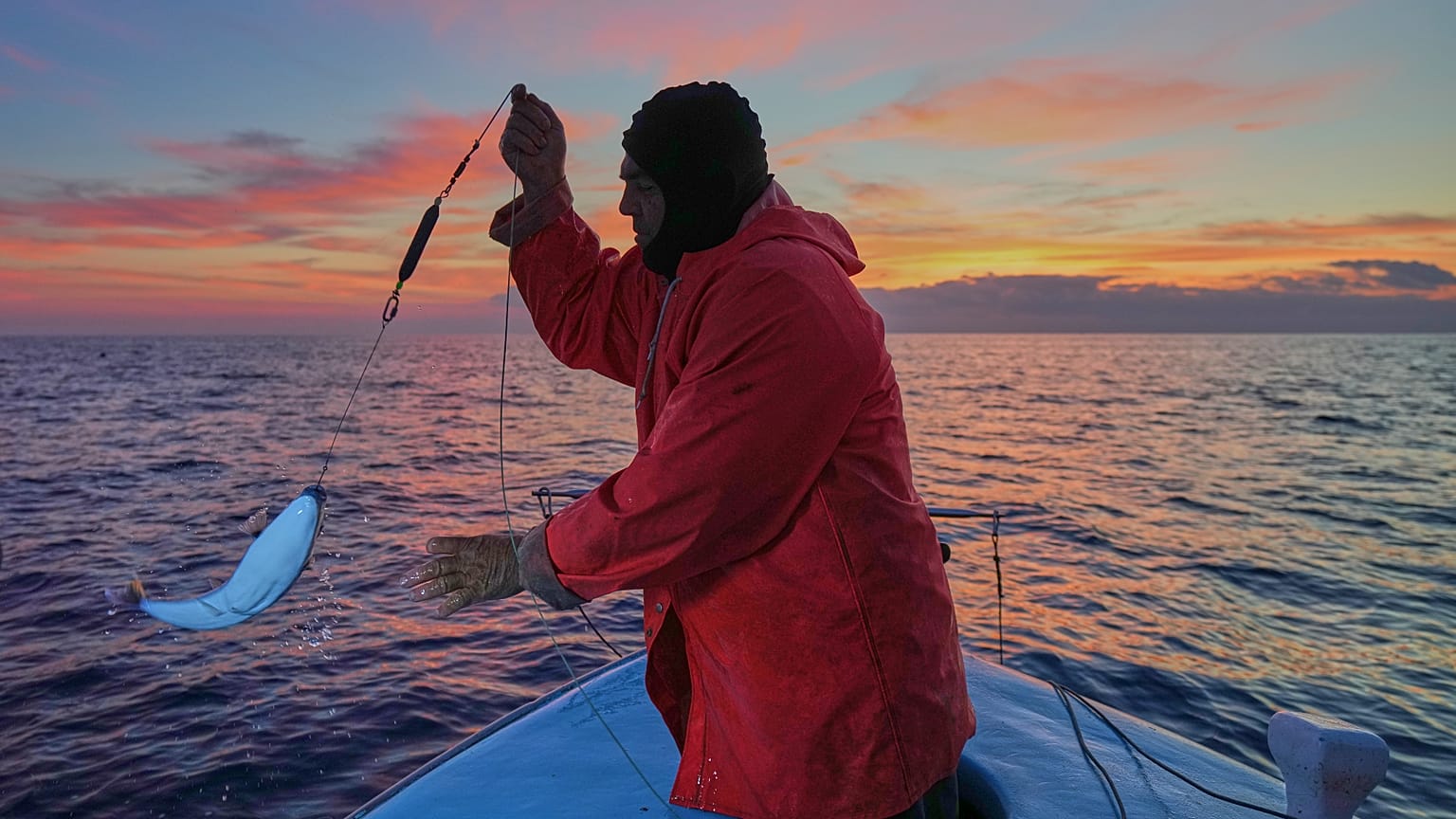
Fisherman Photis Gaitanos catches a toadfish while fishing from his boat off the coast of Larnaca, Cyprus, in the eastern Mediterranean, early Saturday, Dec. 20, 2025.
Copyright AP Photo/Petros Karadjias

By Angela Symons with AP
Published on

Scientists have designated the Mediterranean as a climate change “hot spot” – and warming waters are bringing aggressive new alien species.

The Mediterranean of our ancestors is no more.

Scientists say climate change, caused mainly by burning oil, coal and gas, is making the Mediterranean Sea hotter, bringing hundreds of new and invasive fish species that decimate indigenous populations.

As biodiversity diminishes, coastal communities will struggle to make ends meet in the ways they’ve known for generations.

“The Mediterranean of our grandfathers, of our elders, and of the Greeks, of ancient Greece is lost forever. So many of those changes are irreversible,” says Ernesto Azzuro, a marine biologist with the Italian National Research Council's Institute for Marine Biological Resources and Biotechnology.

Warmth can't dissipate in the Mediterranean's basin

Scientists have designated the Mediterranean as a climate change “hot spot”, with its waters expected to warm by 2 to 6 degrees Celsius by 2100. Heatwaves are likely to become more frequent and more extreme, according to the Mediterranean Experts on Climate and Environmental Change, an independent network of scientists.

Ronan McAdam, an oceanographer with the Euro-Mediterranean Center on Climate Change, says a key factor in the warming is that the sea is an enclosed basin and warmth can’t dissipate like in the vastness of the oceans.

The warming waters have made an inviting new home for invasive species like the spotted puffer fish, a voracious predator and the “worst invader”, Azzuro says.

These species are now heading toward France and Spain after entering the Mediterranean through the Suez Canal.

The UN food and agriculture body’s General Fisheries Commission for the Mediterranean says such invasive species have been present for decades, but their spread accelerated after the early 2000s, coinciding with rising sea temperatures. For example, the lionfish was first recorded in the eastern Mediterranean in 2012 and has expanded rapidly westward.

“The Mediterranean will be even poorer, even with less species, simply because climate changeis really making this part of the Mediterranean, especially the eastern part of the Mediterranean, really unsuitable for native species,” Azzuro says.

Cyprus, due to its proximity to the Suez Canal, was first to feel the impact of these invasive fish. Lionfish supplanted indigenous stocks like the red mullet to the dismay of fishers, who have seen local varieties popular with customers greatly diminish.

Then there are rabbitfish that can devour algae from the sea bottom, destroying the habitat for many indigenous species.

"We know what should be done. We should reduce the use of fossil [fuels]," says Piero Genovesi Papik, a zoologist with Italy’s Higher Institute for Environmental Protection and Research. “But that’s definitely an urgent matter for the humanity, and we all know the solutions, but of course they require a global and joint vision.”
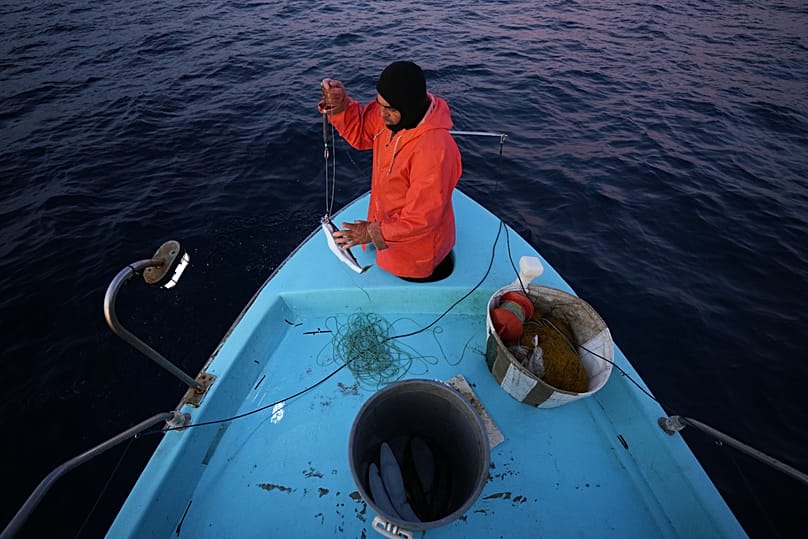
Fisherman Photis Gaitanos catches a toadfish while fishing from his boat off the coast of Larnaca, Cyprus, in the eastern Mediterranean, early Saturday, Dec. 20, 2025. AP Photo/Petros Karadjias

About 1,000 invasive species have been identified

Azzuro says about 1,000 invasive species have been identified in the Mediterranean, with 800 of them firmly established.

The changes are stark. Azzuro says the shallows of the eastern Mediterranean have lost 93 per cent of their mollusk population. Along the Adriatic coast, once abundant with mussels, nearly all have died off because of the sea temperatures that at times have exceeded 30 degrees Celsius.

From Venice in the north to Bari in the south, “the die-off was spectacular,” he says. “Unless we… find populations able to survive through these different climates, the future of mussels is not a happy future, at least in the Adriatic Sea.”

Azzuro says his institute and its partner a few years ago launched a campaign, 'Beware of those four', to raise awareness about the dangers that invasive species pose to human health.

For instance, puffer fish is toxic and potentially lethal if consumed by humans. The lionfish's poisonous spikes can badly hurt anyone who’s stung.
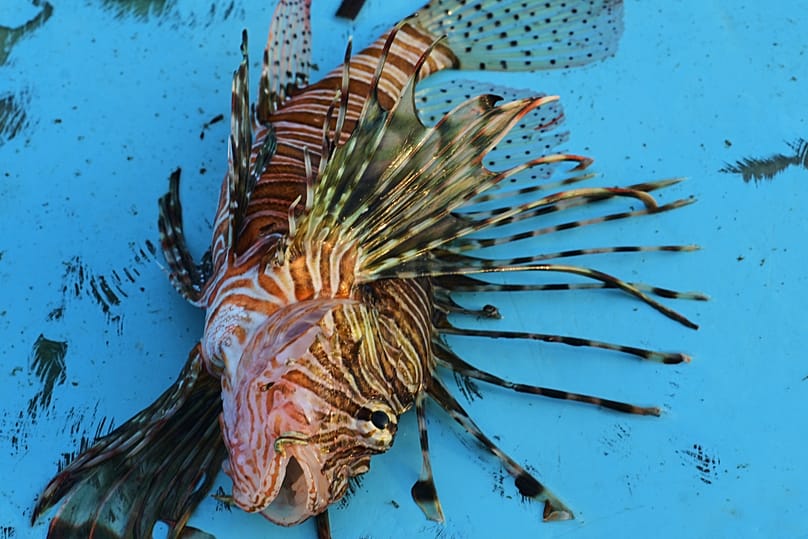
A lionfish lies on a fishing boat off the coast of Larnaca, Cyprus, in the eastern Mediterranean, early Saturday, Dec. 20, 2025. AP Photo/Petros Karadjias

Experts say the spread of invasive species can't be reversed

Scientists are discussing how coastal communities can cope. One way is to commercialise invasive species that are edible. Another is to pay fishers to catch inedible ones like the puffer fish so they can be incinerated.

Some species, like the lionfish, have “clear economic benefits because it’s sold at very high prices, especially in some countries,” Azzuro says. But fishers haven’t taken advantage of the invasive dusky spinefoot, whose population has grown significantly in Italian waters.

Papik, the zoologist, says that while it’s “too late” to reverse the spread of invasive species in the Mediterranean, there are practical ways to mitigate the impact.

First is to prevent their further migration by enforcing an international treaty obliging national authorities to treat ballast waters inside incoming ships that may carry such species.

“This is something that is technically doable and that can reduce the number of... new alien species by 95 to 99 per cent,” he says. Another tactic is treating ship hulls with special paint that thwarts unwanted hitchhikers from latching on.

Papik also says fishing policies are being amended that would allow native species to reclaim some of their number, like growing mollusks that are less susceptible to the alien blue crab.

“In the coming years, I think that the challenge will be to find new ways to restore the environment,” Papik says.


 

Invasive mould infections are more common than thought, study finds

Invasive mould infections are common but rarely counted.
Copyright Canva/Cleared


By Marta Iraola Iribarren with AP
Published on

A new study suggests invasive mould infections are a bigger and more common health risk than previously thought.

Invasive mould infections may be an underrated and potentially deadly threat for those with weakened immune systems, according to a new study.

The findings, published this week by the United States Centers for Disease Control and Prevention (CDC), aimed to better understand how common illnesses caused by mould – known as invasive mould diseases – are.

“It's kind of the first time we've had an estimate like this," said the CDC's Jeremy Gold, the study's senior author.

Understanding the scale of the problem is critical, he added, as it is likely to grow in the wake of natural disasters linked to climate change, such as hurricanes and floods.

There are currently no aggregated global estimates of fungal disease incidence and mortality. A 2024 Lancet study estimated a global burden of 6.5 million invasive fungal infections and 3.8 million deaths annually. At the European level, there is also no comprehensive registry — invasive fungal infections are not subject to EU-wide mandatory reporting, and surveillance instead relies on a patchwork of national programmes.

Meanwhile, there’s a growing population of older people who are more susceptible to such illnesses, Gold added.

Invasive mould diseases are a diverse group of rare, life-threatening infections caused by certain mould species that can invade and damage body tissues.

Most infections occur by inhaling mould spores, though the fungus can also enter the body through cuts, wounds, or contaminated medical equipment.

For most people, the spores cause no health problems, but they can be life-threatening for the elderly, cancer patients, and others with weakened immune systems. Treatment generally requires prolonged courses of antifungal drugs.

What the data showed

To better understand how common such cases are at a local level, the research team worked with four Atlanta-area hospitals and their affiliated outpatient clinics to identify potential cases between 2020 and 2024.

They initially identified nearly 1,000 potential cases, but narrowed the number down to about 450 by ruling out patients who showed signs of exposure but did not meet the criteria for invasive mould disease.

The team found that hospitals can expect to see three to five cases per year for every 100 inpatient beds, with higher rates at larger academic hospitals, which tend to see more complex illnesses.

Most affected patients had impaired immune systems or — in several cases — were weakened by a prior COVID-19 infection.

Mould exposure can occur in hospitals or other healthcare facilities, but the study did not attempt to determine where each patient was first exposed, Gold said.

He added that the data should give hospital administrators a benchmark for whether their own case numbers fall within the expected range, or signal a possible outbreak.


Wind and solar overtake fossil fuels in Germany – but negative electricity prices still rife

A pumpjack of Wintershall DEA extracts crude oil at an old oil field in Emlichheim, Germany, Friday, March 18, 2022.
Copyright Copyright 2022 The Associated Press. All rights reserved.

By Liam Gilliver
Published on

Despite several setbacks to electrification, Germany is expected to phase out coal much faster than originally planned.

Germany is likely to wean itself off polluting coal “much sooner” than originally planned, after hitting a major milestone in its clean energy transition.

New data from London think-tank Energy Institute found that together wind and solar generated 44 per cent of the country’s electricity in 2025 – overtaking fossil fuels by one per cent.

Since the introduction of its landmark renewable energy law (Erneuerbare-Energien-Gesetz) in 2000, the country’s share of generation from wind and solar alone has skyrocketed by around 42 per cent.

At the same time, coal – which is often described as the ‘dirtiest’ form of energy – fell from supplying more than half of Germany’s electricity to just 21 per cent. Experts are now hopeful that the country will wean itself off coal before 2038.

It’s an impressive feat considering Germany phased out nuclear power – which contributed to 6.6 per cent of the country’s total power production in 2022. While nuclear generation is often categorised as clean energy, concern around its harmful waste and environmental impacts remains rife.

It mirrors a broader trend, as data from energy think-tank Ember found that wind and solar generated more power than fossil fuels across the EU for the first time last year (30 per cent compared to 29 per cent).

Germany’s renewable dilemma

Despite the victory, Germany is still grappling with negative electricity prices – which occur when supply outstrips demand.

This is often attributed to the inflexible nature of wind and solar power, which generate electricity based on weather conditions rather than actual demand.

It has led to a spike in curtailment, where operators temporarily switch off or reduce the output of solar and wind farms.

When curtailment occurs directly because generating electricity is no longer economically viable (rather than because of grid constraints), this is known as price-sensitive, or commercial, curtailment.

In the first half of 2026, Germany witnessed commercial curtailment increase by 20 per cent – from 1,216 to 1,463 GWh, even though negative electricity prices dropped by from 389 hours to 299.

A recent analysis from energy market intelligence firm Montel says that under Germany’s Solar Peak Act, which was introduced last year, newly built renewable assets lose their guaranteed subsidy top-up as soon as wholesale prices turn negative.

Experts warn that this has created a “much sharper commercial incentive” for renewable operators to switch off rather than keep generating at a loss.

Germany’s struggle to electrify

Electrification, which can help reduce curtailment rates by evening out demand, is on the rise in Germany despite several major setbacks.

Earlier this year, a draft law requiring households to replace fossil-fuelled boilers with climate-friendly alternatives was dropped by the cabinet – a move described by the green party as a “complete abandonment of Germany’s climate targets”.

It means that the requirement for all new heating systems in the country to be powered by at least 65 per cent renewable energy has been abolished, along with “forced heating system replacements or bans” for new oil and gas heating systems.

The move came just as data found that heat pumps have started to outsell gas boilers in the country, spurred on by volatile gas prices amid Iran’s stranglehold on the Strait of Hormuz.

Last year, heat pumps accounted for almost half (48 per cent) of all new heating systems sold in the country, with 299,000 units sold. According to the European Heat Pump Association (EHPA), German sales of heat pumps in the first quarter of 2026 are up by 34 per cent compared to the same period in 2025.

Germany is also falling far behind the rest of Europe when it comes to smart meter technology, with just two per cent of households having an advanced smart meter installed as of 2024 – despite making the devices mandatory for certain consumers last year.

Smart meters give households more control over their energy use and allow citizens to take advantage of flexible ‘time of use’ tariffs, which offer lower prices when demand is low or renewable energy generation is high.

By supporting flexible tariffs that encourage households to run energy-intensive appliances like washing machines when renewable generation is abundant, smart meters help to better align electricity demand with supply.


There are only four certified 'therapeutic forests' in the world: One is now in Portugal

Bussaco Forest
Copyright Reprodução Turismo Centro de Portugal


By Diana Rosa Rodrigues
Published on


The Bussaco National Forest has become the first certified Therapeutic Forest in the Iberian Peninsula, joining an exclusive group of just four sites worldwide.

There are only four Therapeutic Forests in world: Portugal is home to one of them.

The recently certified Bussaco National Forest on the Iberian Peninsula joins Beneddiktinerstift in Austria, and Lahnstein and Bad Nauheim in Germany.

After years in the implementation phase, the certification, granted on 17 July by the Healing Forest - International Certification Office, highlights the qualities of this Portuguese forest, located in the parish of Luso in the municipality of Mealhada.

"This certification, which places us among the four therapeutic forests worldwide and as the first on the Iberian Peninsula, gives us global status and brings with it great responsibility," said the president of the Mata do Bussaco Foundation, Gonçalo Breda Marques, quoted by the Lusa news agency.


Mata do Bussaco covers 105 hectares and, according to the foundation of the same name, "has one of the best dendrological collections in Europe, with around 250 species of trees and shrubs".

"It is one of the National Forests richest in natural, architectural and cultural heritage and can be divided into four landscape units: Arboretum, Gardens and Fern Valley, Relic Forest and Pinhal do Marquês", its website states.

The certification adds value for both patients and forest therapists, with the site strengthening its role in health tourism.

What makes a forest 'therapeutic'?

According to the Healing Forest - International Certification Office, therapeutic forests are woodland areas designed for specific therapeutic uses. Qualified therapists accompany treatments or tailored programmes in these locations, which can be beneficial in managing disabling diseases and have a positive influence on conventional therapies.

For these forests to offer such benefits, they need to meet a set of criteria, such as having natural structures that dampen noise and provide visual and wind protection, trails with different levels of demand and difficulty, and areas dedicated to therapeutic applications as well as relaxation exercises.

The certification process has several stages. The first involves submitting basic information and documentation about the site, after which the process moves on to a technical inspection by a team from the certification office, assessing its therapeutic potential.

Once the first two stages have been completed, an assessment is carried out based on the defined criteria and the characteristics of the forest, leading to the awarding of a certificate, which is valid only for a set period. In the case of Mata do Bussaco, the certification is valid until 2031.

The same organisation says these outdoor practices can bring a range of scientifically proven benefits, including improved cognitive abilities, reduced stress, anxiety and depression, lower blood pressure, a stronger immune system and better sleep quality. Most of the research, carried out over the past decade, comes from Asian countries.

Forest bathing: How nature became a cure for stress

The idea that an immersive experience in a forested area can be beneficial is not new. So-called "forest bathing" is a direct translation of the Japanese term shinrin-yoku and was developed in Japan in 1982 as part of a national health programme designed to reduce stress levels among the Japanese population.

The concept is similar to a guided wellbeing or mindfulness practice, not necessarily aimed at a specific medical indication, and functions as a health practice in its own right, akin to existing recommendations such as eating a healthy diet or doing regular physical exercise.

Forest therapy, by contrast, is a more clinically formalised practice led by accredited forest therapists and is sometimes linked to specific medical and therapeutic indications, such as cardiovascular, respiratory, psychosomatic, orthopaedic or neurological diseases.

The Forest Therapy Hub is one of the organisations that provides training and accreditation for these professionals, explaining that forest therapy aims to "promote positive states of mental health and improve physical and social health, strengthening the connection with nature, interpersonal relationships and social cohesion".


'Crude language of MAGA’: Author Joyce Carol Oates defends 'The Odyssey' after translator's scathing review

'Crude language of MAGA’: Joyce Carol Oates defends 'The Odyssey' after translator's scathing review
Copyright Universal Pictures


By David Mouriquand
Published on

The cultural debate over Christopher Nolan’s ‘The Odyssey’ continues, with Pulitzer Prize-finalist Joyce Carol Oates defending the film following a scathing review by translator Emily Wilson, who wrote that the film had “nothing convincing to say.”

Christopher Nolan's The Odyssey is officially 2026's fourth highest-grossing film, having surpassed the $700 million mark at the worldwide box office after just over two weeks in cinemas.

While audiences continue to flock to theatres to watch Nolan's take on Homer's epic poem, the film has become something of a cultural lightning rod. It has sparked renewed interest in the source material and Greek culture, a positive side-effect tempered by Elon Musk taking against the film from the get-go, fuelling a culture war surrounding the film's diverse casting.

He even announced that his AI tool Grok Imagine would make a “historically accurate” full-length feature version of Homer’s text.

Then there are purists who have been left frustrated with Nolan's take on the source material – specifically the use of contemporary English language.

One recent criticism came from British-American translator Emily Wilson, whose 2017 translation of Homer's poem was the first by a woman into English verse. Wilson wrote a viral review for the London Review of Books in which she attacked Nolan's film, writing that it lacked “psychological, emotional, political and ethical depth” and had “nothing convincing to say.”

Wilson summed up her take with: “I would be ashamed to have written any part of this script.”

Now, American author Joyce Carol Oates has come to the defense of The Odyssey, taking issue with Wilson's language and tone, which Oates describes as one of "dismissal & haughty superiority".

“Rather than disagreeing with interpretations of Homer in a collegial manner, this person, who has benefited enormously from Nolan’s film, speaks in the crude language of MAGA folks attacking someone with ideas that differ from hers,” Carol wrote on X. “One would expect a translator, of all people, beholden to a text, in service to a text, to be just a wee bit more thoughtful & respectful of others who are acting in good faith just as (she would claim) she is.”

Nolan previously praised Wilson for her translation of the ancient text, telling Empire that he used the opening line of her version, “Tell me about a complicated man,” as inspiration when developing Matt Damon's role as Odysseus.

Oates, who has won the National Book Award, been a finalist for the Pulitzer Prize four times and is best known for her books "Blonde" and "We Were Mulvaneys" (both of which were made into films), added in separate posts on X that she highly recommended Nolan’s adaption and that she wasn’t a fan of Wilson’s translation.

“What I’d read of Emily Wilson’s translation was not for me,” she wrote, adding that she assumes it was “deliberately written to appeal to an audience comfortable with YA (young adult) directness & spareness of vocabulary - that is, with the intention of being marketable, adopted by high school classes."

"With a more poetic, elevated speech, you are naturally limiting your audience," continued the author, who added that there was nothing wrong with a direct, commercial approach. "Why not profit from a classic work not protected by copyright? A graphic novel of "The Odyssey" could be terrific, too.)"

Oates also responded to critics of the film’s modern dialogue.

“The most elegant translation of The Odyssey is by Daniel Mendelsohn; it is ‘poetic,’ each word chosen with care, precision; it is beautiful, melodic but if that translation had been used in Nolan’s film the charges would not be that the language is banal or boring but rather that the language is too elevated, ‘poetic.’ I do not think that Nolan’s film will be considered a great classic but really, it seems that whatever Nolan did, it would disappoint hordes of people. Most moviemakers/creators just try the best they can – it seems odd that this director has drawn such angry criticism.”

The author also noted that such criticism “is chilling, dampening for any creative artist. To attack a creative artist as if he were a criminal, had done something to harm, hurt, kill–this is alarming. If you hate a movie, fine – no need to recommend it. No one expects every work of art to be a classic, perfect… Rage seems just weirdly inappropriate.”

She also said she would “highly recommend both Nolan’s film & the 1997 miniseries co-produced by Francis Coppola."

While debate rages on, The Odyssey should continue its trajectory towards the $1 billion mark at the global box office – even if its numbers are expected to dip now that Spider-Man: Brand New Day (also starring The Odyssey cast members Tom Holland, Zendaya and Jon Bernthal) has hit cinemas.

Read Euronews Culture's full review of The Odyssey here, check out where it falls in our ranking of Nolan's filmography and in our ranking of the Best Movies of 2026 So Far. And when you're done with all that reading, find out what we think of Spider-Man: Brand New Day here.


Ireland unveils blueprint to electrify economy by 2050

This photo shows a Meta data center in Dublin, Ireland, Wednesday, Oct. 16, 2024.
Copyright AP Photo/Bram Janssen

By Marta Pacheco
Published on

Dublin's plan takes into account a surge in electricity demand over the coming decades, driven by electric vehicles, industry and rapidly expanding data centres, which will place growing pressure on the national grid.

Ireland has announced a sweeping review of its electricity system, with the government promising a blueprint to reshape the country's power sector by 2050 as it races to meet climate targets and electrify its economy.

Irish Climate, Energy and Environment Minister Darragh O'Brien said on Wednesday that work is underway on a long-term strategy to set out how Ireland plans to generate, transmit and regulate electricity through to 2050.

The move from Dublin comes as Ireland has taken the helm of the rotating EU Council Presidency and vowed to make electrification a priority.

The disruption in the Middle East has also revealed how the EU's dependence on imported fossil fuels is leading to higher energy bills and inflation, with roughly an extra €50 billion spent on fossil fuel imports in just 111 days during disruptions to the Strait of Hormuz.

"Ireland's energy transition represents a momentous opportunity for us all, to help make our economy and industries more efficient and competitive, to open new opportunities for businesses, and create tangible benefits for our communities across Ireland," O'Brien said.

The new "Power Sector White Paper" is expected to become the cornerstone of future energy policy, guiding legislation, investment decisions and grid development as Ireland shifts away from fossil fuels towards an electricity-based economy.

The review comes as electricity demand is forecast to surge over the coming decades, driven by electric vehicles, heat pumps, industry and rapidly expanding data centres, putting growing pressure on the national grid.

Data centres, in particular, consumed 23% of Ireland's total metered electricity in 2025, scaling up from 5% in 2015. According to the Irish Central Statistics Office, total usage almost matched the electricity used by all urban and rural households combined (28%).

At the EU level, political talks are underway to agree on how to modernise the bloc's ageing power grid. More than a technicality, revamping the EU's grids is paramount for EU countries to fully utilise the vast amounts of renewable energy produced and ultimately electrify the bloc's economy.

Adding pressure to the race towards electrification, the European Commission has recently announced a 46% electrification target by 2040, in a bid to encourage EU countries to boost related investments.

A holistic approach to electrify Ireland's economy

The White Paper will examine some of the biggest questions facing the energy transition, the Irish government said. This includes how much electricity Ireland will need, where it will come from, how the grid should evolve and how the country can balance the competing priorities of affordability, security of supply and decarbonisation.

A statement from the Irish Department of Climate, Energy and the Environment said the strategy will be backed by detailed modelling of future energy scenarios, including risk assessments, demand forecasts, infrastructure needs and governance arrangements.

"This White Paper will be a key part of guiding the energy transition to clean, secure, affordable electricity. It will set a path to deliver — for this generation and future generations," O'Brien added.

"It will require national conversation and collaboration. Starting today, I invite all stakeholders across government and the public, private and voluntary sectors to work with us on this initiative."

The initiative forms part of Ireland's commitment to achieve climate neutrality by 2050 under EU law, with electrification remaining the government's central strategy for cutting emissions across transport, heating and industry.

France was the first EU country to announce its own electrification plan aimed at cutting reliance on fossil fuels. Other EU countries are likely to follow suit.

However, for the EU to fully succeed in electrifying the bloc's economy, the current high electricity prices must be addressed, or households and businesses won't have sufficient incentives to switch.

The Commission recently asked member states to ensure that electricity is not taxed more heavily than gas, while leaving governments free to determine the structure of their national tax systems under the EU's energy taxation rules.

Eva Schwab, energy poverty policy officer at the European Federation of National Organisations working with the homeless, said that electrification will only succeed if everyone is included.

Schwab regretted that the Commission plan, seen as a model for EU countries to emulate, makes no mention of energy poverty.

"Without targeted support, the households that stand to benefit most from lower energy bills will remain locked into expensive fossil fuels while better-off households capture most of the gains.”