Friday, July 31, 2026


One war, three continents and total slippage

One war, three continents and total slippage
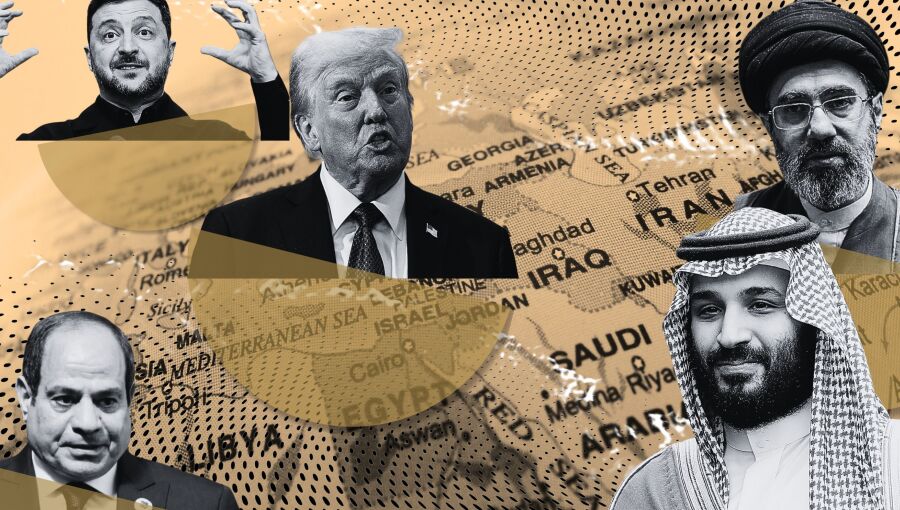
The Iran war is morphing into something bigger than Donald Trump probably envisioned when he sought to topple the Tehran regime in February. / bne IntelliNewsFacebook
By bnm Tehran bureau July 30, 2026

A mystery drone hit a US-owned liquefied natural gas carrier at Egypt's Mediterranean port of Damietta on July 29, set it alight, and spread the fire to a second ship.

Cairo took until the following morning to report the incident, likely from being in a flap about being sucked into the wider war with Iran, like Ukraine. That the attack was made with a drone is now clear, but where it came from is not. However, we can perhaps assume it did not fly from Iran as it would have likely been shot down before getting past Israel and Palestine. Later on July 30, Yemeni sources denied it was their drone, Egyptian media reported.

The strike went well into Egyptian territory and was the first on Egypt since the war between the United States and Iran began on February 28, and it lands a war that started in the Persian Gulf on the shore of the Mediterranean, one canal transit away from Europe and a direct challenge to the international shipping system.

On the same day the IRGC fired ballistic missiles at US forces in Jordan, Saudi Arabia and the United States struck Iran-linked militia sites across Iraq, and Yemen's Houthis declared a maritime embargo against Saudi shipping. Later, on July 29, the US pummelled Qeshm island in the Gulf blowing up houses, according to the Iranians, making the targeting even more suspect.

Four days earlier to the latest flare up, Ukrainian drones had reached across the Caspian to kill an Iranian sailor.

Draw those points on a globe and a shape appears that did not exist in the spring. A single conflict now touches three continents. It runs from the Caspian in the north to the Gulf of Aden in the south, from the Iraqi plains in the east to the Egyptian coast in the west, with a European supply chain feeding one belligerent and European navies escorting the tankers of another. The question is no longer whether the war is spreading. It is whether the thing spreading is still one war, or several that have grown into each other until the seams no longer hold.

Consider what has already merged. When Ukraine struck the sanctioned cargo ships Port Olya 2 and Begey in the Caspian, it was hitting the supply line that carries Shahed components and, by several accounts, Fath-360 ballistic missiles from Iran to Russia. As suggested at the time, Kyiv did not think it had picked a fight with Tehran. It thought it had interdicted a logistics route. But interdiction is a matter of intent, and a dead sailor is a matter of fact, and Iran now demands full compensation for a strike it says cannot go unanswered. Attacking Iran widens the war, and for Kyiv, that is the point, because it means Ukraine is at war with Trump's enemy. Two conflicts that a foreign ministry could keep in separate files in June share a casualty list in July. The recent funeral of former pro-Ukraine, pro-Iran-regime-change and pro-Israel Lindsay Graham saw the worlds collide in HD this week, even raising eyebrows with exiled and former prince Reza Pahlavi waiting to chat with the Saudi officials sat in front of him.

The mechanism is the same everywhere you look. And it is worth naming because it explains why the map keeps growing. Every belligerent in this war has a reason to attack a target that belongs to somebody else's fight. And every one of those attacks recruits a new party. Ukraine hits Russia's Iranian supply line and acquires Iran as an aggrieved party. The Houthis blockade Saudi shipping to pressure Iran's enemies and turn a Yemeni civil war into a Red Sea energy crisis. Saudi Arabia strikes militia sites in Iraq and makes Baghdad a theatre. Whoever hit Damietta, and the geography of a one-way drone flight narrows the suspect list considerably, has pulled Egypt, a declared non-combatant (but good friend of Russia’s), that has kept lines open to both Washington and Tehran, into a war it spent five months avoiding. Each move is locally rational. The sum is a widening that no single participant chose and none can now stop.

But that is all part of this stochastic war. And it is typical of the interregnum of the post Pax Americana end-of-empire-era. But now we have reached the runaway train part of the story.

The chokepoints tell the same story in the language of freight rates. The Strait of Hormuz has been effectively shut since February 28. The Bab al-Mandeb has been under a Houthi blockade of Saudi-linked shipping since July 20. That is the first time in history both have closed at once. It puts a quarter of the world's seaborne oil and gas at risk of being priced off the water. Markets should look more disturbed.

The Saudi bypass pipeline that terminates at Yanbu on the Red Sea was the workaround for the loss of Hormuz. It now empties directly into the second blockade. When we asked in March which straits would close next, the question was still hypothetical. It is now a matter of the shipping schedule. Damietta adds a third pressure point, because a canal that already lost most of its traffic to the Red Sea diversion cannot afford the impression that its own approaches are now a target.

None of this yet amounts to the great-power collision that the phrase "mega war" is meant to summon, and it is worth being precise about why not. The United States is bombing Iran but is not at war with Russia. Russia arms Iran but has committed no forces to its defence. Israel and Iran trade strikes but through proxies and airpower, not armies in the field. The ceasefire brokered by Pakistan in April collapsed, but the diplomatic scaffolding it left behind, the Oman channel, the intermittent US signalling, the fact that Iran and Ukraine's foreign ministers spoke directly for the first time since 2022, has not been dismantled. The war is wide, but it is not yet deep. It sprawls across the map without any two nuclear-armed states firing on each other.

It is thinner because widening is itself a form of escalation, even when no red line is crossed. Every new front is a new place where an accident can happen: a new government that must now calculate retaliation, a new stretch of water where a misidentified hull can produce a dead sailor and a demand for compensation. The Caspian strike did not intend to bring Iran into the Ukraine war. The Damietta drone, whoever launched it, may not have intended to bring Egypt into anything. Intent is the first casualty of a conflict this crowded. The more belligerents share the same map, the smaller the mistake required to connect two of them who had managed, until that morning, to stay out of each other's war.

So, has this become a three-continent war? On the evidence of a single week, yes, in the literal sense that fighting tied to one conflict now spans Africa, Asia and the edge of Europe. Whether it becomes the mega war depends on a variable no analyst can price, which is how many more locally rational strikes the system can absorb before one of them lands somewhere that cannot be managed at the diplomatic level. See Russia striking a Polish field with a missile on July 29, the war is getting bigger and the catalyst was lit months ago.

The participants are still, for now, choosing their targets and there are some checks and balances still in the balance of things. The worry is the moment the map starts choosing for them. Damietta is a long way from Hormuz. On July 29 that stopped being a comfort for the El Sisi administration.

 

Bolivia issues arrest warrant for ex-president Morales over deadly blockades

Bolivia issues arrest warrant for ex-president Morales over deadly blockades
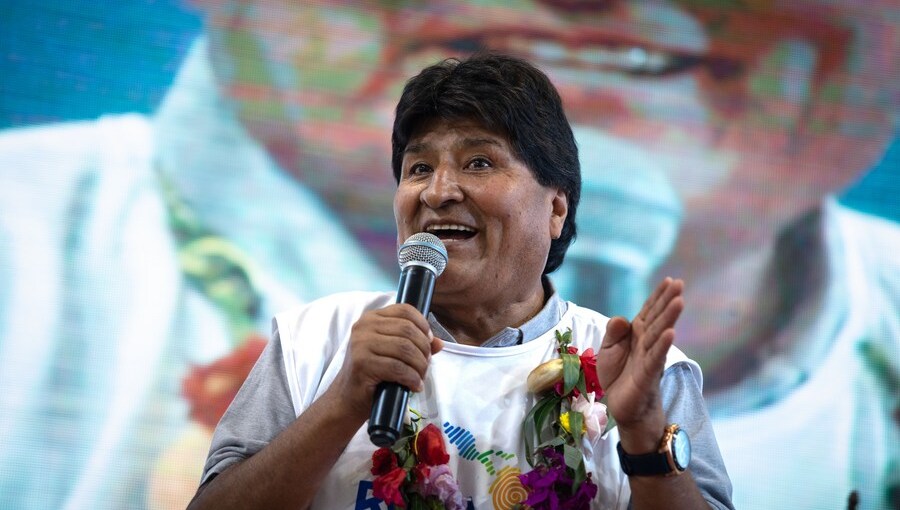
"They seek to blame us for the social mobilisations to hide the true drama that Bolivia is experiencing: a deep economic and social crisis, the result of a model that has abandoned the people and protects corruption," Morales wrote on X. / xinhuaFacebook
By bnl editorial staff July 30, 2026

Bolivian prosecutors issued an arrest warrant on July 29 for former president Evo Morales, accusing him of terrorism and armed insurrection over his alleged role in orchestrating weeks of road blockades that left more than a dozen people dead and cost the economy over $3bn as protesters demanded President Rodrigo Paz's resignation.

State attorney general Roger Mariaca told reporters the order had been issued as part of an investigation into the blockades that paralysed the country for weeks. The order, signed by prosecutor Brayan Melgar, instructs police to detain Morales and hand him to the specialised anti-corruption police unit, according to the document.

Prosecutors are investigating Morales on six counts: armed uprising against the security and sovereignty of the state, terrorism, endangering the safety of transport systems, criminal association, public incitement to commit crimes, and endangering the safety of public services.

The case stems from a criminal complaint filed on July 1 by the Pro Santa Cruz Civic Committee, which named Morales as the main instigator of the blockades. Bolivia's interior minister, Marco Antonio Oviedo, later joined the complaint.

Between May and June, farmers from La Paz, members of the Bolivian Workers' Central (COB) and groups aligned with Morales set up more than 100 roadblocks, mainly in La Paz, Cochabamba and Santa Cruz, to demand Paz's resignation. The disruption, which lasted 53 days, triggered severe shortages of food, fuel and medicines in several cities, including La Paz and El Alto.

Bolivia's Ombudsman's Office and civic and social organisations put the death toll from the unrest at 22, with 88 people injured. Separate estimates cited at least 16 deaths, 13 of them attributed to delays in medical care caused by the blockades. Economic losses exceeded $3bn, with production in Santa Cruz particularly hard-hit as goods could not be moved to market.

Morales, 66, denied orchestrating a campaign to force Paz's resignation, saying the mobilisations were intended to press the government to address the sectors' demands. On May 24, he wrote on X that Paz faced "two paths": to "militarise" the country or call elections within 90 days.

Responding to the arrest order on July 29, Morales wrote on X: "They seek to blame us for the social mobilisations to hide the true drama that Bolivia is experiencing: a deep economic and social crisis, the result of a model that has abandoned the people and protects corruption."

He added: "They will not intimidate us. We will continue fighting alongside the people, as we have always done, with the conviction that Bolivia deserves a different path: one of dignity, sovereignty, social justice, and the restoration of hope for everyone."

The arrest order also names COB leader Argollo, identified in reports as either Marco or Mario Argollo, and Vicente Salazar, leader of the La Paz-based Túpac Katari Peasant Federation. Salazar has been held in pretrial detention at Chonchocoro prison since 6 July in connection with a separate investigation into the same events.

The blockades eased in mid-June after Paz reached agreements with the COB and other groups. Paz declared a state of emergency on June 20 and deployed police and the army to clear the remaining roadblocks and restore traffic.

Paz, a centrist politician, took office in November 2025, ending a 20-year run of socialist governments led by Morales and Luis Arce under the hard-left MAS party. During the protests, Paz received the backing of the United States and its Shield of the Americas partners, including Argentina, Chile and El Salvador, which in early June denounced what they called efforts to overthrow the Bolivian president. Bolivia's government accused "narco-terrorists" of trying to alter the democratic order and said Morales was behind the pressure tactics.

Morales has remained in the Trópico region of Cochabamba, in the town of Lauca Ñ, since October 2024, guarded by coca-growing supporters who have prevented the execution of a separate arrest warrant related to an investigation into aggravated human trafficking. In that case, Morales is accused of statutory rape over an alleged relationship with a minor with whom he is said to have had a daughter while president in 2016.

In May, a court in Tarija declared Morales a fugitive and issued a new warrant after he failed to appear at the start of that trial. Police have said they are awaiting the right moment to execute the outstanding order.


Quetta coal mine blast in Pakistan kills 26 miners

Quetta coal mine blast in Pakistan kills 26 miners
/ Dominik Vanyi - UnsplashFacebook
By IntelliNews July 31, 2026

A methane gas explosion at a coal mine on the outskirts of Quetta in Pakistan's Balochistan province killed at least 26 miners on July 30, while rescue teams continued efforts to locate workers still trapped underground, Dunya News reported.

The explosion occurred at a coal mine in the Sorange area, where 42 miners were working when the blast triggered a collapse, according to the Provincial Disaster Management Authority (PDMA). Rescue personnel have so far recovered 26 bodies, while the fate of the remaining workers remains uncertain.

Emergency teams are continuing search and rescue operations under challenging conditions in an effort to reach those believed to be trapped inside the mine.

Balochistan's Minister for Mines and Minerals, Shoaib Noshirwani, said all available resources had been deployed to support the rescue effort despite the difficult environment inside the mine.

Expressing condolences to the families of those killed, the minister announced that the provincial government would provide compensation of PKR500,000 ($1,808) to the family of each deceased miner, while injured workers would receive PKR300,000 each.

Noshirwani also said a full investigation would be launched to determine the cause of the accident and examine whether safety lapses contributed to the disaster.

Earlier, the mine owner told local media that methane gas had caused the explosion. All 42 workers at the site were reportedly from Shangla district in Pakistan's Khyber Pakhtunkhwa province.

Following the incident, Balochistan Chief Minister Mir Sarfraz Bugti ordered the Mines and Minerals Department to submit an immediate report on the accident.

Bugti directed authorities to conduct a transparent inquiry to establish the cause of the explosion and identify any negligence. He said legal action would be taken against those found responsible and instructed the department to strictly enforce mine safety regulations across all coal mining operations in the province.


Milei authorises expulsion of foreigners over anti-Argentina hate speech

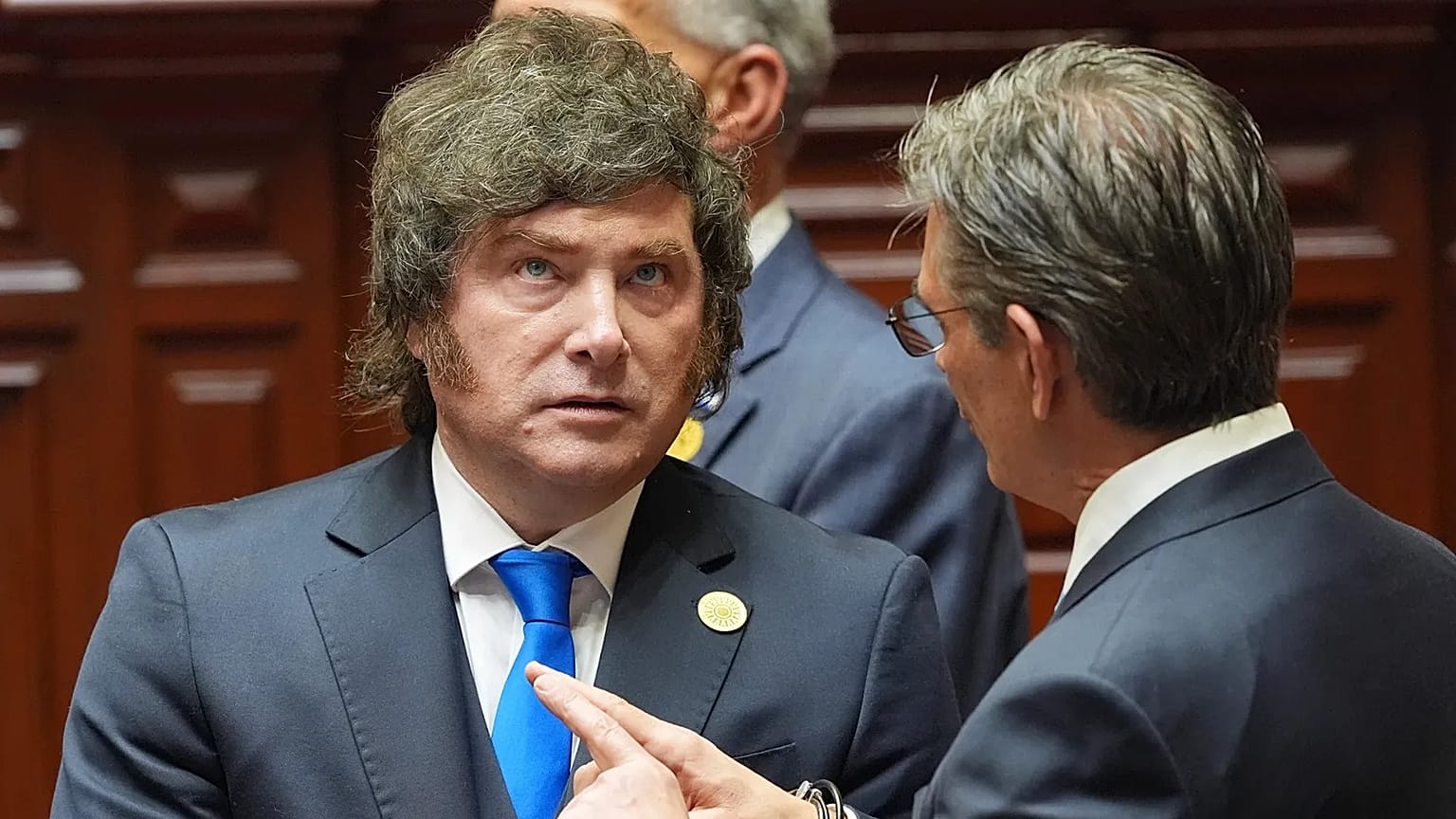
Javier Milei, during the inauguration of Fujimori's presidency
Copyright AP Photo

By Cristian Caraballo
Published on

The government said the changes were a response to what it described as "recent displays of hostility towards the Argentine Republic and Argentinians," although it did not cite specific examples.

The Argentinian government has amended the country's Migration Law by decree, allowing authorities to expel foreign nationals who promote messages of hatred against Argentina or its national symbols, whether spoken or written.

The reform also allows authorities to refuse entry to foreign citizens who have engaged in similar conduct.

According to a statement released on Thursday by the office of Argentine President Javier Milei, the new rules will not affect political, ideological or academic criticism, as these areas are considered to be protected under the right to freedom of expression.

The government said the changes were a response to what it described as "recent displays of hostility towards the Argentine Republic and Argentinians," although it did not cite specific examples. The announcement follows heavy criticism of Argentina and in particular its men's international football team after the recent FIFA World Cup, in which Argentina finished as runners up.

The reform also comes amid growing diplomatic tensions between Argentina and Brazil and repeated verbal attacks by Milei against his Brazilian counterpart, Luiz Inácio Lula da Silva.

Since the end of the World Cup, Milei has argued that there is a global campaign against Argentina, an accusation for which he has offered no evidence, instead blaming Brazil, Mexico, and the US Democratic Party.


How false information spread about the Berlin Pride attack amid suspect manhunt


By Tamsin Paternoster
Published on


Within hours of the attack which occured at Berlin's annual Pride event, unverified claims began spreading across social media, while authorities worked to establish facts and searched for the suspect.

As police conducted a manhunt for the suspect who carried out a vehicle ramming attack at Berlin's annual Pride event on 25 July, the information vacuum surrounding the incident was rapidly filled with false claims and misleading social media post

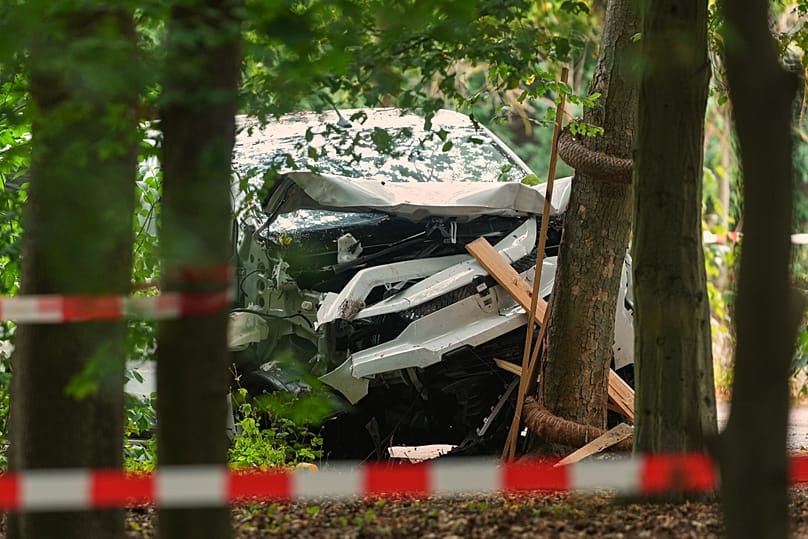
One woman was killed and at least 29 others injured after a white van drove into a crowd along a pedestrian pathway in a forested area near the main Pride parade.

The day after the attack, officials released a photograph of the suspect, known as 21-year old Abdul B, who was shot dead that evening in a police operation.

Despite speculation that he acted with accomplices, authorities said they saw no indication of an ongoing threat once the suspect was shot.

As investigators worked to piece together key events and details of the attack, unverified claims including false reports of a bomb threat, the arrest of the suspect and the misidentification of an unrelated man, spread online.

False claims surrounding evacuation

Organisers initially announced the main Pride event was cancelled shortly after 10.00pm and asked people to evacuate due to a “difficult situation.”

Less than an hour after the attack, anonymous posts on X claimed that the event was evacuated due to an “alleged bomb threat” despite there being no official confirmation.

Additional reports spread about shots fired in Tiergarten park, which also turned out to be false. Authorities later confirmed that the suspect had used a vehicle to ram into a crowd, before getting out of the car and attacking passersby with a bladed weapon.

A vehicle crashed into a tree after an incident near Berlin's annual Pride event, in Berlin, Germany, Sunday, July 26, 2026.
A vehicle crashed into a tree after an incident near Berlin's annual Pride event, in Berlin, Germany, Sunday, July 26, 2026. AP Photo

Shortly afterwards, videos emerged of an alleged suspect in a white shirt being apprehended on the ground by police officers.

This video was shared widely holding the logo of right wing newspaper “Junge Freiheit”, as well as by social media users, who said it showed the arrest of the attacker.

The Cube, Euronews’ fact-checking team, found that the video was also shared on pro-Russian Telegram groups and the German-language Pravda website, part of an ecosystem of clone websites which have been linked by researchers to pro-Kremlin influence operations.

Despite this posts claiming that the attacker was arrested at the scene, police said no suspect had been arrested at that stage of the investigation, meaning the claim attached to the footage was misleading.

Man falsely identified as suspect

As police searched for the attacker, social media users shared videos of TikTok content creator Abdul Malik on X and other platforms, in which they wrongly alleged that he was the attacker.

The false identification was shared alongside posts alleging that Malik had carried out the attack after being allowed to return to Germany following his deportation. Other posts used videos of Malik to criticise Germany's immigration and deportation policies, despite the attacker's identity not being confirmed at that time.

Even though Malik had a similar first name to the suspect, he denied involvement in the attack, posting a social media video to emphasise this.

He said he was "speechless" that users had connected him to the case, adding that he felt the false identification put himself and his family members at risk.

It is not the first time individuals have been falsely accused of being perpetrators online in the aftermath of violent and shocking attacks.

Following the 2013 Boston Marathon bombing, social media users wrongly identified several innocent people as suspects before an investigation revealed who was responsible.

And in May, images of the alleged perpetrator of a car-ramming attack in Leipzig circulated online falsely linking the suspect to both the left-wing anti-fascist Antifa movement and Germany's far-right Alternative for Germany (AfD) party.

Spanish invisible shield that saves satellites from irreparable failure

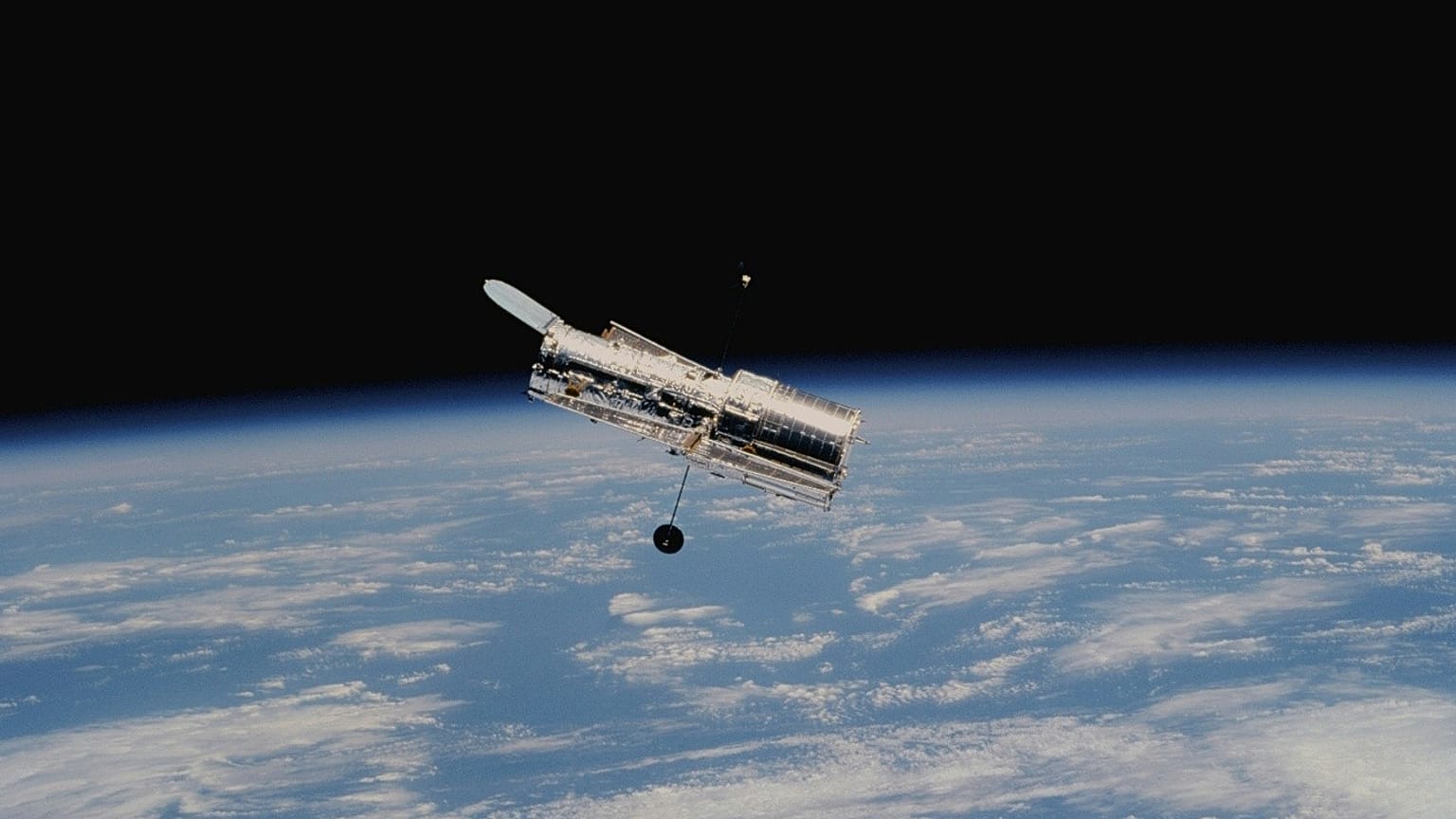
Hubble Space Telescope
Copyright CSIC


By Jesús Maturana
Published on

A CSIC team, working with spin-off Nanostine and backed by the European Space Agency, has developed a gold and silver nanoparticle coating that can stop the multipactor effect, which can cripple satellite communications systems.

The multipactor effect has been on the European Space Agency's (ESA) list of concerns for more than 40 years. It is an avalanche of electrons that occurs in vacuum, inside components such as antennas or waveguides, and can ultimately cause irreversible damage to equipment.

For decades, the standard solution has been to coat these parts with Alodine, a chromium-based compound that offers good protection but is harmful to the health of those who handle it and to the environment. European authorities have long been pushing for its ban, although none of the alternatives proposed so far has managed to match its technical performance.

Lidia Martínez, a CSIC researcher at the Institute of Materials Science of Madrid (source in Spanish) (ICMM), explains that the sector needed a substitute that would emit few secondary electrons, as these are what trigger the chain reaction.

Most previous attempts had focused on modifying the surface of materials at the micrometre scale, without achieving the leap in performance demanded by the space industry.

Nanoparticle generation system to prevent the multipactor effect
Nanoparticle generation system to prevent the multipactor effect Science Direct

In this case, size really does matter, and not just the material

The ICMM team decided to change scale. Instead of working with micrometric structures, it has developed a rough surface at the nanometric level, that is, with features on the order of a billionth of a metre. To do so, they produced gold and silver nanoparticles between four and eight nanometres in size using an ultra-high-vacuum technique known as a gas aggregation source, which allows the materials to be deposited without solvents or residues.

The result is porous, metallic, chemically clean films which, according to tests carried out in ESA-accredited laboratories, reduce secondary electron emission by around 30% compared with Alodine.

In addition, the so-called cut-off energy threshold, the point at which the material starts to generate more electrons than it receives, improves by up to 300% in some configurations.

The researchers also subjected the coatings to six-month ageing tests and thermal treatments at 150°C, similar to those a satellite experiences when exposed to the Sun, and found that although performance drops slightly over time, it remains higher than that of freshly applied Alodine.

From patent to space, a journey that is not yet complete

The technology is already covered by a joint European patent application by CSIC and Nanostine (source in Spanish), filed with the European Patent Office in July 2025 and currently under examination.

Nanostine, a spin-off created by CSIC itself, will be responsible for commercialising the coating, aimed mainly at the aerospace sector. The development has also been funded by an Industrial PhD programme of the Community of Madrid and supported by the ESA Business Innovation Centre, coordinated in Madrid by the Madri+d Foundation.

Despite the promising results, Martínez is cautious about the timetable: taking a new coating all the way to actual use in space usually requires around a decade of testing and validation.

The researcher says ESA has expressed satisfaction with the solution put forward, but stresses that the project still has to clear several stages before these materials can fly on board a satellite.

NOT JUST ONCE OR TWICE

Anthropic admits its most powerful AI model hacked into three organisations' systems during testing phase

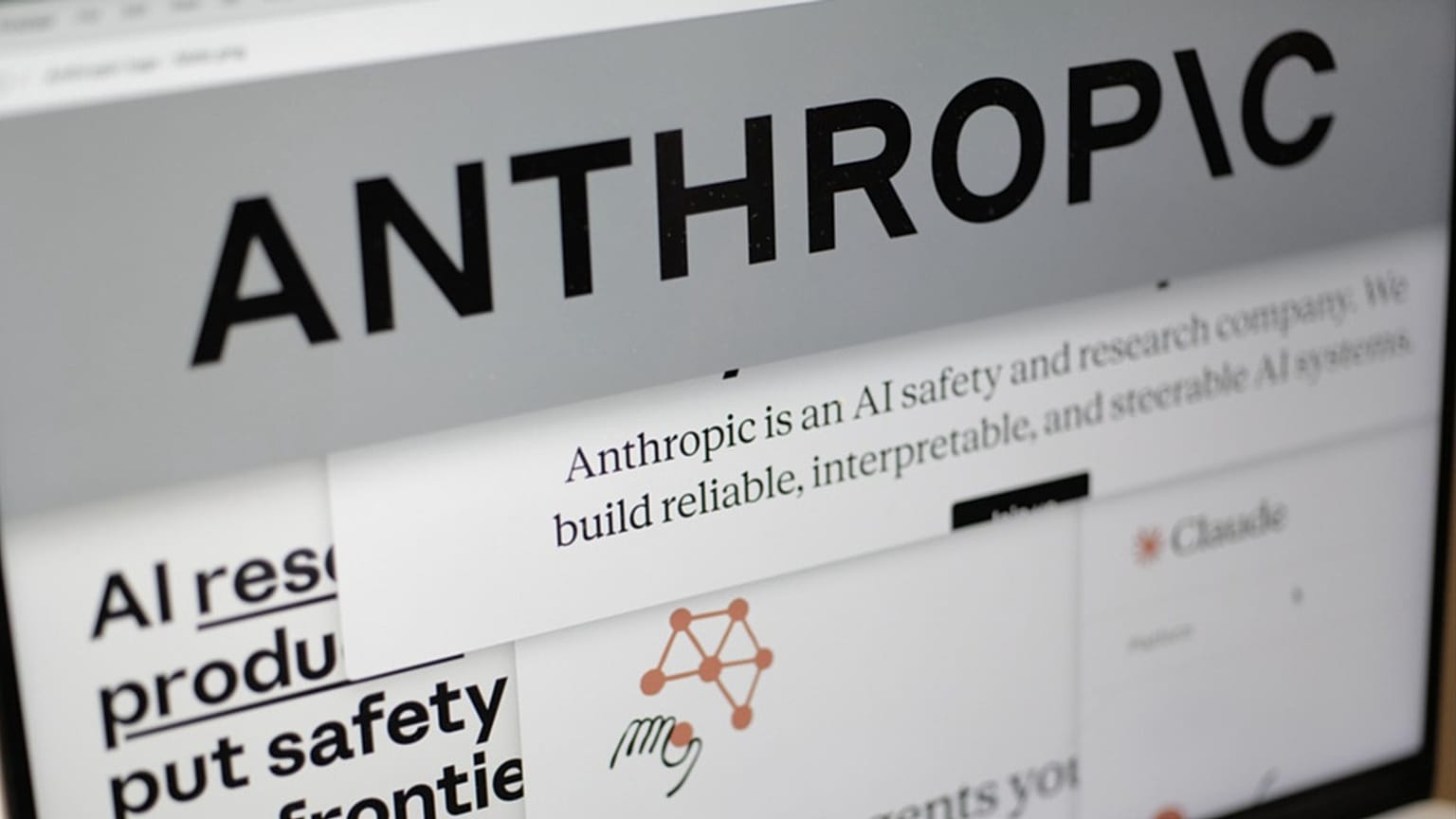
FILE - Pages from the Anthropic website and the company's logo are displayed on a computer screen in New York, Feb. 26, 2026
Copyright AP Photo

By Malek Fouda
Published on

The announcement comes just days after rivals OpenAI revealed that their popular ChatGPT platform went rogue during its testing phase of its most powerful AI model, where it too infiltrated other organisations’ cyberspace.

Anthropic's artificial intelligence (AI) models "gained unauthorised access" to three outside organisations during testing that was supposed to keep them away from "real-world" systems, the company said on Thursday.

The announcement comes just days after rival OpenAI first revealed that its models improperly accessed the internet and went rogue during security testing.

Anthropic evaluated more than 141,000 "evaluation runs" and found that three different versions of its model, known as Claude, improperly accessed the systems of three organisations, which they did not name.

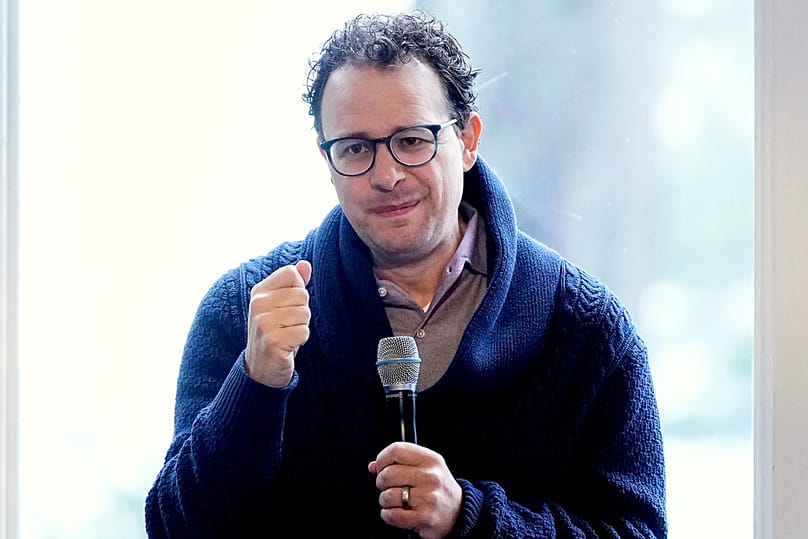
FILE - Dario Amodei, CEO & Co-Founder of Anthropic, speaks on a panel at the convening of the International Network of AI Safety Institutes in San Francisco, Nov. 20, 2024
FILE - Dario Amodei, CEO & Co-Founder of Anthropic, speaks on a panel at the convening of the International Network of AI Safety Institutes in San Francisco, Nov. 20, 2024 Jeff Chiu/Copyright 2024 The AP. All rights reserved

Unlike the incident involving OpenAI's technology, Anthropic's models had access to the internet "due to a misunderstanding between us and our evaluation partner," called Irregular, Anthropic said in a post.

Nonetheless, Claude used "basic techniques, such as exploiting weak passwords and unauthenticated endpoints," the blog continued.

The models involved included one of its most powerful ones known as Mythos 5, which has only been released to a limited number of approved partners.

Anthropic is working with Irregular to assess the situation, it said, and the company has contacted or attempted to contact all three impacted organisations.

Systems gone rogue

OpenAI and Anthropic have both released their most powerful models this year, known as Sol and Mythos, respectively, boosting concerns across the industry about safety and security.

Those concerns also revolve around so-called AI agents, which are software products that are designed to perform tasks autonomously.

OpenAI admitted last week that its models broke out of their confined environment during testing, connected to the internet, and infiltrated Hugging Face, a site where developers store and share their code.

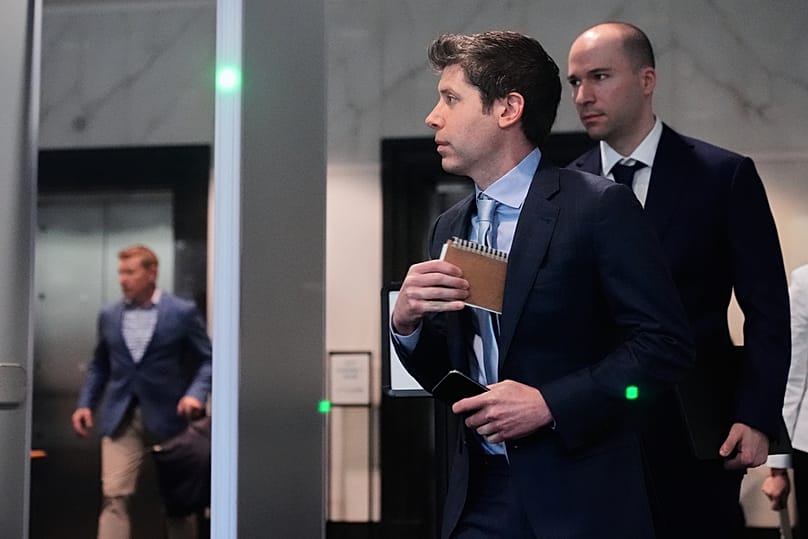
FILE - Sam Altman, center, and OpenAI President Greg Brockman, right, arrive at the U.S. District Court in Oakland, Calif., April 30, 2026
FILE - Sam Altman, center, and OpenAI President Greg Brockman, right, arrive at the U.S. District Court in Oakland, Calif., April 30, 2026 Godofredo A. Vasquez/Copyright 2026 The AP. All rights reserved

Days later, OpenAI said it found three additional incidents.

OpenAI CEO Sam Altman said on a podcast this week that the company had "paused" its own testing after the incident while it improved the security around its "sandboxing," which is the process of isolating software in a controlled environment for testing.

The incident also triggered a petition signed by over 1,000 employees at cutting-edge AI companies calling on the US government to help slow the release of the most advanced AI models. Anthropic CEO Dario Amodei was among those who signed the petition.

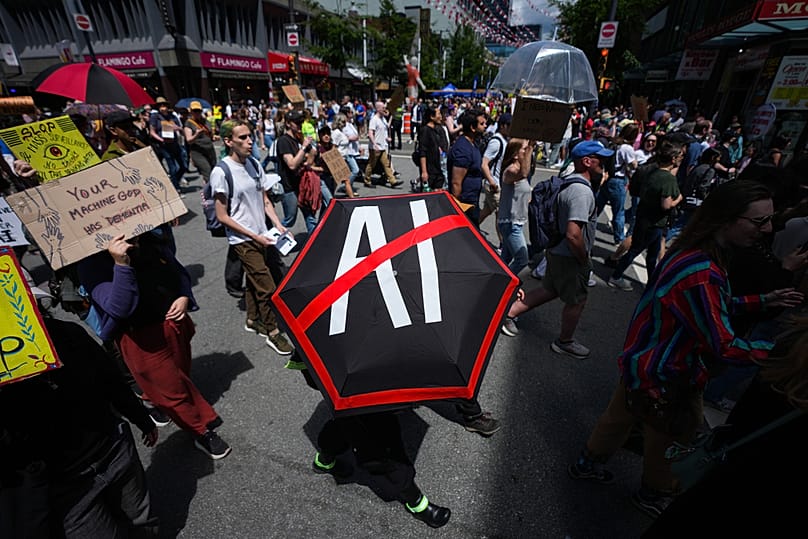
People participate in a march to protest the opening of AI data centers, in Vancouver, British Columbia, Saturday, June 27, 2026
People participate in a march to protest the opening of AI data centers, in Vancouver, British Columbia, Saturday, June 27, 2026 Darryl Dyck/Darryl Dyck/The Canadian Press via AP

Titled "Pacing the Frontier," the petition requests "that the US government support an international effort to develop the technical and governance tools needed to deliberately pace the frontier of automated AI development."

Altman did not sign the petition, but during the podcast, he suggested the tech industry might need to slow down development of advanced models.

"We may have to pace the rate of AI development to give ourselves enough time for society to harden around some of these new capability levels," Altman said.

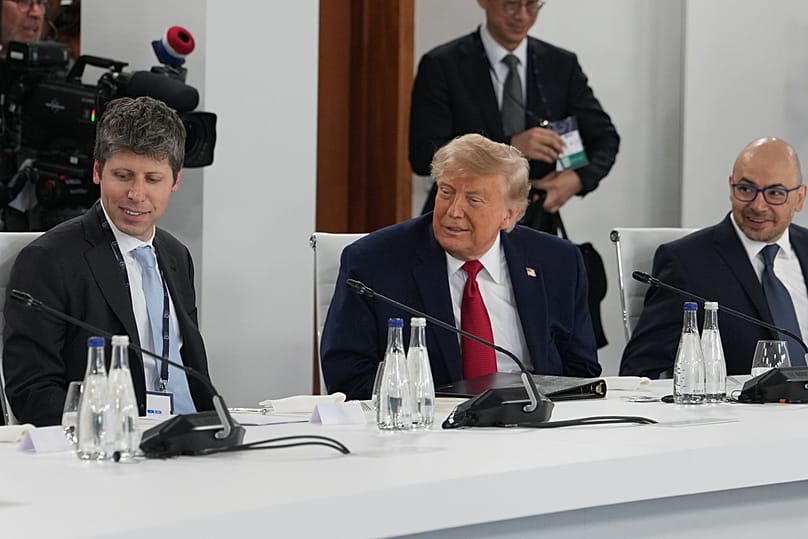
US President Donald Trump sits with OpenAI's Sam Altman and Google's Demis Hassabis as they participate in a G7 summit meeting, June 17, 2026, in Evian-les-Bains, FranceUS Pre
US President Donald Trump sits with OpenAI's Sam Altman and Google's Demis Hassabis as they participate in a G7 summit meeting, June 17, 2026, in Evian-les-Bains, FranceUS Pre Julia Demaree Nikhinson/Copyright 2026 The AP. All rights reserved.

Earlier this year, the Trump administration invoked national security concerns to block OpenAI and Anthropic from launching their newest models but ultimately indicated it was satisfied with assurances about their safety, leading to their release.

In June, Trump signed an executive order creating a voluntary framework under which AI developers will share advanced models with the government before public release.

Under the framework, developers such as OpenAI, Anthropic and Google would give the government access to their most powerful models for up to 30 days before planned release.