It’s possible that I shall make an ass of myself. But in that case one can always get out of it with a little dialectic. I have, of course, so worded my proposition as to be right either way (K.Marx, Letter to F.Engels on the Indian Mutiny)
Saturday, August 08, 2026
BOYCOTT CAT
Caterpillar surges as data center boom drives profit growth
Caterpillar Inc. surged after the company crushed Wall Street’s second-quarter expectations and raised its sales outlook, easing concerns that demand for power-generation equipment used in data centers was beginning to cool.
Shares were up as much as about 13% in early trading on Tuesday after the company reported stronger sales across its businesses, posted a record equipment backlog and increased its forecast for 2026 sales and revenues growth to the mid- to high-teens, from its previous outlook for low- to mid-teens growth issued in April.
Sales rose to $20.5 billion in the period, the company said, exceeding the $19 billion average of estimates compiled by Bloomberg.
“Strong order rates and a growing backlog reflect broadening momentum across all three of our primary segments,” chief executive Joe Creed said in a statement.
Caterpillar’s power and energy unit manufactures generators, engines and gas turbines for industrial facilities and large-scale computing centers. The segment has grown to become the company’s largest by sales, overtaking its better known business that manufactures diggers and other construction machinery, and catching the eye of investors who have made Caterpillar part of the broader AI.
The company’s second-quarter earnings excluding one-time items were $8.17 per share, compared with $4.72 a year earlier. That compared with the $6.17 average of analysts’ estimate compiled by Bloomberg.
The company also posted a record backlog of $72 billion, up 92% from a year ago. On a call with investors, Creed said some of those orders extend as far out as 2030.
“Those backlogs are pointing to the same drivers — data center build-outs. Chips, servers, now industrial equipment,” said Mark Malek, chief investment officer at Siebert Financial.
The earnings and revenue beat comes after a recent selloff in AI-adjacent stocks amid concerns about the sustainability of capital spending by Big Tech. Caterpillar and other makers of power equipment for data center, such as Vertiv Holdings Co. and GE Vernova Inc., saw their stock prices decline in recent weeks.
Baird downgraded Caterpillar’s stock last week to a hold-equivalent rating, citing a growing push by local and state governments to restrict construction of data centers. And investor Michael Burry, well known for his bets against the US housing market prior to the 2008 crisis, has said he is shorting the stock.
The pullback across AI-adjacent stocks was driven “by a superficial narrative that the AI trade had run its course,” said David Wagner, a portfolio manager at Aptus Capital Advisors. Caterpillar’s “record order rates underscore that the physical foundation required to support digital infrastructure continues to expand, regardless of seasonal market chatter.”
The construction industries business, which makes the firm’s signature yellow construction machinery, also saw strong growth for the quarter, with sales increasing 35% as dealers stocked up on equipment.
Creed said Tuesday the company’s mining equipment sales are being driven by rising demand for copper and gold.
(By Jacob Lorinc)
Two-day strike begins at BHP’s Port Hedland iron ore operations
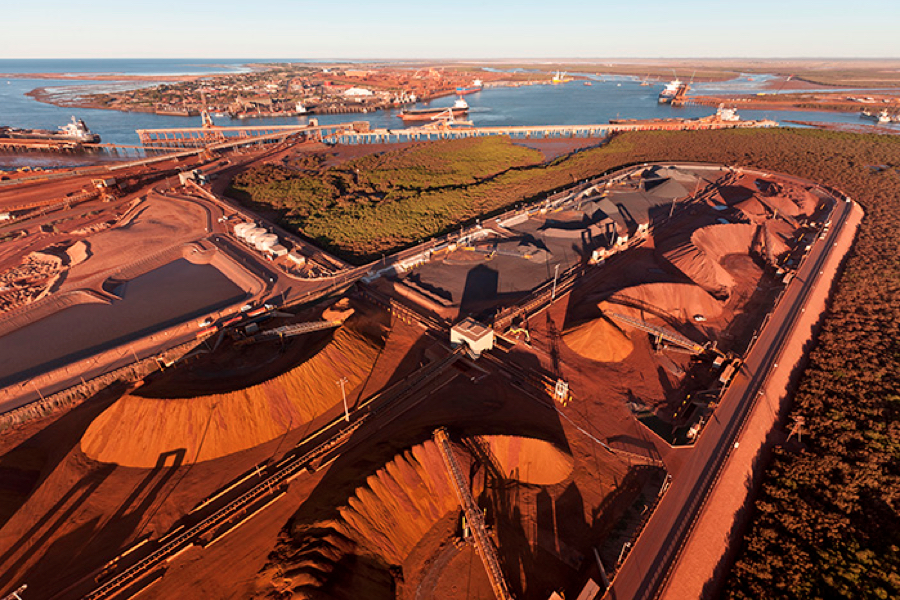
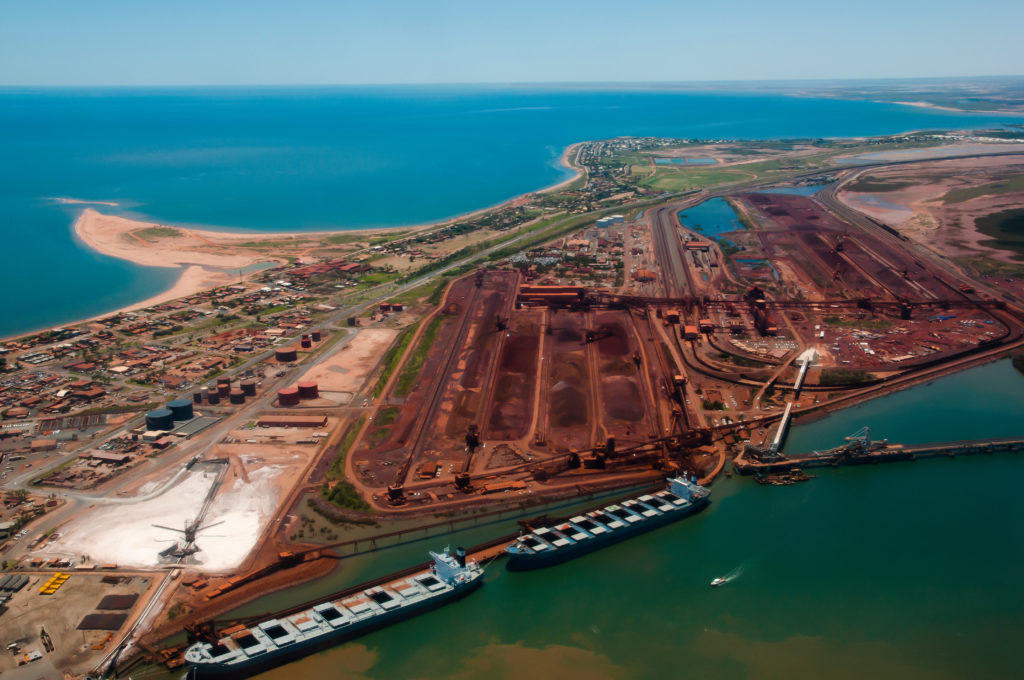
Port Hedland, the world’s busiest iron ore export terminal. Image: Pilbara Ports Authority
Industrial action at BHP’s (ASX: BHP) Port Hedland operations in Western Australia began on Saturday, marking the first major strike there in more than two decades.
BHP ships some $80 million of iron ore daily through Port Hedland, the world’s biggest iron ore export hub. It has previously said it has plans to ensure that operations can continue.
About 150 workers are expected to take part in the strike on Saturday, the Combined BHP Ports Unions (CBPU) said, which is only a portion of BHP’s workforce at the port of more than 800 people.
A CBPU spokesperson earlier said that the nature of the industrial action, a 24-hour ship-loading ban followed by a 24-hour stoppage, remained unchanged.
The CBPU is negotiating a four-year bargaining agreement with the world’s third-largest iron ore miner, and opted to go ahead with the industrial action despite progress in talks between the parties on August 4.
About eight ships are expected to finish loading from BHP ports over the weekend, a source familiar with the matter said.
The action is not expected to affect rival miners Fortescue FMG.AX and Hancock Prospecting, which also use Port Hedland. The hub accounted for 75% of total iron ore exports from the Pilbara region of Western Australia in the year to June.
BHP has been negotiating for more than seven months with the CBPU, which represents around 450 operators and maintenance workers, over a new pay deal amid record share prices and rising costs of living. The CBPU will next meet with BHP on August 18, the same day that it will report its annual results.
(Reporting by Melanie Burton; Editing by Christian Schmollinger)
BHP faces weekend strike at Port Hedland iron ore hub as wage talks drag
A two-day strike will go ahead at BHP’s Port Hedland operations in Western Australia this weekend despite progress in talks on Tuesday between unions and the global miner, a union spokesperson said.
BHP ships some $80 million of iron ore daily through Port Hedland, which is the world’s biggest export hub for iron ore.
As flagged last week, workers plan to impose a 24-hour ban on loading ships on Saturday, August 8, followed by a 24-hour work stoppage at the Port Hedland Bulk Export Terminal beginning at 05:30 AWST on August 9 (21:30 GMT August 8).
The action is likely to hold up 16 iron ore shipments over the two days, the union spokesperson said. BHP, the world’s third-biggest iron ore producer, has said it has plans to ensure that operations can continue.
Around 150 workers are expected to take part in the action, as the parties strive to reach terms on a four-year enterprise agreement.
“The meeting was productive, and while substantive issues are yet to be resolved, the parties have identified a path forward which we will pursue over coming weeks,” a spokesperson for Combined Ports Unions said in a statement.
Industrial action will still proceed as previously indicated, the union said.
The action is not expected to affect rival miners Fortescue and Hancock Prospecting, which also use Port Hedland. The hub accounted for 75% of total iron ore exports from the Pilbara in the year to June.
BHP said it would present an updated proposal at the next meeting on August 18, the same day that it will report its annual results.
Australia’s workplace regulator, the Fair Work Commission, is working with BHP and the unions on reaching an agreement.
“With another meeting scheduled and an updated proposal to come, we have made significant progress with the Commission’s assistance and there is no need for the unions to continue with their planned industrial action,” it said.
BHP has been negotiating for more than seven months with unions representing around 450 operators and maintenance workers over a new pay deal.
The unions said workers were seeking enforceable wage and condition protections. Workers argue that extreme heat, long hours and time away from family mean they should not be facing lower rates than workers in cities.
The fracture comes amid rising costs of living and a record share price for BHP, which is the world’s biggest listed miner and Australia’s largest listed company.
(By Sneha Kumar, Rajasik Mukherjee and Melanie Burton in Melbourne; Editing by Tom Hogue and Sonali Paul)
World’s biggest mining companies now worth $2.17 trillion
Reason to smile. Shift change at the George Fisher zinc, lead silver mine in Australia. Image: Glencore
At the end of July the MINING.COM TOP 50* ranking of the world’s most valuable miners had a combined market capitalization of $2.17 trillion, up $18 billion for the month and holding a gain of $26 billion so far in 2026.
The Top 50 now runs on a monthly clock, and on a new basis: mined metals and minerals only, with coal-heavy counters excluded and every ranking back to the start of the decade recalculated to match (the notes at the bottom set out the rules of the game).
The $545 billion swing
July was a good deal livelier than the 0.8% headline move suggests.
When mining stocks were riding high on gold and copper prices at the end of March, the Top 50 was worth $2.33 trillion. By the end of June, with gold well off its record, that had shrunk to $2.15 trillion.
Stock by stock, the swings are wilder still: valued at each company’s best month-end of the year, the Top 50 would be worth $2.44 trillion. At each one’s worst, just $1.9 trillion. That $545 billion spread is the truer measure of 2026 (and most every other year on commodities markets) so far, in a ranking that never itself strayed far from $2.2 trillion.
The biggest winner and the biggest loser in July were both gold diggers, and neither had much to do with bullion, which waited until August to stage a comeback.
Zijin’s third engine
Zijin Mining added $24 billion of market value in July, up 23.8%, vaulting past Newmont into fourth place at $125 billion. No company gained more dollars, and nothing in the company’s bracket came close on percentage either.
The trigger was a first-half profit alert lodged in early July: net profit guided at roughly RMB 39.1 billion, up 68%, with gold output up 15% to just over 1.5 million ounces and silver edging up to 7.4 million ounces. The number that stands out, though, is lithium: 43,000 tonnes of lithium carbonate equivalent against 7,000 tonnes a year earlier, a sixfold ramp pulled off just as the market for the battery metal emerged from a brutal slump.
Xiamen calls lithium the group’s third growth engine, and for once the investor-day language matches the production tables. Anyone reading Zijin’s surge as a copper story should note that consolidated copper output actually fell 6%. Less than a year after becoming only the fourth mining company in history to top $100 billion, Zijin is aiming for the podium.
Polyus pulls the rip cord
At the other end, Polyus surrendered $13.2 billion (down 37.6%) and fell eight places to number 28.
On 8 July the Russian gold miner told shareholders it would suspend dividends until 2030 to fund a wave of investment projects. The stock dropped 26% in a single session, the second-worst day in its history, beaten only by the 27.4% shellacking of 16 September 2008, when Lehman Brothers was setting the mood. It kept sliding for the rest of the month.
The decision baffled a market that watched Polyus mint record earnings and some $2 billion of free cash flow last year, and Sberbank promptly struck the stock from its top picks. One theory doing the rounds in Moscow: the company is bracing for a windfall tax on gold profits, and has budgeted for bullion at a deeply unfashionable $3,100 an ounce. Polyus and Norilsk Nickel, it should be said, keep their standing in this ranking thanks to captive investors on the Moscow Exchange where sanctions have made sellers of many, but exits are few.
Middle Kingdom kings
The rest of July’s winners column reads like a Shanghai gold board: Zhongjin Gold up 21.4%, Shandong Gold up 16.9%, and outside the ranking Chifeng Jilong up more than 50%. It looks like a surge. It is closer to a bounce. Gold spent the first half of 2026 falling roughly 30% from January’s record above $5,590 an ounce, and China’s gold stocks fell considerably harder. Shandong Gold’s peak-to-trough drawdown passed 60% before bargain hunters found a sector trading at around ten times earnings.
Western precious metals went the other way: Fresnillo gave back 10% of its value, Coeur 12.9% and Agnico Eagle 5%, while Newmont slipped just enough for Zijin to relieve Denver of fourth place.
Since this snapshot was taken, gold has bounced again, surging to a seven-week high above $4,400 on Friday after the US economy shed 23,000 jobs in July, the first payrolls contraction since February. Gold bugs will take the help.
Revolving door
The price of admission rose to $13.56 billion, from $13.1 billion at the end of June, not far off the record $14.5 billion set at the end of March and more than four times the $3.2 billion that got a company through the door in 2020.
Western Mining takes the fiftieth spot after a 41.5% July, the biggest percentage move anywhere in the ranking. Casablanca’s Managem, up 106% this year on its gold and cobalt mines across Africa, debuts at 39. Lundin Gold misses by a whisker and is likely back in by the time you read this, joining Tianqi Lithium, which dropped by a quarter, and Alamos Gold.
The metal that matters for the slimmed-down miner may turn out to be silver: once the Alcoa sale closes, Cannington’s silver-lead-zinc output becomes more than a tenth of revenue, and with silver near $60 an ounce (against under $40 a year ago) and zinc up 26% in 2026, the market is paying up for what South32 is keeping, not just what it sold.
Then there is Amman Mineral, the ranking’s resident rollercoaster. The Indonesian copper-gold miner stormed into the Top 50 after its blockbuster 2023 debut, ran up nearly 600% to pierce the top 10 (minting half a dozen billionaires along the way), then surrendered roughly three quarters of its peak value as smelter commissioning and concentrate headaches set in, bottoming out dead last at number 50 in the Q2 count. In July it rose 25.7% to reclaim 42nd.
Baar sets a higher bar
Two days ago Glencore reported the kind of first half that headline writers call blowout: adjusted EBITDA of $10.1 billion, up 86%, a fresh $500 million buyback, and confirmation of a secondary Sydney listing for October. Copper output rose 15% just as the metal hit records, and the trading desks feasted on a volatile oil market.
The July snapshot caught the run-up: up 7.6% for the month and 34% for the year at $86 billion, Baar is firmly ensconced at number 7. It is easy to forget Glencore spent stretches of 2020 and 2021 outside the top 10 altogether and traded below its 2011 London IPO price for the better part of fifteen years.
There is a wrinkle in the timing. The six-month standstill Rio Tinto accepted when it walked away from their $260 billion mega-merger in February lapsed this week, and Melbourne promptly signalled it is in no rush to come back to the table. On numbers like these, Baar can afford to play hard to get.
Rio arrives at the standstill’s end in decent shape of its own, having just posted its highest first-half earnings in four years as the data centre boom feeds copper demand. Though on this ranking’s own 1.5 times revenue test (see the notes below) Rio is, strictly speaking, an iron ore company enjoying editorial clemency.
Vale gets no such pass. Filed under iron ore while the long-promised Toronto listing of its base metals unit waits, the Brazilian miner posted a 35% fall in second-quarter profit and narrowed its nickel and copper output outlook.
The air up there
BHP has added $62 billion of market value in 2026, a 41% gain no other big cap approaches in dollar terms, reaching $216 billion and sitting comfortably above the double-century mark Melbourne was first to breach. July’s production report showed record iron ore output from the Pilbara, with full-year results due mid-month.
The $50 billion of air between the world’s biggest miner and Rio Tinto (the unbroken pair at the top) is now the widest gap between first and second in the history of this ranking. It is a remarkable turn from 2024, when the lead had thinned to $15 billion. One stock accounts for a tenth of the Top 50’s entire value.
Club rules
Melbourne is where the money lives: BHP, Rio Tinto and MMG make the Victorian capital a $395 billion head-office town, nearly a fifth of the entire ranking. Toronto’s four entries are worth $204 billion, Mexico City’s two $177 billion, Denver’s three $156 billion and Vancouver’s five $141 billion.
The gap to Toronto vanishes the day Anglo Teck books its head office in British Columbia, and that day is drawing closer. The $53 billion merger has cleared its shareholder votes and every regulator bar one, waiting only on Beijing, with completion expected by early 2027.
The corner offices are already settling: Anglo executives take three of the four top jobs, with Duncan Wanblad leading the combined group from Vancouver. Anglo shareholders will own 62.4% of the company after banking a $4.5 billion special dividend, and Teck investors 37.6%, with each Teck share exchanged for 1.3301 Anglo shares. For now, Anglo American and Teck ride at 13 and 21.
When the deal closes, the combined company also changes columns. Under the ranking’s rules Anglo Teck lands under copper, which is exactly how the pair are selling it: about 1.2 million tonnes of output a year, rising to 1.35 million tonnes in 2027 from six large operations across Chile, Peru and Canada, with $800 million in annual pre-tax savings pencilled in by year four.
After a divestment program that has spun off its platinum arm, sold coal and nickel, and set De Beers on its way out the door, the reclassification makes it official: Anglo’s century-plus run as a diversified mining giant ends here.
The next count lands at the end of August. On July’s evidence, a month is plenty.
Trump touts $3 billion in critical minerals projects to counter China
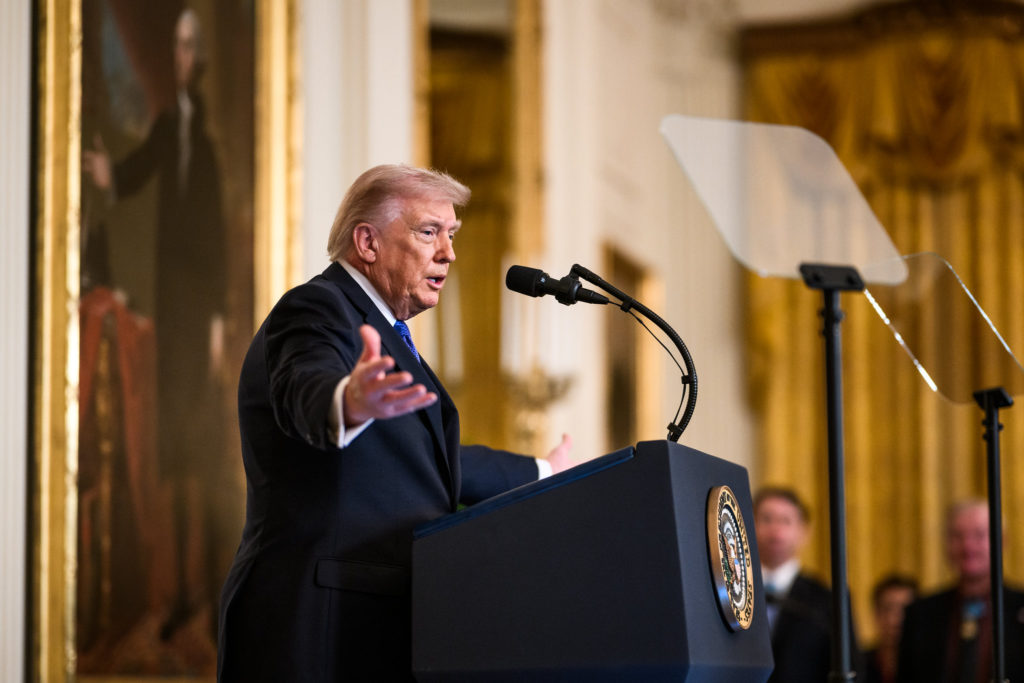
President Donald Trump touted $3 billion in US investments in critical minerals mining at a meeting Friday with top industry executives aimed at weaning the US off supply chains dominated by China.
Trump said the projects would “create thousands of jobs and promote our economic stability and security,” at an event at the State Department. “We’re putting our miners back to work, and we’re reclaiming America’s rightful place as the minerals superpower of the world,” he added.
Trump said the investments included a $1.4 billion loan agreement with Sila Nanotechnologies Inc. from the Defense Department’s Office of Strategic Capital. Other investments include $400 million by the Pentagon to expand production in Australia of scandium, which is critical to aerospace and defense industries, and $150 million with Niron Magnetics Inc., a Minnesota rare-earths firm.
The Export-Import Bank is also working to provide more than $1 billion in financing for Ivanhoe Electric Inc.’s Santa Cruz copper project in Arizona, along with a $25 million investment to launch a graphite mine project in Alabama.
The president also hailed plans to spend over $180 million to bolster educational programs for the mining industry, saying it would “train the next generation of American miners.”
Trump said his efforts would ensure the US “is never again reliant on hostile foreign nations for the resources our country needs to dominate in the future.”
The president was expected to be joined by executives from prominent companies, including Rio Tinto Group, BHP Group and Freeport-McMoRan Inc., MP Materials Corp., USA Rare Earth Inc., Energy Fuels Inc., US Antimony Corp., Sunrise Energy Metals Ltd., and The Metals Company.
The event showcases administration efforts to spur US critical minerals development and processing ahead of a planned visit by Chinese President Xi Jinping to Washington in September. Trump said that under his administration domestic mines were reopening at a fast pace, including what he said was the first American rare-earth mine in more than 70 years and the construction of the first new aluminum smelter since 1980.
Despite a trade truce that eased export controls over critical minerals and magnets essential to a host of cutting edge industries, rare earths remain a source of tension between the world’s two largest economies. The US has sought to partner with domestic companies to build out a mine-to-magnet supply chain independent of China.
The federal government has already pledged more than $10 billion of investments in a bid to jump-start nascent US markets for rare earths and permanent magnets. The Pentagon kicked off the spending spree more than a year ago, announcing it would take a $400 million preferred equity stake in MP Materials — the sole domestic rare earths producer — and the US has since announced other projects the government is championing.
While the scale of the US critical minerals build-out is enormous, there have been serious challenges and slow progress in developing the domestic industry.
(By Joe Deaux and Jeff Mason)
Trump administration to back three critical mineral projects with $58 million in financing
The U.S. Export-Import Bank is lending $58 million to three critical-mineral companies as part of President Donald Trump’s push to wean the country off Chinese supplies and bolster American mining and processing, according to a document seen by Reuters.
The funding is timed to coincide with Trump’s meeting in Washington on Friday with executives from some of the world’s largest mining companies to underscore the country’s need for better supplies of minerals used to build weapons and electronics.
“Critical mineral security is national security,” said John Jovanovic, ExIm’s chairman, adding the funding aims to “fortify our supply chains, restore crucial industries that support well-paying American jobs and safeguard everyday Americans from supply shocks.”
Westwater Resources will receive a $25 million loan for its Alabama graphite mine and processing facility. Graphite is the largest metal by volume used to build lithium-ion batteries.
The U.S. produces some so-called synthetic graphite from petroleum coke, a byproduct of oil refining. Battery manufacturers typically prefer one version or the other, depending on a range of factors.
ExIm is also lending $25 million to privately held Global Advanced Metals to expand processing of tantalum and niobium, neither of which the U.S. mines, making it reliant on foreign supply. The company mines the metals in Australia and processes them in Pennsylvania.
Tantalum is primarily used to make capacitors for smartphones, automobiles and other electronics, whereas niobium is used as an alloy to harden steel for pipelines and airplanes.
And 5E Advanced Materials will receive an $8 million loan to boost production of boron, which last year was added to a list of minerals considered critical by the U.S. government. The metal is used in the nuclear energy industry as well as in body armor and other defense-related products.
The U.S. imports most of its boron needs. 5E’s California boron project is slated to begin commercial production in 2028.
(Reporting by Jarrett Renshaw in Washington and Ernest Scheyder in Houston; Editing by Matthew Lewis)
Trump admin blocks tungsten, battery waste exports to boost US minerals supply
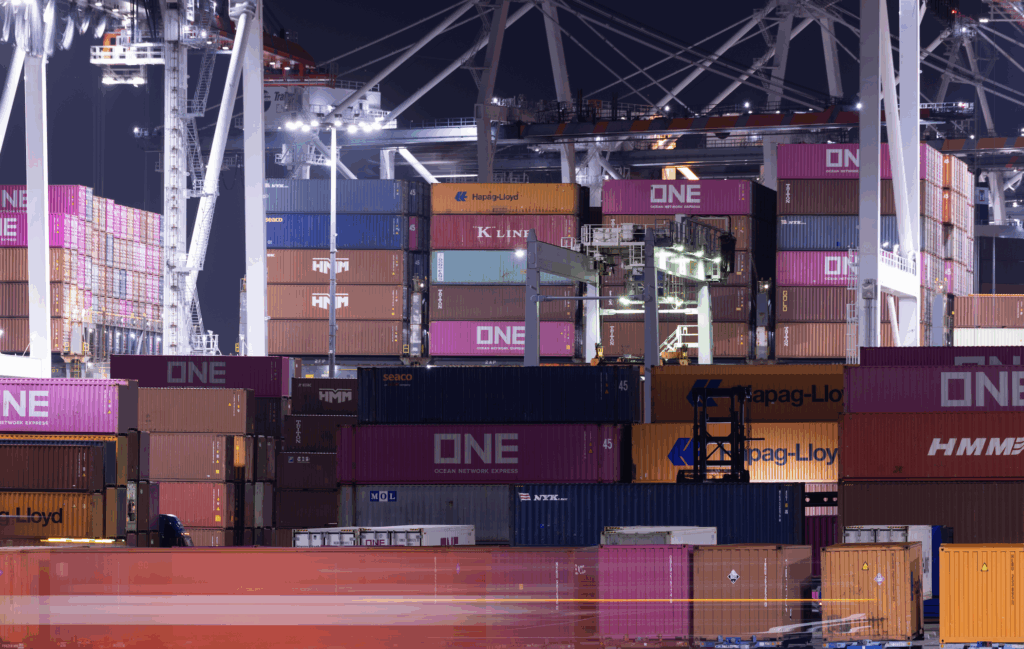
Shipping containers at the Port of Los Angeles. Stock image by Matt Gush.
The U.S. Commerce Department said on Thursday it will block exports of tungsten scrap and battery waste, part of a push to boost the domestic recycling industry and critical mineral production.
The move, which was expected, comes after President Donald Trump last week signed an order giving federal officials the power to limit the overseas shipment of scrap containing valuable critical minerals to China and other countries.
The order prohibits the export of so-called black mass, which is essentially shredded lithium-ion batteries, as well as scrap containing tungsten, a metal used to harden steel and used widely in defense applications.
The action is the latest in a broader U.S. push to reduce reliance on China, which dominates global processing of critical minerals used in everything from EV batteries to weapons systems. Washington has increasingly used export controls, tariffs and domestic incentives to try to rebuild a U.S. supply chain, as tensions with Beijing over minerals access have escalated.
The order, published in the Federal Register, goes into effect on August 27 and runs for one year, the Commerce Department’s Bureau of Industry and Security said.
“It’s great to see the administration recognize the importance of recycling recoverable critical materials from scrap,” said Zubeyde Oysul, a critical minerals policy manager at SAFE, a Washington-based think tank.
Waivers may be issued on a case-by-case basis only if companies can show “undue hardship” or “irreparable harm,” according to the order.
The U.S. exports nearly 33,000 metric tons per month of electronic waste and other scrap, much of it filled with critical minerals that can be recycled, according to data from the environmental group Basel Action Network.
Those exports have long irked the U.S. recycling industry, which has said that keeping the material in the country could help Washington better meet its minerals production.
Still, the U.S. does not have enough capacity to recycle all the scrap it produces. Several recyclers have also faced economic challenges in the past 18 months, including Li-Cycle and Ascend Elements, both of which filed for bankruptcy.
Amermin, a privately held tungsten recycling firm, praised Thursday’s move but said the country needs to do more to increase its ability to handle scrap.
“This ban is a band-aid,” said Ryan McAdams, Amermin’s CEO. “It’s going to buy us more time, but we’ve got to start building up the infrastructure here stateside.”
Amermin last year received an $11.5 million grant from the Energy Department but has not yet received the funds. The company’s commercial recycling facility would have been opened at least six months ago if it had access to those funds, McAdams said.
(Reporting by Ernest Scheyder; Editing by Sanjeev Miglani)
Rio Tinto, BHP summoned to critical minerals meeting with Trump
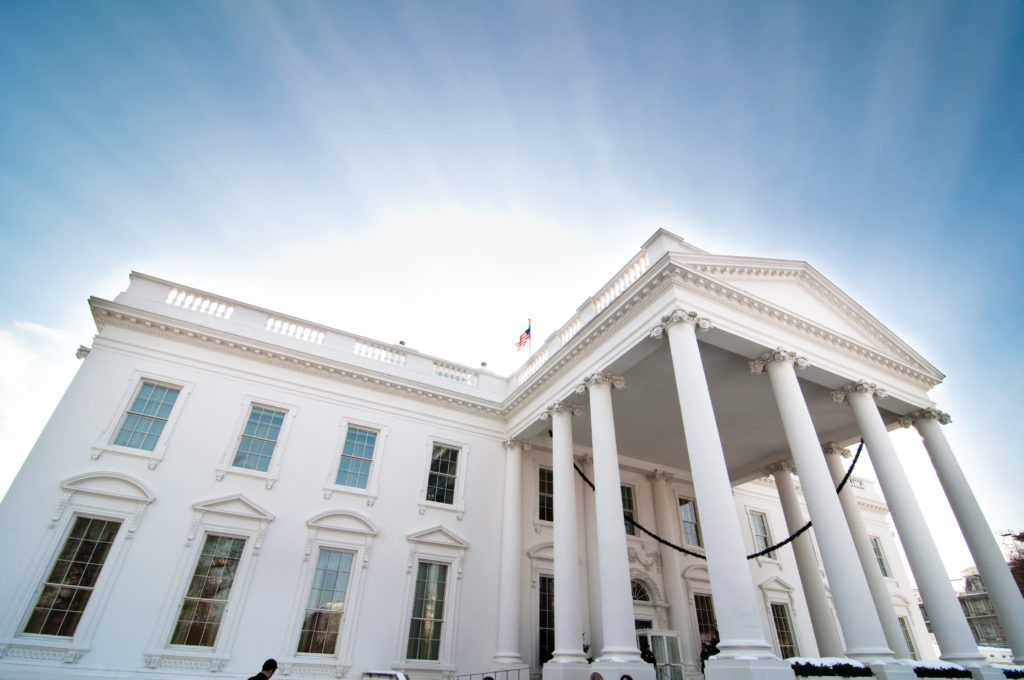
The North Portico of the White House in Washington, DC. Stock image.
The White House has invited top executives from the US critical minerals industry to a meeting Friday with President Donald Trump meant to demonstrate the administration’s commitment to wean the nation off supply chains dominated by China.
The event is designed to showcase efforts to help spur critical minerals development and processing, with plans to unveil a handful of a deals and memoranda of understanding, according to people familiar with the summit, who requested anonymity to provide details ahead of a formal announcement.
Among those invited to the meeting are representatives from industry heavyweights including Rio Tinto Group, BHP Group and Freeport-McMoRan Inc., as well as participants from MP Materials Corp., USA Rare Earth Inc., Energy Fuels Inc., US Antimony Corp., Sunrise Energy Metals Ltd., and The Metals Company among others, the people said.
Some companies are still determining whether they will attend in person and if so, which executives to send, according to the people familiar. Trump is set to be joined by leaders of his National Energy Dominance Council, including Interior Secretary Doug Burgum, executive director Jarrod Agen, as well as White House adviser David Copley.
The event has been in the works for weeks, though there’s been a rush to pull together final details in recent days, with a range of US government agencies tapped to participate, some of the people said.
Specifics on potential deals were not immediately available Thursday. Ahead of the session, White House officials asked government agencies to detail recently closed deals and MOUs that would help demonstrate momentum on the president’s critical minerals agenda, some of the people said.
A White House official said the administration is putting together a historic meeting of mining industry officials as the president advances measures to support critical mineral development.
Trump has regularly summoned top executives from industries, including technology and energy, to showcase his economic priorities and press them to back portions of his agenda.
Friday’s meeting comes more than a year after the US government launched a multi-billion critical minerals policy that’s embraced a new model of statecraft, with American taxpayers committing some $10 billion to build a so-called mine-to-magnet supply chain. The goal is ensuring robust US production of rare earths and critical products deemed essential to national security.
The policy went into hyperdrive last year after China rattled global markets by implementing export controls on certain rare earth minerals and permanent magnets, which are critical to a host of industries and used in a wide array of products including, automobiles, wind turbines and defense applications.
(By Joe Deaux)
Sunrise Energy Metals’ scandium project gets $400M conditional loan from US Department of War
Syerston project in New South Wales. Photo by Clean TeQ.
The Department of War’s Office of Strategic Capital (OSC) announced Friday a $400 million conditional loan commitment to Sunrise Energy Metals (ASX: SRL) to build out the company’s scandium operations in New South Wales, Australia.
Scandium is currently harvested through byproducts of other industrial or resource extraction processes. No primary mine-source scandium supply exists globally, and foreign competitors dominate the supply side, accounting for approximately 80% of global mining production and nearly 100% of scandium processing.
With these funds, alongside private capital, Sunrise said it will develop a full scandium value chain, beginning with its primary mining operations at Syerston. Sunrise said it will build metallization and additive layer manufacturing capabilities to ensure Western alignment from mine to finished product.
The financing will provide the Department with a right of first offer on Sunrise’s output, and the scandium produced by Sunrise would support the demand of US companies, including defense industrial base companies.
“The contemplated Sunrise transaction marks a significant step in establishing supply chain resiliency for an increasingly critical mineral. This nearly $1 billion deal, bringing together public and private capital, would help address foreign dependencies in scandium supply and facilitate scandium’s use in critical defense and commercial applications,” said David A. Lorch, Director of the Office of Strategic Capital David A. Lorch said in a news release.
Claims of a China-free scandium supply chain are also being tested in the private sector. San Jose-based Bloom Energy is the West’s largest consumer of scandium oxide, using an estimated 30 tonnes in 2025—roughly half of global consumption—according to short-seller Hunterbrook Media.
On July 8, Hunterbrook alleged that Chinese scandium oxide was still reaching Bloom through Thailand, Japan, and South Korea. In a July 9 filing, Bloom described the report’s financial claims as false and misleading and rejected its conclusions about the company’s scandium sourcing.
The USGS estimates that global production totalled about 80 tonnes in 2025. Meanwhile, Sunrise Energy Metals’ Syerston project in New South Wales, designed to produce 60 tonnes annually and one of several proposed non-Chinese sources, has yet to begin construction.
Niron Magnetics lands conditional $150M Department of War funding commitment
Niron Magnetics announced Friday a conditional commitment from the Department of War’s Office of Strategic Capital (OSC) for a direct loan of up to $150 million with a 20-year term to support construction and equipment for the company’s advanced manufacturing plant in Sartell, Minnesota.
The Minneapolis – based company is working towards commercializing the world’s first rare-earth-free Iron Nitride permanent magnets, it said.
The financing would accelerate domestic production of Niron’s proprietary Iron Nitride permanent magnets, which do not require rare earth materials, and would expand domestic production of advanced permanent magnets.
The Niron conditional commitment was announced by President Trump at the American Mining Industry gathering in Washington D.C. and is intended to advance Niron’s commercialization and scaling of rare-earth-free Iron Nitride magnets.
Iron Nitride technology was developed at the University of Minnesota and scaled over the last 13 years, resulting in technology that provides manufacturers with an alternative to rare earth magnets.
Permanent magnets are essential components in defense systems, data centers, industrial automation, consumer electronics, robotics, aerospace applications, and advanced electric motors. Today, most rare earth permanent magnets are produced in Asian markets, creating strategic vulnerabilities for U.S. manufacturers.
Niron’s supply chain has no rare earth materials, offshore separation, or heavy rare earth exposure, it said.
“This conditional commitment recognizes the importance of Niron’s rare-earth-free approach and the urgency of building domestic manufacturing capacity for a technology the world increasingly depends on,” Niron CEO Jonathan Rowntree said in a news release.
“We are accelerating commercialization of an American-developed magnet technology that offers manufacturers a domestic path to high-performance permanent magnets built without rare earth materials.”
The 287,000-square-foot Sartell plant would bring material-to-magnet production under one roof and produce up to 1,500 tons of rare-earth-free permanent magnets annually, the company said, adding that the plant is the first step in Niron’s modular manufacturing platform, with final site selection underway for a subsequent U.S. manufacturing plant capable of producing 10,000 tons of annual capacity that is expected to break ground in 2028.
Lockheed seeks US mineral supplies after Trump supply-chain push, sources say
Lockheed Martin F-35A Lightning II. Stock image by peterfz30.
Lockheed Martin is in talks to buy supplies of two critical minerals from U.S. mines, two sources familiar with the discussions said, as President Donald Trump pressures defense contractors to cut reliance on China.
The world’s largest defense contractor is negotiating with NioCorp Developments (NASDAQ: NB) for supply of scandium, and Teck Resources (TSX: TECK.A TECK.B, NYSE: TECK) and 5N Plus (TSX: VNP) for supply of germanium, both of which are used in military equipment ranging from aircraft components to infrared sensors, the sources said.
The deals would mark a significant step in the U.S. push to build domestic mineral supply chains, but face hurdles: Chinese suppliers have long offered cheaper prices, and U.S. mining and processing capacity remains limited.
Lockheed makes the F-35 Lightning II fighter jet, Patriot interceptor missiles and other weaponry for the U.S. government. As China has tightened controls on critical minerals exports in recent years, Trump has pressured Lockheed and its peers to support U.S. mines with long-term supply deals.
Last month, he signed an executive order making it harder for defense contractors to obtain waivers that had allowed them for years to buy minerals from China and other prohibited foreign suppliers.
That order has highlighted how far behind U.S. miners and processors are in their race to match China’s market dominance, even as dozens of U.S. projects for a range of minerals are under development, Reuters reported last week.
Colorado-based NioCorp Developments has signed a preliminary deal to supply Lockheed with 15 metric tons per year of scandium, one of the 17 rare earths that can be used to make lightweight, corrosion-resistant alloys for aircraft, according to a source familiar with the agreement and details seen by Reuters. These have not been previously reported.
NioCorp will supply the metal from its Nebraska mine, slated to open by 2028 with annual production of 100 metric tons.
The agreement would need to be finalized, although the two companies have an existing relationship as part of a Pentagon-funded research program.
The contracted volume would be roughly a quarter of global scandium demand, which the U.S. Geological Survey estimates at about 60 metric tons and rising.
“Both companies recognize how important scandium has become to the future of American defense technology,” said Mark Smith, NioCorp’s CEO.
Lockheed said it appreciated “the work NioCorp is doing to establish a domestic source of scandium.”
The U.S. has not mined scandium since 1969. Rio Tinto (ASX: RIO) is the only North American scandium producer, with capacity to produce roughly nine metric tons annually.
Germanium negotiations
Separately, Lockheed is in talks with Teck Resources for a supply of germanium, used to make infrared sensors and other military equipment, a second person familiar with those negotiations said.
Teck mines and produces a zinc and germanium concentrate from its Red Dog mine in Alaska. That concentrate is then smelted in British Columbia and the two metals are separated.
Teck does not break out its annual germanium production but has called itself the largest North American producer and fourth-largest globally. The USGS estimates that global germanium consumption is roughly 60 metric tons annually and rising.
The U.S. imports more than half of its germanium needs.
Lockheed is also in germanium supply talks with Quebec-based 5N Plus (TSX: VNP), which earlier this year received Pentagon funding to process the metal from recycled feedstock in Utah, the second source added.
“What Lockheed basically wants is a long-term supply chain security,” according to the second source. “Because they are under pressure, so they really want to know if the supply is coming from China or elsewhere.”
Negotiations with both Teck and 5N have been going on for more than a year. Pricing and the length of the contracts have been sticking points, according to the source.
Representatives for 5N were not immediately available to comment. Teck declined to comment on specific commercial agreements, but said it has agreed to work with the Canadian government to increase germanium processing in British Columbia.
Asked about the germanium discussions, Lockheed said it continuously assesses “the global critical minerals supply chain to ensure access to materials that support our customers’ missions.”
Chinese critical minerals prices have for years been cheaper than those from Western sources due to differences in mining practices, regulatory standards and other factors. Reuters reported earlier this year that Western governments are trying to set regional minerals prices free from Chinese interference.
(Reporting by Ernest Scheyder in Houston and Divya Rajagopal in Toronto; Editing by Veronica Brown and Sanjeev Miglani)
US defense agency cancels plan to buy $300 million of lithium
The US Department of Defense has canceled a tender to purchase lithium for its strategic stockpiles, in another apparent sign of the challenges it faces in trying to bolster supplies of critical minerals.
The Defense Logistics Agency dropped a tender for almost 36 million pounds, about 16,000 tons, of battery-grade lithium carbonate in a contract worth as much as $300 million, according to a notice on its website dated Monday. The DLA didn’t give any reason for the delay. An email sent to the department out of office hours didn’t immediately receive a reply.
Critical minerals have become a political priority for the US in order to slash reliance on main supplier China. Prices of lithium carbonate, used in electric vehicles and energy storage systems, have surged nearly 20% so far this year in China and remain volatile.
The DLA, responsible for managing the National Defense Stockpile that secures metals for US military needs, last year canceled a tender to buy cobalt, a metal used in industries including batteries and aerospace.
The lithium tender was announced on July 2 with an original deadline of July 17, which was extended twice. It asked suppliers to propose fixed prices for supplies over five years and said the government was intending to spend between $1 million and $300 million on the contract.