BLACK LIVES MATTER, NO MORE
“To say, why were we out there, why were we even protesting … is to gaslight an entire community,” said one supporter.
By Jacqui Germain ,
Published
August 8, 2026
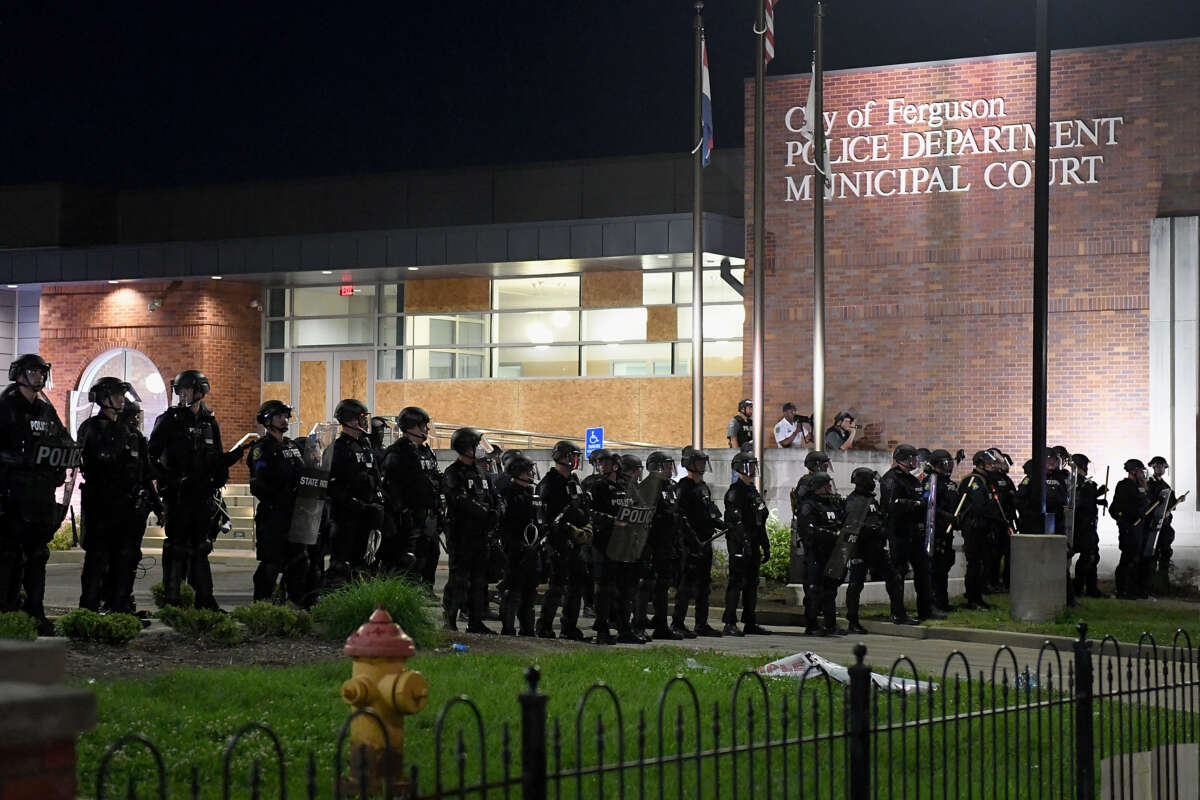
Law enforcement officers are seen during a protest at the Ferguson Police Department on May 31, 2020, in Ferguson, Missouri.Michael B. Thomas / Getty Images
On the afternoon of July 17, 2026, the hallway of the St. Louis County Courthouse’s third floor was mostly empty. The pre-trial hearing for 30-year-old youth minister and protester Elijah Gantt had ended 30 minutes ago, where just over a dozen members of his community support team had shown up. At one of his bond reduction hearings last year, a few of them wore “FREE ELIJAH” T-shirts. The judge positively noted the community support before denying the reduction request.
Gantt’s trial was projected to last 10 days in July 2026 and supporters were signed up for court watch shifts to cover every day. At the pre-trial hearing’s close, they waved at him from across the room. At that point, the state’s case included 12 charges and a sentencing request of 66 years.
“Court is a really intense and isolating experience,” said Erin S., a member of Gantt’s support team who asked Truthout to withhold her last name. “You’re on the state’s turf. Not only do you have the judge, the prosecutor, and in this case, so many police and police-aligned interests in the room — I don’t know how I would handle that if I was alone in that situation.”
Two years earlier, on August 9, 2024, Gantt participated in a protest outside of the Ferguson Police Department (FPD) to commemorate the 10-year anniversary of the shooting death of unarmed 18-year-old Black teenager Michael Brown Jr. by former Ferguson police officer Darren Wilson.
A brand-new metal fence had been installed outside of the building a few weeks ahead of the anniversary, stretching across the front driveway and parking lot. In a video recorded by an officer inside the police station, protesters shake the fence roughly. It was remarkably flexible considering its purported purpose, bending dramatically in the footage. The officer holding the camera identifies a few protesters by name, others by their clothing. The officer identifies Gantt as well — not by name, but by the distinctive pattern on his hoodie and the fact that he had a megaphone.
Michael Brown Jr.’s Father Is Still Fighting for Justice and His Son’s Legacy
He says city development ignores the reality of policing in an attempt “to rebrand Ferguson and erase what happened.” By Frances Madeson , Truthout August 12, 2024
By the time Kait Killgo arrived more than an hour later, it was after 10:30 pm. Eventually, protesters lifted a bottom portion of the fence that had been knocked off and carried it into the middle of South Florissant Road. Gantt was not among them.
“Just as a joke, the piece of the fence found its way into the street,” Killgo, a member of Gantt’s support team, told Truthout. “Like, practical joke-level nonsense. There were no tools around or used. No one was destroying things or dismantling them.”
Not long after, officers who’d been staged nearby began walking briskly toward the spattering of protesters to make arrests for property damage.
“None of them are saying anything,” she recalled. “Most people aren’t paying attention and don’t see the police coming because there’s no announcements being made, there’s no arrest orders being given.”
“You see a couple and then you see a couple more, and then all of a sudden they’re everywhere,” Killgo continued. “Everyone at that point, including myself, is lightly jogging or running — you know, going this way and then you see more police and you’re like, maybe I should go that way. It [was] just chaos. Very odd, slow-paced chaos.”
Police body camera footage shows officers moving across the parking lot towards Gantt, having identified him for arrest. Ferguson Chief of Police Troy Doyle testified on the first day of Gantt’s trial that “merely shaking a fence” isn’t an arrestable offense. And in subsequent courtroom testimony, police officers also confirmed that other protesters shook the fence before Gantt, shook the fence after him, shook the fence harder than him, and that he didn’t touch the broken piece that had been moved into the street. Gantt had been, however, the one with a megaphone.
That night, as Gantt ran past a large white cargo van to avoid being cornered by police, FPD Officer Travis Brown attempted to block his path. The two collided, Brown fell backwards, and Gantt fell with him. Immediately, several officers swarmed the pair to arrest Gantt and check on Brown, who wasn’t moving.
In a cellphone video taken by Killgo and shared with Truthout, Gantt is shown on his side with three officers attempting to force him flat onto his chest. One officer puts pressure on Gantt’s upper back and Gantt appears to vomit onto the pavement.
Gantt is heard shouting, “I can’t breathe!”
“Please, I just need your wrist,” responds a female officer, who had one of Gantt’s hands in handcuffs.
“Let him breathe! Get off of him!” Killgo screams.
“I just need your…” the officer says, and then looks up, briefly acknowledging Killgo. “I just need his wrist.”
Moments later, officers handcuff Gantt and notice he appears unresponsive when they attempt to turn him over. Gantt’s head drags on the pavement as they lift him onto his side, tapping his chest, trying to wake him. Gantt is brought to his feet and appears to regain consciousness. After more struggling, he’s eventually marched away in handcuffs, charged with multiple felonies, and held on $500,000 cash-only bail.
In the days following the incident, Chief Doyle held press conferences alongside then-St. Louis County Prosecutor Wesley Bell, claiming that Gantt deliberately “charged” into Brown “as if he was a football player.” Brown suffered a traumatic brain injury and, at the time, was in a coma. Protesters argued the collision was an obvious, unfortunate accident. Bell — who would officially announce his campaign to run against Congresswoman Cori Bush a few weeks later, which he then won — said that his office would seek a string of charges against multiple protesters present that night. (Bell, who defeated Bush again in a primary challenge on August 4, is also currently being sued by several protesters who allege they were assaulted by his security team at a public townhall in 2025.)
“The police department back in 2014 — we don’t even have them officers here anymore. So what are you protesting?” Chief Doyle said at an August 2024 press conference, visibly upset. “Everything that the activist community has advocated for — as far as body-worn cameras, implicit bias training, crisis intervention training — all this stuff, we have done all of this. What are we protesting?”
In the end, five additional community members were charged in 2024 in connection with the anniversary protest. One protester, Tauren Taylor, was arrested on four charges and held on a $250,000 bond. Another protester who agreed to speak on condition of anonymity told Truthout that a member of the community visited Taylor shortly after his arrest and saw him with cuts and bruises. Police say he slammed his head into the wall of an interrogation room hard enough to put holes in the wall and charged him with second-degree property damage. Taylor received a bond reduction in early 2025, posted bail in March, and took a plea deal that April.
Three months later, the committee that formed to support Gantt met for their monthly Taco Tuesday fundraiser at a member’s home. The kitchen island was packed with bowls of taco toppings. A nearby wall was decorated with photos of Gantt.
On the afternoon of July 17, 2026, the hallway of the St. Louis County Courthouse’s third floor was mostly empty. The pre-trial hearing for 30-year-old youth minister and protester Elijah Gantt had ended 30 minutes ago, where just over a dozen members of his community support team had shown up. At one of his bond reduction hearings last year, a few of them wore “FREE ELIJAH” T-shirts. The judge positively noted the community support before denying the reduction request.
Gantt’s trial was projected to last 10 days in July 2026 and supporters were signed up for court watch shifts to cover every day. At the pre-trial hearing’s close, they waved at him from across the room. At that point, the state’s case included 12 charges and a sentencing request of 66 years.
“Court is a really intense and isolating experience,” said Erin S., a member of Gantt’s support team who asked Truthout to withhold her last name. “You’re on the state’s turf. Not only do you have the judge, the prosecutor, and in this case, so many police and police-aligned interests in the room — I don’t know how I would handle that if I was alone in that situation.”
Two years earlier, on August 9, 2024, Gantt participated in a protest outside of the Ferguson Police Department (FPD) to commemorate the 10-year anniversary of the shooting death of unarmed 18-year-old Black teenager Michael Brown Jr. by former Ferguson police officer Darren Wilson.
A brand-new metal fence had been installed outside of the building a few weeks ahead of the anniversary, stretching across the front driveway and parking lot. In a video recorded by an officer inside the police station, protesters shake the fence roughly. It was remarkably flexible considering its purported purpose, bending dramatically in the footage. The officer holding the camera identifies a few protesters by name, others by their clothing. The officer identifies Gantt as well — not by name, but by the distinctive pattern on his hoodie and the fact that he had a megaphone.
Michael Brown Jr.’s Father Is Still Fighting for Justice and His Son’s Legacy
He says city development ignores the reality of policing in an attempt “to rebrand Ferguson and erase what happened.” By Frances Madeson , Truthout August 12, 2024
By the time Kait Killgo arrived more than an hour later, it was after 10:30 pm. Eventually, protesters lifted a bottom portion of the fence that had been knocked off and carried it into the middle of South Florissant Road. Gantt was not among them.
“Just as a joke, the piece of the fence found its way into the street,” Killgo, a member of Gantt’s support team, told Truthout. “Like, practical joke-level nonsense. There were no tools around or used. No one was destroying things or dismantling them.”
Not long after, officers who’d been staged nearby began walking briskly toward the spattering of protesters to make arrests for property damage.
“None of them are saying anything,” she recalled. “Most people aren’t paying attention and don’t see the police coming because there’s no announcements being made, there’s no arrest orders being given.”
“You see a couple and then you see a couple more, and then all of a sudden they’re everywhere,” Killgo continued. “Everyone at that point, including myself, is lightly jogging or running — you know, going this way and then you see more police and you’re like, maybe I should go that way. It [was] just chaos. Very odd, slow-paced chaos.”
Police body camera footage shows officers moving across the parking lot towards Gantt, having identified him for arrest. Ferguson Chief of Police Troy Doyle testified on the first day of Gantt’s trial that “merely shaking a fence” isn’t an arrestable offense. And in subsequent courtroom testimony, police officers also confirmed that other protesters shook the fence before Gantt, shook the fence after him, shook the fence harder than him, and that he didn’t touch the broken piece that had been moved into the street. Gantt had been, however, the one with a megaphone.
That night, as Gantt ran past a large white cargo van to avoid being cornered by police, FPD Officer Travis Brown attempted to block his path. The two collided, Brown fell backwards, and Gantt fell with him. Immediately, several officers swarmed the pair to arrest Gantt and check on Brown, who wasn’t moving.
In a cellphone video taken by Killgo and shared with Truthout, Gantt is shown on his side with three officers attempting to force him flat onto his chest. One officer puts pressure on Gantt’s upper back and Gantt appears to vomit onto the pavement.
Gantt is heard shouting, “I can’t breathe!”
“Please, I just need your wrist,” responds a female officer, who had one of Gantt’s hands in handcuffs.
“Let him breathe! Get off of him!” Killgo screams.
“I just need your…” the officer says, and then looks up, briefly acknowledging Killgo. “I just need his wrist.”
Moments later, officers handcuff Gantt and notice he appears unresponsive when they attempt to turn him over. Gantt’s head drags on the pavement as they lift him onto his side, tapping his chest, trying to wake him. Gantt is brought to his feet and appears to regain consciousness. After more struggling, he’s eventually marched away in handcuffs, charged with multiple felonies, and held on $500,000 cash-only bail.
In the days following the incident, Chief Doyle held press conferences alongside then-St. Louis County Prosecutor Wesley Bell, claiming that Gantt deliberately “charged” into Brown “as if he was a football player.” Brown suffered a traumatic brain injury and, at the time, was in a coma. Protesters argued the collision was an obvious, unfortunate accident. Bell — who would officially announce his campaign to run against Congresswoman Cori Bush a few weeks later, which he then won — said that his office would seek a string of charges against multiple protesters present that night. (Bell, who defeated Bush again in a primary challenge on August 4, is also currently being sued by several protesters who allege they were assaulted by his security team at a public townhall in 2025.)
“The police department back in 2014 — we don’t even have them officers here anymore. So what are you protesting?” Chief Doyle said at an August 2024 press conference, visibly upset. “Everything that the activist community has advocated for — as far as body-worn cameras, implicit bias training, crisis intervention training — all this stuff, we have done all of this. What are we protesting?”
In the end, five additional community members were charged in 2024 in connection with the anniversary protest. One protester, Tauren Taylor, was arrested on four charges and held on a $250,000 bond. Another protester who agreed to speak on condition of anonymity told Truthout that a member of the community visited Taylor shortly after his arrest and saw him with cuts and bruises. Police say he slammed his head into the wall of an interrogation room hard enough to put holes in the wall and charged him with second-degree property damage. Taylor received a bond reduction in early 2025, posted bail in March, and took a plea deal that April.
Three months later, the committee that formed to support Gantt met for their monthly Taco Tuesday fundraiser at a member’s home. The kitchen island was packed with bowls of taco toppings. A nearby wall was decorated with photos of Gantt.
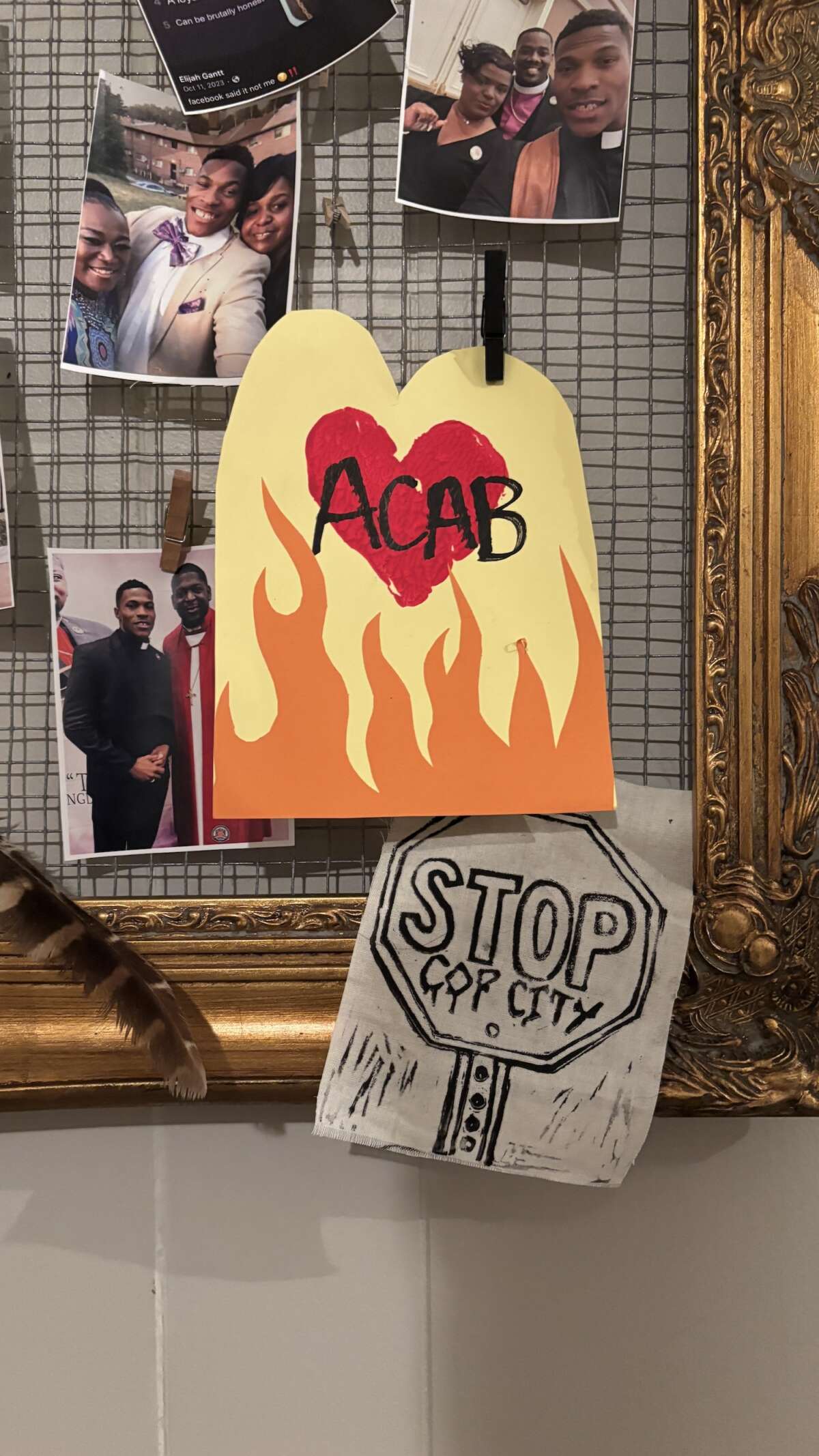
A Photo wall features printed images of Elijah Gantt with friends and family. This photo was taken during a Taco Tuesday fundraiser in St. Louis, Missouri, on July 8, 2025.Jacqui Germain
Gantt’s support team had raised several thousand dollars since his arrest, regularly disseminating it to him to cover his legal defense, commissary fund, and the prison’s phone and digital messaging services. His six-figure bail, they determined, was far past their fundraising capacity.
“We live in a society where it’s very easy to move on quickly after something happens, but I think providing this kind of support is really essential,” said Erin S. in a recent interview. “When the state uses these tactics of repression, it can really shut down movements and keep people from getting involved or taking action. And we also owe it to people who are targeted to support them.”
Thirty minutes after Gantt’s pre-trial hearing ended, Killgo waited alone in the hallway to meet with his legal representation. Gantt needed a suit to wear in court, but after more than two years behind bars awaiting trial, he had gained weight. They couldn’t get a tape measure into the prison to get his measurements, so his support team was improvising. Rocking side to side in the empty hallway, arms full of assorted paperwork, Killgo stared up at the ceiling, trying in her head to calculate the cost of a new suit.
On the second day of Gantt’s trial, it was announced that he had accepted a plea deal. He pleaded guilty to felony second-degree assault on a special victim and felony resisting arrest. The state dropped the remaining charges and made a sentencing recommendation of 19 years. Gantt’s support team is still in contact with him, and they’re planning to fill the courtroom with supporters for his sentencing hearing, scheduled for November 20, 2026.
In the meantime, the group continues to ground their work in the abolitionist assessment that the institution of policing is itself a violent project that produces even more unnecessary violence, harm, and collateral throughout communities. There’s no reform the Ferguson Police Department has made since 2014 that adequately offers a solution for that critique.
“Elijah is the same age as Michael Brown would’ve been,” Killgo says. “He’s a month older. They’re the same age. To say, why were we out there, why were we even protesting, it was so long ago — to say, why was Elijah even there, is to gaslight an entire community. They know why we’re out there.”
This article is licensed under Creative Commons (CC BY-NC-ND 4.0), and you are free to share and republish under the terms of the license.
Gantt’s support team had raised several thousand dollars since his arrest, regularly disseminating it to him to cover his legal defense, commissary fund, and the prison’s phone and digital messaging services. His six-figure bail, they determined, was far past their fundraising capacity.
“We live in a society where it’s very easy to move on quickly after something happens, but I think providing this kind of support is really essential,” said Erin S. in a recent interview. “When the state uses these tactics of repression, it can really shut down movements and keep people from getting involved or taking action. And we also owe it to people who are targeted to support them.”
Thirty minutes after Gantt’s pre-trial hearing ended, Killgo waited alone in the hallway to meet with his legal representation. Gantt needed a suit to wear in court, but after more than two years behind bars awaiting trial, he had gained weight. They couldn’t get a tape measure into the prison to get his measurements, so his support team was improvising. Rocking side to side in the empty hallway, arms full of assorted paperwork, Killgo stared up at the ceiling, trying in her head to calculate the cost of a new suit.
On the second day of Gantt’s trial, it was announced that he had accepted a plea deal. He pleaded guilty to felony second-degree assault on a special victim and felony resisting arrest. The state dropped the remaining charges and made a sentencing recommendation of 19 years. Gantt’s support team is still in contact with him, and they’re planning to fill the courtroom with supporters for his sentencing hearing, scheduled for November 20, 2026.
In the meantime, the group continues to ground their work in the abolitionist assessment that the institution of policing is itself a violent project that produces even more unnecessary violence, harm, and collateral throughout communities. There’s no reform the Ferguson Police Department has made since 2014 that adequately offers a solution for that critique.
“Elijah is the same age as Michael Brown would’ve been,” Killgo says. “He’s a month older. They’re the same age. To say, why were we out there, why were we even protesting, it was so long ago — to say, why was Elijah even there, is to gaslight an entire community. They know why we’re out there.”
This article is licensed under Creative Commons (CC BY-NC-ND 4.0), and you are free to share and republish under the terms of the license.
Jacqui Germain
Jacqui Germain is a journalist and poet living in St. Louis, Missouri. She’s the author of Bittering the Wound, her debut poetry collection about the Ferguson Uprising

No comments:
Post a Comment