US Ambassador to Israel Mike Huckabee—who last year admitted Gazans were starving—was among those noting a new global hunger report by the UN agency that reported the 2025 famine as it unfolded.
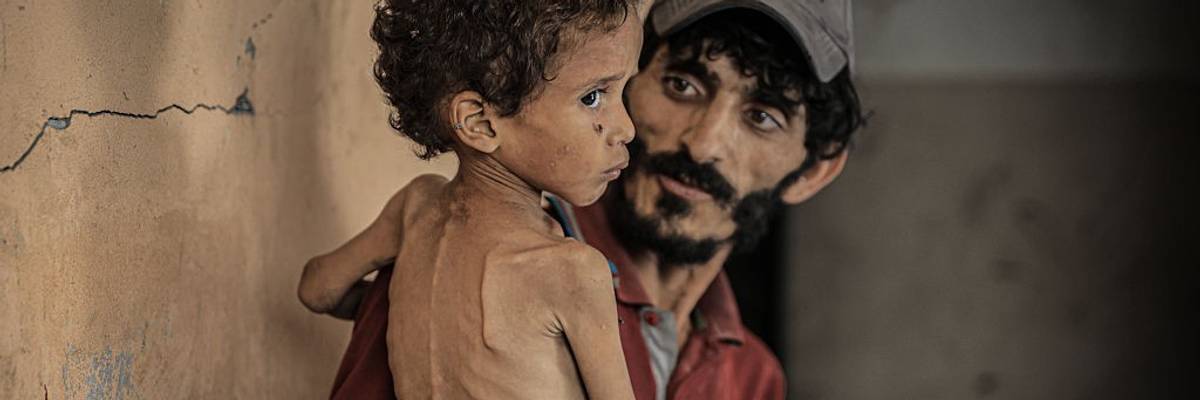
Yezen Abu Ful—a 2-year-old who lives with his family in the Al-Shati refugee camp—is seen suffering from severe malnutrition caused by Israel’s blockade of Gaza in this July 13, 2025 photo.
(Photo by Ahmed Jihad Ibrahim Al-arini/Anadolu via Getty Images)
Brett Wilkins
Aug 07, 2026
COMMON DREAMS
For nearly three years, Israeli officials and their US backers have denounced United Nations agencies reporting the facts of Israel’s genocidal assault on Gaza as lies, but now many of them are citing the latest global hunger study by the United Nations Children’s Fund as proof that last year’s famine that killed at least hundreds of Palestinians in the coastal exclave was a “hoax.”
The UNICEF-led State of Palestine Nutrition Cluster Coordination Meeting report, published on July 22, shows decreased hunger rates in areas of Gaza accessible to those conducting the survey. With Israeli forces controlling the majority of Gaza’s territory and much of the strip flattened and inaccessible, the report’s authors warned that “the survey findings should therefore be interpreted as representative.”
This did not stop the Israeli government and media, and Israel’s supporters and sympathetic media abroad, from citing UNICEF—which on Thursday said that Israel is killing about one child a day in Gaza despite a so-called ceasefire—and the broader UN, which they formerly accused of “lies,” “antisemitism,” “blood libels,” and “hoaxes” throughout a war that a UN commission of inquiry called a genocide.
“Once again, facts prevail over fiction,” Israeli Ambassador to the United Nations Danny Danon said. “UN bodies are acknowledging that the false narrative against Israel is falling apart.”
US Ambassador to Israel Mike Huckabee may have forgotten his acknowledgement last year—along with President Donald Trump and Vice President JD Vance—that Palestinians were “starving” in Gaza, aspersing the media for reporting on the starvation.
Eylon Levy—the British-Israeli former spokesperson for Israel known for purveying disinformation like the infamous October 7 “beheaded babies” lie—also ran with the narrative, posting on X that “the ‘Gaza Famine’ was always a hoax.”
Except it wasn’t.
UN agencies and other humanitarian groups started sounding the alarm on looming starvation in Gaza in the weeks after Israel began annihilating the strip in retaliation for the Hamas-led attack of October 7, 2023. By February 2024, UNICEF warned that “famine is imminent” in Gaza as the UN Office for the Coordination of Humanitarian Affairs cited the deaths of six infants from malnutrition and dehydration.
As Gaza’s hunger crisis worsened under Israel’s “complete siege,” UN agencies, including UNICEF, regularly warned about starvation in the strip. In February 2024, UN officials were accusing Israel of using starvation as a weapon of war—one of the alleged crimes against humanity and war crimes for which Israeli Prime Minister Benjamin Netanyahu and Yoav Gallant, his former defense minister, are wanted by the International Criminal Court in The Hague. Michael Fakhri, the top UN expert on the right to food, accused Israel of genocidal forced starvation of Gazans.
In August 2025, the Integrated Food Security Phase Classification (IPC)—the UN-aided top global authority on hunger crises—declared a Phase 5, or “catastrophic,” famine in Gaza as at least hundreds of Palestinians perished from malnutrition and related causes.
“Famine is now a grim reality for children in Gaza,” UNICEF executive director Catherine Russell said at the time. “As we have repeatedly warned, the signs were unmistakable: children with wasted bodies, too weak to cry or eat; babies dying from hunger and preventable disease; parents arriving at clinics with nothing left to feed their children.”
The IPC lifted Gaza’s famine designation in December 2025, citing improved—but still highly restricted—access of humanitarian aid into Gaza following a nominal ceasefire agreement reached two months earlier. However, last month the IPC published an analysis showing that from mid-April to the end of June, more than 1.2 million people, or 59% of Gaza’s population, were experiencing Phase 3 (crisis) or worse levels of food insecurity. This included about 212,000 people in Phase 4 (emergency).
“The situation remains fragile,” IPC warned.
Many of the people who deny that Israeli forces have killed or wounded a quarter million Palestinians in Gaza or that Israel is committing genocide there—a conclusion reached by numerous UN officials, scholars, jurists, rights groups, and the approximately 20 nations that formally joined South Africa’s pending genocide case against Israel at the International Court of Justice—are the same ones who have denied not only the Gaza famine, but that anyone was ever starving there.
They asked to see photos of starving Palestinians, and when shown them, they, and corporate media outlets including The New York Times, attempted to explain or even dismiss the evidence by claiming the emaciated—or often dead—children suffered from preexisting conditions, as if that somehow absolved Israel for their deaths. Others posted images of a Gaza market stocked with food or overweight Palestinians in a bid to debunk the fact of starvation in Gaza.
Still others dismissed images of starving Gazans as Hamas propaganda, with US media personality Megyn Kelly opining that Palestinians are “fine having their own children starve just as long as they can put them on camera.”
Except it wasn’t.
UN agencies and other humanitarian groups started sounding the alarm on looming starvation in Gaza in the weeks after Israel began annihilating the strip in retaliation for the Hamas-led attack of October 7, 2023. By February 2024, UNICEF warned that “famine is imminent” in Gaza as the UN Office for the Coordination of Humanitarian Affairs cited the deaths of six infants from malnutrition and dehydration.
As Gaza’s hunger crisis worsened under Israel’s “complete siege,” UN agencies, including UNICEF, regularly warned about starvation in the strip. In February 2024, UN officials were accusing Israel of using starvation as a weapon of war—one of the alleged crimes against humanity and war crimes for which Israeli Prime Minister Benjamin Netanyahu and Yoav Gallant, his former defense minister, are wanted by the International Criminal Court in The Hague. Michael Fakhri, the top UN expert on the right to food, accused Israel of genocidal forced starvation of Gazans.
In August 2025, the Integrated Food Security Phase Classification (IPC)—the UN-aided top global authority on hunger crises—declared a Phase 5, or “catastrophic,” famine in Gaza as at least hundreds of Palestinians perished from malnutrition and related causes.
“Famine is now a grim reality for children in Gaza,” UNICEF executive director Catherine Russell said at the time. “As we have repeatedly warned, the signs were unmistakable: children with wasted bodies, too weak to cry or eat; babies dying from hunger and preventable disease; parents arriving at clinics with nothing left to feed their children.”
The IPC lifted Gaza’s famine designation in December 2025, citing improved—but still highly restricted—access of humanitarian aid into Gaza following a nominal ceasefire agreement reached two months earlier. However, last month the IPC published an analysis showing that from mid-April to the end of June, more than 1.2 million people, or 59% of Gaza’s population, were experiencing Phase 3 (crisis) or worse levels of food insecurity. This included about 212,000 people in Phase 4 (emergency).
“The situation remains fragile,” IPC warned.
Many of the people who deny that Israeli forces have killed or wounded a quarter million Palestinians in Gaza or that Israel is committing genocide there—a conclusion reached by numerous UN officials, scholars, jurists, rights groups, and the approximately 20 nations that formally joined South Africa’s pending genocide case against Israel at the International Court of Justice—are the same ones who have denied not only the Gaza famine, but that anyone was ever starving there.
They asked to see photos of starving Palestinians, and when shown them, they, and corporate media outlets including The New York Times, attempted to explain or even dismiss the evidence by claiming the emaciated—or often dead—children suffered from preexisting conditions, as if that somehow absolved Israel for their deaths. Others posted images of a Gaza market stocked with food or overweight Palestinians in a bid to debunk the fact of starvation in Gaza.
Still others dismissed images of starving Gazans as Hamas propaganda, with US media personality Megyn Kelly opining that Palestinians are “fine having their own children starve just as long as they can put them on camera.”
What Kind of Ceasefire Is This? UNICEF Says 300 Children Killed in Gaza Over 300 Days
“A ceasefire that leaves an average of one child dead each and every day is failing children,” said one United Nations official.
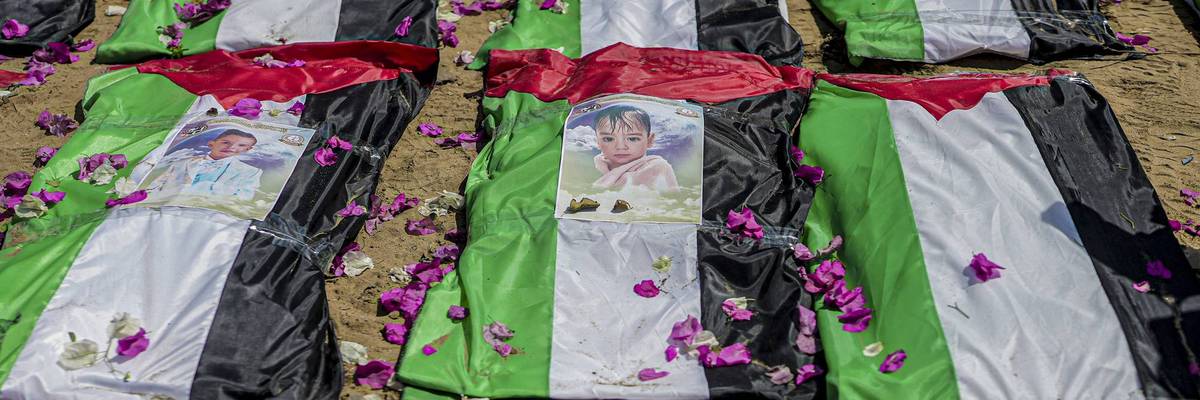
Photographs rest on bodies wrapped in Palestinian flags during a mass funeral in Gaza City on August 4, 2026.
(Photo by Faiz Qreqa/Middle East Images/AFP via Getty Images)
Julia Conley
Aug 06, 2026
COMMON DREAMS
“The world calls it a ceasefire, but families in Gaza are still burying their children.”
That was one United Nations spokesperson’s assessment of the ongoing US-backed Israeli assault on Gaza on Thursday, which marked the 300th day since a ceasefire deal was reached between Israel and Hamas—a period during which at least 300 Palestinian children have been killed, the UN reported.
“A ceasefire that leaves an average of one child dead each and every day is failing children,” said Edouard Beigbeder, regional director for the Middle East and North Africa for the UN Children’s Fund (UNICEF). “With hundreds more children injured, many severely, children in Gaza are still waiting for the end to the violence they were promised.”
Louise Wateridge, a spokesperson for UNICEF, noted that in the first three days of August, at least four children were killed across Gaza, and surviving children have been left with “painfully simple” and urgent questions for Israeli officials who had agreed last October to cease hostilities, reopen border crossings, and ensure 600 aid trucks entered Gaza per day to get much-needed food and essentials to Palestinians who had been facing a near-total blockade.
Wateridge said Palestinian children need to know: “When will the killings stop? When will food and medicine reach me at the level needed? When will hospitals reopen? And when will clean water flow again?”
Reports of the mass casualties of children come as Israel and President Donald Trump’s Board of Peace raise doubts about whether Israel will accept a deal stipulating the disarmament of Hamas and Israel’s withdrawal from the exclave.
UN officials on Thursday expressed hope that the next steps of the peace plan can move forward to save children and other civilians across Gaza.
“Children have heard promises before. This time, agreements must translate into action,” said Beigbeder.
The UN Office for the Coordination of Humanitarian Affairs (OCHA) said Thursday that continued airstrikes have damaged civilian infrastructure, including healthcare facilities and medical supplies.
UNICEF warned that children are continue to face acute malnutrition almost a year after Israel agreed to allow humanitarian aid into Gaza, as well as suffering from disease and a lack of sanitation.
An attack on a medical storage facility next to Al-Aqsa Hospital in Deir al-Balah last week destroyed supplies that had been delivered by the UN, said the World Health Organization.
The UN is working to help “exhausted and hungry mothers” arriving at health centers with their malnourished children, and are fighting to save newborns born prematurely or with health issues, with extremely limited resources.
“There’s not enough incubators and in some cases [health workers are] saying they see two or even three babies sharing a single machine,” said Wateridge. “In Gaza, children only days old are already fighting to stay alive, born into partially functioning hospitals lacking equipment and medicine. This is what the world has chosen to tolerate. The killing must stop, aid has to enter at scale and children must be protected.”
According to OCHA, at least 1,209 people have been killed and 3,943 have been injured since the ceasefire deal was reached last October.
“A ceasefire that leaves an average of one child dead each and every day is failing children,” said one United Nations official.
Photographs rest on bodies wrapped in Palestinian flags during a mass funeral in Gaza City on August 4, 2026.
(Photo by Faiz Qreqa/Middle East Images/AFP via Getty Images)
Julia Conley
Aug 06, 2026
COMMON DREAMS
“The world calls it a ceasefire, but families in Gaza are still burying their children.”
That was one United Nations spokesperson’s assessment of the ongoing US-backed Israeli assault on Gaza on Thursday, which marked the 300th day since a ceasefire deal was reached between Israel and Hamas—a period during which at least 300 Palestinian children have been killed, the UN reported.
“A ceasefire that leaves an average of one child dead each and every day is failing children,” said Edouard Beigbeder, regional director for the Middle East and North Africa for the UN Children’s Fund (UNICEF). “With hundreds more children injured, many severely, children in Gaza are still waiting for the end to the violence they were promised.”
Louise Wateridge, a spokesperson for UNICEF, noted that in the first three days of August, at least four children were killed across Gaza, and surviving children have been left with “painfully simple” and urgent questions for Israeli officials who had agreed last October to cease hostilities, reopen border crossings, and ensure 600 aid trucks entered Gaza per day to get much-needed food and essentials to Palestinians who had been facing a near-total blockade.
Wateridge said Palestinian children need to know: “When will the killings stop? When will food and medicine reach me at the level needed? When will hospitals reopen? And when will clean water flow again?”
Reports of the mass casualties of children come as Israel and President Donald Trump’s Board of Peace raise doubts about whether Israel will accept a deal stipulating the disarmament of Hamas and Israel’s withdrawal from the exclave.
UN officials on Thursday expressed hope that the next steps of the peace plan can move forward to save children and other civilians across Gaza.
“Children have heard promises before. This time, agreements must translate into action,” said Beigbeder.
The UN Office for the Coordination of Humanitarian Affairs (OCHA) said Thursday that continued airstrikes have damaged civilian infrastructure, including healthcare facilities and medical supplies.
UNICEF warned that children are continue to face acute malnutrition almost a year after Israel agreed to allow humanitarian aid into Gaza, as well as suffering from disease and a lack of sanitation.
An attack on a medical storage facility next to Al-Aqsa Hospital in Deir al-Balah last week destroyed supplies that had been delivered by the UN, said the World Health Organization.
The UN is working to help “exhausted and hungry mothers” arriving at health centers with their malnourished children, and are fighting to save newborns born prematurely or with health issues, with extremely limited resources.
“There’s not enough incubators and in some cases [health workers are] saying they see two or even three babies sharing a single machine,” said Wateridge. “In Gaza, children only days old are already fighting to stay alive, born into partially functioning hospitals lacking equipment and medicine. This is what the world has chosen to tolerate. The killing must stop, aid has to enter at scale and children must be protected.”
According to OCHA, at least 1,209 people have been killed and 3,943 have been injured since the ceasefire deal was reached last October.

No comments:
Post a Comment