It cannot be cut into pieces without harming land and people.
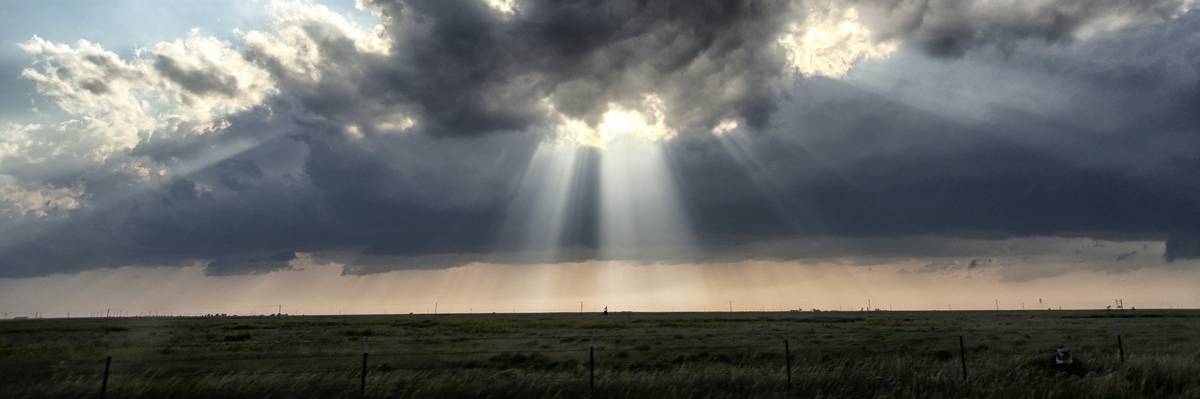
The sun beams through a large cloud over farmland in South Dakota, USA.
(Photo by Getty Images)
Lorette Picciano
Aug 09, 2026
Aug 09, 2026
Common Dreams
Wanìshi means thank you in the Lenape language. This is the lyrical word we recently had the privilege of learning from a principal emissary from the Piscataway Indian Nation, and experiencing together. Wanìshi for the quiet moments between hard conversations and watching sunsets, where we shared in the spirit of collaboration, together with 18 other thinkers and doers who are deeply troubled by the trajectory of public agriculture policy, and its historically principal vehicle, the Farm Bill.
We embraced and shared in this collaborative mindset over the three days we spent with the America the Beautiful for All Coalition’s Legacy Lands workgroup in Maryland. The Farm Bill was one of the issues we discussed. A bill currently being treated by politicians as technical, as boring, as someone else’s problem. When in our realities, it is none of those things. The Farm Bill decides who eats and who doesn’t. It decides who is healthy and whose health is negotiable.
Between us, we have spent a combined five decades serving the communities this bill affects: rural families losing food, farmworkers losing protections, Black farmers losing land, tribal nations losing voice. So at that convening, and with this piece, we are expressing plainly a reality every farmer, rancher, and all of us who steward land intimately know. That land is a body and must be nourished. That we cannot cut it into fundable pieces and expect the pieces to bleed separately. The Farm Bill is a health bill. It cannot be cut into pieces without harming land and people. We do not view the content of the draft as a public health crisis because we have been trained to view it as agricultural policy. But it is, in fact, a public health crisis, and that crisis has a physical address: every community where conservation funding has been cut and every family living downstream of the farms and lands that lost it.
The One Big Beautiful Bill Act, signed on the Fourth of July last year, cut $187 billion from the Supplemental Nutrition Assistance Program (SNAP). More than 4.5 million people have lost their food assistance since then. In rural counties where the nearest grocery store is a 40-minute drive and the nearest doctor is farther, losing SNAP is not a policy change. It is a sentence. It means a child eating less, and then eating worse, and then showing up in an emergency room that is itself understaffed and underfunded. The Senate Farm Bill draft does not restore a single dollar.
That land is a body and must be nourished. That we cannot cut it into fundable pieces and expect the pieces to bleed separately. The Farm Bill is a health bill. It cannot be cut into pieces without harming land and people.
Both versions of the new bill cut funding for the conservation programs that keep farmland productive and water clean. The Senate draft alone slashes nearly $2 billion from EQIP, the program that helps small farmers put cover crops in, manage nutrients, and protect water. When those programs shrink, the runoff increases. Babies, adults, pets, and wildlife in the communities downstream all drink that water.
The agency responsible for delivering conservation to farmers is disappearing. The Natural Resources Conservation Service (NRCS) lost nearly a quarter of its staff in one year. One hundred and forty-one counties went from having NRCS employees to having none. These were the people who helped farmers manage nutrients, reduce fertilizer runoff, and protect water. In their absence, nitrate from agricultural runoff enters rural drinking water unchecked. Research links nitrate contamination to colorectal cancer, thyroid disease, and birth defects in newborns, at levels below what the Environmental Protection Agency considers safe. The communities drinking that water are the same small rural towns that just lost their NRCS offices. A beginning farmer in southern Georgia or a small rancher in northern New Mexico picks up the phone and no one answers. Their neighbors downstream drink what runs off the fields no one is helping them manage.
For Latino communities across the rural West, acequias, the community irrigation systems that have sustained families for centuries, depend on the conservation programs this bill is cutting. A farmer in the San Luis Valley who has irrigated land the way her family has for six generations does not experience a conservation cut as a line item. She experiences it as a ditch that doesn’t flow, a garden that doesn’t grow, a family that buys what it used to harvest.
Black families once farmed 16 million acres in this country. Today they hold barely over 1%. Heirs’ property, land passed down without clear title, is one of the mechanisms through which that loss continues: A single partition sale can erase a century of family ownership in an afternoon. The families who lose their land don’t just lose wealth. They lose the foundation for food sovereignty, the one asset that could have fed a family, a neighborhood, a generation. A deed problem becomes a health problem, passed down the same way the land was supposed to be.
As we watch this Farm Bill, we carry with us the word our Piscataway colleague shared. Wanìshi. Thank you. We offer it now in the spirit of collaboration.
We will offer it again, in the spirit of gratitude, when Congress writes this bill for all of us.
We are waiting.
Our work is licensed under Creative Commons (CC BY-NC-ND 3.0). Feel free to republish and share widely.
Kenya Crumel
Kenya Crumel is the co-lead of the Legacy Lands Workgroup at the America the Beautiful for All Coalition and the director of the Black Land and Power Workgroup at the National Black Food & Justice Alliance.
Full Bio >
Wanìshi means thank you in the Lenape language. This is the lyrical word we recently had the privilege of learning from a principal emissary from the Piscataway Indian Nation, and experiencing together. Wanìshi for the quiet moments between hard conversations and watching sunsets, where we shared in the spirit of collaboration, together with 18 other thinkers and doers who are deeply troubled by the trajectory of public agriculture policy, and its historically principal vehicle, the Farm Bill.
We embraced and shared in this collaborative mindset over the three days we spent with the America the Beautiful for All Coalition’s Legacy Lands workgroup in Maryland. The Farm Bill was one of the issues we discussed. A bill currently being treated by politicians as technical, as boring, as someone else’s problem. When in our realities, it is none of those things. The Farm Bill decides who eats and who doesn’t. It decides who is healthy and whose health is negotiable.
Between us, we have spent a combined five decades serving the communities this bill affects: rural families losing food, farmworkers losing protections, Black farmers losing land, tribal nations losing voice. So at that convening, and with this piece, we are expressing plainly a reality every farmer, rancher, and all of us who steward land intimately know. That land is a body and must be nourished. That we cannot cut it into fundable pieces and expect the pieces to bleed separately. The Farm Bill is a health bill. It cannot be cut into pieces without harming land and people. We do not view the content of the draft as a public health crisis because we have been trained to view it as agricultural policy. But it is, in fact, a public health crisis, and that crisis has a physical address: every community where conservation funding has been cut and every family living downstream of the farms and lands that lost it.
The One Big Beautiful Bill Act, signed on the Fourth of July last year, cut $187 billion from the Supplemental Nutrition Assistance Program (SNAP). More than 4.5 million people have lost their food assistance since then. In rural counties where the nearest grocery store is a 40-minute drive and the nearest doctor is farther, losing SNAP is not a policy change. It is a sentence. It means a child eating less, and then eating worse, and then showing up in an emergency room that is itself understaffed and underfunded. The Senate Farm Bill draft does not restore a single dollar.
That land is a body and must be nourished. That we cannot cut it into fundable pieces and expect the pieces to bleed separately. The Farm Bill is a health bill. It cannot be cut into pieces without harming land and people.
Both versions of the new bill cut funding for the conservation programs that keep farmland productive and water clean. The Senate draft alone slashes nearly $2 billion from EQIP, the program that helps small farmers put cover crops in, manage nutrients, and protect water. When those programs shrink, the runoff increases. Babies, adults, pets, and wildlife in the communities downstream all drink that water.
The agency responsible for delivering conservation to farmers is disappearing. The Natural Resources Conservation Service (NRCS) lost nearly a quarter of its staff in one year. One hundred and forty-one counties went from having NRCS employees to having none. These were the people who helped farmers manage nutrients, reduce fertilizer runoff, and protect water. In their absence, nitrate from agricultural runoff enters rural drinking water unchecked. Research links nitrate contamination to colorectal cancer, thyroid disease, and birth defects in newborns, at levels below what the Environmental Protection Agency considers safe. The communities drinking that water are the same small rural towns that just lost their NRCS offices. A beginning farmer in southern Georgia or a small rancher in northern New Mexico picks up the phone and no one answers. Their neighbors downstream drink what runs off the fields no one is helping them manage.
For Latino communities across the rural West, acequias, the community irrigation systems that have sustained families for centuries, depend on the conservation programs this bill is cutting. A farmer in the San Luis Valley who has irrigated land the way her family has for six generations does not experience a conservation cut as a line item. She experiences it as a ditch that doesn’t flow, a garden that doesn’t grow, a family that buys what it used to harvest.
Black families once farmed 16 million acres in this country. Today they hold barely over 1%. Heirs’ property, land passed down without clear title, is one of the mechanisms through which that loss continues: A single partition sale can erase a century of family ownership in an afternoon. The families who lose their land don’t just lose wealth. They lose the foundation for food sovereignty, the one asset that could have fed a family, a neighborhood, a generation. A deed problem becomes a health problem, passed down the same way the land was supposed to be.
As we watch this Farm Bill, we carry with us the word our Piscataway colleague shared. Wanìshi. Thank you. We offer it now in the spirit of collaboration.
We will offer it again, in the spirit of gratitude, when Congress writes this bill for all of us.
We are waiting.
Our work is licensed under Creative Commons (CC BY-NC-ND 3.0). Feel free to republish and share widely.
Kenya Crumel
Kenya Crumel is the co-lead of the Legacy Lands Workgroup at the America the Beautiful for All Coalition and the director of the Black Land and Power Workgroup at the National Black Food & Justice Alliance.
Full Bio >
Lorette Picciano
Lorette Picciano is the executive director of the Rural Coalition.
Full Bio >

No comments:
Post a Comment