Sunday, August 09, 2026

Pro-Palestine Academics Have Been Fighting the New McCarthyism


 August 7, 2026

Image by حسن.

The Trump administration has been going on an offensive to suppress social movements. From unprecedented criminal sentences against immigrant rights activists to a recent State Department report trying to link prominent left-wing figures and organizations to the Cuban government, the administration’s actions harken back to an era of “McCarthyism” in which the government ostracized left-wing activists, intellectuals, and artists.

Before the recent headlines, however, pro-Palestine academics were already on the receiving end of a Republican-led campaign against free speech. In recent years hundreds of academics have been fired, censored, threatened, or otherwise punished for their research and advocacy. The movement for Palestine has been one of the Trump administration’s main targets. It has also provided important examples of how those facing repression are fighting back.

One such case is that of the Fired Four, referring to four adjunct faculty who were fired from the City University of New York (CUNY) in June 2025 because of their Palestine activism. Shortly after the four learned of their firings, PSC CUNY, the union representing faculty at the university, released a statement condemning what they called “retaliatory firing,” labeling it as part of the “New McCarthyism.”

Corinna Mullin, one of the Fired Four and an organizer with the group CUNY for Palestine, said that she has been deeply inspired by the campaign.

“It’s been a truly amazing campaign. We have been so heartened, really impressed and touched, moved by the support of our colleagues and the student body. The union has been incredible.”

How unions are fighting back

Members of the union took the campaign into their own hands with a range of creative initiatives to spread the word about the firings. Faculty tabled at nine different campuses across the university, often working alongside students to educate CUNY community members about the campaign. Others printed t-shirts saying “Reinstate the Fired Four” which they sold to raise funds for the campaign and raise awareness. These shirts can still be regularly spotted being worn throughout CUNY campuses.

There is also an Instagram page which the campaign has used to share updates, provide coverage of protests the union has held in support for the Fired Four, and publish expressions of solidarity from left-wing academics and political figures including Marc Lamont Hill, Robin D.G. Kelly, Claire Valdez, and Darializa Chevalier. The account was also used to post “pets for the Fired Four,” a series of pictures submitted by campaign supporters showing their pets displaying messages of solidarity.

The campaign has connected with other sectors of the labor movement, participating in a panel at the Labor Notes Conference in Chicago and organizing a joint picket with the Starbucks workers union when Starbucks workers went on strike.

This widespread publicity contributed to CUNY reinstating three of the faculty, but the union has continued to fight for the reinstatement of the fourth faculty who has not yet gotten their job back. The remaining faculty member, now dubbed the Fired Fourth, spoke about the importance of the campaign.

“It shows the ways in which the university is, on one hand, deeply invested in U.S. imperialism, in Zionism, and the ways in which there’s bipartisan consensus in attacking the movement for Palestine,” they said. “The fight against repression has to be part of our movement. In order to fight for Palestine, in order to fight for divestment, we need to make sure that we’re not being attacked.”

The Fired Fourth and Mullin both expressed that CUNY has a reputation as a university for the people and for working class communities, but that this is reflected in the actions of the CUNY workers, students, and community members, not the administration.

“The Fired Four and the students and the other faculty and staff, who have risked so much to stand up for Palestinian liberation, we’ve been fighting for this for so long to make CUNY live up to its name as the people’s university, and that means it shouldn’t be a university that’s invested in imperialist war and genocide,” Mullin said.

The campaign is an example of the power that unions have to resist repression of social movements. Another example can be found at Rutgers University.

David Letwin, an anti-Zionist Jew who has been part of the movement for Palestine for over 20 years, is on the executive board of Rutgers Adjunct Faculty Union (PTLFC-AAUP-AFT Local 6324). He said that it has been one of the most pro-Palestine union executive bodies in the country, releasing multiple statements against the genocide in Gaza and efforts to suppress Palestine solidarity. In January 2025, members of the union voted in favor of a resolution for divestment from the genocide.

The union also organized a panel which connected repression of pro-Palestine academics to larger attacks on academic freedom. The panel included a representative of the CUNY Fired Four campaign. Letwin explained the importance of making these connections.

“In the eyes of the MAGA right and its Zionist allies, higher education is enemy territory to be conquered, occupied, and purged of dissenters. They are not going to let academic freedom, or first amendment rights, for that matter, stand in their way of that goal.”

Resisting the new McCarthyism

As more pro-Palestine academics have come under fire, networks have formed to connect those fighting repression, such as the Palestine Anti-Repression Network (PARN) — a group of academics who have been targeted for their pro-Palestine advocacy — and the Coalition for Action in Higher Education (CAHE) — which brings together over 35 organizations to defend academic freedom. These coalitions have been important because not all academics have found their unions willing to defend them.

Sang Kil, a Full Professor in the Justice Studies Department at San Jose State University, recently won her job back after being fired in July 2025. She also just stepped down as PARN’s interim chair. She said that many in the group are part of unions whose leaderships are closely affiliated with the Democratic Party, contributing to these unions’ leaderships being unwilling or unprepared to confront the repression which has been bipartisan.

Kil explained that after she was fired for pro-Palestine activism, one of the procedures she could choose to fight for her reinstatement was a public hearing in which her case would be decided by three random faculty members. She said that her union tried to dissuade her from choosing that option even though she believed it would be the most effective.

“They don’t do [public hearings] frequently enough,” Kil said. “They just don’t have the skills or the motivation, or understand the power of public hearings, and what a powerful union tool this is, not only to show what happens to faculty at the hands of bad actors, like administrators, but to also show our union power. A faculty can choose to go public with their case and win.”

Despite opposition from her union’s leadership, Kil chose the public hearing and was reinstated. “I told the union that most people are against the genocide, so I have all the faith in the world that three random faculty will side with me. And they did.”

A common sentiment among faculty who’ve faced repression for Palestine solidarity is that the repression has only been possible when otherwise progressive colleagues refuse to support the movement for Palestine.

Michel DeGraff, who teaches what he calls “liberatory linguistics” at MIT and organizes with PARN and CAHE, elaborated on this.

“Even so-called progressive and liberal colleagues… they themselves have allowed that repression by either remaining silent or by giving in on anticipatory compliance,” DeGraff said.

DeGraff was named in a Congressional report by the House Committee on Education and Workforce, the notorious body that has held panels interrogating heads of universities over their responses to Palestine activism on their campuses. The Committee has used a common tactic of equating Palestine activism with antisemitism. DeGraff has sued the Committee after it accused him of promoting “antisemitic conspiracy theories.” He is also suing MIT, deeming them a “state actor” on behalf of Congress, saying they have violated his First Amendment Rights by punishing him for his Palestine advocacy at the university.

DeGraff said that the false conflation between anti-Zionism and antisemitism is effectively used to weaken solidarity with targeted academics. “Even progressive or liberal allies will freeze in silence or fall into moral panic whenever it comes time to speak up in solidarity with professors like myself.”

Letwin also expressed that this false conflation remains an obstacle. However, he suggested that Palestine activists can bring in more support by showing how repression of pro-Palestine academics is connected to a larger crackdown of free speech and progressive movements.

“The key, it seems to me, is connecting the call for free Palestine with other social justice struggles: anti-ICE organizing, BLM, LGBTQ rights, opposition to imperial wars, that have established organizing networks,” Letwin said. “The forces of reaction are united against these movements, right? It only makes sense that our support for those movements be unified too.”

This article was first published on Sam Carliner’s Substack which focuses on issues of internationalism and social movements.

Sam Carliner is a journalist covering U.S. foreign policy, militarism, immigration, and social movements. His writing has appeared in Teen Vogue, Responsible Statecraft, Middle East Eye, Truthout, Mondoweiss, Waging Nonviolence, and other publications. He is also an editor at Left Voice, part of the La Izquierda Diario international news network. Previously he was Social Media Manager at the feminist anti-war organization CODEPINK.


Source: World Beyond War

Robert Kagan, veteran warmonger extraordinaire, wants to know what the “utility” would be of admitting that the war on Iraq was “a mistake.” I’m glad he asked.

But, “mistake” is not exactly the word. This was a criminal action based on lies that killed over a million people, injured over 4 million people, made homeless over 4 million people, left behind permanent environmental devastation, shattered the rule of law, generated terrorism, impeded global collaboration on non-optional crises, diverted trillions of dollars away from desperate needs, shredded our civil liberties, fueled bigotry and xenophobia, militarized policing, and led in a fairly straight line to the catastrophe we’re in right now.

In an August 4 interview published by Responsible Statecraft, an interviewer asks veteran warmonger Robert Kagan to admit that attacking Iraq was a “mistake.” Right away we have to stop asking whether it was — as it obviously was — a crime, a mass-murder spree, a hugely destructive atrocity absolutely devastating the natural environment, international law, and so on. Instead, the question becomes whether it was an error of calculation. The same interviewer pushes Kagan toward celebrating “soft power” over “hard power” as a better tool of imperialism. With that accepted goal, was destroying Iraq a “mistake” or, as the interviewer also calls it, in perhaps the most extreme euphemism in history, “unnecessary”?

And what does Kagan answer? He replies:

“Well, I didn’t say I can’t admit that it was a mistake. I’m not sure what the utility of admitting that it was a mistake is. It’s not going to bring anybody back to life.”

A-ha, you say! He not only says that he didn’t say that he wouldn’t say it was a mistake, which is practically saying it was a mistake, but he admits that people somehow died, and he simply wants to know how admitting to a mistake would bring them back. What could be more reasonable? But back up one paragraph in the interview, and you’ll see that the interviewer and interviewee have grossly distorted the casualties to amount to 180,000 “civilians” (how many non-civilians, they don’t say) and “4,500 U.S. service members and 3,600 American contractors,” and Kagan excuses that by exclaiming: “In ten years! Over ten years.” In fairness, I guess that’s a reasonable rate of 18,810 a year, and if those took the form of videos of pretty U.S. children being beheaded, published once every half hour, every day, year after year, for 10 years, probably there wouldn’t even be any public reaction.

What would the utility be of admitting the reality of past wars? It would be resistance to future wars, of course! It is, after all, people seeking to facilitate future wars who invest the greatest efforts in going back and lying about past wars. So, it is interesting that Kagan blurts out the truth on a traditional past-wars lie, in this same interview, when he says:

“I never denied that blowback was a reality. In fact, my writing shows that when the United States is out there acting in the world, Americans tend to not even be aware of the effect of American power on other nations. And so they’re constantly shocked whenever the use of American power leads to a response. The best example is Japan and Pearl Harbor. Many Americans acted like it was out of the blue when Japan attacked us when, in fact, the U.S. pursued policies that were likely to lead to a Japanese attack. The same was true of 9/11 in the sense that it was at least in part a response to the American presence in the Middle East. The question is, do you act even though you know that there is going to be blowback because the stakes are worth it. So, I never doubted it and, as I say, recognizing the effect of American power on other nations is an important part of my history.”

It’s helpful, I suppose, for a notorious warmonger, even without a substantial argument (provided abundantly by others, after all) to admit to this bit of truth, when Congressional candidates are viciously criticized for the same. And this strikes me as the admission of wrongdoing disguised in another form. I don’t recall a single voice in the MICIMATT pitch for the war on Iraq that said “This will probably generate more anti-U.S. violence, just as did the U.S. actions that led up to Pearl Harbor and 9/11, but it’s going to be worth it anyway, because . . . .” And the reason I never heard such a voice is that there is nothing that could complete that sentence. So, Kagan may question whether he should admit to a “mistake,” but at the same time he is taking out of his propaganda arsenal the single biggest, most dominant tool. For a habitual liar, that may be as close to penance as you’re going to get.


This article was originally published by World Beyond War; please consider supporting the original publication, and read the original version at the link above.Email

David Swanson is an author, activist, journalist, and radio host. He is executive director of World BEYOND War and campaign coordinator for RootsAction.org. Swanson’s books include War Is A Lie and When the World Outlawed War. He blogs at DavidSwanson.org and WarIsACrime.org. He hosts Talk World Radio. He is a Nobel Peace Prize Nominee.


Source: Originally published by Z. Feel free to share widely.

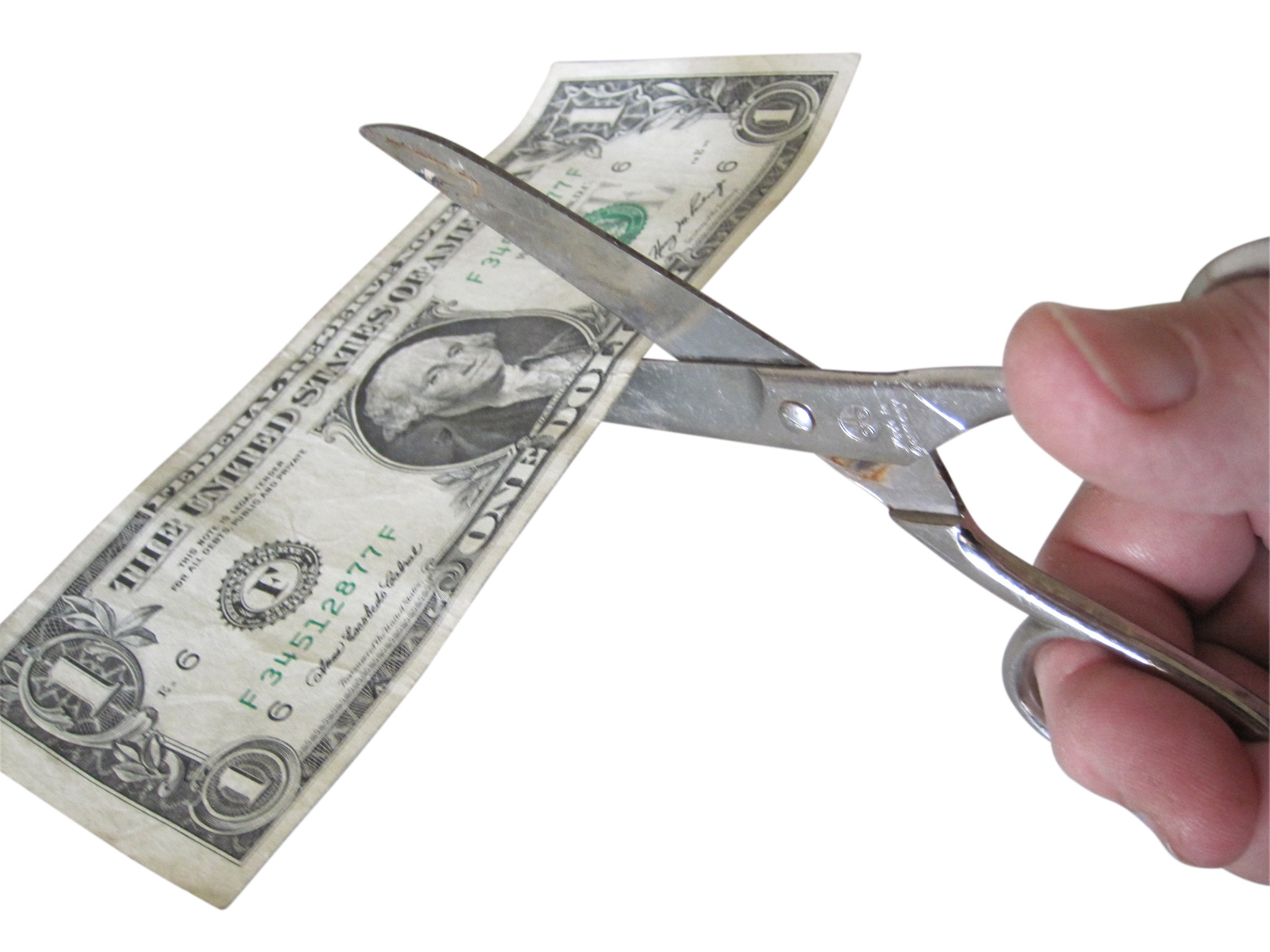
Gulf de-dollarization is the gradual diversification of oil-trade settlement and reserve holdings away from the US dollar. It’s not a wholesale switch to the yuan, but a hedging strategy accelerated by the 2026 Strait of Hormuz crisis, in which Gulf states expand yuan and CBDC settlement rails while keeping their currencies pegged to the dollar and their security guarantees firmly American.

I spent a chunk of March refreshing a Brent crude ticker like it was a group chat. $120 a barrel. Then $126. Then back down, then up again: the “rockets and feathers” pattern, prices shoot up fast and drift down slow, except this time at geopolitical scale. Somewhere in that stretch I started noticing a specific kind of headline: Iran and China take aim at dollar hegemony. Bold stuff. And also, if you actually read past the headline, mostly wrong.

Here’s the thing nobody wants to say plainly: the Strait of Hormuz crisis was the best opportunity de-dollarization has had in fifty years, and the Gulf still didn’t take it. That’s not an accident. It’s a strategy. And it’s a more interesting one than “petrodollar collapse” or “nothing ever changes,” the two lazy poles most coverage keeps bouncing between.

What Actually Happened to Hormuz

Quick recap, because the mechanics matter more than people think. Iran didn’t simply mine the strait shut. What really paralysed 20 million barrels a day of transit was the insurance market: the International Group of Protection & Indemnity Clubs pulling war-risk cover within 72 hours of the escalation. No P&I insurance, no commercial shipping. That’s not a military chokepoint. That’s a financial one, and it’s still priced in dollars, cleared through Western reinsurers, and about as “de-dollarized” as a mortgage.

Worth sitting with that for a second. The single most dramatic energy disruption in modern history was enforced by the very financial architecture Iran and China supposedly want to dismantle.

The UAE’s OPEC Exit Wasn’t About Currency

Then on 1 May, the UAE walked out of OPEC after 59 years. Cue a fresh round of “the old order is crumbling” takes. Except, and this is the part most pieces skip, the UAE’s own energy minister said the decision came from a “careful and long review” of production strategy, not currency policy. Abu Dhabi was capped at 3.4 million barrels a day against nearly 4.85 million in capacity. That’s 1.5 million barrels of expensive infrastructure sitting idle every single day. Wouldn’t you leave too?

More telling: analysts reading the geopolitics rather than the balance sheet noted the UAE had been visibly more hawkish toward Iran than its GCC neighbours throughout the war. Leaving an organisation where Iran still sits at the table, right after Iranian drones knocked out an ADNOC refinery at Ruwais, reads less like economic liberation and more like Abu Dhabi quietly telling Washington which side of the regional reordering it’s betting on.

So: an economic decision with an unmistakably political subtext, dressed up in production-quota language. Sound familiar? It should. That’s the exact grammar Gulf states have used for fifty years to manage the US relationship without ever naming it directly.

What the Real De-Dollarization Actually Looks Like

Meanwhile, the genuinely interesting stuff was happening quietly, away from the war coverage entirely.

mBridge, the wholesale CBDC platform linking China’s central bank with the UAE and Saudi Arabia, crossed $55.5 billion in cumulative transaction volume in early 2026, a 2,500-fold jump since its 2022 pilot phase. In November 2025, Sheikh Mansour bin Zayed executed a milestone UAE-China CBDC payment at a ceremony in Abu Dhabi, though reporting on that transaction is inconsistent about whether it ran through mBridge itself or a newer linked platform called Jisr. Either way, the direction is the same. The Bank for International Settlements formally exited the project in 2024, handing it entirely to the participating central banks, which, if you think about it, is a bigger signal than any of the war-driven noise. The people building the alternative rails to the dollar aren’t waiting for a crisis. They’ve been laying pipe for years.

And yet. Saudi Arabia’s currency remains pegged to the dollar. So does the UAE’s. So does every major Gulf producer’s. That single fact does more to constrain “de-dollarization” than any war, sanction, or summit possibly could, because if the yuan appreciates against a dollar-pegged riyal, Saudi Arabia loses money on every barrel it sells in yuan. Beijing has never solved that problem. It hasn’t even tried very hard to.

What Most Coverage Gets Wrong

ClaimWhat’s actually true
“Iran and China are killing the petrodollar”Yuan use in oil trade adds incremental pressure. It doesn’t touch the dollar-pegged currencies that anchor Gulf economies
“The UAE’s OPEC exit signals a pivot to China”Emirati officials and independent analysts both frame it as a production-capacity decision layered with US-aligned security signalling, not a currency move
“mBridge proves the petroyuan has arrived”$55.5bn in cumulative volume is real infrastructure, but it’s small next to Saudi Arabia’s roughly $187bn in annual oil export revenue alone, before even counting the UAE’s
“Nothing has changed since the 1970s”This undersells it. Saudi Arabia quietly let its exclusive 1974 dollar-pricing arrangement lapse in 2024, and SAMA is a full mBridge participant. The plumbing for a slower shift is being built even while the peg holds

The pattern underneath all four rows is the same: Gulf states are building optionality, not defection. They want settlement rails that don’t run exclusively through Washington, without giving up the security umbrella that only Washington provides. That’s not indecision. It’s the most coherent hedging strategy a mid-sized power can run against a superpower it depends on militarily and increasingly doesn’t fully trust economically.

The Strategic Vision Nobody’s Writing

If you’re a Gulf state, here’s the honest read on where this goes. You keep the dollar peg because unwinding it would be economic self-harm: currency instability, capital flight, a repricing shock nobody survives cleanly. You keep expanding mBridge and yuan-settlement pilots because China is now your largest oil customer and refusing to build the infrastructure to trade with your biggest customer in their currency would be commercially insane. You let OPEC’s grip loosen where it constrains your own production goals, because a fifty-nine-year-old cartel commitment matters less than 1.5 million idle barrels a day. And you do all of this without ever forcing Washington to choose between “ally” and “hedge,” because the moment you force that choice, you lose the security guarantee that makes the whole strategy survivable in the first place.

That’s not the collapse of the petrodollar. It’s something more durable: a Gulf that’s learned to hold two incompatible-looking relationships at once, indefinitely, by never letting either one become exclusive. Whether that balancing act survives a second Hormuz-scale shock is the actual open question, and it’s a much better one than “is the dollar dying.”

What to Watch Next

Skip the “de-dollarization is coming” headlines. Watch three numbers instead: mBridge’s transaction volume growth rate quarter over quarter, whether Saudi Arabia’s currency peg comes under any formal review, and how the UAE actually deploys its post-OPEC production once Hormuz reopens fully. Those three data points will tell you more about where Gulf-China-US relations are headed than every “hegemony” headline combined.