Sunday, August 09, 2026


Source: Originally published by Z. Feel free to share widely.

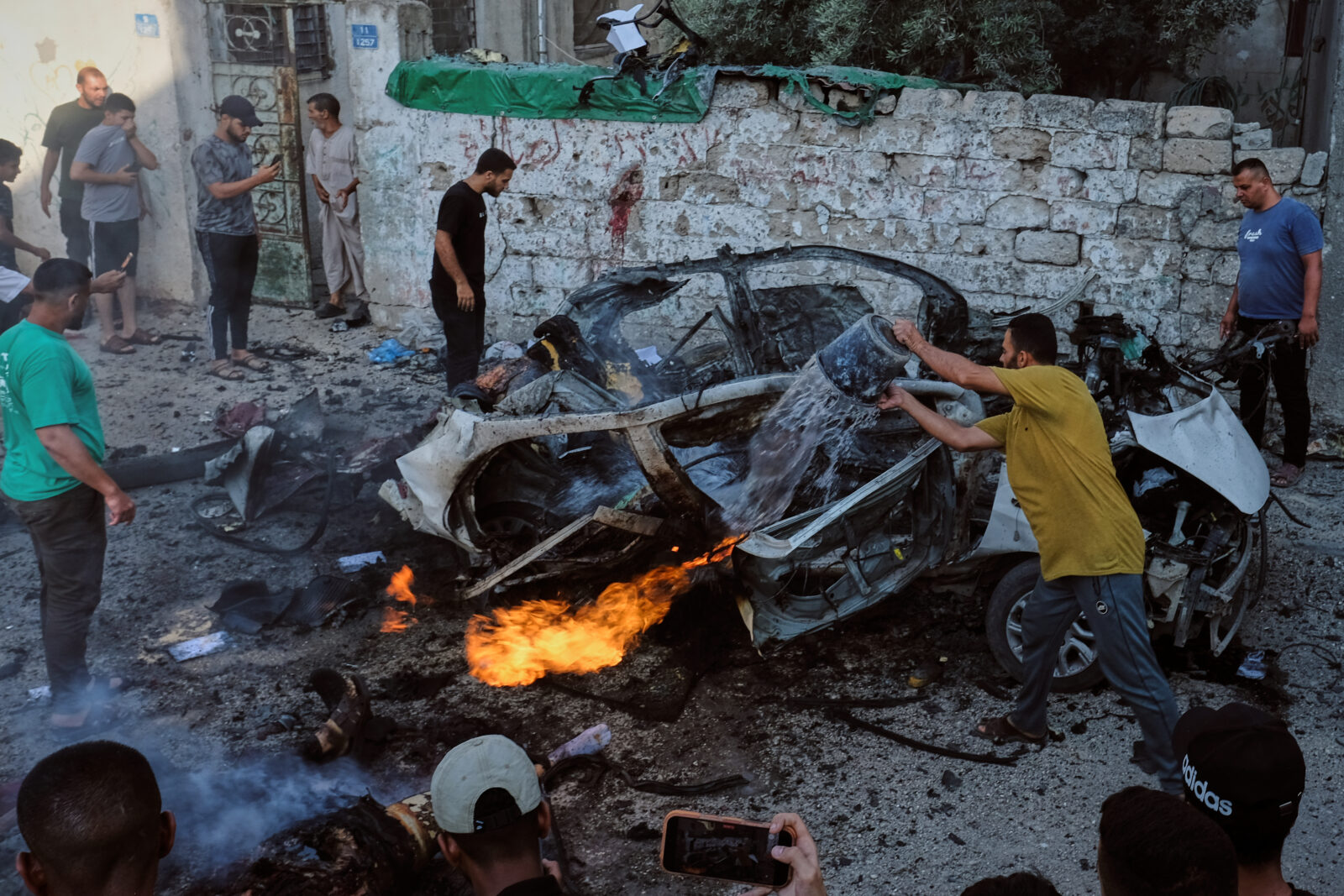
The protracted slaughter in Gaza stands as one of the defining moral catastrophes of the modern era.  With tens of thousands of Palestinians killed, disproportionately women, children and infants, the descent of an entire enclave into manufactured famine, medical collapse and total annihilation has unfolded in real time. 

This is not happening in the dark.  It is happening in broad daylight; funded, diplomatically shielded and witnessed by the world.  To examine the shameful silence of the American public and motivations of the Zionist state after nearly three years of this horror, is to confront a profound erosion of collective humanity.  

For citizens of the United States, this genocide has exposed a dark reality: personal ease and comfort have been prioritized over conscience.  

The bombs flattening apartment blocks, tent camps and the entirety of Gaza, are branded with “Made in the USA” and paid for with billions of dollars plucked from American taxpayers. The diversion of public funds towards the slaughter in Gaza, while domestic pillars like healthcare, housing and education deteriorate, renders our silence a form of complicity.  We have become the financiers of a graveyard.   

For millions, the genocide is a skip through disposable news notifications.  The silence of the American majority reveals moral insulation—a dangerous belief that oceans can guarantee sanctuary from the consequences of our government’s imperial and murderous foreign policy. 

Many who claim to oppose the violence retreat into a paralyzing apathy, convincing themselves that the institutional machinery is too big and complex to control.  History, however, will not record this as powerlessness; it will be remembered as acquiescence.  When faced with the industrial-scale erasure of a population, silence is not neutral; it is a disposition that allows the machine to keep grinding on.

The genocidal war on Gaza has also unmasked the internal ethical rot and normalization of violence with Israeli society.  That this level of devastation has been sustained with broad domestic backing for so long, reveals a deep societal crisis.  Decades of militarism, occupation and state-sanctioned apartheid have fostered an environment in which civilian deaths are celebrated, justified or callously ignored by the Israeli public.

The military assault that began following the 7 October 2023, Palestinian prison break, mutated long ago into a sustained campaign of dehumanization and societal eradication.  The methodical targeting of journalists, poets, health care providers, teachers and bakers proves that retaliation was not the objective; that the real goal has been to wipe out generations of Palestinian families, to make recovery impossible and the land uninhabitable.  

Shielded by United Nations vetoes and unconstrained American patronage, the Israeli regime has operated under the dangerous assumption that it is entirely immune from international law and sanctions.  This absolute impunity has not made Israeli society safer; instead, it has underscored that a state without a moral compass, that breaks all the rules, will eventually fail.  

The illusion of a “rules-based” international legal order has been shattered after three years of unrestrained genocide.  The silence of the American witness and the brutality of the Israeli perpetrator are of an inseparable piece—one driven by comfortable detachment and the other by supremacist violence.  

When the dust finally settles over the rubble of Gaza, judgment and indictment will not be only against those who pulled the trigger and dropped the payloads, but against those who knew and said nothing.Email

Dr. Behnam is a political scientist who specializes in comparative politics with a focus on West Asia. His “Cultural Foundations of Iranian Politics,” published by University of Utah Press, and still in print, was recognized by Choice as Outstanding Academic Book for 1987–1988.


Board of Peace envoy meets with Netanyahu on Gaza disarmament deal and urges a halt to strikes


JERUSALEM, Israel (AP) — Nikolay Mladenov, the high representative for Gaza, held “constructive and detailed” talks with Netanyahu and his team, the Board of Peace said in a statement.


JERUSALEM, Israel (AP) — The Board of Peace official overseeing Gaza’s postwar transition met on Monday with Israeli Prime Minister Benjamin Netanyahu, according to a statement, in part to discuss a new disarmament deal the board had reached with the militant Hamas group.

Nikolay Mladenov, the high representative for Gaza, held “constructive and detailed” talks with Netanyahu and his team, the Board of Peace said in a statement.

“The goal is clear and is not in question: the complete decommissioning of weapons in the Strip and the transition away from rule by the gun to civilian governance,” it said, referring to the embattled enclave.

Mladenov also pressed Netanyahu to halt Israeli strikes in the Gaza Strip, according to two people familiar with the meeting. Mladenov and his team, including senior adviser Aryeh Lightstone, are pressuring Israel to stop striking Gaza as they push ahead with the agreement to decommission the weapons held by Hamas.

In a statement Monday, Hamas said the group and various other Palestinian factions “remain committed to what was agreed regarding the implementation of the second phase of the ceasefire agreement, including all parties’ obligations.”

Hamas added it was awaiting “a clear and official response” from Mladenov and the mediators regarding what was agreed upon.

Meanwhile, in Washington, members of the Board of Peace met with U.S. congressional staff on Monday to detail their ongoing efforts and to work with Congress “to advance peace, security, governance, and reconstruction in Gaza,” according to a brief statement released by the board.

President Donald Trump had announced the agreement, which is part of a broader ceasefire deal reached last year, on Thursday. It calls for Israel to cease its military operations and for Hamas and its allies in Gaza to halt all militant activity. The agreement also laid out in general terms what the decommissioning process would look like.

After the text of the agreement was released, Israel said it had “serious security concerns” and that it shared those with the United States. It also ramped up its strikes in Gaza, killing 17 people overnight Saturday and into Sunday, according to local health officials. No airstrikes were reported in Gaza on Monday.

Israeli attacks have killed 1,250 people since the ceasefire deal was reached in October, an agreement that ended major fighting in the Israel-Hamas war that had raged for two years.

Egypt, Qatar and Turkey — mediators in the Gaza truce negotiations — denounced the latest Israeli strikes in a statement Monday, saying that the particular targeting of healthcare facilities, medical infrastructure and resulting civilian casualties constitutes a flagrant violation of international law and international humanitarian law.

‏The mediators also called on the international community to continue to pressure Israel to fulfill its end of the deal.

The war began on Oct. 7, 2023, when Hamas-led militants attacked southern Israel, killing around 1,200 people and taking 251 hostage.

Israel’s military offensive in Gaza has since killed 73,375 people, according to Gaza’s Health Ministry. Its figures do not distinguish between civilians and combatants but they are considered generally reliable by the United Nations and other international organizations.

___

Magdy reported from Cairo. Associated Press writers Sam Mednick in Tel Aviv, Israel, and Matthew Lee in Washington contributed to this report.


Source: Mondoweiss

Among many buzzwords in diplo-speak around Palestine is the support for “a demilitarized Palestinian state living side by side in peace next to Israel.” This condition is repeated so often that it goes unnoticed most of the time.

That premise, and its inherent injustice, dysfunctionality, and lack of pragmatism, was highlighted this week by no less an entity than Donald Trump’s Orwellian “Board of Peace.”

On August 1, the Board released the full text of its plan, outlining the latest scheme to create an actual ceasefire in Gaza, begin rebuilding, allow a Palestinian body of technocrats to start assuming some small authority in Gaza, and, above all, to disarm Palestinian armed groups.

It is worth noting, briefly, that such a plan should not have been necessary, since such a plan was supposed to be part of the so-called “ceasefire” that was declared in October 2025. 

This new plan was presented as the second stage of the October plan, ignoring the fact that Israel has not fulfilled any of its obligations in stage one, and in fact, has never stopped killing Palestinians and has gradually occupied more and more of Gaza, pushing the survivors ever closer to the sea.

Palestinian factions reportedly had some very difficult consultations regarding this latest plan. In the end, they decided to accept the plan and put the ball in Israel’s court.

The key to that acceptance was one particular clause in the agreement, which tied Palestinian disarmament to Israeli withdrawal from Gaza, to be accomplished in phases, and stated that the Palestinian weapons would not be destroyed but would be handed over to the Palestinian board of technocrats. 

Those conditions were in the Board’s plan. Article 8 described a “process to decommission and store heavy weapons, military production sites, depots of weapons, and tunnels, shall begin after completing the remaining commitments under Sharm Sheikh Protocol, the entry of NCAG and deployment of ISF.”

The NCAG is the proposed Palestinian technocratic board, and the ISF is the often-discussed “International Stabilization Force” that would handle security in Gaza. The “remaining conditions” that need to be fulfilled refer to Israel’s ongoing attacks on Palestinians and its advance beyond the so-called “Yellow Line,” which splits Gaza in two, with Israel occupying 53% of the territory. It has since advanced well beyond 60% and, by some estimates, is nearing control of 70% of the territory. 

The Board of Peace clause continues: “…This process shall be linked to an Israeli withdrawal, in phases, from the areas under its control in Gaza and the decommissioning of armed militias in accordance with article 10 of this Roadmap. …The Palestinian factions shall take part in this process, and no weapons shall be transferred or handed to Israel or non-Palestinian parties.”

There’s no ambiguity there. All weapons would be held by the Palestinian technocrats, and the handover of weapons was explicitly tied to Israel’s withdrawal, not just from ahead of the Yellow Line—which is immediately required—but, in gradual phases, from all of Gaza.

Hamas and the other Palestinian factions called the American and Israeli bluff by agreeing to this. And, if they expected that it was a bluff, they were proven right very quickly.

Despite the clear wording of the agreement that linked Israeli withdrawal to Palestinian disarmament, Israel refused to accept the agreement, which should have come as no surprise to anyone. Yet almost immediately, the chair of the Board, Nickolay Mladenov, met with Israeli Prime Minister Benjamin Netanyahu and the Board sent out a “clarifying statement” which stated that Israel would only withdraw after the Palestinians had completely disarmed. 

This swift reversal didn’t merely confirm that the Board of Peace is nothing more than a tool for continuing the project of crushing the Palestinians; it doubled down on it.

Palestinian self-defense is the core of the issue

The Board of Peace is a Trump initiative, and there is no more reason to expect it will ever seriously consider Palestinian welfare than there is from any American, much less Israeli, idea. Yet the speed with which the Board reversed itself so completely raises a more fundamental question about international diplomacy on Palestine in general.

Diplomacy around Palestine continues to focus on a two-state solution, and while many advocates for Palestine rightly argue that the two-state solution is not viable, it is necessary to examine some of the assumptions that undergird this failed pursuit.

The formulation for two states has been expressed as two states for two people, with an Israeli state living side by side in peace with a demilitarized Palestinian state. The idea that a Palestinian state would not have the ability to defend itself was long assumed, but officially unstated until U.S. President Bill Clinton described a “non-militarized Palestinian state” in his Clinton Parameters of 2000

Clinton envisioned an international border force that would defend Palestinian borders and deter attack, but this was, of course, never realistic. What international force would actually repel an Israeli force if it decided to invade this hypothetical Palestinian state? The inability of UNIFIL to prevent Israeli infiltration in Southern Lebanon is a case in point. 

As time went on, all allusions to such an international force were simply forgotten. But the idea that a Palestinian state would be demilitarized has endured and become an essential part of the envisioned two-state framework. 

As we can see from the way the Board of Peace and the Trump administration are operating in Gaza, what this notion really means is that Israel and its allies will insist that Palestinians give up the means to resist Israel by force. 

Few ask what Palestinians think of that idea, but when the Palestinian polling firm The People Company for Polling and Social Research asked in June 2026, it found that only 20% of Palestinians accepted the idea of a demilitarized state.

Indeed, when asked about not just this condition, but the sort of package that the two-state solution usually includes (such as Palestinian refugees only being allowed to return to the Palestinian state, with only a token number returning to areas within Israel), 59% were opposed to it, even though 51% still said they were supportive of the idea of a two-state solution in general. 

But the issue is not the two-state solution itself; the real issue that has been exposed again in the past week is the idea that Palestinians, even in a post-genocide, post-occupation world, would be denied the right of self-defense. 

Of course, Palestinians reject this, but no one, even the ostensible Palestinian leadership in the quisling PLO, debates the issue in the diplomatic arena. The notion of a “demilitarized Palestinian state” is repeated often and rarely, if ever, challenged.

It is, in fact, debated even less frequently than the right of return, another condition that it is simply assumed Palestinians will relent on, an assumption made seemingly by everyone except Palestinians themselves, who seem never to be asked about it. 

But the right of return is so fundamental to Palestinian nationalism that many Palestinians have raised so loud a voice that it is more difficult to ignore, though much of the world still earnestly tries.

The issue of self-defense has been less prominent, in part because it is inherently associated with a two-state solution, so opposition to it is often subsumed under opposition to that solution in general. 

The question of the right to resist has become more prominent, however, since October 7, 2023. 

Right of self-defense

October 7 villainized Palestinian resistance even further than it had been in the minds not only of Israel and its western allies, but also in the Arab capitals that had been working to find ways to establish relations with Israel despite Israel’s refusal to compromise at all on its occupation. 

Rather than learn the obvious lesson that occupation and the denial of basic rights inevitably lead to horrific days like October 7, and to even more obscenely horrifying responses like the genocide that has followed, Israel used the event as further proof that Palestinians had to be disarmed. 

The cooperation in the Board of Peace process and the support not only from Europe but also from most of the Arab official leadership demonstrate the success of that effort. 

That is a powerful consensus that either supports or at least acquiesces to the idea that Palestinians must be unable to defend themselves. It goes beyond the argument that October 7 somehow proves that Palestinians are, stereotypically, “too brutal” to be trusted with weapons, even while the far more violent and murderous Israeli government and settlers are never challenged in their “right of self-defense,” no matter how often that “right” is used to aggressively murder innocent civilians.

No, this is a much broader argument that says that Palestinians are so inherently and uniquely violent that they can never truly govern themselves. Even the patronizing “pathway to a Palestinian state” is always conditioned on someone else having both authority and the means of enforcing it above the heads of the Palestinians. 

How can there possibly be any kind of Palestinian self-determination—regardless of whether that is in one state between the river and the sea, two states, a confederation, or any other arrangement—if Palestinians must trust that Israel, which has so brutally dominated, dispossessed, and denied rights to them for so long, will not decide to do so again?

Even before we consider the absurdity of claiming Palestinians must live next to or with their long-term oppressors in that state of naïve faith, there is the fact that self-determination is inseparable from the right and the ability to defend oneself against attack. 

If the vision was to create some sort of magical, pacified region where Israel could no longer pose a threat to the Palestinians, it would be reasonable to argue that Palestinians do likewise. Given the history and the nature of the real world, neither side of that equation is realistic.

Those among Hamas and the other Palestinian factions who argued for calling the American bluff and accepting the initial offer from the Board of Peace recognized all of this, and that is why they insisted that their weapons be handed over gradually and only to other Palestinians. It’s possible they wouldn’t have even agreed to that much if they expected Israel to accept the deal, but they took the risk because, even if Israel surprised them and cooperated with the Board, the Palestinians’ weaponry would remain in Palestinian hands.

That was and is the problem, and not only for Israel. When confronted with that objection, there was no effort to push back on it from the various “Board of Peace” tools of the Trump administration. That’s because Hamas had been correct: this was not about disarming them, which, under certain conditions, they could accept, albeit reluctantly. But this was about disarming Palestinians permanently, which neither Hamas nor most Palestinians will acquiesce to.

It is just one more example of how the Palestinians are expected to accept terms that no one else would ever be confronted with. And it is another example of how international diplomacy—whether originating in Washington, Brussels, or Riyadh—remains in a hopeless quagmire of its own making, endlessly proposing new ways to dehumanize the Palestinians rather than trying to help chart a path to a better future for everyone between the river and the sea. 


This article was originally published by Mondoweiss; please consider supporting the original publication, and read the original version at the link above.

Israel, Hamas and the Question of Disarmament


 August 7, 2026

Another trumpeted achievement, another heralded occasion of momentous significance.  Or it may be nothing of the sort.  US President Donald J. Trump is again on the stage pulling on the strings of history.  This time, attention has shifted to whether Hamas and other armed groups in the Gaza Strip will disarm, something conditional on Israel withdrawing its forces from the war-torn enclave.  And there, we are presented with the first, insoluble problem.

The latest roadmap published by the US-led Board of Peace is intended to advance the rest of Trump’s 20-point peace plan signed by Hamas and Israel in October 2025.  It involves the respective cessation by Israel, Hamas and relevant Palestinian factions of “all military operations in accordance with Sharm Sheikh Protocol and the Peace Plan.”  According to Nickolay Mladenov, chief envoy of the Board, “intense efforts” involving Egypt, Türkiye, Qatar and the US had been brought to bear on “the Palestinian factions in Gaza to agree to a Roadmap on the full implementation of President Trump’s plan, to hand over civilian governance and to decommission their weapons.”

Once approved by the parties, a timetable and the implementation phase will be prepared within a fortnight, to be extended as necessary by the International Verification Committee (IVC).  On completion, the National Committee for the Administration of Gaza (NCAG) is to enter the Strip to assume its responsibilities.  According to the plan, Hamas and the other factions are to yield control over civilian governance and security in Gaza to the National Committee in accordance with Trump’s Comprehensive Peace Plan.  The NCAG is to “enjoy full independence in carrying out its responsibilities and the factions shall not interfere in NCAG affairs during the transitional period, in accordance with UNS Resolution 2803 (2025).”

The NCAG is also tasked with pursuing “a comprehensive audit of the financial and administrative affairs in Gaza, and protect, recover and administer public assets and resources.”  Claims from suppliers, contractors and other parties, up to a total of US$400 million, will be assessed by the Committee, with unresolved financial rights, liabilities or claims addressed “within the context of a wider national process later”.

The Committee will apparently operate “according to the principle of One Authority, One Law, One Weapon”, though the plan, without giving much by way of detail, is clear that “Palestinian laws, relevant international standards and the principles of good governance” shall apply.  Police personnel shall be added to “existing police structures” and “undergo a comprehensive vetting.”  Those not cutting the mustard can still find themselves in civilian employment “consistent with their earlier experience or retire in accordance with Palestinian law.  None of those shall be deprived of their financial rights, particularly due to financial affiliation.”

Once the remaining commitments of the Sharm Sheikh Protocol are completed, along with the entry of NCAG and the International Stabilisation Force (ISF), decommissioning and storing “heavy weapons, military production sites, depots of weapons, and tunnels” will take place, supervised by the authority “in a gradual, sequential and time-bound manner”.  The proviso here is that Israel shall withdraw “in phases, from areas under its control in Gaza” as armed militias are decommissioned.

The weapons of the militias are to be decommissioned and stored under NCAG authority in accordance with a timetable.  Foolishly, and unrealistically, the deal is weakened by the requirement that no one from those militias is to “be integrated in the security and police services.”  Shadows of post-invasion Iraq in 2003, when the US-led forces engaged in an extravagant removal and purging of Baathist personnel, thereby leaving them ripe for future insurrection, are cast.

The ISF is to eventually be deployed in the Strip “to separate the Israeli forces from NCAG-controlled areas.” (At this point, that force will draw upon the reserves of Indonesia, Morocco, Kazakhstan, Kosovo and Albania.)  The force will not be in the business of policing “or missions related to the Palestinian society.” Its role, it would seem, is more one of monitoring compliance with the ceasefire, training the Palestinian police complement, and ensuring the protection and delivery of humanitarian aid and essential supplies into the Strip.  NCAG is to be supported, at its request, in other non-policing missions.  Israeli forces will then complete a phased withdrawal from the Strip in accordance with Trump’s peace plan, “which includes a commitment not to force anyone to leave the Strip.”  From then on, NCAG will handle “internal security incidents.”  At that stage, reconstruction of the enclave, to be supervised by the Board of Peace and NCAG, is to take place.

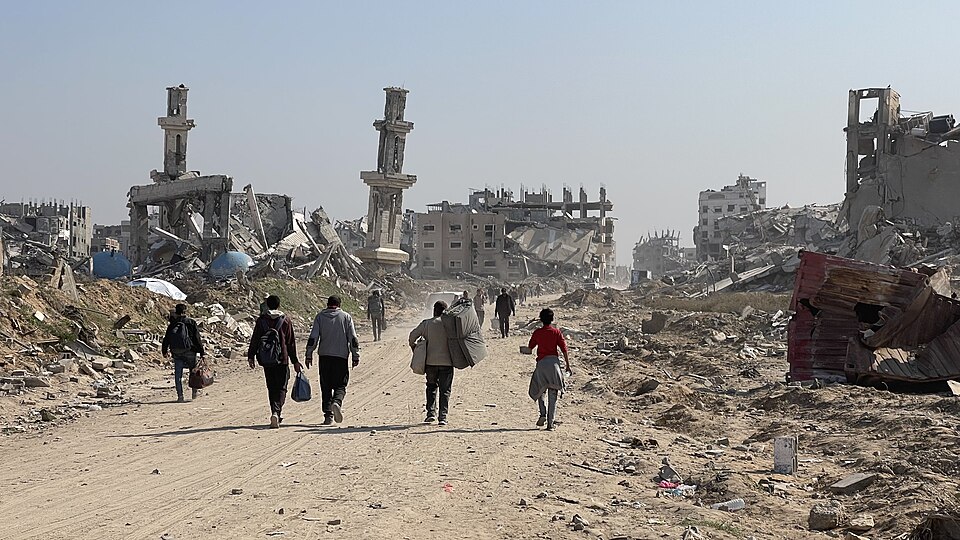
The plan, as with previous iterations on peace regarding Gaza, remains incurably brittle. Since last year’s October ceasefire, Palestinian deaths have risen to 73,000. (The number stood at 67,000 at the commencement of the ceasefire.)  The slaughtering approach of the Israeli Defense Forces (IDF) towards those clinging to the Strip has been only slightly moderated.  The IDF has also hungrily extended its control to almost 70% of the territory well beyond the Yellow Line stipulated by the ceasefire and destroyed, according to a BBC verify report published last November, upwards of 1,500 buildings.

On August 3, Mladenov met Israeli Prime Minister Benjamin Netanyahu in what he described as a “[l]ong day in Jerusalem”.  This heralded “the start of the hard phase and I have never pretended otherwise.”  From here on, the work would be “slow, grinding and technical”.  During the course of conversations Mladenov is said to have requested a halt to attacks by Israel on the Strip, which he had lamented in a post the previous day.  The weekend following the announcement of the roadmap saw the killing of 25 Palestinians and given the usual justifications: a strike on Deir-al-Balah which left four dead had targeted two Hamas commanders; the strikes on Gaza City and Jabalia had been against “military operatives”.

The Israeli attitude to the latest plans is one of profound and sabotaging scepticism.  Doron Spielman, spokesperson for Netanyahu’s office, stated the position on August 2: “Our assessment is that if we redeploy before Hamas is truly disarmed, it will quickly expand its presence throughout Gaza, rebuild its terrorist infrastructure, once again threaten Israeli communities, and seek to carry another October 7-style attack.”  In statement from the same office released on July 30 is clear: the onus is entirely on Hamas to effectively will itself into impotence and subservience through disarming, “including the removal of the weaponry from Gaza and the complete demilitarization of the Strip as a condition for any process”.

Members of the Israeli cabinet are also pre-empting any move on the part of the ISF to move into Gaza.  An August 3 letter from the patriotically rabid Finance Minister Bezalel Smotrich and Settlements Minister Orit Strock demandedthat Netanyahu convene the security cabinet to bar the entry of ISF troops. The roadmap from the Board of Peace was “dangerous to Israel and completely contradicts the disarming of Hamas and the demilitarization of Gaza.”  The plan should be blocked, and the outline amended by the Peace Council “so that it aligns with the goals of the war and the commitments made to Israel.”  Another peace plan, celebrated by its proponents yet doomed to a stillborn reality.

Binoy Kampmark was a Commonwealth Scholar at Selwyn College, Cambridge. He lectures at RMIT University, Melbourne. Email: bkampmark@gmail.com