Sunday, August 09, 2026

Corrupt Mining Decisions Yield Public Health Dangers


 August 7, 2026

Drainage pipe from an abandoned uranium mine in southwest Utah. Photo: Jeffrey St. Clair.

Most people who society labels “environmentalists” begin their vocation in defense of their own local environment. If they continue that campaign, the work of a lifetime and beyond in itself, at first, they see the opposition as one or more “special interests,” influencing local politicians from the mayor to the congressman and US senator. But after a few years of legal and political struggle, you conclude it is more than a set of special interests; it is your whole local society.

After you have simmered in that pot for a few years, you might be ready to understand a message from muckraker Lincoln Steffens from the first years of the 20th century: “Here then, is our guide out of the labyrinth. Not the political ring, but big business—that is the crux of the situation. Our political corruption is a system, a regularly established custom of the country, by which our political leaders are hired, by bribery, by the license to loot, and by quiet moral support, to conduct the government of city, State and Nation, not for the common good, but for the special interests of private business. Not the politician, then, not the bribe-taker, but the bribe-giver, the man we are so proud of, our successful businessman—he is the source and sustenance of our bad government. The captain of industry is the man to catch. He is the trail to follow.”

And if Canadian mining companies should wrap themselves in the stars and stripes, set up US offices and buy the appropriate licenses along with the appropriate politicians, the corrupt system we call the “American Way of Life” is secure from the terrible threat, the ultimate danger of environmental consciousness, composed of two dreadful premises: first, that growth has limits; second, that political decisions affecting the environment and defenseless residents “shall do no harm.”

To the ruin of sleep and disposition, my investigations into environmental destruction and the laws meant to obstruct it, to the terrible conflict on the Colorado Plateau between its residents, the DinĂ©, Ute, Hopi, and several Pueblos, and the Uranium mining and milling complex, composed of transnational mining companies, billionaire speculators in small modular (nuclear) reactors, data centers and dubious forms of radioactive mine-waste cleanup, local, tribal, state and federal politicians, and the ever-compliant “captured” environmental regulatory bureaucracies. And when the elephantine National Security fiction is introduced, what shred of conscience that can’t be bribed is terrified into submission.

Our old friends, Energy Fuels, Inc., which has dumped several hundred thousand dollars into Congress to make it illegal to buy Russian power-plant-ready nuclear fuel (with the big loophole that until domestic production someday, maybe, catches up with the Russians) – I mean it is a Matter of National Security! Don’t think! Don’t consider where the Nuclear Power Industry will put the waste from its “clean energy” plants, the old large ones, and the proposed “small (nuclear) modular reactors.”

The company, whose ultimate headquarters is in Toronto, after a half dozen years of constant flak, wrapping itself in the red, white, and blue, has nearly removed the crimson shadow of the Maple Leaf. It operates a uranium mine in the Kaibab National Forest on the rim of the Grand Canyon above the village of Supai, home of 200-400 Havasupai people, and a destination for 20,000 tourists a year. It trucks the ore from the mine about 300 miles north through the Navajo Reservation into the Ute Mountain Ute Reservation, to its mill at White Mesa, Utah.

Before reopening and renaming this mine, now that uranium prices are climbing again, public comment stressed two points strongly: the danger of contaminating aquifers in the canyon rim that would contaminate the drinking water for the Havasupai and many tourists besides; and the dangers of radioactive spills from truck accidents on the Navajo Nation roads.

The scientific opinion? According to the EPA in 2024, “The main finding is that current well data are insufficient to rule out a connection between the two aquifers. Therefore, the potential for groundwater contamination resulting from operations at the Pinyon Plain Mine site cannot be assessed fully without additional investigations.” A standard government bureaucracy copout under political pressure from mountain-state senators and representatives.

But, as Amber Reimondo, energy director at Grand Canyon Trust reported. (1)  “Dye tracer studies around and inside the Grand Canyon have shown that water can flow long distances, vertically and horizontally, in unexpected ways and sometimes very quickly. As groundwater researcher Laura Crossey explains: ‘I don’t think that a reasonable response is to say, ‘let’s wait and see,’ because cleaning up an aquifer that’s kilometers deep in the earth is simply not going to happen. It’s a one-way street. What we should do is prevent the possibility that those precious places become contaminated.’”

Energy Fuels’ response to predictable rising levels of toxicity in the more than 80 million gallons of water it has pumped out of the mine since an upper aquifer was pierced in 2016 has been to ask for a higher standard of acceptable toxicity on the polluted water. And the Department of Environmental Quality of the great state of Arizona granted their request.

The political corruption of environmental law and regulation is increasing the likelihood of dangerous contamination of the Supai village drinking water every day and it will continue to increase until it becomes the reality Havasupai leaders have been trying to protest against for a quarter century to protect one of the most beautiful waterfalls and pools on the floor of the Canyon.

A 20 foot wide breach in the tailings pond. dam at the Church Rock Uranium Mine. Photo: EPA.

Reimondo also described the toxic soup in the massive holding pond outside the mill, which contains much of the 80 million gallons pumped out of the mine. “Back at the end of 2016, when the need for constant water management first started, water pumped out of the sump at the bottom of the mine shaft had lead levels at the EPA safe drinking water level, while uranium levels were four times and arsenic levels 29 times the safe drinking water level.“Fast-forward to the end of 2023, when mining began. The arsenic levels jumped to 812 times the safe drinking water limit. Lead hit 243 times, and uranium six times.”

The pond is a toxic hazard for wildlife, particularly birds.

Haul No!, a Diné group that opposes the trucking of uranium ore through the Navajo Nation, has energetically protested Energy Fuels Inc. hauling ore 300 miles from the Pinyon Plain Mine to their uranium mill near Blanding, Utah. Haul No! predicted that there would be accidents and possible spills. In the last couple of weeks, there was an accident caused by a truck passing an EFI truck full of ore, which fortunately resulted in just a fender bender. However, within a few days, another EFI truck, empty on its return trip, was evidently blown over by a powerful gust of wind. Flak from all authorities reassured the public that there had been no spill of radioactive material. Impatient drivers behind heavily loaded ore trucks on two-lane highways is a recipe for dangerous driving and accidents. Sooner or later, an ore truck will overturn and spill radioactive waste, which will be worse than when a logging-mill chip truck overturns on a county road in northern California.

Samuel Gilbert2. described what happened in another corner of the Navajo Nation in the summer of 1979, three months after the Three-Mile Island disaster, when the dam of a uranium-mine tailing pond collapsed. It was the largest radioactive spill in the United States, second worldwide only to Chernobyl.

“A few weeks later, at 5:30 a.m. on July 16, 1979, the dam failed, releasing 1,100 tons of uranium waste and 94 million gallons of radioactive water into the Rio Puerco and through Navajo lands, a toxic flood that had devastating consequences on the surrounding area.

“’The water, filled with acids from the milling process, twisted a metal culvert in the Puerco,’ according to Judy Pasternak’s book Yellow Dirt: A Poisoned Land and the Betrayal of the Navajos. ‘Sheep keeled over and died, and crops curdled along the banks. The surge of radiation was detected as far away as Sanders, Arizona, fifty miles downstream.’ According to a Nuclear Regulatory Commission report, radioactivity levels in the Puerco near the breached dam were 7,000 times that of what is allowed in drinking water.

“The heavily contaminated water flowed over the river banks, creating radioactive pools. ‘There were children up and down the river playing in those stagnant pools, and they were deadly poisonous,’ Jorge Winterer, a doctor with Indian Health Service in Gallup, New Mexico, said after the spill.”

You can imagine the health results, particularly in view of the lack of cleanup of the spill site and 20 more sites contaminated by different mines. This is a place, as one woman put it, where people are afraid to have children. According to researchers with the Southwest Research and Information Center, the mine owners were aware of cracks in the dam that burst and did nothing. Less than one percent of the solid tailings waste was cleaned up.

Eric Jantz, legal director of the New Mexico Environmental Law Center, told Gilbert, “Governments took meaningful measures to deal with the Three-Mile Island accident while neither the federal nor New Mexico governments have taken any steps to remediate the Church Rock spill even after 40 years.”

Of course, cleanup of that kind is very expensive and when an aircraft carrier costs $13-15 billion and $25 billion to operate over its life span, unless it meets an end before it’s time in the Arabian Sea. And a battery package of patriot missiles costs over $1 billion, and over a projected 60-year life, the F-35 fighter jet is expected to cost $2 trillion.

We pay these costs for National Security. The citizens living around Church Rock, who don’t pay as high taxes, pay with kidney disease and cancers, contaminated water, contaminated pasture, and contaminated sheep. This is the area where Muttonman was born, the Navajo answer to Spiderman. (3)

But, it is claimed that salvation is at hand in the form of a new technology developed by a cabal of political hacks and billionaires called Disa Technology. It is called high-pressure slurry ablation and it purports to take mine tailings into a magic box, spray it with water, separate radioactive particles from non-radioactive particles, and sell the hot particles to the Energy Fuels Inc. mill on the Ute Mountain Ute Reservation in Utah. The Nuclear Regulatory Commission has granted them a permit to deploy this technology on mine tailings from Gallup NM to Spokane WA.

Jantz, of New Mexico Environmental Law Center, commented on the DISA license application to the Nuclear Regulatory Agency, writing:

“In its speculative scenario where it assumes DISA’s hypothetical HPSA operations will perform flawlessly. NRC fails to consider the only actual data available that indicates HPSA waste (coarse fraction) will, in many cases, leach contaminants into the ground and groundwater. By any standard, the NRC failed to take the required “hard look” at HPSA…The TetraTech Report, which is the sole data source for the NRC’s analyses, indicates that ablation byproduct material, i.e., the coarse fraction left behind after ablation, would have uranium and radium concentrations high enough to make areas where the coarse fraction remains unsuitable for residential or agricultural use in most cases…Additionally, NRC fails to consider impacts of climate change on water availability. Had NRC done so, it would have found that water scarcity will increase dramatically in arid Southwest regions, including New Mexico, and a FONSI (Finding of No Significant Impact–ed) would be inappropriate…Given increasing water scarcity in New Mexico and around the Southwest and DISA’s proposed water usage, NRC cannot justify a finding of no significant impact, even on a generic level.” (4).

There are three or four other uranium mines in various stages of permitting for reopening on the periphery of Navajo Nation, whose tribal council passed a law prohibiting uranium mining within the boundaries of the Nation. However, in the Church Rock area there is a checkerboard situation of private and tribal land holdings.

But, continuing to load fact upon fact just avoids stopping and facing them.

It is nauseating that government treats these citizens this way on behalf of Steffen’s bribe-givers, a few billionaires speculating in data centers, small modular (nuclear) reactors, uranium mines, and political hydrology cleanup scams.

Notes.

1) Reimondo, Amber: https://www.grandcanyontrust.org/blog/pinyon-plain-uranium-mine-80-million-gallons/; https://www.grandcanyontrust.org/blog/arsenic-raises-concern-at-grand-canyon-uranium-mine/

2) Gilbert, Samuel:https://www.vice.com/en/article/church-rock

3) Vincent Craig (June 6, 1950 – May 15, 2010) was a DinĂ© cartoonist, comedian, and singer/songwriter, known for his comic strip Muttonman.

4) Hatch, Bill: https://www.counterpunch.org/

Bill Hatch lives in the Central Valley in California. He is a member of the Revolutionary Poets Brigade of San Francisco. He can be reached at: billhatch@hotmail.com.


Source: jonathancook.substack.com

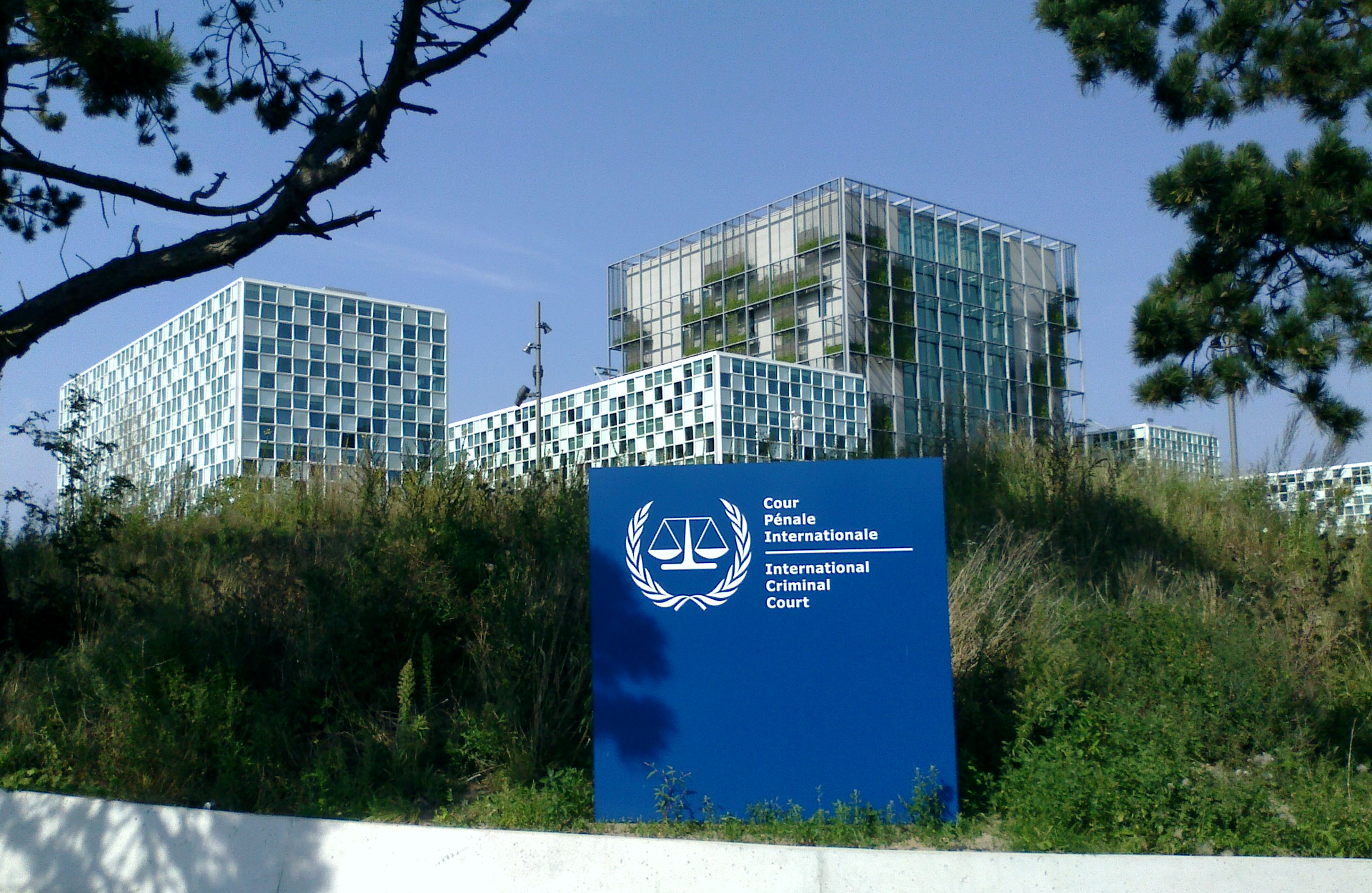
The most important question we should be asking after Karim Khan’s dismissal last week as chief prosecutor of the ICC – the international war crimes court in The Hague – is not whether he is guilty of “sexual misconduct” against another staff member, identified as “Sarah”.

That can only be decided through a legal process – one, let us note, that has already taken place. A fact-finding body carried out a lengthy investigation of Sarah’s allegations over more than a year; its thousands of pages of evidence were then evaluated in detail by three senior judges.

Though you would not know it from the media coverage, they concluded that there was no evidence to suggest any kind of misconduct by Khan, sexual or otherwise.

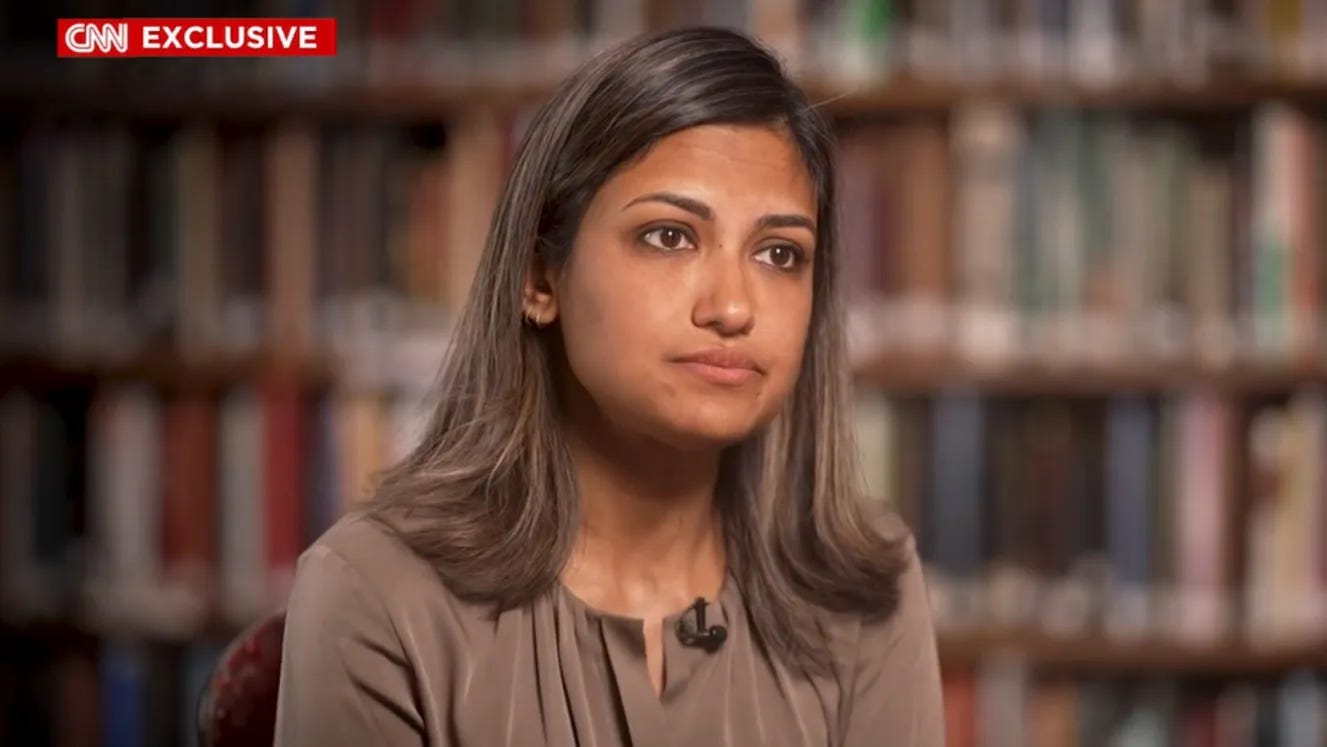
Strangely, that determination was largely confirmed by an extraordinarily deferential “exclusive” CNN interview with Sarah, aired earlier this month.

She declined to give any meaningful details of what Khan had allegedly subjected her to, and celebrity interviewer Christiane Amanpour delicately avoided pressing her for any clarification.

No matter. The purpose of the CNN interview was never about excavating facts. It was designed to offer face-saving cover as an entirely political body called the Assembly of States Parties, comprising diplomatic representatives of the 125 states signed up to the ICC, entirely ignored the legal findings and dismissed Khan.

Paradoxically, it was the Assembly of States Parties that appointed the judges who had concluded that there was no evidence of misconduct or breach of duty by Khan. That inconvenient judgment was simply reversed, despite the Assembly members being in no position to weigh the evidence themselves.

We should not forget that many of these states have an investment in weakening the only international court that can bring their own senior officials to trial for war crimes.

In May 2024 – shortly before Sarah made her allegations – the ICC demonstrated that it was finally ready to prosecute western leaders for war crimes, not just those from the Global South or from the West’s official enemies, such as Russia’s Vladimir Putin.

Khan issued an arrest warrant for Israeli prime minister Benjamin Netanyahu and his former defence minister Yoav Gallant. Both are accused of crimes against humanity for starving the people of Gaza through a prolonged blockade of food, water and power.

Were Netanyahu ever to face trial – and found guilty, as he almost certainly would be – a lot of other leaders would have good reason to fear they might be found culpable next, not least for their complicity in Israel’s mass slaughter of Palestinians in Gaza.

The question that needs answering now is not whether Khan is guilty of misconduct – that has been decided at a political level, not a legal one. No, we need an answer to an equally political, and far more troubling, question.

“Cui bono?” Or “Who benefits?”

The evidence is hiding in plain sight. The evidence is revealed both in the deeply politicised process that led to Khan’s downfall, and in what that process means for the future of the court.

Covert war

Khan is not the first ICC chief prosecutor to face extreme pressures – and, as with Khan, those pressures surfaced at the very moment Khan’s predecessor tried to take on Israel over its war crimes.

Fatou Bensouda faced a “covert war” waged against her by Israel for the best part of a decade, according to an investigation by the Guardian in May 2024, just as Khan issued his arrest warrant for Netanyahu.

The Guardian’s report, published nearly three years after Bensouda had completed her nine-year term at the ICC, revealed that, during that time, she had faced threats to herself and her family, the monitoring of her communications, and an intimidating visit to her home.

More recently, Bensouda has confirmed these accounts in an interview with Al Jazeera. Bensouda notes that she repeatedly reported Israel’s campaign of intimidation to the Dutch authorities, but they did nothing to investigate the threats or protect her.

She also says certain “authorities” – she does not name them – warned her that she was going too far in investigating Israeli crimes and that “you could be harmed or you could be killed, or family members could be harmed in some way.”

The campaign of threats – instigated by Yossi Cohen, then the director of Israel’s spy agency, Mossad – intensified as Bensouda considered whether to open a formal investigation into Israeli war crimes and crimes against humanity in the illegally occupied Palestinian territories.

Israel’s crimes against the Palestinian people, we should remember, predate – by decades – Hamas’ attack on 7 October 2023. In fact, though no one is supposed to mention it, Israel’s sustained crimes of occupation are the self-evident cause of that Hamas attack.

An Israeli source told the Guardian that “the Mossad’s objective was to compromise the prosecutor or enlist her as someone who would cooperate with Israel’s demands”– that is, scrap the ICC’s investigation into Israeli crimes. Another source admitted that Cohen was acting on Netanyahu’s instructions.

During one contact, Cohen reportedly issued a Mafia-style threat to Bensouda: “You don’t want to be getting into things that could compromise your security or that of your family.”

The Guardian reported that the Mossad “took a keen interest in Bensouda’s family members and obtained transcripts of secret recordings of her husband, according to two sources with direct knowledge of the situation. Israeli officials then attempted to use the material to discredit the prosecutor”.

The paper also noted that there were fears among senior ICC officials that “Israel had cultivated sources within the court’s prosecution division” – the division Khan would inherit from Bensouda.

Cohen was described as “stalking” Bensouda, and personally “ambushed” her in a hotel room in New York in 2018. Afterwards he repeatedly phoned her, in a threatening manner that was said to have escalated over time. When Bensouda asked Cohen how he had obtained her phone number, he reportedly replied: “Did you forget what I do for a living?”

According to the Guardian:

On one occasion, Cohen is said to have shown Bensouda copies of photographs of her husband, which were taken covertly when the couple were visiting London. On another, according to sources, Cohen suggested to the prosecutor that a decision to open a full investigation would be detrimental to her career.

Between 2019 and 2020, the Mossad had been actively seeking compromising information on the prosecutor and took an interest in her family members.

The spy agency obtained a cache of material, including transcripts of an apparent sting operation against her husband.

Israel used the materials to mount a “smear campaign” against her, but one that ultimately proved unsuccessful.

Concerted backlash

When Khan took up the role of ICC chief prosecutor in June 2021, he proved reluctant to pick up where Bensouda had left off on the Palestine case. Presumably, he was only too aware of the retaliation from Israel against her.

Bensouda had announced in December 2019 that she had grounds to open a full criminal investigation into allegations of war crimes in Gaza, the West Bank and East Jerusalem.

However, in the face of a concerted backlash from western states, she delayed opening the investigation. She first sought a ruling from a pre-trial chamber of ICC judges – presumably in the hope it would serve as some kind of insurance policy – on whether the court had jurisdiction over the occupied Palestinian territories.

By February 2021 the judges confirmed what was already self-evident. The court did have such jurisdiction because Palestine had been signed up to the court since 2015.

Bensouda stepped down a few months later.

The door was now open for Khan to prosecute Israeli officials for war crimes. However, the new chief prosecutor gave every appearance – perhaps understandably – of preferring to sit on his hands.

It was not just Israel that had been fearsomely opposed to its officials being tried for war crimes. Washington was equally incensed at the prospect – sometimes, it seemed, more so than over the possibility that US officials might also face arrest warrants for crimes committed by the US military in Afghanistan and Iraq.

Between 2019 and 2020, during Trump’s first presidency, the US imposed severe visa restrictions and financial sanctions on Bensouda. Mike Pompeo, then US secretary of state, linked the sanctions to the Palestine case: “It’s clear the ICC is only putting Israel in [its] crosshairs for nakedly political purposes.”

Khan might well have avoided pursuing Israel indefinitely had it not been for the events that followed 7 October 2023.

Israel’s mass slaughter of Palestinian civilians in Gaza, its devastation of the enclave’s homes and infrastructure, and its starvation of the entire population were actions so criminally abhorrent that UN agencies, major human rights groups and Holocaust scholars were soon all in agreement that they amounted to genocide.

In May 2024, Khan announced arrest warrants against Netanyahu and Gallant, as well as three Hamas leaders subsequently killed by Israel.

Tsunami of threats

Shortly before Khan made that announcement, 12 senior US Senators had sent a threatening letter to the ICC: “Target Israel and we will target you.” The letter ended: “You have been warned.”

Describing Israeli and US sovereignty as inseparable, the senators reminded Khan that Washington had demonstrated “the lengths to which we will go to protect [our] sovereignty.”

A 2002 law, popularly known as “The Hague Invasion Act”, authorises the US president “to use all means necessary and appropriate” to bring about the release US persons and any allies imprisoned or detained by the ICC. Those allies, it goes without saying, include Israeli leaders.

Such threats, it should be noted, are a violation of Article 70 of the Rome Statute.

Following the issuing of the arrest warrants, there followed a tsunami of similar threats – and presumably more that have yet to become public – against Khan and the ICC.

A British-Israeli lawyer within the ICC – one known to have ties to Netanyahu’s legal adviser – warned Khan “they will destroy you and they will destroy the court” if the warrants were not rescinded. He urged Khan to “climb down the tree” and drop the case.

The UK’s foreign secretary of the time, David Cameron, phoned Khan to tell him Britain would defund the court and withdraw from the Rome Statute that founded the ICC if Khan did not back down.

Cameron warned Khan that he was “on the brink of making a huge mistake” and urged him to “take a step back and consider things”. He added that applying for arrest warrants for Israeli officials was tantamount to “dropping a hydrogen bomb”.

Meanwhile, Trump issued an executive order imposing aggressive financial sanctions against Khan and other ICC officials, including several of its judges.

Khan himself received warnings that Israel’s Mossad was continuing its operations in The Hague, where the ICC is located, to monitor and compromise the court’s investigators as they compiled evidence on Israel – just as it had done earlier under Bensouda.

Khan publicly stated that retaliatory threats and intimidation were explicitly targeting members of his own family.

Untouchable criminals

What conclusions should we draw from all of this?

Quite aside from the matter of whether Sarah’s allegations of “sexual misconduct” are true or not, it is clear that Israel and the US have been digging for dirt – and apparently ready to fabricate such dirt – on any chief prosecutor who tries to hold them to account for their crimes.

Both have indicated that they are ready to manipulate legal and political processes to ensure the outcome they desire: that they remain untouchable.

We have a template for how this plays out. Julian Assange, founder of the whistle-blowing site Wikileaks, published details in 2010 of US and British war crimes in Afghanistan and Iraq. Almost immediately he found himself entangled in accusations of sexual misdemeanours – in his case in Sweden – that were similarly amplified by an uncritical western media.

Assange faced years in various forms of confinement while the US and UK pressured Sweden to keep alive an investigation against him Swedish prosecutors at least twice sought to drop for lack of credible evidence.

In fact, the US and UK never wanted the evidence tested – they were quite happy with a permanent, unresolved “investigation” – precisely because they knew it would have been unlikely to withstand judicial scrutiny.

The point was simply to generate constant headlines about “rape”, turning Assange into a pariah, justifying his effective disappearance from public life, severely weakening Wikileaks as a whistleblowing platform, deflecting attention from the all-too-real crimes committed by the US and Britain, and paving the way to a political show trial to extradite him to the US on entirely confected “espionage” charges.

This has been repeated in the case of Khan and the ICC. In Khan’s case, the evidence was tested and found inadequate. So the legal process has been replaced by a flagrantly political one.

Khan has been turned into a legal pariah, even stripped of his right to work as a lawyer in the UK by the British Bar Association.

The ICC has been further weakened, just as Israel and the US have expressly stated they wanted it to be. Marco Rubio, Trump’s secretary of state, has recently launched an official campaign to dismantle the ICC “brick by brick”.

He says: “Now they [the ICC] are going to see the consequences”. Consequences of what? Of seeking to enforce international law against a key US client state.

Meanwhile, accountability for the all-too-real crimes being committed by Israel in Gaza, Lebanon and the West Bank – and actively supported by western states like the US, Germany and Britain – recedes yet further into the background.

As each brick protecting the ICC is dismantled, a brick is added to the wall of protection around Netanyahu and Israel’s genocidal war machine.

Israel, meanwhile, is barely concealing that it has been masterminding the effort to destroy the ICC.

According to Guy Azriel, the diplomatic correspondent for i24 News, Israeli foreign Minister Gideon Sa’ar “oversaw a dedicated task force and employed intensive diplomatic efforts aimed at securing Khan’s removal from office”.

Hillel Neuer, director of the Israel apologist group United Nations Watch, cheered what he called “our campaign to remove” Khan, and warned Francesca Albanese, the UN’s legal expert on the occupied Palestinian territories, “you’re next”.

Like Khan, Albanese has been searching for practical, legal ways – not just rhetoric – to hold Israel and its western allies to account for the crimes in Gaza.

Predatory states

The ICC claims its work will not be affected by Khan’s removal and that the arrest warrants against Netanyahu and Gallant will still be pursued under new stewardship. That seems doubtful.

Israel and the US are cranking up the intimidation of the ICC, which has no tools – beyond the support of members states – to enforce its rulings or protect itself from the hostility of a rogue superpower.

Currently the court appears paralysed, allowing Israel to muddy the waters with interminable, and vexatious, appeals against the arrest warrants.

Any lawyer who takes up the post of ICC chief prosecutor will be only too aware of the fate that befell Khan and the campaign of intimidation against Bensouda as soon as each tried to enforce accountability on Israel and its western patrons.

It will take a very brave individual indeed to renew that task. Khan’s successor will understand that, in any further confrontation with Israel and Washington, the US will not hesitate to crush the ICC and, with it, remove the only effective restraint on criminality by powerful states.

More likely, however, the Assembly of States Parties – the political body that ousted Khan – will privately require from his successor reassurances that the new chief prosecutor reliably defer to the principle of Israeli and western impunity. Only someone less willing to ruffle feathers stands any chance of being appointed.

That was the clearest of messages sent by the Assembly when a majority of member states voted to be rid of Khan. The short-lived experiment in creating a mechanism for enforcing international law is over. We are back to the law of the jungle.

Hundred of thousands of people around the world – more likely millions – will now find themselves even more exposed to the criminal actions of predatory states. Unlike Khan’s accuser, they are unlikely to ever get their day in court.


This article was originally published by jonathancook.substack.com; please consider supporting the original publication, and read the original version at the link above.Email
avatar

Jonathan Cook is a British independent journalist, who has covered issues of Palestine and Israel for much of his over 20-year career. He formerly wrote for the Guardian and Observer newspapers and is a winner of the Martha Gellhorn Special Prize for Journalism.


Source: Originally published by Z. Feel free to share widely.

Security Pact or Capital Realignment?

The defense agreement between Saudi Arabia, Turkey, and Pakistan should not be read simply as a military arrangement among three regional states. Much commentary places it within the familiar frame of geopolitical rivalry — Iran versus Israel versus Saudi Arabia versus Turkey. That frame captures part of the picture, but it cannot explain why this alignment has taken shape at this particular historical moment. Placed instead within the broader transformation of the global capitalist system, a different picture emerges: security, arms manufacturing, and investment appear here as facets of a single process.

Wallerstein understood the world-system not as a collection of independent states but as a network of unequal economic and political relations linking core, semi-periphery, and periphery. In this framework, a state’s position must be measured against the global process of capital accumulation, technology, and power — not read off its foreign policy alone. Saudi Arabia, Turkey, and Pakistan occupy three distinct but complementary positions within this hierarchy. Saudi Arabia commands enormous financial capital yet remains dependent on imported defense technology. Turkey has spent two decades building a domestic arms industry — drones, armored vehicles, electronics — as part of a broader effort to loosen its historical dependence on the West, a trajectory I examined at greater length in my earlier analysis of Turkey’s semi-peripheral position. Pakistan, despite chronic economic crisis, has secured an outsized role in regional security calculations through its nuclear capability and its long record of joint arms production with China.

What distinguishes this cooperation from earlier regional alliances is its entanglement with the political economy of the defense industry itself. Saudi capital has flowed into Turkish and Pakistani defense manufacturing, generating export revenue and employment for Ankara and Islamabad while expanding their technological and productive capacity. The pact is best understood as an alliance of finance capital, arms industry, and geopolitics — not simply a union of three armies. Yet this should not be mistaken for Riyadh finally solving its security crisis. Decades of Saudi reliance on Washington’s guarantees and on massive purchases of Western weaponry have not produced durable security, and cooperation with Turkey and Pakistan is unlikely to fill that gap on its own.

Why This Pact Cannot Manufacture Security

Recent Middle Eastern history shows that accumulating weapons and expanding military alliances does not automatically translate into security; in many cases, the same process has instead intensified arms races and instability. Saudi Arabia illustrates this contradiction clearly. Over four decades it has spent hundreds of billions of dollars on the world’s most advanced fighter jets and air-defense systems from the United States and Europe. Yet none of this prevented the war in Yemen from reaching Riyadh’s stated objectives, nor did it stop the 2019 strike on Aramco’s facilities despite the presence of sophisticated air defenses.

The clearest and most recent confirmation of this failure came from the US-Israeli war against Iran. Iran responded by striking countries that hosted American bases — and, more tellingly, the United States, despite its unrivaled military superiority, could not fully secure its own installations in the region. If a superpower with that degree of technological dominance cannot protect its own military assets, it follows that it cannot guarantee the security of the states that host them, Saudi Arabia among them. The episode demonstrates plainly that security, unlike weapons, is not a commodity that can simply be bought or outsourced to a foreign patron.

One might object that this reading is unduly pessimistic: even without a full guarantee, a mutual-commitment clause — an attack on one is an attack on all three — could still raise the cost of aggression and function as a partial deterrent. The objection has some merit, but it runs into two structural limits. First, effective deterrence requires clear political will for direct intervention, and neither Ankara nor Islamabad has shown that will in previous Gulf crises. Second, the three states’ security interests are not always aligned — Turkey is preoccupied with the Eastern Mediterranean and the Caucasus, Pakistan with its rivalry with India, Saudi Arabia with the Gulf and Yemen — and in an actual crisis these priorities could pull in different directions. The agreement is better understood as a framework for military cooperation and technology transfer than as a classical collective-defense treaty; this is precisely where Wallerstein is instructive. When the primary driver of a partnership is economic and industrial interest, one should not expect it to produce full security convergence as a byproduct.

Fragmented Realignment: Parallel Blocs, Not a New Order

It is tempting to read this pact as the emergence of a new Islamic bloc, or as an early sign of the end of American hegemony. The region’s actual map suggests something else. What is taking shape in the Middle East is not a simple two-camp polarization but several parallel, at points overlapping, blocs: the UAE-Bahrain-Israel-US axis on one side; the newly formed Turkey-Saudi-Pakistan axis; and, opposing both, Iran and its allies. None of these axes is internally uniform or stable — Saudi Arabia and the UAE, despite strategic proximity, have been rivals in Yemen; Turkey belongs simultaneously to NATO and to this new pact with Saudi Arabia. This fragmentation itself confirms a Wallersteinian reading: semi-peripheral and peripheral states are maneuvering for position within the existing hierarchy, not dividing the region into two opposing camps.

Wallerstein’s point remains that the capitalist world-system does not collapse suddenly even in periods of hegemonic decline; what occurs instead is a realignment of power relations within the same general logic of the system. Saudi Arabia is pursuing relative autonomy in defense; Turkey is consolidating its status as an industrial-military power; Pakistan hopes to offset chronic economic crisis by attracting investment. These are less a shared ideological project than separate national interests, which is precisely why the pact could unravel quickly if the regional balance shifts.

From a left perspective, two errors deserve equal caution: inflating this pact into the beginning of an anti-imperialist front, when none of the three states intends to exit the capitalist world economy or confront it structurally; and dismissing it as merely symbolic, when it could genuinely strengthen the three countries’ defense industries and economic ties without transforming the region’s security order. The pact’s real significance lies less in the number of fighter jets involved than in what it tells us about the current stage of the world-system: a Middle East in which regional states, as Washington’s appetite for direct intervention wanes and its inability to secure even its own bases becomes evident, are attempting to play a more active role in securing their own interests — an attempt that remains bound by the structure of global capitalism and its limits, not a rupture from it. The path toward something better lies not in swapping one hegemon for another, but in strengthening independent social movements, labor organizing, and new forms of transnational solidarity — the only horizon from which a genuinely different order, built on social justice rather than the competition of powers, could emerge.Email

Majid Maleki Meighani, (sometimes writing under the name Majid Maleki), is an Iranian political analyst, writer, and translator. He was imprisoned for his political activities. His work focuses on critical analysis of Iran’s labor movement, the political left, anti-imperialist critiques of geopolitics, and social movements in West Asia and the Global South. His analysis is grounded in direct fieldwork and interviews within local communities. He has translated into Persian Walter LaFeber’s Inevitable Revolutions: The United States in Central America and the collection Voices of the Arab Spring. He has been a contributor to ZNetwork, Tribune Zamane, and Akhbar-e Rooz. You can access his full body of work on his author page on ZNetwork.