Tuesday, August 18, 2026


Wreck of British Warship Cut in Two by Cruiser Found 118 Years Later
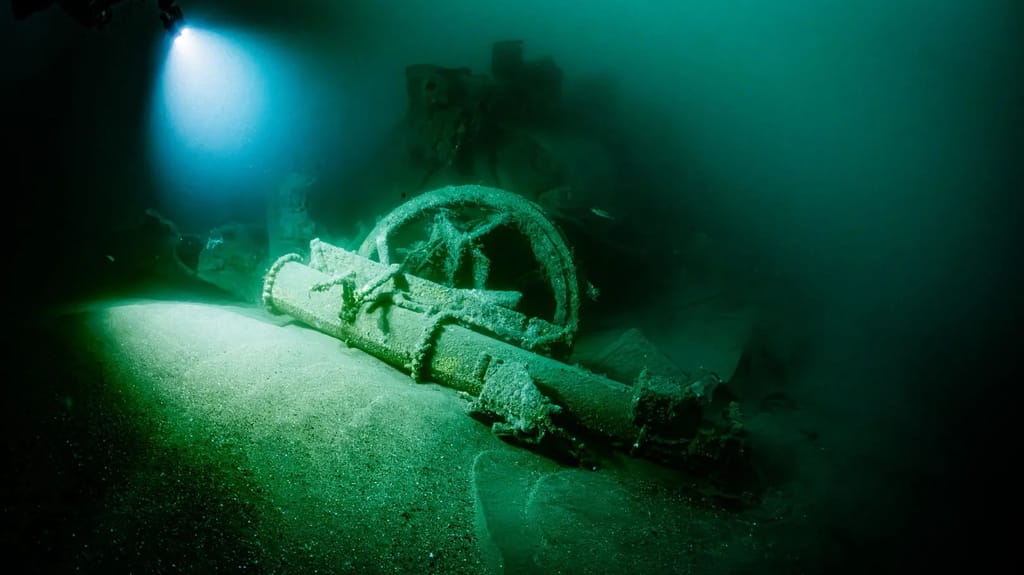
Destroyer
Single Whitehead torpedo tube on Tiger's bow section (Dr Steffen G Scholz)

Published Aug 16, 2026 8:22 PM by The Maritime Executive


The wreck of a Royal Navy destroyer that sank after being cut in two by another warship during an exercise, killing 35 men, has been discovered some 118 years after the collision.

HMS Tiger sank in the English Channel in 1908, and her wreck has now been found at a depth of 60 meters, not far from the Isle of Wight.

Divers with ProjectXplore spent five years working through archival material in search of Tiger, the last missing British 30-knot torpedo boat destroyer. Having first identified the wreck site in 2025, the team was able to confirm it as the British warship in July after surveying it with sidescan sonar.

Tiger was a three-funnel, 30-knot torpedo boat destroyer (TBD) built at the Clydebank yard of J & G Thomson in 1901. The British built a fleet of TBDs to counter small, fast torpedo boats, which posed a serious threat. At 220 feet in length and 400 tonnes full load displacement, the TBDs were light by modern "destroyer" standards, but they served a similar escort mission for the fleet.
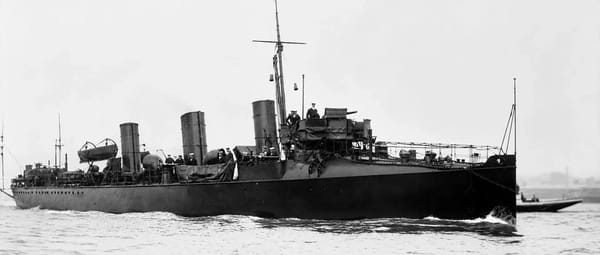
HMS Tiger (Royal Navy)

Through her years in service, Tiger endured repeated collisions and mechanical failures, returning to service each time. On the day of her loss, 12 destroyers including Tiger left Portsmouth Harbor to take part in exercises in the English Channel, south of the Isle of Wight. The destroyers were to practice night attacks against six battleships and cruisers.

During the evening, the destroyers were in position south of St. Catherine’s Point, proceeding without lights and attempting to close on the battleships and cruisers without being seen. The objective was to maneuver within striking distance for their attacks after dark.

A few minutes past eight, on a dark night with no moon, Tiger strayed into the path of the cruiser HMS Berwick while steaming at 20 to 21 knots. Though Berwick's captain gave orders to try to avoid a collision, there was no time for either ship to take evasive action. The 10,000-tonne cruiser struck the 400-tonne destroyer amidships, slicing her in two. The bow sank almost immediately, taking the captain and much of the crew with it; the stern stayed afloat only a few minutes longer. Of Tiger's 57-strong crew, only 22 survived.

“It has been the privilege of a lifetime to research, discover and document the wreck of HMS Tiger. We sincerely hope that our work will ensure that HMS Tiger, her story and the memory of those connected with her endure for future generations,” said Leo Fielding and Dan McMullen, co-organizers of ProjectXplore.

The find is significant because Tiger was the last missing 30-knot TBD sunk in the English Channel. The three others — Flirt, Myrmidon, and Bittern — had previously been located.

The discovery also comes as the UK government moves to strengthen protections for shipwrecks. The Armed Forces Bill, now before Parliament, would give newly found military wrecks “protected place” status from the moment of discovery, making it an offense to disturb or remove items from the site without permission. Current law does not provide such protection for ships lost before World Wr I.

“Protecting military wrecks helps to ensure they are preserved for future generations. This is beneficial for our rich maritime heritage and the diving community who keep the stories of our lost shipwrecks alive,” said Lieutenant Commander Jen Smith, the Royal Navy’s Deputy Fleet Wreck Officer.


South Australia Sinks Historic Grab Dredger as Artificial Reef
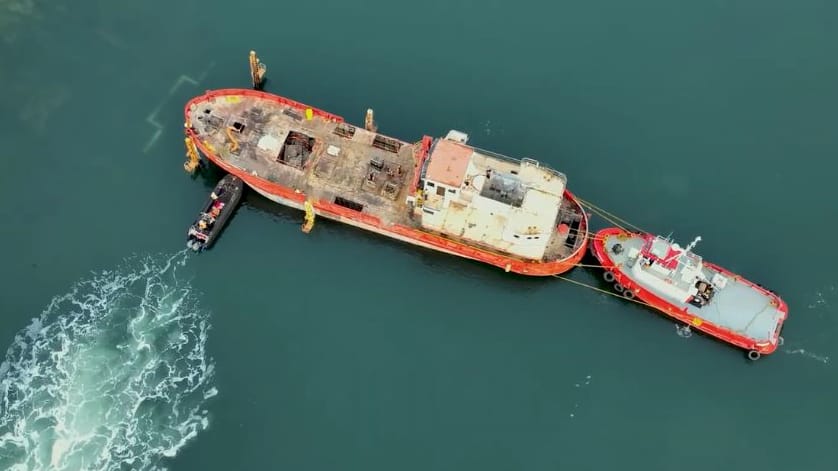
SA
Courtesy SA Department of Infrastructure & Transport

Published Aug 16, 2026 11:35 PM by The Maritime Executive


A 64-year-old vessel that supported artificial reef installations in Australian waters is preparing to be sunk to become an artificial reef and a recreational dive site, part of a program to restore biodiversity.

The MV Andrew Wilson, a 40-meter grab hopper dredger built in 1962, is set to be turned into an artificial reef in shallow water about six kilometers off the coast of Brighton in Gulf St Vincent. She will be the first vessel scuttled in South Australian waters in more than two decades.

For over six decades, the vessel, owned by the Australian company Maritime Constructions, was a workhorse in South Australian waters and was engaged in dredging, salvage operations, dive support, pile installation, navigation aids, and reef construction. At one point she was converted to a specialized commercial fishing vessel operating from Port Lincoln.

The Andrew Wilson is also remembered for playing a pivotal role in the salvage mission following the Whyalla Airlines tragedy in May 2000. The plane suffered a dual-engine failure and crashed into Spencer Gulf off the coast of South Australia, killing all eight people on board.

Currently docked at Port Adelaide, the vessel is preparing to make her final voyage as part of an US$116.5 million biodiversity restoration initiative.

Work is under way to strip hazardous materials from the vessel, including cutting access holes into the hull to allow safe entry for scuba divers. Once that is complete, the ship will be towed to the designated scuttling site, where she will be sunk upright on the seafloor. The vessel’s crane will remain in place to serve as an underwater landmark.


The Andrew Wilson becomes the first ship purposely sunk in South Australia since the decommissioned Royal Australian Navy guided-missile destroyer HMAS Hobart in 2002. The 134-meter warship was scuttled in Yankalilla Bay, South Australia, using controlled explosions to become a protected artificial reef and dive site.

“The MV Andrew Wilson has served the state for decades, and this next chapter will see it transform into a thriving artificial reef, supporting both the marine ecosystem and tourism industry,” said Joe Szakacs, South Australia’s Minister for Infrastructure and Transport.


Famous Museum Ship USS New Jersey Gets $24M in Upgrades
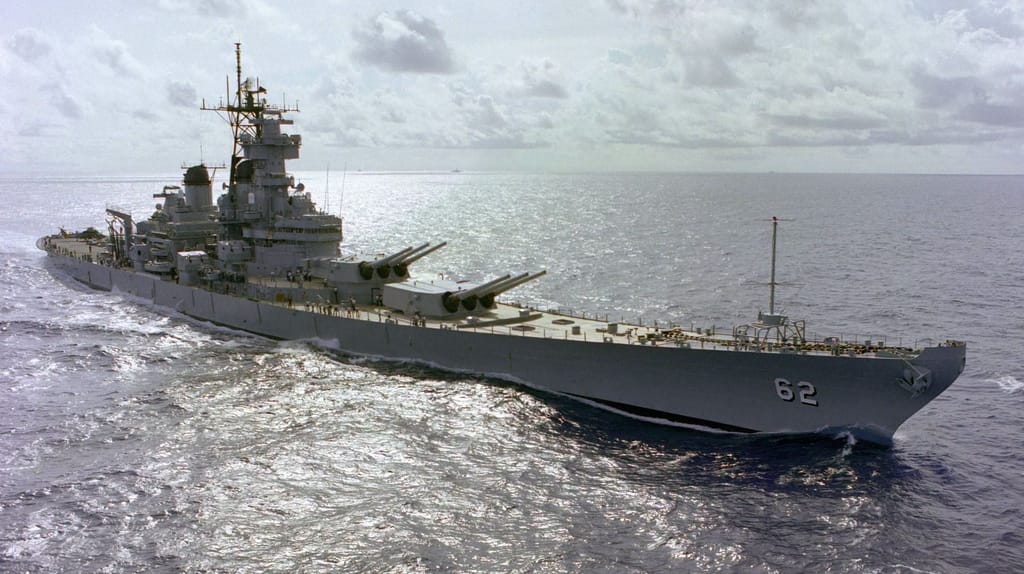
USS New Jersey
USS New Jersey under way, 1983 (USN)

Published Aug 16, 2026 10:48 PM by The Maritime Executive


More than 80,000 people visit the battleship USS New Jersey each year, and her namesake state is investing $24 million in a  redevelopment project designed to make that experience better.

The Iowa-class New Jersey is one of the most decorated battleships in U.S. Navy history, having earned distinctions in World War II, the Korean War, the Vietnam War, the Cold War, and conflicts in the Middle East. She was launched on the first anniversary of Pearl Harbor and went on to steam more miles, fight in more battles, and fire more shells in combat than any other battleship in history. In and out of commissioned service over the years, the ship was decommissioned (for the fourth time) in February 1991 and has since served as a living museum and memorial in Camden.

Two years ago, the warship went into drydock for major maintenance, repair, and repainting at a cost of $10 million. A new project has now been unveiled to preserve the battleship’s legacy and strengthen its standing among the most treasured historic destinations in New Jersey, where it has served as a cultural landmark and educational destination since 2001. The redevelopment is designed to transform the visitor experience, address critical infrastructure aboard the ship, and strengthen its role as an anchor of the Camden waterfront.

The New Jersey Economic Development Authority is funding the project with a $24 million investment, backed by up to $20 million in tax credits. The largest share, $9.5 million, will go toward the building of a new three-floor visitor center adjacent to the battleship. Some $6 million has been allocated for improvements aboard the battleship, while $5.5 million will go toward a parking structure. Work is slated to begin in the middle of next year and will take about two years to complete.

“This project will fundamentally change how visitors arrive, how they experience the ship, and how we sustain this national treasure over the long term. It is the culmination of years of planning and partnership, and it gives us the opportunity to match the greatness of the ship with the visitor experience she deserves,” said Marshall Spevak, CEO of the Battleship New Jersey Museum & Memorial.

“As a Navy veteran, I know Battleship New Jersey stands as an enduring testament to the service and sacrifice of generations of Americans,” said New Jersey Governor Mikie Sherrill. “This investment will preserve that legacy and strengthen one of New Jersey’s most treasured historic destinations.”

 

Libya Power Crisis Explodes as Grid Fails Again

Libya’s electricity grid suffered another major collapse on Monday, knocking power plants offline across western, central and southern parts of the country, shutting down the Great Man-Made River water system, fueling widespread public anger in a country already divided between rival power centers.

The Zawiya, Khoms and Ubari power plants went offline, with large parts of western and central Libya losing electricity. The Libya Herald reported that it was the third major blackout to hit western Libya in two days. The cause of Monday’s simultaneous outages has not been established.

The failure also spread to the water system. The Great Man-Made River Authority said electricity cuts forced all pumping stations under its control to stop operating, including the wellfields and the Tarhouna pumping station. The network supplies much of Libya’s population with water from underground aquifers deep inside the Sahara.

Weeks of outages have triggered demonstrations, road blockades and closures of government institutions, including protests directed at Prime Minister Abdul Hamid Dbeibah’s Government of National Unity in Tripoli.

That public anger is becoming increasingly dangerous for the political arrangement that has divided Libya between Dbeibah’s government in the west and the Haftar family’s power base in the east. The rival camps have maintained an uneasy equilibrium that gives both sides access to state institutions and the country’s oil revenues. Washington has been trying to turn that arrangement into a more formal political settlement while encouraging U.S. oil companies to expand in the country.

Libya’s deteriorating energy system is now putting additional pressure on that fragile alliance from the public.

Protesters stormed the Mellitah oil and gas complex in late July, temporarily disrupting production at the El Feel and Wafa fields and interfering with gas supplies used for electricity generation. Libya then suffered a series of drone attacks around the Zawiya energy hub this month, including strikes on oil infrastructure and a major attack that left more than 700 MW of the 1,300-MW Zawiya plant unavailable.

The National Oil Corporation warned last week that continued attacks could force it to declare force majeure on exports from Zawiya.

Libya is producing around 1.4 million barrels per day and wants to raise output to 2 million bpd in the early 2030s. But the same oil revenues that have helped enrich Libya’s rival political camps have yet to filter down into basic, reliable electricity service.

By Charles Kennedy for Oilprice.com


Study: Wealthy Countries Fuel Illegal Fishing in Poor Countries

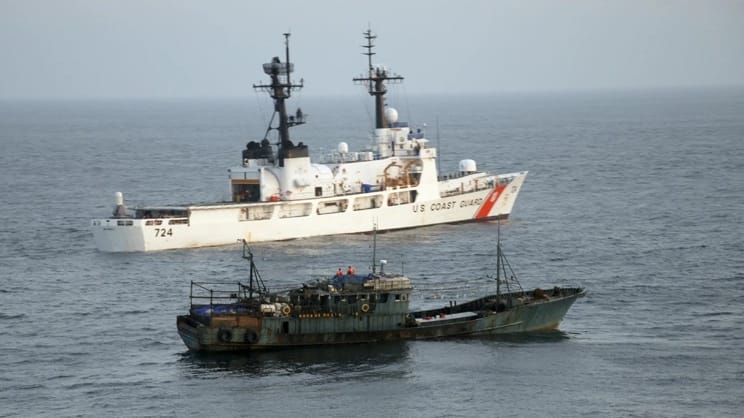
Clear offender: a Chinese distant-water fishing vessel caught with illegal drift net gear at a position off Japan, 2008 (USCG file image)

Published Aug 16, 2026 10:40 PM by The Maritime Executive


Consumers in wealthy nations are fueling a rampant illegal fishing trade that has become a multibillion-dollar industry, and the majority of the catch originates in the waters of poor countries, according to a comprehensive study from Canada’s University of British Columbia.

Fishing is a socioeconomic lifeline for most coastal communities across the globe, with about 3.5 million fishing vessels plying the world’s oceans, providing livelihoods and food for millions. But the world seems to have resigned itself to being unable to tackle illegal and unreported fishing, with sporadic crackdowns targeting vessels and arrests of perpetrators failing to eliminate the illicit activity.

Now researchers are lifting the lid on the structure of illegal fishing, arguing that it has long ceased to be a fringe activity and is today a systemic feature of the global seafood economy. Illegal fishing continues to thrive despite decades of regulation and advances in technologies like satellite tracking, artificial intelligence, and electronic monitoring that have dramatically improved detection. Yet fragmented enforcement, weak penalties that cannot deter violations, and uneven political will mean an end to illegal fishing remains a distant prospect.

According to the study, illegal fishing accounts for eight to 15 percent of the global marine wild capture and is currently worth about $6-12 billion annually. Industrial-scale fleets are the drivers of the trade, accounting for about 82 to 93 percent of the 8.4 million to 15.4 million tonnes of illicit marine wild fish traded each year.

The study shows that wealthy nations in North America, Europe, and East Asia are fueling the illicit trade as the biggest consumers of illegally caught seafood. Roughly two-thirds of the catch by value originates in West Africa, East Asia, and Southeast Asia, the hotspots of illicit activity. West Africa accounts for 27 percent of the illicit catch, followed by East Asia at 24 percent and Southeast Asia at 16 percent.

The study, published in the Proceedings of the National Academy of Sciences, documents how illegal and unreported catch finds its way into legal markets. It highlights how sophisticated laundering mechanisms — at-sea transshipment, fraudulent documentation, mislabeling of fish species, and the mixing of illegal and legal catch — allow illegally caught seafood to cross borders and evade detection. Weak port controls, variable adherence to international rules, and opaque vessel ownership provide illegal operators with a further edge.

Large, subsidized distant-water fishing fleets are the biggest culprits. Most of these vessels are from China and Taiwan, and many use familiar open registries, favorable corporate jurisdictions and anonymous ownership for maximum efficiency. 

Most of the distant-water fleets are from China and Taiwan, with others from Japan, South Korea, and Spain. Driven by economic incentives like subsidies and high-value fish markets, most concentrate their illegal activity in the Pacific, West Africa, and East Africa, where enforcement capacity is poor and governance limited.

“Illegal fishing remains profitable because the risks are low and the rewards are high. Even as detection improves, enforcement and accountability lag behind, particularly for large industrial fleets operating far from public scrutiny,” said Philippe Le Billon, the study’s lead author.

The authors contend that to reduce illegal fishing, authorities must change tack and move away from a focus on catching individual offenders. Instead, a systematic approach would start with fixing the systems that make the trade profitable while making illegal fishing harder to carry out.

Abolishing harmful fisheries subsidies is one of the biggest available interventions in creating a level playing field for the legal industry. Mandating electronic vessel identification, strengthening port state controls, increasing transparency of ownership and improving international cooperation would also help, the authors suggested. 


Somali Pirates Board Cargo Ship as Regional States Plan Security Effort

warship monitoring hijacked vessel
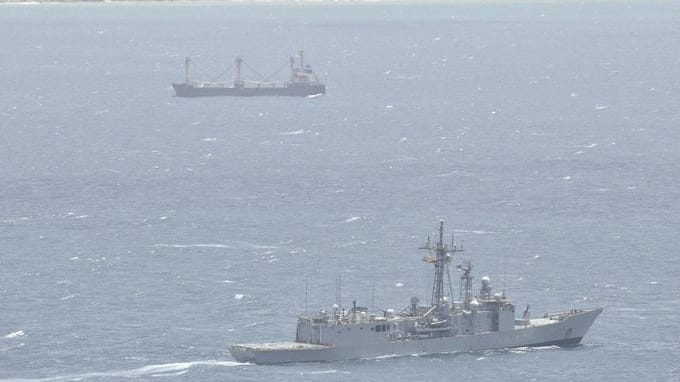
EU force continues to monitor the ongoing piracy incidents in Somali waters (EUNAVFOR Atalanta file photo)

Published Aug 17, 2026 12:21 PM by The Maritime Executive


Reports are coming in of a new security incident off the coast of Somalia involving an unnamed cargo ship that was boarded. It is the latest in a series of ongoing incidents that have led the member states of the Djibouti Code of Conduct sponsored by the International Maritime Organization to initiate a new security task force.

The security officer of the unnamed cargo ship reported the company’s vessel had been boarded on Monday, August 17, approximately 4.5 nautical miles south of Maraya on the southern coast of Somalia. According to the information, at least eight pirates boarded the ship and took control. The crew is reported safe, and the EUNAVFOR Operation ATALANTA is investigating the incident and monitoring the situation.  

As the incident is inside the territorial waters of Somalia, the international groups monitor and coordinate with the local authorities. Security firm Vanguard Tech is identifying the vessel as the Lutuf (1,400 dwt) registered in Cameroon. It is identified as a small general cargo ship built in 1995 that was sailing from Turkey to Dar Es Salaam, Tanzania.

The incident comes as four other ships continue to be held for approximately four months, despite multiple international efforts to free the crews through negotiations. Pakistan, which has 10 citizens held since April 21 among the 17 crew on the tanker Honour, highlights the dangers of attempting law enforcement operations to free the hostages because of the “very highly explosive cargo” aboard the vessel, according to a Foreign Office spokesperson.

Deputy Prime Minister and Foreign Minister Ishaq Dar of Pakistan last week, according to newspaper reports, “ordered officials to intensify diplomatic engagement with Somali authorities, international organizations, and other partners to secure the sailors’ release.” Egypt has issued similar instructions to its diplomats, but reports cite infighting among the pirate groups, which are complicating any negotiations.

The Palau-flagged MT Honour 25 is one of four vessels held, with the spokesperson for the Djibouti Code of Conduct initiative reporting last week that the seafarers aboard the Honour, Sward, Eureka and Asna continued their captivity. The organization repeated calls for the immediate and unconditional release of all seafarers currently being held hostage.

The organization was adopted in 2009 to combat piracy and armed robbery against ships, and since 2017 has expanded its scope to address a wider range of illicit activities, including illegal, unreported and unregulated (IUU) fishing, arms and drug trafficking, illegal trade in wildlife, crude oil theft, human trafficking and smuggling, and illegal dumping of toxic waste. To date, 19 states have endorsed the amendment (Bahrain, Comoros, Djibouti, Ethiopia, France, Jordan, Kenya, Madagascar, Maldives, Mauritius, Mozambique, Oman, the Republic of South Africa, Saudi Arabia, Seychelles, Somalia, the United Arab Emirates, the United Republic of Tanzania, and Yemen) and a total of 22 states are participating.

The organization highlights that the underlying conditions that enable piracy in the region have not been fully eliminated despite the progress in reducing incidents. After the resurgence of activity, the group in July began discussing new initiatives and has now agreed to launch a Combined Task Force, which it says can coordinate maritime operations in support of the existing international efforts.

They pointed to the success of a similar operation for the Gulf of Guinea region and agreed to adopt a similar regional approach. The precise composition of the Task Force, including the types and number of maritime assets that could be contributed by participating states, has not yet been determined, but will be discussed at a workshop to be held in Kenya between September 7 and 9. They will consider the proposed task force's geographical scope, operational requirements, composition, responsibilities, and resource implications, as well as its relationship with existing regional and international maritime security mechanisms.

The international patrols of the region are continuing. Vessels operating in the area are being advised to maintain heightened vigilance, particularly within 150 nautical miles off the Somali coast between Mogadishu and Hafun.


War and Drought Are Choking the World’s Most Vital Trade Routes

  • Iran’s disruption of the Strait of Hormuz and the Houthi campaign against Saudi-linked shipping are restricting two crucial Middle Eastern trade routes.

  • Drought is simultaneously constraining the Panama Canal and the Rhine, forcing vessels to wait, lighten cargoes or shift freight to more expensive alternatives.

  • Together, geopolitical conflict and extreme weather are demonstrating the vulnerability of global supply chains to simultaneous chokepoint disruptions.

Since early March, a previously obscure waterway between Iran and Oman that very few people could name has become the subject of daily reporting around the world after Iran closed it in response to the attack on Iran by the United States and Israel. The Strait of Hormuz, which remains closed to most ships, is now known around the world as the transit point for 20 percent of the world's oil and high percentages of key materials including fertilizers such as ammonia (23 percent), urea (34 percent) and phosphate (20 percent), helium (30 percent), and sulfur (24 percent), all of which are derived from or are co-products of oil or natural gas except phosphate.

On the other side of the Arabian Peninsula, a long-festering conflict between Ansar Allah (which controls part of Yemen) and Saudi Arabia has escalated. Not surprisingly, Ansar Allah, also known as the Houthis, have resorted to a tactic used previously in the conflict. They have closed the Bab el-Mandeb Strait near their territory to Saudi vessels.

The strait connects Red Sea shippers with ocean-going routes to Asia. This includes ships coming through the Suez Canal on the northern end of the Red Sea. The Houthis say that commercial shippers not serving Saudi Arabia may continue using the strait, but many have chosen to avoid it as the Houthis attack Saudi ships. In practice, this means primarily a prohibition on Saudi oil tankers, which carry Saudi Arabia's main export. For now, the Saudi ships are taking a trip around Africa to reach Asia despite the added costs. But the Houthis have shown they can hit Saudi ports on the Red Sea and could escalate to shut down even this traffic.

Human-made problems to navigation are now being joined by climate-induced troubles that are reducing or crippling shipping elsewhere in the world. The Panama Canal relies on sufficient rain to fill artificial lakes that feed water into the canal locks. Once released to the canal, that water is lost to the ocean and must be replenished. But ongoing drought is limiting the number of ships the canal can handle each day. Ships must now wait 10 days to transit the canal unless they enter a special auction and pay a premium to skip the line. (For a more detailed explanation of how the canal uses water and why this competes with domestic water supplies, see my previous coverage of September 2023, "Climate change and the hidden water cost of the Panama Canal.")

In Europe, what is arguably the main water shipping route, the Rhine River, is experiencing its lowest levels since records began in 1880. As heatwave after heatwave continues to hit the continent, drought has starved the river of water. Vessels must now carry less cargo to avoid scraping the bottom of the river and getting stuck. As a result, some freight normally carried on the river is now going by truck and rail. In fact, according to shipping industry sources, the river has now been effectively bisected between an upper and lower region because the Rhine is effectively impassable to barges at Kaub, southeast of Cologne.

It may seem as if our human-induced shipping bottlenecks in the Strait of Hormuz and the Bab el-Mandeb Strait are passing problems. But it's important to note that since the Houthis first curtailed traffic through the Bab el-Mandeb in November 2023, maritime traffic has never recovered even after a cease-fire in May 2025 with the United States which had entered the conflict on the side of the Saudis. Now strait traffic has taken another dive as the Houthis renew their fight with Saudi Arabia.

As for the Iranians, they have rejected negotiations with the United States for now and are believed to be waiting for oil prices to move much higher (thus creating more damage to the U.S. and world economies) before engaging the United States again in hopes of getting most or all of their demands met.

Therefore, expecting traffic through either strait to expand dramatically anytime soon seems overly optimistic.

As for the nature-induced shipping troubles in Panama and Europe, we may be faced with ongoing challenges to shipping there as well, except that we have no one to negotiate with in order to solve the problem. Nature is unyielding and silent in the face of our hopes for more rain.

It is no small irony that in Southwest Asia shipping has been curtailed by a conflict which centers around the world's largest deposits of fossil fuels, the very fuels the burning of which are a major cause of climate change and thus contributing to the drought bedeviling Panamanian and European navigation. I wonder if our leaders will ever put the two together.

By Kurt Cobb via Resource Insights


Iraq-Syria Oil Pipeline to Bypass Hormuz Is 4 Years and $15 Billion Away

The project to ship Iraqi crude to the Syrian Mediterranean coast to bypass the Strait of Hormuz is still at least four years and $15 billion in investments away, sources familiar with the project told Reuters on Monday.

The pipeline plan, supported by the U.S. Administration as a way to reduce the importance of the Strait of Hormuz in global oil supply, is being reviewed and its feasibility assessed by a consortium, which includes U.S. supermajor Chevron.

The U.S. is touting the project as making Hormuz “irrelevant” within two years, but the actual pipeline construction would need at least four years to complete, the sources directly involved in the project told Reuters.

The existing oil pipeline that hasn’t been operational in more than two decades cannot be used for the new project, which will need new infrastructure, according to Reuters’ sources. This will complicate the project, raise the costs, and extend the timeline for completion.

Still, the Hormuz crisis that cut off most of Iraq’s crude oil exports has accelerated plans by Iraq and Syria to rebuild the damaged oil pipeline to ship crude oil from the Iraqi fields in Kirkuk to Syria’s Mediterranean coast.

The completion of the renovation of the pipeline from Haditha in Iraq to the Syrian port of Baniyas would take “three years at most,” Youssef Qablawi, CEO of the state-owned Syrian Petroleum Company, said earlier this month.

Syria and Iraq have started negotiations to finalize the contract, and are also in discussions with companies that will invest in this pipeline, the executive said, as carried by Iraqi news outlet The New Region.

The project is expected to consist of two pipelines with a capacity of between 1.5 million barrels per day (bpd) and 2 million bpd, according to the executive.

The United States expects U.S. companies to play a role in the reconstruction of the Kirkuk-Baniyas oil route, according to reports. The pipeline would be crucial for Iraq’s oil exports not depending on Hormuz, Syria’s post-war economy, and reduced Iranian leverage in the Strait of Hormuz.

By Charles Kennedy for Oilprice.com


Trump Pledges to Make Hormuz a "Territory of the United States"

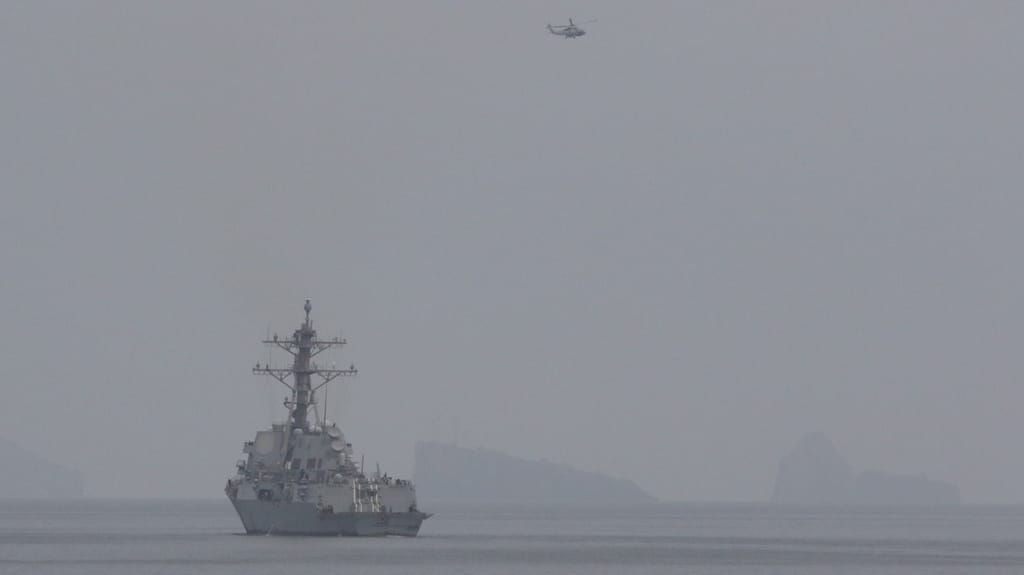
A U.S. Navy destroyer operates in Hormuz during the last reported American transit, April 2026 (USN)

Published Aug 16, 2026 3:33 PM by The Maritime Executive


Amidst the ongoing Iranian campaign to control and close the Strait of Hormuz, President Donald Trump promised Friday to make the waterway a "territory of the United States" - the first American overseas territory comprised of water rather than land. 

"After we finish defeating Iran, which is being very badly defeated, pretty soon I’ll be declaring the Hormuz Strait a territory of the United States," Trump said in a speech Friday in New York. "We have the blockade. No ships get through unless we want them to . . . Essentially, [a territory is] what it is."

Legal and political questions aside, practical matters remain on the question of U.S. sovereign control, starting with lack of presence and tactical vulnerability. Iran is rapidly reconstituting its ballistic missile force, according to Israeli intelligence, and it routinely hits merchant tankers in the southern stretch of the strait with drones. On Friday evening, it struck a vessel belonging to UAE state oil company Adnoc for the 19th time, Emirati media reported.

Meanwhile, U.S. Navy warships do not operate in Hormuz. The Navy operates a successful blockade of Iranian traffic in the Gulf of Oman, outside the strait, but no publicized U.S. Navy surface transits of the strait itself have occurred in four months. The service's top leaders have described the lack of access to Bahrain's storehouses as an obstacle to resupply operations for its Arabian Sea task force, implying that U.S. Military Sealift Command auxiliaries do not access the Gulf.  

"It’s clear the US president, with a chuckle as he said that, even himself, is not taking this particularly seriously," Al Jazeera reporter Kimberly Halkett said. "What the US president is not backing down on is the fact that there is a naval blockade by the United States in effect."

Iran maintains that it should have the right to fully control navigation in the strait, including the right to levy fees for passage. At minimum, it believes that control should belong jointly to Iran and Oman (the strait's coastal states), and it is negotiating with Omani officials on a mechanism for shared management. 

"The Strait of Hormuz has been Iranian, is Iranian, and will remain Iranian; this strait will only be closed and opened under Iran’s command," responded Iranian deputy foreign minister Kazem Gharibabadi in a statement aimed at Trump. "As long as you do not accept the reality of defeat and cease your fanciful delusions, Iran will continue to enforce the blockade."

Despite the Iranian blockade, oil continues to flow out of the strait at a reduced rate. U.S. Energy Secretary Chris Wright estimates the volume at 9 million barrels per day, while independent analysts put it at 4-5 million barrels daily. Adnoc is known to be supply logistics for not only its own oil, but for Iraqi volumes as well, largely by the use of a trans-Hormuz shuttle program it operates using its own tanker fleet. 

Bloomberg's Javier Blas suggests that these covert flows are part of the reason that oil prices remain well below $100 per barrel, despite the ostensible shutdown. In addition to demand destruction and a sharp (and as-yet-unexplained) drop in Chinese imports, pipeline volumes to Fujairah and Yanbu have soared and the Adnoc shuttle route is moving more crude than previously believed - all despite Iranian efforts to shut off its GCC neighbors from the sea. 


Iran Claims to Have Seized Tanker as It Continues Targeting UAE Shipping

tanker
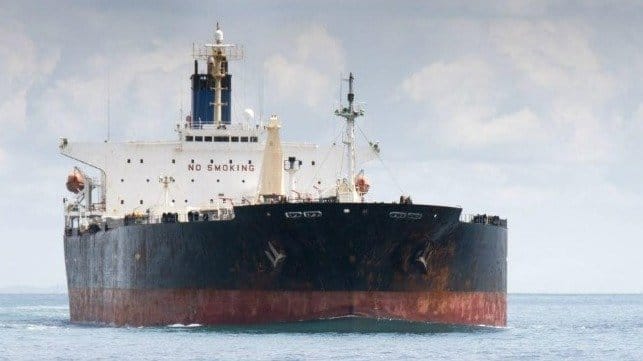
Iran claims to have seized a UAE tanker that was attempting to transit the Strait of Hormuz (file photo)

Published Aug 17, 2026 5:00 PM by The Maritime Executive


Iranian media is carrying unconfirmed reports on Monday, August 17, that it has detained a tanker linked to the UAE for violations of its rules for the Strait of Hormuz. It comes after the UAE’s Ministry of Foreign Affairs at the end of last week “strongly condemned and denounced” Iran’s attacks, calling them piracy.

Farh News Agency is repeating the reports from Iranian state TV of the seizure without providing the name or details on the tanker. It says the vessel was seized in the Strait of Hormuz for “violating Iranian maritime laws.” It cites the need to follow the Iranian route as one condition and “payment for services and Iran’s permit” as other conditions. The tanker was reportedly taken toward Qeshm Island.

The rumors immediately rattled global oil markets, which were already on edge. The price of a barrel of Brent crude futures quickly jumped above $91 a barrel. It compares with a price of below $70 a barrel before the U.S. and Israel started the campaign against Iran at the end of February.

The Emirates has been one of the targets of Iranian aggression. The Ministry of Foreign Affairs responded to the reports of attacks on vessels affiliated with ADNOC, the Abu Dhabi National Oil Company. It demanded that Iran halt these unprovoked attacks.

“Using the Strait of Hormuz as a tool of economic coercion or blackmail represents acts of piracy by Iran’s Revolutionary Guard Corps,” the Ministry wrote in its statement.

Two tankers linked to ADNOC reportedly came under attack on August 14 while attempting a dark transit of the Strait of Hormuz. Maritime AI data firm Windward is identifying them as a Singapore-flagged oil product tanker and a Liberian-flagged Aframax tanker. A third ADNOC tanker was attacked on August 8, with other reports saying as many as 19 vessels, including bulkers and other types, linked to ADNOC have been targeted by Iran.

Despite the U.S. assertion that traffic continues to move through the Strait, Kpler data shows a dramatic fall-off over the weekend after news of the latest targeting of the ADNOC tankers. Kpler data cited by Reuters says only five tankers exited with their AIS signals transmitting on Saturday, August 15, and none on Sunday. That is down from 31 tankers the previous weekend. 

Kpler notes that its data does not include tankers traveling “dark.” Bloomberg separately contends in its reporting that the majority of tankers are transiting in the dark, and that is what was keeping oil prices in check.

Donald Trump told reporters on Monday afternoon that he would not be extending the so-called memorandum of peace with Iran, which expires today. He asserted that Americans are paying “only a little more” for gasoline and that it was worth it because Iran was being defeated. 

U.S. Central Command reports that as of August 17, U.S. forces have redirected 64 commercial vessels, disabled three, and boarded two to ensure compliance with the blockade. It calls it “America’s US steel wall blockade,” with U.S. officials saying it can be maintained indefinitely.