Tuesday, August 25, 2026


Margaritaville Sets Harland & Wolff Conversion and Galveston Introduction
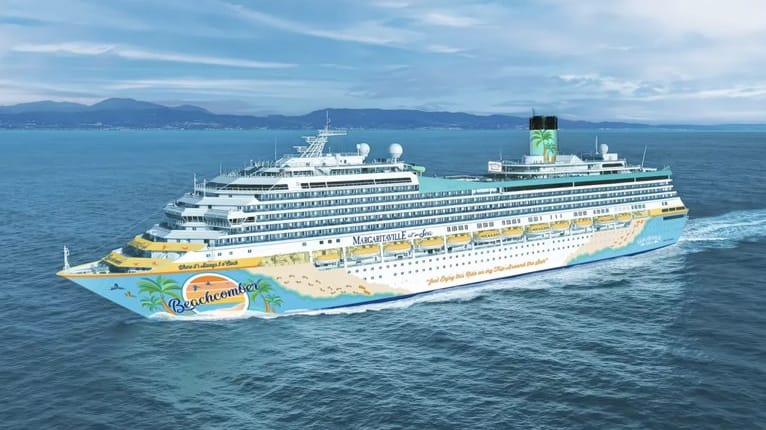
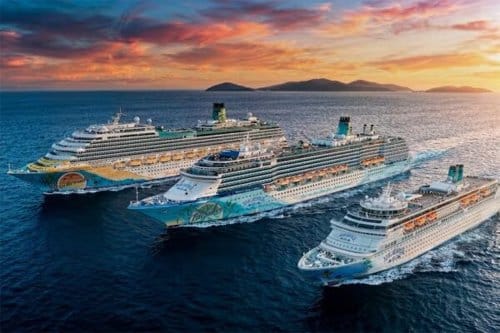
Margaritaville cruise ship
Among the refurbishment projects will be painting the hull in Margaritaville's distinctive livery (Margaritaville at Sea)

Published Aug 25, 2026 5:55 PM by The Maritime Executive


Margaritaville at Sea has selected Harland & Wolff as the location for the conversion of its third cruise ship as part of its expansion plans. The line will refurbish its largest cruise ship, the former Costa Fortuna (102,587 gross tons), ahead of its January 2027 introduction and, as part of its expansion, also announced it will be homeporting a ship in Galveston, Texas.

The cruise line, which brings the styles and spirit of legendary musician Jimmy Buffett to sea, launched in 2022 with one cruise ship, Margaritaville at Sea Paradise, sailing from the Port of Palm Beach, Florida, and has continued to expand. In 2024, it also selected Harland & Wolff in Belfast, Northern Ireland, to convert the former Costa Atlantica into its second cruise ship, and today it confirmed the yard, now owned by Navantia, will undertake the third conversion as well.

Margaritaville at Sea acquired the Costa Fortuna in 2025 and is set to take delivery of the ship in just a few more weeks. The ship is making its final cruise from Piraeus, Greece, from September 4 to 11, and then will be handed over. Built in 2003 by Fincantieri, she is the largest of the three ships operated by Margaritaville. 

The cruise ship is 893 feet in length (272 meters) and has 1,358 passenger staterooms. It has accommodations for approximately 2,700 passengers and over 1,000 crewmembers. The ship is scheduled to relaunch in January 2027 as the Margaretville at Sea Beachcomber


Margaritaville has grown to three ships after its 2022 launch (Margaritaville at Sea)


Harland & Wolff, which was acquired by Spain’s Navantia Group, highlights that the contract is the largest investment in a cruise ship revitalization for the yard since it was relaunched as part of Navantia UK. It refers to the contract as a multi-million-pound project and says it could generate approximately £40 million for the Belfast region, through the engagement of the repair yard, its facilities, and workforce, as well as a large force of contractors that will be working on the ship.

Earlier this year, Northern Ireland-headquartered Rathbane Group reported its companies MJM Marine and Mivan would be executing the refurbishment program. The company reported it would be a 12-week dry dock period. It included the refurbishment of all the public spaces aboard the ship, accommodations, and exterior work to reflect the playful and colorful island style of the line. The yard will also be sandblasting and painting the ship in the colorful style of the cruise line.

It will be an extensive transformation program, with MJM Marine and Mivan developing key elements of the onboard experience. Work will include the central atrium, spa, children’s facilities, specialty dining venues, and nightclub. The companies also worked with Harland & Wolff in 2024 for the conversion of the prior ship, which became Margaritaville at Sea Islander.

The ship will feature the line’s signature spaces built off the Buffett hit songs, including the Beachcomber Bar, 5 o’Clock Somewhere Bar, and LandShark Sports Bar. There will be a Flip Flop Bar and other surprises on the larger ship. It is scheduled to launch Caribbean cruises from PortMiami. It is in addition to the current cruise programs from the Port of Tampa and the Port of Palm Beach.

The Galveston Wharves Board of Trustees also announced that it voted unanimously on August 25 to accept an agreement with Margaritaville at Sea. The cruise line will launch weekly sailings on Friday starting in October 2027. It has a one-year agreement with the port along with options to renew for two additional five-year terms. Margaritaville at Sea will announce the details on the new program at an event scheduled for September.

For each of the organizations, this is a growth project. The cruise line will become the seventh to homeport in Galvestn, which is already the fourth largest cruise homeport with a projected 446 sailings in 2026. The port has forecasted that it will handle 3.9 million passenger movements this year for a new record. In addition to Margaritaville at Sea, Carnival Cruise Line has announced it will be homeporting a new cruise ship in Galveston, and Royal Caribbean International will reposition one of the world’s largest ships, Icon of the Seas, to Galveston.

Navantia highlights that across its group it handles repairs and maintenance for more than 200 vessels annually, with its Cadiz, Spain yard becoming one of the leaders in cruise ship projects. It reports handling over 100 major cruise ship projects and looks to expand its operations, including with the Belfast yard.  It notes that the overall ship repair market is valued at more than $38 billion and continues to grow. Belfast, it notes, offers one of the largest repair facilities in Western Europe, with two of the largest dry docks and more than 1,300 meters of berths. 


MARAD Takes Delivery of Fourth Training Ship, TS Lone Star State

US maritime training ship
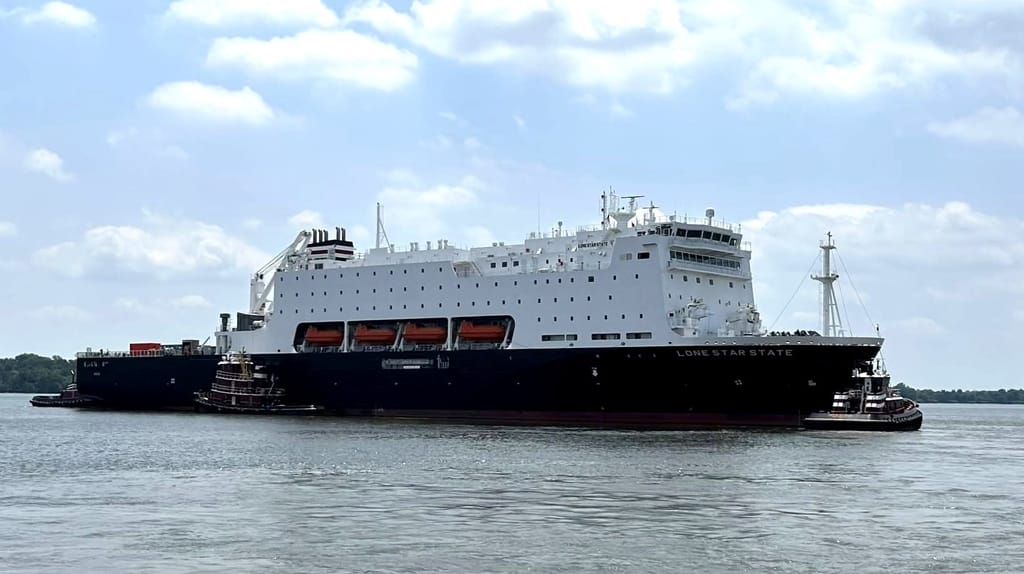
Lone Star State departing for sea trials in June 2026 (Texas A&M Maritime Academy)

Published Aug 25, 2026 7:17 PM by The Maritime Executive


The fourth of the new series of training ships being built for the U.S.’s state maritime academies, the TS Lone Star State, was handed over to the U.S. Maritime Administration (MARAD) on August 21. She joins the already commissioned vessels for New York, Massachusetts, and Maine, as the first purpose-built training ships for the U.S. Merchant Marine and will be followed by the final ship, TS Golden State for California, in the coming months. 

“The delivery of Lone Star State to the Texas A&M Maritime Academy marks another major milestone for the NSMV (National Security Multi-Mission Vessel) program,” said Jeff Dixon, President of TOTE Services. As the NSMV program’s Vessel Construction Manager (VCM), TOTE Services oversaw the design, construction, delivery, and warranty phases of the project, applying commercial best practices to deliver ships for the government on schedule and within budget.

Like her sisterships, the Lone Star State is a purpose-built NSMV developed to modernize the training capabilities of the nation’s state maritime academies. The vessel will serve as Texas A&M Maritime Academy’s primary training ship, preparing cadets for careers in the U.S. Merchant Marine. The ships were also designed to support federal humanitarian and disaster response missions, with a hospital and other critical capabilities.

The ships’ primary function, however, is to provide a modern platform for training for the merchant marines. In the past, the state schools had to work with outdated vessels from MARAD for the training despite them not fully reflecting the current industry. The NSMV features numerous instructional spaces, a full training bridge, modern engineering and technical systems, and has space for up to 600 cadets to train in a first-rate maritime academic environment at sea. It also has RoRo capabilities and can handle shipping containers.

Each of the ships is approximately 160 meters (525 feet) in length and approximately 8,500 dwt. They are designed for a normal berthing capacity of 760 people, which can be expanded to over 1,000 in times of humanitarian need.

Construction of the fourth vessel began with steel cutting in January 2023 at what is now the Hanwha Philly Shipyard, and the keel block was laid in December 2023. The Lone Star State was floated out in January 2025 and underwent sea trials in June 2026. Her christening took place in July in Philadelphia, and she is now expected to arrive in Galveston, Texas, in November for an official arrival ceremony and handover to Texas A&M Maritime Academy. Her first sea term is scheduled for April 2027.


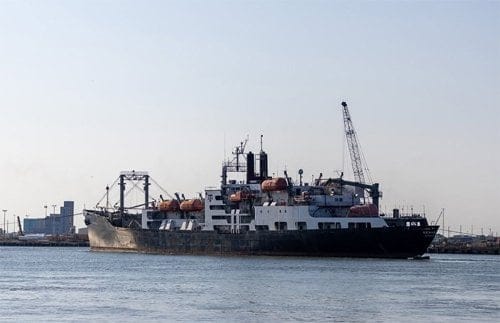
Massachusetts and the Texas was using a 1967 vintage steamship for training, TS Kennedy until it was retired in September 2025 (Texas A&M)


Texas A&M Maritime has been working on an interim program for its training. In 2023, MARAD delivered the TS Kennedy, after the vessel was replaced with a new NSMV training ship for Mass Maritime. Typical of the former training ships, Kennedy had been built in 1967 as the cargo ship ss Vela Lykes. MARAD took over the ship in 1985, and it then was in the Ready Reserve Fleet and saw service during Operations Desert Storm and the Gulf War.

The former breakbulk cargo ship became a training ship in 2003, first as Enterprise, and later renamed Kennedy. It was assigned to Texas from 2023 until it was returned to MARAD in September 2025.

Texas A&M Maritime and Maine Maritime agreed to share the NSMV TS State of Maine this summer for the sea training program. Maine’s new training ship arrived in Galveston on May 17 and took aboard 218 cadets and 17 faculty and staff for the tour that went into the Caribbean and up the East Coast of the United States. The ship made an appearance at the 250th Celebration in New York Harbor before disembarking the cadets in Maine after the ship made her first arrival in Castine, Maine, on July 12.

Texas A&M Maritime is one of only six state maritime academies in the United States and the only one on the Gulf Coast. It was established in 1962.


Report: Korea’s HD Hyundai Negotiating Acquisition of US Shipyard

Hyundai shipyard South Korea
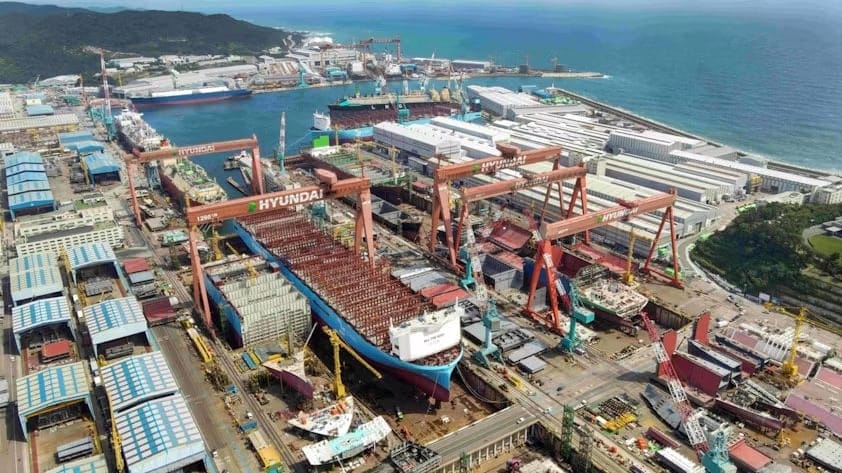
HD Hyundai is reportedly closing in on an acquisition or investment in a US shipyard (HD KSOE)

Published Aug 21, 2026 2:29 PM by The Maritime Executive


South Korea’s largest shipbuilder, the HD Hyundai Group, is reportedly closing in on the acquisition of a U.S. shipyard as the next piece of its strategy for the American industry. Korean media reports indicate that the company is pursuing the acquisition after having already formed several partnerships also designed to leverage the opportunities under Korea’s MASGA (Make American Shipbuilding Great Again) initiative.

HD Hyundai is said to be in advanced negotiations with the American shipyards after having targeted two or three companies, writes South Korea’s Chosun Daily. It says the company is targeting a presence either in the San Diego area near the headquarters of the U.S. Pacific Fleet or along the Texas Gulf Coast. Chosun reports the company was preparing to announce a deal in July in Washington, D.C., but there was a last-minute disagreement on the price.

Business Korea quotes analysts as saying HD Hyundai is accelerating its pace for acquiring a U.S. shipyard after the White House’s recent release of its shipbuilding strategy that included the use of foreign shipyards under the so-called "Finnish model" (the agreement to build Arctic Security Cutters for the USCG). 

Chosun highlights that the Trump administration is setting investment or acquisition of a U.S. shipyard as one of the criteria to qualify for the projects. It wants local hiring and technology transfers for the U.S. company in exchange for building the first two vessels of the new class internationally. 

The valuation of U.S. shipyards, however, is reported to have increased significantly with larger asking prices as the Trump administration has pushed forward with its plans to expand the U.S. Navy and modernize the U.S. Coast Guard’s fleet.

The reports indicate that HD Hyundai has already enlisted the support of U.S.-based private equity firm Cerberus Capital Management and the Korea Development Bank for the U.S. investment or acquisition. Hyundai and Cerberus already had a relationship, as it is leasing the newly relaunched Philippine shipyard from Cerberus. The reports also highlight that HD Hyundai’s intermediate-level company, HD Korea Shipbuilding & Offshore Engineering, also established a U.S.-based subsidiary, HD Hyundai USA, in May 2026.

HD Hyundai is reportedly looking to catch up with Hanwha, which acquired the Philly Shipyard in 2024, is investing in increasing the capabilities at the yard, and recently said it wanted to acquire the U.S. operations of Austal. HD Hyundai and Hanwha have emerged as key competitors to build warships.

HD Hyundai has, however, also formed several key partnerships in the U.S. shipbuilding sector. In 2025, it announced an agreement with Huntington Ingalls Industries (HII), the largest defense shipbuilding company in the U.S., that focuses on improving shipbuilding productivity and fostering advanced technological cooperation. It also entered into an agreement with Edison Chouest Offshore that envisions building medium-sized LNG dual-fuel containerships at Tampa Ship.

The partnerships were expanded in 2026. HD Hyundai and Kiewit Offshore Services last month announced that they had entered into a Strategic Partnership Agreement to pursue collaboration on shipbuilding projects serving the U.S. market and other areas of mutual strategic interest. HD Hyundai and Siemens also signed a “nine-figure deal” that establishes Siemens as a key technology partner for HD Hyundai’s next-generation shipbuilding and digitalization strategy focusing on U.S. shipbuilding.


Port Congestion Sets New Record at 4.3M TEU in Stranded Volume

TEU stands for Twenty-Foot Equivalent Unit, a standard measure of container cargo capacity in shipping and logistics.

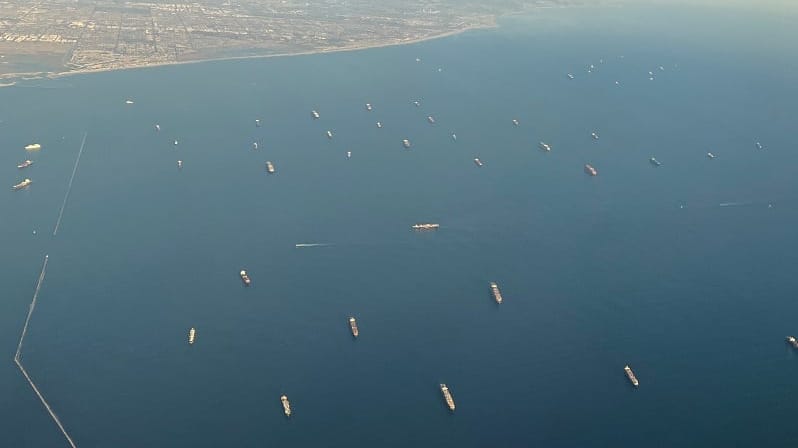
containerships at anchor off southern California
Delayed vessels skyrocketed in the post-pandemic surge with pileups such as this off Southern California (MXSOCAL)

Published Aug 25, 2026 4:51 PM by The Maritime Executive


The volume of container capacity stranded due to port congestion has reached a new record high, reports the analytics firm Linerlytica. Mounting delays in China and Asia and persistent delays in Europe are resulting in a shortage of vessels and capacity and contributing to the increases in freight rates, reports Linerlytica.

It calculated that the volume of container capacity delayed due to congestion reached 4.31 million TEU this week, which surpassed the prior peak of 4 million TEU reached in 2022 during the surge in container volumes after the COVID-19 pandemic. Linerlytica, however, notes that with carriers continuing to introduce new ships and delay retirements, the container sector has grown overall during the past four years. In 2022, the stranded capacity represented 15.7 percent of the sector’s capacity versus 12.6 percent currently, despite the increase in the total TEU capacity stranded.

The consultancy Sea-Intelligence pointed out in its monthly reports that schedule reliability and the length of port delays had stabilized in the industry in recent months. Its data shows that only about two-thirds of container vessels are on schedule. It puts the average delay at above five days.

Recent typhoons that moved through Asia and impacted operations at China’s major ports have been contributing to the increases in stranded volumes and delays. Linerlytica reports there is currently more than 1.5 million TEU capacity at anchor off Shanghai. It also reports large volumes waiting at Singapore, Busan, Colombo, and several Chinese ports. Mumbai currently has the highest ratio of queue to berth.

The industry was already operating with little excess capacity even before the delays began to build. Linerlytica calculates that there are 55 ships (out of a fleet of over 5,400 active vessels) idle, representing 0.5 percent of the total fleet and a capacity of just 164,000 TEU. The result is a shortage of vessels.

The shortages and lack of capacity, however, have been financially positive for the industry. Linerlytica points to freight rates that are 156 percent higher since the start of the Iran war. It notes it has also contributed to a firming of charter rates for container vessel owners.

Another concern is the potential for the backlogs and waiting time to build at the Panama Canal as it reduces both the number of daily transits and the maximum draft for vessels. During the last round of restrictions, container vessels were forced to offload portions of the cargo and ship boxes across the Isthmus by train to comply with the draft restrictions. The Panama Canal Authority said it would be giving preferences to the large container ships with the largest container volumes, but still the delays are expected to build going into the fall season due to the emerging drought from the El Niño in the Pacific.

Vessels diverting around Africa and away from the Suez Canal and Red Sea were also impacting capacity due to the longer transit times. Linerlytica believes this is one of the reasons specifically driving Maersk to restore routes to the Red Sea corridor. Maersk and Hapag-Lloyd announced they would be moving some of the routes under the Gemini Cooperation back to the Suez Canal and Red Sea, and just today MSC Mediterranean Shipping Company advised customers that it would begin shifting some routes back to the Suez Canal and Red Sea corridor. Suez Canal officials have highlighted that the shift can reduce transit times by up to 14 days and also save on fuel costs.

Chinese port operators have worked to quickly restore their operations after the storms, which should release some of the stranded capacity as well as the continuing introduction of new ships. The forecast, however, is that congestion will continue to be a challenge and contribute to stranded volumes. Carriers, including Maersk, revised their financial outlooks for 2026, moving to more positive forecasts based on the strong freight rates and their near-term expectations for the market.


MSC Follows Other Container Carriers in Return to Suez Canal and Red Sea

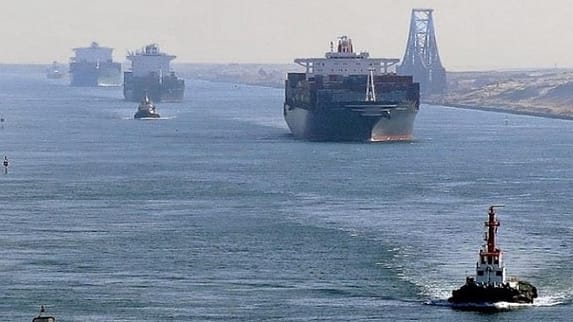
Suez Canal convoy of ships
MSC is following other container lines by also restoring its riutes through the Suez Canal (SCA file photo)

Published Aug 25, 2026 2:35 PM by The Maritime Executive


MSC Mediterranean Shipping Company confirmed in an operational announcement to customers that it has started a resumption of service in the Red Sea and is transiting the Suez Canal for its East-West services. It becomes the fourth major carrier, following CMA CGM, Maersk, and Hapag-Lloyd, that has also reported returning some of its routes to the Red Sea region.

The carrier advises that it conducted “a comprehensive review of the latest security and operational conditions” in the Red Sea region.  It said it would continue to “closely monitor developments” in coordination with the relevant authority and security partners. MSC did not mention it, but there had also been recent reports that the carrier sent seven eastbound ships through the Suez Canal and Red Sea as an apparent test.

“MSC has decided to partially restore Suez Canal transits on a limited number of its East-West services,” it writes in the advisory. It said the transition would be implemented on a service-by-service basis and that contingency arrangements remain in place, allowing individual voyages to be adjusted.

In the past, both the Houthis and the Iranians have singled out MSC vessels. They asserted that the company was associated with Israel.

The announcement lists five sailings from Asia or the Middle East that are either underway or departing in the next few days as the first scheduled for the Red Sea corridor. It cites the vessels MSC Michel Cappellini (24,346 TEU), MSC Josefina (16,196 TEU), MSC Beryl (12,967 TEU), MSC Anna (19,200 TEU), and MSC Tina (19,224 TEU) as the first to return to the routes. The ships are operating on the company’s Jade, Albatros, Himalaya, and Tiger services, mostly to the Mediterranean and one to Northern Europe.

The Suez Canal Authority highlighted on Saturday that two large Maersk containerships had been in the convoy coming from the north as the carrier returns routes to the region. CMA CGM, it said, had sent 199 vessels, with a total net tonnage of 25.2 million tons, through the Suez Canal in 2026.

The Houthis since July have been targeting vessels associated with Saudi Arabia, but so far have not threatened to resume their "blockade" of American or Israeli shipping as they did in the past. They had repeatedly fired on MSC vessels not only in the Red Sea, but also near Djibouti or in the Gulf of Aden.

The EU’s regional security operation, Aspides, remains in place, having been extended until early 2027. Yesterday, EUNAVFOR Aspides posted online, reporting that since its launch in February 2024, it has supported over 2390 merchant vessels, ensuring their safe transit, and provided close protection to more than 720 ships.
 

Two of Maersk’s Largest Containerships Transit Suez Canal

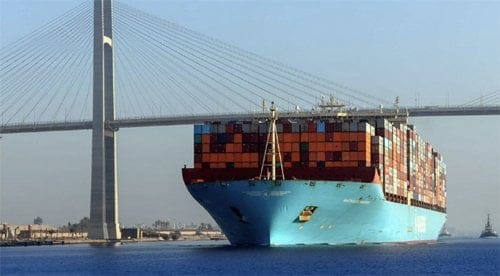
Maersk containership in the Suez Canal
Bangkok Maersk on her first Suez Canal transit (SCA photos)

Published Aug 24, 2026 5:03 PM by The Maritime Executive


Two of Maersk’s largest containerships made the transit together on Saturday, August 22, through the Suez Canal. It is part of the carrier’s continuing efforts to restore vessels to the Suez Canal – Red Sea corridor and increase the efficiency of operations. 

The Suez Canal Authority highlighted the transits as it continues efforts to rebuild operations. It honored the Bangkon Maersk, one of the carrier’s newest large ships, with a special plaque ceremony marking the first transit through the Suez Canal.

At the head of Saturday's convoy coming from the north was the 2015-built Mathilde Maersk (214,121 dwt). The ship is part of the final series of the Triple E class, Maersk’s largest capacity vessels. She has a rated capacity of 19,076 TEU and was bound for Colombo on her way to the Far East.


Mathilde Maersk was at the head of Saturday's convoy from the north (SCA)


Following in the convoy, and making her first transit, was the 2015-built Bangkok Maersk (181,648 dwt). She is part of the dual-fuel class, capable of operating on methanol, with a capacity of 17,480 TEU. She was coming from Italy and bound for Singapore.

Two weeks ago, Maersk reported, in conjunction with Hapag-Lloyd, that the decision had been made to shift more routes, including some of the Gemini Cooperation, back to the Suez and Red Sea corridor. CEO Vincent Clerc has said that the conditions supported the transfer of more vessels back to their routes but that the company would continue to monitor conditions. Analysts have said Maersk could have all of its routes restored to the Suez – Red Sea corridor by the end of the year.

The canal authority highlights the advantages for vessels returned to their normal routes. For the Maersk ships, they said it would reduce transit times by up to 14 days versus navigating around South America. On Saturday, the Suez Canal Authority said that a total of 57 vessels made the transit, representing a total of 2.8 million net tons.

Reports last week said that MSC Mediterranean Shipping Company had quietly also sent its first vessels back through the Suez Canal on their way to Asia. Seven vessels were reported to have made the transit, but they were dark, not transmitting positions. 

The Suez Canal Authority has highlighted the growth of traffic from CMA CGM. Since the start of this year, the French group is reported to have had 199 vessels transit the canal, with a total net tonnage of 25.2 million tons. That compares with 212 vessels from the CMA CGM that transited the canal for the whole of 2025, with a total net tonnage of 18.8 million tons.


CMA CGM and Saudi Arabia to Invest $434M to Expand Jeddah Islamic Port

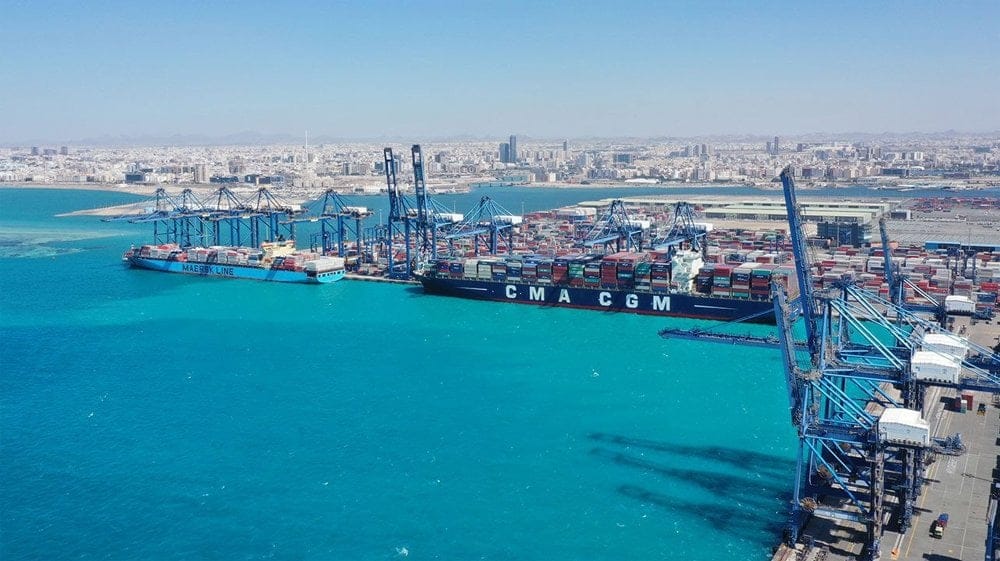
Saudi Arabia container terminal
CMA CGM will invest in the expansion of the container terminal capabilities at Saudi Arabia's Jeddah Islamic Port (RSGT)

Published Aug 25, 2026 7:52 PM by The Maritime Executive


An agreement was signed in Paris during a French-Saudi Investment Roundtable that calls for CMA CGM and Red Sea Gateway Terminal (RSGT), Saudi Arabia's terminal operator, to expand the Red Sea Jeddah Islamic Port. Working in collaboration with the Saudi Ports Authority (Mawani), the companies will be marking one of the largest foreign direct investments in Saudi Arabia's maritime sector.

The project will bring approximately $434 million in investment into Jeddah Islamic Port and create a new state-of-the-art container terminal as part of RSGT’s existing concession. It will add up to approximately 2.6 million TEUs of annual handling capacity at the port, which currently has a capacity of 6.2 million TEUs. It will include new deep-water berths designed to accommodate the world's largest container vessels supported by advanced terminal technologies and 10 new ship-to-shore cranes.

RSGT calls the Jeddah operation its flagship terminal, noting that it is the largest and most advanced container terminal on the Red Sea. It accounts for nearly 40 percent of Saudi Arabia’s container throughput. 

The companies highlighted that the development project will enhance productivity, efficiency, and service reliability for customers across the Kingdom and the wider region. They said the enhanced marine infrastructure will strengthen Jeddah Islamic Port's ability to efficiently serve larger vessels and major international shipping services, supporting greater trade volumes, stronger global connectivity, and more efficient access to international markets for Saudi imports and exports. The development also further reinforces the successful partnership between the Kingdom, represented by the Saudi Ports Authority (Mawani), RSGT, and CMA CGM Group.

The project will provide critical future capacity to accommodate the Kingdom's growing trade requirements while strengthening the port's position on major global shipping routes. The addition of deep-water berths will enable the terminal to efficiently accommodate larger, next-generation container vessels, helping attract and retain major shipping services, increase cargo flows and enhance the connectivity of Saudi businesses to global markets. 

Red Sea Gateway Terminal (RSGT) is Saudi Arabia’s first privately funded terminal operator. To serve a broader range of customers and cargo types, RSGT also offers Multi-Purpose Terminals (MPT) services through a dedicated business unit that manages non-containerized cargo across four strategic locations on Saudi Arabia’s Red Sea coast. It handles containers, Ro/Ro, general cargo, dry and liquid bulk, as well as livestock.

The Red Sea ports have become critical to Saudi Arabia due to the disruptions in the Strait of Hormuz. However, it is now having to address the declared “blockade” by the Houthis to the south in Yemen, which is disrupting some operations. However, the Kingdom looks to expand its capabilities as part of its goal to expand its role as a trade hub for the region.
 

Indian Seafarers Complain of Pressure to Transit Strait of Hormuz

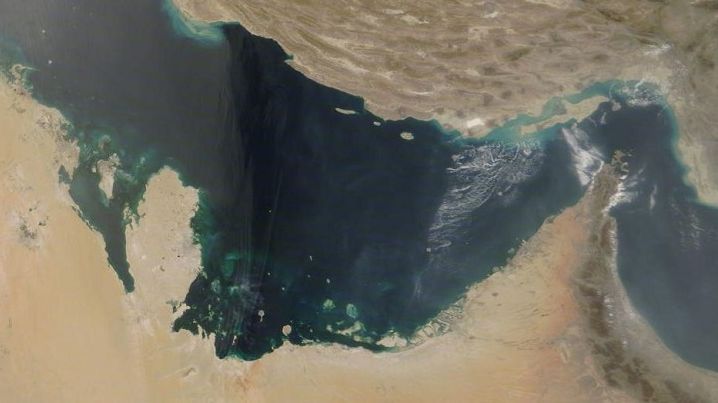
Hormuz
NASA file image

Published Aug 19, 2026 4:24 PM by The Maritime Executive


The Forward Seamen's Union of India has raised concerns that some shipowners are pressuring seafarers to sail through the high-risk zone in the Strait of Hormuz against their wishes, an apparent breach of the right to request repatriation under the MLC. Multiple vessels have come under fire from Iran's Islamic Revolutionary Guard Corps in recent weeks, and a chief engineer was killed by an Iranian strike on a bulker overnight Monday. 

Against this background, FSUI has been campaigning to ensure that seafarers can exercise their right to choose whether to enter a designated war risk zone. In a video appeal that FSUI released August 17, the master of the foreign-flagged MPSV AM Pioneer alleged that the ship's operator is "forcing us to cross Hormuz and go to Fujairah." He claimed that the firm had begun to make security arrangements with U.S. forces for a passage from Ras al-Khaimah to the Gulf of Oman through the contested southern lane, where Iran has targeted neutral shipping.  

The master and his officers said that they had signed on a month ago to perform a survey of the vessel, and that they had agreed to go through Hormuz once the waterway was formally open and safe for all ships - not beforehand. 

The company later denied having pressured the captain to make the run through the strait, the master said. The following day, according to FSUI, the managers subsequently removed the captain with immediate sign-off.

Effective July 15, the Directorate General of Shipping of India ordered shipping and crewing companies not to send Indian seafarers on voyages through the Strait of Hormuz, given the potential risk of attack by Iranian forces. Iran has repeatedly targeted vessels that do not comply with its "Persian Gulf Strait Authority" traffic management scheme. 

FSUI has emphasized the hazards and the directorate's instructions. "No seafarer should risk death for owners’ profits or convenience. Immediate repatriation with full wages and dues is non-negotiable," FSUI said in a statement. 

Indian seafarers make up more than 10 percent of the global mariner pool, and may be an even larger share of the crewmembers who are waiting on the west side of the Strait of Hormuz, according to the FSUI. 


Tanker Hit and Disabled Near Strait of Hormuz

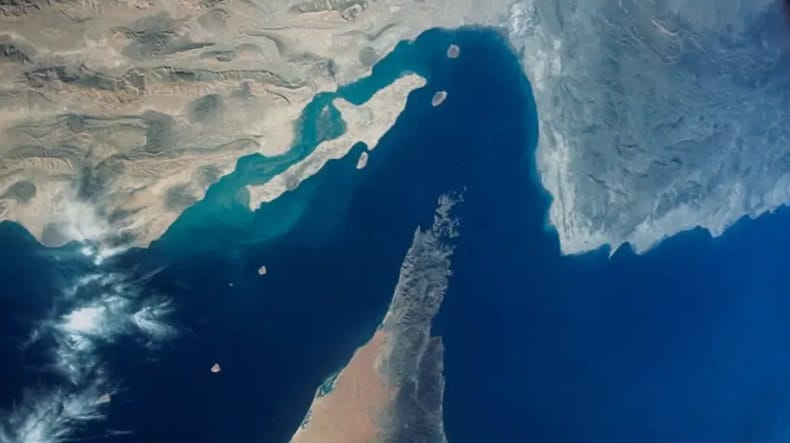
The strike occurred just east of the Musandam Peninsula, center, in Omani waters (NASA file image)

Published Aug 24, 2026 10:02 PM by The Maritime Executive


Overnight Monday, a tanker was hit by a projectile at a position east of the Musandam Peninsula, on the Omani coastal route through the Strait of Hormuz. 

At about 2025 UTC, the master of an unnamed oil tanker reported that the vessel had been hit, damaging the engine room and disabling the ship. The crew remained safe, according to reporting agency UKMTO; the status of any environmental impacts was not known. The last reported position was about nine nautical miles to the northeast of Ash Shishah, a roadless outpost on the eastern edge of the peninsula.

The strike adds to a long tally of damaging attacks on shipping in the Strait of Hormuz and the Arabian Gulf. The IMO counts a total of 68 incidents since the conflict in the Gulf began six months ago, averaging about three casualties a week. At least 20 seafarers have been killed, 35 have been wounded and one remains missing, by IMO's assessment. 

The potential for environmental damage from these repeated attacks is high. After a disabling strike earlier this month, the bulker Minoan Pioneer remained stranded in the strait for days; it likely released a fuel oil slick that stretched northwest as far as Qeshm, on the opposite side of the waterway. The outcome can be much worse: the wrecked Suezmax tanker Caroline Bezengi, which was disabled by an explosion and drifted aground on an island off southeastern Oman, has polluted thousands of square kilometers in an environmentally sensitive marine area.

Despite the risks, there are powerful motives to make the run. Current spot charter rates for a VLCC lifting oil inside the Gulf can reach as high as $800,000 per day, per Clarksons. Oil traders can afford to pay such extreme freight rates because they are able to buy GCC crude grades at heavily discounted prices - as low as $30-40 below Brent, according to TotalEnergies CEO Patrick Pouyanne. 

"It costs more or less $20 million to move a VLCC through Hormuz ‌and ?come back . . . divided by two million barrels of oil, that's an extra $10 a barrel," Pouyanne said at an energy conference Monday, per Reuters.

Oman Signals Progress on Hormuz Shipping Corridor Agreement

Omani foreign minister Badr Albusaidi (left) with his Iranian counterpart, Seyed Abbas Araghchi (right) (Omani Foreign Ministry)

Published Aug 25, 2026 4:15 PM by The Maritime Executive


The foreign minister of Oman announced Tuesday that talks with Iran on the joint management of a Strait of Hormuz shipping corridor were proceeding well, despite repeated Iranian attacks on neutral merchant vessels in Omani waters - including one as recently as last night. 

In a statement, minister Badr Albusaidi said that he had visited Tehran for a "constructive dialogue" with his Iranian counterpart, Abbas Araghchi. The two sides are nearing an agreement on one temporary shipping corridor - not the contested two-corridor scheme that currently prevails - and will be announcing a system to restore "safe navigation" shortly, Albusaidi said. 

For the long term, he added, the Omani-Iranian plan remains to negotiate a permanent arrangement for control of the strait, in conjunction with other regional stakeholders.

Oman previously proposed a plan that would include service fees on all passing traffic - an arrangement demanded by Iran, but strongly opposed by the United States and by international shipping interests. Last week, President Donald Trump threatened to bomb Oman - a longtime U.S. ally - in response to the news of that proposal, two Mideastern officials confirmed to AP. 

Iran remains clear on its long-term intentions for control of Hormuz. On Sunday, the Iranian Parliament's foreign policy committee moved ahead with new domestic regulations to charge "service fees" for transits through the international waterway. "Fees will be charged for services we provide, including navigation, environmental, insurance, and safety services; refueling under special circumstances and other services," committee spokesman Hassan Ghashghavi told state news agency Islamic Republic News Agency (IRNA).

Such an arrangement hinges on Iran's ability to control the waterway by force, but the White House says that Iran's influence on traffic volume is limited. U.S. Central Command has set up a transit corridor through Omani waters, which - though not impenetrable - has quietly shielded dozens of tanker transits from attack in recent weeks. Claims over the size of convoys vary, but most independent analysts estimate that an average of about 4-6 million barrels per day of crude have been escaping Iran's cordon - and the latest indications (and administration claims) suggest that the volumes are increasing.


These bold, below-the-radar, well-compensated transits still involve considerable risk to seafarers: in the latest instance, an unnamed tanker was struck in the engine room and disabled overnight Monday. 

On Tuesday, Trump claimed that Iran's sea mines have been cleared from the transit lanes in the center of the strait. However, U.S. Central Command's latest advisory from the Joint Maritime Information Center suggests "a continued risk of drifting or uncharted mines in and near the TSS, with mine danger areas still active."