Saturday, September 05, 2026


Regent’s Prototype Seaglider Completes First Human-Crewed Flight

wing-in-ground effect craft makes first human test flight
The first human flight of the Regent Seaglider (Regent)

Published Sep 2, 2026 7:03 PM by The Maritime Executive


Regent Craft reports its Seaglider vessel prototype, Viceroy, completed its first human-crewed flight, making it the largest-ever all-electric wing-in-ground effect (WIG) craft to fly with people on board. The company is calling it a major step toward delivery of the first full-scale hydrofoiling wing-in-ground effect craft for commercial and military applications.

The first flight took place at Regent's headquarters on Narragansett Bay, Rhode Island, with a crew of two captains aboard. The Seaglider flew a distance of 1,956 ft (596 m) at a height of 33 ft (10m) above the water for 30 seconds. The company said that the Viceroy prototype flight test provides critical validation of the innovative technology and marks the start of the program's final stage of sea trials.

“This is the moment we have been envisioning and tirelessly pursuing for the past five and a half years: Regent has successfully proven safe, efficient ground-effect flight,” said Billy Thalheimer, co-founder and CEO at Regent. "The Viceroy Seaglider flight marks the start of a new era in mobility, unlocking opportunities across passenger travel, defense missions, and cargo transport.”


The Regent team spent the summer increasing the vessel's hydrofoiling speed in preparation for the flight, part of a comprehensive testing effort throughout 2026 spanning both on-water operations and simulation-based development. The company reports that these efforts continue to refine vehicle performance, de-risk operations, and accelerate Regent's readiness for commercial service and defense applications. Regent has previously demonstrated flight of its uncrewed Squire Seaglider drone.  

"Completing this flight test validates years of rigorous engineering and operational work and gives us the confidence to move into full-rate production,” said Mike Klinker, co-founder and CTO at Regent. “We showed today that flying a Seaglider is every bit as smooth and safe as we designed it to be. I can’t wait to get onboard and to share the experience with others as we make our vision for the future of maritime mobility a reality.”

Seaglider vessels are high-speed, hydrofoiling wing-in-ground effect (WIG) craft that combine the speed of an aircraft with the convenience of a boat. The vessel operates in three modes — float, foil, and fly — starting on its hull at low speed, transitioning to hydrofoils once clear of the dock, and then taking flight within one wingspan of the water's surface.

Regent explains that hydrofoiling gives Seaglider wave tolerance and maneuverability in harbors and near coastlines.  A triple-redundant digital control system manages stability autonomously, so even in flight, the captain drives the Seaglider like a boat: left, right, fast, and slow. The Viceroy vessel will be able to fly at speeds up to 180 mph for up to 180 miles, and seat 12 passengers and two crew.  

The company has received strong interest from a broad range of companies, including ferry operators and shipping companies as well as regional airlines. It is also developing applications in defense markets as it develops a full family of Seaglider systems for military missions, including contested logistics, MEDEVAC and CASEVAC, intelligence, surveillance, reconnaissance (ISR), and launched effects. Regent has a $15 million contract with the U.S. Marine Corps Warfighting Lab and a CRADA with U.S. Special Operations Command (USSOCOM), supporting innovation in agile, next-generation maritime mobility.  

The company’s autonomous Seaglider drone, Squire, completed its first defense-specific wing-in-ground effect flight earlier this year.


Illnesses Are Causing More Seafarer Fatalities Than Accidents Says P&I Club

crew on deck
Report found that seafarer fatalities are more likely to be caused by illness than accidents, but also warned of metal health dangers (iStock)

Published Sep 2, 2026 8:14 PM by The Maritime Executive


A new report analyzing the cause of seafarers' fatalities highlights that illness, and specifically cardiovascular disease, is cited as the leading cause, more so than accidents. Britannia P&I Club says its analysis raises key concerns while also noting an increasing risk of mental health issues among younger seafarers.

The club's new Crew Claims Report found that 81 percent of all crew fatalities were illness-related, while only 19 percent resulted from injury. Cardiovascular conditions alone accounted for 58 percent of illness-related deaths, making them the single biggest cause of crew fatalities identified in the analysis of nearly 3,000 crew-related claims. 

"Maritime safety is often viewed through the lens of accidents and operational incidents, but our latest claims analysis reveals a different reality,” said Jacob Damgaard, Head of Loss Prevention for the Britannia P&I Club. “The majority of crew fatalities we see are linked to illness, particularly cardiovascular disease, highlighting the need for a broader approach to crew welfare that places greater emphasis on long-term health and prevention.”

Drawing on claims reported during the 2023/24 and 2024/25 policy years, the report provides comprehensive assessments of crew health, safety and wellbeing risks available through P&I claims data. Overall, illnesses accounted for 60 percent of all crew claims, compared with 36 percent for injuries and 4 percent for fatalities. 

While more than four in five crew deaths reported to Britannia P&I Club were caused by illness rather than accidents, it also raised concerns about other emerging issues.

The report also identifies a concerning trend around mental wellbeing, with suicides and incidents of seafarers missing at sea disproportionately affecting younger seafarers. While the number of cases remains relatively small, Britannia notes that a similar pattern has been observed across a broader four-year dataset, reinforcing the need for targeted support and intervention. 

The report also identified persistent operational risks. Hand and finger injuries remained the most common onboard injury, accounting for 27 percent of injury claims, while more than one-third of injury-related fatalities involved man overboard incidents. The report also found that abdominal conditions were the largest category of illness claims, with dehydration-linked kidney stones a notable concern for seafarers working in hot environments.

Britannia says the findings highlight the importance of effective risk assessment, safe manual handling practices, strong communication and consistent use of personal protective equipment. 


Your Papers, Please - The Shadow Fleet Comes Out of Hiding

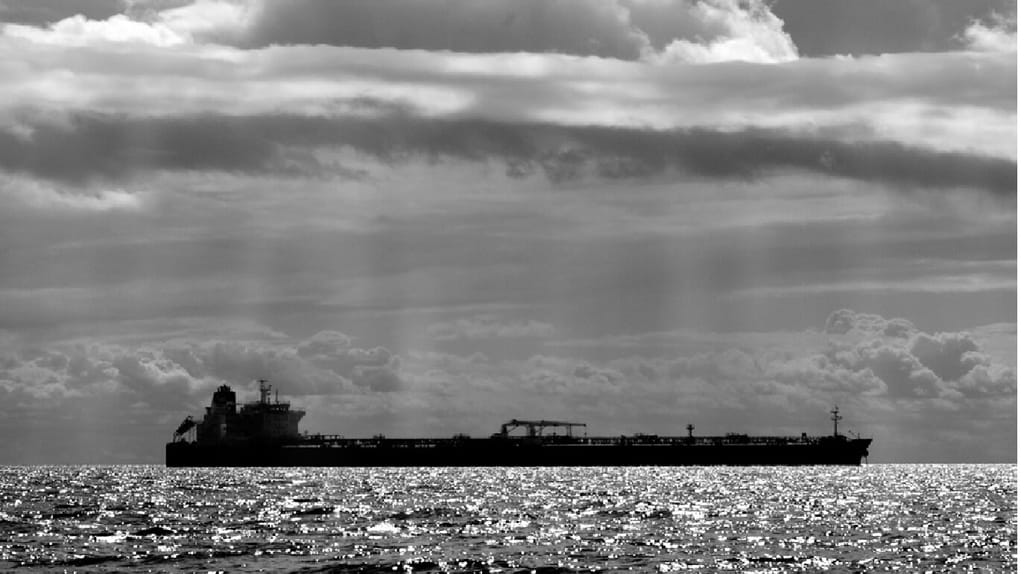
Shadow fleet tanker at sea

Published Sep 2, 2026 8:24 PM by Erik Kravets

(Article originally published in July/Aug 2026 edition.)


What about the Phoenix? Or should I call her the Pacific Apollo, Virgo Sun, P. Fos, Odysseus, Varuna, Kiwala, Pushpa or Boracay? She's been flagged around the world – in Hong Kong, Liberia, the Marshall Islands, St. Kitts & Nevis, landlocked Mongolia, Gabon, Djibouti and, finally, Russia.

"A foolish consistency is the hobgoblin of little minds," said Ralph Waldo Emerson. He would be impressed: no hobgoblins in shipping!

Phoenix has had a rough life. French commandos boarded her. A limpet mine was stuck to her. She was detained in Estonia. She was implicated in drone incursions near Copenhagen airport. She then flew the flag of Benin, where she was never registered.

All this excitement sounds more appropriate for a warship than a merchant vessel. Are the stories all true? It doesn't matter. Phoenix is a symbol, and for that they're true enough.

Today, Phoenix is in a happy marriage with the Russian flag. She wasn't single for long. Three quick months after being released from de facto French detention in Saint-Nazaire in October 2025, she made her filings and by January 2026, she was under new colors.

THE WHITE, BLUE AND RED

She's not alone. According to Windward, an AI-powered maritime compliance and risk optimization company, she's joined by 68 other tankers. In the past eight months, they all left their old flags behind for Russia's white, blue and red.

At least she won't be boarded – or so the logic goes. Article 110 of the U.N. Convention on the Law of the Sea permits a warship to board suspected stateless ships, which includes ships hoisting false flags. But a Russian ship flying Russian colors can't be accused of that. That's one reason why the "shadow fleet" is embracing the daylight.

The other reasons? It's easier. It's more profitable. It's less risky.

Dozens of ships registered under the Russian flag last year, swelling its numbers by 25 percent, according to Clarksons. Many of the new registrants were sanctioned ships formerly using permissive registries, like Phoenix. When these registries were pressured by Western enforcers, the shadow fleet ships were cut loose.

Then they sailed as stateless vessels which are, as we saw, subject to boarding by commandos. To end this vulnerability at sea, reflagging to the Russian flag – the last one still standing – makes sense, especially since Russia provides naval escorts for its merchant ships. This ranges from SU-35 fighter jet overflights to Russian frigates like Admiral Grigorovich, reportedly escorting tankers through the English Channel and firing warning shots at a British yacht.

St. Petersburg, where the Russian Maritime Register of Shipping is located, offers these ships a home and access to state-sponsored insurance. Sovcomflot, Russia's government-controlled shipping company, owns roughly half of the vessels returning to the Motherland, so commercial and governmental logic have converged.

After years of war, the world has sorted itself into Russian-aligned or neutral powers who are willing to risk the opprobrium of the West. These interests would rather deal with a real flag with real papers. The strategic advantage of living in grey, in-between spaces is fading.

"SHADOW FLEET"

I don't often pay a compliment to regulators. But in this case, they've gotten good at what they set out to do and they're achieving their objective.

As of April 23, 2026, 632 vessels have been designated by the E.U. as belonging to the "shadow fleet." The vessels have ended up on that list for any number of reasons: carrying military gear, stolen Ukrainian grain or Russian petroleum (outside of the price cap); manipulating their AIS transponders; hopping flags (like the Phoenix), or using so-called "phantom insurance," which is another way of saying fake protection and indemnity club insurance that lacks real coverage or benefits.

An example of just such an insurance "scheme" is Ro Marine AS, ostensibly a Norwegian insurer headquartered in Oslo. It was responsible for issuing certificates of coverage to 255 ships, of which 76 have since been tied to the shadow fleet.

In 2025, Norway charged the owner and management with forgery and operation of an illegal insurance business. Lloyd's of London, with characteristic restraint, commented that Ro Marine AS "has been reported in various news releases as having issued fake P&I insurance certificates related to (re)insurance for vessels."

The best way to track down "phantom insurance" has been the challenge-and-response system devised by the Shadow Fleet Expert Group, the Nordic-Baltic organization focused on countering illicit shipping operations in the regional waters of the Baltic and North Seas. It first met in Copenhagen in 2024.

By simply asking tankers making use of the high seas to disclose their insurance, bad actors can easily be sorted out. Any ships refusing or providing fake insurance were logged, and these logs were then shared among the fourteen Expert Group countries, which include heavy-hitters like France, Germany and the U.K.

In this way, the IMO numbers of the implicated ships found their way into E.U. databases. These then fed the sanctions lists, like the one mentioned above from April 23, 2026.

SANCTIONS

When the E.U. sanctions a vessel, it loses access to European ports and terminals, insurance and finance, brokerage, bunkering, ship chandlery, crew change assistance, even tugs. In Germany, it can trigger up to five years in jail to contravene these prohibitions. All this makes it impossible to operate economically in Europe and beyond.

But a Russian ship is a vessel with compliant registration flying the flag of a hostile sovereign power in international waters. That is tougher to interfere with. Boarding such a ship would be an act of war against a sovereign power, not a law enforcement measure.

As the scope of action narrows, it's worth glancing at the cost of all this to the West.

Windward, the maritime intelligence company, disclosed in March 2025 – its last year as a public company – that it earned $37.2 million of revenue from compliance. That calculates to a per-customer figure of about $170,000. If larger companies paid more and smaller companies paid less, it's enough to hurt.

Know Your Customer (KYC) and Anti-Money Laundering (AML) solutions aren't free, and they range across the entire maritime sector from terminals making sure they aren't docking a sanctioned ship to bunker companies trying not to sell fuel to the wrong buyer.

A lot can happen in four years. Since Russia invaded Ukraine in February of 2022, maritime commerce has rebuilt itself around a broad and deep set of restrictions. Both Russia and Europe have suffered even if, generally, Russia may have borne the brunt of it: Its military and security spending consumes 40 percent of its federal budget. Still, all that isn't enough, and there's no sign Russia is exhausting its ability to continue hostilities.

As far as sanctions are concerned, tightening the screw further risks snapping off the head rather than engaging the thread.

Greece delivered an example: It blocked the 21st sanctions package, proposed on June 9, 2026, arguing that it would destroy Dynagas, a company that operates 27 gas carriers including some ice-rated ones that serve the Yamal "megaproject," a Russian LNG facility in the frozen wildlands of Siberia.

Dynagas, as the Financial Times reported, carries Russian LNG and is not subject to sanctions. Dynacom, the sister company of Dynagas, has in the meantime operated profitably since 2023 by lawfully carrying Russian crude in conformity with price caps.

If the sanctions had gone through, the Greeks argued, those ships would have lost their value. They would have been sold off to non-Western actors willing to do business with Russia, or perhaps even to Sovcomflot – a windfall for Russia, a Greek loss.

YOUR PAPERS, PLEASE

As for Phoenix, as of this writing, her AIS reads "FOR ORDER," no questions asked. (Since this article was written for the magazine, Phoenix (IMO 9332810) is again under the Russian flag shuttling between Russia and China delivering crude oil.)

Erik Kravets, is a maritime lawyer, and frequent contributor to The Maritime Executive.

This article appeared in the July/August issue of The Maritime Executive. To read the latest edition of the magazine, go to The Maritime Executive July/August 2026 Ship Management edition. To subscribe to the magazine, please go to https://www.maritime-executive.com/subscribe.

The opinions expressed herein are the author's and not necessarily those of The Maritime Executive.


Norway Seizes Russian Research Vessel as Ukraine Pursues Crimea Claims

Russian research vessel
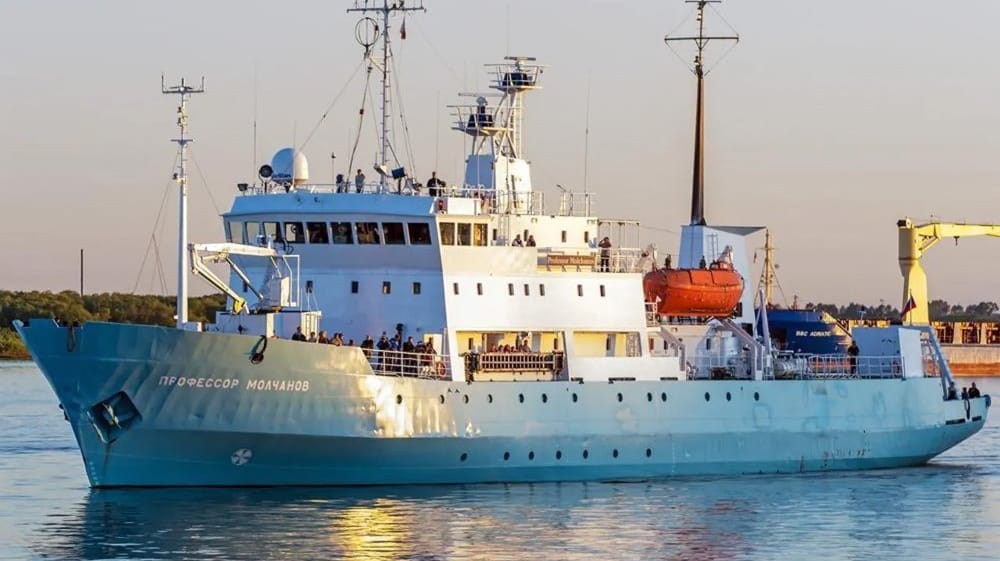
Russian ship Professor Molchanov was seized in Norway on behalf of Ukrainian claims for compensation for assets taken in Crimea (Naftogaz)

Published Sep 2, 2026 10:22 PM by The Maritime Executive


The Governor of Svalbard, a Norwegian archipelago, confirmed that under court authority, they have today, September 2, taken control of the Russian research vessel turned cruise ship, Professor Molchanov. The vessel is being held on behalf of the Ukrainian state-owned energy company Naftogaz, which has been pursuing claims against Russia for compensation for assets lost during the annexation of Crimea in 2014.

Naftogaz received an award in April 2023 from a tribunal in the Hague, which was valued at approximately $4.22 billion, plus interest and costs. It had started the action in 2016 for the value of the company’s assets in Crimea. Since then, Naftogaz has been doggedly chasing the Russian Federation and attempting to enforce its claim in jurisdictions ranging from the United States to the UK, France, and Finland. A Dutch court confirmed the enforceability of the award in late 2024. Naftogaz had also taken its claim into the Norwegian courts.

The Nord-Troms District Court in Norway issued its ruling on August 31, granting Naftogaz’s claim to seize the Professor Molchanov. The governor was instructed to act as bailiff and, as of September 2, seized the ship, which was in the Svalbard region as part of its normal operations.

The Professor Molchanov was instructed to dock in Barentsburg, a coal town operated by a Russian company, which is also the second-largest settlement in Svalbard. The governor said they would be taking care of the passengers and crew aboard the vessel in collaboration with Trust Arcticgul, the Russian state-owned company that operates the mine.

Built in Finland in 1982 as a specialized hydrographic and oceanographic research vessel for Russia, the Professor Molchanov is 1,753 gross tons and sails under the Russian flag. The ship is approximately 72 meters (236 feet) in length and has an ice-class hull. The Russians converted the ship in the 1990s for passenger operations. It has accommodations for 54 passengers, and since June 2025 it has been operating expeditions from Murmansk to the Svalbard region. It resumed the trips in March of this year.

The seizure follows another success Ukraine achieved in the Swedish courts. At the beginning of August, Sweden's Supreme Court finalized a ruling permitting a small cargo ship that has been detained for months to be awarded to Ukraine. Swedish authorities stopped the Caffa at the beginning of March 2026, citing environmental concerns and the belief the ship could be sailing under a false flag. Ukraine pursued a claim asking for Sweden’s assistance, asserting that the ship had transported stolen grain from Crimea. Swedish prosecutors presented the claim to the courts for a decision.


Maersk to Test First Wind Rotor on a Containership

wind rotor installed on a containership
Rendering of the wind rotor installed on a 8,700 TEU Maersk containership (Anemoi)

Published Sep 2, 2026 6:23 PM by The Maritime Executive


Maersk, working with the British wind propulsion company Anemoi, plans to test the feasibility of wind-assisted propulsion on one of its smaller containerships. While several efforts have been looking at rigid sails for containerships, this is the first application of a wind rotor on boxships as Maersk and the industry more broadly look for opportunities to increase efficiency and reduce emissions and costs.

The demonstration program calls for Anemoi to design, manufacture, and deliver a 5-meter-diameter (16.4-foot), 35-meter-tall (115-foot) fixed Rotor Sail to be retrofitted in mid-2027 to the containership. The system will be integrated alongside existing onboard systems, with Anemoi providing support through the engineering and installation.

The installation will be aboard one of the Maersk Lima class vessels, with Anemoi saying it is expected to be used on North and South Atlantic voyages. The Lima class of 16 vessels was delivered starting in 2011, built by South Korea’s Daewoo Shipbuilding & Marine Engineering (DSME). The 105,846 dwt containerships measure 300 meters (982 feet) in length with a capacity of approximately 8,700 TEU.

Anemoi, speaking to the Financial Times, explained that containerships have not been at the forefront of wind-assisted propulsion in part because of deck space questions. It notes that nearly all the deck area is devoted to containers and the concerns over loss of earnings capabilities for the vessel. This test addresses the concerns by positioning the rotor near the bow and using a fixed rotor versus the folding ones used on many bulkers to reduce air draft and move the rotors out of the way of cargo handling.


The placement at the bow helps to address the concerns of impacting container capacity and a lack of deck space (Anemoi)


The company explained to the Financial Times that containerships, however, are a good candidate as they sail dedicated routes, making it possible to predict wind conditions and vessel operating speeds and schedules. Anemoi says its technology can operate in heavy seas and wind speeds of up to nearly 80 mph.

“Wind-assisted propulsion is one of several promising maritime solutions with the potential to improve vessel efficiency and reduce emissions,” said Ole Graa Jakobsen, Head of Fleet Technology, at Maersk. “It has already been tested in other parts of the shipping sector, and we see this pilot with Anemoi as a valuable opportunity to build practical experience and assess its relevance for our fleet and for container shipping more broadly.”

Anemoi highlights that so far, its technology has primarily been installed on bulkers, large ore carriers, and product tankers. The company was started in 2015 to commercialize the rotor technology, which was developed a century ago using the “Magnus effect” to create the propulsive thrust. On its website, it says it is possible to reduce fuel and emissions between 5 and 30 percent. It installed its first system in 2018, and reports are that the company currently has 29 Rotor Sails operations and more than 16 on order.

The International Windship Association told the Financial Times that there are about 110 commercial installations of wind-assisted propulsion on vessels above 400 gross tons. It says another 80 to 90 are on order, and it believes as many as 50 are in the development pipeline. The technologies, including rigid sails or rotors, have been tested on most classes of ships, including an early test by Maersk Tankers of the competing Norsepower rotors on a product tanker. A third technology using a kite concept remains in the testing and development stage.

An EU-funded research project is currently testing a rigid sail concept on a containership. Ocean Network Express (ONE) also planned to test a rigid sail housed in a portable container as a means of adding wind-assisted propulsion to its fleet.


The Demand Side Has Spoken

What an intermodal corridor asked for, in its own words

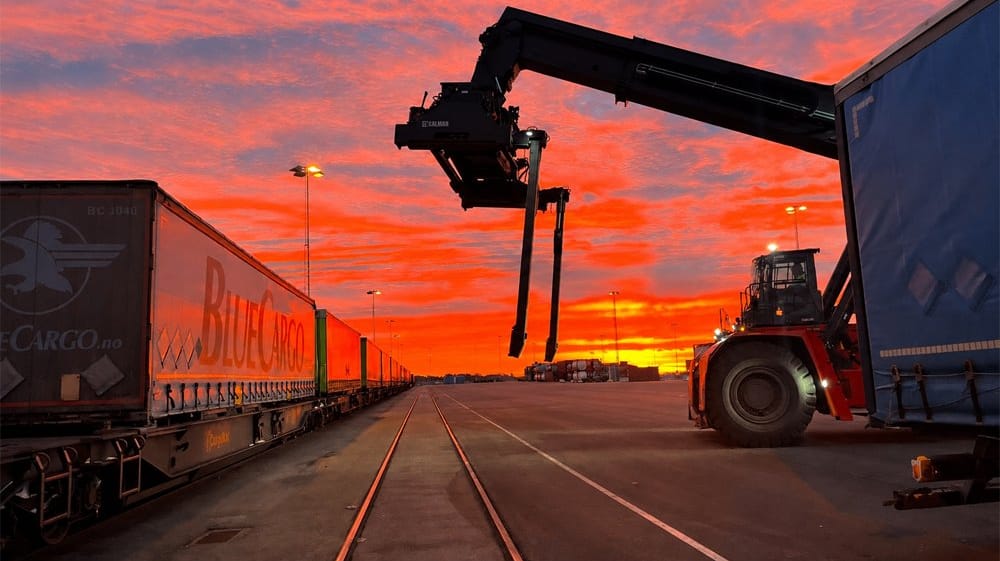
Intermodal image
(TT-Line)

Published Sep 4, 2026 8:35 AM by Shad Blidberg Hallam, Mikael Lind, and Wolfgang Lehmacher


For several years, the case for federated data sharing in transport has been made from the infrastructure side — by researchers, by public bodies, by the communities building trusted data infrastructures. The argument has been patient and principled: coordination across a transport chain requires primary data, shared under the control of those who generate it, without surrendering it to a central owner.

On 27 August, at the TT-Line Intermodal Conference at Maryhill Estate in southern Sweden, something quietly significant happened. More than one hundred leaders from across the intermodal transport system — ferry and short-sea operators, rail undertakings, road hauliers, ports and terminals, freight forwarders and infrastructure owners — were asked what was needed to make intermodal transport work better. Their input was captured live from the room. And when the themes were surfaced, they were not about technology. They were about coordination.

The room asked for cooperation within intermodal transport, and for interfaces that make partnerships workable. It asked for the ability to subscribe to data as an intermodal customer — to receive the data each actor needs, at the right time, in the form they need it. It asked for transparency of data and of transport. It named the lack of standards. It reached for the phrase "digital ecosystem". And it anchored all of it in the commercial test that ultimately decides adoption: making intermodal transport more competitive, reliable and easier to buy.

Read as a list, these are familiar conference themes. Read together, they are something else: a specification.

What those requirements imply

Consider what is being asked for. Interfaces for partnership — but among actors who compete as often as they cooperate, making it difficult for any one actor to own the interface on which everyone else depends. Data at the right time, in the right form, for the right actor — which is not a report, and not a portal, but governed access to primary data as events occur. Transparency across parties — which requires that the parties trust what they see, and trust what happens to what they share. Standards — because bilateral integrations have been built for decades and have never added up to a system.

None of this is easily solved by a product that one company sells and another adopts. It points instead towards infrastructure that is shared, neutral and governed by the actors who depend on it. That is why the ask has remained unmet for so long. Centralised platforms can aggregate data efficiently, but aggregation is not the same as trusted operational coordination. Where participation depends on surrendering control, neutrality becomes difficult to sustain.

The participants did not, of course, ask for "federated data sharing". That is our interpretation of what these requirements imply. Taken together, however, they point towards a federated model: each actor retains control of its data, shares what the shipment requires, and every party sees the operational picture it is entitled to see. The shipment — not the platform — becomes the coordination object. That distinction matters. In a fragmented industry, the durable source of value is not exclusive possession of information; it is the ability of independent actors to make better decisions from a trusted, time-relevant common picture.

The regulation is arriving at the same place

It is equally notable that European regulation is moving in a compatible direction. In February, the European Commission adopted harmonised specifications for data sharing in rail transport under the Data Act, covering freight tracking, tracing and electronic consignment information. From July 2027, authorities across the EU must accept electronic freight transport information under the eFTI Regulation. Access to specified categories of transport information is becoming more regulated, more standardised and increasingly expected across the European freight environment.

That should change how the industry thinks about the question. As access to transport data becomes increasingly standardised, data access itself will no longer be the principal constraint. The scarce thing will be the trusted, shared operational context in which that data means something: where planned, updated and actual events are linked around real shipments, and where every actor in the chain can contribute to and act upon a shared operational picture.

From infrastructure to activation

This is precisely the practical problem the Virtual Watch Tower community has sought to address: creating a federated environment for trusted primary-data sharing and shared situational awareness, developed with shippers, logistics actors, authorities, research institutes and technology providers, and governed through its community. Through VWTnet, shipment itineraries become shared coordination objects; ecosystems form around real transport flows rather than around membership drives; and value grows each time another shipment ecosystem chooses to participate.

The lesson of the August conference is that the coordination problem no longer needs to be explained solely from the infrastructure side. A corridor's own leaders, asked openly, described the coordination gap and articulated many of the conditions needed to close it. What they described is unlikely to emerge from another platform alone. It requires a shared coordination environment that can be activated around real transport flows: corridor by corridor, shipment by shipment.

Corridors such as the southern Baltic — where ferry, rail, road, port and forwarding actors already depend on one another daily — are where that activation is most natural. The actors are known to each other. The interdependence is real. And now, on the record, so is the demand.

About the Authors

Shad Blidberg Hallam is Founder and Executive Lead of Nomon AB and Co-founder and CCO of AKA Innovation AB. He has more than twenty years of executive leadership experience in international logistics, including senior roles at DHL Express and most recently as COO of Green Cargo, Sweden's national rail freight operator. He brings a multimodal operator and transport-buyer perspective spanning rail, road and air.

Mikael Lind is a Senior Strategic Research Advisor at Research Institutes of Sweden (RISE) and was appointed the world's first Adjunct Professor of Maritime Informatics at Chalmers University of Technology. He is co-initiator of community-driven initiatives including collaborative decision making (CDM), Sustainable Port and the Virtual Watch Tower. He is frequently published in international trade press and co-editor of three books on Maritime Informatics and Maritime Decarbonization.

Wolfgang Lehmacher is a global supply chain logistics expert. The former director at the World Economic Forum and CEO Emeritus of GeoPost Intercontinental is an advisory board member of The Logistics and Supply Chain Management Society, an ambassador for F&L, and an advisor to GlobalSF and RISE. He contributes to the knowledge base of Maritime Informatics and is co-editor of the book Maritime Decarbonization.

The opinions expressed herein are the author's and not necessarily those of The Maritime Executive.


California's Port of Oakland to Expand Turning Basin to Handle Larger Ships

Port of Oakland California
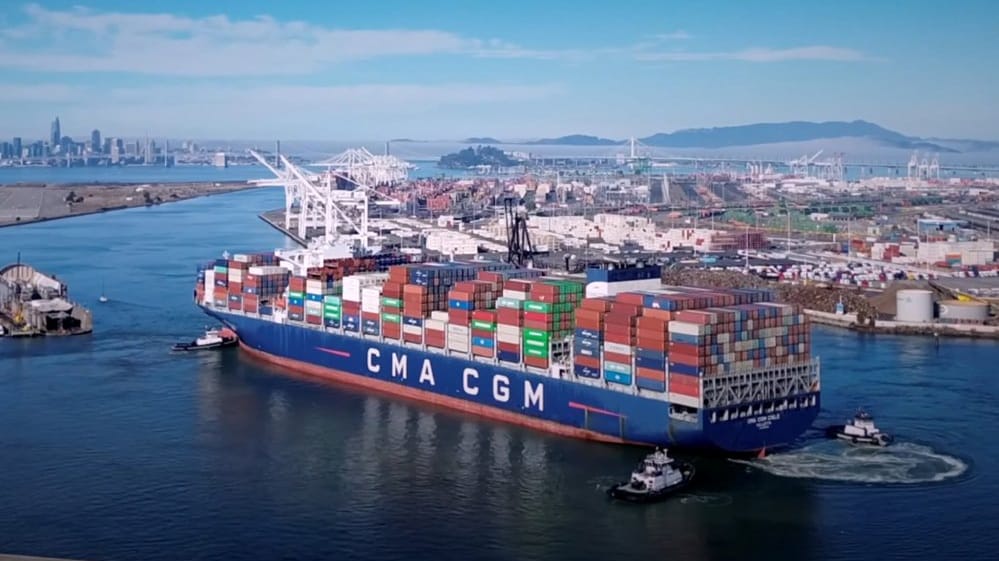
Port of Oakland will expand its turning basins to handle and provide more flexibility in maneuvering large containerships (Port of Oakland)

Published Sep 4, 2026 8:35 AM by The Maritime Executive


California’s Port of Oakland in the San Francisco Bay Area has completed an agreement with the U.S. Army Corps of Engineers to increase the port’s ability to handle larger vessels. After years of planning, an agreement was signed on August 27 with designs for widening and modernizing the turning basins for the Port of Oakland.

The project will expand both the inner and outer harbor turning basins. It calls for widening the estuary between Oakland and Alameda, California.

As port officials explain it, the current challenge is that at its widest point, the estuary is approximately 1,500 feet. The new generations of containerships are getting larger and longer at upwards of 1,300 feet. Often, it leaves as little as 150 feet of clearance between each side of the estuary for the big ships. When the effects of wind and currents are also factored in, the port may be limited to just one period a day when the large ships can be safely turned.

The Oakland Harbor Turning Basins Widening Project started roughly in 2020 and is now expected to be completed in 2030. Construction is scheduled to begin in 2028, and it is projected to cost $640 million. It will involve dredging just under five acres of the north Alameda shoreline. It will add approximately 344 feet to the width of the inner turning basin.

The project has gone through years of review, including an extensive environmental review process. The design agreement with the Army Corps is a critical step in the project.

Port officials are saying the project is key to modernizing the port’s infrastructure and ensuring that it remains competitive as a port city for large cargo ships. They said when completed, the project will provide more flexibility to maneuver larger ships multiple times per day. It will also reduce disruptions to ferry operations in San Francisco Bay.

Container volumes at the Port of Oakland have been largely stable for the past 20 years. Last year, 2025, it handled 2,253,976 TEU, and so far, this year it has handled 1,294,664 TEU, which is down nearly four percent versus 2025.

Port officials have highlighted the obstacles in the container operations, calling July 2025 a “challenging month.” The uncertainties in the market have meant that laden volumes have been essentially flat this year, although the port has seen a slight increase in export volumes. In July, the Port of Oakland recorded 81 vessel calls during the month, compared with 95 in July 2025.

In the near term, they noted they are hearing a positive outlook for the remainder of the year from the ocean carriers that call at the port. Port officials emphasize the competition from the Southern California ports of Los Angeles and Long Beach and Seattle, Washington. Oakland recently installed the West Coast’s tallest cranes, and with the expanded turning basin, they expect to enhance the Port of Oakland’s competitive position. 


Engine For 1st Ethanol-Powered Very Large Ore Carrier Completes R&D Test

Everllence

Published Sep 4, 2026 8:10 AM by The Maritime Executive


[By: Everllence]

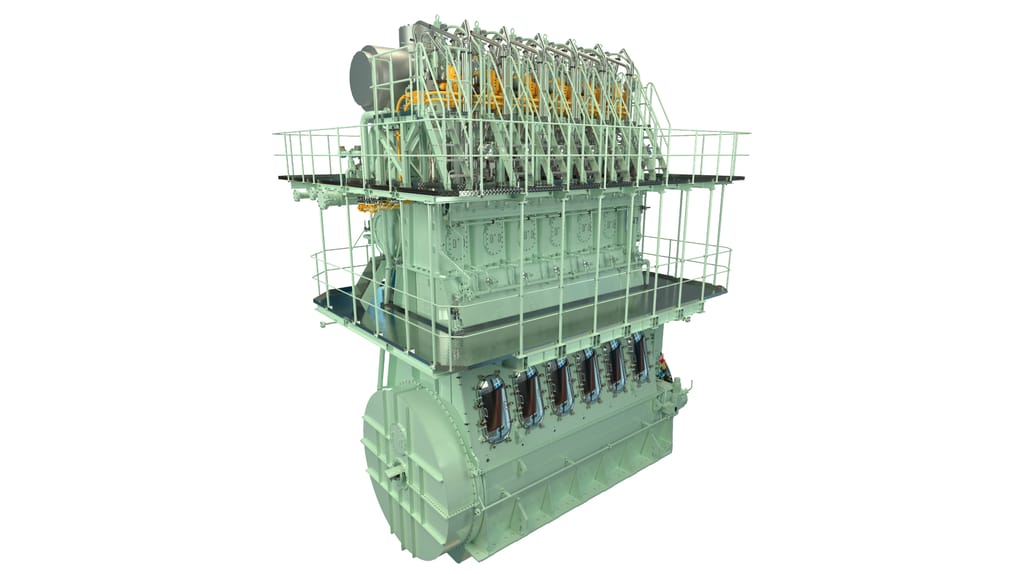
Everllence has announced that the world’s first Everllence B&W G80 ethanol capable engine has been tested and verified at an R&D test at HD Hyundai Heavy Industries Engine and Machinery division in Korea. The engine is bound for the third in a series of 10 × Very Large Ore Carriers ordered by Shandong Shipping for chartering to Brazilian mining and logistics operator, Vale. Vessel delivery is set for early 2027.

Bjarne Foldager – Head of Two-Stroke Business, Everllence – said: “This marks a major milestone for the G80 engine platform, transforming it into a fully flexible tri?fuel engine capable of operating on fuel oil, methanol, ethanol, or any blend of the latter two. The project reflects our shared commitment with Vale regarding pragmatic and scalable decarbonisation pathways within the hard-to-abate shipping sector, and positions Vale at the forefront of maritime sustainability. By selecting the G80 tri-fuel engine, Vale is advancing its strategy to reduce emissions across its maritime logistics chain while maintaining operational robustness in what are – currently – demanding conditions for low-carbon fuels.”

The new announcement stems from a cooperation agreement signed by Everllence and Vale in February 2026 regarding the development of an advanced, ethanol-powered engine based on the well-proven Everllence B&W ME-LGIM (-Liquid Gas Injection Methanol) platform.

Christian Ludwig – Vice President, Head of Global Sales & Promotion, Two-Stroke Business, Everllence – said: “The G80 ethanol engine is based on the proven B&W ME-LGIM platform. It represents the latest evolution of Everllence’s two-stroke dual-fuel engines, designed to enable shipowners to transition seamlessly towards lower-emission fuels without compromising operational efficiency, reliability or safety. In general, interest in ethanol as a marine fuel has increased over the past five years as multi-fuel capability increases shipowner flexibility. We foresee the core demand for this engine coming from bulk carriers, tankers and container vessels. With over 250 methanol engine orders under our belt already, of which more than 100 are in service, Everllence is the leading engine designer for methanol and ethanol-fuelled engines”

Dual-fuel leadership

With the order, Everllence continues to expand its footprint across multiple alternative fuel technologies, including methane, methanol, ammonia, ethane, LPG, and now ethanol. As the maritime industry explores new fuel pathways, the company emphasises the importance of mature, reliable technologies that can be deployed at scale.

The G80 ethanol project underscores a shift from early-stage announcements towards tangible implementation, reinforcing Everllence’s role in enabling the next phase of shipping’s energy transition.

The products and services herein described in this press release are not endorsed by The Maritime Executive.


ZPMC Launches First SOV Built for French Shipping Group LD Armateurs

LD Armatures vessel launched

Published Sep 4, 2026 8:21 PM by The Maritime Executive

[By ZPMC]


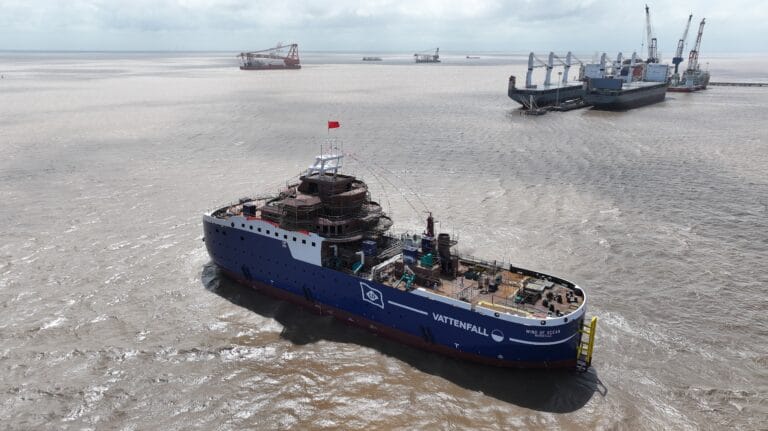
The Wind of Ocean, the first service operation vessel (SOV) built by Shanghai Zhenhua Heavy Industries Co., Ltd. (ZPMC) for French shipping group LD Armateurs (LDA), was successfully launched recently. The milestone marks the beginning of a new phase in which key equipment will be installed and onboard systems commissioned. The next-generation SOV is designed to combine lower environmental impact with efficiency, safety and comfort.

The vessel represents a significant step in ZPMC's efforts to serve Europe's offshore wind industry with high-end offshore engineering equipment. The energy-efficient SOV measures 90 meters in length, 19.6 meters in beam and 7.3 meters in depth, and can accommodate up to 96 people. With an endurance of more than 30 days without resupply, it is designed for unrestricted service and can operate in the challenging conditions of the North Sea. The vessel features a diesel-electric hybrid propulsion system incorporating lithium batteries, along with a Dynamic Positioning Class 2 (DP2) system, a 3D motion-compensated crane and a wave-compensated gangway. These systems enable the safe transfer of personnel and equipment even in high sea states. Designed as a "floating hotel," the vessel combines lower-emission operations, offshore safety and comfortable living quarters, enhancing life onboard for crew members and maintenance technicians.

The project comprises two SOVs, with the second vessel having already reached the keel-laying milestone. It marks the first collaboration between ZPMC and LDA. Once completed, the vessels will be deployed to the DanTysk and Sandbank offshore wind farms in Germany's North Sea, where they will provide long-term operations and maintenance support, including equipment servicing and spare parts replacement, throughout the wind farms' operational lifecycles.

The products and services herein described in this press release are not endorsed by The Maritime Executive