Tuesday, September 08, 2026

EU institution leaders blast Serbia over 'shocking' Ratko Mladić's funeral
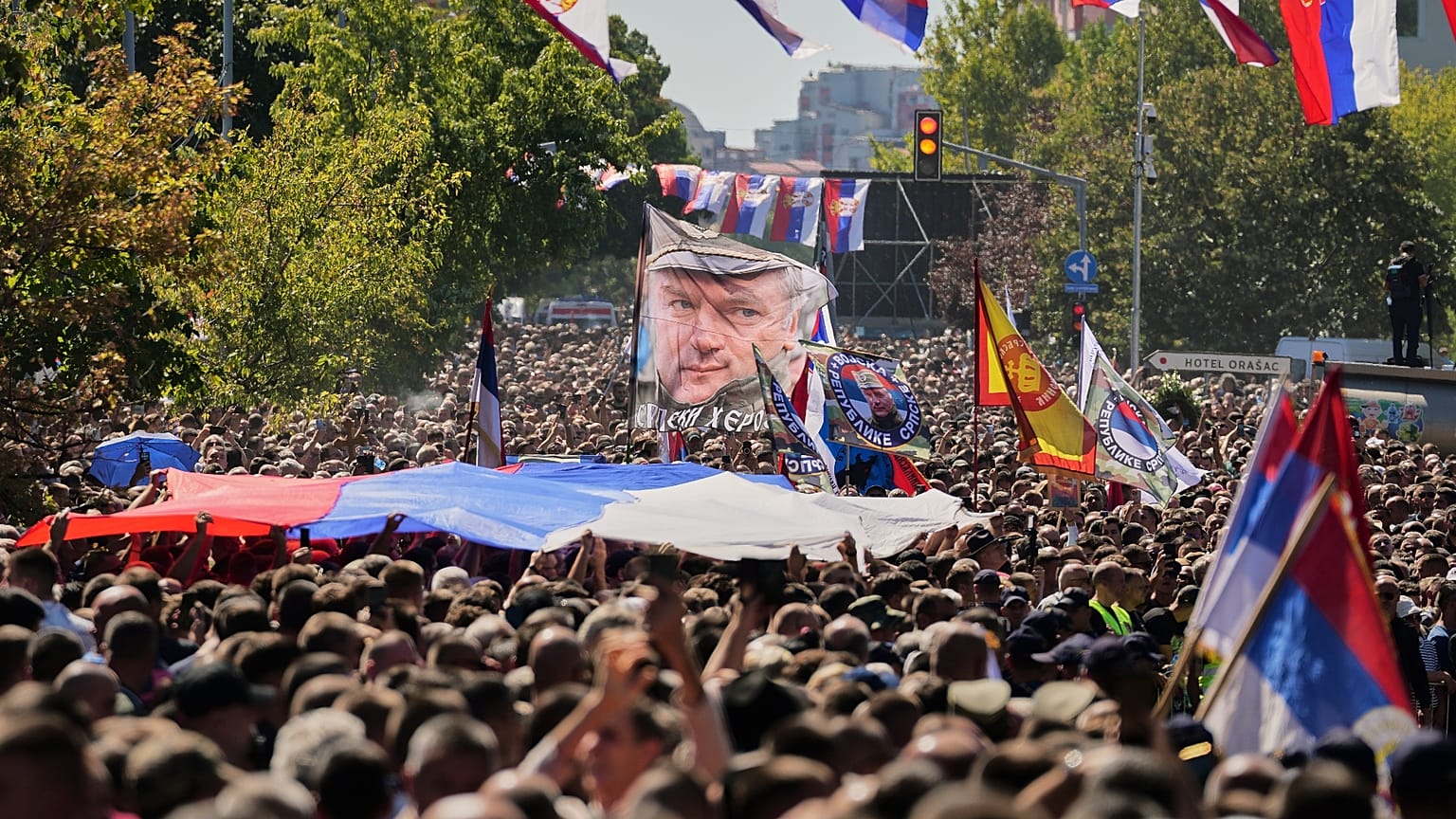
Funeral procession for the former Bosnian Serb army commander Ratko Mladic, after a religious service at the St. Luka Church, in Belgrade, Serbia, Monday, Sept. 7, 2026.
Copyright AP Photo/Darko Vojinovic

By Luca Bertuzzi
Published on

Von der Leyen and Costa called Ratko Mladić's Belgrade funeral 'shocking,' after senior Serbian officials attended with military honours, clouding Serbia's EU bid for the foreseeable future.

The heads of the EU's two main institutions have condemned the presence of senior Serbian officials at the funeral of the convicted war criminal, in a joint statement published simultaneously on X on Tuesday morning.

"The images from Ratko Mladić's funeral yesterday in Belgrade were shocking. Ratko Mladić was a convicted war criminal. He was responsible for genocide, war crimes, and crimes against humanity," European Commission President Ursula von der Leyen and European Council President António Costa wrote on X.

Ratko Mladić, known as the Butcher of Bosnia, died in late August aged 84 in a UN detention facility in The Hague. The Bosnian Serb had served in the Army of Republika Srpska with the rank of colonel-general during the Yugoslav Wars.

Following his death, his body was flown to Belgrade on a state plane, given an honour guard by the Serbian military and various security forces, and commemorated by the public broadcaster and the Serbian Orthodox Church. His coffin was wrapped in a Serbian flag.

On Friday, the glorification of the war criminal attracted the ire of senior EU officials, national ministers and diplomats, while Enlargement Commissioner Marta Kos warned the funeral would be an "important test" for Serbia's accession bid.

"He died while serving a life sentence for the Srebrenica genocide and other crimes. The elements of official support and the presence of some senior Serbian officials at the funeral are deeply regrettable," the post continues.

On Monday, the Commission's chief spokesperson, Paula Pinho, caused a public backlash after telling the daily press conference that "we had heard that there was a funeral foreseen with state honours, and that has not been the case."

"Five ministers from the Serbian Government were seated in the front row at the funeral, a convicted war criminal was given military honours, and his body was flown in on a Serbian Government aircraft," the official X account of the Foreign Ministry of Bosnia and Herzegovina wrote, calling Pinho's statement "a disgrace to the entire European Union."

Von der Leyen and Costa's joint statement appears to cement the EU's institutional condemnation of Mladić's glorification, stressing that Serbia's failure to confront a dark chapter of European history contradicts the values underpinning EU membership. It also marks a sharp escalation from warning to institutional condemnation.

In July, the Commission tried to revive Serbia's accession bid by putting the opening of Cluster 3 back on the table. Eight member states blocked the move, citing rule-of-law concerns and Belgrade's failure to align with EU sanctions against Russia.

"Everyone can see that, following this heinous glorification of Mladić, the opening of Cluster 3 is completely out of the question for now," an EU diplomat told Euronews, speaking on condition of anonymity.

Enlargement Commissioner Marta Kos cancelled her planned visit to Serbia, while a Commission spokesperson denied that von der Leyen had ever had a visit to Serbia planned at all.

Serbian President Aleksandar Vučić called for snap parliamentary elections to take place in late October. 


Ratko Mladic Buried With Military Honours In Serbia, Thousands Attend Funeral


Ratko Mladić. Image: Grok

September 8, 2026

Balkan Insight

By Marina Zec and Katarina Baletic


Key Takeaways:

Ratko Mladić, who died serving life for genocide and war crimes, was buried in Belgrade on Monday with an army salute and a service by Patriarch Porfirije, who said most Serbian Orthodox faithful still honour him. Serbian ministers, Dodik, Cvijanović, and Russia’s ambassador attended; Vučić stayed away for talks with Uzbekistan’s president.

Mourners treated him as a hero—flags, T-shirts, free buses from Republika Srpska and Montenegro. His son asked the crowd to decide if his father was “a hero or a criminal.” Lawyers disagree on whether a Hague convict should get military honours.

The EU, Bosnia, and Croatia condemned the display as genocide denial that clashes with European values and could hurt Serbia’s (and Montenegro’s) EU path. Mladić was convicted of Srebrenica, the Sarajevo siege, persecution of Bosniaks and Croats, and taking UN hostages.


Large crowds of mourners, including Serbian ministers, gathered in Belgrade on Monday for the funeral of Ratko Mladic, who died in detention while serving a life sentence for genocide, war crimes and crimes against humanity.

Troops lined the road and police saluted the coffin, which was draped with the flags of Serbia and Republika Srpska, as it was transported to Topcider Cemetery from the Church of St. Luke, where the head of the Serbian Orthodox Church, Patriarch Porfirije, led a funeral service.

The Patriarch declared that Mladic’s name will “remain deeply woven into the memory and prayers of the vast majority of our Serbian Orthodox people, who feel and cultivate deep gratitude toward him”.

A Serbian Army honour guard gave a three-volley salute as Mladic’s coffin was lowered into the grave, and mourners shouted “Long live Ratko Mladic” and “Glory to the hero”. He was buried next to his daughter Ana, who committed suicide in 1994.

Serbian Defence Minister Bratislav Gasic, Minister without Portfolio Nenad Popovic and Minister for Labour, Employment, Veterans and Social Affairs Milica Djurdjevic Stamenkovski attended the funeral, as did war veterans in military uniforms.

From Republika Srpska came Milorad Dodik, the head of the ruling coalition in the Serb-dominated entity, and Zeljka Cvijanovic, the Serb member of Bosnia and Herzegovina’s tripartite presidency. The Russian ambassador to Serbia Aleksandar Bocan-Harchenko came to pay condolences to the Mladic family.

But European Union officials, the foreign ministers of neighbouring Croatia and Bosnia, and survivors of wartime crimes committed by Mladic’s forces strongly criticised the commemoration of the genocide convict.

The EU warned that the glorification of war criminals and genocide denial “contradict the most fundamental European values and have no place in the EU or in EU candidate countries”.
T-shirts celebrate Mladic’s wartime actions

From early on Monday, hundreds of mourners streamed towards the Church of St. Luke, some walking several kilometres to pay tribute to the war criminal they consider a Serbian hero, despite his convictions by the Hague Tribunal.

Many carried flags and wore T-shirts depicting Mladic or symbols of Republika Srpska and its army, which he led during the war. One T-shirt slogan read: “Ratko Mladic – Is it a crime to defend the Serbian people?”

“Now even the [football] supporters are together, now we’re all together,” said one man, referring to the fact that both fans of Red Star and Partizan, Belgrade’s main football clubs, had paid tribute to Ratko Mladic during their weekend derby.

A younger Mladic supporter standing next to him was in tears. “He tried to protect us, and now we are here to see him off,” he said.

At noon, the Patriarch Porfirije led the funeral service, saying that Mladic “stood at the head of the army of his people and carried a great responsibility and burden, made a sacrifice, and laid down his life for the freedom, defence and survival of his people”.

Following the service, members of the Serbian Armed Forces carried the coffin from the church to the funeral procession heading towards Topcider Cemetery.

In the procession, Mladic’s son Darko carried a sabre, while other family members carried Mladic’s military decorations and a photograph of him. Mladic’s wife, Bosiljka, walked behind the coffin.

Along the route between the church and the cemetery, water tankers and temporary public toilets had been installed for those attending. The city of Belgrade deployed significant resources, providing the water supplies, electric transport vehicles and city-run security services.

Free transport was offered from Bosnia and most towns in Serbia for anyone who wanted to pay their respects, Reuters news agency and media outlets in Serbia and Montenegro reported. Dozens of buses travelled from Republika Srpska, while organised bus transport was also arranged from Montenegro.

At the ceremony, flags bearing the deceased general’s image were flown and a sound system had been set up so mourners could hear Mladic’s son Darko speak.

Darko Mladic thanked the mourners for what he called a “magnificent farewell.”

“Thank you, my brothers, for coming to decide whether my father is a hero or a criminal,” he said.

Mladic was then buried with a ceremonial volley, an honour traditionally reserved for senior military officials. Mladic held the rank of general in the Yugoslav People’s Army, JNA, during the early 1990s but legal experts in Serbia are divided on whether there is any basis for a funeral with state or army honours, given that he was convicted of genocide
Anger in Bosnia and Croatia

Bosnia and Herzegovina’s Foreign Minister Elmedin Konakovic condemned Monday’s commemoration of Mladic, accusing Serbian President Aleksandar Vucic of “leading Serbia towards complete isolation in the region”.

“We saw a war criminal being given the highest military honours. We saw a large number of Serbian government officials attending the funeral and commemoration,” Konakovic told reporters.

Konakovic said Vucic had been “cowardly” to stay away from the funeral, but claimed that “we all know very well that he is the organiser, implementer and personally the most responsible person”. Vucic avoided the issue of attendance at the funeral by saying he was busy on Monday meeting Uzbekistan’s President Shavkat Mirziyoyev.

Konakovic said draft letters had been prepared for the US, EU and UK, adding that Bosnia will ask the EU “whether it truly respects its own principles”. He added that he will seek to reduce contact with Serbia and withdraw personnel from Bosnia’s embassy in Belgrade. “There will be no more talks on economic cooperation with Serbia while I am here,” he added.

Croatia’s Foreign Minister Gordan Grlic Radman also slammed Monday’s commemorations in Belgrade – and warned that they could affect Serbia’s EU accession process.

“Glorifying this war criminal is truly incompatible with European values,” Grlic Radman declared.

He noted the glorification of Mladic not only in Serbia, but also in Montenegro. “This is above all an insult to the victims, survivors and their families,” he said.

He called for action to be taken over threats to European values in countries that are candidates for EU membership, which include Serbia and Montenegro.

Mladic was found guilty of some of the worst atrocities in Europe since World War II by the International Criminal Tribunal for the Former Yugoslavia in The Hague.

He was convicted of genocide of Bosniaks in Srebrenica in 1995, the persecution and extermination of Bosniaks and Croats across the country, terrorising the population of Sarajevo with a campaign of shelling and sniper attacks, and taking UN peacekeepers hostage.

Azem Kurtic contributed reporting from Bosnia and Vuk Tesija contributed from Croatia.


About Balkan Insight
The Balkan Insight (formerly the Balkin Investigative Reporting Network, BIRN) is a close group of editors and trainers that enables journalists in the region to produce in-depth analytical and investigative journalism on complex political, economic and social themes. BIRN emerged from the Balkan programme of the Institute for War & Peace Reporting, IWPR, in 2005. The original IWPR Balkans team was mandated to localise that programme and make it sustainable, in light of changing realities in the region and the maturity of the IWPR intervention. Since then, its work in publishing, media training and public debate activities has become synonymous with quality, reliability and impartiality. A fully-independent and local network, it is now developing as an efficient and self-sustainable regional institution to enhance the capacity for journalism that pushes for public debate on European-oriented political and economic reform.
View all posts by Balkan Insight →


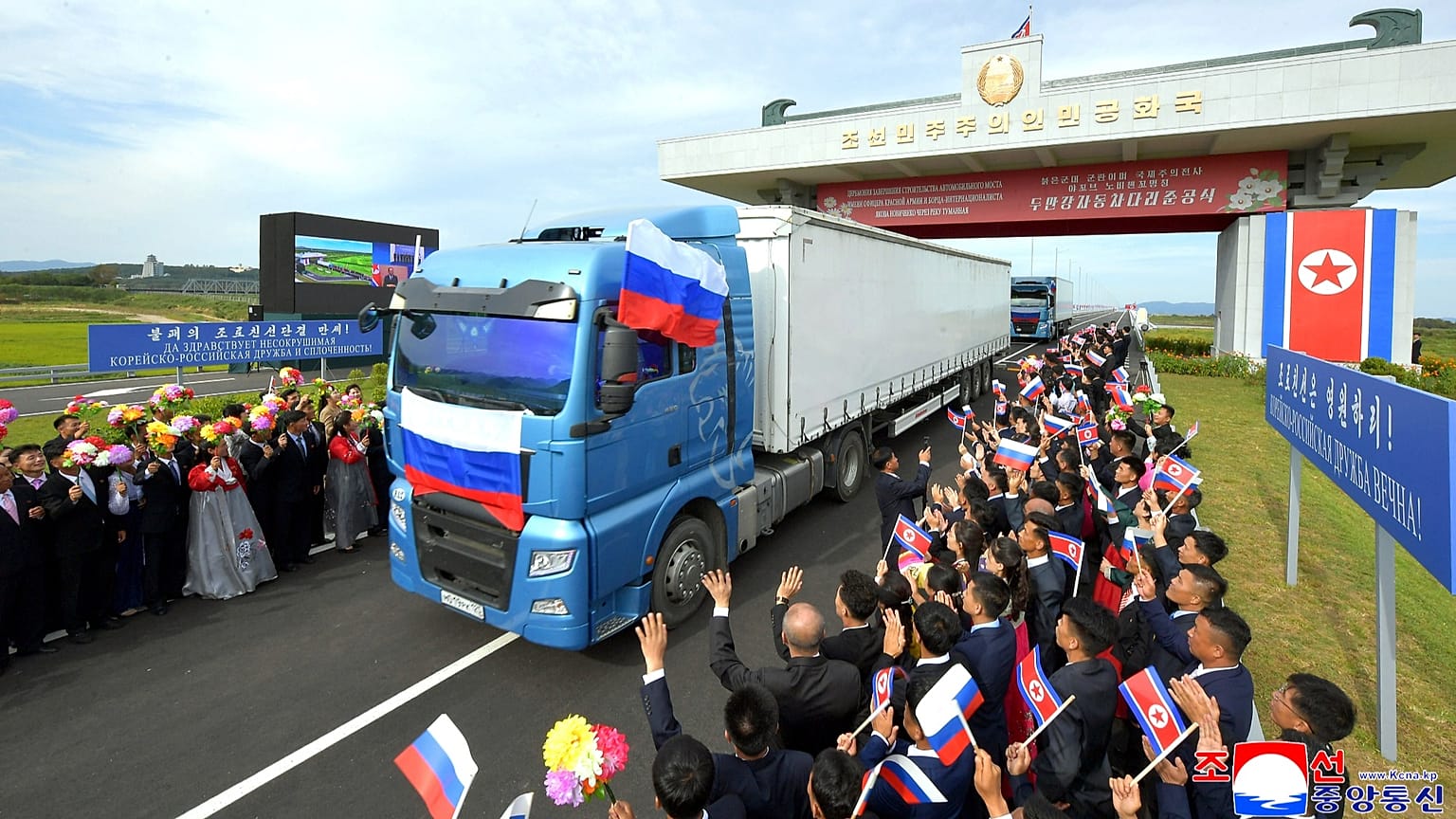
 

Opening of first road bridge with Russia a sign of tighter ties, North Korea says

A truck from Russia arrives in Rason after crossing the first road bridge to North Korea, 7 September, 2026
Copyright AP Photo

By Gavin Blackburn
Published on

The opening on Monday came as Russia and North Korea have heavily boosted military and economic ties since Moscow launched its full-scale invasion of Ukraine in 2022.

North Korea called the first road bridge across its narrow border with Russia a concrete sign of tightening bonds, state media reported on Tuesday, as Pyongyang gains advantages from its powerful neighbours Moscow and Beijing.

The bridge over the Tumen river into Russia and an under-construction span to China are part of a shift that offers Western-sanctioned Pyongyang economic and strategic options it has long sought, experts said.

North Korea "will simultaneously secure two major overland routes linking it with Russia and China, allowing it to encourage competition between the two countries and maximise its gains," said Lim Eul-chul, a professor at Kyungnam University.

He noted the bridges also "can be a message to the United States that North Korea has no reason to beg Washington for sanctions relief or make concessions on denuclearisation in order to negotiate," Lim added.

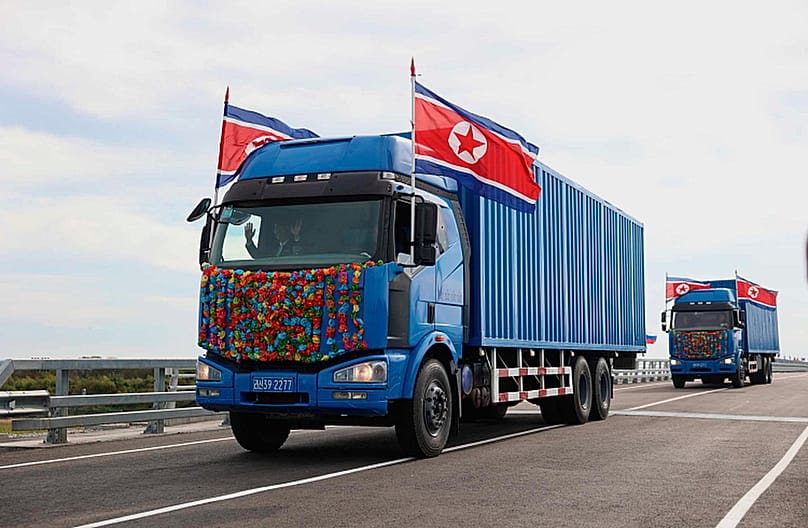
Russia noted the bridge is designed to accommodate expanded growth in freight with the capacity for up to 300 vehicles daily, which adds to the rail and air links already between the neighbours.

Ukrainian rights group Truth Hounds, however, previously warned that the new bridge could become "a direct artery for moving North Korean troops, construction brigades and military officials into Russia, with Russian technology and resources flowing in the opposite direction."

North Korean trucks drive across the new bridge between Russia and North Korea, 7 September, 2026 AP Photo

The ceremony on Monday marking the new bridge's opening came as Russia and North Korea have heavily boosted military and economic ties since Moscow launched its full-scale invasion of Ukraine in 2022.

North Korea dispatched thousands of troops to Russia in 2024 to help ward off a Ukrainian incursion into the Kursk region, while Kyiv has accused Moscow of using North Korean missiles in its regular barrages.

South Korea's central bank estimated in July that North Korea's economy grew more than 3% for a third straight year in 2025, citing it's expansion of economic cooperation with Russia as a "major drive."

The bank's official said North Korea's gross national income also "received a boost from a sharp rise in foreign currency earnings" linked to the deployment of its troops to Russia.

Beijing-Moscow-Pyongyang bloc

"The completion of the bridge is a significant event adding a new dynamic movement to the overall bilateral cooperation," North Korean official Pak Thae-song said in comments carried by the official KCNA news agency.

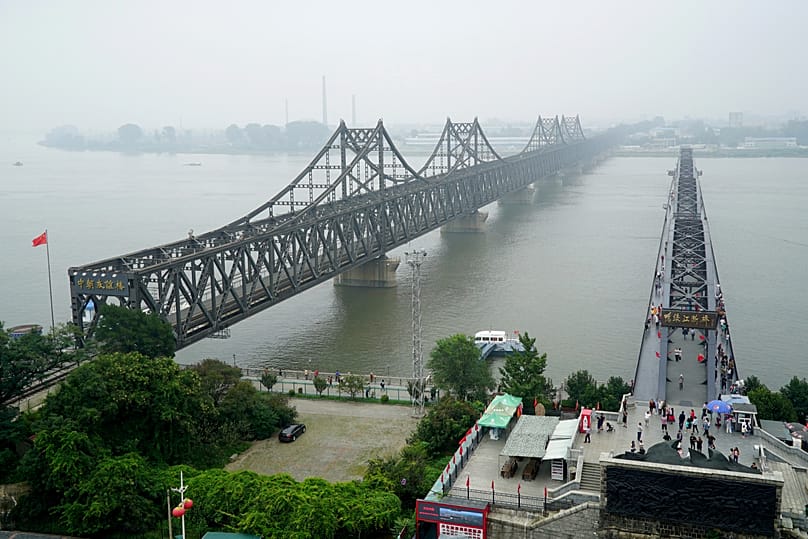
North Korea and China are already connected by the Sino-Korean Friendship Bridge, which is regularly used by passenger trains, but its capacity is limited.

After a long halt, the bridge partly reopened and restored daily passenger train services with China earlier this year, but has not yet resumed issuing tourism visas to Chinese citizens, who once made up the bulk of its overseas visitors.


Visitors walk across the Yalu River Broken Bridge next to the Friendship Bridge connecting China and North Korea in Liaoning province, 9 September, 2017 AP Photo

North Korea has long kept tight control over foreign visitors and effectively sealed its borders at the start of the COVID-19 pandemic six years ago.

The New Yalu River Bridge, intended as an alternative and eventual replacement of the Sino-Korean Friendship Bridge, is expected by experts to be completed this year.

The completion of the bridge "sends a political and geopolitical message demonstrating the formation of a "North Korea-China-Russia continental triangular bloc," said Lim.


Spanish archaeologists find 4,400-year-old tomb in Egypt with original colours intact

Images of the excavation
Copyright Ministerio de Turismo y Antigüedades de Egipto vía Instagram

By Escarlata Sánchez
Published on

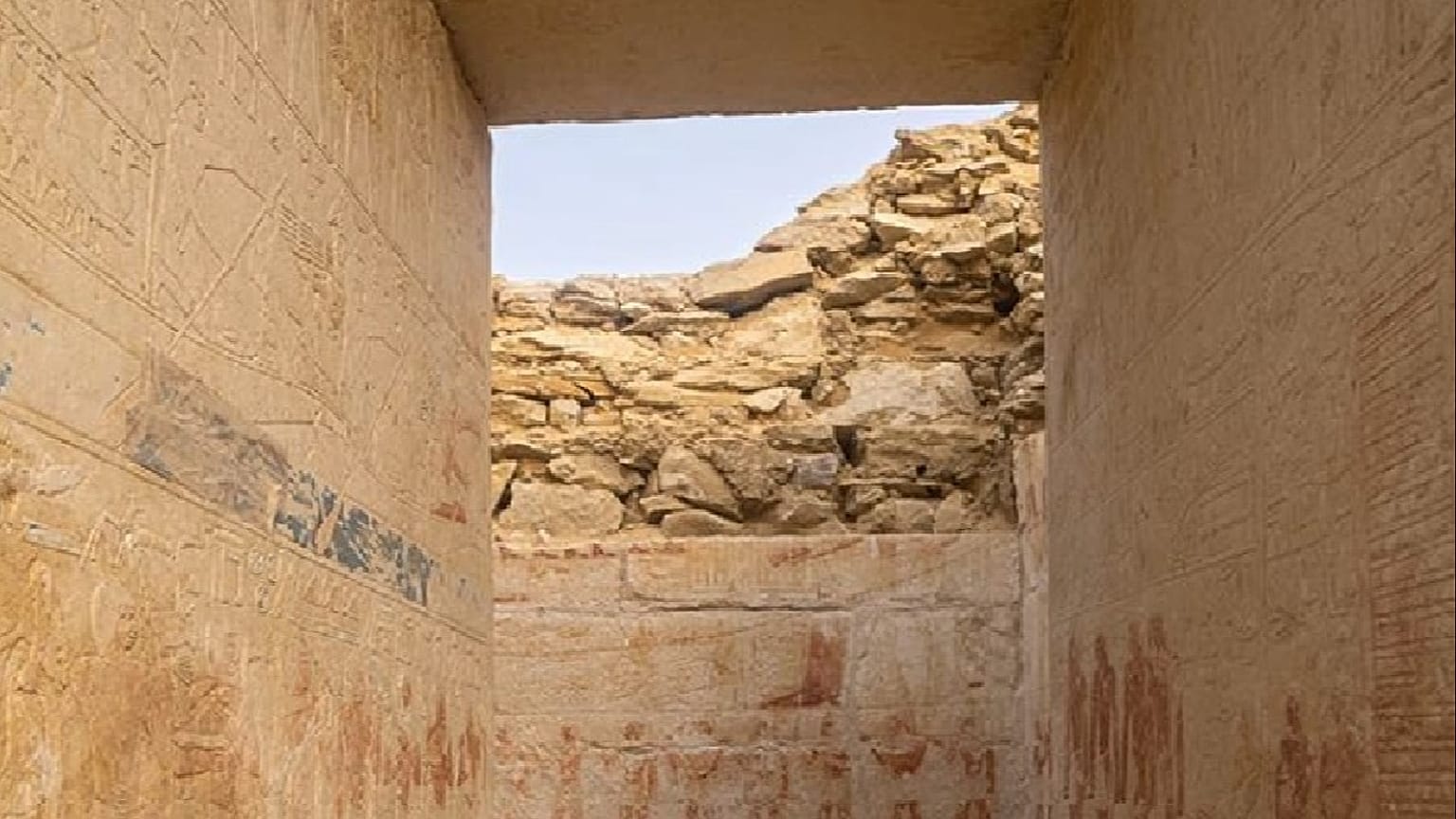
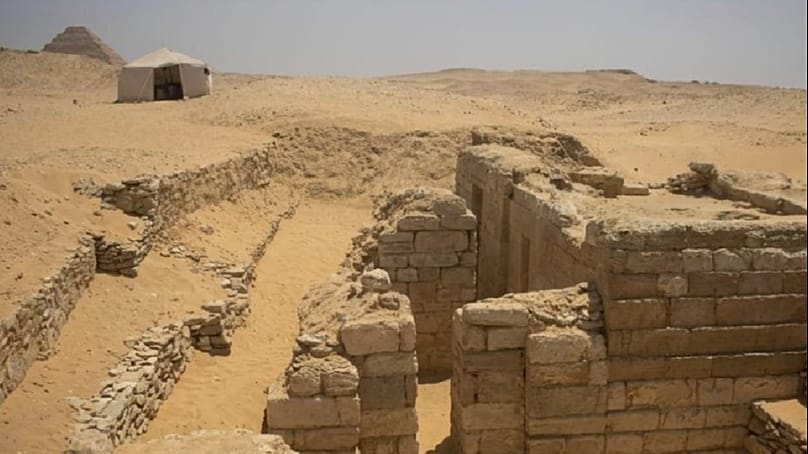
A Spanish-Egyptian archaeological team has unearthed at Saqqara an exceptional late Fifth Dynasty tomb with two funerary chapels and reliefs of farming scenes and offering processions that still retain their original colours.

A Spanish-Egyptian archaeological mission led by Spanish Egyptologist Josep Cervelló has uncovered an "intriguing and beautiful" tomb dating from the late Fifth Dynasty of Egypt’s Old Kingdom (2494–2345 BC) in the necropolis of Saqqara, southwest of Cairo.

The find was made during this summer’s excavations, directed by the Autonomous University of Barcelona (UAB) and Egypt’s Supreme Council of Antiquities. It is an exceptional mastaba with two funerary chapels, commissioned by Yunmen, a senior official of Pharaoh Djedkare Isesi, who also ordered that his father, Iti, a lower-ranking official, be buried there.

Egypt’s Ministry of Tourism and Antiquities confirmed that the tomb dates from the end of the Fifth Dynasty, during the reign of Djedkare Isesi, and is located in the Mariette necropolis, north of Saqqara. According to the statement, it contains "two funerary chapels belonging to two high officials, Younmin and his father, Ity".

The excavation site. Ministerio de Turismo y Antigüedades de Egipto vía Instagram

According to the UAB, the tomb has shed light on figures of great historical, social and cultural interest. For the archaeological team, the discovery also came as a surprise because of the monument’s richness and beauty.

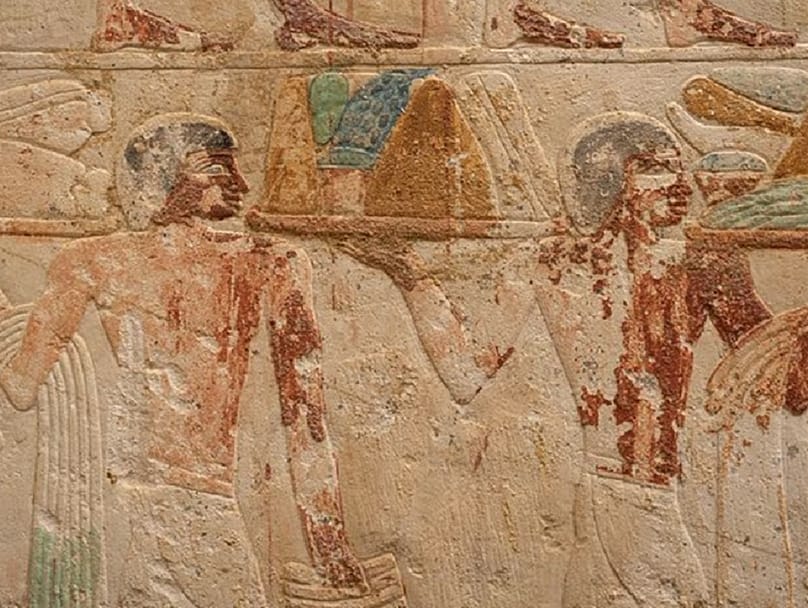
the most notable features are a high-quality architrave and funerary texts tailored to the personality and offices of its owner. The Egyptian ministry also highlights the exceptional state of preservation of the scenes and reliefs, which depict "agricultural activities and processions with offerings", and notes that many of them "have retained their original colours".

Images from the excavation Ministerio de Turismo y Antigüedades de Egipto vía Instagram

The decoration also includes depictions of donkeys and other animals. According to the Egyptian authorities, the discovery "provides new and valuable information about the architecture, art and administrative life of ancient Egypt at the end of the Fifth Dynasty".

The excavation sheds light on daily life in the Saqqara necropolis

As well as its historical and scientific value, the mastaba stands out for its beauty. Archaeologists believe that the double tomb may reflect the social rise of Yunmen, the son of a provincial official who went on to hold a senior position in the central administration and wished to share his funerary fate with his father.

The area has been known since the nineteenth-century excavations of Auguste Mariette, but it had never been studied and documented in depth. The research sought to reconstruct the topography of Saqqara and to understand the necropolis as a living space, where ancient Egyptians brought offerings and worked continually on the construction of funerary monuments.

Images from the excavation Ministerio de Turismo y Antigüedades de Egipto vía Instagram

The aim is to understand how the necropolis was organised and functioned, from its streets and squares to the movement of people and the rituals of worship. The analysis of maps and the reconstruction of the layout led the team to a previously unknown mastaba and to traces of two more nearby, which they hope to excavate in future seasons.


New school year: Which EU countries pay their teachers the most?

Copyright Euronews
By Inês Trindade Pereira & Damaso Jaivenois
Published on

It's back-to-school time again, and teachers and their unions are reigniting the debate over stagnant wages and recurring staff shortages. But which countries pay teachers the best?

The salaries of school staff, and in particular teachers and school heads, make up the largest single cost in formal education, yet teachers in most European countries are often considered underpaid relative to their level of education.

Some studies put teachers' starting salaries at around 40% less than the earnings of other professionals with a tertiary education, and while the gap narrows as they reach the top of the payscale, a stark geographic divide across Europe persists.

In the 2024/2025 school year, Luxembourg was the EU country that paid teachers the most across most of the education levels they taught at, for both those at the beginning and the peak of their careers.

That's according to Eurydice, the European Commission-funded education information network.

The Grand Duchy paid professionals at the start of their careers between €55,000 and €62,000, while it paid €97,000 and €109,000 at the top of their careers.

The Netherlands and Germany came in second place, depending on the education level the teacher works at and what stage of their career they are in.

On the other hand, Slovakia, Czechia and Hungary were the EU countries that paid teachers the least at the top of their careers.

Depending on the education level that the teacher taught at, Slovakia paid their employees between €18,000 and €22,000, while Hungary and Czechia paid up to €27,000.

Meanwhile, teachers in Greece and Slovakia earned the least at the start of their careers, with salaries of up to €17,000.

How long does it take for teachers to reach their peak career?

Career progression is often linked to teachers' roles and responsibilities, years in service, age, qualification level, and general performance.

It takes teachers in 11 EU countries between 31 and 40 years to reach the top of their career, depending on the education level, according to Eurydice.

Only in Denmark and Finland do teachers need up to 10 working years, depending on the education level.

As teachers progress in their careers, so too do their salaries grow, and this is a crucial factor in determining the education profession's attractiveness and retention rate.

It's something that not just teachers benefit from: better salaries for teachers also tend to lead to improved learning outcomes for students, according to a 2025 OECD study.

Eurydice figures say that teachers in Cyprus, Portugal, the Netherlands, and Slovenia will see the biggest salary jump among EU countries between the start and peak of their careers.

The debate on teachers' salaries and their progression has gained renewed interest in France, after the education ministry recently said on its website that a national education teacher received on average €3,090 net per month in 2024.

However, this figure reflects an average of all teachers' possible statuses: school teachers, certified teachers, associate professors, and more elite professors.

In addition, contract teachers, who represent 8% of the teaching staff, were not counted in this average, even though they are the lowest paid.

Furthermore, French teachers are among the five EU countries where salaries failed to keep up with the cost of living crisis, decreasing by 0.61% between the 2023/2024 and 2024/2025 school years, according to Eurydice.

In the EU, only Romania (-6.34%), Slovakia (-4.07%), Italy (-1.60%), and Belgium's French Community (-0.71%) ranked lower than France.

SLAVERY

Jamaica steps up slavery reparations campaign with petition to King Charles III


Jamaica is testing a new legal route in its long-running campaign for slavery reparations, asking Britain’s monarch to put key questions before the Privy Council.


Issued on: 07/09/2026 - RFI

King Charles III during a state visit to Kenya in 2023. © Reuters
By:RFI
ADVERTISING


A Jamaican government delegation is set to submit a petition to King Charles III in London on Monday as the Caribbean nation steps up its campaign for reparations over slavery and the transatlantic slave trade.

Culture Minister Olivia Grange is leading the delegation, which Jamaica's culture ministry said would seek to "advance Jamaica's push for reparations for the African ancestors who suffered under hundreds of years of enslavement".

The petition asks the king, who remains Jamaica's head of state, to refer three legal questions concerning slavery to the Judicial Committee of the Privy Council, the London-based body that remains Jamaica's highest court of appeal.

The delegation says it is the first time a Commonwealth country has sought to use this legal route to pursue the question of reparations.

Grange said the initiative was "intended to ensure the long outstanding settlement for the hundreds of years of the most horrific abuse that our African ancestors endured".

A new legal route

Jamaica is seeking an advisory opinion on three questions – whether the enslavement of Africans in Jamaica was legal under English law, whether it violated international law, and whether Britain now has a legal duty to provide redress.

The move does not itself seek a specific financial settlement but could provide a legal basis for wider discussions over reparations and Britain's historical responsibility for slavery.

Buckingham Palace acknowledged the petition ahead of the delegation's visit.

"We understand the Jamaican government is seeking a petition to be heard before the Judicial Committee of the Privy Council," a palace spokesman said.

The palace added that King Charles had "on many occasions expressed his personal and wholehearted commitment to promoting greater understanding around the issue of slavery and finding ways to address historic wrongs for the benefit of communities today".

Britain's royal family has faced growing scrutiny over its historic links to slavery and colonialism.

Charles and other senior royals have expressed sorrow and regret over the suffering caused by the slave trade, but the monarchy has stopped short of issuing a formal apology or committing to reparations.

Commonwealth pressure grows

Calls for reparatory justice have gathered momentum across the Caribbean, where governments and campaigners have pressed Britain and other former colonial powers to engage with demands ranging from financial compensation to development programmes, debt relief and cultural restitution.

At a Commonwealth summit in Samoa in 2024, member states called for discussions on the legacy of the transatlantic slave trade, increasing pressure on countries including the UK to open a dialogue on reparations.

Jamaica was a British colony for more than 300 years before gaining independence in 1962. Enslaved Africans were transported to the island in large numbers to work on plantations, particularly in the sugar industry, generating substantial wealth for British plantation owners and merchants.

The reparations push also comes as Jamaica debates its constitutional relationship with the monarchy and a possible transition to becoming a republic.

During her visit to Britain, Grange is also due to meet British Museum officials to discuss the return of colonial-era Jamaican artefacts.

The issue of cultural restitution has become increasingly prominent alongside the wider reparations debate, with former colonies seeking the return of objects held in European museums and collections.

King Charles and Queen Camilla are due to visit the Caribbean later this year as part of a nine-day overseas trip, although Jamaica is not included in their itinerary.

(with newswires)


Oxford University museum to return remains of 39 people to India's Naga community

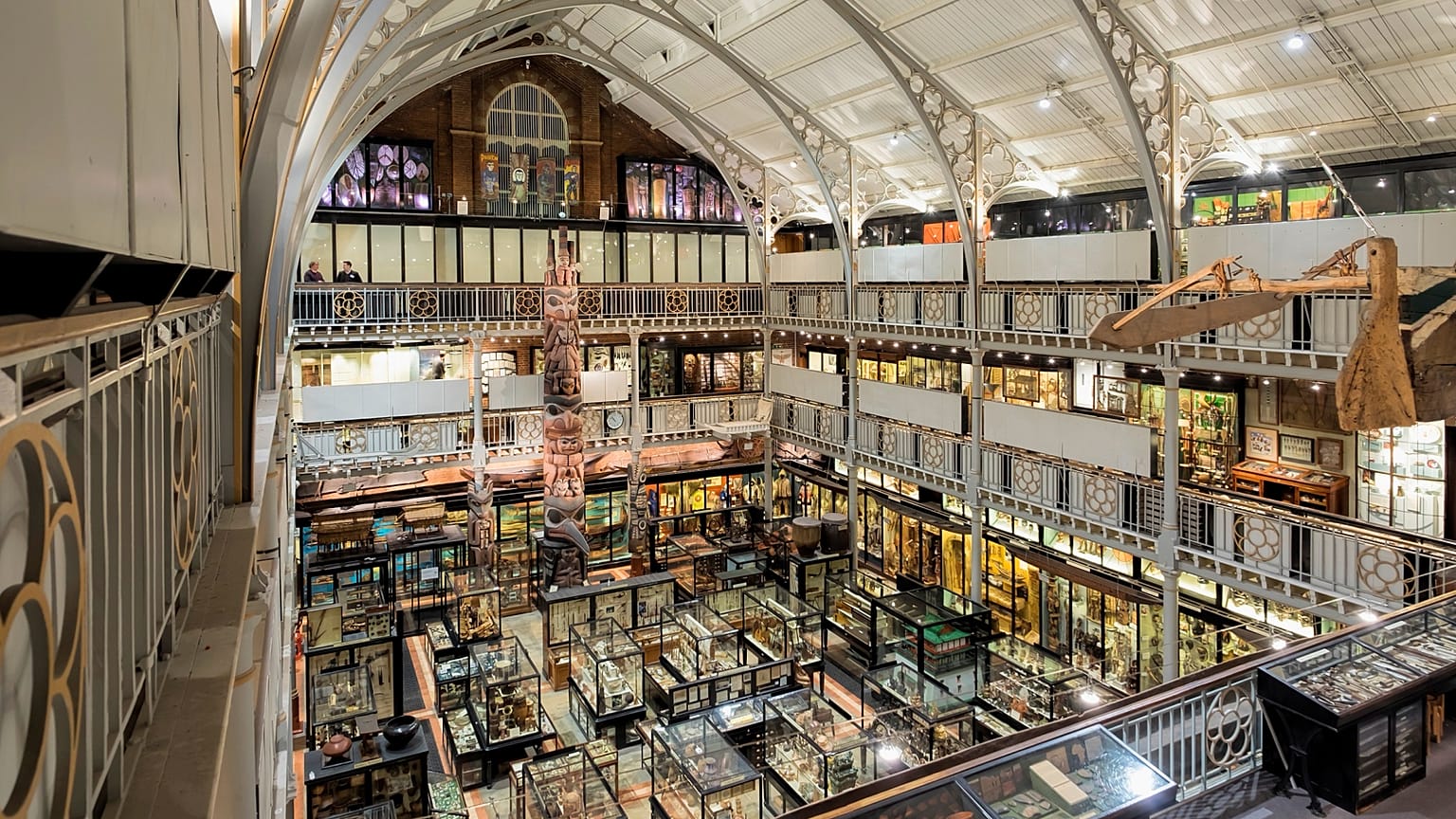
The Pitt Rivers Museum at the University of Oxford in Oxford, England.
Copyright Copyright Business Wire 2016


By Nathan Rennolds
Published on

The Pitt Rivers Museum said it has been "working closely" with the Naga people on finding a date for a handover ceremony, after which a Naga delegation is set to accompany the remains home.

A museum in the UK has agreed to return a collection of human remains taken during Britain's colonial era to the Naga community in northeast India.

Oxford University's Pitt Rivers Museum, which holds the world's largest collection of Naga material, is set to repatriate the remains of 39 Naga people following years of negotiations.

Many of the Naga artefacts held at the museum were gathered by colonial administrators in the early 20th Century. The museum says it removed all human remains from display in 2020.

It comes after Oxford University received a claim for 40 sets of ancestral remains kept at the museum in February 2026. In July, the university agreed to return 39 of them, saying the remaining set did "not have a clear provenance as Naga."

In a statement to Euronews, the museum's director, Professor Laura Van Broekhoven, the director of the Pitt Rivers Museum, said it had been "humbling" to have been part of the process working towards returning the remains.

"I feel honoured that we walked alongside our partners to find the path to return for these 39 Naga ancestors, who have been away from their homeland for far too long," she added.

The museum said it has been "working closely" with the Naga people on finding a date for a handover ceremony, after which a Naga delegation is set to accompany the remains home.

The deal has been welcomed by the Forum for Naga Reconciliation (FNR) and other Naga groups.

"Repatriation, for the Nagas, is not simply about bones and ancestral remains finding their way back to the land but importantly about memory returning to where it belongs," the FNR and other Naga organisations said in a statement sent to the AFP news agency.

According to the Pitt Rivers Museum's website, the museum first received Naga ancestral remains more than 100 years ago from John Henry Hutton, an anthropologist and colonial administrator in the Indian Civil Service.

Hutton and a fellow administrator, James Philip Mills, are said to have brought the museum most of the Naga remains in its collection between roughly 1910 and 1940.

"Their 'collecting' was not the neutral, scholarly activity the word implies," the museum says, adding that "remains and objects were frequently confiscated during punitive military expeditions, rather than freely given."

The Pitt Rivers' Naga collection includes thousands of objects in total.

"Within it, 219 items are listed as Naga human remains: 39 ancestral human remains (primarily skulls) and 178 objects that contain, or may contain, human hair. The current return concerns the 39 ancestors," the museum says.


Inside the world’s first solar ambulance transforming remote healthcare even when the sun goes down

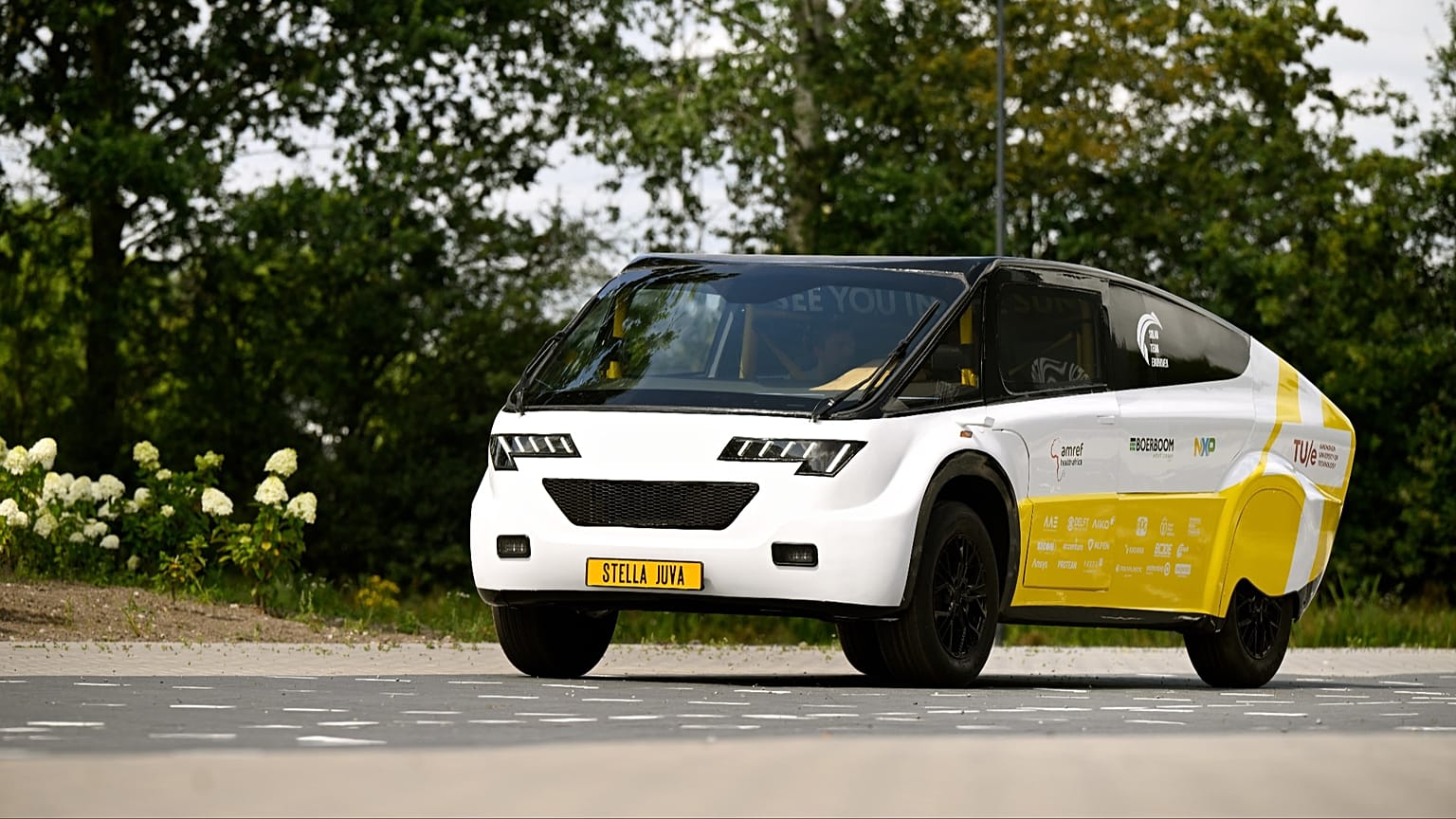
Stella Juva, the solar-powered ambulance.
Copyright Bart van Overbeeke.

By Liam Gilliver
Published on

Solar ambulance Stella Juva could transform access to healthcare in regions that lack reliable infrastructure, electricity and fuel.

The world’s first solar-powered ambulance has officially taken to the road, in what has been described as an “important first step towards the future of sustainable healthcare”.

Students from Solar Team Eindhoven at Eindhoven University of Technology in the Netherlands have developed Stella Juva – a road-legal ambulance that operates as an electric vehicle (EV) powered by fully integrated solar panels.

Energy generated from the sun is stored in a 50 kWh battery, allowing the ambulance to safely keep driving and deliver healthcare in remote areas – which often lack reliable infrastructure, electricity and fuel options – even when the sun has gone down.

Unlike traditional ambulances that pick patients up and transport them to a hospital, Stella Juva brings healthcare directly to people in need.

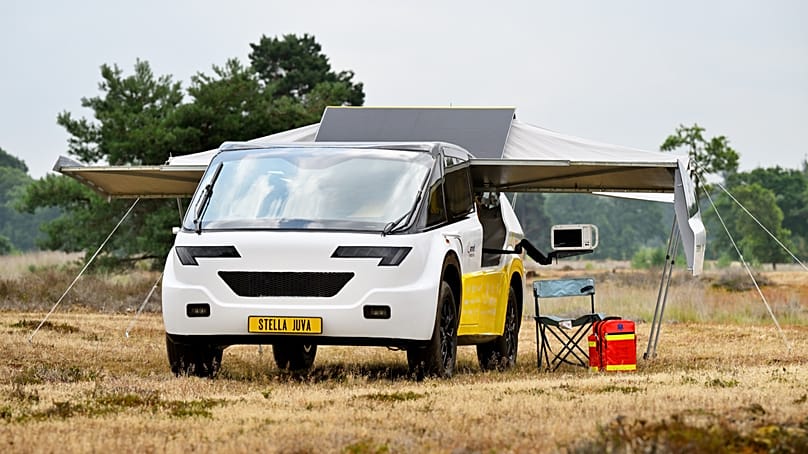
“When a healthcare professional arrives at a dispensary, they are able to extend solar panels from the side of the ambulance,” Yarno Basten of Solar Team Eindhoven tells Euronews Earth.

“This helps generate extra energy and provide shade for delivering healthcare. While stationary, the ambulance generates more solar energy than the medical equipment uses. This means that healthcare workers can keep using medical equipment at all times.”

World’s first solar ambulance takes to the road

During its first practical test, in collaboration with the international health organisation Amref Health Africa, Sella Juva covered more than 800km driving around various field locations in the Narok region of Kenya.

At one point, the team spent six hours travelling on challenging roads to reach a remote field location in Mosiro.

“During the end challenge in Kenya, the solar ambulance tackled rough off-road terrain,” Basten says. “During this off-roading, the toelink broke down, which connects the front wheels to the steering mechanism.

“Luckily, this part was designed as the first part to break. Within just half an hour, the team was able to exchange it with a new piece, so that Stella Juva was able to finish her journey.”

An ‘energy independent’ ambulance

Stella Juva is equipped with medical equipment that is urgently needed by health organisations in remote locations, such as an X-ray machine, ultrasound, Automated External Defibrillator (AED) and cooling equipment for vaccines.

During a two-day test, the solar ambulance proved that it could have provided medical care to approximately 200 people.

Stella Juva parked up with its solar panels extended.
Stella Juva parked up with its solar panels extended. Bart van Overbeeke

While stationary, Stella Juva generated more solar energy than it consumed while using all of the medical equipment simultaneously. Researchers say that this shows the ambulance can operate in an “energy independent manner”, allowing healthcare workers to keep using medical equipment at all times.

“It is really great for the team to see the potential of Stella Juva in practice,” says team manager Mathijs van Gerven. “Not only to drive sustainably, but also to be able to provide fully independent care. Especially in remote areas where energy is often scarce, this can make all the difference.”

‘The potential impact could be enormous’

“In Narok, long distances and unreliable electricity still make quality healthcare difficult to access,” says Geoffrey Sadera, a project lead of maternal and child health at Amref Health Africa.

“Stella Juva can bring not only health workers to remote communities, but also the power and medical equipment needed to examine and diagnose people on the spot.”

For example, during a single outreach, Stella Juva could provide an ultrasound scan for up to 40 pregnant women. This could be a literal life-saver in Narok and nearby counties, which face high levels of maternal and child mortality.

“If we could deploy Stella Juva in these areas, the potential impact could be enormous: we could identify risks earlier, intervene sooner and ultimately save lives,” Sadera says.

Following the successful test, the research team hopes that its impressive results will inspire companies, social organisations and governments to tackle societal challenges. It says they are open to parties who want to explore scaling up the invention.


Second-hand smoke: 2.7 billion exposed, 767 million of them children, study finds

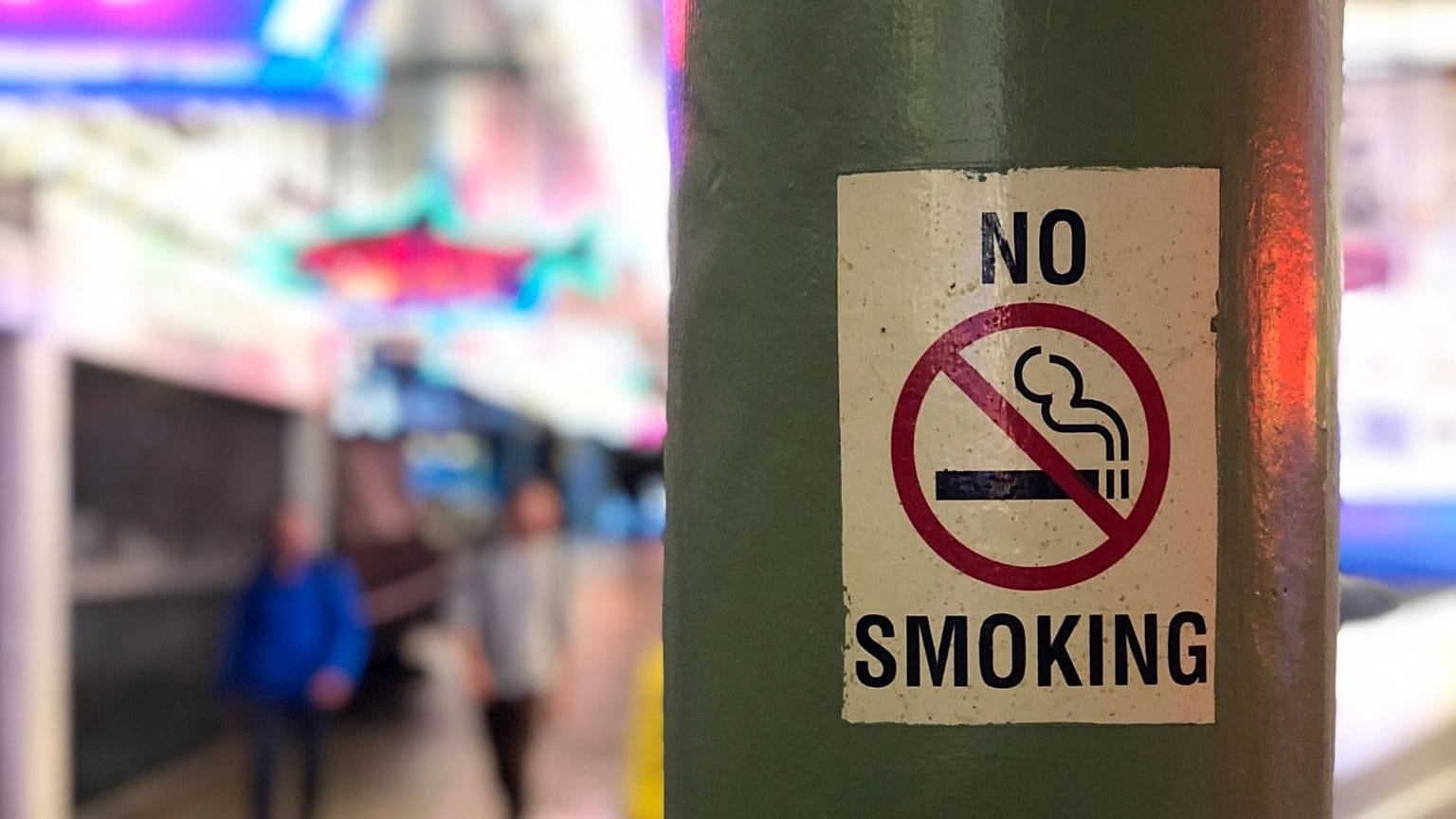
A third of the world’s population exposed to second-hand smoke.
Copyright Cleared/Canva


By Marta Iraola Iribarren
Published on

Second-hand smoke causes serious health harm, including heart disease, respiratory illness and cancer, and remains a leading cause of preventable death worldwide.

A third of the world’s population is exposed each year to second-hand smoke — also known as passive smoking — which continues to be a major source of illness and mortality among non-smokers.

An estimated 2.71 billion people around the world were exposed to second-hand smoke— a combination of two types of smoke inhaled by non-smokers — in 2023, contributing to 1.66 million deaths. This includes 767 million children under 15, who are especially vulnerable, along with 1.49 billion women.

These new findings come from the Global Burden of Disease (GBD) 2023 study, published in The Lancet Public Health, which estimated second-hand smoke exposure and health impacts across 204 countries and territories between 1990 and 2023.

Need for stronger regulation

Despite the scale of exposure, the study found that approximately 70% of the world’s population is not protected by comprehensive smoke-free laws.

As of 2024, only 79 countries, approximately 70% of them in the Americas, have achieved the highest protection standards of the World Health Organization framework — with all public places completely smoke-free or at least 90% of the population covered by legislation.

The proportion of the global population covered by comprehensive smoke-free legislation has increased from 3% in 2007 to 33% in 2024, now covering 2.6 billion people.

However, the authors noted that while smoke-free policies directly reduce smoke exposure, there is a need for extra measures such as tobacco taxation, marketing bans, plain packaging and cessation programmes.

Regional patterns

The researchers found that the number of people impacted by second-hand smoke exposure remained broadly the same globally, but rose sharply in sub-Saharan Africa, North Africa and the Middle East, which they attributed to population growth.

The exposure prevalence in the Central Europe, Eastern Europe and Central Asia region was 37.7% — higher than the global average of 33.9% — affecting 146 million people.

Most of the countries in Western Europe were included in the “high-income super region,” which showed some of the most significant progress in reducing passive smoking.

Denmark and Norway achieved some of the world's largest reductions since 1990, at -48,8% and -44,3%, respectively.

Broad health impacts

Beyond how many people are exposed, the report found that second-hand smoke accounted for the loss of 44.8 million years of healthy life and continues to be a major contributor to disability and premature death.

While a smoker inhales "mainstream smoke" through the cigarette's filter, non-smokers primarily breathe in sidestream smoke. This is unfiltered and contains higher per-unit concentrations of toxic and carcinogenic compounds than the smoke inhaled by the smoker.

The researchers estimated that second-hand smoke remains a substantial driver of global health loss, particularly through cardiovascular and paediatric respiratory diseases.

Exposure to tobacco smoke was associated with several health conditions, including stroke, lower respiratory infections, chronic obstructive pulmonary disease, asthma, type 2 diabetes and cancers of the trachea, lung and breast.