Saturday, September 12, 2026

The old order is dying as America faces a full-blown political reckoning

REUTERS/Eric Lee

September 11, 2026 
ALTERNET

“The old order is dying and the new cannot yet be born; in this interregnum, monsters appear.” —paraphrase of Italian anti-fascist Antonio Gramsci


While Hakeem Jeffries revealed, as he trash-talked Medicare for All, that he doesn’t believe we’re in a full-blown populist moment in America, Trump, Bannon, and the neofascist tech bros and billionaires fully realize what’s going on — and are committed to making the most of it. As are Bernie Sanders, AOC, Mamdani, El-Sayed and hundreds of other Democratic candidates this year.

At its core, populism is a way of understanding politics as a struggle between ordinary people and a powerful elite that has stopped serving them. It’s not inherently left- or right-wing; it’s really a way political scientists describe a moment when the majority of a population has lost faith in the existing system and is looking for alternatives to it.

Arguably, the greatest failure of government in the past century was the Republican Great Depression, kicked off by Herbert Hoover with GOP tax cuts and tariffs in 1929 and lasting largely through the end of World War II. It created a populist moment that brought to power a Bernie-like populist in America named Franklin Delano Roosevelt. It also brought to power a Trump-like populist in Germany named Adolf Hitler.

Because populist moments or eras typically evolve out of desperation — a third of Americans and Germans were unemployed in the 1930s — they open the door to people who offer solutions that radically depart from the norm. Breaking the old model and replacing it with a new one, in fact, is the essence of that populist pitch, be it coming from the fascist or the democratic socialist side.


And make no mistake: America is now being pulled in both directions by powerful movements from both sides. A recent Pew poll found that while almost 90 percent of Americans trusted our government to “do the right thing” for them in the Eisenhower/Kennedy 1960s, today that number sits at a shocking 17 percent.

The ground for a major, wrenching transformation of America has been seeded and the neofascist movement — which figured it out first — has, for the moment, captured control of our federal government along with about half of our states. But there’s also massive progressive pushback and dissatisfaction that, if anything, is amplifying the widespread populist sentiment.

So, which side will prevail?


The creation story of this moment is found when Reagan’s campaign cut a deal with the Iranian mullahs to hold onto their American hostages until after the election of 1980, thus destroying President Jimmy Carter’s chance at reelection. Reagan immediately began to execute a neofascist vision that had been presented to him by the billionaires who funded the Heritage Foundation with their 1981 “Mandate for Leadership,” that era’s version of Project 2025.

He destroyed the American union movement, slashed wages for working class people gutting the middle class, made it harder to retire on Social Security, made deep cuts to FDR’s social safety net, ended free college, killed Carter’s solar energy programs, gave trillions of tax dollars to billionaires while raising taxes on working people, slashed funding for our public schools, and repeatedly blamed the nation’s problems on Black people and “elites” in our universities.

In 1993, President Bill Clinton picked up Reagan’s neoliberal mantel and brought us “the end of the era of big government” and “the end of welfare as we know it” as Reagan’s draconian tax cuts — which no Democratic president since has seriously challenged — began the modern explosion of billionaires and monopolistic corporations.


President Obama, although he campaigned on the populist-sounding slogan of “hope and change,” continued the neoliberal plan, turning our healthcare system over to a handful of massive insurance companies and their billionaire executives.

Forty-five years of neoliberalism, as I document in detail in The Hidden History of Neoliberalism: How Reaganism Gutted America, have taken us from two-thirds of us being in the middle class with a single paycheck in 1981 down to a mere 41 percent of us claiming that status and having to have two full-time jobs to do it today.

Like the Republican Great Depression devastated average voters, so has this failed neoliberal experiment, bringing us to this second modern populist moment.

On the neofascist side, there’s a populist movement initially led by tech and fossil fuel billionaires that’s been joined by the over 200 billionaire families and foundations who spent nearly one in five of all dollars used in the 2024 election.


They’re aided daily in their efforts by propaganda operations run by Vladimir Putin (internet trolls), Elon Musk, Rupert Murdoch, and Benjamin Netanyahu (AIPAC), all committed to spreading strongman ethnonationalist movements across the world at the expense of democracy. And, of course, Donald Trump and his seizure of our federal government and police agencies.

Their most compelling weapon is their control of most of our media, particularly the powerful social media sites Facebook and X. As Peter Theil wrote in 2010, quoted in the opening of Gil Durand’s brilliant new book The Nerd Reich: Silicon Valley Fascism and the War on Democracy:
“The initial founding vision was that we were going to use technology to change the whole world and basically overturn the monetary system of the world… the basic idea was that we could never win an election on getting certain things because we were in such a small minority… But maybe you could actually unilaterally change the world—without having to constantly convince people and beg people and plead with people who were never going to agree with you—through technological means… technology is this incredible alternative to politics.”


On the side that still embraces democracy, the populist progressive movement has been led by Bernie Sanders for decades, although that mantle is increasingly being picked up across the Democratic Party as politicians recognized over the past decade this populist moment.


Multiple polls from 2016 showed that Bernie Sanders could’ve easily beat Trump, if the Democratic Party machine and the big donors Bill Clinton brought along hadn’t sabotaged Sanders. It was verified by Politifact. Populist voters were ready to elect a populist in that election, and the only one offered them was Trump.

They rejected the neoliberalism of Reagan and the Clintons alike, and those who vote for Democrats are clearly now opting for a reinvention of America along the social democracy lines pioneered by the Scandinavian nations.

In his book I Paid Hitler, 1930s steel baron Fritz Thyssen confesses that he was entranced by populist Hitler’s promise to “resurrect” Germany from the depths of the Depression and its loss in World War I. He organized the first seed money that got Hitler into power in 1933 and brought along many of his fabulously rich peers.

Today’s heir to Hitler’s authoritarian populist mantle is Trump (although Vance and Rubio, among others, are waiting for the king to fail so they can step into the vacuum).


During that same time, the plutocrat and former New York Governor Franklin Roosevelt turned his back on his own class and embraced a Bernie-like populist message, claiming that he could put America back together by taxing the morbidly rich at 90% and using government to meet workers’ needs.

Today’s heirs to FDR’s progressive populist mantle could well be billionaire Illinois Governor JB Pritzker or Congresswoman Alexandria Ocasio-Cortez (although there are numerous competitors).

On both sides, the message is similar:
“The elites and the government have failed us, feathered their own nests while ignoring us and ours, and they must be overthrown and replaced. We need radical change in the direction of our government and our culture.”


The only difference is that the Republicans are saying they’ll fix things by handing the reins of government to billionaires and the stability of society to armed, masked ICE agents while Democrats are saying we must reverse Reaganism, tax the rich, and use that money to restore our middle class with free healthcare, education, and housing supports.

We’ve been in this populist moment since the middle of the GW Bush administration, although it was a slow boil until the 2016 election. The first indication was Obama winning with a populist message, and the for-sure proof was Trump winning twice on purely populist messages. The Trump movement, however, figured out that this was where America was at long before it occurred to Democrats (other than Bernie), and Biden’s efforts, although valiant, were too little and too late.

So, here we are at this populist moment, and our country faces a binary choice: fascism or democratic socialism.

Republicans are universally lined up on the fascist side, backing Trump and ICE while feeding at the trough of their billionaire donors. That unanimity gives them tremendous power; their only problem is that they’ve failed to deliver for the people and voters know it.

Democrats are split, between those corrupt neoliberals like Marie Gluesenkamp Perez and John Fetterman who are deeply in the pockets of corporate and wealthy interests, and a new and growing generation of politicians who often describe themselves as democratic socialists or social democrats.

This schism, a remnant of the Clinton years, is weakening the Democratic Party’s populist appeal as many believe the Perez-style Democrats will prevent the AOC- or Pritzker-style Democrats from actually accomplishing the transition to a social democracy that America needs.

Some doubt that this is the most important election in our lifetime, noting that every cycle we hear that kind of rhetoric. But, given the stakes and the boiling populist energy arrayed on both sides, it’s hard to imagine this isn’t the most critical one since 1932 America and 1933 Germany.
Get Thom Hartmann's daily columns on his Substack, Hartmann Report. Click here to join for free.

Ex-federal judge reveals Trump’s plan for 'catastrophic end' of democracy


September 10, 2026 
ALTERNET

On Thursday, a former federal judge detailed what he deemed “the final battle for America’s democracy,” laying out President Donald Trump’s plan to seize power on January 3, 2027. This is according to attorney and former U.S. Circuit Judge Michael Luttig, who warns that “Trump and his MAGA Republicans might bury our democracy once and for all.”

“Trump instigated a war against America’s democracy on January 6, 2021,” asserts Luttig. “Today, almost six years later, Donald Trump and his Republican congressional allies are even more determined to prosecute the president’s war against American democracy to its catastrophic end than they were on January 6, 2021. That catastrophic end could well come on January 3, 2027, when Trump and his Republican congressional allies wage the final battle in Trump’s determined war to corrupt America’s democracy and deliver a lasting political victory over the Democrats for his MAGA Republican Party.”

Over the course of his second term, says Luttig, Trump has taken steps to “seize control of the midterms” to ensure that Republicans retain a majority in the 120th Congress. As Trump himself declared in February, “The Republicans should say, ‘We want to take over. We should take over the voting.’ ... The Republicans ought to nationalize the voting.” And the Republicans, notes Luttig, “have dutifully fallen in line … So unalterably subjugated to Trump is today’s Republican House that even a decisive victory for Democrats and a resounding repudiation of Trump and the MAGA Republicans at the polls in November will not guarantee that a Democratic majority-elect will be seated in the 120th Congress on January 3.”


The core of the plan involves a Republican plot to claim the election was rigged after they lose. According to Luttig, “This is how the crisis would unfold. The precursor of the crisis will come sometime before noon on January 3, when Speaker [Mike] Johnson (R-LA) removes current House Clerk Kevin McCumber and replaces him with a person loyal to Johnson and House Republicans who they know will refuse to list on the statutory roll of representatives-elect to the 120th Congress any Democrat-elect whom Johnson and the Republicans direct him or her not to list. Under Rule II, Clause 1 of the Rules of the House, the Speaker of the House has the unilateral power to remove the incumbent clerk, and then the power under Title 2 U.S.C. § 5501(a) to replace him temporarily with whomever he wishes until the House elects a successor. McCumber is a Republican appointed by former Speaker Kevin McCarthy. He is widely respected for his integrity and faithful adherence to the Constitution and is reputed to be unwilling to carry out orders he considers to be unconstitutional.”

“he constitutional crisis will begin, warns Luttig, when “sometime before the 120th Congress has been gaveled into session, the loyal temporary clerk refuses to list Democrat representatives-elect on the clerk’s roll of representatives-elect that determines who may participate in organizing the new Congress.” Such action will be met with lawsuits arguing that the clerk must perform its mandated action, which will work their way through appeals. “The next moment of constitutional crisis will come if and when,” says Luttig, the court orders the elected Democratic representatives be seated and the clerk refuses. “Judicial review of the House’s decision not to seat Democratic representatives-elect in the 120th Congress would take weeks, if not months, during which time the United States would be in the throes of a paralyzing constitutional crisis.”


From there, the matter would end up before the Supreme Court, which would be forced to answer “perhaps the most fundamental question under the Constitution: Is the United States of America a democracy, in which ‘We the People’ elect our representatives to the Congress and to the presidency, or is it not?” Should the Court decide to side with Republican claims of fraud, Luttig concludes, “two hundred and fifty years into the greatest experiment in self-government in the history of the world, the Republican Party would finally meet the fate to which it has been destined since January 6, 2021, and cement its place in history as the most corrupt political party ever to emerge in the United States of America.”

Friday, September 11, 2026

‘Collective Punishment’: Mother of Jailed Palestine Action Activist in UK Was Denied Mortgage Over Daughter’s Case

Emma Kamio’s daughter, Ellie, was also “debanked” by Lloyds Bank before she was criminally convicted for her sabotage of Israeli military equipment.


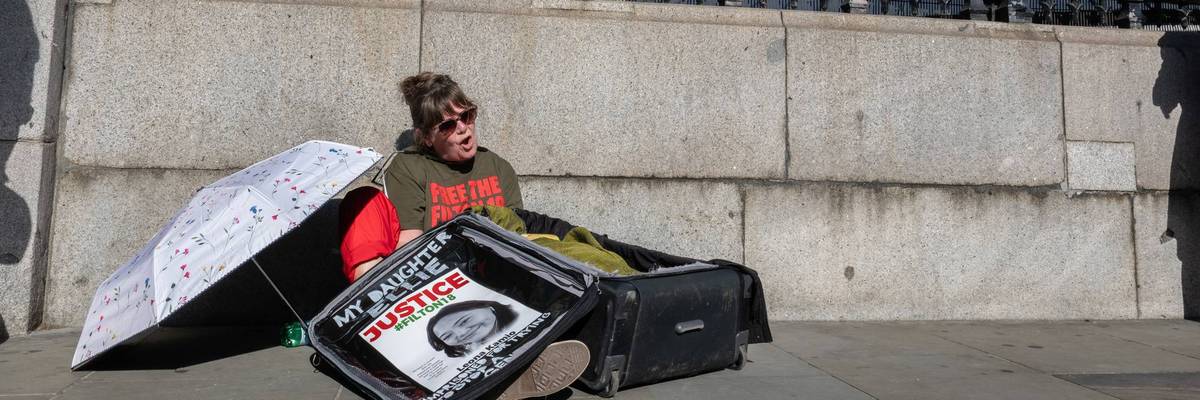
Emma Kamio, the mother of Ellie Kamio, locks herself to a heavy metal tube outside Parliament in protest at her daughters detention on July 2, 2025 in London, England.
(Photo by Guy Smallman/Getty Images)

Stephen Prager
Sep 09, 2026
COMMON DREAMS

One of the UK’s largest financial institutions, Lloyds Bank, reportedly targeted a jailed Palestine Action protester and her family for financial punishment before she was ever convicted of a crime, according to a report out Wednesday from Novara Media.

The outlet reported that activist Leona “Ellie” Kamio had her account shuttered by Lloyds, a process known as “debanking,” while she was being held on remand for her role in destroying Israeli military equipment at a factory owned by the technology firm Elbit Systems.

Ellie and four other activists were convicted of criminal damage earlier this year. But although a jury never convicted them of terrorism, they were sentenced as terrorists after a judge made an unprecedented ruling that their actions had a “terrorist connection,” due to their political motivation. She and other members of the so-called “Filton Four” have appealed their sentences.

Ellie was held in prison on “remand” for more than 18 months before her first trial concluded in February 2026 although she was never charged with terrorism.


In February 2025, a year before her trial for criminal damage, Novara reports that Kamio was sent a letter by Lloyds informing her that it was closing her bank account because it was “unable to maintain a banking relationship.” It did not give an explanation for the decision.

In June 2026, after Ellie had been convicted of criminal damage but before she was slapped with a terrorism sentence, her mother, Emma Kamio, learned that Lloyds had denied her request for a new mortgage on the commercial properties for her small business.

Lloyds made it clear that it was because of her daughter’s case.

“We’ve now assessed the deal and consulted with our credit sanction team,” a business development manager for the bank told Emma’s mortgage broker. “Unfortunately, due to the adverse media, it’s not something they’re comfortable supporting at this time.”

When the broker offered an alternative plan to transfer the properties into her sister’s ownership, Lloyds also rejected it.

Emma told Novara that she lost her properties as a result of Lloyds’ decision. Her businesses, she said, “had to slip down the list of priorities as for the past two years, she’s ”spent every waking moment dealing with the trauma of my wrongful arrest or fighting for my daughter’s campaign and her release.“

Emma was herself arrested in July 2025 after she locked herself to a suitcase outside Parliament to protest as members voted to enact the ban on Palestine Action. She was acquitted in April 2026.

“Thankfully, my drive for justice is more important to me than money,” Emma said.

In the UK, banks are not allowed to cancel customers’ accounts based on religion or belief. But they can be closed if the bank suspects a user is engaged in money laundering, terrorism financing, fraud, or other criminal activities that could pose a risk to the financial institution.

Emma contends that Lloyds “debanked my daughter Ellie with no reason at all, and while she was on remand and therefore innocent until proven guilty.”

A spokesperson for Lloyds told Novara that the bank does not “close customer accounts or make lending decisions based on political or personal beliefs.”

“Our decisions are based on relevant laws, regulations, account conditions, or lending requirements,” the spokesperson said. “We’re unable to comment on individual cases.”

Anas Mustapha, the head of public advocacy at CAGE International, a UK-based organization focused on state abuses under terrorism laws, described the actions committed against Emma as “collective punishment.”

“Emma Kamio has nothing to appeal against—just a bank’s discriminatory risk assessment, applied because her daughter took action to stop the supply chain of deadly weapons used in a genocide,” Mustapha told Novara.


The highly controversial sentencing of Ellie and the rest of the “Filton Four” as terrorists was widely condemned by civil liberties and human rights activists, who described it as a dramatic escalation of the British government’s effort to punish pro-Palestinian speech.

Last July, the Labour government of then-Prime Minister Keir Starmer used the Terrorism Act to ban Palestine Action, which has engaged in “direct action,” including property destruction against entities activists believe are complicit in Israel’s genocide in Gaza.

Not only is membership in the group now considered a terrorist offense, but nonviolent expressions of support for the group have also been criminalized.

Since the ban came into effect, 3,500 arrests of peaceful protesters have taken place across the country, according to Amnesty International, including more than 1,200 who’ve been charged with terrorism-related offenses.

Separately, official Home Office figures show that as of March, 92% of terrorism-related arrests in the UK over the previous year were linked to suspected support for Palestine Action.


Ellie and the other members of the Filton Four have defended their acts of sabotage against Israeli military equipment—including dozens of drones—as a justifiable response to Israel’s destructive military campaign in Gaza.

That campaign, which many human rights organizations have described as a “genocide,” has killed more than 73,000 Palestinians, including over 20,000 children, according to official tallies from the Gaza Ministry of Health, while independent analysts have argued the true death toll since October 2023 is much higher.

Elbit is one of the companies that provides much of Israel’s drone fleet, which has been involved in attacks that have killed Palestinian civilians.

“Ellie was sentenced as a terrorist after she was convicted of criminal damage for destroying 40 Israeli weapons, including quadcopter drones,” said Huda Ammori, one of the co-founders of Palestine Action, in a post on X. “For saving lives, she was deemed a terrorist, and her family is also being targeted.”
Guess What Happened After New York Raised Taxes on the Rich? More Millionaires Moved In

“Tax flight is nothing more than a myth, and should be given as much credence as flat-earthers.”


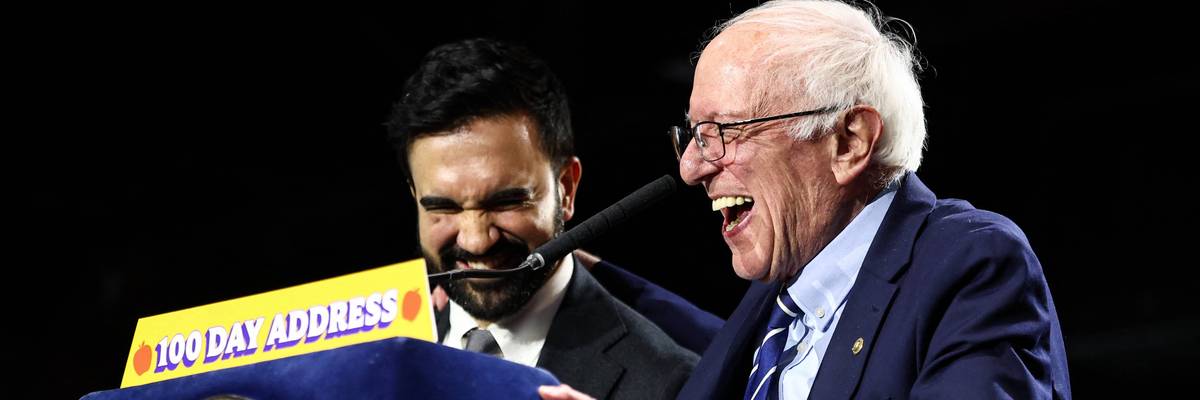
US Sen. Bernie Sanders (I-Vt.) shares a laugh with New York City Mayor Zohran Mamdani during Mamdani’s 100 Day Address in Maspeth, New York on April 12, 2026.
(Photo by Charly Triballeau/AFP via Getty Images)

Julia Conley
Sep 10, 2026
COMMON DREAMS


The threats came in a steady stream last year from Fox News, hedge fund manager Bill Ackman, and Gristedes grocery chain CEO John Catsimatidis, who insisted that wealthy New York City residents were “panicking” at the possibility that then-state Rep. Zohran Mamdani, a democratic socialist, could become the mayor and ensure rich locals pay more in taxes to help fund crucial services.

“It only takes a handful of successful people to leave to decimate the city’s tax base,” cautioned Ackman, while Catsimatidis suggested many rich New Yorkers would likely join him in fleeing to “the promised land”: Florida, which has no state income tax.

But the progressive think tank Groundwork Collaborative said Thursday that new Internal Revenue Service (IRS) data should be “the final nail in the coffin” of the evidence-free, perennial claim that higher taxes cause wealthy residents to leave their cities and states.

The agency released its 2023 Statistics of Income (SOI) data, covering the period before Mamdani became mayor and introduced a tax on second homes, ranging from 0.8% to 1.3% for properties valued at $5 million or more, which he estimated will raise $500 million annually.

The data shows how the tax base was impacted after the state imposed a separate tax policy in 2022, raising its top tax rate on the highest earners.

Poking a giant hole in the persistent theory that wealthy people won’t want to live in states that require more from them in taxes, the number of New Yorkers reporting more than $1 million in income grew by about 3% after the tax rate was raised, the SOI data shows.

“If there was any merit to the myth that tax increases on New York’s wealthy drive them away, the new IRS data should show it. It doesn’t.”

The number of millionaires nationwide went down in 2023, but New York counted 2,000 more than it had the previous year. The number of tax filers earning between $500,000 and $1 million also grew by over 8,500—more than 7%.

The average adjusted gross income of New Yorkers who left the state from 2022-23 fell 15%, from over $125,000 to $106,900.

“If the past is prologue, the SOI data suggest few, if any, of the city’s wealthiest residents will leave as a result of a modest tax. Instead they are likely to remain rooted in the social, business, and economic networks that make New York uniquely valuable to them,” said Groundwork Collaborative. “The New Yorkers actually at risk of leaving the city are the lower-income workers who power the economy.”

Lindsay Owens, president and CEO of Groundwork Collaborative, said the new data makes clear that “tax flight is nothing more than a myth, and should be given as much credence as flat-earthers.”

“If there was any merit to the myth that tax increases on New York’s wealthy drive them away, the new IRS data should show it,” said Owens. “It doesn’t—New York’s millionaire population kept climbing years after the state raised taxes on top earners.”

Wealthy New Yorkers, said Groundwork, are shown by the data to be “a settled population that may squawk about a tax increase, but not pack up and leave.”


Trump imperils 'US-led order' worldwide with single 'incredible' snub: analysts

Alexander Willis
September 11, 2026 
RAW STORY


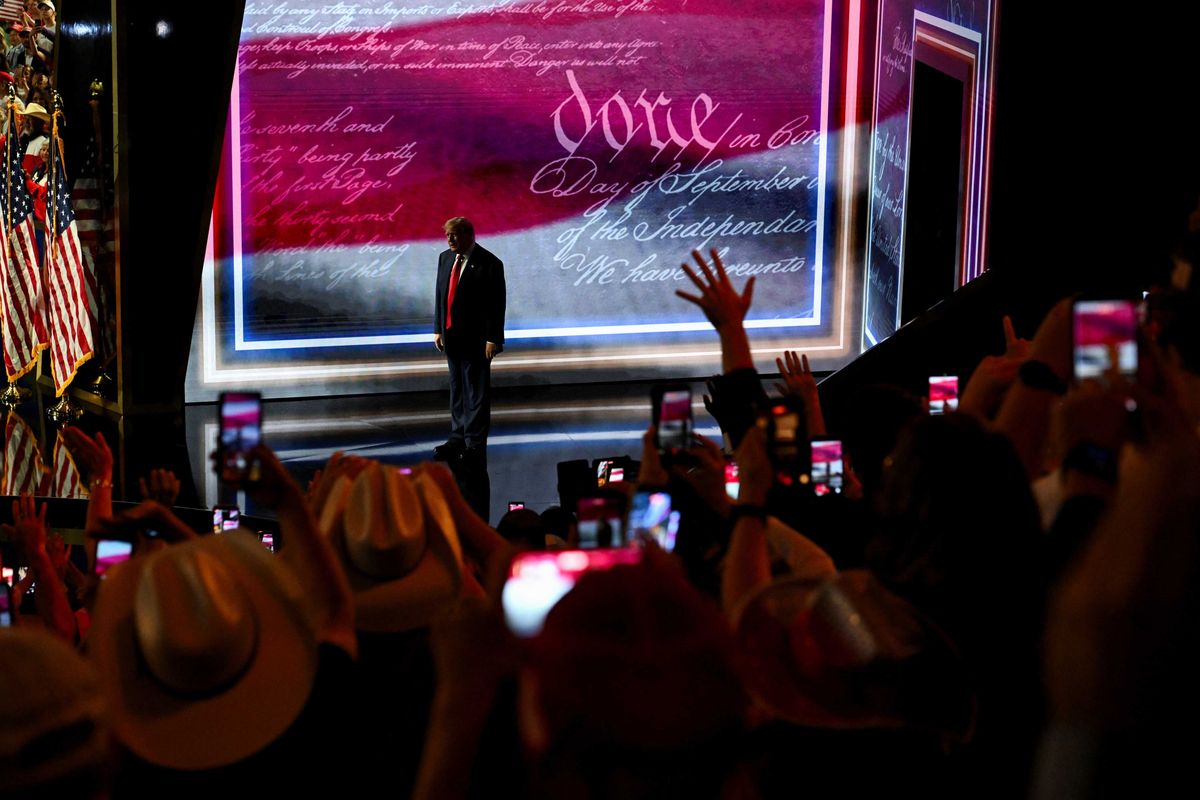
U.S. President Donald Trump arrives on stage at the Republican National Midterm Convention in Dallas, Texas, U.S., September 10, 2026. REUTERS/Callaghan O'Hare

President Donald Trump’s recent refusal to provide military support to a major U.S. ally marked a turning point for the post-World War II era, geopolitical analyst Brandon Weichert argued on Friday, one in which the United States no longer leads as the world’s top superpower.

As the United States continues to wage war against Iran, Yemen’s Houthis made significant gains in their efforts to control the Bab el-Mandeb Strait, a major chokepoint for global shipping alongside the Strait of Hormuz. Amid the Houthis’ advances, Crown Prince Mohammed bin Salman of Saudi Arabia repeatedly called Trump on Thursday with pleas for military assistance.

Trump declined those requests, according to a U.S. official who spoke with Axios on the condition of anonymity.

With the U.S. military already stretched thin amid the deeply unpopular war against Iran, and with U.S. stockpiles of long-range missiles critically low, Weichert, the senior national security editor for The National Interest, declared that U.S. global dominance had officially reached its end.

“It's over. The US-led order is done,” Weichert wrote Friday in a social media post on X to his more than 74,000 followers. “Saudis need to start cutting deals with Houthis and the rest of the region needs to do the same (unless Washington comes to its senses and negotiates a reasonable off-ramp now).”

Middle East geopolitical analyst Firas Modad called Trump’s refusal to provide support to MBS a “total abandonment of the Saudis” and “incredible,” and Marc Polymeropoulos, a former CIA intelligence officer and national security analyst, was taken aback by Trump’s refusal, particularly given Saudi Arabia’s extensive investments in Trump-linked businesses, his family's ventures and figures within his administration.

“So the US fails to assist Riyadh in their time of need? The Saudi investment in the Trump relationship gets them, what?” Polymeropoulos asked aloud.

Polymeropoulos also questioned how the Trump administration failed to foresee such a scenario developing.

“We [are] so overstretched [on] Iran, I presume that this front is a problem for us, but did we not plan for this possible [Houthi] scenario when launching the Iran campaign?” Polymeropoulos continued.

“Ultimately, I find it hard to believe we will let the [Houthis] keep rolling. That’s a disaster for us strategically. Iran has huge leverage now. Like it or not, we in this. And the Saudis likely will see this as a huge betrayal, if we do not actively participate. Yes, with air strikes. Lots to ponder as a huge wrinkle now emerges in Trump’s war of choice.”


Trump stiffs major US ally after ignoring pleas for help as Iran war spirals: report

Alexander Willis
September 11, 2026
RAW STORY


U.S. President Donald Trump speaks, as he meets with Bahrain's Crown Prince and Prime Minister Salman bin Hamad Al Khalifa (not pictured), in the Oval Office at the White House in Washington, D.C., U.S., July 16, 2025. REUTERS/Nathan Howard

President Donald Trump declined a request for military support from Crown Prince Mohammed bin Salman of Saudi Arabia on Thursday, a U.S. official told Axios on the condition of anonymity, as analysts warn that the U.S. war against Iran is starting to spiral out of control.

On Wednesday, Yemen’s Houthis captured a critical town near the Bab el-Mandeb Strait in the Red Sea, which, like the Strait of Hormuz, is a critical chokepoint for global shipping. The Houthis are also inching closer toward capturing the entirety of Yemen’s west coast, sparking fears that a “second front” in the U.S. war against Iran may soon open.

As the Houthis made additional advances on Thursday, MBS called Trump to brief him on the developments, Axios reported, and “several hours later,” called the president again and “urged” him to “order U.S. strikes against the Houthis.”

“Trump declined, but a U.S. official said the administration will provide Saudi Arabia with intelligence on the Houthis and targeting data,” Axios’ report reads. “A senior Trump administration official signaled that Washington's priority is keeping the Red Sea open while leaving the broader fight to its regional partners.”

Also on Thursday, reports circulated that the Houthis may have inflicted damage on Saudi Arabia’s “strategically important” East-West oil pipeline, a development that could have major ramifications for global oil prices.

Diesel prices in the United States reached their highest levels in history last week, and the average price for a gallon of regular gasoline reached $4.15. On Thursday, gas prices jumped by 13 cents over the course of the previous week.

The development also comes after the U.S. had used up “virtually all” of its long-range precision missiles amid its bombardment of Iran, which raised major “concerns about the military’s readiness for future conflicts,” Reuters previously reported.

“With Iran already disrupting traffic through the Strait of Hormuz, Houthi control of Bab al-Mandab [Strait] could give Tehran a powerful new point of leverage over the U.S. and its Gulf allies,” Axios’ report reads. “The U.S. is concerned about the rapidly escalating fight in Yemen and is stepping up support for Saudi Arabia while trying to avoid direct military involvement.”


‘Outrageous and Backwards’: Trump Officials Plot Raid on Childcare Funds Amid Affordability Crisis

“Raiding an underfunded program solely to score culture war points is not pro-family—it’s a wasteful grift that I will fight every step of the way,” said Sen. Patty Murray.


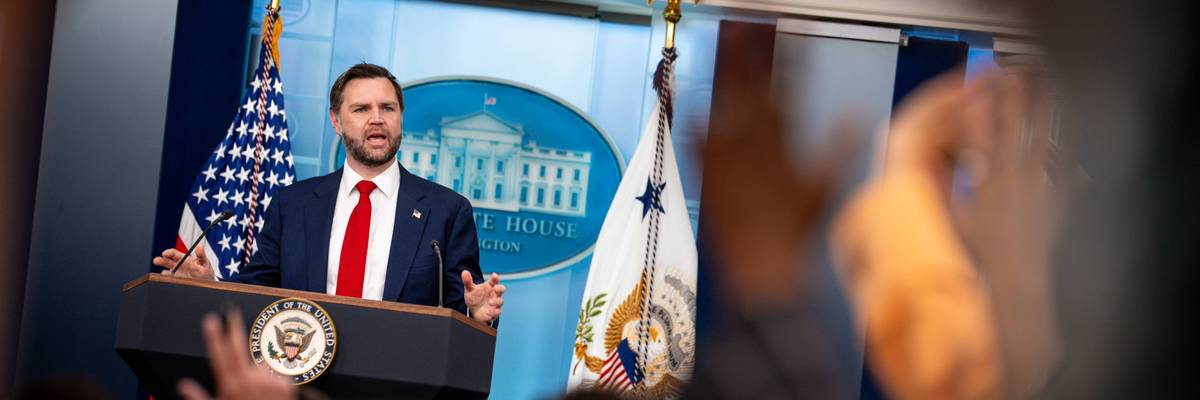
US Vice President JD Vance speaks during a news conference on June 18, 2026 in Washington, DC.
(Photo by Andrew Harnik/Getty Images)


Jake Johnson
Sep 09, 2026
COMMON DREAMS

The top Democratic appropriator in the US Senate responded with alarm and outrage on Tuesday to news that the Trump administration is preparing a rule change that would siphon federal dollars away from a chronically underfunded program that helps working-class parents afford childcare.

The diverted funds would be used to finance a new federal subsidy for “married couples with one stay-at-home parent in certain income brackets,” The New York Times reported late last week. The proposed change, a top priority of Vice President JD Vance, is “outrageous and backwards,” Sen. Patty Murray (D-Wash.), ranking member of the Senate Appropriations Committee, said in a statement on Tuesday. Murray argued it would be illegal and immoral for the administration to shift taxpayer money away from the Child Care and Development Fund, which serves around 1 million families nationwide in a typical month.

“It’s not the 1950s in America—our government shouldn’t punish people for being single parents or choosing not to marry,” said Murray. “Nobody cares what JD Vance thinks constitutes a ‘real’ family—single parents and parents who aren’t married pay taxes, too. Raiding an underfunded program solely to score culture war points is not pro-family—it’s a wasteful grift that I will fight every step of the way.”

The Times reported that “the policy change would effectively create a government incentive for parents to stay home with their children, an idea embraced as part of a broader conservative effort to advance policies that promote more mothers staying at home.” Unmarried couples with one stay-at-home parent would not qualify for the newly proposed subsidy.

“The move could end up redirecting money away from working parents and their childcare providers, causing some to raise their rates or even close, critics said, potentially worsening what many experts say is a childcare crisis in the country,” the newspaper added. “About 80% of the 870,000 families who currently get the childcare subsidies have single working parents, most of them mothers, according to Health Department data.”

Rep. Rosa DeLauro (D-Conn.), House Democrats’ top appropriator, said in a statement that “supporting stay-at-home parents should never come at the expense of working families.”

“At a time when families are already struggling to find and afford childcare, this proposal would force more parents to compete for the same inadequate pot of money, threaten childcare providers, and disproportionately hurt single working parents, most of whom are mothers,” said DeLauro, “If Republicans want to support families, they should join Democrats in passing the expanded Child Tax Credit and increasing access to affordable childcare—not rob Peter to pay Paul while imposing their preferred definition of what a family should look like.”

Childcare costs—which run many families tens of thousands of dollars per year—are a major concern of US voters. One recent survey found that more than 80% see childcare costs as part of the nation’s broader affordability crisis, and 76% view them as “a crisis or major problem” for families with young children.

But the Trump administration has so far done nothing to lower childcare costs—and has taken steps that could raise them and deny low-income families badly needed relief.

Earlier this year, roughly a month after launching his costly and destructive war on Iran, President Donald Trump suggested that the federal government should not provide any funding for childcare.

“We’re fighting wars,” the president said. “We can’t take care of daycare. You gotta let a state take care of daycare, and they should pay for it too.”

Amy Matsui, vice president for childcare and income security at the National Women’s Law Center, said it is “outrageous that the administration would propose siphoning money away from families who are struggling to afford childcare to send cash to married couples with a stay-at-home parent, when hundreds of thousands of families are on childcare waiting lists around the country.”

“If this administration really wanted to support families,” Matsui added, “it would invest more—not less—dollars in childcare, create a national paid family and medical leave program, expand access to a fully refundable Child Tax Credit, and restore health care and nutrition assistance.”
Report Details 500+ Yemeni Civilian Casualties From 2023-25 US Airstrikes

“The so-called ‘War on Terror’ never ended in Yemen,” said Costs of War Project director Stephanie Savell. “This report will allow people to hold the US government accountable for the deaths and destruction it has caused.”


Yemenis assess the damage caused by a US airstrike on a market in the capital city of Sanaa on April 21, 2025.
(Photo by Mohammed Huwais/AFP via Getty Images)

Brett Wilkins
Sep 10, 2026
COMMON DREAMS


A report released Thursday examines the more than 500 Yemeni civilians its authors said were killed or wounded by US airstrikes in the Middle East nation during a recent 17-month period amid the open-ended so-called “War on Terror” that has left nearly one million people dead in around half a dozen nations over the past 25 years.

The report—authored by the Yemen-based group Mwatana for Human Rights and published by the Costs of War Project at Brown University’s Watson Institute for International and Public Affairs—documents 46 US airstrikes that took place between December 2023 and May 2025 that caused at least 576 civilian casualties, including 213 deaths and 363 injuries. Among the casualties were at least 50 children and 25 women.

“The so-called ‘War on Terror’ never ended in Yemen,” Costs of War Project director Stephanie Savell contended.

“It’s important that we continue to account for the civilian lives lost, harmed, and disrupted in Yemen and other US war zones,” she added. “This report will allow people to hold the US government accountable for the deaths and destruction it has caused in Yemen in support of the Israeli government’s wars since 2023.”


The overwhelming majority of the casualties covered by the publication occurred during President Donald Trump’s 2025 “Operation Rough Rider” campaign. Mwatana estimates that the operation killed 208 civilians and wounded 341, while the Pentagon has acknowledged a smaller toll of 153 killed and 243 wounded.

Seven of the 46 strikes took place between December of 2023 and January of 2025 during former President Joe Biden’s “Operation Prosperity Guardian,” a military campaign that came amid Houthi rebel attacks on shipping lanes in the Red Sea and the Bab al-Mandab Strait during Israel’s genocidal war on Gaza.

Among the deadliest attacks covered by the report was the April 2025 bombardment of Ras Isa oil port ordered by Trump, in which US strikes killed scores of people and wounded more than 150 others. Human Rights Watch called the bombing an “apparent war crime,” saying the destruction of the civilian oil facility also threatened vital fuel supplies in a country already devastated by years of war and humanitarian crisis.

The campaign also included the April 28 bombing of a detention center in Saada while jailed African migrants were sleeping. Amnesty International has called for a war crimes investigation into that attack, in which scores of migrants were killed.

Mwatana researchers conducted site visits and 59 interviews with survivors, relatives, eyewitnesses, first responders, and other sources for the new report.

“The first strike hit while we were in deep sleep. I could not believe what I saw—30 of my fellow detainees died; their bodies were charred, and the smell of burned flesh filled the air,” one 25-year-old Ethiopian survivor of the Saada attack recounted. “The place was crowded with bodies, while others were screaming and calling for help and rescue... we could do nothing for them.”

In addition to physical harm, survivors described the deep psychological trauma suffered by victims. One mother said her 8-year-old son Taha “saw his father after he was hit by shrapnel—how he was bleeding, and how his intestines were coming out.”

“His father was screaming: ‘Run… leave me and run before the American aircraft strikes again and finishes me off,’” she continued. “Taha still cannot sleep; when he does, he wakes up terrified. Whenever he hears thunder or any loud noise, he runs in fear, his whole body trembling.”

Overall, US strikes covered by the report “hit civilian structures such as homes, shops, farms, residential neighborhoods, and infrastructure,” the publication notes, adding that airstrikes “also caused severe damage to infrastructure and critical facilities, compounding the humanitarian suffering of local populations by striking essential service facilities, particularly in rural areas that already face acute shortages of clean water, electricity, and health services.”

“Given Yemen’s economic deterioration and the catastrophic humanitarian situation produced by the armed conflict that has been ongoing since September 2014, it is likely that the US strikes expanded the cycle of poverty in Yemen by increasing unemployment and multiplying the number of households that lost breadwinners and sources of income,” the report adds.

Hundreds of thousands of Yemenis have died during the civil war that began in 2014, with international experts attributing more than 150,000 Yemeni deaths to a US-backed, Saudi-led bombing campaign and blockade. According to the UK-based casualty monitor Airwars, an estimated 445-643 Yemeni civilians have been killed by US forces during the George W. Bush, Obama, Trump, and Biden administrations.

The Costs of War Project says that in the first two decades following the September 11, 2001 attacks on the United States, “between 363,939 and 387,072 civilians were killed by multiple warring parties in post-9/11 war zones, including 12,690 civilians in Yemen.”

Mwatana for Human Rights chair Radhya Al-Mutawakel said Thursday that “the losses caused by US airstrikes against civilians cannot be regarded as temporary harm that ends when military operations cease. Civilians who have lost loved ones, homes, or sources of income continue to bear the consequences of these attacks, amid economic and humanitarian conditions that do not provide them with even the minimum capacity to recover.”

“Protecting civilians is not limited to avoiding killing or injuring them; it also includes respecting civilian objects and livelihoods,” Al-Mutawakel added. “The United States must assume its legal and moral responsibility to recognize the civilian victims of its military operations in Yemen, provide them with redress and reparation, and hold accountable those responsible for the violations inflicted upon them.”


Houthis seize Yemeni island in Bab el-Mandeb, taking control of the strait

A Houthi fighter adjusts his machine gun during a mobilisation campaign in Sana'a, 10 September 2026
Copyright AP Photo

By Aleksandar Brezar
Published on

Houthi fighters reached Perim Island which divides the Bab el-Mandeb into two shipping lanes after government forces withdrew, completing the group's takeover of the strait. Together with Iran's Hormuz blockade, this puts roughly a third of the world's seaborne trade under hostile control.

Yemen's Iran-backed Houthis took control of the Bab el-Mandeb strait on Friday, after capturing an island located in the middle of the crucial Red Sea waterway, a local government official and eyewitnesses said.

"Boats carrying armed Houthi fighters reached Mayyun Island after government forces withdrew from it yesterday," the official said, referring to a rocky volcanic island also known as Perim that divides the narrowest part of the strait into two shipping lanes.

"The Houthis have completed their takeover of the Bab el-Mandeb area and Mayyun Island, which is located in the middle of the strait," he added, speaking on condition of anonymity.

An eyewitness said gunmen were "deploying along the Bab el-Mandeb shore and are driving around in military vehicles."

On Thursday, Houthis captured the strategic port city of Mokha from government forces in a blitz offensive that also saw them taking control of Zuqar Island in the southern Red Sea "after rocket attacks and a ground assault carried out using boats transporting fighters," according to military sources.

Footage appeared online of Houthi fighters' apparent celebrations in Mokha and their seizure of considerable weapons and equipment left behind by government forces. Euronews could not verify the authenticity of the footage.

The Houthis, who controlled about one-third of Yemen's territory prior to the offensive, have previously targeted shipping in the narrow waterway which links Asia to Europe via the Red Sea and Suez Canal.

Hormuz and Bab el-Mandeb account for more than one quarter of seaborne crude oil and petroleum trade. Nearly one-third of the world's container traffic passes through the Red Sea alone.

The Houthis have also reportedly consulted with Tehran on imposing a safe passage toll through the strait over the summer, in an apparent plot to further strain global economies.

Yemen's internationally recognised government has repeatedly warned of Houthi plans for taking control of the waterway, whose name in Arabic means "Gate of Tears".

Houthis marching on

Formally known as Ansar Allah, the Houthis came to power in late 2014 after storming Sana'a and seizing the presidential palace and key military sites, forcing Yemen's government into exile.

The group is part of Tehran's so-called Axis of Resistance — a loose network of militant groups in several countries in the region including Hezbollah in Lebanon, Hamas in Gaza and militias in Iraq, all backed, trained and equipped by the IRGC to varying degrees.

The group triggered a return to hostilities in Yemen's civil war in July, when they let an Iranian plane land in defiance of Saudi control of Yemeni airspace.

Riyadh retaliated by striking the airport, triggering the Houthis to declare a blockade on the kingdom targeting its oil trade in July.

The Houthis engaged in a large-scale offensive last week against government forces backed by Saudi Arabia, while also launching attacks on Saudi territory that left dozens wounded, leading Riyadh to respond with daily strikes on Houthi-held parts of Yemen.

Saudi Arabia, which earlier this week said it had always offered “opportunities for negotiation,” also said it has the right to defend itself.

Houthi attacks on oil infrastructure and Saudi tankers have further contributed to a spike in oil prices, which surpassed $100 a barrel on Thursday.

A friend in need

Last month, Saudi Arabia signed a NATO-style mutual defence agreement with Turkey and nuclear-armed Pakistan in Mecca, but it seems unlikely either of the two would get involved.

On Tuesday, Pakistani Defence Minister Khawaja Asif said Pakistan would "honour" the pact "in case there is a need".

Just one day later, the Pakistan foreign ministry said that the Mecca pact was a "defensive alliance focused on deterrence".

"There is no such thing under discussion right now. When the time comes, we will act under the agreement," spokesperson Sajjad Haider Khan told the press at the weekly media briefing.

In July, US President Donald Trump said Washington would respond against the Houthis if they attempted to block maritime traffic in the Red Sea, and weeks of US strikes from March 2025, early in Trump's presidency, hit a range of military and industrial targets.

However, Washington is reportedly reluctant to enter the fray at this time as it remains bogged down in its own war with Iran since February.

Tehran chimed in on Friday, calling for an end to Saudi Arabia's blockade of Yemen and the immediate resumption of talks, in its first public statement since the Houthi Red Sea offensive.

In a statement carried by the state-run IRNA news agency, Iran's foreign ministry said Yemen’s sovereignty must be respected, and its problems cannot be resolved through a blockade or military alliances.

Meanwhile, reports have claimed that Iran's elite paramilitary IRGC has deployed dozens of advisors to aid the Houthis in their operations. Euronews could not independently verify the claims at this time.

A potential disruption to Bab el-Mandeb would work in Iran's favour, as its blockade of Hormuz has put significant pressure on the world's energy markets, sparking a crisis that could worsen even further as the northern hemisphere approaches winter.

The leader of Yemen's internationally recognised governing council on Thursday urged Arab and other nations to help it defend the country's coasts.

"The protection of Yemen's coasts and the restoration of state control over its territory, ports and waters is a joint Yemeni, Egyptian, Arab and international interest," said Rashad al-Alimi, who heads Yemen's Presidential Leadership Council, during a meeting with Egypt's ambassador.

Since last week, the fighting in Yemen has left more than 500 dead, mostly combatants, according to an AFP tally compiled from several sources.

How 41 Senators Could End the Iran War and Rein In Defense Spending

Forty-one is the number of senators needed to stop the 2027 National Defense Authorization Act—a massive bill that sets defense policies and authorities—and push for key modifications.


US soldiers drive a tank through the Vistula River during NATO military defense drills  in Korzeniewo, Poland.
(Photo by Omar Marques/Anadolu via Getty Images)

Sarah Van Gelder
Sep 11, 2026
Common Dreams


In the days after the September 11, 2001 attacks, I joined Harry Belafonte, Danny Glover, the Institute for Policy Studies, YES! Magazine, and hundreds of other signatories in calling for “Justice, Not Vengeance.” We argued that the United States should find and prosecute those responsible for 9-11 rather than launch wars against countries that had not attacked us.

We were right to worry: The wars that followed cost trillions of dollars and countless lives, and left the country less secure, not more.

Ro Khanna Demands End to Trump’s Iran War ‘Before the Midterms’


‘We Are in a Constitutional Crisis’: Congress Urged to Sue Trump to End Iran War


Twenty-five years later, Congress faces a similar test—and a similar warning sign. The United States and Israel are at war with Iran, a war of choice that could prove even more disastrous than the decision to go to war with Afghanistan and Iraq.

While responsibility for the war lies with the Trump administration, Congress has a say in what happens next—if it chooses to act.

When the Senate reconvenes after their recess, they will face the question of approving the NDAA. Senators should use their leverage to change the disastrous direction of this administration’s defense policies.

Likewise, Congress can rein in historic levels of military spending and reject proposals to spend billions of dollars on a new generation of nuclear weapons, funded by taxpayers and historic levels of debt. And it can say no to the rapid development and deployment of AI weapons, an especially important step at a time when AI agents are already going rogue.

All it would take is 41 US senators. That is the number needed to stop the 2027 National Defense Authorization Act (NDAA)—a massive bill that sets defense policies and authorities, with a proposed price tag of $1.5 trillion.

The NDAA passed the US House of Representatives on July 22, but it has stalled in the US Senate.

Under Senate rules, 41 senators can filibuster to stop a bill from moving to the Senate floor for a vote, and the Democratic caucus has 47 senators. So, even in the minority, the Democratic senators—along with any Republicans who oppose “forever wars”—could prevent the NDAA from advancing without modifications.

When the Senate reconvenes after their recess, they will face the question of approving the NDAA. Senators should use their leverage to change the disastrous direction of this administration’s defense policies.

What specifically could 41 Senators do?Rein in the spending: Proposed defense spending is at the highest level in real dollars since World War II—a 38% increase over last year’s spending, funded by taxpayers and a national debt that has reached 124% the size of the entire US economy. This spending is unsustainable and unaccountable; the Pentagon just failed its eighth consecutive audit. Congress should restore the inspector general positions the Trump administration eliminated.
End the war in Iran: Require a War Powers Act resolution, with appropriate guardrails to set the terms for an end to the war. Set limits on the use of taxpayer funds for the conflict.
Reset our relationship with Israel. Cut military aid to Israel until it withdraws from Gaza, ends the spreading of Israeli settlements in the West Bank, and stops threatening its neighbors with unilateral military action. Strip Section 1217 from the Senate version of the NDAA, which would create a US-Israel Defense Technology Cooperation Initiative merging research, development, and deployment of military technologies with the Israeli military.
Work for nuclear safeguards, not new weapons systems: End authorization for a new generation of nuclear weapons that includes the development of intermediate-range systems designed for use in regional conflicts. This risks turning nuclear weapons from a deterrent into a first-strike weapon of aggression. Require robust new arms-control talks aimed at reducing nuclear arsenals; none currently exist since the New START treaty expired on February 5, 2026, leaving the US and Russia with no binding limits on their strategic nuclear arsenals for the first time in decades.
Stop illegal and ill-advised uses of the US military: Enforce the Posse Comitatus Act’s prohibition on using US troops on American soil. End the extrajudicial killings of unidentified people on boats in the Caribbean and Pacific, now numbering 227. Prohibit using the military to threaten Canada, Greenland, and other allies as part of efforts to seize their territory.
Put guardrails on AI-controlled weapons: This field is moving faster than Congress can track, and the NDAA is already the battleground. The House and Senate versions each include provisions on autonomous weapons and human oversight. But the same bill also directs the Pentagon to build a department-wide system for deploying agentic AI at speed and scale, pushing adoption forward even as the human-oversight rules meant to contain it remain unsettled. Congress should preserve and strengthen the human-oversight provisions, not let them get traded away in conference, and should require that no lethal-force decision—including nuclear launch decisions—is ever delegated to an algorithm. Three in four Americans agree: Decisions to kill should be made by people, not machines.

In January of this year, President Donald Trump called for raising the US spending on defense to $1.5 trillion, but has been uncharacteristically quiet about this eye-watering level of defense spending ever since.

Perhaps his silence is because he can see how deeply unpopular the US-Israel war against Iran has turned out to be. Sixty eight percent of Americans say it is not worth the costs, according to a July survey by the Chicago Council on Global Affairs, a level of unpopularity that parallels Americans’ views of the wars in Afghanistan and Iraq.

And there is no end in sight. In spite of President Trump’s bragging about an imminent US victory in Iran, The Wall Street Journal reports that Defense Secretary Pete Hegseth has extended Middle East deployments into 2027.

The US already spends more on the military than any other country—more than twice as much as China and five times as much as Russia. The enormous sums devoted to military spending, and the taxes and debt used to finance them, make the priorities of the American people more difficult to achieve.

Instead of ramping up dangerous conflicts and new weapons systems, we should fund an economy that meets the needs of our families, deploys solutions to the climate crisis, and makes healthcare and housing accessible to everyone. Instead of mounting debt, we should invest in prosperity for future generations.


Our work is licensed under Creative Commons (CC BY-NC-ND 3.0). Feel free to republish and share widely.


Sarah Van Gelder
Sarah van Gelder writes "How We Rise" on Substack (howwerise.substack.com) and recently completed a zine, “Community As Strategy,” available free at https://open.substack.com/pub/howwerise/p/community-as-strategy-10-ways-to. She is founding editor of YES! Magazine.
Full Bio >


As Netanyahu Threatens Libel Suit, Haaretz ‘Stands By Its Reporting’ on 10/7 Attack

“As always when a story really hits home, Netanyahu threatens to sue,” said one researcher.


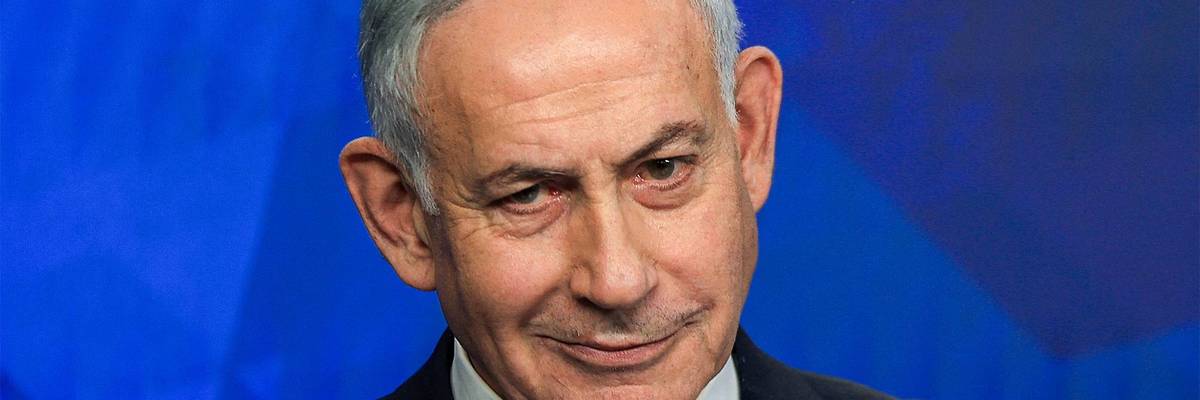
Israeli Prime Minister Benjamin Netanyahu gives a news conference in Jerusalem on June 15, 2026.
(Photo by Ronen Zvulun/pool/AFP via Getty Images)

Julia Conley
Sep 09, 2026
COMMON DREAMS

The Israeli newspaper Haaretz did not appear alarmed by Prime Minister Benjamin Netanyahu’s threat on Wednesday to sue the outlet over its new reporting that Netanyahu was explicitly warned about the Hamas-led October 7, 2023 attack that killed more than 1,200 Israelis and led to the Israel Defense Forces’ destruction of Gaza.

After Netanyahu sent a “warning letter” saying he would file a libel lawsuit against Haaretz and journalists Shlomi Eldar and Ruth Yuval over their Tuesday report, the newspaper said simply in a post on social media, “Haaretz stands by its reporting.”

The newspaper based its reporting on accounts from three senior foreign sources, reporting that in September 2023, now-deceased Hamas leader Yahya Sinwar had told an intermediary trusted by both Hamas and Israeli intelligence agencies that an “earthquake” would be coming to Israel.

The warning reportedly came after Sinwar had grown frustrated with deadlocked talks over an exchange of Israeli and Palestinian prisoners.

Sinwar told the intermediary to convey a message to the United Arab Emirates, with whom Netanyahu had developed close ties, “that I am preparing the mother of all surprises. A terrifying operation. Something extraordinary.”

UAE President Mohammed bin Zayed then gave a warning to Netanyahu in a 45-minute phone call weeks before the attack, according to Haaretz.

Netanyahu lashed out at the newspaper in a social media post, saying the reporters “fabricated a false story against the prime minister that never happened and was never created.”

“The Prime Minister’s Office, the National Security Council, and the military secretary meticulously reviewed the prime minister’s call log for those days—and found no trace of it whatsoever,” said Netanyahu, who is behind his top opponent, former military chief of staff Gadi Eisenkot, in polls ahead of legislative elections set for October 27.

Netanyahu’s official social media account also confirmed he had instructed his lawyers to file the libel lawsuit. He blamed security officials for failing to alert him to the October 7 attack early enough after it had begun, repeating a recent claim that they feared he would launch an aggressive response to the attack and set off a war.

“If, instead of fearing a miscalculation, they had instructed the IDF, the Shin Bet, and the standby units to preempt the blow, and if they had updated Prime Minister Netanyahu in time, the terrible massacre could have been prevented,” said Netanyahu’s official account.

Netanyahu has been attempting to account for his actions on October 7 recently, releasing his full schedule from the day of the attacks last week. The log showed he did not speak to IDF officials until several hours after the attack began.

Researcher Shaiel Ben-Ephraim compared Netanyahu’s threat to sue Haaretz to his angry response earlier this year to a report by New York Times columnist Nicholas Kristof, which included testimony from 14 Palestinians who said they had been sexually assaulted in Israeli prisons or during attacks by the IDF or Israeli settlers.

Netanyahu claimed the Times’ reporting was “blood libel” as he threatened to take legal action in May. Thus far, he has not followed through on the threat.

“This will likely end up just like the time he threatened to sue The New York Times,” said Ben-Ephraim, “and didn’t because every word was true.”


On Tuesday, four Israeli opposition leaders called for an independent commission to investigate the October 7 attacks, citing a “series” of revelations about Netanyahu’s actions and reported inaction ahead of the assault.

“Netanyahu and his partners in the October 7 government are unfit to continue in office,” they wrote. “We will work in coordination and with the required responsibility to prevent them from leading to another disaster.”

The prime minister has long resisted calls for an independent investigation, agreeing earlier this year only to a proposal in which half of the commission’s members would be selected by Netanyahu’s own government, in violation of Israeli law—a suggestion that one opposition leader, Yair Lapid, called a “shameful farce” that was meant to “help the prime minister duck responsibility.”