Tuesday, September 22, 2026

The Search For Alien Technology Has A Measurement Problem – Analysis


Image: ChatGPT


September 22, 2026
By Burak Oktenli

Key Takeaways:

Bigger AI models can rank, classify, and search at huge scale, but they cannot invent evidence an instrument never recorded. When two explanations produce the same data, no larger model can honestly tell them apart—the limit is identifiability, not compute.

Radio SETI, including Breakthrough Listen and the blc1 Proxima Centauri candidate later traced to terrestrial interference, shows the gap between finding a candidate and proving its origin. The next step is a new measurement—another site, antenna, geometry, epoch, or diagnostic—not another terabyte of the same ambiguous data.

Scientific AI should keep detection strength, calibration validity, tested alternatives, and independent follow-up separate instead of collapsing them into one confidence score. Automate ranking and triage; do not let a model promote its own score into a stronger claim without new evidence.


Bigger models can rank, classify, and search at extraordinary scale. They still cannot manufacture evidence that an instrument never captured.

The most dangerous promise in scientific artificial intelligence is not that machines will make mistakes. It is that they will make certainty out of missing information. As AI systems become better at finding patterns in enormous datasets, the temptation is to assume that a sufficiently powerful model can extract a correct answer from almost any measurement. That is false. Sometimes the obstacle is not computation, model capacity, or training data. Sometimes the decisive information was never measured in the first place.

Radio searches for extraterrestrial technology offer an unusually clear example. Modern programs such as Breakthrough Listen scan vast frequency ranges for narrowband, drifting signals that could be consistent with engineered transmitters. The field has also embraced machine learning. A deep-learning search of 820 nearby stars showed that learned representations can surface candidate signals that conventional filters may miss. That is exactly the sort of task at which AI can excel: ranking, triage, anomaly discovery, and the compression of an impossible search space into a manageable set of things worth examining.


But candidate discovery is not origin discovery. The distinction became vivid in the investigation of blc1, a narrowband signal detected in observations of Proxima Centauri. Its morphology was interesting enough to demand serious follow-up. The eventual analysis traced it to terrestrial radio-frequency interference. The lesson was not that unusual signals are unimportant. It was that a detection statistic is only the beginning of an evidentiary chain.

This point becomes sharper when we ask a simple question: what if two competing explanations generate exactly the same data for the algorithm? Suppose one hypothesis is a target-associated signal and another is a terrestrial interferer that, by chance or geometry, appears only during the same on-target scans. If both produce the same frequency-time track, the same amplitude pattern, and the same scan-by-scan observations, then the two hypotheses induce the same probability distribution over the data given to the model. In that case, no classifier can separate them honestly. Not a larger transformer. Not a deeper neural network. Not a quantum computer. The distinction is absent from the measurement.

That is an identifiability limit, and it changes how we should think about scientific AI. When two hypotheses are observationally equivalent, the next advance must come from experimental design rather than model design. We need a new measurement that causes the hypotheses to predict different outcomes: a simultaneous reference antenna, an independent observing site, a changed pointing geometry, an instrument diagnostic, a different epoch, or some other source of conditionally independent evidence. Another terabyte of the same ambiguous data does not solve the problem.


The same principle appears in more ordinary ways. Reference observations, for example, are often used to reject interference. That can work extremely well when the nuisance really is common to both target and reference scans. But the protection has a cost. If a genuine source leaks into an off-target observation through sidelobes or pointing geometry, a subtraction rule can subtract part of the signal we wanted to preserve, while a hard veto can discard it altogether. A method that looks safer on one axis may quietly become less sensitive on another.

Calibration creates a second trap. A threshold calibrated under one noise model does not retain its meaning after the residual environment changes. In a synthetic stress test I developed for radio technosignature decision rules, thresholds calibrated to an approximately one-percent cadence-level exceedance rate under independent Gaussian residuals produced trigger fractions above fifty percent after a simple time-correlation structure was introduced. Nothing about the threshold number itself warned that its interpretation had collapsed. The problem was not that the detector suddenly became stupid. The statistical conditions supporting the threshold no longer held.

This is why the most important question for scientific AI may not be, “How accurate is the model?” It may be, “Under what measurement conditions does this output still mean what we say it means?” That is a different discipline. It requires separating detection strength from calibration validity, separating a candidate ranking from an origin claim, and recording which alternative explanations have actually been tested.

Engineering already has language for this. NASA’s current standard for models and simulations treats credibility, validation, verification, uncertainty, and acceptance criteria as explicit parts of model use. Scientific AI needs the same instinct. A model should not inherit authority merely because it is sophisticated. Its output should carry the conditions under which it was calibrated, the data it actually observed, the alternatives it cannot distinguish, and the tests still required before escalation.


That discipline matters far beyond SETI. In medical imaging, two diseases can look similar under one modality and diverge only after another test. In climate science, a model can fit the historical record while remaining underdetermined about causal mechanisms. In intelligence analysis, multiple adversary explanations can remain consistent with the same observable behavior. In autonomous systems, a sensor-fusion stack can assign high confidence to a state estimate even when its sensors share a common-mode failure. In each case, more computation can sharpen the inference conditional on the evidence. It cannot supply the missing discriminator.

This should change how we evaluate AI progress in science. Benchmark culture often rewards the highest score on a fixed dataset. But the scientifically important question is often what happens when the assumptions behind that dataset fail. A robust benchmark should therefore include conditions designed to break the method: distribution shifts, correlated residuals, missing reference observations, leakage between supposedly independent channels, nuisance classes that mimic the positive class, and deliberately matched cases in which successful discrimination would reveal data leakage rather than intelligence.

The technosignature community already has many of the ingredients. Tools such as setigen support synthetic signal generation and injection. Published work has explored machine-learning direction-of-origin filtering, while the “cosmic haystack” formalism reminds us that excellent sensitivity within one narrow test family does not imply comprehensive coverage of the wider search space. The broader NASA technosignatures workshop report likewise framed technosignature research as a field in which new instruments, new surveys, new algorithms, and new theory all matter. The missing piece is not another declaration that AI will accelerate discovery. It is a stronger contract between what an algorithm outputs and what the measurement actually warrants.

Such a contract would be simple in principle. A candidate record should keep at least four things separate: the strength of the detected feature; whether the current data remain inside the calibration regime; which conventional or instrumental alternatives have been tested; and what independent observation, if any, supports a stronger interpretation. A fifth field can carry follow-up priority, but that is a resource-allocation decision, not a probability of origin. Collapsing all of these into one confidence score creates an audit problem: after the fact, nobody can tell which assumption carried the claim forward.

The same asymmetry should govern automation. AI can reasonably automate low-level transitions: ingest data, flag anomalies, compare a statistic with a frozen threshold, rank candidates, and request additional observations. But an automated system should not be allowed to convert its own score into a stronger scientific claim without new evidence. Promotion should require a named test or an independent measurement. Demotion, by contrast, should be easy. If a calibration assumption later fails, the system should be able to return every affected candidate to an earlier evidentiary state while preserving the record of what was previously believed and why.

This is not an argument against AI in science. It is an argument for using AI where it is strongest. Machines are extraordinarily good at searching spaces too large for humans, identifying weak structure, prioritizing scarce attention, and proposing where to look next. Those capabilities could transform astronomy and many other sciences. But scientific authority should attach to evidence, not to model scale.


The phrase “AI for discovery” therefore needs one amendment. AI can accelerate the path to discovery. It can expose patterns that deserve investigation. It can help design the next observation. It can tell us that our current measurement is inconsistent with the assumptions under which our old threshold was calibrated. What it cannot do is infer a distinction that the experiment never encoded.

That boundary is not a limitation to be embarrassed about. It is a design instruction. When the model cannot know, the answer is not always a bigger model. Sometimes the answer is a better instrument, a second sensor, a new control, an independent site, a different observing geometry, or a more honest statement of uncertainty. The future of scientific AI will depend as much on improving what we measure as on improving what we compute.

If the evidence is not in the measurement, intelligence cannot conjure it into existence.


About Burak Oktenli
Burak Oktenli holds an MBA and a Master of Professional Studies in Applied Intelligence from Georgetown University. His research addresses the governance of authority in autonomous and AI-enabled systems, and his writing has appeared at the Modern War Institute at West Point, RUSI, RealClearDefense, RealClearMarkets, and Geopolitical Monitor. He is the author of Authority Architectures for Autonomous Systems, a ten-volume series on how authority in autonomous systems is delegated, monitored and recovered, at authority-architecture.me.
View all posts by Burak Oktenli →


25 Years After Amerithrax: The Changing Landscape Of Biosecurity – Analysis


September 21, 2026
Manohar Parrikar Institute for Defence Studies and Analyses (MP-IDSA)

By Aayushi Sharma and Ajey Lele


Key Takeaways:

The case never quite closed. Anthrax letters after 9/11 killed five. FBI shut Amerithrax in 2010 on USAMRIID’s Bruce Ivins (suicide, 2008); Hatfill won a settlement after a false-accusation suit. An independent review said the evidence fit Ivins but did not prove him. Brief: bioterror became health, police, intel, and security at once.

What followed. U.S. Bioterrorism Act (2002), Project BioShield (2004), DHS BioWatch. WHO IHR (2005), GHSI (2001). Surveillance now includes wastewater, pharmacies, animals, plants—One Health with WOAH and FAO still loosely joined. Attribution stays hard; the text notes mail, air, and other paths without a recipe.

Dual-use and a thin treaty. Synthesis, editing, and AI speed vaccines and sequencing; consortium DNA-order checks are mostly voluntary. The brief flags LLM and dual-use risk, not a method. BWC still lacks verification and a standing S&T body; 2011 review named terrorism; UNSCR 1540 and the Australia Group fill gaps. COVID showed accident and attack share the same kit. Author: keep funding detection, stockpiles, and the talks.


The 2001 anthrax attacks in the US led to the emergence of biological terrorism as a public health, law enforcement, intelligence, and national security problem, highlighting the need for an integrated approach to addressing the threat. Advances in biotechnology, synthetic biology, and emerging technologies have defined the biological threat landscape over the past 25 years.


Introduction


The deadly attacks of 11 September 2001 were followed by another critical terrorist incident in the United States, wherein anonymous letters laced with the deadly anthrax spores were sent to several media companies and post offices. The attacks claimed the lives of five people through the inhalation of anthrax and infected several others who came in contact with the postal envelopes. The Federal Bureau of Investigation (FBI) codenamed the investigation ‘Amerithrax’.[1] The ‘Amerithrax Task Force’ was created to determine the source of this terrorist attack. The FBI subsequently released an ‘Amerithrax Investigation Report’ detailing the course of the investigation.[2] The investigation focused primarily on scientists associated with the US biodefence establishment, especially the US Army Medical Research Institute of Infectious Diseases (USAMRIID) at Fort Detrick, Maryland.


The investigation subsequently went through a series of phases which were deemed controversial. Several scientists were designated as ‘persons of interest’ and came under surveillance and investigation. In several cases, the suspects also pushed back against the allegations of deliberately releasing anthrax. One known suspect, Steven Hatfill, a pathologist and a biological weapons expert, ultimately received a large government settlement after pursuing legal action over being falsely accused in connection with the attacks.[3] In 2008, another biodefence scientist, Bruce Ivins, a senior biodefence researcher at USAMRIID who was identified as the principal suspect, died by suicide.[4] The FBI formally closed the investigation in 2010, concluding that Ivins was the actual culprit and that he had acted alone. However, an independent scientific review found that the evidence was consistent with Ivins being the culprit, but still inadequate to conclusively establish his responsibility.[5]

Along with the rapid investigations, the anthrax attacks also triggered a major national public health and law enforcement response, widespread disruption to postal services, and extensive decontamination efforts. Executed only a week after one of the worst terrorist attacks in modern history, the anthrax attacks added to the already heightened threat perceptions regarding terrorism. As a result of these attacks, biological terrorism emerged as a public health, law enforcement, intelligence, and national security problem, highlighting the need for an integrated approach to addressing the threat. Biological terrorism or bioterrorism, however, was not a novel phenomenon. There have been numerous accounts of non-state actors using or attempting to use hazardous biological materials as weapons to create widespread harm.[6]


This brief addresses response mechanisms, bio-surveillance, and emerging technology challenges to contextualise where the world stands today on bio-preparedness, 25 years after the 2001 Anthrax attacks. It explores the critical implications and opportunities for the Biological Weapons Convention (BWC) in shaping the future of global biosafety and biosecurity. The brief evaluates how two-and-a-half decades of science, technology, and policy evolution have shaped our preparedness against biological and toxic threats, and the challenges that persist.

Biodefence and Response Mechanisms

Response mechanisms and biodefence are a critical interdisciplinary field focused on protecting human life and agriculture. Key organisations involved include laboratories studying biological science, agricultural research centres, medical sciences, public health agencies, pharmaceutical companies, and national security agencies. Over the last 25 years, states worldwide have developed specific agencies associated with biological threats. Some states have developed advanced biodefence strategies and institutional mechanisms, while others are still working on them. It is also important to recognise that this threat has always been dynamic, so continued attention is required when deciding on response mechanisms and biodefence practices.

When it comes to addressing the risks posed by biological weapons, it is important to focus on the unique characteristics and vulnerabilities regarding biological agents. These agents include infectious pathogens and biotoxins that are non-transmissible. These weapons often have delayed effects and variable incubation periods, which add to the challenges of building robust response mechanisms for such threats. The case of anthrax attacks in the US made it fundamentally clear that investigations into biological weapons attacks are often met with attribution challenges. The challenge of effective attribution persists and is often exacerbated by rapid advances in biotechnology and easily accessible biological design tools.


The fragmented nature of biological weapons dissemination also challenges preparedness and response. While in the US, anthrax spores were dispersed through the postal mail, such agents can also be disseminated through aerosols or even contamination of important resources such as crops or water supplies, causing widespread damage. Therefore, as these threats rapidly evolve, delivery mechanisms for such agents are easily accessible to non-state actors, further complicating attribution.

The 2001 anthrax attacks exposed massive vulnerabilities in the public health detection and response systems, intelligence gathering, and inter-agency coordination mechanisms in the US. The US hence worked to build national capacities through the Public Health Security and Bioterrorism Preparedness Act of 2002 to strengthen prevention, preparedness, and response mechanisms against biothreats and to develop stringent standards for securing dangerous biological agents. The Act also imposed strict regulations on the possession, use, and handling of specific biological agents. To build on these response capabilities, Congress enacted the Project BioShield Act in 2004, which incentivised companies to research, develop, and stockpile medical countermeasures against CBRN threats.[7] Incentivising research in medical countermeasures also heightens capabilities to address novel bio-risks and leverage technological advancements to improve detection and response mechanisms.


Globally, funding surged for biodefence and preparedness research, as well as for high-containment facilities, to build scientific, defence, and policy capabilities to counter such threats.[8] The preparedness gaps to deal with bioterrorism threats were significantly highlighted in the aftermath of the anthrax attacks. The World Health Organization (WHO) developed the International Health Regulations in 2005 to legally require signatory countries to build national capacities for detecting, analysing, and surveilling public health emergencies of international concern.[9]

Additionally, the Global Health Security Initiative (GHSI) emerged in 2001 as a cross-regional multilateral grouping to improve cooperation in public health preparedness mechanisms to respond to CBRN terrorism threats, with WHO as the technical advisor.[10] The anthrax attacks thus led to growing attention on improving biodefence, international coordination in public health preparedness, and response capabilities, not just within the US but worldwide.

Thus, in 2001, bioterrorism emerged as a pressing challenge requiring coordination across public health, national security, and law-and-order agencies. However, contemporary issues relating to emerging technologies, AI integration, dual-use research of concern (DURC), and the evolving capabilities of biotechnology are creating new pathways to biological misuse and redefining the biosecurity landscape.

Bio-Situational Awareness and Intelligence Gathering Mechanisms


One of the most effective ways to address novel threats is to build robust disease surveillance systems that track unusual occurrences that may signal a public health emergency. Disease surveillance is therefore a key pillar of early recognition and detection. Bio-surveillance essentially involves gathering and analysing relevant data to provide periodic information on biological threats affecting human, animal, plant, and environmental health. Strong bio-surveillance systems build bio-situational awareness and early detection, improving national and global capacities to address bio-risks.


Various approaches may be used to develop such systems, such as syndromic surveillance, which involves gathering data through public health officials reporting on suspected threats based on the reported symptoms of a given population, or event-based surveillance, which involves a wider range of information systems involving newspaper reports, social media, or publicly reported incidents.[11] Epidemiological studies have also become central to early detection by understanding disease patterns and transmission.

However, the anthrax attacks revealed that public health surveillance may not only deal with accidental bio-risks but also deliberate attacks. The resulting policy shift led the US to treat biological risks as a national security problem. The Department of Homeland Security created the BioWatch system as a direct result. BioWatch served as an early-warning system to detect the aerosolised release of certain pathogens through a network of sensors.[12]

Gathering public health data and developing bio-situational awareness is beneficial not only in the context of deliberate biothreats but also accidental ones. Therefore, even after 25 years of terrorist attacks using anthrax, efforts are underway to develop global bio-surveillance mechanisms to build transnational capacities to tackle such threats. Integrated bio-surveillance efforts would require simultaneous data collection from several sources, including public health institutions, high-containment laboratories, pharmacies and wastewater facilities.[13] Current efforts extend surveillance beyond public health data to include animal, plant, and environmental health. This One Health approach to bio-surveillance and intelligence gathering requires active global cooperation frameworks that go beyond national implementation.[14]


To build global coordination mechanisms, organisations like the WHO have worked to develop early warning detection systems and transnational response systems to address the threats posed by pathogens with pandemic potential. WHO has several initiatives, including the International Pathogen Surveillance Network (IPSN) and the Global Outbreak Alert and Response Network (GOARN), which provide technical coordination to identify and respond to public health emergencies.

The Epidemic Intelligence from Open Sources Initiative (EIOS) and the WHO Hub for Pandemic and Epidemic Intelligence also provide technical assistance to countries to improve detection and monitoring capabilities.[15] While these initiatives exist, building an integrated approach to intelligence sharing and data gathering, along with inter-agency coordination, such as the World Organisation for Animal Health (WOAH) and the Food and Agriculture Organization (FAO), for a One Health framework remains a challenge.

Translating these bio-surveillance capabilities into effective early warning systems also comes with its own set of nuances. For global early warning systems to work well in deliberate and accidental disease outbreaks, capacities need to be built towards interoperable systems capable of operating in diverse demographic and geographic settings.[16] One major driver of continued efforts to build better, more integrated bio-surveillance, early warning, and detection systems is the increased perception of biological risk in recent years. Even after more than two decades of anthrax attacks, the challenge of keeping biological weapons capabilities out of the hands of non-state actors persists due to the novel risks posed by artificial intelligence (AI) as well as developments in biotechnology.

Emerging Technologies: Boon and Bane

Rapid advances in biotechnology, synthetic biology, gene editing, AI and related technologies are strengthening biodefence while simultaneously lowering barriers to biological misuse. Developments in biotechnology continue to offer immense potential to enhance biological defence capacities by supporting research into rapid detection, diagnosis, and improved medical countermeasures, including vaccine development and other prophylactic treatments. Advances in life science research capabilities have also expanded the potential of gene sequencing methods such as metagenomic sequencing to provide simultaneous, independent analysis of the total genetic material in a sample.[17]

Biotechnology developments, when considered alongside accessible AI integration, also present opportunities to improve drug discovery, vaccine development, and other pharmaceutical interventions. AI models can also help with biological data analysis, as well as structuring and synthesising large databases to support research. Targeted attention is also being paid to improving medical measures against drug-resistant bacteria and viruses through frontier AI models along with improved gene editing capabilities.[18] Therefore, a case can be made for responsible and governed use of AI in biotechnology and life science research. This integration could help address longstanding concerns and improve the biosecurity landscape.

While the opportunities presented by AI and biotechnology are widely recognised, they are also accompanied by concerns about potential risks, especially in the absence of integrated governance and regulatory frameworks. Improvements in biotechnology capabilities over the years have also created space for faster, cheaper, and more accessible DNA synthesis technologies, driving market expansion among DNA synthesis providers. However, screening protocols for ordered DNA sequences have not been implemented to the same extent.

These capabilities require structured, standardised, and uniform screening regulations to verify customer identities comprehensively. These regulations are crucial for ensuring that DNA sequences of potentially dangerous pathogens are only provided to legitimate research facilities with adequate institutional biosafety standards in place. Currently, DNA providers primarily belong to the International Gene Synthesis Consortium, a commercial group of providers in the global market.[19] The Consortium has established the Regulated Pathogen Database (RPD) to verify given orders and detect the sequences of concern.[20]

They may either conduct customer screening to establish the identity of the ordering parties or screen the sequences ordered to identify potentially dangerous and controlled pathogens or biotoxins. However, without a legal mandate within the Consortium, screening DNA synthesis orders before fulfilment is largely voluntary. This staggered safeguards landscape creates gaps in screening and contributes to biosecurity concerns about unregulated access to hazardous biological materials.

The integration of AI into this biotechnology landscape therefore adds another layer of complexity. While certain frontier AI models may be instrumental in synthesising large datasets to aid biological research, they may also lower technical thresholds, especially open-source large language models (LLMs), by disseminating information on biological design.[21] A study auditing 32 LLMs found that most complied with requests to design and generate novel toxin sequences.[22] Similarly, recent scientific research shows that generative AI models can develop genome sequences for novel viruses that target bacteria resistant to natural bacteriophages.[23] This development also raised concerns about diverting these capabilities to engineer drug-resistant, human-infecting viruses.


Safeguards on the end of AI developers also become significant in this case. Anthropic’s newer models have safety classifiers in place, with evaluations conducted on refusal benchmarks to assess the models’ ability to handle prompts related to the hazardous use of biological weapons.[24] However, despite these mechanisms, Anthropic’s recent threat assessment report revealed several attempts to bypass the safety classifiers and retrieve questionable information on gene editing of infectious pathogens and toxin design.[25] Thus, in the context of deliberate biothreats, greater access to bio-design tools and open-source AI platforms equipped with the requisite knowledge are among the most pressing challenges in the current global biosecurity discourse.


Strengthening Global Norms for Biosecurity


Biosecurity is a crucial pillar of the international security architecture. Considering the broad spectrum of biological risks, ranging from natural and accidental outbreaks to deliberate weaponisation of infectious pathogens and biotoxins, the global norms on biosecurity are embedded in various institutional mechanisms. Major international frameworks on deliberate biothreats include the Biological and Toxin Weapons Convention (BTWC) and UNSCR 1540, while the WHO sets norms for public health issues such as biosafety standards, disease surveillance, detection, preparedness, and response mechanisms. The voluntary export control groupings such as the Australia Group are significant in managing transnational trade in controlled substances with relevance to chemical and biological weapons.

The ‘biological weapon taboo’, or the perceptions against the use of biological materials as weapons, was recognised through the prohibition of use under the 1925 Geneva Protocol.[26] This development was further strengthened and legally enforced through the Biological and Toxin Weapons Convention (BTWC), which entered into force in 1975.[27] While the BTWC has largely succeeded in establishing the norm against biological weapons, contemporary challenges relate to enforcing these norms through practical frameworks that adequately address emerging risks.

The Convention legitimises the use of biological materials for peaceful life science research while prohibiting any use not intended to be peaceful. In theory, this may seem like a significant qualifier for what the regime permits and prohibits. However, questions and uncertainties arise as the dual-use characteristics of life science research and subsequent AI integration in biotechnology take shape.

With frontier AI models, scientists are increasingly studying capacity-building in medical countermeasures to address drug-resistant pathogens, which requires careful use of gene-editing technologies. However, the same capabilities can also be diverted towards more lethal use of genetically engineered pathogens for harmful purposes. Therefore, without international verification mechanisms, determining the legitimacy of biological research for peaceful purposes becomes a mammoth challenge for the existing regime.

Current structural challenges in the Convention also include the lack of a Science and Technology Advisory Body to monitor and routinely conduct a scientific review of the treaty. This development would be necessary to adequately assess the Convention’s capacity to address emerging biosecurity risks. The ongoing working group discussions to strengthen the Convention are a significant step forward in this regard. The Convention’s scientific capacities can also be enhanced by developing networks of high-containment laboratories with strong biosafety standards.


The Organisation for the Prohibition of Chemical Weapons (OPCW) has provided a precedent for such a structure, with designated biomedical and environmental facilities also in place.[28] Such a network for the BTWC could facilitate independent, regulated research into sequencing novel pathogens and toxins to develop stronger verification mechanisms for the treaty. Building effective regulatory practices without infringing on or curtailing scientific progress is a pressing challenge for the BTWC.

Alongside laboratory security measures, research verification, international cooperation and compliance, efforts to prevent misuse by non-state actors are also significant to strengthening global biosecurity norms. The anthrax attacks of 2001 widened the perceptions around biosecurity to include the threats posed by non-state actors as well as inadequate regulatory oversight of research facilities. Hence, stronger norms backed by practical frameworks are essential for improving biosecurity in response to bioterrorism threats.

Deliberations at BWC review conferences signal a careful yet staggered recognition of the threat of bioterrorism. The final declaration of the seventh review conference of 2011, for the first time, condemned terrorism ‘in all its forms and manifestations’ in the context of using biological agents, further highlighting the role of UNSCR 1540.[29] In the absence of verification and implementation mechanisms for the Convention, instruments such as UNSCR 1540 and its oversight mechanism through the 1540 Committee provide important frameworks for advancing global security protocols against bioterrorism.[30]

Given the plethora of emerging challenges surrounding synthetic biology, open-source AI models, and rapidly evolving biotechnology capabilities, institutionalising appropriate safeguards and building an integrated approach is essential to strengthening biosecurity normative frameworks.

While the anthrax attacks presented a case of deliberate use of biotoxins to inflict harm, hence a biological weapons attack, the experience of COVID-19 presented the need to consider pandemic preparedness and response as an international security issue.[31] Many response and biodefence capabilities that support defence against accidental biothreats and natural outbreaks also support defence against deliberate threats. Thus, lessons should be learned from the COVID-19 pandemic of 2020, and the institutional inadequacies that hindered global coordination should be addressed to build international capacity.

Conclusion


The anthrax attacks of 2001 revealed that mitigating biological threats requires an integrated approach towards bringing together public health, law enforcement, bio-surveillance and national security frameworks. Twenty-five years later, amid a rapidly advancing emerging risk landscape, the reality remains the same. The COVID-19 pandemic of 2020 is particularly significant in this regard. The pandemic exposed gaps in current detection and preparedness capabilities and underscored that global biodefence mechanisms must support robust, transnational early detection and response.


Developments in biotechnology, synthetic biology, gene editing, and AI models offer immense opportunities to advance life science research. Still, they also heighten concerns about access to biological materials, lowered technological thresholds, and deliberate misuse. While AI integration in biotechnology cannot replace tacit laboratory knowledge, institutions need to strengthen biosafety mechanisms and regulatory oversight to prevent accidental exposure and outbreaks. Similarly, safeguards around DNA synthesis acquisition and screening mechanisms are essential to reduce perceived threats around the availability of controlled and high-risk sequences.

Additionally, effective bio-surveillance mechanisms become important for improving early-warning systems, preparedness, and detection capabilities. While national frameworks for addressing bio-risks exist in practice, existing international frameworks are still essential for building multilateral and transnational capacity against these risks. Efforts are underway to address longstanding issues in the BTWC, especially regarding legally binding verification mechanisms, international assistance and cooperation, and stronger compliance.[32] While these developments largely reflect state obligations, continued deliberations on threats posed by non-state actors are also crucial within the Convention.

After more than two decades, the anthrax attacks provide a strong vantage point to evaluate the priorities of the existing biosecurity landscape. The experience of anthrax and COVID-19 indicates that biological threats cannot be treated simply as low-probability possibilities. Sustained investment in prevention, detection, attribution, medical countermeasures, and international cooperation remains essential


Source: 
This article was published by the Manohar Parrikar IDSAAmerithrax or Anthrax Investigation”, 

Federal Bureau of Investigation.

The New York Times, 19 February 2010.
Scientist Officially Exonerated in Anthrax Attacks”, The New York Times, 8 August 2008.

Gregory Frederick, “A Review of The Mirage Man: Bruce Ivins, the Anthrax Attacks, and America’s Rush to War”, Journal of Microbiology & Biology Education, Vol. 12, No. 2, pp. 211–212.

Timeline: How the Anthrax Terror Unfolded”, National Public Radio (NPR), 15 February 2011.

Stephan Riedel, “Biological Warfare and Bioterrorism: A Historical Review”, Baylor University Medical Center Proceedings, Vol. 17, No. 4, 2004, pp. 400–406.

Project BioShield”, Administration for Strategic Preparedness and Response.

Carrie M. Long and Andrea Marzi, “Biodefence Research Two Decades Later: Worth the Investment?”, The Lancet Infectious Diseases, 1 August 2021.

International Health Regulations”, World Health Organization.

Natasha E. Bajema, William Beaver and Christine Pathemore, “Toward a Global Pathogen Early Warning System: Building on the Landscape of Biosurveillance Today”, Council on Strategic Risks, 20 July 2021.

The BioWatch System”, in BioWatch and Public Health Surveillance: Evaluating Systems for the Early Detection of Biological Threats, National Academies Press, 2011.

Vijey Nema, “Biosurveillance”, Microbial Diversity in the Genomic Era, 2019.

Nithin Ramakrishnan, “Bio-surveillance as One Health: A Critique of Recent Definitions and Policy Initiatives”, Development, Vol. 66, 2023, pp. 215–225.

International Pathogen Surveillance Network”, World Health Organization; “The Global Outbreak Alert and Response Network”, World Health Organization; “Epidemic Intelligence from Open Sources (EIOS)”, World Health Organization; “The WHO Hub for Pandemic and Epidemic Intelligence”, World Health Organization.

Global Early Warning System: Safeguarding Against Future Pandemics”, Food and Agriculture Organization of the United Nations.

Torsten Thomas, Jack Gilbert and Folker Meyer, “Metagenomics – A Guide from Sampling to Data Analysis”, Microbial Informatics and Experimentation, 9 February 2012.

Amir Elalouf, Hadas Elalouf, Ariel Rosenfeld and Hanan Maoz, “Artificial Intelligence in Drug Resistance Management”, Biotech, Vol. 15, No. 5, 2025.

Tanya Sarawagi and Suryesh K. Namdeo, “The Double Helix of Danger: Securing Synthetic DNA in India”, Occasional Paper, Observer Research Foundation, 27 August 2026.

Shu Quan, Tianfang Hao, Sitong Fang, He Geng, Jiayi Zhou, Boyuan Chen, Kaile Wang, Donghai Hong, Juntao Dai, Yaodong Yang and Jiaming Ji, “A Blind Spot in Alignment: Quantifying Biosecurity Risks in Large Language Models”, arXiv, 5 August 2026.

Samuel H. King, Claudio L. Driscoll, David B. Li, Daniel Guo, Aditi T. Merchant, Garyk Brixi, Max E. Wilkinson and Brian L. Hie, “Generative Design of Bacteriophages with Genome Language Models”, Science, Vol. 393, No. 6811, 2026.

Phillip M. McCauley and Roger A. Payne, “The Illogic of the Biological Weapons Taboo”, Strategic Studies Quarterly, Vol. 4, No. 1, 2010, pp. 6–35.


Designated Laboratories”, Organisation for the Prohibition of Chemical Weapons.

Resolution 1540 (2004)”, Resolution, United Nations Security Council, 28 April 2004; “1540 Committee”, United Nations Security Council.

Saskia A. Rutjes, Iris M. Vennis, Edith Wagner, Vakhtang Maisaia and Lukas Peintner, “Biosafety and Biosecurity Challenges During the COVID-19 Pandemic and Beyond”, Frontiers in Bioengineering and Biotechnology, 1 March 2023.

Ninth Session of the Working Group on the Strengthening of the Biological Weapons Convention”, United Nations Office at Geneva, 2026.


Views expressed are of the author and do not necessarily reflect the views of the Manohar Parrikar IDSA or of the Government of India.

About the authors:

Aayushi Sharma is a Research Analyst at Manohar Parrikar Institute for Defence Studies and Analyses (MP-IDSA), New Delhi.

Group Captain (Dr) Ajey Lele (Retd.) is the Deputy Director General, MP-IDSA. Earlier, he was a Senior Fellow at the Manohar Parrikar Institute for Defence Studies and Analyses and a part of its Centre on Strategic Technologies. He started his professional career as an officer in the Indian Air Force, and took early retirement from the service to pursue his academic interests. He has a Masters degree in Physics from Pune University, and Masters and MPhil degrees in Defence and Strategic Studies from Madras University.


About Manohar Parrikar Institute for Defence Studies and Analyses (MP-IDSA)

The Manohar Parrikar Institute for Defence Studies and Analyses (MP-IDSA), is a non-partisan, autonomous body dedicated to objective research and policy relevant studies on all aspects of defence and security. Its mission is to promote national and international security through the generation and dissemination of knowledge on defence and security-related issues. The Manohar Parrikar Institute for Defence Studies and Analyses (MP-IDSA) was formerly named The Institute for Defence Studies and Analyses (IDSA).
View all posts by Manohar Parrikar Institute for Defence Studies and Analyses (MP-IDSA) →
12 States Reach Settlement with Paramount, Warner Bros. Over Merger


September 22, 2026
Oregon Capital Chronicle
By Mia Maldonado


Key Takeaways:

Twelve Democratic-led states, led by California AG Rob Bonta, reached a Monday court settlement that would let a $110 billion Paramount–Warner Bros. Discovery merger proceed if a judge approves five-year conditions on production, workers, and cable competition.

The merged company would spend at least $1.5 billion on U.S. film production, put $47.5 million into a displaced-worker fund, release 30 then 32 theatrical films a year plus at least four independents annually, negotiate Paramount and Warner basic-cable channels separately, and create a News Editorial Independence Board for CNN and CBS.

Missing film-output targets would require divesting Miramax and paying $30 million per missed film toward union health and retirement benefits. Bonta said the deal is not an endorsement of the merger but the best way to address the states’ antitrust case.


(Oregon Capital Chronicle) — Paramount and Warner Bros. Discovery may move forward with a merger under the conditions that they boost film production, support displaced workers and preserve competition among cable channels over the next five years, 12 Democratic-led states and the attorneys representing the companies agreed in a court settlement Monday.

After the two leading film companies sought a $110 billion merger this summer, California Attorney General Rob Bonta and 11 other attorneys generals filed a lawsuit in the U.S. District for the Northern District of California arguing the merger eliminates competition within the film industry and violates federal antitrust laws.


If approved by a judge, the settlement would allow the merger to move forward under the conditions that over the next five years the merged company spends at least $1.5 billion to boost U.S. film production and commits $47.5 million to a training and development fund for workers affected by the merger.

The deal also requires Paramount to negotiate its basic cable channels separately from Warner Bros.’ basic cable channels to preserve competition between them and keep prices down for consumers. The company must also establish a News Editorial Independence Board to help protect editorial independence at CNN and CBS.

The settlement requires the merged company to commit to releasing 30 films per year in theaters for the first two years of the combined company and 32 films per year for the three years after that. Additionally, the company must release at least four independent films each year throughout the five years of the settlement.

“We stepped up to challenge this merger to limit rising costs for working families, to preserve competition, and to protect Oregon’s film production industry,” said Oregon Attorney General Rayfield. “Today’s agreement keeps real competition in place, ensures that productions will continue and ensures journalistic independence. That’s a win for Oregon workers and consumers.”

If the company fails to meet the film output requirements, it must divest from Miramax Studios and pay $30 million per missed film toward healthcare and retirement benefits for the Writers Guild of America, the International Alliance of Theatrical State Employees, the Directors Guild of America, International Brotherhood of Teamsters and other unions.


“This settlement is not a vote of support for this merger,” Bonta said in a statement. “But we believe this settlement, which resolves our antitrust concerns in every market alleged in our case, protects competition and consumer choice, and puts workers’ needs, concerns and futures first, is the best course of action.”

Bonta filed the lawsuit alongside the Democratic attorneys general of Oregon, Arizona, Colorado, Connecticut, Massachusetts, Minnesota, Nevada, New Jersey, New Mexico, New York and Washington.


About Oregon Capital Chronicle
The Oregon Capital Chronicle, founded in 2021, is a professional, nonprofit news organization. We focus on deep and useful reporting on Oregon state government, politics and policy. Staffed by experienced journalists, the Capital Chronicle helps readers understand how those in government are using — or abusing — their power, what’s happening to taxpayer dollars, and how citizens can stake a bigger role in big decisions.
View all posts by Oregon Capital Chronicle →
Vatican Group To Discuss AI, Human Dignity With World Leaders At UN General Assembly


Flags in front of United Nations building in New York City

September 22, 2026
EWTN News
By Tyler Arnold


Key Takeaways:

The Vatican-run Laudato Si’ Center for Higher Education is holding invitation-only “Borgo Dialogues” in New York from Sept. 20–23, on the sidelines of the 81st U.N. General Assembly, asking “What are we building, for whom, and who will inherit it?”

Topics include AI and work, healthcare and human dignity, sustainable development, and leaders’ duties; organizers cite Pope Francis’ Laudato Si’ and Fratelli Tutti and Pope Leo XIV’s Magnifica Humanitas.

Cardinal Fabio Baggio and Father Daniel Groody say the talks are meant to build trust across business, finance, faith, health, sports, and institutions; the first session was at Castel Gandolfo in June, with proposals expected for the World Economic Forum.


A Vatican-led organization is meeting with world leaders on artificial intelligence, human dignity, the common good, and other aspects of Catholic social teaching on the sidelines of the United Nations General Assembly this week.

The “Borgo Dialogues,” organized by the Vatican-run Laudato Si’ Center for Higher Education, began on Sept. 20 and will continue until Sept. 23 in New York, in conjunction with the U.N. meeting.

According to a news release, the gathering will focus on the question “What are we building, for whom, and who will inherit it?” The invitation-only meetings include leaders in business, finance, academia, faith, healthcare, sports, civil society, and international institutions.

“The Borgo Dialogues represent an invitation to courageous leadership rooted in listening, encounter and shared responsibility,” Cardinal Fabio Baggio, director general of the Laudato Si’ Center and founder of the Borgo Dialogues, said in a statement.

“At a moment when many institutions face growing fragmentation and distrust, we need spaces where leaders can engage difficult questions honestly, build trust across differences and commit themselves to actions that uphold human dignity and advance the common good,” he said.

The Borgo Dialogues initiative began in June with a meeting at the Vatican. It is inspired by papal teachings contained in Pope Francis’ encyclicals Laudato Si’ and Fratelli Tutti and Pope Leo XIV’s encyclical Magnifica Humanitas.

According to the news release, the main focus of the talks is AI and work transformation, healthcare and human dignity, sustainable development, systems-level change across industries, and the evolving responsibilities of leaders navigating an increasingly interconnected world.

The news release states there is a shared commitment to designing technologies, institutions, and systems that recognize the inherent dignity of each person, with a focus on those who are most vulnerable.

“The world’s most urgent challenges require relationships that rise above institutions and ideologies,” said Father Daniel G. Groody, CSC, a member of the Laudato Si’ Center’s General Council.

“The Borgo Dialogues create a distinctive environment where intellectual rigor, moral purpose and practical leadership come together, helping diverse leaders transform reflection into responsibility and ideas into action,” said Groody, who is also the vice president and associate provost for undergraduate education at the University of Notre Dame.

The inaugural Borgo Dialogues were held in the Pontifical Gardens of Castel Gandolfo, Vatican State, from June 17–19. It included more than 80 participants. The Laudato Si’ Center is expected to present proposals to the World Economic Forum based on the discussions.

The 81st U.N. General Assembly began on Sept. 8 in New York. General debate meetings begin on Sept. 22 and end on Sept. 28.


About EWTN News
EWTN News is the rebranding of the Catholic News Agency (CNA), following the decision by EWTN — which was launched as a Catholic television network in 1981 by Mother Angelica, PCPA — that brings CNA and its affiliated ACI international outlets under a single, unified identity. Previous CNA articles may be foundby clicking here.
View all posts by EWTN News →
Stanislav Petrov Single-Handedly Averted A Nuclear War With Human Wisdom And Conscience – OpEd


Stanislav Petrov. Image: Grok

September 22, 2026

By Dr Jose Mario Bautista Maximiano


Key Takeaways:

In an Al Jazeera interview, UN Secretary-General António Guterres said AI must not make life-or-death decisions and called lethal autonomous “killer robots” politically unacceptable, morally repugnant, and illegal under international law without human control.

He cited Soviet officer Stanislav Petrov in 1983, who refused to treat a false missile warning as real—an example that machines can calculate but cannot doubt, pause, or take moral responsibility.

The author ties Guterres to Pope Leo XIV’s Magnifica Humanitas: keep conscience and the human person at the center, “disarm” AI from warfare, and treat peace as disciplined work rather than more efficient automated war.


In a recent interview with Al Jazeera, UN Secretary-General António Guterres warned that AI must not be allowed to make life-or-death decisions, saying autonomous “killer robots” should be forbidden.

Describing such technology as “politically unacceptable and morally repugnant,” the UN chief called once again for a global ban on lethal autonomous weapon systems—machines capable of taking human lives without human oversight.

“Machines that have the power and discretion to take human lives without human control should be prohibited by international law,” Guterres declared.


In this regard, UN Secretary-General António Guterres directly echoes the concerns of Pope Leo XIV in Magnifica Humanitas.

To illustrate his point, Guterres recalled the remarkable story of Stanislav Petrov, the Soviet officer who may have saved the world in 1983.

During one tense moment of the Cold War, Soviet early-warning systems reported that the United States had launched nuclear missiles. Protocol required Petrov to relay the warning immediately—a move that could have triggered a devastating nuclear retaliation.
Yet Petrov hesitated

He noticed that the warning did not make sense. Why would an actual nuclear attack involve only a handful of missiles rather than hundreds? Trusting human judgment over machine-generated data, he concluded that the alert was a false alarm. He was right. The satellite system had mistaken sunlight reflecting off clouds for incoming missiles. Had Petrov simply followed the machine’s conclusion, the world might have stumbled into nuclear catastrophe.


The story offers a profound lesson. Machines can calculate, but they cannot doubt. They can process signals, but they cannot exercise prudence. They can execute instructions, but they cannot bear responsibility. A human being can pause. A machine cannot.
Two world leaders’ proposal

This is precisely the concern shared by both Pope Leo XIV and António Guterres. When the consequences involve human lives, judgment requires more than data. It requires wisdom, conscience, empathy, and moral accountability.

Rather than offering mere criticism, Guterres always proposes an alternative moral vision rooted in diplomacy, dialogue, and multilateral cooperation.

In the same manner, Pope Leo XIV repeatedly insists that peace is not passive idealism but disciplined moral work requiring courage and shared responsibility.

His encyclical also calls for the “disarmament” of artificial intelligence from systems of domination and warfare. Its proposals could shape future debates on arms control, international law, and AI governance, especially regarding lethal autonomous weapons.

Today, however, humanity confronts the possibility of delegating those decisions to algorithms that neither understand nor value the people they affect.

From Paul VI’s cry before the United Nations, “No more war, war never again!”, to Leo XIV’s warning that the Just War framework itself is becoming inadequate, the Church’s trajectory has been increasingly clear. The burden of proof has shifted decisively away from war and toward peace.

The core warning is this: humanity cannot surrender conscience to machines or allow technological power to eclipse moral responsibility. In an age where war is becoming increasingly automated and psychologically distant, both Guterres and Pope Leo XIV insist that the human person—not the algorithm—must remain at the center of history.

What is needed now is not a more efficient way to wage war, but a more courageous commitment to peace.


About Dr Jose Mario Bautista Maximiano
Dr. José Mario Bautista Maximiano is the lead convenor of the Love Our Pope Movement (LOPM) International. Jose Mario Bautista Maximiano, based in the Philippines capital Manila, is a Catholic scholar, public educator and columnist. He is author of the three-volume work on the Chronological and Thematic Essays: 500 Years of Christianity in the Philippines.
View all posts by Dr Jose Mario Bautista Maximiano →


Lemur Uses Opera Singer’s Trick To Belt Out Forest Songs


An Indri in the Maromizaha forst. Credit: Filippo Carugati


September 22, 2026

By Eurasia Review

Key Takeaways:

Warwick and Turin researchers report in PLOS Computational Biology that wild indris (Indri indri), Madagascar’s only known singing lemur, open their mouths wider as pitch rises—like a trained soprano. Corresponding author Chiara De Gregorio (Warwick): frame by frame, higher notes, wider gape.

Method: 83 field videos of 19 animals, audio plus markerless lip tracking (Filippo Carugati, Turin). Songs carry through forest for group bonds and territory. Authors analogize human formant tuning—lining up vocal-tract resonances with harmonics—not a claim the lemurs take lessons.

Last common ancestor with humans ~74 million years ago; the piece treats the match as convergent evolution, the same trick twice. Observation of coordination, not a full acoustic proof of every human opera mechanism.

University of Warwick and University of Turin researchers find the world’s only singing lemur opens its mouth wider on higher notes, just like a trained soprano.

We are often left open-mouthed in awe as an opera singer hits a soaring top note. Now, researchers at the University of Warwick have found that the indri, the world’s only known singing lemur, appears to use a strikingly similar vocal technique to hit high notes.

The new study, published in PLOS Computational Biology, shows the first direct evidence that wild indris (Indri indri) coordinate their mouth opening with the frequency of their songs. In short: finding that the higher the pitch of the song, the wider the indris open their mouth to sing it.

The Opera Singer of the Forest

Found only in the rainforests of Madagascar, indris produce complex, haunting songs that carry across vast distances, strengthening bonds within their social group and warning neighbouring groups to keep their distance.

Human singers are trained to widen their mouths as pitch rises, aligning the resonant frequencies of the vocal tract with the harmonics of the voice and amplifying the sound. This process, known as formant tuning, may serve a similar purpose for the indri. For an animal communicating through thick forest, it could make the difference between a song that carries and one that doesn’t.

“Every time the pitch of an indri’s song rose, we could see its mouth opening wider, frame by frame,” said Dr Chiara De Gregorio, corresponding author and Honorary Research Fellow at the University of Warwick. “It’s the kind of fine-tuned coordination between voice and body that we usually associate with trained human singers, not with a lemur singing from the forest canopy.”

How They Found It

The research team analysed 83 video recordings of 19 wild indris, combining field audio with markerless motion-tracking technology. They tracked upper and lower lip position frame by frame, comparing changes in mouth opening with changes in vocal frequency, finding the indris opened their mouths wider to project higher-pitched vocalisation through the forest.

“Applying markerless pose estimation to footage recorded in the wild allowed us to look not just at the sounds indris make, but at the physical movements behind them,” said first author Dr Filippo Carugati, University of Turin. “It let us study how the face and mouth move while an animal is singing, almost frame by frame, and connect those movements directly to changes in pitch. That’s something you simply can’t capture by listening to the audio alone.”

74 million Years Apart, Yet Remarkably Similar


Humans and indris last shared a common ancestor approximately 74 million years ago, meaning the similarities in vocal production between the two species are likely the result of convergent evolution, the same solution arrived at independently across deep evolutionary time.


What Goes Into Diesel Prices? – Analysis


September 22, 2026

By EIA


Key Takeaways:

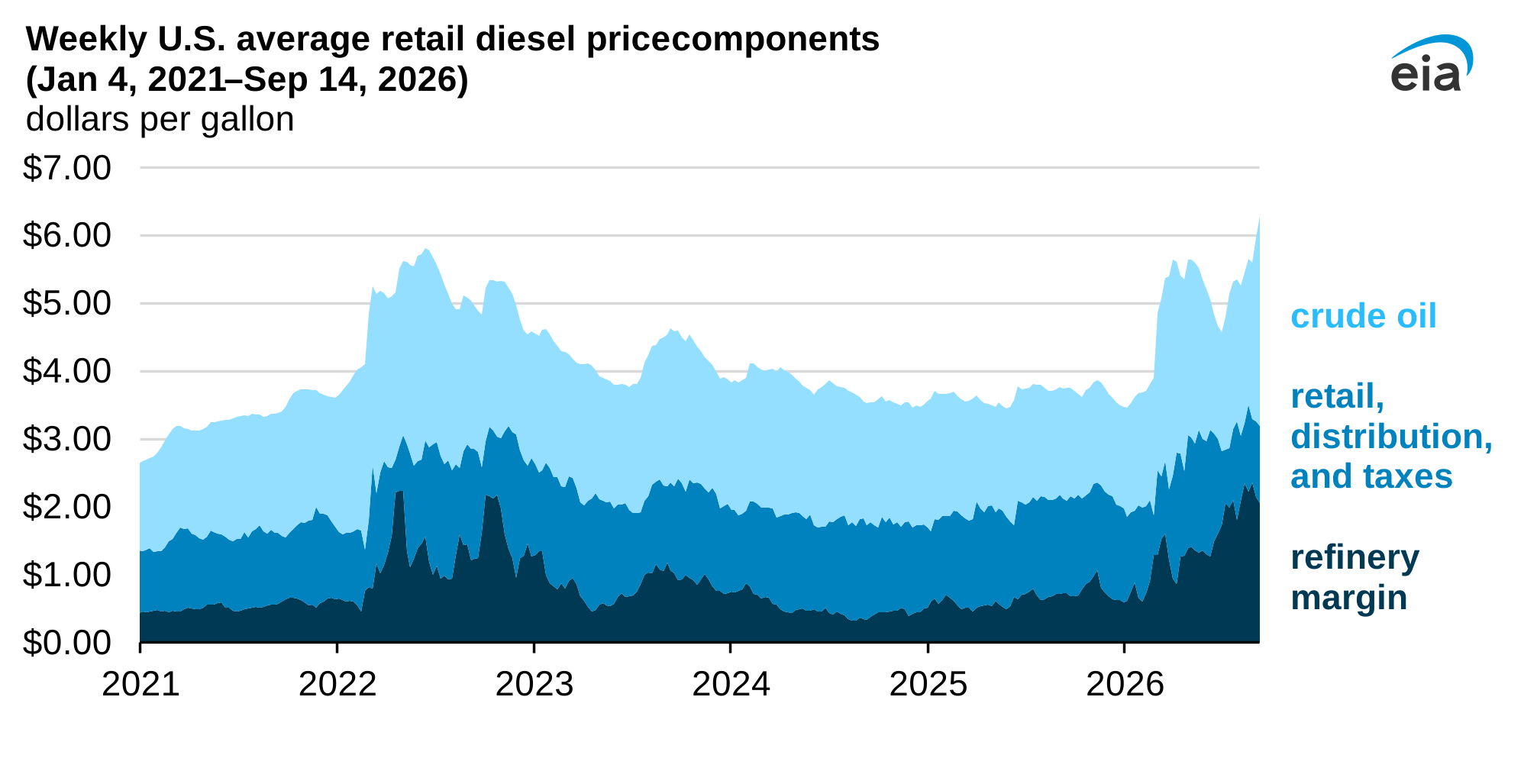
U.S. retail diesel averaged $6.29 a gallon as of Sept. 14, 2026—the highest nominal price in EIA’s series since 1994 and the highest inflation-adjusted level since 2022—lifted by crude prices plus a wide diesel crack spread (wholesale diesel minus crude).

Global distillate is tight because of weaker refining in Russia, China, and the Middle East, which has raised import costs and U.S. export demand; high diesel prices feed through to truck and rail freight, farms, and Northeast heating.

U.S. distillate output averaged 5.1 million b/d from January–August (strongest since 2019) with refinery utilization at 97% the week of Sept. 11, but net exports stayed high, inventories were 15.8 million barrels (13%) below the five-year seasonal average, and EIA’s September STEO expects prices to stay elevated.


The price of distillate fuel oil, often sold as diesel, is driven by the price of crude oil, retail margins, distribution costs, taxes, and crack spreads, the indicator we use for refining margins. Tight global supplies of distillate fuel oil and elevated crude oil prices have driven prices higher in recent months.

Crack spreads are indicators of the profitability of refining crude oil into petroleum products such as gasoline and diesel and are used as a proxy for refinery margins. We calculate the diesel crack spread by subtracting the spot market price of a gallon of crude oil from the wholesale price of a gallon of diesel. The high crack spread for diesel on top of the elevated price of a barrel of crude oil has driven retail prices up. High diesel prices can contribute to higher on-road and rail freight costs for all goods. The fuel also has significant seasonal uses in agriculture and home heating in the northeastern United States.

Data source: U.S. Energy Information Administration,
Gasoline and Diesel Fuel Update


As of Monday, September 14, U.S. retail diesel prices averaged $6.29 per gallon (gal), according to our weekly Gasoline and Diesel Fuel Update. On an inflation-adjusted basis, this is the highest price since 2022, and the number is the highest on record in nominal price terms since EIA started publishing this series in 1994.
What’s driving global distillate prices?

Global distillate fuel (including diesel) supplies are tight because of reduced global refining activity in Russia, China, and the Middle East. Reduced distillate production abroad has caused international prices to increase, driving up both the cost to import diesel to the United States and increasing demand for diesel exports from the United States.

Data source: U.S. Energy Information Administration, Gasoline and Diesel Fuel Update; Bloomberg L.P. Note: Refinery margin is calculated as the difference between the price of a gallon of wholesale diesel at New York Harbor and the spot market price of a gallon of Brent crude oil. Retail, distribution, and taxes captures retail margins, distribution costs, and federal and state taxes; it is calculated as the difference between the U.S. average diesel retail price and the wholesale diesel price at New York Harbor. Crude oil reflects the spot market price of a gallon of Brent crude oil.


What’s happening to supply in the United States?

U.S. distillate production between January and August of this year averaged 5.1 million barrels per day (b/d), the most since 2019. Refineries in the United States are also running at near-maximum levels with utilization of 97% the week ending September 11, according to our Weekly Petroleum Status Report.

Because of import and export dynamics, distillate net exports from the United States have remained near or above the previous five-year (2021–2025) high since February. As U.S. net exports increased, particularly during March and April, U.S. distillate inventories declined. Although distillate inventories typically build in the summer months, inventories have remained relatively flat this year. In the week ending September 11, U.S. distillate inventories were 15.8 million barrels, or 13%, below the five-year (2021–2025) seasonal average. Low distillate inventories have driven refining margins up.

In our September Short-Term Energy Outlook (STEO), we assume that global production of distillate fuel will remain below last year’s levels in the coming months, contributing to sustained high net exports, inventories remaining low, and prices remaining elevated.This article was published by EIA


About EIA
The U.S. Energy Information Administration (EIA) collects, analyzes, and disseminates independent and impartial energy information to promote sound policymaking, efficient markets, and public understanding of energy and its interaction with the economy and the environment.
View all posts by EIA →
Armed Group Shuts Libya Oil Pipeline Valve, Threatens Sharara Output


Map of Libya’s largest oil and natural gas fields. Credit: EIA


Key Takeaways:

Libya’s NOC said an armed group shut valve No. 7 on the Sharara–Zawiya crude pipeline, cutting output from one of the country’s largest fields (~300,000 bpd, Akakus Oil Operations) and risking a full halt.

Teams cannot reach valves 6 and 7; the NOC warned of possible force majeure, lost state revenue, and a Zawiya refinery shutdown that would increase fuel imports.
The incident follows earlier valve closures and force majeure this month and drone strikes on Zawiya-area oil sites, amid Libya’s east–west split and armed-group control of infrastructure.

(Albawaba) — An armed group has shut a valve on a crude oil pipeline linking Libya’s Sharara oilfield to the Zawiya port, sharply reducing production and raising the risk of a complete shutdown, the National Oil Corporation (NOC) said on Monday.

The group closed valve No. 7, causing pressure to build in the pipeline and significantly reducing output from Sharara, one of Libya’s largest oilfields. NOC technical teams have been unable to access the area around valves 6 and 7, while efforts to secure access through the Southwest Oil Facilities Security Department have so far failed, the corporation said.

The NOC warned that if the closure continues, production at Sharara and related transport and export operations could be suspended. It said the disruption would reduce state revenues and could also force the Zawiya refinery to shut down, increasing Libya’s reliance on imported refined fuels.

The corporation said it could declare force majeure if the situation persists and called for the pipeline to be reopened immediately. It also urged authorities to protect oil facilities from armed groups, protests and other disruptions.

Sharara, operated by Akakus Oil Operations, has a production capacity of about 300,000 barrels per day. The field is located in southwestern Libya, with crude transported through the pipeline to the Zawiya terminal on the Mediterranean coast.

The latest disruption comes amid repeated attacks and closures affecting Libya’s oil industry, which has faced instability since the 2011 uprising. Earlier this month, similar valve closures linked to armed groups disrupted production at Sharara and other fields, prompting temporary force majeure declarations.

Western Libya has also experienced recent drone attacks targeting oil infrastructure around Zawiya. The NOC has reported strikes on a blending facility and fuel storage tanks, including a gasoline tank containing millions of liters.

Libya remains politically divided between rival authorities in the west and east, while armed groups continue to exert influence over key infrastructure. The recurring disruptions have increased concerns over the security and reliability of the country’s oil production and export operations.


About Al Bawaba News
Al Bawaba provides top stories and breaking news about the Middle East and the world. The Al Bawaba network consists of several web portals and media platforms.
View all posts by Al Bawaba News →
India And Russia Are Rewriting Their Defense Partnership – Analysis


India's PM Narendra Modi and the President of Russia, Mr. Vladimir Putin witnessing the Exchange of MoUs between India and Russia in Hyderabad House, New Delhi on December 05, 2025. Photo Credit: India Prime Minister Office

September 22, 2026

By Nikola Mikovic

Key Takeaways:

After the Sept. 12–13 BRICS summit in New Delhi and Army Chief Gen. Dhiraj Seth’s first Russia visit by a top Indian commander in eight years, the article says the old buyer–seller model is giving way to tech-sharing and production in India.

Russian-origin kit still anchors much of India’s army, and Moscow still hopes to sell Su-57s, but Peskov says local manufacture is under negotiation; India now claims about 65% of hardware is made at home and is also buying from the U.S., France, and Italy.

Possible next steps include further BrahMos work, a Rosoboronexport offer to co-produce T-90MS tanks, and the Feb. 2025 RELOS logistics pact (troops, ships, and aircraft on each other’s soil). The author argues Ukraine’s strain on Russia leaves India freer to set terms—and perhaps even supply Moscow later.


Asia’s oldest defense relationship is changing, with India and Russia moving beyond traditional arms sales toward greater technology sharing and joint production. For decades, the partnership has been built around Russian military hardware, but India’s growing defense capabilities are now reshaping the balance between the two countries.

During the BRICS summit in New Delhi on September 12-13, Indian Prime Minister Narendra Modi and Russian President Vladimir Putin discussed a wide range of issues. In addition to political, economic, and energy ties, reports indicate that defense cooperation was also on the agenda.

Coincidentally or not, just days after their meeting, Indian Army Chief General Dhiraj Seth traveled to Russia for an official tour — marking the first such journey by a top military leader from New Delhi in eight years. India has traditionally been a major buyer of Russian military equipment, which is why Moscow hopes to sustain this one-sided purchasing relationship.


From infantry rifles and armored transports to heavy tanks and missile defense nodes, Russian weapons form the bedrock of India’s ground forces. India’s frontline armored and mechanized units are practically defined by their Russian-designed equipment. That reality, however, is beginning to look very different.

While Kremlin spokesman Dmitry Peskov confirmed Russia’s plans to supply India with the Su-57 fifth-generation multirole fighter, he emphasized that local manufacturing remains a point of negotiations. Historically, India was Russia’s largest weapons customer, importing finished military hardware straight from Russian factories. But now, a major portion of the Indian military’s flagship Russian-origin platforms are built right on Indian soil through licensed production and joint ventures.

“Every country, when producing new complex machines, wants to keep those technologies to itself. However, to strengthen the strategic partnership with New Delhi, the Russian side might share them,” Peskov suggested.

In other words, to maintain good military ties with India, Russia might have to make significant concessions to its partner, as New Delhi is no longer interested in purely commercial transactions and insists that any new contract include robust technology-sharing guarantees. In addition to developing closer military ties with Russia, India is also actively strengthening its own defense capabilities.


According to Ukrainian military intelligence, New Delhi continues to maintain close military ties with Moscow while steadily diversifying its defense imports in an effort to reduce its reliance on Russia. At the same time, India is placing greater emphasis on strengthening its domestic defense industry and expanding defense partnerships with Western countries, particularly the United States, France, and Italy.

Indian government estimates that roughly 65 percent of the country’s military hardware is now produced domestically, marking a major reversal from a decade ago, when approximately two-thirds of its military hardware was imported.

Thus, Russia’s mounting losses in Ukraine, combined with the rapid expansion of India’s military-industrial complex, could ultimately turn the two countries’ defense relationship on its head, with Moscow potentially looking to New Delhi not only as a customer, but also as a supplier of military equipment. In the meantime, the two countries are expected to expand their military cooperation, particularly in the area of joint production.
Future Options for India-Russia Military Collaboration

Looking ahead, Russia and India could deepen their work on missile development, particularly through further upgrades to the BrahMos supersonic cruise missile. Developed jointly by the two countries, BrahMos is derived from Russia’s P-800 Oniks missile family, specifically its export variant, the Yakhont. Over the past 25 years, however, India has introduced numerous modifications and upgrades to BrahMos, giving the missile capabilities that distinguish it from its Russian predecessor. International experts argue that further modernization will nevertheless be necessary to keep pace with increasingly advanced air defense systems.


There is also room for deeper collaboration in the field of armored vehicles. In July, Russia’s state arms exporter, Rosoboronexport, offered India the opportunity to jointly produce the advanced T-90MS main battle tank. The proposal would represent an extension of an existing production arrangement, under which India already builds the vast majority of its T-90S tanks domestically, using a combination of locally manufactured and Russian-supplied components. However, as the Ukraine war has shown, in the era of drones, tanks are no longer the undisputed kings of the battlefield. Even Russian military experts argue that drones have made tanks and other armored vehicles unnecessary for both offensive and defensive operations. Therefore, it remains unclear whether India will be willing to invest heavily in expanding its fleet of conventional armored vehicles, particularly if the focus of its military modernization continues to shift toward newer technologies.

The broader trend, however, is clear: India and Russia are moving away from straightforward arms sales and toward jointly developing and producing military equipment in India. But the shift is not limited to weapons production. In February 2025, Moscow and New Delhi signed the Reciprocal Exchange of Logistics (RELOS) agreement allowing each country to have up to 3,000 troops, five warships, and 10 military aircraft present on the other’s territory at any one time, while also providing for services such as refueling, repairs, maintenance, and supplies.

Russia’s heavy naval losses during the war in Ukraine could significantly affect RELOS. Unable to maintain its own ships, Moscow could potentially seek assistance from India under the RELOS agreement.

Taken together, these developments put India in a stronger position in its defense partnership with Russia. As its own defense industry grows and Moscow faces increasing pressure from the war in Ukraine, New Delhi now has more room to shape the relationship on its own terms.

This article was published by Geopolitical Monitor.com


About Nikola Mikovic
Nikola Mikovic is a freelance journalist based in Serbia, reporting on geopolitics, energy, economics, tourism, and regional developments across Eurasia. His work has been featured in leading international outlets, including the South China Morning Post, CGTN, The Times of Central Asia, the Lowy Institute, Diplomatic Courier, and Byline Times, among others.
View all posts by Nikola Mikovic →
Norwegian Justice Ministry Overrules Court Decision Allowing Seizure Of Russian Ship In Svalbard To Satisfy ICC Appeal By Ukraine – OpEd


Russia's Professor Molchanov oceanographic research vessel at Barentsburg in Svalbard, Norway. Phhoto Credit: Alastair Rae, Wikipedia Commons


Three weeks after a Svalbard court allowed seizure of a Russian ship to enforce a 2023 ICC award to a Ukrainian company, Norway’s justice ministry reversed the seizure, citing Svalbard’s treaty status and the need for signatories to supply their people on the islands.

The ministry treats the original court ruling as valid when issued but bars this seizure and similar future ones; the author says Moscow will read that as an Oslo retreat and a win over what Russia called “state terrorism.”

The piece warns that yielding after Putin’s protest may invite Russia to test Western limits around ICC rulings and North Atlantic islands, raising the risk that a Svalbard-type incident could escalate toward a Russia–NATO clash.

Three weeks ago, a Norwegian court allowed for the seizure of a Russian ship in Svalbard in fulfillment of a 2023 decision of the ICC to compensate a Ukrainian company for Russian seizures of its assets. Putin expressed outrage, and now the Norwegian justice ministry has overruled that court decision.

The ministry said that the special status of Svalbard means that countries signatory to the treaty governing use of that land must have confidence they can supply their citizens on the island, a not unreasonable position but one that Norwegian experts say Moscow will treat as a retreat by Oslo and a victory by Russia over what Moscow called “state terrorism.”

The justice ministry’s action means that Svalbard court’s decision will be declared valid at the time it was made but that the ministry’s action means that the seizure will be reversed and future seizures of that type, regardless of the status of the court which ordered them, will not be allowed.

(For the original action, see windowoneurasia2.blogspot.com/2026/09/with-norwegian-s.eizure-of-russian-ship.html; for Norway’s retreat in the face of Russian protests, see ru.thebarentsobserver.com/novosti/norvegia-usloznila-ukraine-vozmoznost-arestovyvat-rossijskie-suda-na-svalbarde/458379.)

What makes this course of events worrisome is that it is likely to encourage Russia and its supporters to believe they can get Western countries to vacate ICC decisions by Moscow’s protests and that they will continue to test the limits of Western tolerance by further raising the stakes.

Given Moscow’s current moves against NATO countries and especially against European islands in the North Atlantic like the Svalbard archipelago, what Norway has done may cause the Kremlin to expand its subversive activities to a point that Western countries will find it impossible to accept.

That scenario is now increasingly likely and could mean that a war between Russia and NATO could in fact be triggered by a sequence of events like this one, a possibility that had been suggested by some analysts earlier. (On that, see jamestown.org/moscows-first-move-against-nato-could-take-place-in-norways-svalbard-archipelago/.)