Wednesday, September 09, 2026


Athens cracks down on e-scooters as Europe sounds safety alarm
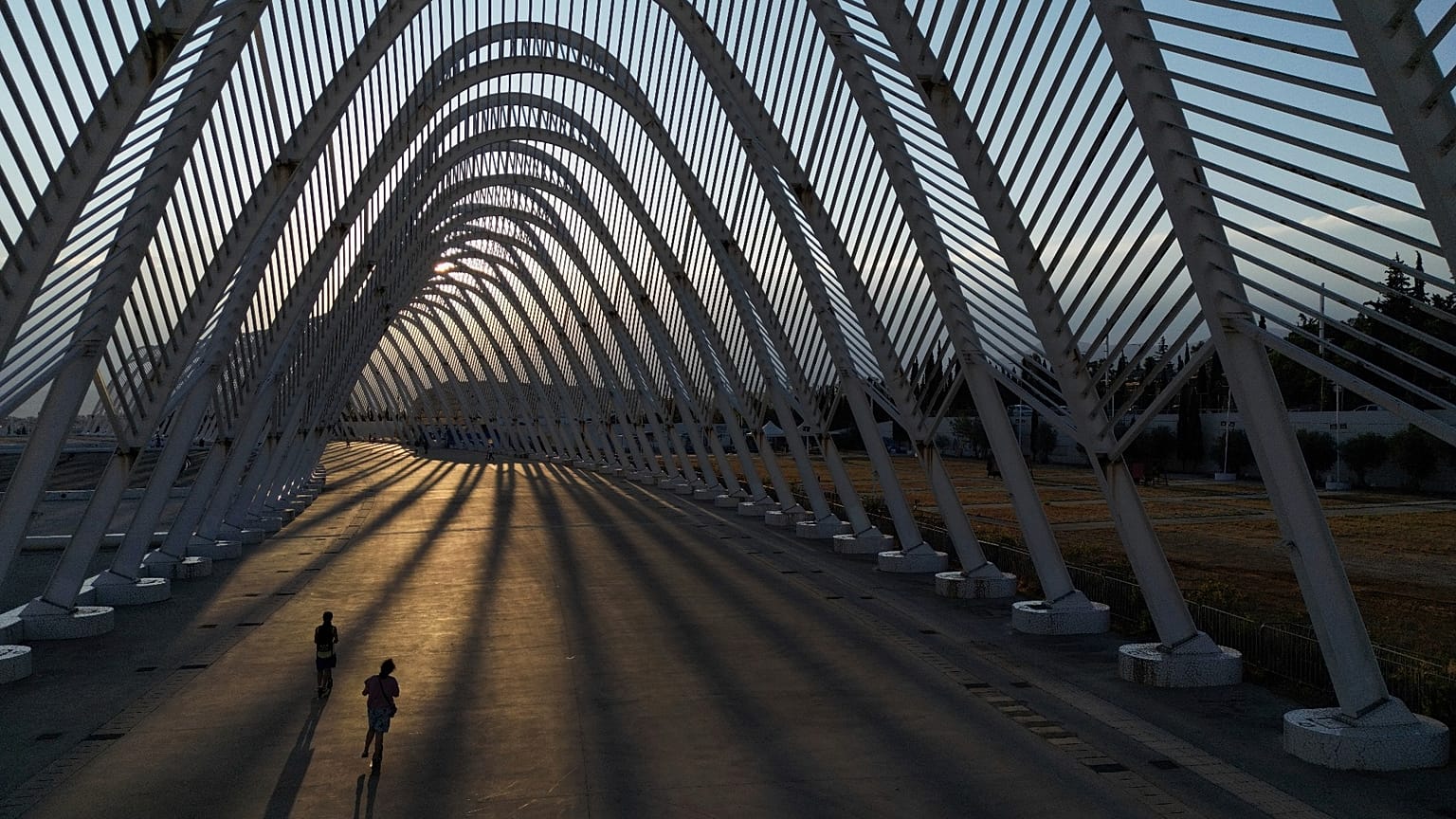
Two girls ride their scooters inside the modern Agora walkway as the sun sets at the main Olympic complex in Athens, 5 August, 2025
Copyright AP Photo

By Symela Touchtidou
Published on

In the first eight months of 2026, a total of 6,127 checks were carried out on electric scooter users across the Attica region and 3,700 offences were recorded.

Greek traffic police service in the Attica region have launched a new round of intensive checks on electric scooters, after two serious accidents on Tinos and Glyka Nera, in which a 14-year-old girl and a 16-year-old boy were badly injured.

The checks focus mainly on the use of electric scooters by minors, as well as on general compliance with the Highway Code, while businesses that sell, supply or rent out these vehicles are also coming under scrutiny.

Particular emphasis is being placed on the centre of the capital Athens, where the use of electric scooters is especially widespread. At the same time, according to traffic police, there have been several complaints about scooters being abandoned on pavements, reducing available space for pedestrians.

3,700 offences in more than 6,000 checks

Data from the Attica Traffic Directorate illustrate the scale of the problem.

In the first eight months of 2026, a total of 6,127 checks were carried out on electric scooter users and 3,700 offences were recorded.

Of these, 1,844 concerned rental scooters while around 1,800 cases concerned privately owned ones.
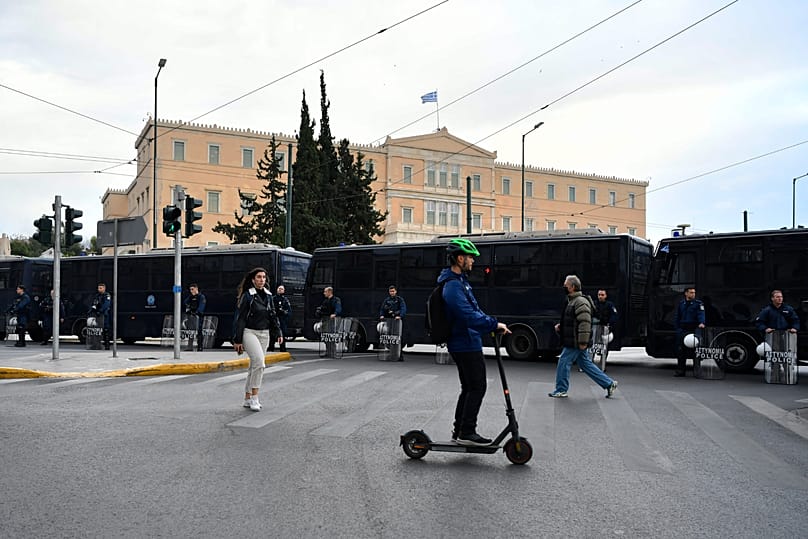
A man on a scooter in front of Parliament in Athens, 17 November, 2022 AP Photo

The vast majority of offenders were adults: 3,544 people. However, 156 underage offenders were also recorded, 20 of them aged between 12 and 15 and 136 older than 15.

The most frequent offences relate to riding without a protective helmet and excessive speed. There are also cases of electric scooters being used on high-speed roads and running red lights.

56 road accidents in eight months

The figures on accidents are even more worrying. In the first eight months of the year, 56 road accidents involving an electric scooter were recorded in Attica.

Three people were seriously injured and a further 53 suffered minor injuries.

The two recent incidents involving minors have brought the issue of enforcing the rules, especially age limits for users, back to the fore.

Greek legislation has already been tightened. The use of electric scooters is prohibited for people under 17, an insurance requirement has been introduced and stricter penalties are provided for riding them on roads where the speed limit exceeds 50 kilometres per hour.

Fines are also foreseen for businesses that sell, rent or supply electric scooters to people under 17.

Despite the stricter framework, however, the situation on the streets suggests that enforcing it remains a challenge.
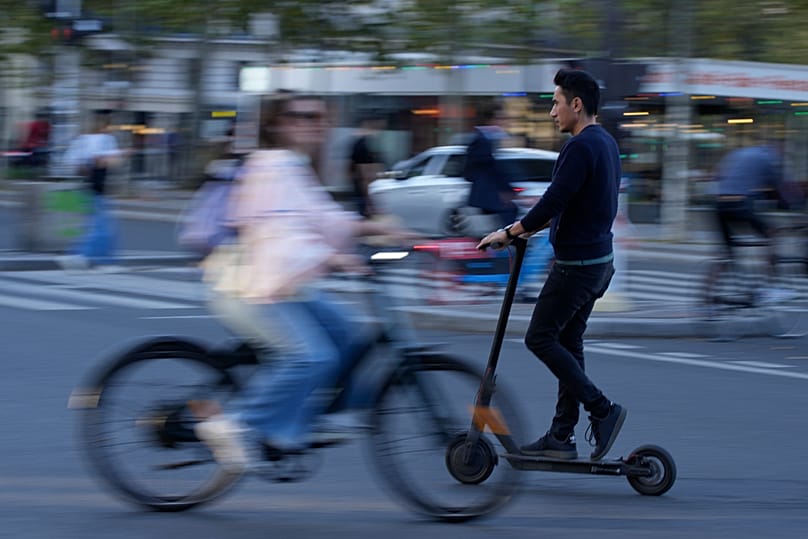
A man riding an electric scooter in Paris, 10 October, 2023 AP Photo

Europe sets limits on electric scooters

The debate is not confined to Greece. The spread of electric scooters as a means of micromobility has forced many European countries to seek a balance between alternative forms of transport, road safety and the protection of pedestrians.

The most radical example is Paris. Since September 2023, the French capital has banned dockless rental electric scooters, following a vote in which 89% of participants backed their abolition. The three companies operating in the city at the time were ordered to remove their vehicles.

Restrictions in Paris became even stricter in August 2026. Wearing a helmet and reflective equipment is now compulsory for anyone using an electric scooter on the city's public roads and the fine for not wearing a helmet is €135. The minimum age is 14 and the maximum permitted speed is 25 kilometres per hour.

Madrid has taken a similar path. In 2024 the city council revoked the licences of the three electric scooter rental firms operating in the Spanish capital and stated that it would not issue new ones.
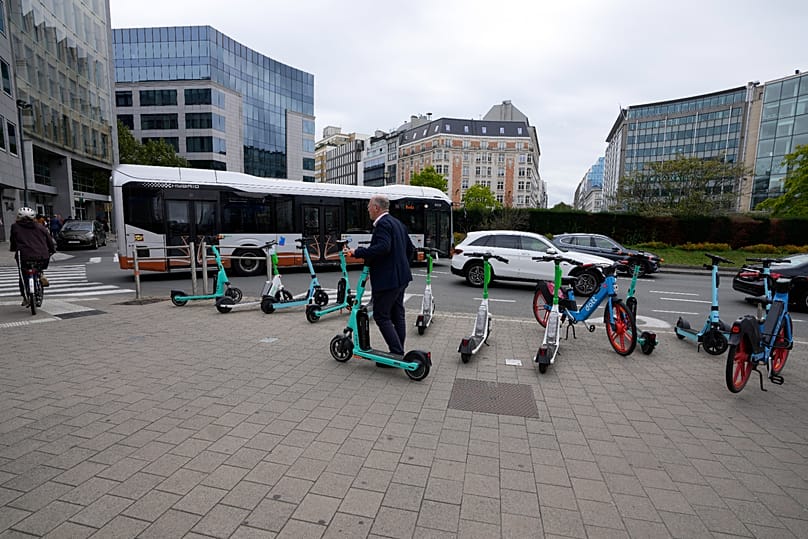
A man hires an electric scooter on Shuman Circle in the European Quarter of Brussels, 20 September, 2023 AP Photo


Among the reasons it cited were gaps in insurance cover and the failure to implement technology that would prevent the vehicles from being used or parked in prohibited areas.

In Brussels, the regional government decided on a complete ban on shared electric scooters from 1 January 2027. The licences of the existing companies expire at the end of 2026 and will not be renewed.

The decision was taken after a significant rise in accidents: in 2025, 666 injuries were recorded in incidents involving electric scooters in the Brussels Region, an increase of 26% compared with the previous year.

Authorities also point to the problems abandoned scooters cause for pedestrians, as well as their use in criminal activities.

Helmets, insurance and age limits

Italy has chosen a different approach, tightening the rules for the vehicles themselves and their riders.

Italian law now requires helmets to be worn, a specific identification mark for each electric scooter and compulsory third-party liability insurance. The insurance requirements came into force in 2026.

A man plays the piano in the street as a couple on an electric scooter ride by in downtown Madrid, 14 October, 2022 AP Photo

In Finland, since June 2025 there has been a minimum age of 15 for using most electric scooters. It is also forbidden to hand such a vehicle to a child under 15. At the same time, an alcohol limit of 0.5% was introduced and the police were given the power to carry out breathalyser tests and checks for narcotic substances on users.

In Hungary, compulsory insurance has already been extended to certain categories of electric scooters, depending on their weight and maximum speed.

In Germany, the new framework tightens the liability of electric scooter rental companies, such as Lime and Bolt, in the event of an accident.

The aim is to make it easier to compensate victims even when the rider cannot be identified, while companies may also be held liable for accidents caused by abandoned scooters left on pavements.

The figures are telling: rental scooters made up around 20% of insured electric scooters in 2023, but were linked to about 40% of related compensation claims.
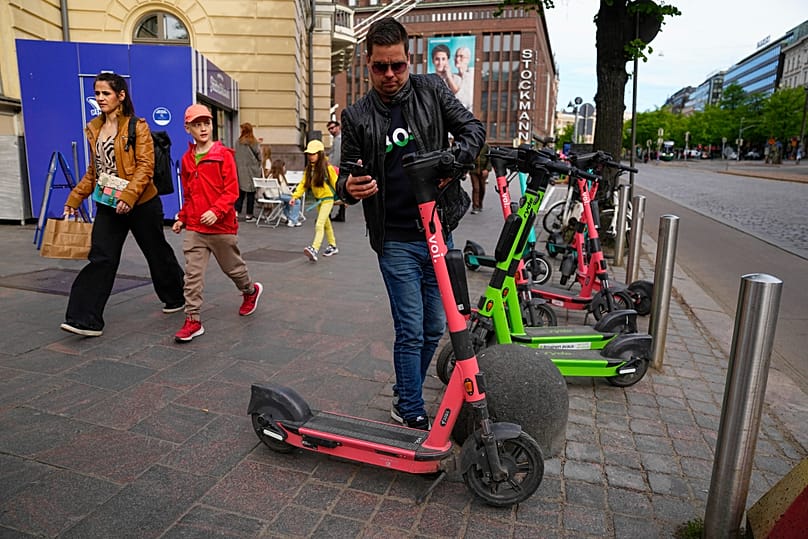
A man parks an electric scooter in a street in Helsinki, 29 May, 2023 AP Photo

A stricter framework is also being promoted in Cyprus, where the minimum age for using an electric scooter has been raised from 14 to 17.

At the same time, a decree is out for public consultation that would allow electric scooters to be impounded for 30 to 90 days in the case of serious offences, such as riding by people under 17, using them on roads where they are banned or exceeding the limit of 25 kilometres per hour.

The common denominator is the attempt to address problems that have emerged alongside the rapid spread of micromobility: road accidents, use by children, riding on unsuitable roads and pavements and the uncontrolled parking of rental vehicles.

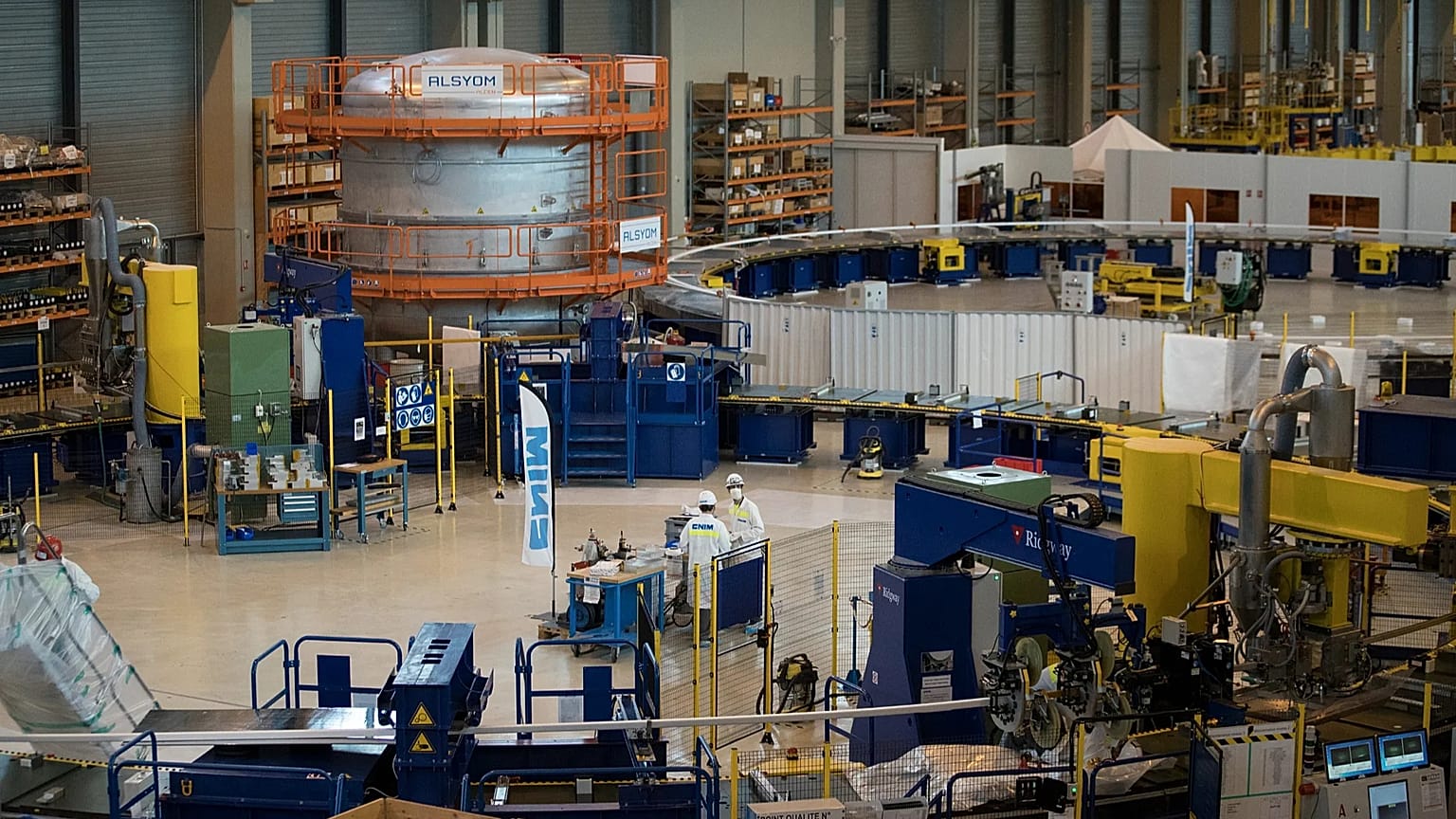
 

The Russian exception: Why Moscow still has a role in Europe’s ITER fusion project despite EU sanctions

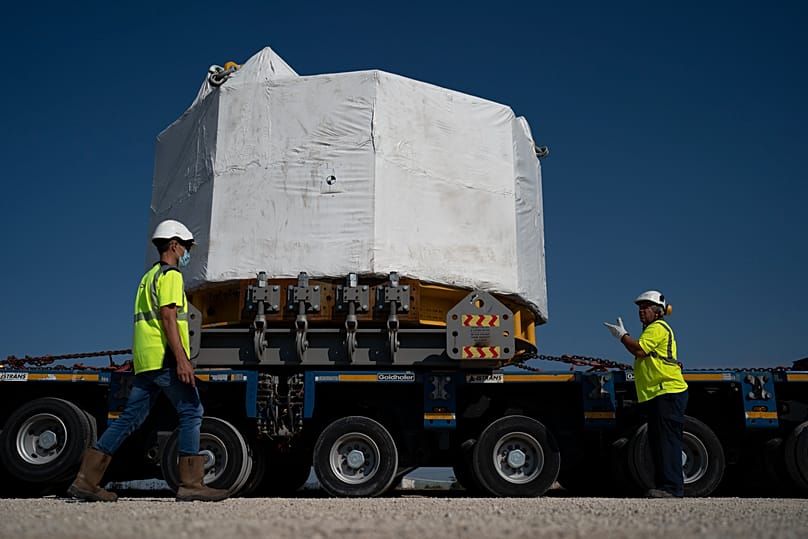
Technicians work on the poloidial field coil assembly line at the ITER in Saint-Paul-Lez-Durance, southern France, July 28, 2020.
Copyright AP Photo / Daniel Cole

By Marta Pacheco & Maïa de la Baume
Published on

EU-Russia tensions collide with decades of scientific cooperation at ITER, the world’s largest nuclear fusion experiment. As fusion becomes a strategic EU priority, Brussels faces a dilemma over its continued reliance on Russian expertise and technology.

The European Union and Russia are geopolitical adversaries, with Russia under sweeping EU sanctions and its ties with the bloc severely curtailed.

Yet inside one of the largest international scientific collaborations in history — and the world’s largest nuclear fusion experiment — the two remain linked by a partnership forged decades ago and built to endure for generations.

While Brussels steps up pressure on Moscow over its war in Ukraine and hybrid attacks, Russian engineers and their European counterparts continue to work together on an international project called the “International Thermonuclear Experimental Reactor” (ITER), an experimental nuclear fusion machine that seeks to harness the fusion of hydrogen nuclei to generate vast amounts of energy.

Last Monday, the EU’s Energy Commissioner Dan Jørgensen visited ITER in Cadarache, France, calling the fusion device “key for our decarbonisation and energy independence goals.”

PF1 poloidal field coil and gyrotrons

Launched in 2007, ITER is a fusion machine currently under construction and the result of a collaboration among 33 nations, including Russia, China, the United States and the European Union.

The project aims to demonstrate the potential of fusion as a viable low-carbon energy source, which could contribute to the EU’s goal of achieving climate neutrality by 2050. According to ITER’s website, Europe bears “the largest portion of construction costs,” accounting for 45.6 percent.

However, while Brussels has steadily reduced its dependency on Russian energy, excluded Russian public institutions out of EU research cooperation and funding and banned Russian funding to European research organisations in response to Russia's invasion of Ukraine, Russia has never been expelled from ITER, whose rules stipulate that no member can be removed.

Instead, Russia remains a 9.1% contributor to the project and the country still provides crucial scientists and technology.

"The Russian Federation is an ITER member and participates through its Domestic Agency, Project Center ITER,” an ITER spokesperson told Euronews. “All ITER-related activities are conducted in accordance with the applicable legal and regulatory requirements.”

Beyond financing, Russia plays a crucial role in supplying a range of highly specialised components, including the PF1 poloidal field coil, which is used to shape and control the fusion plasma.

It also provides gyrotrons, which are powerful devices that generate high-frequency electromagnetic waves used to heat plasma in fusion reactors. Other components include “equipment supporting the power supply protection of the superconducting magnets,” and “vacuum vessel upper ports,” according to the spokesperson.

Workers secure a central solenoid magnet for the ITER project as it departs from Berre-l'Etang in southern France, Sept. 6, 2021.
Workers secure a central solenoid magnet for the ITER project as it departs from Berre-l'Etang in southern France, Sept. 6, 2021. AP Photo / Daniel Cole

A major EU investment

Russia’s contribution takes on added significance as nuclear fusion has become a major EU investment priority. Brussels is set to unveil its own fusion strategy, after recently announcing €330 million to accelerate the sector and support nuclear technologies and skills.

The strategy, which has been delayed by one year, is expected to address governance, regulatory clarity and international cooperation with Europe’s central role in ITER at its core. Asked whether Russia’s participation in the ITER nuclear fusion programme had caused diplomatic delays among member states in reaching agreement on the future of the strategy, the European Commission has yet to respond.

But a Council document assessing nuclear energy, including ITER, dated 9 July and seen by Euronews carefully avoided any reference to Russia.

Instead, it made clear that the EU shall “continue collaboration with the ITER Organisation and partners on ITER-related activities.”

Russia’s Science Minister visits ITER

Since Russia’s full-scale invasion of Ukraine, the EU suspended Russia’s participation in flagship research programs like Horizon Europe, Horizon 2020 as well as Euratom and Erasmus Plus.

Other major European scientific institutions like the world-renowned physics research center CERN suspended Russia’s Observer status in 2022 and made clear it would “not engage in new collaborations with the Russian Federation.”

But despite the broader freeze in scientific ties, ITER signed a cooperation agreement in June with Russia’s Kurchatov Institute covering scientific information exchange, research programs and training.

Russian and European officials have also continued high-level contacts around the project. In July, Russian Science Minister Valery Falkov visited the ITER site in France, accompanied by a large delegation.

Supporters of ITER’s collaboration with Russia argue that the project is a decades-long endeavour requiring specialised knowledge, huge industrial supply chains and international collaboration. In addition, the project was designed on the assumption that scientific cooperation could survive political changes.

"The poloidal field coil system, for example, includes contributions from Europe, Russia and China, requiring components and technologies from different national supply chains to be integrated into a single machine system," ITER's spokesperson said.

Alongside their commitment to ITER, several countries are conducting national initiatives to develop the knowledge and technologies needed to operate nuclear fusion systems over the next two decades.

Recent research from the European Parliament suggests that progress in technological development since ITER's foundation in 2007 "might pave the way for the technology to be ready for industrial use in the second half of the century".

Science can’t 'trump geopolitics'

But the issue of the EU’s reliance on Russia over nuclear fusion and ITER has raised concerns in Brussels.

In 2025, three MEPs asked EU Commissioner Jørgensen in a written question whether the EU plans to “phase-out dependence on Russian participation in ITER.”

In a public letter, Jørgensen replied that ITER's founding rules don't allow members to be kicked out, only for members to withdraw voluntarily.

For Andrea Wechsler, one of the signatories of the letter, the Commission's response "did not provide a convincing political strategy for dealing with Russia's continued participation in the governance and technological ecosystem of ITER."

"I believe the Commission should reassess the issue and explain how these new forms of institutional cooperation are consistent with the EU's broader policy towards Russia," she told Euronews. "We need a comprehensive security and strategic review of Russia's involvement in ITER and a clear plan to ensure that no new technological dependencies are created."

The concern is also shared by some NGOs. Sehila Gonzalez de Vicente, global director of fusion energy at climate NGO Clean Air Task Force, argued that international cooperation has been central to fusion energy's progress, but that may no longer occur on the same global scale.

"(Scientific) collaboration is likely to become more concentrated among trusted allies and partners, while countries and companies seek to protect commercially sensitive technologies and maintain a competitive advantage in the emerging fusion industry," Gonzalez de Vicente told Euronews.

While Wechsler said she opposes the “isolation of Russian researchers, students or scientists”, she maintained that the scientific nature of strategic technology cooperation should not make it geopolitically neutral.

"I would not interpret the continuation of the project as evidence of a consensus that science should simply trump geopolitics," she added.

The European Commission didn't reply to a Euronews request in time for publication.


Philippines launches online microloans via UnionDigital Bank

Philippines launches online microloans via UnionDigital Bank
/ Mari Gimenez - UnsplashFacebook
By IntelliNews - Manila Bureau September 9, 2026

The Social Security System (SSS) has rolled out a digital microloan facility through UnionDigital Bank, opening a direct channel for private sector workers in the Philippines to secure short-term credit without human resource approval, the pension fund announced, according to Manila Bulletin.

The initiative removes mandatory employer certification for conventional short-term loans, offering a crucial lifeline to millions of wage earners who routinely face tight monthly cash flow. By bypassing employer verification, state administrators aim to expand financial inclusion and steer lower-income workers away from predatory loan sharks.

Under SSS Circular No. 2026-005, eligible employed members can apply for credit from PHP1,000 to PHP20,000 ($16-$320). The loan limit is calculated against the average of an applicant’s 12 most recent monthly salary credits. LoanLite carries an annual interest rate of 8% (roughly 0.67% monthly), with repayment terms of 15, 30, 60, or 90 days.

Applications are processed via UnionDigital Bank's mobile portal, allowing automated verification and approval within minutes. UnionDigital Bank is the first of four designated participating financial institutions to integrate the microloan service into its platform.

“After months of preparation, SSS LoanLite is finally here,” said SSS President and Chief Executive Officer Robert Joseph M. de Claro. “We are also working with our other PFIs, which will soon make SSS LoanLite available through their respective digital platforms.”

To qualify, applicants must have accumulated at least 36 total monthly contributions, with a minimum of six posted within the 12 months immediately preceding the application. Borrowers must hold an active account with the participating lender, maintain a clear standing without past-due short-term SSS loans or active microloans, and have no pending final benefit claims.

Loan repayments will be automatically debited from the borrower’s enrolled UnionDigital account based on the agreed schedule. Pension fund officials urged members to conduct transactions strictly through official banking applications and to review interest schedules and fee disclosures prior to accepting loan agreements.


Why Ratko Mladic is still a hero to some Serbs

Why Ratko Mladic is still a hero to some Serbs
/ X FK Crvena zvezdaFacebook
By Tatyana Kekic in Belgrade September 8, 2026

The funeral of convicted Bosnian Serb wartime commander Ratko Mladic has shocked Brussels, with thousands turning out to honour a man found responsible for some of the worst atrocities of the Yugoslav wars.

Around 16,000 people attended the funeral procession in Belgrade on September 7, according to the Archive of Public Meetings.

Mladic, who died on August 27 aged 84 while serving a life sentence in The Hague, was convicted of genocide over the 1995 Srebrenica massacre, as well as other crimes committed during Bosnia's 1992-95 war.

European Commission President Ursula von der Leyen said on September 8 that images from the funeral were "shocking", especially the presence of senior Serbian officials.

In fact, most top politicians chose to stay away.

President Aleksandar Vucic did not attend, deciding to host an Uzbek delegation instead. But his son Danilo was there, alongside a few ministers, including Defence Minister Bratislav Gasic and Justice Minister Nenad Vujic.

A divided memory

As difficult as it may be for EU leaders to understand, having been shaped by the view that Serbia committed the worst atrocities in Europe since the Second World War, Mladic remains a hero to many.

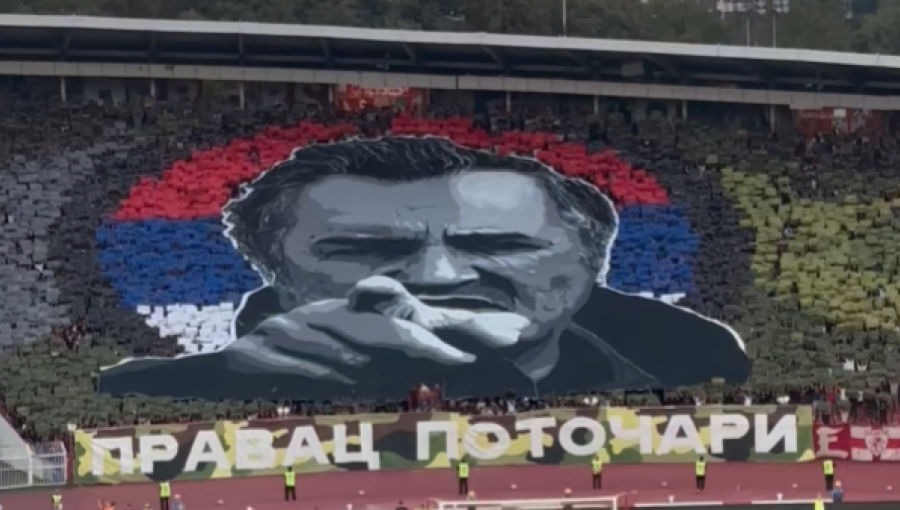
The funeral followed days of public tributes to the former general. Murals of Mladic were painted across the capital, while a huge banner bearing his face was unfurled at the city's main football derby between Red Star Belgrade and Partizan Belgrade, accompanied by chants of his name.

How can one understand this? Perhaps it reflects a deeply rooted belief that Serbia and Serbs were treated as the principal perpetrators of the Yugoslav wars, while crimes committed by other sides received less attention.

In response to criticism from former Croatian prime minister Jadranka Kosor, who said the EU should suspend Serbia’s accession negotiations, Bojana Selakovic, coordinator of the National Convention on the European Union, engaged in familiar whataboutery of Serbian politicians by highlighting Croatia’s own troubled relationship with its wartime past.

“Croatia should have received punitive measures from the European Union long ago,” she wrote on X.  

Many Serbs see the wars through the experience of a defeated population whose version of events was largely written by the victors and by international institutions in which they had little influence. They regard the ICTY as biased against them, arguing that it failed to adequately address crimes committed by Croat, Bosniak and Kosovo Albanian forces.

That perception has helped sustain the view of Mladic as a defender of Serbs rather than a perpetrator of crimes.

But how does one get around the fact that Mladic was responsible for the deaths of thousands of innocents at Srebrenica?

Thousands of civilians were killed, expelled or subjected to abuses by forces on all sides of the Yugoslav wars. Srebrenica stands apart in its scale: more than 8,000 unarmed Bosniak men and boys were killed there in July 1995.

The massacre took place under Mladic's command, and his responsibility for it was upheld by the ICTY.

The tension between the international legal record and a Serbian sense of victimhood over how it has been treated by the media and international institutions remains central to the way the country's wartime past is remembered.

Nevertheless, there are those in Serbia who have condemned the treatment of Mladic.

Green-Left Front lawmaker Dobrica Veselinovic called the tributes a source of national shame, while Movement of Free Citizens MP Vladimir Pajic criticised the decision to give Mladic state and church honours.

State distances itself

Amid the EU backlash to the funeral, Serbian officials have half-heartedly sought to portray it as a family matter.

Justice Minister Vujic said the former general had been buried with military honours at the request of his family, while the state had merely ensured public safety.

Yet the ceremony had several official and institutional elements.

Mladic's remains were returned to Serbia from The Hague aboard a Serbian government plane. His coffin, draped in the Serbian flag, was carried from the aircraft by Serbian soldiers and received by family members and government officials.

Mladic was buried at Belgrade's Topcider cemetery in a coffin covered with the flags of Serbia and Republika Srpska, and his funeral service was conducted by Serbian Orthodox Patriarch Porfirije.

Porfirije said many Serbs viewed Mladic as a soldier who had defended their people during the Bosnian war, while also acknowledging the suffering and trauma caused by the conflict.

Final nail in the coffin?

The funeral comes as Serbia's accession process has stalled, with Serbia having opened no new negotiating cluster since 2021.

In July, eight EU member states — Belgium, Bulgaria, Croatia, Estonia, Finland, Lithuania, the Netherlands and Sweden — blocked Serbia from opening Cluster 3, which covers competitiveness and inclusive growth.

The European Commission has backed opening the cluster, while opponents cite concerns over the rule of law, Serbia's alignment with EU foreign policy and sanctions on Russia.

The stalemate has left Serbia, the largest economy in the Western Balkans, falling behind some other EU candidates, particularly Montenegro, which has advanced much further in its accession negotiations.

The Mladic funeral adds another source of friction to an accession process already held back by political disputes, including Serbia's refusal to fully align with EU sanctions on Russia.

For Serbia, the controversy touches on a bigger question that remains unresolved more than three decades after Yugoslavia began to break apart: whether acknowledgement of crimes committed by Serb forces can coexist with recognition of crimes against Serbs and the sense of collective victimhood that continues to shape public memory.

That divide remains a major obstacle to reconciliation in the region — and an inconvenience for Serbia’s leadership as it tries to revive an EU accession process in which it is already losing ground to its smaller neighbours.

Tuesday, September 08, 2026


BALKAN BLOG: Croatia waste scandal puts government under pressure

BALKAN BLOG: Croatia waste scandal puts government under pressure
Demonstrators gathered in central Zagreb on September 5. / Gospić je naš dom via FacebookFacebook
By Clare Nuttall in Glasgow September 7, 2026

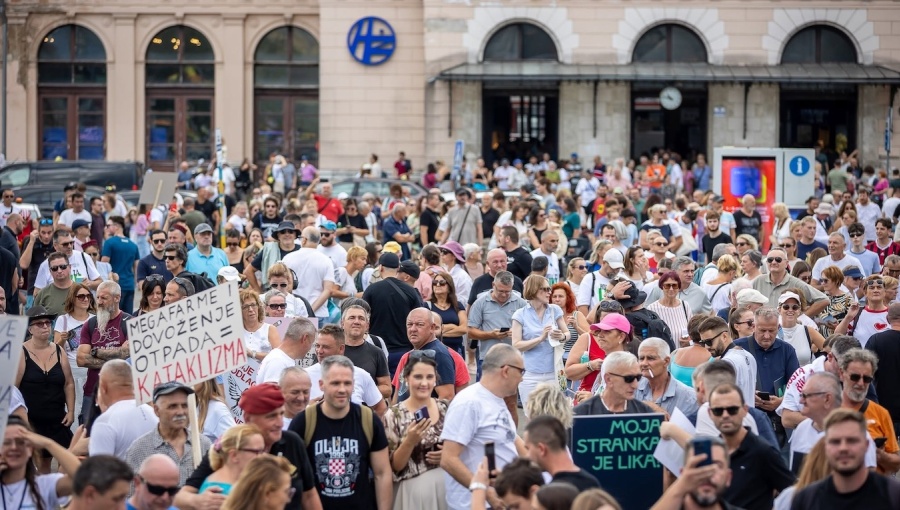
Thousands of people gathered in central Zagreb at the weekend to demand action over more than 30,000 tonnes of waste illegally stored in central Croatia, reflecting growing public frustration with a government that has repeatedly promised to remove the material but has yet to begin the main cleanup.

The "Walk for Lika, Walk for Croatia" protest on September 5 was one of the biggest demonstrations in Zagreb in several years, bringing environmental activists and residents from the Lika region to Ban Jelačić Square.

The scale of the demonstration, and its timing just days after Prime Minister Andrej Plenković again promised to accelerate the cleanup, point to a problem that has become increasingly difficult for the government to contain: the issue is no longer simply whether the waste will eventually be removed, but why it has taken so long for a promised state response to turn into physical action on the ground.

The organiser, NGO Gospić je naš dom (Gospic is our home), has vowed to continue. A message on its Facebook page reads: “When Lika called, Croatia responded! People stood with people … Our work here at this protest is not done. It’s just getting started!”

Authorities uncovered between 34,000 and 37,000 tonnes of waste at an industrial site near Gospić last year, much of it imported from Italy in 2023 and 2024. Investigators suspect illegal waste-management activities at the site and elsewhere in Croatia, while environmental campaigners say improperly stored material is threatening soil, air and water in one of the country's best-known natural regions.

Government officials say the cleanup has been complicated by the criminal investigation and the absence of an appropriate facility in Croatia for the disposal of the buried hazardous material.

On September 2, Plenković said the cleanup was entering a new phase. The government has selected a contractor to cover the site to prevent leakage and another to remove waste stored in bags, while authorities have begun the process of finding a European company capable of removing and disposing of the buried material.

The government estimates that around 4,500 tonnes of waste lies on the surface, while another 32,000 to 33,000 tonnes of ash is buried at the site. Plenković said a procedure for removing the buried waste should be completed within 20 days.

"We are not waiting and we are not standing idly by," Deputy Prime Minister and Construction Minister Branko Bačić said in August, after the government contacted around 70 companies across Europe capable of handling the material.

Promises versus action

The assurances have not resolved the underlying political problem. For months, the government's message has been that the machinery for a cleanup is being put in place: tenders have been launched, companies have been contacted, water samples are being taken and prosecutors are investigating those responsible.

An initial procurement procedure for removing waste dumped openly at the Gospić site attracted no bids. A second tender was launched in June. At the same time, the government has been conducting market research and preparing documents for an urgent procurement procedure.

The government says it is dealing with a highly unusual operation involving hazardous material that cannot simply be transported to an ordinary landfill. Finding a company elsewhere in Europe that can take the waste, obtain the necessary permits and provide a complete disposal solution is therefore a substantial logistical and legal undertaking.

But for residents living close to the site, those explanations have increasingly lost their force. The question has also been complicated by conflicting assessments of the environmental and health risks.

Plenković said on September 2 that no analysis by the Croatian Institute of Public Health had found a problem that would make public drinking water unsafe. He said tests had also found no PFAS compounds in the samples tested and urged residents to continue using the public water supply. That message is intended to reassure the public, but it does not remove the environmental concerns identified by other experts.

New evidence raises pressure

Expert findings published by Croatia's anti-corruption office USKOK this week found microplastic particles in groundwater near the Gospić waste site, providing new evidence of a connection between the illegally stored material and the surrounding groundwater system.

Samples taken on May 8 from three monitoring wells at Divоsel, near the site known as Silos Velebit, contained hundreds of thousands of particles, with 426,500 confirmed using Raman spectroscopy. Detailed analysis identified 148 particles belonging to priority polymers classified as microplastic.

The concentration was particularly pronounced at the Trag K monitoring location, which accounted for 132 of the 148 confirmed priority polymer particles.

The findings do not establish that public drinking water is unsafe, and the government has stressed that distinction. However, they do strengthen the environmental case for removing the waste rather than simply monitoring it.

The evidence also matters politically because Gospić is not an isolated case. USKOK's wider investigation covers suspected illegal waste-management activities at several locations, including Varaždin and Benkovac.

At a former factory site in Varaždin, experts found an estimated 1,352 tonnes of mixed waste, together with at least 30 tonnes of sludge-like material containing antimony. Microplastic and microbiological contamination were detected, along with elevated levels of dissolved organic carbon.

Experts said the contamination appeared largely localised and found no evidence that it had spread towards the Bartolovec water-supply area or nearby protected areas. But they warned that the waste sits above an unprotected aquifer without a sealing layer and could, in the event of flooding, release pollutants towards the Drava River.

They called for urgent waste removal and soil remediation. That makes the Gospić controversy part of a wider question about the state's capacity to police Croatia's waste-management sector rather than simply a single illegal dump.

Croatia's Flamingo Revolution? 

Protests over environmental issues have shown staying power elsewhere in the region. September 7 was the 100th consecutive day of protests in Albania, where the demonstrations against a planned development linked to US President Donald Trump's son-in-law Jared Kushner have erupted into a broader expression of unhappiness with the Albanian authorities. The protests have been dubbed the Flamingo Revolution, after one of the birds that inhabits the protected coastal wetland where the development is planned. 

In Serbia, international mining giant Rio Tinto's planned investment into a major lithium mine also sparked mass protests in recent years. 

Croatia's President Zoran Milanović and opposition parties such as the Social Democratic Party (SDP) and Most (Bridge) have sought to capitalise on the waste scandal. On August 18, Milanovic called on parliament to hold an extraordinary session over the Gospić site, demanding immediate permanent remediation, regular reports to parliament and meetings between the government, residents and civic groups. He also called for stronger state oversight of waste sites across Croatia.

Milanović pointed to the fact that the State Inspectorate had been without a permanent chief since the government dismissed Andrija Mikulić in November 2025. Mikulić was subsequently arrested on suspicion of corruption linked to illegal waste disposal, allegations he denies.

The government has responded by stressing that USKOK and prosecutors are investigating those responsible and that offenders should face severe punishment. Officials accused opposition politicians of trying to exploit the crisis to destabilise the government. Deputy Prime Minister Ivan Anušić has described the dumping as an exceptionally serious criminal offence, saying it "borders on terrorism".