Saturday, September 19, 2026


UKs Burnham pledges 'further steps' to deepen ties with EU in meeting with Irish Taoiseach

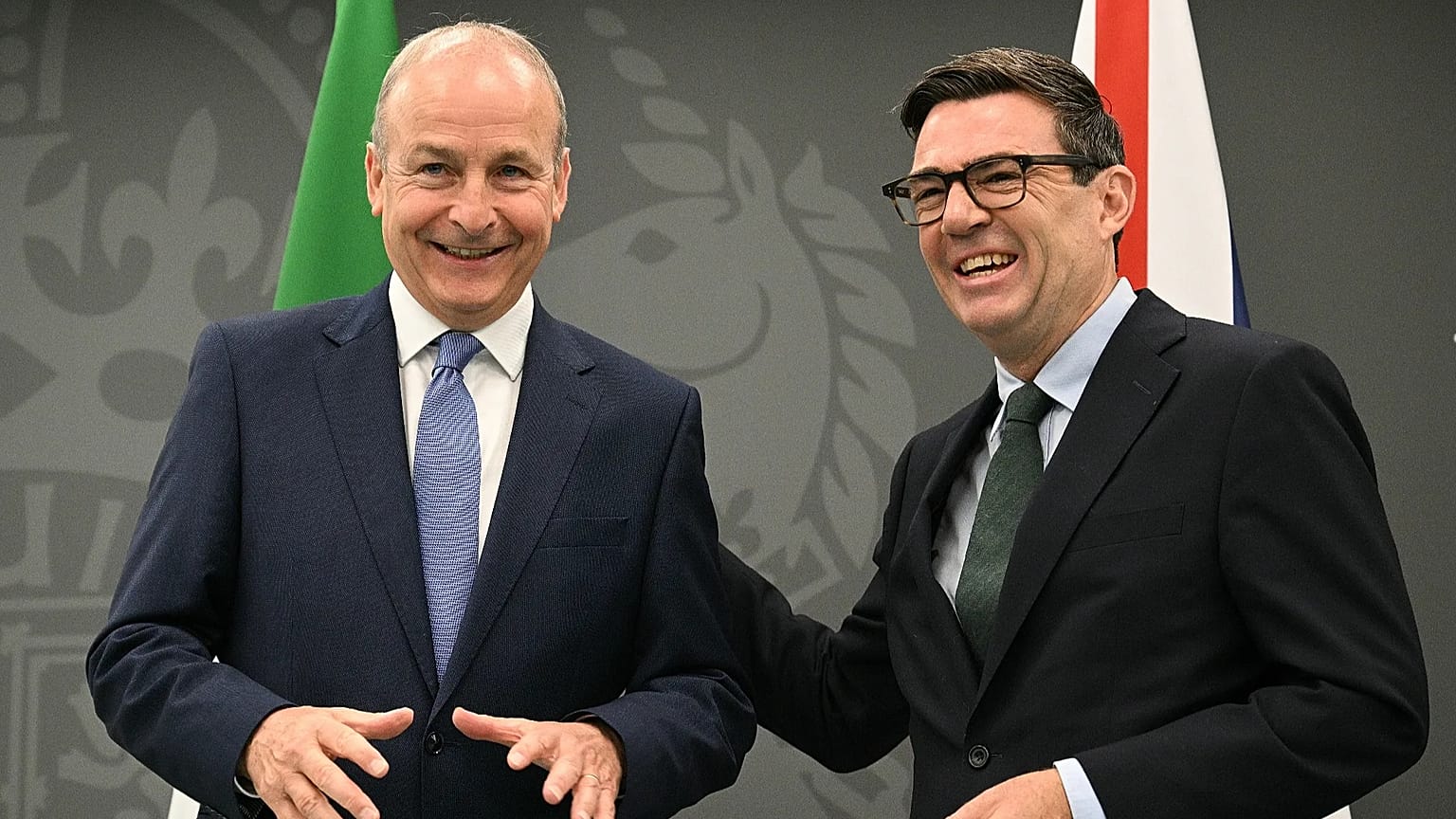
Britain's Prime Minister Andy Burnham, right, greets Ireland's Prime Minister Micheal Martin inside Heron House, the base of the government's Number 10 North, in Manchester.
Copyright AP Photo


By Nathan Rennolds
Published on

Micheál Martin said a closer relationship between the UK and the EU would "be of benefit to the European Union and indeed to Ireland."

British Prime Minister Andy Burnham vowed to take "further steps" to deepen ties with the European Union during a meeting with Irish Taoiseach Micheál Martin.

The pair met in Manchester on Friday, with Martin becoming the first international leader to visit Burnham's No10 North, a new regional office established as part of the PM's devolution drive.

During the talks, Burnham "underlined the UK's desire to work closely with Ireland during its presidency of the European Union as the UK seeks a closer relationship with Europe," a spokeswoman for Downing Street said.

The two leaders, who also reaffirmed their commitment to upholding the Good Friday Agreement, had been expected to discuss further strengthening the UK and Ireland's relationship, focusing on several "shared objectives" including working with the EU, security, and ramping up trade.

"The relationship between the UK and Ireland matters so much on every single level," Burnham said from No10 North on Friday.

He told reporters that the government was also "looking forward" to a long-awaited UK-EU summit later this year and that it was "wanting to take further steps to deepen the relationship with Europe."

A summit had been scheduled to take place in July but was postponed following former Prime Minister Keir Starmer's resignation. The summit is expected to centre on key aspects of Starmer's "Brexit reset," including a potential youth mobility scheme.

For his part, Martin said: "We look forward to discussing with you even stronger and closer relationships between the European Union and the United Kingdom, which will be of benefit to the European Union and indeed to Ireland, quite frankly."

Burnham has previously called for the UK to rejoin the bloc, but he toned down those comments as he was campaigning for the Makerfield by-election in May.

"My view is that Brexit has been damaging," he said. "But I also believe the last thing we should do right now is rerun those arguments.

His comments came as the UK's divisive 2016 vote to leave the EU came back under the spotlight in spring as Labour figures jostled for position amid party turmoil following disastrous local election results.

Starmer had pledged to "put Britain at the heart of Europe" as his government slowly and carefully began to reforge closer ties with Brussels, but some senior Labour figures sought to go a step further as a leadership contest looked increasingly likely.

Speaking at the time, Wes Streeting, now the UK's Defence Secretary, labelled the UK's decision to leave the bloc a "catastrophic mistake."

"It's left us less wealthy, less powerful and less in control than at any point before the industrial revolution," he told an audience at the Labour Party's Progress conference in May.

"We ‌need a new special relationship with the EU, because Britain's future lies with Europe, and one day, one day, back in the European Union," he added.

Kemi Badenoch, the leader of the main opposition Conservatives, called Labour's return to the issue "a sign of a Labour party that does not have a plan for the country."


What happens if a solar farm catches fire? Europe’s biggest battery test centre is finding out

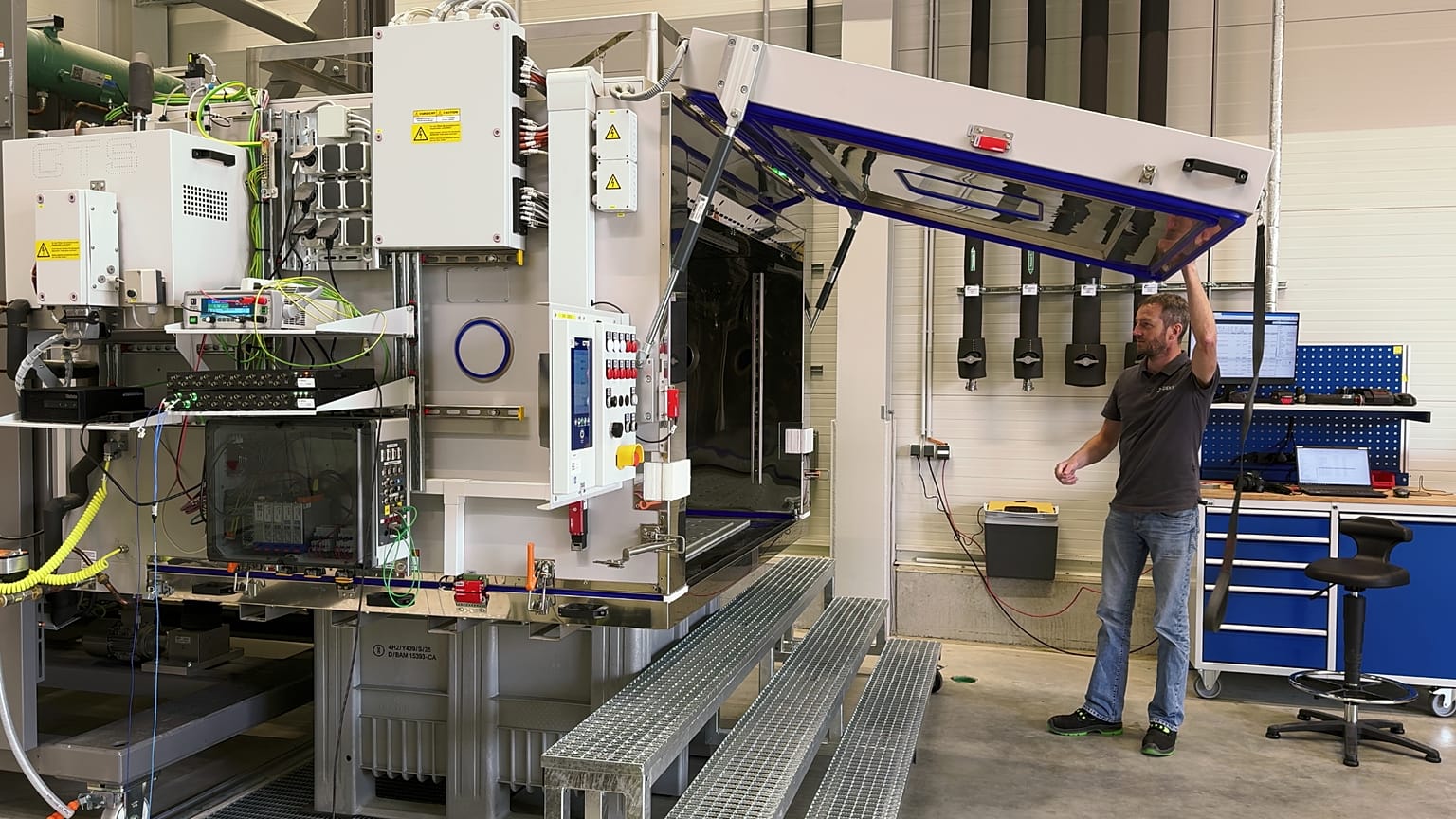
The DEKRA battery test facility is based in Klettwitz/Germany.
Copyright Hans von der Brelie

By Hans von der Brelie
Published on

Battery ‘torture testing’ simulates car washes, sandstorms and wildfires for the benefit of the energy transition.

Eastern Germany is home to some of the world’s most advanced ‘torture chambers’. Here, water, fire, high-voltage current and even dust are used to press and squeeze, twist and strike, shake and hammer the beating hearts of the technology we use every day, like electric vehicles.

At Europe’s largest battery testing centre, they put batteries into every imaginable situation to see what happens. Whether they explode, survive or thrive, it’s better to find out here than in a consumer’s garage.

Batteries are subjected to extreme temperatures and full-blown sandstorms

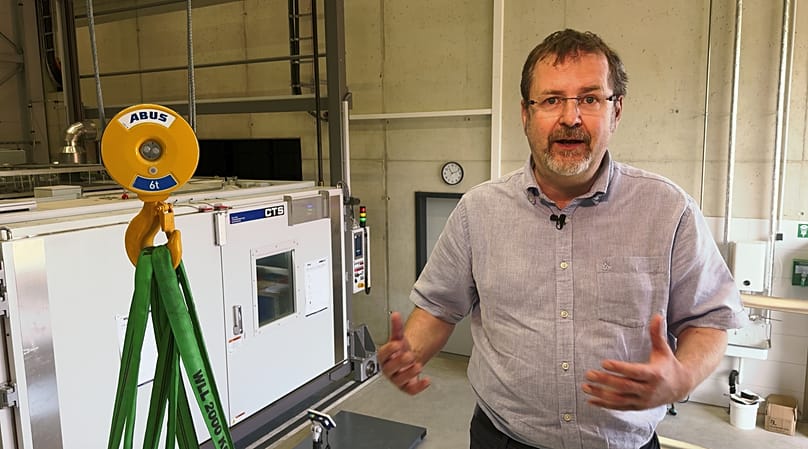
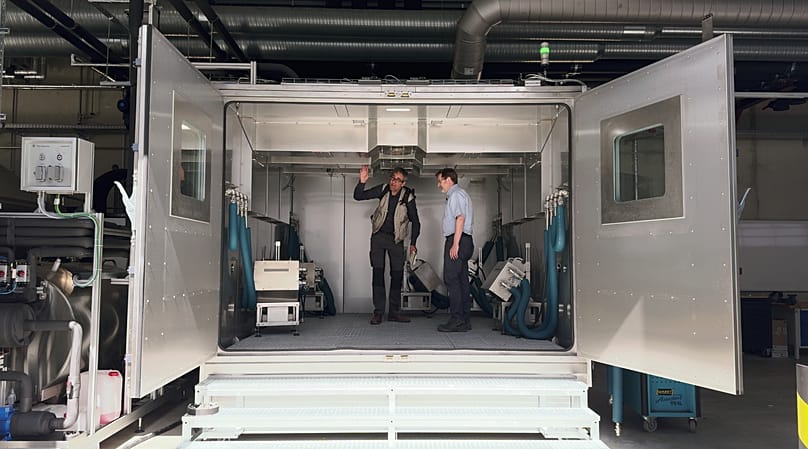
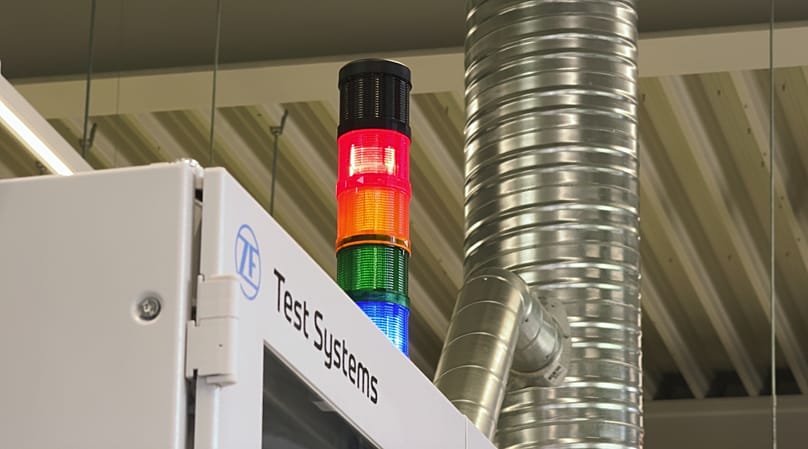
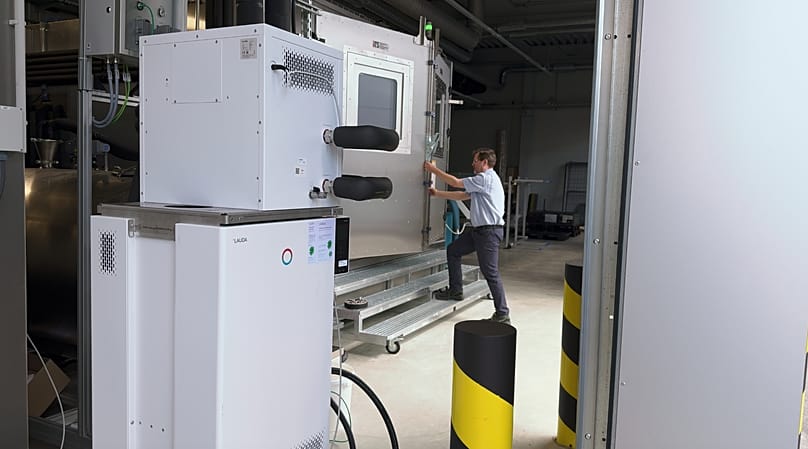
I am standing beside a long row of garage-sized boxes inside the DEKRA facility in the small town of Klettwitz in Lusatia. Each box has its own unique purpose. Head of DEKRA, Thomas Hucke, is showing me around. Thermometers and warning lights surround me – what do they mean?

“We’re testing how battery prototypes behave at very low temperatures, or at very high temperatures. From Siberia to the Sahara,” Hucke explains.
“We’re testing how battery prototypes behave at very low temperatures, or at very high temperatures. From Siberia to the Sahara,” Hucke explains. Hans von der Brelie

“We’re testing how battery prototypes behave at very low temperatures, or at very high temperatures. From Siberia to the Sahara,” Hucke explains. “In other words, the classic environmental conditions that a battery like this experiences over its lifetime.” He then walks over to a control panel and, with grim determination, turns it all the way to the minus max level: “Right, minus 40 degrees Celsius – let’s take it right down to the limit…”

Full-blown sandstorm? No problem for Hucke and his team. If a specialised battery is to survive use in the desert, its suitability must be certified before it can be marketed and sold. For that, the DEKRA team naturally have some particularly gruelling dust chambers.

We cross an industrial road and enter a hall on the opposite side. A few staff members hurriedly push plastic crates in front of a prototype that has just been delivered to block the view. “Camera off!” they say. This is top secret.

“We also test very large batteries,” says Hucke, explaining the enormous size of the test hall, “such as stationary energy storage systems, for example.

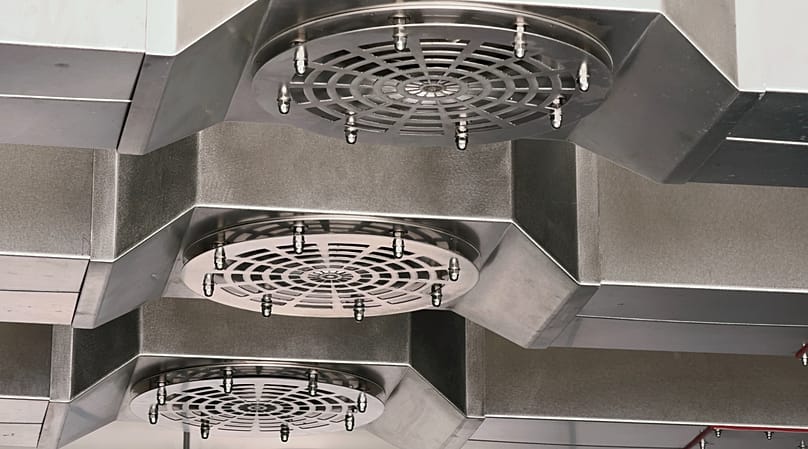
High-pressure nozzles, fine-spray nozzles, wide-spray nozzles. You could hardly find a better place to submerge a battery – whilst monitoring all parameters from inside.
High-pressure nozzles, fine-spray nozzles, wide-spray nozzles. You could hardly find a better place to submerge a battery – whilst monitoring all parameters from inside. Hans von der Brelie

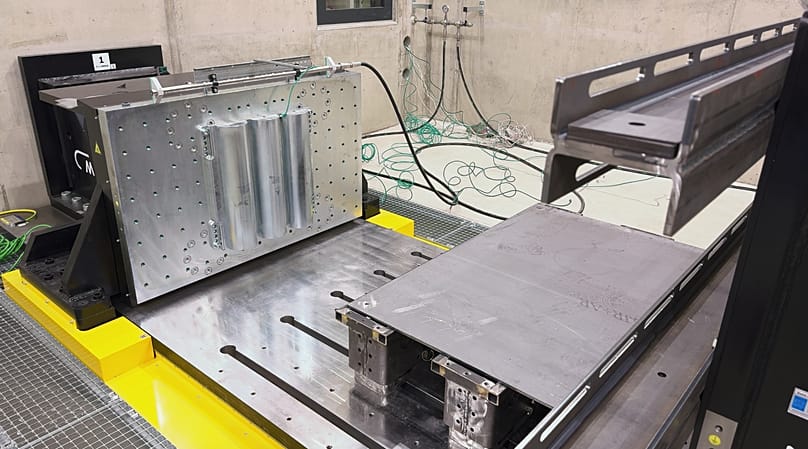
“Over there,” Hucke points to another test chamber, “we carry out vibration tests. In vehicles, batteries are usually subjected to vibrations. What happens when a vehicle drives over a curb, or when it receives a mechanical impact?” All of this is tested, documented and reported to the manufacturer. Certification is only granted once the new battery model has met all stress parameters to Hucke’s complete satisfaction.

Consumer safety is a top priority in the European Union. “The EU has drawn up a Battery Regulation which sets out the tests that must be carried out on batteries. It’s about sustainability, the value chain, and ultimately, always about safety.”

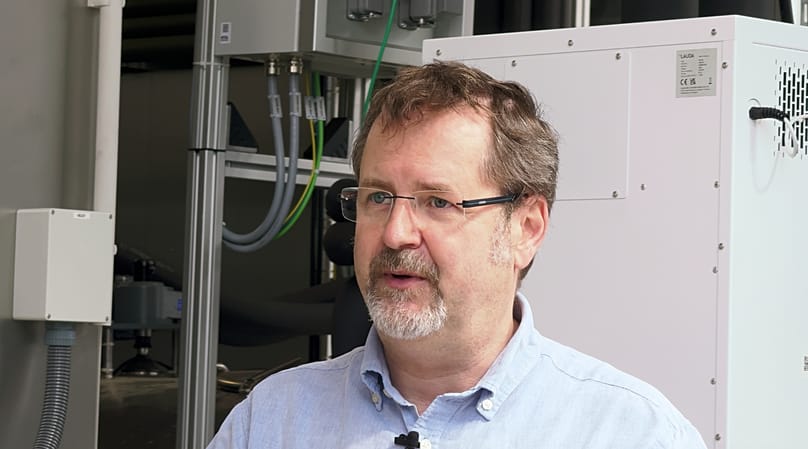
Thomas Hucke: “The EU has drawn up a Battery Regulation. It’s about sustainability, the value chain, and ultimately, always about safety."
Thomas Hucke: “The EU has drawn up a Battery Regulation. It’s about sustainability, the value chain, and ultimately, always about safety." Hans von der Brelie

Hucke elaborates: “The energy transition isn’t just about electric mobility. At the test centre, we naturally also test vehicle batteries. But beyond that, we are increasingly testing energy storage solutions for stationary applications. These are mostly intermediate storage systems for renewable energies, namely solar and wind. That is the future.”

Batteries are crushed and burnt – to find out what happens

Hucke smiles as he leads us into the next fiery circle of battery hell.

“What happens in the event of a fire? In an accident? Or if batteries are overcharged or discharged improperly? Batteries must remain safe even in these situations,” he says. “The energy transition [and the associated electrification] must function safely and sustainably. This requires testing service providers who ensure that certain rules and standards are adhered to.”

Euronews Earth inside one of the ‘torture chambers’ pushing EV batteries to their limits.
Euronews Earth inside one of the ‘torture chambers’ pushing EV batteries to their limits. Hans von der Brelie

Hucke nods towards the ‘fire hall’. There, they recently tried to set an entire battery container alight. This is not an unrealistic scenario: planet-heating fossil fuel emissions are leading to increasingly extreme temperatures. Europe experienced this first-hand in a scorching summer filled with devastating wildfires and drought.

It cannot be ruled out that one day a major fire might also reach the buffer electricity storage facility at a solar or wind farm. Up to certain temperature levels, a large-scale battery storage facility must be able to withstand this.

Up to certain temperature levels, a large-scale battery storage facility must be able to withstand.
Up to certain temperature levels, a large-scale battery storage facility must be able to withstand. Hans von der Brelie

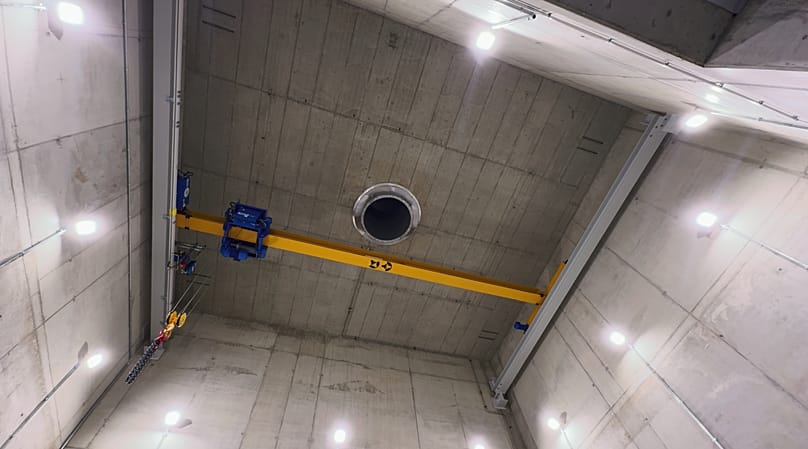
Opening a high-security airlock, Hucke leads me into a room with a cathedral-high ceiling. Massive metal blocks are firmly bolted to the floor. This is the bunker hall of the ‘crush bed’.

“We’ve got an oversized vice here,” says Hucke, where batteries are clamped to be stress tested. “The battery is squeezed – and the regulations stipulate that absolutely nothing must happen.”

Massive metal blocks are firmly bolted to the floor. This is the bunker hall of the ‘crush bed’. 
Massive metal blocks are firmly bolted to the floor. This is the bunker hall of the ‘crush bed’.  Hans von der Brelie

But what if it does? What if the new prototype can’t take any more, after the water, dust, heat and cold tests? What if it really does crash and explode in the crushing bed between the jaws of the steel clamps?

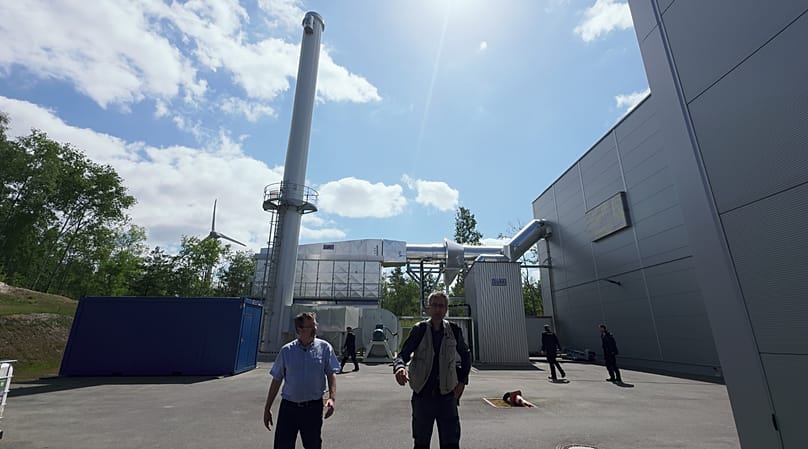
Hucke points to the special fixtures on the thick walls. “We have pressure relief flaps here – and outside the building, a complete flue gas scrubbing system that extracts the gases in an emergency.”

Hucke points to the special fixtures on the thick walls. “We have pressure relief flaps here – and outside the building, a complete flue gas scrubbing system."
Hucke points to the special fixtures on the thick walls. “We have pressure relief flaps here – and outside the building, a complete flue gas scrubbing system." Hans von der Brelie

Batteries are key to a safe and sustainable energy transition

Wind and solar power are a rapidly growing source of energy in Europe. Grid constraints and the intermittent nature of these renewables means the need for flexible storage is rapidly increasing.

Battery test centres are “a key component” of the energy transition, says Hucke, ensuring that this renewable power can be stored safely.

Outside the building, a complete flue gas scrubbing system can extract gases in an emergency.
Outside the building, a complete flue gas scrubbing system can extract gases in an emergency. Hans von der Brelie

“Standards and regulations have been in place in the automotive sector for some time now. And the same is now happening in the field of stationary battery storage solutions for renewable energies,” he tells me. “This requires state-of-the-art testing laboratories. We ensure that batteries entering service meet all safety requirements.”

What about the test centre’s own sustainability? A huge, ultra-modern battery test centre like this requires a lot of energy. “We’re expanding our solar PV systems,” emphasises Hucke, “and using stationary battery storage to ensure we can recover energy”.

Water, fire, vibrations, extreme temperatures and even dust are used to torture the beating hearts of battery prototypes..
Water, fire, vibrations, extreme temperatures and even dust are used to torture the beating hearts of battery prototypes.. Hans von der Brelie

The DEKRA Group also took a stand at the World Economic Forum (WEF) in Davos, joining the Alliance of CEO Climate Leaders. “In an increasingly disruptive global environment, in which the urgency and even the existence of the climate crisis is, in some quarters, being called into question once again, we emphasise the strategic importance of jointly combating climate change,” states the Group headquarters.

The DEKRA Climate Impact Programme includes internal decarbonisation and support for external climate projects that make a measurable contribution to the UN Sustainable Development Goals.

 Greenland, Denmark say US deal will not cede sovereignty


By Stine Jacobsen, Jacob Gronholt-Pedersen and Tom Little
Sat, September 19, 2026 

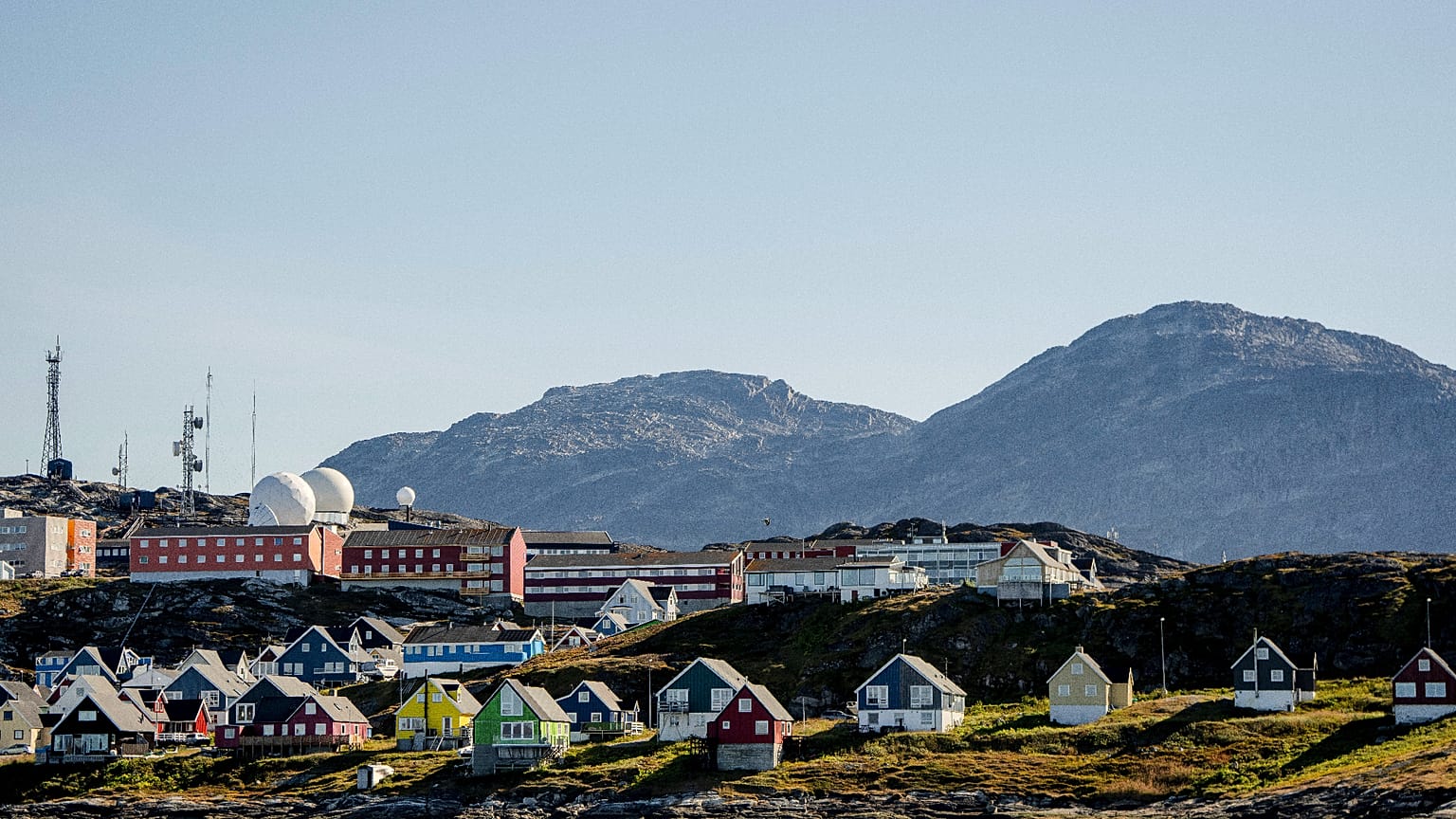
A drone view shows houses on the shore of Nuuk, Greenland, February 7, 2026. REUTERS/Stoyan Nenov

U.S. Ambassador to Denmark Kenneth A. Howery with Vivian Motzfeldt, a member of the Greenlandic Parliament (Demokraatit), at the opening of a new U.S. consulate in Nuuk, Greenland, May 21, 2026. REUTERS/Tim Barsoe

COPENHAGEN, Sept 19 (Reuters) - Denmark and Greenland on Saturday said any agreement with the United States would not compromise Greenland's sovereignty, after President Donald Trump said the deal would give Washington "permanent control" over the Arctic island's ‌security, leaving its precise scope unclear.

The United States, Denmark and Greenland said late on Friday they had entered into an agreement for ‌the US to develop a significant military presence on Greenland, while prohibiting US adversaries from building their own bases on the island.

Key details of the agreement have not been made public, ​including the degree of US military presence in the self-governing Danish territory and whether any formal power over foreign policy and resources would be ceded to Washington.

Denmark and Greenland expressed hope that a deal, which is expected to be signed during the UN General Assembly next week, would end months of uncertainty triggered by Trump's threats to seize control of Greenland.

"Next week could be a good week - for Greenland, Denmark, and the United States," Denmark's Foreign Minister Lars Lokke Rasmussen said ‌in a statement posted on Facebook on Saturday.

"A time ⁠of uncertainty will hopefully give way to a binding agreement that strengthens security in the Arctic and the North Atlantic, and thereby our shared security within NATO and Europe - while respecting the (Danish) Kingdom's red lines," he said.

Denmark and Greenland ⁠have repeatedly insisted that Washington respect the sovereignty of the Danish kingdom and accept that Greenland is not for sale.

TRUMP'S VISION FOR GREENLAND DEAL

Trump said on Truth Social late on Friday that under a deal, "the United States will FOREVER have the complete ability to do what is necessary in Greenland in order to secure and defend ​the ​security of Greenland, and the United States of America."

The deal "gives the United States permanent control ​over security, and all other needs, in Greenland," Trump said, ‌adding that no adversary would ever be permitted to have a base or military presence in Greenland, or make sensitive investments there, without Washington's express written approval.

Trump made the announcement after Reuters exclusively reported that the US and Denmark were closing in on a deal.

"This is probably not the end of President Trump's ambitions for Greenland and certainly not the end of US strategic interest in the territory and its resources," said Mikkel Vedby Rasmussen, a political science professor at the University of Copenhagen.

If Copenhagen cedes any formal power to Washington, it raises the question in Greenland of whether "this is the beginning of ‌replacing the colonial relationship with Denmark with a colonial relationship to the United States," he ​said.

Greenland's Prime Minister Jens-Frederik Nielsen said on Saturday that he was pleased with the proposed deal: "The ​agreement recognizes the sovereignty and territorial integrity of our Kingdom and ​the right of the Greenlandic people to self-determination," he said in a post on Facebook.

TENSIONS WITHIN NATO ALLIANCE

Trump's threats, which ‌peaked in January, triggered a diplomatic crisis that strained relations ​within NATO and pushed Denmark and Greenland ​into negotiations aimed at defusing the pressure.

A NATO spokesperson on Saturday said the alliance welcomed the agreement, which would "help advance security, stability and cooperation in this vital region."

Steffen Nielsen, a 49-year-old sales worker living in Copenhagen, told Reuters: "I think that the US is probably going to get ​what they could have had the whole time, if ‌they just asked nicely."

"I don't like it," Kaj Jorgensen, an 80-year-old pensioner, also living in Copenhagen, said of the news. "I don't wish ​the United States to be present anywhere in the Danish Kingdom. I really don't trust Donald Trump."

(Reporting by Stine Jacobsen and ​Jacob Gronholt-Pedersen, Additional reporting by Lili Bayer in Brussels; Editing by Ros Russell)


US and Denmark reach deal over Greenland's security

A general view of Nuuk, Greenland, Sunday, Sept. 6, 2026.
Copyright Ritzau Scanpix

By Nathan Rennolds
Published on

Greenland's prime minister, Jens-Frederik Nielsen, welcomed the agreement, saying it was "to the benefit of us all" and that it would "ensure and strengthen" the security of the island.

The United States and Denmark have announced that they have come to an agreement over Greenland, with US President Donald Trump saying the deal would give Washington "permanent control" of the island's security.

"I am pleased to announce that the United States of America has entered into an Agreement with The Kingdom of Denmark, and Greenland, that gives the United States permanent control over security," Trump wrote in a post on his Truth Social account on Friday.

"From now on, no U.S. adversary can EVER have a base in Greenland, have a military presence in Greenland, or make sensitive investments in Greenland, without our express written approval," he added.

Trump has repeatedly threatened to seize the Danish autonomous territory since his return to the White House in January 2025, arguing that it was an essential "national security" concern and that if Washington did not act, then China or Russia would do so.

His rhetoric has sparked pushback from across Europe and prompted fresh funding pledges from Brussels and a renewed focus on Arctic security.

In a statement on Friday, Danish Prime Minister Mette Frederiksen touted a "great agreement for Greenland, the Kingdom of Denmark, and the United States," while promising that it would recognise "the sovereignty and territorial integrity of the Kingdom and the Greenlandic people’s right to self-determination.”

"An agreement which strengthens our common security in the Arctic and the North Atlantic Area and therefore is great for NATO and Europe as well," she added.

Greenland's prime minister, Jens-Frederik Nielsen, also welcomed the agreement with the US, saying it was "to the benefit of us all" and that it would "ensure and strengthen the security of the island.

The deal is expected to be signed at the UN General Assembly in New York next week.

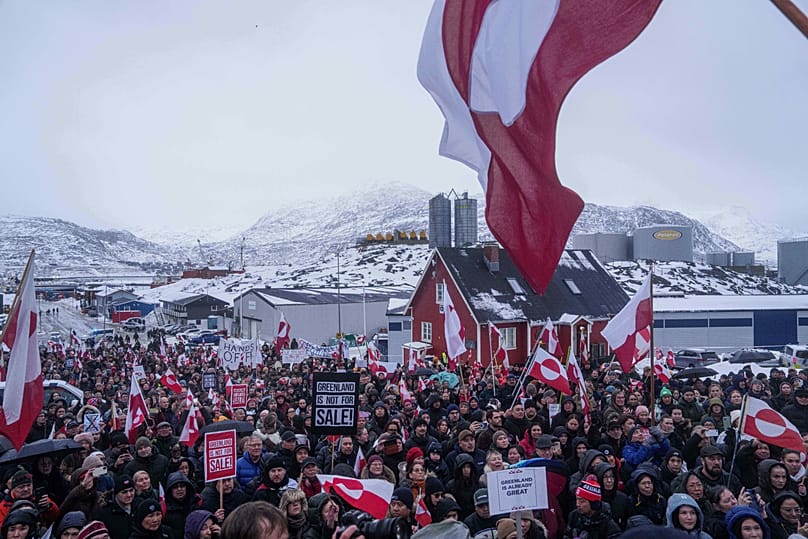
People protest against Trump's policy towards Greenland in front of the US consulate in Nuuk, Greenland, Jan. 17, 2026.
People protest against Trump's policy towards Greenland in front of the US consulate in Nuuk, Greenland, Jan. 17, 2026. Copyright 2026 The Associated Press. All rights reserved

European Commission President Ursula von der Leyen had visited Greenland earlier this month as part of EU efforts to counter Trump's Arctic ambitions, announcing a €200 million partnership with the territory during her visit - which is set to be invested this year and the next.

Speaking at the World Economic Forum's annual meeting in Davos this year, von der Leyen had said the EU was working on a "massive European investment surge" in Greenland in a bid to ramp up Arctic security.

The Commission has proposed allocating €530 million to Greenland under its budget for the 2028–2034 period, which it said reflected its "growing geostrategic importance in the Arctic."

The US is reported to have had 17 military facilities and over 10,000 troops on Greenland at the height of the Cold War. It now operates just one base on the island, the Pituffik Space Base - the US Department of Defense's northernmost installation.

Pituffik is used for missile warning, missile defense and space surveillance missions, per the US Space Force.


What we know (and still don't) about Canada's 'associate membership'

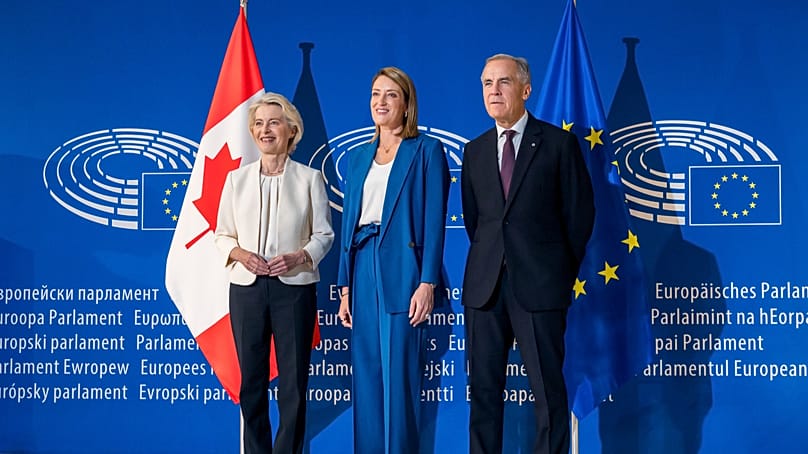
Ursula von der Leyen has invited Canada to become the EU's first "associate member".
Copyright Alexandros MICHAILIDIS/Alexandros MICHAILIDIS

By Jorge Liboreiro
Published on

The idea of making Canada the European Union's first "associate member" has caused a furore. Here's what we know and still don't know.

It's the head-turning, eye-popping announcement of the week: Ursula von der Leyen has invited Canada to make history by becoming the first-ever "associate member" of the European Union

"We want to bring the relationship with Canada to the highest level possible," the European Commission president said in her State of the Union speech.

The following day, speaking from the same lectern in Strasbourg, Canadian Prime Minister Mark Carney said his country "welcomes" the offer and hailed the dawn of an "alliance for the future".

"Europe and Canada are stronger together," he said.

The back-to-back speeches made international headlines, caused a political furore, inspired countless memes and even caught Donald Trump's attention. But they also left many burning questions unanswered.

Here's what we know – and still don't know – about the splashy idea.

There's just no precedent

The concept of "associate membership" is not envisioned in the EU treaties as such. And since it does not exist on paper, there is no precise playbook that Brussels can follow to make it reality.

A similar dilemma emerged earlier this year when German Chancellor Friedrich Merz proposed making Ukraine an "associate member" of the bloc. This, he said, should grant observer status in the decision-making bodies, gradual access to some EU programmes and mutual assistance in the event of a future attack.

Merz's surprise pitch received mixed reviews from capitals and was rebuffed by Kyiv, which worried the half-in, half-out rank would plunge it into accession limbo.

Commission officials say von der Leyen's vision fundamentally differs from Merz's because it is designed for countries outside Europe's geographic sphere that wish to be politically and economically closer to the bloc.

Brussels is confident the ground-breaking concept can be designed from scratch without the need to revise the EU treaties, a perilous avenue.

Some have suggested that a possible way forward lies with Article 217 of the EU treaties, which holds that "The Union may conclude with one or more third countries or international organisations agreements establishing an association involving reciprocal rights and obligations, common action and special procedure."

Carney, meanwhile, said the set-up should be "open enough that others can join".

Mark Carney (left) in Strasbourg.
Mark Carney (left) in Strasbourg. European Union, 2026.

It's not enlargement

One thing Carney made sure to stress is that his country would not pursue the conventional full-time membership that Ukraine, Moldova and other candidates are seeking.

According to the treaties, this process is available to "any European State", which means a nation on the other side of the Atlantic would not qualify.

"Canada is not in a position nor seeking to become a full member of the European Union. Therefore, it's a different framework," Carney said after his speech. "It's a framework that is relevant for a country that shares deep bonds with Europe."

Accession is a notoriously cumbersome process that requires candidates to adopt thousands of EU laws and align themselves with the bloc's world-class standards. Each step is subject to unanimity, creating multiple opportunities for vetoes.

Ottawa and Brussels want an arrangement that can be concluded much faster.

But it seems curiosity has been piqued: ahead of Carney's trip to Strasbourg, a poll showed that a whopping 49% of Canadians supported full-fledged EU membership.

The name is TBD

Though the headlines that emerged from Strasbourg all honed in on the striking "associate member" title, Carney did not outright endorse it. Instead, he stuck to his "alliance for the future" moniker, which is less politically charged.

"President von der Leyen used both terms: alliance for the future and associate membership. The nomenclature, the precise nomenclature, is a question for Europe," he said. "What matters is the substance."

For the Canadian premier, "associate membership" carries the connotation of ceding sovereignty to Brussels, something he vowed would not be the case under any circumstance.

"We are looking for partnerships that are complementary, that reinforce our sovereignty, and that's what is on offer here," he said. "Canadians are united that nobody is going to tell us what language we speak. No one is going to dictate our culture or with whom we can strike international agreements."

EU officials have brushed off the semantic clash. For them, the "alliance for the future" is the immediate deliverable and "associate membership" the long-term prospect.

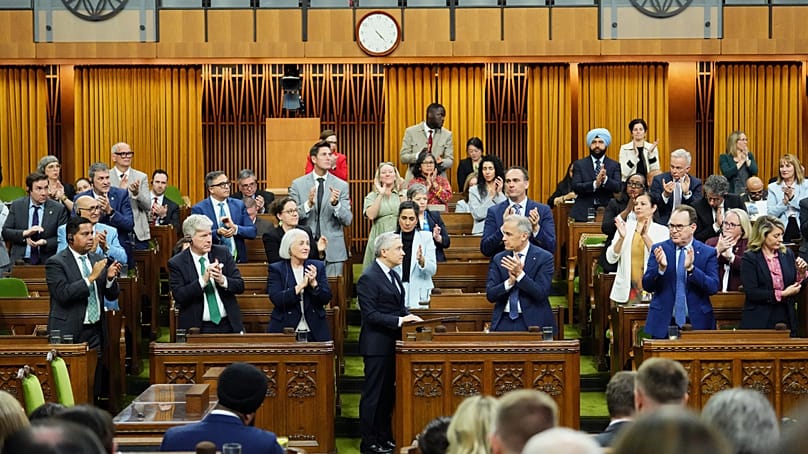
The Canadian parliament.
The Canadian parliament. AP Photo

It'll be put to a vote

After von der Leyen extended her invitation, the conservative opposition in Canada criticised Carney for seeking deeper ties with the EU without an electoral mandate.

In response, Carney cautioned the negotiations were still in early stages and committed to bringing the outcome to a final vote in the Canadian parliament.

"We will have a series of debates, I'm sure, in parliament (and) relevant committees. And ultimately, there will be a vote in the Canadian parliament for the final structure of the alliance that we're working on," he said. "It will all roll out transparently."

On the European side, it remains to be seen how von der Leyen's team will advance the novel concept through the legislative cycle. The executive has not yet said which department will supervise the work, though the Secretariat-General and DG Trade appear the likeliest candidates to take the reins.

"We're talking about a very ambitious project here, so this is going to require many services across the Commission. It's going to be a whole-of-government approach if you want to call it that," Olof Gill, the Commission's deputy chief spokesperson, said.

Gill insisted the talks would be carried out in close coordination with the member states, some of which were given a heads-up right before von der Leyen's speech.

"Big changes in the European Union only happen with the say-so of our member states, and that will always be the case," he said.

Ireland, Spain and France are among those who have expressed support for exploring the original idea. A high-level discussion on the matter is not excluded when EU leaders gather in October for a busy two-day summit in Brussels.

Later that month, von der Leyen and Carney will meet in Montreal, Quebec. This will be a chance for both to flesh out what exactly they have in mind.

Economy comes first

Still, Strasbourg already gave us a pretty good idea of the areas that von der Leyen and Carney have set their sights on.

Chief among them is commerce, building on the EU-Canada free trade deal, CETA, which still has to be ratified by 10 member states.

Von der Leyen said the goal should be to establish a "common prosperity and economic security space" encompassing intelligent manufacturing, energy, batteries, artificial intelligence, quantum, cyber, defence industry and the Arctic.

Carney echoed these areas and added broadband connections, semiconductors, liquefied natural gas and hydrogen to the list.

He also made sure to underscore Canada's position as a supplier of critical minerals, which Europe desperately wants to diversify to cut off Beijing's chokepoints.

"Canada has deposits of over 34 critical minerals, and we are among the top producers of the 10 most essential for the world's energy transition," he said.

"Our alliance can help fill Europe's need for reliable supply, Canada's need for advanced processing capabilities and our common objective to build complete value chains."

Another way to deepen ties is for Canada to participate in EU programmes. Canada is already part of the Horizon research platform and the SAFE defence initiative and wants to join the popular Erasmus+ for students and the €90 billion loan for Ukraine.

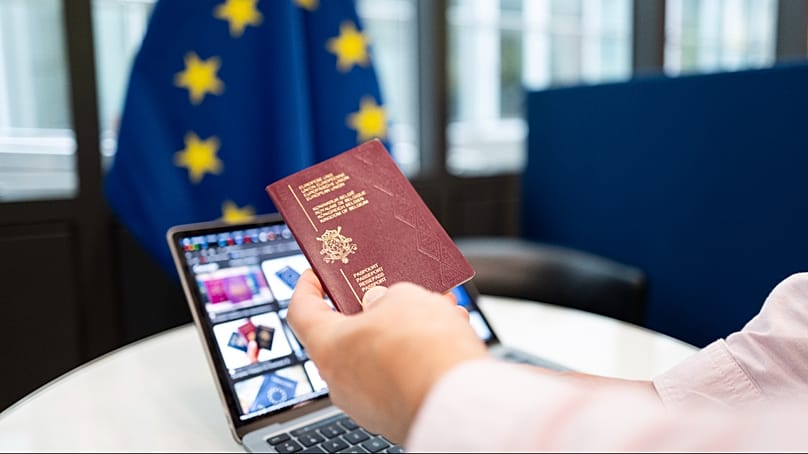
The EU passport.
The EU passport. European Union.

The four freedoms

Von der Leyen's invitation has raised the question of whether Canada, a country more than 6,000 kilometres away from continental Europe, will one day benefit from the bloc's four freedoms of movement: goods, services, capital and people.

The four freedoms are what make the single market seamless, borderless and effectively invisible. Norway, Iceland, Liechtenstein and Switzerland are the only nations outside the EU that enjoy this unfettered access. In return, they have been asked to apply thousands of EU laws without having a direct say in their approval.

Will Canada go as far?

In his speech, Carney said the burgeoning alliance should aim to enable free movement for young people between the EU and Canada.

"We should deepen our people-to-people ties, allowing our youth to live, work and study where they want on either side of the Atlantic," he said.

Carney also spoke of an "integrated market for financial services to broaden choice and reduce costs for our citizens, improve access to capital for our companies while maintaining our world-leading financial resilience".

Von der Leyen, however, did not mention any of the four freedoms.

The Commission has consistently said the four freedoms cannot be "cherry-picked". Earlier this year, Brussels reportedly rejected a post-Brexit overture from London to secure free movement of goods but not people.

Asked if any of them would be available under the "associate membership", Gill, the spokesperson, neither confirmed nor denied.

"Let's see where these discussions go," he said. "Right now, we have a shared commitment between the European Union and Canada that we want to strengthen our relations for mutual benefit, in our own interests."