Wednesday, November 02, 2022

'Many legal tools are available' : Fighting sexual harassment in France today

Issued on: 02/11/2022 


A woman holds a placard reading "722 women each day are victims of sexual harassment " as she takes part in a demonstration on May 5, 2012, in Paris, to protest against the Constitutional Council's decision to immediately repeal the current French sexual harassment law. © François Guillot, AFP

Text by: Barbara GABEL

On November 2, 1992, the French Parliament unanimously approved legislation criminalising sexual harassment for the first time. This law – which applies to the workplace, public spaces and even online – is constantly evolving to better identify situations and protect victims.

For several days now, French female streamers have been expressing frustration at the online sexual harassment they have endured for years in the form of obscene photos, threats and insults. Videographer Maghla, who is known for her video game lives on Twitch, posted a long series of tweets in which she described, using photos and screenshots, the pornographic photomontages that have been made of her.

Sexual harassment in France, whether it takes place online, in public spaces or at work, is a criminal offense that is punishable by up to three years in prison and a €45,000 fine. The exact definition of sexual harassment has been enshrined in French law since November 2, 1992 but it has been constantly evolving over the last 30 years to remove legal uncertainties.

Hierarchical relationships

"The activists of the European Association against Violence against Women at Work (AVFT) put sexual harassment on the political agenda in the 1980s and 1990s. They helped victims lodge their first complaints," says Françoise Picq, a feminist historian and vice president of the National Association of Feminist Studies (Anef).

The notion of sexual harassment first introduced into French criminal law on July 22, 1992 was defined as: "the fact of harassing another person using orders, threats or constraints with the aim of obtaining favours of a sexual nature".

Picq emphasises that the law only concerned harassment committed by superiors at work. "At that time, French feminists did not want to follow the US model: Over there, the norm was not to allow female students to be alone in a professor's office," says the historian. "But in France, the aim was above all to penalise people who committed sexual harassment within the context of a hierarchical relationship at work."
 
Redefining the terms


In 1998, the words "serious pressure" were added to the text. Then, in 2002, the definition was refined and characterised by the sole fact of "harassing another person with the aim of obtaining favours of a sexual nature". Now sexual harassment of any kind, whether committed by colleagues at work, strangers in the street or people online, is considered an offence.

The objective was to harmonise the definition of sexual harassment with that of moral harassment, which was introduced into French law in 2002. Unlike sexual harassment, moral harassment presupposes an employment relationship.

A legal vacuum

The events of May 2012 shocked the nation when the Constitutional Council repealed the Penal Code’s article on sexual harassment, as it felt its definition was too evasive and therefore unconstitutional. For a few months, victims of sexual harassment were left in a legal vacuum.

"We had a big problem with criminal law at that time, none of the procedures underway succeeded," says Nathalie Leroy, a lawyer specialised in labour law and an investigator at H.E.R., an agency which specialises in cases of moral and sexual harassment at the workplace. She continues: "Some people who were charged with sexual harassment, the definition of which was deemed too vague, were acquitted. The victims were appalled by this."

On August 6, 2012, the new law on sexual harassment was promulgated after it was voted on during an emergency session. The text gave a new definition for sexual harassment, established aggravating circumstances and strengthened the associated penalties.

The criminal definition evolved in 2018, with the latest version defining sexual harassment as "the fact of repeatedly imposing on a person comments or behaviour with a sexual or sexist connotation".

At work


Although sexual harassment in the workplace can be difficult to identify, "one must take into account the nature of the acts committed, their frequency, their effects on the victim and/or the perpetrator's objective", says Leroy. "Today, it is sufficient that the behaviour has a sexual connotation, which does not require it to be explicitly and directly sexual in nature."

The French Labour Code now aligns with the French Criminal Code. Since March 31, 2022, "you are in a situation of sexual harassment at work if the first person makes a sexist remark, such as 'There are people on the balcony' [a French expression meaning buxom] and another person follows up with a comment such as 'Well, given the way you dress….' Before this text was adopted, the same person would have had to repeat the sexist remark. This is no longer the case."

Between 2017 and 2019, a study conducted by the International Labour Organisation (ILO) on 4.5 million French employees revealed that 52 percent of women had been victims of sexual harassment at work. For men, the figure was 27 percent. Only 4 percent of these women had filed a complaint and 1 percent of men.

According to the lawyer, "prevention is the key". The Labour Code states that the employer must take all necessary steps to prevent, stop and punish sexual harassment. If they have not complied with this obligation, "they may be sued before the industrial tribunal for damages".

In public places


But how can sexual harassment outside of work be prevented?


The online platform Twitch, which has been making headlines following a wave of sexual allegations by its female streamers, tightened its policy in January 2021. Sexual harassment, which until then had been prohibited on the platform but not given a definition, is now defined as making repeated, obscene or explicit comments regarding physical appearance or sexuality, sending unwanted nude images or videos, etc. Prevention is clearly not enough to protect videographers.

And in public spaces? According to feminist historian Picq, the #MeToo movement in 2017 "radically changed the level of tolerance demonstrated towards behaviour that falls under the heading of sexual harassment" in public spaces. But victims often don’t file a complaint due to a lack of evidence or fear of the consequences. "My generation didn’t always want to appeal to the authority of the state, and we couldn't. Today, many legal tools are available to help us."

Lastly, the "Schiappa" law, named after France's former minister of gender equality, Marlene Schiappa, was introduced in 2018, making verbal sexist contempt an offense in an effort to reduce so-called "street harassment", according to Picq. Four years after it was introduced, the law is showing its limits. From 2020-2021, the security services recorded 3,700 incidences of sexist contempt in France. In reality, this figure is much higher as 81 percent of women in France have been victims of sexual harassment in a public place, according to an Ipsos survey published in July 2020.

This article was translated from the original in French.
India's Modi visits bridge collapse site, calls for 'extensive inquiry'

Issued on: 01/11/2022 
03:39
This handout photograph taken on November 1, 2022 and released by the Indian Press Information Bureau (PIB) shows India's Prime Minister Narendra Modi (C) meets with a victim who was injured in the bridge that collapsed over river Machchhu in Morbi, at Morbi Hospital in Morbi 200 kms from Ahmedabad. © AFP

Text by: NEWS WIRES

Indian Prime Minister Narendra Modi said lessons must be learned as he visited the site of a bridge collapse that killed 135 people and met some of the injured in hospital on Tuesday.

Army, navy and national disaster response force teams continued their search while locals gathered on the banks of the Machchhu river in Modi's home state of Gujarat.

The colonial-era suspension foot bridge in Morbi was packed with sightseers - many in town to celebrate the Diwali and Chhath Puja festivals - when it gave way on Sunday evening, sending people plunging about 10 metres (33 feet) into the water.

A senior police official told Reuters that about 200 people were on the bridge when it collapsed. Local municipality officials said tickets for about 400 people had been sold, although not necessarily to be on the bridge at the same time.

"The prime minister said the need of the hour is to conduct a detailed and extensive inquiry which will identify all aspects relating to this mishap," Modi's office said in a statement as he saw the scene of the disaster.

"He also added that the key learnings from the inquiry must be implemented at the earliest."

Opposition leader Rahul Gandhi, from the Congress party, said earlier he refused to politicise the incident, but in the capital New Delhi dozens of protesters demanded the resignation of the Gujarat state chief and called for more compensation.

"The country is angry today that around 150 people have died in Morbi but this government did nothing apart from shedding crocodile tears," an unidentified protester shouted. Police detained the crowd within minutes.

The protesters called for compensation of 2 million rupees ($24,000) for all victims - the injured and the families of those killed. So far the state and central governments have offered 600,000 rupees ($7,000) for the kin of those who lost their lives.

Local residents at the scene on Tuesday told Reuters they feared the death toll could rise further.

GT Pandya, a senior administrative official in Morbi, said a person who was injured had died from their injuries on Tuesday, taking the toll to 135. One person was still missing according to the authorities' estimate, he said.

Some 56 people have been discharged from the hospital, while 10 are still admitted with injuries, senior police official Ashok Kumar Yadav told Reuters.

The bridge - 233 metres in length and 1.25 metres wide - was originally built in 1877 and had been closed for six months for repairs until last week.

CCTV footage of the incident showed a group of young men trying to rock the bridge from side to side while others took the photos before they tumbled into the river below as the cables gave way.

Police arrested nine people on Monday on charges including culpable homicide not amounting to murder. Those arrested included ticketing clerks accused of letting too many people onto the bridge and contractors that had been in charge of repair work.

U.S. President Joe Biden and Chinese President Xi Jinping were the latest to send condolences for the loss of lives, many of whom were children.

Monkeypox still global health emergency: WHO

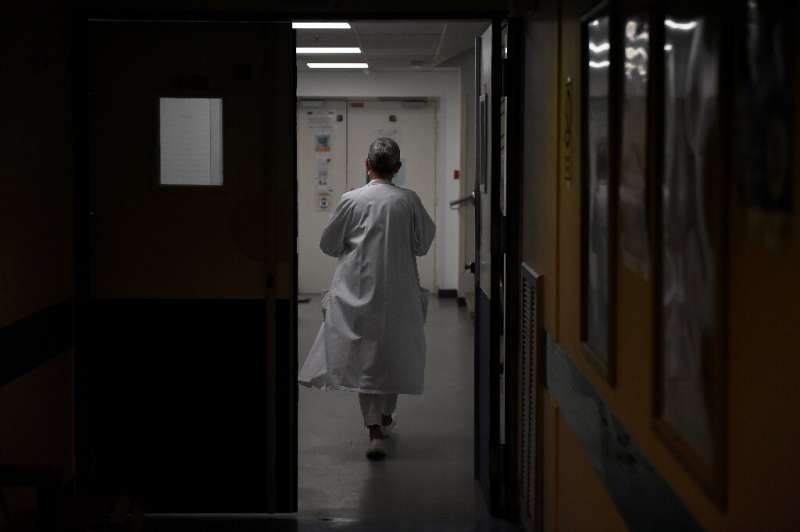
A medical employee walks in a corridor of a Monkeypox vaccination site in Paris in August 2022
A medical employee walks in a corridor of a Monkeypox vaccination site in Paris
 in August 2022.

The World Health Organization said Tuesday that its emergency committee had determined that monkeypox should continue to be classified as a global health emergency.

Following a meeting on October 20 about the virus that suddenly started spreading across the world in May, the experts "held the consensus view that the event continues to meet the ... criteria for a Public Health Emergency of International Concern," WHO said in a statement.

The UN health agency first declared the so-called PHEIC—its highest level of alarm—on July 23, and the experts said that while some progress had been made in reining in the disease, it was too soon to declare the emergency over.

WHO chief Tedros Adhanom Ghebreyesus had accepted and agreed with the experts' advice, the statement said.

Since monkeypox suddenly began spreading beyond the West African countries where it has long been endemic six months ago, it has killed 36 people out of more than 77,000 cases across 109 countries, according to a WHO count.

The outbreak outside of West Africa has primarily affected young men who have sex with men.

But since peaking in July, the number of people infected with the disease that causes fever, muscular aches and large boil-like skin lesions, has consistently fallen, particularly in Europe and North America, the hardest hit areas in the early stages of the global outbreak.

The number of new global cases fell by 41 percent in the seven days up to Monday compared to the previous week, the WHO said.

But WHO's emergency committee stressed that there were a number of lingering causes for concern.

They listed ongoing transmission in some regions, continuing preparedness and response inequity within and between countries, and the potential for greater health impacts if the virus begins spreading more among more vulnerable populations.

They also pointed to the continuing risk of stigma and discrimination, weak health systems in some developing countries leading to under-reporting and the lack of equitable access to diagnostics, antivirals and vaccines.

© 2022 AFP

‘Real’ Mama Coco honored on Mexico’s Day of the Dead


By AFP
PublishedNovember 1, 2022

Tourists pose for a picture at the home of Maria Salud Ramirez, believed by her family to be the inspiration for the animated movie character "Mama Coco" - Copyright AFP Marcos Pin

Jean Luis Arce

Tourists making a pilgrimage to a modest Mexican home during Day of the Dead festivities leave with no doubt: Mama Coco, the character of the Oscar-winning animated movie, used to live there.

“It looks a lot like her! When you look at the nose in the drawing and hers, the shape of the face and the hair, or the wheelchair, it’s too much of a coincidence,” said Spanish tourist Paula Colmenero, 52.

The sweet old woman in “Coco,” winner of the Academy Award for Best Animated Feature in 2017, was a fictional character created by Pixar Animation Studios.

But her good-natured smile, squinting eyes and braided white hair were also notable features of Maria Salud Ramirez, who died on October 16 aged 109.

Mama Salud, as she was known locally, is remembered as being an independent and talkative woman who regularly visited the town square in Santa Fe de la Laguna, home to members of the Purepecha Indigenous group.

There she bought fresh fish and sat soaking up the atmosphere, said Patricia Perez, 38, one of her granddaughters.

One afternoon, residents of the lakeside town in Michoacan state went to tell Perez that visitors were taking pictures of her grandmother.

More than a year later came the premiere of “Coco,” inspired by Mexico’s Day of the Dead festival, which centers around the belief that the souls of the dead return on the night of November 1-2.

Like the tourists, Perez is certain: “It was based on her, on her image,” she said.

Pixar has always denied that Mama Coco was based on anyone in real life and said that it was a product of its creators’ imagination.

– ‘Always happy’ –


Although Perez said she no longer wants to “get involved in that controversy,” the movie has transformed the Ramirez family’s life.

Mama Salud’s home became a place of pilgrimage for tourists who come to pay tribute to her, and perhaps buy souvenirs such as T-shirts, cups, piggy banks, key rings and magnets.

Colmenero, visiting with her husband and two daughters, welcomed the family’s efforts to earn some money from Mama Salud’s fame since “it is very clear that they have copied her.”

As in the film’s final sequence, this year Mama Salud is only present in the photographs placed by the family on her wheelchair and the altar that they have prepared to receive her spirit on the Day of the Dead.

Adorned with marigolds and candles, the family will lay out her favorite dinner — fish, beans, tortillas and a Pepsi to drink.

Allowing visitors to continue to visit her home after her death is what Mama Salud would have wanted, said Perez.

“She always wanted to receive people. She was always happy. That’s why we decided to keep the doors open,” she said.

It made the long journey worth it for 36-year-old South Korean tourist Taehyun Kim, who said “Coco” was one of his favorite movies.

“I quit my job, and my wife (did too), and came here to see Mama Coco,” he said.

For Mexicans, the world-famous grandmother is a source of national pride.

“Thank you Mama Coco for representing our culture with dignity,” wrote one visitor.

Fleeing Jihadist Violence, Niger Pupils Return to School

November 01, 2022 
Agence France-Presse
Pupils attend a lesson in a school created near a site for displaced people on the outskirts of Ouallam, Niger, on Oct. 26, 2022. In Niger, 817 schools totaling 72,421 students have closed because of jihadist attacks in their region the past five years.

OUALLAM, NIGER —

With blue schoolbags bouncing off their backs, hundreds of schoolchildren hurtle down small sand dunes eager to attend class again.

But these boys and girls are survivors of suffering and trauma that few children of their age could conceive.

Their new school is in the town of Ouallam in southwestern Niger, a region that for five years has been plagued by attacks unleashed by groups linked with al-Qaida and the Islamic State group.

The pupils come from 18 villages near Mali whose inhabitants fled to the relative safety of Ouallam in 2021 after jihadist killings that also forced the closure of schools.

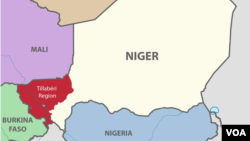
A map of Niger and surrounding countries, with Niger's Tillaberi region highlighted.

The U.N. children's agency UNICEF says 817 schools with 72,421 pupils — including 34,464 girls — have closed in Niger, mostly in the Tillaberi, the border region where Ouallam is located.

In Ouallam alone, around 100 schools have had to shut their doors.
The chronic insecurity has prompted authorities to create dedicated educational centers where displaced children can resume their schooling, Mahamadou Illo Abarchi, an education official in Ouallam, told AFP.

Some 17,000 pupils have already re-entered the school system and another 55,300 are set to follow suit, enrolling in around 20 centers for displaced children across southwestern Niger, the government says.

'Killed by the bandits'

In Ouallam, almost 1,600 schoolchildren — some of whom had not attended class for three years—are registered with three centers built near a site for displaced people.

The sites offer free canteens, a vital resource for families who have escaped violence in a nation that, by the U.N.'s human development index, is the poorest in the world.

Lessons take place in shelters or classrooms equipped with tables and benches provided by NGOs. But in others, the pupils must learn on the floor.

Fatima and Aissa, two young girls from Ngaba, a settlement near Mali, expressed their delight at returning to school as they clutched their slate boards.

But the euphoria of returning to school cannot wipe out the painful memories.

"My uncle was a village chief, he was killed by the bandits in front of our eyes," said Mariama, who also lived in Ngaba. "There was a lot of blood."

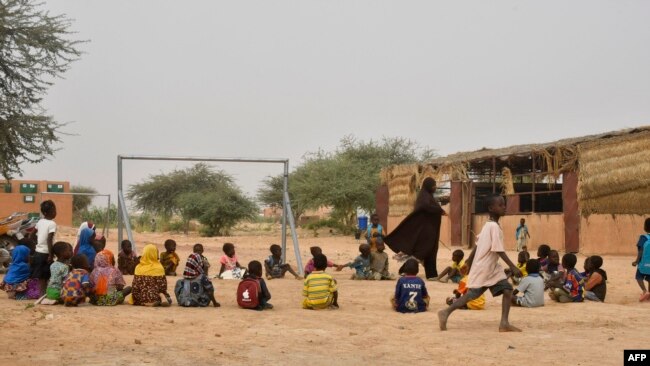
A teacher and her pupils play in a yard at a school created near a site for displaced people on the outskirts of Ouallam, Niger, on Oct. 26, 2022.

Nassirou, Malick, Hasane, Abdou and their parents fled their village of Adabdab on foot after a series of jihadist attacks, the last of which on October 22 claimed the lives of 11 civilians.

"It was the bandits who chased us away, they killed many men," Nassirou said quietly in the playground.

Moussa, who hails from a hamlet in the same area, said: "I'm not afraid anymore, I no longer hide when I hear the sound of motorcycles" often used by jihadists to attack villages.

'Encouraging results'

When they first arrived at the new centers, many children showed "signs of distress and trauma, others were very aggressive," said education official Morou Chaibou.

He spoke of how some pupils recounted harrowing memories — including seeing their parents being shot.

Adamou Dari, the regional director of the centers, said they also offered the children psychological and social support to give them some stability after their traumatic experience.

"Now they concentrate in class and the results are encouraging," said a teacher as she played in the courtyard with some of her pupils.

Absenteeism is minor but a source of worry, Dari said, explaining that some pupils played truant to work in the town and help feed their families.

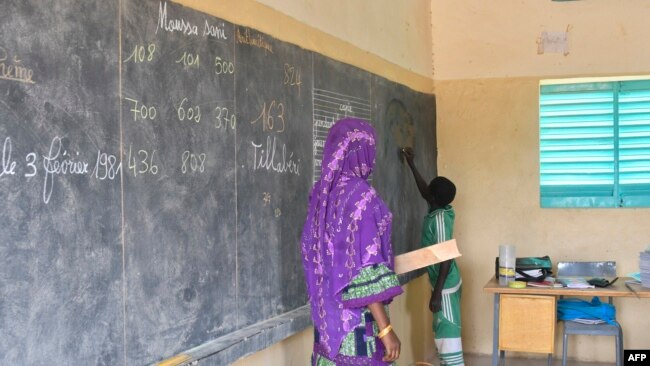
A teacher teaches a lesson in a school created to help children reintegrate into the education system in a region that has seen years of jihadist attacks and displacement.

Harlem Desir of the International Rescue Committee, who recently visited the site for displaced people in Ouallam, said impoverished families often put their children to work or marry their daughters at a young age.

Chaibou warned that neglected children could become prime recruitment targets for the very jihadist groups whose depredations have left their families in such difficulties.

In 2021, Amnesty International warned that boys aged between 15 and 17 were filling the ranks of armed groups, especially the al-Qaeda-affiliated GSIM, in the Torodi region near Burkina Faso — with the blessing of their parents.
#HALTDEEPSEAMINING
Hunt for deep sea minerals draws scrutiny amid green push

SAN JUAN, Puerto Rico (AP) — High demand for metals ranging from copper to cobalt is pushing the mining industry to explore the world’s deepest oceans, a troubling development for scientists who warn that extracting minerals from critical ecosystems that help regulate climate could cause irreparable damage.


The issue will be in spotlight this week as dozens of scientists, lawyers and government officials gather in Jamaica to debate deep sea mining as part of a two-week conference organized by the International Seabed Authority, an independent body created by a United Nations treaty.

The organization is the global custodian for deep ocean waters that don’t fall within any country’s jurisdiction. It has issued 31 exploration licenses so far, and many worry the world’s first license to go the next step and mine international waters could soon be approved with no regulations currently in place.


Experts say mining could spark a rush to collect minerals that take millions of years to form and unleash noise, light and smothering dust storms deep in the Earth’s oceans.

“It’s one of the most pristine parts of our planet. There’s a lot that stands to be lost,” said Diva Amon, a marine biologist, National Geographic explorer and a scientific adviser to the Benioff Ocean Initiative at the University of California, Santa Barbara.

The first exploration license was issued in the early 2000s, with most of the the current exploratory activity is concentrated in the Clarion-Clipperton Fracture Zone, which covers 1.7 million square miles (4.5 million square kilometers) between Hawaii and Mexico. At least 17 of 31 licenses have been issued for this zone, with exploration occurring at depths ranging from 13,000 to 19,000 feet (4,000 to 6,000 meters).

The push for deep sea mining has grown to the point that the authority is now meeting three times a year instead of two, with a key decision expected as early as July 2023.

Mining companies argue that harvesting minerals from the sea bed instead of land is cheaper and has less of an impact, avoiding a “host of environmental and social issues,” according to UK Seabed Resources, a subsidiary Lockheed Martin Corp. to explore the Clarion-Clipperton zone under two contracts.

“We will not have collapsed tailings dams, destruction of cultural sites, clearing of rainforest, child artisanal miners, to name a few recent ones,” UK Seabed Resources said in a statement, referring to some of the impacts from mining on land.

The International Seabed Authority issues licenses to state-owned businesses and countries that subscribe to the U.N. Convention on the Law of the Sea and agree to sponsor private companies that seek to explore international waters for copper, nickel, cobalt, iron, manganese and other minerals. Notably, the U.S. does not subscribe to the law.

The International Energy Agency has estimated a sixfold increase in demand for minerals by 2050 given that electric vehicles and renewable generation are so dependent on them, according to a Fitch Ratings report issued in early October.

“Emissions intensity of cobalt, aluminum and nickel mining and processing is high, so skyrocketing demand may result in rising net carbon footprints,” it stated.

Nauru, a tiny island northeast of Australia, is leading the push to allow for actual mining, arguing that it’s at high risk of climate change and seeks to financially benefit from the mining of metals sought in part for green technology like electric car batteries.


The push has worried countries ranging from Germany to Costa Rica that are seeking to strengthen proposed regulations in the next two weeks.

“We are still very concerned about the consequences,” said Elza Moreira Marcelino de Castro, Brazil’s representative at the conference that began Monday.

French President Emmanuel Macron said earlier this year that he supports a ban on deep sea mining, while on Wednesday, Germany, which has two exploration contracts, announced it would not sponsor such mining until further notice.

Several major companies have pledged not to use metals extracted from the deep sea and nations including New Zealand, Fiji and Samoa have called for a moratorium until more is known about its potential impact, a move cheered by scientists and legal experts.

“You can’t regulate what you don’t understand,” said Duncan Currie, an international and environmental lawyer and legal adviser to the Deep Sea Conservation Coalition, a Netherlands-based alliance of environmental groups.

Less than 1% of the world’s deep ocean waters have been explored, an endeavor that experts say is expensive, technical and time-consuming.

It’s known that the ocean stores more carbon than the Earth’s atmosphere, plants and soil, and scientists are still finding new species during rare exploration trips, with sample studies taking months or even years, Amon said. Among the discoveries is a ghost octopus nicknamed “Casper.”

“We do not understand what lives there, how they live there, the global function that this ecosystem plays, and what we stand to lose by irreversibly impacting it,” she said, adding that life in the deep sea is incredibly slow, with minerals growing one to 10 millimeters every million years. “That means that it is highly vulnerable to disturbance and is extremely slow to recover.”

The Deep Ocean Stewardship Initiative, a global network, said some experts believe it could take anywhere from six to more than 20 years to collect enough data needed to protect the marine environment from deep sea mining.

Other concerns over deep sea mining include how revenue would be distributed and how companies seeking sponsorship would be reviewed and their activities regulated.

Pradeep Singh, a fellow at the Institute for Advance Sustainability Studies in Potsdam, Germany, said there are growing concerns over potential “sponsorships of convenience” in which private companies might shop for a country based on its tax exemptions, potential lax environmental laws and other factors.

“Quite a number of states are starting to raise an eyebrow about these relationships happening behind the scenes,” he said.

Singh also noted that he and others are concerned that the International Seabed Authority would earn a portion of revenues if actual mining were to start given that the agency awards licenses: “It’s a big conflict of interest.”

The authority did not return a message seeking comment.

Michael Lodge, secretary general of the International Seabed Authority, said during his opening remarks at the conference that the agency wants to ensure protection of the marine environment as member countries work on draft regulations.

During a meeting earlier this year, he noted that the authority widened a protected area to 1.97 million square kilometers in a vast region for which a majority of exploration licenses have been awarded.

Environmental management plans for other areas under exploration are still being developed.

______

Associated Press climate and environmental coverage receives support from several private foundations. See more about AP’s climate initiative here. The AP is solely responsible for all content.

Dánica Coto, The Associated Press
Doug Ford Has Gone ‘Full Nuclear’ On Labour. We Must Fight Back

Photo via CUPE Ontario on Twitter.

For this strike to be successful, unions across Ontario and Canada will need to offer more than strong words.

Adam D.K. King
PASSAGE.COM
NOVEMBER 4, 2022
CLASS STRUGGLE

To borrow a phrase from Mark Hancock, the national president of the Canadian Union of Public Employees (CUPE), the Doug Ford government in Ontario has gone “full nuclear” and suspended the Charter-protected rights of the provinces’ lowest paid education workers to collectively bargain and strike.

On Monday, Ford’s Progressive Conservative (PC) provincial government tabled its Bill 28, the Keeping Students in Class Act, an egregious piece of legislation that preemptively removes education workers’ right to strike through use of the ‘notwithstanding clause’ and imposes an insulting contract on more than 55,000 educational assistants, support staff, and custodians.

Those closely watching the contract negotiations between CUPE and the government knew things were unlikely to end well. However, the extent of Ford’s overreach and his government’s blatant disregard for workers’ rights is truly something to behold.

After weeks of attempting to get the PC government to seriously respond to their proposals at the bargaining table, CUPE Ontario School Board Council of Unions (CUPE/OSBCU) members voted 96.5 per cent in favour of strike action early last month. With nearly 83 per cent of members voting, this supermajority sent a clear message to Ford and Minister of Education Stephen Lecce: education workers demand serious improvements to pay and working conditions.

Lecce and Ford of course completely ignored the democratic mandate of the union. Instead, they continued to offer insulting 1.5- and 2.5-per cent wage increases to workers who earn an average of $39,000 per year, while publicly warning them not to strike.

After receiving their “no board” report from the Ontario Ministry of Labour on October 17, the union was set for a legal strike date of November 3. Throughout this week, CUPE has remained ready and willing to bargain, but the government indicated it was uninterested, setting as a condition that the union withdraw its intention to strike — a ridiculous request. Rather than bargain or allow a lawful strike to commence, this government, which patently has no regard for the rule of law, has instead chosen to impose draconian legislation on education workers.

According to the text of Bill 28, workers earning less than $43,000 annually will receive pay raises of 2.5 per cent, while those earning $43,000 or more will see raises of only 1.5 per cent per year. However, according to CUPE, the government’s wage plan is a good deal worse than this already terrible offer appears. Because wage increases are based on a set pay grid, workers in categories who will eventually earn more than they currently do will receive 1.5 rather than 2.5 per cent increases. Essentially, far more workers than the government is letting on will only get a 1.5 per cent pay increase, at a time when inflation is still running at nearly 7 per cent. The government is literally offering lowly paid education staff a raise of roughly 40 to 70 cents per hour. Insulting doesn’t even begin to describe it. If the legislation sticks, this garbage collective agreement will be in force until Aug. 31, 2026.

DIG DEEPER
Exposing Shocking Wage Suppression In Ontario’s Education System

A CUPE report finds that education workers have been treated as though they’re disposable by successive provincial governments in Ontario.

CUPE had been asking for wage increases of $3.25 per hour, or approximately 11.7 per cent. While this might sound like a substantial bump in pay, when placed in the context of wage patterns in education over the past decade, it is truly modest. Recall that earlier this year CUPE released a detailed study of its members’ wages since 2012 (which I covered in Class Struggle). The big takeaway of the study was that education workers had received an effective wage cut of 10.2 per cent over the past decade (cumulative nominal wage increases of 8.8 per cent, against 19 per cent inflation). Put another way, the union is now seeking 1.5 per cent above where workers’ wages would have been had they simply kept up with inflation. Hardly a bank-breaking proposal.

Indeed, CUPE’s proposed wage package would cost the province roughly $240 million per year. As Ricardo Tranjan points out in the Toronto Star, that amounts to just 0.1 per cent of the Ontario government’s projected revenue for 2022-23.

Keep in mind, this is a government that is also flush with cash and passing out tax cuts to those who don’t need them. Ford’s government recorded a $2.1 billion surplus in 2021-22, following a pandemic that revealed the utterly decrepit state of so much of our public service infrastructure, schools included. The PCs are now losing $7.5 billion per year in revenue since forming government in 2018. The election gimmick of eliminating licence plate renewal fees alone cost $1.8 billion.

Perhaps most shockingly, Bill 28 additionally sets out fines of up to $4,000 per day per member, and up to $500,000 per day for the union in the event of an “unlawful” strike in defiance of the legislation. To put that in perspective, a single day’s fine amounts to more than 10 per cent of the average education workers’ yearly salary. It isn’t hard to discern where this government’s priorities are.

DIG DEEPER

How The Right To Strike Is Being Eroded In Canada

Shrinking union coverage rates and capital-friendly states are steadily eroding the right of Canadian workers to strike.

This whole episode is much darker than the economic details, however. A government infringing on Charter-protected free association rights in this manner is arguably unlike anything labour has seen before. Yes, governments across Canada routinely violate public sector collective bargaining rights through back-to-work legislation, wage restraint bills and ‘secret mandates’ whereby they set the parameters of public sector bargaining without unions knowing. But “Keeping Students in Class” takes the ‘permanent exceptionalism’ of government repression to another, dangerous, level.

The Charter of Rights and Freedoms ostensibly protects citizens from governments that might impede the exercise of various rights, including the right to free association. Since 2015, free association has been understood to mean the right to strike as a part of meaningful collective bargaining.

By invoking the notwithstanding clause — a section of the Charter that allows governments to suspend fundamental freedoms for particular pieces of legislation for a five-year period — the PCs are tacitly admitting that Bill 28 is illegal. The government knows full well that they are violating workers’ Charter-protected rights to bargain and strike, and so are relying on an obscure ‘get-out-jail-free’ card that, as the Canadian Civil Liberties Association has stated, was never intended to be used in contract negotiations.

Through the notwithstanding clause, the government is also able to limit the jurisdiction of other arms of the state to investigate the Charter-compliance of the legislation. Section 14 of Bill 28, for example, limits arbitrators from the Ontario Labour Relations Board from inquiring or “[making] a decision” regarding the bill’s (non)compliance with other legislation, such as the Ontario Human Rights Code or the Ontario Labour Relations Act.

Additionally, unlike most back-to-work bills where outstanding issues are sent to arbitration, Bill 28 denies access to arbitration and instead unilaterally dictates CUPE’s new collective agreement.

Legally, there’s very little the union can do. Use of the notwithstanding clause prevents unions from challenging this grotesque legislation in court or at the labour board. In the future, people will need to think critically about how to limit the use of this supposedly exceptional portion of the Charter, but in the here and now, the judicial route is closed. As well, challenging the imposition of fines and penalties is likely a long shot. There might be some potential for contesting individual fines levied against workers participating in today’s walkout at school boards that have closed schools, which many boards plan to do. But I wouldn’t bet heavily on the success of this approach.

In some respects, the fact that legal recourse seems to be foreclosed clarifies the nature of the challenge that labour confronts. Although litigation can at times be an effective tactic in labour’s arsenal, for too long unions have depended on taking their fights to the courts. Unions have no choice but to instead treat Bill 28 as the political battle that it is.

As Larry Savage, professor of Labour Studies at Brock University, relayed to me: “Counting on the courts to protect labour rights was always a dicey proposition, but if governments are going to start using the notwithstanding clause to override workers’ Charter rights, legal strategies become even less effective. Mounting a political fightback is more important than ever and could include reviving flying pickets, sit-ins, demonstrations and organizing the defeat of the government at the polls. To be successful, these strategies require cross-union alliances and a renewed sense of solidarity.”

DIG DEEPER

It’s Time For Labour To Challenge Back-To-Work Laws

The plague of back-to-work legislation, and the climate of fear it generates, must be addressed sooner or later by the entire labour movement.

There are some early signs such solidarity is taking shape. CUPE National called the legislation “an appalling display of contempt for workers’ rights, for the collective bargaining process, and for the workers who look after our kids and keep our schools running” and vowed to have workers’ backs. On Thursday morning, OPSEU announced that it would encourage its 8,000 members in education to walk off the job in solidarity with CUPE, and that the union would cover any fines or penalties incurred. Many other unions have condemned the government’s actions and expressed solidarity with CUPE, including the Teamsters, Unifor and, notably, LiUNA Canada, who had previously endorsed Ford during the provincial election.

The government is also in the process of bargaining contracts with the various teachers’ unions. Ford and Lecce are clearly signalling to these unions that they have no interest in good faith bargaining. On Monday, the Elementary Teachers’ Federation of Ontario (ETFO) walked away from the table in an act of solidarity with CUPE. “On this of all days, ETFO could not, in good conscience, sit across the table from the government, and so we ended negotiations for the day,” the union said. Other teacher’s union leaders have similarly condemned the PCs’ assault on workers’ rights.

On Tuesday afternoon, hundreds turned out for emergency rallies organized by the Ontario Federation of Labour in Toronto. As this newsletter comes out, CUPE members are set to defy the legislation and walk off the job in a one-day protest. What happens next week remains to be seen, though CUPE/OSBCU president Laura Walton indicated Wednesday that education workers would be on strike “until further notice.”

For this strike to be successful, unions across Ontario and Canada will need to offer more than strong words. The rights of workers everywhere are on the line. As the old labour slogan goes, “An injury to one is an injury to all.” I, for one, will be on the line with CUPE this morning. I hope you are too.

Adam King is a union researcher. He earned his PhD in Sociology from York University.

GOTHIC ECONOMIES: 

GLOBAL CAPITALISM AND THE BOUNDARIES OF IDENTITY

by Robert Herschbach

University of New Hampshire, December, 2002

B.A., University of Virginia 1987

M.F.A., University of Iowa 1992


 INTRODUCTION....................................................................................................................1 

I. FAMOUS IMPOSTERS: THE VICTORIAN METROPOLIS.......................................40 

II. DRACULA AND THE CRISIS OF SUBJECTIVITY................................................... 67

 III. ELIOT AND THE GOTHIC..........................................................................................93

 IV. VAMPIRE CULTURE: GIBSON AND THE GLOBAL AESTHETIC.................. 118 

V. BABES IN THE GARDEN: THE SUBURBAN IDYLL........................................... 143

 BIBLIOGRAPHY.................................................................................................................160


ABSTRACT

Since Dickens and Mary Shelley, the Gothic has provided a rubric for literary

conceptualizations of modernity. Dickens' depictions of industrial London characterize it

as a labyrinth of temptations and horrors, haunted by monstrosity and by personal and

social demons: the monster in Mary Shelley's Frankenstein is the disfigured byproduct of

science and technology. Bram Stoker’s Dracula, perhaps the most effective "global"

narrative to come out o f the British fin de siecle, grafted elements of a pre-Enlightenment

atavism onto the tum-of-the-century liberal metropolis. In our own era, the literature of

the postmodern technopolis - the fiction of William Gibson, for example - has continued

to borrow Gothic motifs and devices.

This dissertation is a study of literary representations of technology, capitalism

and the modem metropolis - representations based in the anxieties and desires that

accompany middle-class self-fashioning. The Gothic, in its original guise, depicts the

corruption and ruination of the estate, often by economic and cultural forces emanating

from the city and associated with capitalism and modernity; thus, to invoke the Gothic is

also to reference middle class guilt and doubts about legitimacy. At the same time. Gothic

allusions allow the middle class to retell its foundational myth of a struggle for liberation

from feudal constraints

Much 19,h and 20th literature, both popular and highbrow, entertains an

ambiguous and complicated relationship to the city - the site of economic, political and

cultural forces which are both liberating and traumatizing. Though capitalism and

technology drove its ascendancy, the middle class has traditionally seen the city as a

place both of opportunity and danger, of allure and revulsion or horror - a set of mixed

emotions which tends to suggest an insecure, unstable or divided subjectivity. This

complicated relationship to the city provided much of the impetus for the quest to build a

"bourgeois utopia" - a refuge located at the fringe of the city in which the equilibrium of

a romanticized pre-urban order is recovered. But because the contradictions within

middle class identity can never be fully resolved, the "utopia" always harbors the

potential to become a haunted grove, visited by that which has been repressed or abjected

in the process of creating modernity.


Reading Marx on Halloween


Life under capitalism is the experience of horror — and there is no better guide to it than Karl Marx.


Richard Haidinger / Flickr


10.31.2018
 Jacobin

Like the seemingly omnipotent antagonist in any given horror movie, capitalism is not just unstoppably horrific. It horrifies in its apparent unstoppability.

“The runaway world,” argues Chris Harman in a book on zombie capitalism, “is the economic system as Marx described it, the Frankenstein’s monster that has escaped from human control; the vampire that saps the lifeblood of the living bodies it feeds off.”

The diagnosis invites the big question: how do we orient ourselves politically within a social dynamic whose very essence is horror?

This is a question taken up by Karl Marx himself, whose writing overflows with tropes and figures born of the gothic, and it is one worth revisiting for Halloween.

“Capital,” Marx tells us, “is dead labour, that, vampire-like, only lives by sucking living labour, and lives the more, the more labour it sucks. The time during which the labourer works, is the time during which the capitalist consumes the labour-power he has purchased of him.” Or, in an altogether more grotesque formulation:

The capital given in exchange for labour-power is converted into necessaries, by the consumption of which the muscles, nerves, bones, and brains of existing labourers are reproduced, and new labourers are begotten.

In these two sentences, both taken from the only published book that Marx himself brought to completion, sounds more like Mary Shelley than a work of political economy, summoning predatory vampires, undead monsters, and dismembered bodies.

Both Dracula and Frankenstein have been read as a tales of capitalism. The vampire is, of course, a capitalist hellbent on imperial expansion:


There was a mocking smile on the bloated face which seemed to drive me mad. This was the being I was helping to transfer to London, where, perhaps, for centuries to come he might, amongst its teeming millions, satiate his lust for blood, and create a new and ever-widening circle of semi-demons to batten on the helpless. The very thought drove me mad. A terrible desire came upon me to rid the world of such a monster.

Frankenstein’s monster is, by contrast, the zombified embodiment of proletarian retribution:

All, save I, were at rest or in enjoyment: I, like the arch-fiend, bore a hell within me; and, finding myself unsympathised with, wished to tear up the trees, spread havoc and destruction around me, and then to have sat down and enjoyed the ruin.

But unlike the novels of Stoker and Shelley, Marx’s account is not only gothic. His descriptions of a blood-drenched and gore-caked mode of production are prescient of horror as we see it in more recent cinema. Whatever these descriptions lack in the sense of morality shared by gothic novelists they make up for in cold rationality.Capitalist accumulation is, as Marx knows, a crime whose most obvious analogue is cannibalism.

Marx’s horrors are irredeemable and absolute. When he insists that capitalism is the mode of production that “comes dripping from head to foot, from every pore, with blood and dirt,” he really commits himself, as a gifted writer and a master-stylist, to conveying specifically that kind of horror.

Elsewhere in Capital, when the vampire image returns, narrative emphasis shifts from the bourgeois predator to the exploited worker, and specifically to the worker’s obliterated body:


It must be acknowledged that our labourer comes out of the process of production other than he entered. In the market he stood as owner of the commodity “labour-power” face to face with other owners of commodities, dealer against dealer. The contract by which he sold to the capitalist his labour-power proved, so to say, in black and white that he disposed of himself freely. The bargain concluded, it is discovered that he was no “free agent,” that the time for which he is free to sell his labour-power is the time for which he is forced to sell it, that in fact the vampire will not lose its hold on him “so long as there is a muscle, a nerve, a drop of blood to be exploited.”

The vampire reveals itself only when it is already too late, when the façade of legal niceties turns out to be an evil, Faustian pact, inescapable until the death of either party.

Stylistically important is that quoted material at the end, taken from a description made elsewhere by Friedrich Engels. The quotation from Engels confirms the organic substance of capital, its own expropriated lifeblood, is the insides of the worker.

While Marx frequently draws on the patently gothic imagery of vampires and werewolves, specters and gravediggers, here we can see that his accounts of capital also acquire a taste for human viscera, with sentences chewing their way through bodily gristle:

We may say that surplus value rests on a natural basis, but this is permissible only in the very general sense, that there is no natural obstacle absolutely preventing one man from disburdening himself of the labour requisite for his own existence, and burdening another with it, any more, for instance, than unconquerable natural obstacles prevent one man from eating the flesh of another.

Capitalist accumulation is, as Marx knows, a crime whose most obvious analogue is cannibalism. Born into the wage-relation we are not human subjects. We are only our capacity to work, which means serving up our variously muscular, nervous, and cerebral organs — and consuming those of our friends and families, as well as those of complete strangers.

Gothic descriptions like these are not merely decorative. Instead, they get to the very essence of life under capitalism. They remind us how bodies and brains are mutilated into commodities. Literally, we need only think of the deformations, injuries, and fatalities caused by strained working conditions at every level of capitalist industry, from neurological trauma through to heart attacks, right down to broken bones, amputated limbs, and mass deaths.

Figuratively, every minute and every hour spent in wage labor is another minute and another hour in which our bodies are wired to a vast machine that only lives by draining our life substances.

Life under capitalism is the experience of horror, the irreversible liquefying of human substance and its necrophagic consumption. Like the grim fate of the victims in any given horror film, whose bodies are obliterated beyond all recognition and so frequently ingested by other humans, once our labor succumbs to value that transformation is utterly irreparable. So reflects poet Keston Sutherland in a brilliantly nauseating essay on Marx’s jargon: “All that is meat melts into bone, and vice versa; and no effort of scrutiny, will or heated imagination, however powerfully analytic or moral, is capable of reversing the industrial process of that deliquescence.”

The lesson can be put this way: we all inhabit the same horror story and we should all be intensely revolted by this. But, even if we cannot undo what has already been done, that revulsion might still be a catalyst for revolution. Perhaps this is what Marx was trying to teach us all along with his unique brand of gothic horror.


Mark Steven is a lecturer in literature at the University of Exeter. He is the author of Red Modernism: American Poetry and the Spirit of Communism and Splatter Capital.


SEE MY GOTHIC CAPITALISM
Feb 15, 2005 — The development of capitalism in the 18th and 19th Centuries saw not only bourgeois revolutions but the revolt of slaves and the most successful ...

Full text of "The Horror Of Accumulation And The Commodification ...

https://archive.org › stream › The+Horror+of+Accumul...

Karl Marx GOTHIC CAPITALI$M The Horror of Accumulation & The Commodification of Humanity Gothic Capitalism The Horror of Accumulation and the 


Calling the climate and biodiversity COPs

November 2, 2022

Halting and reversing the twin biodiversity and climate crises is possible, necessary and more urgent every minute


Other than a small number of people who’ve bought into fossil fuel industry propaganda or who simply haven’t examined the evidence, everyone knows we’re in a climate crisis. It’s why negotiators from every nation are meeting in Egypt in November for the 27th annual United Nations Climate Change Conference (officially Conferences of the Parties, or COP) — followed by the 15th UN Biodiversity Conference (COP15) in Montreal in December.

From November 7 to 18, representatives of the 197 signatory parties will examine the latest science compiled by the Intergovernmental Panel on Climate Change (IPCC) and work on agreements to forestall even worse climate consequences than we’re already experiencing — most of which have been predicted since way before countries started meeting in 1995.

From December 7 to 19, representatives will discuss the related biodiversity crisis. Much of the horrific loss of animals and plants over the past few decades has been driven by fossil fuel exploitation and climate disruption, as well as other human activities such as agriculture and development.

So, with 27 years of negotiating, how are we doing? Tragically, not so well.

Atmospheric levels of three major greenhouse gases — methane, carbon dioxide and nitrous oxide — have reached record highs, the World Meteorological Organization reports. As for biodiversity, we recently wrote about the dismal findings of the WWF’s 2022 “Living Planet Report,” which outlines a catastrophic 69 per cent average decline in vertebrate species populations since 1970.

Our understanding of human-caused climate change has increased dramatically since the IPCC’s founding in 1988. That’s sparked a global quest for solutions to the crisis and its impacts, from renewable energy to nature restoration. With so much knowledge and so many existing and emerging solutions, the upcoming conferences are critical.

But the UN says current national commitments to cut emissions wouldn’t prevent the world from heating more than 2.5 degrees Celsius above pre-industrial levels — which would bring about catastrophic climate breakdown. Under the 2016 Paris Agreement, countries pledged to keep global average temperature rise under 2 degrees C, with an aspirational goal of 1.5 degrees C.

Even though countries agreed at last year’s COP26 in Glasgow to submit strengthened plans, known as “nationally determined contributions,” only 24 had done so as of late October, the Guardian reported, and many of those were not substantially stronger. Delegates have a host of climate-related issues to deal with, from compensating vulnerable nations for “loss and damage” to curbing greenhouse gas emissions, and they need to take it all seriously. Of course, agreements are only as good as the actions they inform.

But halting and reversing the twin biodiversity and climate crises is possible, necessary and more urgent every minute. The 2022 Lancet “Countdown” report describes what the world is already experiencing, from devastating floods in Australia, Brazil, China, western Europe, Malaysia, Pakistan, South Africa and South Sudan to wildfires in Algeria, Canada, Greece, Italy, Spain, Turkey and the U.S., and record temperatures in many countries — with impacts exacerbated by the global COVID-19 pandemic.

The 99 wide-ranging experts who collaborated on the report for the world’s leading medical journal say continued reliance on coal, oil and gas will increase food insecurity, infectious disease and heat-related illness and death, at staggering costs.

We need to push political representatives to be bolder at the climate and biodiversity conferences. To do so, we must speak louder than the fossil fuel industry, which has used its enormous power, wealth and influence to water down agreements and downplay impacts. At COP26, the industry had 503 delegates — more than any single country!

More evidence surfaces daily about the industry’s decades-long efforts to downplay, deny and hide evidence — often from its own scientists — that using its products as intended puts human health and survival, and that of all life, at great risk. It’s short-term gain for long-term pain. Investigative journalist Geoff Dembicki’s The Petroleum Papers offers a chilling exposé of the ongoing campaign by industry and others that’s prevented timely climate solutions and led to the mess we’re in.

We can’t turn away, and we can’t be fooled by the greedy, immoral fossil fuel industry and its media and political supporters. Get informed. Sign petitions. Talk to your political representatives, your friends and family.


David Suzuki is a scientist, broadcaster, author and co-founder of the David Suzuki Foundation. Written with contributions from David Suzuki Foundation Senior Writer and Editor Ian Hanington. Learn more at davidsuzuki.org.