Wednesday, July 16, 2025

Indonesia hails ‘new era’ with US after Trump trade pact

But experts said the deal appeared to be one-sided.

“The 19 percent tariff on Indonesian exports to the US, while the US can enjoy 0 percent actually poses a significant risk to Indonesia’s trade balance. Do not be too reliant on exports to the US, because the result of the tariff negotiation is still detrimental to Indonesia’s position.”

By AFP
July 16, 2025


Indonesia's President Prabowo Subianto said he had a 'very good' call with Trump - Copyright AFP/File Yasuyoshi CHIBA

Marchio GORBIANO

Indonesia’s leader on Wednesday hailed a “new era” of trade relations with the United States, after Donald Trump said he slashed the tariff rate faced by Southeast Asia’s biggest economy from 32 percent to 19 percent.

The Trump administration has been under pressure to wrap up trade pacts after promising a flurry of deals recently, as countries sought talks with Washington to avoid the US president’s threatened tariffs announced in April but delayed until August.

“I had a very good call with President Donald Trump. Together, we agreed and concluded to take trade relations between Indonesia and the United States into a new era of mutual benefit,” President Prabowo Subianto wrote in an Instagram post.

Prabowo, a populist former general, posted pictures of himself laughing on the phone with Trump but did not give any specifics of the deal.

However Prabowo’s presidential spokesman confirmed the new 19 percent rate and said it took place after direct negotiations between the Indonesian leader and Trump.

“It is an extraordinary negotiation conducted directly by our president with President Donald Trump,” Hasan Nasbi said, adding that the deal was “progress that cannot be called small”.

Prabowo was set to land back in Indonesia on Wednesday afternoon from a trip to Europe, before giving a statement, Nasbi said.

Trump said Tuesday he had struck the pact in return for significant purchase commitments from Jakarta following negotiations, including a pledge to buy 50 Boeing jets.

In return for a lower tariff, Indonesia has committed to spending billions to increase energy, agriculture and merchandise imports from the United States.

Trump and Prabowo have developed a warm relationship since the US leader first clinched the presidency in late 2016.

His first administration dropped a de facto US visa ban for Prabowo over alleged crimes committed under late dictator Suharto, inviting him to Washington in 2020 when he was Indonesian defence minister.

– ‘Significant risk’ –

Prabowo had sent his top economic minister to Washington and his administration secured a better deal than the 20 percent that Trump said he had given to Southeast Asian neighbour Vietnam.

Both Indonesia and Vietnam are key markets for the transshipment of Chinese goods. Trump said the deal with Indonesia would include a penalty for goods transiting Indonesia from China.

Prabowo had suggested after the initial tariff threat in April that Trump was maybe helping Jakarta by causing it to re-think its trade surplus with the world’s top economy.

Data from the US Trade Representative office shows Washington’s goods trade deficit with Indonesia was $17.9 billion in 2024, up 5.4 percent from the year before.

But experts said the deal appeared to be one-sided.

“The 19 percent tariff on Indonesian exports to the US, while the US can enjoy 0 percent actually poses a significant risk to Indonesia’s trade balance,” said Bhima Yudhistira Adhinegara, executive director of the Center of Economic and Law Studies.

“Do not be too reliant on exports to the US, because the result of the tariff negotiation is still detrimental to Indonesia’s position.”

Indonesian shoemakers fear Trump tariffs despite lower levy


By AFP
July 16, 2025


Tegep Boots has many dedicated customers in the United States and Europe - Copyright AFP Timur MATAHARI

Yuli Krisna

At a leather boot shop in the Indonesian city of Bandung, workers handle an order from Texas but owner Etnawati Melani says she fears such business will dwindle when Donald Trump’s tariffs hit exports.

The United States is Indonesia’s biggest market for footwear exports and the American president announced Tuesday he would impose 19 percent tolls on top of a baseline 10 percent for Southeast Asia’s biggest economy.

The measure was lower than the initial extra 32 percent Trump threatened in April, and better than the 20 percent he imposed on Vietnam.

But Etnawati, who had plans to expand her business to the United States, said her focus would now shift to other markets.

“I have to develop a new strategy. Perhaps we have to diversify our markets, products, and so on. If it’s possible to enter (the US market), but… not in large quantities at first, that’s it,” she told AFP.

“We can’t rely solely on the US. There’s still many markets in the world. We can still shift.

“I plan to shift focus to Japan and Russian partners.”

In return for a lower tariff, Indonesia pledged billions to increase energy, agriculture and merchandise imports from the US and Trump said Jakarta had pledged to buy 50 Boeing jets.

It remains unclear when the new tariff rate Trump announced will come into effect and reaction from Indonesian officials has been muted while President Prabowo Subianto travels home from a Europe visit.

But chief negotiator Airlangga Hartarto, after meeting top US officials in Washington, said last week that the talks had been “positive”.

Prabowo suggested after the initial tariff threat in April that Trump was maybe helping Jakarta by causing it to re-think its trade surplus with the world’s top economy.

Data from the US Trade Representative office shows Washington’s goods trade deficit with Indonesia was $17.9 billion in 2024, up 5.4 percent from the year before.


– ‘I’m worried’ –


Indonesia is the third-largest footwear exporter to the US behind China and Vietnam, according to the Observatory of Economic Complexity.

So any new tariff was likely to damage business — particularly in Bandung, where its shoe scene is well-known internationally for beautifully hand-crafted quality leather boots.

Economists in Indonesia hit out at the deal with Washington, which Trump says would get tariff-free access in return.

“This is not an agreement. It’s… a one-sided agreement,” Jakarta-based Centre for Strategic and International Studies (CSIS) executive director Yose Rizal Damuri told AFP on Wednesday.

But he predicted American consumers would likely bear the costs more than Indonesian businesses, with Trump’s tariffs sweeping across many countries.

“The United States itself will be the one more affected. Prices will rise,” he said.

Data on Tuesday showed US inflation spiked in June as the tolls kicked on.

The shop’s more seasoned workers such as Jajang — who goes by one name — have already experienced the ups and downs of business, with the Covid-19 pandemic hitting sales, and seeing dozens of colleagues laid off and several dying.

“I don’t know about that issue, the important thing is that I work here,” said the 53-year-old when asked about Trump’s levies.

Others aware of the Trump threat to Indonesian exports were more concerned.

One of Etnawati’s workers, Lili Suja’i, chipped away at a new set of boots for the three-pair Texan order — riding boots, medium casual boots and loafers — in a workshop adjacent to the store.

He said he feared US customers would be put off by higher costs, with the shop his main income for his family of three.

But the shoemakers are ready to fulfil any orders from Americans willing to pay the extra price.

“I’m worried, yes, but before placing an order, we negotiate the shipping costs and prices with the customer,” the 38-year-old said.

“So, we’ve already made a deal. If they’re OK with it, we’ll do it.”

Indonesia looking at coal export levy to boost state coffers

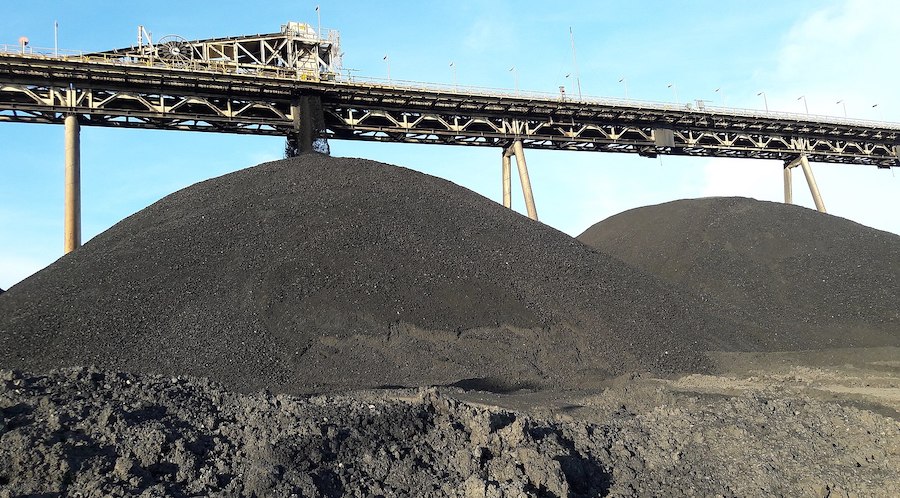
Coal mining in East Kutai, Indonesia. (Reference image by Consigliere Ivan, Wikimedia Commons.)

Indonesia, the world’s biggest coal exporter, is considering imposing an export levy on the fossil fuel to boost state revenues, a senior government official said.

The tariff would be collected from miners only when coal prices are high, with authorities potentially including it in the 2026 budget plan, Energy and Mineral Resources Deputy Minister Yuliot Tanjung told reporters in Jakarta on Tuesday.

President Prabowo Subianto’s administration has been rolling out an array of revenue-boosting measures to fund big-ticket spending plans, which include free meals for school children, and public housing. The mining industry, which is critical to Indonesia’s economy, has faced particular pressure.

The sprawling archipelago is the world’s biggest thermal coal exporter, and firms there have been hit by higher royalties and an obligation to keep earnings in local banks for a year. An export levy would add to the pressure on the sector, which is already dealing with a recent plunge in prices.

Energy and Mineral Resources Minister Bahlil Lahadalia confirmed on Monday that regulators were moving forward with the levy, which started as a proposal from parliament. A similar charge on gold exports was being considered.

“If prices are good, then they should share some of those earnings with the state,” he was quoted as saying by multiple news outlets. “But if prices aren’t economic, then we shouldn’t burden businesses.”

The government needs to study the plan further, and consider the sustainability of business and national energy security, along with the potential revenue increase, said Gita Mahyarani, acting executive director of the Indonesian Coal Mining Association. The association is seeking further clarity on the proposed levy, she said.

Shares of some Indonesian coal miners fell on Tuesday as the Jakarta Composite Index rose. PT Indika Energy and PT Bukit Asam both closed down 0.8%.

The plan creates uncertainty for local miners, and could add to refinancing risks for high-yield companies with limited liquidity and diversification, Mary Ellen Olson, a Bloomberg Intelligence analyst, said in a note. Indika Energy, PT Medco Energi Internasional, PT Mineral Industri Indonesia and PT Freeport Indonesia are potentially most at risk, she said.

(By Eko Listiyorini and Norman Harsono)


Indonesian Police Bust Pirate Gang in Riau Islands

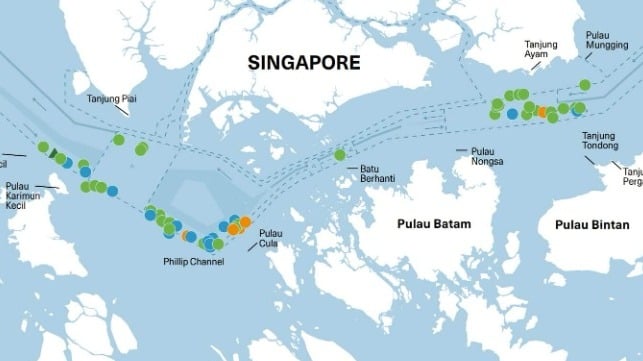
High activity areas for piracy in the Phillip Channel, Strait of Malacca and Singapore Strait (ReCAAP file image)

Published Jul 15, 2025 8:28 PM by The Maritime Executive


Police in Indonesia's Riau Islands have broken up a ring of pirates who were allegedly engaged in serial armed robberies in the Phillips Channel, a notorious hotspot for criminal activity. 

Acting on tips from the public and from Singapore's International Maritime Bureau (IMB), the Directorate of Water and Air Police in the Riau Islands launched a patrol in piracy-prone areas of the strait. The tip was accurate, and the authorities busted a gang of eight male suspects in the act of stealing stores from a vessel, identified as the "MT Thom Elisabeth." (No ship by this name exists in international databases; it is possible that it is a coastal vessel.)

The police told local Batam News Asia that the suspects have been active since 2017. The gang was allegedly in the practice of using methamphetamine before each of their heists, and the substance was found in the possession of one of the suspects during the bust. The drugs fueled their intimidation tactics and enabled risk-taking, "even jumping into the sea if threatened," agency director Kombes Handono Subiakto told Batam News. 

To select targets, the suspects allegedly used standard online ship-tracking tools to hone in on ships that would slow down to five knots or less while passing through the narrow strait. Then they would board these vulnerable targets at night, taking spare engine parts that could be resold for a profit in Jakarta. Their maximum earnings from a heist came to about $6,000 per boarding.

While unarmed at the time of capture, the gang was allegedly in possession of an airgun that they had used to threaten crewmembers; the police also believe that they had homemade firearms as well, but not in their possession at the time of arrest. 

The bust is significant, as it comes amidst a major resurgence of maritime crime in the Strait of Malacca. According to the IMB ICC, the area saw 57 incidents of maritime armed robbery in the first half of 2025, up from just 15 in the same period last year. At least three more criminal gangs are still believed to be operating in the same region, so the threat - which has waxed and waned for years - is still far from over.  

Phillips Channel is just south of Jurong Island, where ships make the turn between the Strait of Malacca and the Strait of Singapore. The turn forces vessels to slow down, making them more vulnerable to boarding by criminal gangs, who often threaten the crew and make off with valuable stores. 

THE NEXT COLD WAR

Trump unveils investments to power AI boom


By AFP
July 16, 2025


Image: © AFP Josep LAGO

US President Donald Trump went to Pennsylvania on Tuesday to announce $92 billion in energy and infrastructure deals intended to meet big tech’s soaring demand for electricity to fuel the AI boom.

Trump made the announcement at the inaugural Pennsylvania Energy and Innovation Summit at Carnegie Mellon University, with much of the talk about beating China in the global AI race.

“Today’s commitments are ensuring that the future is going to be designed, built and made right here in Pennsylvania and right here in Pittsburgh, and I have to say, right here in the United States of America,” Trump said at the event.

The tech world has fully embraced generative AI as the next wave of technology, but fears are growing that its massive electricity needs cannot be met by current infrastructure, particularly in the United States.

Generative AI requires enormous computing power, mainly to run the energy-hungry processors from Nvidia, the California-based company that has become the world’s most valuable company by market capitalization.

Officials expect that by 2028, tech companies will need as much as five gigawatts of power for AI — enough electricity to power roughly five million homes.

Top executives from Palantir, Anthropic, Exxon and Chevron attended the event.

The funding will cover new data centers, power generation, grid infrastructure, AI training, and apprenticeship programs.

– Race to beat China –

Among investments, Google committed $25 billion to build AI-ready data centers in Pennsylvania and surrounding regions.


US President Donald Trump attends the Pennsylvania Energy and Innovation Summit on the campus of Carnegie Mellon University in Pittsburgh – Copyright AFP ANDREW CABALLERO-REYNOLDS

“We support President Trump’s clear and urgent direction that our nation invest in AI… so that America can continue to lead in AI,” said Ruth Porat, Google’s president and chief investment officer.

The search engine giant also announced a partnership with Brookfield Asset Management to modernize two hydropower facilities in Pennsylvania, representing 670 MW of capacity on the regional grid.

Investment group Blackstone pledged more than $25 billion to fund new data centers and energy infrastructure.

US Senator David McCormick, from Pennsylvania, said the investments “are of enormous consequence to Pennsylvania, but they are also crucial to the future of the nation.”

His comments reflect the growing sentiment in Washington that the United States must not lose ground to China in the race to develop AI.

“We are way ahead of China and the plants are starting up, the construction is starting up,” Trump said.

The US president launched the “Stargate” project in January, aimed at investing up to $500 billion in US AI infrastructure — primarily in response to growing competition with China.

Japanese tech investor SoftBank, ChatGPT-maker OpenAI, and Oracle are investing $100 billion in the initial phase.

Trump has also reversed many policies adopted by the previous Biden administration that imposed checks on developing powerful AI algorithms and limits on exports of advanced technology to certain allied countries.

He is expected to outline his own blueprint for AI advancement later this month.
David vs Goliath: Inside the legal battle to help Trump’s deportees in El Salvador

The group has registered 152 individuals so far, and 90 percent of them have no criminal record.

By AFP
July 15, 2025


This handout picture released on March 31, 2025, by El Salvador's Presidency press office shows alleged members of the Venezuelan criminal organization Tren de Aragua and from the Salvadoran gang MS-13 being subdued upon their arrival at the Terrorism Confinement Center (CECOT) in the city of Tecoluca, El Salvador.
 - Copyright EL SALVADOR'S PRESIDENCY PRESS OFFICE/AFP Handout

María Isabel Sánchez

A small group of overstretched and outmatched lawyers is fighting for the rights of men deported by the Trump administration and held in a notorious Salvadoran prison — a David vs. Goliath battle that may end up in international courts.

In a half-empty old schoolhouse outside San Salvador, lawyer Rene Valiente is trying to determine the fate of 252 Venezuelan migrants expelled from the United States in March without any kind of court hearing.

He is the investigations coordinator for Cristosal, a human rights NGO that is challenging El Salvador’s all-powerful president, Nayib Bukele, and his even more powerful US ally, President Donald Trump.

For months, Valiente and his team have gone from jail to ministry to courthouse, trying to find out more about those being held at the tightly controlled CECOT facility, and to have the men’s legal rights recognized.

With both the Trump and Bukele administrations stonewalling, the lawyers have had little success.

Valiente has no visitation rights, no proof the men are alive, and not even an official list of their names.

“We’ve asked for information, but have repeatedly been rebuffed,” Valiente told AFP. “They are in a kind of legal black hole.”

“We’ve filed 70 applications for habeas corpus. None have been resolved,” he said, referring to prisoners’ right to challenge their detention.

On a laptop, Valiente shows a database of detainees that he and his colleagues have managed to cobble together despite the official silence.

Some on the list were spotted by distraught family members in Hollywood-style images of chained and shorn deportees being bundled off planes and into jail.

Others are like Jhoanna Sanguino, who saw her 24-year-old nephew’s name on a list of detainees leaked to the media.

“It’s overwhelming to know nothing,” she said. “Is he being fed? Does he get a sip of water? How is his health?


– ‘Crime against humanity’? –


Trump has claimed the Venezuelans deported were “criminals” and “barbarians”, mostly made up of gangsters, rapists, and murderers.

But Cristosal’s database tells a different story.


The group has registered 152 individuals so far, and 90 percent of them have no criminal record.

Cristosal’s work appears to have earned the ire of Bukele — who has consolidated power and packed the courts with allies since being elected in 2019.

Valiente’s colleague Ruth Lopez was abruptly detained in May and accused of illicit enrichment, a charge she denies.

Days before her detention, she told AFP she had been working on documenting forced disappearances under Bukele’s government.

She is one of tens of thousands of people who have been detained under Bukele’s state of emergency, often without court orders, the right to phone calls or even to see a lawyer.

A further crackdown seems likely.

Cristosal director Noah Bullock said that in Bukele’s El Salvador “speaking out or asking something that is not aligned with the government entails the risk of being arrested.”

The lawyers are determined to help the Venezuelans, but expect little from a country where the president has near-absolute control.

“We want to document these grave human rights violations, to leave a trace. For the moment we are exhausting all domestic legal channels” said Valiente.

Ultimately, they may look to bodies like the United Nations Human Rights Council, the Inter-American Court of Human Rights, and the International Criminal Court, whose treaty, the Rome Statute, was ratified by El Salvador in 2016.

“The Salvadoran government is obligated to report on the condition of the prisoners,” said Venezuelan former diplomat Walter Marquez, whose Amparo Foundation represents dozens of the detainees.

“Failing to do so is a crime against humanity, according to the Rome Statute, and could lead to international prosecution.”

Salvador Rios, a Salvadoran lawyer hired by the government in Caracas to represent 30 deportees, similarly believes that “sooner or later” Bukele will face justice.
THE CONCLUSION OF PIZZAGATE

‘Epstein files’ explained: Why Trump is under pressure


By AFP
July 15, 2025


Jeffrey Epstein, a wealthy American financier, died in 2019 before he faced trial for sex offenses - Copyright AFP PHILIPPE LOPEZ

Ben Turner

A perceived lack of transparency over the US investigations into notorious sex offender Jeffrey Epstein has carved a rare chasm between President Donald Trump and his typically loyal Republican base.

As Trump struggles to quell his supporters’ obsessions with the case — one long surrounded by conspiracy theories — AFP outlines its history and why it has caused so much outrage.


– Origins of the Epstein case –


Jeffrey Epstein, a wealthy American financier, was first charged with sex offenses in 2006 after the parents of a 14-year-old girl told police that he had molested their daughter at his Florida home.

He avoided federal charges — which could have seen him face life in prison — due to a controversial plea deal with prosecutors that saw him jailed for just under 13 months.

In July 2019, he was arrested again in New York and charged with trafficking dozens of teenage girls and engaging in sex acts with them in exchange for money.

Prosecutors said he worked with employees and associates to ensure a “steady supply of minor victims to abuse.”

Epstein pleaded not guilty to the charges against him. On August 10, 2019, while in custody awaiting trial, authorities said he was found dead in his prison cell after hanging himself.

A separate case against Epstein’s girlfriend Ghislaine Maxwell, who was jailed in 2022 for helping him abuse girls, detailed Epstein’s connections with high-profile figures like Britain’s Prince Andrew and former US president Bill Clinton. Both have denied any wrongdoing.


– Why are there conspiracy theories? –


Some people believe that authorities are concealing details about the Epstein case to protect rich and powerful elites who associated with him, including Trump.

Those ideas have gripped Trump’s “Make America Great Again” (MAGA) movement — but demands for more transparency have crossed the political aisle.

One key theory centers on a rumored client list of individuals who committed sex offenses alongside Epstein. The Trump administration has insisted that no such list exists.

Skeptics also allege suspicious circumstances in Epstein’s death such as the security cameras around his cell apparently malfunctioning on the night he died, alongside other irregularities.


– Trump and the Epstein case –


Trump, who as a New York property magnate rubbed shoulders with Epstein, said when re-running for president that he would “probably” release files related to the case.

But since taking office, many of Trump’s supporters have been disappointed by what they see as a failure to deliver.

The 79-year-old himself was dragged into the conspiracy theories after his former advisor Elon Musk claimed in June — in a now-deleted X post — that Trump was “in the Epstein files.”

The Trump administration’s efforts to appease demands for a full disclosure of the so-called Epstein files have largely fallen short.

A bundle released in February that promised to shed light on the Epstein case contained little new information.

Meanwhile, an almost 11-hour video published this month to dispel theories Epstein was murdered fell flat.

The camera angle showed a section of the New York prison on the night Epstein died, but appeared to be missing a minute of footage, fueling more speculation online.

And a memo from the Justice Department and FBI last week saying the Epstein files did not contain evidence that would justify further investigation was met by calls for the heads of each agency to resign.


– What comes next? –


Trump has been towing a delicate line — saying he supports the release of any “credible” files related to Epstein while dismissing the case as “pretty boring stuff.”

But even the normally authoritative president seems unable to arrest the disruption, as critics and even key allies call for more transparency.

Mike Johnson, the Republican speaker of the House, has not followed Trump’s line on the issue and has instead urged the Justice Department to make public any documents linked to Epstein.

Meanwhile, Democrats have seized on the rift between Trump and his party by demanding his administration publish the full evidence held by prosecutors in their case against Epstein.

Trump says any ‘credible’ Epstein files should be released


By AFP
July 15, 2025


US President Donald Trump, alongside White House Press Secretary Karoline Leavitt, speaks to reporters on his way to board Marine One on the South Lawn of the White House on July 15, 2025, in Washington - Copyright EL SALVADOR'S PRESIDENCY PRESS OFFICE/AFP Handout
Frankie TAGGART

President Donald Trump said Tuesday the US Justice Department should release all “credible” information from its probe into notorious sex criminal Jeffrey Epstein as he sought to douse a firestorm of criticism from his supporters over his handling of the case.

Trump is facing the most serious split of his political career from his famously loyal right-wing base over suspicions that his administration is covering up lurid details of Epstein’s crimes to protect rich and powerful figures they say are implicated.

“The attorney general has handled that very well,” the Republican leader said of Pam Bondi, who leads the Justice Department, when he was asked about the case at the White House.

Trump repeated his claim that the Epstein files were “made up” by his Democratic predecessors in the White House — even though he said multiple times during the election campaign that he would “probably” release them.

“She’s handled it very well, and it’s going to be up to her,” Trump said. “Whatever she thinks is credible, she should release.”

Trump’s latest comments mark a softening of his stance — he had voiced frustration in the Oval Office and online about his supporters’ fixation on Epstein and pleaded with them to move on.

“I don’t understand why the Jeffrey Epstein case would be of interest to anybody,” Trump told reporters Tuesday night, adding: “It’s pretty boring stuff.”

The president’s “Make America Great Again” (MAGA) movement has long held as an article of faith that “Deep State” elites are protecting Epstein’s most powerful associates in the Democratic Party and Hollywood.

Trump has faced growing outrage since his administration effectively shut down Epstein-related conspiracy theories, which have become MAGA obsessions.

The Justice Department and FBI said in a memo made public earlier this month there is no evidence that the disgraced financier kept a “client list” or was blackmailing powerful figures.

They also dismissed the claim that Epstein was murdered in jail, confirming his death by suicide, and said they would not be releasing any more information on the probe.


– ‘Let the people decide’ –


It marked the first time Trump’s officials had publicly refuted the stories — pushed for years by numerous right-wing figures, notably including the FBI’s top two officials, before Trump hired them.

Beyond angering supporters, the issue has opened a schism within his administration, sparking a fiery blow-up between Bondi and Deputy FBI Director Dan Bongino, who is said to be considering resigning.

Trump’s attempts to take the sting out of the controversy have largely failed, with far right influencers continuing to criticize him online.

Even his daughter-in-law, Lara Trump, a Fox News host, has called for “more transparency” from the administration.

Trump’s most powerful ally in the US Congress, House Speaker Mike Johnson, pushed Tuesday for the administration to release more information about the case, and his stance has been echoed by multiple Republicans.

“We should put everything out there and let the people decide,” he told MAGA influencer Benny Johnson’s internet show, calling on Bondi to “come forward and explain” apparent discrepancies in her statements about the case.

Bondi told Fox News in February a list of Epstein clients was on her desk for review, before backtracking and saying that no such list existed.

Epstein died by suicide in a New York prison in 2019 after being charged with sex trafficking.

Trump — who has denied visiting the US Virgin Islands home where prosecutors say Epstein sex trafficked underage girls — said ahead of his election he would have “no problem” releasing files related to the case.

Asked whether Bondi had told him if his name appeared in a file related to Epstein, Trump said “no,” adding that Bondi has “given us just a very quick briefing.”
Trump, Epstein, and the GOP’s Planned Rape Culture

The question is not why they hid the list. The question is why they need it at all when the ledger is already written in their laws.

As of mid-2025, child marriage remains legal in 37 U.S. states.


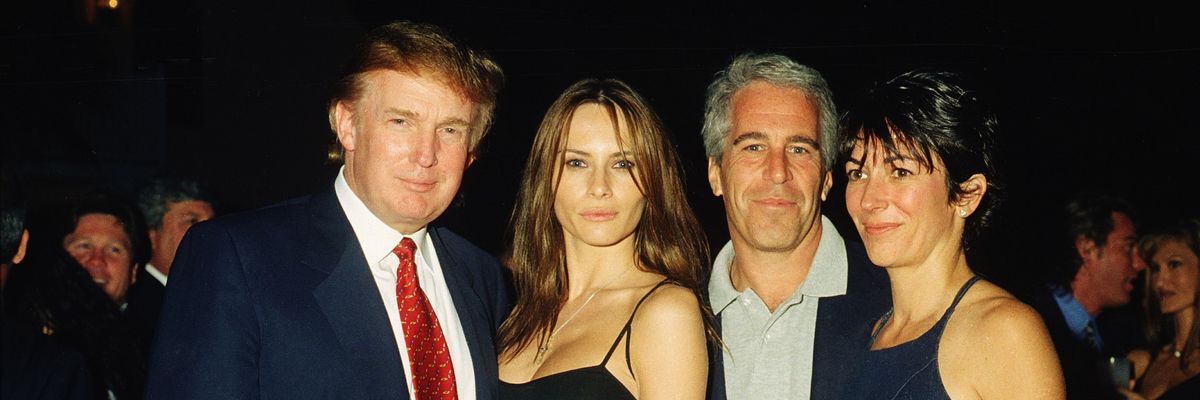
From left, American real estate developer Donald Trump and his girlfriend (and future wife), former model Melania Knauss, financier (and future convicted sex offender) Jeffrey Epstein, and British socialite Ghislaine Maxwell pose together at the Mar-a-Lago club, Palm Beach, Florida, February 12, 2000.

(Photo: Davidoff Studios/Getty Images)

LONG READ


Jesse Mackinnon
Jul 15, 2025
Common Dreams

By the time the U.S. Justice Department released its memo in July 2025, the faithful were already starting to turn. There was no “client list,” no smoking gun, no perverted cabal of global elites laid bare for public vengeance. What they got instead was a cold government document and a half-mumbled shrug from President Donald Trump, who barely remembered the man everyone else had turned into a folk demon. “Are people still talking about this guy, this creep?” he asked, blinking like he’d just wandered out of a golf simulator.

The betrayal was almost elegant. For years, Trump’s people had promised the black book. Attorney General Pam Bondi said it was on her desk. Federal Bureau of Investigation (FBI) Director Kash Patel practically branded his political future with it. Counselor to the President of the United Staes Alina Habba promised flight logs and names. And then the punchline: nothing. Or rather, a truckload of documents scrubbed clean and a memo telling the public to move on. The frenzy turned inward. MAGA loyalists melted down on camera. Laura Loomer called for a special counsel. Deputy FBI Director Dan Bongino stopped showing up for work. Right-wing media turned on itself like rats in a pressure cooker.

But the Epstein file was never the point. The real story was not buried in a locked safe or hidden by the FBI. It was out in the open. It is still out in the open. The political movement that once pledged to drain the swamp has spent its second tour of duty building a legal and bureaucratic fortress around some of the oldest crimes in the book. Modern conservatism has come to rely not just on outrage but on inertia, and nowhere is that more visible than in its handling of child sexual abuse.

We are not talking about a secret ring or coded pizza menus. We are talking about a system that tolerates child marriage in over half the states. A system that forces raped minors to carry pregnancies to term. A system that slashes funding for shelters and trauma counseling. A system that lets rape kits pile up in warehouse back rooms while politicians pose in front of billboards about protecting kids.

This is not a moral failure or a bureaucratic oversight. It is an architecture. It is built from votes, funded by budgets, signed into law by men who say they fear God but fear losing donors more. The Epstein affair may have collapsed in a cloud of whimpering and spin, but what it revealed is far more corrosive than any one man’s crimes. The question is not why they hid the list. The question is why they need it at all when the ledger is already written in their laws.

Legalized Child Marriage as Institutional Abuse

As of mid-2025, child marriage remains legal in 37 U.S. states. In most of these jurisdictions, statutory exceptions allow minors to marry with parental consent or judicial approval. Some states permit marriage for individuals as young as 15. Others lack any explicit minimum age when certain conditions are met. These legal frameworks persist despite growing evidence of their links to coercion, abuse, and lifelong harm.

Missouri serves as a prominent example. Until recently, it permitted minors aged 15 to marry with parental consent. Testimony from survivors has revealed how this legal permission facilitated predatory relationships cloaked in legitimacy. In one case, a girl was married off to a man nearly a decade older, and the marriage became a vehicle for sustained sexual and psychological abuse. Former child brides in Missouri have since called for a statutory minimum age of 18 with no exceptions. Legislative efforts to enact such reforms have repeatedly stalled.

Tennessee offers a more recent and pointed illustration. In 2022, Republican lawmakers introduced legislation that would have created a new category of marriage not subject to age restrictions. The bill failed under public pressure, but it signaled a continued willingness by some conservative legislators to bypass modern child protection norms. Even when confronted with documentation of exploitation, physical violence, and long-term trauma, these lawmakers often frame the issue around religious liberty and parental authority.

The Epstein affair was never going to end in justice. It was a mirror. What it reflected was not a single man’s sins but a political order that treats predation as a price of stability.

The prevailing rhetoric in these debates centers on traditional family values. Proponents argue that restricting child marriage infringes on the rights of families to make decisions without state interference. In some cases, advocates for maintaining the status quo invoke Christian theological justifications or present marriage as a preferable alternative to state custody. These arguments shift the legal focus away from the vulnerability of the minor and toward the autonomy of adults, particularly parents and religious leaders.

This legal tolerance undermines the enforcement of statutory rape laws. When marriage can be used as a legal shield, older adults who would otherwise face criminal prosecution gain immunity by securing parental consent or exploiting permissive judicial channels. In practice, the marriage license functions as retroactive permission for sexual contact with a minor. Law enforcement agencies are often reluctant to investigate allegations within a legally recognized marriage, even when age discrepancies raise clear concerns.

The persistence of child marriage statutes in conservative-controlled states is not simply a relic of outdated law. It reflects a policy choice. The choice is to preserve adult control over minors, particularly in contexts that reinforce patriarchal and religious hierarchies. In doing so, the state becomes an active participant in the erasure of consent. Legal recognition of these unions confers legitimacy on relationships that, in other contexts, would be subject to prosecution. The result is a bifurcated legal system where a child’s age and rights are contingent on the adult interests surrounding her.
Forced Birth Laws and the Abandonment of Minor Victims

Following the Supreme Court’s decision in Dobbs v. Jackson Women’s Health Organization, state legislatures moved swiftly to implement abortion bans. As of July 2025, 10 states enforce prohibitions with no exceptions for rape or incest. These laws apply equally to adults and minors. In doing so, they erase the distinction between consensual and coerced sexual activity and impose state control over the bodies of children.

The consequences are observable. In Ohio, a 10-year-old girl became pregnant after being raped by a 27-year-old man. Because Ohio law prohibited abortion past six weeks and included no exception for rape, the girl traveled to Indiana to terminate the pregnancy. The physician who provided the abortion was targeted by state officials and subjected to professional disciplinary action. The child’s identity was shielded, but her case became a national flashpoint. No changes were made to Ohio’s statute in response.

In Mississippi, a 13-year-old girl gave birth after being raped by a stranger. Her family, unable to afford travel or secure an out-of-state appointment, watched as the pregnancy advanced. Though state law permitted abortion in cases of rape, it required police reporting and formal certification by the authorities. The procedural burden, combined with lack of local providers, rendered the exception functionally inaccessible. The pregnancy was carried to term. No support infrastructure was provided beyond birth.

In Texas, multiple cases have emerged involving girls under 14 who were raped by family members or acquaintances. One minor received abortion pills through informal networks. Another did not. In that case, the pregnancy continued until birth. In both situations, school staff, health workers, and shelter employees described an atmosphere of legal ambiguity and fear. Providers worried about prosecution for aiding what could be construed as an illegal abortion. Parents feared legal action or custody loss if they sought help out of state.

These laws are not merely restrictive. They are designed to inhibit access through a combination of legal uncertainty, bureaucratic obstruction, and geographic isolation. Requirements for parental consent and judicial bypass impose additional delays. In conservative jurisdictions, judges often refuse bypass requests outright. Clinics have closed. Providers have left. In many counties, no legal abortion services exist. For minors with limited mobility, no resources, and histories of abuse, these constraints function as a full prohibition.

Psychological consequences are profound. Research conducted by trauma specialists indicates that forced pregnancy following sexual assault exacerbates the risk of suicidal ideation, self-injury, and long-term mental illness. Minors compelled to remain pregnant often experience acute dissociation and chronic anxiety. Social workers report increased incidents of runaway behavior, substance use, and refusal to attend school. The medical literature consistently describes these outcomes as preventable harm.

The political response to these outcomes has been largely nonreactive. Elected officials in affected states have declined to revisit statutory language. When presented with specific cases, responses are limited to procedural defenses or deflections. Conservative media outlets often ignore these incidents altogether or question their veracity. State agencies rarely publish disaggregated data on minor pregnancies resulting from assault. In legislative hearings, victims are not called to testify.

This absence of acknowledgment is not accidental. The architecture of forced birth laws depends on abstraction. It requires a conceptual fetus without context, a generic moral narrative without victims. The insertion of real children into that framework exposes its contradictions. In response, the system silences or discredits those who do not fit the script.

The effect is the systematic abandonment of minor victims. The state declines to intervene in the act of abuse, imposes control over the outcome, and then withdraws when support is needed. In doing so, it transforms rape from a crime to a reproductive event and reclassifies children as bearers of state policy. The result is not a deviation from conservative thought. It is one of its clearest expressions.

The Systematic Dismantling of Survivor Support

In early 2025, the Trump administration released a proposed federal budget for fiscal year 2026 that included significant funding reductions for agencies and programs supporting survivors of domestic and sexual violence. The Office on Violence Against Women removed all open funding opportunities from its website. This move came amid a broader effort to eliminate what the administration referred to as “woke” or ideologically driven programs. Internal Department of Justice (DOJ) memoranda confirmed that existing grant language was being revised to align with White House policy preferences, with particular scrutiny directed toward anything referencing diversity, equity, or inclusion (DEI).

The proposed budget eliminated the Centers for Disease Control’s National Center for Injury Prevention and Control. That agency had previously overseen funding for rape prevention and domestic violence education through the DELTA and RPE programs. These initiatives provided critical infrastructure for community-based interventions, including education campaigns, prevention training, and partnerships with local law enforcement. Their elimination removed a core pillar of upstream support.

At the same time, DOJ grant freezes disrupted downstream services. Nonprofit organizations across the country reported immediate and severe impacts. In Ohio, the Hope and Healing Survivor Resource Center announced potential layoffs of its court advocates and a reduction in emergency shelter capacity. In Washington D.C., House of Ruth stated it was experiencing multiple levels of new scrutiny when seeking reimbursement for already-approved expenditures. Organizations were directed to pause hiring and halt finalization of pending grant applications. Many could not meet payroll obligations for March.

Survivors of violence were displaced not by explicit prohibition but by the withdrawal of every practical means of assistance.

In Philadelphia, Women Against Abuse reported difficulties accessing funding for its LGBTQ-specific services. In Washington state, the King County Sexual Assault Resource Center prepared to end its legal advocacy program entirely. In both cases, staff warned that client wait times for crisis response had doubled within a single quarter. Administrators noted that many of their clients were minors or undocumented women who lacked other options. Reductions in services were expected to increase reliance on emergency departments and law enforcement, systems ill-equipped to handle trauma recovery or long-term safety planning.

The effects extended to rural programs as well. In smaller counties, shelters funded primarily through DOJ block grants began closing intake lists. Survivors were told to wait or relocate. Legal assistance for restraining orders and custody cases became difficult to obtain. Mobile crisis units were discontinued. Hospital advocates who had previously accompanied victims during forensic exams were no longer available. Each removed position created a compounding absence in systems already operating at capacity.

The budget’s emphasis on eliminating federal programs associated with DEI goals shaped the targeting of these cuts. While many victim services agencies did not explicitly advertise such language, internal reviewers flagged any mention of racial disparities, LGBTQ outreach, or culturally specific programming as potentially noncompliant with revised priorities. A senior DOJ official, speaking anonymously, stated that the Office on Violence Against Women had been instructed to avoid “risk exposure” by minimizing support for identity-based initiatives.

Although the Violence Against Women Act had been reauthorized in 2022 with bipartisan support, its implementation now faced procedural obstruction. Staff who had expanded under the prior administration were informed they might be subject to termination. A memo from the Office of Management and Budget described plans for agency-wide attrition. Staff with less than three years of tenure were given no assurances. Departments were instructed to prepare for reduced grant-making capacity over the following two fiscal cycles.

The dismantling of support systems was neither sudden nor undocumented. It unfolded through administrative erasure, funding attrition, and legal recalibration. Survivors of violence were displaced not by explicit prohibition but by the withdrawal of every practical means of assistance. Those left behind were often the least able to navigate the resulting gaps. For these individuals, the state offered no replacement. Instead, it imposed a bureaucratic silence where aid had once existed. The outcome was a deliberate contraction of the public obligation to protect.

Forensic Neglect and the Rape Kit Crisis

Despite the adoption of sexual assault kit tracking systems in over 30 states, the United States continues to face a persistent national backlog. Tens of thousands of kits remain untested in police storage facilities, hospital evidence rooms, and crime labs. Many of these kits have been stored for years without analysis. Others were never submitted for processing due to departmental triage, lost documentation, or discretionary decisions by investigating officers. While some states have mandated timelines for submission and testing, enforcement mechanisms remain weak, and compliance is inconsistent.

The Sexual Assault Kit Initiative, a federal program designed to support evidence processing and data coordination, has received limited attention under the current administration. Although the initiative has produced measurable results in jurisdictions that prioritized its implementation, recent Justice Department actions suggest a deprioritization of forensic reform. The DOJ has declined to expand funding, and the program has not featured in recent public safety messaging. Internal budget documents indicate that grants for kit testing were not included in the administration’s revised funding priorities for fiscal year 2026.

As a result, survivors often experience long delays in receiving updates about their cases. Some discover years later that their evidence was never tested. Others are notified only after investigations are closed due to expired statutes of limitation. Communication is sporadic and mediated by agencies with limited resources and unclear protocols. Victims who attempt to inquire directly are frequently redirected or denied information outright. In some states, survivors have been required to submit formal public records requests to learn whether their kits were processed.

These delays compromise prosecutions. When evidence is eventually tested, witnesses may be unreachable, suspects may no longer be within the jurisdiction, and memory degradation may weaken the reliability of victim testimony. Prosecutors, facing caseload pressures and limited bandwidth, often decline to pursue cases that were mishandled in their early stages. Defense attorneys use the lag in testing to undermine credibility or introduce procedural challenges. The net effect is a collapse in accountability long before any trial begins.

The failures of evidence handling disproportionately affect marginalized populations. In rural areas, law enforcement agencies lack personnel and funding to maintain evidence integrity or pursue cold cases. In urban centers, kits from Black, Indigenous, and Latina victims are more likely to go untested. Multiple studies have found that law enforcement officers are more likely to doubt the credibility of victims from low-income neighborhoods, undocumented communities, or those with previous contact with social services. These judgments influence whether evidence is submitted for analysis and whether cases receive investigative follow-up.

The forensic crisis is compounded by data gaps. Many states do not track the number of untested kits in private hospitals or non-mandated reporting facilities. Others exclude kits from the backlog if they were collected before a specific year. The result is an undercounting that obscures the true scope of institutional failure. Federal authorities have not established a national registry or auditing mechanism to standardize reporting. This lack of oversight permits continued neglect without consequence.

Efforts to reform the system remain fragmented. Some jurisdictions have implemented notification protocols to alert survivors when their kits are tested or their cases reopened. Others have passed legislation requiring mandatory submission timelines. These efforts, however, rely on sustained funding and political will. In the current policy environment, neither can be assumed.

The accumulation of untested rape kits reflects more than a bureaucratic shortfall. It reveals a hierarchy of value embedded in forensic practice. Victims whose experiences align with prosecutorial priorities receive attention. Those who fall outside those norms are left in limbo. The backlog is not only a logistical failure. It is a measure of who is deemed worthy of pursuit.

The Performance of Protection and the Reality of Harm


In the contemporary conservative lexicon, few terms have gained as much political traction as “groomer.” Once associated narrowly with criminal prosecutions of adults who built relationships with children for the purpose of sexual exploitation, the term has been repurposed as a generalized insult. It now targets a wide array of perceived ideological enemies, from public school teachers to LGBTQ advocates to librarians. In its current usage, “groomer” does not denote a specific criminal act. It signifies dissent from cultural orthodoxy. It functions rhetorically rather than descriptively.

This shift is not accidental. The term has become a central instrument in the conservative culture war arsenal. It is applied liberally to any policy, institution, or public figure that departs from a narrow conception of sexual and gender norms. The invocation of grooming no longer requires evidence. It requires proximity to subjects deemed socially suspect. Teachers who support inclusive sex education, therapists who serve queer youth, and public health professionals working with at-risk adolescents are all subject to the accusation. The result is not the exposure of exploitation. It is the expansion of suspicion.

The logic underpinning this rhetorical turn is strategic. By collapsing the distinction between ideological disagreement and criminal intent, the conservative movement recasts public discourse as a permanent battlefield of moral danger. In this framework, policy is secondary. What matters is posture. The capacity to signal vigilance becomes more important than the provision of safety. The accusation becomes the protection. The spectacle replaces the intervention.

By focusing public energy on the symbolic boundaries of morality, policymakers insulate themselves from accountability for structural abandonment.

This performance obscures the absence of actual safeguards for children. While conservative figures warn of drag queens and inclusive curricula, they vote against background check expansions for youth workers. They resist efforts to create national child abuse registries that include religious institutions. They block legislation to raise the minimum age of marriage. They eliminate funding for school counselors and after-school programs. They cut budgets for child protective services and reduce oversight of private adoption and foster care networks.

There is no contradiction here. The performance is the policy. Protection is not measured in outcomes. It is measured in volume. The louder the accusation, the less scrutiny is applied to legislative choices. Policy failure is neutralized by narrative substitution. When a child is raped and forced to give birth, the story is not told. When a teacher reads a picture book about diverse families, the story is told at volume. One incident is silent law. The other is national scandal.

The political value of outrage lies in its ability to redirect attention. Material neglect becomes invisible behind symbolic noise. The passage of laws criminalizing drag performances near schools draws headlines. The failure to fund rape crisis centers does not. By focusing public energy on the symbolic boundaries of morality, policymakers insulate themselves from accountability for structural abandonment. The child becomes a rhetorical device. She exists in theory rather than in law.

This asymmetry is visible in legislative activity. Since 2022, Republican-controlled legislatures have introduced hundreds of bills targeting LGBTQ speech, education content, and library access. Fewer than 10 bills have addressed forensic backlog reform. Even fewer have advanced. Proposed federal legislation to protect minors from online exploitation has repeatedly failed due to concerns about regulation of private companies. At the same time, multiple states have attempted to prosecute school staff for discussing gender identity under “grooming” statutes. The alignment is clear. Threats are defined ideologically. Interventions are reserved for performance.

Media infrastructure amplifies this distortion. Conservative news outlets and online influencers produce continuous content warning of threats posed by social workers, librarians, and drag performers. The framing consistently positions adults who support youth autonomy as predators. At the same time, actual cases of child sexual abuse in religious, athletic, and political institutions are downplayed or reframed. The function of this narrative is not to inform. It is to sustain a moral panic that legitimizes surveillance and censorship while diverting attention from systemic failures.

This process also redefines harm. Under the current paradigm, harm is not measured by suffering or injury. It is measured by deviation from normative identity. A child exposed to age-appropriate information about gender is framed as endangered. A child raped and forced to carry a pregnancy is not framed at all. She exists outside the moral narrative. Her pain is illegible because it does not confirm the ideological premise. She does not symbolize anything useful. She is inconvenient.

This redefinition produces policy that protects ideology rather than people. It enshrines the fiction that surveillance and restriction produce safety. It displaces accountability by substituting criminalization for care. The result is a system in which the primary targets of protective legislation are not predators but professionals. Teachers, counselors, and medical providers are monitored more closely than the men marrying minors or the judges enabling child pregnancies. The apparatus of protection becomes an apparatus of control.

This structure is not malfunctioning. It is performing as designed. The emphasis on symbolic enforcement over material assistance ensures that power remains centered. Actual protections would require redistribution. They would require funding, oversight, and transparency. They would require confronting the institutions most closely aligned with conservative authority: churches, courts, families. That confrontation is not forthcoming. Instead, the state protects the ideology of protection while abandoning the child.

The cumulative effect is institutionalized harm. Systems nominally built to safeguard children instead categorize them. They are either politically useful or they are not. Those who conform to the narrative of victimhood receive visibility without assistance. Those who contradict it receive neither. The performance of protection absorbs public attention. The reality of harm proceeds without interruption.

This disconnect is not unique to recent years. It has precedent in every era of moral panic. What is distinct in the current moment is the speed and reach of narrative enforcement. Digital media enables rapid mobilization around symbolic events. Legislation follows quickly. Meanwhile, data on actual abuse, assault, and neglect remains underreported and underanalyzed. The disparity between visible outrage and invisible harm grows wider. The system becomes harder to map and easier to perform.

The result is a hollow institution of child protection. It possesses language without infrastructure, law without care, and policy without contact. It functions as a mirror reflecting ideology back to its authors. The child at the center of the performance is not protected. She is used. The system that claims to speak for her leaves her undocumented, unsupported, and unacknowledged. This is not a gap in the system. It is the system.

A Coherent System, Not a Series of Failures

This is not the result of a broken machine. It is the machine.

Child marriage laws that legalize statutory rape. Forced birth mandates that turn trauma into state policy. Rape crisis centers shuttered by budget design. Evidence kits rotting in closets. Drag queens banned from libraries while judges greenlight the weddings of 15-year-olds to grown men. None of this happens by accident. The patterns are too consistent, the outcomes too aligned. This is not a case of good intentions gone astray or bureaucratic confusion. It is a deliberate configuration of legal tools designed to shield abusers and discipline the abused.

The architecture holds. What looks like hypocrisy from the outside is strategy from within. It is not a contradiction to scream about “protecting children” while erasing them from legislation, data, and policy. It is not a glitch that the same people who ban books on puberty also block efforts to process rape kits. It is not ironic that the man whose administration claimed to be exposing Epstein’s secrets ended up presiding over their burial. It is structural.

The Epstein file was never about closure. It was about control. It served as a pressure valve, a vessel for all the anxiety and suspicion the base could not voice elsewhere. But when the promised reckoning finally came, it was blank pages and black ink. No fireworks. No arrests. Just a memo and a shrug. The silence that followed was not empty. It was full of meaning.

Because while they waited for the names to drop, the rest of the machine kept humming. Pregnant children were denied care. Shelters lost funding. Backlogs grew. Survivors disappeared into legal limbo. And the same men who had built their brand on outrage offered nothing but slogans and deflection. The spectacle of protection kept playing. But behind the curtain, the laws were doing exactly what they were designed to do.

It is easy to mock the true believers who spent years convinced that justice was one release away. But they were right about one thing. There is a network. It is not secret. It is written into the statutes and reinforced by the budgets. It lives in the votes cast to stall reforms and the speeches given to demonize victims. The rot is not hidden. It is codified.

The question now is not whether the system will be exposed. It already has been. The question is whether people are willing to see what has been made plainly visible. To understand that the policy scaffolding of modern conservatism is not a malfunctioning child safety program. It is a functioning disciplinary regime. Its purpose is not to protect the vulnerable. It is to sort them. To elevate the compliant and erase the inconvenient.

The Epstein affair was never going to end in justice. It was a mirror. What it reflected was not a single man’s sins but a political order that treats predation as a price of stability. The client list doesn’t need to be released. The clients wrote the laws. The machine is working.


Our work is licensed under Creative Commons (CC BY-NC-ND 3.0). Feel free to republish and share widely.

Jesse Mackinnon
Jesse MacKinnon is a high school history teacher running for Congress in California’s 10th District. He is challenging a sitting Democratic incumbent in the primary because of congressional Democrats’ unwillingness to meaningfully oppose the Trump administration.
Full Bio >
When the Floodwater Rose, the System Failed; How Many More Children Will We Sacrifice?


The deaths in Texas mark a devastating chapter in a growing story: the slow, preventable betrayal of American children by a government unwilling to face the truth about climate change.


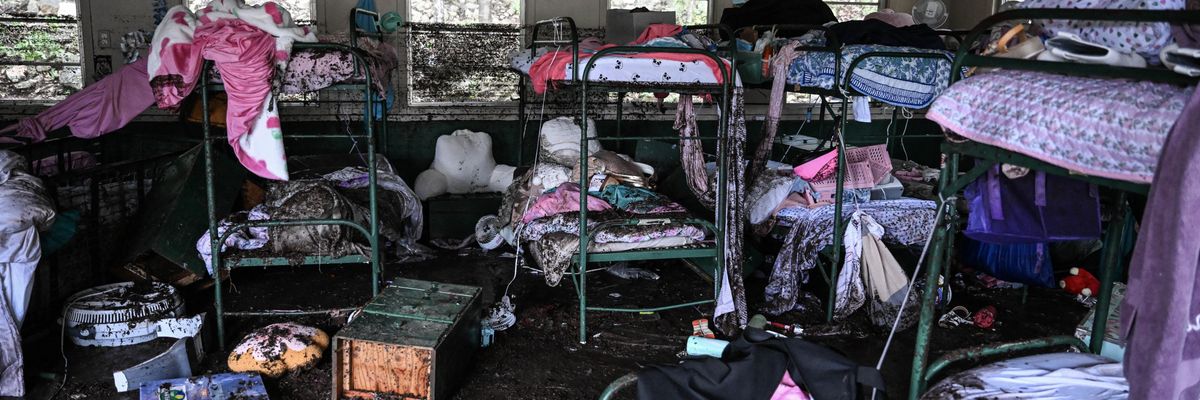
A view inside of a cabin at Camp Mystic, the site of where at least 20 girls went missing after flash flooding in Hunt, Texas, on July 5, 2025.
(Photo: Ronaldo Schemidt/AFP via Getty Images)


Nathalie Beasnael
Jul 15, 2025
Common Dreams


The floodwaters that tore through Texas have claimed over 130 lives—and stolen the futures of at least 36 children, most of them swept away while attending a Christian summer camp that offered neither the preparation nor protection demanded by our new climate reality.

Eventually, their names will fade from the headlines. But their deaths mark a devastating chapter in a growing story: the slow, preventable betrayal of American children by a government unwilling to face the truth about climate change.

The science is not in dispute. Storms like this—once labeled “1-in-500-year” events—are becoming terrifyingly routine. A warmer atmosphere traps more water vapor, fueling more intense rainfall. According to the National Climate Assessment, the heaviest Texas storms now dump 20% more rain than they did in the 1950s, when the planet was significantly cooler.


It is U.S. President Donald Trump who poses the central danger to our children. He thinks climate change is “one of the great scams” and governs accordingly. His resulting cuts to NWS, the Environmental Protection Agency, and the National Oceanic and Atmospheric Administration—which faces a proposed 40% budget cut—and his desire to phase out the Federal Emergency Management Agency (FEMA) snub basic moral responsibility to compound the threat of a warming world.

Our children are not political pawns. They are not expendable. They are the reason we build, the reason we serve, the reason we fight for a better country. If our policies cannot protect them, then those policies must change.

Yet the White House was quick to dismiss any link between budget cuts and the catastrophe in Texas, with a spokesperson calling such criticism “shameful and disgusting.” As a trained FEMA responder, emergency nurse, and woman of faith, I’ve seen with my own eyes how shameful it is to pretend we’re prepared—and how disgusting it is to suggest these deaths were unavoidable.

There were “early and consistent warnings” from the National Weather Service (NWS), insisted Press Secretary Karoline Leavitt. It is as if it were the children’s fault for not listening to the news instead of a consequence of deliberate, manmade policy failure.

That’s not politics. That’s engineered neglect.

And children are paying the price. In 2024, over 242 million students around the world had their schooling disrupted by extreme climate events—from heatwaves and hurricanes to floods and droughts. In the U.S, 11 million people were displaced by disasters that year, many of them children.

When classrooms flood, when heatwaves overwhelm neighborhoods, when families are forced to flee… it is the youngest who suffer most.

Yet we continue to send 26 million American children to summer camps, many of which are located in rural, exposed areas with little to no emergency oversight. Most lack up-to-date evacuation plans or protections against extreme weather. In Kerr County, the system failed completely—delayed warnings, limited staffing, and no infrastructure to fall back on.

We owe these children more than thoughts and prayers. We owe them action.

We must respond with both moral urgency and practical action. Every community—not just wealthy ones—deserves climate-resilient infrastructure, schools, and camps built to withstand the new normal, and local authorities trained and funded to respond quickly and effectively. The Department of Education’s emergency management unit must be strengthened, not slashed.

We must also invest in prevention, not just response. That means restoring ecosystems that can buffer against climate extremes, building sustainable infrastructure, and, crucially, educating our children to understand and navigate the crisis they’ve inherited. We cannot continue to rely on outdated systems and hope they’ll hold. They won’t.

At the grassroots level, people are already rising to meet the moment. Organizations like Zero Hour are training youth from diverse backgrounds to lead on environmental justice. Faith-based networks are stepping in where policy has failed—not just preaching morality but practicing it.

Earlier this year, Duke University’s Divinity School formalized its partnership with Faith For Our Planet, a global nonprofit founded by the Muslim World League (MWL). Their pioneering youth fellowship program equips young people to identify local climate risks and lead resilience efforts in their communities. At the launch, MWL secretary general Sheikh Muhammad Al-Issa urged young people not to underestimate their power: “Challenge injustices. Innovate solutions. Start dialogues where others sow discord.”

Across denominations, congregations are mobilizing: The Faith Alliance for Climate Solutions works to develop solutions at the local level. The Evangelical Environmental Network is producing Sunday school curricula centered on stewardship and sustainability. These are not fringe efforts—they are real, growing movements that link moral clarity with public service.

We are past the point of debate. The climate crisis is not theoretical. It is here, and it is killing our children. Those who frame this as a culture war are only trying to distract from their own failures of responsibility.

Our children are not political pawns. They are not expendable. They are the reason we build, the reason we serve, the reason we fight for a better country. If our policies cannot protect them, then those policies must change.

It’s time to stop blaming God for disasters we refuse to prevent. The water is rising—and so must we.


Our work is licensed under Creative Commons (CC BY-NC-ND 3.0). Feel free to republish and share widely.


Nathalie Beasnael
Dr. Nathalie Beasnael is an accomplished trainee of the Federal Emergency Management Agency and the founder of Health4Peace, which provides essential medical supplies to hospitals in Chad, Senegal, Ghana, South Africa, and Nigeria. She is the diplomatic envoy for the Republic of Chad to the USA and was a delegate at the United Nations annual climate summit COP28, where she moderated a panel discussion on how climate change is impacting human health. She is one of the leading recovery nurses at the California Surgical Institute in Beverly Hills and has received several recognitions for her outstanding efforts in the health unit across the USA. Her work has recently been featured in leading publications including the Sydney Morning Herald, Newsweek, USA Today, and the Independent.
Full Bio >


DHS Head Noem Prioritized Instagram Pics Over FEMA Requests for Texas Floods

It took Noem four days to respond to requests from FEMA, delaying access to some search and rescue tools.

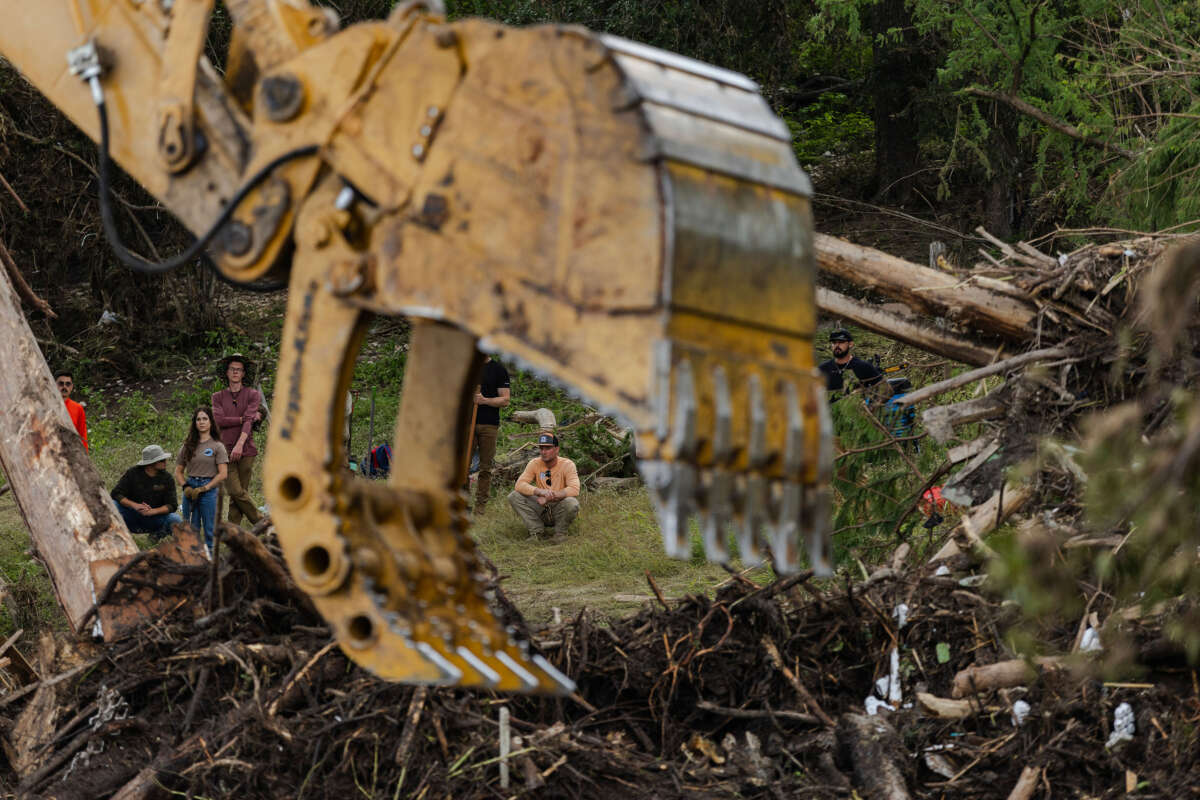
Search and recovery crews use a large excavator to remove debris from the bank of the Guadalupe River on July 9, 2025, in Center Point, Texas.

Officials within the Federal Emergency Management Agency (FEMA) who were tasked with responding to massive flooding in central Texas this past week say that some of their lifesaving efforts were delayed due to cost-saving rules imposed by Department of Homeland Security (DHS) Secretary Kristi Noem.

Noem, whose department oversees FEMA’s work, issued a new agency rule this year requiring all contracts and grants costing over $100,000 to be personally approved by her. As floodwaters were rising in Texas, Noem failed to respond to such requests over the weekend, taking four days to approve the spending that could have saved lives.

As of Wednesday evening, 120 people in Texas have been killed by the massive floods, with 173 people still missing.

FEMA officials were prompt to respond to the devastating natural disaster as it was happening. But according to four officials within the agency who spoke to CNN on the matter, the new rule directly impeded their efforts.

“We were operating under a clear set of guidance: lean forward, be prepared, anticipate what the state needs, and be ready to deliver it. That is not as clear of an intent for us at the moment,” one of the sources told the network.

A spokesperson for FEMA defending the policy said Noem’s changes to the agency were mostly positive.

“The old processes are being replaced because they failed Americans in real emergencies for decades,” that spokesperson said.

But some crucial tools to assist in rescuing people were left unused for days, the anonymous FEMA officials said. For example, Urban Search and Rescue Crews, typically dispatched immediately when a disaster occurs, were unable to move into position within the state when floodwaters started to rise rapidly on Friday. Aerial imagery to assist in rescue efforts was also delayed, the officials said.

Although these requests were made on Friday, Noem did not approve them until Monday, several days after the flooding had started and wrought most of its destruction.

Noem — who frequently shares social media posts of her dressing in the same garb as other DHS agents — did take the time to post on her Instagram account on Sunday a few potential options for her official portrait as a former governor of South Dakota, The Daily Beast reported, asking her followers which image was their favorite.

On the same day Noem had asked her followers to weigh in on her portrait, President Donald Trump deflected questions from reporters on his administration’s response to the Texas floods, including questions on whether cuts to the National Weather Service (NWS) had affected efforts to warn residents.

Trump ignored a reporter who had started to ask a question about those cuts, claiming he couldn’t hear her, despite having no difficulty hearing reporters moments before. He also attempted to place partial blame for the floodwaters on his predecessor, claiming without evidence that “the water situation” was a “Biden setup.”